
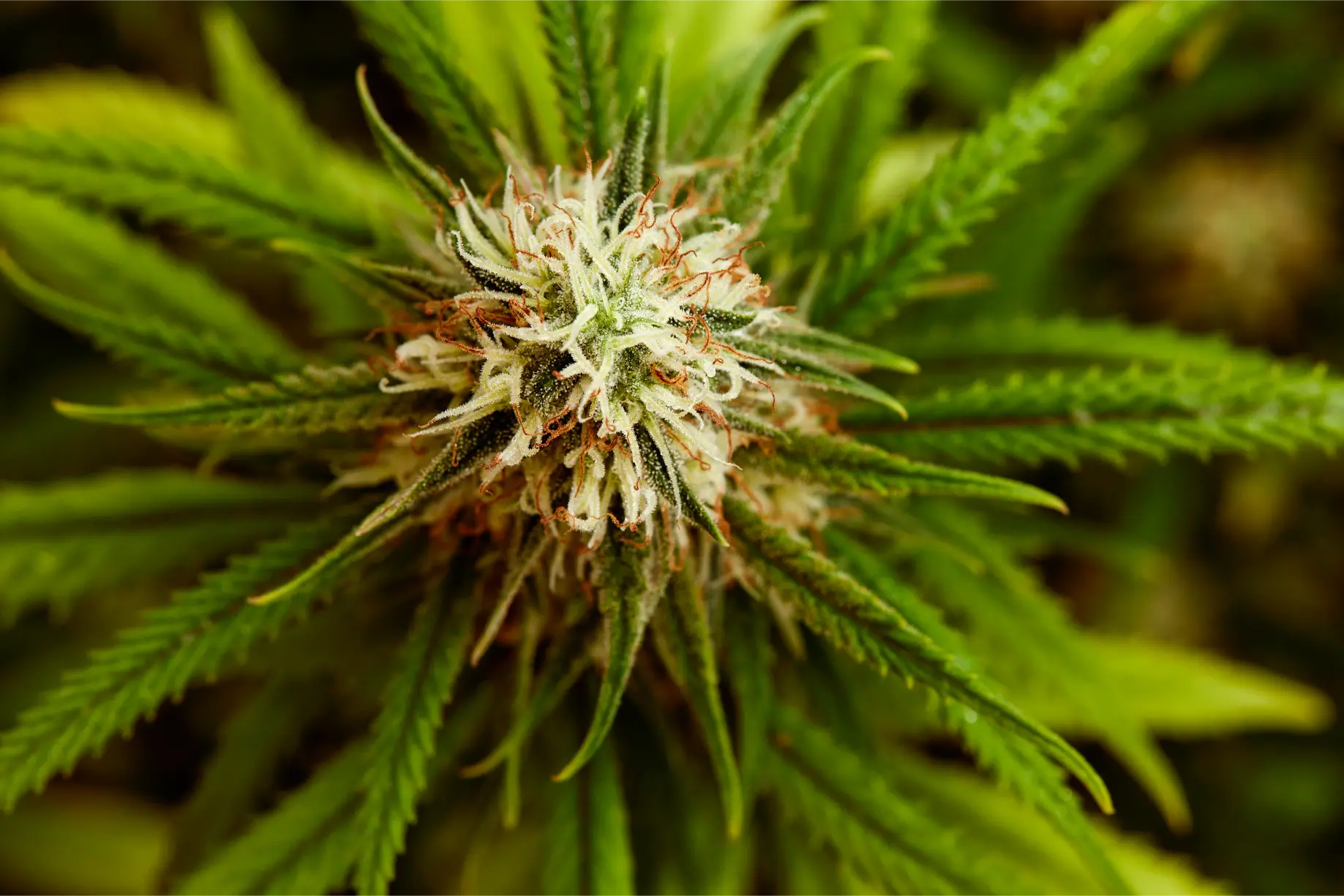
Haze Mist
A long-flowering pure sativa built around height control, patient ripening, spicy-sweet resin, and a soaring effect that rewards moderation.
Haze Mist is not a compact hybrid wearing a Haze name. It behaves like a true long-season sativa: lime-green foliage, long internodes, flexible branches, continued vertical growth deep into flowering, and narrow flowers that develop through gradual bract expansion rather than a sudden early swell. Growers who plan the room around an eight-week stretch can produce elegant, resinous spears. Growers who flip it as if it were a short modern hybrid often spend the entire cycle correcting height, shade, and root-zone mistakes.
The cultivar is commonly described as a South Indian sativa crossed with Original Haze. That pairing explains both the sweet-sour spice and the almost entirely cerebral effect. It also explains why flowering estimates need to be treated as ranges. A cutting may finish in roughly twelve to fourteen weeks, while seed plants and tropical outdoor plants can need longer. The plant is not slow because it is weak. It is slow because its reproductive program keeps building new floral tissue after faster cultivars have already stopped.
For Weedth, the most useful way to judge Haze Mist is through the relationship between canopy control, nitrogen restraint, and harvest patience. Its best flowers are not the densest in the room. They are the flowers that stay clean, evenly lit, and fully mature without being forced into a compact morphology they do not possess. The flavor target is layered spice, subtle sweetness, dry wood, and a sour tropical edge. The effect target is clear, energetic, expansive, and manageable rather than anxious or overstimulating.
Legal note: Educational content only. Always follow the cultivation and cannabis laws that apply in your location.
Strain Features
| Feature | Details |
|---|---|
| Strain Type | Pure or near-pure sativa expression with very little physical heaviness. |
| Commonly Reported Lineage | South Indian sativa x Original Haze. |
| THC and CBD | Usually THC-dominant with low CBD. Published potency figures vary widely because old selections and modern reproductions differ. |
| Flowering Time | Approximately 12-14 weeks from established cuttings; seed plants or tropical expressions may require 14-16 weeks. |
| Indoor Height | Very tall unless flowered early and trained continuously. Stretch can continue for around eight weeks. |
| Outdoor Height | Can exceed 3 m and may approach 4 m in long, warm seasons. |
| Yield Style | Moderate per square meter in low rooms; substantially better when headroom, root space, and branch exposure are adequate. |
| Bud Structure | Long, slender spears with rounded bracts that swell late; generally more open than indica-dominant flowers. |
| Aroma | Spicy, sweet, sour, woody, incense-like, and lightly tropical. |
| Flavor | Dry spice and wood first, followed by soft sweetness and a lingering sour-herbal finish. |
| Dominant Terpene Direction | Often associated with terpinolene, pinene, myrcene, caryophyllene, and ocimene, but chemotypes vary. |
| Grow Difficulty | Advanced indoors; moderate in a suitable greenhouse or tropical climate. |
| Best Training | Early topping, repeated low-stress training, wide SCROG, staking, and selective pruning through early flower. |
| Main Risks | Height pressure, excess nitrogen, shaded lower flowers, overlarge wet containers, and premature harvest. |
| Medical Interest | Reported for mood, fatigue, focus, and stress in low doses; high doses may worsen anxiety. |
| Best Time of Use | Morning to afternoon for experienced users who tolerate energetic sativas. |
The figures above are planning ranges, not guarantees. Haze Mist has circulated through older and newer seed populations, and the same name can cover plants with different stretch, finishing times, and aroma intensity. The reliable traits are the long sativa architecture, extended floral development, and strongly cerebral effect.
Genetic Lineage
South Indian sativa contribution
The South Indian side contributes warm-climate adaptation, flexible branching, spicy sweetness, and a tendency to keep producing floral tissue late in the cycle. It can also contribute stronger stem rub aromas and a slightly broader floral base than a completely narrow equatorial Haze. In the grow room, this parentage appears as rapid root and shoot expansion when temperatures are stable and the medium is aerated.
South Indian influence does not make the cultivar compact. It gives the long Haze structure a little more branch strength and a richer sweet-sour foundation. Some plants show a touch more color near maturity, including gold, red, or occasional purple tones, but color should never be used as proof of ripeness.
Original Haze contribution
Original Haze explains the long internodes, thin leaflets, delayed finishing, and electric mental effect. It also explains why the plant may continue stretching after the grower expects vertical growth to stop. New shoots can remain active while flowers are already forming. This overlap between extension growth and reproductive growth is one of the cultivar’s defining management challenges.
The Haze side can also produce meaningful variation in aroma. One plant may lean toward dry incense and tobacco, another toward sweet spice, and another toward sour tropical wood. Keeper selection should be performed after cure because the most attractive live-plant odor is not always the one that remains clearest in dried flower.
Why old Haze names require cautious interpretation
Cannabis labeling is not a perfect genetic record. Scientific work has shown substantial terpene variation within groups carrying the same cultivar name. Haze Mist should therefore be treated as a cultivar family with a recognizable growth pattern rather than a chemically identical product. Growers should document every plant, preserve promising cuttings where legal, and compare cured flower before making conclusions about the line.
Lineage reality: The most dependable Haze Mist identity is a long-flowering South Indian and Haze expression with spicy-sweet flower and a soaring cerebral effect. Exact percentages and laboratory values should be treated as batch-specific.
Effect Breakdown
Opening phase: acceleration without body weight
The first stage is usually bright and quick. Attention expands, music and conversation become more detailed, and simple ideas may feel unusually connected. There is little of the shoulder heaviness associated with indica-dominant flower. In a small dose, the effect can feel organized and useful for writing, walking, design work, or social discussion.
Peak phase: expansive and potentially psychedelic
As the dose accumulates, Haze Mist becomes less linear. Time can feel wider, thoughts move through unexpected associations, and sensory input becomes more immersive. Experienced sativa users may enjoy this as creative freedom. Sensitive users may experience the same acceleration as nervousness, physical restlessness, or an inability to focus on one task.
The cultivar is often described as having little practical ceiling. That does not mean unlimited potency in a laboratory sense. It means repeated use may keep increasing mental intensity instead of quickly flattening into sedation. The sensible approach is to wait before redosing.
Late phase: clean decline rather than heavy sleep
The ending usually remains cerebral. Energy gradually normalizes and appetite may appear, but strong body sedation is not the defining finish. Flower harvested later can feel slightly softer and less sharp, yet it still does not become a conventional nighttime indica.
Dose-related unwanted effects
Dry mouth and dry eyes are common. High doses can cause anxiety, twitchiness, rapid thought loops, dizziness, and temporary paranoia. People with panic sensitivity or low THC tolerance should choose a calmer cultivar. Mixing Haze Mist with caffeine can intensify the same sensations that make the strain difficult.
Use advice: Start with one small inhalation and allow the effect to develop fully. Haze Mist rewards precision more than bravado.
Flavor & Aroma Profile
Live plant and stem rub
During vegetative growth, the stem often releases green spice, citrus peel, dry wood, and a faint sour note. Flowering adds sweetness and an incense-like edge. The aroma can remain less heavy than Skunk or Kush cultivars, but it is not necessarily discreet. A tall canopy produces a large total volume of aromatic tissue.
Jar aroma after cure
Properly cured flower opens with peppery spice and dry cedar. Beneath that sits a softer sweetness that can resemble warm herbs, tea, or lightly fermented tropical fruit. Some expressions show tobacco, lime peel, or floral incense. The aroma becomes flat when the plant is harvested before the late bracts swell.
Inhale, exhale, and aftertaste
The inhale is often lighter than the aroma suggests, with sweet herbs and a narrow citrus edge. The exhale carries more wood, pepper, and haze incense. A good phenotype leaves a long dry-spice aftertaste rather than a sugary coating. Vaporization at moderate temperature usually reveals more sweetness and less charred spice than combustion.
How cultivation changes the profile
Excess nitrogen is one of the fastest ways to muddy Haze Mist. Dark, overfed leaves remain active too late and the dried flower can taste green and mineral-heavy. Heat also removes the most delicate sweet and citrus notes. A restrained feed, stable root zone, and patient finish produce a clearer spice-to-sweet transition.
Dominant Terpenes
Terpinolene
Terpinolene can contribute sweet herbs, fresh wood, flowers, and a bright high note often associated with Haze-family aromas. Its concentration varies between plants. When prominent, it makes the jar smell airy and complex rather than simply earthy.
Alpha-pinene and beta-pinene
Pinene supports the dry forest, cedar, and sharp green character. It may also help explain why some batches feel mentally crisp at modest doses, although subjective effects cannot be predicted from one terpene alone.
Beta-caryophyllene
Caryophyllene adds pepper, dry spice, and a warmer finish. It binds to CB2 receptors in laboratory research, but that does not make Haze Mist a standardized treatment. In the flavor, it gives structure to the sweeter volatile compounds.
Myrcene
Myrcene provides earthy herbs and a slightly fermented base. Haze Mist is not necessarily myrcene-dominant, yet even moderate levels can make the aroma feel deeper and prevent the spice from becoming thin.
Ocimene and minor tropical volatiles
Ocimene and related compounds can create sweet green fruit, flowers, and a breezy tropical lift. These top notes are especially vulnerable to warm drying and repeated exposure to open air.
Chemotype note: A strain name cannot replace laboratory analysis. Use the actual flower aroma and available test data to understand the batch in front of you.
Indoor vs. Outdoor Growing
| Aspect | Indoor Cultivation | Outdoor Cultivation |
|---|---|---|
| Height | Extreme stretch; flower very small plants and train continuously. | Very large plant in warm long seasons; requires wide spacing and strong support. |
| Flowering | About 12-14 weeks from established cuttings, sometimes longer. | Long seasonal finish; best below roughly 30 degrees latitude or with light deprivation. |
| Best System | Wide SCROG, soil or coco with predictable dryback, and substantial vertical clearance. | Open ground, large aerated containers, greenhouse, or protected tropical site. |
| Main Risk | Ceiling pressure, high nitrogen, root-zone saturation, and uneven light. | Season ending before ripeness, storms, branch breakage, and visibility. |
| Bud Density | Long and relatively open, which helps airflow but can reduce weight under weak light. | Larger spears with more bract expansion under strong sun. |
| Yield Pattern | Moderate in low rooms; improves greatly with headroom and well-spaced branches. | Potentially high per plant when the climate allows full maturity. |
| Flavor Control | Strong control over temperature and harvest timing. | Sun can deepen spice and sweetness, but heat and rain can damage late aromatics. |
| Difficulty | Advanced. | Moderate only in a truly suitable climate; otherwise advanced. |
Indoor decision
Indoor cultivation is practical when the grower can dedicate a room or tall tent to one long-flowering canopy. Mixing Haze Mist with eight-week hybrids creates scheduling problems because light height, irrigation demand, and harvest timing diverge sharply.
Outdoor and greenhouse decision
A greenhouse with reliable ventilation is often the best compromise outside the tropics. It protects late flowers while preserving solar intensity. The structure must be tall enough for training and open enough that humidity does not collect around the long spears.
Strain-Specific Grow Guidance
Plan the finished height before germination
Begin with the final light distance, container height, and support frame. Haze Mist can continue vertical growth for roughly eight weeks after flowering begins. A plant flipped at conventional hybrid size can exceed the room before meaningful flower mass has formed. Start flowering very small plants or use rooted cuttings with minimal vegetative time.
Build a wide root zone without creating a wet reservoir
The plant benefits from root volume during a long cycle, but a young sativa in an oversized saturated container stalls easily. Transplant in stages or irrigate a limited ring until roots expand. The medium should be rich in organic matter yet fast draining. The contradiction is only apparent: nutrient buffering is useful, while stagnant water is not.
Keep nitrogen moderate and read the lime-green baseline
Healthy Haze Mist foliage is often lighter than broad-leaf hybrids. Trying to force a dark green color can create clawed leaves, delayed flowering, weak aroma, and excessive shoot growth. Increase nutrition gradually, watch tip response, and reduce nitrogen early enough that the plant can mature rather than continuing vegetative behavior.
Top early, then use bending as the primary tool
One or two early toppings can create a manageable set of leaders. After that, low-stress training is safer than repeated hard pruning. Pull branches horizontally, secure them to the screen, and keep each growing tip moving toward open space. The plant can tolerate pruning into early flower, but every cut should solve a clear structural problem.
Manage the eight-week stretch in phases
Build support before the flowers demand it
During weeks one and two, establish horizontal direction. During weeks three and four, continue tucking and remove shoots that will never reach the canopy. During weeks five and six, stop aggressive bending and begin supporting the forming spears. During weeks seven and eight, protect branch angles and avoid damaging the now-flowering stems.
Do not overfill the screen
A full screen at the flip is too late for Haze Mist. Enter flowering with meaningful empty space. The cultivar fills gaps through continued extension. Overfilling creates stacked layers, weak lower flower, and a permanent humidity pocket beneath the canopy.
Use light intensity across area, not only at the center
The long branches produce many sites. Uniform coverage is more valuable than one extremely bright hotspot. Keep the tallest tops below bleaching intensity and use side reflection or multiple fixtures to illuminate the broad canopy. A pale top with stalled bracts is usually light or heat stress, not accelerated maturity.
Adjust photoperiod only when the plant truly stalls
Most plants can finish under 12/12. A stubborn late phenotype may respond to a gradual reduction in day length, such as shortening the light period in small steps. This is not a universal requirement. Abrupt changes complicate environmental control and should not substitute for patience.
Support long spears before they lean
Open sativa flowers may not look heavy early, but length creates leverage. Install stakes, a second net, or soft ties before the final bract swell. Support should hold the branch without compressing flowers together.
Harvest by bract maturity, not calendar fatigue
The grower often becomes tired of the cycle before the plant is ready. Wait for rounded bracts, reduced new pistil production, and mostly cloudy trichomes on calyx tissue. Fresh white pistils alone are not proof of immaturity because Haze plants may continue limited renewal late.
Master advice: With Haze Mist, the highest-yielding action is often leaving enough empty space at the beginning.
A Practical Twelve-to-Fourteen-Week Flowering Timeline
Weeks one and two are primarily structural. The plant reacts to the shorter day by accelerating extension rather than immediately producing heavy flower. Continue guiding leaders across the screen, but avoid filling every opening. Root demand increases quickly, so irrigation volume may rise even while the flowers remain small. This is also the last comfortable window for correcting badly placed branches without splitting older stems.
Weeks three and four bring the first clear flower clusters. The temptation is to stop training because pistils are visible, yet the plant still has substantial extension ahead. Tuck only flexible tips and remove small inward-growing shoots that will become trapped beneath the canopy. Maintain moderate nitrogen, because a dark plant at this stage usually stretches harder and takes longer to settle.
Weeks five and six are the transition from canopy creation to flower support. Branches begin carrying long chains of bracts, and the structure becomes less tolerant of repeated movement. Install the second support layer, separate spears that are converging, and reduce any direct fan that is whipping the flowering tips. The root zone should remain active, but the substrate must still complete a predictable dryback.
Weeks seven and eight are when many hybrid growers expect stretch to be over. Haze Mist may still extend. Light height should therefore retain a safety margin. Avoid high-stress corrections unless a top is genuinely threatened by the fixture. A gentle lateral pull is safer than crushing a stem that already contains developing flower tissue.
Weeks nine through eleven are about building substance. The long flowers should begin to look less like loose strings and more like connected spears. Aroma shifts from green spice toward incense, wood, and sweetness. Water demand may remain substantial, but growth no longer justifies aggressive nitrogen. Maintain calcium, magnesium, and balanced micronutrients only when plant response indicates a need.
The final weeks are cultivar and environment dependent. Some plants finish cleanly around week twelve, while others continue bract swelling into week fourteen or beyond. Do not extend the cycle because a few new pistils appear on the brightest tips. Do extend it when the middle calyxes remain narrow, trichomes are still mixed clear, and the aroma has not developed its sweet-spice depth.
Diagnosing Haze Mist Without Treating Natural Traits as Problems
Long internodes are normal. They become a cultivation problem only when the canopy cannot be illuminated or supported. Thin leaves are normal. They become a stress signal when they twist, bleach, or lose turgor. Light green foliage is normal. It becomes deficiency when older leaves yellow rapidly while growth slows and petioles weaken. Diagnosis should compare the plant to its own recent behavior, not to a neighboring indica.
Foxtail-like growth can also be genetic. Healthy Haze flowers may continue stacking fresh bracts along the spear. Heat-driven foxtailing is more likely when the newest tissue appears only on the hottest tops, bleaching accompanies the growth, and aroma declines. Measure the canopy environment before deciding that every pointed flower is stress.
A long flowering cultivar also shows a long natural fade. Early lower-leaf loss can reflect shade or insufficient root nutrition, while a gradual late fade can be part of normal maturation. The distinction is timing and speed. A plant that loses large amounts of healthy canopy in a few days requires investigation; a plant that slowly uses older leaves after the flowers have fully formed may be finishing normally.
Weedth Bud Flavor Tips
Preserve the late sweet-spice layer
The sweet component develops after the plant already looks resinous. Harvesting at the first cloudy trichomes can preserve speed but sacrifice depth. Allow the calyxes to swell and the aroma to move from sharp green spice toward rounded incense and sweetness.
Choose branch drying for very large outdoor spears
Whole-plant drying can be too slow when the plant is enormous and the room is humid. Separate major branches while preserving enough leaf to moderate the dry. Smaller indoor plants may be hung whole if the environment is controlled and air moves around, not directly at, the flowers.
Keep the drying room cool and stable
Haze top notes are volatile. Warm, fast drying leaves only tobacco and generic earth. Use darkness, moderate humidity, gentle air exchange, and enough time for moisture to move from the center of the spear to the surface.
Cure before judging the sour note
Freshly dried Haze Mist can smell sharp or grassy. Several weeks of cure allow spice, wood, and sweetness to separate. Keep phenotypes in separate containers because one strongly incense-forward plant can dominate a mixed jar.
Store small working amounts
Repeatedly opening one large jar exposes the entire harvest to oxygen and warm room air. Keep a small working container and leave the main supply sealed in a cool dark place.
Weedth Bud Boost Tips
Indoor: convert stretch into illuminated length
Yield comes from long sections of well-lit flower, not from vertical height by itself. Train each branch so that multiple sites occupy the productive light zone. Remove deeply shaded lower shoots after stretch.
Indoor: use several small plants instead of one oversized plant
Four to six small plants in a wide space can be easier than one old, woody specimen. Each plant contributes fewer leaders and the canopy fills faster. Plant count must always comply with local law.
Indoor: maintain root oxygen through the long cycle
Long flowering means more opportunities for salt accumulation and root decline. Use a well-aerated medium, monitor runoff trends where appropriate, and avoid keeping the substrate continuously wet.
Outdoor: begin structural training early
A four-meter plant cannot be corrected safely in late summer. Top or bend while stems are flexible and build a wide support cage before flower initiation. Keep interior access lanes for inspection.
Outdoor: use the warmest clean site, not the most hidden wet site
Haze Mist needs sun and time. A concealed hollow with poor morning light can delay ripening and hold dew. Choose legal security solutions that do not sacrifice the microclimate.
Select the keeper after a complete cure
The most valuable plant balances finishing time, manageable stretch, clear spice-sweet aroma, and a positive effect. Do not keep a plant only because it was the tallest or strongest in vegetative growth.
Medical Uses & Benefits
Haze Mist is mainly discussed as a mood and cognition cultivar rather than a heavy physical medicine. Reported uses include low mood, fatigue, stress, and creative blockage. Evidence for strain-specific medical outcomes remains limited, and the name does not guarantee a standardized chemical profile.
| Reported Use | Potential Fit and Limitation |
|---|---|
| Low Mood | The uplifting onset may improve interest and engagement, but excessive doses can feel restless. |
| Fatigue | The energetic profile may feel useful during the day. It can interfere with sleep if used late. |
| Stress | A low dose may create perspective and mental distance. High doses may amplify anxiety. |
| Focus | Some experienced users feel absorbed and creative; others become distractible. |
| Pain | Mental engagement can reduce the prominence of mild discomfort, but physical analgesia is not the main feature. |
| Nausea and Appetite | Some users report benefit, though rapid cerebral effects can be uncomfortable for sensitive patients. |
Medical caution: People with panic disorder, bipolar-spectrum conditions, psychosis risk, or cardiovascular concerns should seek professional advice before using a highly stimulating THC-dominant cultivar.
Ideal User Profile
Haze Mist suits an experienced user who actively wants a long, cerebral sativa experience. The ideal session has a clear purpose: creative work, music, conversation, an outdoor walk, or focused exploration. It is less appropriate for passive late-night relaxation.
- Best fit: experienced sativa users with measured dosing habits.
- Best timing: morning through late afternoon.
- Preferred activities: writing, visual work, music, discussion, nature, and low-risk movement.
- Poor fit: users seeking sleep, strong body relief, or a simple predictable effect.
- Grower fit: cultivators with tall space, patience, and disciplined canopy management.
New users should not interpret the cultivar’s light body feel as weak potency. The mental intensity can be substantial even when the body remains mobile.
Compatibility With Other Cultivars in the Same Room
Haze Mist is difficult to share with fast compact hybrids because the plants require different light heights, irrigation rhythms, and harvest dates. If a mixed room is unavoidable, place Haze Mist where branches can be trained toward unused edges and where the light can be raised without reducing intensity for shorter plants.
The drying schedule also differs. Fast hybrids may be harvested while Haze Mist still needs several weeks. Do not reduce the flowering-room humidity or nutrient strategy only to accommodate plants that are already finishing. Separate zones or separate cycles produce better results.
A dedicated run is often more efficient than constant compromise. The extra weeks become easier to justify when the entire room is designed around long spears, moderate feeding, and late aromatic development.
Grower Notes and Feedback
Growers commonly underestimate how long the plant keeps stretching. The problem is usually not the first three weeks. It is the additional vertical movement after the screen appears finished. Leaving planned empty space solves more problems than late supercropping.
Another recurring mistake is darkening the foliage with extra nitrogen. Haze Mist naturally looks lighter than a Kush. Healthy lime green with active growth is preferable to glossy dark leaves and clawed tips.
The plant can appear ready because the long flowers are covered in trichomes, yet the bracts remain narrow. The final weeks add roundness, sweetness, and a more complete effect. Premature harvest produces a sharper, shorter, more anxious experience.
Outdoor growers report the best results in warm regions with a long autumn or in greenhouses where rain can be excluded. Cold, damp sites may keep the plant alive without allowing it to finish well.
Pest pressure is easier to inspect on an open canopy, but the long cycle gives pests more time to establish. Prevention and weekly underside checks remain necessary even when the plant appears vigorous.
Cured phenotypes should be judged separately. One may yield more, another may finish earlier, and a third may carry the best incense-sweet profile. The best keeper depends on the grower’s room and intended use.
Final Haze Mist Decision Points
Before flowering, confirm that the screen still contains empty space. Before week six, confirm that every long branch has a support route. Before harvest, confirm that the middle calyxes, not only the hottest tops, have reached the desired maturity. These three checks prevent the most common structural, support, and timing failures.
The cultivar is successful when it remains healthy enough to finish slowly. The objective is not to make a Haze behave like a compact hybrid. It is to guide its natural length into an environment where light, roots, and time can complete the flower.
Weedth Editor's Note
The point where this plant reveals itself
I treat Haze Mist as a space-planning project before I treat it as a feeding project. The plant is capable of finding the ceiling without any help. My priority would be a wide support frame, small starting plants, and enough empty screen to absorb several weeks of extension.
I would keep the leaves lighter than many growers expect. When a pure sativa remains active and lime green, I do not chase a darker color. I watch growth rate, leaf posture, and root-zone dryback instead.
The harvest decision would be the hardest part. Haze flowers can look impressive before the late bracts are complete. I would compare upper and middle calyxes, smell undamaged flowers, and wait for the spicy aroma to gain sweetness.
After drying, I would not judge the cultivar in the first week. Haze Mist needs time for green sharpness to recede. A patient cure should reveal dry wood, pepper, incense, and a soft sweet edge.
I recommend it to growers who enjoy learning plant behavior more than chasing a fast turnover. It is not efficient in every room, but a well-finished example offers a kind of clear, expansive experience that short modern hybrids rarely reproduce.
Weedth Score
Growing Experience 7.3/10 – Fascinating and responsive, but the long stretch and finish demand advanced planning.
Bud Structure & Visual Appeal 8.2/10 – Elegant gold-green spears with late bract swelling rather than rock-hard density.
Aroma Complexity 9.1/10 – Spice, incense, wood, sweetness, sour herbs, and tropical hints create real depth.
Flavor & Smoothness 8.7/10 – Excellent after a slow dry and cure; premature flower tastes thin and sharp.
Effects & High Experience 9.0/10 – Soaring, creative, and expansive, though unsuitable for anxious users.
Overall Satisfaction & Recommendation 8.5/10 – A specialist cultivar that rewards patient sativa growers.
Editor closer: A long road to harvest, but the finished spice, clarity, and mental lift make the wait meaningful.
A grow diary should include the date of every major canopy change, irrigation slowdown, and aroma transition. Those records turn a difficult first run into a predictable second run and make the long flowering time much easier to manage.
FAQ
Is Haze Mist a pure sativa?
It is commonly presented as a pure sativa cross of South Indian and Original Haze genetics. Individual modern reproductions may vary, but the classic expression is strongly sativa in structure and effect.
How long does Haze Mist flower?
Established cuttings often need around twelve to fourteen weeks. Seed plants and tropical expressions may take fourteen to sixteen weeks. Environmental stress can extend the finish.
How much does Haze Mist stretch?
A great deal. Vertical growth may continue for roughly eight weeks after flowering begins. Growers should flip very small plants and leave empty screen space.
Can Haze Mist be grown in a normal tent?
Yes, but only with early flowering, strong training, and adequate height. A short tent is a difficult environment for this cultivar.
Does Haze Mist need heavy nutrients?
No. It prefers a medium-strength regimen that rises gradually. Excess nitrogen is especially damaging to structure, maturity, and flavor.
What does Haze Mist taste like?
Expect dry spice, wood, incense, subtle sweetness, and a sour-herbal or lightly tropical finish.
Why are my Haze Mist buds not dense?
The cultivar naturally forms long, more open sativa flowers. Weak light, excessive shade, high nitrogen, or early harvest can make them too airy, but they should not be compared with Kush density.
When should Haze Mist be harvested?
Wait for late bract swelling, reduced pistil renewal, and mostly cloudy calyx trichomes. Do not harvest only because the calendar has reached week twelve.
Is Haze Mist good for beginners?
The consumption experience and indoor cultivation are both better suited to experienced users. A beginner in a tropical outdoor setting may grow it, but the long season still requires patience.
Can Haze Mist cause anxiety?
Yes. Large doses can feel twitchy, nervous, or psychedelic. Start low and avoid repeated dosing before the first inhalation has fully developed.
Similar Strains
- Original Haze: Longer and even less domesticated, with a similarly expansive spice-driven effect.
- Neville’s Haze: Shares extreme stretch and long flowering but often carries a sharper, more electric profile.
- Kali Mist: A clearer and somewhat more manageable sativa with spice and strong daytime energy.
- Super Silver Haze: Faster and denser, with more hybrid body support beneath the Haze lift.
- Very Berry Haze: Similar long-branch architecture with a stronger berry-fruit direction.
- Malawi Gold: Another long-season sativa known for intense cerebral effects and warm-climate needs.
Share this article
A quick overview of the topics covered in this article.
Follow us
Latest articles
September 29, 2026
September 29, 2026

September 29, 2026
September 29, 2026