
Herijuana
Strain-specific cultivation, bud quality, flavor preservation, and effect reference
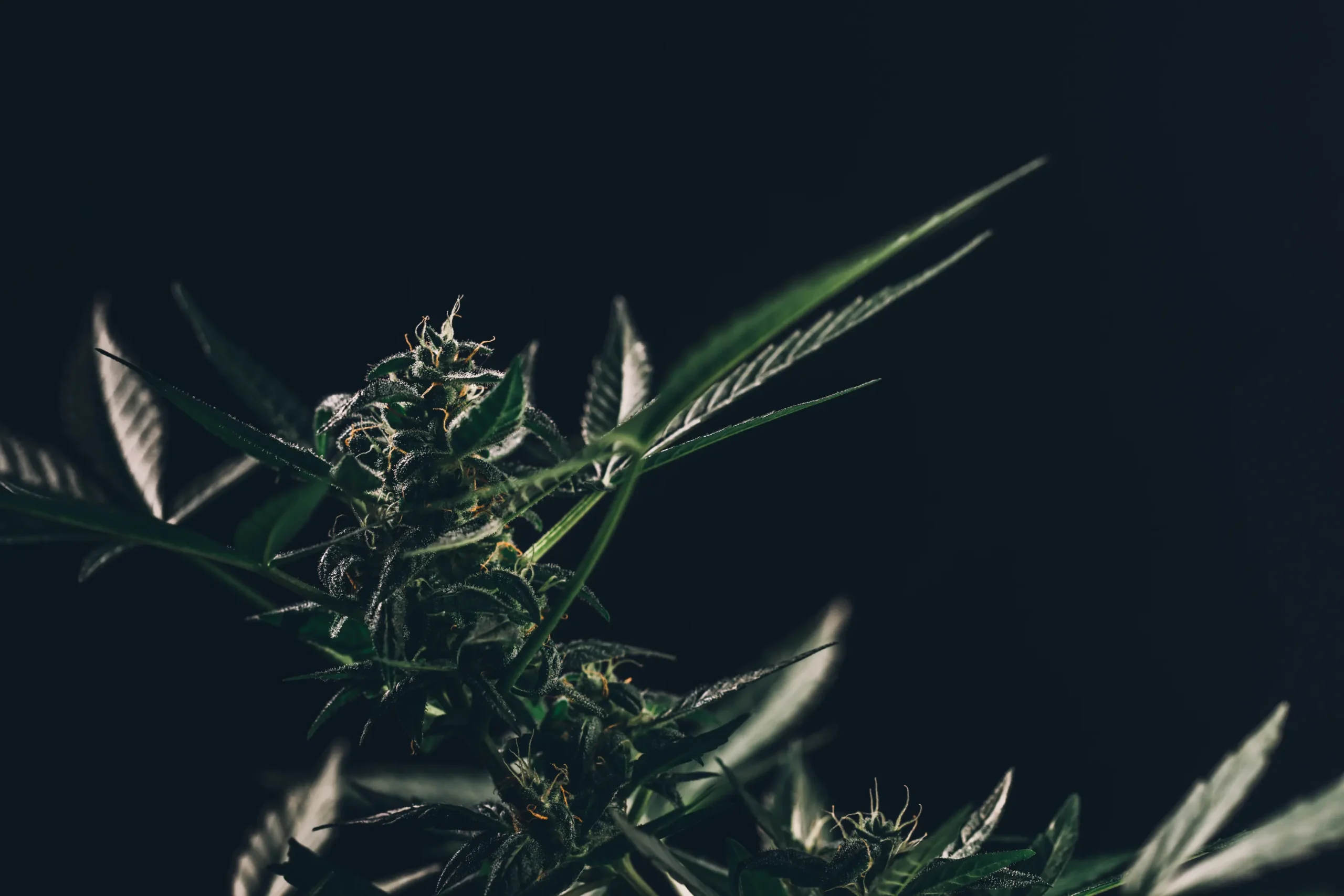
Herijuana, also called Herojuana in some older records, is an indica-leaning cultivar built from Petrolia Headstash and Killer New Haven genetics. Its reputation usually centers on potency and late-evening relaxation, but the more useful grower story is its structural contradiction: plants can look compact and indica-like in early growth while still producing a meaningful flowering stretch and an unexpectedly open frame. That combination makes Herijuana easier to overcrowd than its indica label suggests. The best plants finish with dense, resin-heavy flowers and a spicy, woody, hash-like aroma, but the route to that result depends on leaving enough room for the flowering transition and resisting the urge to force-feed a plant that often performs well on moderate nutrition.
Cultivation reports also show more phenotype spread than the strain's stabilized reputation might lead a new grower to expect. Some plants remain squat and branch heavily. Others open up, lengthen noticeably after the flip, and concentrate their best flowers toward the upper half of the plant. Flowering reports commonly cluster around about nine to ten weeks, although faster and slower expressions exist. That variability is not a flaw to hide. It is the key to growing Herijuana well: identify the architecture early, then train and support the plant you actually have instead of following a fixed recipe.
For Weedth, Herijuana is best understood as a quality-first indica where phenotype reading, moderate feeding, humidity control, and harvest maturity matter more than aggressive yield tricks. Its flowers can become exceptionally compact, which raises the cost of late-flower humidity mistakes. At the same time, its earthy-sandalwood profile can become dull and generic if the harvest is taken too early or if drying runs too warm. A careful run should aim for firm but not waterlogged flowers, intact trichomes, a slow postharvest moisture gradient, and a cure that lets the wood, spice, resin, and faint fruit notes separate from one another.
Strain Features
| Feature | Details |
|---|---|
| Type | Indica-dominant cultivar with noticeable phenotype variation in stretch and branching |
| Lineage | Petrolia Headstash x Killer New Haven |
| Potency | Usually described as high-THC flower; many modern samples sit around the low-20% range, but batch variation is substantial |
| CBD | Typically very low in modern THC-dominant expressions |
| Flowering time | Commonly about 60-72 days indoors, with many grow reports clustering near 9-10 weeks |
| Plant structure | Can range from squat and bushy to open and stretchy; sturdy branches in better-structured phenotypes |
| Stretch | Variable. Individual grow reports range from modest stretch to roughly doubling or more after flowering begins |
| Bud structure | Often dense to very dense, resinous, and potentially mold-prone if airflow is poor |
| Aroma | Earth, sandalwood, dry spice, hash, wood, and occasional dark-fruit or citrus lift |
| Common terpenes | Myrcene commonly leads in tested samples, with limonene and beta-caryophyllene frequently reported |
| Training fit | Best with phenotype-led LST, selective topping, canopy spreading, or a loose screen rather than automatic heavy pruning |
| Feeding behavior | Generally moderate appetite; repeated grow reports suggest it does not need aggressive feeding |
| Best environment | Indoor or protected outdoor spaces where late-flower humidity and branch spacing can be controlled |
| Difficulty | Moderate. Not fragile, but phenotype variability and dense flower require observation |
| Primary quality risk | Overcrowding and excess moisture inside compact flowers during late bloom |
| Best suited for | Growers who prefer strong evening flower and are willing to select for structure, resin, and cure quality |
The table should be read as a working cultivar profile rather than a guarantee for every seed or cutting. Herijuana has been maintained in more than one line over time, and grow reports show meaningful differences in height, flowering speed, side-branch productivity, and mold response. The stable core is easier to recognize in the finished flower: strong resin, substantial density, an earthy-spicy aromatic base, and a heavy effect profile. For cultivation decisions, structure is the first variable to confirm in your own plant.
Genetic Lineage
Herijuana is most consistently described as Petrolia Headstash x Killer New Haven. Petrolia Headstash is an Afghan-influenced indica from Northern California preservation work, while Killer New Haven is generally described as an outdoor hybrid associated with Kentucky. The cross was subsequently worked through repeated generations, which is why Herijuana is often discussed as an inbred or relatively stabilized line. The practical meaning of that history is not that every plant will be identical. It means the strain tends to reproduce a recognizable family of traits: heavy potency, earthy resinous aroma, dense flower formation, and a strong indica center even when the frame stretches more than expected.
The Afghan side helps explain the thick trichome coverage, hash-like base aroma, broad-leaf tendencies, and physically calming finish. The outdoor-hybrid side is a plausible contributor to the more open architecture seen in several grow reports. That mix creates one of Herijuana's most useful lessons: botanical labels such as indica-dominant do not reliably predict final height. A plant can carry an indica-style flower and effect profile while still lengthening aggressively during transition. Growers who flip Herijuana solely because it looks short in veg can discover that the first three to four weeks of bloom change the room geometry quickly.
Phenotype variation should therefore be treated as part of the lineage, not as noise. At one end are compact plants with limited lateral reach and very hard central flowers. At the other are taller, more open plants with longer internodes and a more obvious sativa-like silhouette. Between them are bushier expressions with productive side branches that can outperform the main stem when the canopy is spread. Keep notes on stretch ratio, branch strength, flower density, aroma development, and finishing date if you are selecting a keeper. Those five observations tell you more about future garden behavior than a generic indica percentage.
WEEDTH GROWER NOTE: Do not decide Herijuana's training plan from the strain label alone. Wait until the plant has shown its internodal rhythm and side-branch vigor, then choose the least disruptive method that creates an even, breathable canopy.
Effect Breakdown
Fast onset: weight arrives before full sedation
Herijuana is usually reported as a strong, body-centered experience, but the first minutes can feel more alert than the later reputation suggests. A moderate inhaled dose may begin with a noticeable shift in sensory attention, a warm pressure behind the eyes, and a quick reduction in physical restlessness. Some users describe tingling through the face, shoulders, or limbs before the heavier relaxation settles in. Emotionally, the opening is often quiet rather than exuberant. The mood lift can be clear, but it tends to feel grounded and inward compared with bright daytime sativas.
Middle phase: physical relaxation becomes dominant
As the session develops, the cultivar's indica character becomes more obvious. Muscles feel heavier, movement can become less urgent, and the body may seem to sink into the chair or bed. The mental state commonly remains present enough for music, conversation, or a film, but the motivation to begin demanding tasks drops. This is where dose matters. A small amount can feel comfortably calming without complete functional shutdown. A larger amount can move quickly into pronounced sedation, heavy eyelids, slowed reaction time, and an appetite increase. New users should not infer safety from a smooth first few minutes; the full weight can build after the initial onset.
Late phase: sleepiness and residual calm
The late phase is where Herijuana earns its nighttime reputation. Users frequently report sleepiness, deep physical ease, and a long residual calm. The transition is usually gradual rather than abrupt. At very high doses, the experience can feel numbing and mentally foggy, which may be desirable for some evening users but excessive for people who still need to communicate, work, or move around confidently. Dry mouth and dry eyes are common cannabis-related adverse effects. Dizziness and anxiety can also occur, especially when potency is high or tolerance is low.
Effect reports are subjective and should not be converted into medical promises. The most defensible way to describe Herijuana is as a cultivar commonly associated with strong relaxation, sleepiness, tingling, and a quieter mood state. Individual response changes with dose, cannabinoid profile, tolerance, setting, and harvest maturity. A later harvest with more oxidized cannabinoids may feel heavier than an earlier harvest from the same genetic line, although the relationship is not precise enough to predict an exact effect from trichome color alone.
Flavor & Aroma Profile
Jar aroma: earth, wood, resin, and dry spice
A well-cured Herijuana jar should not smell like generic 'indica.' Its base is usually deep earth and dry wood, but the better examples develop distinct sandalwood, pepper, resin, and hash-like layers. Some flowers add a faint dark-fruit sweetness or citrus lift that keeps the bouquet from feeling flat. The aroma is rarely candy-forward. Instead, it resembles warm wood, crushed dry herbs, old resin, and a little fruit skin. This is the kind of profile that benefits from patience because the first days after drying can emphasize chlorophyll and raw plant notes that temporarily hide the finer wood-and-spice separation.
Broken flower: the spicy core becomes clearer
Breaking or grinding the flower releases heavier volatile material from inside the bud. Caryophyllene-like pepper, resinous earth, and dry herbal notes often intensify. In limonene-richer expressions, a subtle peel-like brightness can appear behind the darker base. Resin-heavy Herijuana can feel greasy or tacky rather than sandy when handled at the right moisture level. If the cured flower crumbles into powder immediately, the dry has probably gone too far and the aromatic top layer will usually be less expressive.
Smoke and vapor: hashy depth over sweetness
On inhalation, the strain generally leans woody, herbal, spicy, and hash-like, with sweetness acting as a supporting note rather than the headline. Vapor tends to expose more of the faint fruit or citrus edge because combustion can overwhelm delicate monoterpenes with roasted, smoky compounds. On exhale, a peppery warmth and sandalwood-like dryness can linger on the tongue. Harshness is not an inherent Herijuana requirement. When the flower is properly ripened, dried slowly, and cured without overdrying, the smoke can be dense yet rounded. Harsh green material usually points back to postharvest execution, mineral accumulation, or premature consumption rather than a desirable cultivar trait.
The most important flavor decision is not chasing maximum dryness. Dense Herijuana flowers contain a steep moisture gradient after harvest: the outside can feel crisp while the center still holds significant water. If the grower jars too early, moisture redistributes and raises mold risk. If the grower waits until the entire flower feels brittle, the volatile profile can be unnecessarily depleted. A controlled slow dry followed by stabilization is the better route. Research on cannabis postharvest handling shows that drying conditions can change terpene retention substantially, and hotter drying generally accelerates volatile losses.
Dominant Terpenes
| Terpene | Aroma role | How to interpret it in Herijuana |
|---|---|---|
| Myrcene | Earthy, herbal, musky | Frequently reported as the leading terpene in tested samples. It fits Herijuana's deep earthy base, but its presence alone does not prove sedation. |
| Limonene | Citrus peel, bright sweetness | Usually secondary. In some phenotypes it creates a small lift above the darker wood-and-hash core and can make the cured flower smell cleaner. |
| Beta-caryophyllene | Pepper, dry spice, woody warmth | Supports the peppery and resinous finish. It has been studied for CB2 receptor activity, but flower effects cannot be assigned to this terpene alone. |
| Pinene and minor terpenes | Pine, fresh wood, aromatic sharpness | May appear in smaller amounts and can explain fresher forest-like notes in certain batches. |
Terpene labels are most reliable when used to explain aroma chemistry, not to make deterministic effect claims. Cannabis effects emerge from cannabinoids, dose, minor compounds, prior tolerance, expectation, and individual biology. Herijuana's reported myrcene-limonene-caryophyllene pattern helps explain why the aroma can be dark and earthy without being one-dimensional: myrcene anchors the base, caryophyllene adds dry spice, and limonene can supply a small volatile top note.
From a cultivation standpoint, the practical lesson is that Herijuana's most fragile aroma fraction is the brighter top layer. Dense woody and hash-like notes can remain detectable even after a poor dry, which can fool a grower into thinking flavor was preserved. The better quality test is whether the cured flower still has contrast: earth plus wood, spice plus resin, and a faint high note rather than a single muddy smell. That contrast is easier to retain with moderate canopy temperatures late in flower and a cool, controlled dry.
Indoor vs. Outdoor Growing
| Decision point | Indoor | Outdoor / protected outdoor |
|---|---|---|
| Stretch control | Best environment for managing variable post-flip stretch with a screen, tie-downs, and fixed canopy distance. | Large root volume can exaggerate stretch and branching. Give more spacing than the early veg shape suggests. |
| Flower density | Late RH and airflow can be controlled around dense colas. | Dense flowers become vulnerable if autumn rain or fog arrives before maturity. |
| Phenotype selection | Easy to compare multiple plants under identical conditions and retain a keeper. | Environmental variation makes phenotype comparison less clean, but vigor and weather tolerance become easier to judge. |
| Feeding | Moderate EC can be maintained and corrected quickly; useful because Herijuana often does not need heavy feed. | Rich ground can push excessive leaf growth. Leaner amended soil with good drainage is easier to manage than aggressive top-dressing. |
| Flavor | Lower heat and controlled ripening help preserve wood-spice complexity. | Sun-grown plants can develop a deep resinous nose, but hot harvest weather can strip brighter aromatic notes. |
| Mold risk | Manageable with spacing, lower late-flower RH, and movement through the canopy. | Highly site-dependent. Protected cultivation is preferable where fall humidity is persistent. |
| Best fit | Growers who want repeatable quality, phenotype selection, and dense-bud climate control. | Growers with a dry finishing season, strong sun, and enough room to let the plant express its natural frame. |
Indoors is the more predictable choice for Herijuana because its two main uncertainties, stretch and dense-flower moisture, can be controlled. A short plant can still double enough to create a crowded roof if flipped too late, so leave vertical margin. Equally important, do not build a solid wall of foliage below the tops. Air needs a path through the branch structure before the buds harden.
Outdoors can produce a wider, more natural plant and may reveal excellent resin and aromatic depth, but the finish window matters more than absolute summer vigor. Herijuana is not a cultivar I would choose for a site that becomes persistently wet during the final weeks. If the local autumn is dry, the strain can benefit from full sun and broad root space. If rains are common, a roofed or ventilated protected structure gives the grower a much better chance of keeping compact flowers clean.
Strain-Specific Grow Guidance
Read the phenotype before you commit to a canopy plan
The most important early Herijuana decision is to determine whether the plant is compact-bushy, compact-apical, or open-stretching. Watch the distance between new nodes, the angle of side branches, and how quickly laterals approach the height of the main stem. A compact-bushy plant can be topped once and spread into several strong tops. A compact-apical plant may be more efficient with gentle LST and limited topping. An open-stretching plant should be flipped earlier and guided horizontally before stems lignify. Treating all three as the same cultivar wastes space and can create either an empty canopy or an overcrowded one.
Vegetative growth: do not confuse slow early pace with low final size
Several reports describe a comparatively restrained vegetative phase followed by stronger transition growth. That makes over-vegging a common error. The grower sees a plant that is not racing upward and gives it another week, then flowering stretch consumes the remaining headroom. A safer approach is to judge canopy occupancy rather than raw height. Once the branches have enough length to be directed into their final positions, the plant is ready for transition even if it still looks modest compared with a fast sativa.
Root-zone management should support steady growth without prolonged saturation. Herijuana does not need a permanently wet medium to build dense flowers. In soil, a well-aerated mix and complete irrigation followed by an appropriate dryback is preferable to frequent small splashes. In coco or other inert media, maintain consistent oxygen and avoid salt accumulation. The strain's recurring moderate-feed reports make it especially pointless to compensate for slow veg by pouring in more fertilizer. If leaves are already dark and firm, more nitrogen is unlikely to solve a structural problem.
Flowering stretch: expect change for several weeks
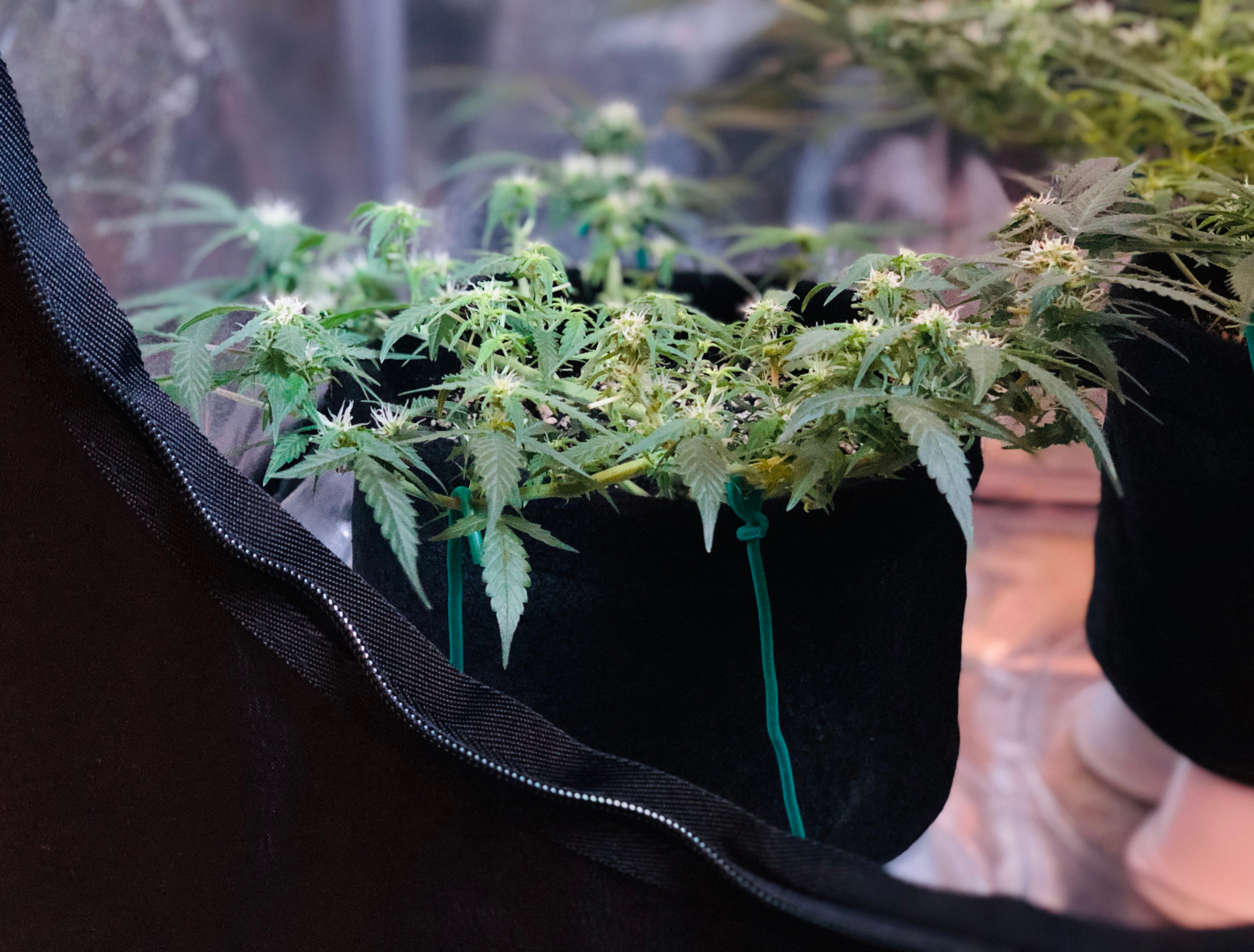
Herijuana's stretch can continue through much of the first month of bloom in taller expressions. This is where a loose trellis earns its keep. Instead of forcing every tip through a dense screen, use the net as a positioning and support tool. Pull the fastest shoots outward, keep slower branches closer to the center, and preserve gaps for air. Stop major bending once stems become woody and flower clusters begin to stack. Late aggressive manipulation around dense young flowers creates wounds, broken branches, and unnecessary recovery.
Training: selective intervention beats automatic high-stress work
Topping can work well when the plant shows strong symmetrical laterals, but it is not mandatory. A phenotype with weak lower branching may lose momentum if the main stem is removed too early. LST is the safer universal tool because it allows the grower to redistribute apical dominance without deleting productive tissue. A loose SCROG can be very effective on the more open phenotypes. Heavy mainlining is less attractive because the strain's value comes from finishing quality, not from forcing an artificial number of identical arms.
Lollipopping should also be moderate. Remove clearly shaded shoots that will never reach useful light, but do not strip every side branch simply because the plant is indica-dominant. Some Herijuana phenotypes develop thick secondary flowers that contribute real weight. The correct pruning line is where light and air stop being useful, not an arbitrary percentage of plant height. Reassess after stretch because branches that looked weak in veg can become worthwhile once the canopy opens.
Feeding: moderate appetite, strong response to restraint
The most consistent feeding signal across grow reports is that Herijuana often does not need heavy fertilizer. Begin with a moderate program and increase only when the plant shows clear demand. Excess nitrogen is especially unhelpful after the transition because it can maintain soft, crowded foliage while delaying the visual fade that helps a grower read maturity. In mineral systems, monitor runoff or root-zone concentration rather than chasing a high target. In amended soil, avoid stacking rich top-dresses simply because the flowers are dense; density is genetic structure, not proof that the plant wants a stronger nutrient solution.
Humidity and flower architecture: the main late-flower risk
When Herijuana expresses rock-hard flowers, moisture management becomes the cultivation priority. Surface airflow is not enough. The goal is to prevent stagnant humid pockets between adjacent colas and inside an overcrowded canopy. Keep branches separated before buds become immovable. Remove senescing leaves that are trapped inside flowers. Maintain clean air movement above and below the canopy and avoid allowing night humidity to spike repeatedly. General cannabis cultivation references consistently emphasize air circulation and humidity control for fungal prevention; with Herijuana, the dense flower architecture makes that general rule unusually consequential.
Do not respond to mold risk with severe late defoliation. Removing too much foliage at once can stress the plant and does not dry the center of a mature cola. Architecture must be solved earlier. In the final weeks, use gentle leaf removal, branch spacing, climate control, and frequent inspection. Squeeze-testing buds is a poor habit because it damages trichomes and can move contamination from one flower to another. Look closely at bracts, leaf stems entering the cola, and any localized discoloration instead.
Light and heat: protect resin rather than chasing maximum intensity
Herijuana can produce strong resin under good light, but there is no strain-specific evidence that extreme light intensity is required. Once the canopy is evenly illuminated, temperature becomes a better quality lever than pushing photons indefinitely. Hot tops can accelerate water loss, reduce volatile retention, and create a brittle aromatic profile. Keep the fixture high enough to avoid bleaching or tacoing and use leaf posture as feedback. The best Herijuana flower is dense, oily, and aromatic, not merely heavy.
Harvest: use whole-flower maturity, not calendar alone
A calendar date is useful only as a checkpoint. Start close inspection around the beginning of the expected window, then follow trichome maturity on the bracts, pistil recession, calyx swelling, aroma development, and the plant's slowing water use. Herijuana's heavy effect tempts growers to wait for extensive amber, but too-late harvest can flatten its aromatic contrast and increase time spent with dense buds in a risky humidity zone. For a balanced expression, many growers prefer mostly cloudy gland heads with a limited amber component. The exact percentage is less important than avoiding large populations of clear, immature trichomes.
The costly mistake to avoid with Herijuana
Herijuana's biggest quality loss usually comes from treating dense buds as proof that the plant is finished. Give the interior time to mature, but do not extend the run carelessly into a humid late-flower danger zone.
Weedth Bud Flavor Tips
Protect the faint top notes, not only the obvious earthiness
Herijuana is deceptive after harvest because its deepest aromas are robust. Earth, wood, and hash can remain even when more volatile citrus or fruit notes have been lost. A grower can therefore dry too aggressively and still believe the flavor survived. The quality target is a cured flower with separation between heavy and light aromatic layers. Moderate canopy temperatures before harvest and a cool, dark drying room help preserve that contrast.
Dense buds need a slower moisture equalization strategy
Whole branches or larger sections usually dry more evenly than small wet-trimmed nuggets because surrounding plant material slows surface dehydration. Herijuana's dense flowers benefit from that buffering effect as long as the room is not excessively humid. Air should move through the drying space, but fans should not blast directly onto the flowers. The goal is circulation around the crop, not windburn after harvest. A rapid dry can leave the center moist while the shell becomes crisp, creating both flavor loss and storage risk.
Once the flowers approach storage moisture, stabilize them gradually. If the outside softens dramatically after several hours in a closed container, internal water is still migrating outward and the batch needs more drying time. If the flower never regains any pliability and crumbles immediately, it has probably gone too far. Do not use aromatic fruit peels or other organic material to rehydrate jars; they introduce contamination risk and alter the cultivar's natural aroma.
Cure for definition rather than for a fixed number of days
Herijuana often improves noticeably over several weeks as sharp green notes recede and sandalwood, spice, and resin become easier to distinguish. The cure should not be treated as magic that repairs a poor dry. It is a stabilization period during which remaining moisture redistributes and the sensory profile becomes cleaner. Keep containers cool, dark, and minimally exposed to fresh air once moisture is stable. Research on cannabis storage shows that terpenoids decline over time under many conditions, so unnecessary heat, grinding, and repeated opening work against long-term flavor preservation.
MASTER TIP: For Herijuana, judge cure quality by aroma separation. If every note collapses into 'earthy weed,' the postharvest process preserved strength but not complexity.
Weedth Bud Boost Tips
Herijuana's bud-boost strategy should begin with canopy efficiency, not stronger fertilizer. The strain can already make hard flowers. The grower's job is to create enough well-lit tops without allowing those flowers to press against one another. On a bushy phenotype, one topping followed by outward LST can create a broad set of productive branches. On a stretchier phenotype, an earlier flip with a loose screen usually gives better room efficiency than a long vegetative period.
Branch support is a yield tool because a heavy branch that falls out of the light zone stops contributing efficiently. Install netting or stakes before flowers become fragile. Do not wait for branches to lean at week eight. A secondary support layer can be useful if the selected phenotype produces heavy side colas. Keep the support structure open enough to reach individual flowers for inspection. Herijuana rewards accessible architecture because the same spacing that supports yield also reduces mold risk.
Selective lower cleanup improves the ratio of quality flower to larf. Remove shoots that remain permanently shaded after stretch, especially thin interior growth with poor airflow. Keep productive laterals that reach the canopy. This strain does not need to be stripped into a handful of bare spears. The better goal is fewer, better-positioned flowering sites that can receive sufficient light and air. That raises usable yield even if total wet biomass changes little.
Avoid chasing unproven last-week tricks. Extended darkness, aggressive drought, heavy bloom boosters, and extreme ultraviolet exposure are often presented as guaranteed resin boosters, but evidence is limited or context-dependent. Herijuana already carries strong resin genetics. A healthier strategy is to maintain stable root function, adequate mineral availability, appropriate light, and a controlled environment until natural senescence. Consistency is the bud booster most likely to improve both weight and sensory quality.
For outdoor or greenhouse plants, root volume can build a large frame, but more plant is useful only if the finish can be protected. Train early for an open vase or broad candelabra shape, keep the center ventilated, and support major branches before autumn weather. If local conditions become humid late in the season, a slightly smaller, better-spaced plant can deliver more saleable or smokable flower than a giant plant with dense contaminated colas.
Medical Uses & Benefits
Herijuana is widely discussed by consumers seeking relaxation, sleep support, relief from physical discomfort, and a quieter mental state. Those descriptions come primarily from user experience and strain databases, not from clinical trials on Herijuana itself. High-THC cannabis can reduce some symptoms for some patients, but it can also worsen anxiety, dizziness, impaired coordination, or cognition in others. The cultivar should therefore be discussed as a reported experience profile rather than a treatment.
Its combination of strong intoxication and physical heaviness is one reason evening users often prefer it. People who find stimulating cannabis uncomfortable may appreciate the later sedating phase, while users who are sensitive to THC may find the same potency excessive. The terpene profile, including myrcene, limonene, and beta-caryophyllene in many tested samples, is relevant to aroma and is being studied biologically, but it does not justify claims that a specific terpene will treat pain, insomnia, anxiety, or inflammation in a finished flower.
Anyone using cannabis for a medical condition, taking medications, pregnant or breastfeeding, or managing cardiovascular or psychiatric risk should seek qualified medical guidance. For ordinary adult consumers, the practical harm-reduction point is simple: start with a small dose, allow the full effect to develop, and avoid driving or hazardous work. Herijuana's calm opening can underestimate the strength of its later phase.
Ideal User Profile
Herijuana suits the user who wants evening intensity rather than daytime productivity. It is a better match for a quiet night, music, a film, stretching, or preparing for sleep than for a busy social event or a task that requires fast decisions. Experienced users with moderate tolerance are more likely to appreciate its heavy body phase without being surprised by it. New consumers should approach cautiously because the effect can become much stronger after the first few minutes.
For growers, the ideal profile is someone who enjoys observation and selection. Herijuana is not difficult because it demands exotic equipment. It is challenging because the name can hide different plant shapes. A grower who measures stretch, keeps notes on feeding, opens the canopy before flowers harden, and protects the cure will get much more from it than someone who follows a one-size indica recipe.
Flavor-focused users who like dessert sweetness above everything else may find Herijuana austere. Its appeal is resinous earth, dry wood, spice, and old-school hash depth with occasional fruit or citrus highlights. That makes it especially attractive to consumers who value savory or incense-like profiles and to growers interested in a cultivar whose quality is expressed through texture and depth rather than bright candy aroma.
Grower Notes and Feedback
The most valuable pattern in grower feedback is inconsistency in stretch expression. Some plants stay low and dense. Others can lengthen enough to surprise a grower who expected a squat indica. This is exactly why average stretch numbers should not be treated as a promise. Use them as a warning that vertical change is possible, then read the individual plant. If you are growing several from seed, the first run is partly a phenotype hunt. The keeper should match your room as well as your preferred smoke.
A second recurring theme is modest nutrient demand. Multiple reports describe plants that perform without heavy feeding. That does not mean Herijuana is universally nutrient-sensitive. It means there is little reason to begin aggressively. A moderate baseline gives you room to increase if pale growth or weak flower development truly indicates demand. Starting too rich can make diagnosis harder because dark foliage, clawing, or salt stress overlap with watering and root-zone problems.
Flower structure is another split point. Some growers report extremely compact dried buds and excellent density, while others see more ordinary side flowers. This can reflect phenotype, light distribution, pruning, and environment. The best lesson is to separate genetic potential from canopy position. A lower branch that never received adequate light should not be used to judge the entire cultivar. Conversely, one giant top cola does not prove that stripping every lateral is ideal.
Mold reports also conflict, which is useful rather than frustrating. Some growers describe strong fungal resistance, while at least one phenotype report notes susceptibility. Dense flowers are intrinsically more difficult to dry internally after humidity events, regardless of a cultivar's reputation. Treat Herijuana as architecturally at risk when buds are hard and tightly packed, then let your environment prove whether that risk is low or high. Resistance should never replace inspection.
Postharvest feedback tends to reward patience. The strain's earthy profile can seem plain immediately after drying, then gain sandalwood, spice, and hash nuance as green notes fade. If a jar remains grassy after several weeks, the problem is usually not that it needs endless curing. It is more likely that the plant was harvested immature, dried poorly, or stored at an unstable moisture level. Cure refines good material; it cannot manufacture missing resin or terpene complexity.
FIELD ADVICE: If you keep only one mother from a seed run, select on the whole package: manageable stretch, strong lateral structure, dense but breathable flowers, clear sandalwood-spice aroma, and a finishing time that suits your room. Potency alone is not enough.
Weedth Editor's Note
The tradeoff I would plan around
What I like about Herijuana is that it forces a grower to look past the label. I would never walk into a run assuming 'indica' means short, simple, and automatically easy. The better Herijuana plants can be compact, but the line also produces expressions that open dramatically after the flip. My first decision would be to watch branch behavior in veg and leave more vertical reserve than the early plant seems to need.
I would also keep the feed restrained until the plant asks for more. Dense buds often tempt growers to equate flower weight with nutrient hunger. Herijuana does not need that mentality. I would rather see a slightly lighter green plant entering late bloom with clean leaf posture than a glossy dark canopy that stays soft and crowded. The cultivar already has enough genetic density; I want the environment and root zone to support maturation, not force vegetative behavior deep into flower.
The part I would protect most aggressively is the late-flower microclimate. Once the flowers harden, I want space between colas, movement through the canopy, and no forgotten leaves decomposing inside the buds. I would not perform a heroic defoliation at the end. I would rather have designed the plant correctly three weeks earlier. That approach is less dramatic, but it is how dense flowers reach the drying room clean.
On the consumption side, Herijuana is not my idea of an all-day strain. Its value is that it knows how to become heavy. I would keep it for evenings when a slower pace is useful. Flavor-wise, I would give the cure time to expose the sandalwood, spice, and hash character. If I opened the jar and smelled only generic earth, I would consider the postharvest work unfinished or the selected phenotype unremarkable. The best Herijuana should have depth, not just strength.
Weedth Score
Growing Experience 8.2/10 Rewarding and fairly resilient, but phenotype-dependent stretch and dense-bud humidity require attention.
Bud Structure & Visual Appeal 8.8/10 The best expressions form hard, resinous flowers with serious visual weight. Density can become a climate liability.
Aroma Complexity 8.4/10 Sandalwood, earth, spice, hash, and occasional fruit create depth without relying on dessert sweetness.
Flavor & Smoothness 8.3/10 Rich and resinous when properly matured and cured. Rushed drying can make the profile flat and woody.
Effects & High Experience 9.0/10 Powerful evening relaxation with a gradual heavy finish. Too intense for some low-tolerance users.
Overall Satisfaction & Recommendation 8.6/10 A strong choice for experienced indica fans and growers willing to select the right architecture for their space.
Herijuana's overall strength is coherence. The plant, flower, aroma, and effect all point toward a dense, resinous, evening-oriented cultivar. Its main weakness is that the grow can be less predictable than the indica label suggests. That is not enough to lower the recommendation substantially; it simply means the first run should be treated as observation and selection rather than autopilot.
PERSONAL CLOSER: I come back to Herijuana for the same reason I respect good old-school hash flower: it does not need candy flavors to be memorable. Give me the sandalwood, the resin, and the slow heavy finish.
FAQ
Is Herijuana easy to grow for a beginner?
It can be manageable for a careful beginner, but I would rate it moderate rather than effortless. The plant usually does not demand exotic nutrition, yet stretch and flower density vary by phenotype. A beginner who leaves vertical room, uses gentle training, avoids overfeeding, and controls humidity can do well. The biggest mistake is assuming all Herijuana plants will remain squat.
How much does Herijuana stretch after the flip?
There is no single reliable multiplier. Grow reports range from modest stretch to roughly doubling or more, and some lines show very different plant shapes. Plan conservatively: leave meaningful headroom, start guiding branches before the flip, and watch the first three to four weeks closely.
What flowering time should I expect?
Many indoor reports fall around 60-72 days, with an average close to the upper 60s in one multi-grower dataset. Some descriptions advertise a faster finish. Use the calendar to schedule inspections, then harvest from maturity signals on the actual flower rather than from the date alone.
Does Herijuana need heavy feeding to make dense buds?
Usually no. Multiple grow reports describe modest fertilizer demand. Start moderate and respond to the plant. Excess nitrogen or salt concentration can create a dark, crowded canopy without improving final flower quality.
Is SCROG a good choice?
A loose screen can be excellent for open or stretchy phenotypes because it spreads tops and later supports heavy flowers. A very compact phenotype may not need a full screen and can work with simple LST. Match the method to branch length and vigor.
Should I top Herijuana?
Top when the plant has strong laterals that can replace the main stem efficiently. If lower branches are weak or the plant is already compact, LST may preserve more momentum. Topping is a tool, not a requirement.
Is Herijuana mold resistant?
Reports are mixed. Some growers describe good fungal tolerance, while others have encountered mold in dense flowers. Treat hard colas as a moisture risk regardless of reputation. Spacing, late-flower RH control, and inspection are more dependable than a resistance label.
What does Herijuana smell and taste like?
The core profile is earthy, woody, spicy, hash-like, and often sandalwood-like. Some phenotypes add dark fruit or a small citrus lift. It is more resinous and savory than candy-sweet.
How long should Herijuana be cured?
There is no magic minimum, but several weeks of stable curing often improves separation between earth, wood, spice, and resin. The cure only works if the initial dry was controlled. Do not jar wet flowers in the hope that curing will finish the drying safely.
Is Herijuana a daytime strain?
Most users find it better for evening use because the body effect and sleepiness can build over time. Smaller amounts may feel functional for some experienced users, but the heavy late phase makes it a poor default for work, driving, or demanding daytime tasks.
Can Herijuana be grown outdoors in a cool climate?
It may tolerate temperature variation reasonably well in some expressions, but the more important limitation is whether the plant can finish before persistent wet weather. Cool and dry is very different from cool and rainy. Dense colas need a clean finishing window.
What is the single best quality tip for Herijuana?
Design the canopy for the final buds, not the veg plant. Leave room around future colas, keep feeding moderate, and protect a slow, cool dry. Those choices preserve both resin quality and the sandalwood-spice flavor that distinguishes the strain.
Similar Strains
The most useful comparisons are strains that share Herijuana's dense resin, evening weight, and savory old-school flavor, while differing in structure or aromatic emphasis.
| Similar strain | Why it is similar, and how it differs |
|---|---|
| Afghan Kush | Shares the deep indica body character, earthy resin, and compact-flower tradition. Afghan Kush is usually more structurally predictable and less likely to show Herijuana's open stretch. |
| Northern Lights | Comparable for nighttime calm, resin, and beginner-friendly resilience. Northern Lights generally finishes with a simpler, more predictable compact architecture. |
| Hash Plant | Similar old-school hash aroma and dense resinous flowers. Hash Plant usually emphasizes a more direct hash-and-earth profile with less sandalwood complexity. |
| Sensi Star | Appeals to users who want strong evening potency and dense indica-style flowers. Its aromatic expression can be sharper and more pungent, while Herijuana often feels woodier and more resinous. |
| Bubba Kush | Both suit slow evening use and produce earthy, hash-like depth. Bubba Kush tends to stay more obviously compact, while Herijuana can surprise with flowering stretch. |
| G13 | Comparable in heavy potency and old-school indica character. G13 expressions often emphasize a sharper pine or musk note and can differ more in documented lineage. |
Share this article
A quick overview of the topics covered in this article.
Follow us
Latest articles
September 29, 2026
September 29, 2026
September 29, 2026
September 29, 2026
