
Late-Flower Feeding and Natural Fade: Senescence Physiology, Nitrogen Taper, and Carbohydrate Translocation
The final two to three weeks of cannabis flowering (Weeks 7 through 10 depending on cultivar photoperiod) represent a critical physiological transition from active biomass accumulation to programmed monocarpic senescence. Traditional cultivation folklore advocates for drastic, abrupt nutrient starvation – commonly termed the “two-week plain water flush” – under the mistaken belief that withholding all mineral ions forces the plant to purge absorbed nutrients, resulting in cleaner combustion and smoother smoke. Modern horticultural research and plant biochemistry demonstrate that abrupt starvation induces violent cellular stress, triggering premature leaf drop, vascular collapse, and the degradation of secondary aromatic metabolites before trichome maturity is achieved. In contrast, an agronomically managed late-flower feeding strategy deploys a stepped nutrient taper that systematically reduces nitrogen and potassium while maintaining baseline osmotic pressure and enzymatic cofactor availability. This allows the plant to naturally dismantle photosynthetic machinery, remobilize stored starch into simple sugars, and unmask vibrant anthocyanin pigmentation (the “autumn fade”) without triggering mold-prone foliar necrosis. This comprehensive guide outlines the biochemical mechanisms of monocarpic senescence, debunks common flushing fallacies, establishes clinical week-by-week late-flower fertility schedules, and provides actionable protocols to optimize cannabinoid and terpene preservation.
The Biochemistry of Monocarpic Senescence in Cannabis
Cannabis is an annual, dioecious, monocarpic plant. In biological terminology, monocarpy defines an organism that flowers once in its lifespan, concentrates all available metabolic energy into reproduction, and undergoes genetically programmed whole-plant senescence and death following floral maturation. In commercial seedless cultivation (sinsemilla), female flowers are unpollinated, yet the overarching genetic cascade governing senescence remains entirely intact.
Senescence is not a passive process of dying or running out of food; it is an active, tightly regulated developmental phase governed by genetic transcription factors, principally belonging to the NAC and WRKY gene families. When the plant perceives changing photoperiods, shifting red-to-far-red ratios, and declining root-zone metabolic sinks, it activates a systemic catabolic program designed to recover mobile resources from vegetative source tissues (fan leaves) and redistribute them into terminal reproductive sinks (the floral buds and resinous calyxes).
During this programmed disassembly, mesophyll cells systematically dismantle chloroplasts, the cellular organelles responsible for photosynthesis. The enzyme chlorophyllase initiates the breakdown of chlorophyll pigments into colourless tetrapyrroles. Simultaneously, the massive reserves of ribulose-1,5-bisphosphate carboxylase-oxygenase (RuBisCO) – the primary protein complex responsible for carbon fixation, which accounts for over 50% of the total soluble protein in green leaves – are degraded by vacuolar proteases into free amino acids. These amino acids are loaded into the phloem and translocated upward to fuel final calyx swelling and the synthesis of terpene synthases and cannabinoid synthases within the glandular trichome secretory disc cells.
This remobilization efficiency is directly linked to plant survival in evolutionary biology. In wild populations, annual cannabis plants allocate every milligram of assimilated mineral mass toward maximizing seed viability. In sinsemilla cultivation, although no seeds are formed, the genetic machinery directs these mobile nitrogenous compounds, carbohydrates, and organic phosphorus into resin head maturation. When cultivators maintain excessive fertilization right up to harvest, this natural degradation and remobilization pathway is biochemically blocked. The high concentration of external mineral salts prevents the activation of senescence-associated genes (SAGs), leaving high residual concentrations of structural nitrates, nitrites, and unassimilated amino acids inside vegetative calyx tissues.
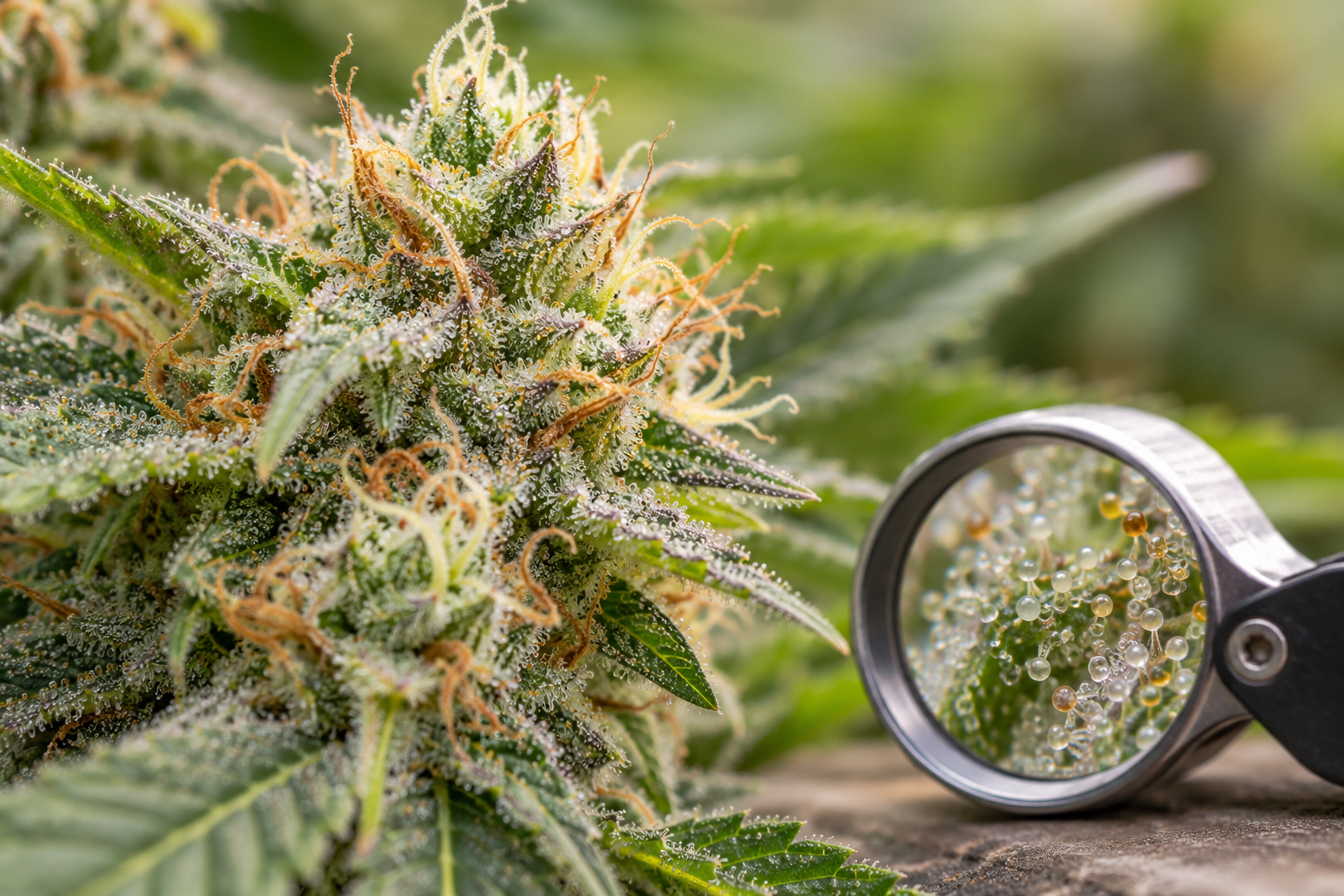
Natural autumn senescence involves the regulated remobilization of mobile minerals and carbohydrates into ripening floral calyxes, distinct from acute nutrient starvation.
Nitrogen Tapering vs Acute Starvation: Photosynthetic Disassembly
The fundamental conflict in late-flower cannabis cultivation lies in the distinction between a controlled mineral taper and acute starvation. Understanding this difference is essential to mastering crop quality and smoke smoothness.
Nitrogen is a highly mobile element within plant vascular tissue. When a cultivator maintains high nitrate nitrogen (NO3–) feeding throughout late bloom (>140 mg/L N through harvest), the plant continues synthesizing new chlorophyll molecules at the same rate they are degraded. As a result, the leaves and floral bracts remain intensely dark green until the day of harvest. When this material is chopped, hung, and dried, the unassimilated nitrate and abundant structural chlorophyll remain trapped within plant tissues. Chlorophyll contains four nitrogen atoms coordinated around a central magnesium ion; when burned, excess nitrate and chlorophyll produce harsh, acrid smoke containing nitrogen oxides, leaving a dark, charcoal-like ash with high particulate residue.
Conversely, imposing acute starvation – cutting all fertilizer inputs to 0.0 dS/m of pure water for 14 or 21 days – causes catastrophic cellular shock. In soilless substrates like coco coir or rockwool, which possess low chemical buffering capacity, dropping input EC to zero creates an extreme osmotic gradient. Pure water floods root cells, dilutes the internal cellular sap, and stops transpiration-driven mass flow. Deprived of all external nutrients, the plant frantically strips lower fan leaves at a pace that exceeds its vascular transport capacity. Fan leaves turn brown, die, shrivel, and desiccate directly on the plant stem. These dead, necrotic leaves trapped within dense, humid floral clusters become primary colonization points for Botrytis cinerea (gray mold / bud rot).
The agronomically sound approach is a stepped nitrogen taper. Beginning at Week 6 or 7 of bloom, cultivators systematically decrease input nitrate nitrogen from 120 ppm down to 60 ppm, and finally down to 20 to 30 ppm during the final 10 days. This gradual reduction signals to the plant that external nitrogen is scarce, accelerating the natural hydrolysis of internal RuBisCO and clearing chlorophyll from floral bracts while maintaining cell turgor, vascular transport, and trichome metabolic integrity.
Potassium, Phosphorus, and Micronutrient Dynamics During Ripening
A ubiquitous practice in cannabis cultivation is the aggressive application of heavy “bloom boosters” – chemical PK formulations with massive ratios like 0-50-30 or 9-18-9 – late into the flowering cycle. While cannabis requires elevated potassium (K+) and phosphorus (as H2PO4–) during the peak floral swelling phase (Weeks 4 to 6 of bloom), continuing heavy PK applications into Weeks 8 and 9 is agronomically counterproductive and detrimental to final flower quality.
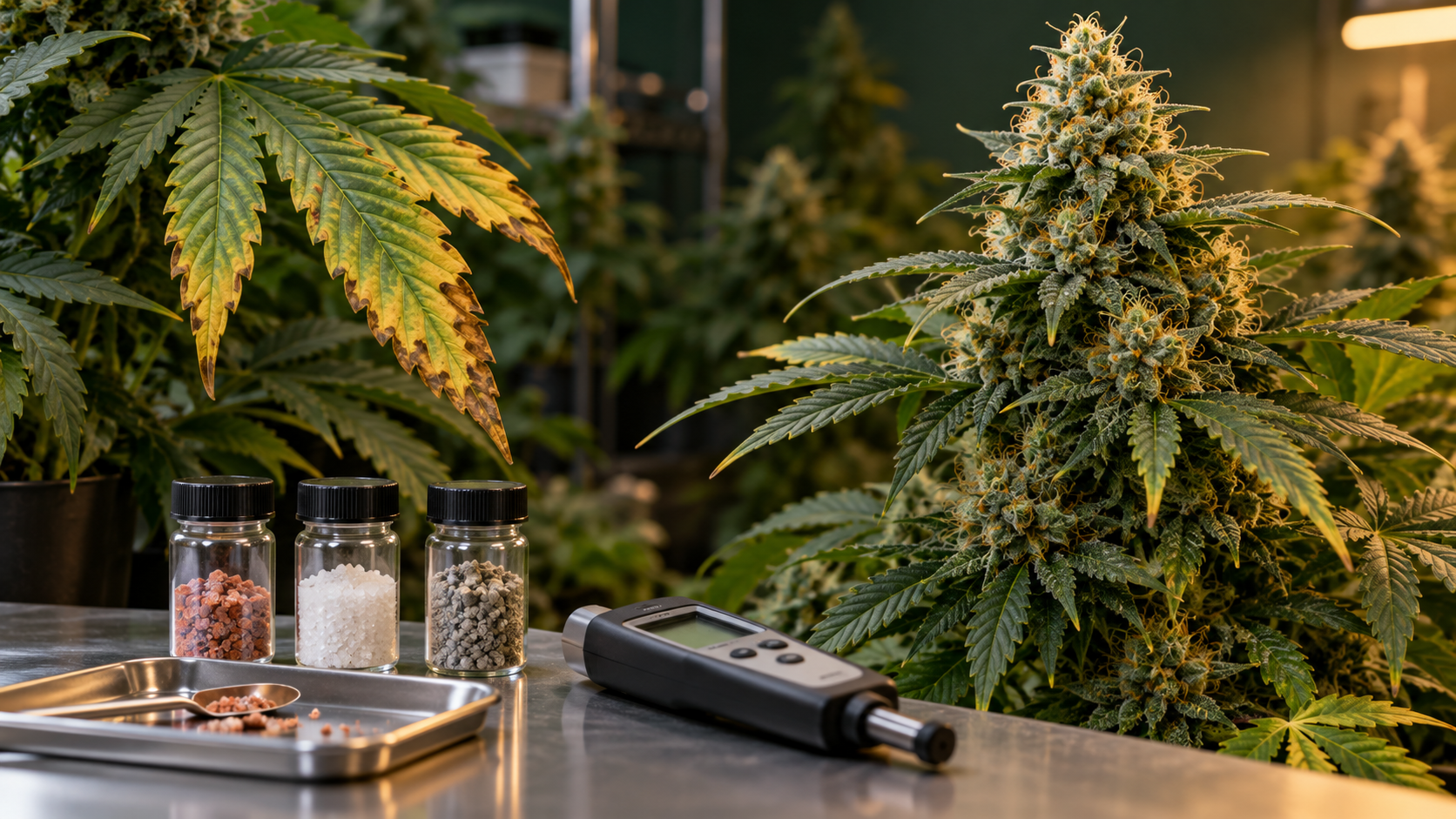
Late-stage potassium and phosphorus demands plateau after peak flower bulking; continuing heavy PK boosters late in bloom drives osmotic salt stress.
1. Potassium Saturation and Cation Imbalances
Potassium is an enzymatic activator and the primary osmotic regulator in plant cells, governing guard cell turgor and phloem carbohydrate loading. However, once floral calyx expansion completes (typically around Day 45 to 50 of bloom), the plant’s physiological demand for new potassium drops dramatically. If cultivators continue dumping high concentrations of potassium sulfate or monopotassium phosphate (MKP) into the root zone, potassium accumulates in the substrate pore water.
Excess potassium exerts severe cation antagonism against calcium (Ca2+) and magnesium (Mg2+). Because monovalent potassium moves faster through root ion channels than divalent cations, high root-zone potassium effectively blocks calcium uptake into ripening calyxes. Calcium is a critical structural component of cell walls, cross-linking pectic polysaccharides in the middle lamella. Starving ripening floral tissues of calcium weakens calyx cell walls during the exact window when bud density and humidity are at their highest, dramatically increasing susceptibility to mold penetration.
2. Phosphorus Accumulation and Environmental Toxicity
Academic research conducted by Dr. Youbin Zheng and Dr. Nirit Bernstein has conclusively demonstrated that cannabis does not require the massive phosphorus concentrations historically promoted by nutrient manufacturers. While floral initiation requires modest phosphorus availability (approximately 40 to 60 mg/L P), late-stage cannabis plants assimilate less than 30 mg/L P. Applying excessive phosphorus late in bloom leads to luxury accumulation of orthophosphate in substrate media, creating root-zone salt toxicity and locking out essential micronutrients like zinc and iron.
During the final two weeks of flowering, input potassium should be stepped down from peak levels (200 to 240 ppm) to a maintenance level of 80 to 100 ppm, and phosphorus should be reduced below 30 ppm. This relieves root-zone osmotic pressure, prevents cation lockouts, and allows floral bracts to mature cleanly.
Flushing Fallacies Debunked: Agronomic Evidence from Controlled Trials
No topic in cannabis cultivation generates more passionate debate than pre-harvest flushing. The traditional myth asserts that feeding cannabis plain water for the final 10 to 14 days “flushes out” excess minerals, heavy metals, and fertilizers accumulated inside the buds, transforming a harsh smoke into a silky, white-ashing product. To evaluate this claim, we must examine established plant physiology and empirical scientific studies.
First, from a biological standpoint, plants do not possess an excretory circulatory system like mammals. Once an inorganic ion (such as a calcium atom or sulfate ion) is absorbed through root hairs, transported up the xylem, and incorporated into structural cellular components (such as cell walls, enzymes, or membrane lipids), it cannot be transported backward down the xylem and excreted out the roots. The xylem is a unidirectional, transpiration-driven transport conduit that moves strictly from root to shoot. Feeding plain water to the root zone does not draw minerals out of mature floral tissues; it simply starves the root system of external ions.
Second, scientific research has subjected the pre-harvest flush to empirical testing. A landmark study conducted at the University of Guelph by Stemeroff (2017) evaluated the effects of flushing on cannabinoid concentration, terpene content, and elemental tissue composition in indoor cannabis crops. The researchers compared plants flushed with plain water for 14 days against plants maintained on continuous fertilizer feeding. Blind sensory panels and laboratory tissue spectrometry revealed two critical conclusions:
- Elemental Mineral Content: Tissue spectrometry demonstrated that 14 days of plain water flushing resulted in no statistically significant reduction in mineral content within floral bud tissue. While mobile elements in mature fan leaves declined slightly as the plant cannibalized its own foliage, the elemental composition of the actual dried buds remained unchanged.
- Sensory and Smoke Quality: In double-blind sensory consumer panels evaluating smoothness, aroma, and ash quality, participants showed no preference for flushed flower over non-flushed flower, with several panels rating flower from mildly fertilized plants as smoother and more flavorful due to preserved terpene fractions.
The quality metric long associated with “good flushing” – smooth combustion and clean white ash – is not governed by withholding fertilizer for two weeks; it is governed by post-harvest moisture management, proper curing, and chlorophyll degradation. When cannabis is dried slowly under optimal 60 °F / 60% RH conditions and cured thoroughly in airtight containers, natural aerobic enzymes break down remaining chlorophyll, starches, and nitrates into elemental gases and water vapor, yielding the smooth, non-irritating smoke cultivators desire.
Cultivator Inquiry: The 14-Day Plain Water Flush Debate
Should I completely starve plants with plain RO water for 14 days?
Question sent by: Julian Ramirez, via email.
“I grow top-shelf craft flower in 3-gallon coco coir under 1000W LED fixtures. For years, I have followed the old-school rule of running pure RO water with zero nutrients for the final two full weeks of bloom. Recently, our yields dropped slightly on our dense exotic crosses, and several colas developed botrytis deep inside the buds during the final week. My head grower argues that our 14-day zero-EC flush is starving the plants and causing bud rot, while I believe that stopping the flush will make the ash black and ruin our terpenes. What does plant science say about how long and how strong late-flower feeding should be?”
Julian, your head grower’s diagnosis is spot on. Running a 14-day zero-EC flush in inert coco coir under intense high-PPFD lighting is the direct catalyst for both your yield decline and your botrytis outbreaks.
Coco coir has very little nutrient storage capacity compared to living soil. When you apply pure RO water (0.0 dS/m EC) for 14 straight days, the pore-water electrical conductivity collapses instantly. The massive light energy pouring from your 1000W LEDs continues to drive transpiration and photochemical reactions in the upper canopy, but the root zone cannot provide even baseline ions to sustain cellular turgor or membrane integrity. The plant enters acute panic senescence, rapidly stripping nitrogen, potassium, and magnesium from upper sugar leaves and bracts.
Crucially, as calcium uptake ceases completely, cell walls in the interior calyxes lose structural rigidity. Internal sugar leaves senesce and die from the petiole outward, leaving dead, rotting plant matter trapped inside your dense colas. Botrytis cinerea spores require dead or dying plant tissue to germinate; your 14-day starvation creates the exact necrotic fuel the fungus needs to rot your prize buds from the inside out.
The solution is not to blast the plants with heavy nutrients until harvest, but to replace your violent starvation with a gentle, stepped late-flower taper. During Week 8, reduce your input EC from 2.2 dS/m down to 1.2 dS/m, cutting nitrogen in half while maintaining baseline calcium, magnesium, and sulfur. During the final 5 to 7 days before harvest, step the EC down to a gentle 0.4 to 0.6 dS/m (or use a low-dose finishing solution). This satisfies baseline vascular osmotic requirements, prevents leaf dieback inside colas, preserves delicate monoterpenes, and guarantees the clean white ash you are looking for through slow, controlled post-harvest curing.
Environmental Modulation: Temperature Drops, VPD, and Anthocyanin Triggers
The visual spectacle of the late-flower “autumn fade” – rich purple, burgundy, red, and golden yellow leaf colorations – is governed as much by atmospheric environmental steering as it is by nutrient management. While reducing nitrogen unmasks these colors by halting chlorophyll replenishment, specific environmental cues accelerate the genetic expression of anthocyanins.
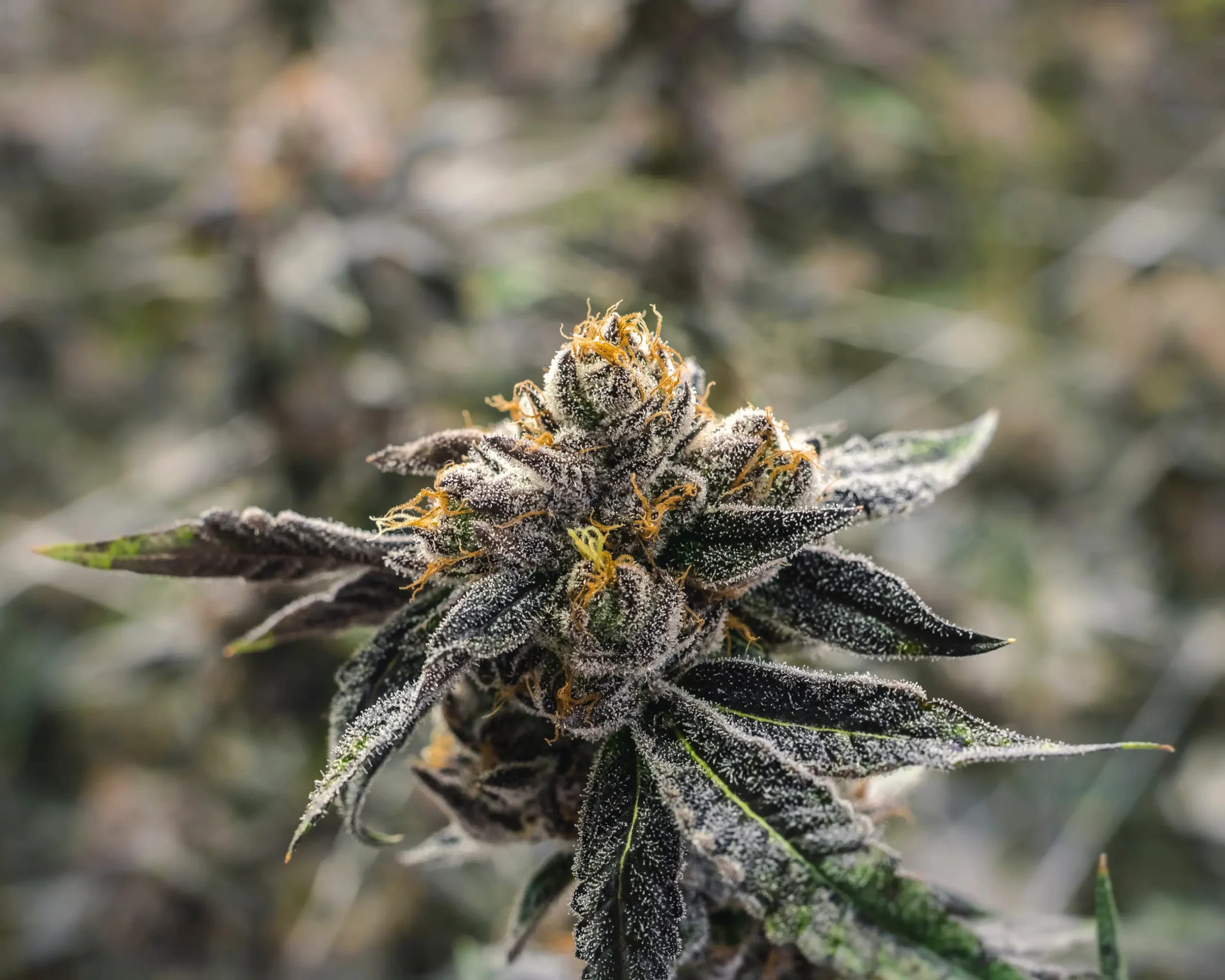
Anthocyanin pigment accumulation in bracts and leaves is unmasked as chlorophyll synthesis downregulates under controlled late-flower temperature differentials.
1. Temperature Differentials (Day-to-Night Drops)
Anthocyanins are water-soluble flavonoid pigments synthesized within the plant cell cytoplasm and stored within vacuoles. Their primary ecological function in nature is photoprotection and thermal insulation: they act as a biological sunscreen, absorbing excess light wavelengths and protecting vulnerable photosynthetic membranes during cold autumn days.
To stimulate robust anthocyanin synthesis without stalling plant metabolism, cultivators manipulate day-to-night temperature differentials during the final two to three weeks of flowering:
- Daytime Canopy Temperature: Maintain daytime canopy temperatures between 22 °C and 24 °C (72 – 75 °F). If day temperatures exceed 26 °C, anthocyanin synthesis enzymes are inhibited, and delicate volatile monoterpenes (such as myrcene and limonene) volatilize into the exhaust air.
- Night-Time Air Temperature: Lower night-time temperatures to 16 °C to 18 °C (60 – 64 °F) during the final 14 days. This 6 to 8 °C temperature drop triggers cold-shock signaling cascades, activating phenylpropanoid pathway enzymes (specifically chalcone synthase, CHS) that synthesize deep anthocyanin pigmentation in genetically capable cultivars.
- Avoid Extreme Chilling: Night temperatures must never drop below 14 °C (57 °F). Severe cold locks out phosphorus uptake completely, slows root water absorption, and raises relative humidity, dramatically escalating the risk of condensation and botrytis bud rot.
2. Relative Humidity and Vapor Pressure Deficit (VPD) Tightening
During late flower, the physical density of the floral canopy is at its lifetime peak. Thousands of swollen calyxes are packed tightly along stems, creating microclimates of stagnant, saturated air inside the colas. To safeguard the crop during the fade, cultivators must tighten room VPD:
- Relative Humidity Target: Lower ambient relative humidity progressively from 50% down to 40% to 45% during the final two weeks of bloom.
- Late-Bloom VPD Target: Maintain room VPD between 1.2 and 1.5 kPa. This elevated VPD creates sufficient evaporative suction to pull moisture continuously through dense colas, preventing localized water condensation on trichome heads while driving steady calcium movement to mature calyxes.
During this late floral maturation phase, carbohydrate dynamics undergo a dramatic transition. Throughout vegetative growth and mid-bloom, leaves act as carbohydrate sources, exporting sucrose synthesized through the Calvin cycle to active vegetative and floral meristems. As the plant enters late-stage senescence, starch stored within leaf amyloplasts and stem parenchyma is rapidly hydrolyzed by beta-amylase enzymes into maltose and free glucose. This surge in free hexose sugars increases vacuolar osmotic potential, improving freeze tolerance and protecting fragile cell membranes against desiccation. When coupled with a steady nutrient taper, these mobilized carbohydrates fuel the continuous enzymatic activity of monoterpene synthases (such as beta-caryophyllene, limonene, and pinene synthases) in glandular trichome disc cells, culminating in the dense, aromatic resin profile characteristic of perfectly finished craft flower.
Late-Flower Precision Fertility and EC Stepping Matrix
To achieve an optimal fade while preserving flower density and terpene concentrations, the following clinical stepped schedule should be implemented across the final four weeks of a standard 9-to-10 week flowering cycle in soilless substrates (coco coir or rockwool):
| Flowering Stage | Target Input EC (dS/m) | Target Input pH | Elemental N (ppm) | Elemental P (ppm) | Elemental K (ppm) | Elemental Ca / Mg (ppm) | Agronomic Focus |
|---|---|---|---|---|---|---|---|
| Week 6 (Peak Bulking) | 2.2 – 2.6 | 5.8 – 6.0 | 110 – 130 | 50 – 60 | 200 – 240 | 120 / 55 | Maximum floral biomass swelling; peak potassium and water consumption. |
| Week 7 (Maturation Shift) | 1.8 – 2.1 | 5.8 – 6.0 | 80 – 95 | 35 – 45 | 150 – 180 | 100 / 45 | Calibrate nitrogen downward; halt bloom boosters; initiate early trichome ripening. |
| Week 8 (The Taper Phase) | 1.2 – 1.5 | 5.9 – 6.1 | 45 – 60 | 25 – 30 | 100 – 120 | 70 / 35 | Chlorophyll breakdown accelerates; lower fan leaves fade to yellow and purple; maintain calcium to protect calyx walls. |
| Week 9 (Finishing Flush) | 0.4 – 0.6 | 6.0 – 6.2 | 15 – 25 | 10 – 15 | 40 – 60 | 30 / 15 | Gentle low-solute rinse; clears substrate salt buildup without osmotic root shock; full autumn fade expressed. |
| Final 48 Hours | Halt Irrigation | N/A (Dry-Down) | 0 | 0 | 0 | 0 | Enforce 30% to 40% substrate dry-back prior to harvest; concentrates essential oils and reduces wet trim moisture mass. |
Diagnostic Differentiation: Natural Fade vs Pathogen Necrosis
During late flower, cultivators must inspect their canopies daily with clinical precision. Misdiagnosing a fatal pathogen outbreak as “just the natural fade” allows mold and root rot to decimate a crop within 48 hours of harvest.
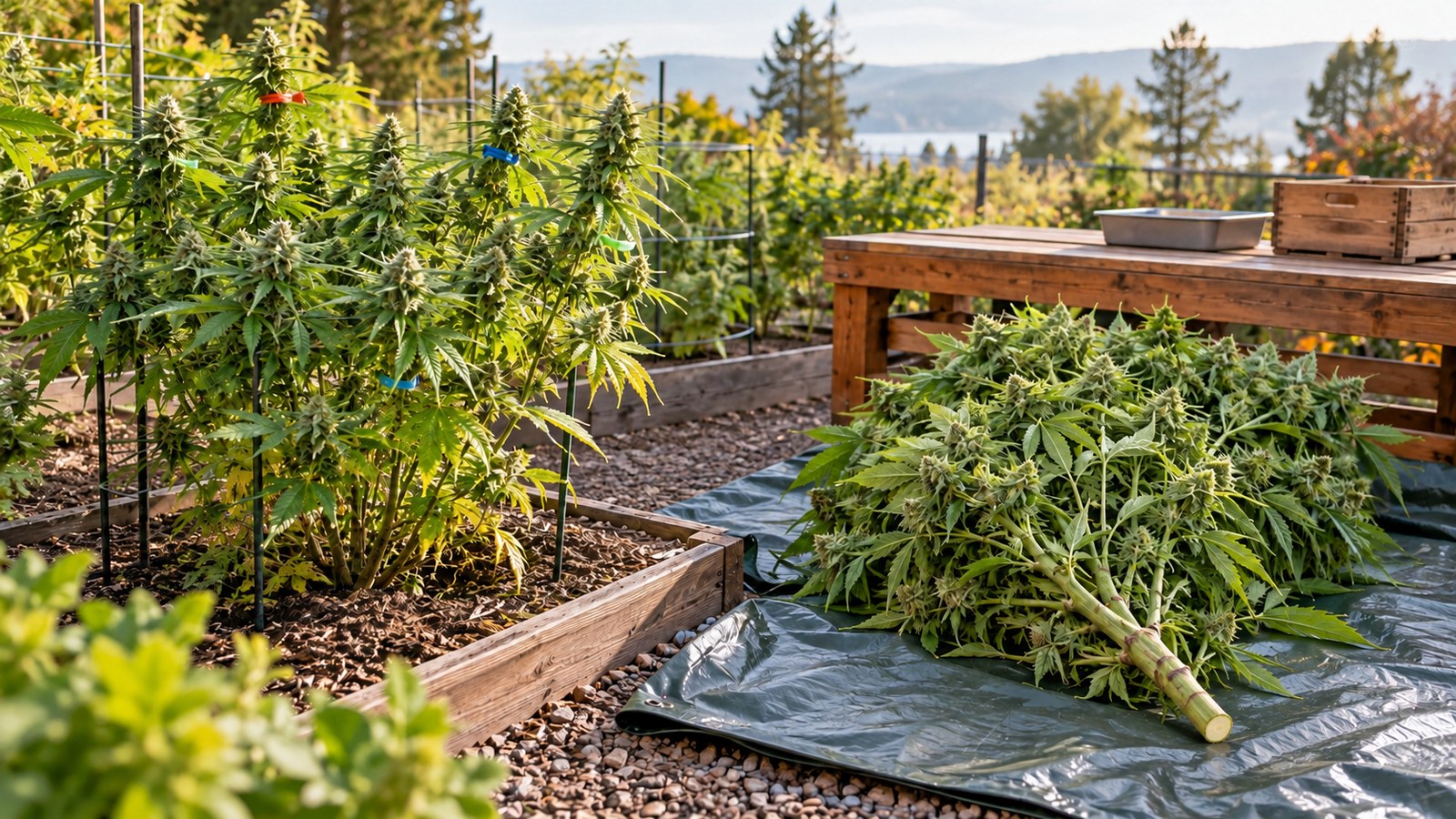
Executing a measured nutrient taper rather than an abrupt pure-water flush preserves vascular cell integrity and prevents pre-harvest foliar dieback.
1. Characteristics of True Physiological Fade
A healthy, natural senescence exhibits distinct morphological patterns:
- Symmetrical Progression: Color changes develop symmetrically across opposing leaves and progress predictably from the oldest, lowest fan leaves upward toward the canopy.
- Intact Leaf Turgor: Even as leaves turn yellow, magenta, or violet, the leaf tissue remains supple, alive, and fully turgid. The leaf blade does not feel dry or brittle to the touch.
- Firm Petioles: The leaf petiole connecting the blade to the main stem remains rigid and structurally sound. Leaves do not detach spontaneously until full senescence is complete.
2. Red Flags Indicating Pathogen Infection or Toxic Shock
If any of the following symptoms appear, the canopy is suffering from a pathology rather than a natural fade:
- The “Single Dead Sugar Leaf” Flag: A single small sugar leaf protruding from the center of a dense bud turns pale brown, wilts, and curls, while surrounding foliage remains green. If pulled gently, the leaf slips out effortlessly from the bud core with zero resistance, revealing a slimy, gray-brown fungal base. This is 100% confirmation of active Botrytis cinerea bud rot. The entire cola must be excised immediately.
- Asymmetrical, Spotty Chlorosis: Yellowing that appears randomly on one side of a plant or manifests as jagged, irregular necrotic patches with dark halos indicates fungal leaf septoria, bacterial blight, or acute root-zone Pythium rot.
- Crispy, Brittle Foliage: Leaves that brown and shatter like dry potato chips indicate severe osmotic salt burn, root-zone desiccation, or localized heat scorch from LED diodes placed too close to the canopy.
Standard Operating Procedure: The Clinical Late-Flower Taper Protocol
Execute this repeatable four-phase protocol during the final three weeks of flowering to ensure maximum terpene retention, smooth smoke quality, and zero mold losses:
Phase 1: Substrate Leachate Audit (Start of Week 7)
Measure your root-zone pore water electrical conductivity using the PourThru or leachate extraction method. If your runoff EC exceeds 3.5 dS/m, the root zone is saturated with residual mineral salts. Before beginning your taper, administer a single volumetric reset fertigation event: apply 1.5 container volumes of nutrient solution mixed to 1.2 dS/m at pH 5.9 with a 30% leaching fraction to flush accumulated mineral crusts out of the media base.
Phase 2: Implementing the Nitrogen and PK Step-Down (Weeks 7 & 8)
Reformulate your reservoir according to the Late-Flower Stepping Matrix. Reduce input nitrate nitrogen by 50% and decrease potassium sulfate and bloom booster concentrations. Maintain input electrical conductivity at 1.2 to 1.4 dS/m. Ensure baseline calcium (60 to 70 ppm) and magnesium (30 to 35 ppm) remain present to prevent cellular collapse in ripening calyxes.
Phase 3: The Low-EC Finishing Rinse (Week 9 / Final 5 to 7 Days)
Transition the fertigation system to a low-solute finishing solution formulated at an EC of 0.4 to 0.6 dS/m at pH 6.0 to 6.2. If desired, incorporate organic carboxylic acids or a mild carbohydrate-based finishing rinse. Maintain standard irrigation frequency, achieving a modest 10% to 15% leaching fraction per event. This gently sweeps mobile salts from root surfaces while providing sufficient osmotic pressure to prevent root hair lysis.
Phase 4: The Pre-Harvest Dry-Down (Final 48 Hours)
Terminate all automated irrigation 36 to 48 hours prior to harvest. Allow the container to dry back to approximately 30% to 40% volumetric water content. This mild water deficit triggers an endogenous ethylene and jasmonic acid surge that stimulates trichome terpene retention, hardens resin heads, and significantly reduces the total water mass that must be evaporated during the subsequent commercial drying phase.
Late-Flower Management Standard Operating Checklist
Verify these critical cultivation checkpoints daily throughout the final three weeks of flowering:
- Input nitrate nitrogen is reduced by 40% to 50% starting at Week 7 of bloom to initiate natural chlorophyll degradation.
- Heavy commercial PK boosters are completely phased out by Day 45 of flower to prevent late-stage potassium toxicity.
- Baseline calcium (60+ ppm) is maintained through Week 8 to preserve calyx cell wall strength against mold penetration.
- Abrupt two-week pure RO water starvation is avoided in favor of a stepped nutrient taper down to 0.5 dS/m.
- Daytime canopy temperatures are maintained at 22 to 24 °C; night temperatures are lowered to 16 to 18 °C to trigger anthocyanin fade.
- Room relative humidity is lowered to 40% to 45% with VPD held tightly between 1.2 and 1.5 kPa.
- Dense colas are inspected daily with a 10x loupe for isolated necrotic sugar leaves indicating internal botrytis.
- Substrate leachate EC is monitored to ensure root-zone salts decline steadily toward 1.0 dS/m before harvest.
- A 48-hour pre-harvest substrate dry-back is enforced to concentrate essential oils and streamline post-harvest drying.
- Harvest timing is determined by glandular trichome head maturity (80% cloudy, 10-20% amber) rather than leaf color alone.
Scientific References
- Bernstein, N., Gorelick, J., Zerahia, R., & Koch, S. (2019). Impact of environmental conditions and nutrient availability on secondary metabolite production in medical cannabis. Industrial Crops and Products, 138, 111467.
- Bugbee, B. (2020). Toward an optimal spectral quality and nutritional regime for indoor cannabis cultivation. Frontiers in Plant Science, 11, 570.
- Marschner, H. (2012). Marschner’s Mineral Nutrition of Higher Plants (3rd ed.). Academic Press, London.
- Saloner, A., & Bernstein, N. (2020). Response of medical cannabis to nitrogen: Macronutrient uptake, biomass accumulation, and physiological functioning. Industrial Crops and Products, 158, 112995.
- Stemeroff, J. (2017). Irrigation management strategies for medical cannabis in soilless substrate (Master’s thesis, University of Guelph). Guelph, Ontario, Canada.
- Taiz, L., Zeiger, E., Møller, I. M., & Murphy, A. (2015). Plant Physiology and Development (6th ed.). Sinauer Associates, Sunderland, MA.
- Zheng, Y. (2021). Handbook of Cannabis Production in Controlled Environments. CRC Press, Boca Raton, FL.
Share this article
A quick overview of the topics covered in this article.
Follow us
Latest articles
November 4, 2026
November 4, 2026
November 4, 2026
November 4, 2026