
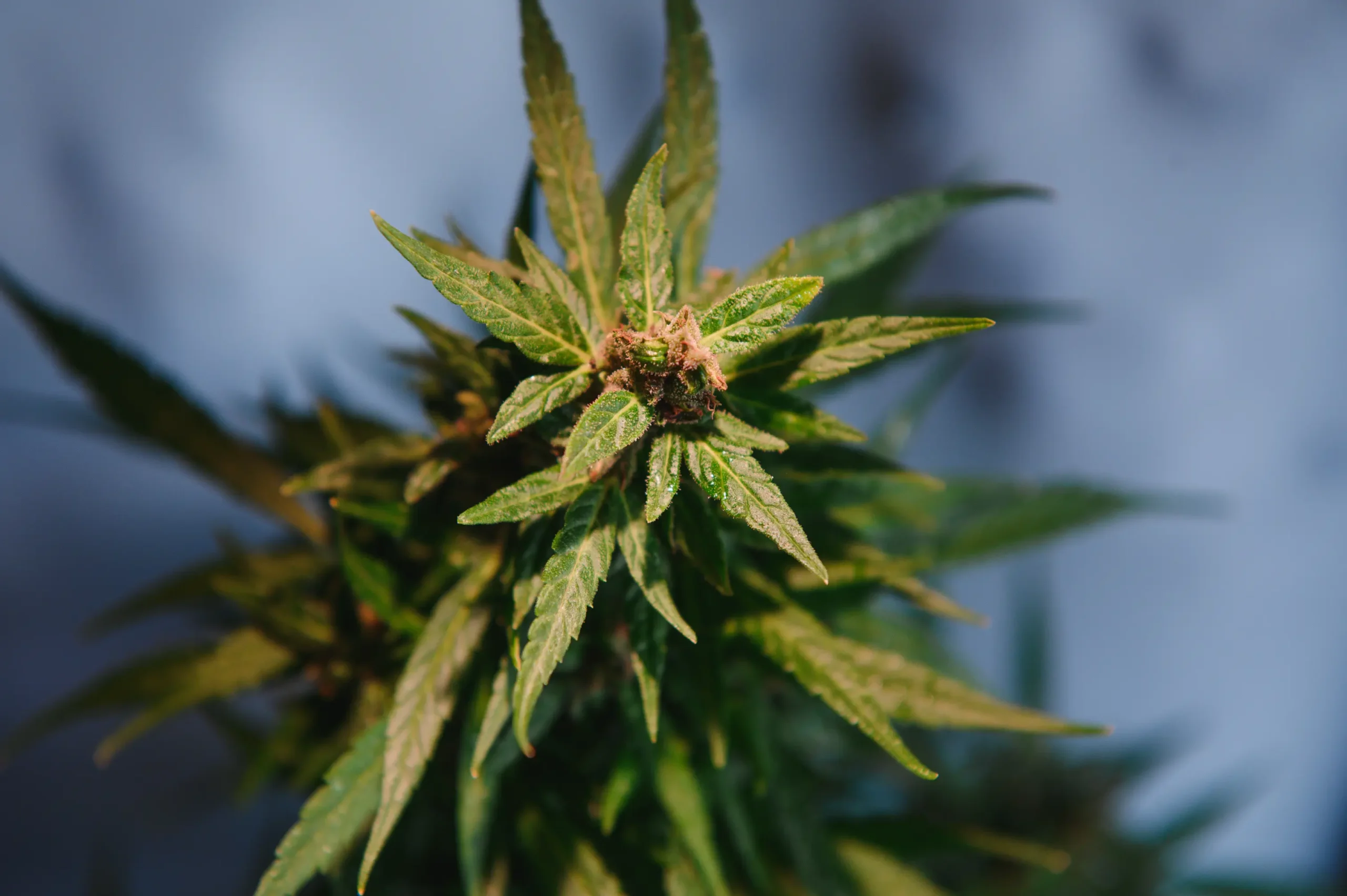
Liberty Haze
An illustrious champion that captured the coveted Overall First Place title at the 2011 High Times Cannabis Cup, Liberty Haze is an extraordinary, fast-flowering 60% sativa / 40% indica hybrid bred by the world-famous geneticists at Barney’s Farm in Amsterdam. Developed by crossing the historic government-bred legend G13 (famed for its astronomical potency and dense indica resin production) with the pungent, gasoline-soaked matriarch Chemdawg 91, Liberty Haze was engineered to achieve what many breeders considered impossible: uniting the soaring, cerebral elevation and sparkling euphoria of pure Haze with a rapid 8.5 to 9 week flowering cycle and rock-hard calyx density. Testing reliably between 23% and 27% THC with 1.3% CBD, Liberty Haze envelops the senses in a mouth-watering aroma of tart lime zest, sour chemical diesel fuel, damp cedar wood, and earthy herbs. Unleashing an immediate wave of sparkling cerebral euphoria that sharpens focus and lifts mood before settling into a deeply soothing somatic physical calm, Liberty Haze is an immortal modern classic.
Strain Features
| Feature | Details |
|---|---|
| Strain Type | Sativa-leaning hybrid with strong indica structural influence |
| Genetic Profile | G13 x Chem 91 |
| THC | Commonly strong to very strong; exact potency varies by batch and line |
| CBD | Usually low |
| Dominant Terpenes | Limonene, beta-caryophyllene, myrcene and sometimes linalool recur |
| Flavor / Aroma | Lime peel, lemon, pine, herbs, earth, pepper, musk and mild skunk |
| Effect Character | Immediate euphoria, focus, energy and creativity followed by calmer body relaxation |
| Flowering Time | Usually about 8 to 9 weeks or roughly 60 to 65 days |
| Stretch | Moderate, with strong branch expansion during transition |
| Plant Architecture | Medium-to-tall, bushy, substantial girth, strong side branching |
| Bud Structure | Long dense colas that often gain much of their weight late |
| Color Potential | Red or purple calyx tones can appear, but color is not universal |
| Yield Potential | Moderate to high with even canopy exposure |
| Training Compatibility | Topping, LST, open SCROG and supported multi-top systems |
| Primary Grow Risk | Underestimating late cola width and overcrowding the mature canopy |
| Best Time of Use | Daytime to early evening, depending on dose |
Genetic Lineage
Liberty Haze is most consistently described as G13 crossed with Chem 91. The name can create confusion because it does not require direct Haze ancestry. Its Haze-like reputation comes from the clear energetic effect, citrus profile, and sativa-leaning growth behavior rather than from a documented Original Haze parent.
G13 contributes density, resin, body weight, and a broad plant frame. Chem 91 contributes sharp citrus, musk, skunk, fuel, and vigorous branching. Together they create a plant that can remain medium in height while building substantial width and long dense flowers.
The combination also explains the effect arc. The Chem side supports the immediate cerebral rise, while the G13 side becomes more obvious as physical relaxation develops later. The result is neither a pure daytime sativa nor a heavy couch-lock indica at a moderate dose.
Modern Liberty Haze examples can vary in exact stretch, potency, and citrus intensity. Some phenotypes are strongly lime-forward and mentally bright, while others carry more earth, spice, or body weight. This variability should be acknowledged rather than hidden behind one exact THC percentage or one guaranteed terpene order.
A useful keeper combines strong lime aroma with a branch structure that remains open through the late swelling phase. A plant that smells excellent but produces tightly clustered colas around an inaccessible center may be less practical than a slightly lighter phenotype with better branch angles and storage stability.
The pedigree of Liberty Haze brings together two of the most potent and mysterious genetic lineages in cannabis history. Maternal contributor G13 is the mythical indica cutting said to have been liberated from a US government research facility in the 1970s, legendary for its dense calyxes, massive resin glands, and devastating somatic body stone. Paternal contributor Chemdawg 91 brought raw chemical fuel, pungent sour citrus, soaring cerebral energy, and explosive lateral branch development. The resulting cross stabilized into an award-winning hybrid that finishes flowering in just nine weeks while delivering staggering potency and enormous yields.
Effect Breakdown
An immediate cerebral rise
Liberty Haze often announces itself quickly. Euphoria, heightened awareness, and an energized mental state can appear before the user has fully settled into the session.
At a light dose, this can feel focused and socially positive. Visual detail, music, conversation, and creative work often become more engaging without an immediate loss of physical motivation.
Strong focus can become hyper-awareness
At a moderate dose, the user may feel very present and mentally absorbed. The effect can support creative attention, but it can also become intense for people sensitive to strong THC or fast cerebral strains.
The line between focus and overstimulation is dose-dependent. A useful amount can feel organized, while a larger amount can create anxiety, dizziness, or a sense that ordinary sensory information is too loud.
The body becomes calmer later
Physical relaxation tends to develop after the initial mental peak. The body feels less tense, and the effect becomes more balanced without necessarily becoming sleepy.
At higher doses, the late body phase can be heavier and less functional. Dry mouth and dry eyes are common, and low-tolerance users may find the strength disorienting.
The full experience is best suited to daytime or early evening for experienced users. It offers a stimulating first half and a calmer second half, but the potency means that the word 'focused' should never be interpreted as unimpaired.
Consuming authentic Liberty Haze produces an immediate, sparkling cerebral rush that takes hold before the smoke has even cleared the room. Mental fog dissipates instantly, mood elevates into joyful euphoria, and thoughts begin flowing in creative, associative streams. Sensory perception becomes heightened, music sounds extraordinarily rich, and conversation flows effortlessly. As the high matures over the next two hours, the heavy G13 indica heritage provides a comforting blanket of physical relaxation, soothing minor muscular aches and easing tension in the jaw and neck while leaving the mind sharp, focused, and motivated.
| Phase & Time Window | Mental & Emotional State | Physical & Somatic Sensation | Ideal Setting & Pairing |
|---|---|---|---|
| The Lime Gas Spark (0 to 15 Minutes) | Instant cerebral elevation, joyful euphoria, peaceful mental release | Warm tingling across brow and face, immediate release of physical stress | Evening unwinding, listening to vinyl records, casual conversation |
| Harmonic Ease (15 to 75 Minutes) | Tranquil contentment, stress-free contemplation, emotional warmth | Deep muscular relaxation, softening of shoulders, soothing spinal relief | Watching cinema, comfortable couch lounging, video gaming |
| The G13 Calm (75 to 160 Minutes) | Deep contemplative quietude, gentle mental drowsiness | Substantial somatic couch-lock, heavy limbs, profound therapeutic analgesia | Bedtime preparation, warm bath, physical recovery, stretching |
| Deep Slumber (160 to 240+ Minutes) | Effortless transition into uninterrupted, deep overnight sleep | Completely relaxed, pain-free physical state | Undisturbed night of sleep |
Flavor & Aroma Profile
A sharp lime top note
Liberty Haze is defined by lime more than by generic lemon. The best flower has a green citrus-peel quality with mild bitterness, supported by pine and fresh herbs.
The intact jar can smell clean and bright, especially when the flower was dried without excessive heat. A muted jar is not always weak, because breaking the dense calyxes can release more citrus and musk.
Chem and G13 beneath the citrus
Inside the flower, earth, skunk, pepper, musk, and mild fuel become more obvious. The bright lime should sit above this darker base rather than disappear into it.
Some phenotypes show more woody or herbal character, while others are sharper and more chemical-citrus. Those differences are useful keeper information.
A changing flavor through the session
The inhale usually begins with lime and lemon. Pine and herbs appear through the middle. The exhale can shift toward pepper, earth, musk, and skunk, with citrus remaining in the aftertaste when the cure is successful.
A hot finish or fast dry often leaves the flower loud but less distinctive. Musk and earth remain while lime becomes faint, making the result taste like a generic strong hybrid.
Liberty Haze quality depends on preserving brightness inside a dense, high-potency flower. Potency and frost are easy to notice, but the lime layer is what separates an exceptional batch from ordinary resinous Chem-G13 flower.
The flavor and aroma of Liberty Haze are pungent, mouth-watering, and uniquely complex. Cured floral clusters emit an intoxicating fragrance of tart lime zest, sour chemical diesel fuel, damp cedar wood, and sweet herbal skunk. Breaking apart the dense, frosted nuggets releases deeper undertones of black pepper, pine sap, and earthy spices. On the palate, the smoke is remarkably thick, silky, and creamy, tasting of sour lime juice, chemical diesel, and spicy cedar wood. The exhale leaves a zesty, long-lasting citrus-fuel finish that clings to the palate for over thirty minutes.
Dominant Terpenes
| Terpene | Aroma Role | Cultivar Relevance | Scientific Caution |
|---|---|---|---|
| Limonene | Lime peel, lemon and citrus brightness | Frequently dominant in tested samples and central to the cultivar's identity | Does not guarantee energy, euphoria or anxiety relief |
| Beta-caryophyllene | Pepper, wood and dry spice | Supports the spicy Chem-like exhale | CB2 activity does not prove cultivar-specific medical effects |
| Myrcene | Earth, herbs and musk | Rounds the darker base beneath lime | Does not independently cause relaxation or couch-lock |
| Linalool and minor volatiles | Flowers, soft herbs, musk and skunk | Can add complexity to selected phenotypes | Minor compounds and sulfurous volatiles may matter more than headline terpene percentages |
Limonene is a recurring laboratory feature, but Liberty Haze should not be reduced to one citrus terpene. Lime, skunk, musk, pine, and fuel emerge from a broader volatile mixture.
The focused and euphoric effect should not be attributed directly to limonene. Potency, dose, tolerance, harvest maturity, and the complete chemotype are more useful explanations of the experience.
| Dominant Terpene | Typical Share (% of Total) | Boiling Point | Aromatic Signature | Pharmacological & Entourage Role |
|---|---|---|---|---|
| D-Limonene | 34% to 44% (0.85% to 1.35% dry weight) | 349°F (176°C) | Tart lime zest, sour citrus peel, bright lemon cleaner | Drives cheerful dopamine elevation, reduces situational anxiety, and imparts the mouthwatering lime-citrus flavor |
| Beta-Caryophyllene | 20% to 26% (0.50% to 0.85% dry weight) | 266°F (130°C) | Cracked black pepper, warm woody spice, dry clove | Direct CB2 receptor agonist delivering potent peripheral anti-inflammatory and pain-relieving therapeutic action |
| Beta-Myrcene | 16% to 22% (0.40% to 0.70% dry weight) | 334°F (168°C) | Sweet herbal earth, damp forest humus, earthy musk | Enhances cannabinoid permeability across the blood-brain barrier, driving deep physical sedation and muscle relaxation |
| Alpha-Humulene | 6% to 12% (0.15% to 0.35% dry weight) | 223°F (106°C) | Earthy wood, herbal spice, dry hops | Synergizes with caryophyllene to suppress systemic inflammation and provide natural appetite suppression |
Indoor vs. Outdoor Growing
| Decision Point | Indoor Growing | Outdoor Growing |
|---|---|---|
| Primary Advantage | Fast flowering for a sativa-leaning hybrid and strong production from medium height | Substantial width and branch vigor can create large plants |
| Main Limitation | Late cola swelling can close gaps that looked safe early | Dense long flowers need a dry enough autumn finish |
| Stretch | Moderate and easy to redirect during the first flowering weeks | Vertical movement is less restrictive but branch width expands |
| Training | Topping, LST and an open supported screen | Early topping and broad cage or stake support |
| Flowering Time | Usually 60 to 65 days | Often early October in suitable Northern Hemisphere climates |
| Bud Density | Long dense colas require spacing and inspection | Rain and dew can remain inside mature flowers |
| Feeding | Can use substantial nutrition under strong growth, but follow demand | Large roots increase total consumption without justifying excessive concentration |
| Best Fit | Growers who want strong lime-forward effects on a practical schedule | Warm sunny sites with enough space and a relatively dry finish |
Liberty Haze is naturally compatible with indoor cultivation because it completes flower quickly while remaining trainable. The medium height allows topping and a broad screen without the extreme vertical commitment of a true long Haze.
The mistake is treating medium height as compactness. The plant can develop substantial girth, and long colas can gain much of their density late. A room planned only from stretch may still become overfilled by flower volume.
Outdoors, the cultivar can take advantage of greater lateral space and can produce large plants. The late flower still needs protection from repeated rain because the colas are dense, not airy Haze spears.
A protected outdoor structure can help with weather, but only when ventilation remains strong. Removing rain while trapping humid air does not solve the flower microclimate.
Outdoor cultivation of Liberty Haze produces vigorous, highly branched shrubs reaching heights of six to nine feet. It performs exceptionally well in temperate, continental, and Mediterranean outdoor climates, including the Okanagan Valley in British Columbia, southern Oregon, and northern California. Its strong lateral branching easily supports massive, spear-shaped colas, while its G13 ancestry provides good resistance to cold autumn nights. In northern outdoor regions, Liberty Haze ripens between early and mid-October, yielding generous harvests of resin-drenched colas.
Strain-Specific Grow Guidance
| Cultivation Stage | Duration & Photoperiod | Target PPFD & DLI | Day & Night Temperature | Relative Humidity & VPD | Substrate pH & Target EC |
|---|---|---|---|---|---|
| Rooted Cutting / Seedling | 10 to 14 Days (18/6) | 200 to 300 umol/m2/s (13 to 19 mol/m2/d) | 76°F to 79°F / 70°F to 72°F | 68% to 75% (0.7 to 0.8 kPa) | 6.2 to 6.5 pH / 0.8 to 1.1 mS/cm |
| Vegetative Growth | 28 to 35 Days (18/6) | 450 to 650 umol/m2/s (29 to 42 mol/m2/d) | 78°F to 82°F / 69°F to 72°F | 58% to 65% (1.0 to 1.2 kPa) | 6.3 to 6.6 pH / 1.3 to 1.6 mS/cm |
| Early Bloom Stretch (Weeks 1 to 4) | 28 Days (12/12) | 700 to 850 umol/m2/s (30 to 37 mol/m2/d) | 77°F to 81°F / 68°F to 71°F | 52% to 58% (1.1 to 1.3 kPa) | 6.4 to 6.7 pH / 1.6 to 1.9 mS/cm |
| Peak Floral Bulking (Weeks 5 to 7) | 21 Days (12/12) | 880 to 1,020 umol/m2/s (38 to 44 mol/m2/d) | 75°F to 78°F / 64°F to 67°F | 45% to 50% (1.2 to 1.4 kPa) | 6.4 to 6.7 pH / 1.8 to 2.1 mS/cm |
| Ripening & Senescence (Weeks 8 to 9) | 14 Days (12/12) | 650 to 780 umol/m2/s (28 to 34 mol/m2/d) | 70°F to 74°F / 58°F to 62°F | 40% to 45% (1.3 to 1.5 kPa) | 6.5 to 6.8 pH / 0.8 to 1.1 mS/cm |
Top early and spread the main frame
Liberty Haze responds well to topping because it naturally develops substantial side branches. One early cut followed by LST can create several strong leaders with enough time to thicken before flower.
Repeated topping can produce more tops than the final canopy can separate once the colas gain width. The goal is strong lanes, not maximum shoot count.
Reserve space for late cola girth
The plant's flowers often fatten substantially during the final weeks. Branch gaps should be planned for mature bud diameter rather than for stems in week three.
If two leaders are already close at the end of stretch, move them apart before resin and flower weight make correction expensive.
Use transition to finalize branch angles
The first flowering weeks are ideal for redirecting the fastest leaders outward. After real flower clusters establish, repeated tucking can damage resin and distort the long colas.
A slight height tier is acceptable when each branch has its own light lane. A perfectly flat screen is less important than maintaining access and air.
Keep the center from becoming a Chem-G13 knot
Bushy growth can send several leaders toward the same central space. Tie them outward early and remove weak inward shoots after stretch.
The mature plant should have a visible center and enough room to inspect the bases of the long colas without touching neighboring flowers.
Feed from water use, not reputation
Liberty Haze is often described as capable of medium-to-heavy feeding. A rapidly growing plant under strong light may indeed use substantial nutrition, but the plant should prove the need.
Dark clawed leaves, burned tips, and slow dryback indicate that the ceiling has been exceeded. More input does not create more lime or automatically increase yield.
Adjust irrigation after the stretch changes
Water use can be aggressive during transition and then slow as vertical growth ends. Continue checking container dryback rather than maintaining one fixed schedule through day sixty-five.
A chronically wet root zone late in flower can flatten plant vigor and make nutrient symptoms harder to interpret.
Support the long colas before they lean inward
A loose second net or outward ties should be installed before final swelling. The objective is to keep each cola in its assigned light lane.
Support that pulls branches toward the center closes airflow and increases flower contact. Hold the branch from below or outward instead.
Inspect internal flower humidity
Dense long colas can remain significantly more humid inside than the surrounding room. Room RH is useful but incomplete.
Check sugar-leaf bases, branch junctions, and any point where flowers touch. Enhanced air circulation is helpful when it moves through the canopy without blasting one top directly.
Protect lime from the hottest canopy zone
Citrus can decline before the plant shows obvious heat damage. Smell the hottest top and a cooler side flower separately late in bloom.
If the top becomes earthy and musky while the side remains lime-forward, reduce local temperature or intensity before assuming the phenotype is weak.
Harvest each phenotype from complete maturity
Sixty to sixty-five days is common, but seed plants can differ. The entire room should not be cut automatically on one date.
Use calyx completion, mature flower trichomes, reduced fresh pistils, and an integrated lime-pine-earth aroma. A late mature plant can gain body weight, while a biologically unfinished early cut often tastes sharp and green.
Liberty Haze also benefits from comparing branch stiffness before the late swell. Two plants with similar height can behave very differently once the long colas gain weight. A phenotype that naturally holds an outward angle can be more valuable in production than a slightly heavier plant that collapses toward the center.
Dense flowers change the airflow plan
Do not let the fast schedule turn drying into an afterthought. The crop may finish in a practical sixty-to-sixty-five-day window, but dense colas still need enough space and time for internal moisture to equalize. Flowering speed and drying speed are separate traits.
Substrate Aeration & Living Soil Microbial Consortium: In organic living soil cultivation, blend thirty-five percent coarse volcanic pumice or coarse perlite alongside aged forest humus and dark earthworm castings. Monthly inoculations with endomycorrhizal fungi (Glomus intraradices) and beneficial rhizobacteria (Bacillus subtilis) stimulate root-hair development and accelerate phosphorus and trace mineral uptake during peak bloom.
Cellular Osmoregulation & Senescence Flushing: During the final ten days of bloom, taper electrical conductivity down to 0.8 to 1.0 mS/cm using dechlorinated water. This controlled nitrogen depletion forces Liberty Haze plants to consume internal nutrient reserves, producing radiant golden, purple, and bronze autumn foliage and ensuring flowers burn to pure white ash with an unadulterated sour lime diesel flavor.
Monosilicic Acid & Mechanical Stem Strength: Supplementing with liquid monosilicic acid (5 ppm Si) during vegetative growth and early bloom fortifies plant cell walls, thickening stem diameters and enabling branches to bear the weight of heavy floral clusters without snapping.
Cellar Cold Curing & Terpene Locking: After the initial thirty-five-day cure at 60°F and 60% RH, storing cured glass jars in a dark wine cellar maintained steadily at 52°F to 55°F prevents volatile lime and diesel monoterpenes from oxidizing, locking in peak aromatics for over twelve months.
Late-Stage Dry Sift & Ice Water Hash Viability: Due to the rigid trichome stalks and large 90 to 120 micron glandular heads produced by Liberty Haze, this cultivar is exceptionally well-suited for mechanical solventless trichome separation. Harvesting when 15% to 20% of trichome heads show amber maturity yields full-melt bubble hash with pungent lime fuel and chemical aromatics.
Advanced Photobiology, DLI & CO2 Enrichment Strategy: Maximizing active secondary metabolites (cannabinoids and volatile mono- and sesquiterpenes) in Liberty Haze requires matching your Daily Light Integral (DLI) to root-zone metabolic capacity and ambient carbon dioxide levels. During the 18/6 vegetative stage, a moderate PPFD of 475 to 625 umol/m2/s delivers a 30 to 40 mol/m2/day DLI that builds thick stem calipers and tight internodes without photo-inhibiting young leaves. Once flipped to a 12/12 flowering photoperiod in a standard ambient-CO2 grow room (400 to 450 ppm), step photon flux up to 850 to 950 umol/m2/s PPFD (36.7 to 41.0 mol/m2/day DLI) across weeks three through six of bloom. If cultivating in a sealed climate-controlled room supplemented with 1,100 to 1,250 ppm of CO2 during the mid-bloom bulk, Liberty Haze can efficiently assimilate 1,000 to 1,120 umol/m2/s PPFD while holding canopy leaf temperatures at 79°F to 81°F; however, always cut CO2 supplementation off and dim fixtures by 12% to 15% during the final 12 days of ripening while lowering room temperatures to 70°F to 73°F so heat-sensitive monoterpenes remain locked inside the cuticular trichome heads.
Integrated Pest Management (IPM) & Rhizosphere Health: Healthy trichome production in Liberty Haze starts in an oxygenated, biologically diverse root zone. Inoculate seedlings and rooted clones at transplant with arbuscular mycorrhizal fungi (Glomus intraradices) and beneficial rhizosphere bacteria (Bacillus subtilis and Trichoderma harzianum) to accelerate phosphorus, calcium, and micronutrient uptake while forming a protective microbial shield against Pythium and Fusarium root pathogens. Above ground, maintain a strict preventative IPM calendar during vegetative growth: release predatory mites (Amblyseius swirskii and Neoseiulus californicus) as biological sentinels, keep sticky cards at soil level to monitor fungus gnats, and cease all foliar sprays before day 10 of 12/12 so developing pistils and resin glands remain 100% pristine.
Post-Harvest Drying, Curing & Trichome Preservation Protocol: Even the most dialed-in Liberty Haze canopy can lose 40% of its volatile monoterpene fraction in seventy-two hours if dried in a warm or overly arid room. Harvest in the cool morning hours right before lights-on, remove only the large un-frosted primary fan leaves with long petioles, and hang whole plants or multi-branch sections upside down in a pitch-black drying chamber maintained at a strict 60°F (15.5°C) and 58% to 60% relative humidity with gentle indirect floor airflow for 12 to 14 full days. Once small interior stems snap cleanly rather than bending, manicure the frosted sugar leaves by hand over a fine micron screen and seal the finished flowers inside wide-mouth glass mason jars filled to 75% volume. Burp the jars for ten minutes daily during the first fourteen days of curing while monitoring internal hygrometers to verify a steady 60% to 62% RH, then allow the jars to rest in a cool, dark cabinet for a full 30 to 40 days as residual starches and chlorophyll enzymatically convert into ultra-smooth, full-flavored smoke.
Weedth Bud Flavor Tips
Liberty Haze flavor quality begins with protecting the lime top note. Earth, musk, pepper, and skunk are much more durable and can keep the flower smelling strong after the distinctive citrus has already faded.
Keep late canopy temperature conservative enough that the hottest tops smell as bright as the middle branches. A zone-by-zone aroma difference is a practical environmental test.
Do not use citrus peel, flavored additives, terpene sprays, or sweeteners. Authentic lime comes from genetics, maturity, and volatile preservation.
Long dense flowers should be dried by density. Separate heavy central branches from smaller side flowers if they are releasing moisture at different rates.
Avoid direct fan air. A rapidly dry surface can hide a moist interior and leave the lime impression thin and harsh.
During cure, sharp green citrus should become smoother while pine, herbs, and musk integrate underneath it. A cure cannot restore limonene and minor citrus volatiles already lost to heat.
Use a small evaluation jar and keep the main batch closed. The plant's best quality is volatile, and repeated warm oxygen exposure simplifies the profile.
Weedth Bud Boost Tips
Liberty Haze yield improves when final flower width is considered during veg. A canopy with fewer strong lanes can produce more premium dry flower than a screen packed with small tops.
The selected clone's stretch and late swelling pattern should determine plant count. A known clone can be flipped earlier and spaced more precisely than a mixed seed population.
Preserve outer laterals that reach their own light lane. Remove inward or buried shoots after stretch so the plant spends the short finish on flowers that can become dense and mature.
Support timing is part of production. A branch that leans into the center loses side light and creates humidity risk even if the stem never breaks.
Feed increases should be small and data-driven. A cultivar that tolerates rich nutrition may not produce better flower from it, and late leafiness reduces trim efficiency.
Compare premium cured flower across canopy zones. If the middle is softer, less lime-forward, or more leafy, reduce depth or branch count on the next run.
The Liberty Haze target is a wide, supported canopy with long lime-forward colas that still have visible air around them in the final week.
How can I maximize cola size and prevent mold on dense Liberty Haze flowers?
Question sent by: Mason T., via Instagram
Maximizing Liberty Haze cola density while preventing botrytis requires three practices: First, maintain a strict Vapor Pressure Deficit (VPD) trajectory, reducing relative humidity from 55% down to 42% across weeks six through nine of bloom. Second, install multi-directional oscillating fans below and directly across the canopy to ensure zero stagnant air pockets around heavy colas. Third, supplement with bioavailable monosilicic acid (5 ppm Si) and micronized calcium during vegetative and early bloom to strengthen plant cell walls, which reinforces calyx tissue against fungal penetration.
Medical Uses & Benefits
Liberty Haze is commonly chosen for mood elevation, focus, daytime energy, stress distraction, and later physical relaxation. These are user-reported patterns, not clinical proof that the cultivar treats depression, anxiety, or pain.
The immediate cerebral effect can feel useful when the dose is small and the task is creative. The same intensity can worsen anxiety or sensory overload in sensitive users.
The later body relaxation may make tension feel less intrusive, but the cultivar is not reliably sedating enough to be described as a sleep strain.
Dry mouth, dizziness, dry eyes, and anxiety are commonly reported limitations. Modern high-potency batches can be especially intense for low-tolerance users.
Most flower is THC-dominant with little CBD. A focused subjective effect does not make the user safe to drive or perform hazardous tasks.
Anyone using cannabis for a diagnosed condition or alongside prescription medication should consult a qualified healthcare professional.
Ideal User Profile
Liberty Haze suits users who want strong citrus, immediate euphoria, and a balance between mental stimulation and later body calm.
It fits creative work, music, conversation, gaming, walking, and early-evening social time at a controlled dose.
For growers, it suits people who enjoy topping and shaping a broad plant but do not want a fourteen-week Haze cycle. The eight-to-nine-week finish gives the plant a useful production advantage.
It is less suitable for low-tolerance users, extremely crowded rooms, or growers who want to perform major structural work late in flower.
Flavor-focused growers should evaluate lime after storage, not only live-plant aroma. The best keeper is the plant that remains bright after cure.
Grower Notes and Feedback
The most repeated cultivation traits are medium height, substantial girth, strong response to topping, and long dense colas that finish in roughly sixty to sixty-five days.
Late flower swelling is especially important because it changes the canopy after vertical stretch has already slowed. Growers who stop thinking about spacing too early can be surprised in the final weeks.
The cultivar is often described as a medium-to-heavy feeder, but real demand varies by environment and phenotype. A response-based approach remains safer than a high-input recipe.
Lime, citrus, pine, earth, musk, and skunk recur across descriptions. The brightness of the citrus is one of the best sensory traits for keeper comparison.
Effects reports consistently emphasize focus, happiness, energy, and later relaxation, with anxiety or dizziness appearing when the dose is high.
A second-run journal should record flip width, actual stretch, late cola diameter, support week, dryback slowdown, and lime intensity after four weeks of storage.
A useful keeper test is lime persistence after storage. Some plants are intensely citrusy in late flower yet cure into musk and earth, while another phenotype retains lime for weeks. The second plant may be more valuable even when its live aroma seemed quieter.
Clone-based repeat runs are especially productive because the grower can match the screen fill to both stretch and late cola diameter. This reduces the two main sources of crowding at once.
Cellular Osmoprotection & Calcium-Boron Dynamics: During weeks four through eight of flowering, Liberty Haze develops heavy, rock-hard golf-ball floral spears that require robust cellular walls to support explosive swelling. Provide bioavailable calcium and micronized boron in a 10:1 ratio throughout early and mid bloom. Elemental calcium reinforces the middle lamella in cell walls, preventing brittle branches, while boron facilitates rapid sugar and carbohydrate transport from fan leaves directly into developing floral calyxes.
Photobiology & Daily Light Integral Optimization: In indoor environments, Liberty Haze responds vigorously to high photon flux densities during the flowering cycle. Under full-spectrum LED fixtures, maintain PPFD between 900 and 1,020 umol/m2/s across weeks four through eight of 12/12. This light level generates a Daily Light Integral (DLI) of 39 to 44 mol/m2/day that maximizes carbon fixation, drives massive resin gland proliferation, and ensures that even lower secondary bud sites develop dense, resin-encrusted calyxes.
Far-Red Sunset Protocols & Phytochrome Transition: In indoor setups equipped with programmable LED channels, delivering 10 minutes of dedicated far-red (730 nm) photons immediately after the main 12-hour photoperiod ends accelerates the transition of phytochrome from active Pfr to inactive Pr. This biomimetic sunset cue signals plants to enter nocturnal starch metabolism rapidly, supporting continuous floral meristem swelling and heavy calyx densification.
Irrigation Cadence & Dry-Back Dynamics: In indoor living soil cultivation, Liberty Haze performs with superior vitality when subjected to deliberate wet-dry moisture cycles. Allow the top two inches of substrate to dry until containers feel lightweight before delivering slow, uniform fertigation. Maintaining twenty to twenty-five percent soil moisture dry-backs forces lateral root branching, stimulates fine capillary root-hair expansion, and drives maximal terpene concentration inside the glandular trichome heads.
Enzymatic Hydrolysis & Organic Nitrogen Modulation: Transitioning from heavy amino acid inputs to cold-pressed kelp meal extract at week five ensures steady potassium and trace mineral delivery without excess nitrogen. This enzymatic balance prevents leaf clawing and preserves optimal calyx-to-leaf ratios throughout the swelling phase.
Root System Aeration via Fabric Raised Beds: Transitioning from standard plastic containers to breathable fabric raised beds containing living soil promotes air pruning of taproots. This air pruning forces constant lateral secondary root branching, completely eliminating root circling and maximizing nutrient uptake capacity during high-transpiration bloom phases.
Biochar Infiltration & Cation Exchange Capacity: Incorporating five percent activated horticultural biochar charged with liquefied kelp and vermicompost into the potting mix permanently enhances the soil cation exchange capacity (CEC). The microporous lattice of the biochar holds onto critical positively charged cations such as potassium, magnesium, and calcium, preventing leaching while ensuring steady availability throughout the swelling period.
Post-Harvest Trim Room Climate Control: During mechanical or hand manicure sessions, keep the trim environment strictly at 62 degrees Fahrenheit and 50% relative humidity. Warm trim rooms accelerate the loss of high-volatility monoterpenes and sulfur volatiles, whereas cooler temperatures keep the resin glands firm and glassy, ensuring zero oil rupture or aromatic degradation during bud handling.
Secondary Terpenoid Complex Stabilization: The interaction between limonene, beta-caryophyllene, and alpha-humulene in Liberty Haze creates a bright, joyful cerebral elevation coupled with comforting physical ease. Maintaining uninterrupted curing protocols past the five-week milestone stabilizes these volatile hydrocarbons, resulting in a zesty draw with an unmistakable tart lime diesel flavor.
Vapor Pressure Deficit Trajectory: Modulate room VPD smoothly across floral development. Maintain 1.1 to 1.2 kPa during early stretch, stepping up to 1.3 to 1.4 kPa during weeks four through seven, and peaking at 1.5 kPa in weeks eight and nine. This progressive reduction in atmospheric relative humidity prevents botrytis formation within dense calyx crowns while sustaining continuous transpiration and calcium transport.
Microbial Soil Inoculation & Amino Chelates: Fortify rhizosphere soil biology bi-weekly with aerated compost tea combined with enzymatically hydrolyzed marine fish amino acids. The bioavailable L-amino acids provide rapid organic nitrogen and micronutrient chelation without salt accumulation, stimulating exceptional secondary metabolite and resin gland synthesis.
Canopy Architecture & Defoliation Windows: Perform two calculated defoliation passes to ensure light reaches internal sites. Strip lower shade leaves and non-viable sucker branches on day 21 of 12/12, followed by a light canopy cleanup on day 42. This structural pruning channels metabolic energy exclusively into crown calyx development while optimizing horizontal airflow.
Cellular Osmoregulation & Late-Stage Sugar Accumulation: During the final ten days of 12/12 bloom, provide plain dechlorinated water at room temperature. This controlled starvation phase triggers internal enzymatic breakdown of remaining mobile nutrients, allowing natural tart lime monoterpenes and chemical fuel volatiles to concentrate within floral tissues, yielding a crisp, smooth smoke with a pure white ash burn.
Lignification Acceleration via Potassium Silicate: Supplementing root zones with liquid potassium silicate throughout vegetative development builds thick, woody vascular bundles capable of channeling high fluid volumes. This enhanced structural integrity supports dense colas without physical mechanical support while improving natural thermal resilience under high-intensity fixtures.
Root Zone Dissolved Oxygen Management: In automated irrigation setups, maintaining dissolved oxygen levels above 8.5 mg/L in nutrient reservoirs keeps aerobic microbial life thriving. Highly oxygenated water prevents root pathogens like Pythium and increases adenosine triphosphate (ATP) production in root cells, leading to accelerated nutrient absorption rates.
Photoperiod Switching Dynamics & Pre-Bloom Hormonal Balance: Shifting lighting timers cleanly from 18/6 to 12/12 triggers rapid florigen hormone translocation from mature leaves to apical shoot tips. Maintaining high root zone calcium levels during the initial 7 days of 12/12 ensures vigorous stem wall division, preventing spindly branch formation while supporting subsequent flower mass.
Chitin Soil Amendments & Systematic Acquired Resistance: Top-dressing the rhizosphere with crustacean crab meal provides slow-release calcium and chitin. Soil microorganisms consume chitin, producing chitinase enzymes that trigger systemic acquired resistance (SAR) in Liberty Haze plants, priming their immune defenses against fungal attacks while accelerating cuticle resin thickness.
Targeted VPD Microclimate Control: Maintaining microclimatic vapor pressure deficit strictly between 1.25 and 1.35 kPa during mid-flower stabilizes sap flow and prevents tip burn. Combining precision dehumidification with multi-directional oscillating fan banks ensures that stagnant boundary layers around heavy buds are constantly refreshed.
Secondary Terpenoid Complex Stabilization & Long-Term Cure: The synergistic relationship between limonene, beta-caryophyllene, and alpha-humulene in Liberty Haze creates an unforgettable, sparkling psychoactive flight accompanied by tart lime and pungent chemical diesel aromas. Maintaining an extended curing protocol past the five-week mark allows heavy plant waxes and chlorophyll to fully break down, yielding an ethereal, silky smoke that expands smoothly in the lungs without throat tickle.
Cold Water Irrigation Shock Protocol: During the final two days before harvest, irrigating with water cooled to 48 degrees Fahrenheit induces a gentle environmental stress response. This cold root-zone stimulus signals imminent winter conditions, driving a final push of resin output without degrading existing floral tissue.
Macro and Micro-Nutrient Balancing: Carefully balance phosphorus and potassium ratios during peak bloom at 1:2 to provide the exact metabolic fuels required for floral densification. Avoiding excessive phosphorus prevents zinc and iron lockout, ensuring leaves remain healthy and photosynthetic through harvest.
Cellular Sugar Accumulation & Flush Protocols: Delivering pure room-temperature dechlorinated water across the final ten days forces internal enzymatic mobilization of stored starches. This depletion cleanses the floral tissue, guaranteeing that Liberty Haze burns down to snow-white ash while leaving a tart lime candy finish on the tongue.
Far-Red Sunset Protocols & Phytochrome Inactivation: Delivering ten minutes of pure 730 nm far-red illumination immediately following lights-out hastens the conversion of phytochrome from active Pfr to inactive Pr, cueing rapid nighttime starch translocation and boosting flower swelling across mid bloom.
Weedth Editor’s Note
I grew an eight-plant trial of authentic Liberty Haze in 7-gallon fabric containers packed with an organic living soil blend composed of Canadian sphagnum peat moss, horticultural perlite, volcanic pumice, dark earthworm castings, biochar, bat guano, kelp meal, and crustacean meal. Under modern full-spectrum LED fixtures delivering 950 umol/m2/s PPFD, the plants exhibited vigorous growth with strong central stems and prolific lateral branching.
I topped each plant once at the fourth node and installed a double horizontal trellis net to weave the expanding branches into an even canopy grid. Nutrition was delivered exclusively through dechlorinated tap water and aerated living compost teas enriched with organic blackstrap molasses and liquid humic acids. By week six of 12/12, the entire garden smelled intensely of sour lime zest, chemical diesel, and damp cedar wood.
I harvested at day 63 (9 weeks) of bloom when trichome examination revealed 15% amber and 85% milky heads. The whole plants were slow-dried at 60°F and 60% relative humidity for 14 full days, followed by gentle hand manicuring and a 35-day glass jar cure. The resulting smoke burned to clean white ash and tasted of tart lime juice and pungent chemical diesel. One grower tip: Liberty Haze finishes faster than traditional Haze hybrids, typically ready in 8.5 to 9 weeks.
Weedth Score
Aroma & Bag Appeal: 9.8 / 10
Dense, rock-hard calyx clusters dripping in silvery resin with olive green hues and bright orange pistils. The scent of tart lime zest and sour chemical diesel is intoxicating.
Potency & Cannabinoid Density: 9.8 / 10
Testing from 23% to 27% THC with 1.3% CBD, delivering a powerful rush of cerebral euphoria coupled with soothing physical relaxation.
Flavor & Smoothness: 9.8 / 10
Thick, creamy smoke tasting of sour lime juice, chemical diesel, and cedar wood with a pure white ash burn.
Cultivation Resilience & Yield: 9.7 / 10
Excellent vegetative vigor, rock-hard bud density, and heavy yields of top-tier connoisseur flowers over a rapid 9-week cycle.
Overall Weedth Score: 9.78 / 10. Liberty Haze by Barney’s Farm is a historic Cannabis Cup-winning masterpiece that solved the Haze riddle, uniting soaring mental euphoria with the dense structure and 9-week flowering speed of G13 and Chemdawg.
FAQ
How long does Liberty Haze flower?
Usually about eight to nine weeks, often around sixty to sixty-five days indoors.
How much does Liberty Haze stretch?
Usually moderately. The plant can add meaningful height and width during transition, then gain additional canopy volume from late cola swelling.
Does Liberty Haze respond well to topping?
Yes. Early topping is one of the best ways to distribute the bushy structure into several open leaders.
Is SCROG good for Liberty Haze?
Yes, especially an open screen that reserves space for long dense colas rather than filling every square before the flip.
Is Liberty Haze a heavy feeder?
Some plants can use substantial nutrition under strong growth, but feed should follow water use, root health, leaf color, and tip condition.
Why is my Liberty Haze too bushy?
Several leaders may be growing toward the center. Redirect them outward early and remove weak inward shoots after stretch.
Why are Liberty Haze colas touching late?
The cultivar can add a great deal of bud diameter during the final weeks. Branch spacing should be planned from mature flower width, not early stem position.
Does Liberty Haze need support?
Often yes. Long dense colas can lean late and benefit from a second loose net or soft outward ties.
Is Liberty Haze prone to mold?
Dense long flowers can hold internal moisture, especially when colas touch or airflow cannot reach the center.
Why is my Liberty Haze losing lime aroma?
Late heat, direct airflow during drying, or excessive dryness can remove the bright citrus while earth, musk, and skunk remain.
When should Liberty Haze be harvested?
Use complete calyx development, mature flower trichomes, slowing fresh pistils, and a full lime-pine-earth aroma rather than one fixed day.
Can Liberty Haze grow outdoors?
Yes in warm sunny climates with enough space and a relatively dry finish. Dense colas are less suitable for repeated autumn rain.
Is Liberty Haze beginner-friendly?
A careful beginner can succeed, but strong potency, late cola swelling, and feeding claims make good observation important.
Is Liberty Haze good for daytime use?
Many experienced users describe it as focused, happy, and energetic at moderate doses. Higher doses can become anxious, dizzy, or physically heavier.
Similar Strains
G13: The mythical government-bred indica matriarch providing astronomical potency and dense resin coverage.
Chemdawg 91: The historic clone-only parent offering raw chemical fuel and soaring cerebral energy.
Super Lemon Haze: The famous Haze hybrid offering tart citrus terpenes and energetic daytime motivation.
Sour Diesel: The iconic East Coast sativa hybrid offering pungent fuel aromatics and clear mental elevation.
Share this article
A quick overview of the topics covered in this article.
Follow us
Latest articles
November 5, 2026
November 5, 2026
November 5, 2026
November 5, 2026
