Mama Thai
WEEDTH STRAIN LIBRARY | CULTIVATION, BUD QUALITY & FLAVOR
Mama Thai belongs to the part of cannabis history where the plant's geography still matters more than a neat modern percentage label. It is generally presented as a Thai-derived, strongly sativa expression selected to make Southeast Asian growth a little more manageable for indoor and greenhouse cultivation. Records are not perfectly uniform about whether every preserved line is completely pure Thai or contains a small amount of outside influence, so the useful approach is to describe what repeatedly survives across reports: long internodes, vigorous vertical growth, an extended flowering rhythm, light and resinous flowers, and a clear cerebral effect that can become intense at higher doses.
Its central cultivation problem is straightforward but not easy: how do you let a tropical plant express enough of its long-flowering character to produce quality flower without allowing the first weeks of bloom to consume the entire room? Mama Thai does not need a long indoor vegetative period to become large. The grower who waits for a full canopy before changing the photoperiod may discover that the real canopy arrives after the flip, when thin branches rise rapidly and spaces that looked comfortable become vertical congestion. The most successful approach is therefore anticipatory. Build a low, open framework early, enter flower before the room feels full, and use the stretch to complete the canopy instead of fighting it after the fact.
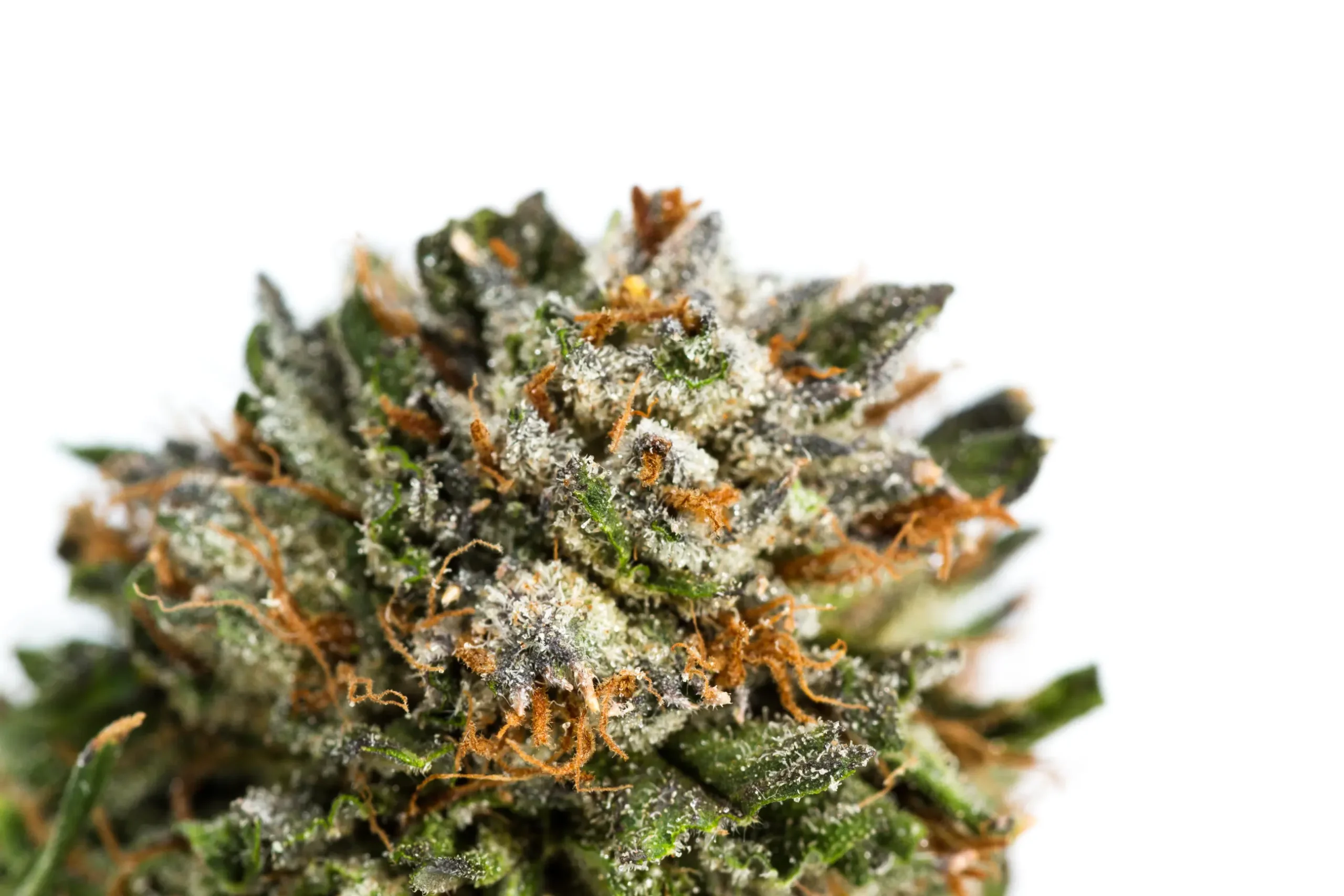
Flower quality also asks the grower to rethink the modern obsession with compactness. Mama Thai commonly forms longer, lighter flowers rather than hard golf-ball buds. That open construction is not automatically a defect. It can improve air movement through the inflorescence and is consistent with warm, humid regional ancestry. A well-grown plant can still carry abundant resin and a strong aroma, but the finish often looks more like an old tropical sativa than a contemporary dense hybrid. Growers who judge maturity only by visual bulk may overfeed or extend the plant unnecessarily while waiting for a density it was never designed to produce.
The finished flower is usually described through dry spice, citrus peel, herbal wood, earth and a lightly sweet tropical edge rather than dessert-like sugar. The effect tends to rise into attention and sensory intensity before physical heaviness becomes prominent. That combination makes Mama Thai appealing to experienced sativa users, but it also makes dose control meaningful. The same flower that feels clear and expansive at a small amount can become racing, disorienting or strongly psychedelic at a larger amount. Cultivation, harvest timing and consumption all reward restraint.
Strain Features
| Feature | Mama Thai Profile |
|---|---|
| Strain Type | Strongly sativa / Thai-derived preserved line |
| Genetic Profile | Thai regional ancestry; exact purity or minor outside influence varies by preserved line and historical account |
| THC | Often reported in the high-potency range, but cultivar-specific laboratory series are limited and values should be treated as sample-dependent |
| CBD | Generally reported as low |
| Effect Character | Clear, energetic, sensory and cerebral at moderate dose; potentially intense, racy or psychedelic at higher dose |
| Flavor / Aroma | Dry spice, citrus peel, herbal wood, earth, light sweetness and occasional incense-like notes |
| Flowering Time | Commonly around 10-12 weeks indoors; approximately 11 weeks is a recurring target for selected earlier expressions |
| Outdoor Harvest | Late season, often around November in the Northern Hemisphere; strongly climate-dependent |
| Plant Architecture | Tall, narrow-leaf, long internodes, flexible lateral branches and pronounced apical stretch |
| Stretch | High to very high; the first weeks of flowering can create most of the final indoor height |
| Bud Structure | Long, comparatively open or fluffy sativa flowers rather than uniformly compact modern buds |
| Bud-to-Leaf Ratio | Often favorable for a tropical-type plant, although individual expressions vary |
| Yield | Moderate rather than automatically massive indoors; canopy area matters more than flower density |
| Grow Difficulty | Intermediate to advanced indoors because of height and finish time; easier where warm outdoor seasons are long enough |
| Feeding Behavior | Best approached with moderate feeding and careful nitrogen control rather than aggressive bloom forcing |
| Main Grow Risk | Entering flower too late, creating an uncontrollable canopy and then trying to solve architecture with late high-stress intervention |
| Best Environment | Tall indoor rooms, greenhouses, or warm outdoor climates with a reliably long autumn |
Central grower question: Can I control a tropical flowering stretch early enough to let Mama Thai finish naturally, rather than forcing a tall plant into a space that was already full before bloom began?
Genetic Lineage
A Thai identity with incomplete historical standardization
Mama Thai is better treated as a preserved Thai-derived cultivar than as a modern formula with universally agreed parents. Some historical records describe it as a selected Thai line, while other grower records suggest that certain circulated versions may carry a small amount of outside ancestry. That disagreement matters because cannabis cultivar names are not governed by a single genetic registry. A plant sold or shared under one old name can move through different selections for years, accumulating subtle differences in flowering time, branch structure and aroma.
The repeated traits are more informative than an unsupported claim of absolute purity. Mama Thai consistently sits on the narrow-leaf side of cannabis morphology. It produces long internodes, a high stretch response, flexible branching and flowers that are more open than the compact inflorescences of Afghan-dominant plants. It also carries the long-duration cerebral effect associated with Southeast Asian material. Those traits are coherent enough to define the cultivation identity even when a precise family tree is unavailable.
Why Thai ancestry changes the grow plan
Equatorial and near-equatorial cannabis populations evolved under a day-length pattern that changes less dramatically across the year than it does at northern latitudes. That background helps explain why many Thai-derived plants can continue vegetative-style extension deep into early flowering instead of making a sudden compact transition. Indoors, the visual result is familiar: branches keep lengthening while floral clusters are still small, and the grower may underestimate final height because the plant appears to be 'taking its time' to set dense flowers.
The same ancestry also explains why the flower does not need to become extremely dense to be mature. Open, elongated clusters can be a useful adaptation where humidity is high. A grower accustomed to compact hybrids can mistakenly chase density with excess fertilizer, excessive light or an unnecessarily late harvest. With Mama Thai, maturity should be read through resin development, calyx progression, aroma, pistil behavior and the slowing of new floral growth, not by waiting for every flower to resemble a modern indoor nug.
Selection for a more workable Thai plant
The versions most often described today appear to have been selected toward a somewhat earlier finish than truly extreme tropical lines. An approximately eleven-week indoor flowering period is still long by modern hybrid standards, but it is far more practical than a fourteen-to-sixteen-week tropical plant. That selection does not erase the sativa structure. It simply compresses the calendar enough that an experienced indoor grower can plan around it.
Phenotype selection should therefore favor the plant that combines decisive flower initiation with the aroma and effect you want. The tallest individual is not automatically the best. A slightly shorter expression that sets flowers earlier, keeps useful lateral spacing and finishes with stronger resin can be a much better keeper. For Mama Thai, the phenotype that is easiest to finish cleanly is often more valuable than the one that creates the most spectacular vegetative height.
Effect Breakdown
At a light dose: attention opens before the body changes much
A small amount of Mama Thai is most often described as cerebral rather than physically heavy. Sounds can feel more detailed, conversation can become more engaging and simple creative tasks may hold attention for longer. The emotional tone tends to be bright and curious rather than sleepy. For an experienced user, this can feel functional, but 'functional' should not be confused with unimpaired. Reaction time and judgment can still change even when the body feels light.
This first stage is where the strain's appeal is easiest to understand. There is less of the immediate weighted blanket sensation found in heavier indica-dominant flowers. Instead, the experience tends to create mental movement. Ideas connect quickly, sensory details become prominent and the user may want to walk, make music, write or talk rather than sit still.
At a moderate dose: the high becomes more immersive
As the dose increases, the same mental energy can become deeper and more absorbing. Time may feel less linear, music can become unusually dimensional and ordinary visual environments may feel more interesting. This is where older descriptions sometimes use words such as psychedelic or hallucinatory. Those words should not be interpreted as a clinical guarantee of hallucinations. They are a way users describe a strong change in perception and thought association.
Physical effects remain secondary for many people, although tension can ease as the session develops. Appetite may increase later. The absence of early sedation means users sometimes consume more before the peak has fully formed. That is the main dosage trap: the second serving can arrive on top of a first dose that was still rising.
At a heavy dose: stimulation can cross into discomfort
High doses can move from expansive to racy. Sensitive users may notice a pounding awareness of heartbeat, anxious thought loops, dizziness or a feeling that the mind is moving faster than the environment. This is not unique to Mama Thai, but a potent cerebral sativa gives less physical sedation to soften that experience. New users and people who know they are prone to THC-related anxiety should approach it cautiously.
The late phase usually becomes calmer without necessarily becoming deeply narcotic. Fatigue can appear after a long cerebral peak, and sleep may come once the stimulation has faded, but this is not an efficient bedtime cultivar for most people. Its strength is the active headspace, not immediate sedation.
Duration and tolerance
Thai-derived highs are often described as persistent, and Mama Thai is no exception in grower and consumer reports. The active phase can feel longer than the user expects from a light-bodied flower. Frequent consumers may blunt the sparkle with tolerance, while occasional users can find the same batch much more intense. Because modern samples are not chemically standardized under the name, the safest rule is to treat every unfamiliar batch as its own product rather than relying on a historical potency reputation.
Flavor & Aroma Profile
A dry, high-toned tropical profile rather than candy fruit
Mama Thai is often called fruity, but the fruit is usually subtler than the mango-candy character of modern dessert hybrids. Think more in terms of dried citrus peel, green tropical fruit skin and a faint sweet lift over dry spice. The main body of the aroma is herbal and woody. Crushed leaves, dry tea, pepper, incense and warm timber are useful comparisons when the flower has been cured well.
Earth sits underneath the brighter notes, especially after combustion. Some expressions lean cleaner and more citrus-forward, while others are darker and more incense-like. This variability fits an old regional line better than a single locked flavor description. It also means phenotype hunting is meaningful for flavor, not just plant height.
What grinding and heat reveal
Breaking a mature flower usually intensifies the spice and citrus. The intact jar aroma can seem restrained because the flowers are relatively open and may not trap volatile compounds as densely as a hard modern nug. Once the resinous surfaces are disturbed, sharper herbal notes emerge. A good phenotype can become noticeably louder in the grinder than it appeared in the jar.
In vapor, the first draws tend to emphasize citrus, dry herb and a clean woody sweetness. Combustion pushes earth, pepper and incense forward. A harsh dry can make the smoke seem thin and woody because the volatile top notes disappear first. That is why the post-harvest target is not simply 'dry enough.' It is to preserve enough internal moisture during the early dry that the aroma can evolve rather than being stripped away in two or three hot days.
Cure evolution
Freshly dried Mama Thai can smell greener than expected. The strain benefits from patience because its spice and wood notes become cleaner as chlorophyll-associated harshness recedes. After several weeks, citrus and light sweetness can become easier to separate from the herbal base. The profile rarely transforms into a sugary dessert, but it can gain elegance and smoothness.
Because the flowers are often open, they can dry faster than their size suggests. This creates a specific quality risk: growers may assume a long sativa flower needs the same drying time as a dense hybrid top, yet its interior contains less tightly packed wet tissue. The right drying speed is determined by actual flower density, not by cola length.
Dominant Terpenes
Standardized terpene data for old Mama Thai material are limited. Public strain databases and recurring aroma descriptions most often point toward myrcene, limonene and terpinolene-type aromatic territory, with caryophyllene or pinene-like notes appearing in some expressions. These should be read as recurring patterns rather than a guaranteed chemotype. A lab-tested individual plant always outranks a generic strain label.
| Recurring Terpene Pattern | Sensory Role | Interpretation |
|---|---|---|
| Myrcene | Earthy herb, musk, ripe plant material | Can help explain the deeper herbal base. It has been studied in many biological contexts, but its presence alone does not predict sedation. |
| Limonene | Citrus peel, bright freshness | Consistent with the high-toned citrus found in some phenotypes. Its strongest certainty here is flavor and aroma, not a guaranteed mood effect. |
| Terpinolene | Dry herb, floral wood, fresh spice | Often associated with classic sativa aromas and can help explain the unusual mix of fresh, woody and lightly floral notes. |
| Caryophyllene / pinene in some expressions | Pepper, dry wood, pine | Secondary variation can shift the flower toward peppery incense or sharper green wood. These minor patterns are phenotype-dependent. |
For the grower, the practical terpene lesson is that Mama Thai's citrus and fresh herbal top notes are more fragile than its earthy-spicy base. High canopy heat late in flower, a hot drying room or prolonged exposure to open air can leave a jar that still smells 'strong' while losing the part that made the phenotype distinctive.
Indoor vs. Outdoor Growing
| Decision Point | Indoor | Outdoor |
|---|---|---|
| Primary Challenge | Containing vertical growth and keeping the canopy below the light | Finishing a late tropical-type plant before cold rain or frost |
| Veg Strategy | Short; use the stretch to fill the final canopy | Can be longer where the season is genuinely warm and frost-free, but final plant size can become enormous |
| Training | Early topping or low-stress spreading, followed by trellis guidance | Early structural topping and wide branch support; avoid late structural damage |
| Flowering Rhythm | Approximately 10-12 weeks, with a long transition and continued branch extension | Often late-autumn maturity; realistic only in warm or protected climates |
| Flower Structure | Open flowers reduce deep-cola humidity but require good light distribution over a tall canopy | Natural air movement suits the open flower form, though prolonged rain can still damage mature resin |
| Feeding | Moderate; easier to overmanage than to starve when root health is good | Fertile soil is useful, but excess late nitrogen can keep a tropical plant too leafy and delay clean finishing |
| Yield Logic | Canopy area and number of well-lit spears matter more than nug density | Large root volume can create major biomass, but season length determines whether that biomass becomes mature flower |
| Best Fit | Tall room, greenhouse, or grower comfortable with sativa training | Tropical, subtropical, Mediterranean or reliably long greenhouse season |
Indoors, Mama Thai is a space-management project. The grower gains control over photoperiod, rain and harvest timing, but must pay for that control by managing height every week during transition. Outdoors, the architecture becomes easier and the plant can use its natural branch length, yet the calendar becomes the limiting factor. A northern garden with an October frost date cannot negotiate with an eleven-week tropical finish. A greenhouse can bridge some of that gap, but it does not make a late plant early.
The best environment is therefore not simply the one that promises the biggest yield. It is the environment that allows the plant to complete its long floral maturation without emergency intervention. A smaller, fully mature Mama Thai is better than a giant plant harvested three weeks early because weather or ceiling height won the argument.
Strain-Specific Grow Guidance
Start the indoor grow with the final height already in mind
Mama Thai should not be vegetated until it looks like a finished indoor plant. That is the most common conceptual mistake. A young plant with only a modest footprint can create a surprisingly large canopy after the photoperiod change. In a low ceiling, begin shaping as soon as several healthy nodes are present. One topping can divide apical dominance, while low-stress ties pull the new leaders outward. The aim is not to create dozens of tiny tips. It is to create a few long horizontal branches with enough room to rise through the screen without stacking directly on top of one another.
If the grower uses a trellis, install it before the flip, not after stems have hardened. During the first weeks of flower, guide extending branches laterally into unused squares. Stop forcing them horizontally once real floral stacking has begun and the stems resist bending. Mama Thai is flexible early but becomes more vulnerable to splits when long levers carry developing flowers.
Let the stretch build the canopy, not destroy it
The transition may feel slow because flower clusters remain small while stems continue to extend. Resist the urge to interpret that as weak flowering and compensate with excessive bloom fertilizer. Structural expansion is part of the plant's flowering behavior. The canopy is still being built. Maintain balanced nutrition, keep the root zone oxygenated and continue gentle positioning until vertical growth clearly slows.
Supercropping can rescue a runaway leader while stems are still pliable, but it should not be the default strategy for every branch. A room full of hard bends made after stretch is already advanced creates uneven recovery and can interrupt light distribution. The better run is the one where most height control happens before the plant forces emergency decisions.
Do not feed for density the genetics do not naturally express
Mama Thai's flower form can tempt growers to increase nitrogen, phosphorus or potassium because the buds look less compact than a modern indica hybrid. That is a poor diagnostic method. An open spear can be perfectly healthy. Excess nutrition, especially excess nitrogen deep into flowering, may preserve leaf growth, soften tissue and delay the visual fade that accompanies maturation. It can also complicate drying by increasing leafy biomass around relatively airy flowers.
Use plant color, growth rate and actual deficiency symptoms rather than a calendar-based demand for stronger feed. A healthy medium-green canopy, steady floral development and active but not excessively wet roots are better targets than dark glossy foliage. When leaf tips burn or claw while flowers remain structurally normal for the strain, more fertilizer is unlikely to create the compactness the grower wants.
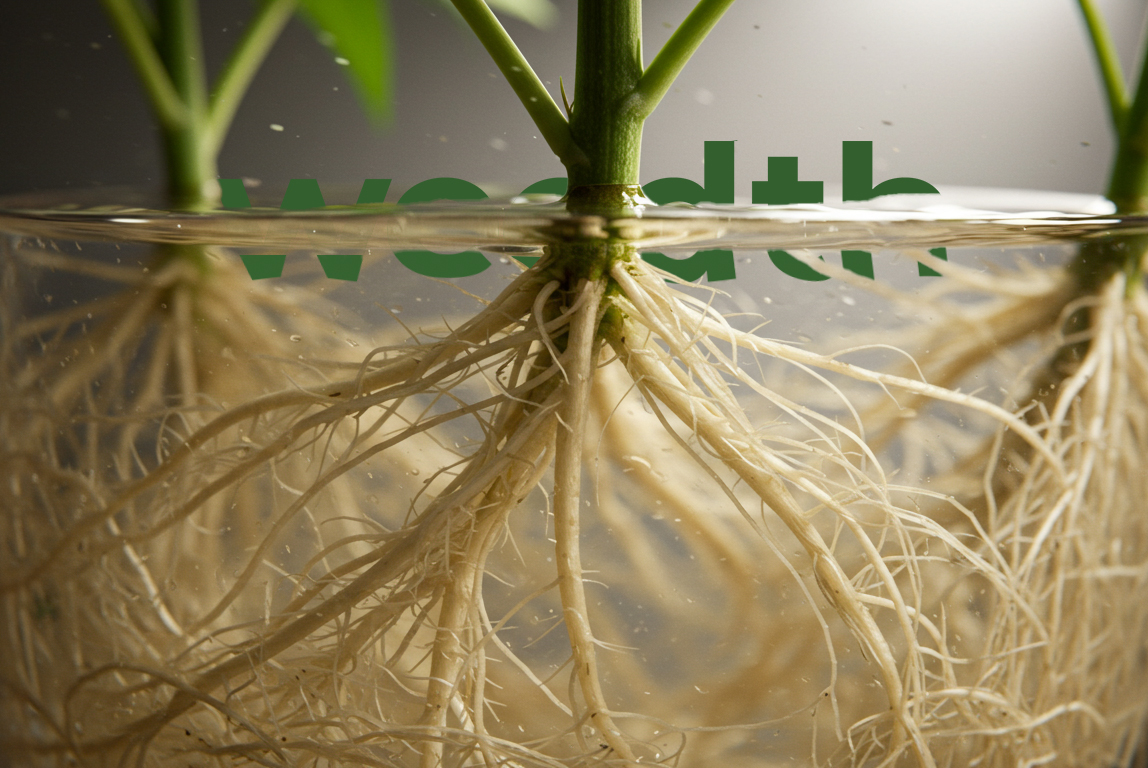
Root zone and irrigation: large tops still need oxygen
Long tropical branches create a large transpiring surface, so mature plants can drink substantially under strong light. That does not mean the medium should remain saturated. Repeated waterlogging reduces root-zone oxygen and can produce the paradox of a thirsty-looking canopy above a wet pot. Use a well-aerated medium and allow a meaningful dryback appropriate to the substrate before rewatering. Container weight, not a fixed daily schedule, is a useful guide in soil-based systems.
Outdoors, deep soil or a large container buffers water supply better than a small pot exposed to summer heat. Mulch can moderate root-zone temperature, but keep the stem base from remaining constantly wet. In a greenhouse, irrigation demand can remain high even when outside weather feels mild because the tall leaf area continues transpiring.
Light distribution matters more than punishing intensity
Mama Thai's long internodes give light a path deeper into the plant, which is an advantage if branches are spread well. The grower does not need to compress the canopy into a shallow wall of hard light. A broad, even footprint that keeps many upper spears at similar distance from the fixture usually produces a larger premium flower zone than a forest of vertical leaders with only the top thirty centimeters illuminated strongly.
If upper leaves taco, bleach or become chronically pale while lower leaves remain healthy, reduce stress rather than assuming the strain needs to 'toughen up.' Heat and light stress late in flower are especially costly because they can flatten the delicate citrus-herbal aroma. Tropical ancestry does not mean unlimited tolerance to an intense indoor photon load without matching root and environmental support.
Defoliation should be selective because the canopy is naturally open
This is not a cultivar that normally needs repeated heavy defoliation to expose flowers. Narrow leaves and longer spacing already create more light channels than a compact broadleaf plant. Remove damaged leaves, inward-facing congestion and clearly shaded lower shoots, but avoid stripping healthy solar tissue simply because a generic schedule says 'day 21 defoliation.' The plant's architecture is doing part of the airflow work for you.
A useful cleanup occurs after stretch, when the grower can see which low branches will never reach meaningful light. Removing those weak sites directs labor and airflow toward the productive zone and reduces a mass of wispy lower flowers at harvest. The goal is quality yield, not the maximum number of flowering tips.
Flower development continues after the point many hybrids would be finished
Late in bloom, Mama Thai can keep adding fresh calyxes and resin while pistils on older areas have already darkened. This staggered development is one reason a single visual cue can mislead. Sample representative flowers from different parts of the canopy. Look for a broad slowing of new white pistil production, fuller calyxes, stable mature aroma and trichomes that have moved largely beyond the clear stage. Do not harvest only because an eleven-week calendar target has arrived if the plant is plainly still building mature flower.
At the same time, endless waiting is not automatically better. Some tropical-leaning plants can continue throwing new tips under excessive light or heat, creating foxtailing that looks like fresh maturity. Distinguish environmental stress growth from the normal progression of the main flowers. The best harvest window is where the majority of the plant is ripe and the preferred effect remains clear, not where every last tip has stopped moving.
Outdoor and greenhouse finish: season length is the real gatekeeper
Mama Thai is most comfortable outdoors where autumn remains warm. If local historical weather shows repeated cold rain by October, an exposed outdoor run is a gamble. Starting early does not necessarily solve a photoperiod-dependent late finish because the plant may simply grow larger before flowering. A greenhouse can protect from direct rain and extend thermal stability, but ventilation becomes essential; a closed humid greenhouse can be worse than an open garden.
Where climate is suitable, give the plant generous spacing and structural support before flowering. Long branches move in wind and can split at the crotch after repeated storms. Soft ties, stakes or a broad support net should hold branches without immobilizing every point. Movement is useful; uncontrolled leverage is not.
More feed is not automatically more quality
Do not try to turn Mama Thai into a compact hybrid with late stress, heavy feeding or repeated stripping. The winning strategy is to make room for its architecture early and then let the plant finish with as little emergency correction as possible.
Weedth Bud Flavor Tips
Protect the citrus-herbal top while the plant is still alive
Flavor preservation begins before harvest. In the final weeks, avoid chronic canopy heat and repeated severe drought stress. The earthy-spice base is relatively easy to retain; the more interesting citrus, fresh herb and light floral notes are the first part of the profile to feel flat when flowers spend their last days overheated. Stable late-flower conditions produce a cleaner aromatic handoff to the drying room.
Harvest timing also changes the balance. Very early flower can smell bright but undeveloped, while an excessively late harvest may emphasize earth and wood at the expense of freshness. The best flavor window usually coincides with full resin maturity and a mature, stable aroma rather than the absolute last day the plant could remain standing.
Dry according to density, not according to cola length
Mama Thai can produce long colas that are surprisingly light internally. Hanging a one-foot spear does not mean the center contains the same moisture mass as a dense one-foot hybrid cola. Check actual flower feel and stem behavior throughout the dry. If the room is warm and dry, open flowers can lose moisture quickly and become crispy while thicker stems remain flexible.
Use darkness, moderate temperature and gentle air exchange. Fans should mix room air rather than blast flowers directly. A slower controlled dry gives the volatile upper notes more chance to remain in the finished flower and reduces the green harshness that can dominate a rapid dry.
Cure for integration rather than dramatic sweetness
The cure goal is not to make Mama Thai taste like fruit candy. It is to let its dry spice, citrus, herb and wood become coherent. Early jars may smell green and thin. Over several weeks, the harsher plant note recedes and the resinous aroma becomes rounder. Open the container according to measured moisture and actual gas buildup rather than following a ritualized calendar of endless burping.
Once the flower is stable, minimize unnecessary oxygen exposure. Small storage containers are useful for working stock so the main supply is not opened repeatedly. Keep it cool and dark. The profile can remain distinctive for months when protected, but the brightest fraction will not benefit from warm shelf storage.
Indoor versus outdoor flavor
Indoor flower often gives the grower a cleaner, more controlled citrus-herbal expression because late heat and rain can be managed. Outdoor flower can develop a broader earthy and incense depth, especially under strong natural sun, but the larger harvest creates more drying variability. Neither environment is automatically superior. The better flavor comes from the environment the grower can finish and dry consistently.
For outdoor plants, remove rain-wet surface moisture before flowers enter a closed drying space. Do not pile branches while they wait to be hung. Large harvests should be staged so air can move around every piece from the first hour after cutting.
Weedth Bud Boost Tips
Use horizontal space as the main yield tool indoors
Mama Thai's yield improves when long branches are converted into an even plane of productive flower. A single early topping followed by low-stress spreading or a screen is usually more logical than repeated topping. Each main branch can carry a line of flowers if it receives light along its length. The grower is effectively trading uncontrolled height for illuminated horizontal surface.
Do not fill the screen completely in vegetative growth. Leave meaningful empty area for the flowering stretch. An already full screen can become a stacked, tangled canopy that produces more plant material but a lower percentage of premium flower.
Shorter veg can produce more usable flower than a larger plant
Yield should be measured as finished quality flower per area, not final plant size. A very long veg creates thick stems and more lower branches, but much of that structure may sit below the effective light zone after stretch. A shorter veg followed by a controlled flowering expansion often gives a cleaner canopy and easier harvest with little sacrifice in premium yield.
This is especially useful for growers running several phenotypes. Smaller plants allow each expression to reveal flowering speed and aroma without one giant individual dominating the room. The keeper can then be run larger on the second cycle.
Support long branches before they become heavy
Mama Thai flowers may be airy, but long branches create leverage. A moderate amount of flower distributed over a long flexible stem can pull the branch below the light or split it at a junction. A trellis, soft vertical supports or strategically placed stakes keep flower sites oriented without squeezing the stem.
Support also preserves resin because mature branches no longer rub against neighboring flowers every time fans or irrigation work moves the canopy. Less physical contact means fewer damaged trichome heads and less contamination from repeated handling.
Do not confuse quality yield with density
Trying to force rock-hard buds with excess feed or extreme light is one of the fastest ways to lose what makes the strain interesting. The quality target is a resinous, properly mature, aromatic spear with a clean bud-to-leaf ratio. It can weigh less per cubic centimeter than an indica bud and still represent excellent cultivation.
Remove unproductive lower growth after stretch, maintain a consistent root environment and keep the upper canopy evenly lit. Those simple decisions increase the proportion of flowers worth keeping without demanding that the genetics change their natural architecture.
Outdoor yield comes from root volume plus a finishable plant size
In warm climates, large root volume can turn Mama Thai into a major plant. That is useful only if the grower can support, inspect and dry the result. Choose a final size based on local wind, security, access, drying-room capacity and the expected late-season weather. Early structural pruning can create several strong leaders rather than one towering central stem.
Water deeply enough to encourage a broad root zone and avoid repeated shallow irrigation that keeps only the surface wet. In containers, size the pot for the intended plant rather than trying to maintain a multi-meter canopy in a root volume designed for a small indoor hybrid.
Medical Uses & Benefits
Reported daytime uses
Users commonly choose energetic sativa-type flower for low mood, fatigue and situations where they want subjective relief without immediate physical sedation. Mama Thai's clear and active profile is consistent with that use pattern. Some people report that music, social activity or creative work feels easier to engage with, which can be meaningful when low motivation is part of the problem.
These are reported experiences, not proof that the cultivar treats depression, attention disorders or fatigue-related disease. Controlled clinical evidence does not validate a strain name as a medication. The chemistry of a specific tested batch, dose and individual response matter much more than the label.
Stress and anxiety are dose-dependent tradeoffs
At a low dose, some users find the mental brightness relieves stress by redirecting attention and improving mood. At a higher dose, the same cerebral acceleration can worsen anxiety or produce uncomfortable body awareness. That two-sided response is especially relevant here because the strain is often described as potent and long lasting.
Anyone with a history of panic or THC sensitivity should favor a very small initial dose, a familiar environment and a slower titration. A calmer cultivar with more CBD may be a better choice when anxiety is the primary concern.
Pain, appetite and physical relaxation
Mama Thai is not primarily described as a heavy analgesic or sedative cultivar, but THC-rich flower can alter pain perception and may increase appetite for some users. The late phase can also reduce physical tension. People seeking strong nighttime body relief may find it too mentally active, particularly if consumed close to bed.
Medical use should always account for impairment, drug interactions, legal status and individual health conditions. The strain should not be presented as a treatment for a specific disease on the basis of anecdotal reports.
Ideal User Profile
Best match
Mama Thai makes the most sense for a user who already understands strong THC and actively prefers a cerebral experience. The ideal setting is one where mental stimulation is welcome: music, art, conversation, walking in a safe environment or unhurried creative work. Flavor-focused users who enjoy dry spice, citrus and incense rather than sugar-heavy dessert notes may also find it unusually satisfying.
For growers, the ideal profile is equally specific. A patient cultivator with vertical room, a screen or greenhouse, and no need for an eight-week harvest is a good match. Someone who enjoys phenotype selection will get more from the strain than a grower who expects five seeds to behave identically.
Less suitable
It is a poor fit for a very low ceiling, a short outdoor autumn or a grow schedule built around rapid turnover. It is also not the obvious choice for a user seeking immediate sleepiness. High-THC-sensitive consumers may find the headspace too intense even when the physical side feels light.
A first-time grower can succeed if the environment is generous, but a first indoor run in a small tent is needlessly difficult. There are easier cultivars for learning basic irrigation and light management. Mama Thai becomes enjoyable once the grower is ready to plan around stretch rather than merely react to it.
Time of use
Morning or daytime use is often associated with sativa-type flower, but a strong Mama Thai session can be too immersive for work that requires precision, driving or safety-critical judgment. Late afternoon and early evening often provide more freedom to enjoy the cerebral duration without needing to be immediately productive. Dose matters more than the clock.
Grower Notes and Feedback
Stretch is the recurring surprise
Across older cultivation descriptions, the most consistent surprise is how much plant can appear after flowering begins. Growers who allow a comfortable vegetative canopy often end up with tops well above the planned light zone. Reports repeatedly favor early training and a relatively short vegetative period for indoor spaces. This is not a strain where waiting for a visibly 'large enough' plant before the flip is a safe habit.
The encouraging side is that the stretch is useful when anticipated. Long branches are easy to spread across a screen and the narrow foliage lets light move between them. Growers who plan empty canopy space before flowering often describe a much more orderly run.
Flower density creates disagreement
Some growers praise the resin and bud-to-leaf ratio while others complain that flowers are too light or fluffy. Both reports can be true. Tropical sativa structure is naturally less compact, and indoor environment can widen or narrow that difference. A phenotype with better stacking may still never produce the same density as a broadleaf hybrid.
The more useful quality measures are resin coverage, maturity, aroma, smoothness and the proportion of well-lit flower. A long, open spear with excellent resin can be higher-quality cannabis than a hard but overheated nug.
Potency tends to exceed the visual impression
Another recurring comment is that the finished flower can look less intimidating than its effect. Airy structure and an old-school appearance may suggest mild cannabis to someone trained by modern bag appeal, yet reports frequently describe a very strong, long cerebral experience. That mismatch is one reason cautious dosing belongs in the user guidance.
Growers also note that the character can change substantially with phenotype and harvest timing. Keeping clones or detailed notes from promising plants is more useful than making broad conclusions from a single seed.
The long calendar tests patience more than basic plant health
Mama Thai is not necessarily fragile. The challenge is maintaining a stable garden for long enough. Irrigation drift, pest pressure, light-height problems and nutrient accumulation have more time to develop in an eleven-week flower than in a fast eight-week hybrid. The grower who solves problems early and then keeps conditions boring often does better than the grower who continually changes inputs seeking faster progress.
Post-harvest patience matters too. Grow reports that rush an airy plant because it 'already feels dry' can lose much of the subtle aroma. The flower may need less total drying time than a dense indica, but it still benefits from a controlled transition rather than a hot, hard finish.
Weedth Editor's Note
What matters after the headline numbers
The first decision I would make with Mama Thai is not which nutrient schedule to use. I would decide how much empty vertical and horizontal room I am willing to reserve for the stretch. That sounds almost wasteful during vegetative growth, but this is one of those plants where an underfilled room before the flip can become the correct room two weeks later.
I would also stop judging the crop by compactness. If I chased hard modern buds, I would be fighting the plant's regional architecture and probably pushing light and feed harder than the flower needs. I would rather finish a lighter spear with clean resin, mature aroma and smooth smoke than produce a denser-looking flower that lost the citrus-spice top under stress.
Phenotype selection would matter to me more than maximum yield on the first run. I would keep notes on stretch, time to flower set, aroma at week eight through finish, branch strength and how quickly each plant dries. The keeper would be the one that makes the whole process coherent, not necessarily the tallest or the loudest plant on one day.
I would not recommend Mama Thai as the easiest small-tent strain. I would recommend it to a grower who wants to learn what a Thai-derived plant actually asks from the room. Its demands are educational: plan early, feed with restraint, read maturity without waiting for indica density, and protect the high-toned aroma after harvest.
For the finished flower, the attraction is the mental space. When the grow and cure are right, the experience should feel bright, dry-spiced and expansive rather than bluntly heavy. That character is worth the longer calendar if it is the character you actually want.
Weedth Score
Growing Experience – 7.7/10
Rewarding for skilled sativa growers, but high stretch and a long finish make small indoor rooms unforgiving.
Bud Structure & Visual Appeal – 7.6/10
Resinous and elegant in a classic spear form, though growers seeking very dense modern flowers may see the openness as a drawback.
Aroma Complexity – 8.6/10
Dry spice, citrus, herb, wood and occasional incense create a nuanced old-school profile that can vary meaningfully by phenotype.
Flavor & Smoothness – 8.4/10
Excellent when the flower is dried according to its open density. Fast drying quickly turns the profile woody and thin.
Effects & High Experience – 9.0/10
A distinctive long cerebral experience for experienced users, with a meaningful deduction for anxiety risk at excessive dose.
Overall Satisfaction & Recommendation – 8.2/10
Highly worthwhile for growers and users who specifically want tropical-sativa character, less compelling for fast-turn or compact-grow priorities.
Personal closer: I would choose Mama Thai when I want the grow room to make space for a real sativa personality, not when I want the plant to imitate a compact hybrid.
FAQ
How much does Mama Thai stretch after flowering starts?
Expect a high stretch response. Exact multiplication varies by phenotype and environment, but the safe indoor assumption is that much of the final height will be created after the flip. Enter flower early and continue gentle canopy guidance through the transition rather than waiting until leaders are already near the light.
Is Mama Thai a pure Thai landrace?
Historical descriptions generally identify it as Thai-derived and some call it pure Thai, while other records suggest certain circulated versions may contain outside influence. Because the name has moved through different preserved lines, absolute genetic purity should not be claimed without genetic verification. The consistent practical identity is strongly Thai-like morphology and effect.
Why are my Mama Thai buds airy?
Open flower structure is normal for this type of tropical sativa. First rule out inadequate light, poor root health or severe stress, but do not assume healthy open flowers are a deficiency. Judge maturity by resin, calyx development, aroma and the slowing of new floral growth, not by indica-style density.
Should I top Mama Thai?
One early topping is often useful indoors because it divides apical dominance and creates branches that can be spread horizontally. Repeated topping is not automatically better. Too many leaders can create a crowded screen once the flowering stretch begins.
Is SCROG a good method for Mama Thai?
Yes, especially indoors. The long flexible branches can fill a screen efficiently. The key is leaving open screen area before flowering so the stretch completes the canopy. A screen that is already full in veg is likely to become overcrowded.
How long does Mama Thai flower?
Approximately ten to twelve weeks is a useful planning range for selected indoor lines, with around eleven weeks commonly reported. Individual plants can finish earlier or later. Use actual maturity signals rather than harvesting solely by day count.
Can Mama Thai finish outdoors in a cool climate?
It is risky. A late-autumn finish requires a long frost-free season and protection from prolonged cold rain. A greenhouse can help with rain and temperature, but growers in genuinely short seasons should choose earlier genetics rather than assume an early start will make a photoperiod-sensitive Thai plant finish early.
Does Mama Thai need heavy feeding?
Usually no. Healthy plants can grow vigorously without an aggressive nutrient concentration. Excess nitrogen is particularly unhelpful late in flowering because it can preserve unnecessary leaf growth and complicate maturation. Feed the plant you see rather than trying to force density through fertilizer.
When should I harvest for the clearest effect?
Favor full maturity without deliberately extending the plant far into an overripe finish. Look for broadly cloudy mature trichomes on representative flowers, swollen calyxes, reduced fresh pistil production and a stable mature aroma. Exact amber percentages are less reliable than the combined plant picture.
Is it suitable for beginners?
A beginner with a tall greenhouse or warm outdoor climate can succeed, but a small indoor tent makes the learning curve steeper. Height planning and patience are the main barriers. For a first-ever indoor grow, a shorter and faster cultivar is usually easier.
Similar Strains
Chocolate Thai
Similar through Southeast Asian sativa heritage, open flower structure and a long, cerebral effect. Chocolate Thai often leans more cocoa, coffee and dry earth in flavor, while Mama Thai is more likely to show citrus, herb and spice.
Golden Tiger
A good comparison for growers who enjoy powerful tropical sativas and major flowering stretch. Golden Tiger is generally even more intense and can be more demanding in duration, while Mama Thai is usually the simpler entry into a Thai-dominant growth pattern.
Destroyer
Similar for narrow-leaf architecture, long branches and clear, strong effects. Destroyer often shows a more complex mixed tropical lineage and can be especially sensitive to excess nitrogen, while Mama Thai keeps a more straightforward Thai identity.
Neville’s Haze
Comparable for extreme vertical behavior, long flower and an immersive cerebral high. Neville’s Haze often runs longer and carries a stronger classic Haze incense character, making Mama Thai somewhat easier for growers who want a similar structural challenge with a shorter finish.
Durban Poison
Both appeal to daytime sativa users and growers who enjoy long, open branching. Durban Poison generally finishes faster and often expresses anise, sweet spice and a more direct energetic effect, so it is the more practical alternative for shorter seasons.
Maui Wowie
Similar in tall outdoor architecture and uplifting tropical character. Maui Wowie usually emphasizes pineapple and sweet tropical fruit and is associated with island adaptation, while Mama Thai tends to be drier, spicier and more mentally intense.
Share this article
A quick overview of the topics covered in this article.
Follow us
Latest articles
September 9, 2026
September 9, 2026
September 9, 2026