
Marshmallow OG
Marshmallow OG – Strain Profile & Grow Guide
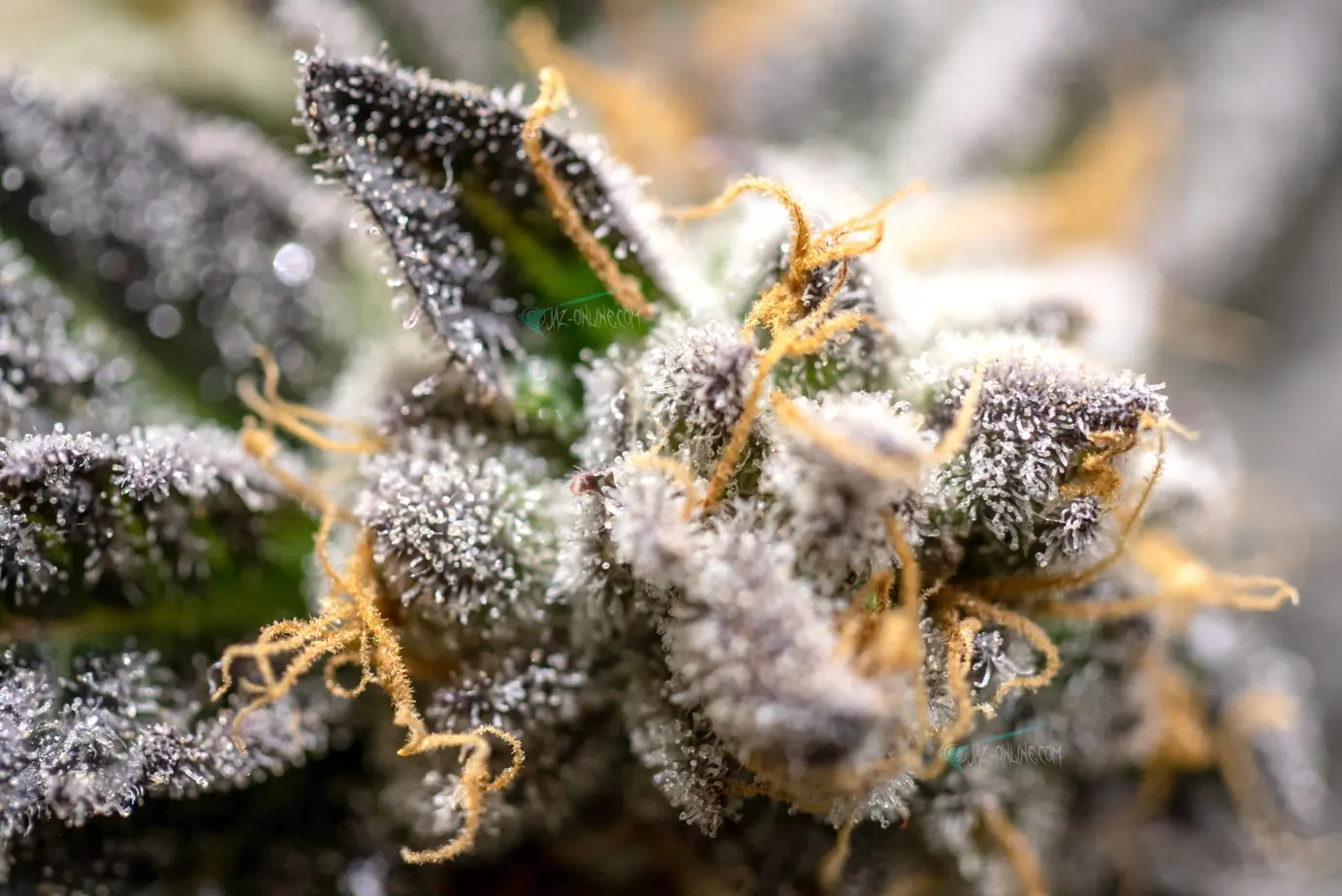
Marshmallow OG is an indica-leaning gas hybrid that balances sweetness against a hard chemical foundation. The aroma can begin with vanilla foam, toasted sugar, whipped cream, and soft floral perfume, then turn sharply toward diesel, pine, black pepper, citrus rind, and Chem-like solvent. The cultivar is commonly documented as a combination of Chem D, Triangle Kush, and Jet Fuel Gelato. This lineage explains both the dessert name and the fact that many examples smell much more like fuel than confectionery.
The plant is generally compact to medium indoors, often remaining below the height expected from its Jet Fuel ancestry. It can produce dense resinous flowers with a favorable bract-to-leaf ratio, good yield, and a flowering window near nine to ten weeks. Some selected expressions finish earlier, while others need closer to seventy days. Structure is usually easier to manage than the aroma. The flowers can become thick and sponge-dense, creating a post-harvest challenge even when the living canopy remains healthy.
Marshmallow OG's greatest strength is also the source of its main cultivation risk. The cultivar can form attractive dense flower without extreme stretch, encouraging the grower to preserve too many tops or push late feeding in search of additional mass. A compact plant can become an overloaded plant. The interior may stay wet after irrigation, the flower cores may hold moisture after cutting, and the finished smoke may become hot if salts remain high.
The quality target is not maximum density or the loudest diesel. Premium Marshmallow OG should retain vanilla, cream, floral sweetness, and a toasted-soft note beneath the gas. Its body effect should feel deep and comforting rather than simply dull. The grower earns that result by managing root-zone oxygen, limiting late canopy congestion, and allowing a slow moisture equalization after harvest.
Strain Features
| Feature | Details |
|---|---|
| Strain Type | Indica-leaning hybrid |
| Genetic Profile | Commonly documented as (Chem D x Triangle Kush) x Jet Fuel Gelato |
| THC | Commonly reported in the high teens to upper 20% range, with some commercial batches testing higher |
| CBD | Usually very low |
| CBG | Some tested flower shows measurable CBG near 1%, but this is not universal |
| Dominant Terpenes | Limonene, beta-caryophyllene, and myrcene are frequently reported |
| Flavor and Aroma | Vanilla, marshmallow cream, butter, floral perfume, diesel, pine, pepper, citrus, and earth |
| Effect Character | Fast relaxation, happiness, appetite, body warmth, and dose-dependent sedation |
| Flowering Time | Approximately 9 to 10 weeks; selected expressions may finish between about 56 and 70 days |
| Stretch | Low to moderate in many cuts |
| Plant Architecture | Compact to medium, sturdy, branchy, and capable of carrying dense flower close to the stem |
| Bud Structure | Frosty, sponge-dense to hard, high bract-to-leaf ratio, and often pale green with orange pistils |
| Yield Potential | Medium-high to high under an even canopy |
| Grow Difficulty | Intermediate |
| Primary Quality Risk | Overloading a compact plant, then drying dense flowers too quickly on the outside while the core remains wet |
Genetic Lineage
Chem D is responsible for much of the cultivar's solvent, diesel, garlic-adjacent funk, potency, and penetrating aroma. It can also contribute sensitivity to overfeeding and a tendency for the final flower to become harsh when late salts accumulate. In Marshmallow OG, the Chem character is usually present even when the jar opens with cream.
Triangle Kush adds pine, earth, lemon, structural density, and a heavy physical finish. It helps explain the cultivar's compact indoor height and thick flower formation. Triangle influence can also create a slower, more deliberate ripening phase after the plant appears visually complete.
Jet Fuel Gelato contributes sweet cream, modern trichome coverage, citrus-gas brightness, color, and improved flower organization. It gives the cultivar a polished appearance and can soften the Chem and Kush base with vanilla and floral notes.
The three influences do not appear in equal proportion in every plant. Cream-forward expressions may smell like vanilla foam, toasted marshmallow, butter, and mild gas. Chem-forward plants can be sharper, with solvent, pine, and sour fuel dominating the jar. Triangle-leaning plants may remain compact, earthy, and physically heavy.
The best keeper is not necessarily the sweetest plant. A completely dessert-dominant phenotype may lose the depth that makes Marshmallow OG distinctive. The strongest examples allow cream to soften the gas without removing it. The exhale should still carry pine, pepper, or Chem beneath the vanilla.
Lineage descriptions sometimes simplify the cross differently. The most useful approach is to state the recurring parent group and recognize that selected cuts may express one side much more strongly. Exact source verification is important whenever a grower wants to repeat a specific commercial expression.
Effect Breakdown
Rapid settling
Marshmallow OG often begins with a quick physical and emotional release. The mood becomes lighter, the jaw and shoulders relax, and the user may feel a warm tingling sensation. The onset can be euphoric without becoming highly energetic.
The creamy flavor may make the experience feel soft, but potency can build quickly. A few inhalations may be enough for an experienced user to notice a strong change in body tone.
Hunger and comfort
As the effect develops, appetite commonly increases. Food, music, and familiar entertainment become more appealing. The user may remain conversational, but the motivation to begin demanding work usually decreases.
This middle phase is the cultivar's most balanced point. The mind feels positive and calm while the body settles. Cream-forward cuts may remain functional longer. Heavy Chem-Kush expressions can move toward sedation earlier.
Sedating threshold
Larger doses can create pronounced heaviness, couch-lock, and sleepiness. Coordination and short-term attention decline. The strain is more appropriate for late afternoon or evening than for tasks requiring sustained precision.
Dry mouth and dry eyes are common. Some users experience dizziness or anxiety during the fast onset, especially when the potency is underestimated.
Duration
The body phase can last longer than the initial euphoria. Even after the strongest mental effect fades, physical calm and appetite may remain. This long tail makes the cultivar attractive for evening relaxation but less suitable before obligations.
Flavor & Aroma Profile
Marshmallow OG can smell sweet without smelling simple. Vanilla cream and toasted sugar sit over diesel, pine, citrus peel, black pepper, and damp earth. Certain cuts add butter, floral perfume, rubber, or a faint campfire note.
The first jar impression
A cream-forward jar may resemble vanilla foam, powdered sugar, or a bag of soft marshmallows opened near a fuel source. The sweetness is usually airy rather than syrupy. It can feel floral, with a perfume-like top note that becomes stronger after cure.
A gas-forward cut may open with diesel and pine first, revealing cream only after the flower is broken. This type often produces a heavier effect and a sharper exhale.
Broken-flower aroma
The interior can release solvent, lemon, black pepper, and earthy Kush. This is where the lineage becomes obvious. A flower that smells entirely sweet on the surface may still show strong Chem once ground.
Flavor sequence
The inhale is often creamy, buttery, and lightly sweet. Vanilla or marshmallow appears first. The exhale adds fuel, pepper, pine, and citrus. A good cure makes the transition gradual. Poorly dried flower creates a pleasant first second followed by hot chemical harshness.
Sponge density and moisture
Some flowers feel slightly sponge-like rather than rock-hard. This texture can be desirable because it protects trichomes and preserves aroma, but it also makes moisture assessment more difficult. The exterior may compress and feel dry while the core remains active.
Why vanilla disappears
Vanilla and floral sweetness are more fragile than diesel and pepper. High canopy temperature, direct drying air, and repeated storage exposure remove the sweet top layer first. The jar may remain loud but no longer taste like Marshmallow OG.
Dominant Terpenes
| Terpene or Volatile Group | Likely Role in Marshmallow OG |
|---|---|
| Limonene | Supports citrus brightness, sweet lift, and the happier opening |
| Beta-Caryophyllene | Adds pepper, dry spice, and the warm Chem-Kush base |
| Myrcene | Contributes earth, body relaxation, and the heavier late phase |
| Linalool | May strengthen floral perfume, vanilla softness, and emotional calm |
| Pinene | Supports pine, herbal sharpness, and a cleaner gas finish |
| Minor Sweet and Sulfur Volatiles | Likely shape marshmallow, butter, rubber, solvent, and toasted-sugar impressions |
Commercial terpene reports vary by cut. The cultivar's name should not be used to predict one fixed chemical profile. A limonene-leading sample may smell sweet and citrusy, while a caryophyllene-heavy sample may present more pepper and gas.
The practical marker is whether the cured flower retains a soft sweet middle between the top aroma and the fuel finish. Strong diesel alone does not confirm quality.
Indoor vs. Outdoor Growing
| Decision Point | Indoor Growing | Outdoor Growing |
|---|---|---|
| Height | Compact to medium and suitable for standard tents | Can reach a larger medium frame with longer vegetative time |
| Canopy Density | Controlled pruning protects the tight interior | Early widening and natural wind help, but dense tops remain vulnerable |
| Flowering Time | Usually 9 to 10 weeks under stable conditions | Often finishes in early to mid-autumn depending on climate |
| Root Zone | Container size and irrigation can be matched precisely | Large root volume increases vigor and late water demand |
| Flower Quality | Environmental control supports dense resin and cream retention | Sun can deepen gas and earth, while hot weather can reduce vanilla |
| Support | A net keeps several thick tops separated | Cages or soft ties protect branches during the final swell |
| Best Fit | Growers focused on premium evening flower | Warm, dry climates with a dependable autumn finish |
Indoors, Marshmallow OG fits well into rooms with moderate height. Low stretch makes it possible to build a more complete screen before the flip, but the canopy should not be packed. Dense flower close to the stem needs clear air channels.
The plant can produce a high yield without an extended vegetative phase. The grower should resist the urge to compensate for compact height by preserving every shoot. A shallow productive zone improves both flower quality and drying uniformity.
Outdoors, the cultivar can become wider and more productive. Strong sunlight may deepen Chem, pine, and floral complexity. The risk is late moisture. Large dense flowers should be protected from repeated rain and inspected from the stem side.
A warm Mediterranean-like season suits the cultivar. Persistent high heat during the final weeks can reduce cream and encourage faster water loss. Partial shade during extreme afternoon heat may protect the most exposed tops.
Strain-Specific Grow Guidance
Build a medium-wide plant instead of a dense ball
One early topping or a main-stem bend usually creates enough lateral growth. Spread the major branches outward and maintain a clear center. Compact height does not justify keeping weak inner shoots.
A plant with eight separated main tops can produce more premium flower than a plant with sixteen crowded tops. The difference becomes obvious during drying, when uniform branches finish more predictably.
Fill the screen to the correct percentage
Because stretch is often low to moderate, the screen can be more complete at flip than it would be for a Haze or Diesel. Leave enough open area for the branches to rise and for leaves to separate. A screen packed edge-to-edge becomes difficult to ventilate.
Continue light positioning during the first part of transition, then stop once the flower clusters begin forming. Repeated late tucking can damage soft stems and create crossed branches.
Match container size to the plant
Marshmallow OG can remain compact above the medium while sitting in a large wet root zone. Oversized containers are not automatically beneficial indoors. Choose a volume the plant can use consistently.
If leaves become pale while the container remains heavy for a long period, examine root-zone oxygen before adding nutrients. Saturation can imitate deficiency.
Water by demand, then adjust near maturity
The plant may drink actively through stretch and early bulking. Water use often slows as the flowers harden. Reduce frequency when container weight, leaf posture, and runoff behavior show lower demand.
Continuing a high-frequency mid-flower schedule into maturity raises humidity around both roots and flowers. This is especially risky in compact plants.
Keep nitrogen moderate
Excess nitrogen produces broad dark leaves and increases the amount of material trapped around the flowers. Transition away from vegetative emphasis as bloom becomes established.
A healthy late canopy can show gradual fading without becoming deficient. Forcing dark green color to harvest often reduces flavor clarity and drying efficiency.
Use feed concentration carefully
Chem-related lines can tolerate substantial nutrition when the roots and light are strong, but tolerance is not the same as benefit. Tip burn, clawing, decreasing water use, and a mineral aftertaste indicate that the program has passed the useful range.
The cultivar already forms dense flower. Late boosters should not be used to compensate for poor canopy or root health.
Prepare support before week six
The branches may appear sturdy until several tops gain weight together. Use a second net or individual ties before the flowers lean. Keep each cola in a separate air space.
Outdoors, a broad cage should be installed while the branches are flexible. Support should not pull the plant inward.
Inspect sponge-dense flowers internally
A flower can feel firm yet retain moisture near the stem. Check the base of major colas, trapped sugar leaves, and any point where flowers touch. Darkening inside the bud is more concerning than normal late color on the surface.
Harvest after the sweetness and gas connect
Follow calyx expansion, pistil activity, trichomes on calyx tissue, water use, and aroma. A visually frosty plant may still smell separate, with vanilla on the surface and raw Chem inside. Mature flower feels more integrated.
Earlier harvest preserves a happier, lighter effect. Additional maturity increases body weight, appetite, and sedation. Waiting too long may flatten floral sweetness.
Sort the harvest before it reaches the drying room
Separate small side flowers, medium branches, and oversized tops. Dense main colas may need to be divided. This is not a cosmetic choice. It prevents the small material from over-drying while the cores of large flowers remain wet.
Diagnose the compact plant through water use
Marshmallow OG can hide root-zone problems because the canopy remains short and visually dense. The most useful diagnostic signal is often water use. A healthy plant under strong flower development should show a repeatable wet-to-dry rhythm. When the interval lengthens without a major environmental change, investigate before adding nutrients.
Check whether the lower medium remains saturated, whether roots have filled the container unevenly, and whether irrigation volume has exceeded the active root zone. Pale leaves combined with slow drinking often indicate impaired uptake rather than insufficient fertilizer. Dark leaves combined with slow drinking may indicate both saturation and excess nitrogen.
Correct the physical problem first. Improve oxygen, reduce frequency, and allow the plant to reestablish demand. Nutrient changes should follow the recovery of water use, not lead it.
Train the plant around flower spacing
Compact cultivars are often trained around height. Marshmallow OG should be trained around the distance between future flowers. Two tops at the same height can still be too close. As the buds widen, they may touch and create a humid seam.
During transition, position branches so that each major top has an independent air column. If the screen forces two branches together, move one to another square or remove the weaker site. A visually full net is not the same as a quality canopy.
Interpret late fading carefully
A controlled late fade can improve harvest readiness and reduce unnecessary leaf mass. Rapid yellowing in mid-flower is different. It may reflect root stress, pH imbalance, or insufficient available nutrition. The timing and pattern matter.
Healthy maturity usually begins with older leaves and progresses gradually while flowers continue swelling. Problematic decline appears too early, reaches active leaves quickly, and often coincides with reduced water use. Do not celebrate every yellow leaf as a successful finish.
Trim according to drying environment
A humid drying room may require more large-leaf removal before hanging. A dry room may benefit from retaining some protective leaf material around medium branches. Marshmallow OG's dense flower should not be covered in a thick wet leaf shell, but completely exposed buds can lose surface moisture too quickly.
Dense flowers change the airflow plan
The correct trim is environmental. Remove damaged, crowded, and moisture-trapping leaves in every case. Adjust the remaining protection according to branch size and room conditions. Dry trimming can preserve resin and aroma when the environment is controlled, while selective wet trimming can reduce risk when humidity is high.
Check moisture after the first sealed rest
Dense flower can appear ready, then release internal moisture after several hours in a closed container. This first equalization period is diagnostic. If the exterior softens dramatically or humidity rises rapidly, return the flower to open drying conditions rather than repeatedly opening and closing the container.
Do not rely on a single stem snap. Stem diameter, bud density, and branch position vary. The flower itself must feel evenly dry enough to enter cure without becoming brittle.
Preserve the perfume phenotype through separate processing
Floral-perfume expressions can be more delicate than gas-heavy plants. Keep them away from the warmest rack area and avoid combining them with pungent Chem branches. Strong gas can dominate the shared drying air and make evaluation difficult.
Label each plant through drying and curing. A perfume-forward cut may seem quiet at harvest and become exceptional after four weeks. Combining it early removes the chance to recognize that development.
Separate visual density from safe density
A flower can be visually impressive and still be difficult to dry. Safe density means the interior can lose moisture at a controlled rate, the branch remains accessible, and the flower can be inspected. If a top is so connected that the stem side cannot be seen, divide it before hanging.
The goal is not to make the harvest look less impressive. It is to preserve the flower that was already produced. A few careful cuts at harvest can prevent an entire cola from curing unevenly.
Use the first cure month as a quality audit
Track whether vanilla, pine, and diesel become clearer or whether the flower moves toward hay, ammonia, or mineral harshness. The direction of change often reveals the cause of quality loss. Hay usually points toward rapid or uneven drying. Ammonia suggests excess sealed moisture. Mineral harshness can reflect late salt accumulation or incomplete curing.
This audit improves the next cycle. Post-harvest notes should be connected to irrigation, feed, canopy temperature, and harvest structure rather than treated as a separate process.
Audit aroma before and after grinding
A flower can smell creamy on the surface and release hot solvent after grinding. Compare both stages. Surface aroma reflects what has accumulated around the exterior trichomes, while the broken interior reveals whether the flower matured and dried evenly.
The best Marshmallow OG keeps vanilla or floral softness after the bud is opened. If every interior sample becomes sharp and mineral, review late nutrition, harvest timing, and core drying rather than relying on the pleasant unopened jar.
Post-Harvest Note: Do not compress dense flowers to judge dryness. Compression can damage trichomes and hides internal moisture. Break a representative small sample, examine the core, and compare several branch sizes before sealing the full harvest.
The cure should be judged with the same patience as flowering. Dense resinous flower can remain strong while still unfinished. Smoothness, internal moisture, and the return of vanilla matter more than immediate jar loudness.
A flower that improves through cure is more valuable than one that peaks on harvest day.
That difference becomes obvious after several weeks of careful storage.
Quality persists.
Weedth Bud Flavor Tips
Protect the final week from heat
Vanilla, floral cream, and light citrus are fragile. Keep the upper canopy within a stable temperature range and avoid intense late light that curls or bleaches the tops.
Use medium branches as the main drying unit
Whole-plant hanging may be too slow for a large leafy plant, while loose buds dry too quickly. Medium branches provide structure and allow the grower to separate dense tops.
Keep air indirect and continuous
The room needs exchange, not wind on the flower. Direct fans remove marshmallow and perfume while preserving diesel and pepper.
Check the core, not only the surface
Sponge-dense flowers can feel ready outside and remain wet inside. Use stem behavior, flower feel, and internal inspection before moving material into sealed storage.
Cure beyond the first sweet smell
Early jars may smell strongly vanilla but still smoke sharp. Several weeks allow chlorophyll decline, moisture equalization, and better integration between cream and gas.
Store the cream-forward cut separately
Phenotypes can change differently. A Chem-heavy plant may cure faster into its final profile, while a floral-cream plant continues developing. Separate containers preserve that information.
Avoid warm long-term storage
Heat continues to remove vanilla and perfume. Small airtight containers in a cool dark place protect the soft top notes.
Weedth Bud Boost Tips
Use compact height efficiently
Place several strong tops across an even plane instead of stacking flower vertically inside the plant. A shallow canopy improves usable yield and light distribution.
Remove lower sites early
Frosty lowers can still be soft, leafy, and difficult to dry. Remove branches that cannot reach strong light before they harden.
Keep the root zone smaller than the ambition
A container that stays oxygenated produces more useful growth than an oversized volume that remains wet. Root health determines how much light and nutrition the plant can use.
Support flower separation
A second net increases quality by keeping colas apart. It also prevents slow leaning that moves tops away from ideal light.
Preserve healthy leaf area
Selective thinning should improve airflow without removing every exposed leaf. The cultivar needs functional leaves to complete the late swell.
Evaluate density after cure
Extremely hard flower is not always superior. Sponge-dense buds may retain aroma and break down well. Judge finished quality, not maximum compression.
Test resin from different maturity points
The cultivar can be resin-rich, but maturity changes texture and aroma. Small labeled tests can identify whether an earlier or later harvest performs better for the intended process.
Medical Uses & Benefits
Marshmallow OG is commonly chosen for stress, anxiety, appetite loss, low mood, and physical tension. The effect often begins with happiness and relief before developing into stronger body calm. This progression can make it useful for experienced users who want to transition from activity into rest.
The appetite effect is frequently mentioned. Food may become more appealing as the physical phase develops. Some users also report relief from mild pain or muscle tightness.
The cultivar can become sedating, especially at higher doses or later maturity. This may support evening use and sleep preparation, but it can interfere with daytime obligations.
High THC and very low CBD can cause dizziness, anxiety, or excessive heaviness. The smooth cream flavor can encourage overconsumption. Dose should be kept conservative until the full onset is understood.
Reported benefits do not prove treatment of anxiety, depression, pain, appetite disorders, or insomnia. Medical use should be discussed with a qualified professional.
Ideal User Profile
Marshmallow OG suits experienced consumers who enjoy vanilla, cream, pine, and diesel with a strong relaxing finish. It is well matched to evenings, food, music, films, and quiet social settings.
It is less appropriate for people seeking a highly energetic daytime strain. Cream-forward cuts may remain functional at a low dose, but the body effect usually becomes more important over time.
Growers should choose it when they can control humidity and drying speed. Compact height makes it accessible, yet dense flowers require more post-harvest care than the simple structure suggests.
It fits indoor tents, greenhouse environments, and warm dry outdoor gardens. Growers in wet autumn climates should be cautious with the largest flowers.
Intermediate skill is ideal. A beginner can manage the plant with a simple canopy, but root-zone watering and internal flower moisture require careful observation.
Grower Notes and Feedback
The cultivar is commonly described as compact indoors, often staying under roughly four feet with ordinary training. This makes it easier to fit than many Jet Fuel-related hybrids.
Flowering reports cluster around nine to ten weeks, though selected lines can finish between approximately 56 and 70 days. Do not reduce the plant to one exact day count.
Growers often praise the resin, favorable bract-to-leaf ratio, and yield. The plant can produce dense flower without becoming extremely leafy when nutrition is balanced.
Aroma descriptions vary between marshmallow, vanilla, butter, pine, diesel, floral perfume, and pepper. The Chem side may dominate some cuts. Sweetness should be evaluated after cure.
The flowers may feel sponge-dense rather than rock-hard. This can preserve quality, but the core requires attention during drying.
The plant is often described as moderate difficulty rather than fragile. The main errors are overwatering compact plants, overfeeding late, and moving dense flower into sealed storage too early.
Effects are consistently calming, happy, hungry, and relaxing. The exact level of sedation depends on phenotype, dose, and harvest maturity.
Weedth Editor's Note
Where Marshmallow OG earns its space
A Marshmallow OG cycle is easiest to understand as a sequence of decisions rather than one dramatic mistake.
Day 18 of flower: the canopy looks almost too short. The branches are sturdy, the internodes are tight, and empty screen space remains. The temptation is to increase nitrogen and keep tucking in an attempt to create more mass. Instead, the main branches are left to rise, and six weak inner shoots are removed from each plant.
Day 34: the room changes quickly. The tops become dense, the leaf surfaces begin carrying resin, and the containers are drying faster. Irrigation frequency increases, but the feed concentration remains moderate. The plants look lighter than the deep green expected from Chem genetics, yet growth remains active.
Day 49: one plant stops drinking as quickly as the others. Its leaves hang heavily after irrigation, and the first assumption is deficiency. The container, however, remains wet longer. The solution is not more feed. The interval is extended, the lower air path is reopened, and the plant recovers its posture.
Day 64: the flowers appear ready from the outside. A small test top is separated and dried. The exterior firms quickly, but the broken center reveals trapped moisture and a raw green aroma. The main harvest is divided into medium branches, and the largest connected colas are split before hanging.
Week four of cure: the plant that looked least sweet in the room becomes the keeper. Its early diesel softens into vanilla, pine, and toasted sugar. The plant that smelled like marshmallow at week six of flower cures into a simpler floral gas.
The cultivar's lesson is not that compact plants are difficult. It is that compact plants hide change. The root zone can stay wet beneath a healthy-looking canopy, and dense flowers can stay wet beneath a dry-looking surface. Marshmallow OG rewards the grower who checks the inside of the system rather than trusting the outside.
Weedth Score
Growing Experience 8.5/10 Compact and productive, with root-zone and dense-flower moisture as the main challenges
Bud Structure and Visual Appeal 9.3/10 Frosty, organized, and premium with an excellent bract-to-leaf ratio
Aroma Complexity 9.1/10 Vanilla, cream, perfume, pine, citrus, pepper, and Chem gas create strong depth
Flavor and Smoothness 8.7/10 Smooth and layered after cure; late salts and trapped moisture can damage quality
Effects and High Experience 8.8/10 Happy, hungry, and deeply relaxing with a strong evening finish
Overall Satisfaction and Recommendation 8.9/10 A premium compact gas-dessert cultivar for growers who respect post-harvest density
Marshmallow OG is most impressive when the vanilla survives the Chem. I would choose the cut that keeps cream and pine after cure, even if another plant looks denser or smells sweeter in the room.
FAQ
What is Marshmallow OG's lineage?
It is commonly documented as a cross involving Chem D, Triangle Kush, and Jet Fuel Gelato, often written as (Chem D x Triangle Kush) x Jet Fuel Gelato.
How long does Marshmallow OG flower?
Most cuts finish in approximately 9 to 10 weeks. Selected lines may fall between about 56 and 70 days.
How much does Marshmallow OG stretch?
Low to moderate stretch is common. The plant usually remains compact to medium indoors.
Does Marshmallow OG respond well to topping?
Yes. One early topping or main-stem bend usually produces enough strong laterals. Repeated topping can crowd the compact center.
Why does my Marshmallow OG smell mostly like diesel?
Phenotype is a major factor. High canopy heat, early harvest, rapid drying, and insufficient cure can also suppress vanilla and cream.
Is Marshmallow OG prone to bud rot?
Its dense flowers can hold moisture. Late humidity, cola contact, and drying-room core moisture should be monitored carefully.
Does Marshmallow OG need heavy feeding?
No. It can support productive nutrition, but excess nitrogen and late salts reduce airflow and smoothness. Moderate feeding based on demand is safer.
Why are the leaves pale while the container stays wet?
Root-zone saturation can reduce nutrient access and imitate deficiency. Allow more oxygen before increasing feed.
Is Marshmallow OG suitable for a small tent?
Yes. Compact height is an advantage. The grower still needs enough horizontal space and airflow for dense tops.
Should large colas be broken down before drying?
Very large or connected flowers may need to be divided to prevent the core from staying wet after the surface dries.
Is Marshmallow OG good for daytime use?
Low doses may feel happy and calm, but the effect often becomes physically heavy. Late afternoon or evening is a better fit for most users.
How should a keeper be selected?
Evaluate cured vanilla retention, gas balance, branch structure, root demand, density, smoothness, and effect. Do not select by early sweetness alone.
Similar Strains
The Menthol shares cream, gas, resin, and a cooling edge, but leans more toward peppermint balm and perfume.
Jet Fuel Gelato provides sweet fuel and bright hybrid energy with a more open structure and less heavy vanilla.
Triangle Kush offers pine, earth, lemon, and deep physical relaxation with less cream and modern frost.
First Class Funk shares Chem, cream, and powerful resin, but adds stronger garlic and ammonia.
Lava Cake provides dense dessert flower and evening heaviness, with more grape, mint, and cocoa.
Share this article
A quick overview of the topics covered in this article.
Follow us
Latest articles
September 9, 2026
September 9, 2026
September 9, 2026