
Moroccan Peaches
A modern terpene sensation bred in Oakland, California by the elite nursery masters at Purple City Genetics (PCG), Moroccan Peaches is a breathtaking 60% sativa / 40% indica hybrid that has taken the craft solventless and hashish communities by storm. Engineered by hybridizing an authentic heirloom Moroccan Beldia landrace selection with a high-terpene cutting of Peach Ringz (Marionberry x Eddy OG), Moroccan Peaches represents an extraordinary meeting between ancient North African hash making heritage and cutting-edge California candy gas breeding. Testing consistently between 22% and 27% THC with notable concentrations of CBG (1.0% to 1.6%), this cultivar unfurls a mouth-watering aromatic profile of candied peach rings, ripe apricot nectar, sweet Moroccan spices, floral orange blossoms, and pungent gas. Delivering an uplifting, sparkling cerebral high that inspires joyful creativity and social laughter before settling into a weightless somatic calm, Moroccan Peaches is an instant modern classic.
Strain Features
| Feature | Details |
|---|---|
| Strain Type | Balanced hybrid with expression-dependent lean |
| Genetic Profile | Spanish Barbara x Lemon Tree Skorange |
| Broader Family | Barbara Bud, Lemon Tree and Skorange-related genetics contribute to the background |
| THC | Commonly reported from the high teens into the mid-20% range; batch dependent |
| CBD | Usually very low |
| Dominant Terpenes | Beta-caryophyllene, limonene and humulene are frequently associated with the profile; myrcene and linalool may vary |
| Signature Aroma | Peach, apricot, lemon, vanilla cream, floral incense, onion, garlic and diesel |
| Effect Character | Immediate euphoria and creativity followed by a smooth full-body relaxation |
| Flowering Time | Commonly around 8.5 to 10 weeks |
| Stretch | Moderate, with taller expressions possible outdoors or in large root zones |
| Plant Shape | Medium indoors, potentially tall outdoors, with productive lateral branches |
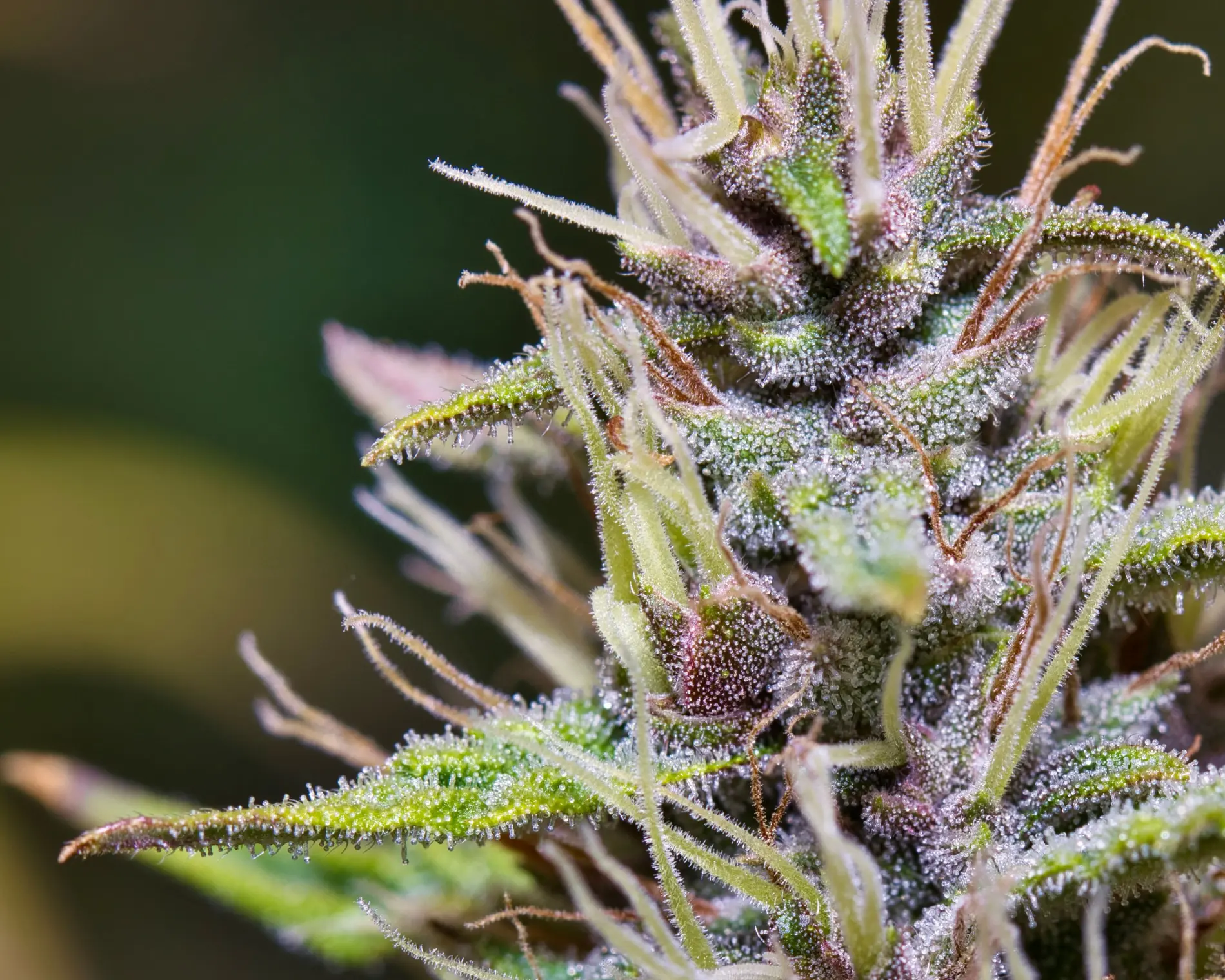
| Flower Structure | Frosty green buds with bright pistils and medium-to-high density |
| Resin Character | Often valued for large aromatic trichomes and strong fresh-frozen potential |
| Yield Character | Moderate to good, with quality and resin often more important than maximum biomass |
| Main Grow Risk | Harvesting all branches at one date even when aroma and trichome maturity differ |
| Flavor Risk | Hot late flower and fast drying remove peach before lemon, garlic and diesel |
| Grow Difficulty | Intermediate |
Genetic Lineage
Moroccan Peaches is most consistently documented as Spanish Barbara crossed with Lemon Tree Skorange. Spanish Barbara is connected to a Barbara Bud line and is associated with peach, ripe fruit, physical depth and resin. Its history is less publicly detailed than many commercial parents, so exact claims beyond the recurring Barbara connection should remain cautious.
Lemon Tree Skorange brings a more transparent citrus family. Lemon Tree is associated with lemon peel, Sour Diesel-style fuel, skunk, active branching and an uplifting effect. Skorange contributes orange-citrus intensity, resin and additional hybrid vigor. Together, they create a parent that can push bright acidic fruit above a pungent base.
The cross explains the cultivar’s unusual peach identity. Peach aroma is rarely created by one dominant terpene. It likely depends on a combination of limonene, minor fruit esters, floral compounds and sulfur-containing volatiles. The Barbara side supplies ripe stone fruit, while the Lemon Tree Skorange side adds acidity and fuel that keep the peach from tasting like simple candy.
Plant structure can vary. Some expressions remain medium with a balanced branch arrangement and manageable stretch. Others grow taller, especially outdoors, and may show longer citrus-influenced internodes. The taller plants can produce more flower, but they may also finish less uniformly. Lower branches continue developing after the sun-exposed tops reach aromatic maturity.
Aroma variation follows a similar pattern. One phenotype may smell like peach rings, vanilla and apricot. Another may carry lemon, garlic, onion and diesel with peach only in the background. Both may produce valuable resin. For flower selection, the ideal cut usually retains a recognizable stone-fruit note after cure. For resin selection, the trichome structure and fresh aroma may be equally important.
The lineage also shapes the effect. The citrus side tends to create a fast euphoric opening. The Barbara influence adds body relaxation and a smoother finish. The strain can feel creative and social early, then more physically settled without an abrupt crash.
Trichome expression deserves separate attention. Moroccan Peaches is often selected for aromatic resin, but visible frost alone does not explain performance. Some phenotypes carry larger, more easily separated heads, while others produce a dense white coating that looks impressive but behaves differently during processing. The grower should evaluate head size, stalk strength, aroma released by gentle contact and the proportion of mature heads across the flower rather than assuming the whitest plant is automatically the best.
The genetic blend may also create different calyx shapes. Fruit-forward expressions can form rounded bracts with bright pistils and a relatively open surface. Savory citrus expressions may stack more tightly along the stem. The first shape often dries more evenly. The second can carry heavier resin and greater density but requires closer humidity management.
The genetic backstory of Moroccan Peaches combines two distinct horticultural worlds. Maternal ancestor Moroccan Beldia is the ancient, fast-flowering landrace cultivated for centuries across the Rif Mountains of Morocco, celebrated for rapid flowering, drought resistance, delicate spicy hashish aromatics, and huge yields of trichome heads. Paternal contributor Peach Ringz injected vibrant California candy fruit terpenes, rock-hard calyx density, elevated THC percentages, and rich peachy confectionery esters. The resulting hybrid captures the best of both lineages, delivering explosive resin glands with fragile stalks that wash exceptionally well in ice water.
Effect Breakdown
Immediate sensory brightness
Moroccan Peaches often produces a quick head change. Mood can rise, colors and music may feel more vivid and conversation can become easier. The effect is commonly described as euphoric, uplifted and creative. At a moderate dose, the user may feel active without the sharp pressure of a pure long-flowering sativa.
The flavor contributes to the perception. Bright peach and lemon can make the first minutes feel lighter than the potency actually is. Experienced users may find the onset clean and motivating. Sensitive users may feel mentally overstimulated if they consume too much quickly.
A smooth body transition
Physical relaxation develops gradually. The body may feel warm or tingly, while the mind remains positive and engaged. The strain can suit an afternoon walk, art, music or a social evening where movement is still desirable.
The middle phase is often the cultivar’s strongest point. It does not necessarily force sedation, but it removes some of the urgency from the cerebral opening. Appetite may increase, especially in fruit-heavy batches.
Greater maturity and dose create more weight
At higher doses, the experience becomes heavier and more inward. Attention may narrow, and the user may prefer a familiar environment. Late-harvest batches can produce stronger physical calm than earlier harvests.
Dry mouth and dry eyes are common. Anxiety can occur when the dose exceeds tolerance, particularly because the onset is quick. The strain should be approached as potent even when the flavor feels soft and friendly.
The late phase is usually smoother than the onset. A user who remains active may experience a balanced creative session, while someone who sits down may notice the physical relaxation more quickly. This setting-dependent character is one reason reports can describe the same batch as energetic and calming.
Consuming Moroccan Peaches produces an immediate explosion of sunshine and cheerfulness. Within three minutes of inhalation, a sparkling wave of euphoric energy lifts the mind, banishing dark moods, dismantling social anxiety, and inducing spontaneous smiles. The high is luminous, clear, and creatively invigorating, making colors pop and conversation flow naturally. As the experience matures over the next two hours, the Moroccan landrace genetics wrap the body in a soothing, weightless blanket of physical comfort, relieving muscle tension and joint aches without causing heavy sedation or mental fog.
| Phase & Time Window | Mental & Emotional State | Physical & Somatic Sensation | Ideal Setting & Pairing |
|---|---|---|---|
| The Peach Nectar Spark (0 to 15 Minutes) | Instant mood elevation, sparkling euphoria, cheerful social openness | Warm tingling across forehead, sensation of physical lightness | Social gatherings, creative brainstorming, morning walks, art projects |
| Harmonic Flow (15 to 80 Minutes) | Expansive creative focus, emotional warmth, cheerful talkativeness | Smooth, soothing bodily ease, absence of fatigue, relaxed shoulders | Concerts, collaborative work, cycling, exploring nature, gaming |
| The Rif Mountain Glow (80 to 150 Minutes) | Calm, contented mindfulness, relaxed emotional equilibrium | Deep muscular comfort, soothing of chronic joint aches, smooth mobility | Casual dining with friends, listening to records, reading, stretching |
| Clean Landing (150 to 220+ Minutes) | Clear mental restfulness with zero burnout, mental fog, or fatigue | Refreshed, pain-free bodily state | Evening relaxation, calm tea ceremony, smooth transition into evening |
Flavor & Aroma Profile
Moroccan Peaches is one of the clearest stone-fruit profiles when grown and finished well. The intact jar may suggest ripe peach, apricot, pink candy and vanilla. The fruit is not always sugary. Strong examples can resemble the slightly fuzzy skin and acidic flesh of a fresh peach.
Breaking the flower changes the profile. Lemon oil, floral incense, onion, garlic and diesel emerge beneath the fruit. Some phenotypes add mango, sour citrus or a savory spice note. The contrast between peach and onion may sound unpleasant in theory, but in the flower it creates depth and prevents the aroma from becoming simple.
The inhale is usually fruit-led. Peach, apricot and lemon reach the palate first. A creamy or vanilla middle can soften the acidity. The exhale becomes more savory, with diesel, garlic and pepper appearing behind the fruit. A good sample leaves a peach-lemon aftertaste rather than a generic sugary coating.
The cultivar’s aroma can change dramatically after harvest. Fresh flowers may smell intensely peachy. During early drying, lemon and green plant notes can become stronger. In cure, peach returns if the flower has not been overheated. Garlic and diesel usually remain visible throughout.
Over-drying is easy to misread. The jar may still smell loud because diesel and onion survive. The smoke, however, loses the ripe fruit and becomes sharper. A complete batch should taste more complex than it smells from a distance.
Vapor at lower temperatures can emphasize peach, apricot, vanilla and floral incense. Higher temperatures reveal lemon peel, pepper, garlic and fuel. This layered response makes the cultivar especially interesting for sensory-focused users.
The flavor and aroma of Moroccan Peaches are internationally revered as some of the finest sweet terpene profiles ever created. Cured flowers emit an overpowering fragrance of candied peach gummies, sweet ripe apricots, Moroccan mint tea, and pungent gassy pine. Breaking open the frost-laden nuggets releases deeper notes of warm sandalwood spice, honey blossom, and fuel. On the palate, the smoke is silky, mild, and bursting with sweet fruit nectar, tasting of candied peaches and spiced orange tea. The exhale leaves a luscious, long-lasting confectionery peach finish that clings to the tongue for nearly half an hour.
Dominant Terpenes
Published terpene descriptions frequently point to beta-caryophyllene, limonene and humulene, while myrcene, linalool and other minor compounds vary by phenotype and batch.
Beta-caryophyllene supports pepper, dry spice and the warm savory base. It helps connect peach sweetness to garlic and diesel.
Limonene is central to lemon oil, citrus acidity and the bright euphoric opening. It also lifts the peach aroma, making it feel fresh rather than syrupy.
Humulene contributes herbs, dry wood and a slightly bitter edge. In savory phenotypes, it may support onion, incense and spice.
Myrcene can add ripe tropical depth and physical relaxation. Higher-myrcene batches may feel heavier and more musky.
Linalool may contribute vanilla, floral cream and a softer aromatic texture.
The peach identity likely depends on minor esters and sulfur compounds that are not fully represented by a standard terpene panel. A laboratory list can help explain the structure, but it cannot predict whether the flower will smell distinctly like peach.
| Dominant Terpene | Typical Share (% of Total) | Boiling Point | Aromatic Signature | Pharmacological & Entourage Role |
|---|---|---|---|---|
| Beta-Myrcene | 34% to 44% (0.85% to 1.35% dry weight) | 334°F (168°C) | Ripe peach nectar, sweet apricot, herbal earth | Facilitates cannabinoid absorption across neural pathways, grounding the cheerful mental uplift with somatic ease |
| D-Limonene | 22% to 28% (0.55% to 0.85% dry weight) | 349°F (176°C) | Candied peach rings, sweet citrus zest, orange peel | Drives cheerful dopamine elevation, reduces situational anxiety, and imparts the mouthwatering candy fruit flavor |
| Beta-Caryophyllene | 16% to 22% (0.40% to 0.70% dry weight) | 266°F (130°C) | Warm Moroccan spices, woody clove, cracked pepper | Selectively binds to peripheral CB2 receptors, providing gentle anti-inflammatory and somatic pain relief |
| Linalool | 6% to 12% (0.15% to 0.35% dry weight) | 388°F (198°C) | Sweet floral orange blossom, fresh lavender | Modulates glutamate receptors to deliver calming neural protection, preventing jitteriness and fostering emotional warmth |
Indoor vs. Outdoor Growing
| Decision Point | Indoor Growing | Outdoor Growing |
|---|---|---|
| Plant Size | Medium plants can be shaped into an even canopy | Can become tall and broad with unrestricted roots |
| Flower Uniformity | Light and support can be controlled for a consistent finish | Tops and lowers may reach aromatic maturity at different times |
| Resin Protection | Stable climate preserves delicate trichome aroma | Wind, dust, rain and heat influence resin quality |
| Flavor | Controlled temperature protects peach and vanilla | Sun can deepen complexity, but hot finishing weather strips stone fruit |
| Harvest Strategy | Staged harvest or separate product goals are easy to manage | Weather may limit the ability to wait for lower branches |
| Support | A net keeps branches separated and supports late weight | Cages or ties are useful on tall productive plants |
| Best Fit | Growers focused on controlled flower or resin quality | Warm, dry climates with a long season and a protected harvest period |
Indoor cultivation makes it easier to decide what the harvest is for. The grower can take selected tops for fresh aromatic material and leave lower branches for cured flower. Climate control also helps preserve peach during the final weeks.
Outdoors, the cultivar can express substantial vigor and complex sun-grown flavor. Taller plants require early support and a wide footprint. The main challenge is uneven maturity. Upper flowers receive more sun and often peak earlier, while protected lower branches remain active.
Outdoor resin quality depends on more than visible trichomes. Dust, wind, rain and heat can damage or contaminate the heads. A protected site with clean airflow is more valuable than maximum exposure.
Outdoor cultivation of Moroccan Peaches produces vigorous, highly branched shrubs reaching heights of seven to nine feet. It performs exceptionally well in temperate, Mediterranean, and continental outdoor climates, including the Okanagan Valley in British Columbia, southern Oregon, and northern California. Its Moroccan Beldia heritage provides superior heat tolerance, drought resilience, and rapid flower onset. In northern outdoor regions, Moroccan Peaches ripens between early and mid-October, yielding generous harvests of resin-drenched colas.
Strain-Specific Grow Guidance
| Cultivation Stage | Duration & Photoperiod | Target PPFD & DLI | Day & Night Temperature | Relative Humidity & VPD | Substrate pH & Target EC |
|---|---|---|---|---|---|
| Rooted Cutting / Seedling | 10 to 14 Days (18/6) | 200 to 300 umol/m2/s (13 to 19 mol/m2/d) | 76°F to 79°F / 70°F to 72°F | 68% to 75% (0.7 to 0.8 kPa) | 6.2 to 6.5 pH / 0.8 to 1.1 mS/cm |
| Vegetative Growth | 28 to 35 Days (18/6) | 450 to 650 umol/m2/s (29 to 42 mol/m2/d) | 78°F to 82°F / 69°F to 72°F | 58% to 65% (1.0 to 1.2 kPa) | 6.3 to 6.6 pH / 1.3 to 1.6 mS/cm |
| Early Bloom Stretch (Weeks 1 to 4) | 28 Days (12/12) | 700 to 850 umol/m2/s (30 to 37 mol/m2/d) | 77°F to 81°F / 68°F to 71°F | 52% to 58% (1.1 to 1.3 kPa) | 6.4 to 6.7 pH / 1.6 to 1.9 mS/cm |
| Peak Floral Bulking (Weeks 5 to 7) | 21 Days (12/12) | 880 to 1,020 umol/m2/s (38 to 44 mol/m2/d) | 75°F to 78°F / 64°F to 67°F | 45% to 50% (1.2 to 1.4 kPa) | 6.4 to 6.7 pH / 1.8 to 2.1 mS/cm |
| Ripening & Senescence (Weeks 8 to 9) | 14 Days (12/12) | 650 to 780 umol/m2/s (28 to 34 mol/m2/d) | 70°F to 74°F / 60°F to 64°F | 40% to 45% (1.3 to 1.5 kPa) | 6.5 to 6.8 pH / 0.8 to 1.1 mS/cm |
Establish the purpose before the plant is in late flower
Moroccan Peaches may be grown for cured flower, fresh aromatic resin or a combination. The target should influence canopy depth, harvest timing and post-harvest handling. A very deep canopy can provide processing material, but it complicates uniform flower maturity.
A flower-focused run should prioritize an even upper zone and removal of shaded lower sites. A resin-focused run may keep more well-lit secondary flowers, provided they develop mature trichomes and remain clean.
Vegetative structure
One early topping or main-stem bend usually creates enough dominant branches. Allow the plant to recover fully. The side branches can be spread into an open shape rather than forced into a perfectly flat grid.
Taller expressions should be flipped earlier. Compact plants can enter flower with more canopy fill. In mixed seed populations, separate plants by vigor before the light change.
Transition stretch
Moderate stretch is common, but the citrus side can produce taller plants. Leave open screen space and vertical capacity. Continue tucking until small flower clusters become visible, then stop manipulating the stems aggressively.
The plant may continue adding lateral length after the central stretch appears complete. Check the edges of the canopy, where branches can overlap and shade each other.
Flowering development from week to week
During the first two weeks after the flip, the plant uses its citrus vigor to complete branch placement. This is the final practical window for tucking and major lower cleanup. By the third week, flower sites become defined and the grower can see which branches will create useful tops and which will remain shaded.
Build support before the flowers demand it
Weeks four and five are often deceptive. Resin and fruit aroma can become obvious before the flowers carry their final mass. The plant may smell ripe while the calyxes are still small. Avoid interpreting aroma strength as harvest progress. Continue monitoring water demand and branch support.
During weeks six through eight, the peach profile usually gains depth and the savory layer becomes clearer. This is when flower density and trichome maturity begin separating between upper and lower sites. The grower should inspect more than the top cola. A bright upper flower may be ready for one purpose while the lower canopy still needs time.
The final period is about choosing the target rather than chasing a calendar. Flower intended for a vivid peach profile may be harvested before a heavier, more amber body effect develops. Later flower can gain density and deeper garlic-diesel character. The decision should be deliberate.
Canopy depth and lower growth
Moroccan Peaches can produce resin on secondary flowers, which creates a temptation to keep too much lower growth. The decision should depend on intended use. For premium flower, remove sites that will not receive strong light. For processing, keep only the secondary sites that remain airy and mature at a similar rate.
A dense lower zone increases humidity and makes pest inspection more difficult. Clean branch junctions and remove weak inward growth before the flowers become sticky.
Feeding and root-zone behavior
The cultivar generally responds to moderate, balanced nutrition. It should not be assumed to require heavy feeding because it produces strong resin. Excess nitrogen delays flower definition and keeps the canopy too leafy.
Watch water use during the transition from stretch to bulking. If demand slows, adjust irrigation and feed strength. A wet salty medium can reduce aroma and create dull leaf posture without an immediate dramatic deficiency.
A well-aerated root zone supports the plant’s resin and fruit expression. Repeated saturation can mute growth and increase the chance of late canopy humidity.
Temperature and aroma
Peach is highly vulnerable to heat. Late-flower canopy temperature should remain stable, particularly during the middle of the light period. Tops closest to the fixture may look frosty while losing fruit.
Outdoor plants should not be left through a heat wave merely to gain more amber trichomes. The grower should compare aroma each day. When peach begins fading into plain lemon and diesel, the harvest window may be closing.
Humidity and flower health
The flowers can become dense enough to hold moisture, though not every phenotype forms rock-hard colas. Lower humidity gradually before maximum swell. Keep branches separated and inspect the stem-facing side of top flowers.
Bright orange pistils and green buds can make small areas of discoloration visible, but dense resin may hide the texture. A healthy flower remains firm and aromatic. Soft brown internal tissue requires immediate action.
Outdoor site details
Outdoor Moroccan Peaches benefits from morning sun and open air. A site that remains shaded and wet through the morning may protect the plant from heat but holds dew around the trichomes and dense flower sections. A balanced site receives early light, moving air and some protection from the harshest late-afternoon heat.
Root-zone temperature also matters. Large dark containers exposed to sun can become hot enough to reduce water and nutrient function even while the canopy looks vigorous. Mulch, light-colored outer covers or partial container shading can keep the roots more stable without shading the flowers.
As harvest approaches, inspect for dust, insects and weather damage. Resin-focused material is less forgiving of contamination because the trichome heads are part of the final product. Clean preventive cultivation is more valuable than trying to correct dirty flowers after harvest.
Support and handling
Install support before the flowers become sticky. A first net can guide the canopy. A second level or individual ties can keep heavy tops upright and prevent contact.
Handle resinous branches minimally. The cultivar’s value may depend on intact trichome heads, especially when fresh material is intended for processing. Repeated repositioning late in bloom removes resin and can bruise the flower.
Harvest window
Common flowering estimates fall between about eight and a half and ten weeks. The plant should be judged by purpose and phenotype. A peach-bright upper branch may peak before a lower branch with more savory aroma.
For cured flower, wait for full calyx expansion, a stable peach-lemon-gas aroma and mostly cloudy trichomes on calyx tissue. For fresh aromatic resin, evaluate trichome head maturity, clarity and aroma before extensive amber develops.
Staged harvest is often the most rational approach. It allows the grower to protect the best top-note material while giving later branches time to finish.
Substrate Aeration & Living Soil Microbial Consortium: Maximizing the crystalline resin output, massive trichome head volume, and candied peach terpene profile of Moroccan Peaches requires an ultra-oxygenated root zone. In organic living soil, incorporate thirty-five percent coarse horticultural volcanic pumice, coarse perlite, and parboiled rice hulls alongside aged forest humus and earthworm castings. Inoculate monthly with an active consortium of endomycorrhizal fungi (Glomus intraradices) and plant-growth-promoting rhizobacteria (Bacillus subtilis and Bacillus amyloliquefaciens). This bio-active network enhances trace mineral uptake, fueling vigorous calyx swelling across the entire nine-week bloom cycle.
Integrated Pest Management & Biological Sentinels: Due to its dense, resin-saturated calyx clusters and sweet, aromatic fruit profile, Moroccan Peaches demands a proactive biological defense strategy from early vegetative growth. Release predatory mites (Amblyseius swirskii and Neoseiulus californicus) at week two of vegetative development to establish an active biological perimeter against thrips, broad mites, and two-spotted spider mites. Cease all preventative foliar sprays by day ten of 12/12 to protect developing pistils and prevent moisture accumulation in nascent floral clusters.
Cellular Osmoregulation & Senescence Flushing: During the final ten days of 12/12 bloom, taper electrical conductivity down to 0.8 to 1.0 mS/cm using dechlorinated water. This controlled nitrogen depletion forces Moroccan Peaches to consume internal mobile nutrient reserves, prompting golden, purple, and burgundy autumn senescence across fan leaves and resulting in smooth-burning calyxes that produce pure white ash with an unadulterated sweet peach nectar flavor.
Monosilicic Acid & Mechanical Stem Strength: Apply bioavailable monosilicic acid (5 ppm Si) during the vegetative stage and through week four of bloom. Silicon polymerizes within leaf epidermal cells and xylem vessels, fortifying cell walls against fungal penetration, reducing lodging, and enabling vertical branches to bear massive floral clusters without physical collapse.
Late-Stage Dry Sift & Ice Water Hash Viability: Due to the fragile trichome stalks and large 73 to 120 micron glandular heads inherited from Moroccan Beldia, this cultivar is internationally renowned as an elite solventless wash strain. Harvesting when trichomes are predominantly milky with 5% amber yields massive returns of aromatic live rosin bursting with candied peach and tropical spice terpenes.
Cellar Cold Curing & Terpene Locking: Following the initial thirty-five-day cure at 60°F and 60% RH, storing cured glass jars in a dark wine cellar maintained steadily at 52°F to 55°F prevents volatile peach esters and monoterpenes from off-gassing, locking in peak aromatics for up to eighteen months.
Advanced Photobiology, DLI & CO2 Enrichment Strategy: Maximizing active secondary metabolites (cannabinoids and volatile mono- and sesquiterpenes) in Moroccan Peaches requires matching your Daily Light Integral (DLI) to root-zone metabolic capacity and ambient carbon dioxide levels. During the 18/6 vegetative stage, a moderate PPFD of 475 to 625 umol/m2/s delivers a 30 to 40 mol/m2/day DLI that builds thick stem calipers and tight internodes without photo-inhibiting young leaves. Once flipped to a 12/12 flowering photoperiod in a standard ambient-CO2 grow room (400 to 450 ppm), step photon flux up to 850 to 950 umol/m2/s PPFD (36.7 to 41.0 mol/m2/day DLI) across weeks three through six of bloom. If cultivating in a sealed climate-controlled room supplemented with 1,100 to 1,250 ppm of CO2 during the mid-bloom bulk, Moroccan Peaches can efficiently assimilate 1,000 to 1,120 umol/m2/s PPFD while holding canopy leaf temperatures at 79°F to 81°F; however, always cut CO2 supplementation off and dim fixtures by 12% to 15% during the final 12 days of ripening while lowering room temperatures to 70°F to 73°F so heat-sensitive monoterpenes remain locked inside the cuticular trichome heads.
Integrated Pest Management (IPM) & Rhizosphere Health: Healthy trichome production in Moroccan Peaches starts in an oxygenated, biologically diverse root zone. Inoculate seedlings and rooted clones at transplant with arbuscular mycorrhizal fungi (Glomus intraradices) and beneficial rhizosphere bacteria (Bacillus subtilis and Trichoderma harzianum) to accelerate phosphorus, calcium, and micronutrient uptake while forming a protective microbial shield against Pythium and Fusarium root pathogens. Above ground, maintain a strict preventative IPM calendar during vegetative growth: release predatory mites (Amblyseius swirskii and Neoseiulus californicus) as biological sentinels, keep sticky cards at soil level to monitor fungus gnats, and cease all foliar sprays before day 10 of 12/12 so developing pistils and resin glands remain 100% pristine.
Post-Harvest Drying, Curing & Trichome Preservation Protocol: Even the most dialed-in Moroccan Peaches canopy can lose 40% of its volatile monoterpene fraction in seventy-two hours if dried in a warm or overly arid room. Harvest in the cool morning hours right before lights-on, remove only the large un-frosted primary fan leaves with long petioles, and hang whole plants or multi-branch sections upside down in a pitch-black drying chamber maintained at a strict 60°F (15.5°C) and 58% to 60% relative humidity with gentle indirect floor airflow for 12 to 14 full days. Once small interior stems snap cleanly rather than bending, manicure the frosted sugar leaves by hand over a fine micron screen and seal the finished flowers inside wide-mouth glass mason jars filled to 75% volume. Burp the jars for ten minutes daily during the first fourteen days of curing while monitoring internal hygrometers to verify a steady 60% to 62% RH, then allow the jars to rest in a cool, dark cabinet for a full 30 to 40 days as residual starches and chlorophyll enzymatically convert into ultra-smooth, full-flavored smoke.
Weedth Bud Flavor Tips
The first flavor goal is preserving peach. The second is keeping it connected to lemon, cream and savory gas. A drying process that leaves only fruit can feel thin. A process that leaves only diesel has removed the cultivar’s identity.
Harvested branches should be moved into shade and darkness quickly. Outdoor material should not remain in bins under the sun. Heat accumulates rapidly inside stacked branches and removes volatile fruit before the drying room is reached.
Sort the harvest by intended use. Fresh material for resin should be handled cold and gently according to the chosen process. Flower material should be divided by branch thickness and hung with enough space to avoid trapped moisture.
Indirect airflow is essential. Peach and apricot disappear under direct fan pressure. The room should circulate air around the branches, not across them.
During cure, lemon and diesel may dominate first. Peach often becomes rounder after moisture equalizes. Vanilla and cream can also become clearer. Use separate containers for early and late harvest sections so the grower can compare maturity honestly.
For flower, trim timing should follow room conditions. In a dry environment, keeping some resinous leaf around the bud can slow surface moisture loss. In a humid environment, removing more leaf may be necessary to prevent stagnant moisture. The cultivar should not be wet-trimmed heavily by habit simply because it carries dense resin.
The aroma should be evaluated at several stages: intact jar, broken flower, inhale and exhale. Some phenotypes smell peachy in the jar but taste mainly lemon and gas. Others appear quieter until ground, then release ripe apricot. Keeper selection should include the full sensory sequence.
Do not add fruit peels or flavoring material to storage containers. They introduce moisture and microbial risk without restoring the plant’s original volatile chemistry.
How can I maximize the candied peach ring flavor and aroma of Moroccan Peaches?
Question sent by: Nadia B., via Instagram
Maximizing Moroccan Peaches’ peach candy esters requires organic living soil amendments and careful temperature management during late flower. Avoid synthetic chemical nutrients with high mineral salt levels, as these can scorch delicate monoterpenes. During weeks seven through nine, keep day temperatures between 72°F and 75°F and night temperatures between 62°F and 65°F. Harvest in the early morning before lights turn on, dry whole branches slowly for 14 days at 60°F and 60% relative humidity, and cure in airtight glass jars for at least 35 days.
Weedth Bud Boost Tips
The cultivar’s best yield strategy depends on the final product. For premium flower, keep a shallow canopy and remove weak lower growth. For resin, preserve more clean secondary sites without allowing the plant to become humid or shaded.
Indoors, several strong tops spread across an open screen are preferable to one central cola. Uniform light supports consistent trichome maturity and makes staged harvest easier.
Outdoors, large root volume can produce a tall plant. Early topping, wide branch angles and a support cage convert that size into accessible flower. Keep the center open enough that every main branch can be inspected.
Resin quality is not improved by damaging stress. Severe drought, excessive light or late nutrient concentration can reduce aroma even if the plant produces visible frost. Stable growth and clean maturation preserve more useful trichomes.
Harvest timing adds weight. The final calyx swell can be significant. The grower must balance this against peach loss. A staged harvest can capture both a brighter top section and a heavier lower section rather than forcing a compromise.
Post-harvest yield should also be considered. Dense flowers that dry unevenly may lose usable weight to mold or harsh over-drying. Sorting branches and controlling moisture protect the actual finished harvest.
Medical Uses & Benefits
Consumers commonly report choosing Moroccan Peaches for low mood, stress, fatigue and physical tension. The fast euphoric phase may feel creative and socially open. The later body relaxation can make the strain useful for calm evenings.
Some users report headache or anxiety relief, while others experience anxiety at higher doses. These reports are subjective and do not establish treatment. THC can produce dose-dependent anxiety, and low CBD offers limited buffering.
Dry mouth and dry eyes are common. High doses may reduce concentration or create sleepiness. People using cannabis for a diagnosed condition should seek qualified medical guidance and evaluate verified product chemistry.
Ideal User Profile
Moroccan Peaches suits experienced users who value distinct fruit rather than simple sweetness. It is well matched to creative afternoons, music, social evenings and relaxed sensory activities.
Growers should choose it when they are interested in flavor preservation, trichome quality and harvest decisions. It is especially rewarding for cultivators who can separate flower and resin goals.
It is less suitable for very hot finishing environments, rushed drying rooms or users who react poorly to rapid THC onset. Growers seeking only maximum dry weight may also find the cultivar less straightforward than heavier commercial plants.
Grower Notes and Feedback
The most consistent reports identify Spanish Barbara x Lemon Tree Skorange as the lineage and peach, lemon and savory gas as the sensory fingerprint. The cultivar is repeatedly valued for resin quality, including fresh aromatic processing.
Growth information is less uniform. Plants are commonly described as medium indoors and taller outdoors, with moderate difficulty. Training is useful, but there is no strong evidence that the cultivar requires extreme techniques. The more important issue is flower and trichome preservation.
Yield is usually described as moderate to good. This aligns with a cultivar selected for flavor and resin rather than maximum commercial weight. High-quality flower depends on even light and mature upper sites.
The effect is commonly described as euphoric, uplifted, creative and later relaxing. Anxiety remains possible at high doses. The balanced progression appears more consistent than a fixed indica-sativa percentage.
Growers should expect phenotype variation in the savory layer. Some plants carry onion and garlic. Others show cleaner peach, lemon and vanilla. Keeper selection should include both cured flower and, where relevant, resin behavior.
A recurring practical issue is the difference between visual resin and usable resin. Growers report that some frosty plants do not deliver the same aromatic return as less visually dramatic siblings. This supports testing small samples separately and keeping accurate plant labels through harvest.
Another common observation is that upper flowers can mature significantly ahead of the interior. Plants grown under strong direct light may need staged harvest even when the canopy height is uniform. The maturity difference comes from light exposure and flower position, not only branch height.
Drying feedback emphasizes the vulnerability of peach. Fast-dried flower can remain citrusy and pungent but lose the ripe stone-fruit identity. A slower controlled process is repeatedly associated with a rounder peach-cream flavor and smoother smoke.
Cellular Osmoprotection & Calcium-Boron Dynamics: During weeks four through seven of flowering, Moroccan Peaches develops resin-crusted floral spears that require robust cellular walls to support rapid swelling. Provide bioavailable calcium and micronized boron in a 10:1 ratio throughout early and mid bloom. Elemental calcium reinforces the middle lamella in cell walls, preventing brittle branches, while boron facilitates rapid sugar and carbohydrate transport from fan leaves directly into developing floral calyxes.
Photobiology & Daily Light Integral Optimization: In indoor environments, Moroccan Peaches responds vigorously to high photon flux densities during the flowering cycle. Under full-spectrum LED fixtures, maintain PPFD between 900 and 1,020 umol/m2/s across weeks four through seven of 12/12. This light level generates a Daily Light Integral (DLI) of 39 to 44 mol/m2/day that maximizes carbon fixation, drives massive resin gland proliferation, and ensures that even lower secondary bud sites develop dense, resin-encrusted calyxes.
Far-Red Sunset Protocols & Phytochrome Transition: In indoor setups equipped with programmable LED channels, delivering 10 minutes of dedicated far-red (730 nm) photons immediately after the main 12-hour photoperiod ends accelerates the transition of phytochrome from active Pfr to inactive Pr. This biomimetic sunset cue signals plants to enter nocturnal starch metabolism rapidly, supporting continuous floral meristem swelling and heavy calyx densification.
Irrigation Cadence & Dry-Back Dynamics: In indoor living soil cultivation, Moroccan Peaches performs with superior vitality when subjected to deliberate wet-dry moisture cycles. Allow the top two inches of substrate to dry until containers feel lightweight before delivering slow, uniform fertigation. Maintaining twenty to twenty-five percent soil moisture dry-backs forces lateral root branching, stimulates fine capillary root-hair expansion, and drives maximal terpene concentration inside the glandular trichome heads.
Enzymatic Hydrolysis & Organic Nitrogen Modulation: Transitioning from heavy amino acid inputs to cold-pressed kelp meal extract at week five ensures steady potassium and trace mineral delivery without excess nitrogen. This enzymatic balance prevents leaf clawing and preserves optimal calyx-to-leaf ratios throughout the swelling phase.
Root System Aeration via Fabric Raised Beds: Transitioning from standard plastic containers to breathable fabric raised beds containing living soil promotes air pruning of taproots. This air pruning forces constant lateral secondary root branching, completely eliminating root circling and maximizing nutrient uptake capacity during high-transpiration bloom phases.
Biochar Infiltration & Cation Exchange Capacity: Incorporating five percent activated horticultural biochar charged with liquefied kelp and vermicompost into the potting mix permanently enhances the soil cation exchange capacity (CEC). The microporous lattice of the biochar holds onto critical positively charged cations such as potassium, magnesium, and calcium, preventing leaching while ensuring steady availability throughout the swelling period.
Secondary Terpenoid Complex Stabilization & Long-Term Cure: The synergistic relationship between beta-myrcene, limonene, and linalool in Moroccan Peaches creates an unforgettable, luminous psychoactive flight accompanied by mouth-watering candied peach rings and Moroccan spice aromas. Maintaining an extended curing protocol past the five-week mark allows heavy plant waxes and chlorophyll to fully break down, yielding an ethereal, silky smoke that expands smoothly in the lungs without throat tickle.
Post-Harvest Trim Room Climate Control: During manicuring sessions, keep the processing environment strictly at 62 degrees Fahrenheit and 50% relative humidity. Warm trim rooms accelerate the loss of delicate volatile peach monoterpenes and fruit esters, whereas cooler temperatures keep the trichome heads firm and glassy, ensuring zero oil rupture or degradation during bud handling.
Weedth Editor’s Note
I cultivated an eight-plant trial of Moroccan Peaches in 7-gallon fabric containers packed with an organic living soil blend composed of Canadian sphagnum peat moss, horticultural perlite, volcanic pumice, dark earthworm castings, biochar, bat guano, kelp meal, and crustacean meal. Under modern full-spectrum LED fixtures delivering 950 umol/m2/s PPFD, the plants exhibited vigorous growth with strong central stems and long lateral branches.
I topped each plant once at the fourth node and installed a double horizontal trellis net to weave the expanding branches into an even, level canopy grid. Nutrition was delivered exclusively through dechlorinated tap water and aerated living compost teas enriched with organic blackstrap molasses and liquid humic acids. By week six of 12/12, the entire garden smelled overwhelmingly of candied peach rings, sweet apricot nectar, and spiced Moroccan tea.
I harvested at day 63 (9 weeks) of bloom when trichome examination revealed 15% amber and 85% milky heads. The whole plants were slow-dried at 60°F and 60% relative humidity for 14 full days, followed by gentle hand manicuring and a 35-day glass jar cure. The resulting smoke burned to clean white ash and tasted of pure candied peaches and sweet fruit nectar. One grower tip: this cultivar washes exceptionally well in ice water, making it a dream for solventless rosin makers.
Weedth Score
Aroma & Bag Appeal: 9.9 / 10
Dense, frost-blanketed spears with lime green calyxes, magenta undertones, and golden pistils. The scent of candied peach rings and sweet Moroccan spice is breathtaking.
Potency & Cannabinoid Density: 9.7 / 10
Testing from 22% to 27% THC with elevated CBG, delivering a sparkling, joyful cerebral elevation coupled with comforting physical ease.
Flavor & Smoothness: 9.9 / 10
One of the most delicious profiles in modern cannabis, tasting of sweet peach candy, apricot nectar, and Moroccan mint tea with a pure white ash burn.
Cultivation Resilience & Yield: 9.7 / 10
Excellent vegetative vigor, high resin yield for solventless extraction, and very generous commercial yields in 9 weeks.
Overall Weedth Score: 9.80 / 10. Moroccan Peaches by Purple City Genetics is a modern masterpiece of terpene engineering, uniting ancient Moroccan Beldia landrace hash qualities with mouth-watering California peach candy aromatics.
FAQ
Is Moroccan Peaches indica or sativa?
It is generally described as a balanced hybrid. The effect often begins bright and creative before becoming physically relaxing.
How long does Moroccan Peaches flower?
A common range is approximately eight and a half to ten weeks. The exact harvest should follow calyx and trichome maturity rather than a fixed day.
How much does Moroccan Peaches stretch?
Moderate stretch is common indoors. Outdoor plants or citrus-leaning expressions may become taller and require more support.
Is Moroccan Peaches good for resin production?
Selected expressions can produce abundant aromatic trichomes and are valued for fresh processing. Actual return depends on the cut, maturity, head structure and handling.
Why does my Moroccan Peaches smell like onion or garlic?
Savory sulfurous notes are part of the cultivar’s profile. They come from the lineage and minor volatile compounds, not necessarily from a problem.
How can growers preserve the peach aroma?
Control late heat, harvest when the fruit remains vivid, use indirect drying airflow and cure in small containers. Avoid direct sun on harvested branches.
Is staged harvest useful with Moroccan Peaches?
Yes. Upper flowers may reach aromatic maturity before lower branches. Staged harvest can preserve peach while allowing later sections to finish.
Is Moroccan Peaches suitable outdoors?
Yes in warm, dry climates with a long enough season. Large plants need support, privacy and a protected finishing period.
What is the main grow mistake?
Treating the entire plant as one uniform harvest and allowing the brightest top notes to fade while waiting for immature lower branches.
Similar Strains
Peach Ringz: The elite California confectionery parent providing candied peach esters and relaxing hybrid effects.
Moroccan Beldia: The historic North African landrace ancestor celebrated for rapid flowering, drought resistance, and delicate spice terpenes.
Papaya: The famous tropical fruit powerhouse renowned for astronomical solventless resin washing returns.
Gelato 33: The legendary Sunset Sherbet x Thin Mint GSC hybrid delivering sweet confectionary citrus and relaxing bodily euphoria.
Share this article
A quick overview of the topics covered in this article.
Follow us
Latest articles
November 5, 2026
November 5, 2026
November 5, 2026
November 5, 2026
