
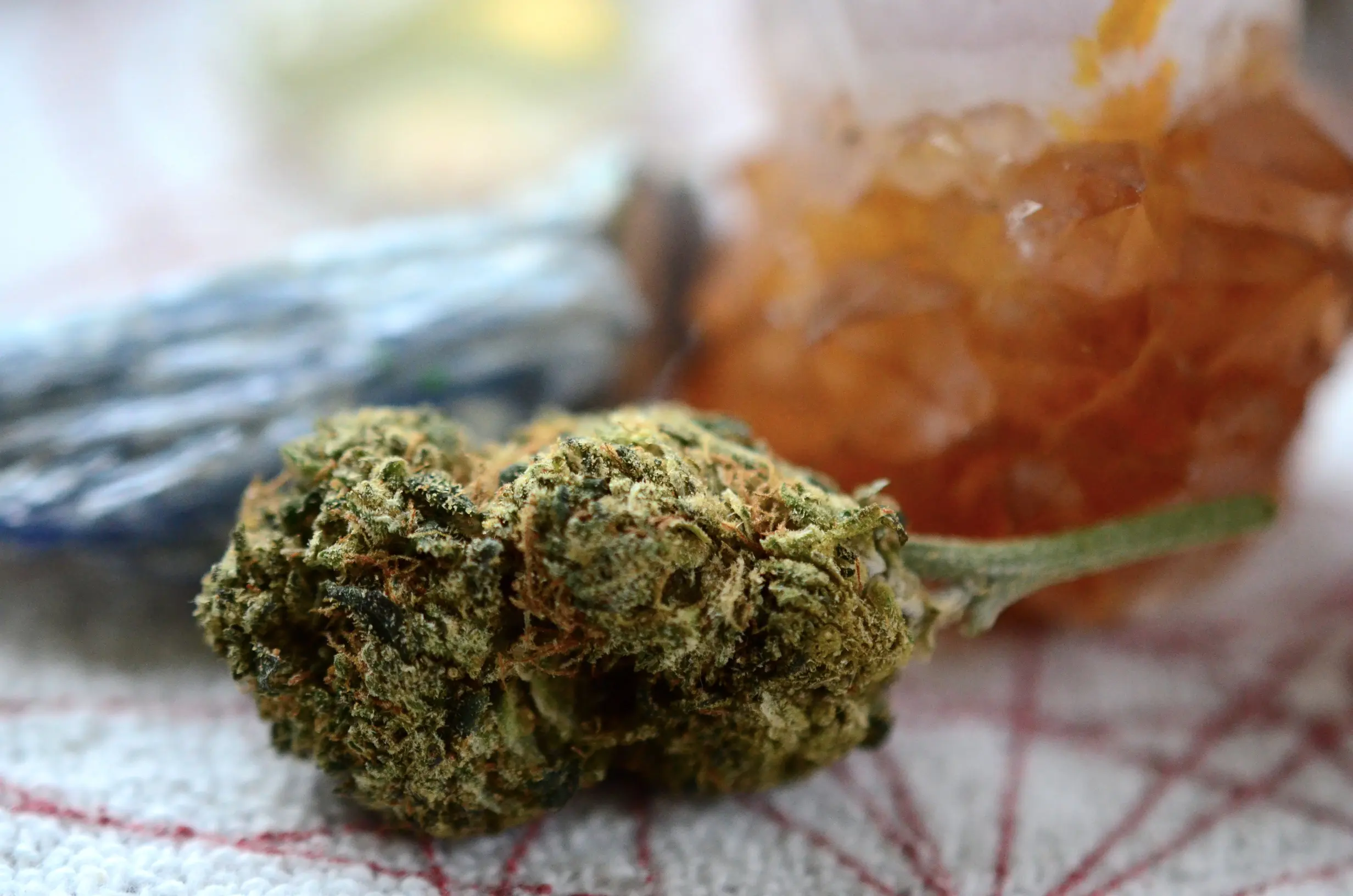
Motavation
A short, resin-heavy indica hybrid with limited stretch, sweet fruit and fresh-paint funk, a creative opening, and a deep body effect that can outlast the user’s plans.
Motavation is a compact indoor-focused cultivar built from Sensi Star and Warlock. The name sounds energetic, but the plant and effect are more complicated. It often begins with a bright, creative, amused mental shift, then gradually develops a heavy physical calm that can make action less likely than ideas. The contrast between mental interest and body weight is the strain's defining experience. It can inspire a project, then convince the user that planning it from the couch is sufficient.
In the grow room, Motavation stays short and sturdy. It is especially useful where vertical space is limited, but compact height does not mean a quick vegetative stage. The cultivar benefits from time to build roots and lateral branches before flowering. A rushed flip can produce a small plant with excellent resin but an average yield. Four to six weeks of healthy vegetative growth, depending on plant size and system, lets the low frame carry enough productive sites to justify the eight-to-nine-week flowering cycle.
The aroma is unusually distinctive. Sweet fruit, flowers, pine, earth, berry, citrus, diesel, and a fresh-paint or chemical note may appear in the same plant. The chemical edge is not automatically a sign of contamination. In authentic flower it is integrated with sweetness and resin. The grower still needs to distinguish normal cultivar aroma from unsafe inputs, dirty equipment, or poorly cured flower. Clean cultivation and a patient cure should make the paint-like note smell sharp and aromatic rather than solvent-contaminated.
Motavation is not a difficult plant, but it rewards a different strategy from a stretchy sativa. The grower should create enough branch area before the flip, avoid over-topping the compact frame, keep the dense resinous flowers separated, and manage late water demand carefully. Its greatest quality is not raw speed or maximum yield. It is the combination of small-room efficiency, exceptional resin coverage, and an effect that remains mentally interesting while the body becomes deeply relaxed.
Legal note: Educational content only. Always follow the cultivation and cannabis laws that apply in your location.
Strain Features
| Feature | Details |
|---|---|
| Type | Mostly indica F1 hybrid with a short, squat growth pattern. |
| Lineage | Sensi Star x Warlock. |
| Vegetative Time | Often benefits from 4-6 weeks indoors to build enough lateral structure. |
| Flowering Time | Usually 8-9 weeks, commonly around 50-60 days. |
| Outdoor Harvest | Often late October, which can be challenging in wet northern climates. |
| Indoor Height | Short, stout, and well suited to low rooms, cupboards, and compact tents. |
| Outdoor Height | Short to medium with a broad frame; needs a long enough autumn despite compact size. |
| Stretch | Low to moderate. Height is easy to control, but side branches may continue filling space. |
| Bud Structure | Large calyxes, compact resinous flowers, heavy sugar-leaf coverage, and strong late weight. |
| Yield Potential | Medium to high, commonly improved by adequate veg time and a low even canopy. |
| Aroma | Sweet fruit, floral berry, pine, earth, citrus, diesel, skunk, and fresh paint. |
| Dominant Terpenes | Beta-caryophyllene commonly leads, followed by myrcene and limonene in tested batches. |
| Effects | Creative and mentally engaged at first, then deeply relaxing, couch-locking, and long-lasting. |
| Difficulty | Easy to moderate, with most mistakes linked to short veg, crowded branches, and late overwatering. |
| Best Training | One topping, low wide LST, compact SCROG, selective bending during early flower, and support for heavy tops. |
| Feeding Tendency | Moderate appetite with some phenotypes able to use strong nutrition once fully rooted. |
| Main Grow Risks | Underdeveloped plant at flip, over-topping, dense interior flower, salt accumulation, and harvesting for resin before calyx maturity. |
| Best Use Time | Evening or nighttime, especially when no demanding physical tasks remain. |
Motavation is frequently described as an ideal compact indoor plant, but compact cultivars are easy to under-veg. The plant does not create yield through dramatic stretch. It creates yield by carrying a prepared framework into flower. Root development and lateral branch count before the flip matter more than emergency training afterward.
Grower priority: Build the productive frame before flowering. Motavation is short enough to wait for, and the extra vegetative time is usually more valuable than another round of topping.
Genetic Lineage
Sensi Star Influence
Sensi Star contributes compact height, dense resin, broad leaves, a heavy body effect, and a pungent pine-earth profile. It also helps explain the plant's strong main structure and tendency to form substantial flowers without excessive stretch. Phenotypes leaning this direction may feel more sedating and smell more piney, earthy, or chemical.
The Sensi Star side can also create a plant that looks ready early because trichome coverage develops quickly. Resin on sugar leaves is not the same as full flower maturity. Calyx swelling, water demand, pistil behavior, and calyx trichomes must still be evaluated.
Warlock Influence
Warlock adds sweetness, fruit, floral character, branching, and a more creative mental component. It can produce large calyxes and improve the aromatic top notes. A Warlock-forward phenotype may stretch slightly more, smell sweeter, and preserve more mental activity before the body phase becomes dominant.
The unusual fresh-paint note likely comes from the interaction between sweet floral compounds and sharp fuel or chemical volatiles. It should appear as part of a complex aroma rather than a harsh standalone solvent smell.
Why the Effect Contradicts the Name
The name reflects the creative mental opening more than the full experience. The user may feel interested, imaginative, and mentally stimulated, but the body becomes progressively heavier. This creates motivation without reliable physical follow-through. For some users, the ideal activity is drawing, music, or planning from a comfortable seat.
Phenotype Range
A compact Sensi Star-forward plant stays very short, develops dense pine-chemical flowers, and produces the strongest couch-lock. A more branched Warlock-forward plant may show berry, citrus, and floral sweetness with a longer creative phase. The balanced keeper usually has enough lateral growth for yield while retaining the heavy resin and body effect.
Selection should compare vegetative speed, number of strong branches, flower density, support needs, cure aroma, and the time between mental onset and body heaviness. The shortest plant is not automatically the best plant for a small room if it requires excessive veg to fill the space.
Lineage note: Motavation is a compact hybrid with meaningful phenotype variation. The most useful keeper matches the room’s cycle length and the user’s preferred balance between creativity and sedation.
Effect Breakdown
Opening: Mood and Creative Interest
The first stage often feels happier and more mentally engaged than expected from the plant's indica structure. Colors, music, humor, and ideas may feel more interesting. The user can become talkative or focused on a creative problem. This phase is not always energetic in the physical sense. The mind may speed up while the body already begins to soften.
A small dose can remain balanced enough for drawing, writing, guitar, gaming, or conversation. The user should still avoid driving and safety-sensitive work because reaction time and judgment are impaired even when the mind feels active.
Transition: Body Weight Builds Quietly
The physical effect increases over the next thirty to sixty minutes. Limbs feel warmer, movement becomes less urgent, and the user may settle into one position. This transition is easy to underestimate because the mental phase remains interesting. Redosing during the creative opening can produce much stronger couch-lock later.
Peak: Creative Couch-Lock
At medium to high doses, Motavation creates a distinctive combination: the mind still generates ideas, but the body does not want to execute them. This can be enjoyable for imaginative entertainment or planning, but frustrating for users who expected productivity. The strain is better described as creatively absorbing than physically motivating.
Late Phase: Sedation and Sleep
The late effect is deeply relaxing and can become sleepy. Appetite may increase, conversation slows, and the user may lose interest in changing activities. The duration can feel long, especially with mature high-resin flower. This makes the cultivar well suited to nights when responsibilities are complete.
Dose and Negative Effects
Dry mouth and dry eyes are common. Dizziness, heavy eyelids, and short-term memory disruption can occur at high doses. Some users experience mental frustration when creativity remains active but the body feels immobilized. Anxiety is possible with very potent flower, although the physical calm may reduce it for others.
| Phase | Mental State | Physical State |
|---|---|---|
| 0-20 minutes | Happier, curious, creative, amused. | Early softness without full heaviness. |
| 20-60 minutes | Ideas continue; attention becomes absorbing. | Warmth, muscle release, reduced desire to move. |
| 60-150 minutes | Dreamy creativity or quiet focus. | Strong body weight, couch-lock, appetite. |
| Late | Slower thought and contentment. | Sleepiness and prolonged relaxation. |
Effect caution: The creative opening is not proof that the session will remain functional. Wait for the body transition before increasing the dose.
Flavor & Aroma Profile
Aroma on the Plant
Motavation begins flowering with pine, green herb, and mild sweetness. Resin develops early and the aroma becomes louder by mid-flower. Sweet fruit, berry, citrus, and flowers combine with skunk, diesel, and a sharp fresh-paint note. The smell can be powerful in a small room because the plant is compact and resin is concentrated close to the canopy.
Understanding the Fresh-Paint Note
The cultivar's chemical note is often compared with fresh paint, varnish, or a clean workshop. In healthy flower it should remain integrated with fruit and resin. A harsh smell of fuel, plastic, pesticide, or cleaning solvent can also indicate contamination and should not be excused as genetics. Clean inputs, documented sprays, and safe post-harvest handling remain essential.
Jar Aroma
After a correct dry, the jar opens with sweet pine and fruit. As the flower warms, berry, lemon peel, floral resin, earth, diesel, and paint-like sharpness emerge. The aroma is both attractive and strange, which is why the cultivar is memorable. A phenotype with only chemical funk and no sweetness may be potent but less pleasant.
Flavor on Inhale
The inhale often begins sweet and floral with berry or citrus. Lower-temperature vapor highlights these upper notes. The resin creates a thick mouthfeel, and the pine-earth base becomes stronger as temperature increases.
Flavor on Exhale
The exhale carries pepper, pine, diesel, wood, and a faint paint-like bite. A good cure leaves a sweet coating after the sharp note fades. Poorly dried flower tastes grassy and chemical in a flat way, which is different from the layered genetic profile.
Harvest Timing
An earlier cloudy harvest preserves citrus, berry, and the creative opening. Allowing more amber deepens pine, earth, chemical funk, and body weight. Excessive maturity can make the profile dull and overly musky. The preferred window depends on whether the user values flavor brightness or maximum sedation.
Cure Development
At two weeks, the flower can smell aggressively sharp. By four to six weeks, sweetness and fruit integrate with the chemical note. A longer cure may smooth the smoke further, but frequent jar opening can remove the citrus and floral top notes. Store separate phenotypes independently.
Flavor target: The best Motavation flower smells sweet first and strange second: fruit, flowers, pine, and earth wrapped around a clean fresh-paint edge.
Dominant Terpenes
Beta-Caryophyllene
Beta-caryophyllene commonly leads tested Motavation samples. It contributes pepper, dry spice, wood, and some of the sharp chemical finish. It also interacts with CB2 receptors, although that does not make the cultivar a standardized treatment. In the aroma, caryophyllene keeps the sweetness grounded.
Myrcene
Myrcene adds earth, musk, herbs, ripe fruit, and the progressive body-heavy effect. A myrcene-rich phenotype is more likely to become couch-locking and sleepy. It also supports the dark fruit and resinous base.
Limonene
Limonene contributes lemon peel, sweet citrus, and mood lift. It helps explain why the mental opening can feel brighter than the plant's indica appearance suggests. Warm flowering conditions and storage reduce this volatile note quickly.
Pinene
Pinene may appear as a meaningful secondary compound in pine-forward phenotypes. It supports fresh resin, wood, and a slightly clearer opening. Its sensory role is especially noticeable in vapor before the heavier myrcene and caryophyllene dominate.
Linalool and Minor Fruit Compounds
Linalool can add floral softness, while minor esters and terpenoids may create berry, sweet paint, or perfume-like impressions. These compounds make the aroma difficult to describe through three dominant terpenes alone.
Chemotype note: The commonly reported caryophyllene-myrcene-limonene core explains much of the profile, but the memorable fresh-paint and berry character depends on minor compounds and phenotype.
Indoor vs. Outdoor Growing
| Aspect | Indoor Cultivation | Outdoor Cultivation |
|---|---|---|
| Height | Short and easy to manage in low spaces. | Short to medium with a broad sturdy frame. |
| Vegetative Time | Usually longer than a stretchy hybrid because the plant must build branch area before the flip. | Can be started early without becoming extremely tall. |
| Flowering | 8-9 weeks, commonly 50-60 days. | Often late October, which requires a favorable finish. |
| Best Training | One topping, low SCROG, early bending, and support for heavy tops. | Early topping, open bush, cage support, and interior thinning. |
| Yield | Medium-high when the plant enters flower fully developed. | Medium to high in warm dry autumns; reduced in short wet seasons. |
| Humidity | Dense resinous flowers require late RH control. | Late October finish can collide with rain and dew. |
| Feeding | Moderate, sometimes strong after full rooting; monitor salt buildup. | Fertile well-drained soil supports the long season. |
| Main Advantage | Excellent for low ceilings and small rooms with strong resin quality. | Compact privacy profile and strong branch structure. |
| Main Limitation | Under-veg reduces yield; crowded flowers can trap moisture. | Late harvest date despite short stature. |
| Best Environment | Controlled indoor space with enough time for vegetative development. | Warm, dry, protected autumn or greenhouse with active ventilation. |
Why Motavation Is Primarily an Indoor Cultivar
The short structure and predictable flowering window make indoor cultivation efficient. The grower can provide the longer vegetative stage without worrying about outdoor season length, then maintain a low canopy through flower. Resin quality and odor are also easier to protect in a controlled room.
A low ceiling is not an excuse to place the light too close. Motavation's short canopy can sit in a strong radiation zone for the entire flower cycle. Leaf temperature and top bleaching should be monitored carefully.
Outdoor Limitations
Outdoors, the plant remains manageable in size but may finish late. A late October harvest can be difficult in wet northern regions. Compact dense flowers and cool nights increase risk. Outdoor growing makes more sense in Mediterranean climates, sheltered courtyards, or ventilated greenhouses where autumn conditions remain dry.
The plant should receive morning sun and a broad support cage. Because it does not stretch dramatically, it can be placed where height must remain discreet, but odor still requires legal and privacy planning.
Environment choice: Indoor cultivation best matches Motavation’s compact frame and late-season limitations. Outdoors, choose a dry warm finish rather than relying on short height alone.
Strain-Specific Grow Guidance
Do Not Flip a Small Plant Too Early
Do not let the stretch make the decisions
Motavation does not rescue a short vegetative stage with dramatic stretch. Let the root system colonize the final container and allow several lateral branches to reach the future canopy. A four-to-six-week vegetative period is common, but plant readiness matters more than the calendar.
The plant is ready to flower when the selected leaders can fill most of the planned area after moderate stretch. A small central stem with undeveloped side shoots will finish as a beautiful but limited plant.
Use One Main Structural Decision
Top once for multiple leaders or leave the plant untopped for a single-cola SOG. Mixing repeated topping, heavy defoliation, and late supercropping is unnecessary. The cultivar grows best when the training method is chosen early and allowed to recover fully.
Low-Stress Training
Pull main branches outward to create a low table. Adjust ties weekly during vegetative growth and the first two weeks of flower. Bending in early flower can help equalize a canopy under low-intensity fixtures, but severe training after flower set delays a short cycle.
Root Zone and Container Size
A compact plant still needs enough roots to support dense flowers. Use a container that can be fully colonized before the flip. Oversized wet pots slow vegetative development, while undersized root-bound pots limit the final swell. Fabric or air-pruning containers can improve oxygen when irrigation is managed correctly.
Feeding and Phenotype Variation
Some Motavation plants tolerate strong nutrition, while others remain compact and sensitive. Begin moderate, then increase based on tip response, leaf color, and dryback. The strain's dark broad leaves can hide excess nitrogen. Clawing, slow water use, and brittle dark foliage are better warning signs than color alone.
During mid-flower, maintain calcium, magnesium, sulfur, potassium, and micronutrients without extreme bloom boosters. High resin does not require high salt. Monitor root-zone EC in coco and hydro because repeated feeding through a dense root ball can accumulate quickly.
Canopy and Defoliation
The plant can form a thick low canopy. Remove weak shoots under the selected leaders and thin leaves that overlap in the center. Avoid removing most large leaves at once. The short flowering window leaves limited time to recover from severe stress.
Light Management in a Low Room
A short plant allows excellent light distribution, but the fixture should not be lowered simply because there is space. Increase intensity gradually and watch leaf temperature. Resinous tops can bleach or lose citrus-floral aroma under excessive radiation.
Humidity and Flower Density
As the large calyxes stack, airflow should move through the canopy. Lower humidity gradually and keep extraction active after lights-off. The plant's sugar leaves can become heavily frosted and remain close to the flower, so dead or damaged leaves should be removed before they are buried.
Support
Stems are usually sturdy, but the dense tops can become heavy late. A low net or individual branch ties prevent the canopy from spreading outward and touching tent walls. Support also makes harvest easier because branch angles remain organized.
Water Demand
Motavation may drink steadily through early and mid-flower, then slow as the compact buds finish. Track dryback rather than maintaining a fixed interval. A heavy pot, dark leaves, and droop usually indicate root-zone saturation rather than a need for more nutrients.
Resin Is Not the Harvest Signal
The flowers and sugar leaves can appear coated well before maturity. Wait for calyx swelling, reduced fresh pistils, and calyx trichome development. Harvesting for frost alone reduces weight and leaves the flavor sharp and incomplete.
Harvest for Creativity or Sedation
Mostly cloudy trichomes with little amber preserve berry-citrus flavor and the creative phase. A measured amber percentage strengthens body weight and sleepiness. Very late harvest can turn the fresh-paint complexity into dull earth and musk.
Drying Resin-Heavy Flowers
Handle the flowers gently because trichomes are abundant on both buds and leaves. Large branches can be hung with enough spacing for slow drying. Direct fan air makes resin brittle and strips aroma. Use a cool dark room and verify internal moisture before curing.
| Stage | Primary Goal | Motavation-Specific Risk |
|---|---|---|
| Vegetative | Build roots and lateral branch area. | Flipping early because the plant looks compact and healthy. |
| Transition | Level the low canopy with gentle bending. | Over-training during a short recovery window. |
| Mid-flower | Maintain balanced feed and open interior airflow. | Salt accumulation and dense leaf overlap. |
| Late flower | Track water slowdown and support resin-heavy tops. | Using trichome coverage as the only harvest signal. |
| Post-harvest | Preserve sweet fruit and clean chemical complexity. | Fast drying or confusing contamination with genetic aroma. |
Master grow advice: Motavation is short, not rushed. Give it enough vegetative structure, then keep the flowering cycle stable and simple.
Weedth Bud Flavor Tips
Protect the Sweet Side of the Chemical Aroma
The fresh-paint note remains pleasant only when fruit and floral sweetness survive. Keep late canopy temperature moderate, avoid excessive light on the top surface, and reduce repeated handling of resinous flowers.
Finish Without Excess Nitrogen
Dark leafy plants cure into stronger herb and bitterness. Reduce nitrogen after stretch and allow a controlled fade. The goal is not a dramatic flush but a clean nutritional finish.
Wait for Calyx Expansion
Motavation becomes frosty early. Flavor maturity arrives later. Harvest when calyxes have expanded and the aroma changes from sharp paint and green pine toward sweet berry, citrus, and resin.
Dry With Resin Protection
Use gloves, clean tools, darkness, moderate humidity, and indirect air movement. Dry trimming can preserve shape and slow the process, but the room must remain clean because the sugar leaves are sticky and abundant.
Cure Until Sharpness Integrates
At first, the paint-like note may dominate. Four to six weeks allows fruit and floral tones to blend into it. If a sample smells chemically harsh without sweetness after cure, review inputs and safety rather than assuming every solvent smell is normal.
Store Whole and Cool
Keep whole flowers in airtight dark containers and avoid warm shelves. Grind only what will be used. Monoterpenes decline during storage, so limit oxygen exposure and maintain a stable cool environment.
Use Consistent Sensory Testing
Compare phenotypes through the same vapor temperature, grind size, and cure length. A low-temperature first pass reveals berry and citrus. A hotter second pass exposes pine, pepper, and chemical resin.
Flavor checklist: Full flower maturity, moderate late heat, gentle resin handling, a safe even dry, and enough cure time to integrate sweetness with chemical funk.
Weedth Bud Boost Tips
Indoor: Extend Veg Instead of Adding Plant Stress
The simplest yield improvement is allowing the plant to become large enough before flower. One extra healthy vegetative week can add productive branch length without the recovery cost of another topping.
Indoor: Use a Low Compact SCROG
A low screen spreads branches across the light footprint. Keep openings between leaders and stop tucking once flowers begin stacking. The screen should support and organize, not compress the canopy.
Indoor: Prioritize Premium Flower Sites
Remove weak lower shoots before or shortly after stretch. Motavation can cover them with resin, but shaded resinous popcorn remains low value. Direct the plant toward the best-lit calyx clusters.
Indoor: Match Feed to Root Activity
A fully rooted plant can use stronger nutrition than a stalled compact plant. Increase feed only when dryback, new growth, and tip condition support it. High EC cannot compensate for an undeveloped root system.
Indoor: Use Supplemental Carbon Dioxide Only With High Light and Control
Carbon dioxide can increase biomass, but it also increases heat, irrigation demand, and canopy density. In a small room, environmental balance is more valuable than maximum growth. Use enrichment only in a sealed measured system.
Outdoor: Start Early but Protect the Finish
The plant can be started early without becoming extremely tall. Use the long vegetative season to build width, then provide rain protection and airflow for the late October finish.
Select for Branch Count and Cure Quality
The best keeper for production creates enough strong laterals without excessive veg and preserves berry-floral sweetness after cure. Resin is common across the line, so selection should focus beyond frost.
| Yield Tool | Why It Works | Common Error |
|---|---|---|
| Longer veg | Builds branch area the plant will not create through stretch. | Keeping a small plant too long in a wet oversized pot. |
| Single topping | Creates several strong leaders without excessive recovery. | Topping repeatedly because the plant stays short. |
| Low SCROG | Uses limited height and spreads light evenly. | Filling every opening before the flip. |
| Selective lollipopping | Improves premium percentage and air. | Removing too much leaf during a short flower cycle. |
| Keeper selection | Reduces veg time and improves flavor consistency. | Choosing only by resin coverage. |
Yield principle: Motavation yields from preparation. The plant should enter flower with the framework already built.
Medical Uses & Benefits
Motavation is commonly reported for pain, headaches, muscle spasms, anxiety, insomnia, and stress. The combination of creative mental engagement and strong physical relaxation may suit users who need distraction from discomfort before sleep. These reports are not clinical proof, and high-THC flower can affect each user differently.
| Reported Use | How the Profile May Relate | Caution |
|---|---|---|
| Pain | Heavy body relaxation and mental absorption may reduce pain salience. | Sedation and impairment can be substantial. |
| Muscle spasms | Progressive body softness may feel useful to some users. | Medical supervision remains important for neurological conditions. |
| Headaches | Relaxation and reduced sensory stress may help some people. | Strong aroma or THC can worsen headaches in others. |
| Anxiety | The body effect can reduce tension while the mind remains pleasantly occupied. | The creative phase can become racing at high dose. |
| Insomnia | The late phase is frequently sleepy and couch-locking. | Use early enough for the cerebral phase to pass before bed. |
| Low mood | Sweet aroma and creative interest may improve engagement. | The heavy body phase can reduce activity and motivation. |
Medical note: The name should not be interpreted as a stimulant. For most users, the full effect is better suited to evening or nighttime symptom management.
Ideal User Profile
Motavation suits experienced evening users who enjoy creative thought but do not need physical productivity. It is a strong match for music, drawing, films, games, conversation, and pre-sleep relaxation.
- Best suited to: nighttime creativity, body relaxation, pain distraction, appetite, and sleep preparation.
- Grower profile: beginner to intermediate indoors, especially with limited vertical space and time for a proper veg.
- Flavor preference: sweet fruit, berry, flowers, pine, earth, citrus, diesel, and unusual fresh-paint funk.
- Less suitable for: active daytime use, short vegetative schedules, wet late-season outdoor climates, or users who dislike heavy body effects.
A beginner can grow Motavation successfully by keeping the method simple. The main lesson is patience before the flip. The compact plant should not be mistaken for a fast plant in vegetative growth.
Using Vegetative Time to Compensate for Limited Stretch
Motavation does not rescue an underfilled canopy after the flip. Its short internodes and limited transition stretch mean that the flowering footprint is largely decided in vegetative growth. Give the root system time to colonize the final container, top early, and build a set of outward-facing leaders before initiating flower. A rushed plant may finish healthy and resinous but leave valuable lighted floor space unused.
The correct vegetative duration depends on plant count and canopy method. A SOG can use smaller single-cola plants, while a SCROG needs enough time for every selected branch to reach its assigned square. Stop adding leaders once the screen can be filled cleanly. Extra interior shoots create shade without solving the cultivar’s low-stretch limitation.
Opening a Squat Canopy Without Over-Defoliating
The broad leaves overlap quickly and can hide small flowering sites near the center. Begin with branch placement, then remove only the leaves that repeatedly block several productive sites or restrict airflow. Heavy stripping reduces the photosynthetic reserve needed for dense flower building and can slow a plant that already expands modestly after the flip.
Reassess after the main stretch. Remove weak lower tips that remain beneath the established canopy and thin small leaves around crowded branch junctions. Preserve healthy upper fan leaves when they are not causing a specific problem. Motavation benefits from selective visibility, not a bare frame.
Managing Dense Resinous Flowers During the Dark Cycle
The cultivar’s compact flowers and short spacing create a dark-cycle humidity challenge. Water released by the root zone and foliage can remain trapped between adjacent colas after lights-out. Maintain air movement below and beside the canopy, and verify the nighttime humidity peak rather than relying on daytime readings. A dehumidifier that reacts too slowly may allow several hours of condensation risk each night.
Support should be installed before the flowers harden. Even a short branch can fold when a dense terminal bud gains weight. Use a broad net or individual ties that hold the colas apart. Support is not only about preventing breakage. It preserves the air channels created during training and makes late-flower inspection possible.
Interpreting the Fresh-Paint and Sweet-Spice Aroma
Motavation can produce an unusual solvent-like or fresh-paint sharpness layered over sweetness, spice, earth, and fruit. That aromatic edge is part of the cultivar when the flower is clean, but it should not smell like stagnant ammonia, sour fermentation, or wet hay. A chemical note in healthy living flowers differs from the odor of anaerobic curing or contaminated material.
Keep phenotypes separate and record how the aroma changes from harvest through cure. The sharp top note may soften during the first month while sweet spice and resin become clearer. A plant that smells extremely loud when wet may cure into a flat earthy profile, while a quieter plant can develop more balanced complexity.
Matching Feeding Strength to a Slow Vertical Plant
Short stature does not automatically mean weak feeding capacity, but compact plants reveal overfeeding differently. Leaves darken and curl while vertical growth changes very little, making the problem look like normal indica morphology. Increase nutrition only when new growth, dryback, and flower production justify it. Use the same caution with bloom additives. Dense flowers are built through stable photosynthesis and root health, not through abrupt mineral concentration.
Late in flower, allow nutrition to taper as water demand slows. A controlled fade improves the contrast between sweet resin, spice, and the distinctive sharp note. Continuing a high nitrogen level can preserve dark leaves but leave the smoke greener and delay final calyx maturation.
Harvesting for Creativity or Sedation
Motavation can begin with a warm, imaginative mental phase before settling into substantial body relaxation. A mostly cloudy harvest tends to preserve more of that creative opening. Allowing additional amber shortens the active phase and emphasizes physical heaviness, appetite, and sleepiness. Both windows can be valid, but they should be labeled and evaluated separately.
Check trichomes on swollen calyxes under neutral light. Resin can appear mature early because the leaves frost heavily, while the flower heads are still developing. Wait for completed swelling, reduced new pistil production, and a stable aroma. Do not harvest merely because the plant looks finished from a distance.
Curing a High-Resin, Low-Stretch Cultivar
Dense Motavation flowers should be dried in separated branches with indirect air. The exterior can harden before the internal moisture leaves the core, especially when the colas formed close together. After jarring, monitor the first twenty-four hours carefully and return the flower to open drying if humidity rebounds beyond a safe range.
A four-to-six-week cure usually reveals whether the unusual aroma is integrated or harsh. Store the main harvest cool and dark, and keep a small working jar for repeated access. The cultivar’s volatile sweet and sharp notes decline faster under warmth and oxygen than its heavier earthy resin base.
Grower Notes and Feedback
The Most Common Yield Mistake Is Flipping Too Early
Growers see a healthy compact plant and assume it will stretch into the available space. It usually does not. The result is excellent resin on a small frame. Waiting for stronger laterals before flowering improves yield more than adding bloom products later.
Resin Can Hide Immaturity
Sugar leaves become frosty before the calyxes finish swelling. Trichomes on leaves also mature faster. Harvest decisions should focus on calyx trichomes, pistil renewal, aroma, and reduced water demand.
Phenotypes Differ in Feeding Capacity
One plant may accept strong feed and continue growing, while another remains dark and slow. Seed runs should be fed to the most sensitive healthy plant rather than the hungriest outlier. Selected clones make high-input production more predictable.
Fresh-Paint Aroma Needs Context
Experienced growers recognize the clean sweet chemical note, but safety remains separate from strain identity. Any unapproved spray, contaminated medium, or solvent exposure must be ruled out. Genetics should never be used to excuse unsafe handling.
The Effect Is More Sedating Than the Name
Consumer feedback consistently describes creativity alongside couch-lock. Users who dose for motivation may end up physically inactive. The strain works best when creative activity can be done seated and the schedule is already open.
A Long Cure Improves Balance
Fresh flower can feel sharp and heavy. Several weeks of cure reveal fruit and make the smoke smoother. Growers who sample too early may overestimate the chemical bite and underestimate the sweetness.
Grower feedback summary: Motavation is compact, resinous, and forgiving. Its two tests are giving the plant enough veg and giving the flower enough cure.
Weedth Editor's Note
The decision I would not postpone
I would plan Motavation around vegetative time. The plant is short enough that I would not rush it. I would wait until the selected branches can fill most of the canopy, then flip and use only gentle corrections during transition.
I would top once and stop. A compact plant can be trained into too many small leaders, and the result looks busy without producing better premium flower. A few strong branches are easier to light, support, inspect, and dry.
The fresh-paint aroma would make me careful about cleanliness. I would document every input and make sure the chemical note remains sweet, floral, and resinous. A strain description is never a substitute for product safety.
At harvest, I would ignore the early frost and wait for the calyxes. The preferred keeper would preserve berry and citrus in front of the chemical pine, then deliver a creative opening without becoming mentally uncomfortable before the body settles.
I recommend Motavation for a small indoor room and a relaxed evening schedule. It is beginner-friendly when the grower is patient, and it gives experienced growers a useful selection project because veg speed, resin, aroma, and sedation do not always peak in the same plant.
Weedth Score
Growing Experience 8.7/10 – Compact, sturdy, and simple, but under-veg and density can limit results.
Bud Structure & Visual Appeal 9.1/10 – Large calyxes and exceptional resin coverage across buds and sugar leaves.
Aroma Complexity 9.0/10 – Sweet fruit, floral berry, pine, earth, citrus, diesel, and fresh-paint funk.
Flavor & Smoothness 8.6/10 – Distinctive and rich after cure; early samples can be sharp.
Effects & High Experience 8.9/10 – Creative mental engagement followed by deep long body relaxation.
Overall Satisfaction & Recommendation 8.9/10 – An excellent low-room evening cultivar with personality beyond raw potency.
Editor closer: It puts ideas in the room and weight in the limbs, then leaves a sweet pine-and-paint aroma long after the session becomes quiet.
FAQ
What is Motavation crossed with?
Motavation is a cross of Sensi Star and Warlock. The combination produces compact structure, heavy resin, sweet chemical aroma, creativity, and strong body relaxation.
How long does Motavation flower?
Most plants finish in eight to nine weeks, commonly around fifty to sixty days. Some phenotypes need slightly longer for complete swelling.
How long should Motavation stay in veg?
Four to six weeks is common indoors, depending on container, plant size, and training. The key is entering flower with enough rooted lateral structure because stretch is limited.
Is Motavation good for small tents?
Yes. Its short stature and low stretch suit small rooms. The grower still needs horizontal space, adequate light distance, and airflow through the dense canopy.
Does Motavation need heavy feeding?
Some phenotypes can use strong nutrition after full rooting, while others stay compact and sensitive. Begin moderate and raise feed based on plant response rather than reputation.
What training method works best?
One topping followed by low-stress training into a compact SCROG works well. Avoid repeated topping and late severe training.
Why does it smell like fresh paint?
A clean sharp paint-like note is part of the reported genetic aroma and usually appears with sweet fruit, flowers, pine, and diesel. Unsafe chemical or solvent contamination must still be ruled out independently.
Is Motavation actually motivating?
The opening can feel creative and mentally engaging, but the body effect usually becomes heavy. It is more suitable for seated creative activity than physical productivity.
What are the dominant terpenes?
Beta-caryophyllene commonly leads, followed by myrcene and limonene. Pinene and floral minor compounds can also shape the aroma.
When should it be harvested for the strongest body effect?
Allow full calyx swelling and a measured amber percentage. More amber strengthens sedation, but excessive maturity can flatten fruit and make the aroma musky.
Can Motavation grow outdoors?
Yes in warm dry climates. Its late October finish can be risky in wet northern regions despite the plant's short height.
How long should the flower cure?
Four to six weeks allows the sharp chemical aroma to integrate with berry, citrus, and floral sweetness. Longer cool storage can improve smoothness if oxygen exposure is limited.
Similar Strains
- Sensi Star: A parent with compact structure, pine-earth flavor, heavy resin, and stronger straightforward sedation.
- Warlock: A parent with sweeter fruit, larger calyxes, and a more creative balanced effect.
- LA Confidential: Short, dense, and resinous with a heavy nighttime body effect and earthy pine.
- Hash Plant: Compact, quick, and extraction-friendly, with less fruit and more traditional hash spice.
- Sweet Tooth: Shares a small-room structure and sweet relaxing profile with a softer chemical edge.
- Biscotti: More modern dessert-gas flavor but a similar creative opening followed by strong physical calm.
Share this article
A quick overview of the topics covered in this article.
Follow us
Latest articles
September 9, 2026

September 9, 2026

September 9, 2026