
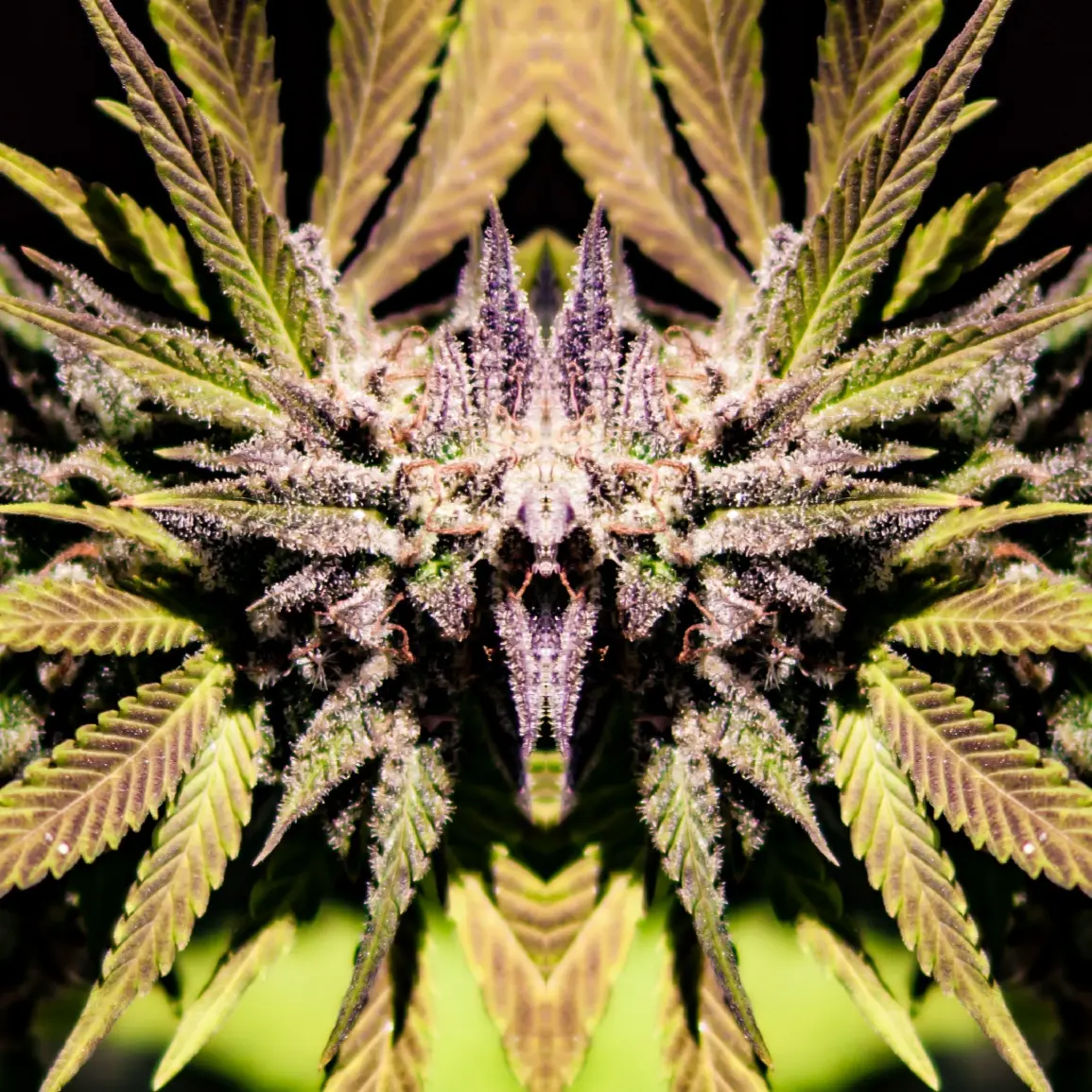
Neville’s Haze
Neville's Haze is not difficult because cannabis cultivation suddenly requires exotic equipment. It is difficult because the plant refuses to behave on the schedule most indoor growers are used to. Long branches keep moving after the flip, real flower mass arrives slowly, pistils can remain fresh deep into the cycle, and the final harvest may come weeks after a conventional hybrid would already be dried and jarred.
The accepted genetic story places a Northern Lights #5 female into the Haze line and then returns the offspring to a second Haze parent. In practical terms, the indica influence helps add resin and some structural weight, but the Haze side still dominates the cultivation experience. A properly Haze-leaning plant can flower around fourteen to sixteen weeks, sometimes longer, with narrow leaves, broad internodal spacing, flexible stems, and a tendency to keep building spear-like flowers rather than hard compact nuggets.
That architecture makes the central Weedth question very clear: how do you contain Neville's Haze long enough to let it finish properly without overfeeding it, crowding it into an unusable screen, or cutting it early because the calendar becomes uncomfortable? The strain rewards growers who think in months rather than weeks and who use training to redirect a living vine instead of trying to force it into an indica-shaped canopy.
The reward is equally specific. Good Neville's Haze flower can carry incense, lemon peel, fuel, wood, spice, herbs, tropical fruit, and a strange metallic or electrical sharpness that is hard to describe until it appears. The effect is even more distinctive: intense, euphoric, creative, giggly, and sometimes uncomfortably expansive for users who are sensitive to high-energy sativas. This is a cultivar where patience is not a slogan. It is the main grow technique.
Strain Features
| Feature | Details |
|---|---|
| Strain Type | Very sativa-dominant Haze hybrid |
| Genetic Profile | Northern Lights #5 x Haze, then backcrossed to another Haze line; historical records commonly distinguish Haze A and Haze C parental material |
| THC | Commonly reported as strong, with substantial batch and phenotype variation |
| CBD | Usually very low |
| Dominant Terpenes | Myrcene, beta-caryophyllene, pinene and limonene commonly appear in Haze-family profiles; exact order varies |
| Flavor / Aroma | Incense, lemon, spice, fuel, herbs, wood, tropical fruit, grape-like sweetness in some examples |
| Effect Character | Very cerebral, euphoric, creative, giggly, long-lasting, potentially anxious at higher doses |
| Flowering Time | Often about 14 to 16 weeks; some expressions can run longer |
| Stretch | Very strong and prolonged; can continue well beyond the early transition period |
| Plant Architecture | Tall, narrow-leaved, long internodes, long flexible lateral branches |
| Bud Structure | Elongated, open-to-medium-density Haze spears; not a compact modern indica bud form |
| Feeding Behavior | Generally safer with moderate nutrition than aggressive feeding during the long cycle |
| Training Compatibility | Excellent for early topping, repeated LST, open SCROG and carefully timed supercropping before stems harden |
| Outdoor Climate | Best in a long warm season; risky where autumn becomes cold or wet early |
| Grow Difficulty | Advanced primarily because of duration, stretch, and maturity judgment |
| Best Time of Use | Daytime for experienced users; not ideal for anxiety-sensitive consumers |
Genetic Lineage
Neville's Haze belongs to the branch of cannabis history where Haze was made more practical without being made truly practical. The Northern Lights #5 contribution brought denser flower, resin, and some shortening influence, but the repeated Haze parentage kept the final cultivar overwhelmingly sativa in morphology and effect.
Historical accounts commonly describe the work in two steps: a Haze parent was crossed with Northern Lights #5, and the resulting hybrid was crossed again to a different Haze parent. The exact labels attached to the two Haze parents are part of old breeding records, but the grower's main takeaway is simpler. This is not a fifty-fifty hybrid where the indica parent controls half of the room behavior. The Haze ancestry remains dominant enough that flowering duration and stretch still define the plant.
The Haze background itself traces to mixed equatorial and subtropical sativa material associated with Colombian, Mexican, Thai, and South Indian ancestry. That helps explain the long photoperiod response, narrow foliage, flexible long branches, and the way flowers build calyx chains rather than immediately compressing into dense tops.
Northern Lights influence is easier to see in resin and in the fact that Neville's Haze can produce more substantial flowers than a very pure tropical landrace. It also helps explain why some phenotypes finish closer to fourteen weeks instead of requiring the extreme season of a nearly pure Haze. But the indica contribution should not encourage the grower to treat the plant like Northern Lights. The two cultivars require almost opposite space planning.
Phenotype variation matters. Some plants lean a little shorter and resin-heavier, while others behave like nearly unrestricted Haze with enormous stretch and very late finishing. Flavor can move from sharp lemon and fuel to darker incense, wood, metal, herbs, tropical fruit, or grape-like sweetness. A seed run should therefore be treated as selection, not as a uniform crop.
The most valuable keeper for an indoor garden is often not the tallest or most 'pure Haze-looking' plant. It is the phenotype that preserves the exceptional cerebral effect and complex incense-citrus profile while finishing in a duration and structure the grower can repeat. That tradeoff is central to making Neville's Haze more than a one-time curiosity.
Effect Breakdown
A fast mental rise with very little physical warning
Neville's Haze is usually described as a head-first experience. The first change can feel bright, social, and sharply perceptual. Conversation speeds up, music becomes more detailed, and thoughts connect quickly.
The body may remain light enough that the user does not immediately recognize how strong the session is becoming. This mismatch can lead to unnecessary redosing.
The peak is expansive rather than simply energetic
At moderate doses, the cultivar is often euphoric, creative, giggly, and mentally associative. It can feel productive when the task is imaginative or exploratory, but less useful for precise linear work because attention may keep jumping toward new ideas.
Experienced Haze users often value this intensity. Users prone to anxiety may experience the same expansion as racing thoughts, restlessness, or an uncomfortable sense of overstimulation.
Physical relaxation stays secondary
A mild body ease can develop, particularly later in the session, but deep sedation is not the defining feature. The plant's long Haze heritage remains obvious in the way the mind stays active after many hybrids would begin pushing the user toward the couch.
The late phase may become calmer and more reflective, yet many people still avoid Neville's Haze close to bedtime because the mental afterglow can linger.
Dry mouth and dry eyes are common user-reported negatives. Anxiety and dizziness become more likely with larger doses, especially for people who rarely use very cerebral sativas.
The experience is also phenotype and batch dependent. A more Northern Lights-influenced plant can feel physically softer, while a strongly Haze-leaning plant may remain electric for much longer. That variation should be acknowledged rather than flattening every example into the phrase 'energetic sativa.'
Flavor & Aroma Profile
Neville's Haze is often remembered through incense. The aroma can have a dry, smoky, church-incense or old-wood character that sits under sharper lemon, herbs, fuel, and spice. Some plants add tropical fruit or grape-like sweetness. Others become more metallic, almost electrical, especially when the flower is broken apart.
The jar aroma can seem thinner than a modern gas strain because Haze does not always rely on one overpowering volatile note. The profile opens with agitation. Grinding or breaking the long calyx clusters releases more sharp citrus, resin, pepper, and fuel, while the deeper woody-incense base becomes stronger on the exhale.
On inhale, lemon and dry herbs can appear first. The middle often carries floral spice and a slightly bitter resin. The exhale is where incense, wood, fuel, and pepper stay longest. A well-cured phenotype may leave a lingering almost perfumed or metallic aftertaste that is difficult to find in shorter modern hybrids.
The flower should not be judged by density. A mature Haze spear can look open and still be resinous, aromatic, and powerful. Trying to force the plant into rock-hard buds through extreme light or heavy bloom nutrition can damage the characteristics that make it desirable.
Long flowering creates a flavor advantage and a risk. The plant has months to develop a complex volatile profile, but it also spends months exposed to canopy heat, accumulated root-zone stress, and repeated handling. By the final weeks, flavor preservation begins before harvest. If the highest tops are too hot, citrus and floral sharpness can flatten while the darker incense remains.
The cure should make Neville's Haze more coherent. Early dried flower can smell like a confusing mix of herbs, lemon and green plant. Over several weeks, incense, wood and fuel usually become cleaner. An extended cure can be especially worthwhile here because the cultivar's value is complexity rather than raw sweetness.
Dominant Terpenes
| Terpene | Aroma / Flavor Role | What It Means Here |
|---|---|---|
| Myrcene | Herbal, earthy, musky depth | Common in many Haze-family laboratory samples but not a reliable explanation for the highly energetic effect. |
| Beta-caryophyllene | Pepper, spice, dry wood | Fits the persistent spicy-incense base and can remain obvious after brighter notes fade. |
| Pinene | Pine, resin, fresh herbs | Can contribute to sharp forest-like or medicinal expressions. |
| Limonene | Lemon peel, citrus brightness | Important in brighter phenotypes and especially vulnerable to late heat and rough post-harvest handling. |
| Minor floral / incense volatiles | Perfume, incense, tropical or metallic nuances | Likely important to the signature Haze identity even when they are not dominant on a standard terpene panel. |
There is no single laboratory terpene order that defines every Neville's Haze plant. Phenotype and cultivation environment can shift the profile, and the most memorable incense or metallic notes may depend on minor volatile compounds not captured by a short top-three list.
The cultivar's psychoactive character should not be reduced to a terpene story. THC exposure, dose, tolerance and the entire chemotype are more defensible explanations for why one Haze feels expansive and another merely upbeat.
Indoor vs. Outdoor Growing
| Decision Point | Indoor | Outdoor |
|---|---|---|
| Primary Challenge | Containing months of stretch and maintaining root-zone stability through a 14+ week flower cycle | Finishing before cold rain or frost ends the season |
| Height | Potentially extreme; must be redirected horizontally early | Can become very tall and wide where season length allows |
| Training | Open SCROG, LST, early topping, carefully timed supercropping | Early topping, tying, wide support and large spacing |
| Flowering Duration | Long room occupancy is the main production cost | Only suitable where autumn remains warm and relatively dry |
| Bud Density | Open-to-medium Haze spears reduce some internal humidity risk | Long seasonal exposure still creates weather risk despite open flowers |
| Root Zone | Container must stay stable for months without chronic salt or moisture accumulation | Large root volume supports scale but increases total water demand |
| Flavor Control | Excellent if late canopy heat can be kept conservative | Full sun can produce rich aroma, but hot or wet late season can force compromises |
| Best Fit | Experienced growers who deliberately want a long Haze project | Long-season subtropical, Mediterranean, or protected warm environments |
Indoors, Neville's Haze is a space-efficiency problem before it is anything else. The grower has to reserve volume for future stem, not just present leaves. A plant that looks underfilled on flip day can be exactly right three or four weeks later.
Outdoors, height becomes less troublesome but the calendar becomes ruthless. In climates where October and November are cold or wet, a giant plant can still be a failed crop because the flowers are not biologically finished. Outdoor suitability should be judged from the finish window of the selected phenotype, not from how well the plant grows in July.
Strain-Specific Grow Guidance
Flip much smaller than your instincts suggest
Neville's Haze can continue vertical development long after a typical hybrid has slowed. Indoor growers should enter flower with obvious headroom and unfilled screen space.
If the plant finishes smaller than expected, that is easy to correct next cycle by adding a little veg. If it reaches the light and must be violently bent during flower, the lost structure is much harder to recover.
Map stretch as a curve, not a multiplier
Do not let the stretch make the decisions
Measure the plant at flip, week two, week four, and when obvious vertical growth finally slows. This is more useful than saying the cultivar stretches 'three times' because a long Haze can keep extending in stages.
Clone-run planning becomes dramatically easier once the exact phenotype's stretch duration is known.
Use a screen as a map, not a cage
SCROG works well only when the screen remains open. Long branches should be assigned lanes and guided across empty space rather than woven into a dense mat.
Leave hand access. A fourteen-week crop that cannot be inspected or watered comfortably by week six will become exhausting before harvest.
Supercrop early enough that the stem can heal
Long flexible Haze stems often tolerate bending, but the best time is before heavy flower mass develops. A planned bend during the transition is very different from crushing a resinous stem late because it reached the fixture.
Once a branch is carrying mature flowers, support it rather than repeatedly changing its architecture.
Do not remove every lower branch
Long internodes and narrow leaves can allow useful light deeper into Neville's Haze than into a compact indica. Some lower laterals can produce excellent mature flower if they are exposed.
Remove weak shaded shoots, but judge productive depth from the actual light pattern. A fixed 'lower third' rule can throw away good Haze flower.
Feed for a marathon, not a sprint
Long flowering magnifies salt buildup and cumulative nutrition mistakes. Grow reports frequently describe Haze plants as less tolerant of aggressive feeding than modern heavy hybrids.
Use moderate inputs and follow plant color, dryback and root health. Dark clawed foliage at week six is especially expensive when eight more weeks may remain.
Keep root-zone management boring for months
The plant needs a container and medium that can stay aerated through a long cycle. A small pot can create constant irrigation demand, while a large wet pot can remain saturated if plant size is misjudged.
Consistency matters more than chasing a particular container number. The goal is a root zone that dries predictably and does not accumulate unmanaged salts while the flowering room remains occupied for months.
Expect flower building to look slow
Neville's Haze can spend weeks forming long calyx strings before the buds look substantial. That rhythm often worries growers who are used to fast hybrids.
Do not respond to normal Haze development with extreme phosphorus, potassium, drought stress or extra light. Slow stacking is part of the plant, not proof that the crop is failing.
Protect the tallest tops from local heat
The uppermost flowers can be much warmer than the room-average sensor suggests. In a long cycle, repeated local heat exposure can strip citrus and floral top notes before obvious leaf burn appears.
Compare aroma from the top, middle and side branches. If the cooler flower is sharper and more complex, the canopy is telling you exactly where quality is being lost.
Support the long branches before they sag
Open Haze flowers may not look extremely heavy, but a long branch can carry flower over a large length. The cumulative weight changes branch angle late.
Use soft ties or a second loose support layer that keeps branches in their light lanes without squeezing the entire canopy together.
Do not harvest because week fourteen feels long
Fresh pistils can continue late, and some plants do not look conventionally 'finished' when a faster hybrid would be overripe. Use calyx maturity, trichomes on flower tissue, reduced new growth and the completion of the aroma profile.
If the plant is still visibly adding meaningful flower at fourteen weeks and remains healthy, the calendar alone is not a reason to cut. On the other hand, endless waiting for every pistil to darken is also unnecessary. Biological completion matters more than visual perfection.
Weedth Bud Flavor Tips
Neville's Haze has a long time to make aroma and only a few days to lose the brightest part of it after harvest. Lemon, tropical fruit and floral sharpness are more fragile than incense and dry wood, so a badly handled batch can still smell 'Hazy' while losing the traits that made the best phenotype special.
Begin protecting flavor before harvest by avoiding unnecessary late heat. If top flowers are physically hotter than the rest of the plant, reduce the local stress rather than assuming a Haze always prefers maximum light until the end.
Open flowers dry faster than dense Kush buds. Do not carry over a drying timetable from compact indicas. Long thin spear tips may reach the correct moisture before thicker branch junctions, and whole branches can differ enough that they should be evaluated individually.
Direct fan air is especially risky. The open flower structure already exposes substantial surface area, so strong airflow across hanging buds can erase the lemon and perfume layer quickly.
A longer cure is often worthwhile because the cultivar's aroma can seem disorganized immediately after drying. Over several weeks, green herbs recede and incense, citrus, fuel, wood and spice become easier to separate. The cure should clarify the flower, not make it wetter or sweeter.
Keep phenotype jars separate. One plant may be lemon-fuel, another incense-metal, and another sweeter or grape-like. Mixing them destroys the selection information that justified spending fourteen or more weeks on a seed run.
For long-term storage, minimize repeated oxygen and heat exposure. A Haze phenotype that still smells sharp and layered after two months is far more valuable than one that is spectacular only when freshly dried.
The average Neville's Haze jar smells old-school and strong. The excellent jar has depth: bright citrus at first, resin and herbs in the middle, and a dry incense finish that keeps returning after the smoke is gone.
Weedth Bud Boost Tips
The largest yield improvement with Neville's Haze is not a supplement. It is turning stretch into productive horizontal flower instead of wasted vertical stem. Every branch that reaches the fixture and has to be folded late represents canopy planning that could have happened earlier.
Use fewer plants when the selected phenotype is very vigorous. Plant count should follow final branch reach, not the amount of empty floor visible during early veg. A long Haze can turn a sparse room into a jungle with surprising speed.
Do not create more tops simply because the plant recovers well. The cultivar naturally generates many flowering positions along long branches. The useful target is enough leaders to distribute the screen, not an artificial maximum number of meristems.
Preserve exposed lower flower. A shallow lollipop may make sense in a poorly lit room, while a well-opened Haze canopy can produce useful quality deeper along the branch. Grade the first harvest by canopy zone and use the result to set the second-run pruning line.
Moderate feeding can improve usable yield by keeping the plant healthy for the full duration. An overfed long-cycle crop may spend weeks carrying damaged foliage and a stressed root zone, which is far more costly than a small temporary deficiency that is corrected early.
The selected clone's finish time should be treated as a production trait. A phenotype that finishes two weeks earlier while retaining the desired effect and incense-citrus character can dramatically improve annual room efficiency.
Outdoor growers should optimize for completion, not summer size. A smaller phenotype that finishes cleanly before seasonal rain can deliver more premium dry flower than a spectacular giant that must be harvested immature.
Neville's Haze quality yield is the amount of fully mature, aromatic Haze flower produced without turning the long cycle into a rescue operation. The best second run is usually calmer, shorter in veg, and much more deliberately spaced.
Medical Uses & Benefits
Users commonly report choosing Neville's Haze for mood elevation, creative engagement, daytime energy and distraction from stress or discomfort. These experiences are anecdotal and should not be presented as evidence that the cultivar treats depression, pain, anxiety or another diagnosis.
The strain's cerebral intensity can be useful for some people who dislike sedating cannabis, but the same trait can be a clear limitation for anxiety-sensitive users. User reviews regularly include anxiety as a possible negative effect.
Physical pain may feel less intrusive during a strong euphoric experience, yet Neville's Haze is not primarily a heavy body-relief cultivar. Someone seeking deep muscle relaxation or immediate sleep is usually better served by a more indica-dominant profile.
Because CBD is generally low, the experience is driven mainly by THC-rich flower. High THC can impair judgment and coordination even when the user feels energetic and functional.
The cultivar is also a poor bedtime choice for many people. Mental stimulation can persist long enough to interfere with sleep even after the strongest euphoria has softened.
Anyone using cannabis for a diagnosed condition or alongside prescription medication should consult a qualified healthcare professional, particularly when anxiety, cardiovascular symptoms or sleep disorders are part of the picture.
Ideal User Profile
Neville's Haze is for the user who actively wants a cerebral sativa, not someone simply asking for 'something uplifting.' The ideal consumer enjoys creativity, music, conversation, movement and perceptual intensity and already knows how they respond to strong THC.
It suits experienced daytime users who find heavy hybrids dull or sedating. It is less suitable for people who are easily pushed into racing thoughts, panic, or uncomfortable self-awareness by strong sativas.
For growers, the ideal profile is even narrower. This cultivar belongs with people who enjoy plant training and who can tolerate a flowering room being occupied for fourteen weeks or more. The grower should want the long-cycle experience itself, not merely accept it because the strain name is famous.
Neville's Haze is also a strong phenotype-hunting project. Growers willing to compare finish time, stretch, incense quality and effect may find a clone worth preserving for years. Growers who need predictable eight-week turnover should choose something else.
Grower Notes and Feedback
The most consistent real-world observation is that flowering time is long enough to surprise even growers who thought they understood Haze. Fourteen weeks is not an extreme outlier, and reports of plants continuing well beyond one hundred days are credible within strongly Haze-leaning material.
Stretch is similarly variable but consistently important. Some growers manage it successfully with early screens and repeated ties, while others underestimate the duration and spend mid-flower bending branches that have already reached the top of the room.
Another recurring pattern is conservative feeding. Long sativas often show stress when nutrient concentration is pushed to match a fast modern hybrid. The problem is not only immediate tip burn. A slightly overfed plant can carry root-zone imbalance for many remaining weeks.
Growers also disagree about what a finished Neville's Haze should look like. Some plants continue producing fresh pistils very late and retain an airy visual structure. This is why a calendar, pistil color, or expectation of rock-hard buds is insufficient. The flower has to be read as a Haze.
The plant can reward side lighting and an open canopy more than aggressive lower stripping. Long internodes leave opportunities for secondary flower that would remain larf on a dense broad-leaf hybrid.
Cured flavor is one of the best keeper tests. A plant that smells exciting in week twelve but cures into generic herbs may not justify the long cycle. A slightly lower-yielding plant with persistent incense, lemon and metallic complexity can be far more valuable.
Growers who run the same clone again usually report that the second cycle feels dramatically easier. Once stretch duration and finish time are known, the plant stops being mysterious. The long schedule remains, but the emergencies disappear.
Weedth Editor's Note
The tradeoff I would plan around
I would not grow Neville's Haze unless I had already accepted the flowering time. Complaining about week fourteen while choosing this cultivar makes no sense. The long finish is the cost of the thing I am trying to preserve.
My biggest practical priority would be an intentionally underfilled canopy at the flip. Empty screen space would not make me nervous here. It would look like insurance against the weeks of stretch that are still coming.
I would also feed more conservatively than my instinct might suggest. There are few things more frustrating than realizing at week six that the root zone is too salty when the plant may still need another two months.
The harvest decision would be the part I take most seriously. I would rather wait for real flower completion than cut because the calendar has become psychologically inconvenient. At the same time, I would stop waiting once the plant is mature rather than worshiping an arbitrary amber percentage.
The keeper for me would not be the wildest phenotype. It would be the plant that preserves that unmistakable incense-citrus Haze effect while making the next run realistically manageable. A fourteen-week masterpiece is much more useful than a twenty-week curiosity I never want to repeat.
Weedth Score
Growing Experience 6.8/10 The plant is not inherently fragile, but extreme flowering duration and stretch make it demanding in real indoor space.
Bud Structure & Visual Appeal 8.0/10 Long resinous Haze spears are distinctive, though growers expecting compact modern buds may find them less conventionally impressive.
Aroma Complexity 9.3/10 Incense, citrus, fuel, spice, herbs, wood and occasional tropical or metallic notes can be exceptionally layered.
Flavor & Smoothness 9.0/10 Excellent after a patient dry and cure, especially when bright citrus survives the long cycle.
Effects & High Experience 9.4/10 One of the cultivar's strongest reasons to exist: expansive, creative, euphoric and unmistakably Haze.
Overall Satisfaction & Recommendation 8.5/10 Outstanding for sativa specialists, but the long room commitment makes it a poor universal recommendation.
My final take: Neville's Haze is worth the time only if you genuinely want what the extra time creates. For the right grower, that is exactly why it matters.
FAQ
What is Neville's Haze lineage?
The accepted lineage uses Northern Lights #5 with Haze and then returns the hybrid to another Haze parent. The result is overwhelmingly Haze-dominant in cultivation and effect.
How long does Neville's Haze flower?
Around fourteen to sixteen weeks is common for strongly Haze-leaning material, and some plants can take longer. The exact phenotype matters more than a catalog number.
How much does Neville's Haze stretch?
A lot, and the stretch can continue longer than growers expect. Instead of relying on one multiplier, measure the plant every two weeks after the flip and use that curve for the clone run.
When should I flip Neville's Haze indoors?
Much smaller than you would flip a compact hybrid. Leave obvious vertical and horizontal reserve because the plant can keep adding stem for weeks.
Is SCROG good for Neville's Haze?
Yes, provided the screen stays open. Use it to redirect long branches into empty lanes rather than to build a dense carpet before the stretch is finished.
Can Neville's Haze be supercropped?
Yes, long flexible branches can respond well to carefully timed bending during transition. Avoid major structural crushing once mature flowers are already forming.
Is Neville's Haze a heavy feeder?
Usually it is safer to treat it as a moderate feeder. The long cycle makes salt accumulation and chronic overfeeding more expensive than in a fast hybrid.
Why are my Neville's Haze buds airy?
Elongated open Haze flower can be genetically normal. Judge maturity, resin, aroma and calyx development rather than trying to make the plant produce Kush-style hardness.
Why is Neville's Haze still producing white pistils late?
Fresh pistils can continue deep into flower. Use complete calyx maturity and flower trichomes together with the overall slowdown in new growth rather than pistil color alone.
Does Neville's Haze need a large pot?
It needs a stable root zone for a long cycle. The correct container depends on plant size and medium, but root restriction or chronic saturation becomes especially troublesome when flowering lasts months.
Can Neville's Haze finish outdoors in a short season?
Usually not reliably. It is best suited to long warm seasons or protected environments where late autumn remains usable.
When should Neville's Haze be harvested?
Harvest when calyx development is complete, flower trichomes have matured, new growth has meaningfully slowed, and the incense-citrus aroma has reached full depth. Do not harvest only because week fourteen has arrived.
Does Neville's Haze need a long cure?
It benefits from one. The complex incense, citrus, fuel and herbal layers often become clearer after several weeks of controlled curing.
Is Neville's Haze good for beginners?
It is better for experienced growers. The plant can be vigorous and healthy, but controlling stretch and waiting through a very long flowering period require planning.
Is Neville's Haze good for anxiety-sensitive users?
Caution is appropriate. Many people love its euphoric cerebral intensity, but strong Haze effects can also feel anxious or overstimulating, especially at high doses.
Similar Strains
Super Silver Haze: A more commercially manageable Haze hybrid with strong citrus-incense character and a shorter average finish, while still demanding height control.
Amnesia Haze: Shares long sativa stretch and intense cerebral effects, but often leans more citrus-spice and can finish somewhat faster depending on the line.
Malawi Gold: A landrace-style comparison for extreme duration and tall open structure. Malawi is less hybridized and can feel even more seasonal outdoors.
Ghost Train Haze: A modern high-potency sativa alternative with dense resinous flowers and more sour-citrus character, usually without the same fourteen-plus-week commitment.
Jack Herer: Provides cerebral uplift and Haze-family spice in a more compact, faster and generally easier plant.
Panama Red: Another long old-school sativa with open flowers and energetic effects, but with more tea, pepper and tropical sweetness than classic Haze incense.
Share this article
A quick overview of the topics covered in this article.
Follow us
Latest articles
September 9, 2026
September 9, 2026

September 9, 2026