
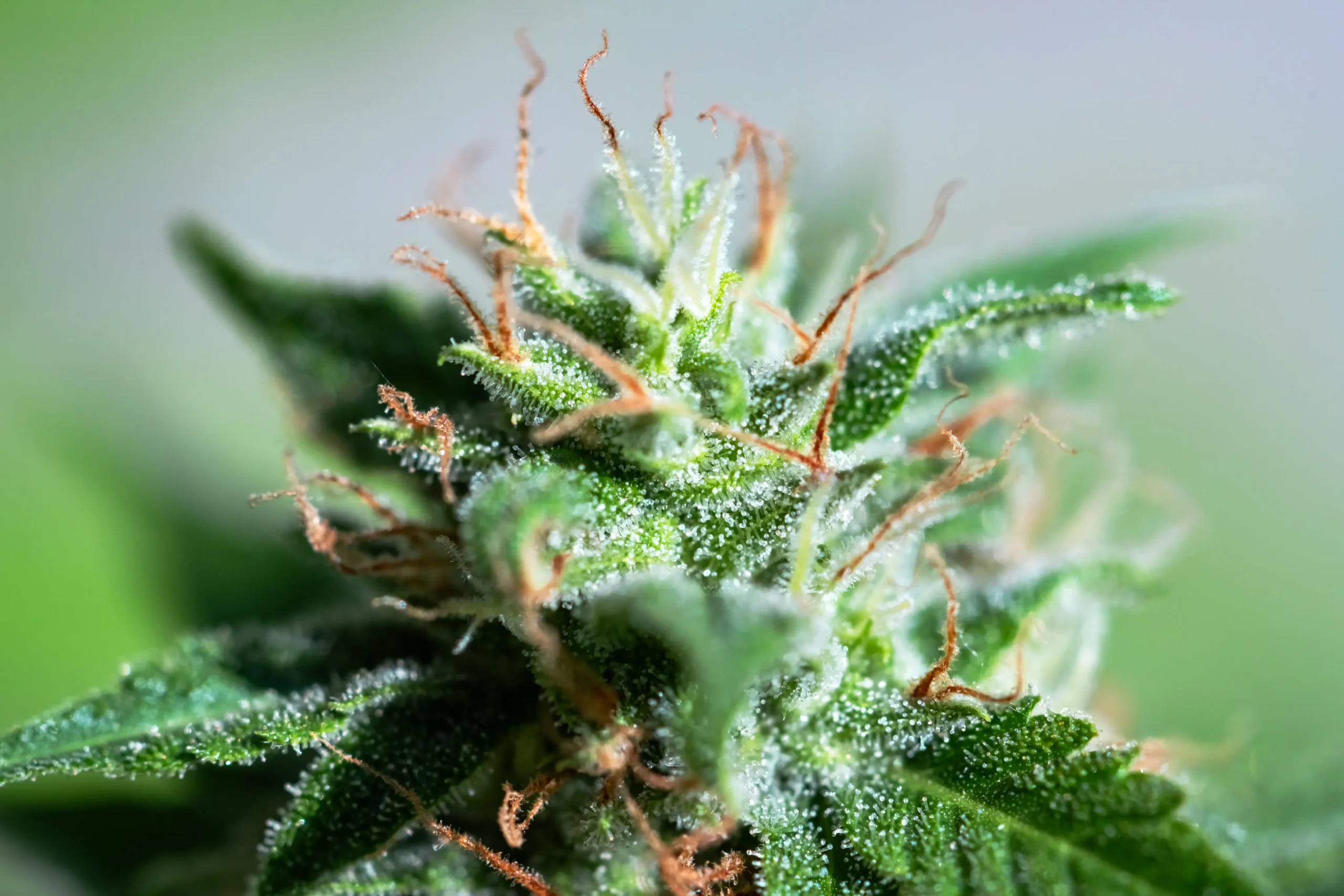
Nuken
A compact Canadian indica hybrid known for round crystal-heavy buds, sweet earth and pine, fast flowering, and a functional stone that becomes sleepy with dose.
Nuken is a short, productive indica-leaning cultivar that looks straightforward until the flowers begin to harden. The plant usually grows with dense branching, broad foliage, and a manageable stretch, which makes it attractive for indoor rooms and shorter seasons. Its round buds develop a thick resin layer and can finish quickly, yet that density creates the main challenge: moisture can remain hidden inside the flower while the outside appears dry and healthy.
The most widely accepted lineage is Shishkaberry crossed with God Bud, although the second parent is occasionally written as God Bod in older descriptions. The combination explains the sweet berry undertone, earthy herbal base, pine, floral notes, and strong physical calm. Nuken is often described as a heavy strain, but the effect is not always immediate couch-lock. At a measured dose, many users remain social, interested in hobbies, and mentally content before the body phase becomes more pronounced.
Growers value Nuken for its speed and yield, but the cultivar should not be packed carelessly. Short internodes and heavy flower clusters can create a humid interior. A plant that appears compact and efficient in vegetative growth can become a solid wall of leaf and resin by week six. The best result comes from early branch selection, moderate defoliation, dryback-based irrigation, and air movement through the center rather than only across the canopy surface.
The flavor is richer than a simple earthy indica. Properly cured flower can suggest sweet cream, marshmallow, damp forest soil, pine, herbs, floral berry, and a faint skunk note. Fast drying leaves mostly wood and grass. A controlled cure allows the sweetness to separate from the earthy base, which is one reason Nuken deserves the same post-harvest attention as slower connoisseur cultivars.
Legal note: Educational content only. Always follow the cultivation and cannabis laws that apply in your location.
Strain Features
| Feature | Details |
|---|---|
| Type | Indica-dominant hybrid with a compact, calming growth and effect profile. |
| Common Lineage | Shishkaberry x God Bud; some older references use the spelling God Bod. |
| Flowering Time | Usually 7-8 weeks indoors, commonly around 49-56 days; some plants benefit from a few extra days. |
| Outdoor Harvest | Often late September in suitable northern climates, depending on plant start and weather. |
| Indoor Height | Short to medium with dense branching and limited-to-moderate stretch. |
| Outdoor Height | Medium and broad; capable of high yield with early training and a dry finish. |
| Bud Structure | Round, dense, resin-coated flowers with a high risk of hidden moisture when crowded. |
| Yield Potential | Above average to high, especially when lower growth is cleaned and branches are supported. |
| Aroma | Sweet earth, fresh herbs, pine, wood, floral berry, sugar, and occasional skunk. |
| Dominant Terpenes | Myrcene commonly leads, supported by pinene and beta-caryophyllene. |
| Effects | Relaxed, happy, socially comfortable, functional at low dose, sleepy and heavy at higher dose. |
| Difficulty | Easy to moderate structurally; intermediate late in flower because of density and mold risk. |
| Best Training | Single topping, open-bowl LST, compact SCROG, selective lollipopping, or spaced SOG. |
| Feeding Tendency | Moderate appetite. Healthy plants can eat well, but excess nitrogen thickens the canopy and slows dryback. |
| Main Grow Risks | High humidity, poor interior airflow, overwatering in oversized containers, late branch sag, and sealing dense buds too early. |
| Climate Preference | Dry to temperate conditions with cool nights tolerated better than prolonged dampness. |
| Medical Interest | Reported use for stress, pain, anxiety, insomnia, appetite, and physical tension. |
| Best Use Time | Late afternoon through night, depending on dose and tolerance. |
Nuken is often promoted as an easy, high-yielding indica, and the broad description is fair. The important qualification is that ease changes late in flower. Dense buds and tight branching demand humidity control and physical inspection. The plant is tolerant of ordinary training and temperature changes, but it is not tolerant of a wet, stagnant canopy.
Grower priority: Build several separated medium colas instead of one crowded mass. Premium dry flower is more valuable than the largest possible wet crown.
Genetic Lineage
Shishkaberry Contribution
Shishkaberry contributes berry sweetness, broad indica structure, early finishing tendencies, and a relaxed effect. It can also pass dense flower formation and color expression. In Nuken, the fruit is often restrained rather than candy-like. It appears beneath pine, wood, and earth, especially after the flower has cured long enough for the green herbal edge to decline.
The Shishkaberry side is most visible in phenotypes with round flowers, short internodes, dark foliage, and a stronger berry or floral note. These plants may finish quickly and stay compact, but they can also form the tightest internal flower structure. They require the closest humidity watch.
God Bud Influence
God Bud adds resin, physical potency, earthy sweetness, pine, floral depth, and a more substantial body effect. It can also improve branching and flower weight. A God Bud-forward Nuken may show sharper pine, thicker stems, a heavier late phase, and a slightly longer finish than the softest berry expression.
The common alternative spelling God Bod appears in older strain records. Because commercial labels are not genetic certificates, growers should compare actual morphology and finished chemistry instead of assuming one spelling proves authenticity.
Phenotype Map
A berry-forward phenotype tends to remain shorter, smell sweeter, and develop rounder dark flowers. A pine-earth phenotype may branch more strongly and express a sharper herbal or skunky nose. A balanced keeper combines the sweet creamy top note with enough pine and spice to keep the flavor from feeling flat.
The most useful selection traits are flowering time, dryback speed, internal bud health, premium flower percentage, cured sweetness, and effect progression. A visually frosty plant that repeatedly traps moisture may be less valuable than a slightly more open plant with better flavor retention and cleaner drying.
Lineage note: Nuken should be understood as a family expression around Shishkaberry and God Bud. Expect variation in fruit intensity, density, stretch, and the speed at which the body effect develops.
Effect Breakdown
Initial Phase: Comfortable Mood Lift
Nuken usually begins with a calm emotional lift rather than a sharp head rush. The user may feel happier, more settled, and more willing to engage with music, conversation, gaming, or a familiar hobby. At a small dose, the effect can remain surprisingly functional for an indica-dominant cultivar.
The opening is often described as stoned but not immediately disabled. Thoughts slow enough to feel organized without becoming blank. This makes Nuken useful for low-pressure evening activities where the user wants to relax but remain present.
Middle Phase: Full-Body Relaxation
Physical relaxation becomes more noticeable after the mental comfort is established. Shoulders drop, muscle tension softens, and the body feels heavier. The transition can be gradual, which allows users to underestimate the final weight. A second dose during the opening may turn a functional session into strong sedation later.
Some phenotypes remain balanced and sociable for a long period. Others develop a stronger body load with warmth, tingling, and reduced motivation. Harvest maturity, myrcene level, and personal tolerance all influence the balance.
Late Phase: Appetite and Sleepiness
The later stage often brings hunger, quietness, and sleepiness. The user may still enjoy a film or conversation, but complex planning becomes less appealing. At higher doses, Nuken can produce couch-lock and a deep desire to rest. This makes timing important for people who need to remain active.
Duration and Dose Control
A normal session can remain noticeable for two to three hours, with a softer after-effect beyond that. Low doses emphasize mood and comfort. Medium doses increase body relaxation. High doses are more likely to produce dizziness, dry mouth, heavy eyelids, and sleep.
Potential Negative Effects
Dry mouth and dry eyes are common. Dizziness can occur when standing quickly or consuming more than expected. Anxiety is less frequently associated with Nuken than with fast sativas, but high THC flower can still create discomfort, especially in inexperienced users. A calm environment and a smaller first dose are sensible.
| Dose Level | Likely Experience | Best Context |
|---|---|---|
| Low | Happy, calm, lightly focused, socially comfortable. | Early evening hobbies, music, conversation, light food preparation. |
| Medium | Stronger body relaxation, mental quiet, mild appetite. | Films, games, stretching, low-pressure social time. |
| High | Heavy limbs, couch-lock, sleepiness, possible dizziness. | Late-night use by experienced consumers with no remaining obligations. |
Effect caution: Nuken can remain functional long enough to encourage redosing. Wait for the body phase before deciding whether more is appropriate.
Flavor & Aroma Profile
Flowering-Room Aroma
The living plant often begins with green herbs, soil, and pine. Sweetness appears as the resin develops, sometimes resembling sugar, berry cream, or marshmallow. A skunky edge may emerge when the flowers are disturbed. The odor is not always explosive early, but dense late flowers can release a persistent earthy sweetness that requires filtration.
Jar Aroma
A well-cured jar should open with sweet earth and pine rather than hay. As the flower warms in the hand, floral berry, herbs, damp wood, and a creamy sugar note become clearer. The sweetness is often described as marshmallow-like because it feels soft and powdery rather than sharply fruity.
Phenotypes vary. One plant may smell like forest soil and pine with almost no berry. Another may carry clear berry-floral sweetness. The strongest keepers usually maintain an earthy base while adding a recognizable sweet top note.
Inhale and Exhale
The inhale tends to be sweet, woody, and herbal. Lower-temperature vapor can reveal pine and floral sugar. On exhale, earth, pepper, and skunk become more prominent. A proper cure leaves a soft sweet finish; a rushed dry creates a rough woody taste that hides the berry.
How Flower Density Affects Flavor
Nuken's dense buds are slow to equalize after harvest. If the outside dries quickly and the interior remains wet, the jar aroma becomes muted and grassy. If the flower is sealed too early, microbial risk increases. If it is left exposed too long, the sweet top notes disappear. The correct dry is therefore a balance between internal moisture movement and sufficient air exchange.
Harvest Timing and Sweetness
An early harvest preserves brighter pine and a more alert effect but may lack the creamy sweetness. Full calyx swelling brings the sugar, floral berry, and deeper earth. Excessive amber can make the profile heavier and more musky. Inspect calyx trichomes and aroma together.
Cure Progression
During the first week, Nuken can smell herbal and damp. By weeks three to four, the sweetness should become more distinct. Six weeks often produces a smoother transition from pine to sweet earth. Separate phenotypes during cure because a strong skunky plant can overwhelm a delicate berry expression when stored together.
Flavor target: The ideal Nuken jar combines sweet cream or marshmallow with pine, damp earth, herbs, and a restrained berry-floral layer.
Dominant Terpenes
Myrcene
Myrcene commonly leads tested Nuken samples. It contributes earth, herbs, musk, and ripe fruit while supporting the gradual body-heavy phase. A myrcene-rich phenotype may feel softer and sleepier, although the full chemical profile determines the final experience.
Pinene
Pinene creates the fresh pine and woody lift that prevents the aroma from becoming purely sweet and earthy. It may also contribute to the relatively functional opening. Pinene is easiest to appreciate in freshly broken flower and moderate-temperature vapor.
Beta-Caryophyllene
Beta-caryophyllene adds pepper, dry spice, and the skunky depth on exhale. It interacts with CB2 receptors, but this does not establish clinical effectiveness for Nuken. In sensory terms, it provides structure and a slightly warming finish.
Limonene and Floral Minor Terpenes
Some batches contain enough limonene to create a faint sweet citrus lift. Linalool or related floral compounds may support the berry-flower impression. These minor components can decide whether a plant smells like generic earth or a more layered sweet forest profile.
Batch Variation
Nuken is reproduced through different selections, and terpene order can change. Use laboratory results when choosing products for a specific medical or sensory goal. Growers should select mothers by cured flower rather than assuming the strain name guarantees a myrcene-dominant result.
Chemotype note: Myrcene, pinene, and beta-caryophyllene form the most consistently reported core, but sweetness and berry expression depend on minor compounds and phenotype.
Indoor vs. Outdoor Growing
| Aspect | Indoor Cultivation | Outdoor Cultivation |
|---|---|---|
| Height | Short to medium and easy to fit under most lights. | Medium, broad, and capable of becoming a heavy bush. |
| Flowering | Fast, usually 7-8 weeks. | Often late September in a suitable climate. |
| Best Training | One top, open-bowl LST, compact SCROG, or spaced SOG. | Early topping, wide cage, branch separation, and interior thinning. |
| Yield | Above average to high with strong light and clean lower growth. | High per plant with root space and a dry finish. |
| Humidity | Late-flower RH control is essential because buds are round and dense. | Best in dry temperate regions; rain and dew can create internal rot. |
| Feeding | Moderate. Increase gradually and reduce nitrogen before flowers harden. | Responds to fertile soil, but excessive late nitrogen creates leafy buds. |
| Main Advantage | Short cycle, manageable height, high resin, and repeatable harvests. | Large yield and rich pine-earth expression under sun. |
| Main Limitation | Crowded canopy and hidden moisture. | Weather dependence and the need to inspect after rain. |
| Difficulty | Moderate because environmental control is available. | Moderate in dry climates and difficult in wet autumn regions. |
| Post-Harvest | Dense flowers can be divided into large branches for even drying. | Outdoor colas may need additional cleaning, inspection, and spacing. |
Indoor Strengths
Nuken fits indoor rooms because the stretch is manageable and the cycle is short. A grower can build a wide canopy without sacrificing headroom. The controlled environment also allows humidity to be lowered as the flowers harden. The main indoor mistake is using compact stature as permission to crowd plants.
SOG can work when uniform clones are spaced with clear air gaps. Seed plants are better suited to a small SCROG or open-bowl training because branch shape and finish may vary. Regardless of method, the center of each plant should remain inspectable.
Outdoor Strengths and Limits
Outdoor Nuken can produce large dense branches in a relatively short season. Cool nights are not necessarily a problem, but repeated rain and heavy morning dew are. A site with early sun, steady breeze, drainage, and overhead protection during storms is more important than maximum fertilizer.
A greenhouse can help if it vents rapidly. Closing the structure to keep rain out while allowing humidity to rise overnight creates the same risk as direct rain. Side ventilation and plant spacing should be designed before the canopy fills.
Environment choice: Nuken is adaptable, but the final weeks should be dry. Indoor control or a naturally dry autumn gives the cultivar its safest path to dense clean flower.
Strain-Specific Grow Guidance
Start With a Moderate Container
Nuken's compact top growth can tempt growers to place it in a large final pot immediately. The small canopy may not use water fast enough, leaving the lower medium wet. Transplant in stages or irrigate only the active root zone until colonization expands. Predictable dryback is the foundation of healthy density.
Choose the Structure Before the Flip
One early top usually creates enough leaders. Pull the branches outward and remove shoots that grow directly into the center. A second top can be useful in a large screen, but repeated topping often creates more interior sites than the room can finish well.
For SOG, use selected clones with similar vigor and flower them early. Space them so air can move between the future colas. The goal is a field of separate flower columns, not a single connected wall.
Manage Short Internodes
Short internodes produce efficient flower stacking but also trap leaves. During vegetative growth, remove only damaged or clearly blocking leaves. After stretch, thin the inner fan leaves that overlap and remain wet. Avoid one aggressive stripping session that exposes every bud site and stalls the plant.
Feeding Strategy
Nuken can handle a solid feed when the roots are active, but it does not need constant high concentration. Begin moderate, increase through early flower if tips remain clean, and reduce nitrogen as the buds harden. Dark clawed leaves indicate that the canopy is storing more nitrogen than it can use.
Calcium and magnesium demand can increase under strong lighting and in coco, but symptoms should be diagnosed from water quality, pH, root health, and leaf pattern before adding supplements. Over-correction raises salts and worsens dryback.
Irrigation and Root Oxygen
Water thoroughly enough to wet the active root volume, then allow a real but not severe dryback. Frequent small watering in organic soil can keep the center anaerobic. In coco or other inert media, higher frequency is appropriate only after the container is fully rooted and drainage is reliable.
Late in flower, record how long the pot takes to lighten. Nuken often slows as density peaks. Reduce volume or frequency gradually instead of maintaining the week-five schedule until harvest.
Humidity Targets and Night Management
The cultivar's critical period begins when round buds merge into larger clusters. Daytime humidity can appear acceptable while the room spikes after lights-off. Extraction should continue through the dark period, and irrigation should not be timed so that maximum evaporation occurs just before night.
Dense flowers change the airflow plan
A resistant plant can still rot if water activity remains high. Keep flower surfaces dry, avoid touching colas together, and inspect after any environmental excursion. The safest humidity target depends on temperature and airflow, but the trend should move downward as density increases.
Support Before the Final Swell
Nuken branches are usually sturdy, yet resinous round flowers gain weight quickly. A net or soft ties installed by mid-flower prevent branches from leaning into each other. Support should preserve air gaps rather than simply hold the canopy upright.
Lower Growth and Premium Yield
Remove weak interior shoots after the main stretch. Nuken can convert almost every node into a small bud, but shaded lower sites remain loose and slow to dry. Redirecting the plant toward well-lit outer and upper flowers improves premium yield and reduces trimming time.
Pest and Mold Inspection
Broad leaves provide hiding places for mites and aphids. Inspect the undersides during vegetative growth and avoid introducing unverified clones. Once flowers become dense, watch for a single dead sugar leaf or a sweet-musty odor. Separate the cluster gently and inspect the stem side.
Harvest Timing
Nuken can look ready early because resin appears quickly. Wait for full calyx swelling and a decline in fresh pistils. Mostly cloudy trichomes preserve the functional opening and pine sweetness. More amber strengthens the heavy body phase and sleepiness. Very late harvest can make the flavor musky and reduce the delicate berry layer.
Drying Dense Round Buds
Large colas can be divided into major branches to create consistent spacing. Do not break finished buds into small pieces before drying unless damage or contamination requires it. The internal core should lose moisture gradually. Monitor room conditions and physical feel rather than relying on a fixed number of days.
| Symptom | Likely Nuken-Specific Cause | First Response |
|---|---|---|
| Dark clawed leaves | Excess nitrogen combined with slow compact growth. | Reduce nitrogen strength and verify root-zone EC and dryback. |
| Droop in a heavy pot | Overwatering or cold saturated roots. | Extend the interval, improve airflow around containers, and check drainage. |
| Dead sugar leaf in one cola | Possible internal moisture damage or bud rot. | Isolate and inspect the flower immediately under neutral light. |
| Sweet aroma disappears late | Canopy heat, excessive maturity, or high nitrogen. | Lower leaf temperature and reassess harvest timing and feed. |
| Branches lean inward | Late flower weight and insufficient support. | Tie outward or use a net while preserving gaps between colas. |
Master grow advice: Nuken is not improved by maximum density everywhere. Open structure and dry internal flower produce more usable yield than an oversized wet cola.
Weedth Bud Flavor Tips
Keep the Canopy Dry Without Overheating It
Humidity reduction should come from air exchange and dehumidification, not excessive heat. Warm dense flowers lose sweet top notes and can still remain wet internally. Maintain a stable moderate temperature and move air through the canopy.
Let the Berry-Cream Note Mature
Early Nuken is dominated by herbs and pine. The soft sugar or marshmallow note strengthens after calyx swelling. Harvesting only because the trichomes look abundant can produce a resinous but one-dimensional flower.
Reduce Late Nitrogen
A leafy, dark finish creates more chlorophyll and slows drying. Taper nitrogen as the plant transitions from stretch to hard flower. The goal is not to starve the plant, but to avoid carrying unnecessary vegetative nutrition into the cure.
Choose Branch Drying for the Densest Phenotypes
Whole-plant drying may work for smaller open plants. Dense phenotypes often dry more evenly as spaced branches. Keep enough stem and leaf to moderate the process while preventing large colas from touching.
Check Internal Moisture Before Sealing
The outside of a Nuken bud can feel dry while the core remains pliable. Place a small sample in a sealed container with a hygrometer and observe the rebound. If humidity rises quickly, return the flower to a breathable environment. Do not solve wet flower by repeatedly opening a fully packed jar.
Cure in Separate Phenotype Containers
Berry-forward and pine-forward plants should remain separate. This allows a fair sensory comparison and prevents a loud earthy phenotype from masking a delicate sweet one. Four to six weeks is usually enough to reveal the keeper.
Protect Sweetness During Storage
Use cool, dark, airtight storage and limit repeated opening. Whole flowers retain aroma better than pre-ground material. A working jar protects the main harvest from daily oxygen exposure.
Flavor checklist: Full swelling, moderate canopy temperature, even branch drying, internal moisture verification, and a four-to-six-week cure are the main steps behind Nuken sweetness.
Weedth Bud Boost Tips
Indoor: Use a Low Wide Canopy
Nuken does not need much vertical space. Spread the branches early and keep the canopy shallow so light reaches every selected flower site. A low wide structure increases premium yield without creating long weak lowers.
Indoor: Do Not Overfill the Screen
Stop adding branches when each top has a clear position. A screen filled to one hundred percent before the flip becomes overfilled after stretch. Leave open cells for movement and airflow.
Indoor: Match Light to Density
Strong even light increases flower weight, but excessive intensity on a short canopy can heat the top surface and reduce sweetness. Measure leaf temperature and distribute light across the full area instead of creating a central hotspot.
Indoor: Use Rooted Clones for Fast SOG
Uniform selected clones can be flowered early for a rapid cycle. The method works only when every plant has similar height and the rows remain separated. Seed variation and crowded pots reduce the advantage.
Outdoor: Build a Wide Cage
Top early and guide branches through a wide support cage. This spreads the dense flowers into sunlight and air. The cage should be installed before the root zone fills the area.
Outdoor: Protect From Rain Without Enclosing the Plant
A high open-sided roof can keep prolonged rain off the flowers. Avoid wrapping the plant or closing greenhouse vents. The goal is dry flower with free air movement, not a humid shelter.
Select by Usable Dry Yield
Weigh only clean, properly dried premium flower when comparing phenotypes. A plant with giant colas may lose more to larf, mold, or uneven drying. Usable yield is the honest measure.
| Technique | Nuken Benefit | Risk if Overused |
|---|---|---|
| Single topping | Creates several strong medium colas. | Repeated topping produces a crowded center. |
| Open-bowl LST | Separates branches and improves interior air. | Over-bending late can split woody stems. |
| Selective defoliation | Removes wet overlaps and exposes flower lanes. | Heavy stripping slows a fast cycle. |
| Spaced SOG | Uses compact height and quick finish efficiently. | Crowding creates connected humidity zones. |
| Late support | Prevents dense branches from collapsing inward. | Tight ties can restrict stems and press flowers together. |
Yield principle: The best Nuken harvest is a collection of clean, separate, fully finished flowers, not the heaviest possible mass per square inch.
Medical Uses & Benefits
Nuken is commonly chosen for stress, pain, anxiety, sleep difficulty, appetite loss, and physical tension. These are user reports rather than clinical proof for a standardized treatment. Potency and terpene content can vary widely, so medical users should evaluate the actual batch and consult a qualified clinician.
| Reported Use | Why Users May Choose It | Caution |
|---|---|---|
| Stress | The calm opening and steady body release can reduce mental and physical tension. | Higher doses may cause mental fog or dizziness. |
| Pain | Physical heaviness and reduced attention to discomfort may provide relief. | It may not replace targeted medical treatment. |
| Anxiety | Many users find the effect emotionally quiet and reassuring. | Any high-THC flower can worsen anxiety in sensitive individuals. |
| Insomnia | The late phase often becomes sleepy and physically heavy. | Early evening use may impair planned tasks before bedtime. |
| Appetite | Hunger frequently increases after the main peak. | Prepare suitable food before use if mobility becomes limited. |
| Muscle tension | Body relaxation can feel useful after physical activity. | Sedation and coordination impairment remain possible. |
Medical note: Start low, especially with a high-potency batch. The functional opening can become much heavier after the body phase develops.
Ideal User Profile
Nuken is well suited to evening users who want calm, flavor, and physical comfort without immediate mental shutdown. It fits social relaxation, films, gaming, music, and hobbies that do not require fast reaction or complex planning.
- Best suited to: late afternoon or evening, moderate social use, body relaxation, appetite, and pre-sleep routines.
- Grower profile: beginner to intermediate indoors, provided late humidity and drying are taken seriously.
- Flavor preference: sweet earth, pine, herbs, wood, floral berry, and soft creamy sugar.
- Less suitable for: wet outdoor climates, users seeking energetic daytime focus, or growers who want to pack every branch into a dense canopy.
A first-time grower can succeed with Nuken because height and flowering time are manageable. The grower should still have a reliable way to control humidity and should learn to inspect internal flower rather than relying only on surface appearance.
Managing Nuken’s Dense Main Flower Without Sacrificing Yield
Nuken often builds a compact central crown surrounded by short, productive laterals. The structure looks efficient, but it can create a moisture pocket where the upper side flowers press against the main cola. The solution is not aggressive late defoliation. It is early spacing. During vegetative growth, pull the strongest lateral branches away from the center and give each one its own light lane. By the end of stretch, the plant should resemble a shallow open bowl rather than a closed spear.
A single untopped plant can work in a low-density SOG, but spacing must be generous enough for air to pass around the full circumference of every crown. In a multi-branch run, one early top followed by low-stress training creates several medium colas that dry more evenly and are easier to inspect. For Nuken, several clean medium flowers usually produce more premium usable yield than one oversized humid crown.
Reading Irrigation Demand in a Short, Leafy Plant
Nuken’s broad leaves and compact frame can make the plant appear thirsty even when the root zone is still wet. Leaves may hang slightly during the dark period or after a large irrigation event, which can be mistaken for drought. Use container weight, substrate moisture, runoff timing, and the speed of morning recovery together. Rewatering a still-saturated medium reduces root oxygen and keeps the dense canopy humid through the night.
The plant often uses water rapidly during the first half of flowering, then slows as vertical growth stops and the flowers harden. Reduce irrigation volume or frequency when the same container begins taking longer to dry. Do not keep the week-four schedule through harvest simply because the plant remains dark green. A healthy late-flower Nuken should maintain firm leaves while the root zone completes a predictable dryback before the next full irrigation.
Separating Berry-Cream Phenotypes From Skunk-Forward Phenotypes
Nuken can express a soft berry, vanilla, marshmallow, or creamy sweetness, while other plants lean toward skunk, earth, pepper, and pungent hash. The sweeter plant is not automatically the best keeper. Compare branch strength, premium flower percentage, resistance to internal moisture, finished density, and how much aroma survives a four-to-six-week cure. Some very sweet plants lose definition after drying, while a less dramatic fresh plant develops a deeper berry-skunk profile in the jar.
Keep every phenotype separate from harvest through cure. Label the top flowers, lower flowers, and any plant harvested at a different maturity. A keeper decision made from wet aroma or color alone misses the traits that matter most to the reader: smoothness, flavor persistence, clean internal structure, and a repeatable effect.
Using Harvest Timing to Control Nuken’s Functional Window
Nuken is often described as relaxing without immediate incapacitation, but harvest maturity can move it significantly. Mostly cloudy trichomes with very limited amber tend to preserve more mental clarity, berry brightness, and daytime flexibility. A later window with a measured amber percentage deepens the body effect, increases appetite, and makes the cultivar more suitable for evening use.
Do not use pistil color alone. The dense flowers can continue swelling after many pistils have darkened, and fresh white pistils may appear from heat or light stress. Inspect trichomes on swollen calyxes from several canopy positions. Combine that reading with reduced water demand, finished calyx expansion, and an aroma that has changed from green sweetness to rounded berry, cream, skunk, and earth.
Drying Nuken’s Compact Flowers Safely
Large crowns should be divided into substantial branches before drying, especially when the room cannot hold a stable moderate humidity. Keep flower clusters intact enough to slow moisture loss but separate any sections that touch tightly. Direct fan air should never strike the buds. The outside can become crisp while the center remains wet, so judge readiness by branch flexibility, internal feel, and jar humidity rather than surface texture.
During cure, the first week often smells more earthy and skunky than expected. Berry and cream can return as internal moisture equalizes and green volatiles decline. Open containers only as needed and avoid repeated long exposure. Warm, frequently opened jars flatten the softer sweet notes first, leaving a generic earthy profile behind.
Grower Notes and Feedback
Fast Flowering Does Not Mean Early Harvest
Nuken can appear finished around week seven because resin is abundant and pistils darken. Some phenotypes still need additional time for calyx swelling and sweetness. Harvesting by appearance alone reduces flavor and premium weight.
The Center of the Plant Is the Main Management Zone
The outer canopy may look healthy while the center remains dark and humid. Successful growers remove inward shoots early and check the middle with neutral light. The goal is to see stem and air gaps without stripping the plant bare.
Overwatering Is Often Misread as Hunger
A drooping dark plant in a heavy container is sometimes fed more because the grower expects high yield to require high nutrition. The actual problem is slow root respiration. Allowing a better dryback usually improves posture more than increasing fertilizer.
Sweetness Appears After Cure
Freshly dried Nuken can seem mostly pine and earth. The marshmallow or sugar note develops over several weeks. Growers who judge the flower after seven days may discard a phenotype that later becomes the most distinctive.
Mold Resistance Should Never Be Assumed
The cultivar is often tolerant of ordinary conditions but dense buds are still physically vulnerable. Growers in dry rooms may never see a problem, while one humid night can damage a crowded cola. Environmental success does not prove genetic immunity.
The Best Keeper Is Often Moderately Dense
Extremely hard buds photograph well but dry slowly. A slightly more open phenotype can preserve more aroma and finish with a higher clean yield. Compare internal health and cure, not only hardness.
Grower feedback summary: Nuken is easy to shape and fast to finish. The advanced work is protecting the inside of the flower from excess moisture and preserving sweetness after harvest.
Weedth Editor's Note
How I would judge the finished flower
I would grow Nuken with an open center from the beginning. The plant does not need a complicated training plan. One top, outward ties, and a limited number of strong leaders are enough. The temptation is to keep every branch because the internodes look efficient, but the center becomes the weak point later.
I would track container weight closely. A compact indica can remain dark and apparently well fed while the root zone is too wet. I would rather reduce irrigation slightly and protect root oxygen than respond to every droop with more solution.
The final two weeks would receive most of my attention. I would inspect the thickest buds, keep nighttime humidity controlled, and support branches so that flowers do not touch. The plant is forgiving until density turns a small environmental mistake into an internal problem.
I would not choose a keeper by frost alone. Nuken is usually resinous. I would choose the plant that cures into sweet pine, earth, and floral cream while keeping a clean internal structure. That combination is more valuable than the hardest bud in the room.
For a beginner with proper humidity control, I consider Nuken a strong learning cultivar. It teaches topping, dryback, late-flower inspection, and patient curing without demanding a tall room or a twelve-week cycle.
Weedth Score
Growing Experience 8.6/10 – Compact, fast, and trainable, with a meaningful late humidity challenge.
Bud Structure & Visual Appeal 9.0/10 – Round dense flowers with heavy crystal coverage and strong bag appeal.
Aroma Complexity 8.5/10 – Sweet earth, pine, herbs, wood, floral berry, and skunk form a layered old-school profile.
Flavor & Smoothness 8.4/10 – Soft and sweet after a correct dry; easily flattened by sealing too early.
Effects & High Experience 8.7/10 – Functional calm at low dose with reliable body weight and sleepiness later.
Overall Satisfaction & Recommendation 8.7/10 – A productive evening cultivar that rewards moisture discipline and curing patience.
Editor closer: Sweet pine on the first breath, soft earth underneath, and a body effect that waits until the evening has already slowed down.
FAQ
What is Nuken crossed with?
Nuken is most commonly listed as Shishkaberry crossed with God Bud. Some older records spell the second parent God Bod. The actual expression can vary by cut or reproduction.
How long does Nuken flower?
Most plants finish in seven to eight weeks, commonly around forty-nine to fifty-six days. Some phenotypes benefit from several extra days for complete swelling and sweeter flavor.
Is Nuken easy to grow?
It is easy to moderate. Height, training, and flowering time are beginner-friendly. Dense buds and tight branching make late humidity, internal inspection, and drying more advanced.
Does Nuken stretch much?
Stretch is usually limited to moderate. The plant often gains enough height to open its structure without becoming difficult to control. Seed phenotypes can vary.
What training works best?
One top followed by outward low-stress training works well. A compact SCROG or spaced SOG can also succeed. Avoid repeated topping that creates an overly dense center.
Is Nuken mold resistant?
It should not be treated as mold-proof. Dense flowers are vulnerable in high humidity. Keep the canopy open, lower nighttime humidity, and inspect the centers of large colas.
What does Nuken taste like?
Common notes include sweet earth, pine, wood, herbs, floral berry, skunk, and a soft sugar or marshmallow impression after cure.
What are the dominant terpenes?
Myrcene commonly leads, followed by pinene and beta-caryophyllene. Minor limonene and floral compounds can strengthen the sweet berry side.
Why does my Nuken smell mostly earthy?
The phenotype may lean pine-earth, or the sweetness may have been reduced by early harvest, excess heat, high nitrogen, fast drying, or warm storage. Evaluate after four to six weeks of cure.
When should Nuken be harvested for sleep?
Allow full calyx swelling and a modest amber percentage. More amber generally strengthens the heavy late phase, but excessive maturity can dull the sweet profile.
Can Nuken grow outdoors in cool climates?
The fast finish and tolerance of cool nights can help, but the autumn must remain reasonably dry. Early sun, airflow, and rain protection are more important than temperature alone.
How should dense Nuken buds be dried?
Space large branches in a cool dark room with gentle air exchange. Verify internal moisture before sealing and use a small container test if necessary. Do not rely only on a dry outer surface.
Similar Strains
- Shishkaberry: Shares berry sweetness, compact structure, and evening relaxation with less pine-herbal depth.
- God’s Gift: Offers similar resin, sweet earth, and heavy calm with stronger grape and sleepiness.
- God Bud: A parent with floral pine, dense flowers, and a heavier spiritual body effect.
- Hashberry: Compact, easy, and hashy-sweet, with less extreme flower density and a gentler effect.
- Blueberry: More direct berry flavor and phenotype sensitivity, with a similarly calm body experience.
- Northern Lights: Faster, simpler, and highly forgiving, with pine-earth flavor and classic nighttime relaxation.
Share this article
A quick overview of the topics covered in this article.
Follow us
Latest articles
September 9, 2026
September 9, 2026

September 9, 2026