
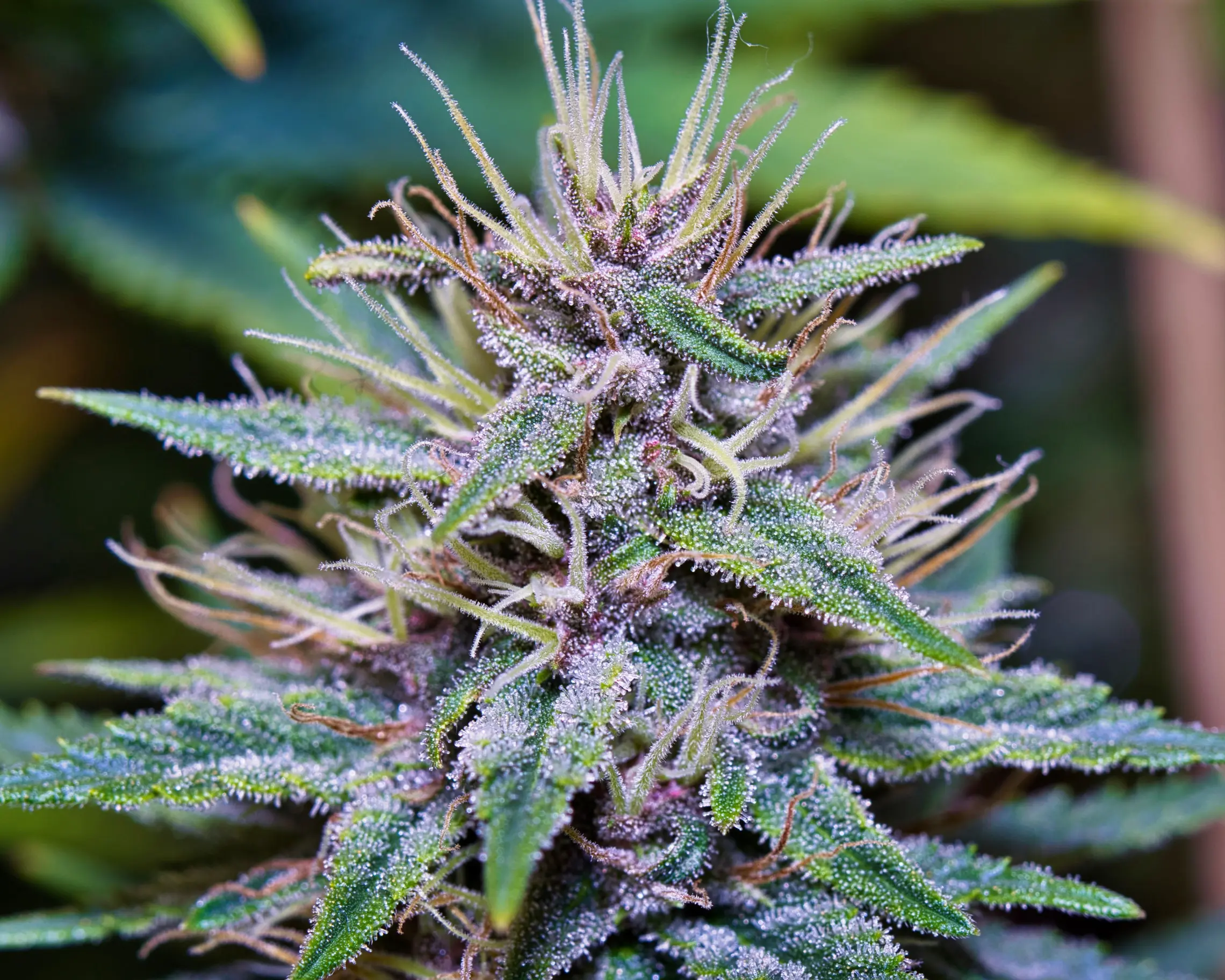
NYC Diesel
NYC Diesel is one of the clearest examples of a strain whose flavor goal and grow problem are the same thing: the plant needs enough time and enough open canopy to finish its grapefruit-diesel chemistry. Cut it early and the fruit can remain sharp and green. Crowd it and the lower flowers lose quality. Let it stretch without a plan and a manageable hybrid can become one of the tallest plants in the room.
The cultivar is usually described as Mexican sativa crossed with Afghani indica. In practice, the sativa side is highly visible. Plants can stretch strongly, build long side branches, and run nine to eleven weeks or longer depending on phenotype. Grow reports regularly show plants that continue significant vertical movement after the flip and phenotypes that differ substantially in color, shape, and finish time.
The Afghani side matters just as much. NYC Diesel is not a wispy tropical sativa. Mature flowers can become surprisingly dense and resinous, especially near the top of well-lit branches. The combination creates a plant that wants space during transition and support later, while still needing lower-canopy cleanup to keep the room breathable.
For growers, the central question is how to use the stretch rather than merely suppress it. Topping, mainlining, LST, and SCROG can all work, but each extra branch must have a destination. NYC Diesel can send side branches to the top rapidly after flowering begins. If every one is kept, the final screen becomes too full. If too many are removed early, the grower wastes the plant's natural lateral vigor.
Flavor is the reason to finish patiently. High-quality flower should combine ruby-red-grapefruit-like citrus, lime, sour fuel, earth, pine, and mild sweetness. The citrus is more fragile than the diesel base. Warm late flower, hot drying, or an overly dry cure can leave a batch that smells like generic fuel instead of NYC Diesel.
Strain Features
| Feature | Details |
|---|---|
| Strain Type | Sativa-leaning hybrid |
| Genetic Profile | Mexican sativa × Afghani indica is the most consistently reported lineage |
| THC | Commonly around the high teens to low 20% range, with stronger batches possible |
| CBD | Usually low |
| Dominant Terpenes | Myrcene, beta-caryophyllene, pinene, and limonene commonly recur |
| Flavor / Aroma | Grapefruit, lime, sour diesel, earth, pine, herbs, mild sweetness |
| Effect Character | Energetic, talkative, euphoric, mentally stimulating, followed by gradual body relaxation |
| Flowering Time | Commonly 9 to 11 weeks; some phenotypes run longer |
| Outdoor Harvest | Often mid-to-late October or later in suitable climates |
| Grow Difficulty | Moderate |
| Stretch | Strong in many phenotypes |
| Plant Architecture | Medium to tall, branchy, long laterals, vigorous transition growth |
| Bud Density | Medium-dense to dense near well-lit tops |
| Training Compatibility | Topping, mainlining, LST, SCROG, and lower pruning |
| Odor Intensity | Very strong in late flower |
| Mold Risk | Moderate because long flowering can overlap cool wet weather and dense tops can form late |
| Best Time of Use | Daytime to early evening for many experienced users |
Genetic Lineage
NYC Diesel is most commonly described as Mexican sativa crossed with Afghani indica. This pairing explains the cultivar unusually well. The Mexican side contributes height, branch extension, citrus, and a bright social effect. The Afghan side contributes denser flowers, resin, body relaxation, and a shorter finish than a pure tropical sativa.
The plant is still phenotype diverse. Some examples lean heavily sativa, stretching tall with more open flowers and a long finish. Others are stockier and can show stronger indica influence in leaf width, density, and the speed at which the body effect appears.
Grapefruit is one of the most prized phenotype markers. Growers frequently distinguish a ruby-red-grapefruit-style plant from earthier or more fuel-dominant siblings. That makes aroma after cure an important part of keeper selection.
The strain name is sometimes confused with Sour Diesel or regional Diesel lines. NYC Diesel is genetically and aromatically related to the broader diesel family, but it should not automatically be treated as the same cultivar as classic Sour Diesel.
A useful keeper combines the citrus identity with manageable structure. A very tall plant can be worth keeping if the grapefruit-fuel profile is exceptional, but a grower should understand the room cost of that choice.
Effect Breakdown
NYC Diesel typically begins with an energetic cerebral lift. Conversation becomes easier, mood rises, and users often report feeling more social or mentally engaged. The effect can be bright without immediately becoming racy.
At moderate doses, focus and sensory interest can remain useful. Music, walking, social activity, and creative tasks often fit the strain well. The body remains relatively light at first.
Physical relaxation arrives later. The Afghani side becomes more noticeable as the session continues, softening tension without necessarily creating immediate couch-lock. This transition is one of the cultivar's defining strengths.
Higher doses can become spacey. Thought speed may increase, short-term memory can weaken, and some users experience anxiety even though many describe NYC Diesel as smoother than extremely racy sativas.
Dry mouth and dry eyes are common. Appetite may increase after the initial energetic phase. The late effect can become calming enough for evening use, but the cultivar is usually chosen for social or daytime function rather than sleep.
The exact balance depends heavily on phenotype and harvest maturity. A longer-finished, denser plant may feel heavier than a brighter earlier-cut grapefruit phenotype.
Social energy is one of the strain's most repeated user themes. At a comfortable dose, many people describe becoming more talkative rather than withdrawn. That makes NYC Diesel different from fuel-heavy indicas that share some aroma but pull the user inward.
The later body relaxation is important because it prevents the experience from feeling relentlessly stimulating. For some users, the transition creates a useful afternoon arc: active first, calmer later.
Flavor & Aroma Profile
NYC Diesel's best-known aroma is grapefruit, especially a sharp ruby-red-grapefruit character with both sweetness and bitterness. Lime peel and sour citrus can sit beside it. Underneath is diesel, earth, pine, and a mild herbal musk.
The fruit should not be confused with candy. Good NYC Diesel smells like real citrus rind: bright, acidic, slightly bitter, and oily. The fuel underneath keeps the profile grounded.
When the bud is broken apart, the diesel becomes louder. Some phenotypes smell almost like lemon or grapefruit peel dipped in kerosene. Others are earthier and less fruit-forward.
On inhale, citrus and mild sweetness usually lead. The mid-palate becomes sour and herbal. The exhale adds diesel, earth, pine, and pepper. A well-cured batch leaves grapefruit-like bitterness lingering after the smoke.
The main post-harvest loss is flattening. If the fruit volatilizes during a hot dry, the remaining aroma still smells potent but becomes generic diesel and earth. This is why the loudest jar is not automatically the best one.
Phenotype selection should happen after cure. A plant that smells sweet in late flower can change substantially once moisture stabilizes. The keeper should retain the citrus-fuel contrast in finished flower.
Dominant Terpenes
| Terpene | Aroma Role | Cultivar Relevance | Scientific Caution |
|---|---|---|---|
| Myrcene | Earth, herbs, musk | Frequently reported and supports the earthy base beneath the citrus | Does not automatically make the effect sedating |
| Beta-caryophyllene | Pepper, wood, spice | Fits the spicy diesel finish | CB2 interaction does not prove strain-specific therapeutic outcomes |
| Pinene | Pine, resin | Can sharpen the fresh herbal and conifer edge | Often secondary and phenotype dependent |
| Limonene | Grapefruit, lemon, lime peel | Strongly consistent with the cultivar's prized citrus phenotype | Does not guarantee an energetic effect |
| Other citrus volatiles | Fresh rind, sour fruit, bitter peel | Minor compounds beyond limonene may contribute to realistic grapefruit perception | Exact volatile profiles vary and are not defined by strain name alone |
The classic grapefruit smell cannot be reduced to limonene alone. Real citrus perception is created by multiple volatile compounds interacting with the fuel, herb, and earth background.
Terpene dominance also varies by phenotype. The grower's sensory evaluation after cure is therefore a meaningful complement to laboratory numbers when selecting a keeper.
Indoor vs. Outdoor Growing
| Decision Point | Indoor | Outdoor |
|---|---|---|
| Stretch | Strong and sometimes extreme; height reserve is essential | Vertical freedom makes the trait easier to exploit |
| Flowering Duration | Nine to eleven weeks or more affects room scheduling | Requires a warm, dry, long autumn |
| Training | Topping, mainlining, LST, and open SCROG are useful | Early topping and broad branch spacing usually suffice |
| Lower Canopy | Pruning improves airflow and redirects energy to mature sites | More lower branches can remain productive with side sun |
| Odor | Requires strong odor planning indoors | Can travel far from an outdoor garden |
| Flavor Control | Indoor stability helps preserve grapefruit and lime | Sun can produce excellent aroma, but hot dry harvest weather can strip fruit notes |
| Humidity | Late dense tops need airflow | Cool wet autumn can be a major problem |
| Best Fit | Growers comfortable with strong stretch and a long finish | Dry warm climates with enough season length |
NYC Diesel often makes the most sense indoors in climates with cold or wet autumns. The grower can give it the full flowering window without gambling on October weather.
The indoor cost is height management. A low tent can still work with mainlining or a wide screen, but only if training begins in vegetative growth. Waiting until week three of flower is too late for a plant that can become one of the tallest in the room.
Outdoors, the cultivar can produce excellent yields and very expressive citrus-fuel aroma. The plant needs a warm fall and enough space for long laterals. A damp short-season climate turns the long finish into a liability.
Greenhouses can extend the season, but the structure must move humid air. Protecting flowers from rain while trapping moisture around them solves only half the problem.
Strain-Specific Grow Guidance
Decide the Final Canopy Before Flowering Begins
NYC Diesel can send several side branches to the top rapidly once stretch begins. If the grower has not already chosen the primary leaders, the screen can become overcrowded in less than two weeks.
Top or mainline early enough for the chosen branches to thicken. Do not flip immediately after the final high-stress cut. The plant should enter flowering with a stable framework.
Use Stretch to Fill Empty Space, Then Stop Adding Sites
The first part of transition is productive. Guide leaders outward and let secondary branches rise into remaining gaps. Once the canopy is full, remove shoots that are still trying to enter occupied space.
Keeping every branch because it reached the canopy can turn the room into a wall of leaves. The goal is coverage with separation, not maximum tip count.
Mainlining Can Work, but It Costs Vegetative Time
NYC Diesel responds well to structured training because the plant is vigorous and branchy. Mainlining can create an even set of leaders and make stretch easier to predict.
The tradeoff is time. If the grower values rapid turnover, a simpler topping plus LST approach can create nearly the same usable canopy with less vegetative delay.
Plan for More Than Two Weeks of Transition
Some phenotypes continue meaningful extension beyond the usual early-flower stretch window. Keep ties adjustable and avoid setting lights at their final height too soon.
If one branch continues dominating, lower it gradually rather than making a severe late bend that can split a hollow or rigid stem.
Prune the Lower Interior More Aggressively Than the Outer Laterals
The center under a wide NYC Diesel canopy can become congested. Remove inward shoots, weak suckers, and lower branches that cannot see light.
Outer laterals can remain productive because they receive side light and often stretch upward naturally. The branch's position matters more than its distance from the pot.
Keep Defoliation Strategic During a Long Flower
Large leaf-removal events can temporarily open the plant, but NYC Diesel may replace leaf area during stretch. Remove blockers gradually and perform the main structural cleanup once the final branch positions are clear.
Late in flower, avoid aggressive stripping. Remove only damaged, buried, or moisture-trapping leaves.
Feed for a Long Active Cycle
NYC Diesel can maintain strong metabolism for a long bloom. Stable nutrition is more valuable than one dramatic mid-flower increase.
Do not let the stretch make the decisions
Excess nitrogen can prolong leafiness and make the lower canopy harder to manage. As flower stacking becomes dominant, nutrition should support continued calyx development rather than vegetative stretch.
Do Not Let a Long Flowering Plant Sit in Wet Media
Root-zone problems become more expensive when the crop still has many weeks left. Chronic saturation reduces oxygen and can slow the final flower filling.
Adjust irrigation to actual water use. If demand falls, inspect roots, salts, temperature, and canopy conditions before increasing nutrient concentration.
Support the Longest Branches Before Dense Buds Form
The Afghani influence can produce dense top flowers on long sativa-like branches. That creates leverage. A loose second net or soft ties can keep branches upright without compressing them.
Support is also an airflow tool because separated colas dry faster after lights-out and remain easier to inspect.
Harvest the Grapefruit, Not Just the Trichomes
The best harvest window includes a fully developed citrus-fuel aroma. A plant that still smells primarily green or sharp may need more time even if some exposed trichomes are cloudy.
Earlier harvest tends to emphasize energy and sour citrus. Later maturity generally adds body relaxation and deeper fuel-earth character. The grower should choose within the safe mature window rather than chase maximum amber.
Vegetative Time Is a Tradeoff Between Structure and Room Cost
NYC Diesel can benefit from structured training, but a long mainline veg is not automatically the best use of time. The plant already has strong lateral vigor. A simpler early topping and branch spread often produces enough canopy without adding weeks before flowering.
Growers who enjoy manifolding can still use it successfully, especially when plant count is low. The decision should be based on room scheduling and desired symmetry rather than the assumption that more complex training produces better flavor or yield.
The Stretch Can Reveal Which Phenotype Is Worth Keeping
A very tall plant is not automatically undesirable. If that phenotype also produces the strongest grapefruit aroma, excellent resin, and a clean long finish, the extra height may be worth managing. Conversely, a compact phenotype with generic fuel aroma may be easier but less distinctive.
Record stretch, finish time, and cured aroma together. These three traits reveal whether the plant's quality justifies the space it consumes.
Late Flower Should Protect Citrus From Heat
A long-flowering NYC Diesel can remain under intense light deep into the cycle. If canopy temperature climbs as the tops approach the fixture, reducing intensity or increasing distance can protect aroma more effectively than forcing maximum light onto already mature flowers.
The citrus top notes are a quality target. A slightly smaller but cooler final week may produce more valuable finished flower than a hotter push for marginal extra weight.
Outdoor Harvest Planning Starts Before October
In climates with uncertain autumn weather, growers should already know how they will protect or finish the crop before flowers become dense. Temporary rain cover, greenhouse ventilation, or a planned earlier harvest window are more useful when prepared in advance.
Waiting until prolonged rain begins leaves few good options because large long branches are difficult to move and wet dense tops cannot be dried safely on the plant.
Canopy Depth Becomes More Important as Flowering Length Increases
A deep canopy is expensive on a ten-week plant because shaded sites consume resources for a long time. By the end of stretch, the grower should know which branches are truly part of the productive zone and remove the rest before they spend another two months producing small flowers.
This does not mean stripping the plant to a few tops. NYC Diesel can finish excellent mid-canopy flowers when light reaches them from the side. The weak sites are the ones trapped under multiple layers of foliage with no realistic path to direct light.
Long Flowering Requires Stable Environmental Capacity
The room must be able to hold temperature and humidity steady for the entire finish. A system that barely manages week six may struggle when dense flowers, larger leaf area, and longer dark periods increase moisture later.
Dehumidification and air exchange should therefore be planned for the mature canopy rather than the early plant. Long flowering leaves less room for environmental shortcuts because problems have more time to accumulate.
Odor Intensity Changes How the Drying Space Should Be Managed
NYC Diesel can become extremely pungent while drying. That odor should not encourage the grower to increase ventilation beyond what the flowers need. Excessive air exchange can remove volatile citrus compounds while solving an odor problem that should be handled separately.
The drying environment should be optimized for flower quality first: cool, dark, and gently ventilated. Odor management should not turn the room into a wind tunnel.
A Grapefruit Keeper Should Be Selected After Storage Stability Is Tested
Some phenotypes smell spectacular during the first weeks of cure but lose citrus quickly in storage. If keeper selection matters, compare the aroma again after a longer sealed period.
A phenotype whose grapefruit note remains recognizable after several weeks of storage is more valuable than one that is explosive immediately after drying but becomes generic fuel soon after.
Weedth Bud Flavor Tips
NYC Diesel's grapefruit note is the quality target. Diesel is easier to preserve. The fruit is what disappears first when flowers are overheated, overdried, or repeatedly exposed to air.
Harvest after the citrus rind aroma is fully developed. Immature green acidity is not the same thing as grapefruit. Curing can clean the aroma, but it cannot create fruit chemistry that never matured.
Dry dense tops slowly enough for internal moisture to equalize. Large colas can be divided into branch sections when necessary. Keeping them whole for appearance is less important than preventing wet centers.
Avoid direct fan air. Fast surface drying can make the flower feel ready while internal moisture remains high and volatile citrus compounds have already been stripped.
During cure, expect the sour fuel to become smoother and the grapefruit to become more recognizable as chlorophyll-like notes recede. A good jar should not smell like hay with diesel added on top.
If multiple phenotypes are grown, cure them separately. The grapefruit keeper cannot be identified accurately after fruitier and earthier plants are mixed together.
Cool airtight storage is especially important. Citrus-forward flower loses personality quickly when repeatedly warmed or allowed to become brittle-dry.
Grapefruit-forward phenotypes should be evaluated after several weeks of cure because the citrus can change from sharp and sour to rounder and more clearly fruit-like. The diesel base usually remains obvious throughout.
Do not overhandle the dried buds. The resinous flower may be sticky early and brittle later. Rough trimming or repeated container movement can remove trichome heads and reduce the clean oily citrus impression.
Weedth Bud Boost Tips
NYC Diesel's high-yield potential comes from vigorous branches and a long flowering cycle. Use those traits by creating an even canopy early, not by keeping every shoot.
A wide screen can raise usable yield by converting stretch into horizontal light exposure. The screen becomes harmful when every square is filled and airflow disappears.
Remove weak lower shoots after the main stretch. The cultivar can produce good mid-canopy flowers, but deeply shaded interior buds rarely become premium.
Long laterals should be supported before late swelling. A branch that falls below the light or rests against another cola loses quality even when its wet weight remains high.
Outdoors, give plants generous spacing. Long branches and strong odor make crowded gardens difficult to inspect and ventilate.
Do not force-feed a plant simply because the cycle is long. Nutrient demand should follow growth and irrigation. Excess late nitrogen produces more leaves, not a better grapefruit phenotype.
The best yield is a high percentage of mature citrus-diesel flower with consistent density from top to mid-canopy.
Medical Uses & Benefits
NYC Diesel is commonly chosen by users seeking mood elevation, stress relief, daytime engagement, and pain distraction without immediate sedation. These are user-reported patterns rather than clinical proof.
The energetic social effect may be appealing when low mood or fatigue makes ordinary activity difficult. Some users describe feeling talkative and motivated rather than heavy.
The later body relaxation can make physical discomfort less intrusive while preserving more function than a strong indica, particularly at moderate doses.
High THC can still trigger anxiety, racing thoughts, dry mouth, or dizziness. A strain reputation for a smooth social effect does not guarantee comfort for every user.
NYC Diesel is usually low in CBD and should not be treated as a low-intoxication medical profile. Driving and safety-sensitive work remain unsafe while impaired.
People using cannabis for medical conditions or alongside prescription medications should seek guidance from a qualified healthcare professional.
Ideal User Profile
NYC Diesel is ideal for users who like citrus-fuel cannabis but want more social energy than a heavy OG. It fits daytime and early-evening activity, conversation, music, creative work, and walking.
Flavor preference should lean toward grapefruit, lime, diesel, pine, and earth rather than sweet dessert profiles.
Experienced users may find the balance functional and upbeat. THC-sensitive users should begin cautiously because higher doses can become mentally intense.
For growers, the cultivar best suits people with enough vertical space and patience for a long finish. It is a poor fit for an eight-week production schedule.
Outdoor growers need a warm autumn. The plant is far less attractive in a climate where rain routinely arrives before long sativa-leaning hybrids are mature.
Grower Notes and Feedback
Strong stretch is one of the most consistent grower observations. Some NYC Diesel plants become the tallest in mixed rooms and continue meaningful extension after week two.
Growers also report large phenotype variation. Plants can differ in color, body shape, citrus intensity, and flowering duration even when they share the same strain name.
Side branches can rise very quickly during transition. Several grow diaries show lower branches reaching the top early enough that growers chose to keep them rather than maintain a strict mainline.
The long finish is another recurring theme. Nine to eleven weeks is common, but individual plants can run significantly longer. A seventy-day schedule should not be treated as a universal maximum.
Aroma is remarkably consistent at the high-quality end. Grapefruit, lime, and sour fuel are the traits growers most often celebrate in keeper phenotypes.
The cultivar's odor intensity is not subtle. Late flower and drying can dominate an indoor space, which makes odor management a practical grow requirement.
Growers also report that side branches can become so competitive after the flip that a planned eight-cola structure effectively turns into a larger multi-top canopy. This can be productive if the extra branches have space, but it becomes overcrowding if the screen was already full.
The cultivar's long finish makes patience a real quality variable. Plants harvested at the first acceptable trichome window may still be good, while later fully mature examples often show stronger citrus-fuel integration and more complete body relaxation.
Another useful observation is that the cultivar can look more open in early flower than it will at harvest. As calyxes stack along long branches, the same canopy can become substantially denser without producing many new leaves. Early spacing decisions should account for that late change.
Growers comparing phenotypes should also record how much citrus survives after storage. The plant that smells strongest on harvest day is not automatically the best keeper if the grapefruit disappears after a few weeks.
Weedth Editor's Note
How I would judge the finished flower
NYC Diesel is a strain I would grow only after deciding how much stretch the room can safely absorb. It is much easier to leave empty screen early than to recover headroom after the plant has doubled.
I would top or mainline the plant in veg, spread the leaders, and then let the first two weeks of flower tell me which secondary branches deserve to stay. Once the canopy is full, I would become selective rather than sentimental.
The lower interior is where I would be strict. NYC Diesel can make strong side branches, but the center of a wide screen can still turn into shaded foliage. I would keep productive edge branches and remove weak inward shoots.
I would also wait for the grapefruit. The plant can look frosty before its flavor is fully mature. If I cut while the aroma still feels mostly green and sour, I have missed the reason to grow the cultivar.
My keeper would be the plant that combines manageable stretch with a grapefruit-lime note that survives cure. A slightly smaller plant with exceptional flavor would beat a taller generic diesel phenotype for me.
I would also keep a detailed stretch record. If a phenotype doubles, triples, or continues moving longer than expected, that information becomes one of the most valuable parts of the next run because it determines the exact flip height and screen fill.
The cultivar is worth that extra record-keeping because a well-managed grapefruit phenotype has a sensory identity that many generic diesel plants cannot reproduce.
Weedth Score
Growing Experience 7.9/10 Vigorous and highly trainable, but strong stretch and long flowering make it less forgiving in small rooms.
Bud Structure & Visual Appeal 8.3/10 Dense resinous tops with attractive sativa-leaning branch structure; lowers suffer if the canopy is too deep.
Aroma Complexity 9.0/10 Grapefruit, lime, diesel, earth, pine, and spice create one of the more recognizable classic profiles.
Flavor & Smoothness 8.8/10 Excellent when citrus is preserved; hot drying quickly reduces the strain to generic fuel.
Effects & High Experience 8.7/10 Social, euphoric, energetic, and gradually relaxing without immediate sedation.
Overall Satisfaction & Recommendation 8.6/10 A standout citrus-diesel cultivar for growers who can manage stretch and wait for full maturity.
Personal closer: I would keep the NYC Diesel that still tastes like bitter grapefruit peel after cure, even if another phenotype finishes faster.
FAQ
What is NYC Diesel's lineage?
The most consistent account is Mexican sativa crossed with Afghani indica.
How much does NYC Diesel stretch?
Strong stretch is common, and some plants can become the tallest in a mixed room. Plan height before flowering.
How long does NYC Diesel flower?
Nine to eleven weeks is common, but some phenotypes can run longer.
Does NYC Diesel respond well to topping?
Yes. Topping, mainlining, and LST are all useful when performed early enough for recovery.
Is mainlining worth it for NYC Diesel?
It can create an even canopy and make stretch easier to control, but it costs vegetative time. Simpler topping plus LST can be more efficient for faster turnover.
Is SCROG good for NYC Diesel?
Yes. A wide open screen turns stretch into useful canopy area. Avoid overfilling it.
Should I remove NYC Diesel's lower branches?
Remove shaded interior shoots after stretch, but keep strong outer laterals that reach useful light.
Why is my NYC Diesel still stretching after two weeks?
Phenotype-dependent prolonged transition is normal. Keep adjustable ties available deeper into early flower.
Is NYC Diesel a heavy feeder?
It can maintain strong demand through a long bloom, but nutrition should follow plant growth and water use rather than a fixed heavy schedule.
Is NYC Diesel prone to mold?
Late dense tops have moderate risk, and the long outdoor finish can collide with wet autumn weather.
Why does my NYC Diesel smell like earth instead of grapefruit?
Phenotype variation is one cause. Early harvest, hot drying, and over-dry storage can also erase the brighter citrus.
When should NYC Diesel be harvested for flavor?
Harvest when calyxes are mature, flower trichomes are developed, fresh pistil production has slowed, and the grapefruit-diesel aroma is complete.
Does NYC Diesel need branch support?
Long branches can carry dense tops late in flower. A second net or soft ties can help.
Can NYC Diesel finish outdoors in a short season?
It is risky in cool wet climates because flowering commonly extends into autumn.
Is NYC Diesel good for daytime use?
Many users describe it as energetic and social at moderate doses, but actual THC content and tolerance determine functionality.
Similar Strains
Sour Diesel: Shares sharp fuel and energetic effects but usually leans more purely sour and less grapefruit-like.
Headband: Combines Diesel and OG traits with a slower, heavier body landing.
Tangie: A citrus-focused alternative with more orange and less fuel.
Super Lemon Haze: A longer sativa option with bright lemon and incense rather than grapefruit-diesel.
OG Kush: Provides the earthy-pine fuel side in a more compact and physically heavy package.
Chocolope: A long-branching sativa comparison with coffee-cocoa and fruit instead of diesel citrus.
Share this article
A quick overview of the topics covered in this article.
Follow us
Latest articles
September 9, 2026
September 9, 2026

September 9, 2026