
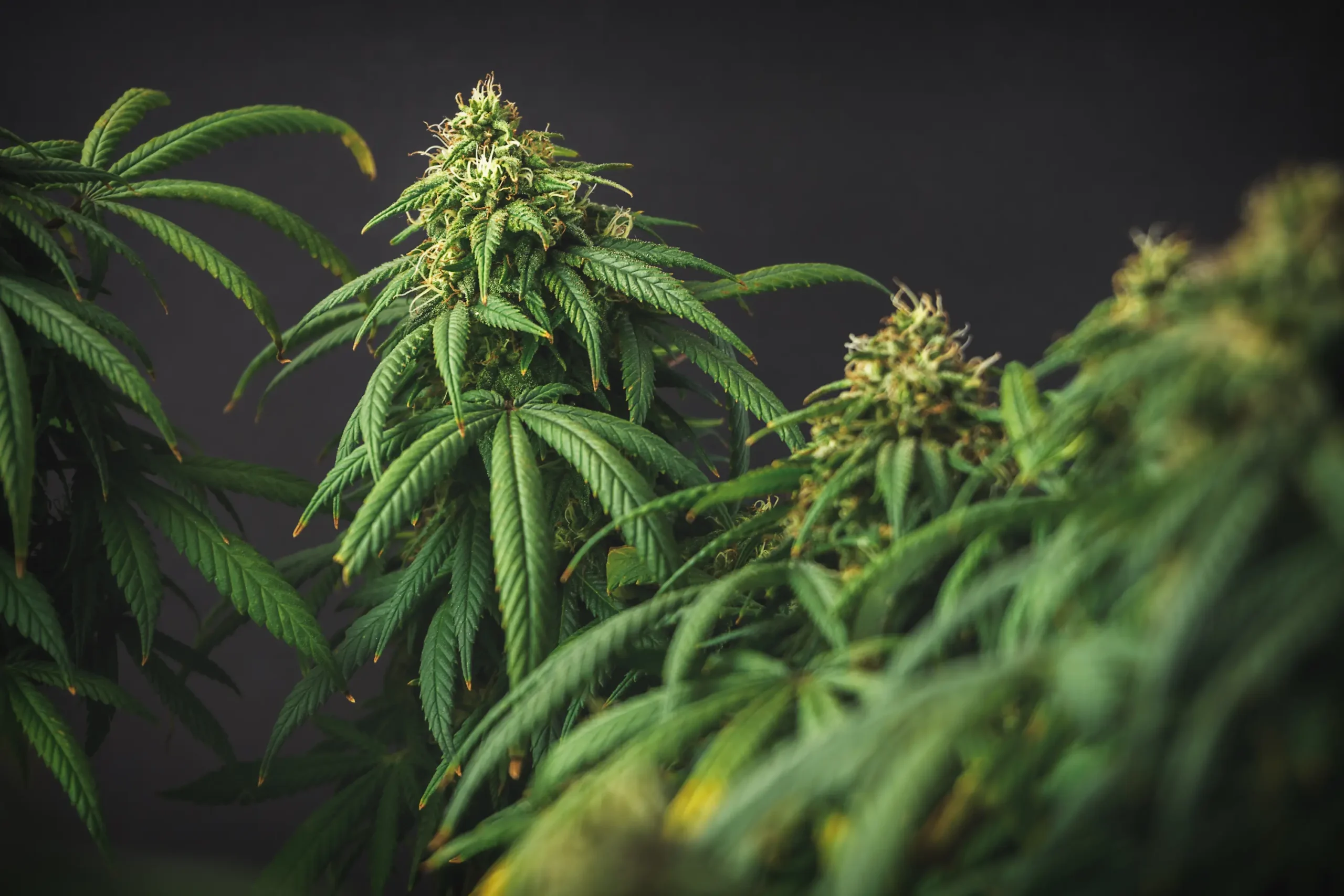
OG Kush
OG Kush strain is a heritage hybrid whose lemon-pine-fuel character and dense, resin-rich flowers reward close attention from canopy work through curing. It is usually described as indica-leaning, but the clone-family history matters: phenotype, lab profile and even market labeling can vary widely. This guide keeps that variability visible while giving you the practical details that shape the finished flower.
Core Profile
| Feature | Details |
|---|---|
| Feature | Details |
| Genetic Profile | Hybrid; usually described as indica-leaning, though phenotype expression is variable and market labeling is inconsistent |
| Lineage | Commonly reported as Chemdawg × Lemon Thai × Hindu Kush or Pakistani Kush influence; exact lineage remains unverified and disputed |
| THC Content | Commonly reported in the high range; market descriptions often place it around 18–26% THC, while one cured-flower COA measured 25.83% total THC; exact range is phenotype- and lab-dependent |
| CBD Content | Typically trace or very low; one cured-flower COA measured 0.05% total CBD |
| Origin | Early-1990s Florida-to-California origin story is widely repeated, but the historical record is not definitive |
| Flowering Time | Usually about 8–9 weeks indoors; some listings report roughly 56 days |
| Yield | Medium to moderate; improves with canopy management rather than extreme stretch |
| Plant Height | Medium, with moderate stretch; larger when root space is generous and plants are not confined |
| Grow Difficulty | Moderate to difficult because quality depends heavily on canopy control, airflow, and humidity discipline |
| Aroma & Flavor | Lemon zest, pine resin, earth, fuel, spice, and hashy depth |
| Dominant Terpenes | Myrcene, limonene, and β-caryophyllene are repeatedly reported as the leading trio |
| Medical Uses | Commonly chosen by users for stress, pain, appetite support, and evening relaxation; clinical efficacy is not strain-specific and remains user-dependent |
| Best Time of Use | Late afternoon to evening; heavier phenotypes and later harvests can push it into nighttime use |
| Grow Style Suitability | Indoor SCROG or SOG, dry outdoor climates, larger containers, and setups that prioritize airflow and support for dense tops |
Genetic Lineage
OG Kush is one of the most influential modern cannabis cultivars, but its lineage is still not fully documented. The most widely repeated origin story places its early development in Florida in the early 1990s before it moved west and became foundational in California, while the most common parentage claim is some version of Chemdawg crossed into a Lemon Thai and Kush background. Even that pedigree is better understood as a persistent industry narrative than a closed historical fact.
That uncertainty matters because OG Kush is not one perfectly uniform thing in the market. A widely cited genotype analysis from Phylos identified a large OG Kush clone group of genetically identical samples that had been circulating under many different names, while a later Frontiers study found that some “OG Kush” samples were genetically identical or closely related and others were clear outliers. Separate genetic work on strain reliability has also shown that cannabis names do not always map neatly to consistent genetics across sellers. For this profile, that means OG Kush should be profiled as a heritage clone family with real phenotype drift and naming inconsistency, not as a single chemically fixed object.
In practical grow terms, that explains why OG Kush is often described as both moderately stretchy and fairly compact, or both balanced and indica-leaning. Leafly’s strain notes describe four phenotypes, three with more sativa influence and one more indica-like, which aligns with the broader picture of a cultivar family that can swing between brighter lemon-fuel expression and denser, more body-forward Kush expression.
Effect Breakdown
OG Kush is best understood as a two-stage hybrid experience. The opening phase is usually cerebral and fast enough to feel noticeable early: uplifted mood, a looser social edge, and a distinct mental brightening that is more euphoric than jittery when the dose is controlled. Later, the body side arrives with more authority, bringing muscular release, physical heaviness, and a calm that can stay functional at moderate intake but can turn drowsy or couch-leaning when potency or dosage rises.
That arc is one reason OG Kush has remained so durable culturally. It does not behave like a one-note sedative, but it also does not stay purely heady for long. The best cuts tend to move from mentally lifted to physically settled, which is why late afternoon and evening use makes the most sense for most consumers. THC-sensitive users should be more cautious than the friendly onset suggests, because the later body load can build after the first euphoric layer.
Flavor and Aroma Profile
A good OG Kush jar should open with lemon peel over damp earth, pine resin, and a fuel-like undercurrent rather than with overt sweetness. When the flower is broken apart, the nose usually deepens: more spice, more hashy warmth, and a darker earthy base beneath the sharper citrus. On the inhale, the profile often feels lemon-pine first and earth-fuel second; on the exhale, the peppery and resinous Kush character usually becomes more obvious.
OG Kush is also unusually dependent on post-harvest discipline. Warm or rushed drying can flatten the top end first, especially the clearer lemon and pine notes that depend on more volatile terpene fractions. Current reviews on cannabis aroma and secondary terpenes consistently note that post-harvest handling changes terpene profiles and that excessive heat during drying and curing can cause significant losses, especially among volatile monoterpenes. For OG Kush specifically, that means poor drying does not merely soften the aroma; it can collapse the strain’s signature contrast between bright citrus top notes and dark fuel-earth depth.
Dominant Terpenes
Batch-level lab data support the common view that OG Kush is usually led by myrcene, limonene, and β-caryophyllene. One cured-flower COA measured β-myrcene at 0.90%, limonene at 0.50%, and β-caryophyllene at 0.49%, while a separate OG Kush concentrate COA showed the same three compounds in the same leading order, just at higher total terpene concentration because of the product format. That consistency does not mean every market sample will match exactly, but it does support the classic OG profile.
Myrcene gives OG Kush much of its earthy, musky, and body-centered weight. Reviews of β-myrcene describe it as a terpene associated with spicy, earthy, and musky scent notes, which fits the darker lower register of OG Kush especially well. When an OG reads more “earth and pressure” than “citrus and sparkle,” myrcene is usually a big reason why.
Limonene is what keeps OG Kush from becoming muddy. It contributes the lemon-zest lift that defines the opening nose and helps explain why many users describe the initial phase as brighter and more mood-lifting than a purely narcotic indica. Reviews of cannabis terpenes consistently associate limonene-rich profiles with citrus aroma and anti-stress or uplifting potential, though effect claims remain mostly preclinical and should be treated cautiously.
β-Caryophyllene adds the peppery, woody, hashy backbone that makes OG Kush feel distinctly “Kush” rather than simply lemony. It is the terpene that often turns a clean citrus nose into a lemon-spice-fuel profile. Reviews also note β-caryophyllene’s unusual pharmacological interest because it is being studied for anti-inflammatory and analgesic roles, which is part of why OG Kush is often discussed in the context of body comfort.
Cultivation Strategy
Indoor vs Outdoor Growing
| Aspect | Indoor Growing | Outdoor Growing |
|---|---|---|
| Aspect | Indoor Growing | Outdoor Growing |
| Plant Size | Easier to keep medium and controlled; moderate stretch responds well to training | Can become larger when root space is unrestricted |
| Best Climate | Flowering rooms with disciplined humidity and strong airflow | Dry, sunny regions with low late-flower humidity |
| Flowering and Finish | Usually 8–9 weeks indoors | Commonly finishes around early October in suitable Northern Hemisphere climates |
| Yield Pattern | Moderate, but quality and consistency are strong with SCROG or SOG | Medium to strong when climate is dry and plants are allowed to size up |
| Main Risk | Powdery mildew and bud rot if canopy stays crowded | Moisture pressure from humidity, dew, or rain near finish |
| Best Strategy | Prune inner canopy, spread tops, support heavy flowers, keep bloom RH low | Give plants space, avoid confined root volume, protect against late moisture |
Strain-Specific Grow Guidance
OG Kush is not difficult because it is wild or uncontrollable. It is difficult because it will happily produce dense, desirable flower while quietly punishing sloppy environmental management. Morphologically, it sits in the middle: not as short and squat as a pure broadleaf indica, not as rangy as a true Haze-type plant. Expect medium height, moderate stretch, sturdy lateral growth, and flowers that can become heavy enough to need support.
Does OG Kush really need lower humidity than other strains late in flower?
Question sent by: Ethan M., via e-mail
It is worth giving OG Kush extra attention, especially once its dense tops begin to close up. The goal is not chasing a single magic number; it is keeping air moving through the plant, avoiding wet pockets after watering, and responding early if the center stays crowded. A clean, open canopy is often more valuable here than trying to force one more heavy cola.
The first priority is canopy architecture. OG Kush benefits from SCROG or SOG because these systems do two things the plant needs at the same time: they keep the tops evenly lit, and they prevent the interior from becoming a humid pocket. Leafly’s OG grow notes specifically call it a strong candidate for SCROG or SOG, while modern bud-rot literature consistently shows that dense flowers, poor air circulation, and limited canopy airflow sharply raise disease risk. A recent review on Botrytis in cannabis reported that enhanced air circulation around inflorescences reduced bud-rot incidence by 66–92%, which is especially relevant for a cultivar known for dense tops.
The second priority is humidity discipline. General cannabis grow guidance usually places flowering rooms around 40–50% RH, and OG-specific sources repeatedly emphasize lower humidity while blooming because of susceptibility to mildew and bud rot. If I were setting up OG Kush for success, I would rather undershoot canopy density than overshoot yield ambitions, because once thick tops and stagnant air arrive together, the room becomes a rescue project instead of a finishing room.
Feeding should be assertive but not reckless. Several OG-specific grow sources recommend steady calcium and magnesium support, and OG Kush is often described as responsive to that approach, particularly in hydro or coco-style feeding programs. At the same time, overfeeding darkens the foliage, raises disease pressure by thickening the canopy, and can leave the final smoke harsher. OG Kush generally rewards balanced nutrition more than brute-force EC.
Phenotype variability matters here. More sativa-leaning expressions may stretch harder and carry more lemon brightness, while the heavier phenotypes stay chunkier and finish denser. That means training should happen early enough to adapt to the structure you actually have, not the catalog picture you hoped for. Market inconsistency studies and phenotype notes both support expecting some real variation plant to plant.
Harvest timing should be driven by trichome maturity rather than calendar alone. Research on cannabis trichome development confirms that clear, milky, and brown or amber head phenotypes track flower maturation, and practical harvest guidance still converges on the same benchmark: mostly cloudy heads with some amber if you want OG Kush’s balanced high, or a bit more amber if you want the body side to dominate. For the most balanced expression, OG Kush is usually best cut when potency has peaked but before the brighter aromatic edge dulls too far into sedative heaviness.
How OG Kush Reads in the Room
Start with the middle of the plant, not the tallest tip. OG Kush can look perfectly manageable from above while its interior quietly becomes a warm, low-airflow pocket. In a small room, take a few minutes at each major growth stage to look through the canopy at pot level. If you cannot see a clear path for moving air through the main branches, it is worth correcting while the plant is still in vegetative growth rather than waiting for flower density to make every choice feel expensive.
Let the actual phenotype set the pace. A brighter, more sativa-leaning expression may ask for another round of branch spreading before the flip; a chunkier phenotype may need less horizontal work but earlier support. The useful habit is to build a flexible frame, then respond to the stretch you are seeing. This is more reliable than copying a single plant-height number from a seed listing.
Keep the finish clean rather than maximal. When flowers begin to gain real weight, a branch that rubs another flower, a shaded interior site, or a pot that dries erratically can become a quality problem. Light cleanup, support and predictable watering give the plant room to finish the aromatic profile it already has. OG Kush tends to reward that restraint more than a last-minute attempt to make it carry more plant mass.
Late-Flower Checkpoints
Week by week, watch the microclimate. Check the space between the densest flowers after irrigation, after lights-off humidity rises, and after any weather shift that changes the room’s intake air. The concern is not a single reading in isolation; it is repeated dampness where dense tissue and still air meet. A small fan adjustment or a little more spacing early is gentler than a corrective defoliation when buds are already mature.
Support is an aroma decision as well as a structural one. A branch that bends into its neighbor traps moisture and makes inspection harder. Stakes or a second net preserve small air gaps, keep top sites in the light and let you examine every dense area without handling the flowers excessively. That is how a clean canopy protects both finish quality and peace of mind.
Post-Harvest Quality
Weedth Bud Flavor Tips
OG Kush is one of those cultivars that makes drying errors obvious. If the room is too warm, too dry, or moving air too aggressively, the flower may still test strong and still look attractive, but the signature lemon-pine-fuel complexity starts to collapse into flatter earth and generic Kush. Cannabis post-harvest reviews consistently describe drying as the most important post-harvest operation for quality preservation, and multiple recent papers note that volatile terpenes, especially monoterpenes, are highly sensitive to post-harvest conditions.
For OG Kush, the big practical target is a cool, dark, gradual dry. Current horticultural guidance commonly recommends roughly 15–20°C and around 55–65% RH for about 7–14 days, followed by curing, and that advice lines up with the scientific direction of the literature even though cultivar-specific optimization is still being refined. Research also shows that terpene losses can continue during storage and curing if conditions are poor, so “slow” only helps when it is also stable and clean.
A multi-week cure is especially worthwhile with OG Kush. The cultivar’s flavor is not just about raw terpene volume; it is about balance. With a proper cure, the sharper green edge drops away, the inhale smooths out, and the peppery caryophyllene spine starts to sit more naturally under the lemon top notes. If a finished jar smells earthy but not expressive, the failure was often not in the genetics but in the dry or cure.
Weedth Bud Boost Tips
If the goal is better OG Kush flower rather than merely more OG Kush flower, the best boost comes from architecture and finish quality. SCROG works because it spreads tops into a flatter light plane and reduces wasted lower growth. SOG works because OG Kush can still return strong flower in compact form if the room is clean and airflow is constant. Both methods are better suited to this cultivar than simply letting one large, leafy plant become overpacked.
Root freedom also matters. One of the most useful short notes on OG Kush from current strain descriptions is that it tends to perform better when “not confined to pots,” which is another way of saying it likes enough root room to express vigor without being forced into stress. Outdoors, that can mean larger holes or beds; indoors, it means finishing the plant in a container that is large enough to support dense bloom without watering volatility every few hours.
The other yield booster is support. OG Kush flowers can get heavy and dense enough to sag or twist branches late, particularly under strong indoor lighting. This is not just a cosmetic problem. Better support improves light exposure, reduces rubbing damage, and helps preserve air gaps between mature flowers. On this cultivar, staking or net support is part of quality control as much as yield management.
Reading the Jar After the Cure
The first opening tells you where the process landed. Bright lemon peel and pine should arrive before the darker earth, fuel and pepper notes; if the jar only reads as flat earth, the flower may have lost its volatile top end during drying or warm storage. Give a young cure time before judging it, but do not mistake a stale, muted jar for a phenotype trait.
Texture matters too. Properly finished OG Kush should break apart without feeling wet at the core or turning instantly to dust. That middle ground gives the smoke a better chance to show the layered resin-and-citrus contrast that makes the cultivar distinctive. If a jar needs frequent opening to manage excess moisture, slow down and stabilize the cure before sealing it for longer storage.
Practical Use
Medical Uses and Benefits
OG Kush is often chosen by medical or wellness-oriented users for stress, pain, appetite loss, and sleep support, but those use cases should be described carefully. Clinical evidence is not strain-specific in the way marketing language often implies, and real-world response depends on dose, route of administration, tolerance, and chemotype variation. What can reasonably be said is that OG Kush combines THC-rich flower with a recurring myrcene-limonene-caryophyllene backbone, and users commonly report a mixture of mood lift, physical ease, appetite stimulation, and later-stage relaxation.
That makes it plausible as an evening option for people seeking decompression rather than stimulation. Lower doses may feel socially warm and emotionally lighter; higher doses can become much more body-heavy and sleep-adjacent. THC-sensitive users, especially those prone to anxiety, should approach carefully because the cultivar is potent and market samples labeled “OG Kush” are not always chemically identical.
Ideal User Profile
OG Kush fits best for the consumer who wants a classic full-spectrum hybrid experience: clear enough to feel alive at the start, heavy enough to genuinely settle the body afterward. It suits late-day use, shared sessions, end-of-work decompression, and users who prefer layered lemon-pine-fuel flower over candy-forward modern profiles.
It is less ideal for people who want a bright all-day focus strain or for complete beginners who equate “hybrid” with “easy.” OG Kush often feels approachable in the first phase and then becomes substantially heavier later, which can surprise users who dose too quickly. The best audience is someone who appreciates old-school Kush depth and is willing to respect potency.
Grower Notes and Feedback
What shows up again and again in OG Kush grow coverage is not explosive yield but high-grade flower when the room is dialed in. Growers value it because the cultivar carries serious bag appeal, recognizable aroma, and broad genetic influence. They complain about it for almost the same reasons: it can be mildew-prone, it punishes high humidity, it asks for training, and it tends to reveal post-harvest mistakes very clearly.
The most realistic summary is that OG Kush is not a beginner disaster, but it is also not an autopilot plant. It tolerates strong cultivation, yet it rewards precision much more than force. If a grower likes tuning environment, canopy shape, drying pace, and final smoothness, OG Kush is satisfying. If the goal is maximum grams with minimal thinking, there are easier modern choices.
Weedth Editor’s Note
I treat OG Kush like a cultivar that deserves room to breathe from the start. If the center of the plant stays too crowded, the finish gets harder than it needs to be, and this is one of those strains that can look healthy right up until the moment the density becomes a liability. So I would rather remove weak interior growth early, spread the canopy, and give the top sites space than chase one more crowded week of vegetative mass. That trade usually pays back in cleaner flowers and less stress late in bloom.
What I love about OG Kush is the contrast. On the plant it can smell sharp and bright, but after a proper cure that nose settles into something deeper and more complete. The lemon stops feeling thin, the pepper and resin push forward, and the smoke becomes more obviously “OG” instead of merely citrusy. If I had one non-negotiable for this strain, it would be patience after harvest. Rushing the dry is the fastest way to grow expensive-looking flower that smokes beneath its potential.
Bottom Line
Weedth Score
Growing Experience — 8.3/10. OG Kush is rewarding, but it is not a lazy-room cultivar. The score stays high because it responds beautifully to skilled canopy work and disciplined finishing, but it loses points for humidity sensitivity and the need for training and support.
Bud Structure and Visual Appeal — 9.0/10. Dense, resin-rich, classic West Coast flower structure remains one of OG Kush’s strongest assets. Even market descriptions that disagree on ratio or lineage usually agree on heavy frost and strong bag appeal.
Aroma Complexity — 9.4/10. The lemon-pine-fuel-earth stack is still one of cannabis’s most recognizable aromatic signatures, and the recurring myrcene-limonene-caryophyllene pattern supports that reputation well.
Flavor and Smoothness — 8.8/10. When dried and cured correctly, OG Kush is layered and memorable. When mishandled post-harvest, it loses more character than some louder dessert cultivars do, which is why the score is strong but not automatic.
Effects and High Experience — 9.1/10. The initial uplift followed by body-settling calm is still one of the most enduring hybrid effect patterns in cannabis. It remains versatile enough for evening social use, but potent enough to become sleepier in heavier doses.
Overall Satisfaction and Recommendation — 9.1/10. OG Kush remains a benchmark cultivar because it delivers recognizable flavor, broad cultural relevance, and genuinely useful structure for both users and breeders. It is not perfect, but it is foundational for a reason.
FAQ
Is OG Kush indica or sativa? The most accurate Weedth answer is hybrid with phenotype-dependent lean. Some current descriptions frame it as slightly indica-leaning, while others emphasize a near-balanced profile, and both views make sense given the cultivar’s long circulation and naming inconsistency.
How long does OG Kush flower? Most current strain and grow descriptions place it around 8–9 weeks indoors, with some listings specifying about 56 days. Outdoor finish is commonly placed in early October in suitable dry climates.
Why is OG Kush considered difficult? It is considered moderately difficult because its dense flowers and somewhat crowded structure can invite powdery mildew or bud rot if airflow and humidity are not controlled well. The cultivar also benefits from training, branch support, and a careful final dry.
What should OG Kush smell like when it is done right? A strong OG Kush should read as lemon peel, pine resin, earth, fuel, spice, and hashy warmth, not as generic earth or hay. If the lemon top note disappeared after harvest, the post-harvest process likely cost you aromatic complexity.
When should OG Kush be harvested for the best balance? A practical benchmark is mostly cloudy trichomes with a modest amber fraction. That usually preserves the cultivar’s hybrid balance better than cutting it very early or letting it drift too far into an overripe, heavier finish.
Does OG Kush need calcium and magnesium support? Many OG-specific grow sources recommend steady calcium and magnesium support, especially in hydroponic or coco-style systems. That is best treated as a common cultivation tendency rather than a universal rule, because water source, medium, and genotype still matter.
Related Genetics
Similar Strains
SFV OG is a natural comparison because it is widely described as an OG Kush relative or phenotype line and typically carries the same lemon-pine-fuel backbone, but with a somewhat more sativa-forward posture in many grow rooms and smoking experiences.
Tahoe OG belongs here because it is also commonly treated as an OG Kush phenotype line. It tends to preserve the same core OG signature while leaning denser and heavier, making it a close cousin for users who like the body side of OG Kush more than the bright opening.
Ghost OG is similar because it keeps the recognizable OG foundation while emphasizing resin production and a polished, classic lemon-spice Kush nose. If you like OG Kush for its frost and recognizable terpene structure, Ghost OG usually scratches the same itch.
Headband makes sense as a related strain because it is commonly described as OG Kush × Sour Diesel. That shared OG base helps explain the overlapping fuel pressure and hybrid head-to-body transition, even if Headband often feels a bit more diesel-forward.
Bubba Kush belongs in the conversation because it developed alongside OG Kush in the same broader heritage era and shares the older-school Kush seriousness, though Bubba usually trades some of OG’s lemon brightness for deeper mocha-earth and more overt sedation.
Hindu Kush is a useful similarity point when you want the more purely hashy, earthy, broadleaf side of the Kush family without OG Kush’s brighter lemon-fuel contrast. It is not a duplicate experience, but it helps explain the Kush half of what OG Kush became.
Share this article
A quick overview of the topics covered in this article.
Follow us
Latest articles
September 9, 2026
September 9, 2026
September 9, 2026