Outdoor Cannabis Odor and Neighbor Planning
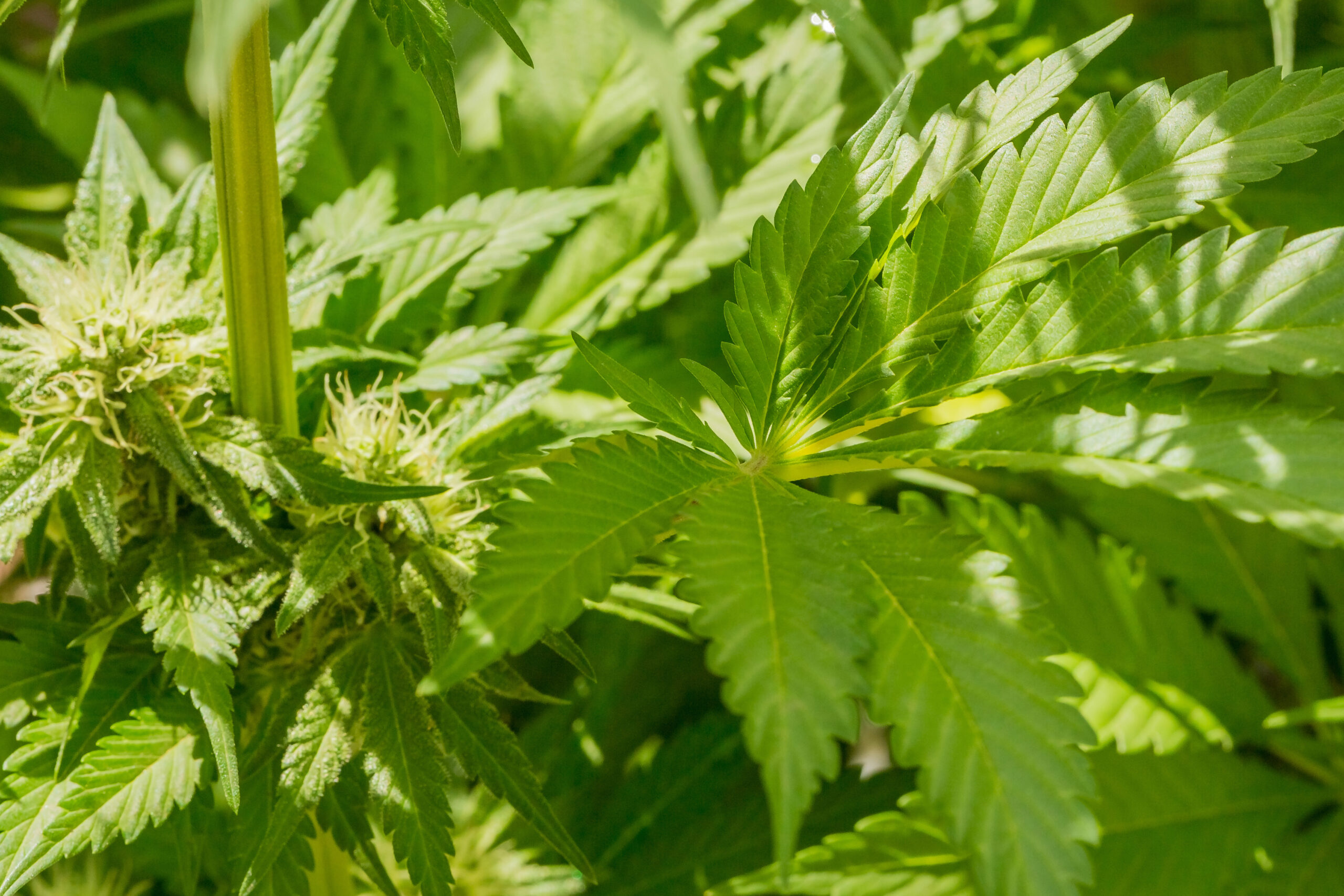
Outdoor cannabis odor is one of those problems that seems easy until the plant reaches late flower. In early vegetative growth, a backyard plant may be almost unnoticeable from outside the garden. Weeks later, the same plant can produce a distinct aroma that moves beyond the canopy, crosses a fence, follows a driveway, or appears at a neighbor’s window only when the wind turns a certain way.
That is why neighbor planning should begin before the smell becomes strong. Outdoors, you do not have the same closed air path that makes an indoor carbon filter useful. There is no duct that captures every molecule leaving the plant. Air arrives from several directions, moves around buildings and fences, warms and cools through the day, and sometimes carries odor farther than you expected. At other times, the smell may barely travel at all.
The practical goal is not to promise a completely odor-free outdoor garden. That is not realistic. The goal is to understand where odor is likely to travel, when it is most likely to become noticeable, which parts of the site make the problem worse, and what you can change before it becomes a neighbor conflict.
This resource stays focused on odor and neighbor planning. For the wider outdoor process, including site selection, soil, seasonal timing, irrigation, flowering, weather, and harvest, use the complete outdoor cannabis growing guide as the parent resource.
Resource Navigation
In This Resource
- Define the airflow/environment problem and the variable that controls it: CFM, static pressure, RH, dew point, VPD, temperature, CO₂, or odor breakthrough
- System layout: intake path, exhaust path, duct resistance, circulation, equipment placement, and sensor locations
- Sizing/measurement workflow using installed conditions rather than free-air ratings or room-volume shortcuts alone
- How lights-on/lights-off, plant size, transpiration, weather, and room architecture change the load
- Failure modes: short-circuit airflow, negative-pressure errors, condensation, noisy controllers, saturated carbon, heat buildup, or sensor bias
- Commissioning test before relying on the system, including alarms or safe-failure planning where relevant
- Maintenance and recheck schedule with measurements that confirm the correction worked
Define the airflow/environment problem and the variable that controls it: CFM, static pressure, RH, dew point, VPD, temperature, CO₂, or odor breakthrough
The first thing to clear up is that an outdoor odor problem is not an indoor ventilation problem moved into the garden. Terms such as CFM, static pressure, exhaust rate, and negative pressure are useful when air is moving through a defined enclosure. Outdoors, the atmosphere is the ventilation system. You do not control its total airflow, and you cannot calculate a backyard odor problem from room volume.
What you can control is the relationship between the source and the places where another person may notice it. The plant is the source. A neighboring patio, open bedroom window, shared walkway, sidewalk, or adjacent garden may become the receptor. Wind, temperature, surrounding structures, plant maturity, and distance determine how the odor plume moves between those points.
Start with odor breakthrough, not CFM
For outdoor planning, the most useful practical variable is usually odor breakthrough: the point where the cannabis aroma becomes clearly detectable somewhere you would prefer it not to be.
Odor Breakthrough
In this resource, odor breakthrough means cannabis aroma becoming clearly noticeable at a chosen boundary or receptor point, such as a property line, neighboring seating area, open window, shared access path, or public-facing edge of the garden. It is a field observation, not a promise that every person will perceive odor identically.
This shift in thinking helps because smell is not a simple on/off measurement. Two people can react differently to the same concentration. A cultivar with a sharp sulfurous or fuel-like character may be noticed at a lower concentration than one with a softer floral profile. A person who is outdoors for ten minutes may notice something that somebody indoors never detects. Repeated exposure can also change perception.
So we are not going to pretend there is a universal number of meters that guarantees no odor. Instead, we will build a repeatable way to check how odor behaves at your site.
Cannabis odor is not simply “terpene smell”
Terpenes matter. Myrcene, limonene, pinene, terpinolene, linalool, caryophyllene, and other volatile compounds all contribute to the plant’s aroma. But the old explanation that pungent cannabis smell is just “lots of terpenes” is incomplete.
Research has identified highly odor-active volatile sulfur compounds associated with the characteristic skunky character of cannabis. One compound, 3-methyl-2-butene-1-thiol, has been strongly linked with that recognizable pungent note. More recent sensory work has also shown that minor volatile compounds can have a major influence on how cannabis smells even when they occur at low concentrations.
That matters for neighbor planning because total terpene percentage is not a reliable predictor of how far away a plant will be noticed. Odor perception depends on the chemical mixture and on the odor threshold of individual compounds.
Remember: Two plants of similar size can create very different odor problems. Plant count and total terpene percentage do not tell you everything about pungency.
Do not buy genetics on an “odorless” promise
Cultivar choice can change the character and intensity of aroma, but odor is not a simple label that can be guaranteed from a seed listing. The same named cultivar can express differently between phenotypes and growing environments, and recent sensory research shows that aroma cannot be reconstructed reliably from the major terpene profile alone.
If neighbor sensitivity is one of your main site constraints, treat unusually low-odor marketing claims cautiously. Look for documented observations from multiple grows rather than one product description, and still plan the site as though mature flowers may become noticeable.
This is especially important because choosing a cultivar only for reduced smell can create new problems if its finish window, disease response, plant size, or flower structure does not fit your climate. Odor is one planning variable, not the entire outdoor selection process.
Flowering stage matters more than the plant being “large”
Odor usually becomes more important as flowering progresses. Research tracking cannabis volatile sulfur compounds found a strong increase late in flowering, with the compounds associated with skunky odor rising sharply near the end of the bloom cycle. The study was conducted under controlled greenhouse conditions, so you should not copy its exact week numbers onto every outdoor cultivar, but the developmental pattern is useful.
A plant that barely smells during vegetative growth can become far more obvious later. This is why a site that seemed perfectly discreet in June may behave differently in September.
The strongest practical lesson is to plan for the mature flowering plant, not the young plant currently in front of you.
Which environmental variables actually help outdoors?
Several variables listed in the heading are useful indoors but should not be treated equally outdoors.
| Variable | What it tells you outdoors |
|---|---|
| CFM | Usually not a useful primary outdoor metric because there is no defined room volume or controlled exhaust path. It becomes relevant only inside an enclosure such as a greenhouse, shed, or drying space. |
| Static pressure | Primarily an enclosed ventilation-system measurement. It does not describe open-garden odor transport. |
| Relative humidity | Useful for plant health and flower moisture risk. It can accompany weather patterns that influence odor transport, but a high RH reading does not directly equal stronger odor. |
| Dew point | Useful for understanding condensation and overnight moisture conditions. It helps describe the microclimate but is not an odor concentration meter. |
| VPD | Useful for understanding plant water demand and transpiration. It should not be used as a shortcut for predicting whether neighbors will smell the plant. |
| Temperature | Affects plant physiology, volatilization, atmospheric mixing, and local airflow. It matters, but temperature alone cannot predict downwind odor. |
| CO₂ | Not a practical outdoor odor-control variable in a normal open garden. Ambient outdoor air is not managed like an enriched indoor room. |
| Odor breakthrough | The most practical field endpoint: can cannabis odor be clearly detected at a boundary or neighbor-sensitive location under current wind and weather? |
Wind direction is often more useful than any single humidity number
If your garden is west of a neighbor’s patio and the dominant evening breeze moves from west to east, that relationship deserves attention. The same plant may be barely detectable on a still morning and obvious at the patio in the evening when the wind lines up source and receptor.
This is why odor complaints can feel inconsistent. A grower may stand beside the plant at noon and think the smell is mild, while a neighbor experiences it strongly for thirty minutes every evening.
You need to check the places where other people actually spend time, at the times when the wind commonly carries air toward them.
Does high humidity automatically make outdoor cannabis smell stronger?
Question sent by: Daniel Morgan, via email.
Not automatically. Humidity affects the plant and the surrounding atmosphere, but it is not a direct odor meter. What matters more for a neighbor is whether odor-laden air is moving toward their location and whether the atmosphere is diluting that plume effectively. Use RH for plant and moisture management. Use boundary checks, wind direction, and repeated observations for odor planning.
The legal threshold may be “nuisance,” not zero smell
Some jurisdictions regulate home cultivation through nuisance language rather than a universal odor number. New York’s personal home-cultivation rules provide a useful current example: when odor rises to the level of a nuisance, the resident must take reasonable mitigation measures while considering the structure and the proximity of neighbors.
That is an example, not a rule for every reader. Your local law may be different, may prohibit outdoor cultivation entirely, or may impose visibility, setback, enclosure, or odor restrictions. The important point is that legal cultivation does not necessarily mean unlimited off-site odor.
If you are unsure what applies at your address, verify current government and municipal sources before relying on general internet advice.

System layout: intake path, exhaust path, duct resistance, circulation, equipment placement, and sensor locations
An outdoor garden has no intake duct and no exhaust duct, but the same way of thinking can still help us read the site. Air enters the garden from somewhere, crosses or moves around the plant, and leaves toward somewhere else.
Instead of drawing ductwork, draw air paths and receptor points.
Map the source, the boundary, and the receptor
Take a simple sketch of the garden or use a satellite view of your property. Mark the plant location. Then mark the places where odor would create the greatest practical problem.
Those may include a neighbor’s patio, a bedroom window, a shared fence line, a public footpath, a common entrance, or the side of the property where people regularly gather.
Now add the main wind directions you experience during the season. If you do not know them, start observing. Local weather data can provide the broader pattern, but buildings, fences, trees, sheds, and slopes can bend or accelerate airflow at garden scale.
The goal is not to produce a professional dispersion model. You are trying to discover whether the plant sits directly upstream of a sensitive receptor during common weather.
Fences and walls change the plume
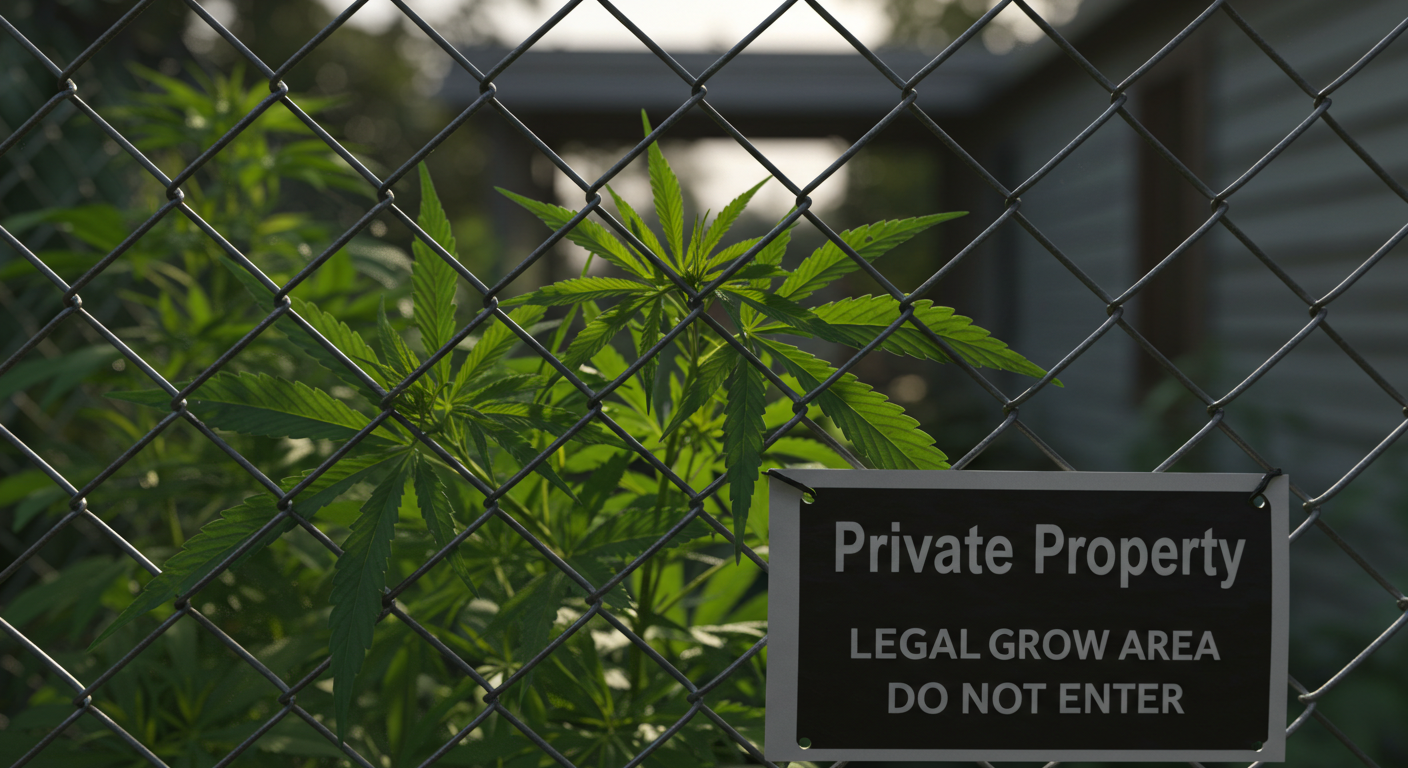
A privacy fence may reduce direct visibility, but it does not make odor disappear. Air can rise over the fence, spill around its edges, or create turbulent recirculation behind it. In a narrow garden, solid walls on several sides can also reduce canopy drying and create a warmer, more stagnant microclimate.
This is why “put it behind a fence” is not a complete odor plan.
If the fence is needed for legal visibility or access control, keep it. Then evaluate what it does to air movement. Give the canopy enough clearance that branches are not pressed against the barrier, and avoid creating a sealed pocket around the plant.
Field Advice: Stand at the plant on a breezy day and watch how leaves, nearby grass, flags, or lightweight vegetation move. Then walk to the property line. A garden-scale airflow check often reveals more than looking at a regional wind arrow on your phone.
Do not treat an outdoor fan as a carbon-filter substitute
Sometimes growers consider pointing a large fan away from the nearest neighbor. This can move air, but it does not remove odor. It simply changes the direction and dilution pattern. If the fan directs the plume toward another property, public area, or open window, you have relocated the problem.
Outdoor fans can also add noise and electrical exposure to a problem that might be better solved by placement, plant number, distance, or earlier neighbor planning.
Use a fan outdoors only when it has a legitimate horticultural purpose and can be operated safely. Do not treat it as an odor scrubber.
Why an activated-carbon filter works indoors and usually not around an open plant
Activated carbon needs capture.
Inside a tent or room, odor-laden air can be pulled through a filter before leaving the enclosure. The system works because the air path is controlled. If air can bypass the carbon, odor can bypass the carbon too.
An outdoor plant is surrounded by open air. A carbon filter sitting beside it does not capture the entire plume. Most air simply travels around the filter.
A carbon filter does not create an invisible odor bubble outdoors
Activated carbon is effective when odor-containing air is forced through it. An open garden has no sealed capture boundary, so a filter placed near the plant cannot process all outgoing air. Carbon filtration becomes relevant when the odor source is inside a controlled greenhouse, shed, drying room, or other enclosure with a defined exhaust path.
Can I hang a carbon filter beside my outdoor plant during flowering?
Question sent by: Ethan Brooks, via email.
You can physically place one there, but it will not behave like a tent filter. Outdoors, most of the air leaving the plant will never pass through the carbon. If odor is already reaching a neighbor, focus first on source location, plant number, downwind receptors, legal requirements, and whether any high-odor post-harvest work can be moved into a controlled filtered space.
Think about the drying area before harvest
The garden is not the only odor source.
Cutting, handling, trimming, transporting, and drying mature flower can release a great deal of aroma in a short period. Research in cannabis facilities has found large changes in terpene emissions between activities, with handling and processing stages capable of producing strong emission peaks.
This means a grower can spend the whole season managing a backyard successfully and then create the biggest odor event of the year during harvest.
Plan the post-harvest route early. Where will plants be cut? How long will they remain outdoors after cutting? Where will trimming happen? Is the drying space enclosed and, where appropriate and legal, capable of filtered exhaust?
Moving mature plants repeatedly through shared corridors or trimming beside an open neighbor-facing window may create more odor conflict than the standing garden did.
Sensor placement still matters, but your nose is part of the field test
A weather sensor can help you understand RH, temperature, dew point, and wind. Place it where it represents the plant environment rather than directly against a sun-heated wall or inside a wet shaded corner unless that corner is what you are specifically testing.
For odor, however, the most important measurement point is often not beside the plant. It is at the receptor.
That means you should occasionally leave the garden and check the property line, neighboring-facing edge, or other lawful area where odor matters.
A sensor beside the plant can tell you it is 24°C and 58% RH. It cannot tell you whether somebody 20 meters downwind can smell the cultivar.
Sizing/measurement workflow using installed conditions rather than free-air ratings or room-volume shortcuts alone
There is no honest “one plant equals X meters of odor” formula. Plant size varies. Aroma chemistry varies. Wind varies. Buildings change dispersion. Human sensitivity varies. The same garden can behave differently from one hour to the next.
Instead of trying to size the garden with an invented odor radius, use a field workflow.
Step 1: Choose the locations that count
Pick three to five points where odor matters most. For a typical residential garden, that may be the nearest property boundary, the downwind corner of the yard, the location of a neighbor’s frequently open window, a shared path, and your own back door.
You do not need to enter another person’s property. Use locations you can lawfully access and observations from your own side of the boundary.
Label the points A, B, C, and so on.
Measure separation as a site fact, not a legal conclusion
It is still worth measuring distances even though there is no universal odor-safe setback. Use a tape measure, measuring wheel, or map tool to record the approximate distance from the mature canopy position to the nearest sensitive boundary points.
Write the number down. If the plant is 4 meters from one boundary and 18 meters from another, you immediately know which direction deserves more testing when the wind changes. If the property allows you to move the plant farther from the closest patio before planting, that extra separation is usually easier to create now than after the root system or container becomes established.
Do not convert this measurement into a claim that a certain distance is legally compliant unless your local rule actually states that setback. The number is for site comparison and repeatability.
Step 2: Record wind direction and general weather
Each time you check odor, record whether the wind is calm, light, moderate, or strong and note the approximate direction. Add temperature and RH if you have them.
This does not need to become a meteorology project. A short note such as “19:30, light west wind, warm, dry” may be enough to explain why Point B suddenly smelled much stronger than it did at noon.
Step 3: Use a simple odor scale
A repeatable scale is more useful than writing “smells a lot” one week and “pretty strong” the next.
| Odor Level | Practical Field Description | Response | What It Means |
|---|---|---|---|
| 0 | No recognizable cannabis odor | No odor action needed | The plume is not clearly detectable at this checkpoint under current conditions. |
| 1 | Faint, occasional, uncertain | Recheck under similar wind | Odor may be approaching the receptor but is not persistent. |
| 2 | Clearly recognizable but intermittent | Track duration and wind alignment | Odor breakthrough is occurring under some conditions. |
| 3 | Clear and persistent for several minutes | Review mitigation before it increases further | The receptor is regularly receiving the plume. |
| 4 | Strong, immediate, difficult to ignore | Act promptly and review legal nuisance risk | Current site or activity is creating substantial off-site odor potential. |
This scale is an editorial field tool, not a regulatory odor standard. If your municipality uses an official odor protocol, that official method takes priority.
Step 4: Check more than one time of day
Do not perform the entire test at noon.
Check early morning, afternoon, and evening at least once during flowering. Evening is particularly important in many residential settings because people are more likely to use patios, open windows, and outdoor spaces then. Local airflow may also change as surfaces cool.
If complaints or concerns occur at a specific time, test at that time.
Step 5: Repeat after the plant changes
A measurement from early flower does not certify the rest of the season.
Repeat the boundary check as flower mass increases. Repeat it after a major training change, after a privacy screen is installed, after nearby vegetation is cut back, and during the final weeks before harvest.
This is especially important because the chemistry associated with pungent cannabis odor can increase substantially late in flowering.
How far from the fence should I keep an outdoor cannabis plant so neighbors cannot smell it?
Question sent by: CedarRoute, via email.
There is no universal setback that guarantees zero odor. Distance helps dilution, but cultivar chemistry, wind direction, flower mass, topography, buildings, and the location of the neighbor all matter. Use the largest practical legal separation you have, then verify it with repeated downwind boundary checks as flowering develops.
Step 6: Separate standing-plant odor from activity odor
When you notice a spike, ask what was happening.
Was the plant simply standing in the garden? Had you just brushed against the flowers? Were branches being moved? Was pruning or harvest underway? Was cut material sitting in a bin? Were you carrying fresh flower through the house?
Handling can change emissions dramatically. If odor only becomes severe during an activity, changing where and when that activity happens may solve more than relocating the whole garden.
Do not use room-volume shortcuts outdoors
Indoor ventilation guides sometimes calculate exhaust from room volume and target air exchanges. That logic does not transfer to an open garden. There is no fixed outdoor “air change per minute” you can buy.
The equivalent outdoor sizing question is:
How much separation, orientation, and source reduction do I need to keep odor from becoming persistent at the receptors that matter?
You answer that with field observations rather than a fan specification.
How lights-on/lights-off, plant size, transpiration, weather, and room architecture change the load
This heading uses indoor language, but the outdoor equivalent is valuable because odor load changes through both the day and the season.
Outdoor day and night replace lights-on and lights-off
Indoors, lighting schedules change heat, transpiration, fan operation, and room pressure. Outdoors, sunrise, sunset, solar heating, and nighttime cooling change the local atmosphere instead.
During the day, warmed surfaces can create stronger mixing. Later, when the ground and air cool, local wind patterns may shift. Calm periods can allow odor to linger near the source, while a steady breeze can carry it farther downwind.
There is no rule that cannabis always smells stronger at night or always travels farther during the day. The useful practice is to test your actual site across several conditions.
Plant size changes total emission potential
A larger plant generally has more foliage and, later, more flower mass. That gives the garden more material capable of releasing volatile compounds.
But size is not the only variable. A smaller, very pungent cultivar may create a stronger perceived odor than a larger plant with a less intense aromatic profile.
This is why neighbor planning should not rely only on plant-count limits. A legal plant count can still create a practical odor issue if the site is small and the nearest receptor is close.
Late flower changes the problem quickly
Early flower is the time to begin boundary checks, not the time to conclude that odor will remain mild.
As flowers mature, aromatic intensity often increases. Research following sulfur-containing odorants found a particularly strong rise toward the end of flowering. More recent aroma research also shows that cannabis sensory character is driven by a complex mixture, including minor compounds with low odor thresholds.
The practical consequence is simple: increase your monitoring frequency as harvest approaches.
Transpiration affects the plant, but do not turn VPD into an odor formula
Hot, dry weather can increase water demand and plant transpiration. Cool humid weather can slow drying and change the garden microclimate. These physiological changes matter for crop health.
They do not give you a direct conversion from VPD to smell intensity.
Use VPD, RH, and temperature to manage the plant. Use odor observations and wind to manage neighbor exposure.
Rain can temporarily change what you notice
Rain and high moisture conditions change atmospheric behavior, wet plant surfaces, and the way the garden smells. Sometimes the cannabis aroma may seem muted during rain and then become obvious again as surfaces dry. A wet canopy can also create disease risks that are more serious than the odor issue itself.
Do not spray the flowers with water simply because you think it suppresses smell. Repeatedly wetting flowering cannabis can increase the time flowers remain moist and may raise fungal disease risk.
Do not wet flowering plants to hide the smell
Temporary odor reduction is not worth extending flower wetness. Dense outdoor flowers already face dew and rain. Adding unnecessary water to the canopy can increase disease pressure and damage final flower quality.
Buildings create odor corridors
A narrow gap between two houses may accelerate airflow. A wall can deflect the plume toward an upstairs window. A courtyard can hold stagnant air. A tall hedge may filter some wind but can also create its own wake pattern.
Walk the garden rather than assuming air travels in a straight line.
If the same neighbor-facing corner repeatedly receives odor, look at the structures around it. Sometimes shifting the plant a few meters changes the relationship between the source and the airflow corridor more than adding an odor-control gadget.
Security lighting can create another cultivation problem
Neighbor planning sometimes leads growers to add bright lights around the garden. Security lighting may be useful when lawful and properly designed, but direct nighttime light on photoperiod-sensitive cannabis can interfere with the dark period.
If you add lighting, aim it where people need visibility rather than directly at the plant. Avoid unnecessary all-night illumination of the canopy.
Pro Tip: Solve one problem without creating another. Privacy screens should not trap humidity, security lights should not disrupt the dark period, and odor mitigation should not involve spraying unknown products over flowers.
Neighbor activity changes the practical threshold
A property line is not the only meaningful distance.
If the neighbor’s home is far from the boundary but their patio is close, the patio may be the real receptor. If they keep windows closed most of the year but open them during cool autumn evenings, the late-season risk changes.
This does not mean monitoring your neighbor’s private life. It means looking at the obvious way surrounding properties are used and planning respectfully.
Should I tell my neighbor before my outdoor plant starts smelling?
Question sent by: Olivia Carter, via contact form.
That depends on your relationship, local law, privacy needs, and whether discussing the garden creates a security concern. There is no universal social rule. What you can do regardless is keep the grow lawful, minimize off-site impact, monitor the boundary before odor becomes strong, and respond respectfully if a neighbor raises a genuine nuisance concern.
Failure modes: short-circuit airflow, negative-pressure errors, condensation, noisy controllers, saturated carbon, heat buildup, or sensor bias
Several failure modes in this heading are classic indoor ventilation problems. Outdoors, some disappear and others show up in a different form. Understanding the difference prevents you from applying indoor solutions to an open-air problem.
Short-circuit airflow becomes source-to-receptor alignment
In a room, short-circuit airflow occurs when fresh intake air exits without properly crossing the space. Outdoors, the comparable neighbor problem is a direct airflow route from the plant to the receptor.
For example, the plant may sit beside a gap in a hedge that acts like a channel toward the neighboring patio. You may have excellent open air around the canopy and still experience frequent odor breakthrough because the garden directs that air toward one place.
The correction is not necessarily “more airflow.” It may be a different plant location, a change in screening geometry, or more separation.
Negative pressure is not available in an open garden
Negative pressure is useful indoors because it encourages air to enter through controlled openings while filtered exhaust handles outgoing air.
You cannot make a normal open backyard negatively pressurized.
If you need true capture and filtration, the source has to be inside an enclosure designed for it. Even then, the greenhouse or shed must be legally permitted and horticulturally suitable. Sealing a flowering plant inside an improvised plastic box to control smell can create severe heat and humidity problems.
Condensation is a crop warning, not just an odor issue
If a privacy enclosure, temporary rain cover, or greenhouse accumulates condensation, take that seriously. Condensation tells you the structure is reaching conditions where moisture is depositing on surfaces.
For flowering cannabis, that may also mean the local environment is too humid or poorly ventilated.
Do not keep tightening an enclosure in the hope that less air leakage means less smell if the result is stagnant wet flowers.
Noisy controllers are mostly an enclosure problem
An outdoor plant should not require a complex array of fans and controllers simply to manage odor. If your odor plan adds enough mechanical equipment that noise becomes a new neighbor nuisance, you may be solving the wrong problem.
For a greenhouse or enclosed drying area, controller noise, fan cycling, vibration, and exhaust direction can matter. In an open garden, passive planning is usually the cleaner first approach.
Saturated carbon matters after you have a real filtered air path
Carbon media eventually loses adsorption capacity. This is relevant if you move harvest, drying, or greenhouse air through a carbon filter.
It is not the explanation for odor around an open plant unless that plant was genuinely enclosed and all outgoing air was supposed to pass through the filter.
If a filtered drying room suddenly begins smelling outside, check airflow, duct leaks, filter age, humidity, fan performance, and whether doors are being left open during handling.
Heat buildup is a common privacy mistake
Solid screening can block visibility while increasing radiant heat and reducing wind. Greenhouses and plastic covers can become much hotter than ambient conditions.
If odor planning makes the plant hotter, wetter, or harder to inspect, the design needs another look.
Do
Reduce off-site impact with site planning
Use legal placement, the largest practical separation from sensitive receptors, adequate canopy clearance, respectful neighbor planning, and repeated downwind checks as flowering develops.
Avoid
Trying to seal or perfume the garden
Do not wrap outdoor flowering plants in poorly ventilated plastic or spray flowers with masking fragrances. These approaches can introduce heat, moisture, residue, or flower-quality problems without reliably preventing odor downwind.
Sensor bias can make you confident for the wrong reason
A sensor mounted in full afternoon sun may report an artificially high air temperature. A humidity sensor hidden inside dense wet foliage may describe a microclimate that does not represent the rest of the site. A small weather station on the opposite side of the house may miss the wind pattern crossing the garden.
Check whether the sensor is answering the question you actually have.
For neighbor odor, the most important question remains: what is happening at the receptor?
Masking products can become a second odor complaint
Strong fragrances, essential-oil devices, or odor-neutralizing products are sometimes marketed as easy fixes. Outdoors, a strong masking scent can travel too. Instead of one noticeable odor, the neighbor may now experience cannabis plus perfume.
Be particularly careful around consumable flowers. Do not apply unverified sprays, oils, fragrances, or deodorizing chemicals directly to the buds.
Any residue on flower can affect aroma, taste, burn quality, contamination risk, or inhalation exposure later.
Ignoring the harvest spike
This is one of the most common planning failures.
During most of flowering, the plant sits undisturbed. On harvest day, branches are cut, moved, handled, possibly trimmed, and carried into another space. Every step increases physical disturbance of aromatic tissue.
If the drying room has an open window directly facing a neighbor, the outdoor garden may stop being the main odor source the moment harvest begins.
Include harvest and drying in your neighbor plan from the start.
Commissioning test before relying on the system, including alarms or safe-failure planning where relevant
Before you trust any odor plan, test it.
Commissioning sounds like an engineering term, but the idea is simple: prove that the arrangement works under the conditions that matter before the consequence of failure becomes serious.
Run the first test in early flower
Early flower gives you time to react. Walk the selected receptor points under at least two wind directions. Record whether the odor is absent, faint, clear, or persistent.
If you already have clear odor breakthrough at the nearest neighbor-facing boundary in early flower, assume the problem may become stronger later rather than waiting for confirmation at harvest.
Run a second test during stronger flowering aroma
Repeat the same route as flower mass and odor increase.
Use the same points. Try to check at similar times so the results are easier to compare. If the odor level rises from 1 to 3 at the same boundary under similar wind, you have evidence that the source has changed, not just a vague impression.
Use another person when possible
If you spend a lot of time around cannabis, your own perception can become less reliable through olfactory adaptation. A trusted adult who is not currently standing beside the plant may notice odor differently.
Do not ask somebody to trespass or stand on a neighbor’s property. A second opinion from your own boundary or another lawful location is enough.
I can barely smell the plant anymore, but visitors notice it immediately. Which reading should I trust?
Question sent by: Sophie, via X.
Your nose may have adapted to the garden. That is common with repeated odor exposure. Use a consistent boundary route and, when practical, a second adult observer who has not been standing around the plant. The useful question is not how strong it smells to you beside the canopy, but whether it is clearly reaching places where it may affect other people.
Test privacy changes after installation
If you install a fence panel, trellis, hedge screen, or other visual barrier, repeat the airflow and odor check. Do not assume privacy improvement equals odor improvement.
Look for three things:
- Does the screen redirect the plume toward a receptor?
- Does the canopy dry more slowly after dew or rain?
- Does the area become noticeably hotter or more stagnant?
If one of those changes appears, adjust the layout while the plant is still manageable.
Test the harvest route before harvest day
Walk through what you plan to do.
Where will cut branches go? Which door will you use? Will material sit outdoors while you make multiple trips? Does the drying-room exhaust face another property? Does a filter, if used, have enough airflow and a proper sealed route?
You do not need to cut anything during the test. You are checking logistics.
A ten-minute dry run can reveal that the planned route crosses a shared entrance or that the drying-room window is the worst possible exhaust location.
Set simple weather alerts
Outdoor odor does not need a sophisticated alarm system, but weather alerts can help you anticipate conditions when the plume is likely to move toward a sensitive receptor.
You might watch for a wind shift toward the nearest neighbor during late flower, several calm evenings in a row, or hot weather that changes both plant water use and local airflow.
The purpose of an alert is to remind you to inspect, not to panic.
Define the safe failure response
If odor unexpectedly becomes strong off-site, decide in advance what you are willing and legally able to change.
Depending on the situation, that might mean stopping a high-odor trimming activity, closing an unfiltered drying-room window, moving processing into a filtered legal space, adjusting a movable container within the lawful site, or reducing future plant count.
What it should not mean is improvising unsafe heaters, ozone devices around occupied spaces, mystery chemical sprays, or hazardous electrical equipment outdoors.
Do not use ozone as a casual residential odor fix
Ozone is a reactive gas and can harm respiratory health. Do not generate ozone in occupied homes, gardens, drying areas, or other spaces where people, pets, or plants may be exposed. Use safe ventilation and appropriately designed filtration where an enclosure genuinely requires odor control.
If the law requires mitigation, verify the legal standard too
Your field test helps you manage the garden, but it does not replace a local legal standard.
If your jurisdiction defines nuisance odor, approved mitigation techniques, setbacks, enclosure requirements, or complaint procedures, review those requirements directly. Do not assume that passing your own boundary test automatically means legal compliance.
Likewise, a plant can comply with a numerical plant limit and still create an odor nuisance under some local rules.
Maintenance and recheck schedule with measurements that confirm the correction worked
Odor planning is not a one-time setup task because the source changes. A plant adds flower mass, wind patterns change, neighbors open windows, nearby vegetation grows, and the harvest phase creates new odor sources.
A good schedule stays simple enough that you will actually use it.
Vegetative stage: establish the map
During vegetative growth, odor may be mild, but this is the best time to map the site.
Mark the main wind directions, nearest receptors, privacy structures, and potential harvest route. Confirm the plant is legally placed. Check that a fence or screen will not crowd the future canopy.
You are building the baseline, not measuring final odor.
Early flower: begin odor checks
Once flowering begins, walk the receptor points at least weekly. If odor remains at level 0 or 1, keep recording. If it reaches 2 consistently at a sensitive boundary, pay closer attention to wind alignment and duration.
This is also the time to finalize the drying-space plan.
Mid flower: compare trends
Do not look only at today’s number. Compare it with previous weeks.
If Point A moves from 0 to 1 while Point C moves from 1 to 3, ask why Point C is changing faster. Is it downwind more often? Has the canopy expanded toward that side? Did a screen change airflow? Is the observer checking at a different time?
The pattern helps you make a targeted correction instead of randomly changing the whole garden.
Late flower: shorten the interval
Late flower deserves more frequent observation because odor intensity can increase quickly and harvest is approaching.
If you have close neighbors, checking twice per week during the final part of flowering may be more useful than waiting for the normal weekly inspection.
Also inspect flower health. The odor plan should never distract you from mold, pests, branch support, watering, or weather.
After any correction: verify at the same receptor
This is the most important part.
If you move a container, change a screen, relocate trimming, close an exhaust leak, or change the drying-room air path, return to the point where the problem was observed.
Try to compare under a similar wind direction.
If odor was previously level 3 and now stays near 1 under comparable conditions, the correction likely helped. If it remains 3, the change did not solve the actual transport path.
Master Advice: Do not judge odor control beside the plant. Judge it where the odor matters.
Keep a short odor log
You do not need a spreadsheet unless you enjoy one. A simple note can contain:
- Date and time
- Growth stage
- Checkpoint
- Wind direction
- Approximate weather
- Odor level 0 to 4
- Activity occurring at the time
- Any correction made
- Result at the next check
After a season, this log becomes useful planning data. You may discover that one corner only breaks through during west winds, that trimming is the true peak source, or that odor becomes noticeable roughly two weeks before your usual harvest window.
Recheck after changes outside your control
A neighbor may remove a hedge. A fence may be replaced. Construction may change the airflow corridor. A new patio may be built close to the property line. A tree may lose leaves as autumn arrives.
These changes alter the relationship between source and receptor even if you changed nothing about the plant.
Outdoor planning works best when you treat the site as dynamic.
When a neighbor raises a concern, treat it as new field data
A complaint can feel personal, especially when you have already tried to plan responsibly. Try not to make the first response an argument about whether the neighbor “should” be able to smell it.
Ask when the odor is strongest and where they notice it. You may learn that the problem occurs only during evening trimming, only when one window is open, or only under a specific wind direction. Those details give you a testable condition.
Then repeat your receptor check during that condition. If you can reproduce the odor breakthrough, you have a much better chance of fixing the actual pathway. If you cannot reproduce it, keep the record and recheck rather than dismissing the report immediately.
If the issue escalates into a legal or tenancy dispute, stop relying on informal assumptions and review the current rules that apply to the property. A calm field process is useful, but it is not legal advice.
Separate odor management from secrecy
This resource is about reducing nuisance impact, not helping someone conceal illegal cultivation.
If cultivation is not lawful at your location, odor mitigation does not make it lawful. If local rules require visibility restrictions, locked access, specific setbacks, or prohibit outdoor cultivation, follow those rules.
Likewise, do not create conflict with a neighbor by insisting that legality means they must tolerate unlimited odor. A lawful garden can still be managed thoughtfully.
What not to change too quickly
Odor anxiety can lead growers to make several changes at once: move the container, install a solid screen, add a fan, spray a masking product, and change the harvest plan in the same weekend. If the smell improves, you will not know which change mattered. If plant health worsens, you will not know which change caused that either.
Use the same rule Weedth applies to irrigation and root-zone troubleshooting: observe, change one meaningful variable when practical, and verify the next comparable condition.
If the issue is urgent because the odor has become a legal nuisance or is creating immediate conflict, you may need a faster response. Even then, avoid adding horticultural risks that are unrelated to the actual source-receptor pathway.
Final outdoor cannabis odor and neighbor checklist
Before Odor Becomes the Problem
- Verify that outdoor cultivation is legal at the exact property and review any odor or nuisance rules.
- Mark the nearest property boundaries, patios, windows, shared paths, and other sensitive receptor points.
- Observe the main local wind directions instead of relying only on regional weather.
- Give the plant the largest practical legal separation from neighbor-sensitive locations.
- Check how fences, walls, hedges, and buildings redirect air around the canopy.
- Do not seal flowering plants inside poorly ventilated privacy structures.
- Do not assume terpene percentage or plant count predicts odor intensity.
- Begin boundary odor checks in early flower.
- Use the same receptor points and a simple repeatable odor scale.
- Record wind direction and time when odor breakthrough occurs.
- Increase monitoring as flowering progresses.
- Do not wet flowers or spray masking fragrances to hide odor.
- Do not expect an outdoor carbon filter to capture open-air emissions.
- Plan trimming, transport, drying, and curing before harvest day.
- Use filtered exhaust only where a real legal enclosure provides a controlled air path.
- Avoid ozone or other hazardous reactive-gas approaches in occupied spaces.
- Keep security lighting from shining unnecessarily on photoperiod-sensitive plants at night.
- After every mitigation change, recheck the same downwind receptor.
- Respond respectfully to a genuine neighbor concern and verify local nuisance rules rather than arguing from assumptions.
- Keep the odor plan focused on lawful cultivation and off-site impact, not concealment of illegal activity.
What a realistic odor plan looks like
A good outdoor odor plan is usually less dramatic than growers expect.
It starts with legal placement and enough space. It keeps the plant away from the most sensitive neighbor-facing locations when the property allows it. It watches the wind. It avoids turning privacy screening into a stagnant box. It recognizes that late flower and harvest can change odor quickly. And it checks the boundary instead of assuming the smell stays inside the garden because you cannot smell much from the kitchen.
There may still be moments when cannabis aroma is detectable. Outdoor cultivation happens in open air, so zero odor cannot be guaranteed. The practical standard is to prevent that odor from becoming persistent, intrusive, unsafe, or legally problematic where other people live and spend time.
Plan the receptor before you plan the product. Outdoors, distance, airflow, timing, and considerate site management usually matter more than a gadget sitting beside the plant.