
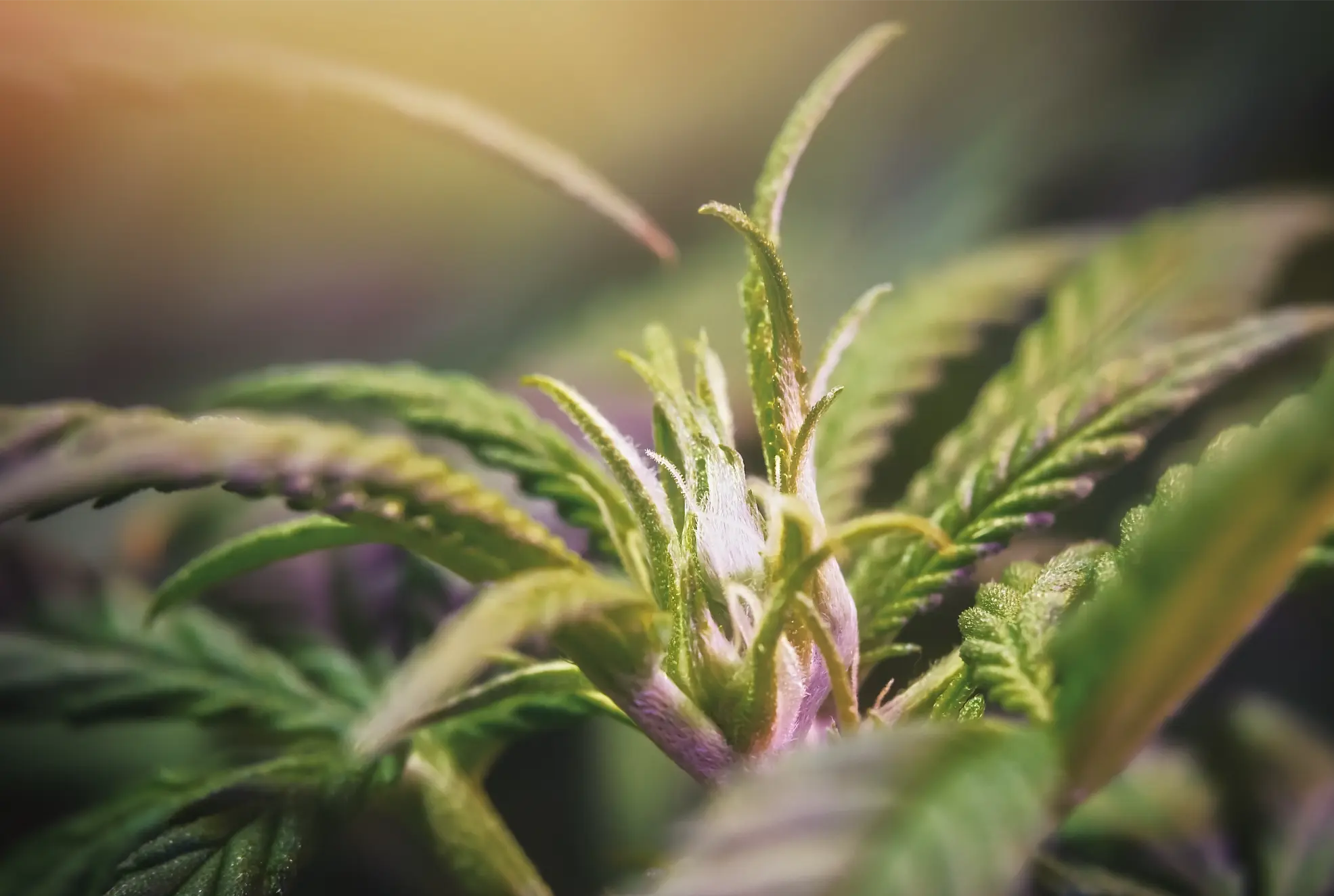
Pink Kush
Pink Kush looks at first glance like a straightforward, heavy-hitting indica-dominant Kush, right until the final three weeks of flowering, when its ultra-dense, greasy, trichome-caked colas and delicate rose-vanilla floral perfume turn canopy microclimate, relative humidity, and leaf surface temperature into the decisive variables that separate connoisseur flower from muted, rot-prone biomass. That late-bloom inflection point explains why an authoritative cultivation and sensory guide to Pink Kush must go far deeper than dispensary potency labels. The essential agronomic questions are structural and environmental: how rapidly the vegetative frame occupies horizontal space, where the plant concentrates its floral mass, how its rock-hard calyx clusters interact with boundary-layer humidity, how early branch spacing improves the final bud-to-leaf ratio, and which postharvest missteps erase the fragile floral-candy top notes that distinguish Pink Kush from every other OG relative.
The historical strain record requires honest technical nuance. Celebrated across the Canadian West Coast (particularly Vancouver Island and southern British Columbia) and popularized globally in seed form by breeders such as Barney’s Farm, Pink Kush is firmly anchored inside the OG Kush genetic family, though its exact public pedigree remains debated: primary underground records treat the original clone as a standout pink-pistiled OG Kush phenotype or selfed (S1) selection, while other breeding archives cite an OG Kush backcross or additional heritage Kush ancestry. For cultivators, keeping that lineage context visible is vital because cuttings and seed reproductions circulating under the Pink Kush banner exhibit real-world variance in transition stretch, maturation speed (ranging from 9 to 11 weeks), anthocyanin pigment expression, and cannabinoid ceilings. The most professional approach is to treat the metrics in this guide as validated working ranges while reading the specific morphology of the phenotype in front of your eyes.
What remains rock-solid across authentic Pink Kush lines is its core horticultural identity: sturdy OG-family woody branches, medium internodal spacing, and a broad, bushy canopy that easily becomes congested inside the core when dense, greasy tops swell late in bloom. Its mature inflorescences form rock-hard, resin-drenched, high-calyx-to-leaf clusters occasionally accented by neon-pink pistils or lavender-purple sugar bracts depending on genetics and night temperatures. A master-level harvest is never achieved by forcing a generic high-EC feeding chart onto the crop; it comes from synchronizing vegetative air-lane architecture, root-zone drybacks, gentle canopy airflow, cool late-flower temperatures, and a patient 10-to-11-week ripening window so the fragile rose-vanilla perfume survives intact atop its deep rubbery Kush fuel foundation.
Strain Features
| Feature | Details |
|---|---|
| Genetic Profile | Indica-dominant hybrid (commonly 80% to 90% Indica / 10% to 20% Sativa); prestigious OG Kush-family cultivar |
| Lineage & Breeder Notes | Firmly associated with the OG Kush family (widely regarded as a prized OG Kush phenotype, S1, or Kush backcross; popularized in seed form by Barney’s Farm and Pacific Northwest / BC breeders) |
| THC Content | Consistently high-THC flower; routinely tests in the high teens through the upper-20% range (20% to 28%+ THC in elite indoor cuts) |
| CBD & Minor Cannabinoids | Very low CBD (typically <0.2% to 0.8%), accompanied by 0.5% to 1.2% CBG and trace CBN in late-harvested batches |
| Flowering Time | Approximately 9 to 11 weeks indoors (63 to 77 days); 10 to 11 weeks (70 to 75 days) is common for complete floral-fuel maturity |
| Stretch Behavior | Moderate post-flip elongation (~1.4x to 1.7x); sufficient to fill prepared trellis gaps, but will not rescue an underfilled screen |
| Outdoor Finish Window | Mid-to-late October; requires a dry, low-humidity autumn long enough to complete a relatively slow indica ripening phase |
| Plant Height & Structure | Short to medium height (90 to 130 cm indoors; 150 to 200 cm outdoors) with sturdy OG-family branches, medium internodes, and a wide bush profile |
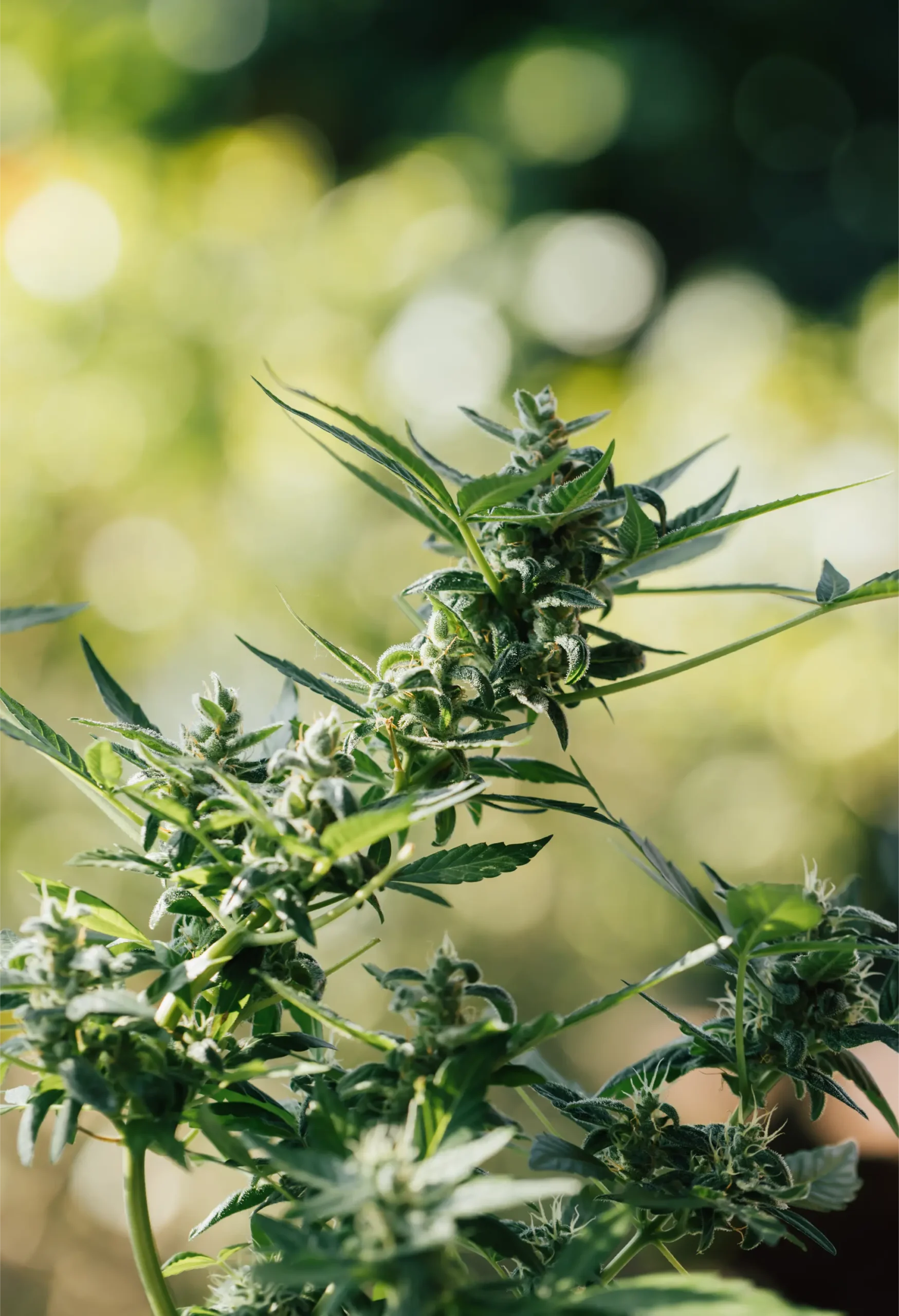
| Bud Structure | Extremely dense, greasy, trichome-encrusted colas with tight calyx stacking and occasional pink pistils or purple-violet bract hues |
| Yield Potential | Medium to high (500 to 650 g/m2 indoors; 600 to 800+ g/plant outdoors) when vegged wide without overcrowding the interior |
| Grow Difficulty | Moderate; easy to shape in veg, but unforgiving of high late-bloom humidity or excessive canopy heat during weeks 8 to 11 |
| Aroma & Flavor Profile | Delicate rose-petal perfume, sweet vanilla candy, and powdered sugar layered over damp earth, cracked black pepper, pine, and rubbery OG fuel |
| Dominant Terpenes | Beta-myrcene, d-limonene, and beta-caryophyllene (supported by linalool, humulene, and trace geraniol/nerolidol floral esters) |
| Primary Grow Risk | A long 10-to-11-week ripening window paired with rock-hard flowers that trap internal moisture right when fragile floral volatiles are most heat-sensitive |
| Best Time of Use | Late evening through bedtime; deeply tranquilizing physical weight at moderate-to-high doses |
| Best Grow Approach | One or two early toppings, radial low-stress spreading, and selective interior defoliation before resin sets; preserve dedicated air lanes between all major colas |
The specifications above serve as a practical operational synthesis rather than a rigid botanical certificate. Across every seed pack and clone line, the three unshakeable cultivation anchors of Pink Kush are its sturdy OG-family branching with medium internodes that crowd easily if left unthinned, its moderate 1.4x-to-1.7x transition stretch (requiring you to establish 75% to 80% of your horizontal footprint prior to 12/12), and its primary late-bloom hazard: a prolonged 10-to-11-week ripening window combined with ultra-dense, greasy buds that trap internal humidity at the exact stage when its signature rose-vanilla aroma is most vulnerable to thermal volatilization.
Genetic Lineage
To cultivate Pink Kush intelligently, one must understand its genetic foundation: a direct, heavy-resin scion of the OG Kush family whose exact public two-parent pedigree remains historically disputed. While modern cannabis marketing loves neat, unambiguous parent-A-times-parent-B stories, underground clone legends from the late 1990s and early 2000s Pacific Northwest and British Columbia scenes often preserved horticultural identity far more accurately than formal breeding ledger books. In primary West Coast archives, Pink Kush emerged as a distinct, heavily frosted selection out of original OG Kush stock, prized for its electric pink-to-magenta stigmas (pistils) during mid-bloom and an intoxicating sweet vanilla-rose perfume floating over classic Chemdawg/Hindu Kush gas. Other seed bank histories suggest an OG Kush selfed cross (S1) or a hybrid pairing OG Kush with an unknown broad-leaf Afghani or Kush indica male to lock in stockier internodes and heavier body sedation.
Rather than inventing artificial certainty, preserving that historical nuance directly helps the grower in the garden. Because Pink Kush sits squarely inside the OG Kush architectural clade, yet leans noticeably stockier and broader-leaved than lanky vine-like cuts such as Ghost OG or SFV OG, you can reliably predict its core physiological behavior:
– Sturdy OG-Family Branching: Stems are thicker and more self-supporting in early flower than spindly vine OGs, though the sheer late-stage grease and density of the colas still demand perimeter staking or trellis netting by week six.
– Moderate Post-Flip Stretch: Instead of tripling in height like a Haze hybrid, Pink Kush typically elongates 1.4x to 1.7x during the first 20 days of 12/12, enough vertical push to fill deliberate 10 cm gaps in a SCROG grid, but never enough to fill an empty tent if flipped as a tiny seedling.
– Greasy Calyx Stacking & Extended Ripening: Inheriting deep Hindu Kush / Afghani resin glands alongside complex OG fuel terpenes, the flowers pack on rock-hard density slowly over 65 to 75+ days, requiring full maturity for the fuel and floral layers to interlock.
A critical phenotypic reality for keeper hunters is separating visual color from chemical authenticity. Despite its name, Pink Kush does not automatically turn neon pink or deep purple in every grow room. Some genotypes display striking rose-pink pistils in weeks five through seven or blush lavender-purple across the upper bracts under cool night temperatures (62°F to 66°F), whereas equally authentic sister clones remain emerald-lime green buried under a thick white blanket of trichomes while projecting 10/10 vanilla-rose-fuel aroma. Never judge or select a Pink Kush keeper by color alone, and never shock a late-flower room with freezing 50°F nights merely to force purple anthocyanins, doing so stalls metabolic ripening and spikes internal cola condensation right when Botrytis risk is highest.
Finally, remember that chemical expression is a dynamic interaction between genotype and environment. Total THC, minor cannabinoids, and the delicate balance between rose-vanilla esters and rubbery OG gas shift dramatically according to PPFD distribution, late-bloom nitrogen restraint, harvest trichome maturity, and drying room vapor pressure deficit.
Effect Breakdown
The psychoactive trajectory of well-ripened Pink Kush is best characterized as a warm, euphoric mental decompression that melts steadily into profound somatic heaviness, pronounced appetite stimulation, and a dose-dependent glide into deep sleep. Because top-shelf batches routinely exceed 22% to 26% THC with minimal CBD buffering, pacing your initial inhalation over the first 15 to 20 minutes is essential, the silky floral opening disguises a locomotive physical payload that arrives shortly after.
Opening Phase: Pressure Leaving the Day
Within minutes of the first exhale, Pink Kush initiates with a comforting, rosy cerebral warmth behind the eyes and temples. The accumulated friction of a stressful workday evaporates, racing internal monologue slows to a gentle hum, and a serene, unbothered euphoria settles in without immediately blanketing mental awareness. At micro-to-moderate doses, this initial twenty-minute window feels friendly, cozy, and contented.
Middle Peak: Deep Somatic Gravity
Thirty to forty-five minutes into the session, the unmistakable heavy Kush body signature takes full command. Shoulders drop two inches, tense paraspinal and leg muscles unclench, physical movement slows deliberately, and a warm, weighted blanket sensation wraps around the limbs. While a light single inhalation allows for relaxed sofa conversation, a film, or listening to records, taking a second or third deep draw rapidly converts Pink Kush into an unapologetic, couch-anchoring powerhouse.
Late Phase: Appetite and Restorative Slumber
The final two hours of the experience illustrate why late evening to bedtime is Pink Kush’s natural habitat. A classic wave of Kush hunger (“the munchies”) frequently precedes a heavy, tranquil drowsiness that makes falling, and staying, asleep effortless. Cultivators can fine-tune this late-phase weight via harvest timing: cutting at 80% to 85% cloudy calyx trichomes with 10% to 15% amber preserves the euphoric, rosy-warm mental opening alongside heavy body relief, whereas letting amber trichomes climb to 25% to 30% in week eleven maximizes narcotic, sleep-inducing physical sedation.
Standard high-THC precautions apply: cottonmouth and dry, heavy eyelids are nearly universal, and over-consumption in low-tolerance users can provoke transient orthostatic dizziness, couch-lock immobility, or brief anxious overwhelm before sedation takes over.
Flavor & Aroma Profile
A masterfully grown and slow-cured jar of Pink Kush offers one of the most captivating aromatic contrasts in the entire cannabis genome: delicate rose-petal perfume, spun vanilla candy, and sweet floral confection floating directly over damp forest earth, cracked black pepper, pine sap, and pungent rubbery OG fuel. When you hold an intact, rock-hard nug under your nose, the initial head-note is surprisingly dainty, creamy, and floral; the moment you crack that dense calyx cluster apart between your fingers, a gassy, spicy, skunk-fuel Kush wave rushes out from the core.
The Fragile Perfume-Over-Fuel Hierarchy
For the cultivator, the single most important sensory lesson is that the rose, vanilla, and sweet floral perfume layer represents the most volatile, thermally fragile fraction of Pink Kush’s bouquet, and it will evaporate completely under heat or fast drying while the heavy earth-and-fuel base remains behind. Whenever a late-flower room runs above 80°F (26.7°C) during weeks eight through eleven, or when cut branches are blasted with warm, dry air on the drying line, those low-boiling floral monoterpenes and esters vent off into the exhaust duct. The resulting jar may still test at 24% THC and smell strongly of earthy pepper and diesel, fooling an casual buyer, yet it has lost the exact rose-vanilla top note that makes Pink Kush legendary.
Inhalation vs. Exhale Palate
In a clean quartz banger, glass water pipe, or precision dry-herb vaporizer (350°F to 380°F), the inhalation opens with silky vanilla-bean sweetness, candied rose water, and bright lemon-drop zest. As the vapor expands in the lungs and exits on the exhale, the heavy OG Kush foundation takes over, coating the palate with pungent hydrocarbon fuel, earthy pine, spicy black pepper, and a lingering creamy-floral aftertaste. Our non-negotiable postharvest target is to preserve that fragile rose-vanilla perfume cleanly above the heavier earth-and-fuel Kush base.
How Bud Density Shapes Drying and Curing
Because Pink Kush constructs exceptionally dense, golf-ball-to-cola-sized buds heavily insulated by greasy trichome cuticles, internal water molecules migrate outward from the central rachis much slower than in airy sativa spears. If dried too rapidly in low humidity (<50% RH), the outer bracts form a crispy, case-hardened shell that traps chlorophyll moisture inside the core while stripping away outer floral volatiles. Conversely, a patient 12-to-15-day slow dry at 60°F and 60% RH followed by a four-to-eight-week glass jar cure allows internal moisture to equilibrate evenly. True curing progress is measured not merely by raw volume of smell, but by crystal-clear sensory separation between the sweet floral-vanilla entry, the peppery middle, and the gassy Kush finish.
Dominant Terpenes
Analytical chromatography of authentic Pink Kush flower routinely identifies a dominant terpene triad of beta-myrcene, d-limonene, and beta-caryophyllene, supported by crucial secondary floral and woody contributors including linalool, alpha-humulene, alpha-pinene, and trace monoterpene alcohols (such as geraniol and nerolidol) that supply its rose-vanilla signature.
| Terpene | Aroma & Flavor Role | How It Shapes Pink Kush |
|---|---|---|
| Beta-Myrcene | Damp forest earth, musky herb, ripe balsam | Anchors the deep, soothing physical Kush base and rounds out the transition between sweet top notes and heavy fuel. |
| D-Limonene | Candied lemon peel, bright citrus lift | Elevates the opening aroma upon opening the jar and sharpens the OG fuel edge so the profile smells sparkling rather than muddy. |
| Beta-Caryophyllene | Cracked black pepper, warm clove, dry wood | Provides the spicy, peppery mid-palate punch on the exhale and acts pharmacologically as a selective dietary CB2 receptor agonist. |
| Linalool & Floral Esters | Rose petal, lavender blossom, creamy vanilla | Even at modest percentages (0.15% to 0.45%), linalool and trace geraniol/nerolidol combine with limonene to create Pink Kush’s unmistakable rose-vanilla candy perfume. |
| Alpha-Humulene & Pinene | Earthy hop-wood, crisp forest pine | Reinforces the classic OG Kush structural dryness and rubbery pine-fuel undertone on the lingering finish. |
Treat terpene charts as functional chemical tendencies rather than rigid laboratory guarantees. Exact percentages shift across seed phenotypes, lighting spectra (CMH and full-spectrum UV-supplemented LEDs often boost secondary floral monoterpenes), living soil microbial diversity, and postharvest temperature control.
Beta-Myrcene: Earthy, herbal, and musky. In Pink Kush, myrcene forms the plush, full-bodied cushion beneath the high notes and correlates closely with the strain’s deeply relaxing evening reputation, though it always operates inside an entourage of cannabinoids rather than as an isolated sleeping pill.
D-Limonene: Candied citrus peel and bright lemon. In Pink Kush, limonene teams up with linalool to project that initial wave of spun sugar and floral brightness while giving the underlying OG gas a crisp, clean edge.
Beta-Caryophyllene: Black pepper, dry wood, and warm spice. In Pink Kush, caryophyllene bridges the sweet candy entry with the savory, rubbery Kush exhale and survives warmer temperatures better than the delicate floral top layer.
Indoor vs. Outdoor Growing
| Cultivation Parameter | Indoor Controlled Environment | Outdoor & Greenhouse Cultivation |
|---|---|---|
| Canopy & Stretch Control | Ideal environment to manage Pink Kush’s moderate 1.4x-1.7x stretch; allows precise veg screen filling (75%-80%) before flipping to 12/12. | Unrestricted root volume builds broad, sturdy bushes (1.5 to 2.0 m), shifting priority from height limits to interior bush aeration. |
| Flowering Duration | 9 to 11 weeks (63 to 77 days); 10 to 11 weeks is standard to unlock full rose-vanilla-fuel complexity and peak resin grease. | Finishes mid-to-late October; demands a reliably dry autumn or rain-hoop protection to complete its slow indica ripening safely. |
| Yield Potential | Medium to high (500 to 650 g/m2) when vegged wide enough to establish 8 to 16 evenly spaced, well-lit primary tops. | High per-plant yields (600 to 850+ g) when planted in full sun and fast-draining living soil beds with a dry October finish. |
| Primary Environmental Risk | A long 10-to-11-week ripening window paired with rock-hard colas that trap internal humidity right when floral volatiles are heat-sensitive. | Autumn rain, heavy morning dew, cold night condensation, and caterpillars compounding the cultivar’s extreme floral density. |
| Training Protocol | One or two early toppings, radial LST branch spreading, and selective week-3 interior defoliation to preserve open air lanes between colas. | Early June structural shaping, wide perimeter wire caging, and aggressive interior leaf thinning in August before buds lock together. |
| Flavor & Terpene Potential | Exceptional when weeks 8-11 canopy temps are held at 72°F-75°F and 42%-46% RH, protecting the rose-vanilla perfume over the fuel base. | Rich, complex resin under natural sunlight and organic soil biology, provided late-season rain or hot harvest sheds do not strip the top notes. |
Indoor Growing Strategy
Indoor cultivation offers the ultimate advantage for Pink Kush because it gives you direct mechanical command over the exact intersection where this cultivar is most vulnerable: weeks eight through eleven of bloom, when rock-hard, greasy colas require bone-dry air (42% to 46% RH) and cool canopy temperatures (72°F to 75°F) simultaneously. An elite indoor Pink Kush room is never built around reckless light intensity alone; it is engineered around balanced PPFD (800 to 900 umol/m2/s), shallow canopy depth, dedicated 10-to-15 cm air lanes between every primary top, and 24-hour dehumidification that prevents lights-off humidity spikes inside the dense buds.
Outdoor Growing Strategy
Outdoors in full sun and generous root volume, Pink Kush grows into a stout, thick-trunked, broad-shouldered Kush bush capable of carrying tremendous floral weight. However, because its flowers pack on extreme OG-indica density and require up to 10 to 11 weeks to reach full floral-fuel maturity (pushing outdoor harvests into the second half of October), open-sky cultivation requires either a naturally dry, low-humidity autumn climate or proactive breathable rain protection. In its famous Canadian West Coast / southern British Columbia and Pacific Northwest stomping grounds, experienced outdoor growers plant Pink Kush in elevated, fast-draining raised beds and pull clear, open-sided greenhouse poly roofs over the cages in mid-September, keeping autumn rain and morning dew completely off the greasy colas while allowing crisp October breezes to sweep horizontally through the canopy.
Strain-Specific Grow Guidance
Why Rock-Hard 10-Week OG Colas Demand Internal Boundary-Layer Control and Cool Ripening
In indoor and greenhouse cultivation, Pink Kush presents a classic late-bloom physiological paradox that separates average growers from master craft producers: the exact weeks when its ultra-dense, greasy flowers are most susceptible to internal humidity trapping (weeks 8 to 11) are the exact weeks when its signature rose-vanilla floral esters are most vulnerable to thermal volatilization. When a Pink Kush cola swells into a rock-hard, trichome-sealed cylinder during week nine, transpiration vapor escaping from the central rachis becomes trapped inside the tightly stacked bracts. A wall-mounted hygrometer reading 50% RH two feet above the canopy completely misses the 72% RH microclimate trapped inside a touching cola seam. If the cultivator attempts to dry the room by running high ambient heat, the low-boiling monoterpenes and floral esters (linalool, limonene, geraniol) evaporate, leaving a mute, one-dimensional fuel bud. Conversely, if the cultivator drops night temperatures aggressively to 50°F to force purple anthocyanin pigment without increasing dehumidification, air cools past the dew point and liquid condensation forms inside the bud core, triggering Botrytis. The Weedth protocol resolves this paradox through Early Air-Lane Architecture (spacing primary tops 12 to 15 cm apart before bloom), Cool High-Dehumidification Ripening (72°F-75°F day / 65°F-68°F night at a strict 42%-46% RH), and Late-Cycle Irrigation Tapering to match reduced week-9 water uptake.
Build Air Lanes Before Flower
Pink Kush frequently looks deceptively compact and orderly during early vegetative growth, yet its sturdy OG-family side branches and broad, overlapping indica fan leaves rapidly pack the interior core of the bush once floral transition begins. Engineer your final branch skeleton early in veg while stems are supple. One or two clean apical toppings at the fifth node, followed immediately by radial low-stress training (LST) using coated wire ties or a horizontal SCROG grid, spreads the frame wide so that every future primary cola occupies its own dedicated vertical air column. Your architectural objective on Pink Kush is never maximum shoot count; it is cultivating 8 to 16 stout, evenly spaced primary leaders separated by 12 to 15 cm of open breathing room so dense, greasy flowers never press against one another in week nine.
Treat Density as a Climate Variable
Mature Pink Kush inflorescences develop into exceptionally dense, greasy, trichome-encrusted colas with tight OG calyx stacking and occasional neon-pink pistils or purple-violet accents. That physical density transforms flower geometry into a primary climate variable. From week six through week eleven, ambient relative humidity targets must be kept strictly conservative (42% to 46% RH), and oscillating airflow must sweep smoothly around and beneath the colas rather than blasting violently into one side of a stationary bud. A congested canopy can easily register a safe 48% RH on a wall sensor while harboring stagnant 70% RH moisture pockets between two touching colas. Inspect your thickest upper tops visually and physically with clean nitrile gloves every morning, checking that no fan leaves lie trapped between swelling buds.
Feed the Plant, Not the Color Chart
Pink Kush responds best to a measured, moderate mineral or organic fertility program (1.1 to 1.4 EC in veg; peaking at 1.6 to 1.8 EC in weeks four through seven of bloom) paired with strict restraint on nitrogen from week four onward. Because this OG-family indica naturally holds dark emerald chlorophyll in its broad fan leaves, novice growers often keep pushing vegetative nitrogen far too late, resulting in leathery, clawed foliage, delayed floral ripening, reduced calyx-to-leaf ratio, and a harsh, peppery throat bite after curing. Late-flower Pink Kush should look physiologically mature and progressively ripening, not permanently locked in dark-green vegetative overdrive. Avoid dumping concentrated late-bloom PK salts into the medium during weeks eight and nine; excess rhizosphere salinity restricts osmotic water uptake, stalls terpene synthesis, and burns sugar-leaf tips right inside the dense colas.
Irrigation and Root Oxygen
Establish a disciplined irrigation rhythm followed by a genuine, measurable root-zone dryback between waterings. In Pink Kush, chronic substrate saturation is infinitely more destructive than a crisp, oxygenated dry interval. Lift containers daily to feel hydraulic weight (or track substrate volumetric water content sensors) and observe how rapidly the canopy transpires after each irrigation. A compact, broad-leaved Kush plant transpires briskly under 850 umol/m2/s PPFD during mid-bloom, yet its dense root system will quickly suffer hypoxia, root-hair dieback, and micronutrient lockout if heavy organic soil or coco coir remains waterlogged without re-oxygenating.
Finish by Trichomes and Aroma
Treat published 63-to-77-day flowering calendars solely as an initial inspection milestone. While fast phenotypes occasionally finish near day 63, authentic Pink Kush routinely demands a full 10 to 11 weeks (70 to 75+ days) indoors to achieve complete calyx swelling and the full interlocking marriage of sweet rose-vanilla perfume over heavy OG fuel. Evaluate harvest readiness with a 60x loupe strictly on mid-cola floral bracts (never on outer sugar leaves, which amber weeks early): target 80% to 85% milky/cloudy trichome heads with 10% to 15% amber for the classic euphoric-to-heavy evening signature, or allow amber to reach 20% to 25% if maximum bedtime sedation is desired. Simultaneously, smell the room right at lights-on: a fully ripe Pink Kush canopy projects a rich, multi-layered rose-vanilla-gas perfume rather than sharp green foliage.
Light Distribution and Canopy Depth
Peer-reviewed controlled-environment cannabis research demonstrates that inflorescence yield and cannabinoid density scale linearly with usable photosynthetically active radiation (PPFD), while inter-canopy photon studies confirm a vital practical lesson for dense indica bushes: lower floral sites only achieve A-grade density and terpene potency when photons actually reach them. In a home or craft grow room, you do not need complex under-canopy lighting bars to solve this; instead, engineer a flat, shallow canopy table (30 to 40 cm deep) via early topping and LST, and cleanly lollipop shaded undergrowth below that plane at day 20 of bloom so 100% of the plant’s energy feeds top-shelf colas receiving 800 to 950 umol/m2/s.
Climate Stability Across the 24-Hour Cycle
Keep diurnal temperature and relative humidity transitions smooth and predictable. Because Pink Kush combines a prolonged 10-to-11-week ripening window with rock-hard flowers at the exact moment its rose-vanilla top notes are thermally fragile, suddenlights-off humidity spikes are the #1 threat to crop quality. When high-output lamps switch off and room air cools by 8°F to 10°F, relative humidity rises sharply around the cold thermal mass of dense colas. Size your dehumidification capacity for the peak lights-off load, place digital thermo-hygrometer probes directly at cola level inside the canopy, and maintain a rock-steady 72°F to 75°F daytime and 65°F to 68°F nighttime envelope during the final three weeks.
What to Avoid in Training
Resist the urge to stack every high-stress training technique from the internet onto a single Pink Kush plant. Because its natural post-flip stretch is moderate (1.4x to 1.7x), subjecting Pink Kush to quadruple mainlining, repeated late-veg supercropping, severe strip-defoliation (“schwazzing”), and late-bloom branch bending all in the same cycle stunts vegetative frame size and leaves you with an underfilled screen of tiny buds. Select the exact low-friction interventions that solve its natural morphology: one or two early toppings in veg, radial low-stress branch spreading to establish open air lanes, and selective interior leaf cleanup before week four when flowers turn greasy. Precision always beats brute-force stress.
Stage-by-Stage Grow Priorities
Do not let moderate stretch leave your screen underfilled, or your core overcrowded
Vegetative Stage Priority: Build a vigorous, well-oxygenated root system and shape your horizontal footprint early. Because Pink Kush stretches only moderately (1.4x to 1.7x) after the flip, you must establish 75% to 80% of your desired horizontal canopy width in veg while keeping 12 to 15 cm of open air between primary branches so swelling late-bloom tops never press together.
Transition Weeks 1-3 of Bloom: Plan your trellis tucking around Pink Kush’s predictable moderate post-flip stretch, enough elongation to fill prepared 10 cm screen gaps, but never enough to rescue a tiny, under-vegged plant. Use gentle low-stress positioning during the first 18 days to lock each primary shoot into its own grid square. Keep irrigation responsive as transpiration ramps up, and use day 18 to 21 as your decisive window to strip weak interior shoots and shaded lower nodes that will never reach prime light.
Mid-Flower (Weeks 4-7): Once vertical elongation ceases around day 21, halt all structural branch bending and focus 100% on optimal flower-building stability. As calyxes stack into greasy, diamond-frosted clusters, with some phenotypes throwing vivid pink pistils, maintain crisp horizontal airflow pathways, inspect abaxial leaf surfaces and stem crotches for pests, and lock heavy branches into a trellis net or perimeter stakes before they lean.
Late Flower (Weeks 8-11): Shift your mindset from biomass accumulation to aromatic and structural preservation. Eliminate sudden EC spikes or erratic drought swings. Lower ambient daytime canopy temperatures to 72°F to 75°F and lock relative humidity at 42% to 46% RH to protect the fragile rose-vanilla perfume while preventing internal bud moisture buildup. Begin daily 60x loupe inspections on representative mid-canopy calyxes from day 63 onward.
Late-Flower Microclimate Mapping
During weeks nine through eleven, Pink Kush colas frequently feel crisp and resin-dry on their illuminated outer surface while retaining a surprisingly humid core along the central stem. Do not trust a single wall sensor. Walk the canopy daily and read the physical microclimate cues on the plant itself: look for damp transpiration condensation where two fan leaves overlap, check for any neighboring colas leaning into contact, and note how cool and heavy the largest tops feel three hours after irrigation. Separate any converging branches immediately with soft ties, maintain gentle 360-degree air exchange around the canopy, and never aim high-speed fans directly at the flowers.
The Perfume-to-Gas Keeper Test
When hunting a permanent mother clone from a pack of Pink Kush seeds, never make your final keeper cut until the jars have cured for a minimum of four weeks. Certain phenotypes smell overwhelmingly sweet and floral on the living branch at week eight, yet lose that delicate top note after drying; conversely, other phenotypes project a loud, raw OG fuel nose at harvest that blossoms during weeks three through six of curing into an extraordinary rose-petal, vanilla-bean, and diesel-kush symphony. Score every candidate on both live resin production and post-cure rose-vanilla persistence, because true Weedth connoisseur quality is defined by what survives in the jar.
Finishing Without Chasing Artificial Color
While cool 63°F to 66°F nights naturally coax lovely pink, magenta, or violet anthocyanin hues out of pigment-capable Pink Kush phenotypes during weeks nine and ten, never torture your room with extreme 48°F to 52°F freezing drops just to force purple buds for a photograph. Severe late-bloom cold slows enzymatic terpene synthesis, halts final calyx swelling, and pushes dense, greasy colas straight past the dew point into internal condensation. Always prioritize emerald-green or naturally blushed 10/10 aromatic flower over frost-shocked purple biomass.
Second-Run Irrigation Refinement in Weeks 8-11
One of the most valuable data points to log for your second cycle of Pink Kush is how dramatically daily water consumption tapers during its extended weeks nine-to-eleven ripening phase. As fan leaves senesce and stomatal conductance slows, a container that drank three liters every 48 hours in week six may take four full days to dry back in week ten. If a grower continues automated mid-flower irrigation volumes on autopilot through week ten, the root zone stays chronically cold and waterlogged, muting rose-vanilla aromatics and driving up internal cola humidity at the worst possible moment. Weigh pots daily after week eight and scale irrigation volume down to match real metabolic demand.
Pink Kush Stage-by-Stage Cultivation Checklist
- Vegetative Frame & Air-Lane Setup (Weeks 1-5 Veg): Establish in high-oxygen living soil or coco/perlite (75°F-78°F, 60%-65% RH, 1.1-1.4 EC). Top once or twice early at node 5 and spread branches radially via LST/SCROG until 75%-80% of the footprint is filled with 8 to 16 stout tops spaced 12 to 15 cm apart.
- Transition Stretch & Interior Cleanup (Weeks 1-3 of 12/12): Guide the moderate 1.4x-1.7x stretch into open screen squares so no two future colas touch. At day 18 to 21, strip shaded lower shoots below the main canopy plane and remove interior overlapping fan leaves blocking vertical airflow.
- Mid-Bloom Greasy Stacking (Weeks 4-7 of Bloom): Cease structural branch bending; secure sturdy OG branches to trellis netting or perimeter stakes before colas gain weight. Feed moderate bloom nutrition (1.6-1.8 EC max) and taper nitrogen decisively after week 3 to prevent dark, leafy buds. Lower RH to 48%-50%.
- Cool Perfume-Preserving Ripen (Weeks 8-11 of Bloom): Drop daytime canopy temps to 72°F-75°F (64°F-67°F nights) and lock RH at 42%-46% around the clock. Reduce irrigation volume/frequency as late-bloom water demand slows. Inspect inside the thickest colas daily and harvest at day 65-75 when calyx trichomes hit 80%-85% cloudy with full rose-vanilla-fuel aroma.
Weedth Bud Flavor Tips
For Pink Kush, the postharvest mission is crystal clear in theory yet demands total discipline in execution: preserve the fragile rose-petal and vanilla-candy perfume intact above the heavier earth, black pepper, and rubbery OG fuel base. Over 80% of floral top-note loss occurs because cultivators treat harvest day and drying as a passive waiting room rather than the final, make-or-break stage of terpene stewardship.
Harvest Cool and Handle by the Stems
Schedule your harvest cut right at the end of the dark cycle (lights-on indoors, or cool dry morning outdoors) when plant monoterpene concentrations peak and tissue temperatures are lowest. Transfer cut branches immediately into a cooled, darkened processing room; never leave freshly bucked branches sitting under blazing grow lamps or in a warm greenhouse. Because Pink Kush trichome heads are exceptionally greasy and thin-walled, handle branches strictly by their woody stems, never squeeze or rub the sticky colas to “test the smell,” which ruptures capitate gland heads and oxidizes floral esters prematurely.
Slow Whole-Branch Drying for Dense OG Flowers
Because Pink Kush buds are rock-hard and heavily coated in hydrophobic resin, hanging the plant in whole frames or large multi-branch Y-sections slows down outer surface evaporation and prevents “case-hardening” (where crispy outer bracts trap damp moisture inside the stem core). Hang branches with generous spacing in a pitch-dark drying room locked at 60°F (15.5°C) and 58% to 60% relative humidity for 12 to 15 days. Ensure gentle oscillating air circulation moves across the floor and walls of the room, never blowing directly onto the hanging flowers. If a few monster apical colas are dramatically thicker than the rest of the harvest, buck them onto separate hangers so every flower enters the jar at identical internal moisture.
Execute a Patient Four-to-Eight-Week Cure
Once medium stems snap cleanly rather than folding, manicure the dry flowers gently and seal them loosely (to 75% volume) inside airtight wide-mouth glass jars or stainless steel vessels equipped with calibrated digital hygrometers. During the first 7 to 10 days, dense Pink Kush nuggets will redistribute residual core moisture outward; burp any jar whose internal reading climbs above 62% RH. If a jar ever emits a sharp ammonia, wet grass, or fermented odor, spread those buds on a clean screen in your 60°F dry room for two hours immediately.
While Pink Kush is smokable at week two of cure, its true sensory magic blossoms during a four-to-eight-week cool cure at 60°F and 58% to 62% RH. Over weeks four through six, trace chlorophyll harshness vanishes completely and the aromatic layers separate into high-definition focus: candied rose water and creamy vanilla bean on the nose and front palate, followed by spicy black pepper and deep, rubbery OG Kush gas on the exhale. Store finished jars in cool darkness and divide bulk harvests into smaller daily-use jars so the main vault stays sealed against oxygen.
How do I preserve Pink Kush’s delicate candied rose-petal and vanilla icing top notes without letting the heavy OG fuel completely overpower the jar?
Question sent by: Chloe R., via email
Pink Kush synthesizes a rare dual-layer bouquet where volatile floral monoterpenes and sweet esters sit atop heavier sesquiterpenes like beta-caryophyllene and humulene. Because floral monoterpenes volatilize rapidly above 78°F, running a warm late-flower room burns off the rose-water and vanilla pastry notes, leaving only earthy gas behind. Drop your daytime canopy temperature to 73°F to 75°F from week seven onward with night lows of 62°F to 64°F, feed a mild sulfur and cold-pressed kelp tea before starting a 12-day plain-water taper, and dry the whole un-trimmed plant at a strict 60°F and 60% relative humidity for 14 days before sealing in glass.
Weedth Bud Boost Tips
- Establish 75%-80% Canopy Width Before Flipping: Account for Pink Kush’s moderate 1.4x-1.7x stretch by building a wide, flat bush in veg with one or two early toppings and radial LST.
- Carve Out 12 to 15 cm Air Lanes Between Tops: Space every primary leader cleanly on the trellis grid and thin interior overlapping fan leaves at week 3 so dense late-bloom colas never touch.
- Taper Nitrogen Early and Scale Down Week-9 Watering: Reduce N after week 3 for high calyx-to-leaf ratio, and lengthen irrigation intervals in weeks 8-11 as ripening plants drink slower.
- Ripen Cool (72°F-75°F) and Dry Slow (60°F/60% RH): Protect the fragile rose-vanilla top notes over the heavy OG fuel base during the full 10-to-11-week finish and 14-day dry.
- Flipping Tiny Un-Vegged Plants Expecting Haze Stretch: Pink Kush will not triple in height; flipping too early leaves empty trellis squares and slashes grams per square meter.
- Stacking Extreme High-Stress Training Techniques: Avoid combining quad-mainlining, late supercropping, and heavy strip-defoliation all at once on a moderate-stretching indica frame.
- Pushing Dark-Green Nitrogen or Late PK Salt Spikes: Excess late nitrogen packs buds with leaf and mutes flavor, while heavy PK boosters burn tips and invite internal bud rot.
- Chasing Purple Color with Freezing Night Drops: Never shock weeks 9-11 with 50°F cold snaps that stall ripening and trigger dew-point condensation inside rock-hard colas.
Match Productive Sites to Pink Kush’s Natural OG Frame
Maximizing yield on Pink Kush is never about crowding 60 spindly shoots into a square meter; it is about aligning your canopy layout with the cultivar’s natural structural strength: sturdy OG-family branches, medium internodes, and heavy apical-to-mid-branch calyx stacking. By topping once or twice at node five, spreading 10 to 14 primary leaders outward via low-stress training, and maintaining open air corridors around every cola, each branch receives full direct PAR illumination from tip to base, converting nearly 90% of total plant biomass into rock-hard, top-shelf A-buds.
Size Root Volume to Buffer Late-Bloom Stability
Because Pink Kush routinely flowers for 68 to 75+ days, root-zone volume directly sets the ceiling on late-stage floral swelling. Planting into undersized pots (such as 2-or-3-gallon soil containers) for a 15-week total lifecycle causes root-bound channeling, erratic pH swings, and premature micronutrient lockouts right at week seven when calyxes should be bulking hardest. Use generous 7-to-15-gallon breathable fabric pots (or raised living soil beds) indoors so the rhizosphere maintains steady moisture, microbial activity, and mineral buffering all the way through week eleven.
Use PPFD and Shallow Canopy Depth Instead of Bottle Gimmicks
Controlled horticultural research confirms that uniform photon delivery (800 to 950 umol/m2/s PPFD) across a shallow, level 35 cm canopy zone drives far greater floral density and cannabinoid synthesis than any late-bloom stressor or bottled additive. Skip unscientific last-week gimmicks like 72 hours of darkness, ice-water drenching, or intentional severe wilting, which only stress root hairs and risk hermaphroditic anthers or Botrytis in a 10-week Kush. Instead, support every heavy branch early with trellis netting so buds never lean out of the light plane, keep VPD locked in the sweet spot, and let the plant finish its full 10-to-11-week genetic marathon.
Medical Uses & Benefits
Although Pink Kush has not been evaluated as a standardized pharmaceutical drug in human clinical trials, it remains one of the most heavily requested evening indica-dominant cultivars across Canadian and North American medical cannabis programs. Patients consistently select well-ripened Pink Kush for profound physical muscle relaxation, nighttime pain relief, appetite restoration, and reliable assistance with sleep initiation and maintenance. Because cannabinoid and terpene profiles vary across batches, these applications represent documented patient-reported outcomes rather than guaranteed clinical prescriptions.
Pharmacologically, Pink Kush pairs formidable THC concentrations (20% to 28%+) with an entourage of beta-myrcene, beta-caryophyllene (a dietary cannabinoid that binds selectively to peripheral CB2 receptors involved in inflammatory modulation), d-limonene, and calming linalool. During the opening 20 minutes, patients dealing with chronic occupational stress, PTSD-related hyperarousal, or evening anxiety frequently report a warm, comforting mental softening that quiets racing thoughts. As the heavy Kush body effect peaks over the next hour, individuals managing chronic lower back pain, fibromyalgia, neuropathic discomfort, arthritic joint stiffness, migraines, or spasticity value its deep somatic analgesia.
In the final phase of the session, strong ghrelin-mediated hunger cues make Pink Kush a practical ally for patients experiencing chemotherapy- or illness-induced nausea and appetite loss, followed closely by heavy sedation for chronic insomnia. Because CBD content is below 1% and THC potency is exceptionally high, novice medical users or individuals with cardiovascular sensitivity or panic tendencies should start with a single micro-dosed inhalation, remain seated to avoid orthostatic lightheadedness, never drive or operate machinery, and consult a qualified physician regarding potential drug interactions.
Ideal User Profile
For the consumer, Pink Kush is an ideal match for anyone seeking a warm, rosy euphoric decompression that transitions unmistakably into deep full-body tranquility, hearty appetite, and restorative sleep, and who possesses the tolerance to enjoy high-potency THC flower comfortably. Its natural clock window is 8:00 PM through bedtime: perfect for unwinding after heavy physical labor, sharing a quiet home-cooked meal, watching a film on the sofa, and drifting effortlessly to sleep. Consumers looking for a brisk, motivating 10:00 AM coffee companion should leave Pink Kush in the evening vault.
For the cultivator, Pink Kush rewards detail-oriented indoor and greenhouse growers who prioritize connoisseur resin quality and aromatic complexity over rushed 49-day commercial turnarounds. Even an attentive first-or-second-time grower can harvest spectacular Pink Kush if they respect three rules: build width in veg before flipping, carve out open air lanes between colas, and keep weeks eight through eleven cool (72°F to 75°F) and dry (42% to 46% RH). For flavor chasers, authentic Pink Kush is a bucket-list jar whenever it preserves that unmistakable candied rose petal and creamy vanilla bean perfume floating over spicy black pepper and rubbery OG Kush fuel.
Grower Notes and Feedback
Solve the late-flower density-plus-heat puzzle before day one of bloom. Across independent Pink Kush grow logs, the single factor separating 10/10 craft batches from disappointing runs is how the grower handles a 10-to-11-week ripening window combined with rock-hard, greasy flowers at the exact time rose-vanilla aromatics are sensitive to heat. Build your air lanes in veg and size your dehumidifier and AC for week nine.
Moderate stretch means your veg footprint is your final footprint. Pink Kush stretches roughly 1.4x to 1.7x after the 12/12 flip, just enough to knit prepared 10 cm gaps together, but never enough to fill a half-empty tent. Fill 75% to 80% of your horizontal space before switching timers while keeping 12 to 15 cm of open air around every primary top.
Restraint on late nitrogen unlocks both bag appeal and smooth smoke. Because Pink Kush loves to stay dark emerald-green, feeding heavy nitrogen past week three leaves buds leafy, slows late ripening, and ruins ash quality. Feed moderately (1.6 to 1.8 EC peak) and let the plant transition cleanly into reproductive swelling.
Give it the full 10 to 11 weeks for true floral-fuel interlock. Chopping Pink Kush at day 56 or 60 because pistils turned orange leaves both yield and the signature vanilla-rose-gas aroma on the table. Wait until mid-cola calyx trichomes reach 80% to 85% cloudy with 10% to 15% amber around days 68 to 75.
The drying room is where the “Pink” perfume is won or lost. Any grower can produce earthy-fuel Kush by drying in five warm days; preserving the delicate rose-petal and spun-vanilla candy layer over that fuel base requires a patient 12-to-15-day slow dry at 60°F/60% RH and a four-to-eight-week cure.
Weedth Editor’s Note
I always judge a Pink Kush run by that magical inflection point around day 58 of bloom when the canopy stops looking like a standard heavy OG grow and transforms into genuine connoisseur craft flower, when rock-hard, grease-dripping calyx architecture, blinding trichome density, and that unmistakable candied rose-vanilla perfume over rubbery fuel finally lock into harmony. Over multiple cycles running Barney’s Farm Pink Kush alongside a prized Pacific Northwest / southern British Columbia clone cut, I learned that everything hinges on respecting its long 10-to-11-week ripening window combined with ultra-dense flowers that trap internal humidity right when its floral top notes are most vulnerable to heat.
In my dedicated indoor Vegetative Room under a 630W dual-lamp 4200K Ceramic Metal Halide (CMH) fixture, I planted four rooted clones into 10-gallon breathable fabric pots filled with my custom living organic soil mix (sphagnum peat moss, aged forest humus, earthworm castings, 30% coarse volcanic pumice, kelp meal, crustacean meal, and glacial rock dust). Because I knew Pink Kush only stretches about 1.5x after the flip, I vegged the plants for a full 35 days, topping twice early to establish 12 stout primary leaders per bush and using radial low-stress training (LST) ties to spread the sturdy OG branches wide until 80% of my horizontal footprint was occupied. Most importantly, I carved out a strict 5-inch open air lane around every single future cola before moving the pots into bloom. I would much rather snip off two crowded interior shoots in week four of veg than discover a damp, shaded Botrytis pocket between two touching colas in week ten of flower.
Inside my sealed Flowering Room under a 680W full-spectrum bar LED and a two-tier 4×4 trellis screen, the moderate 1.55x stretch over the first 19 days of 12/12 filled the prepared gaps across the screen with clockwork precision. At day 20, I performed a selective interior cleanup, stripping shaded lower nodes beneath the primary net and plucking oversized inward-facing fan leaves so laminar airflow from my under-canopy and above-canopy oscillating fans could sweep smoothly around every branch without blowing directly into the buds. On nutrition, I stayed deliberately conservative so I could read the leaves: a light week-three top-dressing of worm castings, kelp meal, and Micronized bone/fish bone meal kept growth steady without pushing excess nitrogen. By week eight, the fan leaves began a graceful, natural autumn fade while the dense colas stacked into golf-ball-and-soda-can-sized boulders bursting with neon-pink and amber pistils.
Weeks eight through eleven were all about microclimate discipline. I noticed right at day 56 that daily water uptake slowed by nearly 30%, so I weighed the 10-gallon pots and stretched my watering interval from every 48 hours to every 84 hours, preventing wet-root humidity spikes. Simultaneously, I dialed my Flowering Room daytime canopy temperature down to 73°F (65°F nights) with my commercial dehumidifier locked at a bone-dry 44% RH 24 hours a day. I harvested at day 72 when calyx trichomes hit 85% cloudy and 15% amber. (I have also observed colleagues up in southern British Columbia and Vancouver Island finish this exact cut outdoors in mid-October by planting in elevated, high-pumice raised beds under roll-up clear poly rain hoops with solar exhaust fans, proving that even in the Pacific Northwest, keeping October rain off the buds lets Pink Kush reach full maturity.)
Every branch went straight into my dark 60°F / 60% RH Drying and Curing Room, hung by the whole frame for 14 full days before jarring in wide-mouth glass for a six-week cure at 60% RH. When you crack open those six-week-cured jars, the reward is unforgettable: a silky wave of candied rose petals, vanilla frosting, and bright lemon zest hits the nose first, followed immediately on the grind and exhale by deep, pungent OG Kush fuel, damp earth, and cracked black pepper. One evening bowl melts away every ounce of physical tension from the shoulders down to the calves before guiding you into the deepest sleep of the week. That balance of delicate perfume and locomotive Kush power is why Pink Kush permanently owns a corner of my garden.
Weedth Score
Growing Experience (8.6/10): Deeply rewarding and structurally cooperative once the cultivator plans ahead for its moderate 1.5x stretch, builds early 12-to-15 cm air lanes, and manages late-bloom humidity and irrigation tapering across its 10-to-11-week finish.
Bud Structure & Visual Appeal (9.5/10): Hall-of-fame bag appeal: rock-hard, greasy, diamond-frosted OG Kush calyx clusters accented in many phenotypes by electric pink-to-magenta pistils and subtle violet-lavender sugar leaves.
Aroma Complexity (9.3/10): One of the most intoxicating dual-layered bouquets in cannabis, pairing delicate rose-petal perfume, spun vanilla candy, and sweet floral notes over a pungent foundation of damp earth, black pepper, and rubbery OG fuel.
Flavor & Smoothness (9.2/10): Creamy, confectionary floral-vanilla entry that expands into gassy, spicy Kush depth on the exhale when dried slowly at 60°F/60% RH for 14 days and cured for four to eight weeks.
Effects & High Experience (9.3/10): Unmistakable, heavy-hitting evening progression: a warm, rosy euphoric mental decompression that dissolves into profound full-body muscle relaxation, strong appetite, and restful sleep.
Overall Satisfaction & Recommendation (9.2/10): An absolute essential cultivar for indoor craft growers and connoisseurs who prize unmistakable floral-fuel terpene contrast and uncompromising late-night physical relief.
Weedth Overall Score: 9.2/10. I keep Pink Kush in my personal rotation because no other OG-family cultivar marries such a delicate, aristocratic rose-vanilla candy top note with such unapologetic, velvety physical gravity. Give it breathing room, cool late-flower air, and a patient cure, and it outperforms modern hype crosses every single time.
FAQ
Does Pink Kush always turn pink or purple in flower?
No. Vivid pink pistils or purple-lavender bract hues are governed by specific phenotypic expression and cool late-flower night temperatures (63°F-66°F). An emerald-green Pink Kush plant buried under white trichomes can still deliver 10/10 rose-vanilla-fuel aroma and heavy potency. Never use color alone as an authenticity test, and never freeze your room to force purple pigment.
Why can Pink Kush be challenging during the final three weeks of bloom?
Its prolonged 10-to-11-week ripening window overlaps directly with rock-hard, greasy floral density at the exact stage when its rose-vanilla top notes are thermally fragile. That intersection makes humid lights-off spikes, touching colas, or hot canopy temperatures (>78°F) costly. Prioritize 42% to 46% RH, 72°F to 75°F daytime temps, and wide branch spacing.
How much does Pink Kush stretch after the 12/12 flip?
Expect moderate post-flip elongation (approximately 1.4x to 1.7x), enough vertical push to knit prepared 10 cm gaps together across a SCROG screen, but never enough to rescue an under-vegged canopy. Establish 75% to 80% of your final horizontal width in veg while leaving open air corridors around each top.
How long should Pink Kush flower indoors for peak quality?
Plan for 9 to 11 weeks indoors (63 to 77 days), with 10 to 11 weeks (68 to 75 days) being the sweet spot for complete calyx swelling and the full interlocking marriage of rose-vanilla perfume and heavy OG fuel. Confirm readiness with a 60x loupe on mid-cola bracts rather than harvesting by calendar date.
What is the best training method for Pink Kush?
A low-friction, quality-first protocol works best: one or two early toppings at node five, radial low-stress branch spreading (LST or SCROG), and selective interior defoliation around day 20 of bloom before flowers turn sticky. Your goal is 8 to 16 well-separated primary colas surrounded by moving air, not 50 crowded shoots.
Will heavy nutrient feeding increase Pink Kush yields?
No. Pink Kush thrives on moderate, balanced nutrition (peaking at 1.6 to 1.8 EC in mid-bloom) with strict restraint on nitrogen after week three. Pushing heavy late nitrogen keeps leaves dark and leathery while slowing floral ripening and muting the delicate vanilla-floral bouquet.
What aroma should a properly cured jar of Pink Kush retain?
The benchmark is clean sensory separation between a delicate rose-petal and sweet vanilla-candy top note and a heavy earth, black-pepper, and rubbery OG fuel base. If the jar smells only of generic earth and diesel, excessive late-flower heat or a fast, warm dry stripped away the volatile floral fraction.
When should I harvest Pink Kush for maximum evening sedation?
For the classic euphoric-to-heavy evening arc, harvest when mid-cola calyx trichomes reach 80% to 85% milky/cloudy with 10% to 15% amber. If deeper, couch-locking bedtime sedation is your primary goal, let the crop run into week eleven until amber trichomes reach 20% to 25% while keeping canopy temperatures cool.
Can Pink Kush be grown outdoors successfully?
Yes, provided your garden offers a warm, dry autumn through mid-to-late October, or you protect raised beds with breathable, open-sided clear poly rain hoops and strong horizontal airflow (as practiced across southern British Columbia and the Pacific Northwest). Unprotected wet October rain is the primary enemy of its dense colas.
How long should Pink Kush cure in jars?
A four-to-eight-week cure at 60°F and 58% to 62% RH after a slow 12-to-15-day dry is ideal. Weeks three through six allow residual chlorophyll to break down completely so the spun-vanilla and rose-water perfume steps cleanly to the front of the gassy Kush finish.
Similar Strains
OG Kush: The direct genetic parent and architectural blueprint of Pink Kush, sharing sturdy branching, dense resin-greasy calyxes, and potent head-to-body euphoria. Classic OG Kush centers on sharp lemon-pine-hydrocarbon fuel and damp earth, whereas Pink Kush layers a distinct candied rose-petal and vanilla-bean perfume over that gas base.
Bubba Kush: Shares compact, broad-leaved indica bush structure, dense golf-ball bud stacking, and heavy late-night physical sedation. Bubba Kush expresses roasted coffee, dark chocolate, and sweet hashish notes with slightly less stretch, while Pink Kush is gassier and far more floral-perfumed.
Purple Punch: Offers striking violet-purple bag appeal, rock-hard trichome-coated nuggets, and a relaxing evening effect in a faster 8-to-9-week bloom window. Purple Punch leans into grape candy and blueberry muffin aromatics with milder cerebral potency, whereas Pink Kush delivers heavier OG fuel depth and stronger long-horizon couch-lock.
Ghost OG: A legendary phenotypic cut of OG Kush prized for blinding crystal coverage, citrus-pine-fuel terps, and similar late-flower humidity sensitivity. Ghost OG stretches more aggressively (1.8x-2.2x) with a sharper lemon-cleaner fuel bite, while Pink Kush stays stockier with sweeter vanilla-rose top notes.
King Louis XIII: Another ultra-dense, high-THC OG Kush descendant tailored for nighttime insomnia and pain relief that demands strict late-bloom airflow. King Louis XIII is overwhelmingly spicy pine, musk, and pungent fuel, lacking Pink Kush’s signature confectionary floral-vanilla layer.
Comatose (Death Bubba / BC Kush family): A fellow Canadian West Coast heavy-hitter bred for maximum nighttime physical sedation and dense, greasy resin production. Comatose leans entirely into dank earth, sour gas, and heavy forest pine, while Pink Kush brightens the nose with rose-vanilla elegance.
Share this article
A quick overview of the topics covered in this article.
Follow us
Latest articles
November 3, 2026
November 3, 2026
November 3, 2026
November 3, 2026
