
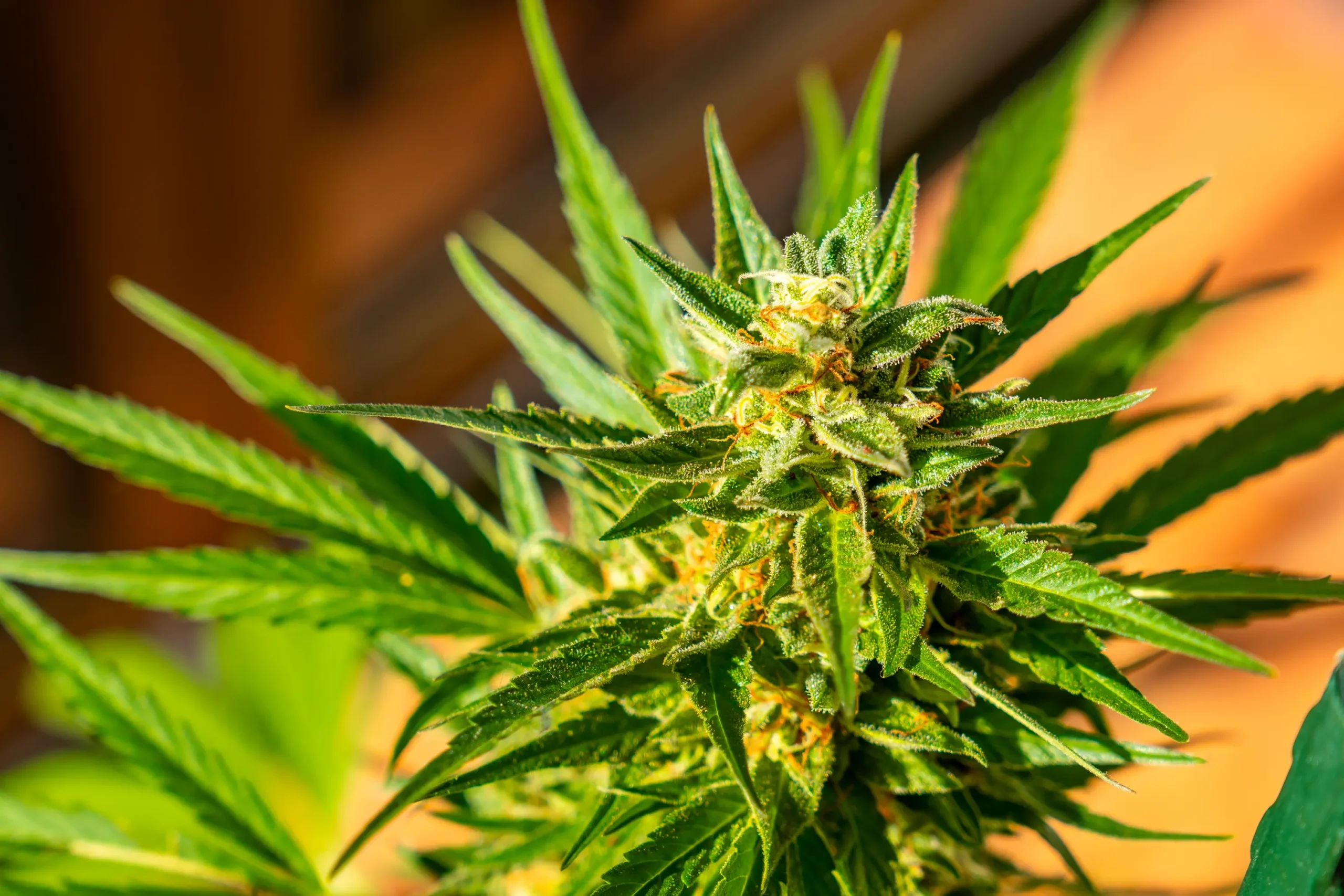
Platinum OG
Platinum OG is a useful strain for growers who have already learned that dense resin does not automatically mean high usable yield. The plant is famous for frosty, compact flower and a heavy nighttime effect, yet cultivation reports often place its raw yield below more vigorous modern hybrids. That makes the grower's job less about chasing total biomass and more about converting a modest canopy into a high percentage of premium resinous flower.
Its lineage is usually described as Master Kush crossed with OG Kush and an unidentified third parent, often rumored to come from a purple family. The uncertainty should remain visible because the cultivar name has circulated widely and modern cuts can differ. The consistent traits are more useful: indica-dominant structure, dense trichome-heavy buds, earthy pine and coffee-like Kush flavor, strong physical sedation, and a preference for warm, relatively dry flowering conditions.
The central cultivation question is how to increase Platinum OG's productive surface without destroying the spacing that dense OG flowers need. A completely untrained plant may leave too much lower growth in shade. An overfilled SCROG may create more bud sites but lower the premium percentage through humidity, poor light penetration, and difficult access. This is a cultivar where 'more sites' and 'better yield' are not always the same thing.
Feeding advice is another area that needs restraint. OG-family plants are often labeled heavy feeders, and vigorous Platinum OG can accept substantial nutrition. But dark leaves, slow water use, and high salt accumulation can still reduce quality. Resin production is genetic and environmental. It does not require pushing nutrients until the plant shows burn.
Finished Platinum OG should taste darker than many contemporary hybrids. Earth, pine, wood, pepper, coffee-like bitterness, skunky herbs, and a small citrus edge are common. The brighter lemon and pine notes are easy to flatten during hot drying, while the heavier earth and coffee survive. Proper post-harvest handling is what keeps the flower complex instead of merely strong.
Strain Features
| Feature | Details |
|---|---|
| Strain Type | Indica-dominant hybrid |
| Genetic Profile | Master Kush × OG Kush × unidentified third parent; exact third parent remains uncertain |
| THC | Commonly reported in the high teens to mid-20% range, with stronger batches possible |
| CBD | Usually very low |
| Dominant Terpenes | Myrcene, beta-caryophyllene, limonene, and pinene recur across different samples |
| Flavor / Aroma | Earth, pine, cedar, coffee-like bitterness, spice, skunk, mild citrus |
| Effect Character | Brief euphoric onset followed by deep relaxation, tingling, appetite, and strong sleepiness |
| Flowering Time | Commonly around 9 weeks, with phenotype and environment variation |
| Outdoor Harvest | Usually early to mid October in suitable Northern Hemisphere climates |
| Grow Difficulty | Moderate |
| Stretch | Low to moderate in many expressions |
| Plant Architecture | Medium, branchy, OG-influenced, often better with canopy training |
| Bud Density | Dense to very dense |
| Resin Production | Very high and central to cultivar identity |
| Yield Tendency | Moderate rather than extreme; premium-flower percentage matters more than raw biomass |
| Training Compatibility | Topping, LST, open SCROG, selective lower pruning |
| Humidity Risk | Moderate because dense resinous flowers can retain internal moisture |
| Best Time of Use | Evening and nighttime |
Genetic Lineage
Platinum OG is generally described as a three-way combination involving Master Kush, OG Kush, and an unidentified third parent. Some historical summaries speculate that the third component came from a purple cultivar, but the evidence is inconsistent enough that it should remain speculation.
The Master Kush side fits the compact indica behavior, dark earthy flavor, and physical heaviness. OG Kush explains the pine, gas, lemon edge, branch structure, and strong resin. If purple-family ancestry is present in some versions, it could contribute coloration and additional sweetness, but color alone cannot verify lineage.
The cultivar's name has been used across different markets for years, so modern Platinum OG is better treated as a recognizable family of closely related expressions rather than a perfectly documented universal clone. Some examples lean more earthy-coffee and compact. Others carry more obvious pine, gas, and OG stretch.
The inherited grow behavior is still coherent. Platinum OG usually does not need a tall, long-flowering sativa strategy. It benefits from moderate vegetative shaping, a relatively shallow flowering zone, and enough branch separation for dense flowers to develop without touching.
Keeper selection should focus on cured resin quality, branch efficiency, and whether the plant can produce premium dense flower across more than just the top few inches. A plant that looks extremely frosty but makes only a handful of good buds may be less useful than a slightly less dramatic phenotype with better canopy distribution.
Effect Breakdown
Platinum OG often begins with a short euphoric or mentally bright phase. Mood can lift and sensory details feel richer, but the mental phase is usually brief compared with the body effect that follows.
Physical relaxation builds steadily. The body can become warm, heavy, and tingly, with tension dropping from the shoulders and face. Appetite often increases as the effect settles.
At moderate doses, the user may still enjoy conversation, music, or a film. The strain becomes less functional as the dose rises because mental haze and physical sedation accumulate together.
Higher doses are where Platinum OG earns its heavy reputation. Eyelids become heavier, movement feels optional, and sleep may follow naturally. This makes the cultivar poorly suited to driving, work, or tasks requiring precise memory.
Dry mouth and dry eyes are common. Dizziness is also reported, especially by low-tolerance users. Anxiety can occur even with a sedating strain because strong THC can still produce uncomfortable mental effects before the body fully relaxes.
The overall experience is best described as a brief mental opening followed by a long physical landing. Users seeking an all-day functional hybrid will usually find it too heavy.
The brief mental lift can be more noticeable in lower doses. Some users report a surprisingly cheerful or focused start before the familiar heavy body phase appears. This can make Platinum OG feel more dimensional than a purely sedating indica.
At higher doses, that nuance disappears under physical weight. Mental fog, hunger, and sleepiness dominate, which is why dose matters when comparing user reports.
Flavor & Aroma Profile
Platinum OG is built around earth and pine, but the profile becomes more interesting when the darker notes are allowed to separate. Dry wood, cedar, coffee-like bitterness, pepper, skunky herbs, and mild citrus can all appear beneath the primary Kush aroma.
Unbroken flower often smells earthy and piney rather than explosive. Grinding exposes more skunk, coffee, and gas. The resin-rich interior can be much louder than the outside of the nug suggests.
On inhale, pine and earth usually lead. The middle becomes woody and slightly sweet. The exhale can taste like cedar, pepper, coffee, herbs, and a faint lemon or fuel note. This darker palate is part of the cultivar's old-school appeal.
The coffee description should not be taken literally as one specific terpene. It is a sensory impression created by bitter, roasted, woody, and earthy compounds together. Some phenotypes express it strongly, while others lean more pine-gas.
Hot drying strips the top layer first. Lemon and fresh pine fade, leaving earth, spice, and bitterness. The flower may remain potent and pungent, but it becomes flatter.
A careful cure should make the earth cleaner rather than make the flower dramatically sweeter. Excellent Platinum OG feels dense, resinous, woody, and layered. Average flower can taste like generic dry Kush.
Dominant Terpenes
| Terpene | Aroma Role | Cultivar Relevance | Scientific Caution |
|---|---|---|---|
| Myrcene | Earth, musk, herbs | Frequently prominent and consistent with the dark Kush base | Does not independently prove sedation |
| Beta-caryophyllene | Pepper, spice, wood | Supports the spicy cedar-like exhale and appears often in OG-family profiles | CB2 receptor activity does not establish cultivar-specific medical efficacy |
| Limonene | Lemon peel, citrus brightness | Can provide the small bright edge that keeps the earth from feeling flat | Often secondary and phenotype dependent |
| Pinene | Pine resin | Matches the fresh conifer note associated with many Platinum OG samples | Concentration varies and is not always dominant |
Platinum OG terpene reports do not agree on one fixed hierarchy. Myrcene, caryophyllene, limonene, and pinene recur often enough to describe the aromatic center, but their order changes by batch.
The cultivar's heavy effect is more reliably associated with strong THC-rich flower and the complete chemotype than with any single terpene. Terpene discussion should remain strongest on aroma and flavor.
Indoor vs. Outdoor Growing
| Decision Point | Indoor | Outdoor |
|---|---|---|
| Yield Strategy | Open SCROG can increase productive sites without needing tall plants | Larger root volume can increase size, but flower quality depends on dry weather |
| Canopy Depth | Should remain shallow because lower shaded sites are often poor | More side light can make additional lower branches useful |
| Bud Density | Excellent under controlled humidity | Dense flowers require minimal late rain |
| Feeding | Repeatable root-zone monitoring helps prevent overfeeding | Large plants may use more nutrition, but soil variability complicates interpretation |
| Resin Quality | Indoor climate control protects late flower and drying | Sun-grown resin can be excellent if heat and rain stay moderate |
| Stretch | Usually manageable | Rarely the main outdoor limitation |
| Support | Trellis or ties keep dense tops separated | Cages or stakes protect branches from wind and flower weight |
| Best Fit | Growers focused on premium resin quality rather than maximum raw yield | Warm, dry climates with a stable autumn |
Indoor production suits Platinum OG because the cultivar's value is concentrated in dense high-quality flower rather than enormous plant size. The grower can use a screen to increase the number of illuminated tops while still controlling the humidity around them.
The screen should remain open. A plant with moderate raw yield can tempt growers to fill every square in an attempt to increase grams. That can backfire when dense buds touch and the inner canopy becomes impossible to inspect.
Outdoors, Platinum OG can become larger, but warm dry harvest weather is important. Rain does not need to soak the entire plant to cause problems. Water trapped between dense flowers or at branch intersections can remain long after the surface dries.
In marginal humid climates, indoor cultivation generally offers a higher chance of preserving premium resin and clean dense flowers, even if outdoor biomass would be larger.
Strain-Specific Grow Guidance
Treat Every Flower Site as a Quality Investment
Platinum OG is not the strain to keep every branch simply because it can flower. Before the flip, identify the branches that can reach an evenly lit canopy and remove weak interior growth that will remain shaded.
The cultivar's moderate yield reputation makes site quality more important. Ten strong tops with full density can be more valuable than twenty small sites competing for the same light.
Use Topping to Release Lateral Growth, Then Space It
One early topping usually gives the plant enough leaders to build a productive canopy. Additional topping can help in a large footprint, but the grower should stop once the main branches already fill the available width.
Use LST to separate the leaders rather than stack them directly beside each other. The final flowers will be dense enough that early spacing becomes late-flower airflow.
SCROG Should Increase Access to Light, Not Hide the Plant
An open screen is useful because it improves the number of bud sites receiving strong light. A packed screen is counterproductive because Platinum OG's dense flowers need physical separation.
Leave access lanes if possible. The grower should be able to reach the back of the canopy to remove damaged leaves and inspect heavy colas.
Keep the Productive Zone Shallow
Lower shaded Platinum OG flowers rarely match the quality of the tops. After stretch, remove shoots that remain well below the primary canopy and have no side-light path.
Do not lollipop blindly. Strong outer laterals at the edge can still produce dense flowers and should be retained when they have real light.
Feed Strongly Only When the Plant Demonstrates Demand
Some cultivation reports describe Platinum OG as a heavy feeder. Vigorous plants can tolerate substantial nutrition, but the useful interpretation is capacity, not obligation.
Dark leaves, burned tips, slow dryback, or a root zone that stays wet are reasons to stop increasing input. More salts cannot compensate for weak roots or poor airflow.
Do Not Use Late Nitrogen to Keep the Plant Dark Green
More feed is not automatically more quality
A plant approaching maturity does not need to remain visually perfect. Excess nitrogen can preserve leafiness around already dense flowers and make post-harvest green flavor more difficult to manage.
Healthy function is the goal, not permanent vegetative color. Natural late fade is different from severe deficiency, and the plant should not be intentionally starved simply to create a cosmetic finish.
Root-Zone Stability Protects Resin Production
A resin-heavy phenotype still depends on healthy roots. Repeated cycles of saturation and severe drought can reduce growth and make nutrient uptake inconsistent.
Use a predictable irrigation rhythm appropriate to the medium. If the plant's water use changes suddenly, investigate root conditions and climate before changing the nutrient recipe.
Light Distribution Matters More Than Extreme Top Intensity
Platinum OG's best flowers form where calyxes receive enough light to become dense without the leaves bleaching or curling. A uniform canopy is more valuable than a few overlit tops.
Spacing branches so light reaches the sides of the buds improves the usable flower zone and reduces the temptation to push the fixture harder.
Support Before Resin-Heavy Tops Begin Leaning
Dense flowers can create leverage on medium-strength OG branches. Install a trellis, stakes, or soft ties while the plant is still easy to move.
Support should maintain distance between buds. Pulling several colas together into one support point can create exactly the humid pocket the grower is trying to avoid.
Humidity Control Is a Premium-Flower Issue
Platinum OG's dense flowers can hide moisture internally. Room RH alone does not reveal the microclimate around the stem and sugar leaves.
Inspect any leaf that browns suddenly at the base or becomes loose. Separate touching buds and maintain airflow through the canopy rather than only across the top.
Harvest When Resin, Density, and Aroma Converge
The plant may appear ready as soon as the trichome coat becomes dramatic. Wait for full calyx swelling, reduced fresh pistil production, mature flower trichomes, and an aroma that clearly separates pine, earth, wood, and spice.
A slightly earlier harvest can preserve more mental brightness and fresh pine. A later mature window generally deepens body sedation and the coffee-earth side. Do not wait past the safe humidity window merely to chase more amber.
Moderate Yield Makes Canopy Efficiency More Important
Platinum OG does not need to compete with high-output hybrids to justify its space, but the grower should still ask how much of the canopy is producing premium flower. If only the uppermost tips become dense and frosty, the structure is not using the light efficiently.
A second run should adjust veg time, branch count, or canopy depth so a larger percentage of the plant reaches the same quality as the top flowers. This is a more meaningful improvement than simply making the plant bigger.
Resin Coverage Can Hide Incomplete Flower Development
Heavy frost appears early enough that the plant can look finished before the calyx structure is truly mature. Resin is one maturity signal, not the only signal. The grower should also watch swelling, pistil behavior, aroma, and whether the lower portion of each top has firmed up.
Cutting because the flower looks white with trichomes can leave density and flavor unfinished. Platinum OG rewards waiting for the resinous appearance and the flower structure to converge.
Branch Spacing Improves Both Density and Trim Quality
When tops are separated, light can reach more of the sides and lower flower sections. This improves calyx development and reduces the proportion of leafy shaded buds that require heavy trimming.
Crowded tops create the opposite result: excellent exposed tips, softer inner flower, more sugar leaf, and greater humidity. Branch spacing is therefore both a grow technique and a post-harvest quality decision.
A Lower-Yield Phenotype Can Still Be the Better Keeper
A keeper should be judged by resin quality, flavor, effect, finish time, and how much premium flower it produces, not only total grams. A slightly smaller phenotype with exceptional pine-coffee flavor and cleaner bud structure may be more valuable than a heavier but generic plant.
This is especially relevant to Platinum OG because its identity is built around premium indica quality rather than production-scale yield.
Vegetative Time Should Build Branch Strength, Not Excess Plant Mass
Because Platinum OG can be moderate yielding, growers may extend vegetative growth hoping to create a larger plant. More veg helps only when it produces thicker productive branches and a wider light-efficient canopy. If it simply creates more shaded interior shoots, the additional time has not improved the future harvest.
The flip should occur when the selected branches have enough thickness and position to support dense flowers. The plant does not need to fill every cubic centimeter before flowering.
Late-Flower Water Demand Can Drop Before the Buds Stop Maturing
As stretch ends and the canopy stops producing as much new leaf tissue, irrigation demand can change. Platinum OG may still be swelling and producing resin even when it drinks slightly less than during peak vegetative growth.
Continuing the same watering frequency without checking container weight can leave the medium wetter for longer. Adjust frequency to actual demand while keeping nutrition stable enough to support active flower.
Do Not Use Resin Color as the Only Harvest Signal
The trichome coat is visually dominant on Platinum OG, so growers can focus too heavily on clear, cloudy, and amber percentages. Flower structure and aroma deserve equal weight.
A mature top should feel fully built, not merely frosty. Calyxes should have finished their major expansion, fresh pistil production should be limited, and the pine-earth-coffee profile should smell complete.
Outdoor Yield Should Be Measured After Weather Losses
A large outdoor Platinum OG can appear more productive than an indoor plant, but the comparison only matters after damaged or immature material is removed. Dense flowers exposed to wet autumn weather can reduce the usable percentage significantly.
In a marginal climate, a smaller protected crop may deliver more premium flower than a huge plant that spends the final weeks under disease pressure.
Weedth Bud Flavor Tips
Platinum OG's bright notes are easier to lose than its dark ones. Lemon and fresh pine should be protected because earth, wood, spice, and coffee-like bitterness remain even after a poor dry.
Harvest when the flower smells complete rather than simply frosty. A resin-covered plant can still be aromatically immature.
Dry slowly enough that dense centers release moisture gradually. Oversized colas can be divided into branch sections if the room is humid. Visual size is not worth hidden wet tissue.
Avoid direct fan air and excess heat. Both can create a crisp surface while stripping volatile top notes before internal moisture has equalized.
During cure, the goal is to make the dark profile cleaner. The pine should remain recognizable, the coffee-earth bitterness should soften, and the smoke should lose raw plant harshness.
If multiple phenotypes are grown, keep them separate through cure. A more pine-forward plant and a coffee-heavy plant may require different keeper decisions.
Store cool, dark, and airtight. Very dry Platinum OG becomes brittle, and rough handling can remove trichome heads from the heavily resinous surface.
A slightly longer cure can help the coffee, cedar, and hash-like side become more coherent, but only when the flower entered storage at an appropriate moisture level. Overly wet flower does not benefit from simply being sealed longer.
When comparing phenotypes, evaluate both jar aroma and smoke flavor. A plant can smell strongly of pine but taste flat if the darker earthy compounds dominate combustion. The better keeper retains distinction through the actual consumption experience.
Weedth Bud Boost Tips
The first yield improvement is eliminating sites that will never become Platinum-quality flower. Weak shaded branches consume time and trimming labor while contributing little premium bud.
An open SCROG can raise productive surface area, especially with fewer plants. The goal is not a perfectly filled net but a set of separated tops receiving comparable light.
One or two early toppings are usually enough. Repeated topping can produce many small branches and reduce the individual density that gives the cultivar its value.
Support is a yield technique because upright flowers remain in the light and avoid humid contact with neighboring colas.
Outdoors, prune the inner plant before flowers harden. Sunlight reaching through the center and faster drying after dew can preserve more usable flower than maximum branch count.
Do not chase resin with unsupported stress practices, extreme light, or heavy bloom additives. Platinum OG already has strong genetic resin potential. The grower's job is to keep the plant healthy enough to express it.
Quality yield means the proportion of the harvest that finishes dense, frosty, clean, and flavorful. Platinum OG is a cultivar where that percentage matters more than an impressive wet-weight number.
Medical Uses & Benefits
Platinum OG is commonly chosen by users seeking sleep, stress relief, physical relaxation, appetite, and pain distraction. These are user-reported patterns rather than clinical evidence that the cultivar treats a condition.
The strong body phase can make tension and discomfort feel less intrusive, especially when the user is already trying to rest. The brief euphoric opening may improve mood before sedation becomes dominant.
Sleep is one of the clearest practical use cases because higher doses often become very heavy. The same property makes the strain poorly suited to daytime responsibilities.
Dizziness, dry mouth, dry eyes, and anxiety can occur at high doses. A sedating reputation does not eliminate THC-related negative reactions.
Most Platinum OG flower is THC-dominant with very little CBD. Users seeking a low-intoxication medical profile should look elsewhere.
Medical use should be discussed with a qualified healthcare professional, particularly alongside prescription medication.
Ideal User Profile
Platinum OG fits the user who values deep nighttime effects, dense classic Kush flower, and dark pine-earth flavor over daytime functionality.
It is especially suitable for experienced users who want a brief head lift followed by heavy physical relaxation. New users should start small because the body phase can become intense.
Flavor preference should include earth, pine, wood, coffee-like bitterness, pepper, and skunk. People seeking bright fruit or dessert sweetness may find it too dark.
For growers, the cultivar makes the most sense when premium resin and dense flower quality matter more than maximum grams per square meter.
It is a poor match for a humid unmanaged room or for a grower who wants to fill every inch of canopy without regular inspection.
Grower Notes and Feedback
Grow reports often describe Platinum OG as moderate yielding rather than a production monster. This is consistent with a cultivar that concentrates value in resin density and top-flower quality.
SCROG and topping appear repeatedly as useful techniques because they increase the number of well-lit sites without requiring a tall plant.
Feeding advice often leans aggressive, but that should be read alongside the plant's actual water use. OG-family reputation is not a substitute for root-zone observation.
Dense resinous buds are the most consistent visual trait. Lower shaded flowers can remain underdeveloped, which makes lower-site selection important.
Aroma reports vary from pine and earth to coffee, cedar, skunk, gas, lemon, and sweet herbs. This breadth supports phenotype-aware keeper selection.
User effects are strongly nighttime-oriented, though some batches retain a longer euphoric phase before sedation. Chemistry and tolerance likely explain part of the disagreement.
Growers often note that Platinum OG does not always look spectacular in vegetative growth. Its value appears later when selected tops become dense and frosty. Early branch size alone should not decide keeper selection.
Another recurring tradeoff is room efficiency. A grower may prefer one more productive phenotype even if its resin is slightly less dramatic, while a personal connoisseur grow may justify keeping the most flavorful lower-yield plant.
Weedth Editor's Note
The point where this plant reveals itself
I think growers can chase the wrong metric with Platinum OG. If I wanted maximum raw yield, I would choose a different cultivar. I would grow this one to make a high percentage of resinous dense flower.
My canopy would be open enough that I can see between the main tops. I would rather finish twelve excellent buds than twenty crowded ones with soft lowers and moisture risk.
I would feed according to vigor, not reputation. A plant that drinks hard under strong light may use more nutrition. A plant that stays wet does not need a stronger bottle.
The part of the grow I would protect most carefully comes after harvest. Platinum OG can survive a poor dry aromatically because the earth and skunk remain, but the flower becomes much less interesting when pine and citrus disappear.
My keeper would be the phenotype that combines strong resin with a clean pine-coffee-earth flavor after cure and enough branch efficiency to justify its room time.
I would also compare the top and mid-canopy flowers after cure. If the tops are exceptional but the middle is soft and leafy, the next run needs better branch spacing or a shallower canopy, not more feeding.
The strain rewards refinement. Small improvements in light distribution, support, and drying can matter more than adding another technique.
Weedth Score
Growing Experience 7.8/10 Manageable height and strong training response, but moderate yield and dense-flower humidity demand precision.
Bud Structure & Visual Appeal 9.1/10 Extremely frosty, dense, classic OG flower is the cultivar's visual strength.
Aroma Complexity 8.5/10 Earth, pine, cedar, coffee, spice, skunk, and mild citrus create a deep old-school profile.
Flavor & Smoothness 8.4/10 Rich when slowly dried; top notes disappear quickly under hot post-harvest conditions.
Effects & High Experience 8.9/10 Powerful nighttime relaxation with a brief euphoric onset and strong sedating finish.
Overall Satisfaction & Recommendation 8.4/10 Excellent for premium resin-focused growers, less compelling for maximum-yield production.
Personal closer: I would keep the Platinum OG that turns a modest canopy into the highest percentage of dense pine-coffee resin, not the plant with the most branches.
FAQ
What is Platinum OG's lineage?
The most common account is Master Kush crossed with OG Kush and an unidentified third parent. The exact third parent remains uncertain.
Is Platinum OG a high-yield strain?
It is often described as moderate or even modest yielding compared with production-focused hybrids. Its strength is premium resinous flower quality.
How long does Platinum OG flower?
About nine weeks is a common center, though individual plants can finish earlier or later.
Does Platinum OG respond well to topping?
Yes. One or two early toppings can create a useful multi-top canopy without overcomplicating the plant.
Is SCROG good for Platinum OG?
Yes, especially when the screen remains open. It can increase the number of well-lit premium sites.
Is Platinum OG a heavy feeder?
Vigorous plants can tolerate substantial nutrition, but heavy feeding is not mandatory. Follow actual growth and water use.
Why are my Platinum OG lower buds small?
The productive zone may be too deep. Remove weak shaded shoots after stretch and improve branch spacing.
Is Platinum OG prone to mold?
Dense flowers create moderate risk in humid late flower. Keep tops separated and inspect internal tissue.
Does Platinum OG need branch support?
Dense resinous tops can bend branches. A trellis, stakes, or soft ties are useful before late swelling.
Why does Platinum OG smell like coffee?
Coffee is a sensory description created by dark earthy, woody, bitter, and roasted-like volatile combinations rather than one specific coffee terpene.
When should Platinum OG be harvested?
Wait for full calyx swelling, mature flower trichomes, reduced fresh pistils, and a complete pine-earth-spice aroma.
How can I preserve Platinum OG's pine flavor?
Avoid hot drying, direct fan air, over-dry storage, and repeated warm exposure.
Can Platinum OG grow outdoors?
Yes in warm dry climates, but dense flowers dislike repeated late rain.
Is Platinum OG good for sleep?
Many users report strong nighttime sedation, especially at moderate-to-high doses.
Is Platinum OG suitable for beginners?
A careful beginner can grow it, but premium results require attention to canopy depth, feeding, support, humidity, and drying.
Similar Strains
Master Kush: Shares dense indica structure, earth, spice, and physical heaviness with less OG citrus.
OG Kush: Provides the pine-earth-gas family character with more stretch and a somewhat brighter effect.
LA Confidential: Another dense nighttime cultivar with pine, skunk, and compact indoor structure.
Bubba Kush: A compact heavy alternative with coffee, earth, and hash but generally slower veg.
Kosher Kush: Offers stronger fuel and heavy sedation, often with more stretch.
White Rhino: A resinous compact alternative with higher yield potential and sweeter wood-pine flavor.
Share this article
A quick overview of the topics covered in this article.
Follow us
Latest articles
August 15, 2026
August 15, 2026
August 15, 2026
August 15, 2026