
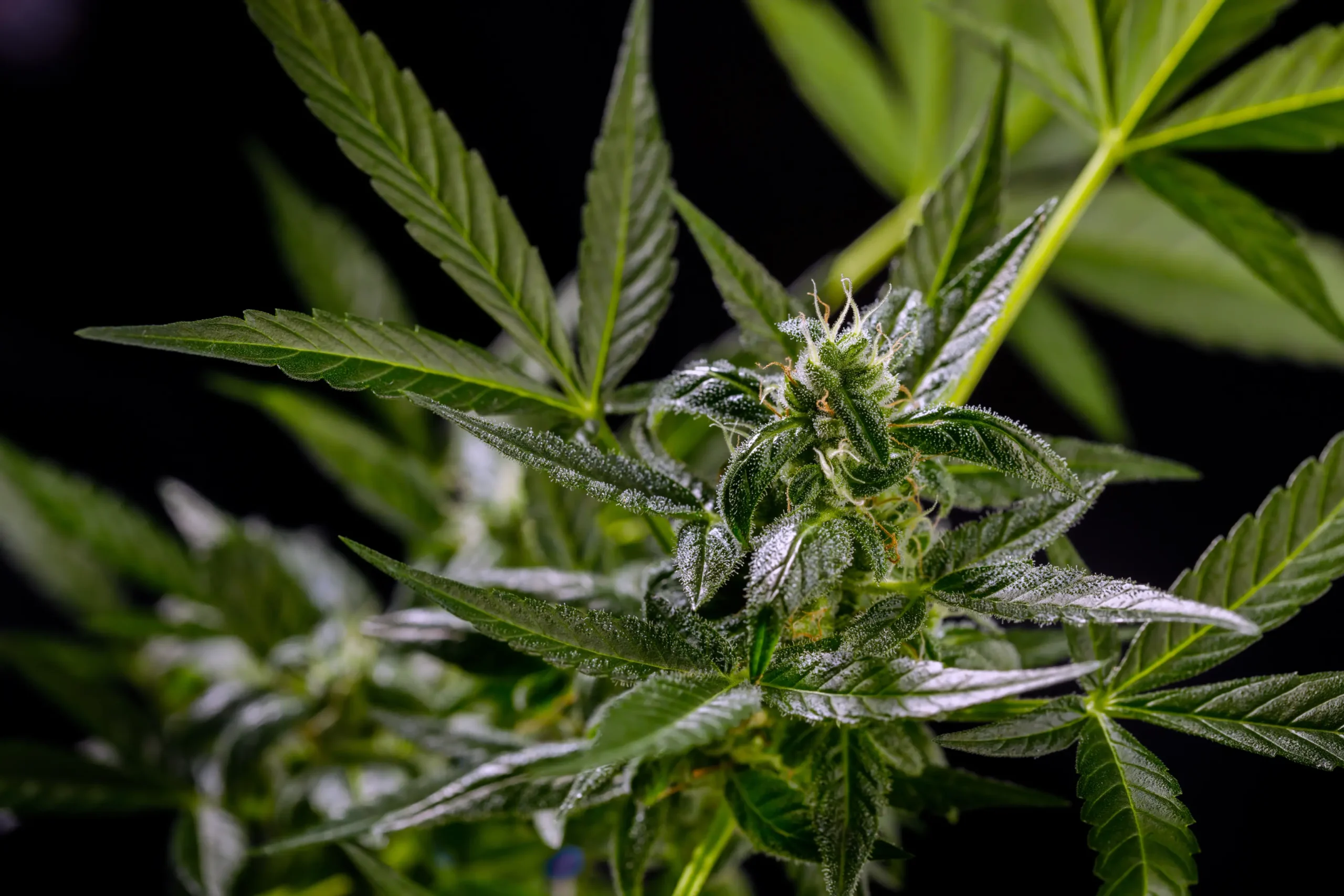
Power Plant
Power Plant is a fast South African sativa selection built around a contradiction that makes it unusually practical indoors. It grows with clear sativa energy, throws many flowering positions, and can produce long heavy colas, yet the flowering phase is commonly completed in roughly eight to nine weeks. That speed is the cultivar's major advantage, but it can also mislead growers into building too much plant before the flip or expecting an open sativa canopy to remain airy after the colas begin swelling.
The plant is better understood as a refined South African population than as a modern named-parent cross. Its defining traits are vigorous vegetative growth, a medium-to-tall frame, strong branching, relatively tight internodes for a sativa, and elongated flowers that gain a surprising amount of mass late. The result can be highly productive without the fourteen-week commitment associated with equatorial landraces, but the grower still needs to manage branch count, stretch, and support like a sativa rather than like a compact indica.
The central cultivation question is: how can a grower turn Power Plant's rapid growth and many bud sites into a high percentage of mature, evenly lit colas without allowing a fast sativa canopy to become overfilled before its short flowering window is complete? The answer is early branch selection, deliberate horizontal spacing, moderate feeding, stable root-zone oxygen, and support installed before long flowers begin pulling branches out of position.
Power Plant is often described as forgiving and adaptable, and that reputation is useful when it is interpreted correctly. The plant can tolerate different media and training systems, but tolerance is not the same as immunity. A vigorous crop can still accumulate excess nitrogen, overgrow a screen, or finish with weak interior flower if the grower mistakes speed for unlimited capacity.
The sensory profile is old-school and dry rather than dessert-like. Pepper, wood, earth, herbs, faint flowers, and a pungent resin note form the core. The effect is typically talkative, energetic, focused, and socially positive at a suitable dose. Power Plant is therefore a production-oriented sativa whose best quality comes from keeping the canopy readable and the cured flower clean, spicy, and mentally bright.
Strain Features
| Feature | Details |
|---|---|
| Strain Type | Fast-flowering sativa / South African-derived photoperiod selection |
| Genetic Profile | Refined South African sativa genetics rather than a modern named-parent cross |
| THC | Commonly moderate to strong; exact potency varies by line and environment |
| CBD | Usually low in THC-oriented selections |
| Dominant Terpenes | Myrcene, pinene and beta-caryophyllene commonly recur in tested flower |
| Flavor / Aroma | Pepper, wood, earth, dry herbs, mild flowers, pungent resin |
| Effect Character | Talkative, energetic, focused, creative, happy and potentially anxious at high doses |
| Flowering Time | Usually about 8 to 9 weeks indoors |
| Stretch | Moderate to strong, with rapid early flowering growth |
| Plant Architecture | Medium-to-tall, upright and strongly branched with tighter internodes than many long sativas |
| Bud Structure | Long thick spear-shaped flowers with a favorable flower-to-leaf ratio |
| Yield Potential | High when branch spacing, roots and support remain stable |
| Training Compatibility | Topping, LST, open SCROG, simple multi-top systems and uniform SOG |
| Environmental Tolerance | Generally robust, with a reputation for adapting to several media and systems |
| Primary Grow Risk | Overfilling the canopy before a fast transition produces long heavy colas |
| Best Time of Use | Daytime to early evening |
Genetic Lineage
Power Plant is usually described as a South African sativa selection rather than as a cross between two modern strain names. That distinction matters because the cultivar carries the growth logic of a regional sativa while showing considerably more indoor practicality than an unmanaged landrace population.
The South African background helps explain the energetic effect, peppery-woody aroma, narrow-to-medium leaves, rapid root development, and willingness to build many flowering positions. What makes Power Plant unusual is the shortened flowering rhythm. Instead of continuing for twelve or sixteen weeks, selected plants commonly finish in the eight-to-nine-week range.
This should not be interpreted as indica structure hidden inside a sativa label. The plant can still stretch, branches can travel upward rapidly, and long colas can form along several leaders. Its compactness is relative to tropical sativas, not relative to a squat Afghan plant.
Modern versions can vary in exact height, internode spacing, resin, and flower density. Some plants are more upright and central-cola oriented, while others branch strongly and fill a screen. The shared fingerprint is fast vigorous growth combined with a notably short sativa flowering phase.
A useful keeper is the plant that preserves the clear daytime effect and dry pepper-wood aroma while producing long flowers on branches strong enough to remain in their assigned lanes. Maximum raw weight is less useful when the same plant creates excessive interior sites or requires constant late support.
Effect Breakdown
A fast, social opening
Power Plant is usually felt as a quick rise in mental energy. Conversation becomes easier, ideas move faster, and ordinary tasks can feel more engaging. At a light dose, the effect is often bright without immediately becoming scattered.
The social quality is one of the strain's clearest distinctions. Users commonly describe talkativeness and a willingness to move, listen to music, work on creative projects, or spend time outside rather than remain physically still.
Focus with a buzzy edge
At a moderate dose, concentration can feel sharpened when the task is interesting and self-directed. Repetitive obligations may still become less appealing because the strain amplifies curiosity more reliably than discipline.
The buzz can be physically noticeable without becoming heavy. Some users feel light tingling or a sense of momentum in the body, but deep muscular relaxation is not the main identity.
Higher doses can become too fast
Power Plant can become anxious or mentally crowded when the dose exceeds tolerance. The same speed that feels creative at a small amount can feel paranoid, dizzy, or difficult to organize when the session is pushed.
Dry eyes and dry mouth are commonly reported. The effect often remains active for a substantial period, so early redosing is rarely necessary.
The late phase is usually a gradual reduction in intensity rather than a heavy sedating finish. This makes the cultivar more suitable for daytime and early-evening use than for sleep. Users who want a calm body-heavy strain may find it too mentally active, while people seeking old-school sativa motivation often value exactly that clarity.
Flavor & Aroma Profile
From the jar
Power Plant rarely smells like modern candy. The first impression is dry and pungent: black pepper, wood, earth, herbs, and a slightly floral green note. Some batches add mild citrus or a faint sweet resin background, but the profile remains grounded.
A properly cured jar should smell clean rather than grassy. The earth and herbs should feel resinous and warm, not like unfinished plant material.
Inside the long flowers
Breaking apart a dense section usually increases pepper, pine-like resin, and warm wood. The interior can be more pungent than the intact flower because the calyxes along the spear trap aromatic oils beneath the surface.
The flower-to-leaf ratio is often favorable, which helps the finished aroma remain floral rather than dominated by dried leaf. A leafy overfed crop can lose this advantage.
Inhale, exhale and aftertaste
The inhale can begin with mild herbs and an almost floral dryness. Pepper becomes clearer through the middle, followed by wood, earth, and a resinous aftertaste. Selected plants may show citrus peel, but Power Plant is better known for spice than fruit.
A rushed dry makes the profile harsh and one-dimensional. An even cure softens the pepper and allows wood, herbs, earth, and faint floral sweetness to remain separate.
Power Plant is a good test of whether a grower can preserve nuance without relying on a loud dessert aroma. Exceptional flower is not defined by sweetness. It is defined by clean resin, dry spice, smoothness, and a flavor that remains distinct from generic hay or smoke.
Dominant Terpenes
| Terpene | Aroma Role | Cultivar Relevance | Scientific Caution |
|---|---|---|---|
| Myrcene | Earth, herbs, musk | Frequently appears in tested samples and supports the dry earthy base | Does not make this energetic cultivar sedating by itself |
| Pinene | Pine resin, fresh wood, herbs | Fits the woody and lightly resinous side of the profile | Does not guarantee mental clarity or reverse THC impairment |
| Beta-caryophyllene | Pepper, dry spice, wood | Strongly matches the cultivar's sharp peppery finish | CB2 activity does not prove strain-specific medical effects |
| Minor floral and pungent volatiles | Flowers, green herbs, resin | Help separate good Power Plant from generic earthy flower | Standard terpene panels may not explain the entire aroma |
Power Plant should not be assigned one absolute terpene order. Modern tested batches vary, and the cultivar's most recognizable feature is the combined pepper-wood-earth profile rather than one laboratory number.
The energetic effect should also be separated from simple terpene marketing. Terpenes describe aroma with more confidence than they predict whether a user will feel focused, creative, or anxious. Dose, THC concentration, tolerance, and the complete chemotype remain more important.
Indoor vs. Outdoor Growing
| Decision Point | Indoor Growing | Outdoor Growing |
|---|---|---|
| Primary Advantage | A rare combination of fast sativa flowering and high canopy productivity | Strong vigor and environmental tolerance can create large plants |
| Main Limitation | Rapid growth can overfill a room before long colas gain final diameter | Plant size and branch weight can become difficult without early support |
| Stretch | Moderate to strong and concentrated early in flower | Vertical space is less restrictive but final width can be large |
| Training | Topping, LST and an open SCROG are especially useful | Early topping and perimeter support organize the bush |
| Flowering Time | Usually 8 to 9 weeks | Relatively early for a sativa in suitable climates |
| Bud Structure | Long heavy spears need separation and support | Better air access, but rain can load and bend long branches |
| Feeding | Moderate complete nutrition based on actual water use | Large roots increase total demand without requiring excessive concentration |
| Best Fit | Growers who want sativa effects without a very long room cycle | Warm, sunny sites with enough space and a reasonably dry finish |
Power Plant is naturally suited to indoor production because its flowering speed is far shorter than the architecture suggests. The plant can be trained into a broad screen, allowed to stretch into the final gaps, and harvested on a schedule closer to many hybrids than to classic landrace sativas.
The risk is treating the short flowering time as permission to fill every square of the screen before the flip. Long flowers increase canopy volume late, and branches that appear comfortably separated in week two can be touching in week seven.
Outdoors, the cultivar can express more of its vigor and can tolerate warm conditions well. The grower still needs to plan for branch leverage and late weather. Long heavy flowers can collect rain and pull branches downward even when the plant itself is structurally vigorous.
The better environment depends on the objective. Indoor growing offers repeatable canopy depth and terpene preservation. Outdoor growing offers scale and sunlight, provided the plant can finish before persistent wet weather.
Strain-Specific Grow Guidance
Choose the final branch count before the flip
Power Plant creates shoots readily. The grower should decide which leaders deserve the light rather than carry every possible branch into flower. A few strong, separated lanes usually produce a higher premium-bud percentage than a dense thicket of small sites.
One or two early toppings followed by LST are generally enough. Repeated topping can create more tips than the fast flowering window has time to develop evenly.
Leave room for cola diameter, not just stem spacing
A screen can look open when only stems and leaves are considered. Mature Power Plant flowers can become long and thick, so the spaces between branches need to account for bud diameter late in the cycle.
Visible air gaps at harvest are not wasted canopy. They help side light reach the flowers and reduce the need for high fan speed around touching colas.
Use the stretch to finish the canopy
The first flowering weeks are the final branch-positioning period. Redirect the fastest leaders outward while stems remain flexible, then allow them to rise into their permanent lanes.
Stop repeated tucking once real flower clusters begin to harden. Late handling adds trichome loss and can force long flowers into contact.
Preserve useful middle-canopy production
Build support before the flowers demand it
Power Plant can support productive flower deeper than a broad-leaf indica because its branch spacing and leaf shape allow light to penetrate. Do not remove lower growth by a fixed rule before the stretch shows the real light map.
Keep laterals that reach their own side-light lane. Remove thin inward shoots that remain shaded and add humidity without meaningful yield.
Feed for speed without feeding the leaves
Rapid growth can make the plant appear endlessly hungry, but excessive nitrogen can extend internodes and leave more foliage around the spears. Healthy green function is enough; maximum darkness is not a production goal.
General cannabis nutrition research supports an optimum range rather than a simple more-is-better response. Increase concentration only when water use, color, and growth show that the previous level is limiting.
Expect irrigation demand to change quickly
A vigorous root system can dry a container rapidly during stretch. Once vertical growth slows, the watering rhythm may change even while flowers continue gaining mass.
Follow actual dryback rather than carrying the week-two schedule through harvest. Chronic late saturation reduces root oxygen and can create confusing nutrient symptoms.
Install support before long colas become heavy
Power Plant is known for yield, and that yield often arrives along elongated flowers rather than one compact top. Side branches can lean outward gradually as the spears gain weight.
A loose second net or soft ties should preserve the branch lanes already created. Support that pulls several colas into the middle defeats the airflow plan.
Control the flower microclimate, not only room humidity
Cannabis inflorescences can remain more humid inside than the surrounding air. A plant that looks open from above can still contain dense interior flower tissue along each spear.
Move air through and around the canopy without blasting one top directly. Check bud junctions and sugar-leaf bases during the final weeks, especially after dark periods.
Do not mistake speed for early maturity
Power Plant flowers quickly, but frost and size can appear before the calyxes are fully complete. An eight-week reputation should not turn into a mandatory harvest day.
Use mature flower trichomes, slowing fresh pistils, completed calyx swelling, and the full pepper-wood-earth aroma. A plant that is biologically unfinished will not gain flavor simply because it is cured longer.
Plan the drying room for long branches
High-yield plants can produce more hanging material than their floor footprint suggests. The dry space needs enough separation that long branches do not collapse together after harvest.
Group branches by flower density when necessary. Lighter side spears may finish before the heaviest central sections, and one fixed drying day can overdry part of the crop.
Weedth Bud Flavor Tips
Power Plant's pepper, faint flowers, and fresh wood are easiest to preserve when the final canopy remains moderate in temperature. The cultivar can stay pungent after the finer notes are lost, so room odor alone is not a quality check.
Compare the hottest top flowers with cooler outer branches late in bloom. If the top smells more like plain earth while the side flower retains pepper and floral resin, reduce local heat before changing nutrients.
Do not add sweeteners, fruit products, or flavoring additives to make the profile more interesting. The old-school dry spice identity comes from genetics, full maturity, and careful post-harvest handling.
Long spears can contain lighter tips and denser sections near branch junctions. Separate obviously different branch densities so the thin flower does not become brittle while the thick sections remain moist.
During cure, raw herbs should soften and the pepper-wood profile should become cleaner. If the flower remains grassy, the plant may have been cut too early. If it becomes dusty and flat, it was probably dried too quickly or stored too dry.
Keep selected phenotypes separate. One plant may be more floral while another is more pungent and earthy. Mixing them removes the information needed for repeat-run selection.
Once moisture is stable, cool airtight storage protects the subtle upper layer. Repeated warm-air exposure favors the heavier earthy base and makes the flower seem simpler over time.
Weedth Bud Boost Tips
The first production improvement is learning the selected clone's actual stretch. A known flip size allows the grower to use the fast sativa growth without wasting vertical space or overfilling the fixture.
Premium yield improves when the plant is simplified before flower. Keep strong leaders with independent light lanes and remove weak interior shoots after transition. The cultivar already creates many sites; it does not need every one preserved.
A wide open SCROG can exploit the long flowers and productive middle canopy. The screen should distribute branches, not force maximum stem density into every square.
Root stability is a major yield tool. A vigorous plant in too small a container may require constant irrigation late, while an oversized wet container can slow early growth. Match root volume to the intended canopy.
Support timing affects quality yield. A branch that bends out of the light during the last two weeks loses density and creates new contact points even if it never breaks.
Measure trimmed premium flower rather than total wet mass. Power Plant can produce a large crop, but the most useful run is the one with the smallest quality drop from top to middle canopy.
The ideal Power Plant harvest is a fast, open, supported field of long mature sativa flowers, not the maximum number of branches squeezed into a short flowering schedule.
Medical Uses & Benefits
Power Plant is commonly chosen by users seeking energy, mood elevation, social engagement, focus, and distraction from stress or discomfort. These are user-reported patterns, not clinical evidence that the cultivar treats a medical condition.
The clear, active effect can appeal to people who dislike heavy daytime sedation. That same stimulation can be a limitation for users with anxiety sensitivity or those trying to sleep.
Pain-distraction reports exist, but an energetic THC-rich cultivar should not be presented as uniquely analgesic. The experience may change how discomfort is perceived without addressing its underlying cause.
Dry eyes, dry mouth, dizziness, and anxiety are commonly reported negatives. Higher doses can make the mental pace uncomfortable even when the strain is pleasant at a smaller amount.
Most Power Plant flower is THC-dominant with little CBD. It should not be described as non-intoxicating or suitable for driving and safety-sensitive work.
Anyone using cannabis for a diagnosed condition or alongside prescription medication should consult a qualified healthcare professional.
Ideal User Profile
Power Plant suits users who want an old-school sativa effect without a very long flowering-time story. It fits conversation, music, creative tasks, walking, social events, and daytime hobbies at a controlled dose.
Flavor traditionalists who appreciate pepper, wood, herbs, and earth may prefer it to sweeter modern cultivars. People seeking candy fruit or deep gas may find the profile understated.
For growers, it is well suited to anyone who wants rapid vegetative response and high yield but is willing to make early structural decisions. It rewards a grower who enjoys topping, spreading, and simplifying a canopy before the short flower cycle begins.
It is less ideal for very low ceilings when the plant is flipped too late, or for growers who fill a screen completely before allowing for stretch and cola width.
Beginners can succeed because the plant is generally robust, but the best results come from recognizing that fast and forgiving does not mean unlimited branch count, fertilizer, or water.
Grower Notes and Feedback
The most repeated cultivation observation is the combination of sativa vigor and an approximately eight-week flowering phase. This is the trait that made the cultivar productive indoors and should remain the center of any accurate grow guide.
Growers often report excellent response to SCROG because the plant creates many bud points and recovers quickly from training. The same vigor can become a problem when the screen is filled too early.
Long thick flowers and heavy yields make branch support relevant even when the plant's stems appear vigorous through mid-flower. The load develops late and can change branch angles quickly.
Power Plant is frequently described as adaptable across media and systems. The safest interpretation is that it has a wide workable range, not that root oxygen, nutrient balance, and canopy humidity stop mattering.
Effects reports consistently emphasize talkativeness, energy, focus, and happiness, with anxiety becoming more likely when the dose is high. That pattern supports daytime use but also argues for dose restraint.
A second-run notebook should record flip height, final height, number of retained leaders, support week, dryback change after stretch, and the difference in cured quality between the top and middle canopy.
Weedth Editor's Note
The point where this plant reveals itself
I would treat Power Plant as a branch-management strain rather than a feeding strain. The plant already has speed and production potential. My job would be deciding which branches deserve that potential.
I would leave more space than the young stems seem to require because the final flower diameter is the real canopy measurement. A screen that looks slightly open in week two can look exactly right in week eight.
I would also make the late grow quieter. Once the structure is fixed and support is in place, I would avoid repeated pruning and bending around resinous spears.
On the second run, I would shorten or lengthen veg from the measured stretch of the selected clone, not from generic sativa expectations. This cultivar is fast enough to become extremely efficient once its dimensions are known.
The keeper for me would combine branch strength, a clean pepper-floral cure, and an energetic effect that stays organized at a moderate dose. A heavier plant would not win if its interior flower remained weak or its canopy became difficult to inspect.
Weedth Score
Growing Experience 8.8/10 Fast, robust and adaptable, though vigorous branching can overfill the canopy if the flip is delayed.
Bud Structure & Visual Appeal 8.5/10 Long heavy sativa spears and a favorable flower-to-leaf ratio create a strong classic appearance.
Aroma Complexity 8.2/10 Pepper, wood, earth, herbs and faint flowers are layered but less dramatic than modern dessert profiles.
Flavor & Smoothness 8.4/10 Very satisfying when fully mature and evenly cured; rough drying can make it plain and harsh.
Effects & High Experience 8.9/10 Talkative, energetic and focused effects are unusually coherent for a fast flowering cultivar.
Overall Satisfaction & Recommendation 8.7/10 An excellent production sativa for growers who value speed, yield and an old-school daytime experience.
Personal closer: I would rerun Power Plant after measuring exactly how many strong branch lanes the room can support, because the cultivar becomes more impressive when its speed is organized rather than simply allowed to expand.
FAQ
Is Power Plant a landrace strain?
It is better described as a refined South African sativa selection. Modern lines were selected for indoor practicality, speed and consistency rather than preserved as an untouched regional population.
How long does Power Plant flower?
About eight to nine weeks is common indoors, although the selected plant should be harvested from biological maturity rather than a fixed day.
How much does Power Plant stretch?
Usually moderate to strong. The plant can add substantial height and width early in flower, especially when the screen was already full at the flip.
Is Power Plant good for SCROG?
Yes. Its rapid branching and many flowering positions work very well in an open screen that preserves air and access between mature colas.
Does Power Plant respond well to topping?
Yes. One or two early toppings can create a productive framework. Repeated topping may create more sites than the short flowering window can mature evenly.
Can Power Plant be grown in SOG?
Uniform small plants can work well because the cultivar flowers quickly and can build long central spears. Keep each plant simple and leave enough space around the mature tops.
Is Power Plant a heavy feeder?
It can use substantial nutrition under strong light and rapid growth, but input should follow actual water use, leaf condition and root health rather than reputation.
Why is my Power Plant canopy too crowded?
The plant may have been flipped after the screen was already full, or too many secondary branches were preserved. Use early stretch to finish the canopy rather than beginning flower at maximum density.
Does Power Plant need branch support?
Often yes. Long flowers can become heavy late, causing side branches to lean even when stems looked strong earlier.
Is Power Plant prone to mold?
The plant can be relatively open, but the mature spears can still hold internal humidity. Risk rises when colas touch or airflow only moves over the top.
Why are my lower buds small?
The canopy may be too deep or crowded. Preserve exposed middle laterals, but remove inward shoots that never receive an independent light lane.
When should Power Plant be harvested?
Use completed calyx swelling, mature flower trichomes, reduced fresh pistils and the full pepper-wood-earth aroma rather than the eight-week reputation alone.
Can Power Plant grow outdoors?
Yes. It can perform well in warm sunny climates and often finishes earlier than long African sativas, but large branches still need support and a reasonably dry finish.
Is Power Plant beginner-friendly?
It is generally robust and adaptable, but beginners should leave transition space and avoid interpreting vigor as a reason for excessive feeding or watering.
Is Power Plant good for daytime use?
Many users describe it as talkative, energetic and focused. Higher doses can become anxious or dizzy, so daytime usefulness depends on dose and tolerance.
Similar Strains
Durban Poison: Another African-derived daytime sativa with spice and energy, usually carrying more anise character and a different stretch pattern.
Green Crack: A fast energetic comparison with fruitier flavor and a more abrupt mental rise.
Cinderella 99: A short-flowering sativa-dominant cultivar with similarly efficient indoor timing but sweeter tropical aroma.
Jack Herer: Offers a more incense-pine profile and broader phenotype range while sharing clear daytime effects.
Skunk #1: A foundational fast hybrid with strong yield and easier structure, but a more skunky-musky flavor direction.
Flo: Another fast cultivar that combines sativa architecture with a shorter flower cycle, though Flo is more floral and dark-fruited.
Share this article
A quick overview of the topics covered in this article.
Follow us
Latest articles
August 15, 2026
August 15, 2026
August 15, 2026
August 15, 2026