
Querkle
Querkle is often summarized as a short purple indica, yet grow reports make that description unreliable on its own. Some plants remain compact and strongly Purple Urkle-like, while others inherit enough vigor from Space Queen to stretch hard, branch quickly, and build long spear-shaped colas. The cultivar is better understood as a phenotype-selection project that can produce several different structures under the same name.
The lineage is Purple Urkle crossed with Space Queen. The intention behind the cross was straightforward: preserve the grape and purple character of a slow clone while adding faster growth, resin, and production. That goal explains why Querkle can feel more vigorous than Purple Urkle without losing the dark berry identity. It also explains why the most useful grow question is not simply whether the strain is indica-dominant. The real question is which parental direction the individual plant expresses.
The central cultivation question is: how can a grower identify Querkle's structural phenotype early enough to match veg time, branch count, and support to the plant without selecting for purple color alone? A compact grape-heavy plant and a taller citrus-resin phenotype should not be flipped at the same size or forced into the same canopy. The first seed run should reveal the plant; the clone run should optimize it.
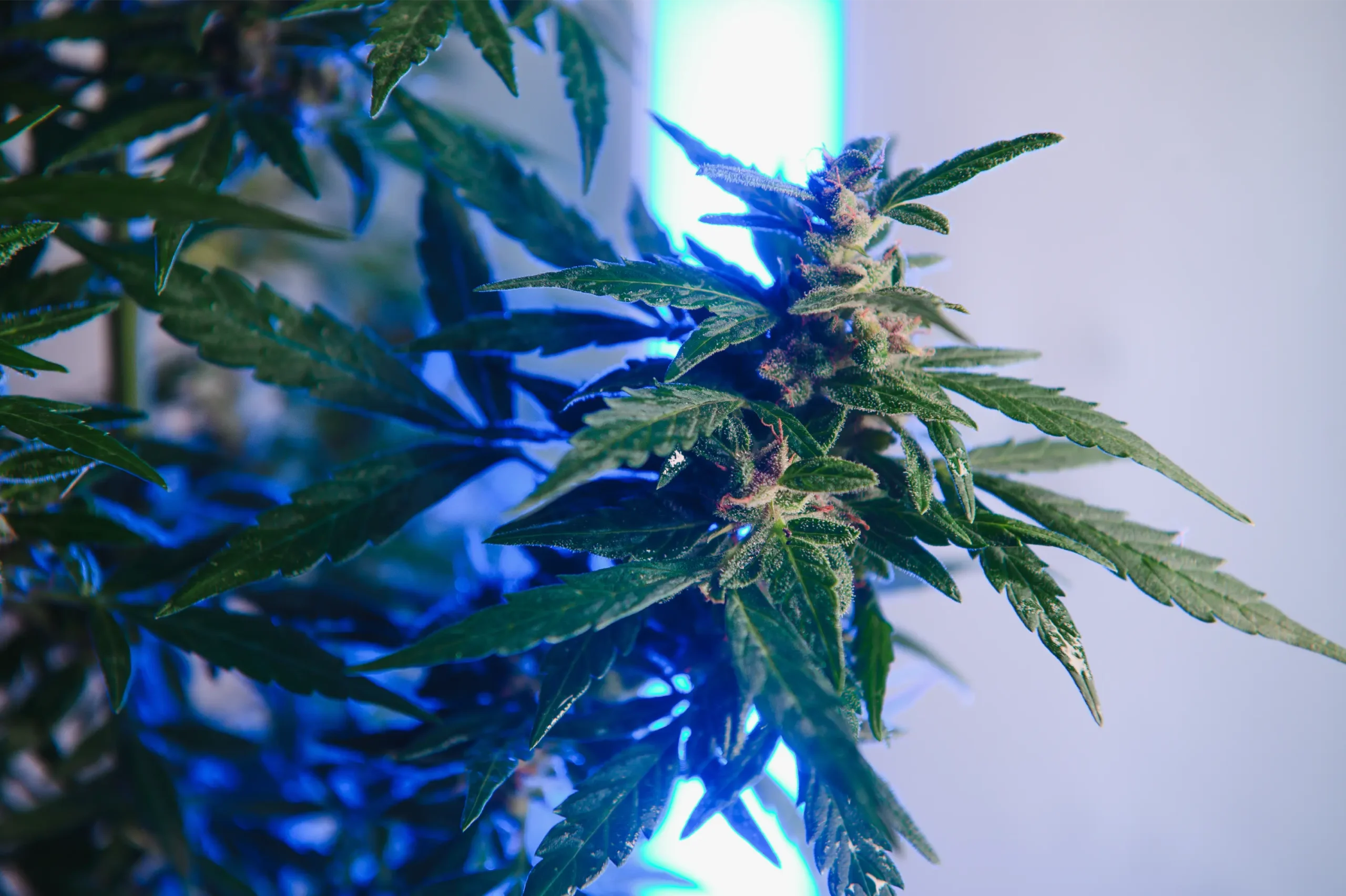
Flowering commonly falls around eight to nine weeks. The flowers can become long, blunt-topped, dense, and extremely resinous, with good lower-bud development when the canopy remains open. This is where Querkle can surprise growers twice. The plant may stretch more than an indica label suggests, then later produce flowers dense enough to require real humidity and drying discipline.
Flavor moves between grape, berry, cherry, lime, floral musk, earth, and occasional banana or nutty notes. The effect can also vary. Most plants relax the body and suit evening use, but some expressions retain a notably cerebral or sativa-like mental phase. Keeper selection should therefore include cured flavor and actual effect, not only plant color and yield.
Strain Features
| Feature | Details |
|---|---|
| Strain Type | Indica-dominant hybrid with meaningful phenotype variation |
| Genetic Profile | Purple Urkle x Space Queen |
| THC | Usually moderate to strong; exact potency varies |
| CBD | Generally low |
| Dominant Terpenes | Myrcene, beta-caryophyllene and pinene commonly recur |
| Flavor / Aroma | Grape, berry, cherry, lime, floral musk, earth, occasional banana or nutty notes |
| Effect Character | Euphoric and cerebral at first, then relaxed, hungry and often sleepy |
| Flowering Time | Usually about 8 to 9 weeks |
| Stretch | Variable; compact plants occur, while some seed reports show strong transition stretch |
| Plant Architecture | Bushy with many side branches; phenotype can range from stocky to taller spear-forming |
| Flower Structure | Long dense colas or bulky purple clusters with heavy resin |
| Color Expression | Lavender and purple are common but not guaranteed |
| Feeding Behavior | Often performs well with moderate feeding and can be tolerant of small errors |
| Training Compatibility | Topping, LST, open SCROG, multi-branch training and selected SOG use |
| Primary Grow Risk | Using one indica schedule for structurally different phenotypes |
| Best Time of Use | Late afternoon to nighttime, with more cerebral phenotypes usable earlier |
Genetic Lineage
Querkle combines Purple Urkle with Space Queen. Purple Urkle contributes grape, violet color, compact dense flower, and a calming body direction. Space Queen contributes vigor, resin, branching, citrus brightness, and a more cerebral effect. The cross was intended to make purple genetics faster and easier to grow without losing their flavor.
The resulting population does not express one perfect midpoint. Historical descriptions and user reports repeatedly mention multiple phenotypes. Two may lean more heavily toward purple grape indica traits, while another can show more Space Queen-like structure and mental energy. Rarer green or highly cerebral expressions have also been described.
This variation should change how the first grow is managed. A stocky plant with close internodes can be given more vegetative time and fewer leaders. A faster vertical plant should be flipped smaller and spread wider. Treating both as short indicas can turn the taller phenotype into a crowded canopy.
The genetic goal becomes clearer after cure. Some plants retain grape and berry strongly, while others reveal lime, lemon, floral musk, banana, or earth. A plant chosen only for dark color may not be the flavor keeper.
Clone retention is especially valuable. Once the chosen phenotype is known, Querkle becomes far more predictable. The grower can stop managing a population average and start managing one exact stretch curve, branch angle, flowering day, and aroma profile.
Effect Breakdown
The first phase can be more cerebral than expected
Querkle often begins with euphoria and a noticeable head change. Mood lifts, sensory detail becomes more engaging, and some users feel creative or mentally active before the body settles.
Space Queen-leaning phenotypes can keep this cerebral stage clearer and longer. Purple Urkle-leaning plants generally move toward physical relaxation sooner.
The body gradually takes control
At a moderate dose, muscle relaxation, warmth, and appetite become more obvious. The mind may remain pleasant and dreamy rather than immediately foggy.
This two-part effect is one reason Querkle can feel different from a simple heavy indica. It may be usable in late afternoon for experienced users, then naturally transition into an evening strain.
Dose and phenotype decide the finish
Higher doses usually deepen heaviness and sleepiness. Dry mouth, dry eyes, dizziness, and anxiety are possible, especially when a more cerebral phenotype is consumed too aggressively.
A rare sativa-like expression may remain surprisingly active. The strain name therefore cannot promise the same degree of couch-lock from every plant.
The best description is a euphoric purple hybrid with a relaxing destination. The route to that destination varies depending on which parent the plant resembles and how much is consumed.
Flavor & Aroma Profile
Grape is the anchor, not the whole profile
Querkle is usually grape-forward, but the fruit can resemble grape skin, berry jam, cherry, or dark wine rather than artificial candy. Purple floral musk and earth sit behind it.
Space Queen influence can add lime or lemon, making some plants brighter than Purple Urkle. Banana, nutty, or creamy notes appear in selected reports and should be treated as phenotype possibilities rather than universal traits.
The broken flower becomes darker and sharper
Grinding releases resin, pepper, earth, and citrus peel. A flower that smells sweet from the jar can taste drier and more herbal once the interior is exposed.
The densest purple phenotypes can carry a musky soil note under the grape, while greener plants may show more lime and floral resin.
Cure decides whether it tastes like fruit or generic purple earth
The inhale usually leads with berry or grape. The middle adds lime, flowers, and resin. The exhale becomes earthy, peppery, and mildly hash-like.
Over-drying removes fruit while leaving musk and earth. A good cure keeps grape recognizable through the exhale and softens the raw herbal edge.
Querkle should be evaluated across phenotypes after storage. The plant with the strongest late-flower grape may not be the plant that holds it best after a month in the jar.
Dominant Terpenes
| Terpene | Aroma Role | Cultivar Relevance | Scientific Caution |
|---|---|---|---|
| Myrcene | Earth, herbs, musk and ripe fruit | Frequently reported and fits the dark berry-earth base | Does not independently cause sleepiness |
| Beta-caryophyllene | Pepper, spice and wood | Supports the dry resinous finish | CB2 activity does not prove strain-specific medical benefits |
| Pinene | Pine and fresh herbs | Appears in tested material and can sharpen greener phenotypes | Does not guarantee focus |
| Limonene and other citrus volatiles | Lime and lemon peel | Consistent with Space Queen-leaning expressions | Citrus intensity varies by phenotype |
| Minor fruit and floral volatiles | Grape, berry, cherry, banana and flowers | Important to the cultivar's selection value | A standard terpene panel may not explain the named fruit notes |
Querkle's terpene hierarchy is not fixed because the population contains distinct phenotypes. The table describes recurring chemistry rather than a guaranteed order.
The relaxing reputation should not be assigned to myrcene alone. Cannabinoid strength, dose, phenotype, and the complete volatile mixture determine whether a particular plant feels dreamy, social, or strongly sedating.
Indoor vs. Outdoor Growing
| Decision Point | Indoor Growing | Outdoor Growing |
|---|---|---|
| Primary Advantage | Phenotypes can be compared under similar light and root conditions | Natural width and sun suit the branchy frame |
| Primary Limitation | Different stretch types can disrupt one canopy | Color and finish can vary with site microclimate |
| Stretch | Ranges from controlled to strong depending on phenotype | Vertical space is less limiting, but branch support becomes important |
| Training | Top once, spread leaders, then adjust by phenotype | Early topping and cage support create a broad plant |
| Flower Density | Dense long colas require physical spacing | Rain and dew are serious concerns near maturity |
| Feeding | Moderate feeding makes phenotype comparison clearer | Large roots increase total demand without proving a need for high concentration |
| Color | Stable indoor conditions show natural genotype differences | Cooler nights may deepen color but should not be forced |
| Best Fit | Growers willing to label and select phenotypes | Dry autumn climates with enough space for lateral spread |
Querkle is especially informative indoors because structural differences become obvious under one environment. The grower can identify which plant stretches, which remains compact, and which holds grape after cure without confounding those differences with separate outdoor sites.
Outdoors, vigor and yield potential can be stronger, but long dense colas need a dry finish and support. A visually purple plant is still vulnerable to moisture inside the flower.
Indoor cultivation is better for phenotype selection. Outdoor cultivation may reveal the full production potential of the chosen clone once its structure is known.
Strain-Specific Grow Guidance
Classify the phenotype before the flowering plan is fixed
Record internode length, branch angle, water use, leaf width, and recovery after topping. A compact Purple Urkle-like plant and a faster Space Queen-like plant should not enter bloom at the same size.
Keep labels attached through cure because the structural phenotype must remain connected to flavor and effect.
Top once and let the natural branch pattern reveal itself
Querkle usually produces abundant side branches after one topping. Repeated cuts can create a crowded center before the grower understands how much the plant will stretch.
Spread the main leaders outward and allow the phenotype to show whether it needs more width or more vegetative time.
Leave more reserve than the indica label suggests
Do not let the stretch make the decisions
Some reports describe strong stretch, including plants finishing several times taller than their flip height. Other examples remain compact. A first seed run should therefore leave real transition space.
Once a clone is selected, use its measured stretch and stop managing from the population average.
Protect long lower-producing branches
Querkle can develop substantial flowers along the lower part of strong laterals when light reaches them. Do not remove productive branch length automatically.
After stretch, clean only the shoots that remain buried or grow inward. Preserve the side branches that have their own light and air lane.
Use moderate nutrition during selection
Grow reports often describe the cultivar as tolerant and not especially fertilizer-hungry. A moderate stable program makes phenotype differences easier to interpret.
If one candidate appears hungry, confirm faster water use and lighter healthy foliage before increasing input. Do not raise the entire room for one outlier.
Support long colas before color distracts from structure
Purple and resin can make the canopy look finished while flower weight is still increasing. Install support before long colas lean into each other.
A net should preserve branch separation. Pulling the spear tops toward the center increases bud contact and internal humidity.
Separate mature flowers by actual density
Querkle can form long blunt-topped colas with dense calyx packing. Internal humidity can remain higher than ambient air even when the branch structure looks open.
Inspect flower contact points and dying sugar-leaf bases. Maintain circulation through the canopy, not direct fan pressure on one top.
Allow natural purple without cold-stressing the root zone
Anthocyanin expression has a genetic basis and can respond to temperature. Moderate cool conditions may deepen color, but severe cold can reduce plant function and water use.
Record color as one trait. Do not choose the keeper until cured flavor, structure, and effect are known.
Harvest phenotypes independently
Eight to nine weeks is common, but separate plants may mature at different speeds. Cutting the room together can make the compact or taller phenotype under-ripe.
Use calyx swelling, flower trichomes, slowing pistils, and a complete grape-lime-earth aroma for each plant.
Use the first three flowering weeks as the phenotype sorting period
Querkle often reveals more about its structural direction after the flip than it does in early vegetative growth. Record which plants open their internodes, which remain squat, and which develop long productive laterals.
This information can guide branch placement during the same run, but its greatest value appears on the clone cycle. A known compact plant and a known stretcher should not share the same vegetative duration or screen position.
Prevent long colas from becoming one continuous humidity zone
Some expressions build flowers along much of the branch rather than concentrating all weight in one terminal bud. The result can look impressive while creating long areas where leaves and calyx clusters touch.
Open small gaps along the branch, not only between branch tips. Gentle circulation must be able to reach the middle of the elongated cola, where local humidity can remain higher than the surrounding room.
Judge moderate feeding from finish quality
Querkle can remain visually healthy across a broad feeding range, but tolerance does not prove that the higher input produced better flower.
Compare late leafiness, dryback, trim burden, smoothness, and cured grape intensity. The lower effective program is usually preferable when premium yield remains equal.
Use outdoor support to preserve lateral spacing
A broad outdoor Querkle can carry considerable weight on side branches. Perimeter stakes or a wide cage should hold those laterals outward rather than pulling the plant into a tight central bundle.
This becomes especially important after rain, when temporary water weight can change branch angles before any disease symptom is visible.
Weedth Bud Flavor Tips
Querkle's fruit layer should remain present after the flower is broken apart. A jar that smells grape but tastes only earth and pepper has not preserved the complete profile.
Late heat can flatten berry and lime while the flower remains resinous and purple. Compare top and side branches before harvest to identify uneven aroma loss.
Dense spear sections may dry more slowly than smaller side buds. Group the harvest by structure rather than by plant identity alone, while keeping labels intact.
Avoid direct fan air and excessive dry trimming. Resin and delicate fruit are lost through unnecessary handling.
During cure, grape should become smoother and less raw, while earth and spice integrate underneath it. A green herbal jar usually needs time; a brittle dusty jar has already lost too much moisture.
Keep citrus-forward and grape-heavy plants separate. Querkle's best phenotype depends on the grower's goal, and mixing them makes selection impossible.
Cool dark storage protects fruit and prevents the heavier musky base from becoming the only surviving aroma.
Grape can present as fresh fruit, grape skin, candy, or darker wine-like sweetness depending on phenotype and cure. Record the style as well as the intensity because the most stable expression is not always the loudest in late flower.
Space Queen-leaning plants may carry brighter lime, herbs, or resin around the grape. Purple Urkle-leaning plants can become deeper, earthier, and more floral. Keeping the jars separate allows the grower to decide which balance is actually distinctive.
If the flower becomes only peppery earth after storage, review drying speed and final moisture. The fruit layer generally disappears before the darker base.
The largest elongated colas may need to be divided into similar-density sections during drying. Surface texture and stem snap alone can hide moisture inside the thickest junctions.
Weedth Bud Boost Tips
Querkle yield improves when phenotype-specific veg time replaces a universal schedule. Give compact plants longer and flip vigorous stretchers smaller.
Use a few strong outward leaders rather than maximum top count. Long colas need side space and support to deliver premium flower.
Keep productive lower branch sections where side light reaches them. Remove only the depth that repeatedly cures leafy or soft.
Moderate nutrition and stable roots are more useful than aggressive bloom input. Cannabis research supports cultivar-specific nutrient optima, not unlimited increases.
Support long branches before they lean out of the light. The correct support can improve both flower orientation and airflow.
Select the clone from premium dry yield, cured flavor, and repeatability. Dark color and wet weight are secondary.
The best Querkle harvest comes from matching the canopy to the phenotype, then preserving grape and resin without turning long colas into one humid mass.
Once the keeper is known, plant count should follow its real width and branch length. A vigorous Space Queen-style clone can fill more room per plant than a compact purple expression.
Keep lower branch sections only when they repeatedly cure into dense flavorful flower. Querkle can use more canopy depth than a compact indica, but not every lower site deserves to remain.
Support can raise premium yield without changing total biomass by keeping long flowers upright, separated, and inside the intended light field through the final weeks.
The best production plant may be neither the darkest nor the heaviest. A clone with moderate yield, stable grape-lime flavor, and predictable stretch can be more useful over repeated cycles.
Medical Uses & Benefits
Querkle is commonly chosen for evening relaxation, appetite, stress distraction, and sleep support. These are user-reported patterns rather than clinical evidence.
The euphoric opening may help some users feel mentally lighter before the body phase develops. More cerebral phenotypes can remain social longer than expected from the indica label.
Higher doses can become sleepy and physically heavy. Dry mouth, dry eyes, dizziness, and anxiety remain possible.
Pain-distraction and muscle-relaxation reports are common, but the strain should not be presented as a specific treatment. Individual response and chemotype vary.
Most Querkle flower is THC-dominant and intoxicating. Purple color does not indicate a gentler effect.
Anyone using cannabis for a diagnosed condition or with prescription medication should consult a qualified healthcare professional.
Ideal User Profile
Querkle suits users who enjoy grape and berry flower but want more cerebral lift than the heaviest purple indicas.
It fits late-afternoon social use, music, food, films, and evening relaxation. Larger doses are better reserved for nighttime.
For growers, it is especially interesting to phenotype hunters who enjoy comparing plant structure, color, flavor, and effect rather than expecting perfect seed uniformity.
It is less ideal for a mixed seed room that must remain perfectly level without individual training. Clone runs are substantially easier.
Flavor-focused growers should choose from cured storage stability, not harvest-day color.
Grower Notes and Feedback
Growers frequently disagree about stretch. Some plants remain compact and others move aggressively after the flip. This disagreement is more likely phenotype reality than simple grower error.
A recurring strength is branch production. Querkle can form many strong laterals and can carry useful lower flowers when the canopy is open.
Another common observation is moderate feeding tolerance. The cultivar often remains healthy without high concentration and can recover from small over- or underfeeding errors.
Long dense colas and heavy resin are repeated quality traits. These strengths increase the need for support, internal flower airflow, and density-based drying.
Color is inconsistent enough that growers should expect green, lavender, and deeply purple plants in a seed population. The darkest plant is not always the grape keeper.
Effect reports also show more variation than the indica percentage implies. Some phenotypes are dreamy and sleepy, while others retain a strong cerebral or even sativa-like stage.
A repeat-run log should connect phenotype label, stretch, flowering day, branch support, grape retention, effect direction, and premium dry yield.
A further recurring pattern is that phenotype differences remain visible after harvest. The more vigorous plant may also produce a brighter, more cerebral effect, while the compact grape plant often settles more heavily into the body.
Growers sometimes mistake the long-cola phenotype for automatic higher yield. The useful comparison is premium dry flower after any airy lower sections and humidity-damaged material are removed.
The cultivar can be forgiving in general health while still demanding careful selection. A healthy mixed seed crop is not the same thing as a uniform production crop.
Cured aroma often becomes the deciding trait because several plants can look equally resinous and colorful at harvest. The jar reveals which genotype actually carries Querkle's grape identity rather than merely its purple appearance.
Weedth Editor's Note
What matters after the headline numbers
I would approach Querkle as three possible plants until the seed run proves otherwise. The name tells me the parents, not the final canopy.
My first decision would be structural. A compact grape plant can be vegged longer; a Space Queen-leaning stretcher needs earlier flowering and more horizontal reserve.
I would not select from purple color. I would keep the plant ID through cure and choose the flower that still tastes like grape and lime after storage.
The cultivar's biggest strength is that it can improve on the slow purple-clone grow experience. The biggest weakness is that seed variation can hide that improvement until the second run.
The keeper for me would carry long resinous flowers without losing branch control, and it would deliver a bright euphoric opening before settling into the relaxed evening effect I expect from Querkle.
I would give the first seed run enough space to expose differences instead of trying to make every plant look uniform. The variation is inconvenient for production but valuable for selection.
If one clone needed a few extra days yet preserved noticeably stronger grape and lime, I would accept the longer finish. I would not accept extra time that produced only darker color or more leaf.
My second run would be simpler than the first: fewer main leaders, support installed earlier, and plant spacing based on the keeper rather than the strain name.
Weedth Score
Growing Experience 8.1/10 Vigorous and tolerant, but phenotype-dependent stretch makes the first seed run less predictable.
Bud Structure & Visual Appeal 9.1/10 Long resinous colas and natural lavender color can be outstanding.
Aroma Complexity 9.0/10 Grape, berry, lime, flowers, earth and occasional banana offer strong phenotype depth.
Flavor & Smoothness 8.8/10 Excellent after an even cure, though fruit can be lost through heat or overdrying.
Effects & High Experience 8.7/10 Euphoria and cerebral interest transition into reliable evening relaxation.
Overall Satisfaction & Recommendation 8.7/10 A rewarding purple selection project that becomes much stronger as a known clone.
Personal closer: Querkle is worth the phenotype work when the selected plant keeps grape and lime, holds its long colas, and relaxes the body without erasing the first cerebral spark.
FAQ
What is Querkle's lineage?
Querkle is Purple Urkle crossed with Space Queen.
How long does Querkle flower?
About eight to nine weeks is common, although individual phenotypes can differ.
How much does Querkle stretch?
Stretch is variable. Compact plants occur, but some seed-grown examples stretch strongly and should be flipped smaller.
Does Querkle respond well to topping?
Yes. One early topping usually reveals abundant side branching without creating excessive complexity.
Is Querkle good for SCROG?
Yes, especially a loose screen that allows different phenotypes to be spread into separate lanes.
Is Querkle a heavy feeder?
It is often reported as comfortable with moderate nutrition and tolerant of small feeding errors.
Why are my Querkle plants so different?
Purple Urkle and Space Queen traits can separate into distinct structural, flavor, color, and effect phenotypes.
Does Querkle always turn purple?
No. Purple, lavender, and green expressions can all occur. Color is not a quality guarantee.
Does Querkle need branch support?
Often yes. Long dense colas can lean late even when branches appear strong earlier.
Is Querkle prone to mold?
Dense flowers can hold internal humidity if colas touch or airflow cannot reach the flower zone.
When should Querkle be harvested?
Harvest each phenotype from mature calyxes, flower trichomes, slowing fresh pistils, and a complete grape-lime-earth aroma.
Why did my Querkle lose grape flavor after drying?
Heat, direct airflow, overdrying, and repeated warm storage exposure can remove fruit while earth and musk remain.
Can Querkle grow outdoors?
Yes, especially in a dry autumn climate with enough support for long laterals.
Is Querkle beginner-friendly?
The plant is often tolerant, but phenotype variation makes a mixed seed canopy more challenging than a clone run.
Is Querkle a daytime strain?
Some cerebral phenotypes can work earlier, but most examples become more relaxing and evening-oriented as dose increases.
Similar Strains
Purple Urkle: The direct grape-heavy parent, usually slower and more compact with a stronger pure-purple clone character.
Space Queen: The vigor and cerebral parent direction, with brighter citrus and more active growth.
Purple Punch: A denser modern grape strain with more uniform nighttime heaviness and less phenotype-driven cerebral variation.
Mendocino Purps: Another classic purple cultivar with grape, berry and Northern California heritage, but more uncertain lineage.
Grape Ape: A compact grape-heavy evening strain with less citrus and stronger body relaxation.
Tropicana Cookies: A brighter purple citrus comparison with more sativa stretch and a less earthy grape profile.
Share this article
A quick overview of the topics covered in this article.
Follow us
Latest articles
August 15, 2026
August 15, 2026
August 15, 2026
August 15, 2026