
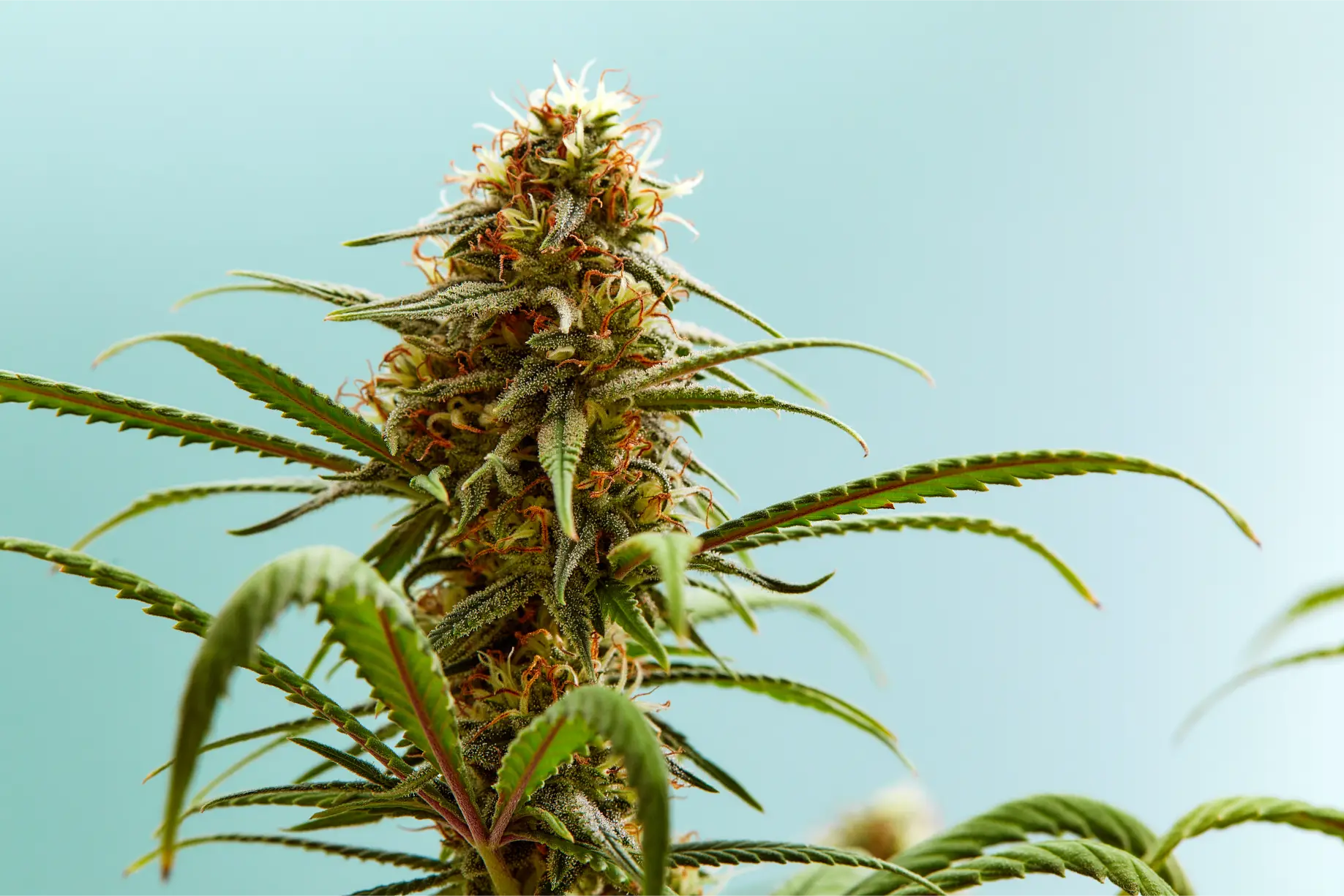
RS-11
Rainbow Sherbet #11 (RS-11) is a modern indica-leaning hybrid developed through modern breeding and later phenotype selection (LA). Its genetics trace to Pink Guava (an OZ Kush F2 by the same line) × Sunset Sherbert. The result is a “candy guava sour citrus” aroma with a layered diesel-gas profile. Inhalation brings tropical fruit and berry sweetness, while the exhale is heavy on fuel and pepper (see Flavors). RS-11’s effects begin with a bright, limonenedriven euphoria and creative focus, then ease into a clear-bodied relaxation. THC is high (labs up to ~28%) but myrcene is unusually low, so sedation is warm but not narcotic. Growing RS-11 rewards careful cultivation. Plants tend to medium–tall stature (≈75–120 cm indoors) with moderate stretch (~1.4–1.5×). They branch well and respond to topping and SCROG, producing multiple colas. Colas become very dense and resinous late in bloom, so support (trellis or stakes) and good airflow are crucial. Flowering runs about 9–10 weeks (some phenotypes take ~11). Indoor yields are solid (≈450–550 g/m²), and outdoor plants in warm, dry climates can flower in October with 400–600 g/plant.
RS-11’s bud structure tends to resist bud-rot if kept dry (40–45% RH in late flower). and FAQ.
Strain Features
| Feature | Detail |
|---|---|
| Genetic Profile | Indica-leaning hybrid |
| Lineage | Pink Guava × Sunset Sherbert |
| THC Direction | High; commonly reported around 20–28%, with many samples near the mid-20s |
| CBD | Low or trace |
| Flowering Time | Usually 9–10 weeks indoors; some seed phenotypes run 11 weeks or longer |
| Outdoor Window | Often mid-October in the Northern Hemisphere where finishing weather stays dry |
| Plant Size | Medium-tall, usually around 75–120 cm indoors after training, with roughly 1.4–1.5× stretch |
| Yield Potential | About 450–550 g/m² indoors and 400–600 g per outdoor plant under strong conditions |
| Grow Difficulty | Moderate; productive but sensitive to humidity, nitrogen excess and phenotype variation |
| Aroma Direction | Guava candy, citrus, berry, creamy sherbet, diesel, pine and pepper |
| Dominant Terpenes | Limonene, caryophyllene and linalool, with humulene and low myrcene support |
Genetic Lineage
the originating breeding work (Rob, Oakland) bred RS-11 by f2ing an OZ Kush selection (Eddy OG × Zkittlez) into Pink Guava, then crossing Pink Guava with Sunset Sherbert. Sunset Sherbert (a Girl Scout Cookies × Pink Panties descendant) contributes creamy, sherbet-like sweetness. The breeder’s account (Pink Guava × Sunset Sherbert) is well-documented, though some labels say Pink Guava × OZK. These agree when noting Pink Guava itself came from the OZ Kush project. In short, RS-11 is largely OG Kush/Zkittlez through Pink Guava, with a Sherbet/Cookie boost. This unique mix gives RS-11 its “candy-gas” terpene profile – fruit and diesel layered with a creamy finish. By 2023–24 RS-11 exploded in popularity: it was a widely cited strain profile’s #2 Strain of the Year runner-up and spawned multiple crosses (e.g. Zoap, Magic Marker). Several seed breeders now sell RS-11 with minor genetic variations, but the core is the Pink Guava × Sunset Sherbert heritage.
Effect Breakdown
RS-11 usually opens with a bright, citrus-toned mental lift that can feel social, creative and emotionally warm. The onset reflects the vivid aroma: quick, clean and more animated than its indica-leaning label suggests.
As the session develops, physical ease becomes more obvious. The shoulders and limbs soften, sensory detail remains pleasant and the early momentum gives way to a calm, rounded plateau. At higher doses, the body phase can become substantially heavier and more couch-oriented.
The best time is late afternoon or evening. Low-tolerance users should begin conservatively because the candy-like flavor can make repeated dosing feel easier than the final intensity warrants.
Flavor & Aroma Profile
Jar/Bud Aroma: Fresh cured RS-11 nugs emit a potent mix of tropical candy and diesel. Expect sharp lemony diesel and sweet guava or mango-citrus candy on the nose. Some describe a hint of apricot or peach. If purple, there’s a subtle berry lift. Breaking buds in the jar releases the deep candy-gas scent (creamy sherbet underside with fuel). Broken Bud (out of jar): On crush/smell, the same profile: first citrus-diesel hits you, then a sweet fruitiness. Many note a “fruit loop terp” (candy guava/cherry) with an underlying spicy fuel. On Inhale: The smoke is surprisingly smooth. Clear tropical fruit flavors – think berry, guava, mango, lemon peel – with a creamy mid-palate like sherbet. There’s a sugary berry note akin to the Rainbow Sherbet dessert. On Exhale: A spicy fuel and pine note emerges. The sweet fruitiness mellows into a peppery-diesel finish (linalool-caryophyllene), with a little kush earthiness. The aftertaste carries that sweettangy citrus lingering with a touch of white pepper. The smoke is NOT harsh: RS-11’s cloud is smooth, perhaps due to its indica mix, leaving a pleasant fruity-spice echo.
Aftertaste: A balance of diesel and candy. You’ll likely taste a faint sour-sweet grapefruit note plus a warm pine residue on the tongue.
Dominant Terpenes
| Compound | Contribution |
|---|---|
| Limonene (high) | Sharp citrus and light diesel top-note. Provides the bright headspace. |
| Caryophyllene | Spicy, peppery-gas scent that underlies the smoke. It also adds an anti-inflammatory effect. |
| Linalool | Floral (lavender/woody-sweet) accents that smooth the edges and add depth. Some users detect a subtle vanilla note (a sherbet undertone). |
| Humulene | Earthy/woodsy undertone (less perceptible in aroma but contributes body). |
| Myrcene (low) | Unusually low, which is why RS-11 doesn’t knock you out like many indicas. It adds only a slight herbal background. Average lab tests confirm RS-11 is high in limonene, caryophyllene, and humulene, giving it that distinct fruit+fuel nose. |
Indoor vs Outdoor Growing
| Aspect | Indoor Growing | Outdoor Growing |
|---|---|---|
| Plant Shape | Medium-tall, branched and multi-cola; well suited to topping, LST and SCROG. | Can build larger frames but needs sun, spacing and branch support. |
| Stretch | Roughly 1.4–1.5× after the flip; tuck through early flower, then stop major training. | Moderate stretch, with phenotype and season affecting final height. |
| Climate | Keep strong air exchange and reduce RH as flowers harden. | Best in warm, dry finishing climates; dense colas dislike persistent autumn moisture. |
| Quality Focus | Moderate nitrogen, stable irrigation and patient curing protect the fruit-and-diesel balance. | Full sun can deepen expression, but rain protection remains important. |
RS-11 is versatile but has preferences. Indoors, growers value precise control to maximize resin and terpene potency. With full control of temperature and humidity, an indoor RS-11 can hit peak flavor and a top-tier bud quality. It tends to stay manageable in height if trained (3–5 ft), though untrained plants do stretch moderately. Indoor yields are around 450–550 g/m² under optimal conditions. The indoor environment also allows dialling CO₂ and light for better trichome production. The big caveat: RS-11 aroma is strong (citrus diesel), so odor filtration is recommended in a small grow room. Outdoors, RS-11 thrives in warm, sunny climates. In a Mediterranean or SoCal-like environment, it can become quite large (potentially >6 ft) with a long veg and finish by mid-October. Yields outdoors can be even higher (400–600 g/plant) given space. The quality of tropical sun can add vigor, but outdoor buds are usually a bit looser than indoor-grown. The main risk outside is humidity: RS-11’s dense buds can be prone to bud-rot if rain or high RH (>55%) sets in during late bloom.
In humid regions, a ventilated greenhouse or ensuring a dry late season is critical. In summary: Indoor growing gives the absolute best flavor and potency (with controlled conditions); outdoor can reward with volume if climate is hot/dry and you manage moisture.
Strain-Specific Grow Guidance
Morphology & Phenotypes
RS-11 plants grow medium to tall with a well-branched, multi-cola structure. Internodes are moderately spaced (not as tight as pure indicas). Under 12/12, expect ~1.4–1.5× stretch (e.g. a 60 cm pre-flower height could reach 85–90 cm). Topped early (4th–5th node) they produce 4–8 main colas. The foliage is thick and indica-leaning: large fan leaves and dense bud sites. Buds form grape/golf-ball shapes – chunky, rounded colas with pronounced orange pistils. Trichome coverage is heavy on both buds and sugar leaves, making the plant sticky to the touch. Foxtailing (stacked popcorn buds) is uncommon under proper light. Phenotype variation: RS-11 #11 was specifically chosen for high terpene expression and density, so many phenos share its traits. However, genetic diversity means some plants flower slightly longer (~11 wks), or show stronger color. The Sunset Sherbet lineage can yield purple/blue hues in late flower if nighttime temps are dropped into the 15–18°C range. This anthocyanin response is phenotype-dependent: some RS-11 plants will turn vivid purple under cold nights, while others stay green. This is a genetic difference, not a failure.
In any case, these colorful phenos still exhibit the classic RS-11 sweet-spice aroma.
Training & Plant Structure
RS-11 responds well to common training. Topping in early veg (4th–5th node) is recommended to develop multiple sturdy colas. Many growers run a 4or 6-cola SCROG net; RS-11’s even branching fills a canopy nicely when trained. Low-Stress Training (LST) works too—bending the flexible branches boosts lateral growth. During the first weeks of 12/12, keep defoliation conservative but consider removing some mid-canopy fan leaves by week 2 of flower to improve light penetration and airflow. Over-defoliation is not needed; RS-11 has vigorous foliage. As buds fatten in mid-late bloom, support becomes important: heavy colas (especially after week 7) may need trellis netting, bamboo stakes, or twist ties to prevent branches from sagging or breaking. Because RS-11 distributes buds across many branches, focus on a flat canopy. Mainlining (central leader with symmetrical branches) or FIM (phloem-incision) are possible, though standard topping/LST is usually sufficient. One grower advice: “spread it out under the light before flip, since RS-11 doesn’t just form one big cola.”
Root & Irrigation Behavior
RS-11 develops a robust root system but does not like waterlogged media. Ensure well-aerated soil or coco with good drainage. Early in veg, keep a balanced watering schedule to encourage root branching without saturation. As the plants grow larger (especially outdoor), water requirements will increase significantly. In flower, the heavy colas drink a lot; monitor soil moisture to avoid drought stress, but also avoid overwatering which can slow growth or cause root issues. If grown in pots, ensure at least 3– 5 gal to accommodate RS-11’s eventual size. There’s no extreme drought or water-sensitivity in RS-11 (not a desert-landrace), but it does prefer consistent moisture. Some growers do a “wet-dry cycle” – water thoroughly then let the topsoil dry slightly before watering again. No special organic acids or mycorrhiza are required, though a myco mix can only help. Overall, water with moderate frequency, but loosen the medium and ensure drainage because nutrient buildup (from frequent watering) could inhibit root health.
Feeding & Nutrient Profile
RS-11 is a moderate feeder reflecting its OG Kush heritage. In veg, use a balanced NPK fertilizer (or organic compost) with EC around 1.0–1.4 (1.8 mS/cm) in soilless media. Push nitrogen adequately in early veg to build structure, but taper off before flip: a common mistake is to give too much N into stretch, which can cause clawed leaves and a grassy aroma in final buds. In other words, after the first 2–3 weeks of flowering, dial back nitrogen. In flower, transition to a high-Phosphorus/low-Nitrogen bloom formula by week 2–3. Many growers add extra Calcium and Magnesium mid-to-late flower to support resin formation. For example, 1–2 mL/L of Cal-Mag in water mixes during weeks 4–8 can prevent deficiencies as the plant consumes large minerals. Keep bloom-phase EC around 1.4–1.8, but watch for tip burn – RS-11 doesn’t tolerate the extremely high feed levels some hybrids do. If tips brown excessively, cut back. Flushing: About 5–7 days before harvest, flush with plain water (EC<0.5) to clear residual nutrients. This prevents a harsh chlorophyll taste. A gentle flush can also help mature the last trichomes.
| Stage | Nutrient Focus | EC / PPM | pH | Irrigation Cue | Key Note |
|---|---|---|---|---|---|
| Veg weeks 0–2 | Balanced vegetative feed | EC 1.2 / ~600 ppm | ~6.0 soil/coco; ~5.8 hydro | Allow air to return to the root zone | Build roots before pushing strength |
| Veg week 3 | Balanced feed; begin nitrogen taper | ~800 ppm | Medium-appropriate | Watch runoff and leaf color | Prepare for stretch |
| Flower weeks 1–2 | Bloom transition | 800–1000 ppm | Medium-appropriate | Keep moisture consistent | Guide stretch and avoid nitrogen excess |
| Flower weeks 3–6 | Bloom bulk | 1000–1300 ppm | Medium-appropriate | Monitor EC and dry-back | Support flowers and keep airflow strong |
| Flower weeks 7–8 | Late bloom and calcium/magnesium support if needed | ~1000 ppm | Medium-appropriate | Avoid salt accumulation | Do not force dark-green late foliage |
| Flower week 9 | Plain water or final taper according to medium | Low | Stable | Do not waterlog finishing roots | Judge readiness by trichomes, not schedule alone |
Keeping nutrients in check, especially nitrogen, is central to a clean fruit-and-diesel finish.
Light Response
RS-11 thrives under strong light, and benefits significantly from CO₂ enrichment. Under LEDs or HPS, maintain ~400–600 PPFD during veg at canopy level. In flower, ramp up intensity: ~600–700 PPFD by mid-flower, and up to 700–800 PPFD in the last 2–3 weeks (especially if running CO₂ to 1000–1200 ppm). High light pushes more resin and bigger yields. Compared to some clones, RS-11 shows very little foxtailing or heat-stress at these levels, though very inexperienced growers should always watch leaf tips for light bleaching. Keep a reasonable distance: e.g. for a 600W HPS, ~18–24″; for high-power LEDs, follow manufacturer’s recommendations (often 24–36″). RS-11 leaves are sturdy, but ultra-high light without CO₂ can bleach. Daily Light Integral (DLI) around 35–45 mol/m²/day in flower is optimal. With CO₂ supplementation, these targets can increase. Supplementary CO₂ in sealed tents boosts trichome count and yield. RS-11 does not need low-light or stress to produce terpenes – it is naturally resinous. However, uniform light distribution (via LST/SCROG) ensures bottom buds also get light, yielding higher overall production. Low light or heavy shade can cause smaller, spindly buds.
Climate & Environmental Factors
Temperature: Keep day temps around 22–27°C (70–80°F) in veg, then slightly cooler 20–25°C (68–77°F) in flower. Night temps about 5–10°F lower. Avoid sustained highs above 30°C, as that can stall terpenes. In the last 2–3 weeks of flower, nighttime dips into the 15–18°C (60–64°F) range will bring out any purple hues in color-pheno plants. A gradual drop is safer than a shock. Humidity: Use VPD targets. In early veg, 60–70% RH is fine. Reduce to 55–65% late veg, 45–55% earlymid bloom, and 40–45% RH in late bloom. The dense buds trap moisture, so low RH (and good air circulation) prevents mold. Botrytis risk is the main climate concern. Ventilation: High airflow is critical, especially during bloom. Oscillating fans and intake/exhaust should keep a steady exchange. In a tent, carbon filtering is a must due to RS-11’s strong smell. Outdoors, choose a spot with good wind or elevation to disperse humidity. Pests/Disease: RS-11 has average resistance. It’s not highly mold-resistant like some sativas, so treat it as a dense indica. IPM measures (silica sprays, neem, etc.) help. No unusual pests known.
Bud Development Timeline
| Stage / Period | Plant Status | Main Task | Risk / Check |
|---|---|---|---|
| Weeks 1–2 | Stretch and first pistils | Tuck gently and level the canopy | Do not keep major training after stems harden |
| Weeks 3–4 | First real flower stacking | Reduce excess nitrogen; preserve light access | Watch interior humidity |
| Weeks 4–6 | Calyx growth and trichome onset | Support branches and keep irrigation consistent | Check leaf tips and runoff |
| Weeks 7–8 | Heavy resin and flower density | Lower RH and inspect the largest tops | Botrytis risk rises quickly |
| Weeks 9–11 | Ripening window varies by phenotype | Read trichomes, aroma and calyx swelling | Do not force one harvest date across seed plants |
Stretch is underway.
Weeks 3–6 (Mid Bloom)
Buds rapidly fill out. Calyces enlarge, pistils lengthen (turning orange). White trichomes begin forming on buds by week 4–5. Canopy may darken as sugar leaves frost up.
Weeks 7–8
Buds become very dense and resinous. Trichomes peak in size – you’ll see crystals and maybe bluish haze on calyxes. Orange pistils are abundant. Color phenos may show purple by now with cool nights.
Week 9 (Late Bloom)
Terpenes and amber trichomes ramp up. Target roughly 50–70% cloudy, 10–20% amber for optimal tradeoff (see Harvest). Flavor develops fully; the characteristic tropical citrus candy notes intensify. Buds harden.
Week 10+
Some plants may need 10+ weeks to fully ripen if started from seed. Trichomes continue ambering; harvest by ~60–80% pistil darkening. Longer flowering can yield a heavier body effect and more “mellow” gas notes. (Timing can vary by phenotype and conditions. Adjust harvest timing by trichome checks rather than strict days.)
Harvest & Curing
| Stage / Period | Plant Status | Main Task | Risk / Check |
|---|---|---|---|
| Final 5–7 days | Feed is tapered | Use plain, correctly pH-adjusted water where the medium and program call for it | Do not waterlog the root zone |
| Harvest day | Flowers are mature | Cut branches and remove large fan leaves | Protect trichomes from heat and abrasion |
| Dry: about 10–14 days | Moisture moves from core to surface | Hang in darkness near 15–19°C and 50–60% RH with gentle exchange | Direct fan blast dries the outside too quickly |
| Early cure | Moisture equalizes in sealed glass | Hold near 58–62% RH and vent as needed | Watch for trapped moisture or ammonia-like odor |
| Weeks 3–6+ | Aroma becomes rounder | Store cool, dark and airtight | Repeated warm-air exposure flattens top notes |
Aim to harvest when trichomes are mostly milky with ~10–20% amber. This yields the balance of the bright citrus top notes and the deep relaxation. Harvesting a little early (less amber) will emphasize limonene/citrus; waiting longer (more amber) increases body sedation. In RS-11, limonene content continues to rise through the final week of flower and into cure, so an exact week cutoff is flexible. Also watch pistils: around 60–80% of them should have darkened from white. Milder phenotypes may finish by week 9; robust ones in week 10 or 11.
Flush
Stop feed ~5–7 days pre-harvest, watering with plain pH’d water.
Cut & Trim
On harvest day, cut branches and remove large fan leaves. Begin manicuring smaller leaves if desired.
Drying
Hang limbs (or spread buds) in complete darkness at ~15°C (60°F) and ~50–55% RH. Maintain airflow. Dry slowly (10–14 days) until branches snap (not bend). Slow dry is crucial to retain volatile terpenes (especially limonene).
Curing
Once dry, trim buds fully and jar them. Aim for 62% RH inside jars. Burp (open lids) daily first week to exchange air. Then burp 2–3×/week for 3–4 weeks. A minimum 3– 4 week cure is needed for RS-11’s full flavor. Extended cures (6+ weeks) deepen complexity. Use humidity packs to keep RH stable. Flavor preservation tips: Avoid drying hotter than 68°F or you’ll lose citrus top-notes. During curing, keep jars cool and dark. Rushing the cure (harvesting and drying too fast or taking the weed out early) will produce a flat, less vibrant flavor. The legend is that RS-11 tastes best after a “long, slow cure” when guava/citrus notes emerge fully.
My RS-11 is stacking well, but one plant stays green while the other turns purple. Is the green plant behind?
Question sent by: Connor Blake, via contact form
Not necessarily. RS-11 color is phenotype-dependent, and cool nights only reveal color in plants with the genetic capacity to express it. Compare calyx swelling, trichome maturity, aroma and water use rather than using purple as a ripeness test. A green plant can be equally mature, resinous and flavorful.
Weedth Bud Flavor Tips
As noted, drying slowly and cool is key. During cure, maintain ~60–62% RH in jars, which is ideal for preserving terpenes. A practical tip: use humidity-control packs to avoid daily checks. Don’t rush burping: too much air exchange can overly dry the bud. We recommend curing for at least 3– 4 weeks, but 6–8 weeks is ideal to let the more subtle sherbet undertones bloom. The citrus-guava top notes in RS-11 get brighter with time, unlike some strains that fade if over-cured. If anything, holding them too cold or long is better than too short. Avoid light exposure; UV light can degrade limonene and degrade the vivid aroma. Keep cured jars in a cabinet at ~60–65°F. Some growers do an extended “burp” cycle: daily for 1 week, then weekly for another month. After 4 weeks, the weed is smoke-ready but should continue to improve slowly.
Weedth Bud Boost Tips
Bud Support & Trimming Tips
Supporting Colas: By week 6–7, RS-11 colas can become very heavy. Use trellis nets or stakes to brace them early. A common strategy is to install a soft horizontal net 4–6 ft above the floor around the switch to 12/12, then gently weave/splay the branches after topping. This distributes weight and light. Individual branches should be loosely tied if they droop. Inspect supports daily late bloom, because a 4g+ trichome-laden cola can bend a branch. Defoliation: Light defoliation helps airflow. Remove some fan leaves in the center of the canopy around weeks 3–4 of flower. Avoid stripping all leaves, since RS-11 still needs good leaf surface to finish buds. The main aim is to expose lower bud sites and reduce microclimates that could breed mold. Trimming: RS-11 buds are sticky and resinous – scissors will get gummy. Dip or clean shears with isopropyl between cuts. Many trimmers recommend trimming after a few days of dry (semi-dry) when leaves snap but buds aren’t brittle, to preserve trichomes.
Trim sugar leaves as tight as you prefer: some hand-rolling smokers may leave a bit of crystal leaf to maximize yield, others manicure tightly for aesthetics. After drying, remove any remaining leaf matter before grinding. The high resin on even the smallest leaves means laborious trim but a very clean smoke.
Bud Boost Strategies (Resin & Density)
To push resin production, lock in strong flower conditions: high light + CO₂, as above, combined with cool-ish (not cold) night temps. RS-11’s terpenes (especially limonene) are volatiles that benefit from fullspectrum light and stable conditions. Consider: a final couple weeks of slightly cooler lights-off (as described) to trigger color and possibly resin. Nutritionally, ensure Cal-Mag through late bloom (see Feeding) – lacking Ca or Mg often leads to brittle, less frosty colas. Some growers also do a mild calcium-supplemented foliar spray early in flower (with a silica support) to preempt any magnesium drag from the Zkittlez/OZ heritage. Low-stress triggers: Some cultivators lightly supercrop (softly bend) the main stalk or large branches in late veg/early bloom to stimulate resin as a stress response. If done gently (no torn stems), RS-11 recovers well. Just be sure to support afterwards. UV/Heat Stress (Advanced): Anecdotally, short bursts of UV-B (via specific bulbs) or momentary heat stress can spike trichomes as a defense mechanism. This is equipment-intensive and risky; only for experienced growers.
CO₂: Final tip: running 1000+ ppm CO₂ during bloom lets RS-11 take full advantage of intense light without stomatal closure, boosting yield and glandular trichome formation. In a nutshell: maximize bloom light and CO₂, finish strong with Ca/Mg, and keep stress minimal except for gentle training. Those lead to rock-hard, frost-coated buds – a hallmark of RS-11.
Dense RS-11 flowers are not humidity-proof
The cultivar can look vigorous while moisture is collecting inside rounded flower clusters. Do not wait for visible rot. Reduce late-flower humidity, maintain horizontal airflow through the canopy and inspect the interior of the largest tops, especially after irrigation or cool dark periods.
Medical Uses & Benefits
Users often choose RS-11 when they want stress relief, mood support and physical relaxation without an immediately narcotic onset. The later body phase may also appeal to people managing evening tension, discomfort or difficulty settling down.
These are reported experiences, not medical guarantees. High-THC flower can worsen anxiety, dizziness or impairment, and anyone using cannabis alongside medicines or for persistent symptoms should seek qualified medical guidance.
Ideal User Profile
RS-11 best suits an intermediate or experienced consumer who enjoys fruit-forward modern flower but still wants a substantial body finish. It works well for relaxed evenings, music, art, food and low-pressure social settings.
For growers, the ideal user is willing to phenotype seeds, manage moderate stretch, support dense tops and treat the cure as part of cultivation rather than an afterthought.
Grower Notes and Feedback
Difficulty
Intermediate. RS-11 is not finicky, but its heavy yields and mold risk require attention to detail. Nutrient balance and humidity control are essential.
Height & Stretch
Medium stretch (1.4×). Plan space accordingly.
Yield
Generous for an exotic: ~500 g/m² indoors. Not a monster supercropper like some hybrids, but ample. Yields depend on training; SCROG or Sea of Green (small colas) can optimize canopy use.
Potency
Very high; users routinely report couch-lock at higher doses. Expect ~25% THC effect.
Resin
Exceptionally sticky buds. Perfect for hash/rosin: good wash yields (2.5– 4.5% fresh-frozen). If pressing, keep temps low (<75°C) to preserve that bright top note.
Color
Many plants stay green, but the right pheno and cool nights will produce purple buds and leaves. Not all seeds will color.
Smell
INSANE on the table during flush! Expect a pound-can filling diesel-fruit funk by week 6. Highly recommend odor control.
Notable Issues
Watch for tip burn if feeding too aggressively late (the plant will outgrow light N needs). Also heavy buds encourage powdery mildew in still air – keep spraying/air moving.
Weedth Editor’s Note
I grew RS-11 under 600W HPS. After topping and LST, she stretched about 1.5× and filled the tent. By week 8, the buds were impossibly sticky – scissors clogged every chop. The jar note at 4 weeks cure was explosive: tropical fruit candy with a hint of diesel. I kept a jar aside for full 6-week cure; the top notes sweetened beautifully (like actual sherbet) and the spice rounded out. Smoking RS-11 at 20%+ THC was memorable: first my head lifted into a burst of citrus-bubblegum euphoria (limonene!), then after ~15 min my body felt mellow, but I could still focus. Quite functional for an “indica”. The high lasted ~2.5 hours. Definitely more sedating than daytime strains. My cough was minimal – very smooth. In all, I’d rate RS-11 excellent: it's one of the juiciest strains I’ve grown, and the buds are like little jewels. A bit challenging on humidity control and nail-gumming stickiness, but worth it for the flavor.
Weedth Score
Growing Experience – 8.2/10: RS-11 trains willingly and can yield generously, but phenotype variation, nitrogen restraint, odor, dense flowers and late-flower humidity require consistent decisions.
Bud Structure & Visual Appeal – 9.4/10: Rounded, trichome-heavy flowers, bright pistils and occasional purple or blue expression give well-finished plants exceptional jar appeal.
Aroma Complexity – 9.5/10: Guava candy, citrus, berry, creamy sherbet, diesel, pine and pepper remain distinct rather than collapsing into a single sweet note.
Flavor & Smoothness – 9.1/10: The fruit-and-cream opening becomes cleaner after a slow dry, while the spiced fuel finish gains roundness during a four-to-six-week cure.
Effects & High Experience – 8.9/10: A lively citrus-toned lift develops into warm body relaxation. Higher doses can become much more sedating than the bright aroma suggests.
Overall Satisfaction – 9.2/10: RS-11 is a complete modern flower when the phenotype, canopy and cure all cooperate: vivid aroma, strong resin, attractive flowers and a layered effect.
FAQ
Is RS-11 more indica or sativa?
It leans indica (~60–70% Indica). Expect a calm, body-relaxing effect, though cerebral lift is strong early on.
Why did my RS-11 buds turn purple (or not)?
Purple color comes from Sunset Sherbert’s anthocyanins. To coax color, lower nights to ~15– 18°C in late flower. Only plants with that genotype will color; others stay green.
RS-11 smells like Skunk. How to control odor?
Very true—stinky resinous buds! Use good carbon filtration or outdoors, grow in a windy spot. Pre-flush and controlling humidity can slightly tame the grow-room funk, but be ready for a strong grow-room scent by week 6.
When should I harvest for best flavor vs. strong high?
Harvesting at ~milky trichomes +10% amber will give a more energetic, citrusy high (limonene dominant). Waiting another week (more amber) yields a heavier body high and deeper fuel taste. Check trichomes rather than calendar for desired balance.
Can beginners grow RS-11?
It’s rated intermediate. A beginner could grow it with proper guidance, but should be cautious with feeding and mold. Otherwise it’s not fussy—just provide stable conditions.
Does RS-11 do well in CO₂/enriched setups?
Yes, it responds positively to CO₂ (1000–1200 ppm) and high light, which boosts trichome density and yield. Not mandatory, but beneficial.
Are seeds or clones better?
Clones ensure the chosen pheno (#11) with known traits (more uniform). Seeds (some breeders sell RS-11 beans) can vary phenotypes. If using seed, expect some plants to grow longer or color differently.
Any special flush needed?
A normal flush (water only) 5–7 days before harvest is advised. This cleans out extra nutrients for a better smoke.
What pairs well with RS-11?
RS-11’s uplifting effect and flavor blend well with creative activities (as a widely cited strain profile notes). It pairs well with music, art, or any relaxed evening vibe.
Similar Strains
Sunset Sherbert: Parent strain. Also has fruity sherbet and earthy notes. Good for comparison of the candy-sherbet profile.
Pink Guava: Parent (grandparent). Offers similar tropical guava aroma. Less potent body, more citrus energy.
Zoap: RS-11’s “niece” (RS-11 × Zkittlez). Expect even fruitier/soapy terpenes.
Magic Marker: RS-11 × GMO (Garlic Cookies). Shares the diesel candy profile but with added garlic/berry notes.
GMO (Garlic Cookies): Shares the peppery-kush background; gives insight into RS-11’s caryophyllene-driven body high.
Runtz/Rainbow Runtz: Also Zkittlez × Gelato lineage. Dense, fruity, resinous; slightly more sativa touch.
Forbidden Fruit: Similar tropical/citrus notes with an indica-heavy body.
Gelato #41: High resin, sweet-citrus profile (heritage includes Sunset Sherbert).
Rainbow Belts: A candy-OG hybrid with fruity-terpene shine.
Strawberry Sherbet (Rainbow Sherbet): Shares some citrus-berry flavor from the Sherbet family. Each of these shares some flavor or grow traits with RS-11 (e.g. candy-citrus terpenes or heavy resin). Exploring them can contextualize RS-11’s unique “candy gas” niche.
Share this article
A quick overview of the topics covered in this article.
Follow us
Latest articles
September 26, 2026
September 26, 2026
September 26, 2026
September 26, 2026