
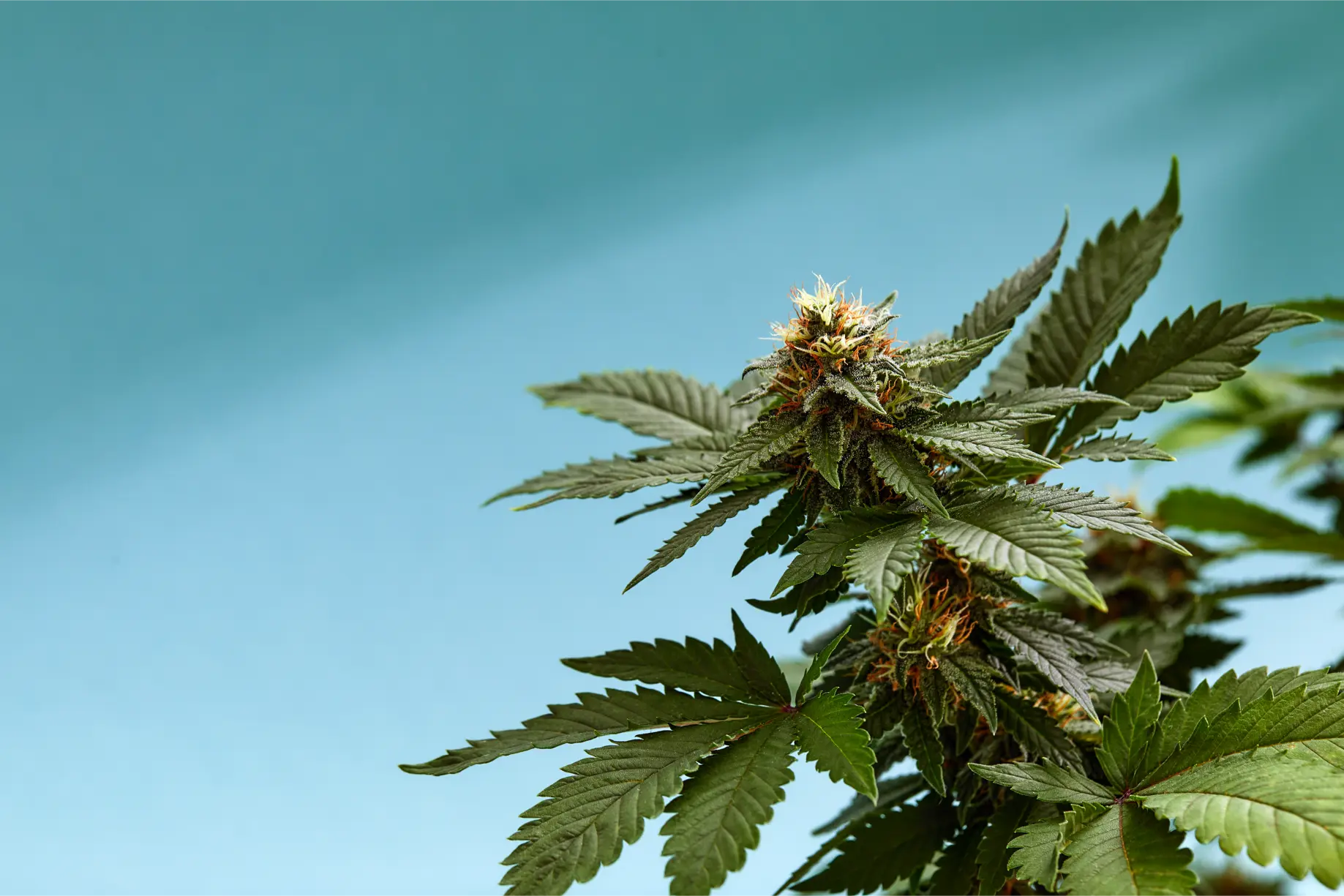
Skunk #1
Skunk #1 is a classic three-way hybrid built from Afghani, Acapulco Gold, and Colombian Gold genetics. It still gives growers what many modern plants do not: vigorous vegetative growth, moderate manageable stretch, strong branching, dense spear-shaped buds and a balanced high that begins bright before settling into a grounded body finish.
Skunk #1 remains one of the most consequential cannabis cultivars ever stabilized: a classic three-way hybrid built from Afghani, Acapulco Gold, and Colombian Gold genetics, first developed in California and later preserved through the broader Skunk family. Its importance is not just historical. It still offers what many modern growers want: vigorous vegetative growth, moderate and manageable stretch, strong branching, dense spear-shaped buds, reliable response to topping and canopy training, and a balanced effect profile that combines a bright mental lift with a grounded body finish. The trade-off is equally classic: dense flowers and a pungent bouquet mean late-flower humidity discipline, strong airflow, and careful post-harvest handling matter more than flashy feeding tricks. In practical terms, Skunk #1 is best understood as a fast, productive, medium-height, medium-to-high-yield photoperiod hybrid that rewards stable inputs, moderate nutrition, and a slow, terpene-conscious dry and cure.
Strain Features
| Genetic profile | Classic three-way hybrid with indica- and sativa-leaning expressions across preserved lines |
|---|---|
| Core lineage | Afghani × Acapulco Gold × Colombian Gold |
| Flowering time | Usually 7–9 weeks indoors |
| Outdoor finish | Late September to early October in suitable northern climates |
| Height | Medium indoors; medium to tall outdoors with longer veg and root volume |
| Yield | Medium to high; efficient in SOG and SCROG |
| Grow difficulty | Easy to moderate |
| Bud structure | Dense, resinous, spear-shaped colas with a favorable flower-to-leaf ratio |
| Main risk | Dense late-flower colas under excess humidity or stagnant air |
Genetic Lineage
The broad consensus on Skunk #1’s lineage is clear even when fine historical details differ: it emerged from combining an Afghani indica base with Acapulco Gold and Colombian Gold sativa inputs, and it was developed in California in the early era of intentional hybridization associated with early California breeders and an early breeder, widely known as a key early breeder. A 2026 breeder-history interview attributed the original selection work to one of roughly 30 early hybrid lines and describes repeated inbreeding and selection to produce a more reproducible type, while user-report datasets and historical strain histories likewise frame Skunk #1 as a globally influential stabilized hybrid rather than a loose one-off cross.
That history matters horticulturally. Skunk #1’s reputation for vigor, uniformity, and broad adaptability is not accidental branding language; it is the result of selection pressure toward a plant that could be cloned, bred, and run repeatedly with fewer surprises than the landrace-heavy or highly segregating lines that preceded it. In practical grow-room terms, that shows up as repeatable branch spacing, a moderate rather than extreme stretch phase, thick enough stems to carry weight, and a plant that takes well to both many-small-plant SOG cultivation and broader topped/trellised canopies.
Effect Breakdown
Skunk #1’s effect profile is best described as balanced and old-school rather than maximalist. user-report datasets’s user dataset clusters around hungry, happy, euphoric, and relaxed, and long-form user reviews often describe a giggly uplift that settles into a steady body ease rather than a narcotic crash or a racing haze-like mental spike. That makes the cultivar unusually versatile compared with more polarized modern chemovars: a small dose can feel social and functional, while a larger one becomes more body-centered and appetite-forward.
The potency profile also explains why Skunk #1 still has a loyal following. A grow report that lab-tested one indoor run at 15.81% THC and user-report datasets’s widely cited strain average around 17% both place it below the showiest contemporary “numbers weed,” yet a user-report datasets feature on the return of skunk-style cannabis argues that terpene richness and whole-profile intensity help explain why many growers and smokers continue to experience Skunk lines as potent in practice even when raw THC percentages are moderate.
For sensitive users, the balanced nature of the experience is a strength but not a free pass. user-report datasets user reports still list paranoia among the recurring negatives, which means Skunk #1 should be framed as approachable, not automatically low-risk. In editorial terms, it is friendlier than many high-THC modern exotics, but it still deserves normal dose discipline.
Skunk #1 is approachable, not harmless. Its moderate THC range can still feel intense for sensitive users or at high dose, and dense late-flower buds need serious humidity control.
Flavor & Aroma Profile
is frequently reduced to the single word “skunky,” but that shorthand misses the actual stack. The consistent sensory frame is pungent musk over damp earth, with a sour-sweet top note that can lean toward lemon peel or slightly fermented citrus, plus background pine and a faint floral sweetness when the flower is dried and cured well. user-report datasets’s flavor tags emphasize skunk, pungent, and earthy, while terpene-profile products and historical grow reports repeatedly add sweet, fruity, lemon-peel, or pine-spice accents.
One important modern correction belongs in any rigorous Skunk #1 flavor discussion: the famous “skunk” note is not explained by terpenes alone. ACS Omega work identified a family of prenylated volatile sulfur compounds in cannabis and concluded that these sulfur volatiles, especially compounds such as 3-methyl-2-butene-1-thiol and related VSCs, are primary contributors to the plant’s true skunk-like odor. That matters because growers who lose the sulfur-heavy edge during drying often blame genetics, when in reality they may be volatilizing or masking the very compounds that make Skunk #1 smell truly “dirty,” “rank,” or “roadkill-adjacent” rather than merely earthy or sweet.
Dominant Terpenes
for Skunk #1, based on user-report datasets strain data and modern terpene-profile references, is myrcene in first position, with limonene and pinene commonly present in meaningful secondary roles. Some preserved lines and grow reports also show caryophyllene and linalool contributing to the finishing notes, which fits the cultivar’s combination of musk, citrus brightness, pine lift, and occasional spice.
| Compound | Contribution |
|---|---|
| Myrcene | Musky earth, herbal depth and body-calming weight |
| Limonene | Citrus-peel brightness and a cleaner lift |
| Pinene | Pine, freshness and a clearer top note |
| Caryophyllene and linalool | Peppery warmth, floral softness and a rounded finish |
| Prenylated sulfur compounds | The acrid, rank, genuinely skunky edge that terpenes alone do not explain |
Terpenes explain much of the earthy, citrus and pine profile, but the last row matters just as much. The recognizable Skunk character depends on sulfur-rich volatiles that can disappear when flower is dried too warm, too quickly or handled roughly.
Indoor vs Outdoor Growing
| Dimension | Indoor | Outdoor |
|---|---|---|
| Best use case | Reliable production, odor control, mother/clone workflows, SOG or SCROG | Temperate-to-warm climates, greenhouse runs and dry autumn zones |
| Stature | Medium and easy to shape | Medium to tall with longer veg and larger root volume |
| Finish | Usually 7–9 weeks | Usually late September to early October |
| Main risk | Stagnant air and dense interior humidity | Autumn rain, dew retention and botrytis in dense colas |
| Best training | SOG, topping plus LST, compact SCROG | Early topping, lateral opening, staking and selective thinning |
Skunk #1 is highly adaptable, but it is strongest indoors, in a greenhouse, or outdoors where dense flowers do not have to finish through a long wet autumn.
Do not mistake Skunk #1’s forgiving vegetative behavior for late-flower immunity. A crowded canopy, wet leaves at lights-off and weak air exchange can turn compact colas into a botrytis risk.
Strain-Specific Grow Guidance
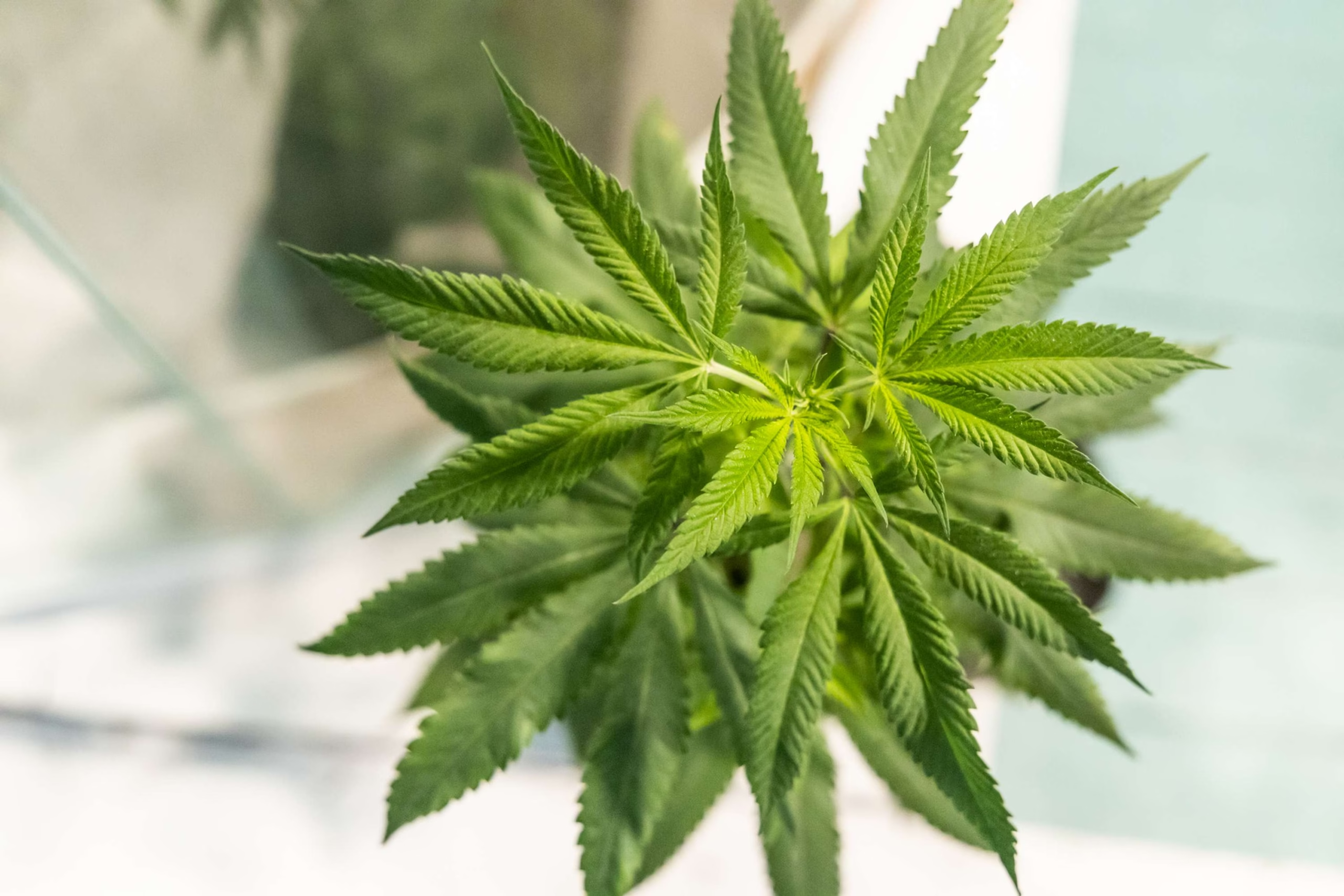
Morphologically, Skunk #1 behaves like the kind of hybrid breeders spent decades trying to recreate: vigorous in veg, structurally cooperative, reasonably homogeneous, and capable of building dense, spear-shaped colas with a good flower-to-leaf ratio. Grow reports describe thick stems and branches, average indoor height, and large dense buds, while recent strain syntheses emphasize topping and LST as especially effective because the plant’s natural architecture responds cleanly to canopy leveling.
The flowering stretch is usually meaningful but not unruly. In practice that means Skunk #1 does not demand the constant vertical crisis management associated with narrow-leaf sativas, yet it still gains enough height after flip that a grower should not pack the tent to 100% before 12/12. A practical target is to fill a SCROG net to roughly 70–80% before the light cycle change, then spend the first 10–14 days of flower tucking and spreading the canopy rather than doing heavy cutting. That recommendation is an inference from Skunk #1’s moderate stretch, its proven SCROG suitability, and the broader logic of even-canopy management.
The cultivar is also very usable in SOG. Multiple Skunk #1 references explicitly note SOG suitability, and its historical reputation for uniformity is exactly what makes single-cola or short-veg multi-plant systems efficient: plants finish within a narrower window and present fewer outlier phenotypes than many more modern polyhybrids. If a grower wants the fastest room turnover, Skunk #1 is more naturally at home in SOG than in very long vegetative sculpting runs.
A practical indoor staging plan looks like this. Rooted cuts or seedlings do well under relatively gentle light, then respond well to medium veg intensity and strong but not excessive flower intensity. A widely used practical lighting framework for non-CO₂ indoor cultivation is about 100–300 µmol/m²/s for seedlings and cuttings, 400–600 µmol/m²/s in vegetative growth, and about 700–900 µmol/m²/s in flower. For environment, a conservative Skunk #1 target is 24–26°C and 65–75% RH for propagation, 23–28°C and 55–65% RH in veg, then 20–26°C in flower with RH lowered from roughly 50–55% early to 40–50% late, tightening toward the drier end as buds harden. These are not Skunk #1-exclusive values, but they fit the cultivar unusually well because its dense late flower makes humidity control more important than with airier, narrower-budded lines.
A practical veg length depends on method. For SOG, short veg from rooted clone is enough. For topped multi-branch plants, about 3–5 weeks is usually sufficient. For a screen run, about 4–6 weeks is the more realistic window if the objective is to fill the net without forcing excessive stretch afterward. That timing is an operational inference based on Skunk #1’s vigor, moderate stretch, and repeated description as a forgiving indoor cultivar rather than a dwarf or an uncontrolled vine.
Nutritionally, Skunk #1 should be treated as a moderate feeder. There is no Skunk #1-specific peer-reviewed fertigation paper, so the most rigorous approach is to combine its grower reputation with broader cannabis nutrition data. A major flowering-stage study in soilless cannabis predicted maximal yield around 194 mg/L nitrogen and 59 mg/L phosphorus, while finding no yield response to potassium across a fairly wide range, which directly challenges the common habit of oversupplying bloom boosters. The most practical implication for Skunk #1 is simple: do not try to “force” density with aggressive late PK stacking. This cultivar usually does better on steady, moderate fertility that keeps the leaf canopy healthy without pushing dark, nitrogen-heavy foliage deep into late flower.
Because growers still need working numbers, the following feed ranges are best treated as operational assumptions rather than strain-certified absolutes. In coco or hydro, a conservative start is roughly 0.6–0.8 mS/cm for seedlings, 1.0–1.4 in early veg, 1.3–1.6 in late veg and pre-flower, 1.6–1.9 at peak flower, then 1.2–1.5 during ripening. In soil, let the substrate do more buffering and resist the urge to chase runoff chemistry every irrigation. For pH, a practical cannabis norm remains about 6.0–7.0 in soil and about 5.8–6.3 in coco/soilless systems. None of these numbers are unique to Skunk #1, but they are appropriately conservative for a cultivar that rewards steadiness more than force.
Water behavior should follow the same philosophy. Skunk #1 is vigorous, but vigor should not be confused with wanting a saturated root zone. In soil, it benefits from clear wet-dry cycles and full root-zone oxygenation; in coco, it performs best with frequent but well-drained irrigation rather than chronically swampy media. This is a reason Skunk #1 has historically fit so many different systems: it is not especially fussy, but it does show the generic cannabis penalty for poor oxygenation quickly in leaf posture and slower flower set.
Defoliation should be selective, not theatrical. Dense-branching female cannabis naturally creates humid interior zones, and a florogenesis paper emphasizes that female inflorescences are structurally dense by nature. For Skunk #1, the goal is to remove the leaves and lower shoots that trap air or will never reach useful light, while preserving enough healthy surface area to keep flower bulking steady. The best time for major structural cleanup is late veg and the first two weeks of flower. Once the canopy hardens into bud set, only minimal interior thinning should continue.
Humidity and airflow management are central, not optional. Peer-reviewed work on cannabis diseases and bud rot shows botrytis thrives under wet, humid conditions, with destruction of inflorescences possible at high relative humidity and moderate temperatures, and a 2025 review reported that enhanced air circulation around cannabis inflorescences reduced bud rot incidence by 66–92%. Related humidity research also shows elevated canopy RH can delay flowering and reduce biomass and cannabinoid concentrations. For Skunk #1, whose buds are commonly described as dense rather than airy, that means every serious grow plan should include active canopy airflow, dehumidification capacity, branch spacing, and a lower late-flower RH target.
Pest and disease susceptibility needs one careful distinction. I did not find a peer-reviewed paper proving that Skunk #1, specifically, is more vulnerable to particular pests than other cultivars. So the rigorous statement is narrower: Skunk #1’s dense late-flower structure raises practical botrytis risk when environmental control is weak, and like many cannabis cultivars it remains exposed to powdery mildew in humid, crowded, or poorly ventilated conditions. Ordinary cannabis IPM applies: clean intake, dry leaf surfaces, aggressive scouting, quarantine of incoming clones, and a hard line against wet canopies entering the dark cycle.
Harvest timing should be driven by structure and resin maturity, not only the calendar. In most runs, Skunk #1 lands somewhere in the 7–9 week window, but modern syntheses and harvest guidance suggest the most balanced result arrives when trichomes are mostly cloudy with only a small amber fraction, roughly 5–15%, assuming calyxes have swollen and fresh pistil production has largely slowed. Earlier cuts hold a brighter, more “up” effect; later cuts trade some clarity for a heavier body finish.
Outdoor strategy should be practical rather than romantic. Give Skunk #1 full sun, morning airflow, and enough lateral spacing that branches do not weld into a damp wall by late season. Top early if the plant will be large, stake or trellis before colas gain mass, remove weak interior growth before mid-flower, and be ready to harvest slightly earlier rather than riding into extended autumn rain. In dry-temperate climates this cultivar can be excellent outdoors; in persistently damp northern fall conditions, greenhouse protection or a faster descendant may be the smarter choice.
Can I push Skunk #1 with more bloom booster to make the colas denser?
Question sent by: Jordan P., via e-mail
Usually, no. This cultivar gains more from a healthy root zone, an even canopy and a dry late-flower room than aggressive PK stacking. Protect the density already built instead of chasing one last forced swell.
Weedth Bud Flavor Tips
If the goal is not just yield but true Skunk #1 character, post-harvest handling has to be treated as part of cultivation rather than an afterthought. The most widely cited traditional drying band for cannabis remains about 18–21°C with roughly 50–55% RH in darkness, and modern drying reviews warn that higher or less controlled drying accelerates volatile loss, especially among the lighter aromatic compounds that give flower its brightness and cultivar identity. For Skunk #1, that means warm, fast drying tends to erase the lemon-peel and pine lift first, leaving only a flatter earthy-musk profile.
Skunk #1 adds one more wrinkle: its signature odor also depends on sulfur compounds, not just terpenes. If a jar loses that sharply nasty sweet-rank edge and becomes merely “earthy,” the problem can be chemical attrition rather than poor genetics. The more the flower is exposed to heat, rough handling, and uncontrolled airflow, the greater the chance that the skunk-register volatiles disappear before curing ever begins.
Trim strategy matters. A 2024 trimming study found that mild pre-drying trimming improved cannabinoid concentration more than other methods, but post-drying trimming delivered the highest terpene content. The practical compromise for Skunk #1 is contextual. If the drying room tends to run humid, remove the large fan leaves up front to prevent moisture traps, then finish with a dry trim. If the room is already within a safe drying band, keep more leaf during dry to slow moisture loss and protect aroma, then trim once the flower is ready.
For cure, the emphasis should be stability rather than folklore. Keep the flower in a cool, dark, airtight environment once the stems have reached a proper dry snap and the buds no longer feel wet in the center. A calm, several-week cure usually rounds the sulfur-musk harshness into something more complex and merges the myrcene-driven earthiness with the limonene/pinene top note. The evidence base on cannabis cure remains thinner than grow-room agronomy, but the consensus from drying and storage research is strong enough: volatile retention improves when temperature and humidity swings are reduced and the material is not pushed hot, fast, or rough.
Weedth Bud Boost Tips
Skunk #1 generally gains more from architecture and root health than from exotic interventions. A flowering-stage cannabis nutrition study found inflorescence yield correlated strongly with overall plant size and root development, which means the highest-return “booster” is usually not a bottle; it is building enough healthy canopy and root mass before flower begins. In practical terms, that means clean propagation, no root-zone oxygen bottlenecks, enough veg time for the chosen method, and a canopy that can intercept light evenly.
For SOG, the highest leverage move is uniform clone selection and fast flip timing. For topped plants or SCROG, the highest leverage move is early shaping and disciplined stop points: top once or twice, spread branches, then stop heavy stress by the end of early stretch. Skunk #1’s natural vigor does the rest if the screen is even and the room is adequately bright.
Late flower is where growers often sabotage Skunk #1. The temptation is to chase density with extra feed, warmer rooms, or overstuffed canopies. The better tactic is the opposite: hold a drier, cleaner room; support branches if necessary; keep nitrogen from lingering too long; and preserve airflow through the center of the plant. With this cultivar, protecting what has already been built is usually more valuable than trying to force one last swell.
Medical Uses & Benefits
A rigorous Skunk #1 profile should separate anecdote from established medicine. Strain-specific medical evidence in controlled trials is not available, so the safest language is that Skunk #1 is commonly sought by users for stress, low mood, appetite stimulation, and general relaxation. user-report datasets’s user-reported “helps with” categories most often include stress, anxiety, and depression, but those are self-reports and not clinical outcomes.
What can be added, cautiously, is terpene plausibility. Reviews of cannabis-prevalent terpenes note that myrcene has documented analgesic, anti-inflammatory, and sedative activity in preclinical literature; limonene has anxiolytic and mood-related evidence; pinene has research relevance for neurologic and psychiatric parameters; and β-caryophyllene is a CB2 agonist with anti-inflammatory and broader therapeutic interest. None of that proves a medical indication for Skunk #1 itself, but it helps explain why a balanced, myrcene-led Skunk profile is often experienced as both emotionally easing and physically settling.
Ideal User Profile
Skunk #1 is ideal for the user who wants a genuinely classic hybrid rather than a hyper-specialized modern effect. It suits people who value aroma complexity, broad usability, and a middle-path high that can lift mood before settling the body. It is especially well matched to consumers who miss the old-school “real skunk” register and are not chasing only the biggest THC number on the label.
For growers, it fits three profiles exceptionally well: beginners wanting a first serious photoperiod; intermediate cultivators who want a dependable mother-and-clone workhorse; and experienced gardeners building efficient SOG or SCROG runs in small-to-medium spaces. It is less ideal for growers who live in very wet, cold finishing climates without greenhouse protection, and less ideal for smokers who want extremely niche terpene expressions such as pure dessert, gas-only, or electric daytime sativa focus.
Grower Notes and Feedback
The grower consensus around Skunk #1 is remarkably stable across decades: it roots well, grows quickly, shapes easily, and rewards repeat runs. One flowering diary noted clear stretch during early bloom under routine indoor conditions, and a coco grow diary specifically praised Skunk #1 cuttings for rooting unusually fast and vegging aggressively enough to justify keeping it as a long-term mother candidate. Those reports are anecdotal rather than scientific, but they align closely with the cultivar’s long-standing reputation for utility and reproducibility.
At the same time, modern growers repeatedly return to the same caution: dense buds need disciplined air exchange and a dry finish. That is why Skunk #1 can feel “easy” in one room and strangely troublesome in another. The plant itself is forgiving; the flower architecture is less so.
Weedth Editor’s Note
I have always found Skunk #1 easier to read than many newer, more temperamental hybrids. On a compact indoor run, I topped it once, opened the laterals early and stopped trying to “improve” the structure once the first stretch had established the canopy. The difference came late in flower: I kept the middle of the plant open, lowered humidity before the colas hardened and gave the branches simple support rather than more feed.
The most memorable jar from that run was not the biggest plant. It was the one I dried slowly enough for the sharp, sweet-rank edge to return after a few weeks of cure. At first it was mostly earth and green plant material. By the third week, the pine and citrus top note appeared, then the unmistakable dirty Skunk note followed. Skunk #1 rewards calm, repeatable decisions more than heroic interventions.
Weedth Score
Growing Experience: 8.8/10. Vigorous, trainable and dependable across common systems, with late-flower humidity as the meaningful caveat.
Bud Structure & Visual Appeal: 8.7/10. Dense, resinous spear-shaped colas and a favorable flower-to-leaf ratio.
Aroma Complexity: 9.3/10. Musk, damp earth, sour-sweet citrus, pine and true sulfur-driven Skunk character give it a profile that still stands apart.
Flavor & Smoothness: 8.9/10. Excellent after a cool, patient dry and cure; warm rushed handling noticeably flattens it.
Effects & High Experience: 8.8/10. A broad, balanced hybrid effect that can feel social at modest dose and more body-centered later.
Overall Satisfaction: 9.0/10. A foundational cultivar that still earns space in a modern garden.
FAQ
Is Skunk #1 beginner-friendly? Yes, by photoperiod standards. It responds to ordinary training and does not demand unusual inputs, but it is not set-and-forget once dense flowers form.
Is it better indoors or outdoors? Indoors and greenhouses give the grower the strongest control over odor, humidity and drying conditions. Outdoor runs can be excellent if the finishing window is dry.
Does it work in both SOG and SCROG? Yes. SOG favors fast turnover and uniform plants; SCROG uses its cooperative branching and moderate stretch to make efficient use of a small room.
When should I harvest? The usual indoor window is 7–9 weeks. For a balanced expression, watch for swollen calyxes and mostly cloudy trichomes with only a small amber fraction.
Why did the cured flower lose its Skunk smell? Fast, warm drying and rough handling can strip the lighter terpenes and sulfur-rich volatiles that create the true pungent note.
Similar Strains
Early Skunk: A useful family branch for growers concerned about a wet outdoor finish.
Super Skunk: Pushes the family toward more density and deeper, heavier pungency.
Cheese: Carries the old Skunk-family funk into a tangier, savory register.
Island Sweet Skunk: Keeps the family identity while lifting it toward a sweeter, brighter and more energetic expression.
Share this article
A quick overview of the topics covered in this article.
Follow us
Latest articles
September 26, 2026
September 26, 2026
September 26, 2026
September 26, 2026