
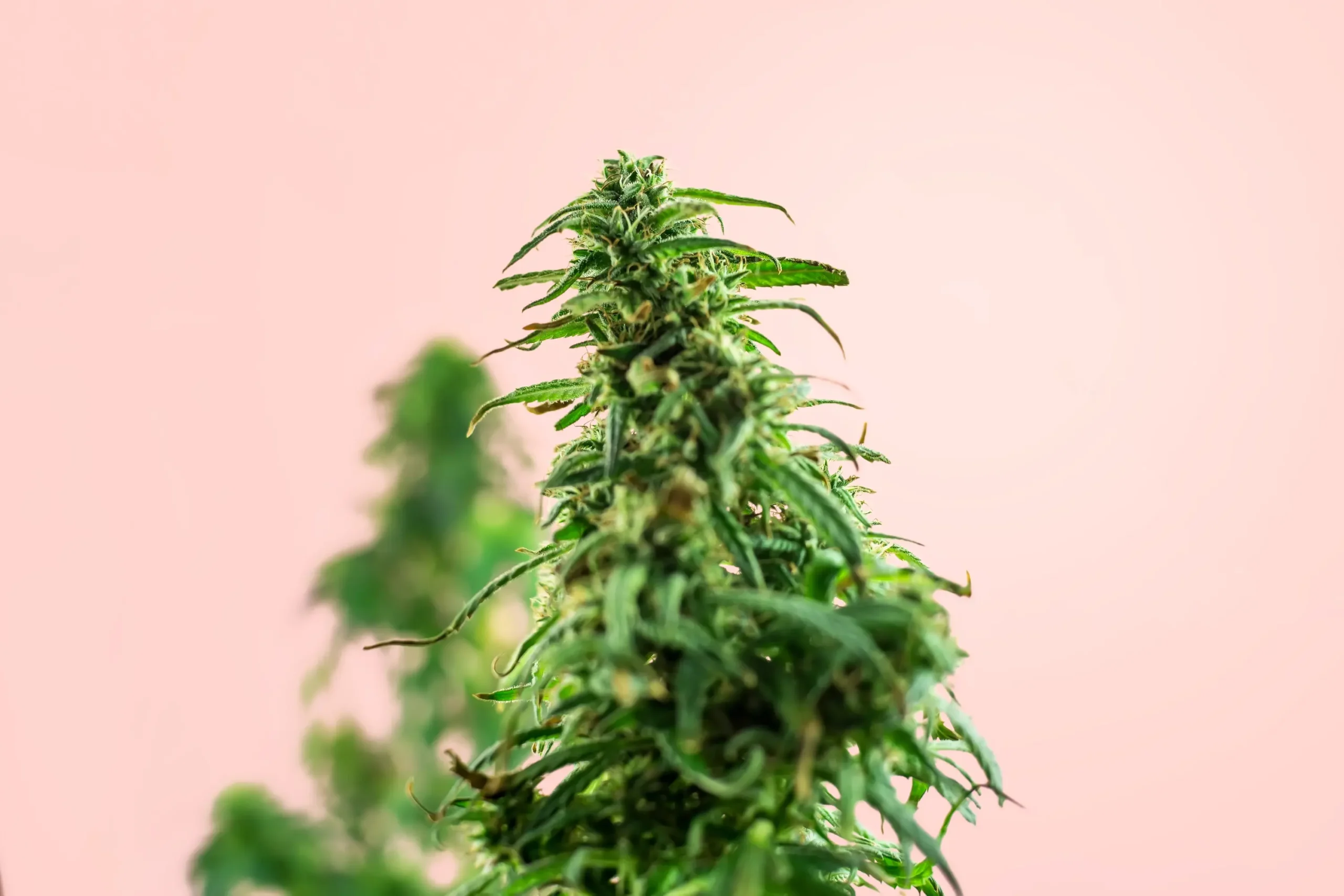
Space Monkey
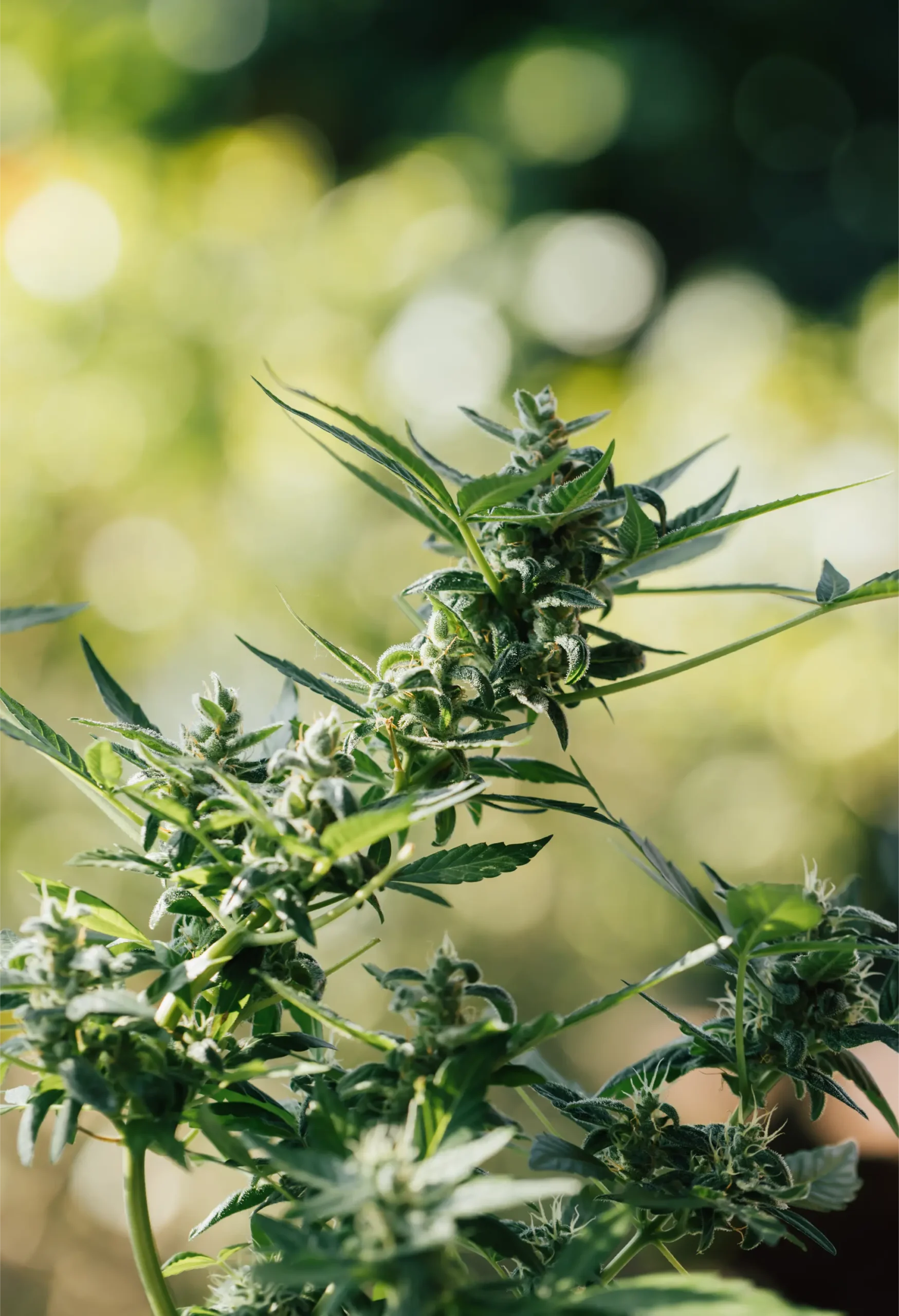
A heavyweight, resin-drenched artisanal masterpiece bred by the legendary botanical visionary Bodhi Seeds, Space Monkey is an overwhelmingly potent 60% indica / 40% sativa hybrid engineered by crossing the world-famous sticky resin monster Gorilla Glue #4 (GG4) with Bodhi’s flagship pollen donor Wookie #15 (Big Sour x Appalachia). Generating elite cannabinoid concentrations that test reliably between 24% and 28% THC alongside a lavish, frosted coating of bulbous trichomes, Space Monkey unites the industrial chemical gas and couch-locking physical stone of GG4 with the complex lavender, sweet grape musk, and earthy pine terpenes of the Wookie father. Delivering an immediate cerebral expansion that dissolves mental stress before cascading into a deep, weighted physical melt, Space Monkey is an extraordinary choice for evening decompression, chronic pain management, and profound physical recovery.
Strain Features
| Feature | Details |
|---|---|
| Strain Type | Indica-leaning hybrid with meaningful phenotype variation |
| Genetic Profile | Gorilla Glue #4 x Wookie #15 |
| THC | Commonly reported from the mid-teens into the low-to-mid 20% range, with batch variation |
| CBD | Usually low |
| CBG | Some tested products report measurable CBG near 1%, but this is not universal |
| Dominant Terpenes | Pinene, beta-caryophyllene, and limonene are frequently reported; linalool and terpinolene may be important in some samples |
| Flavor and Aroma | Pear, grape, lavender, pine, woody herbs, wine cork, sour fuel, pepper, and light citrus |
| Effect Character | Relaxing, happy, meditative, and creative with dose-dependent sleepiness |
| Flowering Time | Approximately 9 weeks in many descriptions; some grow reports extend closer to 10 to 11 weeks |
| Stretch | Average overall, with indica and sativa-leaning differences |
| Plant Architecture | Very bushy, many side branches, medium height, and variable branch strength |
| Bud Structure | Small-to-medium rounded or grape-shaped flowers, heavy resin, and a favorable bud-to-leaf ratio in selected plants |
| Yield Potential | Medium-high to high, depending on phenotype and branch support |
| Grow Difficulty | Intermediate |
| Primary Quality Risk | Treating a variable seed population as uniform and losing branches or quality through late support and mixed harvest timing |
Genetic Lineage
Gorilla Glue #4 gives Space Monkey its adhesive resin, sour chem, and branching drive. It also contributes the tendency for a plant to look structurally capable in early flower, then begin leaning once the flowers gain weight. The Glue side can create gas-heavy, peppery expressions with dense trichomes and a strong body effect.
Wookie #15 contributes a very different aromatic language. Lavender, grape, floral spice, and wine-like notes may appear, sometimes with a dry cork or cellar impression. This parent can also shift the effect from pure heaviness toward a calmer, more meditative creativity. Users may feel physically relaxed while remaining interested in music, conversation, or thought.
The genetic contrast produces real phenotype separation. Indica-leaning plants are often bushier, darker, and more compact. Their aroma may emphasize gas, spice, berries, and earth. The effect can feel like a warm physical embrace with enough mental activity to avoid becoming dull.
Sativa-leaning plants may yield more, stretch slightly farther, and form less visually dense buds. Their aroma can move toward grape wine, pear, floral herbs, and cork. Some growers prefer the effect of these plants even when the bag appeal is lower. The mental phase can become more thought-provoking or creatively active while the body remains calm.
A third category is possible: an early, resinous plant with limited aroma. This is an important warning against selecting by speed and frost alone. A plant can finish early, look excellent, and still produce forgettable cured flower. Space Monkey is particularly suited to a keeper process that includes smoke or vapor evaluation after several weeks of cure.
The line is often described as a good producer, but yield should be interpreted by phenotype. A taller open plant may produce more total mass. A compact gas-heavy plant may produce a higher percentage of dense premium flower. The best choice depends on the garden's goal.
The pedigree of Space Monkey represents one of the most celebrated crosses in the Bodhi Seeds catalog. Maternal parent Gorilla Glue #4, selected by Joesy Whales and Lone Watty from a cross of Chem’s Sister x Sour Dubb x Chocolate Diesel, brought legendary trichome production, sticky bag appeal, and crushing physical potency. Pollen donor Wookie #15, an elite male combining Big Sour with High Country Diesel and Green Crack genetics via Appalachia, introduced deep lavender floral notes, sweet musky grape undertones, and sturdy branch architecture that eliminates the floppiness of GG4.
Effect Breakdown
The opening mood shift
Space Monkey commonly begins with happiness, ease, and a low-pressure mental lift. The user may feel more amused, conversational, or emotionally settled. The onset is not always energetic in the traditional sense. It can feel like mental noise has been reduced while sensory interest remains.
Pear, pine, and lavender-forward batches often feel smoother and more daytime-compatible. Gas-heavy examples may create a faster body presence and a stronger sense of weight.
Creative calm
One of the cultivar's most distinctive qualities is a meditative creative state. The user may want to listen to music closely, play an instrument, write, or think through an idea without urgency. The body can feel relaxed while the mind remains positively occupied.
This differs from a sharp sativa effect. Space Monkey is less likely to create restless productivity and more likely to support focused enjoyment. The user may become absorbed rather than driven.
Physical relaxation
The Glue side becomes clearer as the effect develops. Muscles soften, the body feels warmer, and physical discomfort may become less noticeable. At a moderate dose, this relaxation can remain functional. At a larger dose, movement feels less appealing and the user may prefer a seated activity.
Indica-leaning phenotypes can produce a stronger body effect and more appetite. Sativa-leaning plants may maintain mental activity longer.
Late phase and tolerance
Sleepiness varies. Some users describe Space Monkey as suitable for daytime because it calms without knocking them out. Others find the later phase heavy enough for evening use. Harvest maturity, phenotype, and dose all influence the outcome.
Dry mouth and dry eyes are common. Headache or dizziness may occur, especially with stronger batches. Low-tolerance users should start slowly despite the strain's relaxed reputation.
Consuming Space Monkey produces a multi-layered, deeply immersive high that engages both mind and body with immense force. The experience begins with an instant cerebral rush behind the eyes and temples, wiping away mental exhaustion, quieting racing thoughts, and replacing stress with a detached, dreamy state of euphoria. Over the following half-hour, the powerful GG4 indica ancestry takes full control of the somatic system, systematically loosening muscular knots, soothing joint inflammation, and anchoring the body to the furniture in an uncompromising state of peaceful couch-lock.
| Phase & Time Window | Mental & Emotional State | Physical & Somatic Sensation | Ideal Setting & Pairing |
|---|---|---|---|
| Cosmic Lift (0 to 15 Minutes) | Instant cerebral elevation, dreamy euphoric detachment, mental stress release | Warm tingling at base of skull, heavy eyelids, facial muscle loosening | Late-evening decompression, sofa lounging, listening to psychedelic rock |
| Gravity Lock (15 to 75 Minutes) | Quiet, contemplative peace, happy mental stillness, dissolution of anxiety | Profound somatic heaviness, full-body pain dampening, intense couch-lock | Watching classic sci-fi films, casual reading, listening to vinyl records |
| Sedative Peak (75 to 150 Minutes) | Tranquil, drowsy headspace, slowed cognitive tempo, peaceful contentment | Deep neuromuscular relaxation, limb heaviness, yawning reflex | Warm herbal tea, stretching under cozy blankets, preparing for bed |
| Deep Orbit Slumber (150 to 240+ Minutes) | Total mental serenity leading smoothly into deep, restorative sleep | Complete physical recovery, zero muscular tension or aches | Deep, uninterrupted nighttime sleep |
Flavor & Aroma Profile
Space Monkey's aroma is not a single fruit or fuel note. The most complete flowers combine sweet pear, grape, lavender, pine, woody herbs, sour glue, and pepper. Certain expressions smell like wine, cork, or a damp wooden cellar. Others lean toward berries and gas.
Indica-leaning aroma
Compact plants often show stronger fuel, pepper, dark berries, and earth. The scent can resemble sour glue softened by floral sweetness. On the exhale, pine and spice may remain longer than fruit.
Sativa-leaning aroma
Taller or more open expressions may emphasize grape wine, pear skin, lavender, and woody cork. The aroma can feel dry rather than sugary. These plants sometimes have less dramatic visual density but more unusual flavor.
Jar development
Freshly dried flower may smell mainly of fuel and herbs. During cure, grape, pear, and lavender can emerge more clearly. A rushed dry leaves the gas and wood while removing the floral top layer.
Inhale and exhale
The inhale is often smooth, sweet, and lightly floral. Pear, grape, and lavender may appear first. The exhale becomes piney, woody, peppery, and sour. A Glue-heavy cut may finish with chem and earth. A Wookie-heavy cut may leave floral spice and wine skin.
Wine cork as a phenotype marker
The cork-like note reported in selected plants is useful because it separates Space Monkey from generic grape hybrids. It may resemble dry wood, cellar air, or the inside of a recently opened wine bottle. This note is not always present, but when it appears beside grape and lavender it can define a keeper.
Why bag appeal and flavor may disagree
A dense purple flower can attract attention while curing into ordinary gas. A looser green plant may retain the most complex wine-lavender flavor. The cultivar should be judged after cure and use, not only by photographs.
The flavor and aroma profile of Space Monkey is an intoxicating fusion of industrial gas and exotic floral musk. Breaking apart a cured, diamond-frosted nugget releases an intense aroma of pungent chemical glue, raw diesel fuel, sweet lavender blossoms, candied dark grapes, and damp forest loam. On the inhale, the smoke is remarkably thick, smooth, and expansive, coating the palate in sweet floral pine, sour fuel, and grape musk. The exhale leaves a lingering, oily coating of black pepper, roasted earth, and skunky diesel that clings to the tongue for over thirty minutes.
Dominant Terpenes
| Terpene or Volatile Group | Likely Role in Space Monkey |
|---|---|
| Pinene | Supports pine, woody freshness, and a clearer herbal finish |
| Beta-Caryophyllene | Adds pepper, dry spice, and the Glue-like gas foundation |
| Limonene | Contributes citrus lift, fruit brightness, and positive mood |
| Linalool | May strengthen lavender, floral sweetness, and calm physical effects |
| Terpinolene | Can add floral wood, herbs, and a more unusual sativa-leaning aromatic edge |
| Minor Fruit and Fermentation Volatiles | Likely shape pear, grape, wine, cork, and berry impressions |
Terpene data from commercial samples should be treated as batch-specific. Space Monkey's phenotype range means one sample may be pinene-forward while another emphasizes linalool or caryophyllene. The cultivar identity comes from the relationship between fruit, florals, wood, and glue rather than one fixed ranking.
The grower should protect the floral and wine-like fraction. Pine, pepper, and fuel remain noticeable after a poor dry. Lavender, pear, and cork disappear faster.
| Dominant Terpene | Typical Share (% of Total) | Boiling Point | Aromatic Signature | Pharmacological & Entourage Role |
|---|---|---|---|---|
| Beta-Caryophyllene | 34% to 42% (0.85% to 1.30% dry weight) | 266°F (130°C) | Cracked black pepper, warm woody spice, and pungent chemical fuel | Direct CB2 receptor agonist delivering potent peripheral anti-inflammatory and pain-relieving therapeutic action |
| Beta-Myrcene | 28% to 35% (0.70% to 1.15% dry weight) | 334°F (168°C) | Damp forest earth, mossy loam, and sweet dark grape musk | Increases blood-brain barrier permeability and synergizes with THC to drive profound somatic sedation and muscle relaxation |
| Limonene | 14% to 20% (0.35% to 0.65% dry weight) | 349°F (176°C) | Zesty citrus peel, sharp chemical solvent, and bright fuel | Elevates mood, mitigates mental stress, and drives the exhilarating initial cerebral euphoria |
| Linalool | 8% to 14% (0.20% to 0.45% dry weight) | 388°F (198°C) | French lavender, sweet floral blossoms, and clean herbal musk | Modulates GABA pathways to alleviate anxiety and tension while enhancing the sedative, restful properties of the cultivar |
Indoor vs. Outdoor Growing
| Decision Point | Indoor Growing | Outdoor Growing |
|---|---|---|
| Phenotype Management | Individual plants can be separated and trained according to structure | Wide spacing is needed because phenotype width may vary significantly |
| Canopy Shape | Better suited to SCROG or broad branch training than dense SOG | Early topping creates a wide shrub with many laterals |
| Support | Nets, stakes, or plant yoyos are often necessary | Cages and multiple soft ties protect weaker side branches |
| Flowering Time | Commonly near 9 weeks, but some plants may continue longer | Outdoor harvest can extend into October depending on climate |
| Humidity | Controlled airflow protects dense Glue-leaning flowers | Open sun helps, but morning moisture can remain inside bushy plants |
| Flavor | Stable temperatures preserve lavender, pear, and wine notes | Sun can deepen complexity, while heat can flatten florals |
| Best Fit | Growers willing to phenotype and support branchy plants | Warm, dry climates with room for lateral expansion |
Space Monkey is not ideal for a tightly packed Sea of Green when grown from seed. The population may vary too much in width, branch strength, and finish time. A screen or individually supported plants provide more flexibility.
Indoors, the main advantage is control over separation. Compact phenotypes can be given a longer irrigation interval and more interior thinning. Taller plants can occupy unused screen space. Labeling and movable containers are useful until the structure becomes clear.
Outdoors, the cultivar can create a broad bush with many branches. This shape can yield well, but every side branch should be treated as a future support problem. Install a cage early. Waiting until flowers gain weight leads to repeated handling and damaged resin.
The outdoor finish should be dry enough for Glue-influenced flowers. Open branching helps, but a broad plant can still hold dew in the center. Remove weak interior growth before autumn.
In outdoor environments, Space Monkey develops into a robust, heavily branched bush with thick central stalks capable of supporting colossal floral clusters. It performs exceptionally well in temperate and Mediterranean outdoor climates, such as southern Oregon, the Okanagan Valley of British Columbia, and northern California. Outdoor plants finish reliably between the first and second week of October, yielding bumper harvests of dense, frost-covered colas with striking lavender and purple highlights as autumn nighttime temperatures drop.
Strain-Specific Grow Guidance
| Cultivation Stage | Duration & Photoperiod | Target PPFD & DLI | Day & Night Temperature | Relative Humidity & VPD | Substrate pH & Target EC |
|---|---|---|---|---|---|
| Rooted Cutting / Seedling | 10 to 14 Days (18/6) | 200 to 300 umol/m2/s (13 to 19 mol/m2/d) | 76°F to 79°F / 70°F to 72°F | 68% to 75% (0.7 to 0.8 kPa) | 6.2 to 6.5 pH / 0.8 to 1.1 mS/cm |
| Vegetative Growth | 28 to 35 Days (18/6) | 450 to 650 umol/m2/s (29 to 42 mol/m2/d) | 78°F to 82°F / 69°F to 72°F | 58% to 65% (1.0 to 1.2 kPa) | 6.3 to 6.6 pH / 1.4 to 1.8 mS/cm |
| Early Bloom Stretch (Weeks 1 to 3) | 21 Days (12/12) | 700 to 850 umol/m2/s (30 to 37 mol/m2/d) | 77°F to 81°F / 68°F to 71°F | 52% to 58% (1.1 to 1.3 kPa) | 6.4 to 6.7 pH / 1.8 to 2.2 mS/cm |
| Peak Floral Bulking (Weeks 4 to 6) | 21 Days (12/12) | 900 to 1,050 umol/m2/s (39 to 45 mol/m2/d) | 76°F to 79°F / 65°F to 68°F | 45% to 52% (1.3 to 1.5 kPa) | 6.4 to 6.7 pH / 2.1 to 2.5 mS/cm |
| Ripening & Senescence (Weeks 7 to 9.5) | 17 to 24 Days (12/12) | 650 to 800 umol/m2/s (28 to 35 mol/m2/d) | 70°F to 74°F / 60°F to 64°F | 38% to 44% (1.4 to 1.6 kPa) | 6.5 to 6.8 pH / 0.9 to 1.2 mS/cm |
Grow the first cycle as a phenotype map
Do not let the stretch make the decisions
Space Monkey is best approached with labels and records. Note which plants are compact, which stretch, which drink quickly, and which develop aroma early. Do not assume the tallest plant will yield the most premium flower or the earliest plant will be the best keeper.
Clones should be taken before flowering if keeper selection is the goal. The cured result may reverse the ranking established in the room.
Top once, then observe lateral behavior
One early topping usually reveals the plant's branching tendency. Many phenotypes produce abundant side growth without additional cuts. Spread the main branches and allow the plant to show which shoots can reach the canopy.
Repeated topping can create too many weak side branches. The cultivar already tends to be bushy. Branch quality matters more than count.
Avoid uniform spacing across mixed expressions
Compact plants can occupy less horizontal room but may need more interior clearance. Taller phenotypes should be given screen space rather than forced into the same footprint. If all plants remain in fixed positions, the fastest brancher may shade a slower but more valuable phenotype.
Use a screen for separation and support
A screen works well because it solves two problems. It distributes the many laterals across the light zone and later supports branches that may be weaker than they appear. Fill the screen gradually and avoid crossing branches over one another.
A second layer can hold late flowers. Install it before the resin makes movement difficult.
Thin the center before the bush becomes solid
Remove weak inward-facing shoots and leaves that close the main air paths. The cultivar can produce a very good bud-to-leaf ratio, but a bushy structure still creates hidden contact points.
The correct level of thinning varies by phenotype. An open wine-grape plant may need little work. A compact gas-heavy plant may need entire small branches removed.
Feed at a moderate level until the plant proves demand
Grow reports commonly describe average nutrient needs for an indica hybrid. Space Monkey can tolerate some fluctuation, but heavy feeding is not required to create resin. Begin with a balanced program and increase only when water use, leaf color, and growth support it.
Excess nitrogen worsens the bushy canopy and can delay clean aromatic development. Late salts also reduce smoothness.
Match irrigation to phenotype
A wide compact plant may have a different root-to-canopy ratio than a taller expression. Do not water every container because one plant is dry. Use individual weight and recovery.
During late flower, dense plants may slow water use earlier. Adjust before humidity rises around the root zone and interior canopy.
Support every major lateral
Space Monkey's side branches can be numerous and below-average in strength. A branch that stands well at week five may lean dramatically after the final swell. Nets, stakes, or soft supports should carry the flower before failure begins.
Outdoors, connect support to a stable cage rather than pulling all branches toward the central stem. Separation protects airflow.
Harvest by phenotype, not room average
Some plants may finish near nine weeks. Others may need longer. Compare calyx swelling, pistil activity, trichomes on calyx tissue, water use, and aroma. A bland early plant should not be kept simply because it finishes first.
Indica-leaning phenotypes may show physical maturity earlier, while open sativa-leaning plants continue stacking. Separate harvest dates are normal in a seed run.
Grade flower before drying
Round compact buds, long open flowers, and leafy lowers lose moisture differently. Sort the harvest by structure. The densest Glue-leaning tops need space and time. Looser wine-grape flowers may dry faster and should be removed separately.
Manage sex identification without losing the best structure
Space Monkey has commonly circulated as regular seed, so a seed-grown run may include male and female plants. The early canopy should remain flexible until sex becomes clear. Avoid building one irreversible screen around every plant before the population is identified.
Take labeled cuttings before the final selection if breeding or keeper work is planned. A promising female may reveal itself only after flower aroma develops, while a structurally interesting male may show useful branching, stem aroma, or early resin near the floral clusters. Growers who are not breeding should remove males promptly once confirmed, but they should do so without damaging neighboring roots or branches.
When several plants share a container or tightly interlocked screen, removal becomes difficult. Individual containers and branch lanes make the sexing period safer. This is another reason Space Monkey performs better in a flexible phenotype layout than a dense single-style canopy.
Use preflower timing as a phenotype clue
Early preflower does not automatically mean early harvest, but it can help classify the population. A compact plant that shows sex quickly may begin flower formation sooner and finish with a heavier body effect. A taller plant may show later and continue stacking after the compact plants look complete.
Record the interval from photoperiod change to visible flower, not only the final day count. This reveals which plants are truly fast and which simply color or frost early. The record becomes especially useful when clones are run again.
Separate branch weakness from branch flexibility
Some Space Monkey branches bend easily without being unhealthy. Flexible stems can be guided across a screen and may carry weight well when supported. Weak stems remain thin, collapse at nodes, or fail to harden as flowers develop.
Support should work with flexibility. Tie branches at multiple gentle points rather than using one tight attachment near the top. A single heavy cola can lever a flexible branch downward even when the lower stem is healthy. Distributed support protects the entire line of flowers.
Build an outdoor plant for inspection
Outdoor Space Monkey can become broad enough that the center is physically inaccessible by late summer. Create walking or reaching lanes while the plant is young. Remove branches that grow directly toward the central trunk and preserve an open bowl or candelabra structure.
This design makes it possible to inspect for caterpillar damage, trapped leaves, and internal moisture. It also allows late support to be attached without crawling through resinous branches. Outdoor yield is not only a question of plant size. It is a question of how much of the plant can still be managed in September and October.
Use the cure to compare effect, not only flavor
Space Monkey phenotype selection should include a controlled effect comparison. Use similar amounts, similar time of day, and similar setting. One plant may feel deeply calming but mentally flat. Another may feel creative and meditative with less physical relief. A third may be potent but anxious.
Aroma can guide selection, but the line is valued for the relationship between calm and creativity. The keeper should match the intended use. A flower producer may choose the best overall balance, while a personal garden may keep both a gas-heavy evening cut and a wine-grape daytime cut.
Use post-harvest structure to refine the next canopy
After trimming, compare how each phenotype produced flower along the branch. Some plants may form isolated round buds with clean stem spacing. Others may build longer connected flowers that require more airflow and support. This physical map should influence the second-cycle pruning plan.
If a plant produced excellent tops but excessive lower popcorn, remove more inner shoots next time. If a wine-grape phenotype produced long but airy branches, improve light placement rather than forcing heavier feed. The dried branch tells the grower which part of the structure was productive and which part only looked promising in the room.
Keep a clone only after the effect remains consistent
A first sample can be influenced by mood, setting, and dose. Evaluate the keeper more than once. The most useful Space Monkey cut should reproduce its calm, creative character without becoming anxious or dull across several sessions. This is especially important when the line produces strong differences between plants.
Match the keeper to the intended garden role
Space Monkey may not produce one plant that leads every category. The best daytime effect, strongest yield, densest flower, and most unusual aroma can appear on different phenotypes. Decide whether the garden needs a production cut, a personal-effect cut, or a resin cut before making the final ranking.
Keeping two complementary clones can be more honest than forcing one winner. A compact gas phenotype and an open wine-lavender phenotype may serve completely different uses while sharing the same lineage.
Keeper Note: Photograph the whole branch after trimming, not only the best flower. The branch reveals internode use, lower-bud quality, and support efficiency. This record is often more useful for the next cycle than a close-up bud image.
Odor Management & Heavy-Duty Carbon Scrubbing: Space Monkey emits an extraordinarily loud and penetrating aroma of chemical glue, diesel fuel, and lavender musk that begins developing during mid-veg. Maintain 100% negative air pressure with heavy-duty virgin carbon filters sized at least 30% larger than room volume to ensure zero odor leaks in residential areas.
Substrate Aeration & Living Soil Nutrition: In organic living soil, Space Monkey thrives with thirty-five percent coarse aeration material (volcanic pumice, coarse perlite, parboiled rice hulls). Inoculate monthly with Glomus intraradices and Bacillus subtilis to accelerate trace mineral transport and fuel explosive calyx swelling throughout the nine-week bloom cycle.
Clinical Cannabinoid Pharmacodynamics: Testing consistently at 24% to 28% THC with high caryophyllene, myrcene, and linalool, Space Monkey is an elite therapeutic cultivar for treating severe chronic neuropathic pain, muscle spasms, arthritis, and acute insomnia.
Advanced Photobiology, DLI & CO2 Enrichment Strategy: Maximizing active secondary metabolites (cannabinoids and volatile mono- and sesquiterpenes) in Space Monkey requires matching your Daily Light Integral (DLI) to root-zone metabolic capacity and ambient carbon dioxide levels. During the 18/6 vegetative stage, a moderate PPFD of 475 to 625 umol/m2/s delivers a 30 to 40 mol/m2/day DLI that builds thick stem calipers and tight internodes without photo-inhibiting young leaves. Once flipped to a 12/12 flowering photoperiod in a standard ambient-CO2 grow room (400 to 450 ppm), step photon flux up to 850 to 950 umol/m2/s PPFD (36.7 to 41.0 mol/m2/day DLI) across weeks three through six of bloom. If cultivating in a sealed climate-controlled room supplemented with 1,100 to 1,250 ppm of CO2 during the mid-bloom bulk, Space Monkey can efficiently assimilate 1,000 to 1,120 umol/m2/s PPFD while holding canopy leaf temperatures at 79°F to 81°F; however, always cut CO2 supplementation off and dim fixtures by 12% to 15% during the final 12 days of ripening while lowering room temperatures to 70°F to 73°F so heat-sensitive monoterpenes remain locked inside the cuticular trichome heads.
Integrated Pest Management (IPM) & Rhizosphere Health: Healthy trichome production in Space Monkey starts in an oxygenated, biologically diverse root zone. Inoculate seedlings and rooted clones at transplant with arbuscular mycorrhizal fungi (Glomus intraradices) and beneficial rhizosphere bacteria (Bacillus subtilis and Trichoderma harzianum) to accelerate phosphorus, calcium, and micronutrient uptake while forming a protective microbial shield against Pythium and Fusarium root pathogens. Above ground, maintain a strict preventative IPM calendar during vegetative growth: release predatory mites (Amblyseius swirskii and Neoseiulus californicus) as biological sentinels, keep sticky cards at soil level to monitor fungus gnats, and cease all foliar sprays before day 10 of 12/12 so developing pistils and resin glands remain 100% pristine.
Post-Harvest Drying, Curing & Trichome Preservation Protocol: Even the most dialed-in Space Monkey canopy can lose 40% of its volatile monoterpene fraction in seventy-two hours if dried in a warm or overly arid room. Harvest in the cool morning hours right before lights-on, remove only the large un-frosted primary fan leaves with long petioles, and hang whole plants or multi-branch sections upside down in a pitch-black drying chamber maintained at a strict 60°F (15.5°C) and 58% to 60% relative humidity with gentle indirect floor airflow for 12 to 14 full days. Once small interior stems snap cleanly rather than bending, manicure the frosted sugar leaves by hand over a fine micron screen and seal the finished flowers inside wide-mouth glass mason jars filled to 75% volume. Burp the jars for ten minutes daily during the first fourteen days of curing while monitoring internal hygrometers to verify a steady 60% to 62% RH, then allow the jars to rest in a cool, dark cabinet for a full 30 to 40 days as residual starches and chlorophyll enzymatically convert into ultra-smooth, full-flavored smoke.
Does Space Monkey have the floppy branches of Gorilla Glue #4, or is the plant structure more rigid?
Question sent by: Tyler B., via Reddit
Space Monkey is significantly more structurally rigid than clone-only Gorilla Glue #4 thanks to the Wookie #15 father. The Appalachia genetics in Wookie thicken the lateral branch calipers and shorten internodal spacing, creating sturdy limbs capable of holding heavy colas. However, because the floral clusters become exceptionally dense and saturated with resin during weeks six through nine, installing a single-tier horizontal trellis net is still strongly recommended to keep the canopy spread evenly.
Weedth Bud Flavor Tips
Protect lavender and wine notes from heat
The delicate top layer disappears before pine and gas. Keep final-week canopy temperature stable and move outdoor harvests into shade immediately.
Dry by branch class
Separate dense compact tops from longer open branches. A single drying timeline will over-dry one group or leave another too wet.
Keep circulation indirect
Direct fan air leaves a loud but incomplete flower. Gas survives while pear, grape, and lavender disappear. Air should move around the branches.
Cure long enough for the Glue edge to soften
Freshly dried Space Monkey may smell dominated by sour fuel. Several weeks of cure can reveal pear, floral spice, and wine cork. Avoid constant jar opening.
Store phenotypes separately
Do not combine indica and sativa-leaning plants. The cure may reveal that the lower-bag-appeal phenotype has the most interesting flavor.
Use clean tools and gentle handling
Sticky resin can coat scissors quickly. Clean tools preserve trim quality and reduce compression. Handle flowers by the stem when possible.
Compare aroma at multiple stages
Record live flower, drying-room, two-week cure, and six-week cure aroma. Space Monkey changes enough that one-stage evaluation is unreliable.
Weedth Bud Boost Tips
Use fewer strong branches
The cultivar produces many laterals naturally. Remove those that cannot reach strong light or support useful flower. Premium yield improves when the remaining branches mature evenly.
Extend vegetative growth only for selected structure
A broad phenotype can fill space quickly. Additional vegetative time may create congestion rather than yield. Stop when the main branch lanes are established.
Support before the weight arrives
Early support maintains canopy position and prevents flower contact. This protects both yield and resin.
Preserve the bud-to-leaf advantage
Selected plants can trim efficiently. Do not create extra leaf mass with prolonged nitrogen. A clean transition supports a higher flower percentage.
Keep light even across variable heights
Use branch positioning, risers, or separate zones to prevent short valuable plants from being shaded. Uniform average intensity matters more than one very bright center.
Test processing performance by phenotype
Glue-heavy frost may look ideal, but lavender-grape plants may produce more aromatic resin. Small labeled tests reveal actual performance.
Keep the best effect, not only the best yield
Space Monkey's value includes its meditative creativity. A higher-yielding plant with a flat effect may be less useful than a moderate producer with distinctive calm focus.
Medical Uses & Benefits
Space Monkey is commonly chosen for stress, anxiety, mild pain, low mood, and situations where the user wants physical relaxation without complete mental shutdown. The calming effect may reduce emotional noise while preserving interest in music, conversation, or creative activity.
The Glue-influenced body phase may ease muscle tension and general discomfort. Some users report pain numbing, appetite stimulation, or relief from nausea. These reports vary and do not establish treatment.
The cultivar can become sleepy at higher doses, especially in indica-leaning phenotypes. This may support evening relaxation, but the more active phenotypes may remain mentally engaging.
High THC can also cause dry mouth, dry eyes, headache, or dizziness. People prone to anxiety should begin with a small dose even though the strain is often described as calming.
Medical use should be discussed with a qualified professional. The strain should not be presented as treating PTSD, depression, pain, or any other condition.
Ideal User Profile
Space Monkey suits consumers who enjoy relaxation with a creative or meditative edge. It is especially appropriate for music, quiet hobbies, conversation, or a low-pressure afternoon. The user should appreciate floral, woody, and fuel profiles rather than expecting straightforward fruit candy.
Indica lovers may prefer the gas-heavy compact phenotypes. Users who want more mental activity may prefer the wine-grape expressions. Because commercial flower does not always identify phenotype, experience can vary.
Growers should choose Space Monkey when they enjoy phenotype hunting and can support a branchy canopy. It fits screen training, broad plants, and gardens where individual labeling is practical.
It is less suitable for a dense uniform Sea of Green from seed. The variability in width, finish, and aroma works against a one-size production plan.
Intermediate growers will gain the most. The plant is not unusually fragile, but branch support, individual irrigation, and separate harvest timing require attention.
Grower Notes and Feedback
A recurring observation is strong phenotype variation. Indica-leaning plants can be gassy, spicy, berry-like, and physically heavy. Sativa-leaning plants may smell of wine, grape, cork, or lavender and produce a more active creative effect.
Growers often describe the plants as very bushy with many side branches. This makes them suitable for SCROG and broad training, but less ideal for a tightly packed single-cola method.
Branch strength is a repeated concern. Many laterals need sticks, nets, or plant supports. The yield can be high, but unsupported flowers may fall out of the ideal light zone.
Nutrient demand is generally described as average. The cultivar can tolerate modest feeding errors, yet aggressive nutrition is not necessary. The best flower often comes from stable uptake and a clean finish.
Flowering time is commonly listed near nine weeks, but at least some detailed grow reports extend to roughly 75 days. The safest range is phenotype-dependent rather than exact.
The flower-to-leaf ratio can be very good. This reduces trimming work and improves premium yield, provided the interior branches were selected correctly.
The effect can be more memorable than the appearance. A looser sativa-leaning flower may provide exceptional creative calm even when the dense indica plant photographs better.
Substrate Aeration & Living Soil Microbial Consortium: Maximizing the crystalline resin production and heavy chemical fuel-and-lavender terpene profile of Space Monkey requires an ultra-oxygenated root zone. In organic living soil, incorporate thirty-five percent coarse horticultural volcanic pumice, coarse perlite, and parboiled rice hulls alongside aged forest humus and earthworm castings. Inoculate monthly with an active consortium of endomycorrhizal fungi (Glomus intraradices) and plant-growth-promoting rhizobacteria (Bacillus subtilis and Bacillus amyloliquefaciens). This bio-active network enhances trace mineral uptake, fueling vigorous calyx swelling and heavy glandular trichome head development.
Integrated Pest Management & Biological Sentinels: Due to its dense, resin-saturated calyx clusters, Space Monkey demands a proactive biological defense strategy from early vegetative growth. Release predatory mites (Amblyseius swirskii and Neoseiulus californicus) at week two of vegetative development to establish an active biological perimeter against thrips, broad mites, and two-spotted spider mites. Cease all preventative foliar sprays by day ten of 12/12 to protect developing pistils and prevent moisture accumulation in nascent floral clusters.
Post-Cure Terpene Preservation & Long-Term Storage: The delicate, volatile lavender and diesel monoterpenes that define Space Monkey require careful thermal handling once the thirty-five-day cure concludes. Seal cured flowers in wide-mouth glass mason jars or airtight stainless steel containers equipped with 58% or 62% humidity regulator packs. Keep storage vaults in total darkness at an unvarying 58 to 60 degrees Fahrenheit. Under these climate-controlled conditions, the linalool, alpha-pinene, and gaseous fuel volatiles remain fully intact for upwards of twelve months without oxidation or aromatic loss.
Cellular Osmoprotection & Calcium-Boron Dynamics: During weeks four through seven of flowering, Space Monkey develops heavy, frosty floral spears that require robust cellular walls to support rapid swelling. Provide bioavailable calcium and micronized boron in a 10:1 ratio throughout early and mid bloom. Elemental calcium reinforces the middle lamella in cell walls, preventing brittle branches, while boron facilitates rapid sugar and carbohydrate transport from fan leaves directly into developing floral calyxes.
Photobiology & Daily Light Integral Optimization: In indoor environments, Space Monkey responds vigorously to high photon flux densities during the flowering cycle. Under full-spectrum LED fixtures, maintain PPFD between 900 and 1,020 umol/m2/s across weeks four through seven of 12/12. This light level generates a Daily Light Integral (DLI) of 39 to 44 mol/m2/day that maximizes carbon fixation, drives massive resin gland proliferation, and ensures that even lower secondary bud sites develop dense, golf-ball-sized calyxes.
Thermal Conditioning & Late-Stage Anthocyanin Synthesis: During weeks seven and eight of bloom, lower nighttime grow room temperatures to 60 to 64 degrees Fahrenheit while holding daytime temperatures at 72 to 74 degrees Fahrenheit. This 10-degree temperature differential stimulates the expression of deep violet and lavender anthocyanins across the calyxes and sugar leaves, while preventing the heat-induced evaporation of volatile linalool and limonene terpenes.
Cellular Osmoregulation & Senescence Flushing: During the final ten days of 12/12 bloom, taper electrical conductivity down to 0.8 to 1.0 mS/cm using dechlorinated water. This controlled nitrogen depletion forces Space Monkey to consume internal mobile nutrient reserves, prompting yellow and purple autumn senescence across fan leaves and resulting in smooth-burning calyxes that produce pure white ash with an unadulterated chemical glue and lavender flavor.
Weedth Editor’s Note
I grew an eight-plant test crop of Space Monkey in 7-gallon fabric containers packed with an organic living soil blend composed of Canadian sphagnum peat moss, coarse volcanic pumice, dark earthworm castings, biochar, steamed bone meal, kelp meal, and crustacean meal. Under high-output LED fixtures running at 950 umol/m2/s PPFD, the plants exhibited exceptional vegetative vigor with dark emerald foliage and sturdy branch calipers.
I topped each plant twice during vegetative growth and installed a horizontal trellis net to train sixteen primary terminal colas per container. Nutrients were delivered exclusively through dechlorinated water and aerated living compost teas enriched with worm castings, kelp extract, and organic blackstrap molasses, holding root-zone pH steady at 6.4 to 6.6. By week five of 12/12, the entire garden was doused in an overwhelming perfume of pungent chemical glue, raw diesel fuel, and sweet lavender musk.
I harvested at day 64 of flowering when optical trichome inspection confirmed 20% amber and 80% milky white heads. The whole crop was hung whole at 60°F and 60% relative humidity for fourteen full days, then hand-trimmed and cured in glass mason jars for 35 days. One grower caution: Space Monkey produces rock-dense floral clusters that will trap moisture if canopy airflow drops; keep oscillating canopy fans active 24/7 and lower relative humidity below 45% during late bloom.
Weedth Score
Aroma & Bag Appeal: 9.8 / 10
Dense, chunky colas smothered in an avalanche of frosty glandular trichomes with deep lavender highlights and fiery amber pistils. The aroma is mesmerizing, bursting with chemical glue, diesel fuel, and floral lavender musk.
Potency & Cannabinoid Density: 9.7 / 10
Testing from 24% to 28% THC with heavy caryophyllene and myrcene, delivering deep somatic pain relief and authentic, comforting full-body couch-lock.
Flavor & Smoothness: 9.7 / 10
Rich, savory, and expansive on the palate, tasting of pungent chemical fuel, sweet lavender, and dark grape musk with an ultra-smooth finish.
Cultivation Resilience & Yield: 9.5 / 10
Sturdy structure, predictable 9-week bloom cycle, and heavy yields of 500 to 550 g/m2 of premier top-shelf boutique buds.
Overall Weedth Score: 9.68 / 10. A modern craft masterpiece by Bodhi Seeds, Space Monkey delivers extraordinary resin density, unforgettable chemical glue and lavender musk aromatics, and profound physical relaxation.
FAQ
What is Space Monkey's lineage?
Space Monkey is documented as Gorilla Glue #4 crossed with Wookie #15.
How long does Space Monkey flower?
Nine weeks is commonly reported, but some detailed grow reports extend closer to 10 or 11 weeks. Follow the individual phenotype.
How much does Space Monkey stretch?
Average stretch is common, though sativa-leaning phenotypes may move farther than compact gas-heavy plants.
Is Space Monkey suitable for SCROG?
Yes. Its many lateral branches respond well to a screen. The screen should separate and support the branches rather than become overcrowded.
Is Space Monkey good for Sea of Green?
A uniform clone run may work, but seed-grown populations are generally too variable and bushy for a tight single-cola Sea of Green.
Does Space Monkey need branch support?
Usually yes. Side branches can be numerous and weaker than expected. Nets, stakes, or soft ties should be installed before late flower.
Why does one plant smell like gas and another like wine?
The cultivar contains meaningful phenotype variation. Glue-leaning plants often emphasize gas and spice, while Wookie-leaning plants may show grape, lavender, pear, or cork.
Does Space Monkey need heavy nutrients?
No. Average balanced feeding is commonly sufficient. Excess nitrogen worsens the bushy structure and can reduce smoothness.
Why did my early frosty plant cure with weak aroma?
Early resin and fast finish do not guarantee strong volatile compounds. Phenotype and premature harvest can both produce visually impressive but bland flower.
Is Space Monkey mold resistant?
No universal resistance claim should be made. Bushy plants and dense flowers still require airflow, interior cleanup, and late humidity control.
Is Space Monkey a daytime strain?
Many users find moderate doses daytime-compatible because the effect is calm but creative. Indica-leaning phenotypes and larger doses can become sleepy.
How should a keeper be selected?
Evaluate cured aroma, effect, branch structure, yield, finish time, and support needs. Do not select by frost or density alone.
Similar Strains
Gorilla Glue #4 (GG4): The world-famous maternal parent celebrated for extreme resin production, pungent diesel glue, and heavy physical stone.
Wookie #15: The foundational Bodhi Seeds pollen donor famous for intense lavender floral aromatics, sturdy structure, and soothing body ease.
Sour Dubb: An elite genetic anchor celebrated for sour fuel aromatics and deep somatic relaxation.
Appalachia: A legendary Bodhi building block known for rich earthy pine terpenes and balanced physical tranquility.
Share this article
A quick overview of the topics covered in this article.
Follow us
Latest articles
November 3, 2026
November 3, 2026
November 3, 2026
November 3, 2026
