
How to Stabilize Outdoor Containers Against Wind
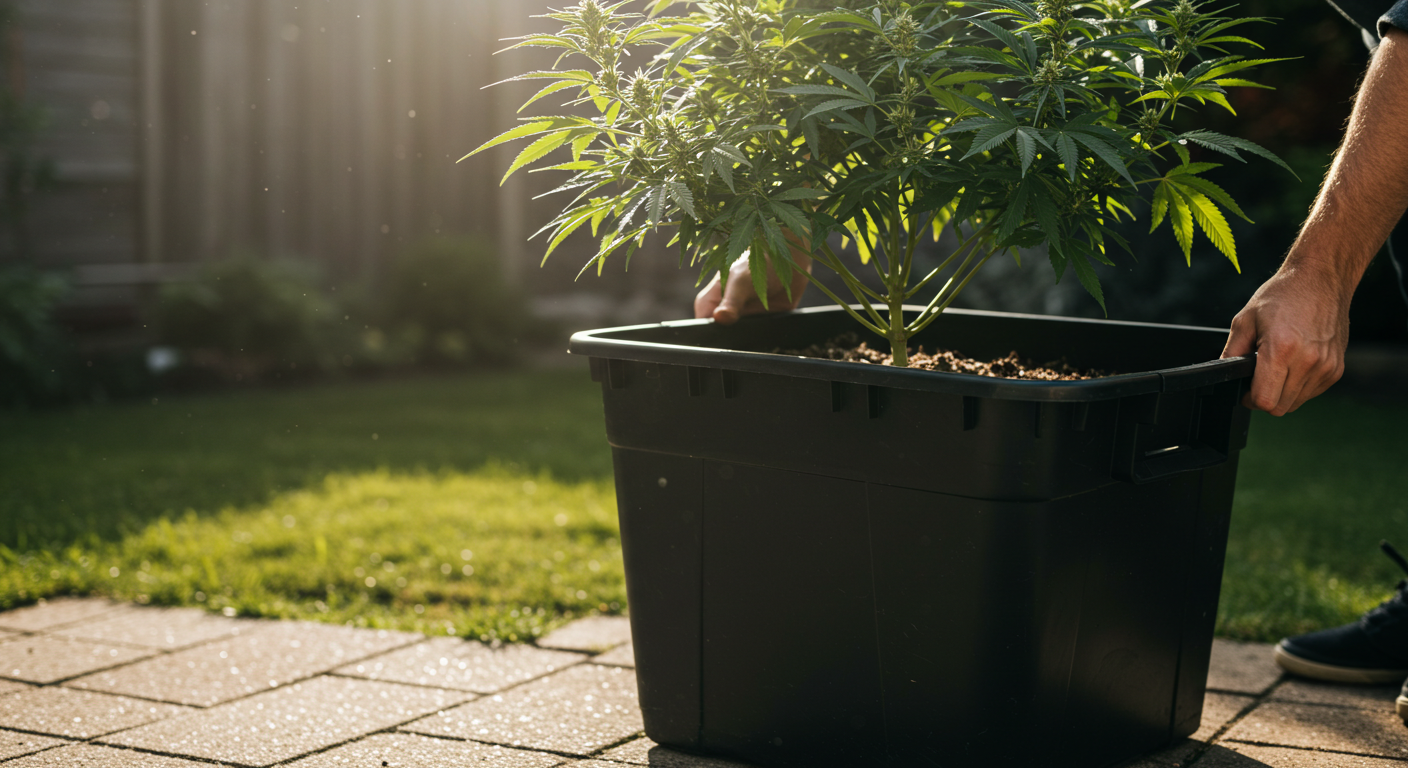
An outdoor cannabis container is stable only when the entire system can resist the overturning force created by the canopy. The pot, wet or dry growing medium, plant height, branch spread, support structure, ground surface, and wind exposure all matter. A pot that feels heavy in spring can become surprisingly easy to tip later when the plant grows taller and develops a broad flowering canopy.
The most reliable approach is to stabilize the container first, support the plant second, and reduce extreme wind exposure where practical. A wider footprint, sufficient base mass, a secure pot holder or ground anchor, and a support frame that does not depend on the stem alone usually provide more protection than simply adding one tall stake. The correct system should also preserve drainage, allow normal stem movement, and remain safe when the container is dry, freshly watered, or exposed to a sudden gust.
This resource focuses only on wind stability for outdoor containers. For broader decisions about container material, drainage, volume, and transplanting, use Containers and Pots Basics. For site planning, wind exposure, weather, and the rest of the outdoor season, continue with Outdoor Basics.
Resource Navigation
In This Resource
- Why Outdoor Containers Tip in Wind
- Measure the Stability Risk Before You Add Hardware
- Stabilize the Container Before Supporting the Canopy
- Support the Plant Without Locking Every Stem Rigid
- Use Placement and Windbreaks to Reduce the Load
- Use a Repeatable Wind and Storm Procedure
- Recognize Stabilization Methods That Create New Problems
- Verify the Setup After Wind, Watering, and Growth
Why Outdoor Containers Tip in Wind
Wind does not push only on the pot. It pushes on leaves, petioles, branches, stakes, trellis panels, and any other surface presented to the airflow. The larger and taller the canopy becomes, the more leverage that force can create above the container. This is why a tall plant in a narrow pot can topple even when the container itself is not especially light.
Overturning moment
An overturning moment is the turning effect produced when wind force acts above the base of the container. The same sideways force creates more tipping leverage when it acts higher above the ground. Stability improves when the resisting base is wider, heavier, better anchored, or all three.
Canopy height increases leverage
A mature outdoor cannabis plant can behave like a sail. The pot may have enough mass to resist ordinary movement early in vegetative growth, yet the same setup can become unstable after weeks of vertical extension, branching, and flower development. The center of wind load has moved upward even if the pot has not changed.
This is one reason pot stability should be reassessed through the season rather than decided on planting day. The relevant ratio is not simply plant height to pot size. Canopy width, branch density, training style, wet flower mass, support hardware, and local gust patterns all modify the real load.
Remember: A container that survived spring wind has not automatically passed the flowering-stage wind test. Reassess stability as the canopy gains height, width, and mass.
Base width controls how far the system must rotate before it tips
Wide, straight-sided, or square containers generally resist tipping better than tall, narrow, strongly tapered forms. Illinois Extension specifically notes that container shape and volume affect wind stability, with broader bases offering greater resistance to overturning. Oklahoma State similarly notes that wide containers are less likely to topple than narrow ones.
The practical lesson is not that every grower should buy the widest possible pot. Extra width consumes space and may not fit the irrigation or root-volume plan. Instead, avoid creating a tall, top-heavy plant on a base that is obviously narrow relative to the finished canopy.
Container weight helps, but weight must be in the right place
Mass near ground level increases resistance to tipping. A wet container is usually heavier than the same pot late in a dry-back, so wind stability can change between irrigations. This matters because the driest part of the cycle can coincide with hot, windy weather when the canopy is also experiencing high transpiration demand.
Do not solve this by filling the bottom of the root zone with random rocks, bricks, concrete, or other ballast. That reduces usable substrate volume and can create drainage or sanitation problems. If additional ballast is required, keep it external to the root zone or use a purpose-built holder, weighted base, frame, or anchoring system that does not replace healthy growing medium.
Do not turn the drainage layer into a ballast system
Heavy stones or concrete buried in the pot reduce usable root volume and do not create a dependable drainage solution. Stabilize the container from outside the root zone whenever possible.
The ground surface can help or defeat the setup
A stable pot on firm soil can behave differently from the same pot on a rolling caddy, slick tile, loose gravel, uneven pavers, soft ground, or a sloped deck. A container does not need to overturn to fail. Sliding, rotating, rocking, or rolling can pull irrigation tubing, break branches against a wall, loosen stakes, or move the plant into a more exposed position.
Check the entire contact surface. A pot sitting on four narrow caster points has a different effective footprint from a pot resting flat. A fabric pot on a soft uneven surface may deform and lean. A rigid pot on a cracked or sloped patio can rock before the wind becomes strong enough to tip it.
“My pot is very heavy. Do I still need to anchor it?”
Question sent by: Nathan Parker, via email.
Maybe. Weight helps, but it does not cancel a tall or broad canopy, a narrow pot, a slippery base, or strong gust exposure. Test the complete plant at its driest normal container weight and watch for rocking, sliding, or rotation. If the base begins moving before the branches reach a safe amount of flex, add external stabilization.
There is no universal safe wind speed for a potted cannabis plant
A single wind-speed number cannot tell you whether a container will remain upright. Two gardens can experience the same forecast gust while having completely different outcomes because one plant is short and trained low in a wide pot while the other is tall, dense, wet with rain, and sitting on an exposed balcony.
Forecast wind speed is still useful. Use it as an exposure trigger, not a structural guarantee. Track what happens to your own setup at known conditions and lower the risk before forecasts exceed anything the system has already handled safely.
Important: Do not copy a “safe wind speed” from another grow. Wind stability is a property of the entire plant-container-site system.
Measure the Stability Risk Before You Add Hardware
The fastest way to overbuild or underbuild a wind-support system is to skip the baseline measurements. You do not need engineering instruments. You need a small set of repeatable observations that describe the pot, the plant, the surface, and the exposure.
Record the container footprint
Measure the widest part of the base that actually contacts or supports the container. For a round pot, record the effective base diameter. For a square pot, record width and depth. If the container sits in a holder, tray, caddy, or frame, measure the footprint of the part that truly resists movement.
Also record container height. A very tall container can raise the root ball and the lower part of the canopy, increasing the height of the system even before plant height is counted.
Record plant and support height
Measure from the ground surface to the top of the plant and to the highest fixed support point. If the plant is attached to a tall rigid stake, that stake becomes part of the wind-loaded system. A support that extends high above the canopy can add leverage rather than automatically creating stability.
Estimate the wet and dry operating weights
If the container is still movable, weigh it near the end of a normal dry-back and again after a complete irrigation has drained. Large containers may be impossible to place on a household scale. In that case, calculate an approximate mass from known medium volume and measured samples, or simply document whether the setup is movable, barely movable, or effectively fixed at each moisture state.
The goal is not laboratory precision. The goal is to remember that the pot is usually least stable from mass alone near the dry end of the watering cycle.
Operating weight
Operating weight is the real weight of the container system during use, including the pot, growing medium, water held after drainage, plant, support frame, and attached hardware. It changes during dry-back and after rain or irrigation.
Map the dominant wind directions
Stand at the site during normal breezes and compare that observation with local forecasts. Note which direction produces the strongest canopy movement and whether nearby walls, fences, roofs, gaps, or corners funnel the wind. A seemingly sheltered courtyard can create a concentrated wind corridor around a building edge.
Do not assess only the prevailing seasonal direction. Storm outflows and frontal systems can arrive from a different direction. A one-sided guy line may resist the normal breeze yet provide little protection from a reverse gust.
Field Advice: Photograph the plant from the same two directions before and after a windy day. Small changes in lean, stake angle, pot rotation, or branch position are easier to detect when you have a fixed reference.
Perform a controlled stability check
Do not violently shake the plant. With the container on its final surface, place one hand low on the main support or lower stem structure and apply a modest sideways force in the direction that usually receives wind. Watch the pot rather than the leaves. Does the base stay flat? Does one edge lift? Does the pot slide? Does the caddy move? Does the support stake bend inside the medium?
Repeat from the opposite direction. If you can see the container beginning to rock with a gentle manual check, do not wait for a storm to prove the problem.
Watch the base during the test
Look for lifting, sliding, rotation, caster movement, support flex, and soil movement around inserted stakes.
Stress-test the branches
The goal is to identify a weak base or support connection without damaging stems, roots, flowers, or the container.
Classify the starting risk
| Observation | What It Suggests | Priority | Next Move |
|---|---|---|---|
| Wide pot, low canopy, base stays flat, sheltered site | Useful natural stability margin | Monitor | Keep supports ready and reassess as canopy expands |
| Pot rocks slightly during a gentle check | Overturning margin is becoming narrow | Correct soon | Widen or anchor the effective base before more growth |
| Pot slides or caddy rolls | Surface friction or wheel locking is inadequate | Correct now | Move to a fixed level base or use a rated stationary holder |
| Plant is tall and canopy-heavy while pot remains narrow | High wind leverage relative to base | High | Stabilize pot and add an independent support frame |
| Stake moves inside the medium while pot stays still | Plant support is not structurally independent | High | Replace or reinforce the support before branches depend on it |
| Balcony, rooftop, ledge, or elevated platform | Failure could become a falling-object hazard | Safety critical | Use only permitted, rated stabilization and confirm structural load limits |

Stabilize the Container Before Supporting the Canopy
There are several ways to improve pot stability, but they do not solve the same problem. A wider base resists tipping. Extra low-level mass increases resistance. Anchoring transfers load to the ground or another rated structure. A holder prevents sliding or rotation. Choose the method that addresses the failure you observed.
Level 1: improve the footprint
If the container has not yet been planted, pot shape is one of the easiest preventive choices. A broader, straighter-sided container generally offers more stability than a tall narrow tapered pot. Square footprints can also resist rolling or rotating better than narrow round forms in some layouts.
If the plant is already established, do not transplant only because the pot shape is imperfect unless the risk justifies the root disturbance. A purpose-built outer holder or stabilizing frame can effectively widen the base without changing the root zone.
Pro Tip: Measure the holder, not just the pot. A well-designed frame can create a larger effective footprint while leaving drainage holes and sidewalls unobstructed.
Level 2: add low external mass
Additional mass is most useful when it stays low and cannot shift. Weighted outer bases, sand-filled stabilizer sleeves designed for outdoor equipment, secured pavers around a holder, or a heavy secondary planter can increase resistance without occupying the root zone. Whatever system you use must remain stable when wet and must not block runoff.
Avoid loose bricks stacked around the pot where they can become trip hazards or projectiles. Avoid balancing a light pot inside a much larger decorative container unless the gap and drainage are managed. The inner pot should not float, rock, or sit in standing water after rain.
Do not add uncontrolled dead load to balconies or elevated decks
Wet media, ballast, reservoirs, people, and multiple containers can create substantial structural load. Confirm the permitted load and attachment rules with building documentation, the property owner, or a qualified professional before adding heavy stabilization systems at height.
Level 3: secure the pot to a ground-based holder
On ordinary ground where anchoring is lawful and utilities are not at risk, a purpose-built pot ring, frame, or holder can be staked to the soil while the container sits inside it. Nursery operations use variations of this approach specifically because container blow-over is a recurring production problem.
The holder should restrain the pot without crushing fabric walls, closing drainage openings, or cutting irrigation lines. Ground stakes need enough purchase in the actual soil to remain secure. Loose fill, shallow soil over rock, saturated ground, or recently disturbed soil can reduce holding strength.
Never drive a long stake or screw anchor into an unknown area where buried electrical, irrigation, gas, communication, drainage, or other services may exist. Use approved utility-location practices and property rules.
Level 4: connect the pot to a fixed frame when the frame is truly rated for it
A greenhouse bench, purpose-built outdoor rack, ground-mounted trellis, or engineered garden frame can stabilize multiple pots when it is designed to accept wind loads. The key word is designed. A decorative fence panel, balcony rail, rain gutter, lightweight privacy screen, or temporary shade structure should not automatically become a structural anchor.
When the pot is attached to a frame, leave enough clearance for inspection and drainage. The connection should restrain the container body or holder rather than depending on a thin handle. Fabric-pot handles are useful for moving many products, but they are not automatically rated as permanent storm anchors.
“Can I just tie the fabric-pot handles to my balcony railing?”
Question sent by: Nina Weber, via contact form.
Do not assume either part is designed for that load. Handles can tear, railings may have property or structural restrictions, and a failed connection at height can create a serious falling-object hazard. Use only a permitted, rated containment or anchoring system for elevated locations, and keep the entire pot well inside the safe edge of the platform.
Do not depend on wet soil as the only ballast
Some growers notice that the plant is more stable immediately after watering and treat irrigation as a wind-control strategy. The weight increase is real, but watering should remain a root-zone decision. Saturating an already-wet pot to gain ballast can reduce oxygen and create a separate plant-health problem.
Design the container so it remains acceptably stable at the light end of its normal irrigation cycle. Then the extra post-irrigation mass becomes additional margin rather than a requirement for survival.
Support the Plant Without Locking Every Stem Rigid
Pot stabilization prevents the whole root zone from tipping. Plant support prevents stems and branches from folding, splitting, or whipping against one another. These are related but separate jobs. A single stake pushed into the pot often tries to do both and can fail at both.
Install the main support before the canopy becomes difficult to handle
A cage, perimeter stakes, trellis panel, or independent frame is easier to install while the plant is still open enough to access. Late installation can damage roots, crush branches, or require awkward ties around flowering stems.
If support stakes must enter the container medium, place them early and away from the central crown where possible. Remember that a stake pushed only into lightweight potting mix may move with the root ball under load. For large plants, an external frame or support connected to the ground or a rated base is usually more dependable.
Field Advice: If the plant support moves the entire root ball when you pull gently on it, the support and the plant are still sharing the same unstable foundation.
Use soft, broad ties and leave room for growth
Horticultural staking guidance consistently warns against tight wire or thin rigid ties around living stems. Use soft, broad material or a loose figure-eight arrangement that prevents abrasion and girdling. Check every tie as stems thicken.
The objective is not to immobilize the plant. Some normal movement is desirable. The support should prevent destructive displacement while allowing stems and branches to flex within a controlled range.
Remember: Support should limit failure, not eliminate every millimeter of movement. Over-tight ties can damage stems and transfer more load into one rigid point.
Support heavy lateral branches before they become levers
Long side branches carrying dense flowers can pull the plant off balance even without extreme wind. If the canopy is strongly asymmetrical, one gust from the loaded side can create a larger rotational force than the same gust against a balanced canopy.
Use a cage, horizontal support grid, soft branch ties, or individual branch supports before the branch begins drooping permanently. Do not wait for a split to appear at the node. Once a flowering branch becomes a long lever, the base of the branch and the pot both carry more load.
Distribute support across several points
A cage or multi-point frame can share load across the canopy instead of forcing one main stem or one stake to carry everything.
Bind the whole plant to one rigid vertical stake
A single high attachment can concentrate leverage and may still allow the pot or stake to rotate at the base.
Training style changes wind exposure
A low, broad canopy and a tall narrow canopy do not react to wind in the same way. Neither form is universally safer. A low plant reduces height leverage but may present a wide horizontal surface. A tall plant raises the load but may allow some airflow through a more open structure.
Do not redesign the plant aggressively immediately before severe weather. Heavy pruning creates fresh wounds and can expose previously sheltered branches. Build wind stability progressively through training, support placement, and site design.
Master Advice: Treat canopy support as load distribution. The goal is to keep one branch, one stem, one pot handle, or one stake from becoming the single point that decides whether the system survives a gust.
Do not use pruning as the first wind-stability correction
Reducing canopy area can reduce wind load in principle, but pruning changes plant structure and flowering potential. If the real failure is a rocking pot, narrow base, rolling caddy, or inadequate anchor, fix that mechanical problem first. Remove only damaged, diseased, dead, or clearly unsafe growth according to normal plant-management needs.
For a forecast extreme event, temporary relocation to a genuinely sheltered lawful location may be safer than emergency structural pruning, provided the plant can still be moved without injury to people or the plant.
Use Placement and Windbreaks to Reduce the Load
The strongest anchor is not always the best first move. If the pot sits in a wind corridor, reducing the load reaching the canopy can improve both plant safety and irrigation stability. Windbreaks are used in agriculture specifically to reduce wind speed and physical crop stress.
Move out of wind tunnels before adding hardware
Building corners, narrow side yards, rooftop gaps, balcony openings, and spaces between fences can accelerate or redirect airflow. Walk the site during wind and compare leaf movement at several candidate positions. A move of a few meters can sometimes produce a much more manageable exposure without reducing useful sunlight significantly.
Do not move the plant into deep shade or poor airflow simply to eliminate wind. The new position must still provide suitable light, drainage, access, legal privacy, and disease management.
Use porous shelter rather than assuming a solid wall creates calm air
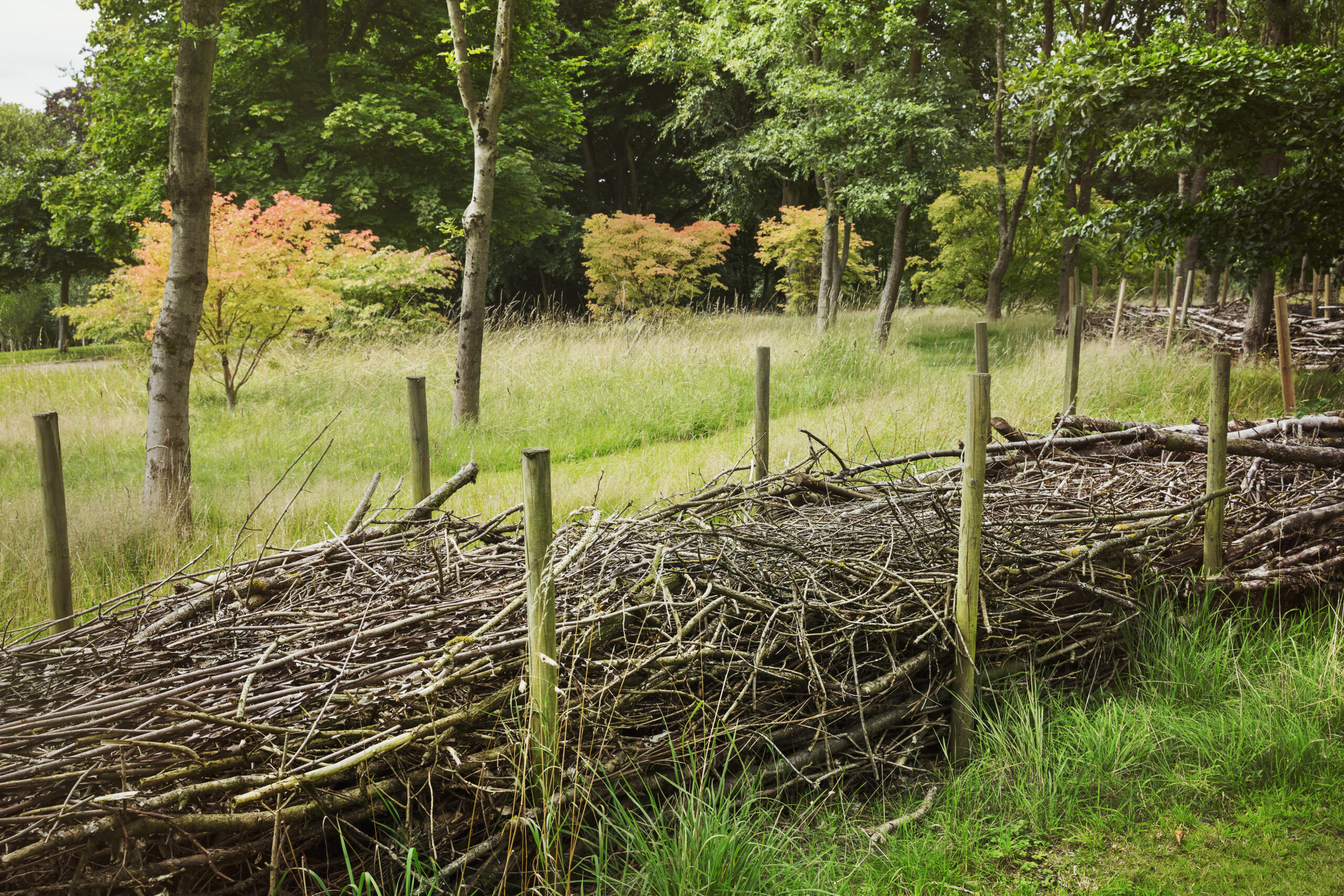
A windbreak works partly by slowing and filtering airflow. A completely solid barrier can create turbulence around edges and on the leeward side. Hedges, slatted screens, mesh, or other semi-permeable barriers can sometimes create a smoother protected zone than a solid sheet.
The correct design depends on site geometry. Do not add a large homemade screen that becomes a new sail. Any windbreak structure must itself be safely anchored and compliant with local property rules.
Pro Tip: Observe lightweight vegetation or ribbons at several heights before placing a windbreak. The calmest point at ankle height may not be the calmest point where the canopy will finish.
Leave room for ventilation and inspection
Grouping containers can reduce direct exposure on some sides, but tightly packing mature plants can reduce airflow through wet flowers and make inspection difficult. Wind protection should not create a dense stagnant canopy where rain and humidity remain trapped.
Maintain enough spacing to inspect all sides of each pot, access anchors, remove runoff where needed, and separate branches that are rubbing. Wind stability is not useful if the support layout makes disease monitoring impossible.
Watch the dry-back after reducing wind
Wind accelerates water loss from both leaves and exposed growing media. After moving a container into shelter, the pot may remain wet longer than it did in the original location. Do not continue the old irrigation schedule automatically.
Check root-zone moisture and pot weight after the change. A good wind correction should not be followed by chronic overwatering simply because the environment now dries more slowly.
“I moved my pot behind a screen and now it stays wet much longer. Did I make the spot too sheltered?”
Question sent by: PatioGrower, via Facebook page.
Possibly, but slower dry-back alone does not prove the location is wrong. You intentionally reduced wind, so evaporation and transpiration may also have changed. Recheck sunlight, airflow through the canopy, drainage, and moisture at root depth. If the plant remains healthy and the medium re-aerates normally, adjust irrigation rather than immediately moving the plant back into damaging wind.
A temporary privacy screen can become the most dangerous object in the garden
Large flat panels can collect substantial wind load. Do not attach makeshift screens, tarps, or solid sheets to weak fences, balcony rails, light trellises, or the cannabis container unless the complete structure is designed and rated for those loads.
Use a Repeatable Wind and Storm Procedure
Wind management becomes much easier when you use the same sequence before each significant weather event. The aim is to find changing weak points while there is still time to correct them.
Step 1: check the forecast and expected direction
Record the expected period of strongest wind, gust direction, rain, and any rapid temperature change. You do not need one universal action threshold. Compare the forecast with the strongest conditions your current setup has already handled without movement or damage.
If the new forecast is meaningfully more severe, or arrives from a direction the setup has not been tested against, treat it as a new load case rather than assuming previous success guarantees safety.
Step 2: inspect the pot at its current moisture state
Check whether the container is near the light end of its dry-back. Confirm the base is flat, wheels are locked or removed, the holder is intact, anchors are tight, and runoff routes are open. Do not deliberately saturate a wet medium for ballast.
Step 3: inspect every structural connection
Check the pot-to-holder connection, holder-to-ground connection, frame-to-base connection, each tie around a stem or branch, and any trellis fasteners. Look for torn fabric, cracked plastic, loosened screws, corroded hardware, pulled stakes, frayed cord, and ties that have tightened around growing stems.
Important: The weakest connection controls the system. A strong ground anchor does not help if the pot handle tears first.
Step 4: remove loose objects before the wind arrives
Empty pots, labels, watering cans, lightweight trays, tools, lids, fertilizer containers, shade cloth, and unsecured irrigation parts can become projectiles or strike the plant. Store them before the forecast event rather than while the gusts are already strong.
Step 5: decide whether the plant can still be moved safely
Mobility declines sharply as outdoor plants mature. If the plant is still genuinely movable and a lawful sheltered location is available, relocation may be the lowest-risk option. Move early, while surfaces are dry and wind is manageable.
Do not attempt to carry a tall wet container during strong wind. A moving canopy can shift the load suddenly and injure the person carrying it. Large containers should be treated as fixed infrastructure once they exceed safe manual-handling limits.
Move early or stabilize in place
Make the decision before gusts, rain, darkness, or wet surfaces make handling more dangerous.
Wrestle a mature plant during the storm
Personal safety comes first. Do not enter an exposed area to rescue a pot once conditions are unsafe.
Step 6: photograph the setup before the event
Take a front, side, and base photo. Include the container rim, anchor positions, support frame, and major branch structure. These become your reference for detecting small post-event changes that are easy to miss by memory.
Step 7: inspect after conditions are safe
Do not look only for a fallen pot. Check for partial rotation, slight lean, lifted edges, stretched ties, branch cracks, root-ball movement, shifted medium, exposed roots, torn handles, bent stakes, and damaged irrigation lines.
A setup that moved but returned upright has still failed the verification test. Movement is evidence that the stability margin needs improvement before the next comparable event.
| Checkpoint | What to Inspect | What Counts as a Problem | Response |
|---|---|---|---|
| Before the event | Base, anchors, ties, forecast direction, moisture state, loose objects | Rocking, sliding, loose hardware, damaged straps, untested wind direction | Correct before wind strengthens |
| As soon as conditions are safe | Pot position, frame angle, branch attachments, irrigation lines | Any rotation, lifted edge, pulled anchor, split branch, new lean | Stabilize and document the failure point |
| Within 24 hours | Root-zone moisture, branch posture, hidden cracks, tie pressure | Persistent wilt with wet soil, widening crack, stem abrasion, changed dry-back | Correct plant and irrigation consequences separately |
| After about 3 days | Recovery, anchor settlement, soil around stakes, repeated lean | Anchor loosening, frame movement, branch decline, container no longer level | Upgrade the structural layer that moved |
| After 1 to 2 weeks | New canopy mass, tie fit, support height, irrigation demand | Plant has outgrown the original stability margin | Re-measure and resize the support plan |
Tip: Wind verification is easiest when the pot has a small reference mark on the ground or tray. If the mark no longer lines up after a gusty day, the container rotated even if it never looked close to falling.
Recognize Stabilization Methods That Create New Problems
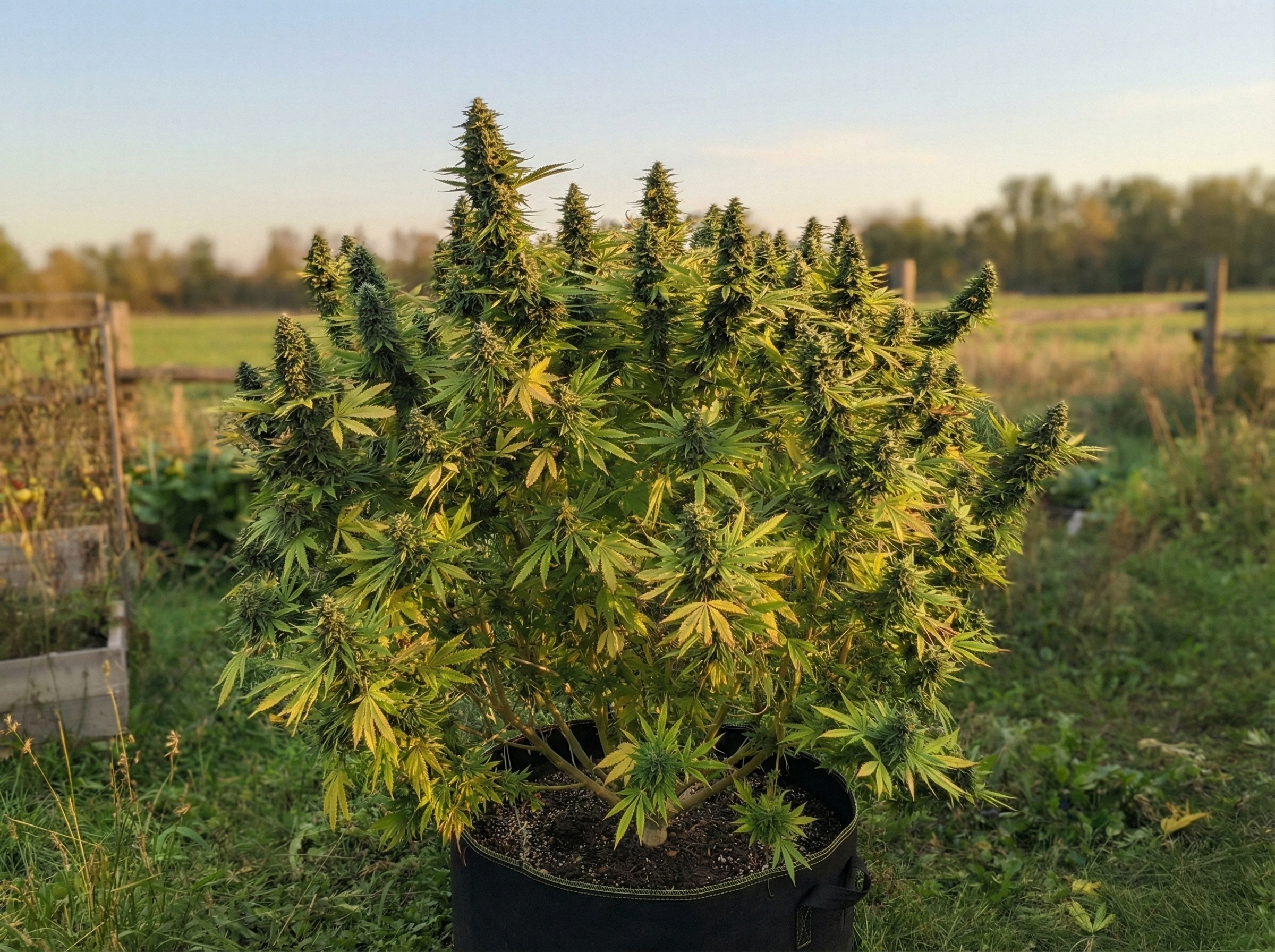
A wind-control method is not successful if it prevents tipping but damages roots, blocks drainage, girdles stems, creates a fall hazard, or makes the plant impossible to inspect. The following failures are common because each begins with a reasonable idea applied to the wrong part of the system.
Mistake: putting bricks or stones inside the bottom of the pot
Heavy material in the root zone may lower the center of mass slightly, but it consumes valuable medium volume and does not solve drainage in the way growers often expect. If ballast is required, use external mass or a stabilizing holder.
Mistake: using one deep stake as both pot anchor and branch support
A stake pushed into potting mix can pivot inside the root ball. If the canopy is tied tightly to it, both may move together. Separate the jobs: stabilize the container independently and then support the canopy from a cage, frame, or multiple points.
Mistake: tying the stem as tightly as possible
Tight ties can abrade or girdle growing stems. They also prevent normal movement and concentrate load at the tie. Use soft material, enough clearance for growth, and regular inspection.
Remember: A support tie is a temporary structural interface with a living stem. It needs inspection just like a screw, anchor, or strap.
Mistake: trusting caster brakes as storm anchors
Rolling platforms are useful for mobility, but a locked wheel is not automatically a wind-rated anchor. The platform can still tip, slide, twist, or fail at a wheel mount. If the plant has become too large for safe mobility, move it to a fixed support system before severe weather becomes routine.
Mistake: anchoring to a weak fence, railing, or shade structure
The anchor point must resist the load transferred into it. Lightweight panels, old fencing, decorative rails, gutters, and temporary structures can fail before the plant does. At height, this becomes a serious safety issue.
Never create a falling-object path below an outdoor container
On balconies, rooftops, stairs, retaining walls, and elevated decks, keep containers and loose ballast away from edges. Follow building rules and use professionally appropriate restraint where failure could injure people or damage property below.
Mistake: building a solid wind wall around the plant
A solid panel can redirect wind and create turbulence around its edges. It can also become a larger sail than the plant. Use windbreak design intentionally and anchor the windbreak independently.
Mistake: ignoring irrigation changes after stabilization
Moving from an exposed site to a sheltered site can reduce water demand. Grouping pots can shade sidewalls. Adding an outer holder can change airflow around a fabric container. Every stabilization change that alters microclimate deserves a fresh moisture check.
Mistake: assuming a heavy rainstorm makes the pot safer overall
Rain adds mass to the root zone and may temporarily increase base resistance, but it can also add water mass to flowers and foliage, increasing canopy load. Wet branches may bend farther, supports may pull through softened ground, and saturated soil may hold ground stakes less securely.
Field Advice: Evaluate rain and wind together. A heavier pot is not necessarily a safer plant when the canopy and the anchoring soil are also saturated.
Mistake: waiting for visible lean before upgrading support
A container can repeatedly rock and return to its starting position without leaving an obvious lean. That motion can still fatigue stems, loosen hardware, disturb roots, and enlarge stake holes in the soil. The first sign of instability may be movement, not permanent displacement.
Correct the failure layer
If the pot slides, fix the base. If the pot stays still but branches fold, fix canopy support. If the whole frame moves, fix the anchor.
Add random hardware everywhere
Extra ties and stakes create clutter without proving that the weak point has actually been corrected.
Verify the Setup After Wind, Watering, and Growth
Wind stabilization is complete only when the system remains stable through the conditions it is expected to face and the result can be repeated. The verification process should be simple enough to use after each meaningful change in plant size or support hardware.
Re-run the same controlled check
Use the same final location, the same directions, and similar container moisture when possible. Apply the same modest manual side load used in the baseline inspection. The corrected setup should show less rocking, sliding, rotation, or support movement.
Do not make the verification test progressively harsher until something breaks. Its value comes from consistency, not force.
Verify at the dry end of the normal irrigation cycle
A system tested only immediately after watering may overestimate the protection provided by pot mass. Repeat the base check when the container is near its normal rewatering point. If stability becomes unacceptable there, the system still depends too heavily on water weight.
Pro Tip: Put wind-stability checks on the same day you already inspect ties and irrigation. The routine is more likely to continue when it does not require a separate garden visit.
Inspect after the first comparable gust event
Compare the post-wind photographs and ground reference mark with the baseline. Check every anchor and connection. If nothing moved and the plant shows no structural damage, the system passed that specific event. It has not proven safety for every stronger future event.
Reassess after rapid canopy growth
Stretch, training changes, flowering mass, and branch spread can change wind loading within weeks. A support that was correctly placed can become too low. A tie can tighten. A pot that once had a large stability margin can become top-heavy.
Re-measure plant height, support height, and canopy spread after obvious growth phases. You do not need to calculate aerodynamic force. You simply need to recognize when the geometry no longer resembles the system you previously tested.
Use a pass, investigate, or upgrade decision
| Decision | What You See | What It Means | Action |
|---|---|---|---|
| Pass | Base stays flat, no rotation, anchors remain tight, ties have clearance, branches recover normally | Current system handled the tested condition | Continue monitoring and reassess after major growth or stronger forecast |
| Investigate | Minor rocking, a slightly loosened anchor, changed lean, or one branch repeatedly loading the support | Stability margin may be narrowing | Identify whether the weakness is base, anchor, support, or canopy balance |
| Upgrade | Pot slides, edge lifts, frame moves, anchor pulls, handle tears, or branch/support failure occurs | The system did not adequately resist the event | Change the structural system before the next comparable wind |
Weedth Verdict: The best wind-stability system is not the one with the most stakes. It is the one where the pot stays put, the canopy can flex without structural failure, drainage remains open, and every connection can be inspected and verified.
Check the plant, not only the hardware
After windy conditions, inspect leaf tearing, petiole damage, branch rubbing, cracks at nodes, bark abrasion from ties, and persistent lean. Also check root-zone moisture. Wind can dramatically increase water use, so a mechanically stable plant can still suffer drought stress if the irrigation plan was not adjusted.
If the canopy droops while the pot remains wet, do not automatically add water. The plant may be recovering from mechanical stress, cool wet conditions, root-zone oxygen limitation, or another problem. Separate the plant-health diagnosis from the stability correction.
Keep a short stability record
Record the date, container moisture state, forecast gust range, wind direction, support configuration, and any movement observed. A few entries are enough to reveal whether the setup is improving or whether one direction repeatedly creates trouble.
This record is more useful than copying another grower’s wind threshold because it describes your actual plant, pot, site, and support system.
Before the next windy period
- Measure the effective base footprint and confirm the pot sits level.
- Record plant height and the highest fixed support point.
- Identify the usual and storm wind directions at the actual site.
- Test for rocking, sliding, rotation, and support movement using a gentle repeatable check.
- Design stability for the dry end of the normal irrigation cycle, not only the freshly watered pot.
- Use external ballast, a holder, or a rated anchor instead of filling the root zone with rocks.
- Keep drainage holes, runoff paths, fabric sidewalls, and irrigation lines unobstructed.
- Support heavy branches from multiple points and inspect ties for girdling.
- Remove loose objects before forecast strong wind.
- Do not rely on weak fences, railings, handles, caddies, or privacy screens as unverified anchors.
- Photograph the setup before a significant event and compare afterward.
- Recheck at 24 hours, about 3 days, and again after 1 to 2 weeks of new growth.
For the broader outdoor environment, continue with How to Grow Cannabis Outdoors: From Seed to Harvest. The practical wind decision is straightforward: keep the pot stable independently, distribute canopy support across several points, reduce avoidable exposure, and verify the entire system again as the plant grows.
Frequently Asked Questions About Stabilizing Outdoor Cannabis Containers
Is a heavier pot always more wind-stable?
More low-level mass usually increases resistance to tipping, but it is only one variable. A very tall dense canopy can still overturn a heavy narrow pot, and a heavy pot can still slide on a poor surface. Base width, canopy geometry, anchor strength, and surface conditions remain important.
Should I put rocks in the bottom of the pot to stop it tipping?
No. Use the root-zone volume for suitable growing medium. If extra mass is needed, place it outside the root zone through a stable outer holder, weighted base, or another properly designed system that does not obstruct drainage.
Can a fabric pot be anchored by its handles?
Only if the manufacturer specifically rates the handles and anchoring method for the intended load. Many handles are designed for lifting or repositioning, not for repeated storm loading. A holder that restrains the body of the pot is generally a more defensible structural approach.
Should I stake the cannabis plant tightly so it cannot move?
No. The plant should be protected from destructive displacement without being rigidly strangled to a stake. Use soft ties, leave room for stem growth, distribute support across several points, and inspect ties regularly.
Is a wall the best place for a container during wind?
Sometimes, but not automatically. Walls can provide shelter, yet corners and gaps can create wind tunnels and turbulence. Observe the actual site and make sure the new location still provides appropriate light, drainage, airflow, and legal clearance.
Should I water before a windstorm to make the pot heavier?
Water according to root-zone moisture, not as ballast. A normally dry container may need irrigation before a hot windy period because plant water demand will rise, but an already wet root zone should not be saturated again simply to increase weight. Build mechanical stability that works through the normal dry-back cycle.
When should I stop trying to move an outdoor container?
When the wet pot, mature canopy, support frame, and awkward shape exceed safe manual handling, treat the plant as fixed infrastructure. Plan its permanent anchor and storm response before that point rather than attempting emergency movement during severe weather.
Share this article
A quick overview of the topics covered in this article.
Follow us
Latest articles
September 3, 2026
September 3, 2026
September 3, 2026
September 3, 2026
