
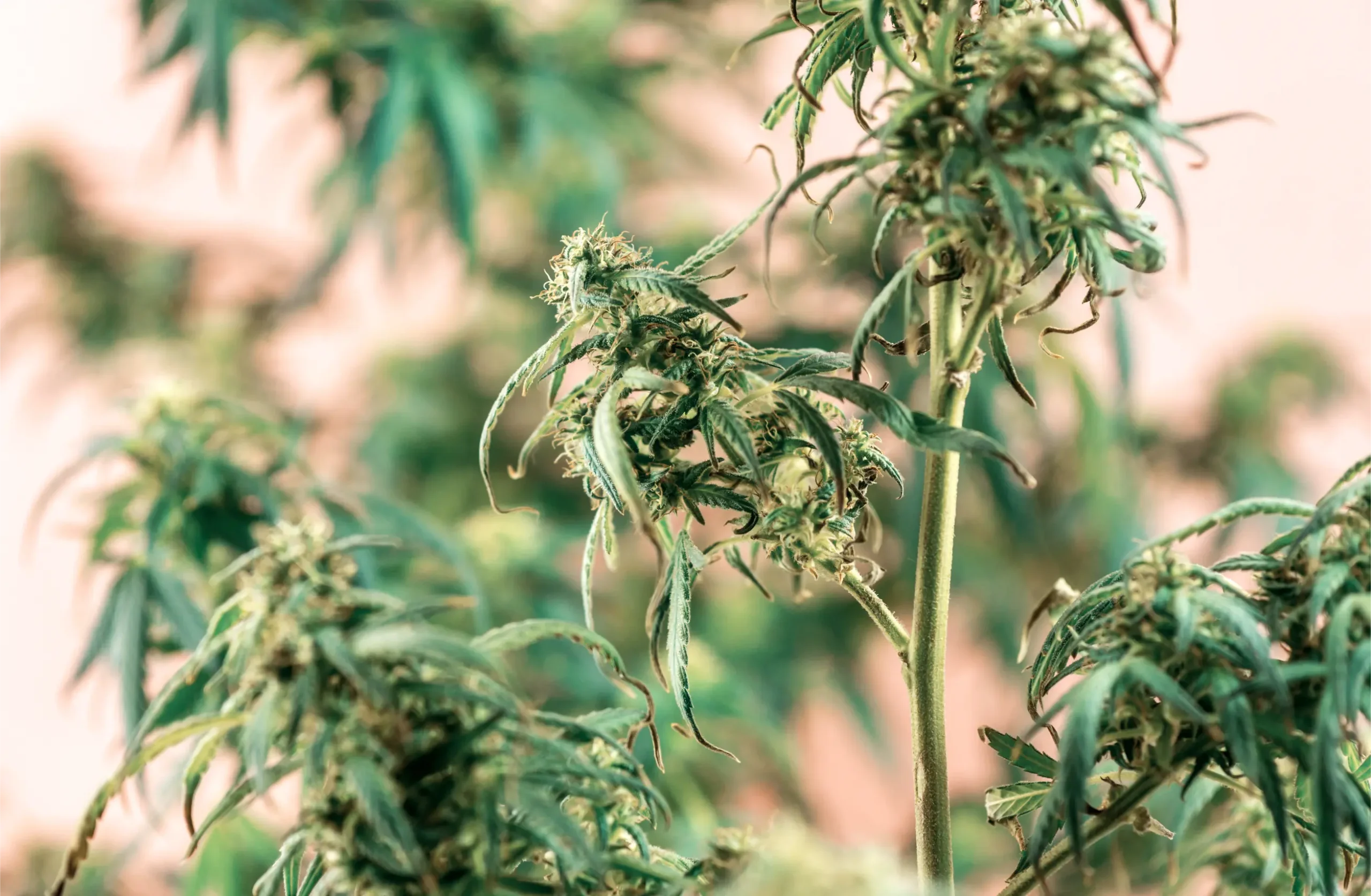
Stardawg
Stardawg is a resin-heavy hybrid built around Chem-family genetics, best known for a sharp fuel, chemical, pine, and pepper profile and an effect that often begins bright, fast, and mentally active before settling into a more grounded physical state. The commonly accepted lineage is Chemdawg 4 x Tres Dawg, but the strain has circulated through several selected cuts. That matters to growers because Stardawg is not a cultivar that should be treated as perfectly uniform. Some expressions stay relatively compact and finish close to nine weeks, while others stretch aggressively, build longer spear-shaped flowers, and can need ten weeks or slightly more to reach the harvest window that best preserves potency and aroma.
For Weedth, the most useful way to understand Stardawg is not simply as a high-THC diesel hybrid. It is a plant where phenotype recognition, canopy control, branch support, airflow, and harvest timing directly determine how much of its classic chemical-fuel character survives into the jar. A poorly managed plant can still yield, but it may produce shaded lower flowers, uneven maturity, and buds that smell generically earthy after drying. A well-managed plant can produce highly resinous flowers with a penetrating fuel nose, bright pine, pepper, and a sour chemical edge that remains obvious after cure.
Strain Features
| Feature | Details |
|---|---|
| Type | Hybrid, often sativa-leaning in effect and structure, but phenotype dependent |
| Common Lineage | Chemdawg 4 x Tres Dawg |
| THC | Commonly reported in the low-20% range, with stronger selections reaching higher |
| CBD | Usually very low |
| Dominant Terpenes | Caryophyllene, limonene, myrcene; pinene can be important in some expressions |
| Primary Aroma | Diesel, chemical fuel, pine, earth, pepper, sour funk |
| Primary Flavor | Sour fuel, pine, pepper, earthy spice, lingering chemical-diesel finish |
| Effect Direction | Fast cerebral uplift, focus and sociability followed by steady physical relaxation |
| Flowering Time | Commonly about 9-10 weeks; some cuts may finish around 63-73 days |
| Indoor Structure | Medium to tall, vigorous, often stretch-prone, with strong lateral growth |
| Outdoor Structure | Large and branching when root space and season allow |
| Yield | Moderate to high depending on cut, canopy management, and veg duration |
| Grow Difficulty | Moderate; advanced when working with an unfamiliar cut |
| Training Response | Strong response to topping, LST, trellising, and selective lower cleanup |
| Main Grow Risk | Uneven canopy, excessive stretch, overloaded branches, and shaded interior flowers |
| Main Quality Risk | Harvesting different-height tops at one time, hot drying, and overfeeding late flower |
| Best Environment | Controlled indoor rooms or warm, sunny outdoor locations with a reliable finish window |
| Typical User | Experienced consumers seeking energetic Chem-style intensity with later body calm |
The defining grow question with Stardawg is not whether it can yield. It is whether the grower can keep a vigorous, phenotype-dependent plant organized enough that the best flower sites mature evenly.
Genetic Lineage
Stardawg is most consistently documented as a cross between Chemdawg 4 and Tres Dawg. That pairing explains much of what growers see in the garden. Chemdawg 4 contributes the unmistakable chemical-fuel identity, strong vigor, high resin potential, and the tendency toward an assertive psychoactive profile. Tres Dawg reinforces the Chem character while adding structure, resin, and variation in plant architecture. The result is not a dessert hybrid that happens to have a little gas in the background. Stardawg is fundamentally a fuel-forward plant.
The strain's history also explains why growers should be cautious about treating every Stardawg plant as the same plant. Several selected cuts have circulated over time, and those cuts do not behave identically. Some are sweeter and more productive. Some are sharper, more chemical, and more potent. Some remain more manageable in height. Others express the lankier side of the family and can stretch rapidly once flowering begins.
That phenotype diversity changes cultivation decisions. A grower who receives a vigorous, narrow-leaf Stardawg expression and flips it at the same size used for a compact indica can quickly lose vertical control. A more compact expression can tolerate a longer vegetative period and may reward topping with a broader canopy. The useful practice is therefore to record stretch ratio, node spacing, flowering duration, aroma checkpoints, and branch strength on the first run rather than force the plant into a fixed recipe.
Chem-family plants are often judged by intensity, but the best Stardawg expressions are more nuanced than raw fuel. When the genetics express well, the chemical note is supported by pine, pepper, damp earth, citrus peel, and a sour edge that can resemble solvent or freshly opened fuel. The parentage also helps explain why some flowers appear extremely frosted before they have completed their final swell. Resin coverage can arrive early enough to tempt an inexperienced grower into harvesting based on appearance rather than actual maturity.
For that reason, trichome density alone should not be the harvest signal. Stardawg should be judged by the combined movement of pistil recession, calyx expansion, aroma development, trichome maturity, water uptake, and the slowing of new floral growth. A plant may look finished because it is white with resin while still needing time to develop the deeper sour-fuel flavor that distinguishes a memorable jar from an average one.
Phenotype selection is especially valuable if clones can be kept. On the first cycle, measure rather than guess. Record how much each plant stretches after the light change. Note which plants maintain strong stems under flower weight. Compare how much useful flower develops below the top canopy. Smell stem rubs in vegetative growth, then compare those notes with week-three, week-six, harvest-day, and post-cure aroma. Stardawg is a cultivar where this simple record can save entire future cycles.
A keeper Stardawg should not be selected from potency alone. The strongest long-term plant is the one that combines Chem character, manageable architecture, good flower density, stable finishing time, and aroma that survives drying.
Effect Breakdown
Stardawg is often described as energetic, focused, happy, and intense. That description is useful, but the effect is easier to understand when broken into stages because dosage changes the experience dramatically.
Initial onset: fast mental acceleration
The first stage tends to arrive quickly. Many users notice a brightening of mood and a sudden increase in mental activity. Conversation can become easier, music may feel more detailed, and ordinary tasks can become more engaging. The onset is not usually soft or sleepy. It has a Chem-family sharpness that can feel like the mind has been switched from idle to active.
At a low to moderate dose, this can translate into motivation and focus. People who enjoy strong daytime hybrids often appreciate this phase because the body is not immediately heavy. The user may feel inclined to clean, work on a creative project, take a walk, edit something, organize equipment, or have a long conversation.
The same fast onset can become uncomfortable for users who are highly sensitive to THC. When Stardawg is consumed too quickly, mental acceleration can become scattered thought, restlessness, or anxiety. This is one reason the strain often feels friendlier to experienced consumers than to complete beginners.
Peak: energetic euphoria with physical presence
After the initial rise, Stardawg usually becomes more balanced. The head remains active, but the body begins to feel the weight of the experience. Muscles may loosen without a full couch-lock effect. The user often remains functional while feeling physically settled.
This stage is where the strain's hybrid character is most obvious. It is not pure stimulation. There is a calm under the energy. That combination can be useful for social situations, creative work, gaming, music, or low-pressure activities where the user wants to remain mentally engaged but does not want the edgy feel associated with some very narrow-leaf cultivars.
The peak can feel long because Stardawg has a reputation for strong persistence. A single moderate session may remain clearly noticeable well after the rapid onset has passed. This makes dose control important. The temptation to consume more during the exciting first minutes can result in a much heavier peak than expected.
Late phase: grounded and physically relaxed
As the cerebral intensity declines, physical relaxation becomes more prominent. The user may feel heavier through the shoulders and legs while the mind becomes less urgent. With moderate dosing, the late phase can remain comfortable and functional. With heavy dosing, the same strain can become more sedating and much less productive.
This dose-dependent shift is central to Stardawg. A small amount can feel like an active afternoon strain. A large amount can push the experience toward a dense, slightly disorienting high that is better suited to being at home.
Emotional character
Emotionally, Stardawg is commonly associated with euphoria, confidence, sociability, and relief from mental fatigue. It can make routine activities feel less dull. For some people, that can be valuable when mood is flat. For others, the intensity may amplify whatever thought pattern is already present.
Set and setting matter. A calm environment tends to make Stardawg's energy feel directed. A chaotic or stressful environment can make the same stimulation feel noisy. Users prone to panic, racing thoughts, or THC sensitivity should approach the strain with a much smaller dose than a regular consumer.
Physical character
The body effect is usually present without being immediately immobilizing. Tingling, muscle relaxation, warmth, and a reduction in physical tension are common descriptions. Hunger may increase later in the session. Dry mouth and dry eyes are predictable side effects.
Stardawg is best understood as a strong, fast hybrid whose first half is often more stimulating than its second. The quality of the experience depends heavily on dose.
Flavor & Aroma Profile
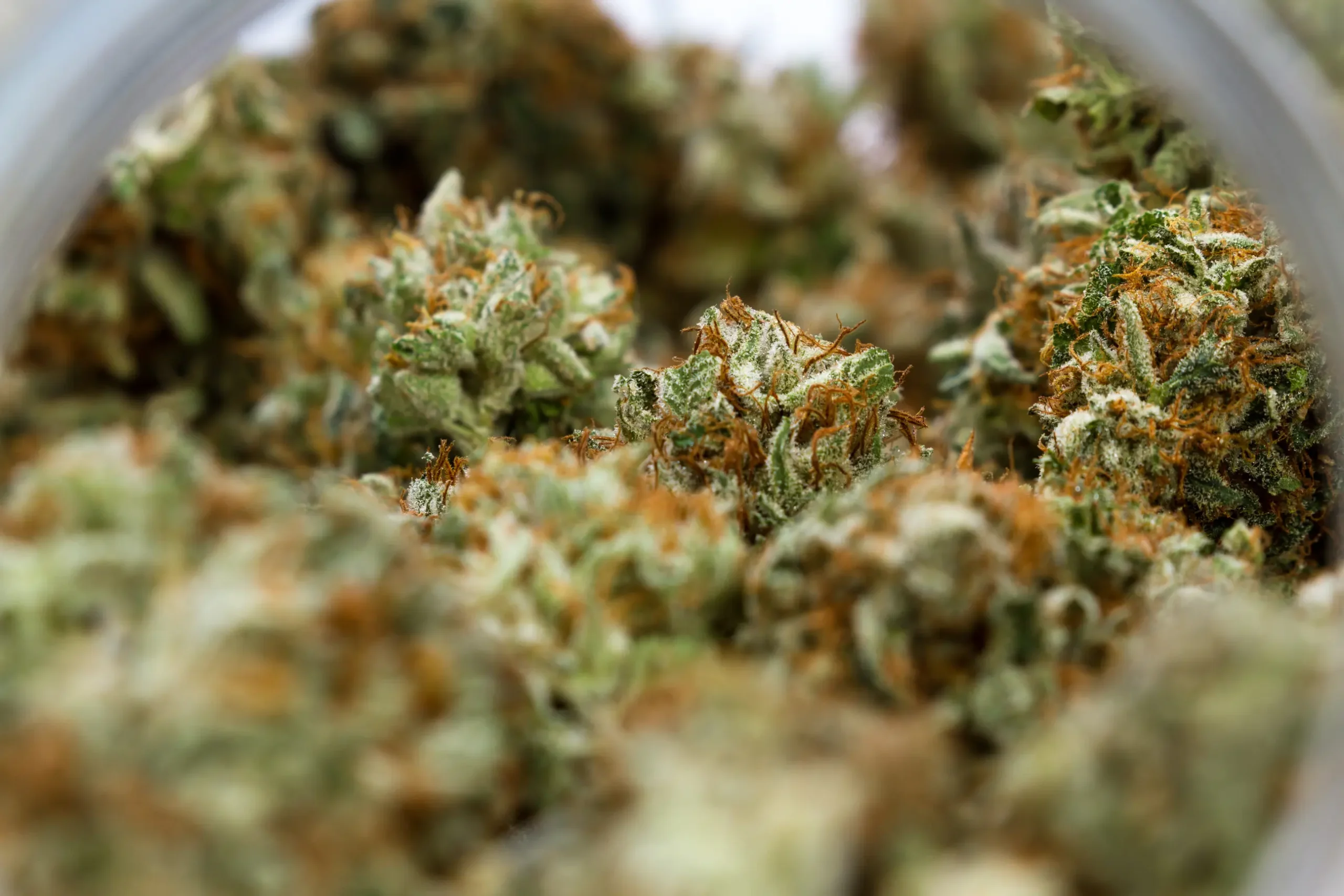
Stardawg's identity is built around a smell that is difficult to confuse with soft fruit or bakery cultivars. The dominant impression is usually chemical fuel. In a strong sample, the jar opens with a sharp mixture of diesel, solvent-like sourness, pine, earth, and pepper.
That does not mean the aroma is one-dimensional. A well-grown plant often carries a bright top note that can resemble lemon peel or sour citrus. Beneath that is a darker layer of soil, wood, and spice. Some expressions are sweeter. Others lean harder toward acrid fuel and fresh rubber. The best samples have separation between those layers rather than one flat "gas" smell.
Live-flower aroma
During mid flower, Stardawg may smell greener and more pine-dominant than it will after cure. The chemical edge often becomes clearer later. By the last third of flowering, touching a sugar leaf or lightly rubbing a lower stem can release an odor that lingers on the fingers.
This is also the point where odor control becomes important indoors. The aroma can move beyond the grow space, particularly during lights-off periods when ventilation changes or doors are opened. The smell is not always stereotypically skunky. It can instead resemble sharp fuel, chemical cleaner, pine, and sour plant resin.
Flavor on inhale
The inhale is commonly earthy, sour, and fuel-heavy. Pine can appear quickly, followed by pepper and a slightly citrus brightness. Vapor at lower temperatures tends to reveal more of the high notes. Combustion emphasizes the heavier spice and diesel components.
Flavor on exhale
The exhale often leaves the most recognizable signature. Peppery caryophyllene warmth combines with diesel and an almost metallic chemical edge. A faint sweetness may remain at the back of the palate, particularly in sweeter phenotypes.
What ruins Stardawg flavor
The cultivar's aroma is powerful enough that growers sometimes assume it cannot be lost. It can. A plant can smell extremely loud on harvest day and become generically earthy after an aggressive dry. The most volatile high notes are vulnerable to heat and excessive airflow.
Hot drying also changes the balance. The heavy fuel and earthy notes may remain while the brighter pine and citrus disappear. The result can still smell strong, but it becomes less complex. This is a key Weedth distinction: aroma strength is not the same as aroma quality.
Late overfeeding can also muddy the finish. A plant pushed hard with nitrogen late in flowering may remain dark green and leafy. Whether or not a consumer interprets the final harshness as "nutrient taste," the practical result can be a rougher smoke if the flowers are harvested immature, dried too fast, or cured before internal moisture has equalized.
Stardawg rewards a clean finish. Let the plant complete its floral swell. Avoid forcing late growth with excessive feeding. Harvest based on maturity rather than a calendar date. Dry cool and gradually. Cure long enough for the sharpest green notes to recede without allowing the fuel character to fade through repeated air exposure.
Dominant Terpenes
Laboratory profiles vary between Stardawg samples, but caryophyllene, limonene, and myrcene are commonly reported among the leading terpenes. Pinene can also contribute significantly to the cultivar's recognizable smell.
Caryophyllene
Caryophyllene brings black pepper, dry spice, and a warm woody quality. In Stardawg, it helps turn simple diesel into something more dimensional. On the palate, it can create the prickly pepper finish that remains after the sour fuel has faded.
Caryophyllene is unusual among common cannabis terpenes because it interacts with CB2 receptors. That does not make Stardawg a medicine or guarantee a therapeutic outcome, but it helps explain why caryophyllene is frequently discussed in relation to physical comfort and inflammatory pathways.
Limonene
Limonene contributes citrus brightness. In Stardawg, this may not smell like sweet orange. It often appears more like lemon rind cutting through diesel fumes. That small bright layer is one of the first qualities to become muted when drying is too warm or storage repeatedly exposes the flowers to fresh air.
Myrcene
Myrcene adds earthy, musky, herbal depth. It also fits the strain's later physical relaxation. A myrcene-rich expression can feel heavier and smell darker than a limonene-forward expression.
Pinene
Pinene is not dominant in every sample, but it can be central to the classic profile. It adds the fresh conifer character that separates sharp Stardawg from a generic chemical cultivar. When preserved well, pine can remain clear even after several weeks of cure.
Terpene interpretation for growers
Do not chase a published terpene list as though every plant will reproduce it. Use the list as a sensory map. If the plant smells sharply of pine and lemon in late flower, your post-harvest goal is to preserve those volatile notes. If it smells deeper and more earthy, the cure should keep that base while allowing chlorophyll-related green notes to fade.
The best terpene program is not an additive. It is a cultivation and post-harvest process that prevents the plant's existing aroma from being lost.
Indoor vs. Outdoor Growing
Stardawg can perform in both environments, but the two approaches expose different weaknesses.
Indoor growing
Indoor cultivation offers the clearest advantage for managing phenotype-dependent stretch. A grower can control the flip date, canopy height, airflow, temperature, and late-flower humidity. That makes indoor rooms especially useful for a first run with unfamiliar material.
The challenge is space. A vigorous Stardawg can gain height quickly after the photoperiod change. If the plant is allowed to enter flowering tall and untrained, the top canopy may race toward the light while the interior becomes shaded. This creates two quality problems: top flowers can receive excessive intensity or heat, while lower flowers remain small and immature.
Indoor Stardawg is therefore well suited to topping, LST, and a trellis. The ideal canopy is broad enough to use the light but not so dense that air stops moving between branches.
Outdoor growing
Outdoors, Stardawg can become a large, vigorous plant. Sunlight allows deeper canopy penetration than a single overhead indoor fixture, and strong lateral branches can develop substantial flower mass.
The main outdoor limitation is finishing weather. Longer expressions may continue into early autumn. In a dry, sunny climate this can be excellent. In a region where rain, fog, or prolonged high humidity arrives early, dense mature flowers can become vulnerable just as resin and aroma peak.
Outdoor growers should prioritize site exposure. Morning sun helps dry dew. Spacing between plants matters. Interior pruning before flowers become dense reduces stagnant pockets. Branch support should be installed before the colas become heavy, not after a storm has already bent them.
Which environment produces better flavor?
Neither environment automatically wins. Outdoor sun can produce complex aroma and a wide expression of secondary metabolites. Indoor control can protect the last weeks of flowering from rain, heat spikes, and excessive nighttime humidity.
For Stardawg, the better environment is the one that allows full maturity without environmental stress during the final two weeks and a controlled post-harvest dry immediately afterward.
Strain-Specific Grow Guidance
Start by identifying the plant you actually have
The first Stardawg cycle should be treated as a data-gathering run. Measure plant height at flip and again at days 7, 14, and 21. Calculate the stretch ratio. Note node spacing before and after transition. Record when the first true flower clusters form. This gives you a much more useful blueprint than a generic statement that the strain is "medium height."
If a plant doubles quickly and continues extending into week three, it should be managed as a stretch-prone expression. If it gains modest height and begins stacking early, it can tolerate a longer veg on the next run.
Morphology
Stardawg commonly shows vigorous branching and enough apical dominance to produce strong tops, but many plants also develop useful lateral shoots. Leaves can vary from medium to relatively narrow. The architecture often becomes more open after stretch, which is useful for airflow but can create uneven light distribution if the tops are not leveled.
The flower structure is usually dense enough to feel substantial but can differ by cut. Some produce rounder, tighter flowers. Others form longer spears with stacked calyxes. Resin production is usually a major strength.
Topping
Topping is generally effective when performed during healthy vegetative growth. A single topping can turn vertical vigor into several strong leaders. Plants with aggressive stretch may benefit from topping plus early LST rather than repeated high-stress cuts.
Avoid late topping immediately before the flip if the plant has not recovered. Stardawg is vigorous, but the goal is not to test how much stress it can survive. The goal is to enter flowering with an organized canopy and active roots.
LST and trellising
Build support before the flowers demand it
Low-stress training is one of the most useful tools for this strain. Begin while stems are flexible. Pull the main branches outward and create a low, wide frame. A trellis added before stretch provides a map for distributing the tops.
During the first two weeks of flowering, continue guiding the longest branches into open squares. Stop aggressive repositioning once stems harden and flower clusters become easy to damage.
A second support layer may be useful later if the expression produces heavy flowers. The support net should hold branches, not crush flowers together.
SCROG suitability
Stardawg can perform very well in SCROG because it combines vigor with strong laterals. The main mistake is overfilling the screen before flowering. A stretch-prone phenotype can turn a 70% full screen into a tangled wall.
For an unfamiliar cut, leave more open space than you think you need. The next cycle can be more aggressive once stretch is documented.
Lower-canopy cleanup
The lower third deserves decisive management. Small shaded branches that cannot reach useful light often become larf. Removing them before flower mass hardens allows the plant to focus on sites that can actually become premium buds.
Do not strip the entire plant bare. Keep healthy leaves that contribute photosynthesis. The goal is to remove doomed sites, inward-facing shoots, and weak branches that create humidity without contributing meaningful flower.
Defoliation
Stardawg usually benefits from selective defoliation, especially where large leaves stack over interior flower sites. The key word is selective. Removing every large leaf because the plant is vigorous can reduce photosynthetic capacity and increase stress.
A good approach is to remove leaves that directly block multiple flower sites, leaves that lie on top of one another and trap moisture, and damaged leaves that no longer contribute effectively. Reassess after several days instead of doing repeated heavy stripping.
Feeding behavior
Stardawg is often capable of strong growth under moderate to relatively assertive nutrition, but there is no advantage to forcing the plant beyond what it can use. Watch the leaf rather than the bottle schedule.
Too much nitrogen approaching mid flower can maintain excessive leaf production and dark foliage at a time when the plant should be prioritizing flowers. Excessive overall EC can also make water management harder. If leaf tips burn, clawing appears, or runoff concentration rises continuously, reduce input intensity instead of assuming that a high-yielding hybrid always needs more food.
The best feeding strategy supports uninterrupted growth while allowing the plant to progress naturally toward maturity.
Watering and root zone
Vigorous Stardawg can drink aggressively under strong light, but aggressive drinking is not permission to keep the root zone constantly saturated. Allow adequate air exchange in the medium. Container size should match veg duration and irrigation frequency.
In coco or other low-buffer media, frequent irrigation can work well when drainage and oxygen are sufficient. In soil, let the container lose meaningful weight between irrigations. A permanently wet lower root zone can slow the same vigorous plant that appeared impossible to overwater during rapid vegetative growth.
Light response
Cannabis can increase flower production as light intensity rises when environmental and root-zone conditions can support the additional demand. Stardawg's vigor makes good use of strong light, but canopy uniformity must come first.
An uneven canopy under high intensity produces an uneven crop. Tops close to the fixture receive far more energy while lower branches remain inefficient. Flatten the plant before simply increasing PPFD.
Watch for leaf-edge curl, bleaching, excessive praying, stalled aroma, and rapidly increasing water demand. Strong light should increase productive growth, not force the plant into constant recovery.
Temperature
Stardawg generally prefers a warm but controlled active-growth environment. Excessive canopy temperature late in flower is especially undesirable because the cultivar's high notes include volatile citrus and pine components.
A modest reduction in late-flower temperature can help preserve aroma and reduce respiration without trying to shock the plant. Cold stress is not a terpene strategy.
Humidity
The most dangerous humidity period is not necessarily early veg. It is late flower when flower mass is high and airflow inside the canopy becomes less efficient.
Monitor humidity during lights-off as well as lights-on. A room that appears safe during the day can spike when temperature falls. Maintain air movement around and through the canopy without blasting flowers with a fan at close range.
Branch support
Install support before it is needed. Stardawg branches can look strong until the last weeks, when calyx swelling and resin add significant mass. A trellis or soft ties prevent branches from collapsing onto each other.
Flowering progression
Weeks one through three are about stretch and architecture. Weeks four through six are about flower stacking and increasing resin. The final weeks are where growers should stop chasing new vegetative growth and concentrate on environmental stability, support, and ripening.
Do not assume that a frost-covered flower is finished. Watch the whole plant.
Harvest timing
A balanced Stardawg harvest is usually found when trichomes are predominantly cloudy with a controlled amount of amber, calyxes have swollen, most pistils have receded, and the plant's vertical growth has largely stopped.
Earlier harvest can emphasize a sharper, more stimulating effect and brighter top notes. Later harvest can make the physical side heavier but risks losing some freshness if the plant is allowed to overripe.
If canopy maturity is uneven, consider a staged harvest rather than cutting the whole plant on one day. This can materially improve premium-bud percentage.
The most common Stardawg mistake is allowing vigorous growth to create a beautiful but uneven jungle. Organization, not aggression, is the route to better buds.
Weedth Bud Flavor Tips
Indoor flavor strategy
The first flavor decision happens before harvest. Do not let the final weeks become hotter than the middle of flower. Keep airflow stable and avoid unnecessary foliar sprays once flowers are developed.
Allow the plant to finish. Stardawg's fuel nose can be strong early enough to create false confidence. The deeper sour chemical character usually becomes more coherent as calyxes mature.
At harvest, minimize rough handling. Resin is one of the cultivar's strengths. Trichome heads are easily damaged by squeezing, stacking wet branches, or repeatedly moving flowers.
Dry in darkness with cool, stable air and moderate humidity. The goal is a gradual reduction in moisture, not the fastest possible stem snap. Strong direct fans can dry flower surfaces while the centers remain wet, creating an uneven cure.
Once the flowers are dry enough for containers, do not assume curing is passive storage. Monitor internal humidity. If moisture rebounds too high, air the container. If flowers are already crisp when they enter the jar, curing cannot fully restore lost volatile aroma.
Stardawg often improves over several weeks as green plant notes recede and the fuel, pepper, and pine become cleaner. Excessive daily opening after the early cure can gradually vent the same aroma you worked to preserve.
Outdoor flavor strategy
Outdoor plants should be harvested after surface moisture has dried. Avoid cutting dew-wet flowers and immediately packing them into a closed space.
If rain is forecast near maturity, compare the risk of weather damage with the gain from extra ripening. A slightly earlier, clean harvest can be better than a perfectly mature crop compromised by moisture.
Inspect large colas from the inside. Bud rot often begins where it cannot be seen from the outside.
Flavor checkpoint system
Use four aroma checkpoints:
- late vegetative stem rub,
- mid-flower flower aroma,
- harvest-day aroma,
- four-week cure aroma.
If a plant smells brilliant at harvest and dull after cure, the genetics did not fail. The post-harvest process needs adjustment.
Preserve the bright notes
Fuel and earth are relatively obvious. The fragile qualities are often citrus peel and fresh pine. Keep drying temperatures conservative and avoid unnecessary oxygen exposure during storage.
The goal is not to make Stardawg smell stronger. The goal is to keep the full separation between sour fuel, pine, pepper, and citrus that was already present on the plant.
Weedth Bud Boost Tips
Stardawg's yield potential responds best to canopy engineering rather than late bloom additives.
Build the frame in veg
Top once, then train strong laterals outward. Give the plant enough vegetative time to produce multiple healthy leaders, but do not chase size for its own sake. A plant that is too large at flip can spend the first half of flower becoming unmanageable.
Use the stretch
Stretch is only a problem when unmanaged. In a trellis, vertical growth can be converted into horizontal canopy coverage. Guide tops into empty areas during the early transition.
Protect premium-bud percentage
Total dry weight is not the only yield metric. A plant can produce many grams of small lower flower and still be inefficient to trim and dry. Remove low-value sites early enough that the remaining tops receive stronger light and airflow.
Maintain root capacity
Large canopies require root systems capable of supplying water and minerals under high light. Do not let a small root-bound container become the limiting factor in mid flower.
Increase light only after uniformity
Research on cannabis shows that higher light intensity can increase inflorescence yield when other resources are adequate. Stardawg can benefit, but the canopy must be even. Increasing intensity over a chaotic canopy simply widens the difference between top and bottom quality.
Consider lower-canopy light only in advanced rooms
Research also shows that intra-canopy or subcanopy light can improve lower flower uniformity. This can be useful in a large Stardawg canopy, but it is not a substitute for pruning. If the interior is physically crowded, adding more light can add heat without solving airflow.
Avoid late stress experiments
Do not use extreme drought, ice water, extended darkness, stem splitting, or other unverified stress tricks to "force resin." Stardawg already has strong genetic resin potential. Protecting healthy ripening is more reliable than trying to frighten the plant into quality.
CO2 only when the room is truly ready
Supplemental CO2 can support higher photosynthetic rates under high light, but only in a sealed, controlled environment where light, temperature, irrigation, nutrition, and ventilation strategy are designed together. It is not a standalone bud booster.
Harvest in zones if necessary
If upper flowers are finished while lower flowers remain immature, remove the mature tops and allow the lower canopy more time. This can improve the usable harvest far more than waiting until the top is overripe.
For Stardawg, the best yield strategy is simple: create many equal tops, remove low-value growth, support the branches, and keep the plant healthy enough to finish every premium site.
Medical Uses & Benefits
Stardawg is frequently chosen by consumers looking for a strong mood lift, mental stimulation, and later physical relaxation. Reports commonly associate it with stress reduction, fatigue relief, and an improved sense of motivation. Those experiences are subjective and should not be treated as guaranteed medical outcomes.
The strain's fast onset can be helpful for users who prefer immediate psychoactive effects, but it can also be a drawback for people who are sensitive to THC. Someone prone to anxiety may find a large dose too mentally intense, especially during the first phase.
Physical relaxation later in the session may be attractive to people dealing with everyday muscle tension or discomfort. Appetite can increase. Some users also report that the late phase helps them unwind after the initial energy fades.
Because Stardawg usually contains very little CBD, it should not be viewed as a balanced cannabinoid cultivar. High-THC products can cause dizziness, dry mouth, dry eyes, impaired coordination, short-term memory changes, and anxiety. Anyone using cannabis for a health condition should discuss it with a qualified health professional where appropriate.
The most realistic therapeutic identity is therefore an uplifting, potent hybrid that some consumers use for stress, low mood, fatigue, and mild physical tension, but whose intensity requires careful dosing.
Ideal User Profile
Stardawg best suits an intermediate or experienced consumer who likes Chem, diesel, pine, and sour flavors and wants an effect that begins active rather than sleepy.
It is a strong choice for afternoons, social evenings, creative sessions, music, low-pressure work, or outdoor activities where mental engagement is desirable. Heavy doses are better reserved for a safe environment because the energetic onset can become overwhelming.
Flavor-focused users who prefer subtle fruit or creamy dessert profiles may find Stardawg aggressive. People who love fuel will see that aggression as the point.
For growers, the ideal user is someone willing to train and document the plant. It is not difficult because it is fragile. It is demanding because vigor magnifies mistakes in canopy planning.
Grower Notes and Feedback
A recurring observation with Stardawg is that growers remember the smell before they remember the yield. The cultivar can announce itself well before harvest with fuel and chemical notes that cling to the room.
Another common theme is stretch variability. Growers working from seed should not assume sibling plants will finish with identical height. A mixed canopy can become frustrating if one plant remains compact while another keeps climbing. Early labeling and individual training are essential.
The strain is often praised for resin production. Sugar leaves can become heavily coated, making trim valuable for resin collection. The same frost makes gentle post-harvest handling important.
Branch support is frequently underestimated. A healthy plant can hold itself upright in week five and begin leaning badly two weeks later. Installing support early is easier than tying heavy flowers after stems have hardened.
Growers also report that Stardawg can tolerate training well when healthy. Topping, LST, and trellising usually make more sense than letting a single central leader dominate a limited indoor space.
On the negative side, the strain can punish poor environmental control indirectly. If stretch creates a crowded canopy, humidity rises. If upper flowers get too close to the light, heat and intensity can flatten aroma. If the grower responds to pale lower leaves by adding more feed late in bloom, maturation can become messy.
The lesson is that Stardawg is not a plant that needs constant intervention. It needs good decisions at the right times.
Weedth Editor's Note
What this cultivar asks from the room
I treat Stardawg as a plant that tells me very early whether I planned the room correctly. The first thing I watch is not leaf color or even vigor. I watch the distance between nodes during the first ten days after the flip. When that spacing opens quickly, I know I need to use the trellis aggressively before the stems become stiff.
The best run I had with this type of Stardawg structure was not the one where I fed the hardest. It was the one where I flipped a little earlier, kept the canopy flatter, and removed the lower branches that were never going to reach useful light. The final dry weight was not dramatically different from a more crowded run, but the amount of flower I actually wanted to keep as premium bud was much higher.
I also learned not to judge this strain by frost alone. It can look finished surprisingly early. On one run I had tops that were already white with resin while the calyxes still had more swelling ahead. Waiting for the whole maturity picture gave me a stronger sour-fuel nose and a smoother finish after cure.
Defoliation is something I keep conservative. I remove leaves that block several sites or create wet pockets, but I do not turn the plant into sticks. Stardawg has the vigor to replace foliage, and repeatedly stripping it can become a pointless cycle.
For flavor, my biggest rule is a cool dry with no fan blowing directly on the flowers. The first aroma I want to protect is the sharp pine-lemon edge sitting above the diesel. If the dry is too fast, that bright top disappears and the jar becomes mostly earth and gas. It is still recognizably Stardawg, but it loses the part that makes a good phenotype exciting.
Smoking a properly cured batch is a very specific experience for me. The first few pulls feel brighter than the smell suggests. The nose is heavy and industrial, but the effect can be surprisingly social and alert before the body settles. That contrast is one reason I keep the strain in high regard.
I would recommend Stardawg to a newer grower only if they are willing to train. The plant itself is not delicate. The challenge is spatial. If you can manage height, keep the interior open, and let the flowers finish without overheating them, the genetics do much of the hard work.
My second-run adjustment is always the same: flip earlier than instinct suggests, leave more horizontal room, and protect the late-flower aroma instead of chasing one more week of vegetative size.
Weedth Score
Growing Experience – 8.5/10
Vigorous, responsive, and rewarding, but cut-to-cut variation requires observation. The plant is tougher than many delicate modern hybrids, yet its stretch can create avoidable problems in small spaces.
Bud Structure & Visual Appeal – 9/10
Strong trichome coverage is a defining trait. Flowers can be dense and bright with excellent resin visibility. Structure varies by phenotype, which keeps it just short of a perfect score.
Aroma Complexity – 9.5/10
Fuel, chemical sourness, pine, pepper, earth, and citrus can all be present at once. The profile is loud without relying on sweetness.
Flavor & Smoothness – 8.8/10
Exceptional for gas lovers when dried correctly. Poor drying can flatten the bright notes and make the smoke harsher.
Effects & High Experience – 9/10
Fast, uplifting, social, and long lasting with a later physical settling. High doses can become anxious or overwhelming for sensitive users.
Overall Satisfaction & Recommendation – 9/10
Stardawg remains a strong choice for growers who value resin and Chem-family flavor and are comfortable shaping vigorous plants.
Still one of the clearest examples of why good canopy management matters. Give the tops equal light, protect the dry, and the fuel comes through with real depth.
FAQ
Is Stardawg the same as Stardog?
The names are commonly used for the same cultivar. Spelling varies, but the familiar lineage is Chemdawg 4 x Tres Dawg. Because several selected cuts circulate, two products carrying the same Stardawg name can still differ in aroma, height, flowering time, and effect.
How long does Stardawg flower?
Most growers should plan around nine to ten weeks, with commonly reported windows near 63-73 days. The actual harvest should be based on plant maturity rather than the label. Some compact expressions may finish sooner than taller, more sativa-leaning ones.
How much does Stardawg stretch?
There is no reliable single percentage for every cut. Moderate stretch is common, and some expressions stretch aggressively. Measure the first cycle. If a plant nearly doubles or more during transition, reduce veg size on the next run and use a trellis earlier.
Is Stardawg beginner friendly?
It is moderately beginner friendly if the grower understands topping and LST. It is hardy enough to recover from reasonable mistakes, but its vigor can create height and airflow problems faster than a compact plant.
Does Stardawg need a trellis?
Not absolutely, but a trellis is highly useful indoors. It helps convert stretch into horizontal coverage and later supports heavy branches. Large outdoor plants also benefit from staking or soft support.
Is Stardawg a heavy feeder?
Healthy plants can support strong growth, but feeding should follow plant response rather than reputation. Overfeeding, especially with excess nitrogen late in flower, can increase leafiness and interfere with a clean finish.
What is the biggest Stardawg grow mistake?
Allowing the plant to become too tall and crowded before stretch is finished. Once the canopy becomes uneven, top flowers receive excessive light while lower sites remain weak. Early structure control prevents most of the downstream problems.
What humidity does Stardawg prefer in late flower?
Exact targets depend on temperature and facility design, but late flower should be dry enough to prevent persistent moisture inside dense flowers. The critical point is avoiding high lights-off humidity and stagnant air. Monitor the canopy microclimate, not only the room sensor.
When should Stardawg be harvested for the best flavor?
Harvest when calyxes are fully developed, pistils have largely receded, trichomes are predominantly cloudy, and the fuel-pine aroma is strong and coherent. Cutting too early can preserve sharpness but lose depth. Waiting too long can dull the brighter notes.
Why did my Stardawg lose its smell during drying?
The most common causes are excessive temperature, very low humidity, strong direct airflow, and over-drying. Fuel may remain while citrus and pine disappear. A slower, cooler dry generally preserves more complexity.
Is outdoor Stardawg worth growing in a humid climate?
It can be, but finishing weather is the deciding factor. Large plants need spacing, morning sun, interior airflow, and protection from prolonged rain. If autumn humidity arrives early, a controlled indoor or greenhouse finish may be safer.
Does Stardawg work well in SCROG?
Yes. Vigorous lateral growth and stretch make it well suited to a screen. Do not fill the screen completely before the flip when the phenotype is unfamiliar. Leave space for transition growth.
Does Stardawg produce good lower buds?
Only when lower sites receive enough light and airflow. Deep shaded growth tends to remain small. Strategic lollipopping usually improves the proportion of premium flower.
What does Stardawg taste like?
Expect sour diesel, chemical fuel, pine, pepper, earth, and sometimes lemon peel. Sweeter cuts exist, but the strain's core identity remains Chem-forward rather than dessert-like.
Is Stardawg good for daytime use?
Many experienced consumers use moderate doses during the day because the onset can be uplifting and focused. High doses may become too intense or physically heavy for productive use.
Can Stardawg cause anxiety?
Yes. Its fast, potent cerebral onset can feel racy to THC-sensitive users. Start with a small amount and wait for the effect to develop before consuming more.
Similar Strains
Chemdawg: The clearest comparison because Stardawg inherits much of its chemical, diesel, and earthy identity from the Chem family. Choose it when you want an even more direct old-school fuel profile.
Sour Diesel: Similar for sharp fuel aroma and an energizing mental effect. Sour Diesel generally leans more distinctly toward the soaring sativa side.
Motorbreath: A heavier, more body-oriented gas cultivar. It shares the industrial fuel character but usually feels denser and more sedating.
GMO: Extremely pungent and resinous with a savory chemical-gas direction. It is a good comparison for users who love intensity but want a more garlic-sour profile.
Headband: Combines fuel with a more relaxed, pressure-like body experience. It can feel smoother and less electrically energetic than a sharp Stardawg.
Ghost OG: A useful grow comparison because it combines fuel, citrus, stretch, and branch-support needs, although the aroma leans more lemon-kush than chemical Chem.
Stardawg stands apart from these strains because it combines vigorous Chem-family growth, brilliant resin, fast cerebral impact, and a sour chemical-pine flavor that rewards precise harvest and drying.
Share this article
A quick overview of the topics covered in this article.
Follow us
Latest articles
August 21, 2026
August 21, 2026
August 21, 2026
August 21, 2026