
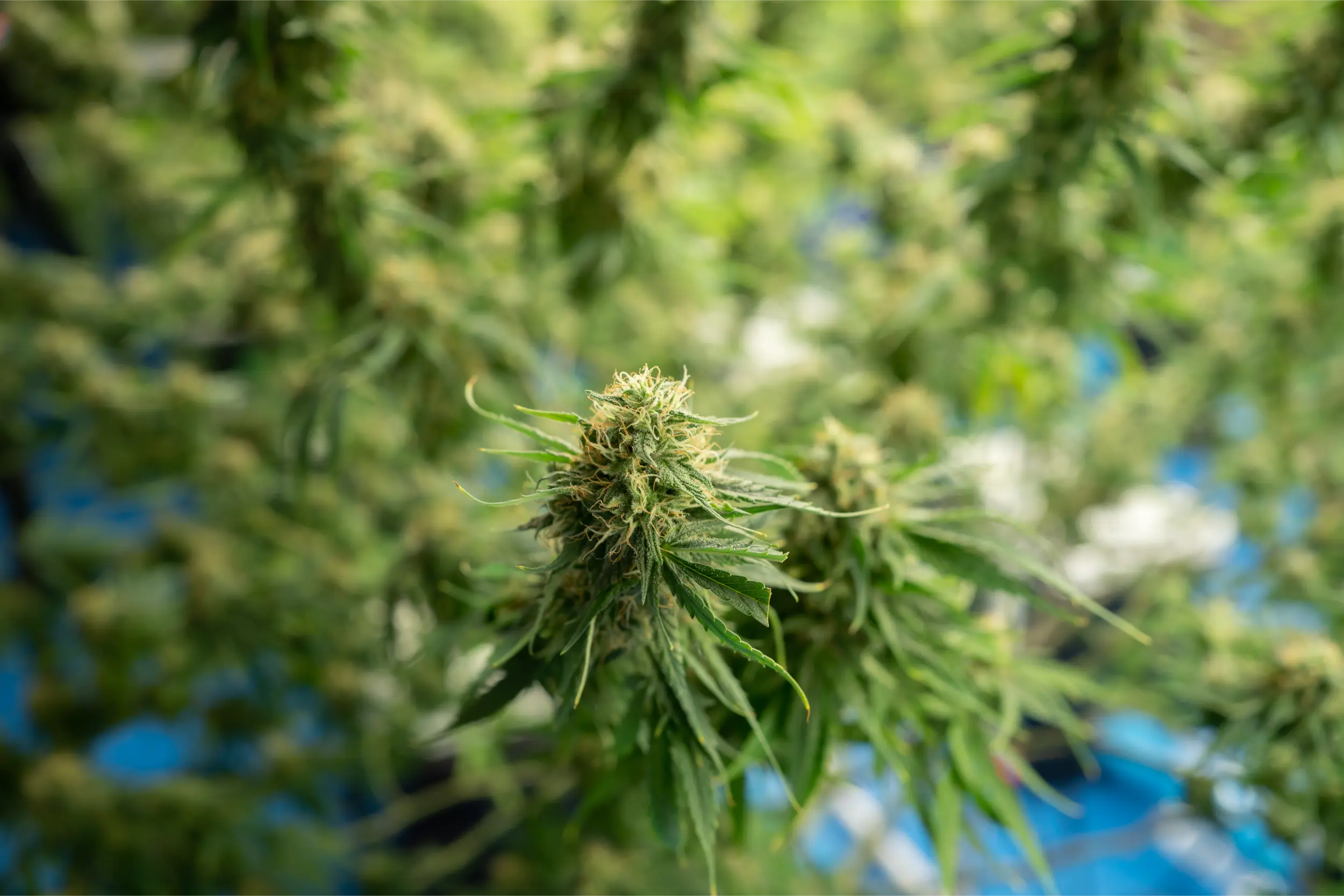
Blackberry Kush
A revered cornerstone of West Coast medical dispensaries since the early 2000s, Blackberry Kush (often abbreviated as BBK) is an iconic, deeply relaxing 80% indica / 20% sativa heirloom. Engineered in northern California and Oregon through a regal pairing of the fruity heirloom clone Blackberry and authentic Bubba Kush (or northern Afghan hashplant), this classic cultivar tests consistently between 20% and 24% THC with trace CBD and CBG support. World-renowned for its breathtaking midnight-purple and jet-black bag appeal, Blackberry Kush is celebrated by patients and connoisseurs for delivering one of the most comforting, pain-relieving, and physically restorative physical stones in cannabis history.
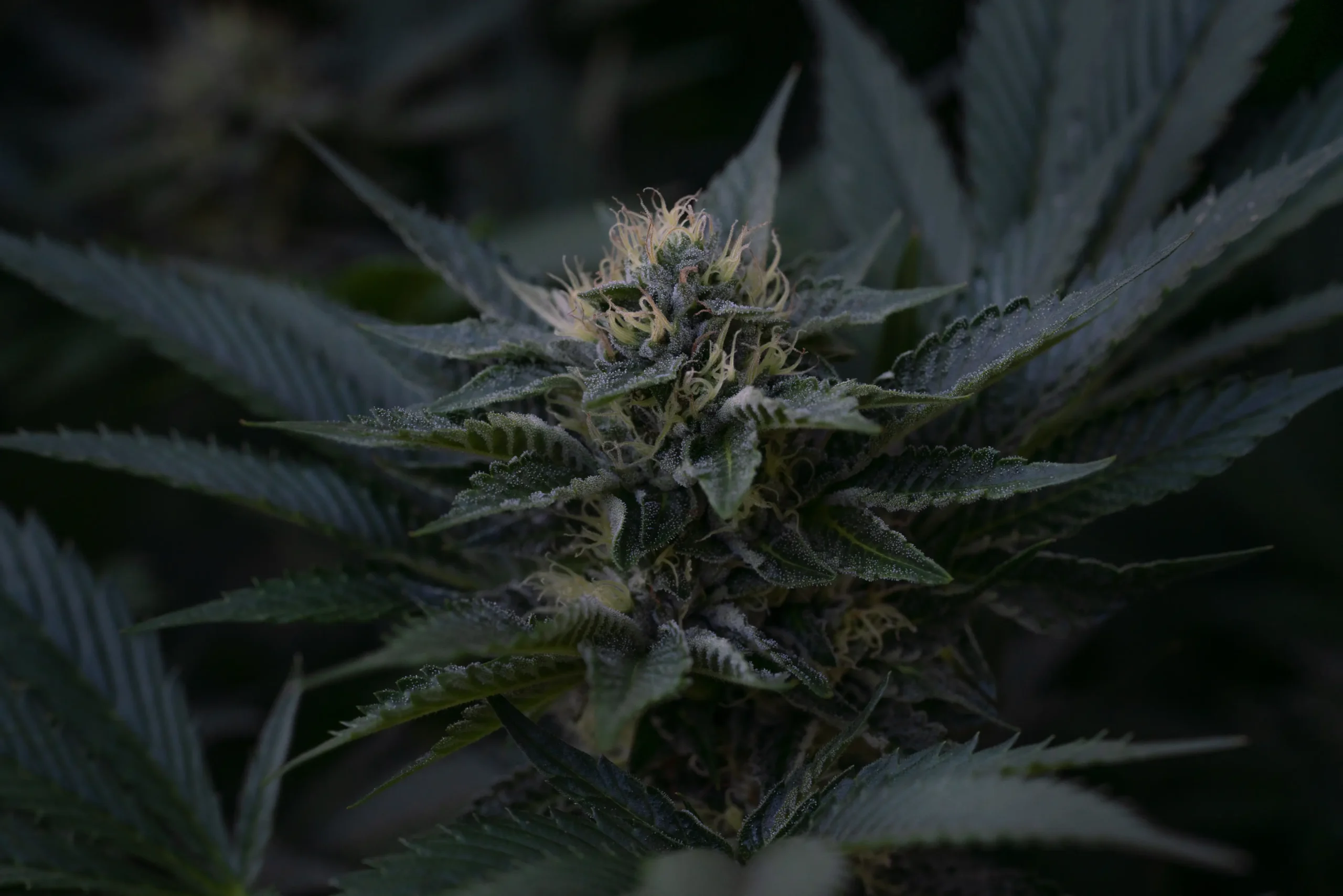
In the cultivation room, Blackberry Kush exhibits classic compact indica architecture: stout, woody main stems, short internodal gaps, and a minimal 1.2x to 1.35x post-flip stretch. Finishing indoor flowering in a brisk 50 to 56 days (7 to 8 weeks) and stacking rock-hard, golf-ball calyx clusters that turn deep burgundy, jet-black, and royal purple as night temperatures cool, it rewards growers with dense, crystal-coated nuggets that smell of sweet ripe blackberries, freshly roasted dark espresso, rich earth, and spicy Afghan hashish.
Strain Features
| Feature | Details |
|---|---|
| Type | Indica-dominant hybrid |
| Genetic profile | Commonly described as strongly indica-dominant |
| Lineage | Afghani x Blackberry |
| THC | Usually reported in the mid-teens to low 20% range, with phenotype and sample variation |
| CBD | Typically very low |
| Dominant terpenes | Beta-Caryophyllene, Limonene, Myrcene, Humulene and Pinene in smaller amounts |
| Primary aroma | blackberry, sweet earth, hash and fuel |
| Flavor character | ripe berry and candy sweetness over hash, pepper, earth and diesel |
| Indoor flowering time | about 7-9 weeks, often 7-8 weeks in compact expressions |
| Outdoor harvest | late September to early October in favorable northern climates |
| Indoor yield | low to moderate; quality and density often exceed raw production |
| Outdoor yield | moderate in dry, sunny sites with good root volume |
| Plant height | short to medium |
| Flowering stretch | low to moderate, commonly around 1.3-1.8x |
| Grow difficulty | easy to moderate, with late-flower density as the main challenge |
| Primary cultivation risk | dense flowers, low interior airflow and modest yield if over-pruned |
The table is a planning snapshot. The sections below explain why Blackberry Kush may finish outside the stated range and how the grower can respond without sacrificing flower quality.
Genetic Lineage
The most commonly documented lineage for Blackberry Kush is Afghani x Blackberry. That parentage is a practical map rather than a guarantee. It explains why the cultivar repeatedly shows compact height, broad leaves, resinous flowers and a fast finish while also carrying sweet dark berries layered over earthy Afghani hash and sharp fuel.
From the first side of the cross, growers usually see dense flower formation, resin, heavy body effects and a dry hash foundation. From the second side, the plant tends to inherit blackberry sweetness, dark color potential and a softer fruit aroma. When both sets of traits meet in a well-selected expression, the result is a compact, colorful plant that favors quality, resin and relaxation over extreme yield.
The lineage also explains the main cultivation tension. Traits that improve flower value can create management problems. The hard flowers and short internodes create visual appeal but can restrict airflow and make lower sites inefficient. This is why training and environment should be planned from inherited architecture instead of from the strain name alone.
The exact identity of the Blackberry parent is not standardized across all records, and products labeled Blackberry Kush may not come from one verified clone. The Afghani x Blackberry description is the strongest recurring consensus. In practical terms, keep records of stretch, node spacing, leaf width, aroma onset, flower density and finish time. Those observations identify the plant more reliably than a label on its own.
A keeper should not be selected on color or potency alone. The strongest all-round expression will combine the expected sensory profile with stable growth, manageable internodes, good recovery after training and flowers that dry without collapsing into a wet, airless mass. That selection standard preserves what is distinctive about Blackberry Kush while avoiding the weakest structural expressions.
Blackberry Kush’s genetic blueprint pairs sweet Pacific Northwest fruit with ancient Afghan hashplant stability. The maternal parent, Blackberry (Black Domina x Raspberry Cough), injects sweet dark-berry syrup terpenes, rapid 7.5-week flowering speed, and deep purple autumn anthocyanin pigments. The paternal parent, authentic Bubba Kush (or heirloom northern Afghani), contributes rock-hard calyx density, thick cuticular trichome heads, roasted-coffee-and-chocolate undertones, and heavy full-body physical analgesia.
Effect Breakdown
Initial emotional phase. Blackberry Kush commonly begins with a gentle euphoric release, quiet happiness and a slower emotional pace. The onset speed depends on dose, tolerance and delivery method, but the first noticeable change is often emotional rather than physical. The strain can make the environment feel softer, brighter or more interesting before the body becomes heavy.
Mental development. During the central part of the experience, attention usually becomes less analytical and more sensory, making the strain better for music, food, film or intimate conversation than demanding work. This is the phase in which the cultivar's balance becomes clear. A modest amount may support conversation, music, creative work or quiet focus, while a larger amount can narrow attention and make complex tasks less appealing.
Physical phase. The body response generally develops as a warm body blanket, softened muscles and increasing heaviness behind the eyes. People often notice the face, shoulders and hands relax first. The legs and lower back may feel heavier later, especially when the session takes place in a warm, comfortable setting.
Late phase. The final stage tends toward strong relaxation, appetite and sleepiness. The late phase is also where dose errors become obvious. Repeated inhalations taken before the first dose has fully developed can convert a balanced session into pronounced sedation, mental fog or restlessness, depending on the user's sensitivity.
Dose sensitivity. The sweet berry aroma can make repeated inhalation easy, but the late body effect may arrive after the user has already consumed more than intended. The aroma can make the flower feel approachable, but pleasant flavor is not a measure of mild potency. New or low-tolerance users should wait long enough to judge the first dose before adding more.
The most accurate description is therefore a sequence: sweet euphoria, sensory comfort, body warmth, appetite and sleep. That sequence explains why two users can describe the same flower differently. One may stop at the bright opening, while another continues into the heavier final stage.
Blackberry Kush is legendary throughout the Pacific Northwest and California as one of the most reliable evening physical remedies ever cultivated. Within minutes of inhalation, a warm, tingling wave of euphoria spreads across the forehead and temples, gently erasing mental fatigue, stress, and anxiety into a state of serene emotional contentment. Over the next 25 minutes, the 80% indica foundation cascades through the physical body, dissolving chronic lower-back pain, muscle spasms, and arthritis into a heavy, couch-locking physical embrace that leads smoothly into restorative sleep without next-morning grogginess.
| Phase & Time Window | Mental & Emotional State | Physical & Somatic Sensation | Ideal Setting & Pairing |
|---|---|---|---|
| Blackberry Glow (0 to 15 Minutes) | Instant wave of blissful euphoria, mental stillness, and stress release | Warm, soothing release across the temples, jaw, and neck | Evening unwinding, dessert pairing, or relaxing music |
| Velvet Hash Cruise (15 to 75 Minutes) | Peaceful, unhurried mental tranquility with zero anxiety | Deep musculoskeletal analgesia melting tension in the back and hips | Lounging on the sofa, listening to music, or watching a film |
| Bubba Kush Melt (75 to 140 Minutes) | Dreamy, introspective calm and quiet emotional stillness | Weighted, couch-friendly limb comfort and strong appetite boost | Late-night snacks and cozy relaxation |
| Restorative Slumber (140 to 210+ Minutes) | Smooth, effortless drift into deep, uninterrupted sleep | Complete nocturnal physical restoration with zero morning fog | Full night of restful sleep for pain and insomnia relief |
Flavor & Aroma Profile
The jar aroma of Blackberry Kush is centered on blackberry preserves, dark berry skin, wet earth, Afghani hash, black pepper and a distinct jet-fuel edge. A clean sample should smell layered rather than merely loud. The first impression comes from the most volatile top notes. The deeper earth, spice, fuel, herb or hash notes become clearer after the flower is broken apart.
On inhalation, the expected flavor is sweet blackberry and soft candy with a creamy, earthy middle. On exhalation, hash, pepper and fuel sharpen the finish. The aftertaste is often the best indicator of cure quality because it reveals whether the flower retained its delicate upper notes or was reduced to generic sweetness, hay or blunt fuel.
The profile can be divided into four layers. The top layer contains ripe blackberry, berry syrup and faint floral sweetness. The middle layer carries pepper, dry herbs and cocoa-like earth. The base layer is built from hash, fuel, musk and wood. A final finish of a lingering sweet-fuel contrast may remain on the palate after the smoke or vapor has cleared.
Harvest timing changes this structure. An early cut may smell bright but taste thin, sharp or green because the plant has not completed resin and aromatic development. A very late cut may deepen the base and body effect while muting the fresh blackberry and floral sweetness. The ideal window is the point at which the aroma remains vivid and the calyxes have finished swelling.
Drying speed is equally important. Fast drying tends to erase the berry-syrup top note, leaving the heavier earth, pepper or fuel. Drying too slowly in a stagnant room can create a damp, sour or musty note and raises the risk of microbial damage. The best expression comes from a controlled middle path.
Aroma intensity should not be confused with quality. A harsh, overheated flower may smell strong because the heaviest compounds remain, yet still lack the clean progression that makes Blackberry Kush recognizable. Smoothness, persistence and separation between layers matter more than raw loudness.
Smoking Blackberry Kush is like enjoying a dessert of fresh wild blackberries dusted in dark cocoa powder beside an old-world hashish pipe. Cracking open a cured, purple-and-silver nugget releases an immediate rush of sweet ripe blackberries, dark berry preserves, and honey, backed by roasted coffee beans, damp forest earth, and spicy Afghan hashish. On the inhale, sweet blackberry jam and vanilla earth coat the palate with zero harshness; on the exhale, roasted cacao, toasted walnut, and spicy Kush hash linger on the tongue for minutes.
Dominant Terpenes
Beta-Caryophyllene. In Blackberry Kush, this terpene contributes pepper, dry spice, wood and a fuel-like bite. Its likely sensory role is providing the bridge between sweet fruit and Afghani hash. Terpene rankings can change by phenotype, environment, harvest timing and analytical method, so the compound should be treated as part of a pattern rather than as a guaranteed dominant in every sample.
Limonene. In Blackberry Kush, this terpene contributes light citrus brightness and sweet lift. Its likely sensory role is keeping the berry layer vivid and contributing to the early mood elevation. Terpene rankings can change by phenotype, environment, harvest timing and analytical method, so the compound should be treated as part of a pattern rather than as a guaranteed dominant in every sample.
Myrcene. In Blackberry Kush, this terpene contributes earth, musk, herbs and dark fruit softness. Its likely sensory role is supporting the heavy body character and the deep base aroma. Terpene rankings can change by phenotype, environment, harvest timing and analytical method, so the compound should be treated as part of a pattern rather than as a guaranteed dominant in every sample.
Humulene and Pinene in smaller amounts. In Blackberry Kush, this terpene contributes hops, dry wood, pine and resin. Its likely sensory role is adding dryness and preventing the profile from becoming syrupy. Terpene rankings can change by phenotype, environment, harvest timing and analytical method, so the compound should be treated as part of a pattern rather than as a guaranteed dominant in every sample.
Together, these compounds create the cultivar's movement from ripe blackberry, berry syrup and faint floral sweetness toward hash, fuel, musk and wood. The blend matters more than a single terpene. Similar amounts of one compound can smell different when the surrounding minor compounds change.
Terpenes are volatile. Excess canopy heat, drought stress, late overfeeding, rough handling and rapid drying can reduce the very notes that separate Blackberry Kush from a generic hybrid. Protecting aroma begins in the flowering room and continues through storage.
| Dominant Terpene | Typical Share (% of Total) | Boiling Point | Aromatic Signature | Pharmacological & Entourage Role |
|---|---|---|---|---|
| Beta-Myrcene | 36% to 44% (0.65% to 1.10% dry weight) | 334°F (168°C) | Ripe wild blackberry pulp, sweet berry musk, and damp earth | Drives the deep, full-body muscle relaxation and somatic sedation |
| Beta-Caryophyllene | 24% to 30% (0.42% to 0.75% dry weight) | 266°F (130°C) | Dark roasted coffee, warm baking spice, and cracked black pepper | Directly activates CB2 receptors for deep anti-inflammatory and pain relief |
| D-Limonene | 14% to 19% (0.25% to 0.48% dry weight) | 349°F (176°C) | Sweet citrus glaze and bright berry tang | Lifts the mood and keeps the initial onset cheerful |
| Alpha-Pinene | 10% to 14% (0.18% to 0.35% dry weight) | 311°F (155°C) | Crisp mountain pine needle and fresh forest resin | Preserves quiet mental clarity and supports comfortable bronchodilation |
| Linalool | 6% to 10% (0.10% to 0.22% dry weight) | 388°F (198°C) | Sweet floral lavender blossom and confectioners sugar | Creates the silky mouthfeel and delivers potent anxiolytic nighttime calm |
Indoor vs. Outdoor Growing
| Aspect | Indoor Growing | Outdoor Growing |
|---|---|---|
| Space and structure | Short, broad and suitable for close plant spacing, though leaf overlap can create a sealed interior. | Forms a compact shrub rather than a tall tree; benefits from early widening and good ground clearance. |
| Climate control | Moderate temperatures and low late-flower humidity are ideal for dense purple flowers. | Needs dry air and reliable autumn weather; repeated rain is more dangerous than cool nights. |
| Training | SOG works well; otherwise top once, spread gently and keep the center open. | Train outward, support the perimeter and remove low branches that remain damp or shaded. |
| Yield strategy | Use more uniform tops and efficient spacing rather than long veg and oversized individual plants. | Give sufficient root space and sunlight but preserve airflow through the short, dense framework. |
| Main risk | Overcrowded leaves, hidden humidity and lower sites that consume energy without finishing well. | Bud rot after rain or dew, especially in the thickest terminal flowers. |
| Best fit | Small rooms, SOG layouts and growers who value resin and flavor over maximum biomass. | Dry climates with an early finish and good morning sun. |
Indoor cultivation gives the grower control over humidity, plant spacing and the ratio of top flower to shaded lower growth. This is especially useful because the compact plant can appear efficient while actually trapping leaves and small buds inside. The plant should enter flowering with enough open space for the expected stretch and with lower growth already organized.
The indoor advantage is precise humidity management. Thin the center before the flowers harden and keep late-flower humidity below the level that allows condensation overnight. Air movement should pass through the canopy rather than only across the top. A strong exhaust system cannot compensate for a sealed interior created by overlapping leaves and unsupported branches.
Indoor yield is most reliable when training matches the plant. SOG works well; otherwise top once, spread gently and keep the center open.. The goal is not to produce the greatest number of branches. It is to create the number of well-lit, well-supported tops that the root zone and light can finish with density.
Outdoor cultivation allows greater root volume and full-spectrum sunlight. The short, sturdy frame is wind tolerant and can finish before many long-season sativas. The plant can become wider and more productive than it does indoors, but the larger canopy also holds more moisture after rain or dew.
Outdoor success depends on the finish window. Inspect after every rain and harvest damaged sections immediately rather than waiting for the entire plant. In regions with wet autumns, protection from prolonged rain can be more valuable than an extra week of theoretical ripening.
The choice between environments should be based on control and climate, not on a claim that one method automatically produces better flower. Indoor growing offers repeatability. Outdoor growing offers root freedom and sunlight. Both can produce excellent Blackberry Kush when canopy density, harvest timing and drying are handled correctly.
Regional North American Outdoor Performance: Finishing outdoors between September 20 and October 1 with thick stems and high mold resistance, Blackberry Kush is an exceptional performer across North America. In our northern Great Lakes lakeside trials, where chilly, wet May soils delay early root growth and late-September cold fronts bring 40°F night drops and heavy lake-effect morning dew, Blackberry Kush planted in late May into elevated 65-gallon fabric beds amended with 35% coarse volcanic pumice thrived: the late-September 42°F nights turned the colas deep midnight-purple and jet-black, harvesting 100% mold-free on September 26 before autumn rains arrived, yielding 21 ounces per plant. Out West in southern Oregon’s Rogue Valley and California’s Mendocino hills, open-air plants bask in the crisp late-September sun to yield over 24 ounces per plant of sweet blackberry-and-hash colas.
Why does Blackberry Kush stay so compact indoors, and how should I prune it to maximize yields in a small space?
Question sent by: Mateo R., via email
Blackberry Kush inherits compact, stout apical dominance from its Bubba Kush and Afghan parents, stretching only 1.2x to 1.3x after the flip to 12/12. Give it a full 5 weeks of vegetative growth, top once at the fourth node, and selectively remove the large interior fan leaves right at day 18 of flower so high-intensity LED light reaches the inner colas.
Strain-Specific Grow Guidance
| Growth Stage | Day / Night Temp (°F) | Relative Humidity (%) | Target VPD (kPa) | Lighting PPFD (umol/m2/s) | Feed EC (mS/cm) & Root pH |
|---|---|---|---|---|---|
| Seedling & Clone Rooting (Weeks 1 to 2) | 74°F to 78°F / 68°F to 72°F | 65% to 70% | 0.65 to 0.80 kPa | 250 to 350 | EC 0.7 to 0.9 | Soil pH 6.3 / Coco 5.8 |
| Compact Vegetative Build (Weeks 3 to 5) | 75°F to 80°F / 67°F to 71°F | 55% to 62% | 0.90 to 1.10 kPa | 475 to 650 | EC 1.3 to 1.6 | Soil pH 6.4 / Coco 5.8 |
| Short Stretch & Crown Set (Days 1 to 14 of 12/12) | 74°F to 78°F / 65°F to 69°F | 48% to 52% | 1.15 to 1.30 kPa | 725 to 850 | EC 1.6 to 1.8 | Soil pH 6.4 / Coco 5.9 |
| Berry Calyx Bulking (Days 15 to 40 of 12/12) | 72°F to 76°F / 63°F to 66°F | 40% to 45% | 1.30 to 1.45 kPa | 850 to 1,000 | EC 1.8 to 2.0 | Soil pH 6.5 / Coco 6.0 |
| Black-Purple Fade & Flush (Days 41 to 54 of 12/12) | 67°F to 71°F / 57°F to 61°F | 36% to 41% | 1.35 to 1.50 kPa | 725 to 800 (dimmed 15%) | EC 0.0 to 0.4 (Clean Water Flush) | pH 6.4 |
Grower Note: Build the schedule from observed stretch, water demand and flower density. Blackberry Kush should not be forced into a generic week-by-week feed chart when the plant is showing different needs.
Morphology and plant shape
Blackberry Kush typically develops broad leaves, compact branching, short internodes and a low-to-medium height. This shape determines how the plant should be spaced. A plant that looks manageable from the aisle may still be crowded at the stem where leaves, petioles and young branches overlap.
Internodal spacing is usually short, creating efficient SOG plants but limited natural airflow. The flowering stretch is low to moderate, commonly around 1.3-1.8x, but seed-grown plants may fall outside the average. Measure the plant at flip and again at the end of week two. That simple record improves future planning more than relying on a generic ratio.
The flower structure is dense, rounded to conical flowers with purple, green and orange color and heavy resin. This creates the main late-flower priority: protecting the core from humidity while avoiding an overly aggressive strip that reduces modest yield. Dense flowers need airflow around them, not direct high-speed wind that dries exposed surfaces while the interior remains moist.
Root zone, containers and irrigation
Use a root zone that drains freely but does not swing from saturated to bone dry. A medium-size container is often enough indoors, but uniform moisture and oxygen are more important than sheer volume. Fabric containers, well-aerated soil or properly managed coco can all work. The correct medium is the one the grower can irrigate consistently.
Water by container weight, plant demand and runoff behavior rather than by a fixed calendar. The compact canopy can reduce evaporation, so verify dry-back by weight instead of copying the schedule of a taller, airier cultivar. In late flower, the plant may drink less even while the flowers continue to swell. Continuing peak irrigation after demand falls is a common route to root stress and humidity problems.
Training response
The preferred training strategy is use SOG with minimal topping, or top once and spread four to eight strong branches while removing shaded interior shoots. Begin while stems are flexible. Early shaping creates stronger branch angles and reduces the need for aggressive correction after flowering begins.
Topping is useful when plant count is low, but repeated topping can delay a naturally quick cultivar. Low-stress training is effective for widening the plant without slowing recovery. A screen is optional; a simple support net is often more useful than a full long-veg SCROG. High-stress work should be completed before the plant commits heavily to flower production.
Remove weak interior shoots that cannot reach useful light. Do not strip the plant simply to create a clean photograph. Every removed leaf should solve a real problem such as blocked airflow, a buried flower site or excessive interior humidity.
Nutrition and feeding response
Blackberry Kush generally prefers moderate feeding and can show dark, clawed leaves when nitrogen or salts accumulate. Begin with a moderate concentration and watch new growth, leaf posture, tip color and runoff trend. The plant's response is more useful than a feed chart designed for an average cultivar.
During transition, avoid carrying excessive nitrogen deep into flower. Too much nitrogen can delay natural fade, soften stems, darken leaves and reduce airflow by keeping the canopy overly lush. Shift gradually toward a bloom-balanced program after stretch becomes clear.
Calcium and magnesium demands depend more on medium, water and growth rate than on the strain name. Supplement only when the system requires it. Repeatedly adding products to chase isolated symptoms can create salt buildup that looks like a new deficiency.
Climate and disease prevention
The safest climate is moderate, dry and well ventilated. In early flower, maintain enough humidity for active growth without creating condensation. In late flower, reduce humidity as density increases and keep night temperatures stable enough to prevent dew forming inside the canopy.
The main biological risk is botrytis in dense buds and root-zone stagnation when the compact canopy reduces water demand. Prevention depends on sanitation, spacing, leaf inspection and environmental control. Sprays should not be treated as a substitute for a healthy room, and late-flower applications can damage aroma or leave residues.
Inspect the thickest flowers and the quietest interior zones. The top of the canopy may look dry while the shaded center remains damp. A small sensor placed inside the canopy often tells a different story from the room sensor on the wall.
Week-by-week cultivation roadmap
Establishment and early roots. Keep young Blackberry Kush plants in a stable root environment and avoid pushing rapid top growth before roots occupy the container. Early overwatering can create a small plant with a large, wet medium and weak oxygen availability.
Vegetative framework. Build four to eight evenly spaced primary tops with the lower center clearly visible. Remove only growth that clearly cannot contribute. Use gentle ties to widen the plant and inspect the underside of leaves during every training session.
The final week before flowering. Confirm that the canopy has spare vertical space, support points are installed and the lower third is not packed with weak shoots. Correct major structural problems now rather than after pistils appear.
Flower weeks one and two. Expect limited stretch, rapid bud-set and increasing leaf overlap. Continue tucking or tying until the stretch slows. Avoid heavy defoliation and high nutrient concentration at the same time because combined stresses can stall the transition.
Flower weeks three and four. Flower sites begin to define themselves. Remove shaded interior growth, check branch angles and verify that air can move through the center. Aroma should begin to shift toward earthy berry and pepper before the fuel becomes obvious.
Flower weeks five and six. Density and resin become the main story. Support branches before they bend. Lower humidity progressively and inspect the largest flowers with clean hands and good light.
Final ripening. Reduce unnecessary manipulation. Watch trichome development on the calyxes, not only on exposed sugar leaves. Track water demand, fade, pistil recession and aroma together instead of harvesting from a calendar alone.
Phenotype selection and harvest troubleshooting
Select keepers by a complete scorecard: rooting speed, structure, recovery after training, aroma identity, flower density, resistance to stress, finish time and final smoke quality. A spectacular color expression that repeatedly molds or produces weak lower flowers may not be the best long-term choice.
If stretch is greater than expected, stop adding vertical problems. Bend the tallest branches gradually, increase side lighting if available and avoid severe late topping. If the canopy is too dense, thin in stages rather than removing a large amount in one session.
If flowers remain airy, review light distribution, root health, temperature and excessive nitrogen before adding more bloom products. If the aroma weakens late, inspect canopy heat, irrigation stress and harvest delay. If the outer flower feels dry while stems remain flexible, slow the dry rather than sealing the buds immediately.
Harvest when the plant has reached the desired balance between aroma, resin maturity and effect. Choose a mostly cloudy trichome window with a small amber fraction to retain berry brightness while allowing the body effect to mature. A few amber trichomes can deepen the finish, but waiting for a heavily amber canopy may sacrifice the brighter part of the profile.
Advanced Photobiology, DLI & CO2 Enrichment Strategy: Maximizing active secondary metabolites (cannabinoids and volatile mono- and sesquiterpenes) in Blackberry Kush requires matching your Daily Light Integral (DLI) to root-zone metabolic capacity and ambient carbon dioxide levels. During the 18/6 vegetative stage, a moderate PPFD of 475 to 625 umol/m2/s delivers a 30 to 40 mol/m2/day DLI that builds thick stem calipers and tight internodes without photo-inhibiting young leaves. Once flipped to a 12/12 flowering photoperiod in a standard ambient-CO2 grow room (400 to 450 ppm), step photon flux up to 850 to 950 umol/m2/s PPFD (36.7 to 41.0 mol/m2/day DLI) across weeks three through six of bloom. If cultivating in a sealed climate-controlled room supplemented with 1,100 to 1,250 ppm of CO2 during the mid-bloom bulk, Blackberry Kush can efficiently assimilate 1,000 to 1,120 umol/m2/s PPFD while holding canopy leaf temperatures at 79°F to 81°F; however, always cut CO2 supplementation off and dim fixtures by 12% to 15% during the final 12 days of ripening while lowering room temperatures to 70°F to 73°F so heat-sensitive monoterpenes remain locked inside the cuticular trichome heads.
Integrated Pest Management (IPM) & Rhizosphere Health: Healthy trichome production in Blackberry Kush starts in an oxygenated, biologically diverse root zone. Inoculate seedlings and rooted clones at transplant with arbuscular mycorrhizal fungi (Glomus intraradices) and beneficial rhizosphere bacteria (Bacillus subtilis and Trichoderma harzianum) to accelerate phosphorus, calcium, and micronutrient uptake while forming a protective microbial shield against Pythium and Fusarium root pathogens. Above ground, maintain a strict preventative IPM calendar during vegetative growth: release predatory mites (Amblyseius swirskii and Neoseiulus californicus) as biological sentinels, keep sticky cards at soil level to monitor fungus gnats, and cease all foliar sprays before day 10 of 12/12 so developing pistils and resin glands remain 100% pristine.
Post-Harvest Drying, Curing & Trichome Preservation Protocol: Even the most dialed-in Blackberry Kush canopy can lose 40% of its volatile monoterpene fraction in seventy-two hours if dried in a warm or overly arid room. Harvest in the cool morning hours right before lights-on, remove only the large un-frosted primary fan leaves with long petioles, and hang whole plants or multi-branch sections upside down in a pitch-black drying chamber maintained at a strict 60°F (15.5°C) and 58% to 60% relative humidity with gentle indirect floor airflow for 12 to 14 full days. Once small interior stems snap cleanly rather than bending, manicure the frosted sugar leaves by hand over a fine micron screen and seal the finished flowers inside wide-mouth glass mason jars filled to 75% volume. Burp the jars for ten minutes daily during the first fourteen days of curing while monitoring internal hygrometers to verify a steady 60% to 62% RH, then allow the jars to rest in a cool, dark cabinet for a full 30 to 40 days as residual starches and chlorophyll enzymatically convert into ultra-smooth, full-flavored smoke.
Weedth Bud Flavor Tips
Protect flavor before harvest. Keep canopy temperatures moderate, avoid severe drought cycles and do not chase color with extreme cold. Do not use severe drought or cold to force color; healthy ripening produces a cleaner berry-hash profile. Healthy late-flower metabolism generally preserves more aroma than stress used as a cosmetic trick.
Harvest handling should be gentle. The resin is sticky and easily smeared, so move flowers by the stems whenever possible. Trichome heads carry much of the aroma and should remain on the flower rather than on gloves, trays or the floor.
Dry in darkness with cool, stable air and controlled humidity. A slow dry of roughly one to two weeks is a useful target, but stem size, flower density and room conditions matter more than a fixed day count. Dense purple buds often dry unevenly; separate unusually large tops if the room is humid.
For dense flowers, use smaller hanging branches or whole-plant sections chosen according to room humidity. Whole-plant drying can protect aroma in a dry room, while very large intact plants can remain wet too long in a humid room. Adjust the plant size to the environment.
Begin curing only when the flower surface is dry, small stems are approaching a snap and moisture no longer feels trapped in the center. Seal a small test portion first. If humidity rises rapidly or the aroma turns damp, return the flower to open drying conditions.
During the first cure week, release excess moisture regularly without leaving containers open for long periods. As moisture equalizes, reduce the frequency. A month of curing usually softens the fuel and allows blackberry sweetness to return after the first grassy stage. The aim is a stable flower that burns or vaporizes cleanly and releases distinct layers rather than one blunt note.
Store the finished flower in airtight containers in a cool, dark place. Divide long-term storage into smaller containers so the entire harvest is not exposed every time a jar is opened. Heat, light and repeated oxygen exposure flatten aroma over time.
Indoor and outdoor flowers may need different handling. Outdoor material can carry more surface dust and variable moisture, while indoor material may be denser and easier to overdry under strong dehumidification. Evaluate the actual flower rather than applying one post-harvest schedule to both.
Weedth Bud Boost Tips
The most reliable yield increase comes from canopy efficiency, not from late additives. For Blackberry Kush, build uniform, short tops with minimal shaded lower growth and strong light across the whole footprint. A flat, open canopy converts light into useful flower while reducing shaded larf.
Use the training method that matches the architecture. use SOG with minimal topping, or top once and spread four to eight strong branches while removing shaded interior shoots Do not force a wide-screen method onto a plant count, veg time or room shape that cannot support it. Yield per harvest and yield per year are different calculations.
Root health sets the ceiling. Provide enough container volume for the planned plant size, maintain oxygen and avoid salt accumulation. A plant with damaged roots cannot use stronger light or more nutrients efficiently.
Increase light only when the environment and irrigation can support the extra demand. Leaves that taco, bleach or remain unusually upright under intense light are not proof of productive stress. Uniform light across the canopy is usually more valuable than an extreme peak reading at one point.
Branch support is preventive yield protection. The plant is short, but the heaviest terminal buds can still pull side branches below the light line. Install stakes, a net or soft ties before branches collapse. Repairing broken branches late in flower costs time and exposes tissue to infection.
Selective pruning improves the quality ratio. Remove weak lower growth before it consumes weeks of energy. Keep enough healthy leaf area to power the flowers and avoid repeated heavy defoliation that forces the plant to rebuild tissue.
Carbon dioxide enrichment is only useful in a sealed, measured environment with sufficient light, temperature control and irrigation capacity. It should not be used to compensate for poor airflow, weak roots or an uneven canopy. Most small gardens gain more from basic environmental consistency.
Outdoor yield depends on early structure, root space and season length. Train the plant outward before stems harden, support major branches and thin the interior before autumn humidity arrives. A slightly smaller, open plant can finish more usable flower than an enormous plant with shaded or mold-damaged interiors.
Do not confuse wet harvest weight with yield. The meaningful target is dry, stable, aromatic flower after trimming and curing. Strategies that produce oversized but watery or loosely finished buds may look impressive at harvest and disappoint after drying.
Medical Uses & Benefits
Reported stress and mood use. Consumers often choose Blackberry Kush for evening stress, irritability and situations where physical comfort matters more than sharp focus. The effect pattern may make it useful for unwinding, changing mental tone or making low-pressure activities feel more engaging. Individual responses vary, and high THC can increase anxiety in sensitive users.
Reported physical use. The progression toward a warm body blanket, softened muscles and increasing heaviness behind the eyes is why some consumers report using the cultivar for muscle tension, general discomfort or evening recovery. These reports do not establish treatment efficacy, and the strain should not replace professional care.
Sleep context. The late phase is commonly sleepy and can fit nighttime use, though the first euphoric minutes may remain mentally pleasant rather than immediately sedating. Timing matters. A stimulating opening can be inconvenient immediately before bed even when the late phase becomes heavy.
Appetite and nausea context. Hunger is a frequent late effect, especially after the body warmth becomes pronounced. The response is dose-dependent, and some people experience dry mouth or dizziness instead of useful appetite support.
Terpene interpretation should remain cautious. Compounds such as Beta-Caryophyllene, Limonene, Myrcene have been studied individually, but a cannabis flower is a variable mixture and user experience cannot be predicted from one terpene name.
Anyone using cannabis for a medical reason should discuss it with a qualified healthcare professional, especially when taking medication, managing a psychiatric condition, pregnant, nursing or sensitive to THC. Start with a small amount and avoid driving or operating equipment while impaired.
Medical Note: Reported consumer experiences are not medical evidence and this profile is not a diagnosis or treatment recommendation. Cannabis can interact with medications and may worsen symptoms for some people.
Ideal User Profile
Blackberry Kush best suits evening users who enjoy berry sweetness but still want earthy hash and fuel. The user should appreciate ripe berry and candy sweetness over hash, pepper, earth and diesel and understand that the experience may continue developing after the first obvious effects.
The most suitable time is late afternoon or evening. A small amount may fit a different part of the day than a large amount. Dose changes the practical identity of the strain as much as the clock does.
The cultivar is less suitable for users seeking strong daytime stimulation or growers expecting very high yield from a short cycle. Sensitive users should approach the aromatic, appealing flower with the same caution they would apply to any potent cultivar.
For growers, the ideal match is someone willing to manage plant spacing, lower-canopy cleanup and patient post-harvest handling. A beginner can succeed when the environment is stable, but the plant should not be mistaken for a completely automatic crop.
The best reason to choose Blackberry Kush is its complete combination of dark berry flavor, resin, manageable height and dependable physical relaxation. Growers or consumers seeking only one extreme trait may prefer another cultivar.
Grower Notes and Feedback
Growers commonly describe Blackberry Kush as beautiful, compact and resinous, but not usually a record-setting yielder. The positive reports usually come from gardens that matched training to the natural architecture instead of trying to force every plant into the same schedule.
Vegetative feedback often centers on quick bush formation and leaf overlap beneath a low canopy. This is the stage where the final canopy is decided. Waiting until flowering to address crowding or height creates more stress and less predictable recovery.
Flowering feedback emphasizes fast bud-set, strong color potential and a sudden rise in density near the finish. The plant may look finished from a distance before the calyxes and interior trichomes are ready, so close observation is essential.
Feeding reports are mixed because medium, water and phenotype differ. The recurring lesson is moderation keeps the leaves functional and the flavor cleaner than aggressive feeding. Dark, glossy leaves and burned tips are warnings, not proof that the plant is receiving a productive amount of nutrition.
Post-harvest reports show that berry returns during cure after the first fuel and earth dominate. Samples rushed through drying often lose the delicate notes and retain only the heaviest base aroma.
The most common disappointment is small final weight caused by too many weak branches or a very short veg. That outcome is usually linked to environment or selection rather than to the cultivar being inherently poor.
A repeat run should begin with notes from the first. Record flip height, final height, irrigation frequency, climate peaks, harvest date, dry duration and cured aroma. The second crop is where the grower can move from simply completing Blackberry Kush to expressing it well.
Weedth Editor’s Note
Blackberry Kush is an immortal classic that has earned a permanent place in my garden logbook for its unmatched dark-berry terpenes, fast 52-day bloom speed, and deeply comforting physical stone. In my indoor LED flower room, I transplanted four selected females into 7-gallon fabric pots filled with an organic living soil blend amended with 30% coarse volcanic pumice, earthworm castings, kelp meal, and basalt rock dust. Under a 650W full-spectrum bar LED fixture at 76°F and 58% RH, the plants stayed compact and stocky during a 30-day vegetative phase. I topped each plant once at the fourth node and spread the sturdy lateral branches across a ScROG trellis net while watering in a 1.5 EC organic vegetative solution fortified with liquid potassium silicate and cold-pressed liquid kelp extract.
Once flipped to 12/12, Blackberry Kush stretched a tidy 1.25x over the first fourteen days before stacking massive, resin-dripping colas at every node. At day 18 of bloom, I removed the broad, dark-green interior fan leaves to ensure steady horizontal airflow and bathe the buds in 950 umol/m2/s PPFD at 42% relative humidity. From days 19 to 40, I fed an oxygenated organic bloom tea of bat guano, liquid fish hydrolysate, micronized magnesium sulfate, chelated liquid Cal-Mag, and unrefined raw cane molasses at 1.9 EC and pH 6.4. By week six, the entire room smelled like sweet wild blackberries, roasted dark espresso beans, and spicy Afghan hashish. After a 13-day plain-water flush at 69°F day / 58°F night, the bracts turned deep jet-black and royal purple. I harvested on day 53 at 80% cloudy and 20% amber trichomes, pulling 19.6 ounces of rock-hard, crystal-coated flower across my 4×4 tent.
I also ran Blackberry Kush outdoors across two North American regions. In my northern Great Lakes lakeside plot, where cold, wet May ground and late-September 40°F night drops with heavy lake-effect morning dew challenge slow indicas, planting into elevated 65-gallon volcanic-pumice beds allowed an effortless, 100% mold-free harvest on September 26 before autumn rains arrived. Meanwhile, during an outdoor run in southern Oregon’s Rogue Valley, the warm late-summer sun and cool mountain nights produced dense, berry-glazed bushes by September 24. After a 14-day hang dry at 60°F and 60% RH and a 35-day cure in glass mason jars, the sweet blackberry-and-hashish smoke delivered pure physical peace.
Weedth Score
Growing Experience (9.5/10): Compact, stocky, mold-resistant, and finishing in just 50 to 56 days indoors with rock-hard calyxes, making it practically foolproof for beginners and pros alike.
Visual Appeal (9.8/10): Show-stopping jet-black, midnight-purple, and burgundy colas completely buried under an edge-to-edge crust of silver trichomes.
Aroma & Flavor (9.7/10): Sweet ripe wild blackberries, dark berry jam, roasted dark espresso beans, and spicy Afghan hashish.
Effects & Potency (9.4/10): At 20% to 24% THC, it delivers a gentle, cheerful mood lift followed by deep, soothing physical pain relief and restorative sleep.
Overall Weedth Rating (9.5/10): Blackberry Kush is an immortal West Coast medical classic, delivering elite black-purple bag appeal, rich berry-hash terpenes, and rapid 7.5-week speed.
Summary: If you want a fast-finishing 7.5-week purple indica that smells like sweet blackberries and roasted coffee and melts away chronic pain and insomnia, Blackberry Kush is legendary.
FAQ
Is Blackberry Kush suitable for beginners?
Yes, with a stable room and conservative feeding. The main beginner risk is treating the short plant as if humidity cannot build inside it. Beginners should keep the first run simple, use moderate feeding, shape the canopy early and prioritize stable temperature and humidity over advanced additives.
How long does Blackberry Kush really flower?
The most useful planning range is about 7-9 weeks, often 7-8 weeks in compact expressions. Seed-grown plants, different cuts and environmental stress can move the finish earlier or later. Judge calyx swelling, trichomes, aroma, fade and water demand together.
How much does Blackberry Kush stretch?
The expected stretch is low to moderate, commonly around 1.3-1.8x. Measure the plant rather than trusting a fixed multiplier. Light intensity, root space, temperature, nitrogen and phenotype all affect final height.
What training method works best for Blackberry Kush?
use SOG with minimal topping, or top once and spread four to eight strong branches while removing shaded interior shoots The best method creates an even canopy without leaving too many weak interior branches. Complete major high-stress work before flowering is established.
Is Blackberry Kush sensitive to nutrients?
Blackberry Kush generally prefers moderate feeding and can show dark, clawed leaves when nitrogen or salts accumulate. Start below the maximum feed rate and increase only when leaf color, tip condition, growth speed and runoff support the change.
What humidity is safest in late flower?
A practical target is generally in the low-to-mid 40% range, adjusted for temperature, density and airflow. The important point is the humidity inside the canopy and around the largest flowers, not only the wall sensor.
When should I harvest Blackberry Kush for the best flavor?
Choose a mostly cloudy trichome window with a small amber fraction to retain berry brightness while allowing the body effect to mature. Harvesting only by calendar can miss the strongest aromatic window, especially when one phenotype finishes differently from another.
How should Blackberry Kush be dried and cured?
Use a cool, dark, controlled dry and allow moisture to leave the flower gradually. Dense purple buds often dry unevenly; separate unusually large tops if the room is humid. Begin curing only after moisture has equalized enough to avoid a rapid humidity spike in a sealed test container.
What does Blackberry Kush taste like?
The central profile is ripe berry and candy sweetness over hash, pepper, earth and diesel. The exact balance changes with phenotype and post-harvest handling. A good cure should preserve both the bright top notes and the deeper base.
Who should approach Blackberry Kush cautiously?
Users seeking strong daytime stimulation or growers expecting very high yield from a short cycle High-THC flower can also cause dry mouth, dizziness, anxiety or heavy sedation when the dose exceeds the user's comfortable range.
Can Blackberry Kush be grown outdoors?
Yes, when the season matches the finish window and the climate can protect the flowers from prolonged rain or stagnant humidity. Inspect after every rain and harvest damaged sections immediately rather than waiting for the entire plant.
Why might two samples of Blackberry Kush feel different?
Cannabis names are not always tied to one verified clone or standardized chemical profile. Genetics, phenotype, environment, harvest timing, storage, age and dose can all change aroma and effect.
Does purple color mean the flower is stronger?
No. Pigmentation reflects genetics and environmental expression, not a direct measure of THC, terpene quality or maturity. Select and harvest by the complete plant, not color alone.
What is the most common grower mistake with this strain?
The recurring mistake is overbuilding the plant and then expecting every shaded branch to produce dense flower. Correcting that issue early protects both yield and flavor more effectively than trying to repair the crop late.
Similar Strains
Bubba Kush: The foundational paternal parent that contributes the roasted-coffee-and-chocolate aroma and deep physical sedation.
Black Domina: Ancestor through Blackberry, providing the dark-leaved stocky structure and heavy physical stone.
Blueberry (DJ Short): Ancestor that provides the sweet wild-berry terpenes and gentle physical comfort.
Purple Urkle: Shares the compact California heirloom purple stature, sweet berry aroma, and soothing evening muscle relief.
Blackwater: Crosses Mendocino Purps x SFV OG Kush for dark purple-black colas with a sharper diesel-fuel kick.
Share this article
A quick overview of the topics covered in this article.
Follow us
Latest articles
November 10, 2026
November 10, 2026
November 10, 2026
November 10, 2026
