
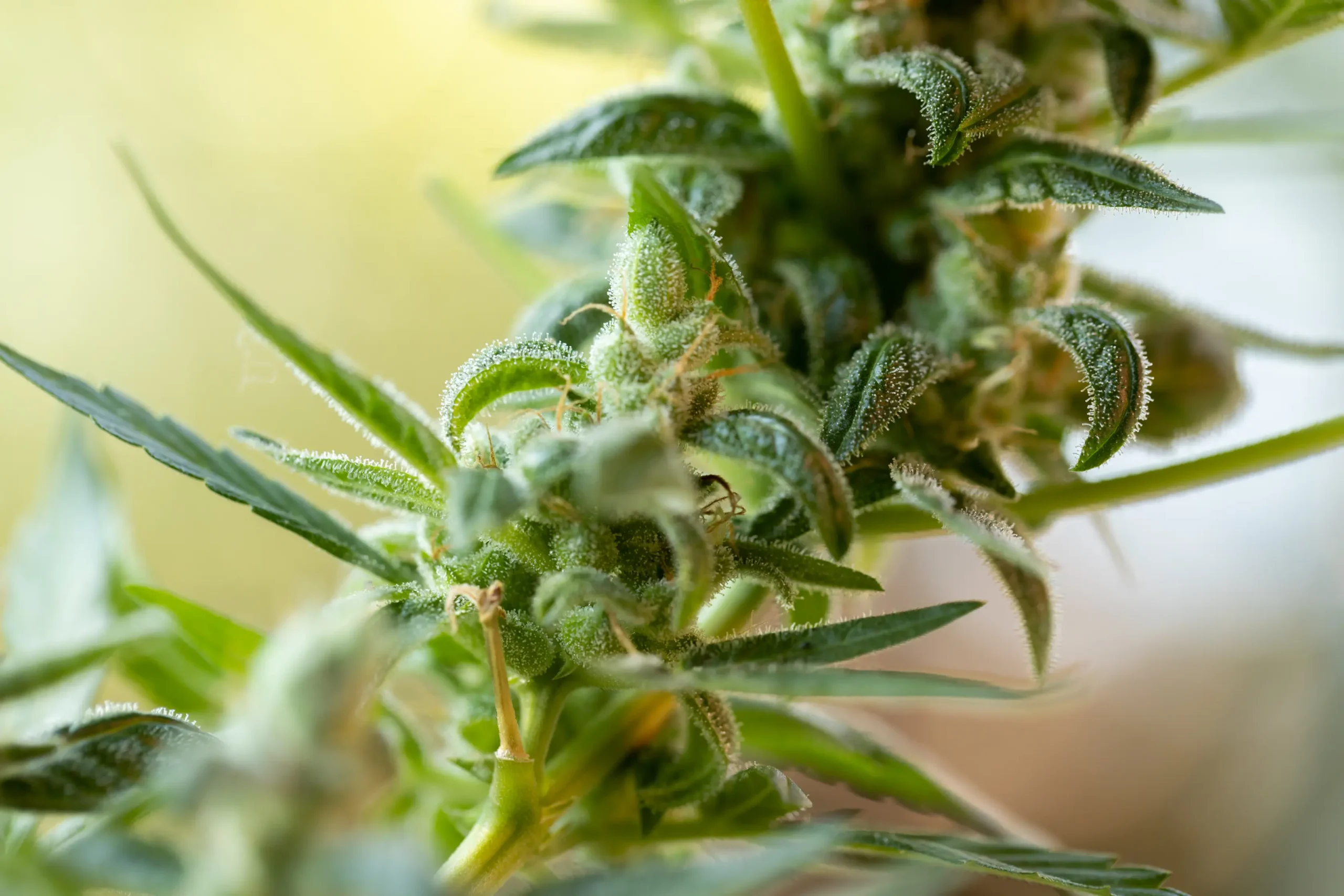
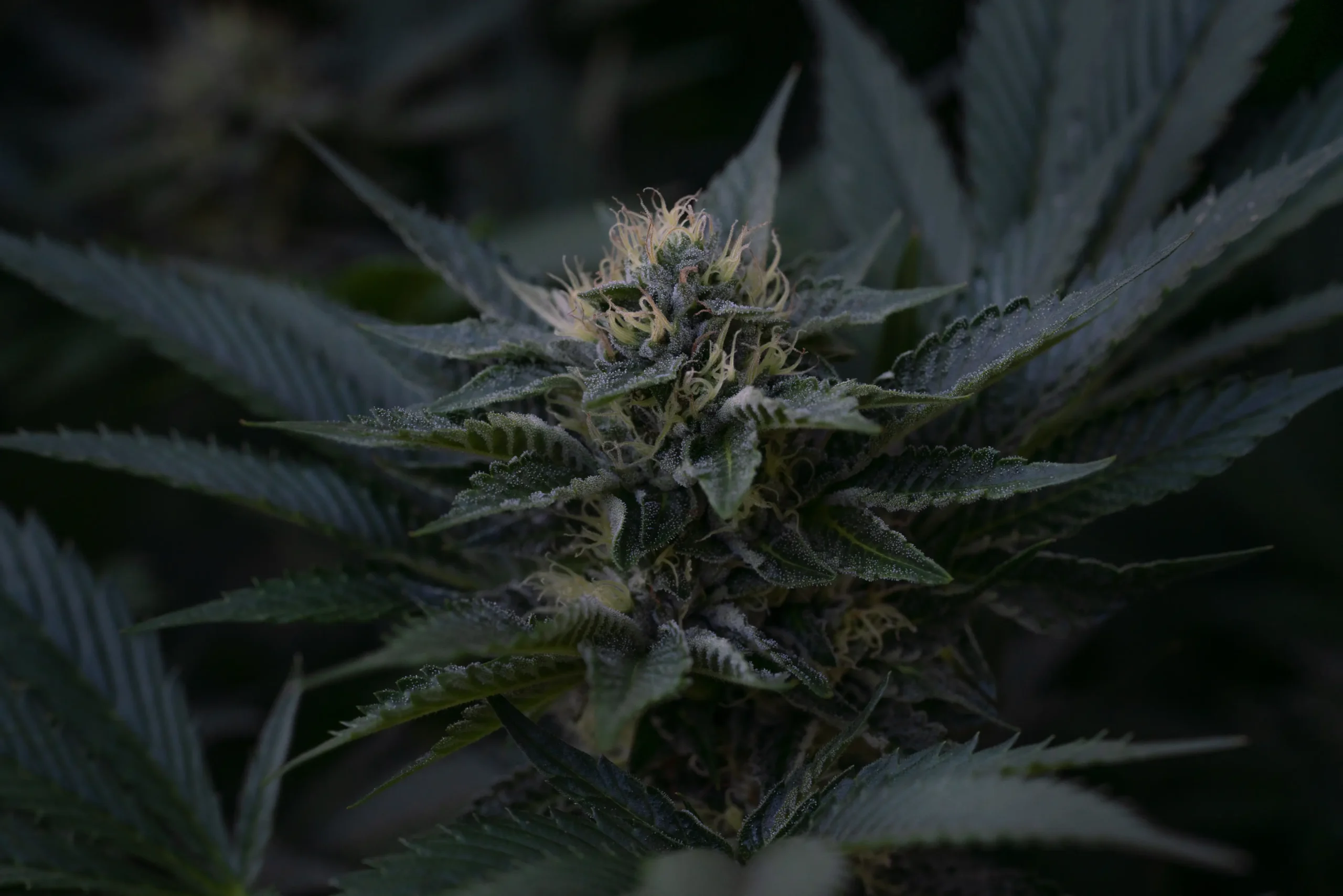
Sunset Sherbet
Before Gelato #33, Gelato #41, or Runtz ever dominated dispensary menus, a single cross out of San Francisco’s Sunset District rewrote the genetic blueprint for modern dessert cannabis. When Mario Guzman, known worldwide as Mr. Sherbinski, pollinated a Pink Panties female with pollen from a reversed Forum-cut Girl Scout Cookies, he was not trying to build a high-tonnage warehouse cropper. He was chasing a very specific sensory intersection: the dense, doughy mint-and-earth richness of Bay Area Cookies fused with the tart raspberry, blood-orange, and tropical cream bouquet of a Burmese-influenced Florida Kush line. The resulting cultivar, Sunset Sherbet (often called Sherbert or simply Sherb), became the maternal foundation of the entire Gelato dynasty and forever changed what connoisseurs expect from cured flower.
Because Sunset Sherbet is so famous for its rainbow coloration and gelato-parlor flavor, many growers make the mistake of treating it like a delicate ornamental showpiece rather than studying its canopy mechanics. In vegetative growth, the plant behaves like a textbook broadleaf bush: vigorous lateral branching, stout stems, and overlapping emerald fan leaves that rapidly fill horizontal space. Yet that tidy bushiness hides two traps that surface after the flip to 12/12. First, phenotypes leaning toward the Durban-influenced Cookie side or the Burmese ancestry inside Pink Panties can stretch 90% to 130% during the first three weeks of bloom, surprising growers who packed their pots wall-to-wall. Second, if every auxiliary shoot is allowed to survive inside that wide bush, the interior quickly turns into a congested, light-starved thicket where small, leafy popcorn flowers steal energy from the upper crowns and trap stagnant humidity right as the dense golf-ball colas harden.
Seeing Sunset Sherbet grown outdoors in its native Northern California climate versus cooler northern gardens makes its environmental preferences crystal clear. During a full-season outdoor run on a sun-drenched hillside terrace in Sonoma County, where daytime September temperatures hovered in the low 80s with thirty-five percent afternoon humidity and cool Pacific marine air drifted up the canyon after dusk, four plants in 100-gallon tan fabric pots grew into magnificent, six-foot-wide domes without a single spot of mold. The dry daytime air kept the tightly stacked Cookie bracts bone-dry, while the natural twenty-five-degree diurnal swing painted the upper canopy in breathtaking shades of plum, magenta, and burnt tangerine by the first week of October. By contrast, when running the exact same clone indoors or in humid northern autumn climates where late-September rains and heavy night dews linger, that dense foliar architecture demands ruthless interior pruning, wide branch spacing, and strict dehumidification to cross the finish line cleanly.
Indoors, our most rewarding batches of Sunset Sherbet came from a low-plant-count, single-layer SCROG setup inside a sealed 8×12 room utilizing seven-gallon aerated pots filled with a custom organic peat, coco-chip, worm-casting, and volcanic basalt medium fed with mild biological teas and mineral-balanced water. Rather than blasting the canopy with extreme photon density that bleaches the anthocyanins and volatilizes the delicate fruit-cream esters, we ran full-spectrum bar LEDs at a disciplined 820 micromoles per square meter per second during peak bulk, tapering down to 720 micromoles during the final ten days while holding leaf surface temperatures at a cool 73 degrees Fahrenheit.
Strain Features
| Feature | Details |
|---|---|
| Cultivar Name | Sunset Sherbet (also spelled Sunset Sherbert / Sherb) |
| Original Breeder / Source | Mario Guzman (Mr. Sherbinski) / Cookie Fam Genetics (San Francisco, California) |
| Historical Significance | Direct maternal parent of the entire Gelato line (Gelato #33, #41, #42, #45) and cornerstone of modern dessert hybrids |
| Genetic Lineage | Girl Scout Cookies (Durban Poison x OG Kush) x Pink Panties (Burmese x Florida OG Kush backcross) |
| Chemotype Category | Type I THC-dominant indica-leaning hybrid (roughly 85% indica / 15% sativa expression) |
| Average THC Range | 18% to 24% (elite clone selections regularly test between 21% and 24% with high terpene loading) |
| CBD / Minor Cannabinoids | CBD: 0.1% to 0.3% | CBG: 0.7% to 1.4% | CBC: 0.2% to 0.5% | THCV: trace (0.1% to 0.2% from GSC lineage) |
| Dominant Terpenes | Beta-Caryophyllene, D-Limonene, Beta-Myrcene, Linalool, Alpha-Humulene, Nerolidol |
| Total Terpene Concentration | 2.1% to 3.6% dry weight in cool-finished organic living soil flowers |
| Aroma Profile | Sweet raspberry sorbet, blood orange zest, whipped vanilla cream, toasted cookie dough, fresh mint, skunky earth |
| Flavor Profile | Creamy citrus-berry gelato and sweet sugar cookie on the inhale; warm roasted nuts, herbal kush, and peppery skunk on the exhale |
| Primary Physiological Effects | Immediate carefree cerebral uplift and tension release followed by a plush, full-body physical calm without heavy mental fog |
| Flowering Duration (Indoor) | 8 to 9 weeks (56 to 63 days; some stretcher Cookie-leaning seed phenos take up to 66 days) |
| Harvest Window (Outdoor) | Late September to early October in warm California and Southern Oregon foothill climates; requires rain cover in wet northern autumns |
| Indoor Vegetative Stretch | Moderate to vigorous: 70% to 125% vertical expansion during the first 18 to 21 days of 12/12 |
| Yield Potential (Indoor) | 400 to 500 grams per square meter (quality-first Cookie density rather than giant spongy colas) |
| Yield Potential (Outdoor) | 500 to 750 grams per plant in dry, sunny foothill or valley gardens with 65 to 100-gallon root zones |
| Vegetative Growth Rate | Vigorous lateral branching; builds a wide, leafy dome rapidly once established past the fourth node |
| Canopy Architecture | Dense, wide-branching shrub with strong secondary arms that compete closely with the central terminal |
| Foliage Morphology | Broad, deeply serrated dark-green fan leaves that transition to royal purple, wine-red, and gold during late senescence |
| Internodal Spacing | 1.0 to 1.8 inches in veg; stacks into tight, golf-ball-to-egg-shaped nodal clusters in flower |
| Optimal Vegetative Temp / RH | 75°F to 79°F (24°C to 26°C) | 60% to 68% RH (VPD: 0.95 to 1.15 kPa) |
| Optimal Flowering Temp / RH | 73°F to 77°F (23°C to 25°C) days, 62°F to 66°F nights | 42% to 48% RH late bloom (VPD: 1.35 to 1.55 kPa) |
| Late-Flower Night Drop Target | 58°F to 62°F (14°C to 17°C) naturally in weeks 7 to 9 to express violet-pink anthocyanins without root shock |
| Nutrient Sensitivity Profile | Moderate feeder; sensitive to excess mid-flower nitrogen and root-zone overwatering in heavy substrates |
| Substrate pH Targets | Organic Soil: 6.3 to 6.8 | Coco Coir / Soilless: 5.8 to 6.1 |
| Substrate EC Targets | Veg: 1.2 to 1.5 mS/cm | Peak Bloom: 1.7 to 2.0 mS/cm | Ripening: 0.8 to 1.1 mS/cm |
| Drying & Curing Target | 14 to 16-day whole-plant dry at 60°F / 60% RH, followed by a 4 to 6-week cool glass cure |
As the specifications above make clear, Sunset Sherbet is a boutique connoisseur cultivar where flower density, trichome coverage, and terpene preservation matter far more than chasing raw biomass tonnage. A single gram of properly grown Sunset Sherbet packs the weight and resin output of two grams of airy commercial flower, with hard, marble-like nuggets that clink against the sides of a glass jar.
To bring out its full sensory magic, the grower must balance two competing priorities: opening up its dense, leafy bush frame so light and air reach every bud site, and keeping late-flower temperatures cool enough that the fragile berry-citrus-cream volatiles survive right through the cure. The following sections walk through its genetic architecture, effects, terpene chemistry, and step-by-step cultivation playbook.
Genetic Lineage
Sunset Sherbet’s pedigree is a masterclass in combining elite West Coast clone-only genetics to create a completely new flavor category. Every structural trait and aromatic note in the plant can be traced directly back to its two parents: Girl Scout Cookies and Pink Panties.
Girl Scout Cookies (GSC): Born in the San Francisco Bay Area from the legendary pairing of Durban Poison and a Florida OG Kush cut, Girl Scout Cookies contributed the unmistakable structural and sensory signature that defines modern boutique flower. From GSC, Sunset Sherbet inherits rock-hard, golf-ball calyx clusters, thick capitate-stalked trichome armor, deep purple-and-emerald autumn coloration, and a rich base aroma of baked brown-sugar dough, roasted nuts, cool peppermint, and earthy OG gas. GSC also passes down its preference for moderate feeding and well-spaced nodal architecture.
Pink Panties: Developed from a Burmese sativa/indica landrace hybrid crossed into a selected Florida OG Kush backcross, Pink Panties is the secret weapon behind Sunset Sherbet’s fruit-and-cream personality. While GSC alone leans heavy on dough, mint, and earth, Pink Panties injects a vibrant burst of sweet red berries, pink grapefruit, floral hibiscus, and tangy tropical sherbet alongside brightly colored pink-and-orange pistils. Structurally, Pink Panties adds lateral branching vigor and widens the tight nodal spacing of pure Cookies just enough to improve commercial yields.
When Mr. Sherbinski combined these two lines in San Francisco, the progeny retained the dense, frosted nugget geometry and baked-cookie base of GSC while wrapping it in a bright, creamy citrus-berry glaze. That exact genetic combination proved so dominant in breeding that crossing Sunset Sherbet back to Thin Mint GSC shortly thereafter produced the world-famous Gelato line (#33 Larry Bird, #41 Bacio, and #45), making Sunset Sherbet one of the most important maternal parents of the twenty-first century.
Effect Breakdown
Despite often being listed as an 85% indica-dominant hybrid, Sunset Sherbet does not behave like a blunt, one-note sedative. Thanks to the Durban and Burmese heritage woven into its pedigree, the experience unfolds as an elevating, stress-melting mental wave that gradually settles into luxurious physical comfort without leaving the user feeling groggy or detached.
The First Twenty Minutes (Cerebral Unwinding): Within moments of the first exhale, a warm, buoyant pressure rises behind the eyes and across the temples. Acute workplace stress, racing to-do lists, and mental irritation evaporate almost immediately, replaced by a carefree, lighthearted euphoria. Colors and music feel slightly richer, conversation flows easily, and a calm, contented grin settles in without a hint of rapid heartbeat or sativa nervousness.
The Core Window (Plush Full-Body Calm): Between thirty and ninety minutes into the session, the Florida OG and Afghani Kush ancestry spreads downward from the neck and shoulders through the torso and limbs. Tight muscles uncoil, lower-back stiffness loosens, and a plush, weighted calm wraps around the body. Crucially, unlike heavy knockout indicas that glue your eyelids shut, moderate doses of Sunset Sherbet leave your mind clear and sociable enough to enjoy cooking dinner, watching a film, sketching, or sitting around a backyard fire pit with friends.
The Late Finish (Gentle Evening Landing): During the final hour, the experience winds down into a tranquil, restful afterglow. Consumed in the late afternoon or early evening, it leaves you relaxed and unbothered; consumed in larger doses an hour before bed, the concentrated beta-caryophyllene, myrcene, and linalool fractions guide you effortlessly into deep, uninterrupted sleep.
Flavor & Aroma Profile
A properly grown, slow-cured jar of Sunset Sherbet delivers one of the most layered dessert bouquets in cannabis, shifting smoothly from bright frozen fruit to warm bakery dough and skunky kush as the session progresses.
In the Cured Jar: Twisting off the lid releases an immediate, mouthwatering wave of sweet raspberry sorbet, candied blood-orange peel, and whipped vanilla cream. Unlike single-note fruit strains that smell like artificial candy flavoring, Sunset Sherbet carries a deep, unmistakable undertone of toasted sugar-cookie dough, crushed mint leaf, and damp forest earth right underneath the fruit.
Breaking Up the Flower: Cracking open a dense, violet-and-green nugget between your fingers ruptures the internal resin glands and unleashes the Florida OG and Burmese base notes: pungent skunky fuel, roasted hazelnuts, cracked black pepper, and a tangy sour-citrus bite that clings stubbornly to your fingertips.
On the Palate (Inhale vs. Exhale): On a clean low-temperature vaporizer draw or glass bowl inhale, the front of the tongue is coated with creamy berry gelato, sweet tangerine zest, and vanilla wafer. As the smoke expands and exits on the exhale, the profile deepens dramatically into warm baked cookie crust, earthy kush spice, subtle peppermint, and a lingering skunky-sweet finish that coats the palate like rich pastry cream.
Dominant Terpenes
Laboratory terpene analyses of top-shelf Sunset Sherbet typically measure between 2.1% and 3.6% total terpenes by dry weight, led by a caryophyllene-limonene-myrcene triad supported by high linalool and humulene fractions.
Beta-Caryophyllene (0.70% to 1.20%): Inherited heavily from Girl Scout Cookies, beta-caryophyllene is the dominant terpene in authentic Sunset Sherbet. It provides the warm, spicy cookie-dough, cracked-pepper, and woody kush foundation that anchors the volatile fruit notes. As a selective dietary agonist of peripheral CB2 cannabinoid receptors, it drives the cultivar’s potent anti-inflammatory and physical pain-relieving effects.
D-Limonene (0.50% to 0.90%): Contributed by both Pink Panties and the OG lineage, d-limonene delivers the bright blood-orange, tangerine, and sour-citrus top notes that give the cultivar its “sherbet” zing. Pharmacologically, limonene elevates serotonin and dopamine activity, powering the fast-acting mood lift and stress relief felt on the first draw.
Beta-Myrcene (0.35% to 0.65%): Myrcene bridges the citrus brightness and earthy cookie base with ripe red-berry, mango, and herbal musk tones while relaxing skeletal muscle tension and enhancing cannabinoid absorption.
Linalool (0.20% to 0.45%): Sunset Sherbet carries a notably high concentration of floral linalool, which blends with limonene and esters to create the signature “whipped cream and floral berry” softness on the inhale. Linalool also calms central nervous system excitability via GABAergic pathways, explaining why Sunset Sherbet melts anxiety so effectively.
Alpha-Humulene (0.15% to 0.30%) & Nerolidol (0.05% to 0.15%): Humulene adds toasted hop-and-nut depth alongside caryophyllene, while trace nerolidol contributes a delicate woody-rose nuance that smooths out the late-stage body finish.
Indoor vs. Outdoor Growing
Sunset Sherbet’s dense, broadleaf Cookie-and-Kush anatomy makes its relationship with the surrounding climate remarkably clear-cut: it loves warm, dry air moving steadily through an open canopy, and it punishes stagnant humidity trapped inside crowded branches.
Indoor Cultivation Precision: Indoors, Sunset Sherbet thrives when given moderate-to-high full-spectrum LED lighting (780 to 880 micromoles per square meter per second) and a disciplined horizontal training plan. Because the plant naturally builds a thick, multi-branched shrub during veg, the indoor grower’s main task is opening the center of the plant so light and air penetrate past the top six inches of foliage. Maintain daytime flowering temperatures between 73 and 77 degrees Fahrenheit with 45% to 50% relative humidity during weeks one through five, then step daytime temperatures down to 71 to 74 degrees Fahrenheit and clamp relative humidity at 40% to 45% during weeks six through nine. Dropping nighttime temperatures naturally into the 58 to 62-degree Fahrenheit range during the final twelve days coaxes out dramatic royal-purple, magenta, and sunset-orange bract colors while preserving the fragile citrus-berry esters.
Outdoor Cultivation in Warm, Dry Valleys and Foothills: In dry West Coast valley and foothill microclimates, such as the sunny inland valleys of Northern California, Southern Oregon’s Rogue Valley, or arid high-desert foothills where September and early October stay rain-free with low afternoon humidity, Sunset Sherbet is an absolute joy to grow outdoors. Planted in 65 to 100-gallon tan fabric pots or raised native-soil beds amended with aged compost, worm castings, pumice, and kelp meal, the plant spreads into a symmetrical five-to-six-foot dome. Under full natural sunlight and crisp mountain or coastal evening breezes, the golf-ball calyx clusters swell to twice the size of indoor nuggets and finish reliably between September 25 and October 7 with intense resin production and zero mold pressure.
Outdoor Precautions in Humid or Northern Climates: When cultivating Sunset Sherbet outdoors in cooler, damper northern latitudes or coastal regions prone to early-autumn rain squalls and heavy morning dew, the rules change completely. Those rock-hard, tightly stacked Cookie bracts hold onto trapped water droplets like a sponge. If you grow Sunset Sherbet in a humid autumn region, stage the containers under a well-ventilated clear rain roof before September 15, space plants at least six feet apart to maximize wind flow, and aggressively thin out the interior foliage in mid-August so morning condensation evaporates immediately after sunrise.
Diurnal Temperature Range (DTR)
The mathematical difference between the peak daytime high temperature and the lowest nighttime temperature within a 24-hour cycle. In cultivars carrying Girl Scout Cookies and Pink Panties genetics like Sunset Sherbet, introducing a controlled 12 to 16-degree Fahrenheit diurnal swing during the final two weeks of bloom slows nighttime cellular respiration, preserves volatile fruit-cream monoterpenes, and stimulates anthocyanin pigment synthesis in the floral bracts without stalling root uptake.
Strain-Specific Grow Guidance
To harvest Sunset Sherbet that delivers true dispensary-shelf density alongside unmistakable berry-citrus-cream aroma, your cultivation workflow must address its dense branching habit and sensitivity to heat and overfeeding. The twenty-one field-tested directives below cover every critical decision from vegetative shaping to final harvest selection.
Use the Bushy Veg Structure, but Leave Room for Flower Stretch
During vegetative growth, Sunset Sherbet forms a compact, leafy dome with short internodes that can easily trick a grower into waiting too long before flipping to 12/12. While pure indica cuts stretch barely thirty percent, Sunset Sherbet carries both Durban Poison (via GSC) and Burmese (via Pink Panties) in its background. Once the photoperiod flips, vigorous phenotypes routinely double in height (80% to 125% stretch) over the first eighteen days. Flip your plants when they have filled roughly sixty-five percent of their horizontal footprint and still have plenty of vertical headroom below your fixtures.
Do not let the stretch make the decisions
If a stretchy phenotype surges faster than expected during weeks one and two of bloom, do not panic by raising your lights to the ceiling (which starves shorter neighboring plants of photons) or slashing away healthy upper fan leaves mid-stretch. Instead, gently tuck the rising shoots horizontally beneath your primary trellis grid every forty-eight hours through day 16. Guiding the stretch outward rather than upward turns extra stem length into additional top-lit bud sites across the screen.
Let the First Topping Reveal the Phenotype
Perform your first clean apical topping above the fifth node once the young plant has established six full nodes in veg. Watch how the plant responds over the next seven days: compact, Cookie-dominant phenotypes will push four stocky, even arms upward at a moderate pace, whereas Pink Panties-leaning phenotypes will rapidly shoot out six to eight supple lateral branches. Observing that post-topping response tells you immediately which plants need wider spacing and a second round of branch pinching.
Keep the Interior From Becoming a Dessert-Strain Thicket
Left unpruned, Sunset Sherbet produces a dense cluster of secondary and tertiary shoots inside the core of the bush that overlap with broad, dark fan leaves. By week four of flower, that shaded interior becomes a humid, stagnant pocket where transpiration moisture cannot escape and small, larfy buds drain carbohydrate reserves from the top colas. Clean out weak interior cross-branches and the bottom thirty percent of shaded growth in two planned passes: once five days before flipping to 12/12, and once at day 20 of bloom.
Use SCROG as a Spacing Tool
With lanky OG cultivars, a Screen of Green (SCROG) net is used primarily to hold floppy stems upright; with Sunset Sherbet, the primary job of the SCROG grid is horizontal branch separation. Assign each rising branch its own dedicated 3.5-inch or 4-inch mesh square so that no two developing colas touch each other. Maintaining two to three inches of open air around every floral spear allows oscillating airflow to sweep boundary-layer moisture away from the dense bracts.
Feed Vigorous Growth Without Chasing Darkness
Because Sunset Sherbet naturally displays deep emerald-green leaves inherited from Girl Scout Cookies, novice growers often assume it wants heavy nitrogen feeding. In reality, Cookie-family lines are notorious for burning at the leaf tips and stalling calyx development when pushed with high-EC synthetic salts. Keep vegetative EC between 1.2 and 1.5 mS/cm and peak mid-bloom EC between 1.7 and 2.0 mS/cm, aiming for healthy satin-green foliage rather than glossy, clawed midnight-green leaves.
Do Not Use Stress to Manufacture Purple
Social media rumors frequently advise growers to flush with ice-cold water, starve plants of phosphorus in week five, or drop room temperatures into the low 40s to force purple buds. On Sunset Sherbet, those extreme stress tactics shock root metabolism, shrink calyx size, and can trigger late-flower hermaphroditic anthers (nanners) inherited from the Cookie lineage. Genetically capable phenotypes will flush gorgeous shades of royal purple, magenta, and gold naturally when night temperatures ease gently down to 58 to 62 degrees Fahrenheit during the final two weeks.
Avoid Ice-Water Flushes and Extreme Root Shock
Drenching Sunset Sherbet root zones with ice water or starving the plant early to force purple coloration shocks fine feeder roots, halts late-stage resin production, and significantly increases the risk of stress-induced late-flower pollen sacs on Cookie-lineage cuts.
Keep Root-Zone Moisture Predictable
Sunset Sherbet develops a dense, fibrous root ball that performs best when substrate moisture cycles smoothly between watering events. Both extremes cause trouble: letting pots stay cold and waterlogged invites root rot and fungus gnats, while letting containers bone-dry to a heavy wilt spikes root-zone salt concentration and burns leaf margins. Aim for consistent irrigations that allow a ten to fifteen percent volumetric water dry-back before re-watering.
Light Penetration Should Be Solved With Structure
Many growers try to solve a dark lower canopy by stripping away seventy percent of the plant’s fan leaves in mid-flower. On Sunset Sherbet, extreme defoliation (“schwazzing”) removes the exact solar panels the plant relies on to pump sugars into its dense calyxes, resulting in smaller, leafy buds. Solve light penetration first by spreading the branches wide across a flat horizontal canopy so that a modest, selective removal of inward-facing fan leaves at day 21 is all that is needed.
Support Before Dense Sherbet Tops Lean Together
Although Sunset Sherbet’s stems are noticeably thicker and woodier than pure OG Kush, its terminal flowers pack on deceptive weight during weeks six through eight as the golf-ball calyx clusters harden into solid rocks. If branches are not supported by a second trellis layer or perimeter stakes before week five, adjacent arms will lean inward and press against each other, creating dark, unventilated contact points where botrytis can start unseen.
Watch Heat Because Flavor Is the Main Asset
Nobody grows Sunset Sherbet for bland biomass; the entire value of the harvest rests on its exotic berry-citrus-cream bouquet. Whenever canopy temperatures climb above 78 degrees Fahrenheit after week five of flower, the volatile monoterpenes and fruity esters begin evaporating faster than the trichome glands can synthesize them. Hold late-bloom daytime leaf temperatures at 71 to 74 degrees Fahrenheit to keep the full sherbet nose locked inside the resin heads.
Harvest for the Phenotype’s Flavor Direction
Different phenotypes of Sunset Sherbet peak in flavor at slightly different trichome windows. Fruit-and-citrus-forward expressions leaning toward Pink Panties taste brightest when harvested at day 58 to 60 with 85% milky trichomes and barely 5% amber, capturing the crisp blood-orange and raspberry high notes. Cookie-dominant expressions leaning toward baked dough, vanilla cream, and earthy gas reach their richest flavor slightly later at day 62 to 65 with 10% to 15% amber trichomes.
Plant Count Changes How Much Training Sunset Sherbet Needs
Before touching a pair of pruning shears, match your training intensity to your plant density. If you run four plants in seven-gallon pots inside a 4×4 footprint, top twice and train the lateral arms outward for four to five weeks to build wide, multi-cola bushes. If you run nine plants in three-gallon pots in that same 4×4 space, top only once at node five, flip after three weeks of veg, and prune away weak lower side shoots so each plant focuses on four to six upright main spears.
Phenotype Variation Should Be Recorded Before Color Appears
Once late-flower purple and pink pigments sweep across the room in week seven, every plant looks like a magazine cover and it becomes dangerously easy to let visual flash cloud your judgment. Keep a simple grow log during weeks two through five recording each plant’s stretch ratio, branch stiffness, internodal stacking, and early stem-rub aroma before a single purple bract appears.
Dense Sherbet Flowers Can Hide Uneven Maturity
Because Sunset Sherbet forms thick, golf-ball-to-egg-shaped flower clusters with high resin density on the outer tips, the top millimeter of a cola can display amber trichomes under direct LED light while the shaded inner and lower bracts remain clear. Always check trichomes on mid-tier calyxes halfway down the main branches rather than judging the entire plant by the uppermost crown tip.
Do Not Force Cold Nights for Bag Appeal
While a gentle nighttime drop to 58 to 62 degrees Fahrenheit during the final ten days enhances natural anthocyanins and terpene retention, plunging the room below 52 degrees Fahrenheit slows enzymatic maturation to a crawl and raises relative humidity spikes right after lights-off. Keep your day-to-night transition smooth and ensure your dehumidifier is sized to handle the sudden moisture spike when the lights click off.
Late-Flower Feeding Should Protect Flavor as Much as Weight
Pushing heavy potassium boosters or high-EC mineral salts into week seven in hopes of adding an extra five percent of weight almost always backfires on Sunset Sherbet, leaving residual mineral harshness that masks the delicate creamy-berry exhale. Begin tapering total EC down from 1.8 mS/cm at week six to 1.0 mS/cm in week seven, finishing with clean, mineral-balanced water or mild biological inputs during the final ten days so the cured flower burns to pure white ash.
Outdoor Plants Need Space for the Bush Before They Need Support
When planting Sunset Sherbet outdoors in full sun, give each plant a minimum six-to-eight-foot radius of open ground. Because the plant naturally builds a wide, rounded shrub with dense foliage, crowding outdoor bushes close together blocks cross-breezes and shades the lower lateral arms. Once spaced properly, surround each bush with a wide circular welded-wire cage in early July so the outer branches can rest on the wire rings as September flower weight builds.
The Plant Can Be Wide Without Being Truly Productive
A wide, leafy Sunset Sherbet bush is only productive if photons can actually reach the fruiting nodes along its branches. If the upper canopy forms an unbroken umbrella of overlapping fan leaves, the bottom two-thirds of that wide bush will produce nothing but loose, pale trim material. Open four to six “light windows” through the center of the bush by selectively removing large inward-pointing fan leaves at week three and week six of bloom.
Late Resin Production Can Make Branches Heavier Than Their Size Suggests
Do not be fooled by the compact golf-ball size of Sunset Sherbet nuggets compared to foot-long sativa colas. Those golf-ball clusters are solid calyx and resin right to the stem core, making them surprisingly heavy per cubic inch. By week seven, a branch carrying six or seven dense Cookie-style clusters can sag abruptly if not anchored to a secondary trellis grid or bamboo stake.
Aroma Should Influence Keeper Selection More Than Late Color
When selecting a long-term mother clone from a seed hunt, blind-test your cured jars with your eyes closed before looking at the buds. A frosted emerald-and-lavender phenotype that fills the room with loud raspberry sherbet, blood orange, and sweet vanilla cookie dough is infinitely more valuable than a pitch-black phenotype that smells only of muted earth and hay.
Sunset Sherbet is notorious for throwing occasional late-flower nanners under stress. What environmental triggers should I watch most closely?
Question sent by: Miles D., via contact form
Because Sunset Sherbet descends directly from Girl Scout Cookies and Pink Panties, it carries genetic intersex sensitivity when subjected to photoperiod interruptions, high root-zone salinity, or excessive VPD swings during weeks five through eight of flower. Inspect your tent seams and equipment LEDs in total darkness to verify 100% light-proof nights, avoid heavy high-stress defoliation after day 21 of 12/12, keep peak bloom EC at or below 1.8 mS/cm with regular runoff checks, and harvest promptly at day 58 to 63 rather than pushing the plant past its natural senescence window.
Weedth Bud Flavor Tips
Sunset Sherbet’s reputation rests entirely on its confectionary fruit-and-cream palate. Protecting those volatile esters and monoterpenes from harvest day through long-term storage requires a strict, low-temperature post-harvest routine.
Whole-Plant Hang at 60/60: Cut the plant at the base of the main trunk and hang it upside down whole (or in large multi-branch forks on very dense plants) inside a dark drying chamber held at 60 degrees Fahrenheit and 60% relative humidity. Leaving the outer fan leaves intact during the hang slows surface evaporation so internal stem moisture wicks out evenly over 14 to 16 days, allowing chlorophyll and starches to degrade completely without losing volatile limonene and linalool.
Gentle Indirect Air Circulation: Keep air moving gently below the hanging plants with a small floor fan aimed at the wall, never directly at the flowers. Direct wind dries the outer trichome cuticles in forty-eight hours, trapping green moisture inside the core while blowing off the sweet berry top notes.
Dry-Trim to Protect the Trichome Armor: Wait until small secondary branches snap cleanly before manicuring the buds by hand. Dry-trimming preserves the protective sugar-leaf tips and prevents sticky chlorophyll sap from smearing across the capitate-stalked resin heads.
Four-to-Six-Week Cool Glass Cure: Seal the manicured nuggets into wide-mouth glass Mason jars filled to seventy-five percent capacity and store them in darkness at 58 to 62 degrees Fahrenheit with internal humidity stabilized at 58% to 62% RH. Burp daily for ten minutes during the first two weeks, then twice weekly through week four. During weeks three through six of the cure, the sharp citrus and skunky notes marry into the signature smooth, creamy raspberry-and-cookie-dough gelato finish.
Weedth Bud Boost Tips
To maximize flower density, resin gland size, and terpene output on Sunset Sherbet without sacrificing quality to heat or salt stress, apply the following targeted agronomic techniques.
Canopy Flatness Over Peak PPFD: Rather than cranking overhead LEDs to 1050+ PPFD, which often causes foxtailing or anthocyanin bleaching on Cookie-lineage tops, train every branch to an identical horizontal plane under a SCROG screen and deliver an even 800 to 850 PPFD across the entire canopy. Uniform light distribution swells mid-branch nuggets into rock-hard A-grade flowers from edge to edge.
Amino-Chelated Calcium and Magnesium Support: Like its Girl Scout Cookies mother, Sunset Sherbet demands steady calcium and magnesium during weeks two through six of flower to build thick cell walls and power chlorophyll efficiency under LED spectra. Supplying calcium and magnesium alongside low-molecular-weight amino or fulvic chelates prevents mid-flower leaf margin rusting without spiking overall substrate EC.
Microbial Rhizosphere Inoculation & Carbohydrate Feeding: In organic soil or coco media, drenching the root zone with diverse mycorrhizal fungi, Trichoderma, and beneficial Bacillus bacteria paired with unsulfured blackstrap molasses and cold-water kelp extract during weeks three through six accelerates natural phosphorus cycling and boosts sap Brix levels, translating directly into thicker trichome cuticles and louder fruit-cream ester production.
Supplemental UV-A / Far-Red Finishing Spectrum: Introducing a modest dose of supplemental UV-A (385 to 395 nm) for two to three hours mid-day during the final three weeks of flower triggers a natural photoprotective response in the bracts, increasing total trichome head density and deepening beta-caryophyllene and limonene concentrations.
Medical Uses & Benefits
In clinical and holistic wellness settings, Sunset Sherbet is prized for delivering rapid psychological relief paired with substantial physical comfort, all without the disorienting mental fog or heavy morning hangover associated with purely sedative knockouts. Its balanced cannabinoid and terpene matrix, led by 18% to 24% THC alongside high concentrations of beta-caryophyllene, d-limonene, linalool, and beta-myrcene, targets both central nervous system stress pathways and peripheral inflammatory receptors simultaneously.
Acute Stress, Generalized Anxiety, and Emotional Burnout: The combination of d-limonene and floral linalool acts swiftly to quiet sympathetic nervous system overactivity and modulate GABA and serotonin signaling in the brain. Patients dealing with high-pressure occupational stress, social anxiety, panic tendencies, or PTSD-related hypervigilance report that Sunset Sherbet softens racing thoughts within minutes of inhalation, replacing emotional tension with a calm, grounded sense of reassurance that never feels racy or paranoid.
Mood Depression and Anhedonia: Inherited from the Durban Poison and Burmese landrace ancestors inside its pedigree, the initial twenty-minute cerebral uplift gently elevates mood and restores interest in food, music, conversation, and daily routines for individuals navigating depressive slumps or seasonal mood dips.
Chronic Inflammatory Pain, Neuropathy, and Muscle Spasms: Beta-caryophyllene binds directly to peripheral CB2 receptors throughout the immune and musculoskeletal systems, downregulating inflammatory prostaglandin pathways without increasing psychoactive jitteriness. Paired with THC and myrcene, Sunset Sherbet provides reliable evening relief for lower-back pain, sciatica, fibromyalgia, arthritis joint stiffness, menstrual cramping, and tension migraines.
Appetite Restoration and Evening Insomnia: As the session enters its second hour, Sunset Sherbet reliably calms gastrointestinal queasiness and stimulates healthy appetite for patients recovering from illness or appetite-suppressing treatments. Consumed in a slightly higher dose sixty to ninety minutes before bedtime, its physical relaxation smoothly transitions restless sleepers into deep, restorative slow-wave rest.
Ideal User Profile
Sunset Sherbet appeals to a wide spectrum of cannabis enthusiasts, but four specific groups find it especially indispensable in their rotation.
The Dessert-Terpene Connoisseur: If you appreciate the lineage that gave birth to the modern Gelato revolution and want to taste the original raspberry-citrus-cream and toasted cookie-dough profile in its purest form, a properly slow-cured jar of Sunset Sherbet is mandatory reading for your palate.
The Late-Afternoon & Evening Unwinder: Professionals, parents, creatives, and tradespeople looking for a transition cultivar at 5:00 PM, something that melts away the day’s stress and sore muscles while leaving them cheerful and present for dinner, conversation, or a movie, will find Sunset Sherbet far more versatile than immediate couch-lock indicas.
The Anxiety-Sensitive Consumer: Enthusiasts who find sharp, high-terpinolene sativas or raw Chemdawg/Diesel cuts too jittery often gravitate toward Sunset Sherbet because its rich linalool and caryophyllene cushion keeps the cerebral lift warm, gentle, and reassuring.
The Quality-First Craft Cultivator: Growers who measure success by trichome density, violet-and-emerald bag appeal, and head-turning jar aroma rather than chasing raw commercial poundage will thoroughly enjoy dialing in a horizontal SCROG canopy of Sunset Sherbet.
Grower Notes and Feedback
Reviewing detailed grow logs from indoor living-soil tables, coco drain-to-waste rooms, and full-sun West Coast outdoor gardens highlights four practical lessons shared across experienced Sunset Sherbet cultivators.
Canopy Thinning Is the Difference Between Top-Shelf and Larf: Nearly every seasoned grower notes that Sunset Sherbet’s natural veg structure is too leafy for its own good indoors. Growers who left the interior bush untouched ended up with a top layer of four-inch golf balls and a bottom half of pale, airy popcorn buds. Those who lollypopped the bottom third at day 20 and opened selective light windows through the center fan leaves harvested rock-hard, purple-kissed nuggets from top to bottom.
Living Soil and Organic Teas Unlock the Cream Note: While coco coir and hydroponic mineral feeds produce impressive frost coverage and fast vegetative growth, cultivators who ran Sunset Sherbet in biologically active living soil amended with worm castings, kelp meal, basalt rock dust, and malted barley consistently reported a noticeably creamier vanilla-berry mid-palate and a cleaner, sweeter burn than high-EC salt runs.
Dry Warmth vs. Damp Cold Outdoors: Outdoor reports split cleanly along regional climate lines. Growers in dry-autumn valleys across Northern California, Southern Oregon, and high-desert plateaus praised Sunset Sherbet as a trouble-free early-October finisher that colored up magnificently in open air. Growers in humid eastern or northern zones emphasized that a simple clear roof over the plants in late September prevented ninety percent of potential botrytis losses inside the dense Cookie bracts.
Do Not Judge Yield Until the Scale: First-time Sunset Sherbet growers often worry in week seven that the golf-ball and egg-shaped flower clusters look smaller than foot-long Haze or Skunk spears. Once dried and trimmed, however, those compact Cookie-and-Kush nuggets weigh out far heavier than they look because there is zero hollow air space inside the bracts.
Weedth Editor’s Note
In a cannabis market flooded with endless Gelato backcrosses, Runtz derivatives, and candy-named polyhybrids, going back to a well-grown jar of original Sunset Sherbet feels like listening to the original vinyl pressing of a classic album. You immediately understand why Mario Guzman’s creation sent shockwaves through San Francisco and the global breeding community: the way that bright, tart raspberry-and-blood-orange sherbet note sits right on top of warm, doughy Girl Scout Cookies earth and skunky kush is still magical when done right.
From a grower’s perspective, Sunset Sherbet teaches patience and restraint. It does not want to be force-fed high-EC nitrogen until its leaves claw, it does not want to be blasted with 90-degree canopy heat, and it certainly does not want its root zone shocked with ice water for social-media photos. Give it an open, well-spaced horizontal canopy, moderate biological nutrition, a natural cool finish in the low 60s at night, and a true 60/60 slow dry, and it will reward you with some of the prettiest, smoothest-smoking flowers you have ever put in a curing jar.
If your only goal in a grow room is pulling the highest possible gram-per-watt number for bulk commercial wholesale, Sunset Sherbet is not the cultivar to fill twenty tables with. Where Sunset Sherbet truly earns its real estate is in the head-stash and craft connoisseur tier. Every single nugget that comes off a properly lollipopped SCROG screen looks like a jewel coated in crushed diamonds, smells like a fruit-and-pastry shop, and delivers an unmistakably plush, stress-erasing high that keeps friends and patients asking when the next batch will be ready.
Weedth Score
Growing Experience (8.4/10): A rewarding intermediate cultivation project. Its vigorous lateral branching makes it a natural fit for topping and SCROG nets, though attentive interior defoliation, moderate EC discipline, and late-flower humidity control are essential to prevent crowding and mold inside the dense Cookie-style bracts.
Bud Structure & Visual Appeal (9.5/10): Benchmark boutique bag appeal. Forms rock-hard, golf-ball to egg-shaped floral clusters drenched in thick capitate-stalked trichomes, displaying a stunning palette of emerald green, royal purple, magenta, and fiery tangerine pistils when finished with cool nights.
Aroma Complexity (9.5/10): The foundational blueprint of modern dessert cannabis. Layers bright raspberry sorbet, candied blood-orange zest, and whipped vanilla cream over a deep Girl Scout Cookies base of toasted sugar-cookie dough, fresh mint, and skunky kush earth.
Flavor & Smoothness (9.4/10): Velvety, rich, and mouth-coating when slow-dried at 60 degrees Fahrenheit. Delivers sweet citrus-berry gelato on the inhale followed by warm baked dough, roasted nuts, and spicy herbal kush on a clean, lingering exhale.
Effects & High Experience (9.2/10): Effortlessly balanced and deeply comforting. Opens with a carefree, anxiety-free cerebral mood lift that melts away daily tension before settling into a plush, soothing full-body relaxation without heavy cognitive fog.
Medicinal Potential (9.1/10): Excellent therapeutic versatility for acute stress, generalized anxiety, depressive mood slumps, chronic inflammatory and neuropathic pain, muscle tension, and evening sleep preparation.
Overall Satisfaction & Recommendation (9.3/10): A modern hall-of-fame cultivar that every flavor-focused grower and dessert-strain enthusiast should experience. Prioritize airflow, cool late-bloom temperatures, and a patient glass cure to experience why this cross birthed an entire generation of champions.
Personal closer: Even after growing dozens of newer Gelato and Runtz cuts over the years, a jar of six-week-cured Sunset Sherbet grown in living soil still holds its own against anything on the top shelf.
FAQ
What is Sunset Sherbet’s lineage?
Sunset Sherbet was bred in San Francisco by Mario Guzman (Mr. Sherbinski) by crossing Girl Scout Cookies (Durban Poison x Florida OG Kush) with Pink Panties (a Burmese x Florida OG Kush hybrid). This pairing combined the dense, frosted nugget structure and baked-dough richness of GSC with the sweet raspberry, blood-orange, and creamy floral aromatics of Pink Panties, later serving as the maternal parent of the entire Gelato family.
Is Sunset Sherbet indica or sativa?
Botanically and pharmacologically, Sunset Sherbet is an indica-leaning hybrid (commonly described around 85% indica / 15% sativa). In the garden, it grows with a bushy, broad-leafed indica frame in veg before showing moderate hybrid stretch in early flower; in effect, it pairs an uplifting, carefree mental onset with a plush, relaxing physical body finish.
How long does Sunset Sherbet flower?
Indoors, most Sunset Sherbet cuts finish flowering in 56 to 63 days (8 to 9 weeks), though certain seed phenotypes with stronger Durban or Burmese influence can take up to 65 or 66 days for full resin and terpene maturity. Outdoors in warm, dry climates, it typically harvests between late September and the first week of October.
How much does Sunset Sherbet stretch?
Expect a moderate-to-vigorous transition stretch of 70% to 125% during the first eighteen to twenty-one days after flipping to 12/12. While it stays much more compact than pure sativas or lanky OGs, growers should still flip when the canopy is roughly two-thirds full to avoid vertical crowding.
Does Sunset Sherbet respond well to topping?
Yes, Sunset Sherbet responds exceptionally well to early apical topping above the fifth node during week three or four of vegetative growth. Topping breaks central-stem dominance and encourages its strong lateral arms to rise into an even, multi-cola table where light penetrates much more uniformly.
Is SCROG good for Sunset Sherbet?
Screen of Green (SCROG) is one of the best ways to cultivate Sunset Sherbet indoors. Using a 3.5-inch or 4-inch horizontal mesh grid allows you to space each branch into its own square, preventing the naturally bushy canopy from bunching together and trapping humidity around the dense Cookie-style buds.
Should Sunset Sherbet be heavily defoliated?
It requires targeted interior thinning rather than extreme whole-plant stripping. Clean out the bottom thirty percent of shaded sucker growth (lollipoping) at day 20 of flower and selectively remove large, inward-facing fan leaves that block light to mid-tier bud sites or touch neighboring colas, while leaving healthy outer solar leaves intact to power calyx swelling.
Is Sunset Sherbet a heavy feeder?
No, Sunset Sherbet is a moderate feeder that inherits Girl Scout Cookies’ sensitivity to excess nitrogen and high root-zone salt accumulation. Keep peak flowering electrical conductivity (EC) around 1.7 to 2.0 mS/cm in coco or soilless media, taper nitrogen down after week three of bloom, and provide steady calcium and magnesium support.
Why is my Sunset Sherbet not purple?
Anthocyanin purple coloration depends on both phenotype genetics and late-flower temperature differentials. Some seed phenotypes stay frosty emerald-green with bright orange pistils regardless of temperature and still deliver incredible sherbet flavor. On purple-capable cuts, easing nighttime temperatures down to 58 to 62 degrees Fahrenheit during the final two weeks naturally unlocks royal-purple and magenta hues without stressing the roots.
Is Sunset Sherbet prone to mold?
Because Sunset Sherbet forms rock-hard, tightly packed golf-ball calyx clusters and dense foliage, it can be vulnerable to Botrytis (bud rot) and powdery mildew if grown in stagnant, humid air. Keep late-flower relative humidity between 40% and 46% indoors, space branches cleanly on a trellis, and protect outdoor plants from late-September autumn rains.
Does Sunset Sherbet need support?
Yes. Although its stems are sturdier than floppy OG vines, the finished floral clusters pack surprising density and resin weight during weeks six through nine. Installing a secondary trellis layer or perimeter bamboo stakes before week five prevents heavy branches from leaning into each other.
Why does my Sunset Sherbet smell earthy instead of fruity?
The raspberry, blood-orange, and creamy floral top notes are driven by volatile monoterpenes (limonene and linalool) and fruit esters that evaporate easily above 78 degrees Fahrenheit. If your late-flowering canopy ran too hot or the harvest was dried too quickly in a warm, dry room, those delicate fruit notes volatilized away, leaving only the heavier caryophyllene earth and kush spice behind.
When should Sunset Sherbet be harvested for flavor?
For the brightest raspberry-citrus-cream flavor, harvest when 85% to 90% of the glandular trichome heads on mid-branch calyxes are milky opaque white with 5% to 10% warm amber (typically day 58 to 63). Waiting until 25%+ amber increases heavy nighttime sedation but mutes the crisp fruit high notes into deeper earthy-hash tones.
Can Sunset Sherbet grow outdoors?
Yes, Sunset Sherbet performs beautifully outdoors in warm, dry California and Southern Oregon foothill climates (such as Northern California or Southern Oregon valleys), forming wide, productive bushes that finish in early October. In cooler, wetter northern regions, outdoor plants should be pruned open for maximum wind flow and covered with a breathable clear rain shelter during late bloom.
Is Sunset Sherbet good for daytime use?
In light-to-moderate doses, many users enjoy Sunset Sherbet in the afternoon for creative work, socializing, or stress relief because its initial mental lift is clear and anxiety-free. However, larger doses bring out its 85% indica body relaxation, making it best suited for late-afternoon and evening unwinding.
Similar Strains
Gelato (#33 / #41): Bred by Mr. Sherbinski by crossing Sunset Sherbet back to Thin Mint GSC, Gelato is Sunset Sherbet’s direct child and closest relative. In the jar, Sunset Sherbet leans brighter and tangier with upfront raspberry sorbet and blood-orange peel from its Pink Panties side, whereas Gelato doubles down on the Cookie heritage with heavier lavender-gas, rich fudge dough, and higher average THC numbers. In the grow room, both share compact golf-ball nodal stacking and require careful interior defoliation.
Girl Scout Cookies (GSC): Pure Forum-cut or Thin Mint Girl Scout Cookies is legendary for its minty, brown-sugar dough aroma and rock-hard buds, but it is notoriously slow in vegetative growth and modest in yield. Crossing GSC with Pink Panties to create Sunset Sherbet injected much stronger lateral branching vigor, shaved nearly a week off the flowering calendar, and wrapped the earthy cookie base in a mouthwatering citrus-berry glaze.
Rainbow Sherbet (RS11): Selected by Doja Pak and Wizard Trees from Deo Farms’ breeding of Pink Guava x Sunset Sherbet, RS11 represents the next-generation evolution of the Sherb family. RS11 stretches more vigorously, yields heavier commercial colas, and pushes an intense tropical-guava and sour-candy nose, while original Sunset Sherbet offers a creamier, softer pastel berry-and-cookie profile with classic 2010s Bay Area nostalgia.
Wedding Cake: Both sit at the pinnacle of indica-leaning dessert cultivars and finish in roughly eight to nine weeks. However, Wedding Cake (Triangle Kush x Animal Mints) is a heavier-feeding, higher-yielding plant whose flavor revolves around rich vanilla frosting, tangy sour dough, and heavy OG pepper, whereas Sunset Sherbet trades raw yield for vibrant fruit-sherbet complexity and rainbow anthocyanin bag appeal.
Share this article
A quick overview of the topics covered in this article.
Follow us
Latest articles
November 10, 2026
November 10, 2026
November 10, 2026
November 10, 2026
