
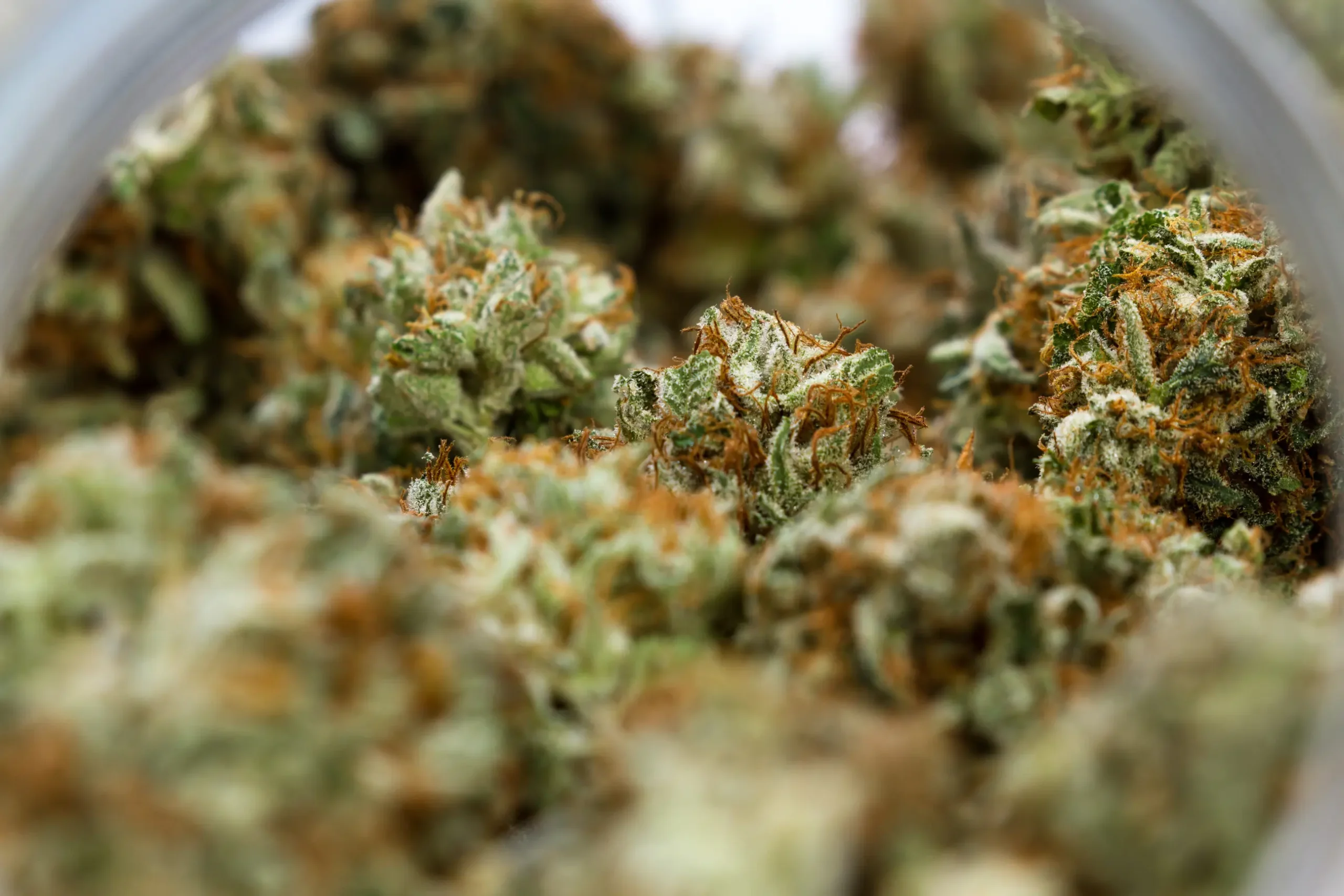
Super Skunk
Super Skunk is easy to underestimate because its reputation was built on reliability. It grows quickly, finishes without the drawn-out flowering cycle of many old-school sativa hybrids, and can produce substantial resinous flower without demanding constant rescue. That sounds simple. The catch is that the same vigor that makes Super Skunk productive can create its main quality problem: too much leaf, too many flowering sites, and too much dense flower packed into a canopy that no longer breathes as freely as it did in early bloom.
Its genetic identity explains the contradiction. Super Skunk combines the broad adaptability and branching of Skunk #1 with a stronger Afghan influence that tends to push the plant toward thicker stems, tighter flower formation, heavier resin, and a more physical finish. The result is usually an indica-dominant hybrid that remains more energetic in vegetative growth than a slow Afghan line, yet builds flowers with enough density that humidity and post-harvest handling matter far more than its beginner-friendly reputation suggests.
The aroma is equally misunderstood. A good example is not simply 'very smelly cannabis.' The classic profile is built from pungent skunk, damp earth, warm spice, musk, and a sweet-sour edge that may lean citrus or herbal depending on the phenotype. Modern aroma research also matters here because the characteristic skunk-like odor of cannabis is not explained by terpenes alone. Very low concentrations of volatile sulfur compounds can dominate human smell perception, especially late in flower and around curing. This helps explain why an aggressively pungent Super Skunk can still have a relatively ordinary terpene list on paper.
For growers, the central question is therefore not how to make Super Skunk produce more sites. It already wants to produce. The useful question is how to turn that vigor into a high percentage of mature, well-lit, well-aerated, flavor-rich flower instead of a crowded mass of mixed-quality buds. That decision affects training, feeding, humidity control, harvest timing, drying, and ultimately whether the finished jar smells layered and alive or merely loud.
Strain Features
| Feature | Details |
|---|---|
| Strain Type | Indica-dominant hybrid; exact expression varies by preserved line and modern reproduction |
| Genetic Profile | Skunk-family vigor combined with stronger Afghan density, resin, and body effect |
| Lineage | Skunk #1 x Afghan |
| THC | Commonly reported from the mid-teens into the low-20% range; modern batches can test higher |
| CBD | Usually low, commonly below 1% |
| Dominant Terpenes | Caryophyllene, limonene, humulene and sometimes myrcene recur across available samples |
| Signature Aroma | Skunk, musk, damp earth, pepper, herbal sweetness, sour citrus, occasional hash or fuel |
| Effect Character | Fast mood lift followed by substantial body relaxation, appetite, and dose-dependent sedation |
| Flowering Time | Commonly about 7-9 weeks; some modern lines finish closer to 9-10 weeks |
| Outdoor Harvest | Often early to mid-autumn in the Northern Hemisphere, depending on line and climate |
| Grow Difficulty | Easy to moderate; forgiving plant behavior with a late-flower humidity and odor penalty |
| Stretch | Usually low to moderate, but Skunk-forward phenotypes may extend more than squat Afghan-leaning plants |
| Plant Architecture | Vigorous, medium-height, thick-stemmed, strongly branched, capable of becoming very bushy |
| Bud Density | Medium-dense to very dense; large terminal and lateral flower clusters are common |
| Resin Production | High, with visible frost extending onto sugar leaves in strong expressions |
| Training Compatibility | Good response to topping, LST, SOG and carefully managed SCROG |
| Odor Intensity | Very high in late flower and drying; often noticeable before visual maturity |
| Main Cultivation Risk | Overcrowding and humid microclimates inside dense flowers |
| Beginner Suitability | Good if the grower can manage airflow, watering discipline, and late-flower inspection |
Genetic Lineage
Super Skunk is most consistently documented as Skunk #1 crossed with a selected Afghan indica. That sounds straightforward, but the important part is not the names alone. Skunk #1 contributes a stabilized hybrid structure with strong vegetative vigor, reliable branching, broad environmental adaptability, and a pungent aromatic foundation. The Afghan side pulls the offspring toward thicker stems, shorter internodes, heavier flower density, more resin, and a stronger physical finish.
The cross was developed around the transition into the 1990s, when growers increasingly wanted plants that could convert indoor light into dense flower quickly and consistently. Super Skunk became one of the clearest examples of that design philosophy. It retained enough Skunk vigor to establish rapidly and enough Afghan weight to shorten the path from flower initiation to a heavy, resinous canopy.
The phrase 'Super Skunk' is less genetically precise today than it was historically. Multiple modern lines use the name, and not all of them trace cleanly to the same preserved parents. Flowering time, stretch, THC, terpene order, sweetness, and even the intensity of the classic skunk odor can vary. A squat plant with very broad leaves, tight nodes, dark foliage, and deep hash-like aroma is likely expressing more Afghan influence. A slightly taller plant with more open branching, brighter sour-sweet aroma, and a more energetic onset may be showing more of the Skunk side.
This phenotype variation is not a reason to dismiss the cultivar. It is a reason to grow it observationally. The repeated family traits are useful: rapid canopy development, moderate vertical stretch, strong lateral productivity, dense resinous flowers, a forceful odor, and a high risk of quality loss when the canopy is allowed to become too thick. Those are the characteristics that should shape cultivation decisions even when two Super Skunk plants do not look identical.
Genetically, Super Skunk also sits at an important intersection. It is not as purely compact as a traditional Afghan line and not as open or airy as many older sativa hybrids. That middle position is why it adapts to SOG, topping, and screen-based growing so well. The grower can push it toward a single-cola production model or toward a broader multi-top plant, but the two approaches create different airflow and flower-density consequences later.
Effect Breakdown
Super Skunk is better described by dose than by a fixed sequence, because the same flower can feel sociable and loose at a restrained dose, then distinctly sedating when consumption increases. User reports consistently center on relaxation, appetite, mood elevation, and sleepiness, but a meaningful minority also describe a surprisingly lively mental start. That range makes dose the most useful lens.
At a Light Dose
A light session often begins with a quick softening of mood. The mental effect can feel warm, amused, and slightly expansive rather than sharply cerebral. Music becomes more engaging, conversation can become easier, and routine tension may recede without an immediate sense of heaviness. Some users describe a giggly or pleasantly unfocused quality. Others remain functional enough for low-pressure evening activities.
The physical component is present early but usually does not dominate. Muscles loosen and the body feels less demanding. For experienced consumers, this level can work in late afternoon, but people who are sensitive to THC may already notice slower reaction time or reduced short-term memory.
At a Moderate Dose
The Afghan side becomes more obvious as the dose rises. The body settles, appetite becomes stronger, and the initial uplift gives way to a calmer, heavier state. This is the classic Super Skunk zone: happy enough to remain mentally pleasant, but physically relaxed enough that sitting still becomes attractive.
Attention becomes narrower. A film, game, album, or meal may feel immersive, while multitasking becomes less appealing. The effect is often more contented than introspective. Instead of generating a long chain of ideas, it reduces the need to chase them. This is one reason Super Skunk has remained popular as an evening cultivar despite not having the ultra-high THC numbers associated with some modern lines.
At a Heavy Dose
Heavy consumption can turn the strain into a sedative. Sleepiness, couch-lock, dry mouth, dry eyes, and pronounced hunger are common. Some users report dizziness or paranoia when they overshoot their tolerance. That risk matters because a strong batch can feel deceptively friendly during the first few minutes, then continue to build into much greater impairment.
The late phase is usually physical. The headspace becomes quieter, coordination slows, and sleep may come easily. The experience is not ideal before work, driving, or tasks that require detailed memory. For many users, the strain fits best after the day's responsibilities are complete.
Flavor & Aroma Profile
Super Skunk's aroma is not elegant in the conventional dessert-strain sense. Its best flowers are appealing because several aggressive smells remain distinct instead of collapsing into one generic 'dank' note. The top of the profile is pungent and sulfurous. Underneath that sits damp soil, dry herbs, black pepper, warm musk, and a sour-sweet edge that may resemble citrus peel or overripe fruit.
The word skunk deserves precision. Terpenes such as caryophyllene, limonene, humulene, and myrcene can explain pepper, citrus, wood, herbs, and earth. They do not fully explain the animalic, spray-like intensity associated with true skunk aroma. Current analytical work points to trace volatile sulfur compounds as major contributors to that smell. Their concentrations are tiny, but human olfaction is extremely sensitive to them. In a cultivar selected for pungency, those compounds may influence the sensory identity out of proportion to their measured quantity.
On an intact cured bud, the aroma often begins with musk and earth. Breaking the flower opens the sharper layer. A good phenotype can suddenly smell sour, sulfurous, peppery, and slightly sweet. Some Afghan-leaning plants bring hash, tar, or dry spice. More Skunk-forward plants can show brighter citrus, green herb, or a faint fruity note.
The smoke or vapor usually tastes earthier than the raw flower smells. On the inhale, sweet herbal notes and soft citrus can appear before a thicker skunk-musk character takes over. The exhale is often peppery and dry, with an earthy or hash-like aftertaste. A properly finished sample may leave a lingering sour sweetness that makes the flavor more complex than the name suggests.
The biggest quality distinction is between pungency and clarity. A flower can smell extremely strong and still taste flat. Super Skunk becomes impressive when the finished bud preserves sweetness, spice, earth, and sour brightness underneath the sulfurous skunk. Hot drying, excessive late nitrogen, very dry storage, or harvesting while the plant still smells green can leave a harsh product that is loud but one-dimensional.
Dominant Terpenes
| Compound | Sensory Role | Why It Fits Super Skunk | Scientific Caution |
|---|---|---|---|
| Beta-caryophyllene | Black pepper, warm spice, dry wood | Frequently appears among dominant laboratory terpenes and fits the peppery, hash-like base | It may interact with CB2 receptors, but a terpene level cannot predict a therapeutic effect |
| Limonene | Citrus peel, sour brightness | Helps explain sweeter or sharper citrus phenotypes beneath the skunk and earth | Its presence does not guarantee stimulation or mood elevation |
| Humulene | Dry herbs, wood, hop-like earth | Supports the musky, woody, old-school character found in many samples | Usually a supporting terpene rather than the sole driver of aroma |
| Myrcene | Earth, musk, herbal depth | Appears in some Super Skunk profiles and fits Afghan-leaning earthy phenotypes | Myrcene dominance varies by sample and should not be assumed from strain name alone |
| Volatile sulfur compounds | Skunk spray, sulfur, savory pungency | These trace compounds are strongly linked to the characteristic skunk-like odor of cannabis | They are not terpenes, and their abundance can change rapidly around curing and storage |
Available laboratory data should be treated as batch information rather than a universal Super Skunk fingerprint. Some tested samples are caryophyllene-led with limonene and humulene behind it, while others show more myrcene. The most reliable cultivar-level statement is that peppery, earthy terpenes form the body of the aroma while trace sulfur volatiles can dominate the recognizably skunky top note.
Indoor vs. Outdoor Growing
| Decision Point | Indoor | Outdoor |
|---|---|---|
| Canopy behavior | Vigor is easy to shape, but dense branch packing can become the main problem | Longer vegetative growth can create a very broad shrub unless spacing and pruning are planned early |
| Stretch | Usually manageable; easier to predict after one run with the specific cut | Long season growth matters more than flowering stretch |
| Training fit | Excellent for SOG, topping plus LST, or a deliberately open SCROG | Early topping and branch spacing are usually more useful than a flat screen |
| Flower density | High density is an advantage until internal humidity rises | Dense colas face rain, dew, caterpillar damage, and cool autumn nights |
| Odor management | A major issue; odor can intensify before harvest is visually close | Odor can travel far and may become noticeable well beyond the garden |
| Quality control | Best environment for preserving clean flowers and managing microclimate | Can produce deep earth, musk and sweet-sour flavor, but weather adds quality variability |
| Support | Trellis or stakes can carry heavy tops and keep flowers separated | Cages and individual branch support are useful before storms and late flower weight |
| Best use case | Growers prioritizing predictable premium flower and controlled drying | Dry, sunny climates where autumn rain and prolonged dew are limited |
Indoors, Super Skunk's short-to-medium final height is convenient, but the real space requirement is horizontal. A vigorous plant can fill a tent quickly after topping. The mistake is to interpret that fast fill as proof that every branch should remain. When the flowers harden, a previously impressive canopy can become a wall of overlapping leaves and dense buds. Indoor growers have the advantage of correcting humidity, spacing, and support before that stage.
Outdoors, Super Skunk benefits from natural sun angles and large root volume, so more of its lateral structure can remain productive. The limiting factor becomes the finish. Dense flowers are less forgiving of repeated rain, morning dew, cool nights, and insect damage. A warm, dry autumn suits the cultivar much better than a region where late season humidity remains high for days at a time.
For pure bud quality, indoor cultivation is usually the more controllable choice. For plant size and yield per root system, outdoor cultivation can be excellent. The outdoor grower should choose the site based on how quickly the plant can dry after moisture events, not simply on how many hours of sun the site receives.
Strain-Specific Grow Guidance
Read the Plant Before Choosing the Training System
Super Skunk commonly appears in two broad directions. The first is squat and Afghan-leaning, with broad leaves, short internodes, strong apical growth, and a tendency to build dense flowers close to the branch. The second is more Skunk-forward, with slightly longer internodes, more lateral extension, and a more open silhouette. Both can be vigorous. They simply use space differently.
A squat plant often benefits from one early topping followed by selective LST. This opens the center and turns four to eight strong branches into the main production frame. A taller or more open phenotype may need less topping because its natural side branches already reach useful light. Repeatedly topping an already branchy plant can create more sites than the canopy can finish well.
The useful rule is architectural: create enough tops to fill the intended footprint, then stop creating new ones. Super Skunk is not a cultivar that needs endless manipulation to prove its productivity.
The Main Canopy Risk Is Density, Not Height
Many indoor cultivars are managed around vertical stretch. Super Skunk more often punishes horizontal crowding. Broad leaves overlap. Side branches grow toward the same open spaces. The interior becomes difficult to inspect, and lower sites receive enough light to survive but not enough to mature into premium flower.
Late vegetative pruning should remove weak shoots pointing toward the trunk, branches trapped beneath stronger arms, and leaves that permanently stack on top of one another. The aim is not a bare plant. The aim is visible pathways through the canopy so that air, light, and the grower's eyes can reach the center.
After stretch, reassess. Any shoot that remains well below the productive layer and carries only small flower initials is a candidate for removal. This is where quality yield is won. Leaving every lower branch may increase wet weight, but it also increases trimming time and the amount of small flower that dries faster than the premium tops.
Topping, LST, SOG, and SCROG
Super Skunk is one of the few classic cultivars that can make sense in several training systems. SOG works because the plant can form a substantial central flower without a long flowering period. The advantage is speed and uniformity. The limitation is that dense plants placed too closely create a continuous humid canopy, so spacing must still allow air movement between stems.
Topping plus LST is the safest all-purpose approach for a small number of plants. The cultivar usually recovers quickly when topped in active vegetative growth. Bend the new leaders outward while they are flexible, then let them harden into a stable frame before flower weight develops.
SCROG can be highly productive, but Super Skunk should not be used to fill every square in the screen. A slightly incomplete screen at the flip often finishes better than a perfectly full screen that becomes impenetrable three weeks later. The mesh is most valuable for branch separation and later support, not simply for increasing the number of tops.
Flowering Stretch and the Timing of Cleanup
Stretch is usually manageable, commonly somewhere between minimal and moderate, but the exact amount varies by line. Growers should not rely on a single multiplier. The safer strategy is to flip when the footprint is nearly built rather than when the desired final height is reached.
The first two to three weeks of flowering reveal which branches will become primary producers. This is the best window for final structural cleanup. Once flower clusters begin hardening, heavy pruning becomes more disruptive and can expose previously shaded tissue to sudden light and airflow.
Super Skunk can begin smelling strongly before the flowers look mature. Odor is therefore not a harvest signal. The sulfurous profile may intensify early, while calyx swelling and resin maturity continue for weeks afterward.
Watering and Root-Zone Oxygen
Vigor creates water demand, but it does not make the cultivar tolerant of a saturated root zone. A large leaf canopy can make a grower assume the plant always wants more irrigation. The better cue is the medium itself: roots need oxygen between irrigations, and a container that stays heavy for too long slows the same aggressive growth the grower is trying to support.
In soil, thorough watering followed by a meaningful dryback is safer than frequent small drinks that keep the lower pot continuously wet. In well-drained soilless media, irrigation can be more frequent, but drainage and oxygenation still matter. Drooping leaves on a wet medium should not be corrected with more water or stronger nutrients.
As flowering progresses, water use may remain high while vegetative expansion slows. That does not mean the plant needs an ever-rising nutrient concentration. Irrigation demand and fertilizer demand are related, but they are not the same thing.
Feeding: Productive Does Not Mean Unlimitably Hungry
Super Skunk has a reputation for vigorous growth and can tolerate a solid feeding program when healthy. It should not be treated as a license to push fertilizer until the leaf tips burn. Research on flowering cannabis more broadly shows that yield responds to balanced nitrogen and phosphorus within an optimum zone and does not automatically improve with very high potassium. That makes the old habit of stacking aggressive bloom boosters especially questionable here.
In vegetative growth, maintain enough nitrogen to support fast canopy development, but watch for overly dark, glossy leaves and tight clawing. In early flower, allow the plant to transition rather than carrying a heavily nitrogen-loaded canopy into bud set. Excess nitrogen keeps the broad leaves thick and green at exactly the stage when the grower needs more light penetration and airflow.
A clean late-flower fade is not proof that the plant has been starved. It is normal for older leaves to lose color as the plant reallocates resources. The goal is not to manufacture yellow leaves, but neither is it necessary to keep every fan leaf dark green until harvest. Super Skunk usually finishes better when feeding supports flower maturation rather than preserving vegetative appearance.
Light Distribution and the Productive Flower Zone
The cultivar's density means that light interception matters more than extreme intensity. A powerful top light cannot compensate for an interior that has no clear line of sight to the canopy. Flattening the top while leaving a thick layer of lower branches simply creates two weak zones instead of one productive zone.
The best flowers are usually found on tops and upper laterals that receive sustained direct light without being pressed against neighboring buds. Lower branches can be worth keeping if they reach the canopy edge. Interior popcorn sites rarely improve enough late in flower to justify the humidity and trimming cost they create.
If the top flowers begin foxtailing while the lower canopy remains weak, increasing light intensity is the wrong response. Improve distribution, reduce unnecessary depth, and verify heat around the top of the canopy before adding more energy.
Humidity: Measure the Flower, Not Just the Room
Dense cannabis flowers can maintain a much wetter microclimate than the air measured by a room sensor. Controlled work on cannabis inflorescences has shown humidity inside flowers can remain substantially higher than ambient conditions. This is exactly the situation that matters for Super Skunk: a room can look acceptable while the center of a heavy cola remains humid.
Airflow should therefore move through and around the flowers rather than skim only across the canopy surface. Fans should create gentle leaf movement without blasting one cola continuously. Excessive direct airflow can dry exposed flower surfaces while leaving interior moisture unresolved.
Inspection becomes more important from mid flower onward. Look for isolated dead sugar leaves, soft brown tissue close to a stem, an unexpected musty smell, or a flower that feels cool and damp inside. Remove suspicious tissue promptly and do not consume mold-damaged flower.
Strategic thinning is useful before the flowers become hard. Remove leaves that are trapped between buds, damaged tissue, and inward-facing growth that creates contact points. Avoid dramatic late defoliation. The plant still needs healthy leaf area to finish its dense flower load.
Branch Support and Flower Weight
Super Skunk's stems are often strong, but a strong stem can still fail under leverage. Long lateral branches carrying dense flowers are vulnerable where they join the main stem. A branch that slowly sags may also press two colas together, creating a local humidity pocket even if it never breaks.
Build support before the flowers demand it
Install support before the branch needs it. A first trellis layer can organize the canopy, while a second layer or soft ties can keep flower-heavy tops upright. Outdoors, cages and individual stakes are more practical. The goal is to preserve spacing as much as to prevent breakage.
Harvest Timing: Do Not Let the Smell Rush the Decision
Because Super Skunk can become extremely pungent before the plant is fully mature, aroma intensity alone is a poor harvest cue. Watch calyx expansion, pistil behavior, resin maturity, and the slowing of new flower growth. The flower should feel finished, not merely smelly.
Earlier harvests tend to preserve a brighter, more euphoric edge. Allowing more maturity generally deepens the physical finish and may intensify hash, earth, and musk. The ideal point depends on the user, but waiting into a wet or unstable environment simply to create more amber can sacrifice far more quality than it gains.
Phenotype matters. A compact Afghan-leaning plant may finish its visible swelling earlier than a more open Skunk-forward plant. Harvest plants individually when needed rather than forcing an entire seed-grown crop onto one calendar date.
Weedth Bud Flavor Tips
Protect the Skunk Note Without Preserving Green Harshness
Super Skunk's most volatile identity sits in a narrow window. Sulfurous pungency can rise sharply near late flower and around cure, yet volatile sulfur compounds can also decline quickly during storage. Terpenes are similarly vulnerable to heat. The post-harvest objective is therefore to remove water steadily while minimizing unnecessary heat, oxygen exposure, and rough handling.
A rushed dry often produces a misleading result. The room may smell extremely strong for a few days while the finished jar tastes mostly of dry earth and chlorophyll. Strong ambient odor during drying does not mean the compounds are staying in the flower. It can mean they are leaving it.
Harvest Maturity Shapes the Sweet-Sour Layer
The best Super Skunk usually carries more than sulfur and earth. Sweet herbs, sour citrus, pepper, and hash-like depth should remain visible underneath. Harvesting while flowers are still actively throwing new white pistils can preserve a raw green sharpness that never becomes pleasant pungency.
Let the plant reach full calyx maturity unless weather or disease forces an earlier cut. A mature flower generally dries more evenly, separates from the stem more cleanly, and develops a more coherent aroma during cure.
Dry Dense Flowers by Their Interior, Not Their Surface
Super Skunk can build large dense tops that feel dry outside while moisture remains close to the stem. This is one of the most important post-harvest risks with the cultivar. In a humid drying room, split extremely large colas into manageable branch sections rather than protecting their visual size at the expense of even moisture removal.
Use darkness and gentle whole-room air exchange. Direct fan pressure on hanging buds can overdry exposed surfaces and increase terpene loss. The goal is steady evaporation from the whole flower, not rapid crust formation on the outside.
Cure for Separation, Not for Maximum Funk
During early cure, the aroma may temporarily soften as moisture redistributes. A healthy cure should then reveal more structure: skunk and musk on top, with sweetness, pepper, earth, citrus, or hash underneath. If the jar smells ammonia-like or the flowers feel damp and compress too easily, they are not ready for sealed storage.
Do not add fruit peels, flavorings, or sweeteners to the jar. They do not recreate the plant's original aromatic chemistry and can introduce excess moisture or contamination. Super Skunk's flavor is improved by preserving what the plant produced, not by adding a foreign smell after harvest.
Outdoor Flavor Needs Faster Decision-Making
Outdoor Super Skunk can produce especially deep earth, spice, and musk, but late-season moisture creates less room for a leisurely harvest. Inspect every large cola before it enters the drying space. Remove insect-damaged or suspicious tissue. A small compromised section can contaminate a much larger hanging branch if it is left inside a dense flower mass.
When a storm cycle is approaching and the crop is already mature, protecting clean flower is usually more valuable than waiting several extra days for theoretical potency. The best flavor comes from healthy resin and intact aroma chemistry, not from maximum calendar time.
Weedth Bud Boost Tips
Super Skunk does not need exotic tricks to yield well. Its genetic advantage is conversion efficiency: vigorous branches can form dense flowers in a relatively short flowering window. The grower's job is to improve the percentage of those branches that finish as premium flower.
Indoor: Build Fewer, Better Flowering Lanes
A highly productive indoor plant usually starts with one topping or a natural multi-branch structure, followed by LST that creates several clear lanes of flowering tops. The number depends on plant size and room footprint. The principle is more important than the count: every retained top should have light, air, and physical space around its final flower.
Do not use SCROG as a competition to create the most tops. Super Skunk's density means that each top needs more final breathing room than an airy Haze. Leaving deliberate gaps in the canopy can increase the percentage of dense mature flower even when total bud-site count falls.
Remove weak lower growth after the stretch reveals which branches will not reach the productive zone. This shifts labor and plant resources toward flowers that can actually finish with good density. It also creates better access for irrigation, inspection, and air movement.
Indoor: Support the Final Swell
The cultivar can add a surprising amount of weight late in flower. A trellis or soft branch ties keep tops upright, maintain spacing, and prevent stems from twisting under load. Structural support is not cosmetic. A top that falls sideways loses light and can press directly against neighboring flowers.
Avoid chasing late weight with heavy PK. General cannabis nutrition data show diminishing or absent yield response when certain nutrients are oversupplied. Stable root health, balanced fertility, and consistent light interception are more dependable yield tools than an aggressive finishing formula.
Outdoor: Use Root Volume, Sun, and Spacing
Outdoors, a large root zone can produce an equally large vegetative frame. That potential should be controlled early with topping and branch selection. A plant that becomes a solid sphere of foliage may look impressive in midsummer and become a humidity trap in autumn.
Space plants so that sun and wind can reach the side branches. Remove inward growth before flowers harden. Use cages or stakes before the branches become heavy. The best outdoor Super Skunk is not necessarily the tallest or widest plant. It is the plant that finishes with the largest proportion of clean, supported, sun-exposed flowers.
The final tradeoff is simple: maximum biomass and maximum premium-bud percentage are not the same target. Super Skunk can produce enough material that the grower should be willing to remove weak sites. The strain's yield reputation is strongest when density is concentrated in the parts of the plant that can actually mature cleanly.
Medical Uses & Benefits
Super Skunk is most often chosen by medical cannabis users for experiences related to stress, physical discomfort, appetite, and sleep. These are recurring user-reported uses, not evidence that the cultivar treats a disease. The exact response depends on dose, tolerance, cannabinoid content, and the chemistry of the individual batch.
Stress relief is one of the most consistent reports. The initial mood lift can make the user feel less preoccupied, while the later body relaxation reduces physical tension. That combination is attractive for evening use because it changes both the mental and physical texture of stress without necessarily producing immediate sleep at a small dose.
Pain is another common reason users select the strain. THC-rich cannabis can alter pain perception for some people, and Super Skunk's heavy physical phase may make discomfort feel less intrusive. The strain should not be presented as an analgesic treatment, and people with persistent pain should discuss appropriate care with a qualified clinician.
Appetite stimulation is common enough to be part of the cultivar's practical identity. Hunger often rises as the body effect deepens. For users who struggle with appetite, that may be useful, but it can be undesirable for anyone trying to avoid late-night eating.
Sleep support is strongly dose-dependent. A small dose may remain social and euphoric, while a larger dose can become very sedating. This makes Super Skunk more flexible than a cultivar that is immediately narcotic, but it also means an inexperienced user can accidentally move from relaxed to heavily impaired.
High-THC flower can worsen anxiety, paranoia, dizziness, or rapid heart awareness in susceptible users. Low CBD means Super Skunk should not be assumed to provide a built-in buffer against an uncomfortable THC response. Start low, especially with unfamiliar batches.
Ideal User Profile
Super Skunk suits the user who wants cannabis to lower the volume of the evening. It fits someone who enjoys a brief period of uplift or humor followed by substantial body comfort, appetite, and the option to become sleepy later. The best setting is usually familiar, low-pressure, and free of responsibilities that demand fast reactions.
Flavor preferences matter. This is a good match for people who enjoy old-school skunk, earth, musk, spice, sour citrus, and hash-like notes. It is a weaker match for users who only enjoy candy, cream, tropical fruit, or very clean floral profiles.
Experienced consumers may find it versatile across late afternoon and evening by adjusting dose. New users should treat it as an evening strain and use less than they think they need. The body effect can continue building after the initial euphoric phase feels comfortable.
Growers are part of the ideal-user question too. Super Skunk is a strong choice for a newer cultivator who wants to learn canopy management because the plant is forgiving enough to survive small mistakes but expressive enough to show why spacing, airflow, and harvest timing matter. It teaches good habits without requiring an unusually long crop cycle.
Grower Notes and Feedback
Across grow reports, one pattern appears repeatedly: Super Skunk is usually easier to grow than its finished flower is to manage. Vegetative growth is vigorous, training recovery is quick, and the plant tolerates ordinary environmental variation. The challenge becomes more specific as the flowers gain density.
Growers often disagree about stretch. Some plants barely extend after the flip, while others become noticeably taller and more open. This is one of the clearest signs that modern Super Skunk material is not genetically uniform. The safest strategy is to observe the first run rather than design the room around a fixed stretch ratio.
Odor frequently appears early and can become extreme from mid to late flower. Some growers report a recognizable skunk smell within the first weeks of flowering, well before final maturity. That makes odor management a planning issue, not a problem to solve in the final week.
Training reports are broadly positive. Topping, LST, SOG, and screen-based methods all work, but the most successful grows tend to share one feature: the canopy remains accessible. The plants that are allowed to become solid bushes may still yield heavily, but the premium flower percentage is lower and late-flower inspection becomes difficult.
Growers also report that the cultivar can remain in flower longer than old catalog descriptions suggest. Some lines finish quickly, while others continue swelling into a ninth week or beyond. Trichomes, calyx maturity, and the specific phenotype are more trustworthy than a historic day count.
The finished product often holds aroma well when stored correctly. Reports of several months of cure and storage still showing clear skunk and earth support the idea that the deeper aromatic base is fairly durable. The sharper sulfurous edge may fade faster, which is why minimal heat and oxygen exposure matter most early.
Weedth Editor's Note
The tradeoff I would plan around
The part of Super Skunk I would manage most aggressively is not feeding or light. It is empty space. This cultivar already knows how to grow. The grower's skill is deciding where not to let it grow.
I would rather finish a slightly open canopy with eight clean, supported tops than a perfectly filled screen containing twenty mixed-quality sites. Dense classic genetics tempt growers to treat every green shoot as future yield. With Super Skunk, too many retained shoots often become a hidden tax: more humidity, more trim, more larf, and more difficulty seeing the first problem inside a cola.
I also think the strain's smell can distract people from flavor. A room-filling skunk odor is memorable, but the better test comes after cure. I want sweet-sour detail, pepper, musk, and earth underneath the skunk. If all I taste is harsh pungency, I do not consider the flower fully successful no matter how loudly it smelled during bloom.
For a beginner, I like Super Skunk because it usually offers enough resilience to learn from small mistakes. I would still insist on a real plan for airflow and drying. The plant can forgive a rough training session much more easily than a dense flower can forgive several damp days near harvest.
My second-run priority would be simple: reduce the number of mediocre lower sites earlier, install support before the branches need it, and protect the first days of drying as carefully as the final weeks of flower. That is where I think the cultivar moves from dependable to genuinely excellent.
Weedth Score
Growing Experience 8.7/10 Vigorous, forgiving, fast to establish, and compatible with several training styles. Points are deducted because dense late flower and extreme odor still require planning.
Bud Structure & Visual Appeal 8.6/10 Large resinous flowers with strong old-school bag appeal. Overcrowded plants can produce mixed density and hidden interior quality loss.
Aroma Complexity 9.0/10 True Super Skunk can combine sulfurous skunk, musk, earth, pepper, herbs, hash, and sour-sweet citrus. Modern lines vary widely, so not every batch reaches this depth.
Flavor & Smoothness 8.3/10 Well-finished flower is richer than the name implies, but rushed drying or late green growth can make the smoke coarse and one-dimensional.
Effects & High Experience 8.5/10 A flexible euphoric-to-relaxing progression with strong evening value. Heavy doses can become very sedating and may trigger dizziness or paranoia.
Overall Satisfaction & Recommendation 8.7/10 A practical classic that still earns garden space for vigor, density, resin, and a distinctive aroma, especially when the grower prioritizes quality yield over maximum site count.
I would grow Super Skunk for the contrast: an uncomplicated plant that becomes a serious test of canopy discipline and post-harvest judgment once the flowers get heavy.
FAQ
Is Super Skunk indica or sativa?
Super Skunk is generally considered an indica-dominant hybrid. Skunk #1 contributes mixed ancestry and vigor, while the Afghan parent pulls the plant toward denser flowers and a heavier physical effect. Individual modern lines can lean more or less compact.
What are the genetics of Super Skunk?
The classic lineage is Skunk #1 crossed with an Afghan indica. Modern products using the name are not always identical, so the most reliable cultivar-level traits are vigorous growth, manageable stretch, dense resinous flowers, and a pungent skunk-earth profile.
How long does Super Skunk flower?
Many classic descriptions place it around 7-8 weeks, but real modern examples often run closer to 8-9 weeks and some continue beyond that. Use trichome maturity, calyx swelling, pistil behavior, and the slowing of new flower growth rather than a fixed calendar day.
How much does Super Skunk stretch after the flip?
Usually low to moderate. Squat Afghan-leaning phenotypes may barely extend, while more Skunk-forward plants can stretch noticeably. Build most of the intended canopy before flowering, but leave enough horizontal space for branches to spread.
Is Super Skunk good for beginners?
Yes, with one qualification. The plant itself is forgiving and responds well to basic training, but its dense late flowers require real airflow and humidity management. A beginner who ignores the flower microclimate can lose quality even after an easy vegetative stage.
Does Super Skunk respond well to topping?
Usually very well when topped during active vegetative growth. One topping followed by LST is often enough. Repeated topping can create an unnecessarily dense interior, especially in compact phenotypes.
Is SOG or SCROG better for Super Skunk?
Both can work. SOG favors speed and a strong central-flower structure. SCROG is useful for spreading a smaller number of plants and supporting heavy branches. The best screen is intentionally open rather than completely filled.
Does Super Skunk need a trellis?
Not always, but support is useful. Dense tops can pull lateral branches sideways late in flower. A trellis, stakes, or soft ties help preserve spacing and reduce branch contact even when the stems are naturally strong.
Is Super Skunk resistant to mold?
It is often described as hardy, but dense flower structure still creates a Botrytis risk in humid conditions. The key issue is the microclimate inside the cola. Strong air circulation through the canopy, plant spacing, and late-flower inspection matter more than a generic reputation for resistance.
Why does Super Skunk smell so strong?
Its aroma comes from both terpenes and trace volatile sulfur compounds. Research on cannabis shows sulfur volatiles can strongly drive the characteristic skunk-like odor even at very low concentrations. Their abundance also changes around late flowering, curing, and storage.
Why does my Super Skunk smell earthy but not skunky?
Phenotype is one reason. Some modern lines express more earth, pepper, citrus, or hash and less sulfurous skunk. Harvest timing and post-harvest handling also matter. Hot or overly fast drying can flatten sharper aroma notes.
Is Super Skunk a heavy feeder?
It can tolerate substantial nutrition when vigorous, but it should not automatically be pushed hard. Overfeeding, especially excessive nitrogen into late flower, can create dark leafy canopies and harsher finished flower. Feed according to growth and water use, not reputation.
When should I harvest Super Skunk for the best effect?
For a brighter and more euphoric version, harvest when the flowers are fully mature but amber trichomes remain limited. For a heavier evening effect, allow more amber to develop. Do not extend the crop into a dangerous humidity window merely to make the effect more sedating.
How should dense Super Skunk colas be dried?
Dry them slowly in darkness with gentle air exchange. If extremely large tops stay wet internally, separate them into manageable branch sections. Avoid direct fan pressure and high heat. The outside of the flower should not become crisp while the center remains damp.
How long should Super Skunk cure before judging the flavor?
Several weeks is a reasonable minimum before making a final judgment. The cure should reduce green harshness and reveal more sweetness, spice, earth, and hash beneath the skunk. A longer cure cannot restore terpenes lost during a hot or overly dry first week.
Can Super Skunk finish outdoors in a cool climate?
It can finish relatively early compared with long-flowering sativas, but dense flowers still dislike repeated autumn rain and dew. A dry, sunny finish matters more than simple cold tolerance. In wet climates, protected cultivation or an earlier clean harvest may preserve more usable flower.
Similar Strains
Skunk #1
The closest genetic reference point. It shares the family vigor, pungency, and flexible training response, but usually feels more balanced and can form slightly less heavy Afghan-style flowers. Super Skunk is the better choice for growers who want more density and body effect.
Afghan Kush
This comparison isolates the Afghan side. Afghan Kush is usually shorter, more hashy and earthy, and more physically sedating. Super Skunk grows with greater hybrid vigor and carries a sharper sweet-sour skunk identity.
Critical Mass
Both can produce heavy dense flowers and reward canopy support, but Critical Mass pushes the yield-versus-humidity tradeoff further. Its flavor is usually sweeter and fruitier, while Super Skunk is more sulfurous, musky, and peppery.
Blue Cheese
Blue Cheese shares Skunk-family funk and a relaxing evening effect, but overlays that base with berry sweetness and a creamier savory profile. It is a useful alternative for users who like pungency but want more fruit in the finish.
Northern Lights
Northern Lights offers similarly manageable height, strong resin, and evening relaxation with a generally quieter pine-earth aroma. It is often more compact and less aggressively odorous than Super Skunk.
Cheese
Cheese is a natural sensory comparison because it carries an old Skunk-family pungency into a tangier, savory direction. Super Skunk is usually earthier, more Afghan-heavy, and more physically sedating, while Cheese can feel brighter and more sharply funky.
Share this article
A quick overview of the topics covered in this article.
Follow us
Latest articles
August 21, 2026
August 21, 2026
August 21, 2026
August 21, 2026