
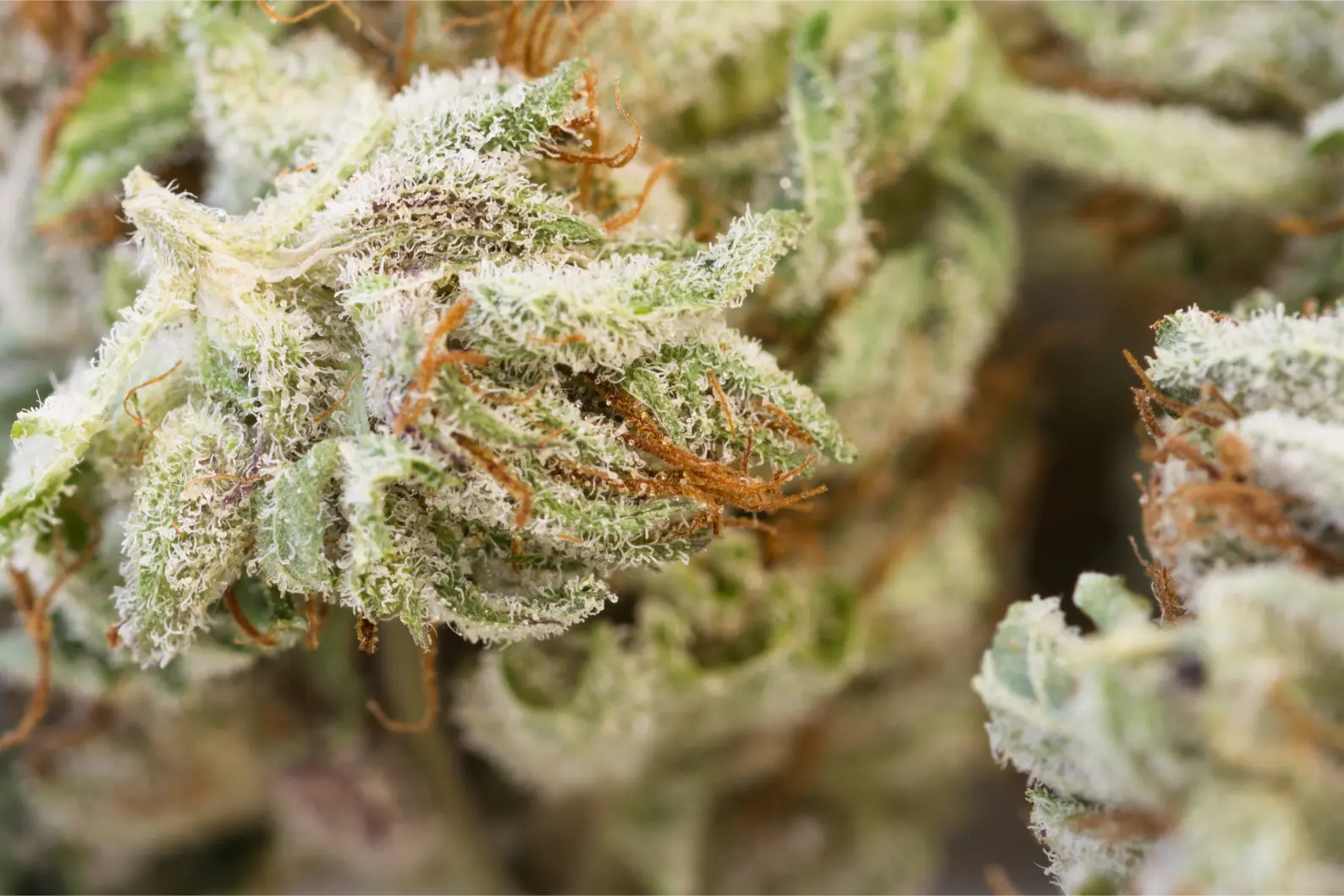
Triangle Kush
Triangle Kush is less a neatly documented cross than a living clone with a long memory. Its reputation grew through Florida gardens before strain databases turned every cultivar into a clean family tree. The accepted story connects it to the state's early OG Kush scene and the triangle formed by Jacksonville, Miami, and Tampa. What remains uncertain is the exact parentage behind the original cut. That uncertainty should not be treated as a weakness in the profile. It is part of the cultivar's identity and one reason seed-derived versions can differ from the clone that established the name.
The plant itself is similarly difficult to summarize with one adjective. Some verified cuts grow compact and branchy, while others reveal the lanky, long-internode stretch that experienced OG growers recognize immediately. A small Triangle Kush at the flip can become a tall, open structure within three weeks. The side branches may look capable of holding themselves until dense flowers collect at their ends, then begin leaning outward late. Yield is often moderate rather than spectacular, but the flower can justify the space through resin, potency, and a lime-fuel aroma that remains distinct from sweeter modern gas hybrids.
Triangle Kush also punishes assumptions. It is frequently called an indica because the finished effect becomes physically calming, yet its early growth and onset can feel more energetic than that label suggests. It is sometimes described as a heavy feeder, while many experienced growers find that the plant performs better when nitrogen and total salt strength remain conservative. It is marketed as easy because the established clone can be resilient, but an unfamiliar seed line may carry enough structural variation to make the first run a study rather than a production cycle.
The grower's main task is to preserve space. Space above the canopy for stretch, space between tops for air, space below the productive zone so resources are not wasted, and enough time at the end for the lime, pine, earth, and fuel to become coherent. Triangle Kush rarely benefits from being forced into a dense, perfectly flat carpet. Its best structure often looks slightly open and imperfect until the flowers gain weight.
Strain Features
| Feature | Details |
|---|---|
| Strain Type | Indica-leaning OG-family hybrid with vigorous transition behavior |
| Genetic Identity | Original Florida clone; exact parental lineage remains disputed |
| Common Aliases | Triangle OG, OG Triangle, TK |
| THC | Commonly reported in the low-to-upper 20% range; cut and batch dependent |
| CBD | Usually very low |
| Dominant Terpenes | Myrcene, limonene, beta-caryophyllene, and pinene commonly recur |
| Flavor and Aroma | Lime peel, lemon, pine, damp earth, skunk, fuel, sandalwood, and hash |
| Effect Character | Euphoric, talkative, and tingly at first, then progressively relaxing and potentially sleepy |
| Flowering Time | Commonly about 9 to 10 weeks; some original-cut reports extend closer to 70 to 75 days |
| Stretch | Moderate to very strong depending on cut authenticity and expression |
| Plant Architecture | Branchy, sometimes lanky, with long side branches and open OG internodes |
| Yield Character | Usually moderate; quality and resin are stronger reasons to grow it than maximum output |
| Branch Strength | Better than some OG cuts, but late support is still recommended |
| Feeding Behavior | Can react quickly to excessive nitrogen or salt strength despite vigorous growth |
| Training Response | Topping, controlled bending, and a loose screen work well when performed early |
| Climate Preference | Warm, dry flowering conditions with steady air exchange |
| Odor Intensity | High, especially from mid-flower through drying |
| Primary Cultivation Risk | Underestimating stretch, overfeeding, and crowding dense late flowers |
| Grow Difficulty | Intermediate, easier with a verified clone and reliable vertical space |
Genetic Lineage
The backward lineage of Triangle Kush remains uncertain. It is widely accepted as a foundational Florida OG expression from the early 1990s, but the exact parents have never been documented with the precision expected from a modern breeding project. Stories connect it to OG Kush material circulating through Florida grower networks. Other accounts describe it as the source from which later OG lines were selected rather than the child of a clearly named cross.
The geographic name is better established than the pedigree. The triangle refers to three Florida cultivation centers: Jacksonville, Miami, and Tampa. That regional association matters because Triangle Kush was not originally introduced as a mass-market seed line. It circulated as a clone, and the clone became the standard. Later seed projects, backcrosses, and hybrids may reproduce some of its traits without behaving exactly like the original plant.
This clone-versus-seed distinction explains much of the conflicting grow information. One report may describe a compact plant with moderate stretch and tight internodes. Another may document a several-fold increase in height, lanky branching, and a 70-day finish. Both reports can be honest if the plants are not genetically identical. The correct Weedth approach is not to average the contradiction into a meaningless middle. It is to tell the grower that identity verification changes the plan.
The OG inheritance is easier to recognize than to name. Triangle Kush frequently shows narrow-to-medium leaves on an otherwise indica-leaning frame, uneven branch dominance, strong apical movement during transition, and a tendency to produce dense flowers at the ends of comparatively open stems. The aroma is also classic OG: citrus peel, pine resin, earthy fuel, skunk, and dry wood rather than candy sweetness.
The original cut has influenced many later cultivars because it contributes potency, resin, and unmistakable gas. Its descendants often improve yield, shorten the internodes, or add fruit and dessert notes. Those improvements can make the hybrids easier to cultivate, but they may soften the raw lime-and-earth identity that defines Triangle Kush.
For keeper selection, the most valuable traits are not necessarily the shortest height or largest yield. A strong Triangle Kush expression should retain lime, pine, and fuel after curing; produce a complete head-to-body effect; and form resinous flowers without excessive leaf. A seed plant that grows perfectly but cures into generic sweet gas may be useful, yet it is less representative of the cultivar's central character.
Effect Breakdown
Triangle Kush is often labeled relaxing, but the experience usually begins in the head. The first few minutes can bring a distinct euphoric pressure, sensory sharpness, and a light social push. Some users become talkative or creatively engaged. Others feel a calm mental separation from stress without becoming sleepy. This opening explains why the strain can feel more balanced than its indica classification suggests.
The middle phase is where dose and activity begin to matter. When the user remains engaged, Triangle Kush can support conversation, music, or a simple creative task while the body becomes looser. When the setting is passive, the same dose may feel heavier. The cultivar does not always force sedation immediately; it creates a gradual reduction in physical urgency.
At moderate doses, the mind may remain clear enough to follow a film or conversation while the limbs feel warm and settled. Appetite can increase. The euphoric edge becomes less bright, and the experience turns inward. This is the point at which many users describe the cultivar as "calming" rather than simply strong.
A heavy dose changes the balance. Physical relaxation can become pronounced, the eyes feel heavy, and short-term focus weakens. Low-tolerance users may experience dizziness, anxiety, or an uncomfortable racing-heart sensation before the body phase takes over. Triangle Kush is not automatically beginner-friendly because it smells earthy and traditional. Potent batches can be intense.
The duration is commonly substantial. The strongest phase may last long enough that a late-evening session carries into bedtime. Residual calm can remain after the main euphoria fades. Some users appreciate the relatively clean finish, while others feel next-stage fatigue. Batch chemistry and harvest maturity influence this difference. Earlier flower may feel brighter and less heavy; later flower often deepens the body effect.
Triangle Kush fits best in the late afternoon or evening. It can be socially useful at a controlled dose, but the user should not assume that early clarity will continue unchanged. The effect has a direction, and that direction is downward into relaxation.
Flavor & Aroma Profile
Triangle Kush does not present fruit in a modern candy form. Its citrus resembles lime peel, lemon rind, and the bitter oils released when citrus skin is twisted. That brightness sits over damp earth, pine, skunk, and fuel. Some flowers add sandalwood, wet wood, pepper, or a mineral note that resembles old stone after rain.
The intact jar can smell deceptively dry. Pine and earth may dominate until the flower is broken. Inside, the lime becomes sharper and the fuel more volatile. A strong cut can fill the room quickly, especially after grinding. This is not a discreet cultivar during late flower or curing.
The inhale often begins with lime and pine. The flavor is cleaner than the aroma suggests, then the exhale becomes heavier with earth, skunk, and fuel. A dry hash note may remain on the tongue. Some expressions show a faint sweetness, but it usually behaves as a background resin note rather than dessert.
Triangle Kush can also taste harsh when harvested or dried poorly. The cultivar's pepper, fuel, and mineral notes already create a sharp profile. Excess late nitrogen, high salt accumulation, warm drying, or overdry flower can turn that sharpness into irritation. A clean cure does not make the strain mild; it makes the intensity organized.
Citrus preservation is especially important. Lime and lemon are more volatile than the earthy base. When flowers dry too quickly, the jar may still smell powerful, but the power becomes one-dimensional fuel and pine. The grower may assume the phenotype lacked citrus when the post-harvest environment removed it.
Outdoor flower can carry more wood, herbs, and soil. Indoor flower often shows brighter lime and more precise fuel. The original clone's quality is judged by the relationship between those elements. Triangle Kush should smell like citrus cutting through old earth, not like a generic lemon strain and not like anonymous gas.
Dominant Terpenes
| Terpene | Sensory Contribution | Relevance to Triangle Kush |
|---|---|---|
| Myrcene | Damp earth, herbs, musk, and ripe depth | Supports the grounded aroma and progressive body relaxation |
| Limonene | Lime peel, lemon oil, and brightness | Central to the sharp citrus top note and euphoric opening |
| Beta-Caryophyllene | Pepper, dry wood, spice, and warm fuel | Gives the exhale structure and reinforces the old-school OG character |
| Alpha-Pinene and Beta-Pinene | Pine needles, resin, fresh wood, and green sharpness | Creates the forest-like edge and prevents the citrus from reading as candy |
| Humulene | Dry herbs, wood, hops, and earthy bitterness | Adds depth to the hash and sandalwood side of the profile |
| Linalool | Light floral softness and spice | Appears in some batches and may round the otherwise sharp aroma |
Terpene dominance varies considerably across samples sold under the name. Some tests place myrcene first, others limonene or beta-caryophyllene. This variation is not surprising in a market where clone authenticity and seed derivatives coexist. The most reliable conclusion is the recurring terpene family: citrus, earth, pepper, pine, and dry floral compounds.
The practical post-harvest lesson is that the profile contains both highly volatile top notes and more persistent base notes. Lime and fresh pine disappear faster than woody spice and fuel when exposed to heat or air. A jar that remains loud after a fast dry may still have lost the part that makes Triangle Kush distinctive.
Indoor vs. Outdoor Growing
| Aspect | Indoor Growing | Outdoor Growing |
|---|---|---|
| Genetic Control | A verified clone allows consistent flip height and spacing | Seed-derived plants should be separated by vigor and stretch before flowering |
| Vertical Space | The main limitation; tall expressions can surprise low-ceiling rooms | Height is less restrictive, but long branches need early support |
| Canopy Style | Loose SCROG, early topping, and open branch lanes | Wide plant spacing and a broad framework suit the OG structure |
| Flowering Climate | Dry late flower and strong extraction protect dense tops | Best in warm regions with low autumn humidity and limited rain |
| Yield | Moderate, improved through light distribution rather than crowding | Can produce more mass with root space, though quality depends on a complete finish |
| Odor | Requires reliable filtration from mid-flower onward | Strong odor travels and can create privacy concerns |
| Harvest | Easy to extend to 70 days when the cut needs it | Weather may force a decision before full lime-fuel maturity |
| Flavor | Cleaner citrus and fuel separation under stable temperatures | Can deepen wood, earth, and herbal complexity |
| Best Fit | Experienced indoor growers with enough height and environmental control | Warm, dry climates with space between plants and dependable support |
Indoors, Triangle Kush should be planned from the ceiling downward. Determine the safe final height, reserve space for lights and airflow, then set the flip height conservatively. A grower working with an unfamiliar cut should not fill the screen in vegetative growth. Empty space is insurance against the first three weeks of stretch.
The screen should guide rather than imprison the plant. OG branches can rise unevenly. Forcing every top to the same height through late aggressive bending may damage stems or create crowded horizontal growth. A slightly varied canopy with clear air channels can produce better flower than a visually perfect but compressed screen.
Outdoors, root space can turn Triangle Kush into a larger, more productive plant than its indoor reputation suggests. The branches should be spread and supported before flowering. A warm, slightly arid climate suits the cultivar, but prolonged high humidity during ripening remains risky. Open structure helps, yet the final flowers can still be dense.
Outdoor growers should also consider finishing time. If the cut needs ten weeks or more, a short-season climate may not allow the full lime-fuel profile to develop before rain. A protected greenhouse can help, but ventilation is more important than simply keeping rain off the plant.
Strain-Specific Grow Guidance
Begin by proving what plant you have
Triangle Kush is one of the cultivars where name confidence can be dangerous. Before building a production plan, run the plant and record its stretch, water use, branch strength, flowering duration, aroma, and cured effect. A verified original cut may be repeatable. A seed line carrying the name may show several expressions.
During vegetative growth, watch the distance between nodes and the angle of side branches. A plant with long internodes and rapidly rising laterals should be flipped earlier. A compact plant can remain in vegetative growth longer, but the grower should still reserve space because the transition may be stronger than the pre-flower shape implies.
Training decisions
One topping is often enough to distribute dominance. A second topping can be used when the room has adequate width and the plant is recovering quickly. Low-stress bending works well while the stems are green. Once the branches become woody, forcing them flat creates splits and weak points.
Build support before the flowers demand it
Triangle Kush is compatible with a loose screen. Place the first layer early and use it to separate branches. Continue guiding the most vigorous tops during the beginning of stretch. Stop tucking when flower clusters begin to stack. The second support layer should hold weight, not compress the canopy.
Lollipopping is valuable because the plant can produce many small lower sites along long branches. Remove shoots that remain below the productive light zone. Do not remove every lower branch automatically. A strong side branch that reaches the canopy may become one of the best producers.
The nutrition contradiction
Triangle Kush can look hungry because it grows quickly and produces pale new tips during stretch. Increasing total feed strength too aggressively can create dark clawed leaves and tip burn without solving the actual problem. OG-family plants may show mineral imbalances when root-zone conditions are unstable, but the correct response is diagnosis rather than automatic supplementation.
Maintain moderate nitrogen through the early transition, then reduce it as flower formation becomes clear. Excess nitrogen keeps the canopy leafy and can delay calyx definition. A plant that remains glossy dark green into late flower is not automatically healthy.
The cultivar may tolerate a productive flowering program, but the margin between enough and too much can be narrow. Track water use and root-zone behavior. When the plant drinks less, do not keep delivering the same concentration simply because the calendar says "peak bloom."
Watering and root oxygen
Triangle Kush often performs well when irrigation is thorough and followed by a meaningful return of oxygen to the medium. Severe drought can make woody OG stems more brittle and slow flower development. Constant saturation can produce drooping leaves, reduced nutrient uptake, and a dense humid canopy.
Container size should match the planned vegetative period. An oversized container around a small clone can remain wet too long. A restricted root zone around a long-veg plant can create rapid dryback and unstable feeding. The correct container is the one that allows regular irrigation without permanent saturation.
Stretch management, week by week
The first week after the flip may not reveal the final height. The second and third weeks can be much more active. Measure the tallest tops rather than relying on visual memory. If one branch is clearly dominant, bend or redirect it early. Waiting until the top reaches the light leaves fewer safe options.
Avoid heavy defoliation on the same day as major bending. Divide stress across several days. Triangle Kush can recover well, but stacking interventions during the fastest part of transition can create uneven flowering.
Building the flower zone
Once stretch slows, inspect the canopy from below. Remove weak shoots that never reached light. Clear leaves that press against branch junctions or block several flower sites. Preserve enough healthy foliage for late development. The original cut can be less leafy than some modern hybrids, so a fixed day-21 stripping routine may remove more than necessary.
The flowers often begin as modest clusters and gain density later. Early size should not determine harvest expectations. Resin can appear before the buds have reached their final mass. The plant's quality becomes more obvious through weeks seven to ten.
Support and branch geometry
Triangle Kush side branches may be strong enough to stay upright through mid-flower, then bend sharply when the terminal flowers gain weight. Install support before the branches lean. If colas are allowed to fall into one another, humidity rises and the lower sides receive less light.
A second net works well when it remains above the forming flowers and catches the stems. Individual ties are useful for the tallest branches. Avoid tying directly around a mature bud.
Environment and disease prevention
Warm days and dry late-flower air suit Triangle Kush. The cultivar's open internodes can improve airflow, but dense terminal buds still create local moisture. Monitor the dark cycle after irrigation. High humidity for several hours each night can be more damaging than a brief daytime spike.
Powdery mildew and Botrytis risk should be managed through cleanliness, spacing, airflow, and environmental control. Foliar applications should end before flower development makes residues and trapped moisture a concern. Remove dead leaves immediately.
Ripening and harvest
Flowering reports range from approximately nine weeks to 70 or 75 days. The plant should be harvested by maturity, not by the shortest published number. Look for expanded calyxes, a reduction in new white pistils, and mostly cloudy trichomes on calyx tissue. The lime aroma should remain bright while the fuel becomes deeper.
An early cut can feel more energetic and produce sharper citrus. A later cut usually brings stronger body relaxation, denser flower, and a more complete earthy fuel finish. Excessive delay can flatten lime and increase sleepy heaviness.
Field Advice: The most expensive Triangle Kush mistake is filling the room before proving the stretch of the exact cut. Empty screen space is easier to fix than a canopy pressed against the lights.
Weedth Bud Flavor Tips
Triangle Kush should be harvested and dried as a citrus-fuel cultivar, not simply as a dense OG. Lime peel and fresh pine are the fragile components. Fuel and earth remain after careless processing, which can create the false impression that nothing was lost.
Reduce avoidable heat during the final part of bloom. If the upper leaves are canoeing or the lime aroma weakens during the hottest part of the light cycle, the canopy may be too warm. Correct the environment rather than waiting for harvest to solve the damage.
At harvest, separate thick terminal colas from thinner side branches. The large tops need more time and should not be crowded together. Medium branches often provide the best balance between slow moisture movement and safe airflow. Whole-plant drying can work in a controlled dry room, but a large leafy plant may hold too much moisture in the center.
Direct air strips the surface quickly and can leave the interior behind. Triangle Kush then develops a dry outside, wet core, and sharp smoke. Use indirect circulation and monitor the largest flowers rather than judging the room by small branches.
The cure should be allowed to transform the profile. Early jars may smell strongly of fuel, pine, or green wood. Lime can become clearer after moisture equalizes and the harsher green compounds fade. A four-week cure often reveals more than a one-week evaluation.
Store flower in smaller containers. Each opening releases volatile compounds and introduces oxygen. The bright citrus fraction is especially vulnerable. Long-term storage should remain cool and dark.
Weedth Bud Boost Tips
Triangle Kush is not the best candidate for a yield-at-any-cost strategy. The cultivar's value is premium resinous flower. The correct boost plan increases the proportion of mature tops without turning the plant into a crowded mass.
Indoors, use training to distribute light across a limited number of strong branches. Remove small lower sites after stretch. A loose screen should keep the main tops separated. The plant may yield only moderately compared with commercial workhorses, but uniformity can raise the usable premium percentage.
Do not extend vegetative time simply to fill every corner. A long veg on a stretchy cut can produce more stems than the room can support. Extra branches are not free yield when they increase shade, humidity, and trimming labor.
Outdoors, early topping and branch support allow more productive terminals to develop. Give the roots enough space, but remember that a larger plant needs more water, more support, and a longer inspection path after weather events.
The late weeks contribute meaningful density. Maintain plant health and resist the urge to harvest at the first strong resin display. Triangle Kush often looks impressive before it has finished. Time, not an aggressive additive, is the final bulking tool.
Medical Uses & Benefits
Triangle Kush is commonly reported as useful for evening stress, physical tension, appetite loss, and sleep preparation. The early mental lift can temporarily improve mood or sociability, while the later body effect becomes more relaxing.
Some users choose it for chronic discomfort because the effect can reduce the prominence of pain while remaining mentally positive. Others find it too potent or mentally intense. These reports do not establish treatment, and the cultivar should not replace professional medical guidance.
Anxiety response is dose-dependent. A small or moderate amount may feel calming and emotionally quiet. A large amount can produce dizziness, paranoia, or uncomfortable stimulation before sedation arrives. People sensitive to THC should begin cautiously.
Ideal User Profile
Triangle Kush suits experienced users who enjoy traditional OG flavors and a high that starts euphoric before becoming physically calm. It works well for evenings, relaxed conversation, music, and low-pressure creative activities.
It is less suitable for users who want candy sweetness, immediate sleep, or predictable beginner potency. The early clarity can hide the strength of the later body effect.
For growers, it suits people willing to verify the cut, leave vertical reserve, and prioritize flower quality over maximum yield. Low-ceiling rooms and humid finishing climates require additional planning.
Grower Notes and Feedback
The most important grower feedback is disagreement. Some Triangle Kush reports describe a compact, manageable plant. Others document extreme stretch. This is not a detail to average away. It is evidence that multiple versions circulate and that clone verification matters.
A second recurring observation is moderate yield with exceptional quality. Growers who judge the plant only by grams may prefer a different cultivar. Those who value resin, lime-fuel aroma, and breeding influence often accept the lower output.
The plant frequently produces strong side branches, but late support remains useful. Terminal buds become heavier than the open stems suggest. Branches that lean are not only at risk of damage; they also close the airflow channels that made the canopy safe.
Triangle Kush can be forgiving of minor mistakes while still responding poorly to chronic overfeeding. One excessive irrigation or one strong feed may not ruin the plant. Repeated high nitrogen and salt strength can flatten aroma, darken foliage, and reduce smoothness.
A practical final check is to compare the strongest top with a representative side branch before harvest. If the top is fully swollen while the side branch still carries new pistils, the plant may benefit from a staged cut rather than waiting for perfect uniformity. This keeps the upper flower from becoming overly heavy while giving the lower branches time to complete. Triangle Kush does not always mature as one flat canopy, particularly when the stretch created uneven light positions.
Weedth Editor's Note
How I would judge the finished flower
The Triangle Kush run I would plan around is defined by the second week after the flip. The plants enter flower with an intentionally incomplete screen. For several days, the empty spaces look like wasted light. Then the side branches begin moving quickly, one plant more than the others, and the reason for leaving room becomes clear. The tallest tops are guided outward before the stems harden. By the end of week three, the screen is full without becoming sealed.
The next decision arrives late. Resin appears early enough that the flowers look ready from a distance, but the terminal buds are still gaining weight. I would support them rather than harvest them. A loose second net catches the stems, and the plant is allowed to continue until the lime peel and earth smell less separate. That aromatic integration is a better maturity clue than frost alone.
After harvest, I would divide the drying material by branch thickness. The large terminal colas would receive more space and time. Smaller branches would leave the dry room earlier. Triangle Kush has too much volatile citrus and too much terminal density to treat every piece as equal.
My final judgement would be based on the cured exhale. I want lime, pine, earth, and fuel in sequence. If the flower is loud but tastes only like dry gas, either the cut or the post-harvest process missed the cultivar's best quality.
Weedth Score
Growing Experience 8.0/10 Highly rewarding, but cut identity and stretch can completely change the plan
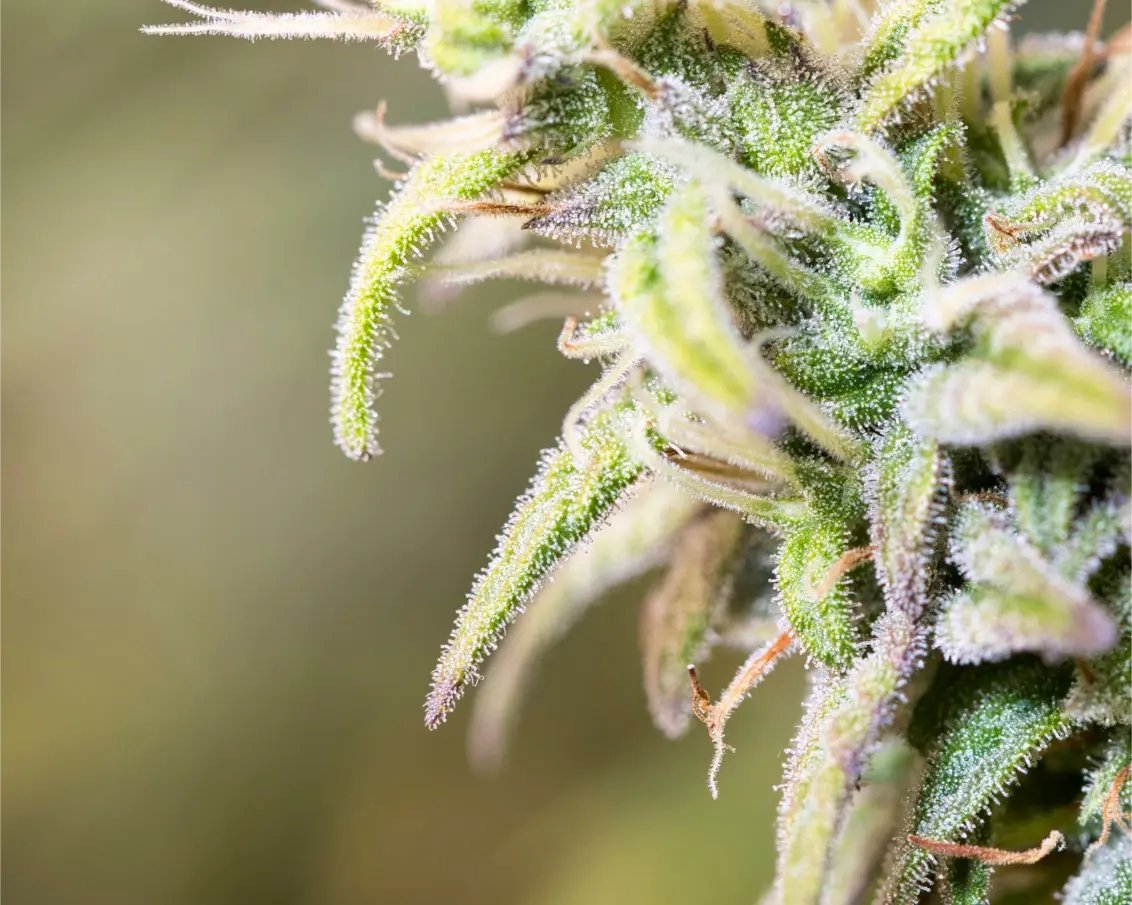
Bud Structure & Visual Appeal 9.0/10 Dense resinous OG flowers with strong classic bag appeal
Aroma Complexity 9.3/10 Lime peel, pine, earth, skunk, sandalwood, and fuel create exceptional depth
Flavor & Smoothness 8.6/10 Excellent after a careful cure; aggressive feeding and fast drying make it sharp
Effects & High Experience 8.9/10 Euphoric and social at first, then steadily relaxing and long-lasting
Overall Satisfaction & Recommendation 8.8/10 A quality-first cultivar for experienced OG growers and users
I would keep Triangle Kush for the lime that cuts through the earth, even if another plant gives me more weight from the same space.
FAQ
What is the exact lineage of Triangle Kush?
The original clone's exact parents remain disputed. It is widely associated with Florida's early OG Kush scene and the Jacksonville, Miami, and Tampa cultivation network.
Is Triangle Kush the same as Triangle OG?
The names are commonly used as aliases. However, seed-derived products and later hybrids may not be genetically identical to the original clone.
How much does Triangle Kush stretch?
Reports range from moderate stretch to several-fold increases. A verified cut may be predictable, but an unfamiliar version should enter flower with substantial unused space.
How long should Triangle Kush flower?
Many plants finish in about 9 to 10 weeks. Some original-cut reports extend closer to 70 or 75 days. Calyx and trichome maturity should decide the harvest.
Is Triangle Kush a heavy feeder?
Not necessarily. It can grow vigorously, but many expressions respond poorly to excessive nitrogen or chronic high salt strength. Moderate, well-monitored nutrition is safer.
Does Triangle Kush work in a SCROG?
Yes, especially when the screen remains loose and partially open at the flip. It is better for branch separation and stretch control than for packing every square with a top.
Why is my Triangle Kush canopy uneven?
Uneven apical dominance is common in OG-family plants. Redirect the strongest tops early and avoid forcing woody stems late in transition.
Is Triangle Kush prone to mold?
The open branches help airflow, but terminal flowers can become dense. High dark-cycle humidity, touching colas, and dead leaves inside buds increase risk.
Why did the lime aroma disappear after harvest?
Lime and fresh pine are volatile. Warm drying, direct fan air, over-drying, and repeated container opening can leave only earth and fuel.
Is Triangle Kush suitable for beginners?
A verified, manageable cut can be grown by an attentive beginner, but the uncertainty around stretch, feeding, and authenticity makes it better suited to intermediate growers.
Is the effect always sedating?
No. The opening can be euphoric, talkative, and creative. Sedation becomes more likely as the dose rises and the experience progresses.
Why is the yield lower than some modern hybrids?
Triangle Kush often prioritizes resin, aroma, and terminal flower quality over maximum biomass. Training and lower cleanup improve usable yield, but it is not primarily a production cultivar.
Similar Strains
OG Kush
OG Kush shares citrus, pine, earth, fuel, and a head-to-body effect. Triangle Kush often feels more regionally specific, raw, and clone-dependent.
SFV OG
SFV OG carries a brighter lemon-pine profile and similar stretch. It often adds more late flower weight and a slightly clearer effect.
Tahoe OG
Tahoe OG offers old-school fuel, pine, and evening calm, usually with a more directly sedating finish.
Fire OG
Fire OG matches dense resin, citrus gas, and potency. It tends to be more aggressive in effect and may form tighter modern flowers.
Motorbreath
Motorbreath shares chemical fuel and heavy relaxation but adds stronger diesel, rubber, and savory notes.
Share this article
A quick overview of the topics covered in this article.
Follow us
Latest articles
August 21, 2026
August 21, 2026
August 21, 2026
August 21, 2026