
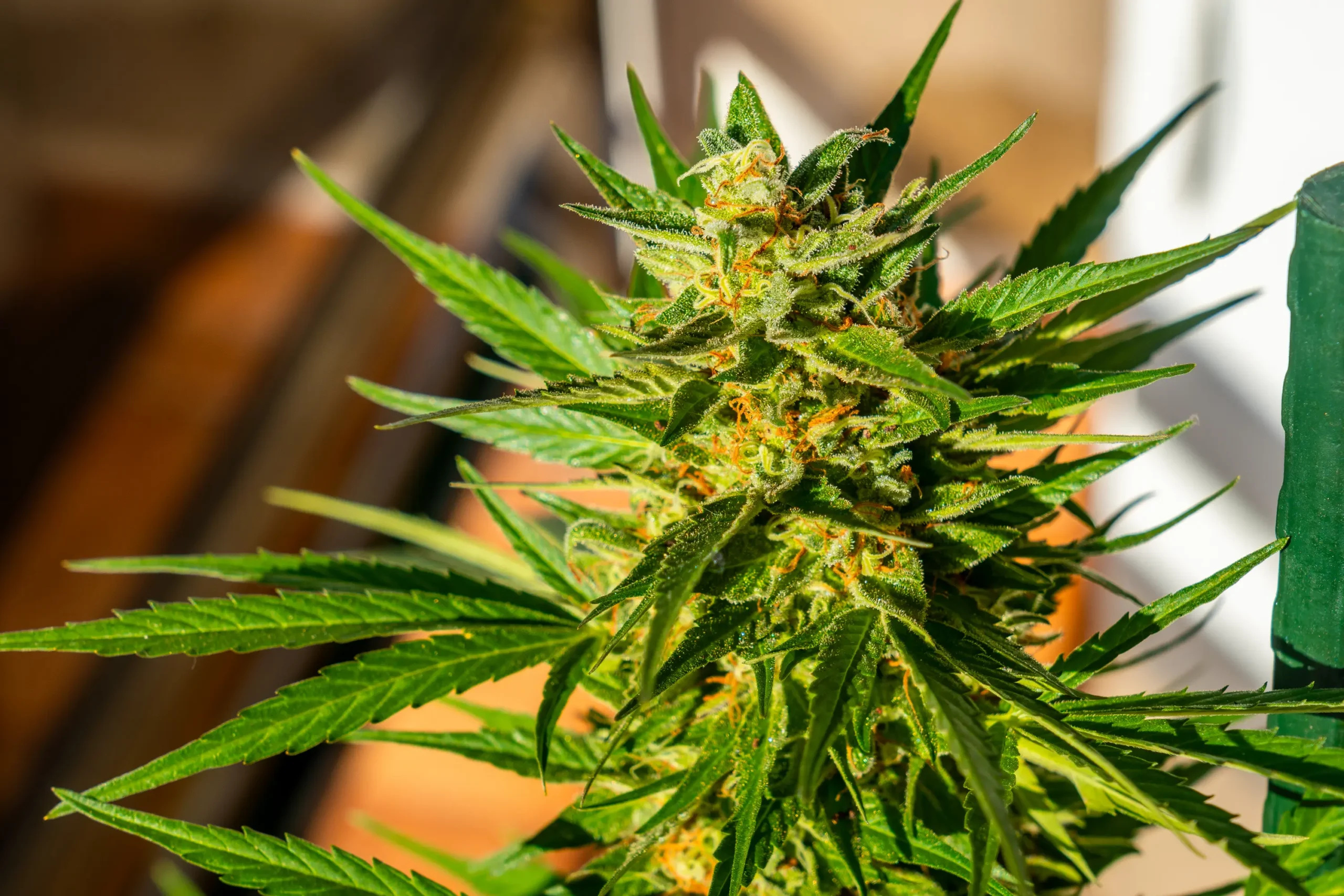
Triple Burger
Triple Burger – Strain Profile & Grow Guide
Triple Burger is a heavy, savory hybrid built around repeated GMO influence. Its best flowers do not smell like a sweet dessert cultivar with a little fuel underneath. They announce themselves with garlic, warm butter, onion skin, ammonia, damp soil, black pepper, blue cheese, sage and diesel. A softer creamy note can appear after curing, but the central identity remains aggressively chemical and food-like. That profile makes Triple Burger memorable before the first use and difficult to hide during late flowering.
The name is sometimes reduced to a simple “GMO x Double Burger” description, yet the grow behavior is not equally simple. Some documented cuts remain stout, with low to moderate stretch and thick lateral branches. Seed-grown examples and other selected expressions have shown a much stronger GMO-like transition, continuing upward through the third week of flower and in some cases becoming several times taller than their pre-flip height. The most useful conclusion is not that one description is wrong. It is that Triple Burger must be treated as a cut-dependent cultivar until its stretch has been measured in the grower’s own room.
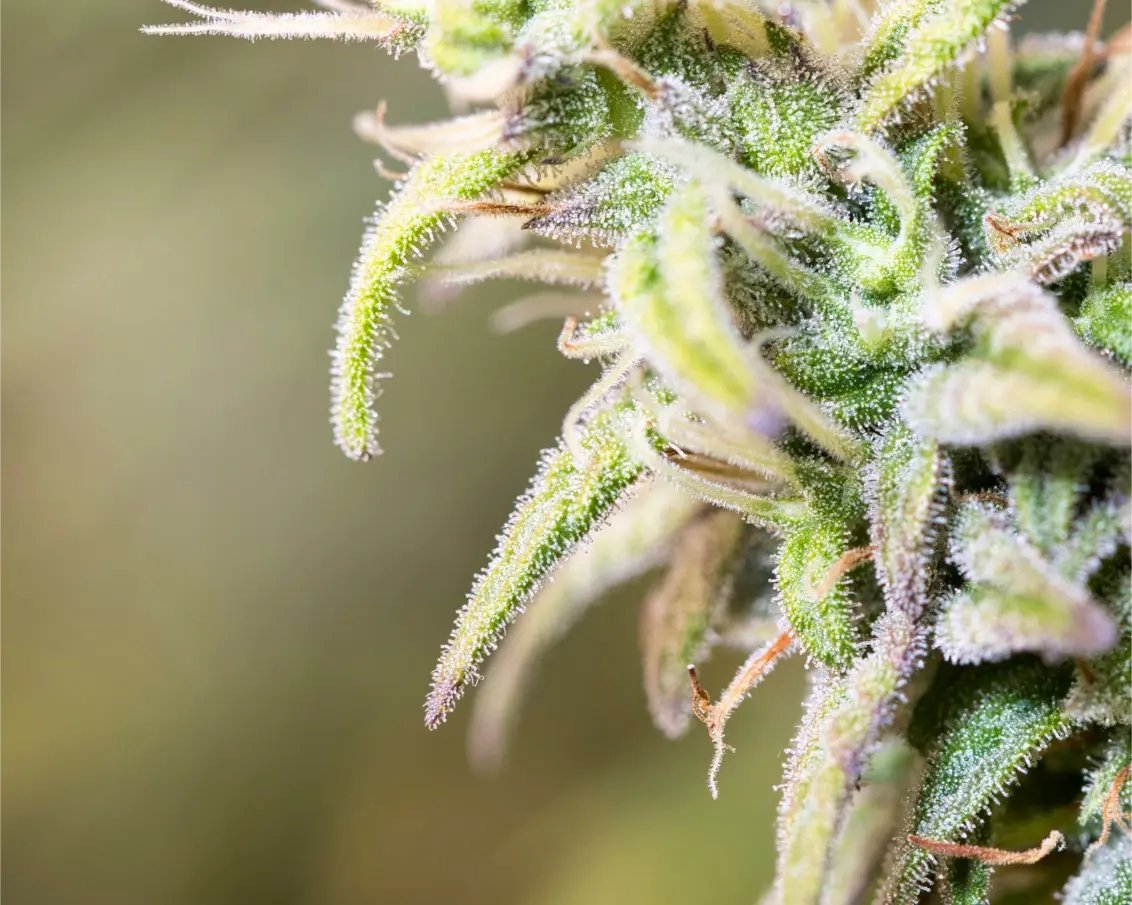
The plant can produce dense, resin-loaded flowers within a relatively short flowering window. That combination creates a specific management problem. The canopy may still be extending while the interior is already becoming broad-leaved and difficult to ventilate. Waiting until the flowers are fully formed before cleaning the lower and middle growth often leaves the grower working inside a sticky wall of foliage. A better run is organized before transition, then adjusted after the actual stretch reveals itself.
Triple Burger is not the right strain for every palate or every grow room. It suits growers who value pungency, extraction-quality resin and late-evening potency more than bright fruit or discreet aroma. It also rewards careful drying. The raw ammonia and garlic notes need enough time to soften into butter, mushroom, herbs and layered fuel. A rushed dry can preserve loudness while losing the depth that separates complex funk from harsh chemical flower.
Strain Features
| Feature | Details |
|---|---|
| Strain Type | Indica-leaning hybrid |
| Genetic Profile | GMO x Double Burger |
| Alternate Identity | Frequently described as a GMO backcross expression or GMO BX3 |
| THC | Commonly reported in the mid-to-upper 20% range; batch and cut dependent |
| CBD | Usually very low |
| CBG | Some tested batches show measurable CBG, though this is not universal |
| Dominant Terpenes | Beta-caryophyllene, humulene and limonene are frequently reported |
| Flavor and Aroma | Garlic, butter, onion, ammonia, cheese, diesel, pepper, herbs and damp earth |
| Effect Character | Creeping mental quiet followed by heavy physical relaxation and sleepiness |
| Flowering Time | Approximately 8.5 to 10 weeks, with many cuts finishing near 60 to 70 days |
| Stretch | Cut dependent, ranging from low-moderate to very strong |
| Plant Architecture | Broad leaves, strong lateral branching and potentially large transition growth |
| Bud Structure | Dense, chunky and highly resinous |
| Grow Difficulty | Intermediate; advanced when working with an unknown seed expression |
| Primary Quality Risk | Underestimating stretch, allowing a congested interior and carrying excess salts into harvest |
Genetic Lineage
Triple Burger is most consistently documented as GMO crossed with Double Burger. The first parent supplies the unmistakable garlic, onion, chem and fuel identity. GMO is also known for vigorous flowering growth, long internodes in selected cuts and an extended transition that can surprise growers who flip too late. Double Burger reinforces the same savory family rather than balancing it with fruit. It is commonly described as another GMO-heavy cross, which is why Triple Burger is often treated as a concentrated backcross expression rather than a broad genetic blend.
This repeated inheritance matters in cultivation. A plant can carry a stout-looking vegetative frame and still reveal strong vertical behavior after the light cycle changes. The stems may be thick, the fan leaves may be broad and the plant may appear visually indica-like, yet the transition can remain active through the third week. That is a classic example of why leaf shape should not be used as a reliable prediction of flowering stretch.
There are at least two recurring structural lanes. One produces a medium, bushy plant with stout branches, close node spacing and dense rounded colas. This expression can fit smaller rooms and responds well to a broad screen. The other lane behaves more like an aggressive chem hybrid. It builds tall leaders, continues stretching after nearby cultivars have slowed and creates wide gaps between lower nodes before the flowers begin connecting. Both can be legitimate Triple Burger. They simply need different flip heights and different plant counts.
The aroma can also separate into distinct directions. Garlic and ammonia dominate many examples, but some flowers lean toward butter, cheese, sage and damp mushroom. Others are sharper, with solvent, pepper, fuel and rubber. The most enjoyable selections usually keep a savory food note behind the chemical intensity. That softer layer is important because it gives the cured flower dimension. A plant that smells only like hot ammonia may still be potent and resinous, yet it can become tiring on the palate.
Repeated GMO influence also explains the cultivar’s extraction appeal. Many cuts form a heavy trichome layer across the calyxes and small leaves. Resin quantity alone does not guarantee excellent separation or return, but Triple Burger often gives the processor a useful starting point. The correct harvest window matters because immature resin can look abundant while lacking the developed texture and aroma of fully matured heads.
Lineage claims around modern cannabis are not always standardized, and similar Burger names can be used for different crosses. Triple Burger should not be confused with unrelated varieties that simply include “Burger” in the title. For the profile described here, the defining genetic logic is repeated GMO influence through Double Burger. When the actual source of a cut is uncertain, the grower should verify aroma, structure and flowering behavior rather than trusting the label alone.
Effect Breakdown
The Onset Is Quieter Than the Aroma
The smell suggests an immediate, violent effect, but Triple Burger often begins more slowly. The first few minutes can feel warm, slightly tingly and mentally soft rather than explosively euphoric. Conversation may continue normally while tension starts disappearing from the jaw, shoulders and hands. This creeping quality is one reason users can underestimate the dose.
A mild head change usually develops before the body becomes heavy. Thoughts lose urgency and background noise becomes less intrusive. The effect can feel introspective without becoming emotionally dark. Some users report a short window of humor, appetite and comfortable sociability before the strain turns more inward.
Physical Weight Builds in Layers
The body phase does not always arrive as instant couch-lock. It often begins as warmth through the chest and limbs, then settles into the lower back and legs. Movement remains possible, but the motivation to stand up decreases. At moderate doses, this stage can be deeply relaxing without complete impairment. At larger doses, the distinction disappears and the strain becomes clearly sedating.
The tingly component can be prominent. It may feel pleasant for users seeking physical calm, though those unfamiliar with potent THC can interpret the same sensation as dizziness. A calm setting and conservative dose are more appropriate than using Triple Burger before a demanding social event.
Appetite and Sleepiness
Food often becomes more appealing after the first mental quiet. The strain’s savory aroma can reinforce that response, although the taste itself is not conventionally sweet. Later, eyelids become heavier and attention shortens. Triple Burger is better suited to evenings when unfinished tasks are no longer important.
For sleep preparation, timing matters. The user may experience a brief active or euphoric period before the heavier phase takes over. It is not always an instant knockout. Consuming it slightly before the intended sleep period may fit better than waiting until the exact moment of going to bed.
Dose Sensitivity and Side Effects
High THC, low CBD and a creeping onset create a clear overconsumption risk. The user may take another dose before the first one has reached full strength. Excess can produce dizziness, dry eyes, dry mouth, racing thoughts or an uncomfortable awareness of heartbeat. The strain’s reputation for relaxation does not make it anxiety-proof.
Low-tolerance consumers should begin with a very small amount and wait. Experienced users are more likely to appreciate the progression from mental quiet to full-body weight. Even for them, the cultivar is generally a poor choice before driving, detailed work or situations requiring fast reactions.
Flavor & Aroma Profile
Triple Burger’s jar aroma is dense and humid in character. Garlic and onion skin usually arrive first, followed by warm butter, fuel and a mineral ammonia note. Breaking the flower exposes deeper earth, pepper, sage, blue cheese and mushroom. The profile can resemble a kitchen, a mechanic’s workshop and a damp forest floor at the same time.
The inhale is sometimes softer than the smell. Butter, cream and mild herbs can appear before the sharper chemical layer. On exhale, garlic, diesel and black pepper return with greater force. A blue-cheese or fermented note may remain on the palate. That aftertaste is part of the strain’s appeal for savory-flavor enthusiasts and a reason some fruit-focused users dislike it immediately.
A well-grown example should feel layered rather than dirty. The distinction is not about removing the ammonia or fuel. Those notes belong to the cultivar. The goal is to preserve enough butter, herb, mushroom and cream that the flower develops over several breaths. Harsh mineral heat, throat burn and flat chemical flavor often point toward excess salts, high drying temperatures or flower that was harvested before its aromatic profile had integrated.
The live plant can smell more aggressive than the cured flower. During late bloom, touching a sugar leaf may release sharp garlic and solvent. After drying, the initial impression can seem quieter, then return over the first weeks of cure as moisture equalizes. Growers sometimes assume the terpene profile has disappeared when the jars smell muted during the first days. Opening them too frequently at that stage can slow stabilization and expose the flowers to unnecessary oxygen.
Triple Burger’s resin can hold odor strongly on gloves, scissors and drying surfaces. That persistence should be considered when different cultivars share the same processing room. Mixing freshly cut Triple Burger branches with delicate floral or citrus strains can make sensory evaluation difficult. Separate drying zones are ideal when the goal is to compare phenotype flavor accurately.
Temperature has a major influence on the balance. Warm late-flower conditions tend to emphasize the heavier fuel and earth while reducing any creamy or herbal top layer. A fast, dry room can create flowers that smell loud but taste thin. Slow moisture movement gives the dense buds time to release internal water and reduces the risk of a crisp exterior surrounding a wet center.
Dominant Terpenes
| Terpene or Volatile Group | Likely Role in Triple Burger |
|---|---|
| Beta-Caryophyllene | Supports black pepper, dry spice and part of the warm diesel foundation. It is frequently present in savory, chem-heavy profiles. |
| Humulene | Contributes dry herbs, hops, wood and a slightly bitter earthiness that can resemble sage or tobacco. |
| Limonene | Adds brightness to the fuel and may explain occasional citrus or cleaner-like sharpness. It can be present even when the flower does not smell conventionally lemony. |
| Myrcene | May reinforce damp earth, ripe funk and the physically heavy late phase in some batches. |
| Sulfur-Containing Compounds and Other Trace Volatiles | Garlic, onion, skunk and cooked-food notes cannot be explained by the major terpene list alone. Minor sulfur chemistry likely plays an important role. |
Terpene rankings should be treated as sample-specific. Triple Burger is sold under the same name by multiple producers and selected cuts do not necessarily share identical chemistry. A laboratory report from one batch cannot define the entire cultivar. Environmental conditions, harvest timing, drying and storage can all change which compounds remain prominent.
The sensory profile also demonstrates why terpene percentages do not tell the full story. A small quantity of a powerful sulfur compound can shape the aroma more strongly than a much larger amount of a softer terpene. For the grower, the practical lesson is to evaluate the whole flower after cure rather than selecting plants only from a short list of laboratory numbers.
Indoor vs. Outdoor Growing
| Decision Point | Indoor Growing | Outdoor Growing |
|---|---|---|
| Stretch Control | Exact flip height and screen capacity can be adjusted to the known cut | Root volume can amplify GMO-like stretch and lateral expansion |
| Odor Management | Strong extraction and sealed air handling are essential | Aroma can travel far and affect privacy long before harvest |
| Flower Density | Humidity can be reduced before dense colas fully form | Autumn rain, dew and cool nights increase risk inside chunky flowers |
| Training | SCROG, topping and selective defoliation can organize the plant | Early topping, cages and broad branch spacing work better than late correction |
| Support | A second net helps hold heavy resinous tops | Stakes or a full cage should be installed before branches harden |
| Finish Control | A controlled room can complete 60 to 70 days without weather pressure | A dry autumn is important because pungent dense flowers are poor candidates for repeated rain |
| Best Fit | Intermediate growers with good odor and humidity control | Dry climates with privacy, long sun exposure and early structural support |
Indoors, Triple Burger offers the advantage of observation. The grower can watch the first two weeks of stretch and decide whether the selected cut is following the stout or tall lane. A movable second net, extra headroom and enough empty screen area are more useful than a rigid plan based on a catalog description. The strain’s odor also makes indoor air handling a central part of quality control, not only privacy. Stale, warm air around the canopy can flatten the aroma while encouraging moisture pockets.
Outdoors, the cultivar can build a large root system and strong branch structure, but the repeated GMO influence can make the plant more expansive than expected. Early topping is easier than trying to control a tall, rigid plant after midsummer. Odor becomes obvious before the flowers are fully mature, so legal compliance and site privacy must be evaluated before planting.
The best outdoor environments are warm and dry through the finishing period. A large plant covered in chunky savory flowers is vulnerable to late moisture even when the genotype has reasonable resistance. The smell can make inspection unpleasant, but every large top should still be checked from the stem side. Garlic and mushroom notes are normal. Brown internal tissue, sudden softness and localized sour decay are not.
Strain-Specific Grow Guidance
Begin With a Stretch Test, Not a Full Room
An unfamiliar Triple Burger seed group should not be assigned a final plant count before flowering behavior is known. A small first run or a mixed canopy with spare vertical space is safer. Measure plant height at flip, day 7, day 14 and day 21. That simple record will be more useful for the next run than any generalized percentage.
If the plant doubles quickly in the first ten days, assume the stretch is not finished. If it remains compact but expands laterally, use the available screen width rather than forcing vertical growth. The correct response comes from observing direction, not simply total size.
Choose Training According to Branch Type
Stout expressions respond well to one topping followed by wide branch spreading. They can form a productive table of thick arms without a long vegetative period. Tall chem-leaning expressions need fewer main branches and an earlier flip. Repeated topping can create too many soft leaders that all stretch at once.
Supercropping can rescue excessive height during early transition, but it should not be the planned primary method. The cultivar becomes increasingly resinous and rigid as flowering advances. Late bending raises the risk of damaged stems and crowded recovery growth around the bend.
Leave More Screen Than the Vegetative Plant Appears to Need
A screen filled to the edge before transition offers no correction space. Even the compact cuts can widen after the flip. Leave empty squares around the strongest leaders and continue tucking only while stems remain flexible. Once the flower clusters become distinct, let the tops rise and use the net as support.
A second support layer should be available before the flowers gain significant weight. The first net organizes the canopy. The second prevents heavy branches from leaning onto neighbors. Two different functions require two different heights.
Remove the Interior Before It Becomes Sticky
Triple Burger can produce broad fan leaves and numerous internal shoots. The lower and middle cleanup should be completed before resin makes the work slow and messy. Remove branches that cannot reach the productive light zone, inward-facing shoots and leaves that press against the main stem.
Do not remove every large leaf at once. The plant still needs healthy photosynthetic area to finish dense flowers. The objective is to create visible air channels and a shallow productive zone, not a stripped skeleton.
Watch the Root Zone When Water Demand Changes
Strong vegetative growth can encourage aggressive irrigation. Once the stretch slows, water use may change faster than the grower’s schedule. Continuing the same volume after demand drops can leave the medium wet for too long, especially beneath a broad canopy that hides the surface.
Use container weight, drainage behavior and leaf recovery after irrigation. A plant that remains heavy, droops for hours and develops dark clawed leaves may be receiving more water and nitrogen than it can use. The solution is not automatically a stronger bloom feed.
Moderate Nitrogen Before the Flowers Connect
Dense flowers change the airflow plan
Repeated GMO influence can support vigorous growth, but Triple Burger does not benefit from staying excessively dark green until harvest. Prolonged nitrogen keeps the fan leaves thick, delays a clean fade and increases humidity around the dense flowers. Transition the nutrition as floral development becomes clear.
Tip burn and black-green clawing should be treated as warnings, not signs of productive feeding. The flower’s chemical aroma is genetic. More salts will not create more funk. They are more likely to produce hot smoke and slow water uptake.
Support Branches Earlier Than Their Thickness Suggests
The stems can look strong enough to carry anything during mid-flower. Late weight changes that assessment. Dense buds form close to the branch ends and can pull entire arms outward. Install support while the branches can still be moved without touching mature flowers.
Outdoors, a cage distributes wind load better than individual stakes added after the plant becomes heavy. Indoors, soft ties from a second net prevent tops from collapsing into one another and creating humid contact points.
Manage Humidity Before the Final Swell
Waiting for the buds to look dense is too late. Reduce late-flower humidity while the flowers are still building. Keep air moving through the canopy rather than blasting the tops. The stem side of the largest colas deserves direct inspection.
The strain’s normal mushroom and fermented-food aroma can complicate mold detection. Use visual and tactile evidence. Healthy tissue remains firm and structurally connected. A localized area that becomes soft, brown, grey or unusually wet must be opened and evaluated immediately.
Harvest by Calyx Maturity and Intended Effect
Triple Burger can become frosty before it is fully mature. Watch the calyxes, not the sugar leaves. The harvest window is approaching when calyxes are swollen, new pistil production slows and trichomes on calyx tissue are mostly cloudy.
An earlier cut preserves a slightly brighter mental phase and sharper garlic-fuel aroma. Additional maturity increases body heaviness and allows butter, cheese and herb notes to deepen. Excessive delay can make the effect flat and sleepy while increasing the risk inside dense flowers.
Separate Phenotypes During Drying
Do not combine different seed expressions into one jar simply because they share the same name. A tall garlic-heavy plant may dry differently from a compact butter-forward plant. Keep branches labeled through drying and cure. The best keeper may not be the highest yielder or the loudest live plant.
Weedth Bud Flavor Tips
Triple Burger flavor is improved by clean maturation, not by adding stronger-smelling products late in bloom. The savory chemistry is already present. The grower’s job is to avoid burying it under heat, residual salts or microbial damage. Stable late conditions and a healthy natural fade are more valuable than a final push for dark green leaves.
At harvest, divide the plant according to flower size. Very large colas should be separated into sections if their cores are thick and humid. Medium branches can remain intact to slow the dry. Hanging every piece in the same form creates uneven results because the small tops finish long before the dense center flowers.
Use gentle indirect circulation. Air should move around the branches and carry away moisture from the room, not strike the buds. Direct fan exposure hardens the exterior and preserves the rough ammonia note while reducing cream and herb. The flower may smell strong yet taste unfinished.
A cool, dark drying environment gives the dense tissue time to equalize. Do not rely on an exact number of days. Evaluate how the small stems bend, how the flower surface feels and whether the core remains flexible. Triple Burger often needs more patience than its dry outer leaves suggest.
During the first part of cure, the jar can smell muted or unusually sharp. Allow short, controlled air exchange based on internal moisture rather than opening the container repeatedly for curiosity. Butter, sage and mushroom may become clearer after the initial garlic-ammonia stage settles.
Store the final flower in several smaller containers. One large jar opened every day exposes the entire harvest to oxygen and repeated humidity changes. Small containers also make it easier to compare different phenotypes and harvest dates.
Weedth Bud Boost Tips
The best yield strategy begins with the correct expression density. A tall Triple Burger cut can fill a large screen from a small number of plants. A stout cut may use a slightly higher plant count, but only if each center remains accessible. More plants are not useful when the canopy becomes impossible to ventilate.
Build a shallow flower zone. Remove weak lower growth early, then keep the main colas at a similar distance from the light. Triple Burger can coat shaded lowers in resin, which tempts the grower to leave them. Resinous small buds still reduce premium percentage and complicate drying.
Strong light supports dense flowers only when the environment can remove heat and the roots can supply water consistently. Increasing light beyond the room’s capacity raises canopy temperature, reduces aroma quality and can create foxtailing without meaningful weight. The correct intensity is the level the plant can use without losing posture or terpene clarity.
Healthy roots are a larger yield tool than aggressive bloom additives. Maintain oxygen in the medium, avoid chronic saturation and adjust irrigation when stretch slows. A root zone that remains active through late flower allows the calyxes to swell without forcing the plant with excessive salts.
The cultivar’s resin makes it attractive for hash, but flower and extraction goals are not identical. A cut with visually heavy trichomes may not release heads efficiently. Evaluate actual return, texture and aroma before dedicating a full room to processing. For premium flower, trimability, density and smoothness deserve equal weight.
Outdoors, branch support protects more yield than any late fertilizer. One broken arm can remove a large section of the harvest and expose tissue to disease. Install the framework early, inspect ties as the stems thicken and keep the main colas separated from one another.
Medical Uses & Benefits
Triple Burger is frequently chosen for evening stress, physical tension and sleep preparation because the effect becomes increasingly heavy with time. Users often describe a gradual reduction in mental urgency followed by strong body relaxation. That progression may be useful for people who dislike an immediate overwhelming hit but still want substantial late-stage sedation.
The strain may also stimulate appetite. Its savory aroma and physical relaxation can make food more appealing after the initial head change. Individual response varies, and nausea or dizziness can occur when the dose is too high.
For discomfort, users commonly report a distracting body buzz and reduced muscle tension. These experiences should not be interpreted as proof that the cultivar treats pain or inflammation. Cannabinoid content, dose, tolerance and personal physiology can produce very different outcomes.
The high THC and very low CBD profile make Triple Burger unsuitable for some anxiety-prone users. Although many consumers find it calming, an excessive dose can produce racing thoughts, uncomfortable tingling or awareness of heartbeat before the sedation arrives. Starting low is especially important with a creeping strain.
Triple Burger should not be presented as a cure for insomnia, pain, depression or any other condition. Medical cannabis decisions should be discussed with a qualified professional, particularly when the user takes other medication or has a history of adverse reactions to THC.
Ideal User Profile
Triple Burger is best suited to experienced consumers who enjoy savory chem cultivars and want a strong evening effect. The ideal user is not looking for a bright tropical aroma or a discreet daytime strain. They appreciate garlic, butter, fuel and fermented notes as signs of complexity rather than flaws.
It can fit people who prefer a creeping experience over an immediate cerebral rush. The mental quiet arrives first, then the body weight increases. That makes it appropriate for low-pressure evenings, films, music, meals and the final part of the day.
Growers should have enough experience to read stretch and root-zone demand rather than following a fixed week-by-week recipe. A known compact clone may be manageable for an intermediate cultivator. An unknown seed group with strong GMO behavior is better handled by someone comfortable with topping, netting, defoliation and late humidity control.
The cultivar is a poor match for low-odor spaces, hot drying rooms and wet outdoor autumns. It is also not ideal for consumers who are sensitive to chemical flavors or high THC. Its strongest qualities are exactly the characteristics that make it demanding.
Grower Notes and Feedback
The most repeated grower disagreement concerns stretch. Some cuts remain medium and broad. Others continue upward through week three and can become several times taller. This is not a small detail. It changes plant count, flip timing, trellis height and whether the room can remain evenly lit.
Large fan leaves are another recurring observation. They can create a dark interior beneath a canopy that looks open from above. Removing the lower and inward-facing growth before flower set improves both airflow and the proportion of mature top buds.
The odor often becomes noticeable early. Garlic, fuel and ammonia can appear before the flowers look substantial. Growers should not use smell as a maturity indicator. Triple Burger may be loud for weeks while the calyxes are still developing.
Resin production is consistently strong, though extraction performance varies by cut. Sugar leaves can become heavily coated and scissors may gum quickly during trimming. A clean processing area and labeled phenotypes make evaluation easier.
Some growers report that the plant accepts productive feeding, while others see dark leaves and tip burn at moderate strength. The difference is often connected to root-zone health, irrigation frequency and expression. A vigorous plant in an oxygenated medium can use more than a compact plant sitting wet. The cultivar name does not remove that context.
Finished flower improves with cure. Harsh ammonia and pepper can soften into butter, herbs, mushroom and cheese. The plant that seems least pleasant at the end of drying may become the most complex after several weeks, which is another reason not to select a keeper too early.
Weedth Editor's Note
The decision I would not postpone
The first mistake in a mixed Triple Burger run happened before the light cycle changed. Four plants had been trained into identical spaces because their vegetative height looked similar. Two were broad and slow between nodes. The other two had slightly longer petioles and thinner new stems, but the difference did not seem important enough to change the plan.
By day ten of flower, the room had divided into two different cultivations. The broad plants had widened into the screen and remained below the first support layer. The taller pair had already moved through it. Their tops were still flexible, so the branches were tucked again and the light was raised. That solved the height for three days.
The stretch continued. By day eighteen, the tall plants had reached the second net while the compact plants were only beginning to form defined flower clusters. Raising the light again protected the tall tops but reduced intensity across the compact half of the room. The original decision to make the canopy visually equal in veg had created an unequal flowering environment.
The correction was not dramatic. The tallest leaders were bent below the second net while the lower plants were lifted slightly. A few internal branches were removed from the vigorous expressions, not because they were weak, but because they were creating a humid wall. Irrigation was also separated. The tall plants were drinking faster during stretch, then slowed sharply after week three. The compact plants remained more consistent.
Harvest repeated the same lesson. The broad plants finished with dense butter-garlic flowers around day sixty-three. The tall pair needed several more days for the upper calyxes to swell and for the sharp ammonia to settle into mushroom and sage. Cutting all four together would have sacrificed either maturity or freshness.
The next cycle used clones from both expressions, but they were not placed under one plan. The tall cut entered flower earlier with fewer branches and more empty screen. The compact cut received a longer vegetative period and a lower net. The room looked less uniform on flip day and far more uniform by the middle of bloom.
That is the Triple Burger lesson I would keep. Uniform plant height is not the same as uniform flowering behavior. A cultivar with repeated GMO influence should be measured through transition before it is trusted. The best improvement did not come from a different fertilizer or stronger light. It came from allowing two expressions to be different.
Weedth Score
Growing Experience 8.2/10 Strong structure and productive resin are rewarding, but unknown cuts can create major stretch and canopy-management differences.
Bud Structure & Visual Appeal 9.1/10 Dense, chunky flowers and heavy trichome coverage give the cultivar excellent premium and extraction appeal.
Aroma Complexity 9.4/10 Garlic, butter, ammonia, cheese, herbs, mushroom and diesel create one of the most layered savory profiles.
Flavor & Smoothness 8.3/10 Complex after a careful cure, but excess salts or rapid drying make the chemical side harsh.
Effects & High Experience 8.9/10 A convincing progression from mental quiet to heavy physical relaxation and sleepiness.
Overall Satisfaction & Recommendation 8.8/10 Highly recommended for experienced growers and users who specifically enjoy pungent GMO-family cultivars.
Triple Burger loses points for cut inconsistency, difficult odor control and the narrow margin between complex chem and harsh chemical flower. It gains them back through resin, potency and a flavor identity that cannot be confused with a generic dessert hybrid.
FAQ
What is Triple Burger's lineage?
Triple Burger is most consistently documented as GMO crossed with Double Burger. Because Double Burger also carries strong GMO influence, the cultivar is often described as a GMO backcross-type expression.
How much does Triple Burger stretch?
Stretch is cut dependent. Some clones remain medium and broad with low-to-moderate vertical growth. Seed-grown and GMO-leaning expressions may continue stretching through the third week and can become several times taller than their pre-flip height.
How long does Triple Burger flower?
Many cuts finish between roughly 60 and 70 days. The correct harvest point should be confirmed through calyx swelling, pistil activity and trichomes on calyx tissue rather than a fixed calendar date.
Does Triple Burger respond well to topping?
Yes, but the number of toppings should match the expression. Stout plants usually respond well to one topping and branch spreading. Tall chem-leaning plants may become overcrowded if repeatedly topped before a strong stretch.
Is Triple Burger suitable for a small grow tent?
A known compact cut can fit a smaller tent with SCROG training. An unknown seed expression is riskier because the stretch can be much stronger than the vegetative structure suggests.
Why does Triple Burger smell like ammonia?
Ammonia and chemical fuel can be genetic parts of the aroma. Excess nitrogen, accumulated salts, immature harvest and poor curing can make those notes harsher and less balanced.
Is Triple Burger prone to mold?
The dense flowers and broad interior canopy can hold moisture. It is not automatically fragile, but late humidity, cola contact and the stem-facing side of large buds require close inspection.
Is Triple Burger good for extraction?
Many cuts produce heavy visible resin and can be attractive for hash or solventless processing. Actual return and quality depend on trichome structure, harvest maturity and the selected phenotype.
What is the best harvest window for a balanced effect?
A balanced result usually comes when calyxes are fully swollen, most calyx trichomes are cloudy and only a limited amount has turned amber. Earlier harvest feels brighter. Later harvest increases heaviness and sleepiness.
Who should avoid Triple Burger?
Low-tolerance consumers, users who dislike garlic or chemical flavors and growers without odor or humidity control may prefer another cultivar.
Similar Strains
GMO shares the garlic, chem, ammonia and long-lasting physical effect. It usually stretches more strongly and may need a longer flowering period, while Triple Burger can finish faster and form chunkier flowers.
Donny Burger offers savory meat, onion and fuel with strong relaxation. It often feels more earthy and burger-like, while Triple Burger can show more butter, cheese and repeated GMO sharpness.
First Class Funk combines garlic and ammonia with cream and citrus. Its profile is slightly sweeter and its structure can be more controlled, while Triple Burger is generally heavier and more relentlessly savory.
Motorbreath delivers chemical diesel, earth and sedation. It is similar in late-evening use but usually lacks Triple Burger's cooked-food, butter and blue-cheese layers.
Meat Breath shares fermented savory character and dense resinous flower. It leans more toward meat, dough and spice, while Triple Burger remains more garlic-ammonia and fuel dominant.
Share this article
A quick overview of the topics covered in this article.
Follow us
Latest articles
August 21, 2026
August 21, 2026
August 21, 2026
August 21, 2026