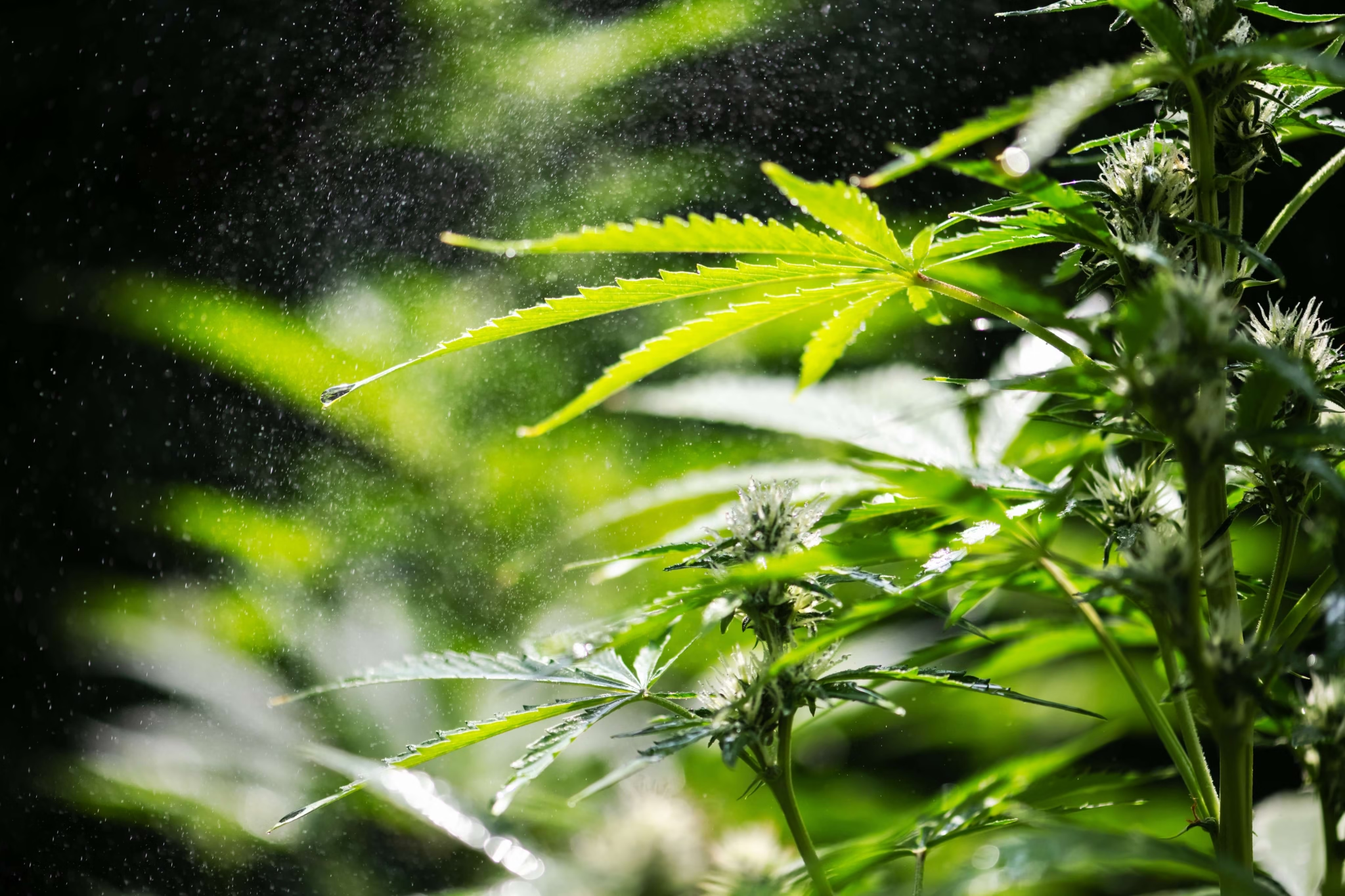
What Is the Best Time of Day to Water Cannabis? Diurnal Physiology, Transpiration Curves, and Crop Steering
Among the fundamental decisions in crop management, few practices generate as much conflicting advice as the timing of irrigation events. Novice cultivators often debate whether plants should be watered at sunrise, high noon, or sundown, while commercial precision facilities approach irrigation scheduling through the lens of circadian plant physiology and commercial crop steering. From the biological perspective of Cannabis sativa, water uptake is not a constant, uniform process: it follows a strict diurnal rhythm governed by photosynthetic light activation, circadian stomatal conductance, root aquaporin channel gating, and atmospheric vapor pressure deficit (VPD). Applying hundreds of gallons of water to a containerized root zone at the incorrect time of day does not merely reduce water-use efficiency: it creates dangerous physiological stress. Saturating a root zone immediately prior to the dark cycle induces prolonged root hypoxia, chills root temperatures, and creates high night-time humidity spikes that foster Botrytis cinerea (gray mold) and powdery mildew. Conversely, delivering water during the optimal morning window synchronizes moisture availability with maximum transpiration pull, driving rapid calcium transport, nutrient assimilation, and robust floral expansion. This comprehensive guide details the biophysical science behind determining what is the best time of day to water cannabis across indoor, greenhouse, and outdoor environments.
Diurnal Plant Physiology: Stomatal Kinetics, Circadian Rhythms, and Transpiration Timing
To pinpoint the optimal time of day for fertigation, cultivators must understand the biological mechanisms that control fluid movement through the plant vascular system. Water moves from the rhizosphere through root cortical cells, enters the xylem vessels, and ascends to the leaves via the Cohesion-Tension Theory, driven entirely by transpirational pull at the leaf surface:
- Stomatal Aperture and Photoreceptors: Stomata are microscopic pores bounded by specialized guard cells distributed across the abaxial (underside) leaf epidermis. In cannabis, stomatal opening is triggered by blue-light and red-light photoreceptors (cryptochromes and phytochromes). Upon illumination at “lights-on” or sunrise, proton-extruding ATPases hyperpolarize the guard cell plasma membrane, driving an influx of potassium (K+) and chloride (Cl–) ions. Water follows osmotically, swelling the guard cells and opening the pore. Stomatal conductance begins rising 30 to 45 minutes after lights-on, reaching maximum aperture approximately two hours into the photoperiod.
- Aquaporin Gating Dynamics: Water transport across root cell membranes is facilitated by specialized protein water channels called aquaporins (specifically Plasma Membrane Intrinsic Proteins, or PIPs). Peer-reviewed plant physiology demonstrates that root aquaporin expression and phosphorylation follow a strict circadian clock. Hydraulic conductance of cannabis roots is lowest during the dark period and surges dramatically during the middle of the photoperiod. Roots possess significantly higher physical capacity to absorb water and dissolved nutrients during early-to-mid day than during the dark period.
- Critical Root-Zone Metrics: When auditing irrigation timing, cultivators must track eight interrelated physicochemical parameters: delivered solution volume, shot frequency, substrate volumetric water content (VWC %), input and leachate electrical conductivity (EC), input and root-zone pH, solution dissolved oxygen (DO), and root-zone temperature. Measuring these variables across the photoperiod reveals the exact moment the root zone transitions from nocturnal resting state to peak metabolic absorption.
Because transpiration and root hydraulic conductance peak synchronously during the first half of the light cycle, delivering the primary daily irrigation volume during this metabolic window ensures rapid uptake, prevents root waterlogging, and establishes optimal dry-back kinetics.
Phototropin Activation and the Stomatal Aperture Curve
The physiological delay between lights-on and maximum transpirational pull is governed by blue-light photoreceptors called phototropins (phot1 and phot2) located in guard cell membranes. When morning light activates phototropins, a biochemical signal cascade phosphorylates the autoinhibitory domain of plasma membrane H+-ATPases. These proton pumps actively extrude hydrogen ions from guard cells into the apoplast, establishing a steep negative electrical membrane potential of approximately -140 mV. This electrical gradient triggers the opening of voltage-gated KAT1 and KAT2 potassium channels, drawing massive concentrations of potassium and companion malate/chloride counter-ions into guard cells. Water follows down the resulting osmotic gradient, swelling guard cells and opening the stomatal aperture. Because this biochemical cascade requires 45 to 75 minutes to achieve steady-state stomatal conductance (typically peaking between 300 and 600 mmol/m2/s in healthy cannabis), applying large irrigation volumes immediately at lights-on wastes root energy before the xylem transpiration engine is active.
The Biological Clock: Circadian Aquaporin Regulation in Roots
Root water uptake is not a passive sponge-like phenomenon; it is biochemically regulated by cellular gates. Molecular studies in higher plants demonstrate that root hydraulic conductance (&Lgr;0) drops by 60% to 80% during the nocturnal dark cycle as plasma membrane aquaporins dephosphorylate and close. Even if a growing medium is completely saturated at night, roots absorb only a tiny fraction of that water because transpirational pull is absent and membrane gates are shut. Watering plants in the dark places cold, stagnant water around non-transpiring roots, suffocating aerobic root hairs and inviting fungal zoospore colonization. Always synchronize irrigation with the plant active metabolic clock.
Substrate and System Variables: Indoor LED Photoperiods vs. Outdoor Solar Dynamics
While circadian physiology dictates that morning watering is universally superior, the precise operational schedule varies based on cultivation substrate, container size, and the environmental energy driving transpiration:
1. Indoor Cultivation Under High-Efficiency LEDs
Modern indoor facilities utilizing high-intensity LED fixtures (delivering 800 to 1,200 μmol/m2/s PPFD) operate with elevated canopy temperatures (26 °C to 29 °C) and controlled vapor pressure deficits (1.2 to 1.5 kPa). In indoor rooms, “morning” is defined entirely by the artificial lighting schedule. Cultivators should initiate their primary irrigation cycle 1 to 2 hours after lights-on. Delaying the first shot by 60 to 120 minutes allows the canopy to warm, stomata to fully open, and transpirational pull to establish negative pressure in the xylem before fresh cold water hits the root zone.
In containerized soil and peat mixes, this single morning watering event (delivering 10% to 20% of pot volume) sustains the plant throughout the 12-hour or 18-hour photoperiod. For detailed calculations on sizing total water volume to container capacity, explore our comprehensive pillar on cannabis watering frequency and volume.
2. Commercial Soilless Hydroponics (Coco Coir and Rockwool)
In soilless hydroponics, watering is divided into multiple precision pulses rather than a single daily pour. Automated drip systems divide the photoperiod into discrete functional phases:
- P1 Phase (Ramping Phase): Begins 1 to 2 hours after lights-on. A series of small shots (1% to 3% of substrate volume every 15 to 30 minutes) steadily brings the substrate from its overnight dry-back level up to maximum container capacity (65% to 75% VWC), achieving the first runoff within 2 to 3 hours.
- P2 Phase (Maintenance Phase): Occurs during peak solar noon / midday. Small intermittent shots replace exactly the volume transpired by the plant, maintaining stable substrate VWC and preventing root-zone EC spikes.
- P3 Phase (Dry-Back Phase): The final shot of the day must occur 2 to 3 hours before lights-off. Shutting off irrigation several hours before the dark cycle allows the plant to transpire excess moisture, achieving an initial 2% to 4% dry-back while lights are still running and pulling air-filled porosity back into the substrate before dark dormancy.
3. Outdoor and Greenhouse Solar Dynamics
Outdoor cannabis plants face dramatic diurnal swings in solar radiation, ambient air temperature, and wind velocity. In outdoor agronomy, the absolute best time to water is early dawn (between 5:30 AM and 7:30 AM), just as the sun crests the horizon:
- Pre-Hydration for Solar Noon: Early morning watering saturates the root zone before ambient temperatures climb and intense midday solar radiation strikes the canopy. By the time atmospheric evaporative demand peaks at 1:00 PM (when VPD can surge past 2.0 kPa), the root system has already absorbed ample capillary moisture to sustain maximum stomatal cooling, preventing midday thermal wilt.
- Eliminating Evaporative Loss: Watering at dawn allows moisture to percolate deep into the soil profile before surface soil temperatures soar. If an outdoor cultivator waters at 1:00 PM in direct sunlight, up to 30% to 40% of the applied water evaporates immediately from the topsoil without penetrating the root zone, creating hard surface crusting and wasting water resources.
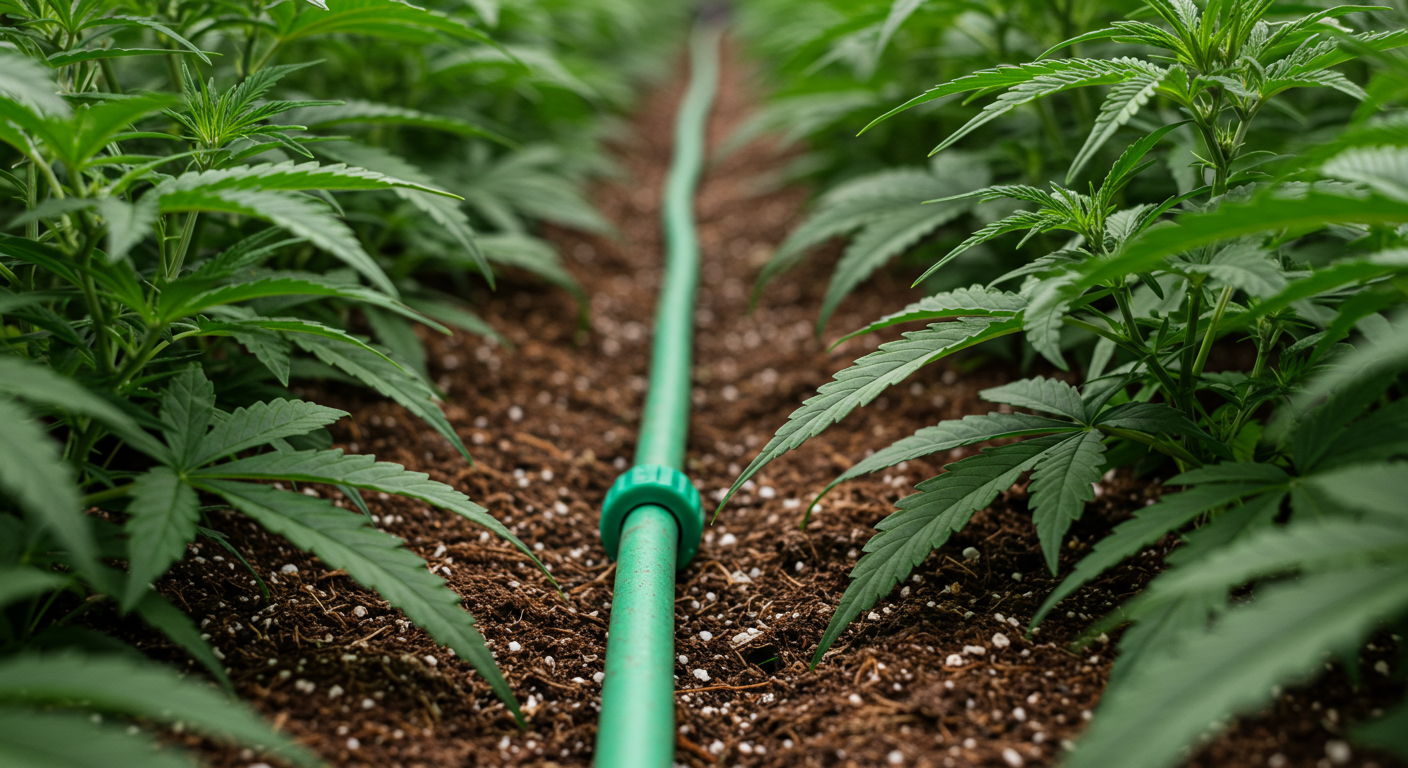
Pressurized drip fertigation line automated for precision morning shot delivery in commercial cultivation.
The Commercial Irrigation Timing Protocol: Shot Scheduling, P1/P2/P3 Phases, and Sensor Integration
To implement an elite irrigation timing protocol, commercial facilities utilize a standardized four-phase diurnal schedule synchronized with real-time substrate TDR sensors. The following protocol provides a repeatable framework for precision watering:
Step 1: The Lights-On Transpiration Lag (0 to 90 Minutes Post Lights-On)
When indoor lights switch on, do not immediately pulse irrigation valves. The canopy requires 60 to 90 minutes to transition from nocturnal dark respiration to active photosynthesis. Leaf temperature must rise to room setpoint, and stomatal conductance must ramp upward. Inserting moisture into a resting root zone creates thermal chilling and brief oxygen displacement before transpiration can pull liquid upward.
Step 2: The P1 Saturation Ramp (90 Minutes to 4 Hours Post Lights-On)
Initiate the first irrigation shot at 90 minutes. In high-frequency soilless systems (rockwool or coco), deliver 3 to 6 micro-shots spaced 20 to 30 minutes apart. In hand-watered peat or living soil containers, deliver your complete calculated daily volume across two or three slow, circular passes. The objective is to achieve maximum container capacity and targeted leaching runoff (10% to 15% in salt programs) by hour 3 or 4 of the photoperiod, refreshing the rhizosphere with oxygenated, nutrient-balanced solution during peak metabolic readiness.
Step 3: The P2 Transpiration Replenishment (Midday Maintenance)
Throughout the middle 4 to 6 hours of the photoperiod, monitor real-time TDR sensor telemetry. If substrate VWC declines by more than 3% to 5% from container capacity during peak LED radiation, trigger small maintenance shots (1% to 2% substrate volume) to maintain optimal volumetric hydration and prevent root-zone electrical conductivity from concentrating excessively. In soil systems, P2 maintenance shots are omitted; the soil buffer slowly releases capillary moisture.
Step 4: The P3 Pre-Dark Cutoff and Nocturnal Dry-Back
Enforce a strict, non-negotiable irrigation cutoff 2 to 3 hours before lights-off indoors (or 3 to 4 hours before dusk outdoors). Ceasing irrigation during this final window allows the plant to transpire residual free surface water from the container. Substrate VWC drops by 2% to 4% while lights are still running, pulling fresh air into the macropores and ensuring the root zone enters the dark cycle in an aerobic, well-drained state.
| Diurnal Phase | Timing Relative to Light Cycle | Agronomic Objective | Typical Shot Size / Volume | Target Runoff / Leachate Status |
|---|---|---|---|---|
| Pre-Dawn Awakening | 0 to 60 min after lights-on | Allow canopy warm-up; establish stomatal turgor. | Zero water delivered | None (substrate at overnight dry-back floor) |
| P1 Saturation Ramp | 1.5 to 4 hours after lights-on | Bring substrate to container capacity; flush residual salts. | 3 to 6 micro-shots (or full daily soil pass) | First runoff achieved at hour 3; 10% – 15% target |
| P2 Transpiration Match | 4 to 8 hours after lights-on | Maintain hydration; match hourly transpiration loss. | 1 to 3 maintenance pulses (soilless only) | Minimal maintenance runoff (0% – 5%) |
| P3 Nocturnal Dry-Back | 2 to 3 hours prior to lights-off | Irrigation cutoff; restore root-zone air-filled porosity. | Zero water delivered | Active dry-back; zero drainage into dark period |
| Dark Period Resting | Complete 12-hr / 6-hr dark cycle | Root respiration; cellular carbohydrate storage. | Zero water delivered | Steady 10% – 15% nocturnal dry-back achieved |
The diurnal phase schedule detailed above represents the gold standard in commercial crop steering. By aligning shot timing with plant transpiration kinetics, cultivators maximize water-use efficiency while maintaining precise control over root-zone electrical conductivity. Implementing this structured schedule bridges the gap between basic container watering and automated agronomic control.
Crop Steering Mastery: Manipulating Vegetative vs Generative Timing
Commercial cultivators use irrigation timing as a powerful hormonal steering lever. To steer plants generatively (encouraging tight internodal spacing and early flower bud formation), start the first P1 shot later (2 to 2.5 hours after lights-on), achieve a large overnight dry-back (15% to 20% VWC drop), and cut off irrigation early (3 to 4 hours before lights-off). To steer plants vegetatively (encouraging rapid vegetative shoot expansion and canopy size), initiate P1 shots earlier (1 hour after lights-on), maintain smaller overnight dry-backs (8% to 12% VWC drop), and extend P2 shots closer to lights-off. Timing is not just hydration: it is genetic signaling.
Mastering the nuances of diurnal irrigation requires understanding not only when to apply water, but also recognizing the immediate physiological consequences when irrigation timing deviates from the natural circadian cycle. Grower questions frequently highlight the common dilemmas faced during everyday cultivation management.
Is it bad to water cannabis right before the lights turn off if the pots feel dry?
Question sent by: Mateo Alvarez, via email.
“I work long hours and get home 30 minutes before my indoor grow lights turn off. By then, my 3-gallon soil pots feel light and dry. Should I give them a full soak right before lights-out, or should I wait until the next morning? My plants look thirsty and I’m afraid they will die overnight.”
Giving a full soak 30 minutes before lights-out is one of the most dangerous habits in indoor growing. If you fully saturate containers right before the dark period, that massive volume of cold water will sit stagnant in the root zone for the entire 12-hour dark cycle with zero transpirational uptake.
During the dark period, stomata close, canopy transpiration drops to near-zero, and root cells consume dissolved oxygen strictly for nocturnal cellular maintenance. A fully waterlogged container at night experiences acute root hypoxia within two hours. Furthermore, as grow room lights turn off, ambient room temperatures naturally drop by 3 °C to 6 °C. As air cools, its water-holding capacity collapses, driving relative humidity toward 85% to 95%. Evaporation from the saturated substrate creates cold micro-condensation directly inside developing flower clusters, creating the perfect environmental trigger for devastating Botrytis cinerea (bud rot) outbreaks.
If your pots are genuinely bone-dry at lights-off and leaves are starting to wilt, administer a minimal “life-support sip”: deliver only 10% to 15% of your normal volume (just enough to prevent cellular desiccation without saturating the pot or causing runoff). Then, set an alarm to give the container its full, proper soak 1 to 2 hours after lights switch on the following morning.
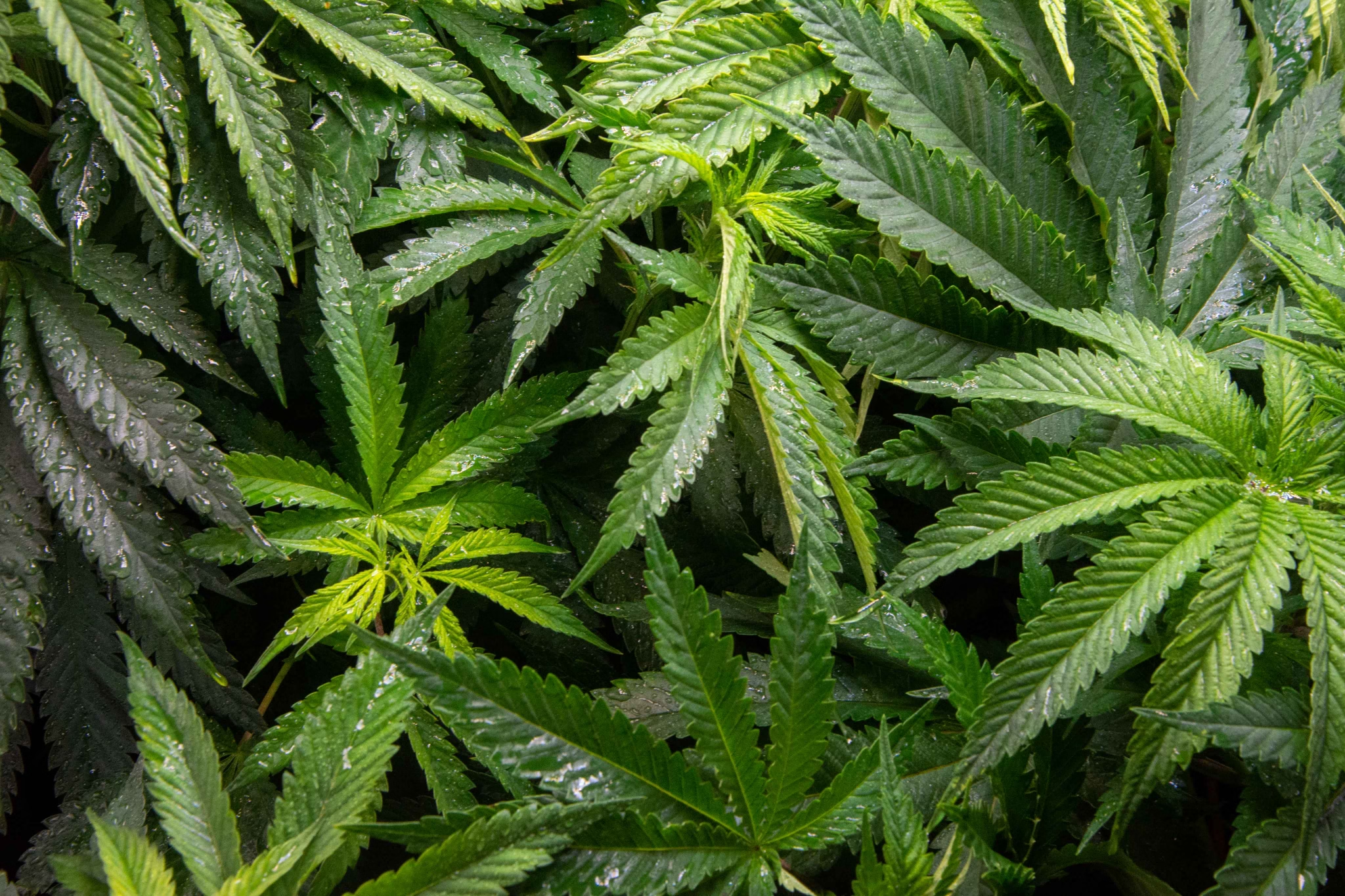
Vigorous canopy demonstrating optimal cellular turgor following morning irrigation pulses.
Solution Chemistry and Thermal Dynamics: Water Temperature, EC Drifts, and Dissolved Oxygen
Irrigation timing is inextricably linked to solution chemistry and thermal physics. Delivering water at different times of day alters the thermodynamic and chemical environment of the rhizosphere:
- Root-Zone Thermal Shock: Water delivered during early morning must be conditioned to an optimal temperature between 19 °C and 22 °C (66 °F to 72 °F). If cold municipal tap water (10 °C to 14 °C) is applied to warm root balls, root cell membranes experience sudden cold shock, constricting aquaporins and halting water transport. Conversely, in outdoor and greenhouse cultivation, irrigation lines exposed to direct summer sun can heat standing water inside black poly tubing up to 40 °C to 50 °C (104 °F to 122 °F). Irrigating at midday with un-purged lines will scald fine root hairs, instantly cooking root epidermal tissue. Always purge stagnant irrigation manifolds until line water runs at 20 °C.
- Dissolved Oxygen Retention: Dissolved oxygen (DO) solubility is inversely proportional to water temperature. Cold water holds more oxygen, but if water is excessively chilled, root metabolism stalls. Conditioning irrigation water to 20 °C while maintaining active aeration (dissolved oxygen levels above 8.0 to 10.0 mg/L via micro-bubble aeration or ozone/oxygenation injection) ensures that morning irrigation pulses deliver high oxygen charges directly into the root core at the exact moment photosynthetic demand commences.
- Diurnal Electrical Conductivity (EC) Curves: In containerized substrates, pore-water electrical conductivity follows a dynamic daily curve. During the night, unabsorbed minerals remain in solution while capillary moisture is conserved, causing EC to stabilize. As the plant transpires heavily through midday, roots absorb water molecules faster than they absorb mineral ions, causing pore-water EC to concentrate. Delivering clean morning P1 pulses flushes out concentrated overnight ions, resetting root-zone EC to balanced baseline levels before peak daytime transpiration stresses root cell water potentials.
| Cultivation System | Optimal Watering Window | Primary Environmental Driver | Primary Biological Failure Risk if Timing Missed |
|---|---|---|---|
| Indoor Organic Living Soil | 1 to 2 hours after lights-on | Stable indoor VPD; steady microbial breakdown | Night saturation suffocates aerobic mycorrhizae and bacteria. |
| Indoor Peat / Perlite Pots | 1.5 hours after lights-on | High LED PPFD; rapid canopy transpiration | Late watering causes cold night root hypoxia and bud rot. |
| Commercial Drip Coco Coir | P1 at 1.5 hr; P2 midday; P3 cutoff 2.5 hr pre-dark | Crop steering steering targets; dry-back curves | Late P2 pulses collapse overnight dry-back; weak generative cues. |
| Outdoor In-Ground Beds | Dawn / Early Morning (5:30 AM – 7:30 AM) | Intense solar radiation; midday evaporative peak | Midday watering evaporates; evening watering fosters mildew. |
| Outdoor Potted Containers | Dawn; secondary afternoon sip only in heat waves | Perimeter fabric heating; extreme VPD swings | Late morning watering boils roots; mid-day drought wilts canopy. |
Failure Modes of Incorrect Timing: Nighttime Saturation, Botrytis Risks, and Midday Thermal Shock
Deviating from physiological timing rules produces distinct pathological and developmental failure modes. Cultivators must recognize the severe consequences of untimely watering:
- Nocturnal Hypoxia and Pythium Infection: Waterlogging a container at night deprives root hairs of oxygen during a period when root cells are performing critical cellular maintenance. Anaerobic conditions stimulate the germination of dormant oospores of Pythium and Fusarium. Pythium zoospores possess flagella that allow them to swim through free water films, seeking out hypoxic, damaged root tips. Crops watered at night exhibit high rates of damping-off, brown root rot, and sudden vascular collapse.
- Night-Time Relative Humidity Spikes and Bud Rot: In flowering cannabis rooms, controlling relative humidity during the dark cycle is the single most critical factor in preventing Botrytis cinerea. When moist containers sit in a dark room with closed stomata, continuous evaporation from the damp soil surface floods the air with water vapor. If room dehumidifiers cannot keep pace, relative humidity reaches 100% saturation (dew point), depositing microscopic liquid water droplets directly onto cold flower calyxes. Botrytis spores germinate within 4 to 8 hours in standing surface moisture, devastating harvest yield.
- Midday Thermal Scalding Outdoors: Applying water to outdoor containers in the scorching heat of 2:00 PM creates severe physical shock. Surface water droplets on leaves act as optical convex lenses, focusing solar rays and causing localized solar leaf scorching. More critically, applying water to sun-baked black plastic containers drives hot water directly into the root core, cooking delicate root hairs and causing instantaneous vascular shutdown.
For outdoor cannabis in hot summer climates, is morning or evening watering better?
Question sent by: Sarah Jenkins, via email.
“We grow full-term outdoor cannabis in Southern Oregon where summer temperatures regularly hit 38 °C (100 °F). Some local growers swear by watering at sundown so the plants can drink all night, while others say sunrise is essential. Which timing is scientifically superior for hot outdoor climates?”
From the strict standpoint of plant pathology and hydraulic architecture, early morning (sunrise / dawn) is definitively superior to evening watering, especially in hot arid or Mediterranean climates.
When you water at dawn (5:30 AM to 7:00 AM), the substrate reaches full container capacity just as the sun emerges. As ambient temperatures rise and solar radiation intensifies toward midday, the plant has a fully charged water reservoir in the root zone. This continuous water column allows the plant to sustain maximum transpirational cooling (latent heat of vaporization), keeping leaf surface temperatures 2 °C to 5 °C cooler than ambient air and preventing heat-induced stomatal closure and wilting.
By contrast, watering at sundown leaves the soil completely saturated and warm throughout the night. In outdoor soils, warm, oxygen-depleted nocturnal moisture fosters pathogenic fungal spore reproduction. Furthermore, as night temperatures drop, humidity spikes around the lower canopy, promoting powdery mildew (Golovinomyces spadiceus). The only exception during extreme multi-day heatwaves (above 40 °C / 104 °F) is providing a brief, light supplementary hydration pass in the late afternoon (around 5:00 PM) if pots are bone-dry, but your primary deep soaking volume should always occur at dawn.
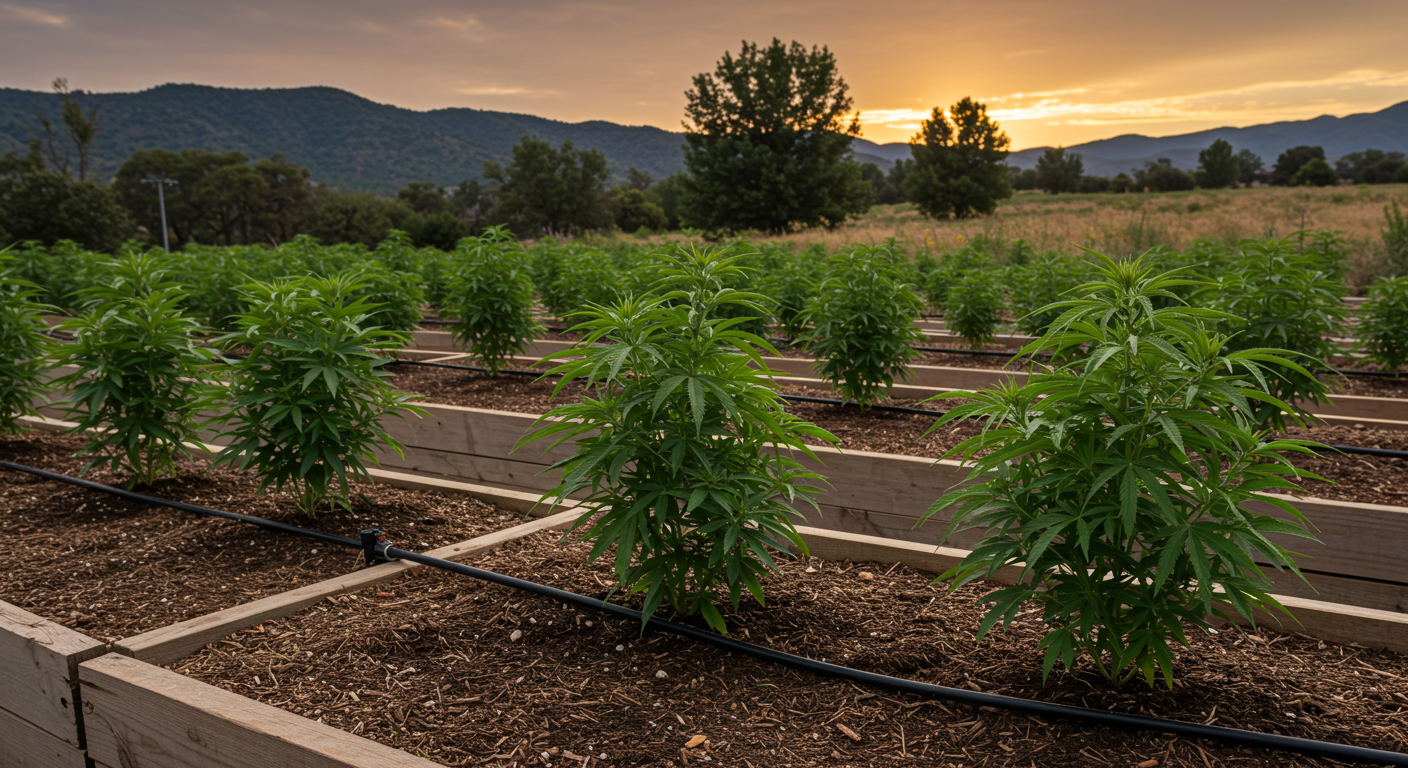
Outdoor cannabis drip irrigation scheduled in the early morning to precede peak solar radiation and evaporative demand.
Troubleshooting and Remediation: Realigning the Irrigation Schedule to the Diurnal Transpiration Curve
If a facility or craft garden has slipped into an irregular or harmful watering rhythm, operators must systematically realign the schedule without shocking the root zone. Follow this four-step corrective sequence:
Step 1: Audit Current Substrate Dry-Back Kinetics
Place representative plants on digital scales or install calibrated TDR probes to record real-time VWC every 15 minutes over a 48-hour cycle. Determine your exact overnight dry-back percentage (VWC drop from lights-off to lights-on). If your substrate is dropping less than 6% VWC overnight, your final watering shot is occurring too late in the day. If the substrate drops more than 20% VWC and plants wilt before morning, your total daily volume is insufficient or your P2 maintenance window requires adjustment.
Step 2: Re-Anchor the Primary Watering Event to Lights-On + 90 Minutes
Shift your primary irrigation event systematically to the optimal window: exactly 60 to 90 minutes after lights turn on indoors, or within 60 minutes of sunrise outdoors. If the plants are accustomed to evening watering, make this transition in a single clean step: deliver only a small 10% volume on the final evening, and deliver the full primary saturation pass the following morning. The plants will adjust their stomatal aperture rhythms within 24 to 48 hours.
Step 3: Establish the Strict Pre-Dark Irrigation Curfew
Program digital irrigation timers or enforce staff SOPs to ensure that all watering ceases minimum 2.5 to 3 hours prior to lights-off. For hand-watered operations, this means the final watering round must be completed by mid-afternoon. Verify that water drainage has completely stopped and drainage trays/saucers are fully evacuated before the photoperiod terminates.
Step 4: Verify Root Oxygenation and Canopy Recovery
Within 3 to 5 days of realigning your schedule to morning delivery, observe canopy leaf posture. Within 60 minutes of morning watering, leaf petioles should display crisp 45-degree upward turgor (“praying leaves”) without leathery clawing. Root tips inspected at drainage holes will transition from dull cream or brown back to vibrant, fuzzy white aerobic root hairs, confirming full metabolic recovery.
Step 5: Adjusting Diurnal Timing for Photoperiod Shifts (Vegetative vs. Flowering)
When transitioning cannabis from an 18/6 vegetative photoperiod to a 12/12 flowering photoperiod, the total daily transpiration window contracts by 33%. In an 18-hour vegetative day, cultivators have a wide 14-hour active irrigation window between initial P1 ramping and the final P3 cutoff. In a 12-hour flowering day, that window compresses to only 7 to 8 hours (starting at hour 1.5 and ending at hour 9.5). Failure to compress the irrigation window when switching to 12/12 flowering is a primary cause of late-afternoon saturation: cultivators inadvertently apply water into the late photoperiod, leaving containers sodden as the 12-hour dark cycle begins. Always recalibrate shot intervals and reduce total shot numbers when flipping to flowering, ensuring that the target 12% to 18% overnight dry-back is preserved across the shorter photoperiod.
Diurnal Cannabis Watering Standard Operating Checklist
Verify these critical agronomic checkpoints to ensure your watering schedule aligns flawlessly with plant diurnal biology:
- Primary irrigation is delivered 1 to 2 hours after lights-on indoors, or at dawn outdoors; dark watering is strictly prohibited.
- Irrigation water temperature is conditioned between 19 °C and 22 °C (66 °F to 72 °F); cold and scalding thermal shock is prevented.
- Outdoor irrigation manifolds exposed to direct sunlight are purged until water temperature stabilizes at safe levels.
- Irrigation cutoff is enforced minimum 2 to 3 hours prior to lights-off to establish an aerobic root zone before dark dormancy.
- Substrate overnight dry-back achieves target thresholds: 8% to 12% VWC for vegetative steering, 15% to 20% VWC for generative steering.
- Drainage saucers and catchment flood trays are completely evacuated before the dark period commences.
- Night-time room relative humidity is tightly managed to prevent condensation and dew-point spikes during cooling.
- P1 saturation shots are delivered in multiple divided pulses to allow air displacement without inducing transient hypoxia.
- In soilless hydroponics, P2 maintenance shots are terminated if ambient VPD declines below 0.8 kPa.
- Canopy turgor and root tip morphology are audited weekly to verify synchronization with plant circadian rhythms.
Scientific References
- Bugbee, B. (2004). Nutrient management in recirculating hydroponic culture. Acta Horticulturae, 648, 99-112.
- Canny, M. J. (1995). A new theory for the ascent of sap: Cohesion supported by tissue pressure. Annals of Botany, 75(4), 343-357.
- Marschner, H. (2012). Marschner’s Mineral Nutrition of Higher Plants (3rd ed.). Academic Press, London.
- Steudle, E. (2000). Water uptake by plant roots: an integration of views. Plant and Soil, 226(1), 45-56.
- Taiz, L., Zeiger, E., Møller, I. M., & Murphy, A. (2015). Plant Physiology and Development (6th ed.). Sinauer Associates, Sunderland, MA.
- Zheng, Y. (2021). Handbook of Cannabis Production in Controlled Environments. CRC Press, Boca Raton, FL.
Share this article
A quick overview of the topics covered in this article.