
White Fire OG
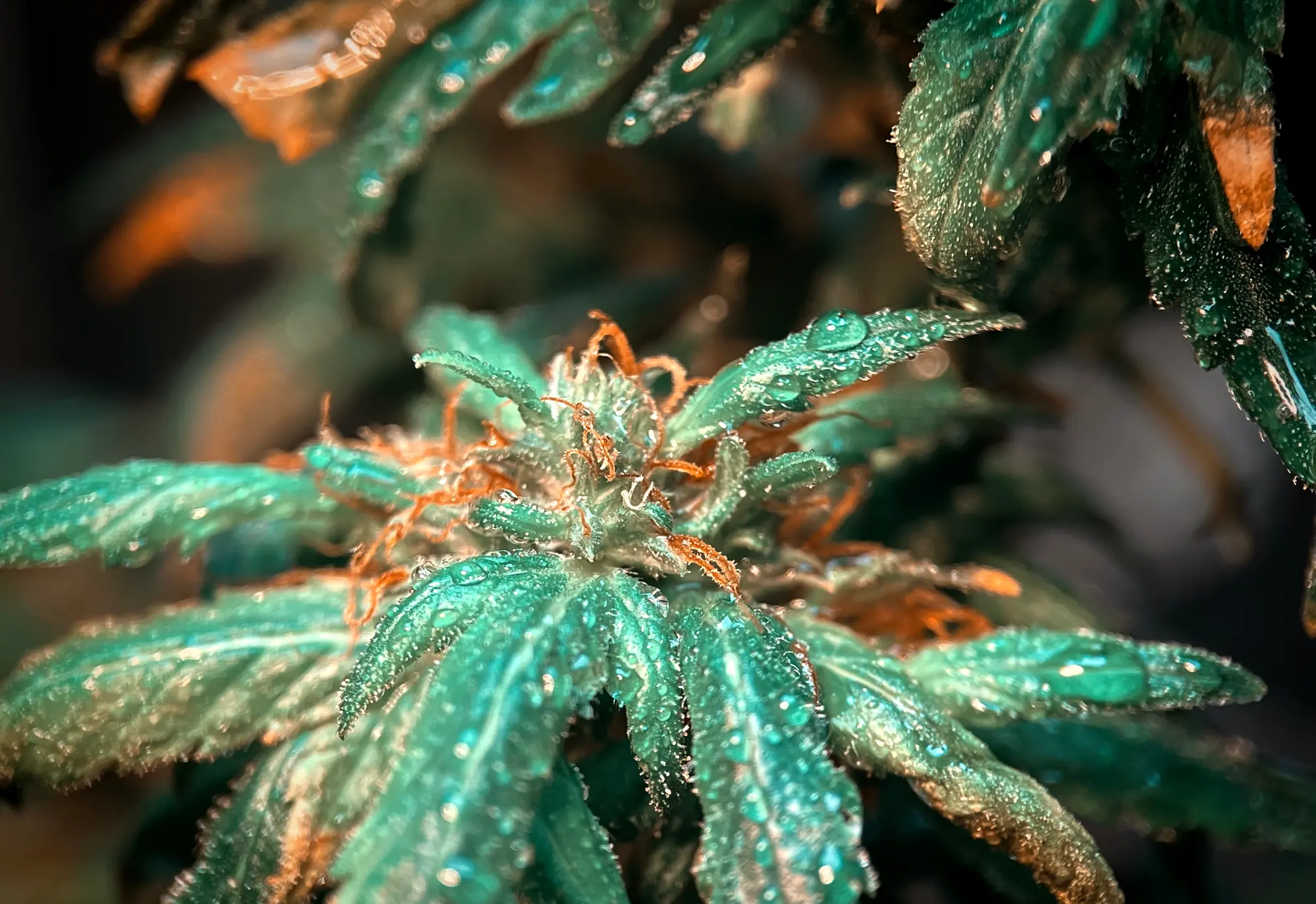
White Fire OG, often called WiFi OG, combines two traits that do not always arrive together: aggressive OG-style growth and an unusually pale, resin-loaded flower surface. The plant can stretch quickly after the flip, build long branches that need direction and then finish with dense flowers that appear dusted in white. Its visual reputation is justified, but the cultivar is not a simple high-yield plant that rewards every form of intensity.
The central cultivation question is how to support a hungry, fast-moving canopy without turning it into a dark, overfed mass of weak stems and shaded lower buds. White Fire OG can accept more nutrition than many sensitive hybrids, particularly during active growth, yet it still punishes imbalance. A plant supplied with strong light and healthy roots may use substantial nitrogen, calcium and magnesium. The same feed in a slow or saturated root zone produces dark leaves, tip burn and stalled flower development.
Its finished quality depends on resin preservation and phenotype selection. Some expressions form dense barrel-shaped buds. Others produce pointed conical flowers with more visible spacing. Aroma may range from sour citrus and pine to deeper diesel, earth and pepper. A successful run is not the one with the whitest photograph. It is the one where the resin stays intact, the flowers mature evenly and the fuel-citrus profile survives the dry.
Strain Features
| Feature | Details |
|---|---|
| Strain Type | Balanced to slightly sativa-leaning hybrid, phenotype-dependent |
| Lineage | The White x Fire OG |
| THC | Commonly reported in the low to high-20% range; laboratory results vary widely |
| CBD | Usually very low |
| CBG | Small amounts may appear in some tested samples |
| Dominant Terpenes | Limonene, beta-caryophyllene, myrcene and pinene frequently recur in tested examples |
| Flavor and Aroma | Sour citrus, diesel, pine, earth, pepper, herbs and faint sweetness |
| Effect Character | Fast cerebral lift and focus followed by a firm but not always sedating body calm |
| Flowering Time | Commonly around 9 to 10 weeks, with some phenotypes finishing near 8 or extending beyond 10 |
| Height | Medium to tall |
| Flowering Stretch | Strong during the first two to three weeks |
| Plant Architecture | Vigorous OG-style branching with moderate internodal spacing and uneven vertical leaders if untrained |
| Yield | Moderate to high under an even canopy; quality varies sharply with light distribution |
| Bud Structure | Dense barrel or pointed conical flowers, heavily coated in trichomes |
| Resin Production | Very high |
| Feeding Behavior | Above-average appetite in healthy plants; often shows calcium and magnesium demand under strong light |
| Training Compatibility | Excellent for topping, LST, SCROG and selective supercropping before stems harden |
| Main Cultivation Risk | Uneven stretch, branch weakness, late-flower humidity around dense resinous buds and overfeeding a compromised root zone |
| Grow Difficulty | Moderate to difficult |
| Best Time of Use | Late morning through early evening for experienced users; dose-dependent |
White Fire OG has circulated in multiple selected forms. The cultivar name therefore describes a family of recognizable traits rather than one perfectly uniform plant. The most dependable fingerprint is strong early stretch, high resin coverage and a sour fuel profile with enough citrus or pine to keep it from becoming flat.
Genetic Lineage
The White contributes the cultivar's extreme frost and much of its pale visual finish. It is known less for a loud flavor than for dense trichome production and a flower surface that can appear almost powdered. In White Fire OG, that resin trait becomes more aromatically expressive because it is paired with Fire OG.
Fire OG contributes the fuel, pine, citrus and heavier OG structure. It also helps explain why the plant can demand careful branch support and why some phenotypes feel more physically intense than their bright onset suggests.
Resin Inheritance
The most obvious inherited trait is trichome density. White Fire OG can cover calyxes and nearby sugar leaves early enough that the plant looks nearly finished before swelling is complete. This visual signal can tempt growers to harvest too soon.
Resin appearance should never replace maturity indicators. The flowers still need to complete calyx expansion, aroma development and internal density. A white surface at week seven does not necessarily mean a nine-week phenotype is ready.
OG Structure
Many expressions grow with vertical leaders that outpace the rest of the canopy. Branches may be flexible during transition and less supportive later. This is the classic problem of a plant that can build more flower than its natural frame holds comfortably.
The grower should expect to direct height rather than merely reduce it. Topping, spreading and early trellising turn OG-style extension into productive canopy width. Repeated emergency bending late in flower is a poor substitute.
Phenotype Range
A barrel-bud phenotype tends to make dense rounded clusters with heavy white frost and a deeper earthy-fuel smell. It may stretch moderately and finish with significant body weight in the effect.
A pointed phenotype often forms conical flowers, stronger citrus or pine and a more energetic opening. It may stretch harder and require more training.
A fuel-dominant phenotype can smell aggressively sour and chemical. The flower may be extremely potent but less nuanced. A brighter phenotype may carry lemon peel and fresh pine over the diesel base.
The best selection depends on the grower's goal. Resin alone is not enough. Evaluate branch strength, flower density, aroma and finishing speed together.
Effect Breakdown
White Fire OG is often described as energizing, but its effect is a contrast between a quick mental ignition and an increasingly grounded body.
Immediate Cerebral Impact
The onset can be rapid. Users often report a sudden increase in attention, sensory definition and mood. Music may sound sharper, conversation becomes more engaging and a task can feel easier to begin.
This is not always calm focus. The strain can feel mentally forceful. At a small dose, that force may support creativity or productivity. At a large dose, it can create racing thoughts, heightened self-awareness or anxiety.
Focus Versus Fixation
White Fire OG can encourage sustained attention, but the attention may attach to the wrong thing. A user can become absorbed in a creative project or equally absorbed in an irrelevant detail.
The difference often depends on preparation. A clear task and comfortable environment can make the effect useful. A chaotic setting can make it feel scattered.
Body Calm
As the first phase settles, physical relaxation becomes more noticeable. The shoulders loosen and tension reduces without immediate immobility in many users. This can make the cultivar suitable for an afternoon where activity is still possible.
More Fire OG-leaning phenotypes may become heavier. Some users report sleepiness even when general descriptions call the strain energizing. This disagreement is plausible because phenotype, dose and tolerance all influence the experience.
Late Phase
The finish may feel calm, hungry or mildly sedating. At a moderate dose, users often remain socially comfortable. At a heavy dose, coordination and motivation can drop sharply.
Common unwanted effects include dry mouth, dry eyes, anxiety, paranoia and occasional headache. The cultivar is not a cautious first choice for someone who reacts poorly to high-THC flower.
Harvest Timing and Effect Balance
A slightly earlier mature harvest may preserve more citrus and mental brightness. Fuller maturity can strengthen the body phase and deepen fuel flavor. Immature harvest should not be confused with a deliberate energetic window. Clear trichomes and incomplete calyxes often produce a shorter, rougher experience.
Flavor & Aroma Profile
White Fire OG is a study in contrast. The flower looks pale and clean, but the aroma is often dark, sour and aggressive.
Jar Aroma
The first impression may be diesel, lemon peel and dry pine. Earth and pepper form the base. Some phenotypes show a faint sweetness resembling citrus candy or fresh dough, but the profile is not primarily dessert-like.
A well-cured jar should smell expansive rather than muddy. Sour fuel should remain distinct from damp earth. Pine should add sharpness without turning the flower into generic wood.
Broken Flower
Grinding releases stronger gas and spice. The interior often carries more citrus than the intact bud suggests. Resin can make the material sticky and difficult to break by hand.
The aroma may remain on fingers and tools. Rough handling can remove visible trichome heads and reduce the quality of the finished flower.
Inhale
The inhale often begins with sour lemon, pine and mild sweetness. Vapor may reveal more citrus than smoke. Combustion emphasizes fuel and pepper.
Exhale
Earth, diesel and spice become stronger on the exhale. A high-quality phenotype leaves a clean sour-pine aftertaste. Poorly cured flower may finish bitter or mineral-like.
Phenotype Differences
The White-leaning expression may be less loud but extremely frosty. It can taste earthy, herbal and mildly citrus.
The Fire OG-leaning expression is usually louder, with stronger fuel and pine. It may also feel heavier and require more support in the grow room.
A balanced selection carries enough citrus to brighten the fuel and enough earth to give the flavor length.
Cure Development
Freshly dried White Fire OG can smell impressive but smoke sharply. Two to four weeks of cure often smooths the pepper and allows the citrus to emerge. A longer cure can deepen the fuel and earth, though excessive storage heat reduces freshness.
Dominant Terpenes
| Terpene | Aroma Contribution | Practical Interpretation |
|---|---|---|
| Limonene | Lemon peel, sour citrus and brightness | Often supports the cultivar's uplifting sensory impression, but does not guarantee a specific mood effect |
| Beta-Caryophyllene | Black pepper, dry spice and warmth | Contributes to the OG-style finish and has documented CB2 receptor activity |
| Myrcene | Earth, musk and herbal depth | May help shape the later body calm, but sedation is not determined by myrcene alone |
| Alpha/Beta-Pinene | Pine needles, resin and fresh wood | Sharpens the diesel profile and can vary strongly between phenotypes |
| Humulene | Dry wood, herbs and bitterness | May reinforce the deeper earthy side in some samples |
White Fire OG samples do not always share the same dominant terpene. Some are limonene-forward. Others show myrcene or caryophyllene near the top. The grower should use lab information where available but avoid assuming that one terpene list defines every plant.
Terpene claims should remain conservative. Aroma is the most reliable interpretation. Reported effects arise from the entire chemical profile, dose, maturity and the user's physiology.
Indoor vs. Outdoor Growing
| Decision Point | Indoor | Outdoor |
|---|---|---|
| Best Use of Growth | Convert stretch into a flat screen | Build a large, wide framework with repeated early shaping |
| Main Limitation | Tops can escape the light zone and lower sites become shaded | Autumn moisture and wind threaten dense resinous flowers |
| Feeding Control | Easy to observe rapid demand and correct deficiencies | Large root systems can support appetite but make overcorrection slower |
| Branch Support | Trellis is close to essential | Cage, stakes and layered support are strongly recommended |
| Flower Quality | Precise climate can maximize resin and preserve citrus | Sun can deepen pine, fuel and spice when the finish remains dry |
| Plant Size | Medium to large depending on veg | Can become broad and substantial with early planting |
| Root-Zone Management | Slightly acidic, aerated media performs well | Rich, well-drained soil with consistent irrigation |
| Mold Risk | Manageable with controlled late RH | Can rise quickly during wet fall conditions |
| Best Grower | Intermediate cultivator comfortable reading plant demand | Experienced outdoor grower with warm, dry autumn weather |
Indoor Strengths
White Fire OG benefits from controlled light and humidity. The grower can maintain a level canopy, protect the dense buds and slow the dry after harvest. Indoor cultivation also makes phenotype comparison easier.
The limitation is that the plant can outgrow its intended vertical space before the grower recognizes the problem. A screen should be installed early. The flip should occur before the canopy looks complete.
Outdoor Strengths
Outdoors, the cultivar can use its vigor to create a large branch system. Full sun and generous roots support strong resin and substantial yield. Topping several times early can create a broad bush rather than one tall OG spear.
The limitation is late-season moisture. Resin-heavy dense buds can retain rain. A greenhouse or temporary cover helps only when ventilation remains active.
Indoor Versus Outdoor Flavor
Indoor flower often preserves a clearer citrus top note. Outdoor flower may carry deeper pine, fuel and earth. Neither is inherently superior. The final dry and storage conditions can erase the environmental advantage of either method.
Strain-Specific Grow Guidance
Root the Plant Thoroughly Before Strong Training
White Fire OG can recover well from topping, but only when roots are established. Early stress on a weak plant can produce uneven branches that remain uneven through flower.
Transplant before the plant becomes rootbound. Allow visible active growth, then top above a healthy node.
Build a Wide Frame
One topping followed by LST is enough for many indoor spaces. Larger rooms may benefit from a second topping. The goal is six to twelve strong leaders, not an excessive number of weak shoots.
Spread leaders outward and maintain similar height. Remove branches that grow directly through the center and compete for the same space.
Flip Early
White Fire OG may stretch strongly for roughly three weeks. A screen that is completely filled before the flip is likely to become overcrowded.
Leave open squares. Continue tucking during transition. Stop once branches become stiff and flower formation is established.
Supercrop Only While Stems Remain Pliable
Early supercropping can level a runaway top. Late supercropping risks splitting an OG-style branch that will later hold dense flower.
Use slow pressure and support the bend. Do not repeatedly crush the same branch.
Feeding Appetite
Healthy White Fire OG plants often accept above-average nutrition. That does not justify aggressive feeding by default.
Do not let the stretch make the decisions
During veg, the plant may use substantial nitrogen. The correct level produces active growth and healthy green leaves. Excess creates dark clawed foliage, weak soft stems and more difficult stretch.
Calcium and magnesium demand may become visible under intense LED lighting or in coco-based media. Symptoms can resemble interveinal chlorosis, rust spotting or weak new growth. Confirm root-zone pH and moisture before adding more supplement.
During bloom, maintain steady feed through stretch and early flower. Reduce nitrogen as bud formation becomes dominant. Increase bloom nutrition gradually, not as a sudden calendar-based spike.
Root-Zone pH and Oxygen
The cultivar is often reported to prefer a slightly acidic root zone. The exact target depends on medium. More important than chasing one number is keeping the range stable enough for calcium, magnesium and micronutrient availability.
Use an aerated medium. White Fire OG can drink heavily once the canopy is large, but saturated roots reduce nutrient uptake and make the plant appear deficient.
Irrigation Strategy
Early in veg, allow meaningful dryback. During stretch, demand may rise quickly. In late flower, do not keep the medium wet simply because buds are large.
Observe container weight, leaf posture and runoff trends where relevant. A fixed schedule is less useful than a stable rhythm matched to actual demand.
Light Intensity
The cultivar can use strong light when nutrition, CO2 availability, temperature and irrigation are balanced. Extreme light on an uneven canopy creates damaged tops and underdeveloped lower branches.
Flatten first, intensify second. Watch the highest calyxes for bleaching and persistent fresh foxtails. Those can signal excessive stress rather than productive growth.
CO2 Considerations
CO2 enrichment is not required. It becomes relevant only in a sealed environment with high light and controlled climate. Adding CO2 to a room with poor canopy distribution or root stress increases complexity without correcting the limiting factor.
Defoliation
White Fire OG benefits from selective defoliation because large leaves can block lower sites. Remove fans that completely cover productive branches or create stagnant interior zones.
Avoid stripping heavily during late flower. Resin production does not increase merely because the plant was stressed.
Lower Growth Removal
After stretch, remove sites below the productive light zone. The cultivar can create many small resinous buds that look attractive but add labor and reduce premium percentage.
Lollipopping should follow the actual canopy depth. Do not remove a healthy branch that reaches strong light simply because it sits below an arbitrary line.
Branch Support
Install a first trellis for training and a second for flower support if needed. Barrel-bud phenotypes may load weight closer to branch tips. Pointed phenotypes may distribute weight along longer spears.
Outdoors, use multiple stakes or a cage. One tie to the central stem does not support lateral torque in wind.
Humidity and Disease Pressure
The cultivar is often described as reasonably resistant to pests and disease, but dense resinous buds still create botrytis risk. Keep late flower air moving and avoid flowers touching.
Outdoors, inspect after rain. Remove damaged tissue immediately. Resin and density can hide early decay.
Flower Development
Trichomes appear early and can distract from structural maturity. During mid-flower, focus on calyx stacking and branch load. The final weeks often improve density, aroma and effect balance.
Do not harvest because the plant looks white. Harvest because the flowers are mature.
Harvest Window
A common window is around nine weeks, but phenotype-specific observation is necessary. Look for mostly cloudy trichomes on calyxes, mature aroma and reduced fresh pistil production.
For brighter citrus and focus, keep amber modest. For a deeper body finish, allow more maturity without waiting for extensive amber or declining aroma.
Diagnosing Common Mid-Flower Problems
White Fire OG can become confusing around weeks four to six because several problems create similar visual symptoms. Interveinal yellowing may indicate magnesium demand, but it can also appear when the root zone is too wet or outside a usable pH range. Rust-colored spotting can suggest calcium limitation, yet damaged roots may prevent uptake even when calcium is already present. Diagnose the environment before increasing concentration.
Leaf curl deserves the same care. Downward clawing on dark foliage usually points toward excessive nitrogen or persistent root-zone saturation. Upward edge curl near the tallest tops is more consistent with light or heat stress. Treating both conditions with more feed makes the first worse and does nothing for the second.
When aroma stalls, examine the whole plant. A canopy that remains dark green and soft late in bloom may still be prioritizing vegetative metabolism. A plant with pale upper flowers and persistent foxtails may be receiving more light than its environment supports. White Fire OG has a high quality ceiling, but it needs balanced inputs rather than maximum settings in every category.
Running Multiple Phenotypes Together
Seed-grown White Fire OG can be difficult to keep level because one plant may stretch harder while another forms a shorter, denser frame. Do not wait until the tallest plant reaches the fixture. Raise shorter containers, bend the tallest leaders during transition and place phenotypes according to expected height.
Feeding can also diverge. A vigorous Fire OG-leaning plant may use more nitrogen and calcium than a slower White-leaning expression. One reservoir schedule may be convenient, but it should not force every plant to receive the maximum appetite of the hungriest individual. Where possible, group similar plants or adjust irrigation strength separately.
At harvest, keep each phenotype separate through drying and curing. The loudest wet flower is not always the best cured flower. Label branches and compare aroma, smoothness, resin handling and effect after several weeks. That final evaluation is the only reliable way to choose a keeper.
Weedth Bud Flavor Tips
Protect the Citrus From Canopy Heat
The highest tops are at the greatest risk because stretch brings them close to the light. Maintain distance and airflow. Sour lemon can disappear while fuel remains, leaving a less balanced flower.
Harvest in a Clean, Cool Window
Cut when room or outdoor temperature is lower. Move branches away from light immediately. Avoid piling resinous flowers on warm surfaces.
Handle the Frost Gently
White Fire OG's visible quality sits on the flower surface. Wear gloves, use clean scissors and hold branches rather than squeezing buds.
Do not overtrim. Small resin-coated sugar leaves may protect aroma and slow drying. Remove them later if the environment favors dry trimming.
Dry According to Density
Barrel-shaped phenotypes need more spacing and inspection. Pointed flowers may dry faster along the edges. Separate branches enough to prevent contact but do not fragment every flower.
Use gentle room circulation. Direct fan air can make the exterior brittle while the core remains wet.
Cure Until the Fuel Becomes Clean
Freshly dried flower may smell sour and strong but taste peppery. A controlled cure smooths the harsh edge and allows lemon, pine and mild sweetness to become clearer.
Several weeks are commonly beneficial. The exact time depends on moisture and density.
Long-Term Storage
Keep whole buds cool, dark and airtight. Repeated opening accelerates aroma loss. Divide the harvest into working and reserve containers.
Avoid pre-grinding. Whole inflorescences preserve volatile compounds better.
Indoor Flavor Strategy
Use stable late-flower temperature and avoid excessive nitrogen. Dark, leafy plants often retain a greener flavor. Let the plant finish naturally while maintaining root health.
Outdoor Flavor Strategy
Protect the final weeks from rain. Harvest after dew has evaporated. Sun-grown flower may express deeper fuel and pine, but poor drying can turn that depth into mustiness.
Weedth Bud Boost Tips
White Fire OG can yield well, but the yield depends on canopy efficiency more than plant height.
Indoor Canopy Plan
Top during active veg. Spread leaders under a screen. Flip with open space remaining. Continue tucking through early stretch.
After stretch, remove lower weak sites and level escaped tops. Maintain a shallow productive zone with support above it.
Feed according to growth. A healthy plant under strong light may need more nutrition than average. A stressed plant needs correction, not more concentration.
Outdoor Plan
Start early in a warm climate. Top several times before midsummer to create a broad frame. Give the plant generous spacing and a strong cage.
Use well-drained soil and consistent irrigation. Large outdoor OG branches can split after drought followed by heavy water or storm stress.
Protect the final flowers from prolonged rain. Do not wrap the plant in a cover that traps humidity.
Resin Versus Biomass
The cultivar is famous for frost, but extreme environmental stress is not a reliable resin strategy. High light, drought, UV and nutrient stress can reduce growth or damage aroma when used carelessly.
Healthy maturation produces better resin than a collection of unverified finishing tricks.
Highest-Value Improvements
- A level canopy before strong light
- Enough calcium and magnesium only after confirming root health
- Stable irrigation during stretch
- Support installed before late flower
- Complete lower-site removal after stretch
- A cool, slow dry with minimal handling
Common Yield Mistakes
- Vegging too long in a low room
- Treating dark leaves as proof that feeding is correct
- Ignoring a drifting root-zone pH
- Allowing the tallest tops to bleach
- Keeping resinous but permanently shaded lower buds
- Harvesting based on frost alone
Medical Uses & Benefits
White Fire OG is commonly reported as useful for stress, low mood, fatigue and mild to moderate physical discomfort. Strain-specific clinical evidence is limited, and these patterns should be presented as user experience.
Stress and Mood
The fast cerebral lift may temporarily improve mood and reduce a sense of emotional heaviness. Some users feel more social and engaged.
High doses can increase anxiety. The same mental intensity that feels motivating to one person may feel destabilizing to another.
Fatigue
A light amount may support alertness and activity. Users sometimes choose the cultivar during the day when they want relief without immediate sedation.
The later body phase and high potency can still reduce productivity. It is not a simple stimulant.
Pain and Tension
Physical relaxation may reduce awareness of muscle tension, headaches or mild pain. More OG-leaning phenotypes can feel heavier.
Persistent pain requires medical evaluation. Cannabis can interact with medications and affect judgment.
Appetite and Nausea
Reports conflict. Some users experience hunger. Others specifically note limited appetite stimulation. This variability should be acknowledged rather than forcing one claim.
Anxiety Caution
White Fire OG is usually THC-dominant with little CBD. Anxiety-sensitive users should start very low or choose a less mentally forceful cultivar.
Ideal User Profile
Ideal Consumer
- Experienced user who enjoys fast cerebral effects
- Wants fuel, citrus, pine and pepper flavor
- Prefers afternoon or early evening use
- Values focus and creativity with a later body calm
- Can dose carefully
Ideal Grower
- Comfortable with SCROG and stretch management
- Able to monitor root-zone conditions
- Prepared to support branches
- Interested in resin quality and phenotype selection
- Can maintain low late-flower humidity
Less Suitable
- First-time consumer sensitive to panic
- Grower seeking an untouched low-maintenance plant
- Very low-ceiling room without training
- Wet outdoor climate without protection
- Cultivator who feeds by schedule rather than plant response
Grower Notes and Feedback
The Plant Can Look Hungry and Overfed at the Same Time
White Fire OG may show calcium or magnesium symptoms while leaves are already dark from excess nitrogen. The solution is not automatically more feed. Check pH, moisture and root oxygen.
Stretch Is Front-Loaded
Most vertical movement occurs early in flower. Growers who manage the first three weeks usually find the remainder much easier.
Frost Arrives Before Finish
The cultivar can become visibly resinous while still structurally immature. Strong trichome coverage is a quality signal, not a harvest date.
Branches Need Help
OG-style laterals may bend under dense flowers. A trellis is not optional in many indoor runs.
Phenotypes Differ in Bud Shape
Some produce barrel-like buds. Others form pointed cones. The denser plant may yield heavier individual flowers but carry greater humidity risk.
Aroma Can Vary From Bright to Dark
One plant may be lemon-pine and energetic. Another may be earthy fuel and body-heavy. Keep detailed notes before deciding which expression represents the cultivar for your garden.
Second-Run Adjustments
On a second cycle, flip according to measured stretch and place the selected cut where its height matches neighboring plants. Adjust calcium and magnesium only if the first run showed confirmed demand.
If the first harvest tasted strong but rough, focus on dry speed and late nitrogen rather than adding flavor products. If lower buds remained loose, reduce canopy depth instead of increasing light intensity across the entire room.
Weedth Editor's Note
The tradeoff I would plan around
I think White Fire OG tempts growers to chase the wrong visual target. The plant becomes so frosty that it is easy to believe the run is already successful.
I would judge it by canopy uniformity and finished flavor. A white surface is impressive, but a bleached top, a weak branch or a jar that tastes only of pepper is not a complete result.
My first priority would be the stretch. I would build a wide frame, flip early and use two support layers if necessary. My second priority would be the root zone. This cultivar can eat, but only when the roots are functioning.
I would also keep phenotype differences in view. The loudest fuel plant may not be the most balanced. The whitest plant may not have the best structure. I would keep the expression that combines resin, citrus-fuel clarity and manageable branches.
White Fire OG is worth growing for experienced cultivators who enjoy reading a plant rather than following a fixed schedule. Its difficulty is real, but so is the quality ceiling.
Weedth Score
Growing Experience 8.0/10 Responsive and productive, but stretch, feeding balance and support demand skill
Bud Structure and Visual Appeal 9.5/10 Exceptional frost with attractive dense barrel or conical flowers
Aroma Complexity 9.0/10 Sour citrus, fuel, pine, earth and spice create a powerful OG profile
Flavor and Smoothness 8.7/10 Excellent when cured properly; can become harsh with late nitrogen or fast drying
Effects and High Experience 8.8/10 Strong focus and uplift with body calm; high-dose anxiety limits broad appeal
Overall Satisfaction and Recommendation 8.9/10 A high-ceiling resin cultivar for growers prepared to manage its structure and appetite
I would keep White Fire OG for the rare combination of pale frost and dark fuel that survives all the way to the exhale.
FAQ
How much does White Fire OG stretch?
Many expressions stretch strongly during the first two to three weeks and can approach double their pre-flower height. Some phenotypes extend more. Flip early and use a screen.
Is White Fire OG difficult to grow?
It is moderately difficult. The plant is vigorous but needs canopy control, root-zone stability, branch support and careful late-flower humidity.
Does White Fire OG need extra calcium and magnesium?
It often shows above-average demand under strong light or in coco, but supplementation should follow confirmed symptoms and root-zone checks. More product will not fix overwatering or incorrect pH.
Is White Fire OG a heavy feeder?
Healthy plants can accept substantial nutrition, especially during veg and stretch. Begin moderately and increase according to response. Avoid heavy late nitrogen.
Is White Fire OG good for SCROG?
Yes. SCROG converts vertical stretch into canopy width and supports heavy flowers. Leave open space before the flip.
Why are my White Fire OG lower buds small?
The canopy may be too deep or uneven. Remove sites below useful light after stretch and level the tops before increasing intensity.
When should White Fire OG be harvested?
Most plants finish around nine to ten weeks. Harvest after calyx swelling with mostly cloudy flower trichomes. Do not use frost coverage alone.
Why does my White Fire OG taste peppery instead of citrusy?
Phenotype, late nitrogen, high canopy heat, early harvest and rapid drying can all reduce citrus expression. A complete cure may improve balance.
Does White Fire OG need support?
Yes. Long OG-style branches and dense flowers commonly require a trellis, stakes or ties installed before late bloom.
Is White Fire OG suitable outdoors?
It performs well in warm, relatively dry climates. Provide space, repeated early topping, strong support and protection from wet autumn conditions.
Similar Strains
Fire OG
Fire OG shares fuel, pine and strong body effects. It is often heavier and may be less citrus-bright. Growth can be similarly demanding.
The White
The White contributes extreme frost and dense flower. Its aroma is often less loud, making it attractive to growers who prioritize resin over fuel intensity.
OG Kush
OG Kush offers the classic fuel, pine and earth base with a more familiar heavy effect. White Fire OG often appears frostier and may feel more mentally active.
Cap Junky
Cap Junky shares extreme resin and high potency. It can be more modern, dense and chemically sweet, with a different branch structure.
MAC 1
MAC 1 provides pale frost, citrus cream and strong effects. It usually grows more slowly and may be less fuel-dominant.
Permanent Marker
Permanent Marker offers dense resin and chemical gas with greater sweet complexity. It is often more compact and less OG-like in stretch.
Share this article
A quick overview of the topics covered in this article.
Follow us
Latest articles
September 9, 2026
September 9, 2026

September 9, 2026