
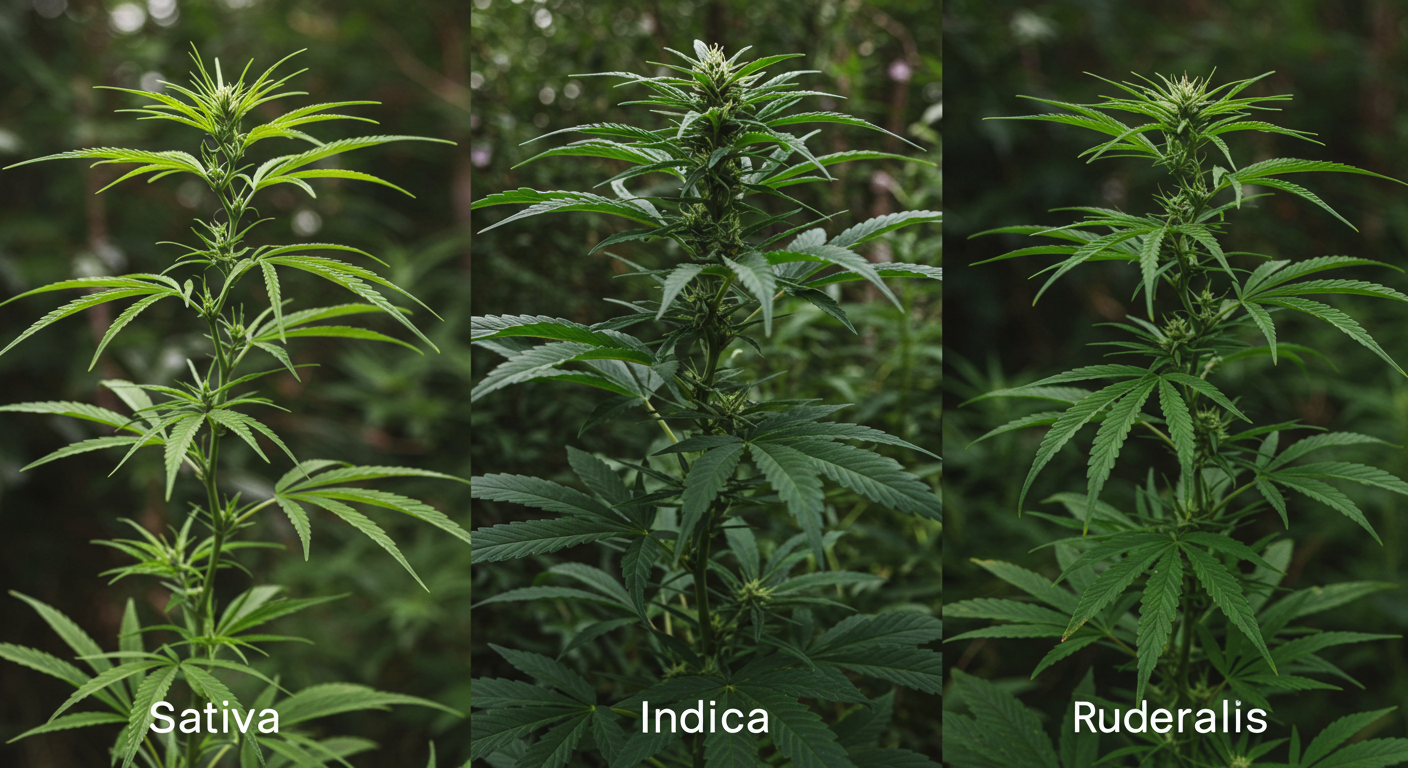
Why Indica and Sativa Do Not Predict Outdoor Performance
Indica and sativa are still useful words for navigating cannabis culture, product menus, and historical discussions, but they are weak tools for predicting how a plant will perform outdoors. An indica-labelled plant does not automatically finish early, tolerate cold, resist mold, stay compact, or survive wind. A sativa-labelled plant does not automatically prefer heat, handle drought, stretch aggressively, or require a tropical season. Modern commercial cannabis has been hybridized so extensively that broad labels cannot carry the amount of agronomic information growers often ask them to carry.
Outdoor performance depends on traits that can be measured more directly: flowering response, realistic finish window, plant architecture, branch strength, flower density, disease susceptibility, heat and cold response, root-zone demand, water use, recovery after stress, and the consistency of the actual seed line or clone source. Those traits are controlled by genetics, but their expression also depends on environment and management. The useful decision is therefore not whether a plant is called indica or sativa. It is whether the material has evidence of performing inside the season and risk profile of your garden.
This resource stays focused on that decision. It does not replace a complete outdoor plan. For broader site design, seasonal timing, water, weather protection, security, flowering, and harvest management, use the Outdoor Grow Comprehensive Guide. For the broader identity problem behind cannabis names, lineages, cultivars, and strain labels, see What Is a Cannabis Strain?.
Treat Indica and Sativa as Labels, Not Outdoor Performance Tests
The first correction is simple: a commercial indica or sativa label is not a field trial. It tells you how the material has been described, marketed, remembered, or grouped, but it does not prove the traits that decide an outdoor season. If the label is not attached to actual flowering records, source history, field observations, disease notes, and finish data, it should not be allowed to make the final decision.
Modern genomic work supports that caution. Research comparing drug-type cannabis samples labelled sativa and indica found that the two groups were poorly separated at the whole-genome level. Other studies have also found that common Sativa, Indica, and Hybrid categories do not map cleanly onto genetic clusters. This does not mean every historical distinction is meaningless, or that all cannabis is genetically identical. It means the modern retail label is too coarse and inconsistent to predict a specific agronomic outcome.
Historical ancestry and modern market labels are different questions
Botanical history, landrace ancestry, leaflet shape, aroma associations, and regional domestication are legitimate subjects. The outdoor grower, however, needs a narrower answer: will this exact material flower, finish, resist disease, remain structurally manageable, and produce acceptable flowers in this exact environment? A broad label cannot answer that without trait-level evidence.
Why the labels feel more predictive than they really are
The categories persist because many familiar patterns are real often enough to create a strong mental shortcut. A grower may have encountered several compact, broad-leaf plants sold as indica and several taller, narrow-leaf plants sold as sativa. That repeated experience can make the label feel like a biological rule.
The problem is that modern breeding mixes ancestry and traits independently. Breeders can select a compact plant with a later flowering response, a narrow-leaf plant that finishes early, a tall plant with strong branch structure, or a dense-flowered line that performs poorly in humid weather despite an outdoor reputation. Once selection, hybridization, cloning, and informal naming are layered together, the old visual archetype is no longer a reliable decision tree.
Leaf shape is not an outdoor climate certificate
Leaf morphology may provide clues about plant development, genetics, or acclimation, but it should not be converted into assumptions about finish date, disease resistance, or temperature tolerance. Broad leaves do not prove cold tolerance. Narrow leaves do not prove heat tolerance. A compact canopy does not prove early maturity, and a tall plant does not prove a long flowering cycle.
Use morphology as an observation after the plant is growing. Do not use it as the primary evidence before planting. If you need to know whether a cultivar can finish before a cold wet autumn, find flowering and maturity information. If you need to know whether dense flowers will survive your humidity, look for disease observations under comparable conditions. If you need to know whether wind will be a problem, evaluate height, branching, stem diameter, internode length, support requirements, and actual field behavior.
“If indica and sativa are weak predictors, should I ignore the labels completely?”
Question sent by: Ethan Brooks, via email.
No. Keep the labels as descriptive context, especially when they help you trace how a cultivar has been discussed historically or commercially. The mistake is letting the label substitute for the data you actually need. Record the label, then make the outdoor decision from flowering behavior, finish history, architecture, disease response, climate testing, and source reliability.
Remember: The problem is not the existence of the words indica and sativa. The problem is using them as if they were measurements.
Use Traits That Actually Predict Outdoor Performance
Once the label loses its authority, selection becomes easier because the questions become measurable. Outdoor suitability is not one trait. It is a bundle of traits that must fit the site together. A plant can be excellent in heat but finish too late. It can finish early but hold too much moisture in dense flowers. It can resist disease but become too large for the legal or physical space. It can stay compact but demand more frequent irrigation than a remote garden can provide.
The strongest process is to define your outdoor constraints first and then rank the plant against them. Climate selection works best when you identify must-pass traits before you compare attractive extras such as color, aroma, theoretical yield, or a famous name.
Flowering response and finish window
For photoperiod cannabis, flowering behavior is usually the first major filter. Outdoor flowering is triggered by changing day length and darkness, but modern cultivars do not all respond at exactly the same threshold. Controlled studies with multiple drug-type cultivars have shown substantial cultivar differences in flowering initiation under photoperiods longer than the traditional 12-hour flowering schedule. Hemp research has also documented critical photoperiod differences among cultivars and meaningful shifts in flowering when day length changes by relatively small amounts around the cultivar’s threshold.
The outdoor implication is direct: the words indica and sativa do not tell you the critical photoperiod. A supposedly indica-dominant plant can still start too late for a short season. A supposedly sativa-dominant plant can carry early-flowering genetics or photoperiod-insensitive ancestry that makes it workable farther north than the stereotype suggests.
Days to maturity must be tied to a real starting point
Numbers such as “8 weeks” or “10 weeks” often come from indoor production where a grower changes the light schedule abruptly and marks a clear start to flowering. Outdoors the signal changes gradually. The plant experiences shifting day length, civil twilight, cloud cover, nighttime light pollution, temperature variation, and a cultivar-specific flowering threshold. That makes an indoor flowering-duration number useful as background but unreliable as an outdoor harvest date by itself.
Stronger evidence is an outdoor finish range from a similar latitude and climate, especially when the source explains how the date was determined. A report such as “finished in the first half of October at 42 degrees north after a warm dry September” is more useful than “9 weeks, indica dominant” because the first statement can be compared with your season.
Plant architecture should be described, not inferred
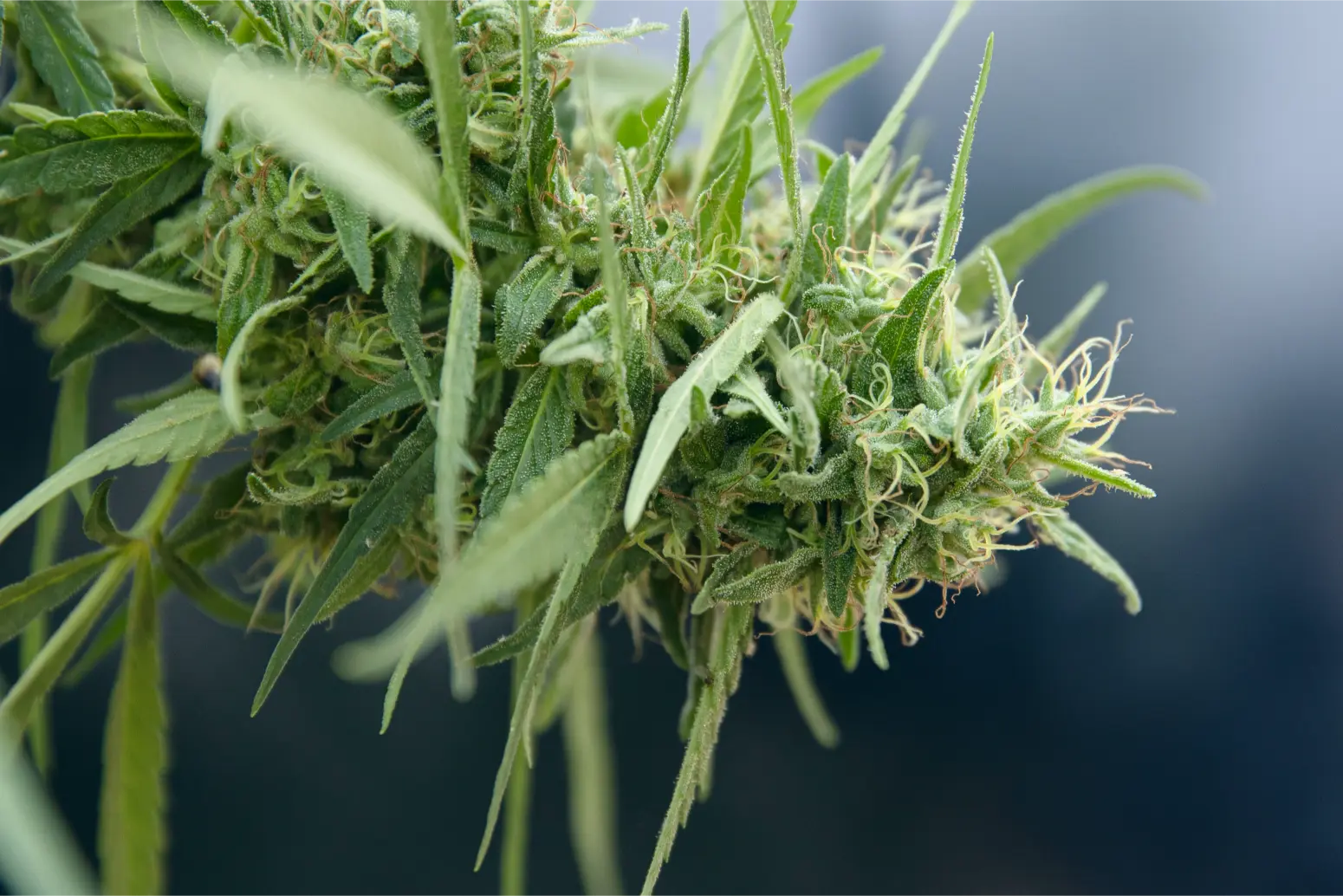
Architecture matters because it changes support requirements, sun penetration, airflow, irrigation demand, disease exposure, privacy, and storm risk. Useful descriptors include plant height, canopy width, internode spacing, branch angle, stem diameter, lateral branching, flower distribution, flower density, and how much structural support the plant needed late in the season.
Recent genome-wide association research in drug-type cannabis has identified genetic markers associated with traits such as height, canopy diameter, stem diameter, node count, internode characteristics, sexual maturity, and harvest maturity. The practical lesson is not that growers need DNA tests before planting. It is that these are genuine agronomic traits with genetic architecture of their own. They should be measured directly instead of being collapsed into a sativa or indica percentage.
| Outdoor decision | Weak shortcut | Better evidence |
|---|---|---|
| Will it finish before damaging autumn weather? | “Indica finishes early.” | Flowering onset, critical photoperiod where known, outdoor finish records, and multi-season maturity notes. |
| Will it tolerate humid flowering weather? | “Sativa flowers are airy.” | Actual flower density, canopy architecture, dry-down behavior, and disease observations in humid field conditions. |
| Will it tolerate heat? | “Sativa likes tropical weather.” | Documented heat response, leaf/canopy behavior, irrigation demand, recovery after hot periods, and comparable field results. |
| Will it stay manageable? | “Indica stays short.” | Height, canopy width, internode spacing, branching pattern, root volume, training response, and stretch after flowering begins. |
| Will it resist wind? | “Outdoor genetics are tough.” | Stem diameter, branch angle, support requirements, storm history, and plant size relative to exposure. |
| Will seeds be consistent? | “Stable hybrid” or a famous strain name. | Generation, parentage, lot history, observed segregation, breeder records, and your own phenotype notes. |
Genotype by environment can change the ranking
A cultivar that performs best in one location may not remain the best choice when the environment changes. This is the practical meaning of genotype by environment interaction. The environment does not simply make every plant better or worse by the same amount. Different genotypes can respond differently to the same heat, rain, day length, soil, wind, or management change.
That matters outdoors because growers often compare reports from very different sites. A line that ranks first in a dry inland field may fall behind in a humid coastal garden. A cultivar that matures reliably at one latitude may become too late farther north. A plant that remains compact in a bright controlled room may expand dramatically when root volume and sunlight increase outdoors. Modern multi-location hemp trials continue to show that weather and environment can change variety performance and yield stability. The exact rankings from hemp should not be transferred directly to drug-type cannabis, but the selection principle is highly relevant: local performance must be verified locally.
Indoor excellence does not automatically translate outdoors
Indoor data can reveal useful traits because the genotype is still the genotype. Flowering duration, architecture, cannabinoid potential, branching, and sensitivity to some stresses can all provide clues. What changes outdoors is the number of uncontrolled variables acting on those traits at once.
An indoor favorite may rely on stable temperatures, dry flowers, strong support, frequent irrigation, controlled photoperiod, and protection from wind. Outdoors the same material may enter flowering later, stretch more, hold dew, encounter pathogens, suffer storm loading, or finish during a poor weather window. Treat indoor records as one evidence layer. Do not use indoor reputation as proof of outdoor fitness.
Water demand and root-zone fit belong in the selection
A cultivar does not need a special drought label to become difficult in a dry garden. Plant size alone can create a water problem. A large, fast-growing plant in a small container can require much more frequent irrigation than a compact plant in the same site. Dense root systems can also dry a limited substrate rapidly late in summer. In a remote garden, that difference may matter more than any ancestry label.
Match genetics to the irrigation system you can actually maintain. If the site is hand-watered and visited infrequently, prioritize manageable plant size and a root zone that can buffer peak demand. If water quality is marginal, do not assume an indica or sativa label tells you anything about sodium, chloride, alkalinity, or salinity tolerance. Those are separate questions that require water and root-zone evidence.
Build the shortlist from measurable outdoor traits
Use flowering timing, finish records, architecture, flower density, disease observations, water demand, stress recovery, and source consistency.
Convert broad labels into agronomic guarantees
Do not translate indica into early, compact, cold-tolerant, or mold-resistant. Do not translate sativa into heat-tolerant, drought-tolerant, late, or high-yielding without evidence.
Let Flowering Response and Climate Fit Override the Label
Climate fit is where indica and sativa shortcuts fail most visibly. Outdoor performance is a race between plant development and seasonal risk. The plant must initiate flowering, build mature flowers, and reach a defensible harvest window before frost, prolonged rain, tropical storms, wildfire smoke, cold wet nights, or another local hazard becomes dominant.
That sequence is controlled by both genetics and environment. The same cultivar may flower or finish differently at different latitudes, under different twilight conditions, or when nighttime light pollution interrupts darkness. Temperature can alter development speed. Plant health can delay progress. A dry season may allow later material to finish safely one year while a wet autumn makes the same finish date unacceptable the next.
Latitude changes the clock, but latitude alone does not pick the cultivar
Latitude controls the seasonal pattern of day length, but it does not tell you a cultivar’s response to that pattern. Two cultivars at the same latitude can begin reproductive development at different times because their critical photoperiods and flowering responses differ. Two sources selling material under the same familiar name can also differ if the underlying genetics are not the same.
The useful method is to pair latitude with local field evidence. Ask where the material was grown, when clear flowering began, when flowers reached maturity, and what weather occurred during the final weeks. A northern finish report is most useful when your own latitude and autumn risk are similar. A report from a hot subtropical garden may show that the plant can flower, but it may say little about whether it can finish before frost in a short continental season.
Critical photoperiod is more useful than a sativa-indica percentage
Critical photoperiod is the approximate day length around which a photoperiod-sensitive cultivar begins a reliable flowering response. It is not always published, and outdoor behavior cannot be reduced to one laboratory threshold, but the concept explains why ancestry labels are weak. Cannabis research has shown meaningful cultivar-to-cultivar variation in flowering initiation under different photoperiods. Some drug-type cultivars flower robustly under day lengths longer than 12 hours, while others delay or fail to develop normally as the day remains longer.
If a source has measured photoperiod data, use it. If not, use repeated outdoor first-flower dates from known locations. Either form of evidence is more actionable than a claim such as “70% indica” because it addresses the trait that actually determines seasonal timing.
“I live in a short-season area. Should I just choose the most indica-looking plant?”
Question sent by: MapleGrower, via Facebook page.
No. Start with verified finish timing instead. Look for material that has repeatedly reached maturity with margin before your recurring cold or wet period. Then compare architecture, disease response, and water demand. A broad-leaf or compact plant may still finish too late, while a plant that does not fit the classic indica look may carry earlier flowering genetics that are better suited to your season.
Autoflowering is a separate flowering trait, not “extreme indica”
Photoperiod-insensitive or autoflowering cannabis is often discussed in the same conversations as short-season indica plants, but the biology is different. Autoflowering material initiates reproductive development with greatly reduced dependence on seasonal day length. Genetic research has identified multiple loci associated with photoperiod insensitivity in Cannabis sativa, reinforcing that autoflowering is a distinct flowering-time trait rather than a stronger version of an indica category.
That does not automatically make every autoflower ideal outdoors. A short fixed life cycle can reduce the time available to recover from transplant stress, root problems, hail, pests, or early nutrient mistakes. The correct comparison is still trait-based: flowering trigger, life-cycle length, expected size, stress recovery, local weather window, and the grower’s ability to avoid early setbacks.
Finish margin is more important than theoretical maximum yield
Outdoor selection should favor a cultivar that reliably finishes inside the safe window over one that promises a larger crop only if autumn cooperates. The highest theoretical yield is irrelevant if dense flowers remain immature when a week of cold rain arrives.
Build margin into the selection. If damaging weather usually becomes common in early October, do not select material whose best-case finish is early October unless you are prepared to accept a high-risk season. A cultivar that finishes one or two weeks earlier with slightly less theoretical yield may deliver more usable flower over multiple seasons because it avoids the period when disease, storm, frost, and access risks rise sharply.
Field Advice: Outdoor performance is not how impressive the plant looks at peak summer growth. It is how reliably the plant reaches healthy maturity before your site becomes hostile.
Judge Architecture, Disease Pressure, and Stress Response Directly
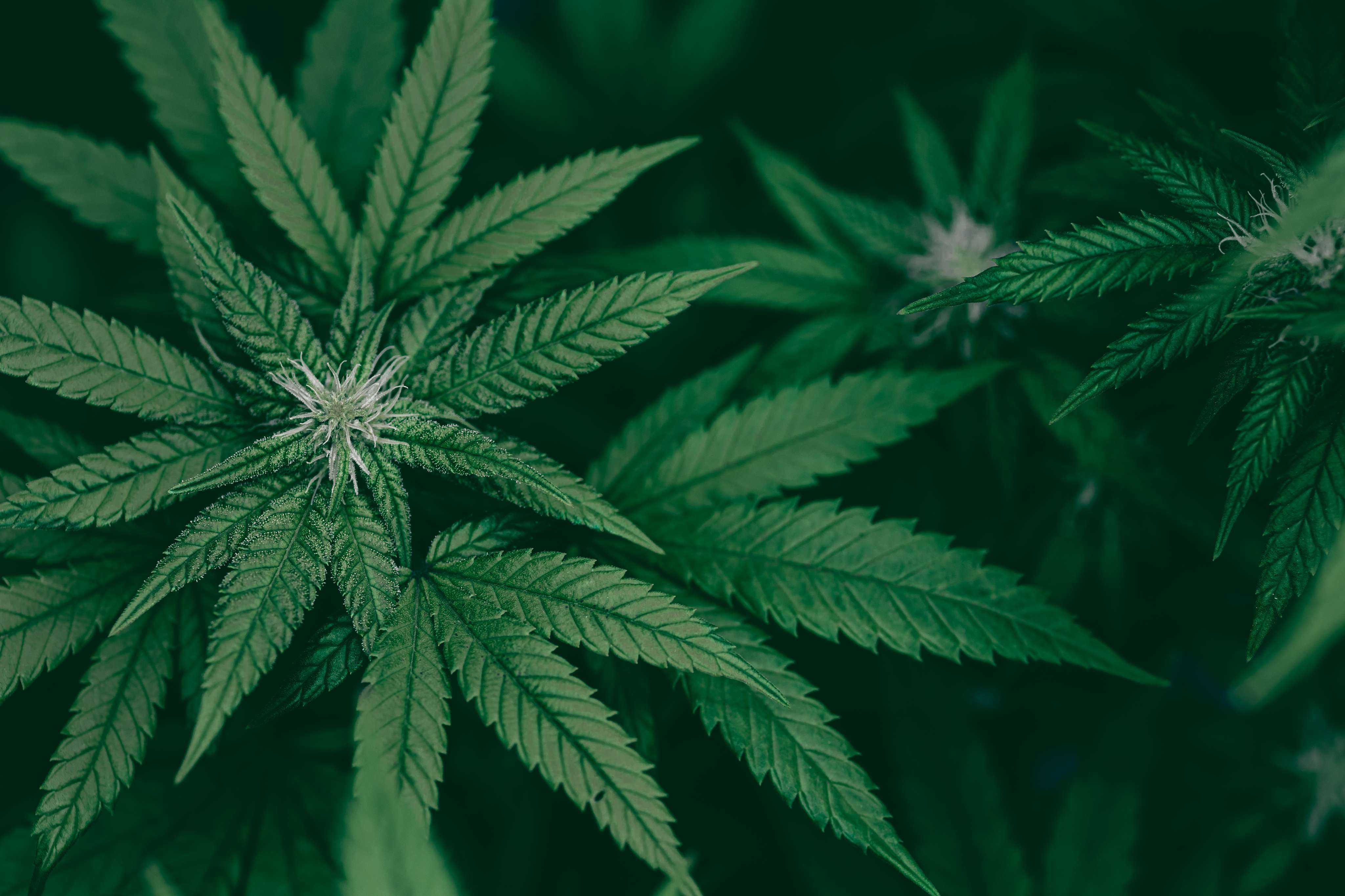
Once flowering time fits, the next question is whether the plant’s structure and stress response fit the environment. This is where growers often substitute stereotypes for observation. Dense broad-leaf plants are assumed to trap humidity, while narrow-leaf plants are assumed to breathe better. Tall plants are assumed to be flexible, while compact plants are assumed to be sturdy. These patterns can occur, but they are not reliable enough to decide a crop without direct evidence.
Flower density matters more than the marketing category in wet climates
In humid, rainy, or fog-prone regions, the flower interior is the critical microclimate. Dense inflorescences can hold moisture after dew or rain even when ambient relative humidity falls. Branch overlap, leaf density, morning shade, weak airflow, caterpillar feeding, and physical wounds can further increase rot risk.
Do not ask, “Is it sativa enough for humidity?” Ask instead: how dense are mature flowers, how open is the branch structure, how quickly does the canopy dry in the morning, has the line been evaluated for powdery mildew or Botrytis, and were those evaluations performed in relevant field conditions? Cornell hemp screening has demonstrated real cultivar differences in powdery mildew susceptibility. That is the kind of trait-level evidence that can guide risk assessment. The indica-sativa label cannot substitute for it.
Heat response should be documented through plant behavior
A plant that comes from ancestry associated with warm regions may still respond poorly to a modern hot-arid garden if it produces a root system that cannot keep up with a small container, closes stomata aggressively under high atmospheric demand, develops leaf injury in reflected heat, or enters late flowering during the hottest part of the local season.
Evaluate heat performance using repeated observations: leaf posture, canopy temperature where measured, irrigation demand, afternoon recovery, nighttime recovery, root-zone temperature, flower development, and whether damage accumulates across a multi-day heatwave. If the line has only been grown indoors, a seller’s “heat loving sativa” description should be treated as an unverified claim.
Cold tolerance and early finish are not the same trait
A cultivar can finish early because it begins flowering early, yet still be sensitive to cold nights. Another can tolerate cool conditions reasonably well but begin flowering too late to finish before frost. These two traits can be useful together, but they should not be merged.
For high-elevation, northern, or continental gardens, record both. When does flowering begin? When does maturity arrive? What happens after several cold nights? Do leaves remain functional? Does flower development stall? Does moisture persist longer inside flowers? Does branch brittleness increase? A simple indica label cannot answer those questions.
Wind performance depends on structure, size, and support
Outdoor wind risk increases as plants become taller, heavier, and more top-loaded. Branch angle, stem diameter, internode spacing, wet flower weight, support system, root anchorage, and soil saturation all influence failure. A broad compact plant can still split under storm load if heavy flowers sit on weak branch unions. A tall plant can remain stable if its architecture, support, and root anchorage are appropriate.
Use field records. Note whether the plant required stakes, trellis, perimeter support, or branch ties. Record where failures occurred. If a line repeatedly splits at the same branch geometry, that is stronger evidence than any indica or sativa percentage.
| Risk | What to measure or record | Better selection question |
|---|---|---|
| Humidity and flower rot | Flower density, morning dry-down, disease history, branch spacing, interior moisture | Has this material finished cleanly in humid flowering weather? |
| Heat and drought | Irrigation frequency, wilt/recovery pattern, canopy temperature, root-zone volume, heat injury | Can this plant maintain function through the actual heat and water limits of my site? |
| Cold and frost | Flowering onset, finish date, cool-night response, late-season development | Does it finish with margin, and does it remain healthy as nights cool? |
| Wind and storms | Height, branch angle, stem diameter, support needs, wet-flower load, failure points | Can the mature structure stay supported in my exposure? |
| Remote access | Water demand, pest sensitivity, support maintenance, inspection frequency | Does the plant require more intervention than I can reliably provide? |
Do not use one successful plant as proof of a whole label category
If one indica-labelled plant survives a wet autumn, the result belongs first to that plant, source, cultivar, phenotype, season, and management system. It does not prove that indica-labelled cannabis is generally mold resistant. Keep the observation at the level the evidence supports.
Evaluate the Source, Population, and Evidence Behind the Name
Even a trait-based selection framework can fail if the material behind the description is inconsistent. Cannabis naming has a traceability problem. Multiple genetic studies have found inconsistencies among samples sold under identical strain names, and commercial indica/sativa classifications often fail to correspond with genome-wide genetic structure. That means the source of the material matters almost as much as the name.
A reliable outdoor record should identify what was actually grown: clone or seed, source, generation when known, lot or batch, parentage claim, date started, transplant date, first reproductive signs, flowering onset, maturity window, final size, disease observations, support needs, and weather conditions. Without those details, even a good season becomes difficult to learn from.
Clone data are not the same as seed-line data
A verified clone preserves essentially the same genotype from one selected plant, so repeated records across sites can become useful evidence about genotype by environment. Seed lines are populations. Individual seeds may share parents but carry different allele combinations, and the amount of variation depends on the breeding history and how uniform the line actually is.
If a source describes one exceptional mother plant but sells seeds, ask how closely the seed population reproduces the traits of that selected individual. If the answer is unclear, expect variation. Do not assume every seed will share the mother’s finish date, height, disease response, aroma, or flower density.
Same name does not guarantee same plant
The problem becomes larger when material changes hands. A famous name can be recreated, crossed, selected, renamed, mislabeled, or simply maintained differently. Research has found that samples sharing a cannabis strain name can be genetically or chemically inconsistent across sources. Therefore, records should always include the source and lot, not just the name.
This is especially important when comparing outdoor reports online. “This strain finished September 20” is weak evidence if the source of the genetics is unknown. The same name from a different source may not behave the same way.
Ask for the test environment behind every climate claim
Statements such as “great outdoors,” “handles humidity,” “cold hardy,” “drought tolerant,” or “mold resistant” become useful only when you know what produced the claim. Was the material tested outdoors or only in a greenhouse? Was it tested for one season or several? How many plants? Seed population or clones? What latitude? What disease pressure? What did “resistant” mean in practice?
Multi-location hemp research continues to show strong environmental effects on performance and yield stability. That principle should make outdoor growers skeptical of universal performance claims. A line can rank highly in one environment and poorly in another. Climate fit is therefore not a permanent trophy attached to a name. It is a relationship between genotype, population, environment, and management.
“Two sellers list the same cultivar but one calls it indica and the other hybrid. Which description should I trust?”
Question sent by: Olivia Carter, via contact form.
Do not resolve the conflict by choosing the label you prefer. Compare the actual source information. Look at parentage, generation or clone provenance, flowering records, outdoor finish data, morphology, and any evidence from comparable climates. If the two sources cannot be traced to the same maintained material, treat them as different sources that may perform differently even if the name matches.
Build confidence in layers
Use an evidence ladder rather than a yes/no trust decision. A marketing label is low confidence. A detailed seller description with dates and locations is better. Multiple independent field reports from similar climates are stronger. Your own repeated observations of the same source are stronger still. A verified clone or well-characterized line with documented field performance across seasons provides the most useful prediction available to a home grower.
| Evidence level | Example | How much weight to give it |
|---|---|---|
| Low | Indica/sativa percentage, “outdoor monster,” “mold proof” | Use as descriptive context only. |
| Moderate | Detailed source description with flowering and finish dates | Useful if the location, generation, and material are clear. |
| Strong | Repeated field reports from similar latitude and climate | Good shortlist evidence, especially when failures are also reported. |
| Very strong | Your own records for the same verified source across multiple seasons | Use to refine future selection and eliminate weak fits. |
Replace Common Indica-Sativa Shortcuts With Better Questions
Most bad outdoor decisions do not come from using the words indica and sativa. They come from converting those words into predictions they cannot support. A better system replaces each shortcut with a question that can be answered through observation, records, or source evidence.
Myth: Indica always finishes earlier
Better question: When does this exact material begin flowering and reach maturity at a comparable latitude?
Early finish is an agronomic trait. It can be selected into many genetic backgrounds. Photoperiod response research shows substantial cultivar variation, which is why the label cannot substitute for actual flowering data.
Myth: Sativa is automatically better for hot climates
Better question: How does this material behave during repeated high-temperature and high-VPD periods with my root volume and irrigation capacity?
Heat performance depends on plant physiology, root-zone conditions, water supply, acclimation, developmental stage, and genotype. A regional ancestry story may be interesting, but it is not a replacement for measured heat behavior.
Myth: Indica is better for cold climates because it is shorter
Better question: Does the plant finish before cold becomes damaging, and how does it perform during the final weeks as night temperatures fall?
Short stature reduces some wind and support problems, but it does not move the flowering clock automatically. A compact plant that flowers too late can be a worse cold-climate choice than a taller early-finishing cultivar.
Myth: Sativa flowers are always airy and mold resistant
Better question: What is the mature flower structure, how quickly does the interior dry, and what disease pressure has the line actually survived?
Loose flower structure can reduce moisture retention in some conditions, but disease risk involves far more than shape. Pathogen pressure, leaf wetness duration, canopy density, wounds, caterpillars, morning shade, sanitation, and cultivar susceptibility all matter.
Myth: Indica is always easier for beginners
Better question: Does this material’s timing, size, irrigation demand, training response, and recovery margin fit the beginner’s site and routine?
A compact plant may be easier to support, but dense flowers can create more humidity management work. An early plant can reduce seasonal risk, but a very fast life cycle can leave less recovery time after mistakes. Ease is a relationship between plant and grower, not an ancestry category.
Myth: Hybrid means unpredictable
Better question: How uniform is this specific line or clone, and what generation and selection history support the claim?
Hybridization itself does not tell you the amount of variation in the material. A carefully selected and maintained hybrid can be highly predictable. A loosely reproduced population sold under a famous name can be variable. Generation, breeding method, parental stability, and actual phenotype records matter more than the word hybrid.
Translate every label into a testable trait
If someone says “indica and early,” ask for flowering and finish dates. If they say “sativa and mold resistant,” ask for field disease observations. If they say “outdoor hybrid,” ask where it was tested and what failed.
Build the season around a stereotype
Do not choose first and investigate later. Eliminate material that cannot prove a credible fit for your finish window, climate pressure, space, and maintenance capacity.
Use a Repeatable Outdoor Selection and Verification Checklist
The final goal is not to replace one label with another. It is to build a repeatable selection process that improves each season. Start with your site, eliminate material that fails hard constraints, record the evidence behind the remaining options, and verify the choice in the garden.
Step 1: Write the site’s hard constraints
Record the latest defensible finish window, frost and wet-weather risk, peak heat, humidity or dew pressure, wind exposure, water reliability, available root volume, legal plant limits, privacy or height constraints, and how frequently you can inspect the garden. These are the conditions the cultivar must fit.
Step 2: Eliminate by finish timing before comparing desirable traits
Remove options that lack credible evidence of finishing with margin. If finish data are weak but the plant is otherwise interesting, classify it as an experiment rather than a primary crop. Do not let color, aroma, potency claims, or indica/sativa percentages rescue a weak seasonal fit.
Step 3: Score architecture and climate pressure
For each remaining option, record expected height, width, branching, flower density, support needs, water demand, disease observations, heat response, cold response, and any known storm or wind weaknesses. Use a simple 1-to-5 confidence score if that helps, but keep confidence separate from desirability. A trait can sound attractive while being poorly documented.
Step 4: Separate desirability from confidence
Create two columns for every important trait. One column asks whether the trait is desirable for your garden. The other asks how confident you are that the claim is real. An early finish can score very high for desirability but very low for confidence if it appears only in one marketing paragraph. A moderate yield estimate supported by several seasons of local records may deserve more weight because the evidence is stronger.
This prevents attractive claims from dominating the decision. It also shows you where a small trial can be useful. A cultivar with strong climate fit but uncertain disease data might belong in a limited test group, while a cultivar with poor finish timing should be eliminated even if every other claim is well documented.
Step 5: Record the evidence source
Write down where every important claim came from. Seller page, breeder notes, field trial, independent grow report, clone provenance, seed lot, or your own prior season should be identifiable later. Save screenshots or archived notes if the online page may change.
Step 6: Label every plant as an individual
For seed-grown material, give each plant an individual ID. Record first reproductive signs, flowering onset, height, canopy width, disease events, irrigation demand, support work, major weather exposure, maturity progression, and harvest date. If one sibling finishes two weeks earlier than another, the difference matters.
Step 7: Compare phenotype with the pre-season prediction
At midseason and harvest, compare what happened with what was promised. Did the “early” line actually flower early? Did the compact plant remain compact outdoors? Did the disease claim hold under real pressure? Did the line need more water or support than expected? This turns marketing language into evidence.
Step 8: Keep or discard claims, not just plants
A successful cultivar can still teach you that one part of the description was wrong. Maybe the plant finished on time but was not particularly compact. Maybe it tolerated humidity but required extensive branch support. Update the record at trait level. Do not let one overall success turn every seller claim into truth.
Before you let indica or sativa influence the decision, confirm these points
- I know the latest realistic finish window for my site.
- I have flowering or finish evidence for the actual source, not only a broad label.
- I understand whether the material is a clone or a seed population and how much variation to expect.
- I have direct information about mature plant size, branching, flower density, and support requirements.
- I have climate-relevant evidence for humidity, heat, cold, drought, wind, or another dominant local risk.
- I have separated disease claims from general architecture descriptions.
- I have separated early finish from cold tolerance.
- I have separated heat tolerance from drought tolerance.
- I have recorded source, generation or clone provenance, lot, dates, and individual plant IDs where possible.
- I will treat indica, sativa, and hybrid as context rather than as proof.
- I have a backup option if the material is poorly documented or experimental.
- I will compare the final plant with the original claims at harvest and update the record for next season.
A practical three-level decision
| Decision | What it means | What to do |
|---|---|---|
| Green | Finish timing, architecture, climate response, and source evidence all fit the site with reasonable margin. | Use as a primary outdoor option and keep detailed records. |
| Yellow | One important trait is weakly documented or near the site’s limit. | Run a small trial, keep a backup cultivar, and verify the weak trait directly. |
| Red | Finish timing conflicts with the season, disease or structural risk is unacceptable, or source identity is too uncertain. | Do not select it as the primary outdoor crop regardless of the indica/sativa label or reputation. |
“What should I write in my notes instead of just indica or sativa?”
Question sent by: NorthSideMike, via email.
Keep the familiar label if it helps you identify the source, but add the traits that matter: source and lot, clone or seed, first flower date, finish window, final size, branch strength, flower density, disease pressure, water demand, major weather events, and harvest result. After one or two seasons, those notes will predict your outdoor results far better than the broad category.
Master Advice: Replace ancestry shorthand with field evidence. The best outdoor cultivar is not the most indica, the most sativa, or the most famous. It is the material that repeatedly completes flowering inside your season while staying healthy, manageable, and compatible with the risks you can actually control.
Share this article
A quick overview of the topics covered in this article.
Follow us
Latest articles

September 3, 2026
September 3, 2026
September 3, 2026
September 3, 2026