
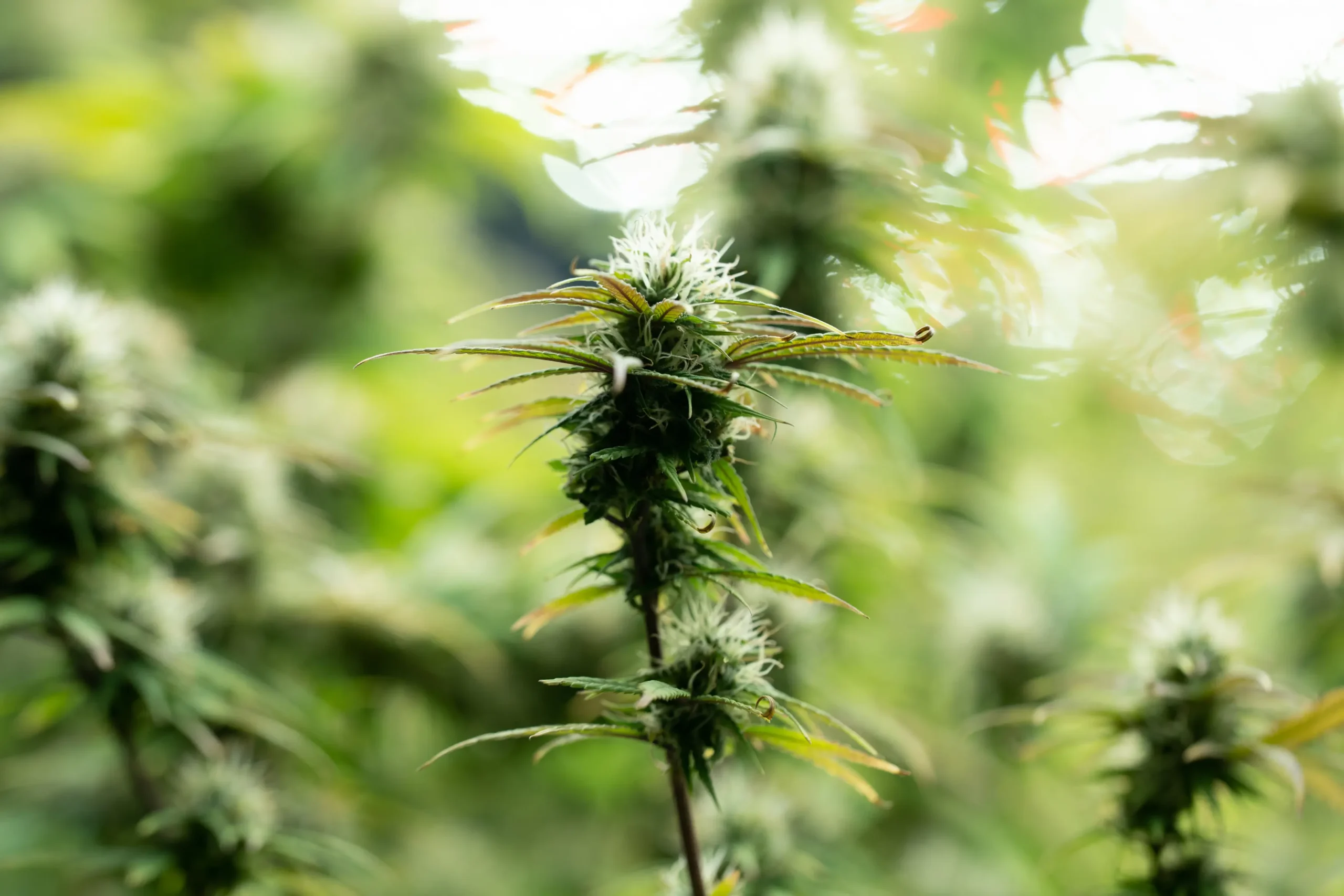
Why Seeds from the Same Pack Grow Differently
Opening a 5-pack or 10-pack of cannabis seeds and watching one plant stay short with dark purple berry-scented buds while its sibling right beside it stretches 25 centimeters taller with bright green fuel-scented colas is not a mistake or a mixed-up pack – it is the natural result of sexual genetic recombination. Unlike rooted clones cut from a single mother plant (which are 100 percent genetically identical monozygotic twins), every individual seed inside a pack is a unique genetic brother or sister created by its own meiotic shuffling of parental chromosomes.
How much variation you see inside a single seed pack depends on two factors: the breeder’s filial generation structure (whether the seeds are true F1 hybrids, segregating F2s, inbred F5 lines, or selfed S1 feminized seeds) and how your tent’s microclimate interacts with each plant’s genotype (Phenotype = Genotype x Environment). This guide explains cannabis seed genetics in plain language and shows you how to manage or hunt sibling variation inside a small tent.
Brothers and Sisters, Not Clones: How Meiosis Shuffles Traits in Every Seed
Two human parents can have four children who differ in height, hair color, and metabolism; cannabis seeds from the same pollination event work the exact same way.
Heterozygosity and Allele Recombination in Outcrossing Dioecious Plants
Cannabis sativa is a diploid (2n = 20 chromosomes) wind-pollinated species that evolved high genetic heterozygosity – meaning each parent plant carries two different versions (alleles) of thousands of genes governing internode length, terpene synthase enzymes, anthocyanin purple pigmentation, and flowering speed.
When a breeder crosses Parent A with Parent B, meiosis randomly sorts one chromosome from each pair into every pollen grain and every ovule, while chromosomal crossover swaps segments of DNA before fertilization. Consequently, Seed #1 might inherit the dominant tall-stretch and limonene alleles from its grandparents, while Seed #2 sitting in the exact same bract inherits the recessive short-bush and myrcene/caryophyllene alleles.
The Phenotype Equation: Phenotype (P) = Genotype (G) + Environment (E)
In botany, a plant’s Genotype (G) is the fixed DNA code inside its seed, whereas its Phenotype (P) is the observable physical plant you see, smell, and harvest after that DNA interacts with your grow room Environment (E). Even two genetically identical clones can express different phenotypes if grown in different environments (for example, one grown in 28 C hydroponics vs one grown in 18 C living soil).
When you pop four sibling seeds inside one tent, you are observing both Genotypic variation (different allele combinations across Seeds #1 to #4) and micro-environmental variation across corners of the tent.
Genotype vs Phenotype vs Chemotype: Genotype is the plant’s inherited DNA blueprint; Phenotype is its physical structural expression (height, leaf shape, color, bud density); and Chemotype is its chemical expression (exact ratio of THC, CBD, minor cannabinoids, and volatile terpenes).
Practical questions from home cultivators often center on how these thresholds behave in real-world tents and small rooms.
“One seed in my 5-pack sprouted with three cotyledons and grows three leaves at every single node instead of two. Is it a bad mutant I should throw away?”
Question sent by: Valentina Radcliffe, via email.
No, do not throw it away. A seedling that produces three cotyledons and three leaves/branches per node (120 degrees apart around the stem) is expressing a benign developmental variation called whorled phyllotaxy (often nicknamed a ‘trifoliate’ by growers). Whorled phyllotaxy is not a disease or harmful mutation; in fact, because it produces three lateral side branches at every node instead of two during vegetative growth, trifoliate plants often develop bushy, high-yielding canopies under indoor LEDs. Note that the trait is usually somatic rather than permanently heritable, and many branches revert to normal two-leaf alternating phyllotaxy once flipped to 12/12.
Simply train and top a three-leaf whorled plant the exact same way you train its normal two-leaf siblings.
How Filial Generations (F1, F2, F5/IBL, and S1) Control Pack Uniformity
Not all seed packs have the same spread of phenotypes; a true F1 or F5 pack grows like a uniform row of soldiers, whereas an F2 or polyhybrid pack is a treasure chest of wildly different expressions.
True F1 Hybrids vs Polyhybrid Crosses vs F2 Segregation
In classical plant breeding, a true F1 Hybrid is created by crossing two distinct, highly inbred, homozygous parent lines (for example, an F5 Afghan x an F5 Thai). Because both parents are genetically uniform, all F1 seeds inherit the exact same heterozygous pairing, displaying dramatic hybrid vigor (heterosis) and uniform canopy height. However, most modern boutique cannabis crosses are actually ‘F1 Polyhybrids’ – crossing two complex, unstabilized clone-only hybrids (like Gelato #41 x Wedding Cake) – which already segregate into 3 to 4 distinct parental-leaning phenotypes in the first generation.
When two F1 siblings are crossed together to make an F2 generation, Mendelian segregation explodes to its maximum statistical spread: recessive grandparent traits that were hidden in the F1 reappear, producing short plants, tall plants, fast finishers, and slow finishers all inside one 10-pack.
Worked F4/F5 Inbred Lines (IBL) and Selfed (S1) Feminized Seeds
If a breeder continues selecting for a specific set of traits generation after generation through F4, F5, and F6 (an Inbred Line or IBL), homozygosity rises above 85 to 95 percent and nearly every seed in the pack grows with predictable height, structure, and aroma.
What about S1 (‘Selfed First Generation’) feminized seeds made by reversing an elite clone-only mother (such as Triangle Kush S1 or Zkittlez S1) to pollinate itself? Because the elite mother is heterozygous, selfing her acts genetically like an F2 cross of her own hidden recessive and dominant alleles: you get only genes from that one mother, but rearranged into tighter, looser, sweeter, or gassier variations of her lineage.
| Seed Generation Label | How It Is Bred | Expected Uniformity in a 6-Pack | Best Grower Use Case |
|---|---|---|---|
| True F1 Hybrid | Stabilized IBL Parent A x Stabilized IBL Parent B | Very High (85-95% uniform height & vigor) | Uniform small-tent canopy without cloning |
| Polyhybrid Cross | Unworked Elite Clone A x Unworked Elite Clone B | Moderate (3-4 distinct pheno expressions) | Finding diverse flavor combinations from elite cuts |
| F2 Generation | F1 Sibling x F1 Sibling | Low / Wild (wide Mendelian grandparent spread) | Phenotype hunting for rare recessive keeper mothers |
| F4 / F5 / IBL | 4 to 5+ generations of directional filial selection | Very High (locked structural & terpene traits) | Predictable multi-plant runs and breeding stock |
| S1 (Selfed Feminized) | Elite Clone A reversed onto Elite Clone A | Moderate (recombines the mother’s own alleles) | Experiencing a clone-only cut in seed form |
| BX1 / BX2 (Backcross) | Offspring crossed back to recurrent elite parent | Moderate-High (heavily favors recurrent parent) | Locking in specific clone traits in seed form |
Even when genetic differences inside a pack are modest, subtle microclimate differences across your tent floor can amplify those differences dramatically.
When Tent Microclimates Make Sibling Seeds Look Even More Different
Before blaming genetics for why the back-left plant is half the size of the front-right plant, audit the four corners of your grow tent.
Corner PPFD Drop-Off, Intake Drafts, and Cold Floor Zones
Inside a 3×3 or 4×4 tent, environmental conditions are rarely identical across all four pots. The container sitting directly next to the open passive mesh intake port receives a continuous stream of cold, dry floor air from the lung room (lowering its root temperature by 3 degrees Celsius and raising its local VPD), while the pot in the far back corner sits in warmer, more humid air.
Similarly, budget quantum board LEDs often deliver 850 umol/m2/s directly in the center of the tent but drop to 480 umol/m2/s in the corners, and an oscillating clip fan mounted on one pole may blast the nearest plant with constant wind stress.
Rotating Containers Weekly and Equalizing Root-Zone Watering
To separate true genetic differences from tent microclimate bias during vegetative growth, rotate your containers 90 degrees clockwise around the tent floor once a week (before installing a fixed trellis net) and elevate all pots on plastic risers off the cold floor.
Crucially, never pour the exact same 3.0 liters of water into all four sibling pots if Phenotype #1 is a stocky slow-drinker and Phenotype #2 is a vigorous fast-transpiring bush. Watering a slower-drinking sibling at the same pace as its thirsty sister quickly waterlogs the smaller plant’s roots, turning a 15 percent genetic size difference into a 60 percent overwatering stall.
Do
- Water each sibling container individually based on its own lift weight rather than pouring identical volumes into fast and slow drinkers.
- Place sturdy plastic risers or crates underneath shorter sibling phenotypes after the week-3 stretch so all colas sit level under the LED.
- Rotate pots 90 degrees weekly during vegetative growth so one plant does not sit permanently in front of the cold intake vent.
- Take two labeled lower backup cuttings from each numbered seed plant right before flipping to 12/12 in case you find a rare keeper phenotype.
Avoid
- Expecting polyhybrid or F2 seeds from the same pack to grow like genetically identical clones.
- Leaving a compact 50 cm sibling sitting on the tent floor in dim shade while raising the LED for an 85 cm tall sibling.
- Weaving seed-grown plants into a fixed trellis net before sex is confirmed and stretch height is equalized.
- Harvesting all sibling phenotypes on the exact same calendar day without checking each individual plant’s bract trichomes with a 30x loupe.
Once genuine genetic height and appetite differences appear among your sibling seeds, three simple canopy adjustments keep the tent even.
“Why did one plant in my pack turn deep dark purple in week 7 while the other three plants right next to it stayed bright lime green?”
Question sent by: Valentina Hollingsworth, via reader Q&A form.
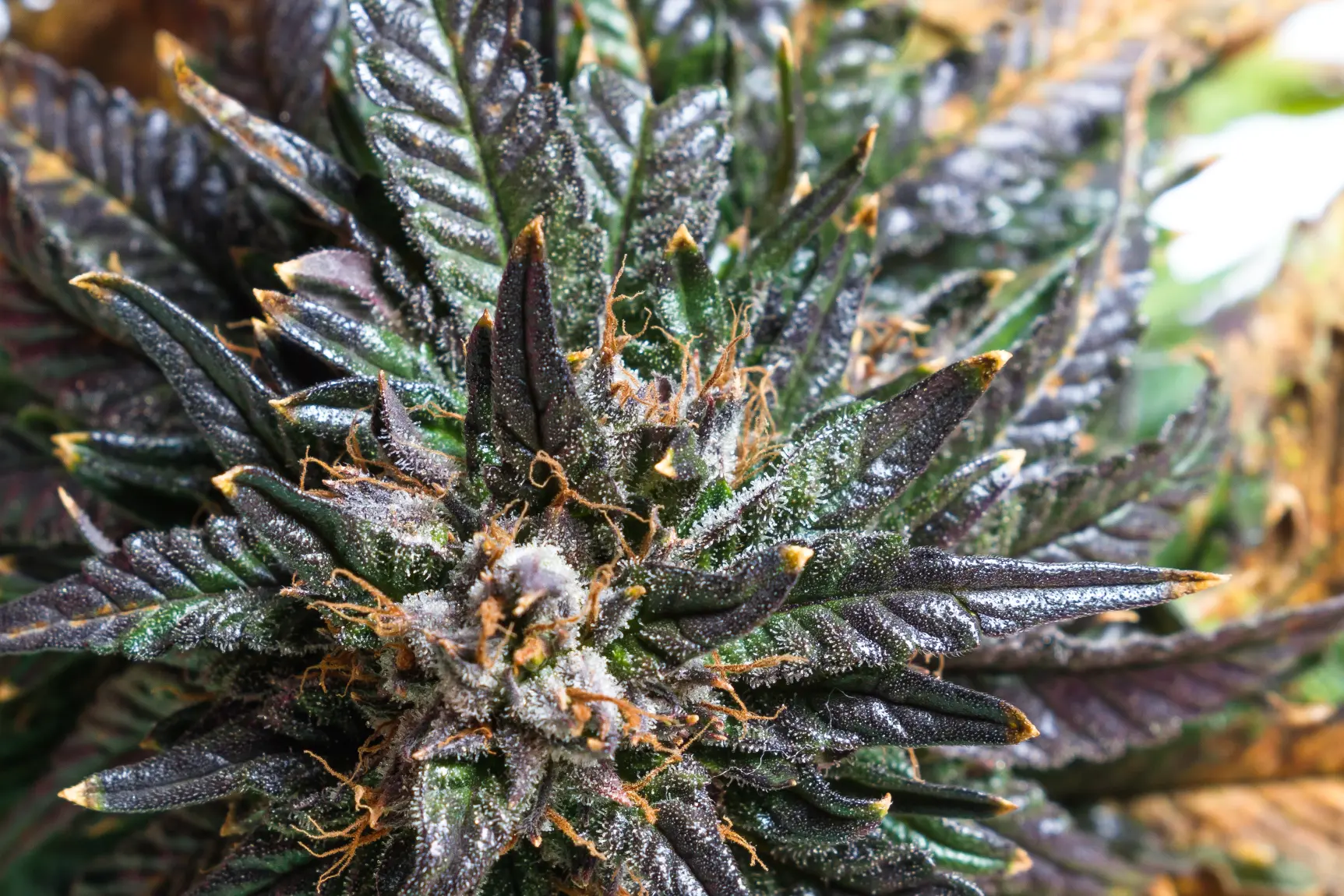
Purple, red, and violet coloration in cannabis bracts and leaves is caused by water-soluble flavonoid pigments called anthocyanins. Whether a plant synthesizes high levels of anthocyanins in late flower is controlled by specific dominant and recessive regulatory genes (such as MYB transcription factors) inherited from its parents. Inside a heterozygous polyhybrid seed pack, roughly 25 to 50 percent of sibling seeds may inherit the active anthocyanin allele combination that turns dark purple at normal 20 C (68 F) night temperatures, while the other siblings inherit the green allele combination and stay bright green under the exact same conditions.
Both the purple phenotype and the green phenotype from the same pack are completely healthy; judge them by their cured terpene profile and resin density rather than color alone.
How to Manage Different Phenotype Heights and Appetites in One Tent
You do not need separate tents or separate nutrient reservoirs to finish four different sibling phenotypes under a single LED fixture.
Booster Blocks Under Short Phenos and Supercropping Tall Phenos
The golden rule of multi-phenotype indoor growing is keeping the top of all colas at the exact same horizontal distance from the LED bars, regardless of where the bottom of the pots sit. If Phenotype #1 finishes its flowering stretch at 55 centimeters while Phenotype #2 stretches to 80 centimeters, place sturdy inverted plastic milk crates, aerobic step risers, or bricks underneath Phenotype #1’s saucer to lift its top colas right up to the 80-centimeter canopy plane.
Simultaneously, during weeks 1 to 3 of flower, tuck the fastest-stretching branches of the tall phenotype outward into wider trellis squares or gently bend (supercrop) its two tallest leaders to match the median canopy height.
Diluting the Final Pitcher for Light-Feeding Siblings
When mixing liquid nutrients for four sibling plants, mix your main bucket to match the appetite of the hungriest three plants (for example, 1.5 mS/cm EC in mid-flower). If one sibling phenotype shows slightly darker green leaves or tiny 1-millimeter yellow tips indicating a lighter appetite, simply water the first three plants at 1.5 EC, then pour 25 percent plain pH-adjusted water into the remaining pitcher to dilute it down to 1.15 EC for the light feeder.
| Phenotype Divergence Trait | Stage It Appears | Simple Equalization Technique | Mistake to Avoid |
|---|---|---|---|
| 25-40 cm height difference after stretch | Weeks 2 – 3 of Flower | Place plastic pot risers/crates under short pots; tuck tall shoots under net | Leaving short pheno in deep shade 60 cm below the LED |
| One pheno drinks 2x faster than sibling | Late Veg through Flower | Water each pot individually by lift weight rather than fixed volume | Watering all pots on the fastest plant’s schedule (drowns slow plant) |
| One pheno shows tip burn at 1.5 EC | Weeks 3 – 6 of Flower | Water heavy feeders first, then dilute remaining jug by 25% with plain water | Flushing the whole tent or starving the hungry phenos |
| One pheno finishes 10 days earlier | Weeks 8 – 10 of Flower | Taper EC on fast pheno 10 days earlier; harvest in 2 stages or dry in paper bags/box connected to tent intake | Chopping the whole tent early or letting the fast pheno over-ripen to 60% amber |
Instead of viewing sibling variation as an inconvenience, experienced home growers use a seed pack’s diversity to select and save a personal elite mother plant.
Cultivation Warning
Wait until your seed-grown plants have shown sex and you have equalized their heights with pot risers in Week 1 of flower before weaving them permanently into a rigid trellis net. Once branches are woven into a net, you can no longer lift individual pots to check weight or remove a plant.
Practical questions from home cultivators often center on how these thresholds behave in real-world tents and small rooms.
“If I want four plants in my 4×4 tent to be 100 percent identical in height, feeding, and harvest day, what is the only guaranteed way to do that?”
Question sent by: Valentina Lindholm, via grow journal submission.
The only way to have four 100 percent genetically identical plants is to grow four rooted clones cut from the same single mother plant. Because vegetative cuttings are produced via mitosis (asexual cellular division) rather than sexual meiosis, all four clones share the exact same DNA down to the last base pair. When grown in the same medium and pot size, four clones from one mother stretch to the exact same height, prefer the exact same nutrient EC, and ripen on the exact same day.
You can create your own set of four identical clones without keeping a permanent mother room by popping one feminized seed, vegetating it for five weeks, topping four equal cuttings off it to root for your main run, and flowering them together.
Running a Simple 4-to-6-Seed Phenotype Hunt at Home
Every legendary clone-only cultivar in history – from Sour Diesel and OG Kush to Gelato #41 and GMO – was discovered by a grower popping a pack of seeds and saving a backup cutting of the standout sibling.
Taking Labeled Backup Cuttings Before Flipping to 12/12
The worst heartbreak in home cultivation is harvesting four seeds from a pack, discovering after curing that Plant #3 has the most extraordinary flavor, resin production, and effect you have ever experienced, and realizing you did not save a cutting of it before harvesting.
Turning a normal 4-plant seed run into a miniature ‘pheno hunt’ takes just fifteen minutes: label your four seed pots #1, #2, #3, and #4. Two days before flipping your tent to 12/12, snip two lower branches off each plant during your normal pre-flip pruning, label them #1 through #4, and root them in a small plastic dome under a $20 20-watt LED bar on a closet shelf.
Scoring Structure, Mold Resistance, Yield, and Cured Terpenes
You never know which sibling seed is the true keeper until the flowers have dried for 12 days and cured in glass jars for two weeks; the prettiest purple plant in week 6 sometimes dries with muted aroma, while an unassuming green sibling cures into room-filling gas and citrus.
Keep your four small rooted backup clones alive in 500 mL cups under low light while the main tent flowers and dries. Once you smoke-test all four cured jars, keep the winning clone (#3) as your mother plant for your next full tent of identical clones and compost the other three backup cups.
When you flower your winning phenotype a second time from a rooted clone, do not be surprised if it finishes 5 days faster and stretches slightly less than it did from seed. A seed plant has a vertical taproot and juvenile hormone phase, whereas a clone has fibrous lateral adventitious roots and mature chronological age from day one.
If you do not have space to keep a mother clone and want maximum uniformity straight from seed, use the selection criteria below.
How to Get Maximum Canopy Uniformity When Growing From Seed
When you want four plants from seed to grow at nearly identical height and finish on the same day without keeping clones, focus on breeding generation and early selection.
Germinating 1 or 2 Extra Seeds to Select Matching Seedlings
If your final tent holds four 5-gallon pots and you have a 6-pack of feminized seeds, germinate all six seeds in 500 mL starter cups. By day 18 to 21 in the starter cups, you can clearly see which four seedlings share the closest height, leaf blade width, and internode spacing, while setting aside any slow runt or extreme tall outlier before up-potting into your four 5-gallon final containers.
Choosing F1 Hybrids or F4+ Worked Lines Over F2s
Save F2 packs and unworked polyhybrid testers for cycles where you want variety across your jars. When uniformity is your top priority from seed, choose true F1 hybrids or F4/F5 inbred lines where the breeder has already done the multi-generational selection work for you.
Field Verification Checklist
- Check the breeder’s filial generation label (F1, F2, F4/IBL, S1) before planting so you know how much phenotypic spread to expect.
- Label each germinated seed pot (#1, #2, #3, #4) with a permanent waterproof tag that stays with the plant through drying and jarring.
- Equalize canopy height at Day 18-21 of 12/12 flower using under-pot risers for short siblings and gentle tie-downs for tall siblings.
- Adjust final-pitcher nutrient dilution if one sibling shows lighter feeding tolerance (1 mm yellow leaf tips) than its sisters.
- Check trichome maturity on each numbered plant separately starting at week 8 and log your favorite cured jar for future runs.
Use the Do/Avoid rules and five-step checklist below to manage sibling variation smoothly on every seed run.
“Can two sibling seeds from the same high-THC pack have totally different THC-to-CBD ratios?”
Question sent by: Nova Leblanc, via email.
It depends on the parents used to make the pack. In standard Type I (THC-dominant, <0.5% CBD) crosses where both parents are pure homozygous THCA-synthase plants, all sibling seeds will be Type I THC-dominant plants (typically varying by only 3 to 5 percentage points in total potency, such as 21% vs 25% THC, while varying more noticeably in terpene ratios). However, if you buy a '1:1 balanced THC:CBD' polyhybrid seed pack made from heterozygous Type II parents, sibling seeds frequently segregate into a 1:2:1 Mendelian ratio: roughly 25% high-THC plants, 50% balanced 1:1 THC:CBD plants, and 25% high-CBD hemp-like plants.
When buying balanced CBD:THC seeds for medical use, look for breeders who cross a pure homozygous Type I (THC) line with a pure homozygous Type III (CBD) line, which guarantees 100% Type II (balanced 1:1) F1 seeds.
Scientific References
- Campbell, L. G., Dufresne, J., & Sabatinos, S. A. (2019). Genotype-by-environment interactions in Cannabis sativa L. morphology and cannabinoid production. Euphytica, 215, 112.
- de Meijer, E. P. M., Bagatta, M., Carboni, A., Crucitti, P., Moliterni, V. M. C., Ranalli, P., & Mandolino, G. (2003). The inheritance of chemical phenotype in Cannabis sativa L. Genetics, 163(1), 335-346.
- Lynch, R. C., Vergara, D., Tittes, S., White, K., Schwartz, C. J., Gibbs, M. J., Ruthenburg, T. C., deCesare, K., Land, D. P., & Kane, N. C. (2016). Genomic and chemical diversity in Cannabis. Critical Reviews in Plant Sciences, 35(5-6), 349-363.
- Toth, J. A., Stack, G. M., Cala, A. R., Carlson, C. H., Wilk, R. L., Crawford, J. L., Viands, D. R., Philippe, G., Smart, C. D., Rose, J. K., & Smart, L. B. (2020). Development and validation of genetic markers for sex and cannabinoid chemotype in Cannabis sativa L. GCB Bioenergy, 12(3), 213-222.
Share this article
A quick overview of the topics covered in this article.
Follow us
Latest articles
November 9, 2026
November 9, 2026
November 9, 2026
November 9, 2026
