
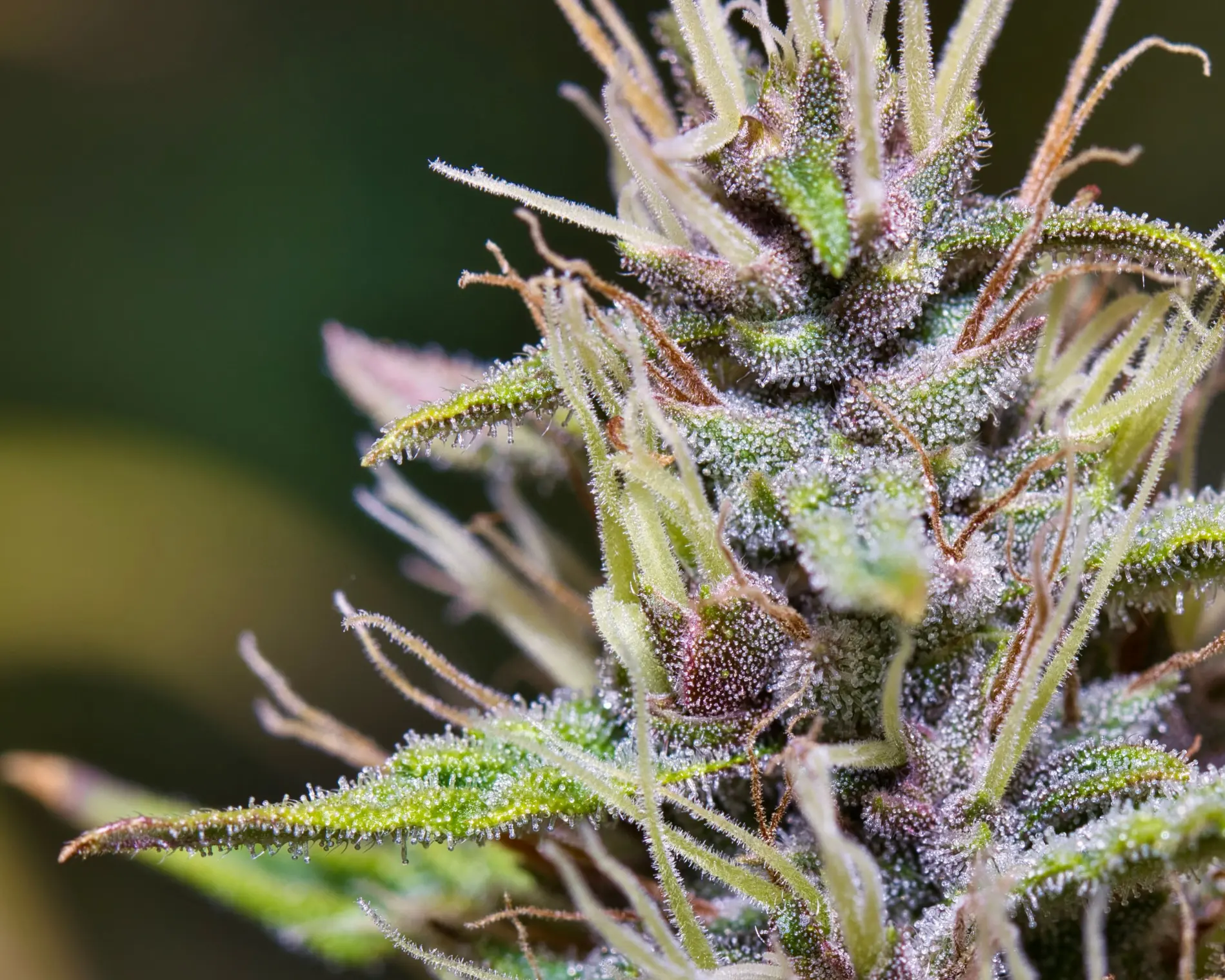
Williams Wonder
William’s Wonder: Strain Profile & Grow Guide
William’s Wonder is an indoor specialist from an earlier era of cannabis breeding, when a successful indica was expected to stay low, build dense resinous flowers and deliver an effect strong enough to end the day. Its exact ancestry is not completely documented, but the cultivar is generally connected to selected Afghan material and is often described as a pure or nearly pure indica. The plant’s identity is more consistent than the uncertain pedigree: short and broad growth, limited outdoor usefulness, exceptionally heavy flower density, strong resin production and a sweet-sour aroma that can move between lemon candy, tropical fruit, tea, honey and spice.
The cultivar looks simple until the flowers begin to harden. A short plant with sturdy branches appears ideal for a low-ceiling room, yet William’s Wonder can create a serious humidity problem because so much mass is concentrated close to the main frame. The grower does not need to control dramatic stretch. The real task is to create enough surface area for yield without turning the compact canopy into a sealed block of leaves and dense buds. This is why a successful run depends on early branch planning, moderate plant count, root-zone discipline and late-flower airflow that reaches the inside of the canopy.
William’s Wonder is also a useful reminder that bud quality is not measured by frost alone. The flowers can become extremely resinous, but a hot dry or an early harvest leaves the smoke harsher and less complex than the living plant suggests. Properly matured flower can deliver sour citrus, sweet candy, pepper, dried tea and a heavier tropical or apricot-like depth. Its effect is equally layered. A small amount can begin with surprising mental brightness, but the cultivar’s true direction is physical. The larger the dose, the more firmly it moves toward appetite, immobility and sleep.
Strain Features
| Feature | Details |
|---|---|
| Strain Type | Pure or near-pure indica photoperiod cultivar |
| Genetic Background | Old indoor-selected Afghan-derived genetics, exact pedigree uncertain |
| THC | Commonly high for a heritage cultivar, with modern samples varying widely |
| CBD | Usually low |
| Common Terpene Pattern | Pinene, myrcene and beta-caryophyllene are frequently reported, with limonene contributing to sweeter citrus expressions |
| Aroma | Lemon candy, honey, tea, tropical fruit, spice, sour herbs and pungent resin |
| Effect Character | Strong physical relaxation with a dose-dependent shift from euphoria to couch-lock |
| Flowering Time | Approximately 8 to 10 weeks depending on the preserved line and maturity target |
| Outdoor Suitability | Historically regarded as an indoor-focused cultivar |
| Height | Short and wide |
| Stretch | Low to moderate |
| Natural Structure | Thick main frame, broad canopy and dense flower clusters |
| Yield | Moderate to high indoors when the canopy is opened and supported |
| Bud Density | Very high |
| Resin Production | Very high |
| Training Compatibility | Early topping, wide LST, short SCROG and carefully spaced SOG |
| Main Grow Risk | Moisture trapped in hard flowers and a compact interior canopy |
| Feeding Behavior | Moderate appetite, more easily damaged by excess late nitrogen than improved by it |
| Grow Difficulty | Moderate |
| Best Time of Use | Evening and nighttime |
William’s Wonder has been preserved and reproduced through different lines, so exact numbers should be treated cautiously. The most reliable traits are its low profile, indoor orientation, heavy resin, dense flowers and powerful late-stage body effect. If a plant carrying the name grows tall and airy like a tropical sativa, the grower should question whether it represents the classic expression.
Genetic Lineage
What is known
William’s Wonder emerged from an old seed era and is commonly linked to Afghani indica material selected for indoor production. Historical descriptions present it as a pure indica or as a heavily inbred indica family. Unlike a modern release with a clearly published two-parent formula, the cultivar’s identity is tied to preservation of a particular old population or selection.
That history explains the plant’s strongest inherited traits. Broad leaflets, short internodes, limited stretch and hard flowers all fit an Afghan-influenced indoor line. The resin response is also characteristic of plants selected from hash-producing populations, where gland density and sticky flower surfaces were more important than open spear-shaped buds.
What remains uncertain
The exact original parents are not reliably documented. Some later reproductions describe the line as a self-cross or an inbred recreation of preserved stock. Others present more speculative parentage. A responsible profile should not transform these competing accounts into a false genetic equation.
The practical consequence is phenotype variation between releases. One William’s Wonder may remain extremely low and produce golf-ball clusters around the branches. Another may show slightly more extension and a stronger sour-citrus aroma. The common identity should be judged across the whole grow: compact frame, dense resinous flowers and a strongly physical finish.
Why the indoor adaptation matters
William’s Wonder is often described as indoor-only. That phrase does not mean the plant is biologically incapable of surviving sunlight. It means the line was selected around indoor timing and architecture rather than broad outdoor adaptability. It may not respond well to a long outdoor transition, an unpredictable autumn or transplantation immediately before flowering.
A plant bred for a controlled room does not need to solve the same problems as a field cultivar. It can keep flower mass close to the stem because fans and dehumidification are assumed. It can finish according to an artificial light schedule. It does not need to withstand weeks of rain or stretch above competing vegetation.
Keeper selection
A worthwhile keeper should not merely be the shortest plant. Look for strong branch attachment, enough lateral extension to create separate bud zones, early resin development and a high calyx-to-leaf ratio. A plant that is extremely compact but produces leaves packed inside every flower may be more difficult to dry than a slightly taller sister.
Aroma should be evaluated after cure. The classic sweet-sour identity can appear as lemon candy, tea, honey, apricot, tropical fruit or peppery resin. Select a plant whose cured flower keeps both sweetness and pungency. A living plant that smells loud but dries into flat earth is not the strongest representation.
Effect Breakdown
Light dose: more mental lift than expected
A small amount of William’s Wonder can begin with a quick change in mood. Users may feel pleased, amused and slightly more interested in music or conversation. The head effect can be brighter than the plant’s pure-indica reputation suggests. It is not usually a sharp productivity high, but it may provide a short period of mental distance from stress without immediate immobility.
This opening can create false confidence. A user may assume the cultivar is milder than expected and consume more before the physical phase arrives. Because the plant is often potent and the transition can build, patience is essential.
Moderate dose: physical pressure releases
At a middle dose, the body becomes the center of the experience. Muscles loosen, posture sinks and uncomfortable physical awareness may become less intrusive. The emotional tone can remain positive and sheltered. Appetite often increases, and food can become unusually satisfying.
The mind is not necessarily blank, but linear thought becomes less attractive. William’s Wonder is better suited to watching, listening or resting than organizing complex tasks. The user may feel capable of activity while having no desire to begin it.
High dose: the indoor indica reveals itself
Heavy consumption can produce pronounced couch-lock. Limbs feel dense, eyelids lower and coordination becomes slower. The user may move only when necessary. Sleep can follow naturally once the initial euphoria settles.
This strong body phase explains why the cultivar has long been associated with pain, appetite and insomnia. It also explains why new users should be cautious. Excess can cause dizziness, confusion, dry mouth, anxiety or an unpleasant sense of being physically trapped.
Emotional character
William’s Wonder is commonly described as soothing, but the quality is not purely quiet. The sweet aroma and initial uplift can create a warm, almost celebratory first stage. The later phase turns that warmth inward. Rather than encouraging intense social performance, it makes familiar surroundings feel sufficient.
Duration
The effect can last longer than that of many short-flowering indicas, particularly at a high dose. A strong session may remain physically noticeable for several hours. The user should plan accordingly and avoid driving, operating equipment or taking on obligations that require rapid reaction.
Flavor & Aroma Profile
Aroma architecture
William’s Wonder is often discussed as a citrus strain, but its aroma is broader than lemon alone. The top layer can suggest lemon candy, sweet orange, tropical fruit or ripe apricot. Underneath that sweetness are tea, herbs, pine, black pepper and a sour resinous note.
The contrast is important. If the flower smells only sugary, it lacks the darker base that gives the cultivar weight. If it smells only pungent and earthy, the delicate sweet-sour identity may have been lost through phenotype selection or post-harvest handling.
The living flower
Early bloom can be relatively herbal. As resin appears, the aroma thickens and becomes sweeter. Late in flower, disturbing a bud may release citrus skin, spice and a dense almost medicinal resin scent. Some expressions become extremely pungent during the final weeks even if the plant smelled moderate in veg.
Broken bud and grinder aroma
The intact cured flower may lead with tea, honey or sweet citrus. Breaking it reveals pepper, sour herbs and resin. Grinding often makes the fruit more obvious, particularly in expressions with apricot or tropical notes.
Inhale, exhale and aftertaste
The inhale may begin with candy sweetness and mild citrus. The smoke then becomes thicker, introducing pepper, tea and earthy resin. On the exhale, sour lemon, spice and pungent herbs can dominate. A good cure leaves a warm sweet aftertaste rather than a sharp green burn.
Cure development
Freshly dried William’s Wonder can feel blunt. The resin makes the smoke expansive, while the aroma may be mostly sour and herbal. Over several weeks, sweetness becomes clearer and the tea-like dryness becomes more refined.
A longer cure can reveal the cultivar’s best balance. Lemon stops tasting like cleaning product and begins to resemble candied peel. Pepper becomes warm rather than abrasive. Tropical or apricot notes appear behind the main profile.
Common quality failures
Overfeeding with nitrogen can preserve thick green leaves around the buds and contribute to a heavy vegetal finish. Drying too quickly removes the candy and fruit while leaving pepper and pungency. Jarring overly wet buds creates fermentation and destroys the clean tea-like note.
Because the flowers are extremely dense, William’s Wonder is one of the cultivars where a superficially dry bud can still hold substantial internal moisture. The cure must be approached as moisture equalization, not simply aroma development.
Dominant Terpenes
Chemical reports for William’s Wonder vary, but the recurring sensory pattern supports a small group of likely contributors.
| Terpene | Aroma Contribution | Relevance to William’s Wonder |
|---|---|---|
| Alpha-pinene | Pine, fresh herbs and a sharp green lift | Frequently reported as dominant and may support the cultivar’s brighter opening |
| Myrcene | Musk, earth, ripe fruit and herbal depth | Consistent with the heavy physical phase and tropical-fruit undertone, although it does not cause the effect by itself |
| Beta-caryophyllene | Pepper, spice and warm wood | Helps explain the spicy exhale and pungent resin base |
| Limonene | Lemon peel, sweet citrus and sour candy | Likely shapes the cultivar’s most recognizable top note in citrus-forward expressions |
| Humulene | Dry wood, herbs and tea-like bitterness | May reinforce the mature dry finish found after cure |
The label on a product should not be treated as a laboratory guarantee. Different preserved lines and environments can produce different terpene order. Even plants grown from related seed may not express the same ratio.
Terpenes describe flavor more reliably than effect. Pinene should not be presented as a certainty of focus, and myrcene should not be treated as the single cause of couch-lock. The cultivar’s experience results from the complete chemical profile, dose and user sensitivity.
Indoor vs. Outdoor Growing
| Factor | Indoor Cultivation | Outdoor Cultivation |
|---|---|---|
| Genetic Fit | Strong, historically selected for controlled rooms | Limited and inconsistent |
| Height | Short, useful under low ceilings | Still short, but may not use the full season efficiently |
| Best Plant Shape | Wide low frame with separated tops | Container plant started indoors and moved only when stable, if attempted |
| Main Risk | Humidity inside dense buds | Weather instability, transplant stress and late-season moisture |
| Flowering Control | Predictable under a stable light cycle | Dependent on latitude and seasonal trigger |
| Yield Potential | Moderate to high per area | Usually less reliable than indoor production |
| Training | Topping, LST, short SCROG or carefully spaced SOG | Early shaping before outdoor transition |
| Flavor Control | Strong, because harvest and drying can be precisely timed | Sun may add depth, but weather can damage the crop before maturity |
| Root-Zone Management | Easy to match container and irrigation to plant size | Containers may be safer than unknown ground soil |
| Recommended Choice | Preferred | Experimental rather than optimal |
Why indoor is the default
William’s Wonder was built around the indoor environment. Its low stretch allows the grower to use a short room efficiently, while its dense buds benefit from controlled humidity and immediate access to drying space. The plant’s predictable height also makes it useful for multiple small plants or a short, wide canopy.
The indoor grower can manipulate the exact weakness of the cultivar. Fans can move air through the canopy, irrigation can be reduced as transpiration slows and harvest can occur without rain. These controls matter more than the theoretical advantage of outdoor sunlight.
What outdoor growers need to understand
Outdoor cultivation is possible in warm protected conditions, but the plant does not automatically improve because it receives more root space. A compact indoor line may start slowly outdoors, remain lower than surrounding vegetation or enter flower in a way that does not match the local autumn.
Moving a plant from indoor veg to outdoor flower introduces light-intensity change, wind, pests and transplant stress. Attempting this close to the transition can delay growth. Anyone determined to grow William’s Wonder outdoors should acclimate gradually and use a movable container or protected greenhouse rather than assuming an open field will be ideal.
Strain-Specific Grow Guidance
Build width before flower
Do not let the stretch make the decisions
William’s Wonder does not provide a huge stretch to fill empty space. The plant should enter flower with most of its intended footprint already occupied. This is the opposite of a Haze that can be flipped small and allowed to expand.
Top the plant once after vigorous establishment. Allow the new leaders to extend, then pull them outward with soft ties. A second topping can be useful in a larger space, but repeated cutting may create too many short crowded tops.
The final structure should resemble a low open bowl rather than a solid shrub. The center can contain productive branches, but they must not overlap so tightly that no air reaches the stems.
Choose between SOG and a wider bush
William’s Wonder can work in SOG because of its low height and dense central flower. However, plant spacing must account for width. A sea of broad plants packed like narrow sativas will become a humidity wall.
A wider bush strategy uses fewer plants, a longer veg and early topping. It offers better access for inspection and allows each cola to develop separately. The tradeoff is more veg time and a larger root zone.
Choose one system early. Combining high plant count with long veg produces the disadvantages of both.
Root establishment
A vigorous plant can still be slowed by a saturated medium. William’s Wonder should establish roots through the final container before flowering. Its low canopy may transpire less than a taller hybrid of similar age, so irrigation volume must match actual demand.
Use a porous medium and avoid creating a permanent wet lower zone. Fabric containers or well-designed rigid pots can help, but drainage holes do not compensate for a heavy compacted mix.
Feeding without excess leaf
During veg, moderate nitrogen supports broad healthy leaves and rapid frame development. Excess produces very dark foliage, clawing and thick soft growth that becomes difficult to manage in flower.
As the stretch ends, reduce nitrogen emphasis. William’s Wonder is building dense flowers, not a large airy canopy that needs constant new leaf. A plant kept excessively green through late flower may produce more trim and a slower cure.
Increase bloom nutrition only in response to healthy demand. Strong resin and flower density are genetic features, not proof that the plant requires aggressive phosphorus and potassium products.
Temperature and humidity
Moderate daytime warmth supports growth, but excessive heat can soften the flowers, reduce volatile aroma and increase water demand. Stable conditions are better than trying to force the plant with high temperature.
Humidity management should become stricter as buds harden. The risk is not only visible surface moisture. The center of a dense cluster can remain humid after lights-off even when the room sensor looks acceptable.
Place sensors at canopy level and observe how humidity changes after irrigation and during the first dark hours. Fans should create gentle movement through the branch gaps. Leaves should tremble slightly, not fold under a constant blast.
Defoliation strategy
Broad leaves can block the center. Remove individual fans that cover multiple bud sites or prevent air from entering a branch junction. Do not strip the plant into bare stems.
A useful schedule is one structural cleanup before flower, a second assessment after stretch and small maintenance removals later. Heavy defoliation during bulking can reduce photosynthetic capacity and expose previously shaded flowers to sudden stress.
Support before weight arrives
William’s Wonder has strong stems, but extremely dense buds can still pull branches outward. Install a low support net or individual stakes before the final swelling phase. Support should hold the branch in its natural position rather than compressing buds together.
Disease inspection
Botrytis is the main late-flower concern. Inspect any bud with a single dying sugar leaf, unusual discoloration or a soft spot. Remove affected tissue completely and investigate environmental causes.
Powdery mildew can also develop if airflow is poor, although the dense bud interior is generally the more serious risk. Preventive cleanliness and early canopy opening are more effective than trying to spray mature flowers.
Harvest window
William’s Wonder can look finished early because the buds are hard and resinous. Wait for calyx swelling and a reduction in fresh pistil growth. Check trichomes on the calyxes at several canopy positions.
For the clearest version of its euphoria, harvest with mostly cloudy trichomes and little amber. For the classic heavy nighttime effect, allow a modest amber percentage. Waiting far beyond maturity can increase dullness without improving flavor.
Important: Hard buds are not automatically dry buds, and frosty buds are not automatically mature buds. William’s Wonder requires careful inspection both before and after harvest.
Weedth Bud Flavor Tips
Harvest for sweet-sour balance
The citrus top note should smell mature rather than green. Early flowers may smell sharp and lemony but lack candy depth. Late flowers develop more sweetness, spice and resin. Harvest when the aroma feels complete and calyxes are fully swollen.
Divide dense branches for drying
Whole-plant drying is risky unless the room has excellent control and the plant is small and open. Dense William’s Wonder flowers close to the main stem can remain wet for too long. Medium branch sections usually provide a safer compromise.
Keep branches separated. Do not allow the heaviest tops to touch. Air should circulate around the hanging material without blowing directly at it.
Preserve citrus and honey
High heat removes limonene-rich citrus character quickly. Very dry air can lock the outer surface while internal moisture remains. Aim for a cool gradual dry and judge the flower by the entire bud, not only by one snapping twig.
The honey and tea notes often become clearer after cure. Opening the container repeatedly for smell checks only slows stabilization and increases oxygen exposure.
Outdoor material
If William’s Wonder is grown outdoors, inspect the crop aggressively before drying. Dense flowers can hide insects, dead tissue or rain damage. Remove contaminated material and separate the largest buds into smaller branch units.
Cure stages
The first week is primarily about moisture equalization. The second and third weeks begin to soften green and sharp sulfur notes. By four to eight weeks, candy, tea, tropical fruit and spice should become more integrated.
If the aroma becomes sour in a fermented way, the flower entered storage too wet. If the buds lose all scent and crumble, the dry was too aggressive. Neither problem can be fully repaired with humidity products after the fact.
Storage
Keep whole buds in airtight containers in darkness. A cool cupboard is better than a warm display shelf. For long storage, divide the harvest so only one container is opened frequently.
Avoid adding fruit peel or other organic material. It can introduce mold and replaces the cultivar’s natural aroma with contamination rather than restoring lost terpenes.
Weedth Bud Boost Tips
Use the whole floor area, not the whole plant volume
William’s Wonder is a floor-area cultivar. It does not need height to produce. The grower should create a low field of separated tops and provide strong light across that surface.
Topping once and spreading four to eight main branches is a reliable strategy. A short screen can keep the canopy level and support the final weight. Do not fill every opening before the flip, because the plant still expands and the leaves broaden.
Productive depth
Keep the productive zone shallow. Lower branches beneath a dense indica canopy rarely develop premium flower. Remove weak shoots before they consume the entire flowering period.
This can reduce the number of visible buds while increasing average size, resin quality and drying safety.
Plant count tradeoff
A high-density SOG can produce rapid turnover, but each plant must have a narrow assigned footprint. Over-vegetating SOG plants causes lateral overlap and humidity. Fewer topped plants require more time but give better access.
The best choice depends on legal plant limits, room access and the grower’s ability to inspect the center.
Environmental yield protection
Late-flower dehumidification is a yield tool. Losing one giant cola to internal rot can erase the gain from aggressive feeding or extra veg. Keep night humidity controlled and avoid large temperature drops that create condensation inside dense flowers.
Moderate nutrition
Do not confuse density with hunger. William’s Wonder can produce hard buds on a moderate program. Overfeeding may increase leaf mass and salt stress without increasing usable flower.
Maintain root health, stable pH appropriate to the medium and consistent irrigation. The plant can only convert strong light into flower when roots are functioning.
Resin preservation
Resin is part of yield. Handle branches by the stems, keep trim surfaces clean and avoid warm working conditions that smear trichomes. Dry trimming may preserve the surface better if humidity is controlled, while a limited wet trim can improve airflow in a humid room.
Medical Uses & Benefits
William’s Wonder is commonly associated with nighttime symptom management. The strongest reported uses involve physical discomfort, sleep, appetite and emotional overload. These are consumer experiences, not proof of treatment.
Sleep and insomnia
The late body phase can become strongly sedating. Users who struggle to disengage from tension may find the combination of mood lift and physical heaviness helpful. Timing and dose are important because a small amount may feel more euphoric before sedation develops.
Pain and muscle tension
Dense physical relaxation may reduce awareness of chronic aches, spasms or post-activity soreness. Someone who needs daytime mobility may find it too impairing at therapeutic doses.
Appetite and nausea
William’s Wonder is frequently associated with strong appetite stimulation. This may benefit patients experiencing poor appetite, but it can be undesirable for users trying to avoid late-night eating.
Anxiety and depression
The initial warmth may interrupt negative mood and the later physical calm can reduce tension. However, a very high dose may create confusion or panic in THC-sensitive users. Anxiety relief is not guaranteed.
Limitations
The cultivar is usually THC-dominant and does not provide the balanced cannabinoid profile that some medical users prefer. It can impair attention, coordination and short-term memory. Medical use should be discussed with a qualified professional, especially when other medicines are involved.
Ideal User Profile
William’s Wonder is designed for the user who has finished the day’s responsibilities. It fits a quiet evening, a substantial meal, a film or preparation for sleep.
Choose it when the goals are:
Strong physical relaxation
Appetite stimulation
A sweet-sour old-school indica flavor
Nighttime pain or tension management
A low-height indoor cultivar with dense resinous buds
A dose-responsive experience that can range from warm euphoria to couch-lock
It is less suitable for morning use, complex social obligations, detailed creative work or users who dislike heavy body effects. New consumers should start very low because the pleasant opening can hide the strength of the later phase.
For growers, the ideal match is someone with a controlled indoor room, reliable humidity management and enough patience to dry dense buds safely. Outdoor-only growers in rainy climates should choose a cultivar adapted more clearly to field conditions.
Grower Notes and Feedback
The most consistent grower praise concerns density and resin. William’s Wonder can produce flowers that feel unusually heavy for their size. This creates excellent bag appeal but also makes moisture management unforgiving.
A second pattern is the difference between early plant shape and final canopy behavior. The plant may appear perfectly manageable through veg, then close its own air channels as leaves broaden and buds swell. Growers who wait until late flower to thin the center often struggle to reach the problem areas.
Reports also emphasize indoor performance. The cultivar uses limited height efficiently and can produce a strong yield per floor area. Outdoor results are much less consistent, supporting the view that this is a room-adapted plant rather than a universal garden variety.
Aroma descriptions vary from lemon candy and tropical fruit to honey, tea and pungent spice. These differences may reflect preserved lines, phenotype and cure. The common denominator is a sweet-sour top over a dense resinous base.
Growers should not expect a perfectly clean trim if the canopy was overfed. Broad leaves and late nitrogen can increase manicuring work. A properly finished plant, however, can have a favorable calyx-to-leaf ratio and exceptionally useful resinous trim.
Weedth Editor's Note
Where Williams Wonder earns its space
William’s Wonder is not a plant I would try to modernize through unnecessary complexity. Its advantage is clear: a low indoor frame can produce very dense, resinous nighttime flower. The grower’s job is to protect that advantage from its own side effects.
I would build width early, keep the center open and install support before the buds become heavy. I would not chase maximum plant count. Access to the canopy matters more than making every square centimetre look occupied during veg.
The cultivar’s greatest weakness is also obvious. Those hard flowers can hide moisture, and the plant has little reason to forgive a humid finish. I would rather harvest a slightly smaller number of clean, separated colas than one solid hedge that looks impressive until the first bud is opened.
Flavor would be my second priority. Lemon candy and tea are more interesting than generic pungent indica, but they require a cool dry and a real cure. The resin will make a rushed sample feel powerful, yet power alone is not the complete result.
I recommend William’s Wonder to growers who want a serious indoor indica and are willing to manage density. I do not recommend it simply because a room has a low ceiling. Low height solves only one problem.
Weedth Score
Growing Experience 8.1/10 Excellent use of limited height and strong vigor, with a meaningful humidity challenge
Bud Structure & Visual Appeal 9.1/10 Extremely dense, colorful and resinous flowers are a defining strength
Aroma Complexity 8.6/10 Lemon candy, tea, honey, fruit and spice create depth, though preserved lines vary
Flavor & Smoothness 8.5/10 Rich and distinctive after a slow cure, but resinous flower can smoke harsh when rushed
Effects & High Experience 8.8/10 A strong dose-responsive indica progression with substantial nighttime value
Overall Satisfaction & Recommendation 8.6/10 A high-quality indoor specialist, but not an all-purpose cultivar
William’s Wonder turns low vertical space into serious flower, provided the grower leaves enough room for the buds to breathe.
FAQ
Is William’s Wonder a pure indica?
It is generally described as a pure or near-pure indica derived from old Afghan material. The exact original pedigree is uncertain, but its growth and effect strongly reflect indica selection.
Why is William’s Wonder considered an indoor strain?
The line was selected around controlled indoor timing, compact architecture and dense flower production. It can survive outdoors, but seasonal timing, weather and transplant stress make outdoor results less reliable.
How much does William’s Wonder stretch?
Stretch is usually low to moderate. The plant should enter flower with most of its intended width already built. Do not expect a small plant to fill a large screen after the flip.
How long does it flower?
Approximately eight to ten weeks is a realistic range. Preserved lines and harvest preference can shift the finish. Judge the plant by calyx swelling and trichome maturity.
Is William’s Wonder good for SOG?
Yes, provided the plants are spaced for their width and flowered before laterals overlap. A crowded SOG creates a serious humidity risk.
Does it respond well to topping?
One or two early toppings can work very well. Repeated topping may create too many compact tops and extend veg without improving premium yield.
Why are the buds so hard but still wet inside?
Dense flowers lose surface moisture before internal moisture has fully equalized. Dry medium branches slowly and monitor the early cure rather than relying only on the feel of the outside.
Is it susceptible to bud rot?
Its flower density creates an elevated botrytis risk when humidity, airflow or drying are poorly controlled. The plant’s vigor does not make the buds immune.
What nutrients does William’s Wonder need?
A moderate balanced program is usually sufficient. Excess late nitrogen increases leafiness and slows a clean finish. Increase feed only in response to healthy demand.
When should it be harvested for sleep?
Allow the plant to reach full maturity with mostly cloudy trichomes and a modest amber percentage on the calyxes. A very early harvest may feel brighter and less physically complete.
What does William’s Wonder taste like?
Common descriptions include lemon candy, sweet citrus, honey, tea, tropical fruit, pepper and pungent resin. Exact emphasis varies by line and cure.
Is William’s Wonder beginner-friendly?
The plant’s height and vigor are manageable, but the dense flowers require careful humidity and post-harvest control. A prepared beginner can succeed, though it is not completely mistake-proof.
Similar Strains
Northern Lights: Similar low-height indoor reliability and nighttime body relaxation. Northern Lights is generally easier and more pine-earth dominant.
Hash Plant: Shares dense resin, short growth and old Afghan character. Hash Plant often tastes more directly earthy and hash-like, with less candy-citrus complexity.
Sensi Star: Another compact, potent indoor indica with hard flowers. Its flavor can be more metallic, lemony and pungent, and the effect may feel sharper at onset.
Bubba Kush: Comparable evening heaviness and limited stretch. Bubba Kush usually emphasizes coffee, soil and spice rather than tropical citrus.
Maple Leaf Indica: A heritage Afghan alternative with sweet spice, broad leaves and a classic body stone. It may show a softer aromatic profile.
Afghan Kush: The most direct option for users who want a simpler landrace-style expression of earth, resin and sedation without William’s Wonder’s candy and tea notes.
Share this article
A quick overview of the topics covered in this article.
Follow us
Latest articles
September 9, 2026
September 9, 2026
September 9, 2026