
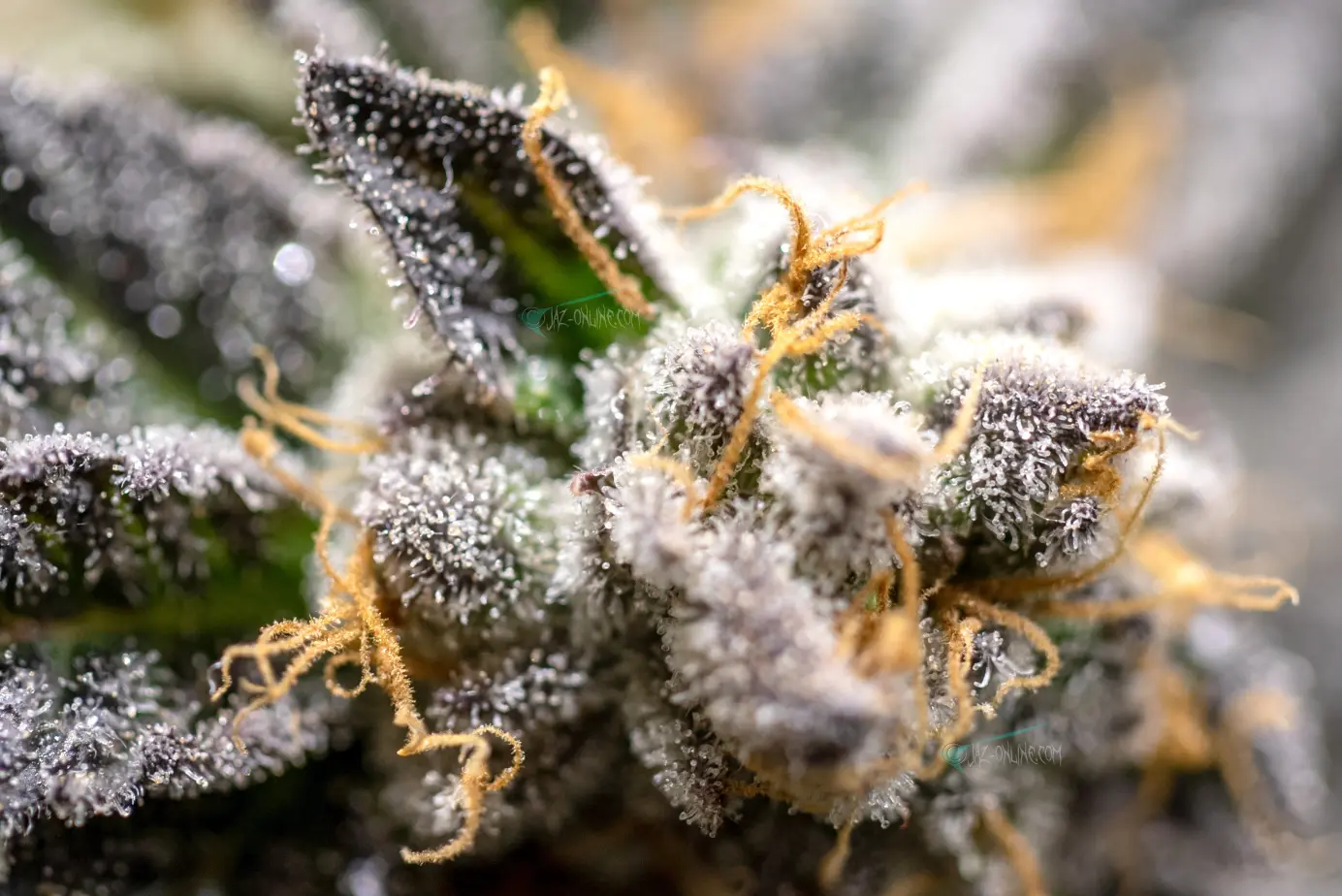
Zamaldelica
Zamaldelica is a pure-sativa hybrid that breaks one of the easiest assumptions growers make about tropical genetics. It is not simply a tall pole that must be bent away from the ceiling. Its most distinctive habit is extreme lateral branching. The plant can remain medium in overall height while building a wide, vigorous network of side branches that compete strongly with the main stem. That makes horizontal space, not just vertical clearance, the central cultivation resource.
The genetics combine Zamal from Réunion Island with Malawi and Thai influence. Those lineages bring tropical vigor, long maturation, strong psychoactivity, and an unusually vivid aromatic profile. The standard photoperiod form commonly needs about 11 to 14 weeks indoors and can finish from late October into November outdoors. That schedule is long enough that every canopy decision must be made with the final month in mind. A screen that looks comfortably half full at the flip can become overbuilt once lateral branches continue stretching into reproductive growth.
Zamaldelica's flavor is one of the strongest reasons to accept that flowering time. Sweet carrot, mango, orange, flowers, and resin recur in the cultivar's documented bouquet. Analytical terpene data also support a bright profile dominated by terpinolene and beta-myrcene, with ocimene, pinene, limonene, beta-caryophyllene, and other minor components appearing behind them. The carrot note is particularly useful as a selection marker because it is unusual enough to distinguish a keeper from a generic tropical-fruit sativa.
The plant is also more disease-resistant than its exotic appearance suggests. Strong resistance to powdery mildew and especially botrytis is documented, and the open tropical structure helps air movement. That resistance does not shorten the season. In a marginal outdoor climate, the problem is less "will the plant survive?" and more "will it receive enough warm, bright weeks to fully ripen?" Indoors, the problem is whether the grower can keep an extremely branchy canopy organized for three months of flower without turning it into a shaded mat.
Strain Features
| Feature | Details |
|---|---|
| Strain Type | 100% sativa hybrid |
| Genetics | Zamal × Malawi/Thai |
| Breeding Status | Semi-stabilized multi-generation sativa hybrid |
| THC | Documented samples commonly around the low 20% range; actual crop potency varies |
| CBD | Typically very low |
| CBG | Can be measurable and variable by phenotype/sample |
| Indoor Flowering | Commonly about 11-14 weeks |
| Outdoor Finish | Late October into November in suitable Northern Hemisphere climates |
| Structure | Extremely bushy, highly lateral, medium-height sativa rather than a simple vertical spear plant |
| Stretch | Strong, especially through side branches; horizontal expansion can be more challenging than absolute height |
| Best Training Fit | SCROG, LST, pruning and wide horizontal training; responds well to canopy shaping |
| Feeding Behavior | Moderate nutrient levels are generally sufficient |
| Disease Resistance | High powdery mildew resistance and very high botrytis resistance are documented; heat tolerance is also strong |
| Bud Structure | Long sativa flowers with good resin, usually more open than compact indica-type buds |
| Yield Identity | Average-high potential when lateral branches are converted into evenly lit flower sites |
| Aroma / Flavor | Sweet carrot, mango, orange, flowers, resin, herbal tropical notes and spice |
| Recurring Terpenes | Terpinolene and beta-myrcene are prominent in documented analysis; ocimene, pinene, limonene and beta-caryophyllene appear behind them |
| Effect Character | Powerful, clear, euphoric, stimulating, soaring and potentially psychedelic |
| Difficulty | Moderate to advanced because of long flowering and aggressive lateral growth, despite good disease resistance |
Genetic Lineage
Zamaldelica combines three geographic sativa traditions. Zamal contributes the unusual tropical-fruit and carrot identity plus vigorous branching and powerful cerebral character. Malawi contributes potency, resin, heat tolerance, and African sativa vigor. Thai influence reinforces the long, clear, electric mental effect and narrow-leaf growth. The cultivar is therefore not a Haze derivative disguised as a landrace hybrid; its character comes from Indian Ocean, African, and Southeast Asian sativa material.
The Zamal side is especially important to morphology. Growers expecting a single dominant tropical stem may be surprised by the number of strong laterals. The plant can build a broad, almost shrub-like sativa framework. This is why a screen is so effective. The plant already wants to occupy horizontal space; the grower simply needs to organize that growth into equal light positions.
The Malawi/Thai side helps explain the long finish and the intensity of the effect. These are genetics selected in climates where long flowering is biologically normal. The breeding has made the plant far more practical than an unworked tropical landrace, but it has not converted it into an eight-week hybrid. The 11-to-14-week range should be treated as part of the cultivar's identity, not a defect to be corrected with stress or premature harvest.
Phenotype variation exists in aroma, branching, flowering length, and effect intensity. Some plants lean heavily into mango-carrot sweetness, while others can be more floral, resinous, citrus, or herbal. A selection run should prioritize cured aroma and the ratio of productive lateral growth to unmanageable stretch. The best keeper for a small indoor space may be a slightly more compact plant even if a wider phenotype yields more outdoors.
The genetics also matter for outdoor planning. Zamal and tropical ancestry favor warmth and strong light. Documented resistance to heat and mold improves survival, but the late finish still places the cultivar best below roughly the mid-40s latitude unless a protected microclimate extends the season. Resistance protects flowers from pressure; it does not create autumn photons.
Effect Breakdown
Zamaldelica can be powerful even for experienced users, and the onset is typically cerebral. At a small dose, the first phase may feel clear, elevated, and energetic. Colors, music, conversation, movement, and outdoor surroundings can become more vivid. The effect is often described as clean rather than immediately foggy.
At a moderate dose, the experience can become much more expansive. Thoughts may accelerate or branch in unusual directions, matching the plant's own physical growth in an almost amusing way. Creativity and sensory immersion can increase, but so can distractibility. This is not necessarily a cultivar for detailed administrative work or situations where the user needs to remain emotionally neutral.
The peak can become psychedelic in the everyday cannabis sense: altered time perception, intensified music, unusual thought associations, and a feeling of mental distance from routine concerns. These effects are subjective and dose-dependent, not proof that the plant acts like a classic psychedelic drug. The important safety point is that high doses can be overwhelming.
Physical heaviness is usually secondary. The body can feel light, active, or gently relaxed while the mind remains dominant. Later, the stimulation can soften into a calmer after-phase, but Zamaldelica is not generally selected for couch-lock. Users seeking sleep may find the mental activity counterproductive unless the dose and timing suit them personally.
Sensitive users should start very low. Strong sativas can produce anxiety, racing heart, paranoia, or thought loops when the dose exceeds comfort. Because batch potency varies, familiarity with the name does not guarantee familiarity with the current flower.
Harvest maturity matters. Early-picked flower can feel sharp and restless, while fully mature flowers usually produce a more integrated, sustained effect. Letting the cultivar finish is especially important because much of its value lies in the refined late-stage expression rather than simple early resin production.
Flavor & Aroma Profile
Sweet carrot is Zamaldelica's signature note. It can sound strange until smelled in a mature flower: a root-vegetable sweetness with a fresh, slightly earthy edge that sits beside ripe mango and orange. The result is not savory like cooked carrot. It is closer to freshly cut sweet carrot combined with tropical fruit and resin.
The live plant often begins with floral-green and citrus notes. As bloom progresses, mango and orange become more obvious, and the carrot character can emerge as the resin matures. Some phenotypes add floral perfume, herbal sweetness, or a dry resinous background. The bouquet can be remarkably bright for a long tropical sativa.
Breaking a properly cured flower should release more fruit than the unopened jar. Mango and orange can become sharper, while the carrot note gains a clean earthy sweetness. Resin and spice sit below the fruit. If the plant is harvested too early, the carrot can be weak and the profile may read as generic citrus-herbal sativa.
The inhale is often sweet and bright. Orange, mango, and floral resin appear first, followed by a greener, herbal or carrot-like center. On the exhale, spice and resin can become more noticeable. The aftertaste may return to sweet carrot and citrus peel.
The aroma is vulnerable to heat because several of its important top notes are associated with volatile monoterpenes. A hot dry can leave a respectable resinous sativa flavor while removing the carrot-orange-mango detail. The crop may still be potent, but it no longer tastes specifically like Zamaldelica.
A patient cure helps. The first week after drying can feel disorganized, with fruit and green herb competing. Over several weeks, the plant smell fades and the unusual sweet-carrot identity becomes easier to identify. Store whole flowers cool and dark once moisture is stable. Warm storage accelerates terpene loss and cannabinoid degradation.
Dominant Terpenes
Zamaldelica is one of the easier cultivars in this batch to discuss chemically because a documented terpene analysis exists. The profile is notable for high terpinolene and beta-myrcene, with meaningful secondary contributions from ocimene, pinene, limonene, and a sesquiterpene fraction led by beta-caryophyllene. Exact percentages vary by sample, so the useful lesson is the hierarchy rather than treating one test as the chemistry of every plant.
| Terpene | Aroma / Flavor Role | Relevance to Zamaldelica |
|---|---|---|
| Terpinolene | Floral, herbal, fresh, sweet, sometimes citrus-pine | Major contributor to the bright, perfumed, tropical upper register |
| Beta-Myrcene | Earth, musk, herbs, soft fruit | Provides a deeper base beneath mango, carrot and citrus |
| Beta-Ocimene | Sweet, floral, green, tropical | Fits the airy floral-fruit middle of the bouquet |
| Alpha / Beta Pinene | Pine, fresh resin, green brightness | Adds crispness and structure to the sweet profile |
| Limonene | Citrus peel | Supports the orange side of the cultivar |
| Beta-Caryophyllene | Pepper, wood, dry spice | Helps explain the spiced resinous finish |
| Humulene and other minors | Woody, herbal complexity | Adds depth without defining the top-note identity |
These compounds are reliable descriptors of aroma chemistry, but subjective effects should not be reduced to a terpene formula. Terpinolene does not single-handedly create a soaring high, and myrcene does not automatically make the plant sedating. Cannabinoids, minor compounds, dose, and user biology remain central.
For the grower, high monoterpene content means late-flower temperature and drying deserve special attention. A room that repeatedly exceeds the preferred canopy temperature can volatilize the bright fraction quickly. Preserve the chemistry by keeping mature flowers cooler and handling them minimally.
Indoor vs. Outdoor Growing
| Aspect | Indoor Growing | Outdoor Growing |
|---|---|---|
| Space Challenge | Horizontal canopy expansion and long occupancy | Long seasonal finish and wide branch footprint |
| Best Training | SCROG, LST, pruning, early topping, wide trellis | Early branch spacing, large support framework, sun-oriented pruning |
| Flowering Time | 11-14 weeks | Late October to November in the Northern Hemisphere |
| Structure | Medium height but extremely bushy and lateral | Can become broad and vigorous with many long branches |
| Disease Pressure | Easy to control; documented resistance adds a margin of safety | Strong mold resistance is valuable, but prolonged cold rain can still compromise quality |
| Climate | Fully controllable if heat and humidity are managed | Best in warm temperate, subtropical or tropical regions with a long autumn |
| Yield | Average-high if screen is filled evenly without overgrowth | Potentially strong with full sun and enough root volume |
| Flavor | Easier to protect with controlled late temperatures | Full sun can enhance expression, but late harvest logistics are more difficult |
Indoor growing turns Zamaldelica into a geometry problem. The plant can stay below the ceiling if trained, but it will try to fill every empty horizontal space. A wide screen and early flowering are more useful than simply using a tall room. The best indoor grower thinks about where each lateral branch will end, not how tall the main stem currently is.
Outdoor cultivation gives the branches room, but the season becomes the limiting factor. Documented mold resistance is excellent, yet late October and November can bring cold, low light, and persistent rain in many temperate locations. A plant can remain relatively disease-free and still fail to reach the aromatic maturity seen in a warmer climate.
Strain-Specific Grow Guidance
Build the Screen Before the Plant Needs It
Zamaldelica responds exceptionally well to horizontal training because strong lateral growth is already part of its architecture. Install the net or trellis during vegetative growth. Begin spreading branches before the flip rather than waiting for stretch to create a tangle.
The screen should start underfilled. A grower used to compact hybrids may try to cover every square immediately, then discover that each branch keeps producing additional side shoots during transition. Leave open squares for the flowering stretch. The exact underfill percentage depends on the phenotype, but the principle is consistent: reserve room for the plant's genetic tendency to spread.
One early topping can help distribute dominance, but repeated topping is rarely necessary when lateral branches are already vigorous. The objective is not to create more branches; it is to select and organize the best existing branches.
Pruning: Remove Competition, Not the Yield Engine
Aggressive lollipopping can be a mistake because Zamaldelica's laterals are a major source of yield. Do not apply a compact-indica rule that removes everything except a few top stems. Instead, evaluate each branch by whether it can reach the screen and receive light.
Thin weak interior shoots that remain trapped below the productive plane. Keep strong laterals and spread them. The plant's natural branching makes it possible to produce many high-quality flowers without a huge central cola, but only if each retained branch has its own light corridor.
Defoliation should be selective. Narrow sativa leaves block less area than broad indica leaves, so there is often less reason to strip heavily. Remove damaged leaves and those that permanently seal a dense intersection. Preserve healthy photosynthetic surface for the long flowering period.
Vegetative Time Should Be Shorter Than the Plant Looks Like It Needs
Because the final height can remain moderate, Zamaldelica may look underdeveloped at the end of veg. The temptation is to wait until the screen is full. That is usually too late. Flowering stretch and lateral growth will occupy the remaining space.
Record how much the first run fills the screen after the flip. On the next cycle, adjust vegetative time so the canopy reaches its final target near the end of stretch rather than before it begins. This can save weeks of unnecessary veg and reduce late crowding.
Root Volume and Long-Cycle Stability
A 12-week flowering plant needs a root system that remains healthy for a long time. Avoid very small containers that become difficult to keep evenly watered in late flower. At the same time, do not place a small clone into an enormous wet pot where the medium stays saturated for days.
Build root volume progressively. Transplant after the existing container is well colonized, then allow the final pot to develop an active root network before flowering. In living soil, larger volumes can support long-term nutrient cycling. In inert or soilless media, irrigation precision and EC management become more important.
Overwatering is especially costly because recovery time uses part of an already long cycle. Keep the root zone oxygenated and use actual water demand to set irrigation frequency.
Feeding: Moderate Means Consistent
Zamaldelica is generally recommended for moderate nutrient levels through the cycle. The long finish does not mean it needs increasingly strong feed. Excess salts can accumulate over 12 or more weeks and create late leaf burn or root-zone imbalance.
More feed is not automatically more quality
Use a stable baseline and watch the plant. A healthy medium-green sativa with steady flower development does not need to be darkened with nitrogen. During transition, enough nitrogen should remain to support long-lived leaves, but excessive nitrogen can encourage unnecessary stretch and delay floral focus.
Phosphorus and potassium should remain balanced. Controlled cannabis research shows that mineral response has an optimum; more P is not a direct path to more cannabinoids. If flowers are smaller than expected, inspect light distribution and root health before assuming the plant needs a stronger bloom formula.
Light: Use the Whole Screen
Zamaldelica's screen can intercept light efficiently because branches can be distributed over a large surface. This is where the cultivar can convert its bushiness into yield. Keep the canopy shallow enough that top sites are not stacked directly over productive secondary sites.
Increasing PPFD can increase cannabis inflorescence yield when the plant has enough water, nutrition, CO2, and temperature control. The strain-specific goal is to expose many laterals to strong useful light rather than create a few extremely bright tops. Measure across the screen and correct hot spots.
Long flowering increases cumulative light exposure. A top that tolerates a high intensity for two weeks may show chronic stress after eight weeks at the same position. Watch for bleaching, persistent leaf-edge stress, and loss of aroma near the fixture.
Humidity and Disease Resistance
Zamaldelica has unusually good documented resistance to powdery mildew and botrytis, with botrytis resistance rated very high in the source material. This is a real advantage, but it should change risk management rather than eliminate it.
The plant's open narrow-leaf structure and longer flowers improve air exchange. Keep that advantage by not allowing the screen to become a solid overlapping mat. Air should move through the branches, not only above them.
Indoors, maintain lower late-flower RH and control dark-period spikes. Outdoors, choose a site that dries quickly after dew or rain. A resistant cultivar kept wet for days can still develop disease, and late-season water can reduce aroma even without visible rot.
Heat Tolerance Is Not an Aroma Strategy
Zamaldelica tolerates heat well compared with many cultivars, but survival and flavor preservation are different goals. A plant may remain healthy at high temperatures while volatile orange, floral, and tropical notes leave the flowers faster.
Use the cultivar's heat tolerance as insurance, not as a target. Maintain reasonable canopy temperatures during late flower. If the room smells dramatically louder during heat spikes, check the flowers rather than celebrating the odor.
Flower Development Is Slow but Continuous
The first half of bloom can feel unproductive to growers used to eight-week hybrids. Zamaldelica continues building long floral structures over time. The flowers may not harden quickly, but bracts continue stacking and resin becomes increasingly visible as the weeks pass.
Do not respond to the slow pace with extra fertilizer. Photograph the same branches every week. The cumulative development becomes obvious across a month even when day-to-day changes seem small.
Late flower is when aroma and resin quality become most interesting. The carrot-mango-orange profile often gains clarity as the plant fully ripens. Cutting at week ten because the plant "looks done enough" can sacrifice the final refinement.
Branch Support
The same laterals that create yield can become leverage points when flowers gain mass. A screen naturally supports indoor branches. If a branch rises above the net, add soft ties rather than allowing it to fold onto neighbors.
Outdoors, use a cage or multiple stakes early. Do not tie the plant into one dense bundle. Keep branches separated so wind can move through and flowers dry quickly after moisture.
Managing a Long Flower Without Late-Cycle Root Fatigue
A twelve-week flower means the root zone must remain functional long after an eight-week hybrid would already be hanging. Small irrigation errors that seem harmless in week three can become accumulated salt, poor aeration, or uneven moisture by week ten. Check the root system indirectly through plant behavior: stable water uptake, consistent leaf posture, and normal runoff or substrate EC are signs that the container is still working. A sudden slowdown in drinking should trigger an inspection of temperature, root-zone moisture, and maturity before another feeding is added.
In soilless systems, periodic attention to root-zone EC is useful because repeated fertigation can concentrate salts as plant demand changes. In biologically active soil, the problem is more often keeping moisture in the productive range without leaving the large container permanently wet. The plant should be able to breathe through the entire cycle. Do not keep a long sativa on life support with increasingly complex supplements when the basic issue is a tired, saturated or salt-loaded root zone.
Late in flower, demand can decline even while the flowers are still ripening. Reduce irrigation volume or frequency according to actual uptake. This can also help control room humidity during the dark period. The objective is not drought stress. It is matching the water supply to a plant whose vegetative expansion has slowed while resin and bract maturation continue.
Lower-Canopy Light and the Premium-Flower Boundary
Zamaldelica creates so many laterals that deciding where the premium canopy ends is one of the most important quality choices. During the first run, leave a few representative lower branches rather than removing everything. At harvest, compare their dry density, resin, aroma, and trim ratio with the upper screen. This reveals the actual light depth of the room and the cultivar.
If the lower flowers are airy but highly resinous, the material may still be useful for extraction or personal use, but it should not be counted as premium whole-flower yield. If they are both airy and low-aroma, remove that class of shoots earlier on the next run. Conversely, if mid-level laterals finish surprisingly well, aggressive lollipopping would have sacrificed real yield.
This experiment is more useful than applying a universal rule such as removing the lower third. Zamaldelica's branching architecture varies with phenotype, light, and screen height. The premium-flower boundary should be discovered in the actual room.
Odor Development as a Late-Flower Diagnostic
The carrot-mango-orange bouquet can be used as a maturity indicator. During the middle of flower, the smell may be mainly green, floral, or citrus. As the plant approaches full ripeness, the sweet carrot and ripe mango components often become more distinct. A grower who records aroma every few days can see a sensory progression that is not visible in trichome color alone.
If the aroma becomes weaker before the flowers appear fully mature, check environmental stress. High canopy temperature, direct fan exposure, low humidity combined with excessive heat, or severe root stress can reduce volatile retention. If the room smells stronger but the flower itself smells flatter when touched, aromatic loss may already be occurring.
This is also useful for phenotype selection. A plant that develops the signature aroma early but cannot retain it through a normal cool dry may be less valuable than one that smells slightly quieter alive and becomes vivid after cure. The final jar, not the loudest week-nine room, decides the keeper.
Harvest Window and Effect Target
Begin close inspection near week eleven, but do not expect every plant to finish then. Check calyx trichomes, pistil slowdown, bract swelling, and aroma. The correct harvest is a phenotype decision.
For a bright, soaring experience, many growers will prefer full maturity with only limited late amber. A much later harvest can soften the edge, but the plant should not be left in declining conditions simply to change trichome color. Protect health and aroma first.
The outdoor decision must include weather. If the flower is fully mature and several days of damaging rain are arriving, harvesting clean mature buds is usually better than proving how resistant the plant can be.
Phenotype Selection
Select after cure. The keeper should combine manageable branching, reasonable finish time, strong carrot-mango-orange identity, resin, and the desired mental character. A plant that yields heavily but loses the signature aroma after drying may be less valuable than a slightly lower-yielding expression with exceptional flavor retention.
Track the ratio of premium flower to total flower. Extremely branchy plants can make many small sites. If too many remain underlit, the crop can be labor-intensive. The best indoor phenotype produces enough lateral growth to fill the screen without creating a forest below it.
Second-Run Refinement
On the second run, reduce veg time if the screen overfilled. Remove weak interior branches earlier if the lower layer was airy. Keep strong laterals if they produced premium mid-level flowers. If the live aroma was excellent but the cure lost carrot and orange, change the drying temperature and speed before changing nutrition.
Zamaldelica rewards experience because its problems are measurable. Once the grower knows the lateral expansion and finish time of the selected plant, the long cycle becomes far less chaotic.
Weedth Bud Flavor Tips
Sweet carrot, mango, and orange are the notes to protect. Harvesting too early leaves the profile greener and more generic. Let the plant reach complete bract maturity and wait for the carrot note to become obvious rather than relying only on visible frost.
Late-flower heat is a flavor risk even though the plant tolerates heat biologically. Keep mature flowers cooler where practical. Strong room odor during heat can indicate volatilization, not improved terpene production.
Dry the open sativa flowers slowly. Their lower density can cause them to lose moisture faster than compact buds. In a dry room, whole-plant hanging can slow the process. In a humid room, spaced branches may be safer. Use the environment rather than a fixed method.
Avoid direct fan exposure. Terpinolene, ocimene, limonene, and other monoterpenes are volatile. Gentle room exchange is enough. The goal is even moisture movement from the center of the flower to the surface.
Cure each phenotype separately during selection. After several weeks, compare carrot intensity, mango, orange, floral notes, spice, smoothness, and effect. The best live-smelling plant is not always the best cured keeper.
Drying a High-Surface-Area Sativa Flower
Zamaldelica does not behave like a thick indica cola after harvest. The individual flowers and bracts expose more surface area to the room, so moisture can leave quickly even when the branches are large. A dry room with strong air movement can take the flower from flexible to brittle before the internal aroma has had time to settle. Slow the room, not the crop. Keep air moving around the hanging material without blowing directly through the flowers.
Check the smallest branches separately from the largest. If small tops are approaching the target while large branches remain moist, remove and store them independently rather than allowing the small material to overdry. Uniformity at harvest does not guarantee uniform drying. This simple sorting step can preserve more aroma across the batch.
Once stable, cure with as little unnecessary opening as possible. The goal is moisture equilibration and gentle maturation, not continuous ventilation. The carrot and orange notes are the first reason to stop exposing the jar once it is safe.
Weedth Bud Boost Tips
The biggest boost is a properly filled screen. Use the plant's natural laterals, but limit the canopy to branches that can reach strong light. A wide shallow screen usually produces more premium flower than a tall untrained bush.
Do not extend veg unnecessarily. Zamaldelica will continue filling space after the flip. Saving vegetative weeks improves overall cycle efficiency without reducing yield if the screen is planned correctly.
Strong light can increase yield, but distribute it evenly across the canopy. Long sativas benefit from many moderately close tops rather than a few extremely bright leaders and a dark lower layer.
Supplemental CO2 can support a sealed high-light room, but only if heat, water, root health, and nutrition are already controlled. It cannot shorten the genetic flowering clock.
Outdoors, root volume and full sun are more valuable than aggressive feeding. Establish the plant early enough to build a large framework before the natural flowering trigger, then support that framework through the long finish.
Medical Uses & Benefits
Zamaldelica is not clinically proven to treat a disease. Its stimulating, clear, and euphoric character may appeal to consumers who prefer daytime cannabis and do not want an immediately heavy body effect. That is a subjective preference pattern, not a treatment claim.
High doses can be intense. Anxiety, racing heart, dizziness, paranoia, dry mouth, and impaired judgment are possible, particularly in THC-sensitive users. A cultivar described as "clear" can still be overwhelming when the dose is too large.
Anyone using cannabis for a medical condition should consult a qualified clinician where legal. Known cannabinoid content, dose, medications, and individual health factors matter more than the strain label.
Ideal User Profile
Zamaldelica is ideal for growers who enjoy training and have enough time for an 11-to-14-week flower. It fits a wide room better than a narrow crowded tent because the plant's yield engine is lateral branching.
Outdoor growers need a long warm season. Disease resistance helps in challenging weather, but northern gardeners with early autumns should choose a faster cultivar or a protected environment.
Consumers who appreciate intense, clear, stimulating sativas and unusual carrot-mango-orange flavor will understand why the long grow is worthwhile. Sensitive users should start with a very small amount.
Quality Yield Versus Total Biomass
Because Zamaldelica makes so many branches, total dry weight can look impressive even when a large share comes from small shaded flowers. Separate the cured crop into premium screen-level flowers, good secondary buds, and low-light material. The percentage in the first two categories is a better measure of canopy design than total grams alone. A slightly less full screen can produce a better harvest if every retained lateral receives enough light and air to mature properly.
Trim time belongs in the same calculation. If a dense branch network creates hours of work around small leafy flowers, the next run needs earlier selection of productive laterals. The plant is not asking for less vigor; it is asking the grower to decide which vigor deserves space.
Grower Notes and Feedback
The first lesson is that medium height does not mean small. Zamaldelica can occupy enormous horizontal space. Plan plant count from canopy width, not from the height printed in a strain summary.
The second lesson is to protect productive laterals. Generic lollipopping can remove the very branches that make this cultivar yield. Clean the weak interior, but keep branches that can reach the screen.
The third lesson is patience. The flowers can look airy and unfinished for weeks, then gain resin and aromatic detail late. A grower who is tired of the cycle at week ten can easily harvest the plant before it expresses the reason it was selected.
Disease resistance is genuinely useful, especially for botrytis, but it is not permission to run high humidity. Use resistance to reduce risk, not to justify poor environmental control.
Finally, compare cured phenotype aroma. The sweet-carrot note is an excellent keeper marker because it is unusually specific. A plant that holds that identity after dry and cure is more valuable than one that merely produced the biggest raw number.
Weedth Editor's Note
How I would judge the finished flower
I would grow Zamaldelica with a screen before I even think about flowering it. The plant wants to branch so badly that trying to keep it as a traditional Christmas-tree sativa feels like wasting its best trait. I would rather spread eight or ten strong laterals across a wide area and let each one become a top.
The mistake I would avoid is over-vegging. A medium-height plant can look harmless, but this cultivar fills sideways. If I wait until the net looks finished before the flip, I know I will be removing good branches later just to restore airflow.
The flavor is what pays me back for the long cycle. When the carrot note is clear beside mango and orange, the flower does not taste like a generic tropical sativa. I would protect that with a cool dry and a patient cure. After spending three months in bloom, saving a few days in the drying room makes no sense to me.
Weedth Score
Growing Experience 8.7/10 Excellent training response and resilience, but long flowering and lateral vigor demand planning
Bud Structure & Visual Appeal 8.9/10 Resinous tropical spears with an elegant open structure
Aroma Complexity 9.7/10 Sweet carrot, mango, orange, flowers and resin are genuinely distinctive
Flavor & Smoothness 9.4/10 Exceptional when mature and slowly dried
Effects & High Experience 9.6/10 Powerful, clear, soaring and memorable for experienced sativa users
Overall Satisfaction & Recommendation 9.4/10 A top choice for growers willing to trade flowering time for unique sativa quality
Overall Weedth Score: 9.4/10.
I would wait the extra weeks for a Zamaldelica that keeps its carrot-mango aroma in the jar; that is a flavor profile worth building a screen around.
FAQ
Is Zamaldelica hard to grow?
It is moderate to advanced, mainly because of the long flowering time and aggressive lateral growth. The plant itself is vigorous and disease-resistant. Growers who can manage a screen and maintain a stable environment for 11-14 weeks will find it much easier than the "pure sativa" label suggests.
What are Zamaldelica's genetics?
The standard cultivar combines Zamal with Malawi/Thai. This creates a 100% sativa hybrid with strong Indian Ocean, African, and Southeast Asian influence.
How long does Zamaldelica flower indoors?
Commonly about 11-14 weeks. Individual plants can finish at different points inside that range. Use calyx maturity, trichomes, aroma, and slowed new flower growth to decide.
Does Zamaldelica get very tall?
It can stretch, but its more unusual trait is extreme bushiness and lateral branching. Many plants remain medium in height while occupying a very wide canopy. Horizontal space is often the bigger indoor limitation.
Is SCROG recommended?
Yes. SCROG is one of the best ways to use the strong lateral growth. Start with an underfilled screen and let flowering stretch complete it. Do not fill the net completely during veg.
Should Zamaldelica be topped?
One early topping can help, but the cultivar already branches strongly. Repeated topping may create more shoots than the room can light. Select and spread the strongest laterals instead of maximizing branch count.
Does Zamaldelica need heavy feeding?
No. Moderate nutrients through the cycle are a good starting point. The long flowering period makes salt accumulation a concern, so stable root-zone EC is more important than high feeding strength.
Is it mold resistant?
Yes, strong resistance is documented, including very high resistance to botrytis. It is still not immune. Keep airflow, sanitation, and late-flower humidity under control.
Is Zamaldelica heat tolerant?
It has strong documented heat tolerance. That does not mean high heat is ideal for flavor. The plant may stay healthy while volatile citrus, floral, and tropical aroma is lost more quickly.
What causes the carrot aroma?
The exact aromatic chemistry cannot be reduced to one molecule. The cultivar has a documented terpinolene- and myrcene-rich profile with ocimene, pinene, limonene, and other compounds. The sweet-carrot identity likely emerges from the full volatile mixture rather than a single "carrot terpene."
When should I harvest Zamaldelica for the best flavor?
Wait for full bract maturity and a clear carrot-mango-orange bouquet. Begin close inspection around week eleven, but allow later phenotypes to finish. Early harvest often produces a greener, less distinctive profile.
How should Zamaldelica be dried?
Cool, dark, and slowly. Its open sativa flowers can dry faster than dense indica buds. Whole-plant hanging can slow drying in a dry environment; spaced branch drying may be safer in humidity. Avoid direct fans and heat.
Can Zamaldelica grow outdoors in northern climates?
The standard photoperiod version is difficult in short northern seasons because it can finish very late. Disease resistance helps, but cold and low autumn light can prevent complete maturity. Warm temperate, subtropical, or tropical climates are better fits.
Why is my screen overcrowded?
Most likely because the screen was filled too much before the flip. Zamaldelica continues strong lateral and vertical growth during transition. Start flowering with unused screen area and guide new growth into it.
Is Zamaldelica good for beginners?
Not ideal for a first-ever grow. A beginner can succeed with enough space and research, but shorter, less branchy cultivars are easier for learning irrigation and canopy management. Zamaldelica becomes highly rewarding once basic training skills are comfortable.
Similar Strains
Destroyer: Another pure-sativa style project with powerful cerebral effects. Destroyer is more vertically Thai-dominant, while Zamaldelica is more aggressively bushy and lateral.
Golden Tiger: Similar for intense tropical-sativa effects and long flowering. Golden Tiger often grows larger and carries a different Malawi/Thai emphasis.
Malawi Gold: A natural comparison for African sativa vigor, long season and clear mental power. Zamaldelica adds Zamal's tropical fruit and carrot identity.
Bangi Haze: A faster African-influenced sativa option for growers who want energetic effects but need a shorter, cooler-climate-friendly cycle.
Kali Mist: Shares a refined, stimulating sativa direction and strong response to training, although Kali Mist is less bushy and carries a different floral-spice profile.
Super Silver Haze: A more conventional Haze-family alternative. It is still tall and long-flowering but generally lacks Zamaldelica's carrot-mango signature and extreme lateral branching.
Share this article
A quick overview of the topics covered in this article.
Follow us
Latest articles
September 9, 2026

September 9, 2026
September 9, 2026