
Cherry Pie Strain: Growing Behavior, Flavor and Bud Quality
The Cherry Pie strain is an indica-dominant hybrid known for dense, resinous flowers, a sweet-tart cherry aroma and an effect that often moves from upbeat mental ease into comfortable physical relaxation. Commonly associated with Granddaddy Purple and Durban Poison, it combines broad, bushy growth with enough lateral vigor to respond well to topping, low-stress training and SCROG. Its manageable stretch and forgiving appetite make it approachable, but the same flower density that gives Cherry Pie its visual appeal also makes late-flower humidity, harvest timing and the drying room especially important.
Cherry Pie is sometimes sold or circulated as Cherry Kush, but names alone do not prove that two plants are the same selection. Clone history, seed-derived recreations and phenotype differences can change stretch, finishing time, color, aroma and potency. The figures below are practical ranges rather than promises; the plant’s structure, resin development and trichome maturity should guide the final decisions.
| Variety | Indica-dominant hybrid, often described near 80% indica / 20% sativa |
|---|---|
| Commonly reported genetics | Granddaddy Purple x Durban Poison |
| Also known as | Cherry Kush in some markets; identity should be confirmed by source and plant behavior |
| Typical THC range | Often reported around 16-23%; individual batches and phenotypes vary |
| CBD | Usually low, commonly around 1% or less |
| Typical effects | Uplifting, sociable and creative at first; relaxed and physically comfortable later |
| Flavor direction | Sweet-tart cherry, dark berry, earth, mild pepper and a doughy pastry impression |
| Common terpene direction | Myrcene and beta-caryophyllene, with pinene or limonene varying by batch |
| Indoor flowering | Usually about 8-9 weeks; a true 7-week finish is an uncommon fast phenotype |
| Outdoor harvest | Late September through October in the Northern Hemisphere, depending on latitude and weather |
| Indoor height | Often about 90-120 cm when trained; phenotype and vegetative time matter |
| Difficulty | Easy to moderate: forgiving growth, with humidity control becoming important as flowers densify |
| Training response | Very good response to topping, LST, selective defoliation and SCROG |
| Yield potential | Medium-high to high in a healthy, well-lit canopy; treat published figures as planning ranges |
| Main cultivation risk | Moisture trapped inside dense late-flower colas and an overly fast dry |
Strain Name
Cherry Pie (sometimes called Cherry Kush) is a popular cannabis strain named for its sweet, cherry pie aroma.
Genetic Type
Cherry Pie is an Indica-dominant hybrid (approximately 80% Indica / 20% Sativa). It was bred by crossing the famous Granddaddy Purple (a potent indica) with the sativa Durban Poison, giving Cherry Pie strong indica characteristics tempered by a streak of uplifting sativa.
THC / CBD Content
THC: ~16–23% (often testing in the high teens to low-20s; exceptional phenotypes can reach the mid-20% range). CBD: Low (~1% or less), so Cherry Pie is not typically a high-CBD strain.
Effects
Uplifting Euphoria
Provides a happy, giggly head high and mood boost, courtesy of its Durban Poison lineage. Users often feel a gentle surge of creativity and sociability.
Relaxation without Sedation
Delivers a relaxing full-body buzz that eases muscle tension without knocking you out completely. Many appreciate that Cherry Pie’s calm is functional – it can relax the body while keeping the mind relatively clear.
Balanced Mindset
In moderate doses, it induces a focused yet carefree mental state. The sativa element adds a creative and focused mindset, so some users find it good for artistic or brainstorming sessions.
Mild Munchies and Relief
Cherry Pie can stimulate appetite and is known to relieve stress. Some may experience the munchies (increased hunger) and a reduction in anxiety or physical tension. Notably, it typically doesn’t induce extreme couch-lock or excessive drowsiness unless taken in large quantities.
Flavor & Aroma
Cherry Pie smells very much like its name – sweet and sour cherry with berry notes, as if you just opened the oven to a baking cherry pie. There’s a tangy, fruity aroma reminiscent of cherries and blueberries mixed with an earthy spice undertone. When smoked or vaped, it tastes of sweet cherries with a subtle earthy, doughy flavor (some describe a hint of pie crust or graham cracker on the exhale). The smoke is smooth and leaves a sticky-sweet aftertaste on the tongue. In terms of terpenes, Cherry Pie’s profile is dominated by myrcene, which gives an earthy, musky sweetness (contributing to the fruity yet dank aroma). Supporting terpenes include caryophyllene (adding a mild peppery spice note) and pinene and/or limonene (which can introduce faint hints of pine and citrus). This rich terpene blend is what makes the flavor so dessert-like – think sweet cherry with hints of spice and herbs. Proper curing will bring out the best of Cherry Pie’s aromatic bouquet, which can fill a room with a pleasant bakery-like scent.
Growing Difficulty
Difficulty: Easy – Cherry Pie is generally considered beginner-friendly and forgiving to grow. It has a robust genetic background, making it resilient to common molds and pests. Even novice growers report good success with Cherry Pie, as it tolerates minor mistakes (such as slight nutrient imbalances or environmental fluctuations) better than many finicky strains. Key reasons for its ease: Cherry Pie’s Indica heritage gives it a hardy structure and shorter flowering time, and it doesn’t require unusual care. It responds well to basic training and isn’t overly sensitive to nutrients. That said, like any plant, extreme conditions should be avoided – but overall, those new to cultivation often find Cherry Pie a reliable and rewarding first grow.
Flowering Time
Indoors
Cherry Pie has a flowering period of about 8 to 9 weeks (around 56–65 days) after switching to 12/12 light cycle. Many growers find the sweet spot around 8 weeks, when buds are fully developed and terpenes are at their peak. Some phenotypes (or optimized grows) may even finish in as little as 7 weeks, especially if provided ideal conditions and if it’s a particularly fast-finishing cut. Keep an eye on trichome color starting week 7 to judge ripeness.
Outdoors
When grown outdoors in the Northern Hemisphere, Cherry Pie is ready for harvest by late September to late October. In most climates, expect harvest around early to mid- October, though in warmer regions it could be a bit earlier. The exact timing depends on local conditions and when flowering began (outdoor flowering typically initiates as daylight shortens in late summer). Be prepared to harvest before the first heavy frost. Outdoor Cherry Pie plants benefit from a long vegetative season, which can improve yield before flowering is triggered by shortening days. Tip: No matter indoor or outdoor, monitor the plant’s signals (pistils and trichomes) as harvest time nears. For a balanced effect, many growers harvest Cherry Pie when trichomes are cloudy with a touch of amber. This maximizes THC while introducing some relaxing CBG/CBD from amber resin.
Indoor/Outdoor Suitability
Cherry Pie can thrive both indoors and outdoors, but there are some considerations for each environment:
Indoor
Cherry Pie’s medium height and bushy structure make it well-suited to indoor grows. It typically grows 3–4 feet tall indoors (around 90–120 cm) when untrained, but can be kept even shorter with topping or other training. This manageable size, along with a moderate stretch in early flower, means it won’t easily overgrow a tent. Indoors, it responds well to soil or hydroponics. Keep temperatures in the comfortable range (≈70–80°F / 21–27°C) and humidity around 40-50% in flowering for best results. Its relatively dense canopy means good airflow and pruning of excess foliage are important to prevent moisture buildup. Cherry Pie is also amenable to SCROG setups and other training techniques to maximize your indoor space.
Outdoor
Grown outdoors, Cherry Pie prefers a warm, Mediterranean-like climate – think plentiful sunshine, low humidity, and temperatures in the 70s°F (21–26°C). In such conditions, it truly flourishes. Outdoor plants can grow larger, often reaching 6–8 feet (2–2.5 m) tall by harvest if started early and given enough root space. Sturdy branches help it handle some wind, but because buds get heavy, consider staking or caging the plant for support later in the season. One notable trait: Cherry Pie can tolerate mild cooler nights, and in fact cool temperatures late in flowering can induce beautiful purple hues in the leaves and buds 15 (a trait from its Granddaddy Purple parent). However, excessive humidity or rain is a challenge – its dense flowers are somewhat susceptible to mold if they stay wet. Growers in humid or wet climates should provide coverage (e.g., a greenhouse or tarp) during fall rains or choose a faster phenotypic finish to avoid autumn dampness. In drier, sunny climates, Cherry Pie performs wonderfully outdoors, producing very flavorful buds thanks to real sunlight and often richer terpene content. In summary, indoors vs outdoors: Indoors offers more environmental control and is generally easier to manage Cherry Pie’s needs (especially for those in non-ideal climates). Outdoors, Cherry Pie will reward a grower with bigger plants and potentially higher yields, but you’ll want to ensure warmth, sun, and low humidity for the best outcome. It’s also a good candidate for greenhouse cultivation, which blends natural sun with protection from the elements.
Yield
Indoor Yield: High. Cherry Pie can produce substantial yields indoors, especially under powerful lights and with good care. On average, growers see around 400–500 grams per square meter indoors (about 14–18 oz per m²). Skilled cultivators employing training techniques (like topping, LST, or SCROG) and optimal conditions have reported yields toward the higher end of that range or even more. Seed data often cites up to ~500–600 g/m² in ideal setups, though 450 g/m² is a realistic target for experienced growers. The buds are dense, so even a modest-looking plant can weigh out heavily. Outdoor Yield: High. Outdoors, each Cherry Pie plant can yield hundreds of grams of dried bud. In decent conditions, expect roughly 350–450 grams per plant (about 12–16 oz per plant). With a long veg period, ample root space, and lots of sun, yields can increase further – 500+ g per plant is achievable, and in exceptional conditions some growers have reported over 600 g (1.3+ lbs) per plant. Such large yields usually require favorable weather, big healthy soil, and diligence in care (watering, feeding, pest protection). Because Cherry Pie has thick colas, outdoor yields are impressive if bud rot is avoided. Remove any moldy spots promptly at harvest to preserve the rest.
When dried and cured properly, the outdoor harvest of Cherry Pie can be very bountiful in both quantity and quality. Yield Rating: Overall, Cherry Pie is considered a “High Yield” strain – it’s not a stingy plant. Both indoor growers in small tents and outdoor growers in fields have been pleased with the amount of flower it produces relative to effort. Popularity Level Popularity: High. Cherry Pie enjoys significant popularity among cannabis enthusiasts, though it’s somewhat region-specific in fame. It rose to prominence on the West Coast (especially California) in the early 2010s and became a staple in many dispensaries due to its flavorful smoke and balanced effects. It even earned 3rd place for Best Medical Sativa at the 2014 High Times Cannabis Cup in Denver 20 21 – a bit ironic given its indica dominance, but that accolade reflects how beloved its effects are. In the years since, Cherry Pie has maintained a strong reputation. It might not have the absolute namerecognition of strains like Blue Dream or OG Kush, but it’s often cited as a “top shelf” or connoisseur strain among those who know it. Its dessert-like profile (similar appeal as GSC, Gelato, etc.) and reliable effects mean it frequently sells out at dispensaries when in stock.
Growers also seek it out for personal gardens because it’s relatively easy and yields well, making it popular on the cultivation side. Cherry Pie has also been used as a parent in breeding new strains – for example, it’s one of the parents of the famous Wedding Cake (aka Pink Cookies) and Forbidden Fruit cultivars 22 23 – further cementing its legacy. Overall, Cherry Pie’s popularity level is strong and enduring, particularly for those who appreciate flavor. It may be a little less hyped in recent years compared to the newest exotic hybrids, but it remains a beloved strain with a dedicated following. Indoor vs Outdoor Growing Comparison Aspect Indoor Growing Outdoor Growing Medium height, ~3–4 feet (90–120 cm) Medium to tall, can reach 6–8 feet (180– indoors with minimal training. Bushy, 240 cm) in ground. Tends to branch out Height compact structure – easy to manage in into a bushy, wider plant outdoors, tents. especially if topped. ~8–9 weeks of flowering from 12/12 Harvest ready by late September to late Flowering flip. Quick finisher – some phenos October (Northern Hemisphere). Plan Time as fast as 7 weeks. for mid-October harvest in most climates. High: ~450+ g/m² with skilled High: ~400+ g per plant under good cultivation (400 g/m² easily achievable) conditions. In ideal sunny climates
Yield
18. Dense buds pack weight – indoor with big plants, can exceed 500–600 g per yield can impress. plant. Thrives in a controlled 70–80°F (21– Prefers warm, dry climate (Mediterranean- 27°C) environment. Keep humidity like). Does best with lots of direct sun and Climate ~45% in bloom to prevent mold on low humidity. Protect from heavy rain/ Needs dense buds. Tolerates slight dew – dense flowers don’t like prolonged temp drops at night. moisture. Easy to Moderate: Grows vigorously in Easy: Adaptable to different grow suitable climates. Hardy against pests; styles (soil, hydro). Responds well to however, outdoor growers must monitor Difficulty topping/LST, forgiving of minor errors. for mold in late flower due to density. Good for beginners indoors. Choose a favorable location and it largely takes care of itself. – Bushy structure: benefit from – Size & support: expect a bushy, wide pruning lower growth and possibly plant; use stakes or cages to support lollipopping for airflow. – heavy colas in wind. – Color show: Notable Training: SCROG or super-cropping cool nights (60s°F / ~15°C) can trigger Traits can increase yields significantly (many purple hues in buds. – Harvest bud sites). – Aroma: strong odor timing: watch weather – if heavy rain is control recommended (carbon filter), forecast near harvest, consider early pick as flowering plants are very fragrant. or rain cover to avoid bud rot.
Table: A side-by-side summary of Cherry Pie’s indoor vs. outdoor growing characteristics. Cultivation Traits (Strain-Specific)
Growth Structure
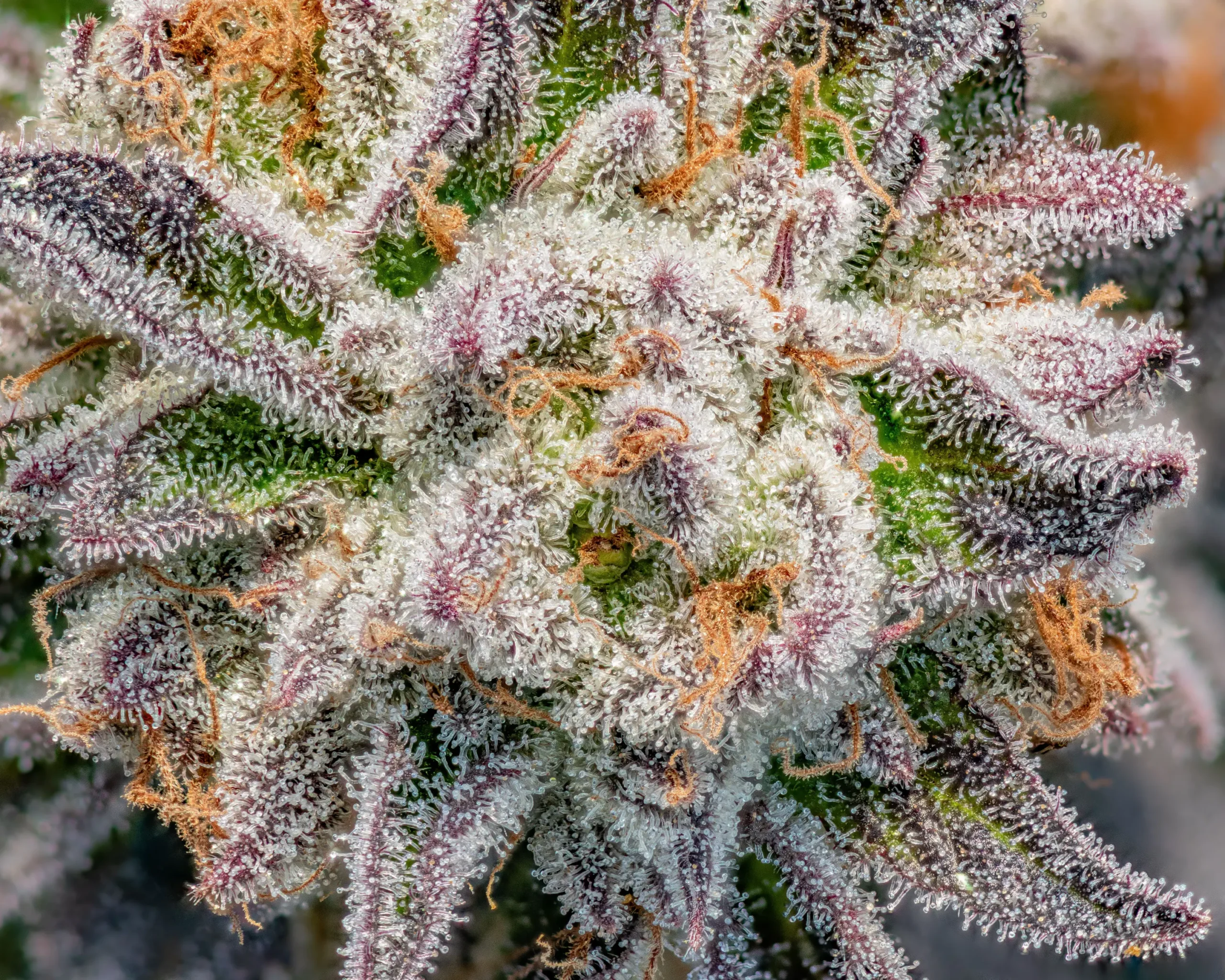
Cherry Pie grows with a sturdy, indica-like structure. Expect thick, robust branches and a relatively bushy profile. It tends to grow outward and form multiple branches rather than a single cola (especially if topped). The leaves are broad-fingered (indica style), often a rich forest green that can develop purple tinges late in flower. Internodes are moderately spaced. Buds form at many sites and become dense, golf-ball to egg-shaped nuggets by harvest. Notably, buds are very chunky and solid, with thick resin coverage and bright orange pistils weaving through the purple-green calyxes. This density means plants can get top-heavy – another reason to support branches if needed.
Training Response
Cherry Pie generally responds very well to training techniques. Topping or FIMming during veg will encourage it to bush out even more, increasing potential bud sites. It’s an ideal candidate for SCROG (Screen of Green); its uniform canopy and strong lateral branching can yield excellent results under a screen. Low-Stress Training (bending and tying) also works to spread out the canopy. Some growers simply lollipop (remove lower small branches) and find Cherry Pie’s natural shape produces a good yield of large top colas. It’s not a strain that only does well as a single cola (in fact, letting it grow Christmas-tree style without any training can lead to a lot of inner growth that could be pruned for efficiency). Light pruning of excess fan leaves in veg and early flower helps light penetrate – Cherry Pie’s thick foliage can otherwise shade lower buds. Fortunately, the plant handles pruning and training stress with ease, showing vigorous recovery. Even super-cropping (pinch-bending stems) in veg can be used if a branch gets too tall; Cherry Pie’s stems are relatively pliable and strong.
Environmental Tolerance
Cherry Pie prefers a temperate climate. Ideal temps are roughly 70–80°F (21–27°C) in the day, with nights no colder than mid-60s°F (~18°C) for steady growth (though as mentioned, a slight dip late in bloom can enhance color). It can handle slightly higher heat if well-watered (low 80s°F / ~28°C), but if temps climb too high (90°F+ or 32°C+), you may see heat stress like droopy or taco leaves and possibly some terpenes burning off – keep the environment in range for best results. Cold tolerance: Cherry Pie is not particularly frost-hardy (being mostly indica, it prefers warmth), so frost will damage it. Outdoors, it’s important to harvest before any hard frost. Humidity: During vegetative growth, moderate humidity (50-60%) is fine, but once flowering, lower humidity (40-50% or even 35-45% if buds are very dense) is recommended to prevent mold. Cherry Pie’s somewhat open bush structure does allow decent airflow, but its buds are dense enough that high humidity can still cause issues inside them. Mold Resistance: Compared to many strains, Cherry Pie is noted to be fairly resistant to common molds like powdery mildew and botrytis 13 – it’s not exceptionally prone to disease. That said, no plant is mold-proof, so good practices (airflow, proper watering schedule, bud inspection) still apply. If growing in a very humid area, consider pruning more heavily and possibly using an organic fungicide preventatively.
Flower Density & Appearance
As harvest approaches, Cherry Pie’s visual appeal really comes out. Buds are rock-hard and densely packed with calyxes. By late bloom, many phenotypes display purple and deep blue accents on sugar leaves or even within the buds themselves (a trait from Granddaddy Purple) especially if night temps are a bit cooler. The trichome production is heavy – buds often look “sugar-frosted” with resin. When dried, well-grown Cherry Pie buds are typically tight, resinous nuggets that grind up sticky. The aroma while growing is very strong (sweet cherry funk), and gets sweeter and more pie-like after a proper cure. Because buds are so dense, when drying post-harvest, aim for a slow dry in a climate-controlled space to avoid trapping moisture inside the thick colas. Manicuring Cherry Pie is moderately easy: buds have a good calyx-to-leaf ratio, meaning not too many tiny leaves to trim out, and the sugar leaves often have purple which some like to leave a little for bag appeal.
Flowering Length & Timing
Indoors, count on about 8 weeks of flowering. It’s wise to start checking trichomes around day 50-55 of 12/12, as some Cherry Pie plants mature on the earlier side. A phenotype that finishes in 7 weeks is unusually fast but possible if conditions are optimal and it leans more Indica. On the other end, going the full 9 weeks (63 days) can sometimes increase yield and body effect, but too long beyond that and you risk diminishing the bright terpene profile (it may get more sedative if overripe). Outdoors, as noted, finishing time is late September to October, which is mid-season – not as early as pure indicas, but earlier than Haze or pure sativas. This mid-range flowering time means Cherry Pie can usually finish outdoors in time even in slightly shorter-summer climates, as long as it’s not a very short growing season. Growers at higher latitudes (e.g., Northern Europe or Canada) might need to use a greenhouse or light deprivation to ensure it finishes before cold/rain, but in temperate zones, it will ripen in time.
Nutrient Needs & Feeding
Cherry Pie doesn’t have extreme feeding requirements – it’s a moderate feeder. During veg, it enjoys a balanced NPK feed; during flowering, standard bloom nutrients (with higher phosphorus and potassium) will support its bud development. One thing to note is that Cherry Pie doesn’t like excessive nitrogen in late flower – too much N can keep the plant too green and soft, potentially reducing bud density and harshening the taste (a common tip for quality is to taper off nitrogen in mid/late flower, which Cherry Pie responds well to). Many growers observe that Cherry Pie fades to autumn colors nicely if you let the plant use up its nutrients toward the end. This often improves the smoothness of the final product. It also responds well to organic growing methods – growers using living soil or organic amendments have reported that Cherry Pie’s flavor becomes even richer. pH: Keep nutrient solution pH in the normal range (soil ~6.3–6.8, hydro ~5.8–6.2) for best uptake; Cherry Pie isn’t particularly picky or prone to deficiencies if pH is correct. Overall, feed it consistently but avoid overfeeding – it’s easier to correct a slight underfeed (the plant might lighten a bit) than to fix nutrient burn on this strain.
Stress and Hermaphroditism
Cherry Pie is generally stable and not prone to herming (producing male pollen sacs) as long as you have authentic genetics. There was some talk in grower communities about certain unreliable clone sources having hermaphrodite issues (possibly misidentified clones) – but a genuine Cherry Pie from a reputable breeder or clone source stays female and flowering. In our experience and reports from others, Cherry Pie can handle typical stresses (training, minor light leaks, temperature swings) without throwing nanners (male flowers). However, excessive stress (like major light cycle interruptions or severe nutrient lockout) could still cause issues as it would with any strain. Treat her well and she will focus on bud production.
Pest Resistance
Thanks to its hardy nature, Cherry Pie doesn’t seem especially vulnerable to pests. Its thick leaves might attract the usual suspects (like spider mites or aphids) if there’s an infestation, but it’s no more prone than an average strain. Keeping a clean grow space and using preventative pest control (like neem or beneficial insects) is always wise. Outdoors, watch for caterpillars on the buds (a common outdoor pest) – the dense buds can hide them, so inspect colas regularly in late summer. Deer or rodents might be attracted to the sweet-smelling plant as well, so some growers fence outdoor Cherry Pie or use repellent if those animals are around. Weedth Flavor Tip (Flavor Boost Strategy) Indoor Flavor Boost: Maximizing Cherry Pie’s flavor indoors is all about enhancing terpene production and preservation. Here are tailored tips for a flavor-packed indoor harvest:
Optimize Terpene Conditions
Terpenes (which give the strain its cherry aroma) can volatilize at high heat. In the last 2–3 weeks of flower, keep daytime temperatures slightly cooler if possible (mid-70s °F, ~24°C) and avoid going above ~80°F (27°C). At night, allow a mild drop to around 65°F (18°C). This gentle cold shock at night can not only preserve terpenes but also coax out purple colors in Cherry Pie, which many growers believe correlates with richer flavor. Be careful not to go too cold, as that can stress the plant – just a mild drop is enough.
Feed for Flavor
Incorporate organic supplements and carbohydrate-rich boosters toward the end of flowering. For instance, top-dressing with a bit of unsulfured blackstrap molasses (or adding it to your water) in the final weeks can feed soil microbes which in turn help amplify the sweetness and aroma in buds. Many growers use molasses or specialized sweetener products to enhance flavor. Cherry Pie responds well to this, often coming out tasting sweeter and more “berry-like” when grown organically. Just remember to stop feeding anything (even organic nutrients) a week or so before harvest – a proper flush with plain water will ensure the final taste is pure and smooth.
Light and Terpenes
While we push plants with strong light for yield, consider using a UVB supplemental light for a couple hours a day in late flower if you have access – some studies suggest UVB can increase terpene and resin production (simulating sunlight’s UV component). If not, no worries – Cherry Pie is already quite resinous. Just make sure your lighting is strong enough to grow healthy buds, but not so close that it bleaches or burns the tops (light stress can degrade terpenes). Maintain a good distance or dim slightly in the final week if you see any signs of light burn on top colas.
Drying & Curing
Even the best-grown Cherry Pie can lose flavor with a poor dry/cure. Hang dry the harvested buds slowly in a dark room at ~60°F (15°C) and ~60% RH (“60/60” is a common cure mantra) for about 7-10 days. This slow dry locks in aromas. Then cure the buds in glass jars, burping daily initially. Cherry Pie’s aroma will develop into that trademark sweet cherry pastry smell after 2–4 weeks of curing. Patience pays off – you’ll notice the smoke gets noticeably smoother and the taste sweeter as it cures. For an extra terpene boost in jars, some growers toss in a fresh fan leaf or two from a flowering Cherry Pie plant (if available) for the first day of curing – as it releases moisture and scent – but this is optional.
Avoid Contaminants
Indoors, be careful with anything that could impact flavor negatively. For example, don’t use strong chemical sprays or synthetic fragrances near the end (they can cling to resin). If you need pest control late in flower, opt for organic, odorless options. And when trimming, wear gloves – the less your hands touch the buds, the more trichomes (and flavor) stay on them. Outdoor Flavor Boost: Outdoor-grown Cherry Pie already has the advantage of real sun and often robust terpene profiles. To further boost flavor under the open sky, consider these strategies:
Soil Enrichment
Growing in living soil or super soil outdoors can dramatically improve flavor. Cherry Pie loves rich, organic soil teeming with microbes. Work in compost, worm castings, and organic amendments (bone meal, kelp, bat guano) into your soil early. Through the season, feed the soil with compost teas or top-dress with guano and molasses teas during flowering. These natural nutrients tend to bring out more complex terpene profiles than synthetic fertilizers. Many outdoor growers swear that their organic Cherry Pie has a more pronounced cherry/berry taste than hydroponic grows.
Sunlight & Terpenes
Ensure your plants get plenty of direct sunlight, especially in the crucial mid/late flowering weeks. Terpene production in outdoor cannabis is often highest with abundant sun (UV exposure contributes to oil production as a defense). If your plot is partially shaded, consider strategically pruning nearby vegetation or even moving potted plants to maximize sun hours. More sun = more oils = more smell and flavor, as long as the plant has water to avoid drought stress.
Water and Stress
Consistent watering is key. Outdoor plants that go through big drought stress may still survive but can have a “hay” or harsh taste due to stalled growth and chlorophyll issues. Keep Cherry Pie adequately watered (but not waterlogged). That said, some growers do a controlled drought stress in the final days – letting the plant get slightly thirsty right before harvest – which might concentrate oils a bit. Do this carefully: only in the last 2-3 days and don’t let it wilt too much.
Harvest Timing for Flavor
For peak flavor outdoors, harvest in the early morning if you can. Terpene levels are highest at dawn, before the sun evaporates some of them off. By cutting early, you lock in those aromatic compounds. Also, aim to harvest on a dry day if possible. Wet buds (from rain or morning dew) at harvest can lead to loss of smell and increased drying issues. If rain is coming, you might take the tops a bit early rather than let them get drenched and possibly moldy – better slightly early with great flavor than moldy late buds.
Hang Whole Plants
When you cut your outdoor Cherry Pie, hang the whole plant (or large branches) to dry if space allows. The slower drying of a whole plant hang helps preserve flavor. Outdoor buds often have a stronger “field” smell initially; a good slow dry and cure (as described in the indoor section) will bring out the cherry pie sweetness and get rid of any grassy notes. After a proper cure, outdoor Cherry Pie can have an incredibly rich flavor, sometimes even more complex than indoor, thanks to the full spectrum sunlight and organic growth – think cherry with hints of pine, mint, or spices that you might not get indoors. By following these flavor-focused tips, both indoor and outdoor growers can enhance Cherry Pie’s terpene profile, resulting in a final product that truly lives up to its delicious name. The goal is to end up with buds that smell like a bakery and taste just as sweet when smoked or vaporized! Weedth Bud Boost Note (Yield Boost Strategy) Indoor Yield Boost: To get the most bud from Cherry Pie indoors, the strategy revolves around maximizing light exposure and bud sites while maintaining plant health. Here are expert tips for upping your indoor harvest:
Training for More Colas
As mentioned, Cherry Pie responds great to training. If your goal is yield, topping the plant early (after it has 4–6 nodes) will encourage 2 main colas instead of one, and you can even top those branches again for 4 main colas. This multiplies top bud sites. Combining topping with a SCROG setup is a proven way to boost yields – weave or tie down branches so that you have an even canopy of many tops at equal height. This way, all buds get direct light and grow to a large size, rather than one big top and many smaller lowers. Cherry Pie’s branching makes it ideal for this method.
Intense Lighting
Give Cherry Pie plenty of light during flowering. Under insufficient light, yields will suffer (buds will be airy). High-output LEDs or HPS lights in the 600W–1000W range (or equivalent PAR levels) over a 4×4 ft area will ensure the plant can photosynthesize at maximum capacity. Just be sure to manage canopy distance – too-close lights can light-burn, but too little light and you’re leaving yield on the table. Many growers use ~40–50 watts per square foot as a rule of thumb with HPS/LED. Also consider light movers or additional side lighting if you have a very bushy plant; illuminating the sides can fatten up lower buds.
CO₂ Supplementation
If you’re an advanced indoor grower, adding CO₂ enrichment to your grow room (raising CO₂ to ~1200-1500 ppm during lights-on) can boost growth and yields, provided you also have strong lights, proper temp/humidity, and feed. With CO₂, plants can handle a bit more light and heat, pushing them to produce bigger buds. This is an optional step – Cherry Pie will still yield great without CO₂ – but for those looking to maximize every gram, it can give a 10-20% yield increase when done correctly.
Nutrition for Bulk
During peak bloom (weeks 3-7 of flower), ensure Cherry Pie has the resources to build big buds. Use a quality bloom nutrient with elevated Phosphorus and Potassium. Some growers add a PK booster in mid-flower to spur bud development. Just be cautious – don’t overdo nutrients, as too much can burn the plant or cause nutrient lockout, which reduces yields. It’s better to slightly underfeed than overfeed. A supplement of silica can also strengthen stems to hold heavy buds and might improve plant vigor. Molasses (as mentioned in flavor tips) also provides carbs that can indirectly support bud growth by feeding soil microbes.
Environmental Optimizations
Keep the grow environment dialed in for maximum growth: day temps ~75-78°F (24-26°C), night temps ~65-70°F (18-21°C), and ample air circulation. Cherry Pie can take slightly cooler nights, but if yielding is the priority, you don’t want it so cool that growth slows. Defoliation is another technique to consider: selectively remove some large fan leaves around week 3 of flower (once buds have set) and again at week 6. This sends more energy to the buds and light to lower sites, often increasing the size of secondary buds. However, don’t over-defoliate; Cherry Pie still needs enough leaves to fuel bud development. Aim for a balance – open up light pathways, but keep the plant looking leafy enough to drive photosynthesis.
Extend Veg (if space allows)
A trick for yield is simply growing a larger plant before flowering. If you veg Cherry Pie an extra few weeks and train it wider, you’ll have more bud sites come flower and thus more yield. Just ensure your pot size, root health, and space can support a bigger plant. Cherry Pie’s easy nature means it usually tolerates longer veg times without issue (just watch for root-bound pots; transplant to larger containers as needed). Outdoor Yield Boost: Outdoors, Cherry Pie has the potential to grow into a real yield monster under the right conditions. Here’s how to maximize your outdoor harvest:
Start Early & Big
Begin with strong genetics and start your Cherry Pie early in the season (or indoors under lights, then transplant outside after last frost). The longer the veg period before flowering, the larger (and more productive) the plant can get. Many outdoor growers will germinate seeds or root clones indoors in late winter, then move them outside in spring. By the time flowering triggers in late summer, you could have a robust bush several feet tall. Also, plant in a big container (at least 10+ gallons, but 20-30+ gallons or direct in-ground is best) to allow an extensive root system – more roots can support more shoots and buds.
Training and Pruning
Use outdoor training techniques. Topping the main shoot when the plant is young will encourage a bushier shape, which is ideal outdoors to maximize light capture. You can top multiple times (e.g., top each new branch after the first topping) up until early summer to create a round, hedge-like plant with dozens of growing tips. Just stop topping a few weeks before natural flowering time so the plant has time to form bud sites. Some outdoor growers also use low stress training, gently pulling branches outward (staking them) to spread the plant wider. The sun will penetrate the canopy better and the plant will devote energy to many colas, not just one. By mid-flower, you want a nicely opened-up shrub. Prune away any spindly interior branches or ones near the base that get no sun – they won’t produce much and stealing energy. The motto is “don’t grow what won’t get big.” Focus the plant’s energy on the main branches that are getting light.
Soil and Feeding
Cherry Pie will only yield to its potential if it has the nutrients to do so. In ground, use fertile soil (loamy, well-draining) and consider digging a large hole and filling with a super soil mix. Throughout the season, feed the plant. Early on, nitrogen-rich nutrients (or fish emulsion, etc.) to drive growth. Come pre-flower (July), give a boost of phosphorus (bone meal, guano) to prepare for bloom. During flowering, top-dress with bloom fertilizers or use liquid feeds high in P and K. A bi-weekly compost tea can also keep micro-nutrients and soil life thriving. Outdoor plants can handle organic feeds well; they tend to slowly release, which suits Cherry Pie’s steady appetite. Water deeply – a big Cherry Pie in hot sun might drink multiple gallons a day, so don’t let it dry out for too long. However, also avoid constantly soggy soil. A mulch layer can help retain moisture and keep roots cool, promoting bigger growth.
Pest & Mold Management
Protecting your plant means it can reach its maximum yield. Use preventative measures against common pests: e.g., neem oil or insecticidal soap in veg to keep aphids, mites, etc. away. By flowering, avoid spraying buds with anything that could affect them – instead, use sticky traps or beneficial insects if pests appear. For mold, as mentioned, ensure good airflow: trim some fan leaves in the canopy if it’s extremely dense and humid. Space plants apart if you have multiple, so each gets breeze. If you know your fall is rainy, consider an awning or hoop house to keep rain off during the last weeks. Losing a cola to bud rot is losing yield – prevention is key.
Support the Branches
Cherry Pie’s outdoor branches, while strong, can sag or even snap under the weight of huge buds, especially with wind or rain. Using stakes, tomato cages, or trellis netting around the plant by mid-flower will support the colas. This support system allows the plant to focus on growing buds without risk of structural damage. It also means you can let buds swell extra large; sometimes growers remove buds early out of fear a branch will break – with supports, you can avoid that and let every bud ripen fully.
Let It Finish Fully
For maximum yield and potency, let Cherry Pie finish to full maturity (assuming weather permits). Those last two weeks are when buds pack on a lot of weight and resin. Harvesting too early can rob you of weight. Use a magnifier to check trichomes and harvest when they’re mostly cloudy (with some amber) and pistils have largely darkened and curled in. If faced with an early cold snap or continual rain, you may have to pull the plant a bit early – but if conditions are good, be patient and let her go to the end of October if needed. Each extra week can mean noticeably larger buds and higher yields. By implementing these yield-boosting practices, outdoor cultivators can turn a single Cherry Pie plant into a truly heavy producer. It’s not uncommon for a well-tended outdoor Cherry Pie to yield over a pound of dried bud per plant in optimal scenarios, rewarding the grower with jars full of frosty, fragrant flowers.
Grower Question
Why is one Cherry Pie plant purple while the plant beside it stays green?
Question sent by: Jules P., via Discord
Color is a phenotype-and-environment interaction, not a maturity guarantee. One plant may express anthocyanin more readily, while the greener plant can still be equally ripe and aromatic. Stable cool nights may deepen color, but do not chase purple with severe cold. Read calyx swelling, pistil recession, trichomes, aroma, and overall plant health together.
Weedth Bud Flavor Tips
Indoor Flavor Tips:
Keep the canopy healthy rather than forcing late stress. High leaf-surface temperatures can mute the bright cherry edge, so maintain suitable light distance and avoid letting top flowers run hot during the final weeks. Strong light is valuable only while the plant can use it without bleaching or chronic leaf curl. Remove unnecessary late sprays and protect flowers from oils, fragrances and residues.
Flavor comes primarily from genetics, plant health, harvest maturity and post-harvest control. Molasses or carbohydrate products do not move cherry sweetness into the flowers. In a living soil they may affect microbial activity, but unnecessary use can also disturb oxygen balance or attract pests. Use them only as part of a measured soil program, not as a flavor shortcut.
Outdoor and Greenhouse Flavor Tips:
Prioritize morning light and fast dew removal. Open greenhouse vents early, keep branches separated and avoid late-day irrigation that raises overnight humidity around the flowers. If the season remains dry, allow the plant to finish its aroma and resin development; if persistent rain is approaching, protect clean flower rather than chasing a theoretical peak.
Dry harvested branches in darkness with gentle air exchange, never with a fan pointed directly at the flowers. Dense Cherry Pie tops should be divided into manageable branches so their centers do not remain wet while the outside hardens. A slow, even dry followed by a stable cure allows the sharp fruit, earth and pastry layers to separate. A sealed container cannot repair wet, moldy or overdried material.
Warning
Advanced cultivation claims need controlled testing
The source includes grower techniques and breeder-style performance claims that may depend on phenotype, equipment, climate, root health, and operator experience. Treat UV, added CO₂, severe stress, concentrated supplements, and unusually high yield or potency figures as controlled variables rather than guaranteed instructions.
Weedth Bud Boost Tips
Indoor Bud Boost Tips:
Use topping and SCROG to convert lateral growth into a level field of productive tops. The screen should support branches as flowers gain weight, not trap a wall of leaves beneath it. Remove weak lower shoots before they consume weeks of light and nutrients, but preserve enough healthy leaf area to power flower development. Consistent root-zone moisture and adequate light distribution usually add more usable weight than a strong late PK push.
Supplemental CO₂ is relevant only in a sealed, monitored room with sufficient light, temperature control and nutrition. It is not a stand-alone yield product and should not be improvised in occupied spaces. Most home gardens gain more by correcting canopy gaps, irrigation inconsistency and excess heat.
Outdoor and Greenhouse Bud Boost Tips:
Build the framework early. Top during vigorous vegetative growth, pull branches outward and install a cage or trellis before the canopy becomes difficult to enter. Large root volume helps, but waterlogged soil does not. Use a well-aerated medium, mulch appropriately and irrigate deeply enough to wet the active root zone without keeping it permanently saturated.
Support every major branch before the colas become heavy. This protects yield during wind and keeps branches separated after rain. Late in flower, clean airflow is itself a yield tool: losing a dense top to mold erases any gain from keeping an overfilled canopy. The objective is dry, healthy flower that survives trimming and curing, not the largest wet plant on harvest day.
Warning
Reported use is not a medical guarantee
The following section preserves reported uses from the research source. Cherry Pie does not diagnose, treat, or cure a condition. High-THC cannabis can worsen anxiety or impairment, and individual response, medicines, pregnancy, cardiovascular concerns, and mental-health history require appropriate professional guidance.
Medical Uses & Benefits
Consumers commonly choose Cherry Pie when they want temporary relaxation, a lighter mood, appetite support or a calmer evening without immediately feeling fully sedated. Some also report using it around stress, discomfort or sleep preparation. These are user-reported experiences, not proof that the cultivar treats a medical condition, and responses can differ sharply with dose, tolerance and batch chemistry.
Anyone considering cannabis for a health concern, taking interacting medication, pregnant or breastfeeding, or vulnerable to anxiety or psychosis should speak with a qualified healthcare professional. Low CBD means Cherry Pie should not be assumed to offer the balance of a CBD-rich cultivar.
Ideal User Profile
Cherry Pie best suits an adult consumer who likes a fruit-and-earth profile and wants an experience that can begin sociably before becoming physically calm. It fits unhurried afternoons or evenings better than safety-critical work, driving or a tightly scheduled morning. New or low-tolerance users should approach a high-testing batch carefully because the approachable flavor can make rapid consumption easy.
For growers, it suits someone who wants a forgiving, trainable plant but is willing to take humidity and post-harvest work seriously. Beginners can succeed with it because the plant usually responds predictably to topping and moderate feeding. A very humid outdoor location without rain protection is a less comfortable fit, while indoor rooms and ventilated greenhouses offer more control over its main weakness.
Grower Notes and Feedback
Note: Expect useful lateral branching and a moderate stretch, but keep extra headroom until the phenotype proves itself.
Note: A single early topping often produces a more efficient structure than repeated late manipulation.
Note: The strongest cherry expression is not guaranteed; some plants lean toward grape, earth, pine or spice.
Note: Very dark leaves and clawed tips in flower usually call for reassessment, not another bloom additive.
Note: Purple color can appear after cooler nights, but green plants are not inferior.
Note: Dense tops require support, interior inspection and a slower, more even dry than their outer surface suggests.
Note: Odor becomes strong in late flower; plan filtration or site privacy before it becomes a problem.
Weedth Editor’s Note
Personal observations and grower insights on Cherry Pie: Growing Cherry Pie has been one of my more rewarding experiences as a cultivator. In my first grow with her, I was struck by how lush and vigorous the plants were during veg – broad, healthy leaves that seemed to pray toward the light. She didn’t stretch excessively in flower, maybe about doubling in height, which kept things very manageable in my 4×4 tent. One thing that stood out was the aroma in late flower: opening the tent smelled like someone baking a fruity pie right there in the room – a delightful mix of sweet cherries and doughy sweetness. The scent was strong, so I had to beef up my carbon filter to keep it from perfuming the whole house (not that I minded, but the neighbors might get curious!). In terms of feeding, I found Cherry Pie to be quite forgiving. I used organic soil and dry amendments, feeding lightly, and never saw signs of deficiency or burn – she cruised along happily. By week 4 of bloom, buds started fattening significantly. The colas weren’t the longest I’ve grown, but they were extremely chunky and dense.
About half of my plants showed a lovely purple coloration on the top cola and sugar leaves as we hit late bloom (likely triggered by a slight drop in night temps I introduced) – it made for some bag appeal that was a joy to photograph. The others stayed green but still had gorgeous orange hairs and trichomes galore. I did encounter a little bit of bud rot on one of the largest colas during the last week – likely my fault for letting humidity creep up after an unexpected storm (I was pulling in cool night air but it spiked humidity). I cut out the affected part immediately. This taught me that even a “mold resistant” strain like Cherry Pie can get bud rot if conditions slip, mainly because the buds are so thick. After that scare, I kept the airflow high and humidity under control, and no further issues arose. Harvest day was October 1st for the outdoor ones and day 60 of flower for the indoor tent. Trimming was fairly easy; Cherry Pie’s buds had a good calyx-to-leaf ratio as advertised.
The yield did not disappoint: my indoor grow yielded just under 1 pound ( ~430g) from a 4-plant SCROG under 600W LED, and outdoors a single, albeit large, Cherry Pie in a 20-gallon pot gave me about 18 ounces (roughly 500g) of dried bud – one of my heftiest plants that year! The outdoor buds were slightly more aromatic, while the indoor ones looked a bit more pristine, but both were top quality. Smoking the cured Cherry Pie was a treat. The flavor was exactly as described – sweet cherry with a touch of skunk and earth. The effect when I sampled it was fast-acting happiness followed by a warm, relaxing body buzz. I remember a particular evening when a friend and I shared a Cherry Pie joint; we ended up laughing and chatting for an hour, then later melted into the couch watching a comedy – it was the perfect balance of social and chill. No paranoia or raciness at all, but also no heavy couch-lock until maybe very high doses. As someone who sometimes gets anxiety from pure sativas and too sleepy from pure indicas, I can see why Cherry Pie is praised for balance. From a grower’s perspective, I also appreciate how consistent and low-fuss she was.
I didn’t have to babysit these plants much – they handled a bit of summer heat, they took well to topping, and they never showed herm signs or weird mutations. It’s the kind of strain where, if someone asked me for a first-time grow recommendation, Cherry Pie would be on the shortlist because it delivers great results without diva-like demands. Plus, who wouldn’t want their grow room to smell like cherry pie? In conclusion, Cherry Pie has earned a permanent spot in my garden rotation. It’s a strain that brings together lovely aesthetics, mouth-watering flavor, and a feel-good high, all on a foundation of a trouble-free grow. Whether you’re a novice grower or a seasoned breeder, Cherry Pie offers a reliably excellent cannabis experience from seed to smoke. Related Strains If you enjoy Cherry Pie or are interested in its genetics, here are some related strains – either by lineage, similar effects, or flavor profile – that you might want to explore:
Granddaddy Purple (GDP)
Cherry Pie’s indica parent, known for its deep grape and berry flavors and heavy relaxing effects. GDP is a classic purple strain; it passes on the sweet berry taste and purple hues to Cherry Pie. Expect a more sedative high from GDP, useful for nighttime relaxation or pain relief. Growing GDP is similar in ease, and it yields dense purple buds – a great choice if you loved Cherry Pie’s appearance and need something a bit more sedating.
Durban Poison
Cherry Pie’s sativa parent, a legendary South African landrace sativa. Durban Poison is potently uplifting and energizing, delivering a cerebral high opposite to GDP. It contributed the creative, happy head buzz to Cherry Pie. Durban’s flavor is sweet with a spicy, anise/licorice note rather than cherry, but you’ll recognize the mental clarity it gives. It’s a tall, fast-growing strain and a bit more challenging to grow (longer flowering), but a must-try if you fancy the sativa side that Cherry Pie hints at.
Girl Scout Cookies (GSC)
A hugely popular hybrid that shares some genetics and traits. GSC (Forum Cut or Thin Mint phenotype) comes from Durban Poison x OG Kush. While OG Kush is different from GDP, GSC and Cherry Pie both hit that sweet spot of euphoria + full-body relaxation. GSC has a sweet, doughy, dessert-like flavor (hints of baked goods, caramel, and mint) not far off from Cherry Pie’s pastry sweetness. Many fans of Cherry Pie also enjoy GSC for its stronger potency and cookie-like taste. Grow-wise, GSC is a bit more finicky and slightly lower yielding than Cherry Pie, but the buds are extremely potent.
Wedding Cake
Sometimes called Pink Cookies, this strain is actually a direct descendant of Cherry Pie (Cherry Pie crossed with GSC). It inherited a lot of Cherry Pie’s best qualities: very dense, frosty buds, a sweet vanilla cake batter and cherry flavor, and a balanced yet strong high. In fact, Wedding Cake tends to have higher THC, often 20-25% or more, so it’s like Cherry Pie on steroids in some cases. The effect is usually a tad more heavy/hybrid. If you loved Cherry Pie’s flavor but want something with a bit more punch, Wedding Cake is a top recommendation. It grows similarly in terms of structure, maybe a bit taller, and yields are comparable or better.
Forbidden Fruit
A fruit-bomb of a strain made by crossing Cherry Pie with Tangie (a citrusy tangerine-flavored sativa). Forbidden Fruit is famous for its intense terpene profile – it literally smells like a fruit salad of cherry and orange (courtesy of its parents). The flavor is tropical, sweet, and smooth. Its effects are deeply relaxing (Tangie’s sativa influence is outweighed by Cherry Pie’s indica side here). It’s a great evening strain for flavor connoisseurs. Forbidden Fruit tends to grow with a lot of purple coloration (even more than Cherry Pie) and has medium yields. It’s an excellent strain to try if the taste of Cherry Pie was your favorite part and you want even more fruitiness.
Black Cherry Pie
A perhaps less-known, but thematically similar strain – it’s bred from Cherry Pie and Blackberry Kush. As the name suggests, it doubles down on the berry and cherry flavors with some Kush earthiness. Effects are relaxing and euphoric. Growers report it carries the easy-growing nature of Cherry Pie but sometimes with darker, almost black-purple buds from the Blackberry side. If you can find this strain, it’s a fun one for fans of colorful, fruity indicas. Each of these strains offers a twist on Cherry Pie’s signature elements – whether it’s the genetic lineage (GDP, Durban) or the dessert-like experience (GSC, Wedding Cake, Forbidden Fruit). Exploring these related strains can give you a deeper appreciation of Cherry Pie’s heritage and its impact on modern cannabis breeding. Happy growing and tasting!
Weedth Score
Growing Experience: 8.7/10 – forgiving growth and excellent training response, with late humidity requiring respect
Bud Structure & Visual Appeal: 9.0/10 – dense, resinous flowers with strong orange pistils and phenotype-dependent purple color
Aroma Complexity: 8.8/10 – tart cherry and berry supported by earth, pepper and occasional pastry or pine notes
Flavor & Smoothness: 8.6/10 – rich after an even dry and patient cure; easily flattened by heat or rushed drying
Effects & High Experience: 8.7/10 – a useful transition from social mental ease to warm physical relaxation
Overall Satisfaction & Recommendation: 8.8/10 – a strong choice for flavor-focused growers who can protect dense flowers
I remember it for the small harvest decisions: bright cherry up front, quiet body calm later, and no need to force the plant into being something it was not.
FAQ
Similar Strains
These cultivars overlap with Cherry Pie through lineage, fruit-and-spice aroma, growth behavior or the transition from mental lift to physical relaxation. Source and phenotype still determine the final expression.
Granddaddy Purple:
Why it feels familiar: A direct parent with berry-earth aroma, dense flowers and purple potential. Main difference: Usually heavier and more sedating, with less of Cherry Pie’s bright opening.
Durban Poison:
Why it feels familiar: The other commonly reported parent and the source of sweet-spice energy and mental lift. Main difference: Taller, more sativa-structured and typically more stimulating.
Wedding Cake:
Why it feels familiar: A dessert-forward descendant often linked to Cherry Pie, with dense resinous flowers. Main difference: Frequently stronger and doughier, with a heavier overall effect.
Forbidden Fruit:
Why it feels familiar: Uses Cherry Pie in its lineage and intensifies the fruit-and-color direction. Main difference: Leans toward citrus-tropical aroma and deeper evening relaxation.
Girl Scout Cookies:
Why it feels familiar: Shares Durban influence, dessert character and a euphoric-to-relaxed effect arc. Main difference: Often more demanding to grow and more cookie, mint or fuel oriented.
Black Cherry Pie:
Why it feels familiar: Extends the dark berry, cherry and purple-flower character. Main difference: Can lean darker, more Kush-like and more physically relaxing.
Share this article
A quick overview of the topics covered in this article.
Follow us
Latest articles
September 9, 2026
September 9, 2026
September 9, 2026