What Week Do Cannabis Buds Fatten Up the Most?
Most growers ask this question when the stretch is over, the plant finally looks like it is making real flowers, and the colas still seem smaller than expected. It is a fair question. Buds do not gain size at the same pace from the first white pistils to harvest, and the late change can look dramatic when the plant has been healthy long enough to reach it.
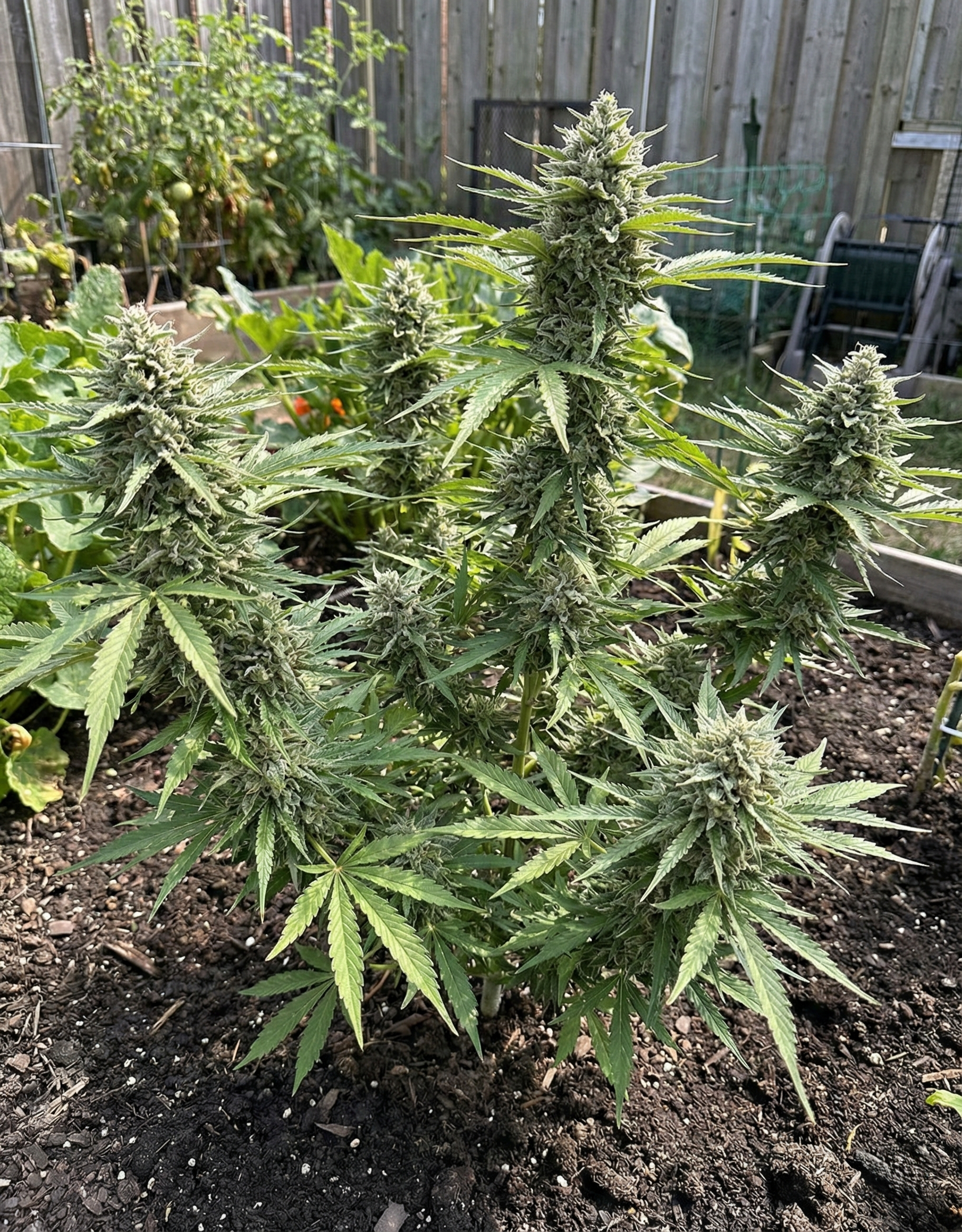
The short answer is that many cannabis cultivars put on their most obvious flower mass during mid to late flower. For a cultivar that finishes in roughly seven to nine weeks, that often means around weeks four through seven of actual flower development, with a strong final push in the last two or three weeks before harvest. But it is not a universal “week six” event. Genetics, whether you count from the 12/12 switch or from visible flower set, light, root health, and environment can move the timeline significantly.
Let’s make the timeline useful rather than treating it as a countdown. The right question is not only “what week do buds fatten most?” It is also “is this plant still building flower tissue, or has it moved into ripening?” Once you can read that difference, you stop trying to force a late response with extra fertilizer and start protecting the conditions that allow flowers to finish well.
Use this guide only for lawful cultivation, with the property owner’s permission. Local rules may govern plant numbers, access, odor, visibility, and cultivation methods.
Master Advice: Buds do not suddenly fatten because a calendar says they should. The visible late-flower push is the result of earlier root health, usable light, steady water, balanced nutrition, and a cultivar that still has time to finish.
The Short Answer: When Buds Usually Gain the Most Size
For many photoperiod plants, the first one to two weeks after a light-cycle change are dominated by the transition into flower and the stretch. The plant may grow taller quickly while the early flower sites remain small. Around the middle of flowering, the clusters become more defined and begin adding meaningful tissue. In the later part of the cultivar’s normal flower window, calyxes can swell, clusters can become denser, and the final dry-weight potential becomes much easier to see.
Published cannabis work has documented substantial inflorescence biomass gains in the latter production weeks. Another flowering-stage nutrient study found the strongest dry-matter increase in the final portion of the cycle, between roughly seven and nine weeks after anthesis in that system. Those findings are useful context, not a schedule to copy blindly. A short-finishing cultivar, a long-flowering cultivar, an autoflower, and an outdoor plant responding to seasonal day length will not share the same clock.
Bud bulking is the continued accumulation of flower tissue and dry matter during flowering.
It is different from early stretch, resin development, or final ripening. A flower can look frostier or more mature without gaining much new mass, and it can add mass without becoming ready to harvest.
| Flower period | Plant status | What you may notice | Best focus |
|---|---|---|---|
| Transition and early flower | Stretch and early flower-site formation | New pistils, longer internodes, small clusters | Root health, training restraint, even light, stable watering |
| Mid flower | Defined flower clusters and active leaf support | Clusters begin to stack and gain visible volume | Complete nutrition, consistent irrigation, healthy canopy |
| Late flower | Strong flower demand with gradual leaf aging | Calyx swelling, heavier colas, denser structure, more resin | Protect roots, avoid excess feed, support branches, manage humidity |
| Ripening window | Cultivar-specific maturity and slower overall uptake | Changing pistils and trichomes, slower new tissue formation | Harvest assessment, flower health, steady water, minimal disruption |
Count From Actual Flower Development, Not Only From the Light Switch
A common source of confusion is the starting point. Indoor growers often count “week one” from the day they switch to a flowering light schedule. That is useful for records, but a plant may need a week or two before flower sites are truly established. Outdoor growers have an even less exact transition because the seasonal light change is gradual. Autoflowers follow a different developmental clock again.
For a more accurate reading, use two dates in your notes: the date flowering conditions began and the date you saw clear flower set. Clear flower set means the plant has moved beyond a few transitional pistils and is making distinct clusters at the tips and nodes. The second date often explains why a plant labeled “week five” can look like another grower’s week three.
Remember: A flower schedule is an estimate. The cultivar and the plant’s actual development always have the final say.
“I am in week five after 12/12 and my buds are still small. Am I behind?”
Question sent by: Alicia Morgan, via Email.
Not necessarily. First check whether week five means five weeks after the light change or five weeks of established flower development. A longer-flowering cultivar can still be building its structure at that point. Look for active cluster expansion, normal water use, healthy leaves around the flower sites, and enough vertical room. Treat the plant’s progress as the evidence, not another grower’s calendar photo.
What Actually Drives the Late-Flower Push
The late increase in flower weight is not a single nutrient event. It comes from a working system. Leaves supply carbon through photosynthesis. Roots provide water and minerals. The root zone must hold enough oxygen for active uptake. The plant needs a cultivar with enough remaining time, and the environment has to stay calm enough that it can devote energy to flowers instead of recovering from stress.
That is why a late bloom booster rarely rescues a plant with poor light distribution, compacted roots, a saturated medium, repeated dry-back stress, or a canopy that was stripped too hard. The plant may have the genetic capacity for a late swell, but capacity is not a guarantee. The whole season decides how much of it becomes usable flower.
Light is the energy budget
Flower tissue does not appear from nutrients alone. Nutrients support processes that require energy, and light is the energy source. In an indoor garden, uneven fixture coverage can leave outer or lower sites behind even when the feed program is perfect. Outdoors, a shifting sun path, tree shade, late-season cloud, and crowded branch structure can change how much energy reaches the flowers.
Roots decide whether the plant can use the feed
As flowers become a strong sink for water and nutrients, root problems become more visible. A root zone that stays too wet, gets too cold, or carries excessive salts may cause yellowing and stalled bulking even when the medium contains plenty of nutrition. More feed in that moment can make the problem harder to diagnose. Restore appropriate moisture and oxygen first.
Leaves keep the process moving
Some fading of older fan leaves late in flower can be normal. Removing healthy leaves just because the buds are visible is another matter. Healthy leaves still support the flower-building phase. Remove damaged, diseased, or badly shaded material only when there is a clear airflow or plant-health reason, not as a ritual for making buds bigger.
Protect the active system
Keep light even, water predictably, retain useful leaves, support heavy branches, and use one complete feeding program that matches the medium.
Chasing a calendar week
Do not add extra PK, strip leaves, or extend the crop automatically because someone else saw a larger swell during a particular week.
Why Week Four Looks Different From Week Seven
Early flower is structural. The plant is still setting up the sites that will become finished flowers. In many cultivars, there is also a visible stretch, so the garden can look taller before it looks fuller. Mid flower is where clusters become recognizable as clusters. Later flower is often where the space between calyxes fills in and the colas feel heavier.
This is also why harvest anxiety can lead to bad decisions. In the final weeks, a healthy plant may keep adding flower mass while older leaves slowly age. That does not mean it needs stronger feeding every time a lower leaf fades. Research on late-stage cannabis has noted natural senescence even in adequately nourished control plants. Watch the rate and pattern of change rather than trying to preserve a perfectly green canopy at all costs.
Do not confuse a stalled plant with a ripening plant
Normal ripening is gradual and still leaves the plant with working flowers and a functional root zone. A sudden drop in water use, widespread droop, a sour medium, damaged upper leaves, or a rapidly collapsing canopy points to stress that needs diagnosis, not a heavier bloom feed.
Genetics Can Move the “Biggest Week” Considerably
Two plants can receive the same light, water, and feed and still bulk differently. Some cultivars set dense flower clusters early and spend the rest of the cycle ripening them. Others look surprisingly airy until the last few weeks, then add calyx volume late. Longer-flowering narrow-leaf types may need more time before their final shape becomes obvious. Fast-finishing hybrids can seem to rush through the visible swelling period.
That is why a breeder’s stated flowering time should be treated as a planning range, not a harvest command. Track the cultivar over one complete run. Note the date of flower set, the strongest period of water use, when branches need support, when the first meaningful fade begins, and when the flower shape stops changing. Those observations make the next cycle far more predictable than a generic chart.
| Variable | How it changes timing | Useful observation | Practical response |
|---|---|---|---|
| Cultivar flowering length | Longer-flowering plants may form their final flower shape later | Compare development with the cultivar’s own previous run when possible | Avoid forcing a long cultivar into a short schedule |
| Flower start point | Visible flower set can lag behind the light switch or seasonal transition | Record both the trigger date and real flower-set date | Use the second date to interpret the bulking phase |
| Root-zone health | Poor oxygen, cold roots, or salt buildup can slow uptake and tissue growth | Watch dry-back, pot weight, and response to irrigation | Correct root conditions before changing feed strength |
| Environment | Heat, humidity, low light, and disease pressure can delay or reduce finish quality | Look for weather or room changes that match the slowdown | Stabilize the growing environment and inspect flowers closely |
How to Support Bud Bulking Without Forcing It
The most useful late-flower routine is usually boring in the best way. Water at the right time for the medium. Feed consistently rather than in dramatic swings. Keep the canopy supported and reachable. Check for pests, disease, and humidity pockets. Make one change at a time so you can tell what helped.
In coco or other soilless media, consistency is especially important because the root zone can change quickly. In amended soil, make fewer impulsive additions and remember that dry amendments do not act like an immediate rescue tool. In hydroponic systems, compare reservoir and root-zone readings in a consistent way before chasing a number. Whatever the system, a stable root zone lets the plant decide how much it can use.
Pro Tip: In the final bulking phase, keep a five-line daily log: water use, feed strength, temperature or weather, any change in flower firmness, and any sign of disease. The pattern becomes visible before a single photo can explain it.
Nutrition: complete beats excessive
Flowers have a real late-stage nutrient demand, but that does not make high-concentration feeding a universal answer. Controlled cannabis research has found that raising phosphorus and total nutrient concentration beyond adequate levels does not automatically improve yield or quality. Use a complete program appropriate to your medium, and increase only when plant response, water use, and the root zone all support the decision.
Water: neither drought cycles nor saturation
Repeated severe dry-down can reduce the plant’s ability to maintain steady growth. Constant saturation limits oxygen around roots. The right rhythm depends on medium, container size, plant size, climate, and irrigation strategy, so there is no single “water every X days” rule. Use pot weight, moisture at depth, and normal dry-back as your evidence.
Airflow: protect density from becoming a liability
Dense flowers are valuable only while they stay healthy. As colas fill out, support heavy branches and inspect inside thick tops. Good airflow does not mean blasting the flowers with a harsh fan. It means avoiding stagnant, humid pockets and giving the plant a reasonable chance to dry after watering or weather events.
“My colas are getting heavier, but the buds still look airy. Should I add more PK?”
Question sent by: Devon K., via Facebook page.
Not until you have ruled out the bigger variables. Airy flowers can reflect genetics, low usable light, heat stress, weak branch positioning, an immature plant, or a root-zone issue. More PK will not replace light or time, and excessive fertilizer can make the root zone less stable. First check whether the plant is still actively building, whether flowers are evenly lit, and whether water use and leaf health are normal.
Indoor, Outdoor, and Autoflower Timelines
Indoor photoperiod plants offer the cleanest calendar because the flowering trigger is controlled, but even there the visible start of bud building can lag behind the light switch. Outdoor plants respond to gradual seasonal change, so individual branches may not all look synchronized at first. Cooler weather and lower late-season sunlight can also slow the finish. Autoflowers are best tracked from age and visible flower set rather than from a photoperiod switch that never happened.
Do not compare an outdoor plant in early September with an indoor plant in a perfectly controlled week six and expect the same pace. The outdoor plant may have a different cultivar clock, different daily light intensity, and a changing temperature pattern. The useful comparison is whether that specific plant is progressing week to week under its own conditions.
When Buds Stop Fattening and Start Ripening
Eventually, flower growth slows. The plant may continue refining resin, aroma, trichome maturity, and color while adding less new volume. This is the point where constantly pushing more feed can work against the finish. A plant close to its natural harvest window needs stability and assessment more than a last-minute attempt to make it look like it is in mid flower again.
Use several signals together. Look at the cultivar’s usual duration, the pace of new calyx formation, the condition of the sugar leaves, the behavior of the pistils, and trichome maturity where appropriate. No single signal tells the whole story. A flower with fresh white pistils can still be near maturity in some cultivars, while a mostly dark-pistil flower can still have time left if the structure is actively changing.
Before trying to push more bud size, confirm these points
- The cultivar is still within a realistic flower-building window.
- Flower sites are still adding clear volume or calyx structure.
- The root zone is drying and re-oxygenating normally.
- Leaves supporting the top flowers remain functional.
- Light reaches the productive canopy evenly enough to matter.
- There is no hidden pest, mold, or humidity problem slowing the finish.
- The next feeding decision is based on plant response, not a fixed calendar week.
Common Myths About the “Bulking Week”
“Week six is always the biggest week”
Week six can be a strong bulking period for many cultivars, but it is not a biological law. A seven-week cultivar may be well into ripening by then. A ten-week cultivar may still be building hard. Count from development, not from a number that became popular online.
“More bloom booster means denser buds”
Dense flowers need healthy development, not just more nutrients. Extra phosphorus and potassium cannot make up for poor light, stressed roots, or a cultivar that naturally finishes with a more open flower structure. Overfeeding can cause tip burn, poor uptake, and a less stable root zone.
“Yellow leaves mean bulking has stopped”
Not always. Gradual lower-leaf fade can occur as the plant ages and remobilizes nutrients during late flower. Rapid yellowing, upper-canopy symptoms, stalled water use, or severe decline need attention. Read the whole plant before deciding whether the issue is normal maturation or a real deficiency.
Frequently Asked Questions
What week do buds fatten up the most?
For many seven-to-nine-week flowering cultivars, the most obvious visible swelling happens from mid flower into the final two or three weeks before harvest. Count from established flower development rather than assuming every plant follows a fixed week-six schedule.
Do buds get bigger in the last two weeks?
Healthy plants can add meaningful flower mass late in the cycle, but the amount depends on cultivar, environment, root health, and whether the plant is still in a flower-building phase. Some plants are mostly ripening by then, while others are still swelling calyxes.
Should I increase nutrients when buds start swelling?
Only if the plant and medium show a real need. Maintain a complete, appropriate program and avoid abrupt concentration jumps. More nutrients do not create more light or fix a stressed root zone.
Why are my buds not fattening in late flower?
Check realistic flowering time, usable light, root-zone moisture and oxygen, canopy health, temperature, humidity, and disease pressure. A plant may also be ripening rather than building new mass. Diagnose the limitation before changing the feed.
Can I make buds swell faster?
You cannot safely rush a cultivar beyond its natural development rate. You can protect its potential by keeping the environment stable, providing even light, managing water and nutrition consistently, and avoiding late stress.
Give the Plant Time to Show Its Finish
The biggest bud changes are often late enough to test a grower’s patience. That is exactly when a calm routine matters. Keep the root zone healthy, preserve useful leaves, inspect the flowers, and let the cultivar follow its own finishing pattern. A good late-flower decision protects what is already working instead of trying to force a miracle in one irrigation.
When you record the actual flower-set date and compare weekly progress, the question becomes easier next time. You will know when that cultivar starts stacking, when it asks for support, when its fade is normal, and when its flowers have shifted from building to ripening. That is a much more useful answer than any single week number.
Selected Research Behind This Guide
- Flowering-stage nutrient stress, inflorescence dry matter, and nutrient use efficiency in cannabis
- Late-stage inflorescence development and nutrient-deficiency symptomology in cannabis
- Harvest timing, floral biomass, and cannabinoid yield in medicinal cannabis
- Cannabis inflorescence and trichome maturation across flower development
Share this article
A quick overview of the topics covered in this article.
Follow us
Latest articles
September 9, 2026
September 9, 2026
September 9, 2026