
Can You Grow Indica and Sativa in the Same Tent?
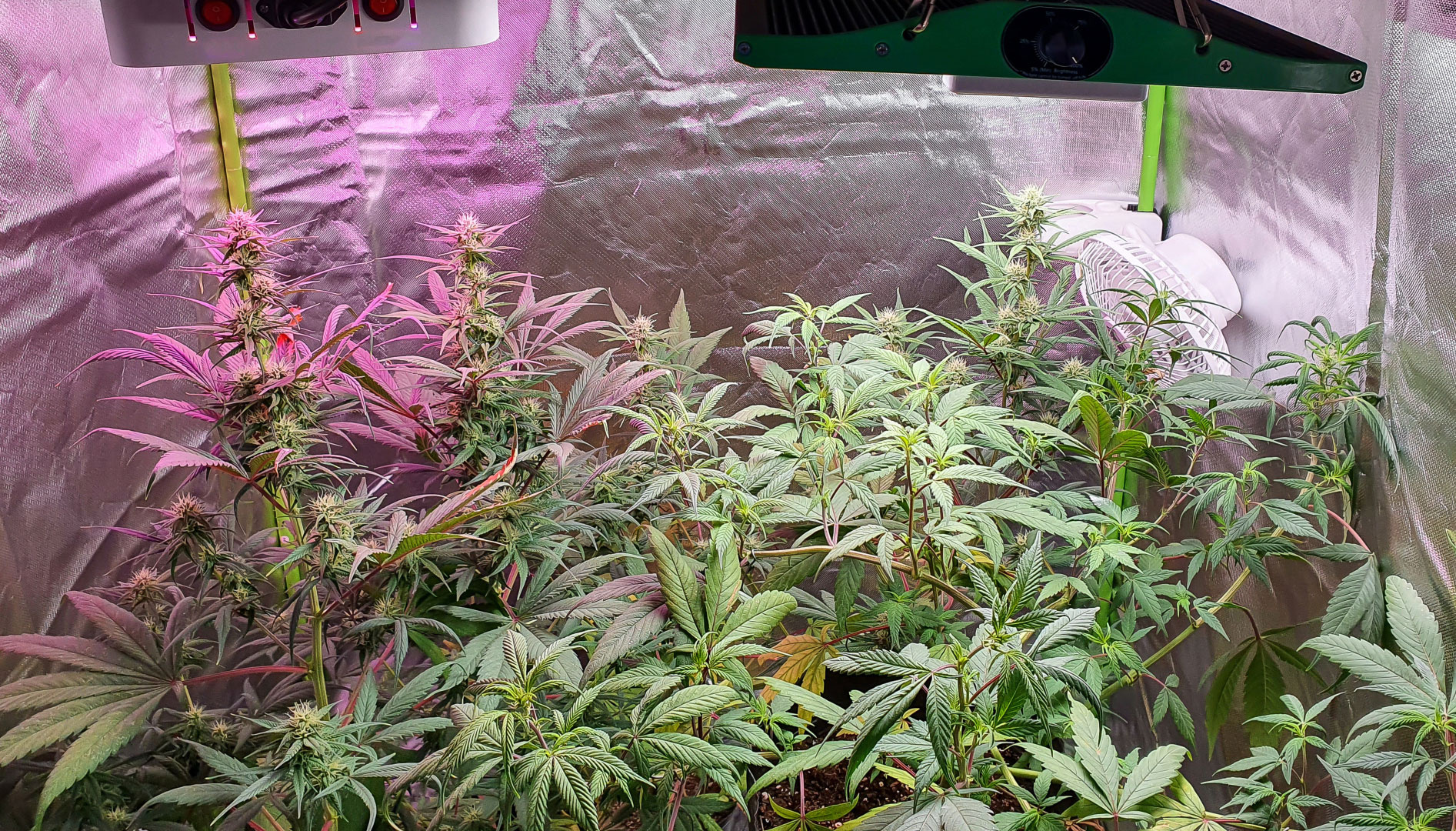
Yes, you can grow indica- and sativa-labelled cannabis plants in the same tent. They can share one light cycle, one air space, and one flowering room. The difficult part is not the names on the seed packets. It is whether the actual plants can live under the same canopy height, climate, schedule, and daily routine without one forcing a compromise on the other.
This is where a simple question becomes a useful planning exercise. A compact plant that finishes in eight weeks may share a tent with a taller plant that needs eleven weeks, but the grower must solve the height difference, the later harvest, and the drying space before the stretch begins. Two plants sold under different labels may also prove easier to manage together than two phenotypes from the same seed pack.
Let us make the decision from traits we can observe and manage. We will compare stretch, flowering duration, photoperiod type, canopy architecture, irrigation, nutrient response, climate needs, and harvest logistics. By the end, you should know whether your two cultivars are compatible, what must remain separate, and where a mixed tent is likely to become more work than variety is worth.
A compatible mixed-cultivar tent is one in which every plant can receive suitable light, climate, root-zone care, and harvest timing without another plant being chronically shaded, stressed, overfed, delayed, or made inaccessible.
The plants do not need to look identical or finish on the same day. They need enough overlap in their requirements for the shared parts of the system, plus enough flexibility for the parts that should be managed separately.
The Short Answer: Can Indica and Sativa Grow Together?
Yes. Photoperiod plants sold as indica, sativa, or hybrids can usually flower together under the same uninterrupted dark period. Autoflowers can also share a tent with one another. The question becomes harder when an autoflower and a photoperiod plant share the enclosure, or when two cultivars differ sharply in height, flowering duration, water use, feed tolerance, or susceptibility to humidity.
For planning purposes, the most useful rule is this: match the plants by behavior, not by the indica or sativa label. Look for documented stretch, approximate flowering time, branch structure, final height, container needs, climate tolerance, and whether you can move or irrigate each plant independently.
Important: “Indica” does not guarantee short, fast, and heavy-feeding growth. “Sativa” does not guarantee tall, slow, and light-feeding growth. Treat those descriptions as broad commercial language, then verify the specific cultivar and phenotype in front of you.
| Compatibility factor | Easier pairing | Harder pairing |
|---|---|---|
| Photoperiod type | Both photoperiod or both autoflower | One photoperiod and one autoflower when both must be optimized |
| Flowering stretch | Similar stretch or an easy height plan | One compact plant beside an extreme stretcher |
| Finish time | Harvest dates within the same practical window | A long gap with no separate drying space |
| Root-zone care | Separate movable containers and adjustable watering | One shared reservoir with very different responses |
| Canopy structure | Branches can be trained into one even surface | One plant repeatedly shades or traps the other |
| Climate | Overlapping temperature and humidity needs | Dense moisture-sensitive flowers beside a late, humid canopy |
| Workflow | Every pot, stem, and flower remains reachable | A fixed screen locks unlike plants into inaccessible positions |
Indica and Sativa Are Labels, Not Complete Grow Recipes
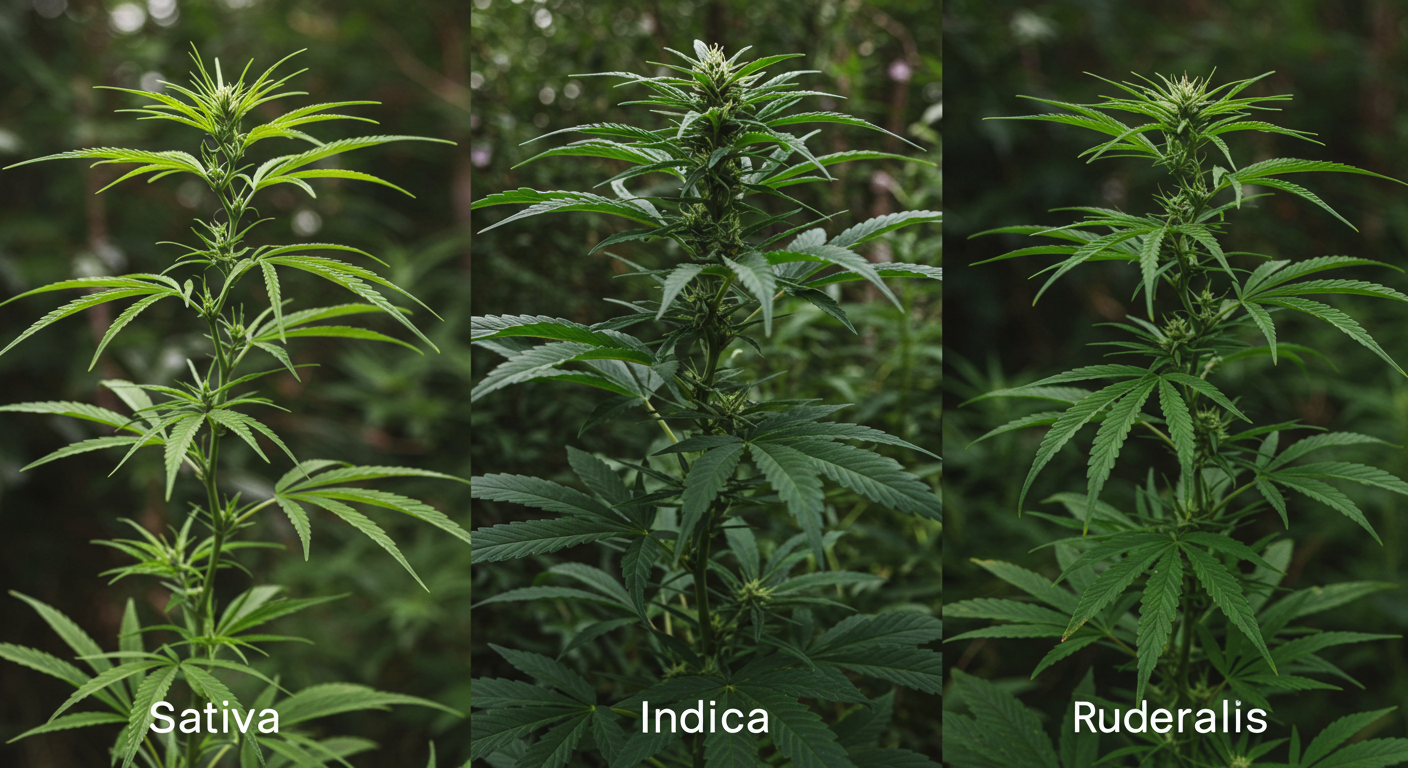
The familiar indica-sativa distinction is useful in conversation, but it does not describe the whole plant with enough precision to manage a crop. Modern commercial cannabis has been selected and crossed repeatedly. A cultivar name or dominance percentage may communicate lineage, appearance, market positioning, or expected effects, yet it does not reliably tell us every gene, growth response, or environmental requirement.
Genetic research supports that caution. A study of more than 100 cannabis samples found that products labelled indica and sativa were not clearly separated across the genome. Some label associations appeared around a limited number of terpene-related variants, but the labels did not capture overall genomic and chemical variation well. Other population studies have likewise found that commonly reported ancestry and visible “indica” or “sativa” traits only partly explain the genetic structure of modern cannabis.
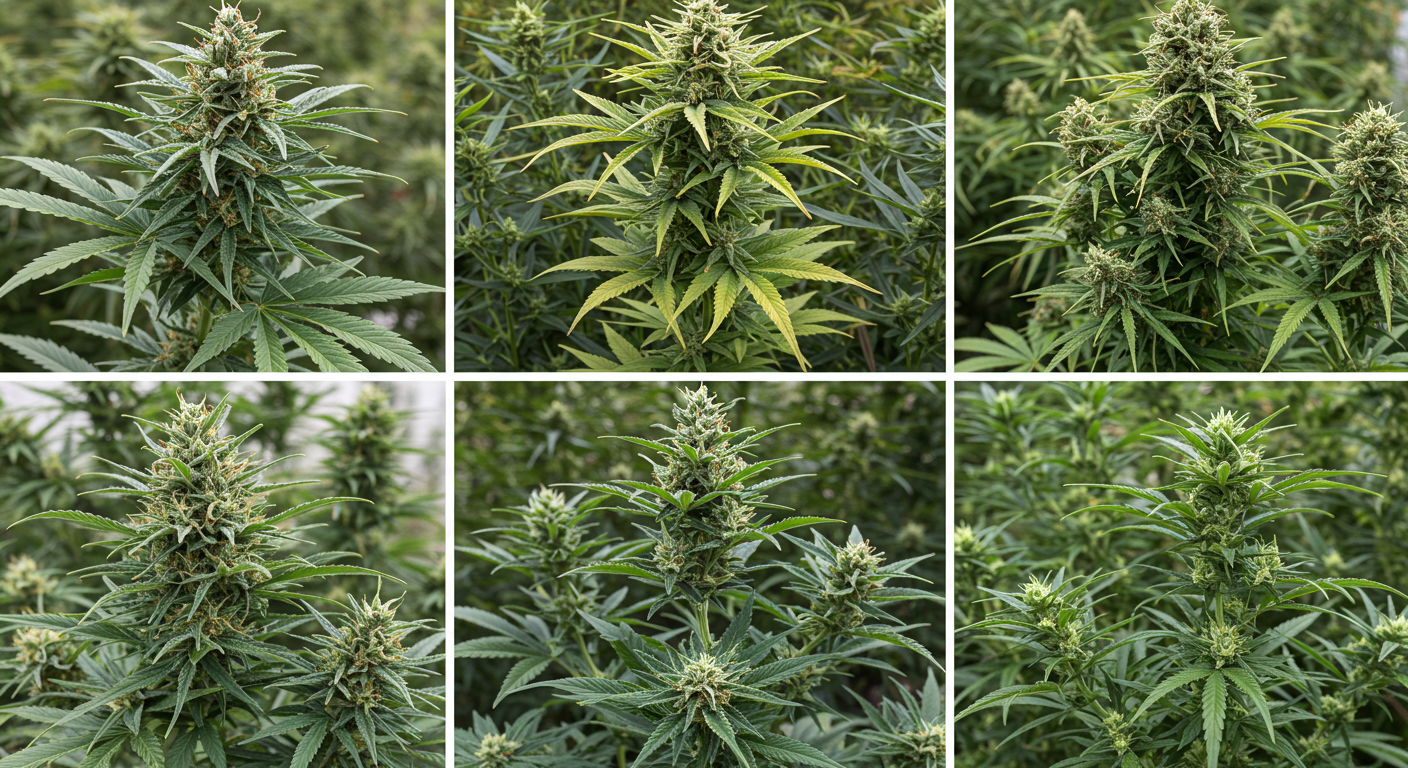
This does not mean morphology is imaginary. Cannabis plants can differ dramatically in leaflet width, internode length, branching, flowering behavior, and final architecture. It means the commercial label alone is too blunt to predict those differences. For the tent, the measurable phenotype matters more than the category printed on the pack.
Remember: The tent does not respond to a strain label. It responds to leaf area, canopy height, transpiration, root demand, flowering behavior, and the amount of heat and moisture the plants release into one shared air space.
What to Ask Instead of “Is It Indica or Sativa?”
Ask how much the plant stretches after flowering begins. Ask how long the breeder or clone keeper has actually seen it flower, not only the shortest advertised number. Ask whether the branches remain upright, whether the flowers become very dense, and whether the plant uses water faster than its neighbors. If you are growing from seed, ask how much variation appears within the line.
Those answers do not need to be perfect. They only need to expose the likely conflicts early enough for you to plan around them.
- Photoperiod or autoflowering growth.
- Expected flowering stretch and final height.
- Typical flowering duration and likely harvest gap.
- Internode spacing, branch strength, and canopy width.
- Flower density and late-flower humidity sensitivity.
- Container, medium, and irrigation-frequency needs.
- Known sensitivity to nutrient concentration or rapid feed changes.
- Training response and recovery speed.
- Access required for pruning, support, inspection, and drainage.
- Where each plant will dry if it finishes before the other.
Use a Compatibility Scorecard Before You Plant
A mixed tent becomes much easier when we separate fixed conflicts from manageable differences. A two-inch height difference is easy. A plant that doubles in height beside one that barely stretches may still be manageable with early training and a riser. A photoperiod plant that needs 12 hours of darkness and an autoflower that would benefit from a longer light day create a permanent scheduling compromise.
The following bands are practical planning guides, not biological guarantees. Breeder estimates can be optimistic, seed phenotypes vary, and environment changes plant development. Use the table to decide how much flexibility your room needs.
| Planning band | Typical situation | Management demand | Best response |
|---|---|---|---|
| Green | Same photoperiod type, similar stretch, close finish window, separate pots | Normal canopy adjustment | Proceed with labelled pots and a shared canopy plan |
| Yellow | Noticeable height difference or roughly 10 to 21 days between finishes | Training, risers, individual watering, and a separate drying plan | Proceed only if each conflict already has a practical answer |
| Red | Extreme stretch difference, incompatible light goals, one sensitive shared reservoir, or no way to dry an early plant | Continuous compromise with little recovery room | Use separate runs or separate controlled spaces |
A yellow pairing is not automatically a bad pairing. It simply spends more of your attention budget. If this is your first full indoor cycle, closer compatibility makes diagnosis easier because fewer variables are changing at once. Once the room is familiar, a more varied crop becomes easier to read.
Advice: Pair the two plants around the trait that is hardest for your room to absorb. In a short tent, stretch is the priority. In a humid room, flower structure and finishing time may matter more. If the tent is also your drying space, the harvest gap can decide the pairing before height does.
One Tent Means One Main Light Schedule
Plants in the same enclosure receive the same sunrise, sunset, and dark period unless they are physically separated from light. That shared schedule is simple for two photoperiod cultivars. Both can remain in vegetative growth under a long day and both can be induced to flower with a suitable short-day schedule. They may begin visible flowering or reach maturity at different times, but the basic light signal is compatible.
Cannabis is a quantitative short-day plant, and flowering response varies by genotype. Research has documented genotype-dependent critical photoperiods and different responses to day length. That is another reason to avoid assuming every cultivar reacts identically. For a mixed home tent, a stable, conventional schedule is usually more useful than trying to optimize an unusual photoperiod for two untested plants at once.
Photoperiod With Photoperiod
This is the most manageable mixed pairing. Vegetate both plants under the same long-day schedule, shape them into compatible heights, then change the complete tent to flowering together. The more vigorous plant may be ready first, so do not let it consume the whole footprint while waiting for the slower plant. Maintain a defined space for each root zone and canopy section.
If one cultivar needs longer to mature, the other can be harvested first while the later plant remains under the flowering schedule. The early plant does not require the whole tent to stop. The challenge is where the harvested branches will dry and how you will work around the remaining plant without introducing light, dust, pests, or large climate swings.
Tip: Give each cultivar a marked canopy lane during vegetative growth. A visible boundary prevents the faster plant from borrowing space that the slower plant will need during stretch.
Autoflower With Autoflower
Two autoflowers can share one longer light schedule, but their clocks may still differ. One plant may begin flowering earlier, finish sooner, or remain much smaller after early stress. Because you cannot extend vegetative time on demand, start with cultivars of similar expected duration and avoid a layout that depends on both plants reaching identical size.
Movable containers are especially helpful. A shorter auto can sit on a stable riser while a taller plant is trained outward. Keep each pot accessible because water use can diverge quickly as the plants enter different developmental stages.
Autoflower With Photoperiod
It is possible, but it is usually a compromise rather than an ideal pairing. Under an 18/6 or 20/4 schedule, the autoflower can flower while the photoperiod plant remains vegetative. When you later change to 12/12 to flower the photoperiod plant, the autoflower receives fewer light hours per day. You can partly compensate with intensity only if the plant, fixture, and climate have room for it, but the two plants are no longer receiving the schedule each would normally use for maximum control.
The height problem can also reverse over time. The photoperiod plant may stay compact while being trained in vegetative growth, then stretch after the flip when the autoflower is already deep into flowering. Training and pruning options are more limited on the mature auto, so canopy management must be planned around both timelines.
Master Tip: Mix autos and photoperiod plants only when variety or scheduling flexibility matters more than optimizing every square foot. If yield efficiency and a uniform canopy are the priorities, run matching photoperiod types.
Height and Stretch Are the Main Canopy Problems
A shared fixture cannot be equally close to a top at 70 cm and another at 120 cm. If the light is set for the taller plant, the shorter canopy may receive weak intensity. If it is lowered for the short plant, the tall tops may bleach, heat, or grow beyond the fixture’s useful map. The solution is to bring plant surfaces into a similar plane without making either root zone inaccessible.
Start before the flowering stretch. Top or low-stress train the more vigorous plant while it has recovery time. Spread tall branches toward open edges rather than letting them form a central tower. Keep the compact plant more upright, then raise its complete container on a stable, water-resistant platform. Raising the pot is usually better than stacking loose objects under individual branches.
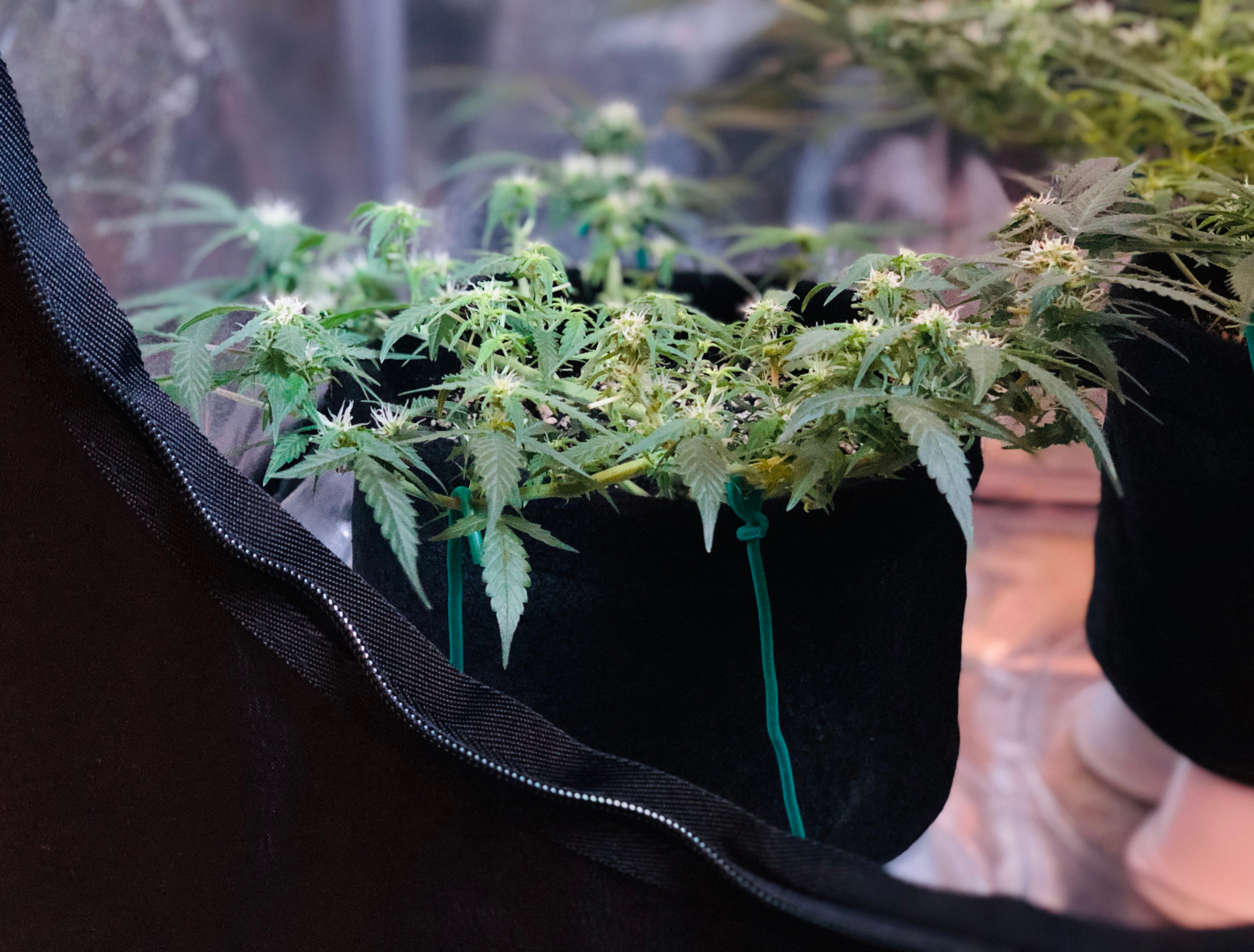
Build one light surface from different plants.
Train the taller cultivar outward, raise the shorter container safely, label every root zone, and preserve enough open space to move or rotate pots before a screen locks the canopy.
Let the tallest plant set the whole tent.
Do not keep raising the fixture while the shorter plant falls into shade. Do not fill every gap before stretch, and do not balance containers on unstable or absorbent objects.
Should the Tall Plant Go in the Center or at the Edge?
There is no universal position. Many fixtures deliver the strongest light near the center, which can intensify stress on the tallest top. Placing a vigorous plant toward an edge can give it lateral room, but some tent edges receive weaker light. Map the fixture and place the plant where its trained canopy can use open area without blocking the entrance, intake, or shorter neighbor.
Think in branches, not whole plants. A root ball can remain in one corner while trained branches occupy a different canopy lane. The final arrangement should follow the light map and service path, not a rigid rule about pot position.
Use Individual Screens When Flexibility Matters
A single wall-to-wall SCROG can create a level canopy, but it also joins every plant into one structure. If one finishes early, removing it may disturb the later plant. If one pot develops a root problem, the screen can prevent inspection or movement. Individual pot screens, modular net sections, stakes, or a support layer added after major training can keep unlike plants more independent.
A shared screen makes more sense when the cultivars have already been grown together, their finish dates are close, and the irrigation and drainage system can be serviced without moving containers.
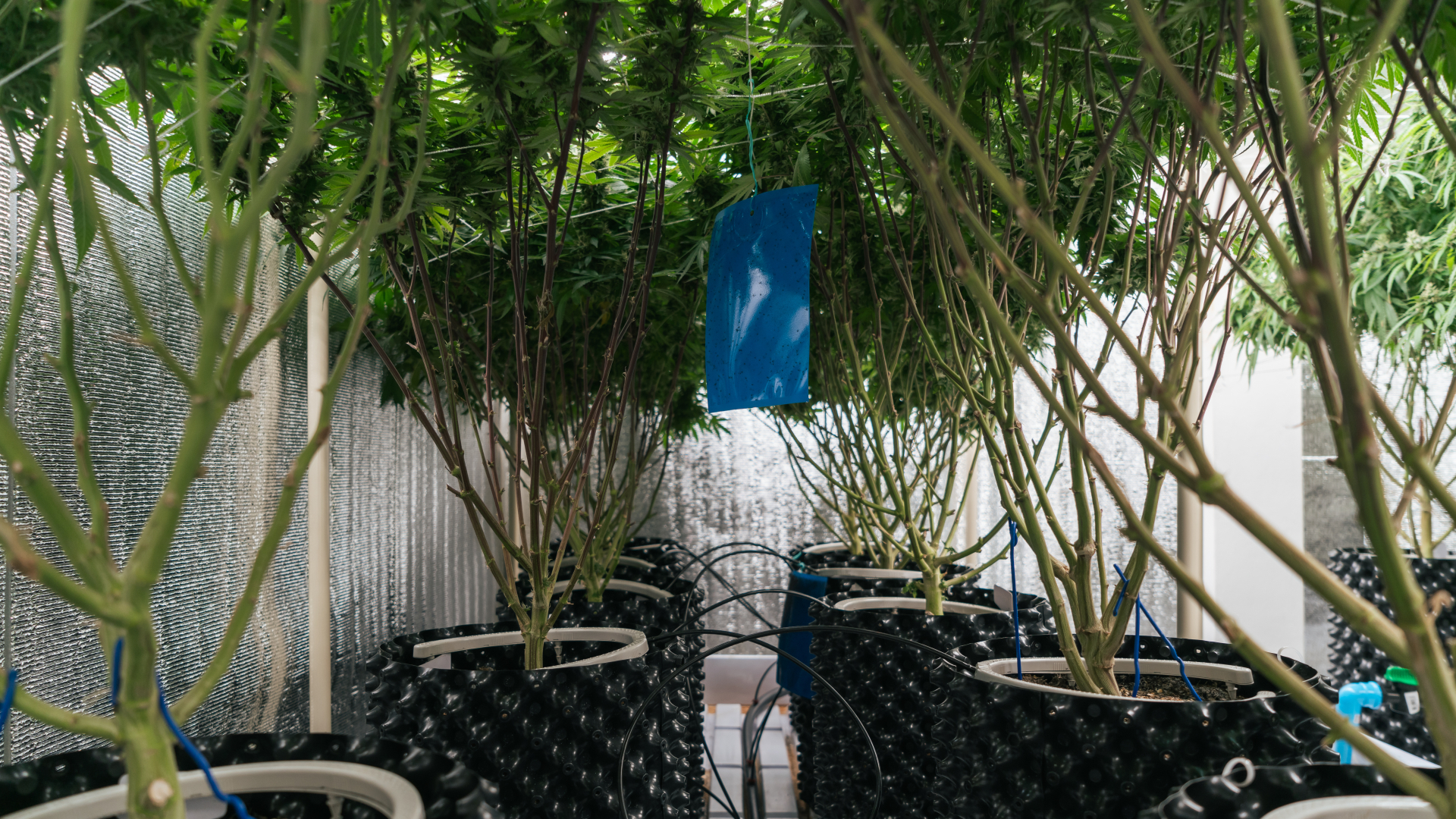
Pro Tip: Before installing a wall-to-wall net, rehearse the early harvest. Ask how the first plant, its pot, and its branches will leave the tent without tearing the remaining canopy or blocking the doorway.
Flowering Time Changes More Than the Harvest Date
A plant that finishes two or three weeks earlier affects the whole workflow. It may need lower late-flower humidity while the other plant is still building a large transpiring canopy. Its branches need support and close flower inspection while the later plant may still require training. After harvest, the early plant needs a dark, controlled drying space while the tent remains illuminated.
Breeder flowering estimates are useful for comparison, but they are not appointments. Count how the breeder defines the period, whether from the light change or visible flowering, and whether the estimate came from the same type of environment. Seed phenotypes can finish apart even when they share a cultivar name.
| Period | Plant status | Main task | Risk to check |
|---|---|---|---|
| Before the flip | Both plants still adjustable | Estimate stretch and reserve separate canopy lanes | The faster plant occupying the later plant’s space |
| Early flower | Stretch may diverge | Level tops and finalize branch support | One canopy moving too close to the light |
| Mid flower | Water use and density separate | Monitor each pot and flower structure individually | A tent-wide correction based on one plant |
| First harvest | One plant mature, one still flowering | Remove the mature plant with minimal disturbance | No suitable dark drying location |
| Remaining finish | More open tent and lower transpiration | Recheck light map, airflow, and irrigation demand | Overlighting or overwatering after canopy removal |
Can You Harvest One Plant and Leave the Other?
Yes. Harvest the mature plant when its flower development and health indicate it is ready. Do not keep it under light for extra weeks simply to make both plants finish together. Remove branches carefully, clean fallen material, and re-evaluate the remaining canopy because light distribution, air speed, and humidity can change immediately when half the leaf area disappears.
The remaining plant may now receive more direct light. Measure or observe its response before increasing fixture power. Its pot may also dry more slowly if tent temperature or airflow changes. Keep the flowering schedule stable and avoid large environmental corrections made only because the enclosure looks empty.
“One plant may finish two weeks early, but I use the tent to dry. What should I do?”
Question sent by: Mason Clarke, via Facebook page.
Plan a separate dark drying space before flowering begins, or choose cultivars with closer finish windows. The living plant still needs light, airflow, and a flowering climate, while harvested branches need darkness and a controlled drying environment. Hanging the early harvest inside an operating lighted tent compromises the dry, and shutting down the tent compromises the plant that is still finishing. If no second suitable space exists, the harvest gap is a compatibility problem, not a detail to solve later.
Do Both Plants Need a Preharvest Dark Period?
No special multi-day darkness is required to make the two harvests compatible. Research has not established a universal quality benefit from placing mature cannabis in 24 or 48 hours of darkness before harvest. More importantly, darkening the whole tent would interrupt the later plant’s schedule. Harvest the ready plant during a convenient dark or low-work period and keep the remaining plant on its stable cycle.
One Tent Has One Climate, but Plants Can Still Differ
Every plant shares the tent’s air temperature, humidity, carbon dioxide availability, and general airflow pattern. You can reposition fans and open space around a dense cultivar, but you cannot provide two completely independent climates without separate enclosures.
This matters most in late flower. A dense, compact flower structure can trap moisture internally even when the outer leaves look healthy. A taller, more open plant may continue transpiring for weeks beside it. The climate must protect the most vulnerable mature flowers while still keeping the later plant functional.
Select an overlap rather than chasing a perfect number for each label. Keep air exchanging through the enclosure, move air gently above and below the canopy, prevent leaves and flowers from being pressed together, and monitor lights-off humidity. When one plant is removed, reassess fan position so the remaining flowers are not blasted by air that previously crossed a full canopy.
Field Advice: Put sensors where the plants live, not only near the tent roof. In a mixed canopy, compare the dense interior, the short plant’s top, and the tall plant’s top. One average reading can hide three different microclimates.
Plant Density Can Erase the Advantage of Variety
Controlled research shows that plant density interacts with cannabis architecture, shading, yield per area, and chemical uniformity. More plants or more branches can fill space quickly, but a dense mixed canopy also creates hidden wet zones and unequal light. The goal is not to make two cultivars touch every wall. It is to give both a productive, inspectable share of the light.
If leaves remain layered after repositioning, branches cannot be inspected, or airflow only moves the outer surface, reduce the canopy load. Strategic branch selection usually protects more quality than trying to preserve every potential flower site.
Keep Root Zones Separate When the Plants Behave Differently
Sharing air and light does not require sharing a nutrient reservoir. Separate containers let each plant receive water when its root zone is ready. They also allow a sensitive plant to receive a lower concentration or different volume without weakening the program for its neighbor.
This is especially useful when the plants differ in size. A broad, fast-growing canopy may transpire more and dry its pot sooner. A compact plant in the same volume may remain wet. Watering both by the calendar can leave one thirsty and the other oxygen-limited.
Use the same medium and base program when practical because it simplifies the room, but diagnose each pot independently. Compare pot weight, moisture at depth, plant posture, runoff or root-zone trends where relevant, and the actual volume delivered. A symptom on one cultivar does not automatically justify changing the recipe for the whole tent.
Remember: “Indicas are heavy feeders” and “sativas need weak feed” are not dependable rules. Published cannabis nutrition studies show genotype-dependent responses. Feed the root zone and plant response you can measure, not a stereotype attached to the name.
Can One Nutrient Mix Feed Both Plants?
Often, yes. A complete, moderate recipe can support two compatible plants in the same medium. Start conservatively, watch new growth and root-zone behavior, then adjust only when evidence supports the change. The plant receiving stronger light or carrying more leaf area may use water and nutrients faster, but faster water use does not automatically mean it needs a stronger solution.
If one plant repeatedly develops excess symptoms while the other remains pale or under-supplied, first confirm irrigation volume, dry-back, root health, pH, light, and environment. The difference may be delivery or root activity rather than the formula itself.
| Root-zone setup | Main advantage | Main limitation | Best use |
|---|---|---|---|
| Separate hand-watered pots | Volume and concentration can be adjusted by plant | More measuring and record keeping | First mixed run or uncertain compatibility |
| Separate drip zones | Independent timing with repeatable delivery | More valves, lines, and calibration | Plants with different water use |
| One drain-to-waste reservoir | Simple mixing and consistent base recipe | All plants receive the same concentration unless zoned | Similar cultivars in the same medium |
| One recirculating reservoir | Efficient shared solution management | Little plant-level separation and shared root-zone risk | Proven compatible clones or cultivars |
When a Shared Reservoir Is a Poor Choice
A shared recirculating system links the plants more tightly than a shared tent. They receive the same solution concentration, pH direction, temperature, and potential root-zone pathogens. If one cultivar prefers a different irrigation rhythm or reacts badly to the common recipe, you cannot isolate it easily.
For a first run with unfamiliar genetics, separate containers or irrigation zones preserve options. A shared reservoir becomes more reasonable after you have records showing that both plants perform under the same solution and timing.
“Can I use one reservoir if one cultivar shows tip burn before the other?”
Question sent by: GreenLoftNorth, via X.
You can keep a shared reservoir only if the common solution remains suitable for the more sensitive plant and the apparent burn has been diagnosed correctly. Check light intensity, root-zone EC, pH, irrigation frequency, water temperature, and root health before blaming the cultivar. If the sensitive plant consistently needs a different concentration or timing, separate zones are the cleaner solution. Do not keep increasing the common recipe because the larger plant looks hungry while the smaller plant accumulates stress.
Will Indica and Sativa Plants Cross-Pollinate in the Same Tent?
They do not cross simply because they share air, touch leaves, or grow under the same light. Cross-pollination requires viable pollen to reach receptive female flowers. Two unpollinated female plants can grow side by side without changing each other’s genetics or turning one cultivar into the other.
Pollen can come from a male plant, a pollen-producing intersex flower, breeding work in another space, contaminated tools, clothing, or moving air. If viable pollen is released in the tent, it can seed receptive flowers on more than one cultivar. The seeds would contain genetic material from the pollen donor and the pollinated female, but the existing mother plants do not genetically merge.
One pollen source can seed every receptive female in the shared tent.
Inspect sex expression closely during transition and flowering, especially after severe stress. If breeding is not the goal, isolate or remove a confirmed pollen source before it releases pollen. Clean the room and tools carefully, and do not move from an active breeding area into a flowering tent without changing contaminated clothing and handling equipment.
“Will the plants cross and change each other just because they share a tent?”
Question sent by: Olivia Bennett, via e-mail.
No. Sharing a tent does not blend the plants or change the flowers already growing on them. Genetic crossing requires viable pollen and receptive flowers. Without pollen, the two plants remain their original genotypes. If pollen is present, flowers can become seeded, and those new seeds may carry genetics from both parents. Label every plant and monitor for pollen-producing flowers instead of treating physical proximity as pollination.
How to Plan a Mixed Tent Step by Step
A mixed run is easiest when each decision preserves options. Separate pots, movable risers, modular support, and written labels may look less elegant than one tightly woven canopy, but they let you respond to real plant behavior instead of forcing an early prediction to be correct.
1. Confirm That Both Plants Fit the Same Legal and Safe Space
Use this guide only for lawful cultivation with the property owner’s permission. Check local rules on plant numbers, locked access, visibility, odor, electrical work, and ventilation. Confirm that the tent, room, circuit, hanging hardware, drainage, and climate equipment can support the combined crop safely.
2. Record Cultivar Information Without Treating It as a Promise
Write down photoperiod type, breeder flowering range, reported stretch, expected height, known disease concerns, and seed or clone source. If you can find grow reports from comparable environments, look for repeated patterns rather than one exceptional photo. Keep the original estimates so you can compare them with the phenotype you actually grow.
3. Give Each Plant an Independent Root Zone
Use labelled containers with drainage you can inspect. Keep enough space to lift, weigh, rotate, or remove each pot until the final support system makes movement impractical. If automated irrigation is used, measure output at every emitter rather than assuming identical lines deliver identical volume.
4. Build a Vertical Budget
Subtract the container, riser, fixture, hangers, filter or ducting, safe light separation, and support height from the tent. The remaining distance must contain the vegetative plant and flowering stretch. Assign more training and lateral area to the plant with the greater height risk.
5. Start Canopy Correction in Vegetative Growth
Top, bend, or spread the vigorous plant while stems remain flexible. Let the compact plant build upward if it needs height. Do not wait for the light change to discover which plant dominates. Measure both canopies from the same reference point once or twice each week.
6. Change to Flowering Based on the Highest-Risk Plant
The stretchier cultivar usually decides the latest safe flip. The slower or smaller plant can continue filling its reserved lane during transition, but the vigorous plant should not already occupy the complete tent. Leave room for branch expansion, fans, support, and inspection.
7. Rebalance During Stretch
Move flexible tops into open zones, raise the shorter pot on a stable platform, and map the canopy under the real fixture. Watch the distance to the light and the weakest edge, not only the tallest center. Stop major training before stems harden and flowers become easy to damage.
8. Manage Water and Feed by Plant
Record irrigation volume and approximate dry-back for each pot. If one plant uses water faster, change its timing or volume before increasing nutrient concentration. Diagnose symptoms by location and root zone. A plant under a fan, near an intake, or directly below a light hotspot may look genetically sensitive when the real difference is environmental.
9. Prepare for Separate Harvests
Set up drying space before the first plant matures. Plan how branches will leave the tent, where tools will be cleaned, and how the remaining canopy will be supported. If harvesting the first plant would dismantle the whole screen, redesign the support while there is still time.
10. Record the Result by Cultivar and Phenotype
After drying, record finish date, dry usable flower, flower quality, aroma, density, disease loss, water use, feed response, stretch, and the amount of labor each plant required. The best future pairing may not be the two heaviest plants. It may be the two that finish well under one stable system.
Rehearse the mixed tent on paper before the plants make the decisions for you
Here is a practical recommendation for a first mixed run. Draw the tent from above and from the side. Mark the usable light footprint, the door, fans, intake, containers, expected canopy heights, and the route each plant will take at harvest. Then write the likely finish date and drying location beside each cultivar.
If one plant has no space during stretch, no way to receive separate water, or no route out of the tent, the plan has already found the conflict while it is still inexpensive to fix. We can change cultivar, container, support, or position before germination. That small rehearsal is more useful than trying to solve every difference after the branches have joined.
Common Mixed-Tent Scenarios
The same pair can be easy in one room and difficult in another. Use these scenarios as starting points, then adjust for the actual fixture, tent height, climate, root system, and drying setup.
| Scenario | Main conflict | Practical plan |
|---|---|---|
| Compact photoperiod with a tall photoperiod | Uneven canopy height | Train the tall plant outward, raise the compact pot, and flip for the taller plant’s stretch |
| Two photoperiods with different finish dates | Staggered harvest and drying | Use modular support and prepare a separate dark drying space |
| Autoflower with photoperiod | Light-schedule compromise | Choose which plant is the priority and accept reduced optimization for the other |
| Sensitive cultivar with vigorous feeder | One solution does not fit both | Use separate irrigation zones and diagnose before changing concentration |
| Dense flowers with open flowers | Different moisture risk | Set climate for the vulnerable flowers and preserve internal airflow |
| Seed plants from the same pack | Unexpected phenotype variation | Treat each plant as an individual even though the labels match |
Troubleshooting an Uneven Mixed Canopy
When one plant looks worse, resist the temptation to explain every difference with genetics. Check light, air movement, irrigation, root-zone condition, and development stage first. The label may describe the plant, but it does not diagnose the problem.
| Symptom | Possible cause | How to confirm | Corrective action | Prevention |
|---|---|---|---|---|
| Tall tops bleach while the short plant stretches | Canopy height and light-map mismatch | Measure canopy height, fixture distance, and PPFD by zone | Lower tall branches, raise the short container, and rebalance power | Train before the flip and keep a vertical budget |
| One pot stays wet much longer | Different root size, medium density, or irrigation volume | Compare pot weight, moisture at depth, roots, and delivered volume | Separate watering timing and correct delivery | Use independent pots and record dry-back |
| Only one cultivar shows burned tips | Concentration sensitivity, root-zone buildup, or excessive light | Check full recipe, root-zone trend, pH, PPFD, and root health | Correct the confirmed cause gradually for that plant | Begin with a moderate shared recipe and separate zones |
| Compact plant disappears below the canopy | Late height correction | Compare top height and occupied light area | Use a stable riser and redirect tall branches | Reserve a lane and measure weekly |
| Humidity rises around one mature plant | Dense flowers, leaf overlap, or weak internal air exchange | Measure within the canopy and inspect flower interiors | Open space, reposition gentle airflow, and improve moisture removal | Pair compatible flower structures and avoid overfilling |
| The later plant slows after the first harvest | Sudden change in light, airflow, temperature, or irrigation demand | Compare conditions before and after canopy removal | Rebalance the fixture and fans without abrupt changes | Plan the post-harvest tent configuration in advance |
| Both cultivars develop seeds | Viable pollen in the shared air space | Inspect for male or intersex flowers and trace outside pollen sources | Remove or isolate the source and clean carefully | Inspect sex expression and separate breeding work |
When You Should Use Separate Tents
Separate spaces are the better choice when the light schedules conflict, the harvest gap exceeds your drying capacity, one cultivar needs a materially different climate, or the shared root system prevents individual correction. They also make sense for breeding, quarantine, pest isolation, keeping mother plants, or running perpetual harvests at different stages.
A second tent does not automatically solve everything. It needs its own safe electrical capacity, ventilation, climate strategy, light control, and daily attention. Sometimes the better answer is not another enclosure but two more compatible cultivars in one well-run cycle.
What to Remember: Variety is valuable only while the room remains understandable. If every correction helps one plant and harms the other, the pairing is consuming quality rather than adding choice.
Frequently Asked Questions
Can indica and sativa use the same light?
Yes, if the fixture covers the combined canopy evenly and both plants share a compatible photoperiod. The challenge is usually height, not a special “indica” or “sativa” spectrum. Train or raise plants so their leaves occupy a similar light plane, then map the complete canopy rather than setting the fixture from the tallest top alone.
Can indica and sativa use the same nutrient schedule?
They often can start with the same complete, moderate program when grown in the same medium. Adjust from measured root-zone and plant response. Do not assume one needs stronger feed because it is labelled indica or weaker feed because it is labelled sativa. Separate irrigation zones are useful when water use or concentration tolerance differs.
Should both plants be switched to 12/12 at the same time?
Two photoperiod plants in the same unpartitioned tent should receive the same flowering schedule. Change the schedule when the stretchier plant is approaching its safe pre-flower size and the slower plant has enough reserved canopy area. They do not have to begin visible flowering or finish on the same date.
Can one plant stay in vegetative growth while the other flowers?
Not under the same open light environment if both are photoperiod plants. A flowering short-day schedule will signal both. Maintaining one in vegetative growth requires a separate light-controlled space. An autoflower can flower under a vegetative schedule, but pairing it with a photoperiod plant still creates timing and optimization compromises.
Will a sativa plant always outgrow an indica plant?
No. Some narrow-leaf or sativa-labelled cultivars stretch strongly, but modern hybridization and phenotype variation make the label unreliable as a height guarantee. Compare the specific cultivar, clone history, and early growth. Two seeds from one pack can differ more than expected.
Can I grow two strains in one pot?
It is possible, but separate pots are usually easier. In one container, roots share water, nutrients, oxygen, and space, while the larger plant can dominate. You cannot move, flush, transplant, or irrigate them independently. A mixed tent already has shared constraints; separate root zones preserve useful control.
Can I harvest an indica first and let a sativa continue?
Yes, if the individual plants are mature at different times. Harvest according to each plant’s development, not its label. Keep the later plant on its stable flowering schedule, recheck light and airflow after canopy removal, and dry the early harvest in a separate dark controlled space.
Do different strains need separate fans?
Not necessarily. They need adequate air exchange and gentle movement through the complete canopy. A dense plant may need more open space or a fan position that reaches its interior, but avoid blasting leaves or flowers. Use multiple well-positioned circulation paths when one fan cannot cover above and below the canopy.
Can different cultivars share a SCROG net?
Yes, but a shared net reduces mobility. It works best when stretch, finish time, irrigation, and support needs are already known. For unfamiliar cultivars, individual screens or modular sections let you raise, remove, and service plants without dismantling the whole canopy.
Is growing different strains together harder?
Usually, because variation adds decisions. Water use, stretch, finish timing, nutrient response, and flower structure may differ. It becomes manageable when the plants share the same fundamental schedule and every likely difference has a planned control such as separate pots, risers, modular support, and a second drying space.
What is the easiest mixed-tent pairing?
Two photoperiod cultivars with similar stretch, close finish windows, compatible flower structure, and separate containers are generally the easiest. Known clones are more predictable than untested seed phenotypes. The best pairing is defined by behavior and your room, not by whether both names carry the same dominance label.
Here Is the Practical Recommendation
You can grow indica- and sativa-labelled cannabis in the same tent successfully. Choose the pair by photoperiod type, stretch, finish window, canopy architecture, root-zone response, and climate overlap. Use separate labelled containers, preserve access, train the taller plant early, raise the shorter plant safely, and prepare a dark drying space before either plant flowers.
Then let the plants refine the plan. Measure height, light, water use, and climate by zone. Feed from evidence instead of label stereotypes. Harvest each cultivar when it is ready and re-balance the remaining tent after the first plant leaves. The goal is not to make two different plants behave identically. It is to give both enough individual care inside the systems they must share.
When that balance works, a mixed tent can provide variety without surrendering flower quality. When every decision becomes a compromise, run the cultivars separately and use the records to build a better pairing next time.
Selected Research Behind This Guide
The sources below support the main scientific points in this guide. Cannabis responses remain cultivar- and system-dependent, so study findings are used as evidence and context rather than universal prescriptions.
- Cannabis labelling, genomic variation, and terpene synthase genes
- The genetic structure of marijuana and hemp
- Widely assumed cannabis phenotypes and their genetic basis
- Morphology, cannabinoids, and photosynthesis in contrasting cannabis populations
- Architecture and florogenesis in female Cannabis sativa plants
- Comparative genomics of flowering behavior in Cannabis sativa
- Photoperiod and flowering responses in indoor-grown cannabis
- Plant density, architecture, yield, and chemical uniformity in cannabis
- Genotype-dependent potassium responses in medical cannabis
- Closing the yield gap for cannabis production
Share this article
A quick overview of the topics covered in this article.
Follow us
Latest articles
September 25, 2026
September 25, 2026
September 25, 2026
September 25, 2026