
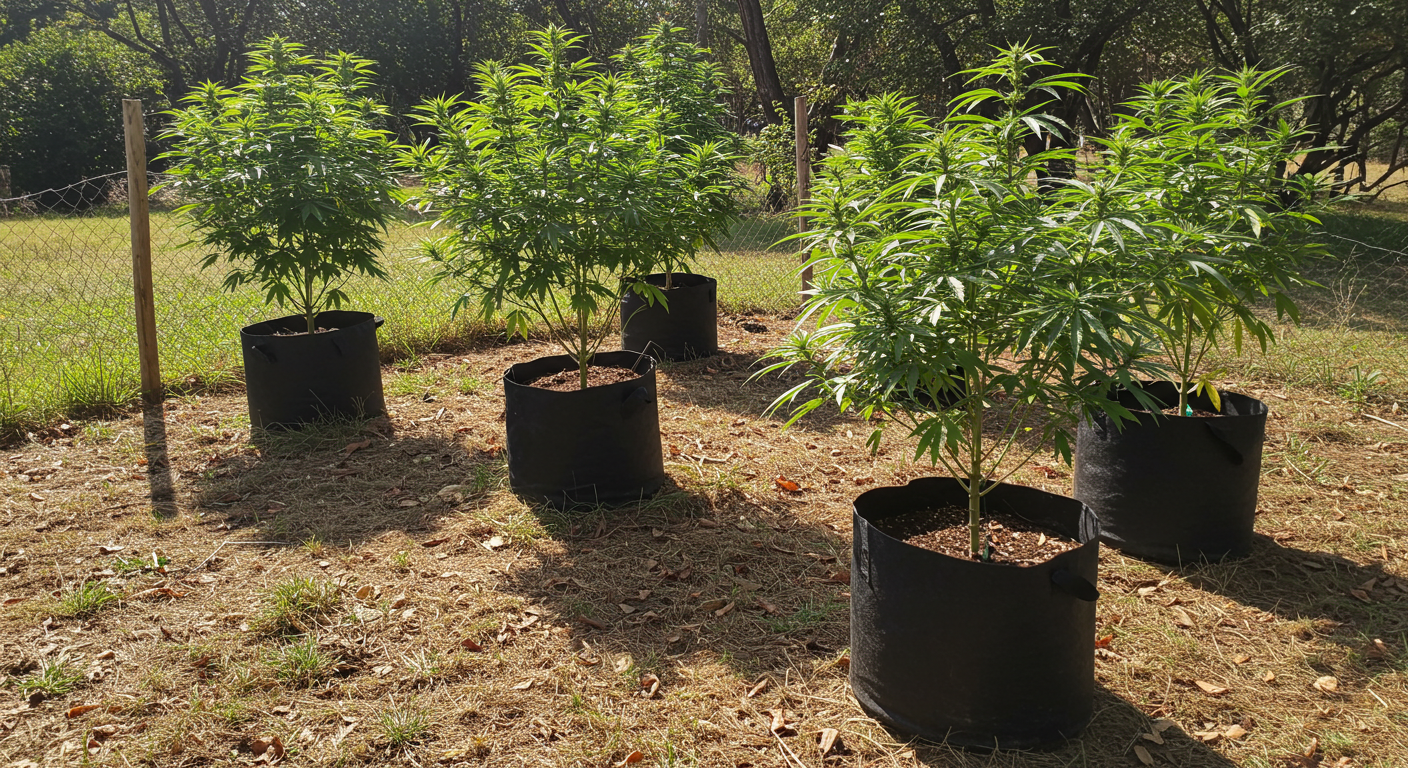
Is Outdoor Growing Really Cheaper? A Full Cost Comparison
Yes, outdoor cannabis growing is usually cheaper when the site already gives you useful sunlight, a workable root zone, practical water access, and a lawful place to grow. You avoid the largest indoor expenses: the grow light, continuous ventilation, much of the climate-control equipment, and the electricity needed to run them.
But “usually cheaper” is not the same as “free.” Outdoor costs move into different categories. Soil improvement, containers, irrigation, plant support, pest management, weather protection, security, and the possibility of losing part of a once-a-year crop can change the calculation quickly. The right comparison is not sunlight versus a grow light. It is the complete first season, the complete repeat season, and the amount of usable flower that actually reaches storage.
Important: Grow cannabis only where cultivation is legal and only on land you own or have explicit permission to use. Local rules may affect plant count, visibility, locked enclosures, electrical work, water use, structures, odor, and possession after harvest. A legally required expense belongs in the budget.
Is Outdoor Growing Really Cheaper? The Short Answer
For a small lawful home garden in a suitable climate, outdoor growing can have a dramatically lower first-year and repeat-year cost than a comparable indoor setup. A grower who already owns basic garden tools, has healthy ground, and can hand-water may need only genetics, modest soil preparation, nutrition, plant support, and a few protective supplies. Another grower may need large containers, purchased soil, a locked enclosure, automatic irrigation, rain protection, and a drying solution. Both are “outdoor,” but they do not have the same budget.
Indoor growing usually begins with a higher equipment bill and continues with an electricity bill. In return, it can offer more cycles per year, more predictable scheduling, controlled darkness, less exposure to storms, and a better chance to keep the environment inside a chosen range. Outdoor growing exchanges some of that control for free sunlight, seasonal space, and natural air movement.
| Cost question | Outdoor garden | Indoor garden |
|---|---|---|
| Largest avoided cost | Sunlight and natural air movement replace major equipment loads | Lighting and environmental control must be supplied |
| Largest hidden cost | Weather, pests, security, soil correction, and one seasonal finish window | Electricity, heat removal, dehumidification, failures, and equipment replacement |
| Cheapest situation | Suitable private site, good soil, simple hand watering, mild season | Small efficient enclosure in a room that already has suitable temperature and humidity |
| When cost climbs | Poor soil, severe climate, expensive enclosure, remote access, or repeated crop loss | Large canopy, inefficient light, expensive electricity, or constant HVAC demand |
| Number of annual cycles | Usually tied to the local season unless a greenhouse or special planning changes it | Multiple cycles may spread reusable equipment cost across the year |
Capital cost and operating cost
Capital cost is the money spent on reusable assets such as a light, tent, irrigation system, fence, trellis, or greenhouse. Operating cost is what the garden consumes during a cycle or season, including electricity, water, growing medium, nutrition, filters, pest controls, and replacement parts. A fair comparison separates the two.
The 2026 Planning Ranges
The ranges below are broad planning brackets in U.S. dollars for a small lawful home garden. They are not shopping lists, guarantees, or universal minimums. Local prices, taxes, shipping, climate, electrical work, security rules, genetics, and the equipment you already own can move the result far outside a neat table.
| Setup level | Outdoor first season | Indoor first cycle | What the range assumes |
|---|---|---|---|
| Lean and site-ready | About $100–$400 | About $450–$900 | Existing tools and suitable host space; no major repairs or construction |
| Balanced small garden | About $400–$1,200 | About $900–$1,800 | Reliable core equipment, meters, medium, nutrition, support, and basic risk control |
| High-protection or high-control | About $1,200–$3,500+ | About $1,800–$4,500+ | Substantial enclosure, irrigation, weather protection, HVAC, electrical, or structural work |
As you can see, the ranges overlap. A protected outdoor garden can cost more than a compact indoor tent. That does not make the outdoor plan wrong; it means the word “outdoor” does not describe the amount of infrastructure. Likewise, an empty closet is not automatically a cheap indoor grow if the room needs safe electrical work, heat removal, odor control, and dehumidification.
What to Remember: Compare equivalent goals. A hand-watered outdoor container should not be compared with a fully automated indoor room unless both are meant to deliver the same level of control, scale, security, and reliability.
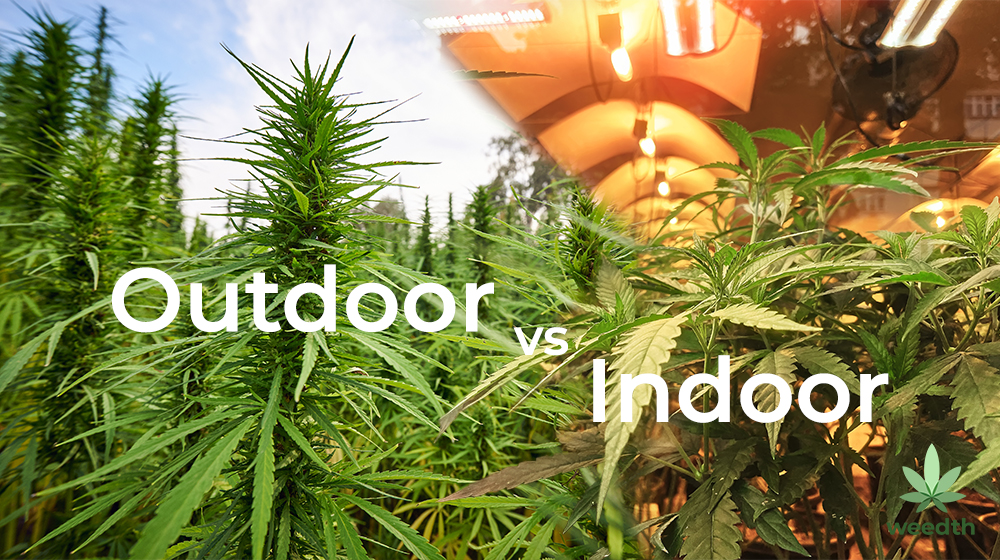
“Is outdoor growing really cheaper if I still need soil, fencing, and irrigation?”
Question sent by: Aaron Whitmore, via email.
Yes, it can be cheaper when the site already gives you useful sunlight, workable root space, and practical access to water. A fence, permanent irrigation line, custom soil, or shelter is not mandatory for every garden; each solves a specific legal or site problem. Hand watering, prepared ground or simple containers, and balanced nutrition may be enough. The tradeoff is less control over weather, pests, and security, so buy only the protection your garden truly needs.
Why Outdoor Growing Often Wins the Cost Comparison
Sunlight replaces the most expensive indoor input
An indoor garden must convert electricity into plant-usable light. The fixture has a purchase cost, draws power every day, and releases heat that may need to be removed. Outdoor sunlight arrives without a utility charge and can illuminate a much larger canopy than a modest home fixture.
This is the financial heart of outdoor growing. The saving is not only the missing light bill. It may also include a smaller ventilation load, no tent, less dehumidification, no timer-controlled light cycle, and no need to cool a room heated by the fixture. In a favorable climate, nature supplies several systems at once.
Open space can reduce the cost of canopy area
Indoor space is paid for directly or indirectly. A larger canopy needs a larger enclosure, more lighting, more air movement, more climate capacity, and often more electrical headroom. Outdoors, an established garden can offer more horizontal and vertical space with little additional equipment cost.
More space does not guarantee more usable flower. A bigger plant also needs a bigger supported root zone, dependable water, strong branches, and a finish window that protects the crop. Outdoor scale is cheap only when the site can support it.
Natural air movement can replace part of the ventilation system
Indoor air must be moved through the canopy and exchanged or conditioned. Fans, ducting, filters, and climate equipment all cost money and consume electricity. Outdoors, natural air movement helps exchange gases and dry surfaces.
Wind is not a free precision fan. Too little movement in a sheltered wet corner can increase disease pressure, while severe wind can tear branches or overturn containers. A good outdoor site reduces equipment demand without pretending the weather is controllable.
Existing ground can replace containers and purchased medium
If the native soil has suitable structure, drainage, fertility, and contaminant history, it can become a large reusable root zone. That may remove the need to purchase and refill large containers. A soil test costs less than guessing with bags of amendments, and it can prevent spending money on nutrients already present.
Poor ground changes the result. Dense, contaminated, waterlogged, saline, or construction-damaged soil can make containers or raised beds the more practical choice. The cheapest root zone is the one that works, not automatically the one already on the property.
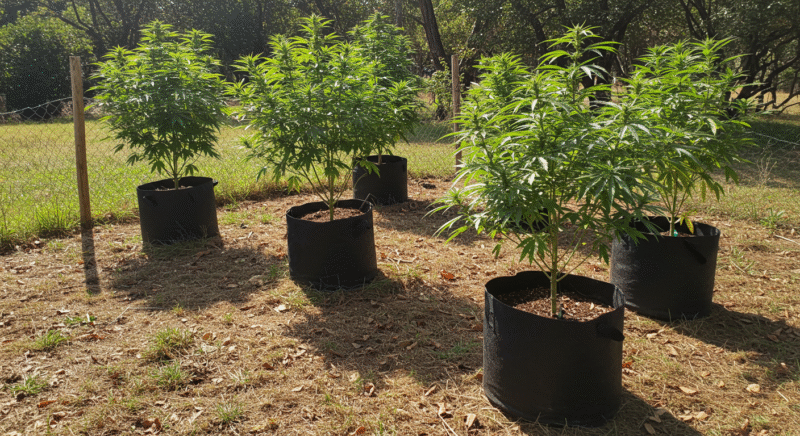
“My backyard soil looks dark. Can I remove soil from the budget?”
Question sent by: Emily Carter, via contact form.
Not until you confirm drainage, structure, pH method, fertility, and site history. Dark color can come from useful organic matter, but it does not prove that the root zone drains well or lacks excess salts and contaminants. Test first. If the soil is suitable, it may become one of the largest outdoor savings; if it is unsuitable, discovering that before planting is still money saved.
What an Outdoor Cannabis Garden Actually Costs
Outdoor budgets become accurate when each item is connected to a real problem. Do not begin with a catalog. Begin with the law, the site, the plant, and the season.
| Outdoor cost category | Lean range | Expanded range | What makes it necessary |
|---|---|---|---|
| Seeds or legal starter plants | $20–$80 | $80–$200+ | Plant count, seed type, source, and replacement planning |
| Soil, amendments, or containers | $40–$200 | $200–$700+ | Native soil quality, root volume, and whether medium can be reused |
| Watering equipment | $0–$80 | $80–$350+ | Hand watering, site distance, heat, container count, and automation needs |
| Nutrition and meters | $50–$180 | $180–$450+ | Soil test, water chemistry, medium type, and feeding strategy |
| Support and training | $20–$100 | $100–$300+ | Plant size, wind, flower weight, and reusable framework |
| Pest and disease prevention | $25–$120 | $120–$350+ | Local pressure, scouting frequency, netting, sanitation, and legal controls |
| Security or required enclosure | $0–$150 | $150–$1,500+ | Local law, existing fence, visibility, access, animals, and theft risk |
| Weather protection | $0–$100 | $100–$800+ | Rain, frost, hail, wind, heat, smoke, and finish-season reliability |
| Drying and postharvest | $50–$200 | $200–$700+ | Available clean space, humidity control, air movement, and harvest size |
These lines are not all additive. A grower may already have a locked yard, hose, compost, trellis materials, clean drying space, and garden tools. Another may own none of them. Mark every item as owned, required, optional, or unnecessary before adding a price.
Genetics are a cost-control decision
A cultivar that cannot finish before cold rain is not a bargain, even if the seed was inexpensive. Outdoor genetics should fit the local finish window, humidity, disease pressure, and available space. Earlier or more open-flowered material can reduce weather risk in a short or wet season, while heat- and drought-tolerant material may reduce stress in a hot site.
Regular, feminized, and autoflowering seeds change planning in different ways. The cheapest choice depends on your legal plant limit, breeding goals, season length, and tolerance for variation. Budget for viable plants, not only the number of seeds purchased.
Containers can be the largest outdoor purchase
Containers solve real problems: unsuitable ground, mobility, controlled media, contaminated soil, and restricted garden space. They also create expenses. Large pots need more medium, dry faster in heat and wind, and may need saucers, supports, shade around the root zone, or more frequent irrigation.
In-ground planting can be cheaper over several seasons when the site works. Raised beds sit between the two approaches. They require an initial structure and soil volume but can become a reusable root zone rather than a yearly pile of bags.
Irrigation is optional until the site makes it necessary
A nearby plant in a manageable container can be hand-watered. A remote garden, large root zone, hot climate, or unreliable schedule may justify drip irrigation, a timer, a filter, pressure regulation, and a backup plan. Automation buys consistency and time; it does not make a poor water source or blocked emitter safe.
The water itself may be inexpensive, but delivery is not always. Include hoses, storage, pumping, filters, fittings, leak protection, travel, and the value of your time. If water comes from a well, pond, stream, rain tank, or municipal supply, test what matters for the system and follow local water-use rules. Protect natural sources from fertilizer, soil, and waste runoff.
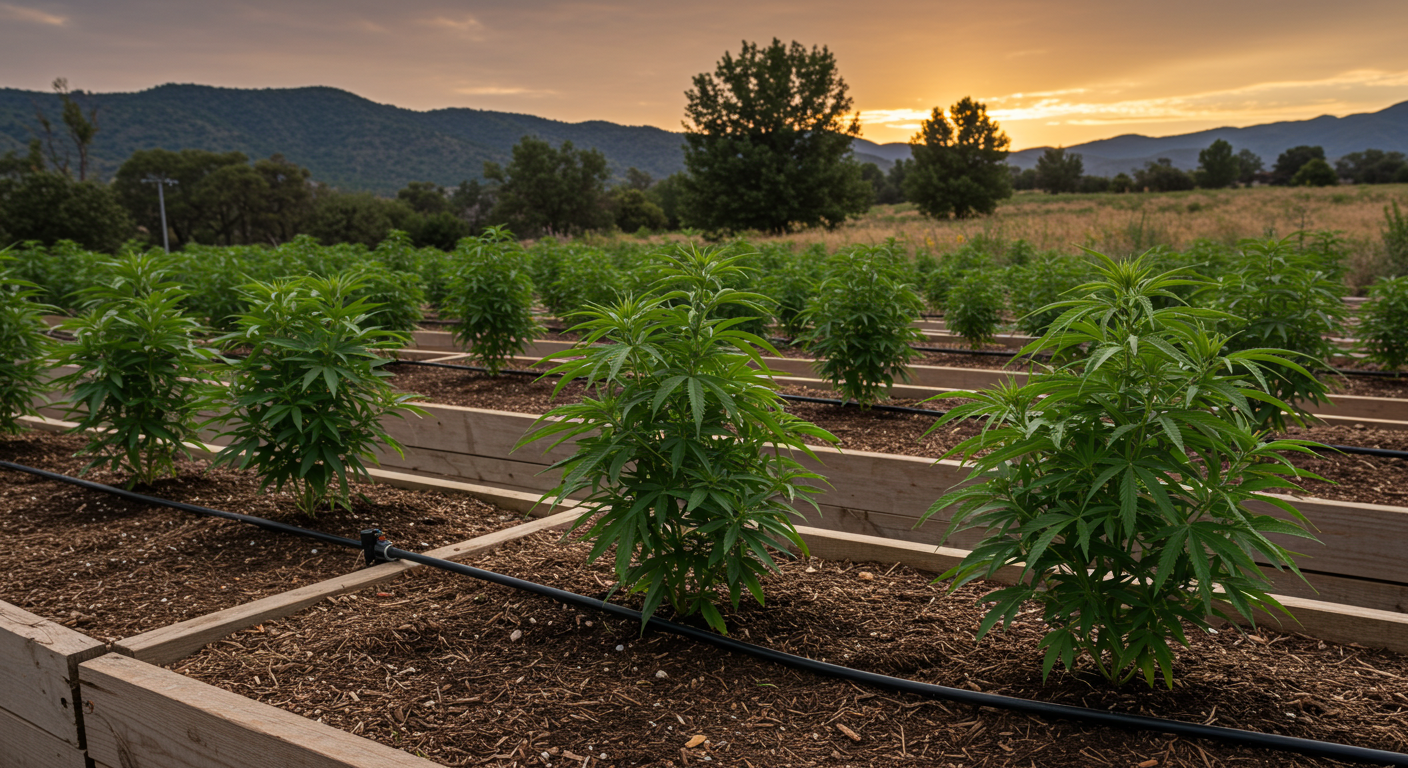
Pro Tip: Price the simplest reliable watering method, then price the consequence of missing one hot day. Automation is valuable when it prevents a realistic failure, not simply because it appears more professional.
“Does rain make outdoor watering free?”
Question sent by: Colin Fraser, via email.
Rain can reduce irrigation demand, but it does not arrive on the plant’s schedule and may fall too lightly, too heavily, or at the wrong stage. Measure what reaches the root zone, account for container coverage and runoff, and keep a backup water plan. Rain is a useful input, not a dependable invoice credit until your records show how much irrigation it actually replaced.
Fencing and security are not universal purchases
Some jurisdictions require cannabis to be screened, locked, or kept out of public view. In other gardens, an existing lawful fence already meets the need. Wildlife, pets, children, visitors, and theft risk can add reasons for a barrier, but the solution should match the site.
A fence is not the only form of security, and more equipment is not automatically safer. Controlled access, discreet placement, strong gates, motion lighting where appropriate, cameras that respect privacy law, and ordinary household security may be enough. Avoid dangerous traps or improvised electrical deterrents. Any security system must remain lawful and safe for people and animals.
Weather protection can be cheaper than crop loss
Stakes, trellis, branch ties, temporary rain cover, shade cloth, hail netting, and frost cloth are insurance tools. They should be installed for a known risk and designed so they do not collapse onto plants or trap stagnant humidity.
A full greenhouse changes the category. It can extend the season and protect flowers, but structure, ventilation, anchoring, local permits, heat control, condensation management, and replacement covering can make it more expensive than a basic indoor tent. Greenhouse growing is often a middle path in control, not automatically the cheapest outdoor option.
Do not budget security before reading the law
A low-cost plan can become noncompliant if local rules require a locked enclosure, restricted visibility, setbacks, permits, or specific access controls. Confirm the rule first, then design the least complicated system that genuinely meets it.
What an Indoor Cannabis Garden Actually Costs
Indoor cost begins with equipment and continues with energy. A compact, efficient tent in a naturally stable room can be surprisingly economical after the first purchase. A poorly placed room that needs constant heating, cooling, or dehumidification can become expensive even with an efficient light.
| Indoor cost category | Lean range | Expanded range | What drives the price |
|---|---|---|---|
| Tent or enclosure | $80–$200 | $200–$600+ | Footprint, height, fabric, ports, frame, and room preparation |
| Grow light | $150–$350 | $350–$1,000+ | Canopy area, efficiency, distribution, dimming, and safety certification |
| Exhaust and odor control | $100–$250 | $250–$600+ | Room heat, duct resistance, noise, odor, and filter replacement |
| Circulation and controls | $40–$120 | $120–$350+ | Fan count, environmental sensors, timers, and automation |
| Climate equipment | $0–$250 | $250–$1,500+ | Host-room temperature, humidity, season, heat load, and plant mass |
| Electrical and leak safety | $50–$200 | $200–$1,000+ | Existing circuit capacity, protected outlets, wiring, drainage, and professional work |
| Pots, medium, nutrition, and meters | $125–$350 | $350–$800+ | System type, container volume, meter quality, and reusable media |
| Drying and storage | $50–$200 | $200–$700+ | Whether the grow enclosure can be reused and how much climate control is needed |
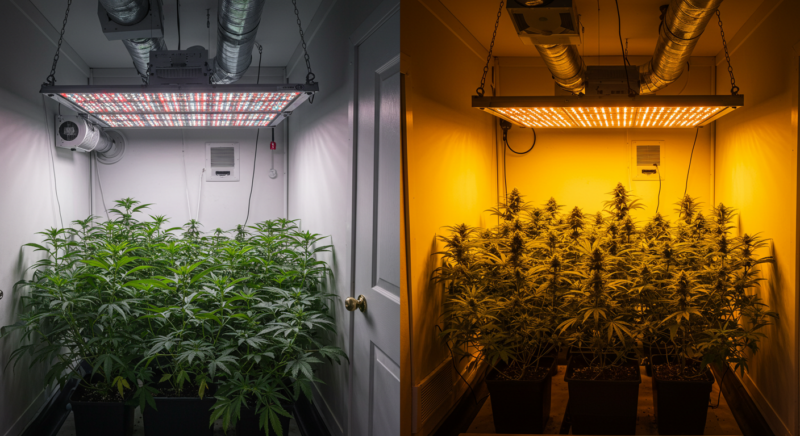
The light is only the first electrical load
Lighting is easy to calculate because wattage and schedule are visible. The harder costs are exhaust, circulation, dehumidification, air conditioning, humidification, pumps, and heating. These loads respond to the room, the season, and the amount of water plants release into the air.
An efficient fixture can lower both direct power use and the heat that the climate system must remove. That does not mean the cheapest light has the lowest lifetime cost. Compare measured input power, useful canopy coverage, dimming range, warranty, thermal design, and electrical certification rather than marketing watt equivalents.
What is a kilowatt-hour?
A kilowatt-hour, or kWh, is the billing unit for electrical energy. Multiply equipment watts by operating hours, divide by 1,000, then multiply by your utility price per kWh. A 300-watt device running for 10 hours uses 3 kWh, not 300 kWh.
A Real Indoor Electricity Example
For a neutral 2026 example, imagine a 300-watt LED used for four weeks at 18 hours per day and nine weeks at 12 hours per day. This is a planning example, not a promise about plant timing or harvest.
- Vegetative lighting: 0.300 kW × 18 hours × 28 days = 151.2 kWh.
- Flowering lighting: 0.300 kW × 12 hours × 63 days = 226.8 kWh.
- Total light energy: 378 kWh.
- At $0.1829 per kWh: 378 × $0.1829 = about $69 for the light.
The $0.1829 figure is the U.S. residential average forecast for 2026, not your personal rate. Local residential electricity varies dramatically. Use the complete rate from your bill, including time-of-use differences and relevant delivery charges where possible.
Now add a 60-watt combined fan load running continuously for 91 days:
0.060 kW × 24 hours × 91 days = 131.04 kWh, or about $24 at the same rate. Light plus that fan load is already about $93. A dehumidifier, air conditioner, heater, or additional ventilation can add more than the light, especially in an unsuitable room.
| Equipment example | Energy used | Cost at $0.1829/kWh | Why your result changes |
|---|---|---|---|
| 300 W light schedule above | 378 kWh | About $69 | Wattage, dimming, day count, and light schedule |
| 60 W fans for 91 days | 131 kWh | About $24 | Fan speed, duct resistance, and operating schedule |
| 300 W dehumidifier, 8 h/day | 218 kWh | About $40 | Actual duty cycle, room leakage, plant size, and season |
| Combined example | 727 kWh | About $133 | Does not include every pump, controller, heater, or air conditioner |
Master Advice: Measure watts at the wall and record equipment runtime. Nameplate wattage is useful for planning, but actual duty cycle turns a guess into a bill.
“My LED only adds about $70. Why do people call indoor growing expensive?”
Question sent by: MapleLedger, via Facebook page.
Because the light is one line, not the whole utility bill. Fans, dehumidification, air conditioning, heating, pumps, and the host room can add substantial energy. Indoor also has a larger equipment purchase before the first harvest. Your $70 light estimate may be correct, but the complete grow cost appears only after every load and reusable asset is counted.
First Harvest Cost Is Not Repeat Harvest Cost
A first-cycle comparison often makes indoor look extremely expensive because the full price of reusable equipment is charged to one harvest. That is useful for cash-flow planning, but it is not the only way to understand long-term cost.
Suppose an indoor setup costs $1,200 and you expect the reusable core equipment to serve eight cycles. The planning share is $150 per cycle before electricity, medium, nutrition, filters, repairs, and replacements. If the equipment lasts longer, the allocated cost falls. If a cheap component fails early and damages the crop, it rises.
Outdoor investments also repeat. A durable trellis, irrigation line, rain shelter, raised bed, fence, and tools can serve multiple seasons. Purchased soil may be reused and maintained instead of replaced. The outdoor first season can therefore be misleading too.
Amortized cost
Amortized cost spreads a reusable purchase across the cycles or seasons it is expected to serve. Divide the purchase price by realistic service life, then add maintenance and replacement risk. Do not divide by an optimistic lifespan that the equipment, weather, or your future plans may not support.
| Budget view | Outdoor example | Indoor example |
|---|---|---|
| Cash needed now | All new beds, pots, irrigation, support, security, and seasonal supplies | All new enclosure, light, ventilation, controls, electrical work, and supplies |
| Repeat-season cost | Consumables, water, repairs, soil maintenance, and risk protection | Electricity, consumables, filters, media, maintenance, and replacement reserve |
| Amortized cost | Reusable outdoor infrastructure divided by expected seasons | Reusable indoor equipment divided by expected cycles |
“Should I count equipment I already own as free?”
Question sent by: Olivia Bennett, via email.
For cash needed today, yes, its purchase price is already paid. For a true long-term comparison, include maintenance, remaining service life, and the value the equipment could have in another use. A hose and shovel already serving the garden are close to shared tools; a room used only for cultivation has a real opportunity cost even if no new invoice arrives.
The Hidden Outdoor Cost: One Main Seasonal Chance
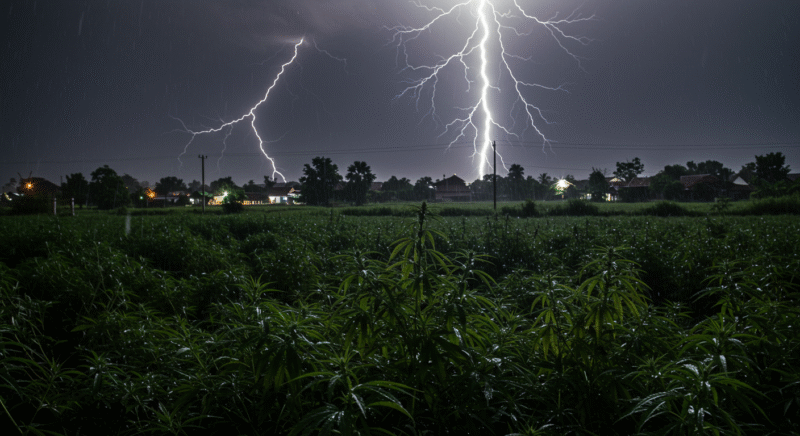
Outdoor growing may have the lower invoice and the higher exposure to a single bad finish. A storm, early freeze, wildfire smoke, caterpillar outbreak, theft, prolonged rain, or unsuitable cultivar can reduce the usable harvest after months of work. The crop may be large in the garden and small after damaged material is removed.
This is why cost per plant is a weak metric. The useful denominator is dry, trimmed, healthy flower that reaches storage. Wet weight, branch weight, moldy flower, and material discarded during sorting do not pay back the season.
Indoor growing also fails. Equipment can stop, irrigation can leak, roots can remain saturated, heat can spike, pests can spread, and power can go out. Indoor risk is different because the grower owns more of the environment. That creates both control and responsibility.
Do
Budget for the crop that reaches storage
Record dry usable weight after sorting, trimming, and curing losses. Spread annual cost across what was genuinely preserved.
Avoid
Using the biggest plant as the cheapest plant
Plant size, wet weight, and social-media yield claims do not reveal usable quality, losses, labor, or the cost of getting through the finish window.
Labor Changes the Answer
Home growers often call their time free because gardening is enjoyable. That is a valid personal choice, but it hides why two “cheap” gardens feel so different.
Outdoor labor
Outdoor work can include soil preparation, moving containers, hand watering, irrigation repair, scouting, wildlife protection, tying branches, storm preparation, moving covers, travel to a lawful remote site, and sorting weather-damaged flower. The work is seasonal and may arrive suddenly.
Indoor labor
Indoor work includes setup, sanitation, mixing, irrigation, canopy management, environmental logging, filter and equipment maintenance, leak checks, cleaning, and resetting the room between cycles. The tasks can be more regular, but the garden depends on them every day.
If you want an economic comparison, assign an hourly value:
Labor cost = total recorded hours × your chosen hourly value
If you do not want to price a hobby, keep the hours as a separate column. Forty enjoyable hours and forty stressful emergency hours are not the same experience, even when both are entered as $0.
“Outdoor is less equipment, so is it also less work?”
Question sent by: PorchSun, via Facebook page.
Sometimes, but not automatically. A nearby garden in good soil can be wonderfully simple. Large containers, a remote site, heavy pest pressure, or a wet flowering season can demand frequent work and fast weather responses. Indoor work is more controlled and repetitive; outdoor work is often less mechanical but more seasonal and unpredictable.
Cost per Gram: The Comparison That Matters Most
Once the harvest is dry, sorted, and stored, calculate:
Cost per usable gram = total cycle or season cost ÷ usable dry grams
For the first run, calculate two versions:
- Cash cost per gram: include every dollar paid before and during that harvest.
- Amortized cost per gram: include only the cycle’s share of reusable equipment, plus operating costs.
Then calculate the annual version. Indoor may produce multiple harvests, spreading equipment across more cycles. Outdoor may produce a larger single harvest with lower energy cost. A small indoor garden with several successful cycles can beat an expensive, repeatedly damaged outdoor garden on annual cost per gram. A productive outdoor site can beat indoor by a wide margin.
| Record | What to include |
|---|---|
| Capital purchases | Fixture, tent, irrigation, fence, trellis, greenhouse, meters, tools, and electrical or structural work |
| Operating purchases | Medium, amendments, nutrients, water, electricity, filters, pest controls, ties, and replacements |
| Shared costs | Drying, storage, genetics, testing, trimming tools, and sanitation used by either method |
| Losses | Failed seedlings, culled plants, mold, pest damage, storm loss, equipment failure, and discarded flower |
| Output | Only dry, trimmed, healthy material that reaches storage |
Remember: A cheap harvest is not a cheap garden if the same system fails every second season. Record several cycles or seasons before treating one result as the permanent answer.
Three Outdoor Budget Models
Model 1: The existing garden
This is the strongest case for outdoor savings. The site is lawful and private, the ground drains well, water is nearby, basic tools already exist, and the climate matches the genetics. The grower buys seeds or starts, targeted soil inputs, nutrition where needed, simple support, and modest pest protection.
A first season may stay near the lower planning range. Later seasons may cost less because the soil, support, tools, and watering equipment remain. The main risks are weather, cultivar choice, and assuming the garden needs no scouting because the equipment list is short.
Model 2: The container garden
The native soil is unsuitable or the grower needs mobility and control. Large containers, purchased medium, irrigation, saucers or drainage management, root-zone heat protection, and stronger support raise the cost. This is still often cheaper than indoor because the sun and outdoor air are free, but bags of medium can become the dominant purchase.
Reuse changes the math. Quality medium can be maintained and re-amended when its physical and chemical condition is measured. Containers and trellis can serve multiple seasons. Treating every season as disposable prevents the outdoor advantage from compounding.
Model 3: The protected outdoor garden
The site needs a lawful locked enclosure, automatic irrigation, serious animal protection, wind support, rain cover, or a small greenhouse. First-year cost can overlap with indoor. The reason to choose it is not that every item is cheap; it is that the infrastructure can protect a larger sun-powered canopy over several seasons.
This model deserves a break-even plan. Divide durable structures by expected service life, include maintenance, and compare the cost of protection with realistic crop loss. If a roof prevents the finish-season failure that has happened repeatedly, it may be the least expensive choice over time.
“If a small greenhouse costs more than a tent, why call it an outdoor option?”
Question sent by: Hannah Cooper, via email.
Because it still uses sunlight as the primary light source and interacts with the outdoor season. Cost category and growing category are not identical. A greenhouse may cost more upfront than a compact tent while supporting a larger canopy with much lower lighting electricity. Compare its ventilation, heat, condensation, permits, service life, and seasonal usefulness before deciding which investment works harder.
When Outdoor Growing Is Not Cheaper
Outdoor loses its financial advantage when the site requires so much correction that nature is no longer providing the useful parts for free.
- The climate does not offer a reliable finish window. Repeated mold, frost, or storm loss raises the cost of every usable gram.
- The location is heavily shaded. Free light has little value if the canopy does not receive enough of it.
- The root zone is unsafe or unsuitable. Large raised beds, imported medium, drainage work, or contamination management can dominate the budget.
- Water access is difficult. Pumps, tanks, travel, hauling, or water rights can erase the assumed saving.
- Security construction is substantial. A new locked enclosure or privacy structure may exceed the price of a compact tent.
- The garden is far away. Fuel, travel time, missed inspections, and irrigation failures are real costs.
- Only one annual attempt is possible. A failed season cannot be reset next month.
- Odor or neighbor conflict cannot be managed lawfully. The cheapest physical site may carry the highest social and legal cost.
Do not use a remote site to avoid permission or visibility rules
Distance does not make public land, an unused field, or another person’s property lawful. A remote garden belongs in the comparison only when access, cultivation, water use, structures, security, and transport are all permitted.
When Indoor Growing Can Be the Better Value
Indoor can be the better financial decision even when its invoices are higher.
You can reuse the equipment across several cycles
A well-sized light, tent, fan, and control system can serve multiple harvests. If the grower uses the setup consistently, capital cost per cycle falls. Buying an expensive room for one short experiment does the opposite.
The host room already has favorable conditions
A dry, insulated, electrically suitable room may need little additional climate equipment. A hot attic, damp basement, or unconditioned garage may need so much correction that the “free room” is the expensive choice.
Your outdoor season is unreliable
If local flowers repeatedly meet cold rain, wildfire smoke, tropical storms, or extreme heat, indoor control may preserve more usable harvest per dollar even after electricity. The value comes from successful repetition, not from claiming indoor quality is automatically superior.
Space, privacy, or mobility limits outdoor options
An efficient small tent can fit a lawful home where no suitable private outdoor area exists. If outdoor would require major construction or neighbor conflict, the indoor system may be easier to budget and manage.
“Is indoor automatically better value because I can harvest more often?”
Question sent by: Marcus Lee, via contact form.
No. More cycles help only when the setup is used, managed safely, and producing usable harvests. Electricity and consumables also repeat. Calculate annual cost and annual usable output. A reliable outdoor season may still cost far less; a consistently used indoor system may outperform an outdoor site that rarely finishes cleanly.
Outdoor, Greenhouse, or Indoor?
| System | Cost advantage | Control gained | Cost risk |
|---|---|---|---|
| Open outdoor | Lowest lighting and enclosure cost when the site is ready | Site selection, cultivar, soil, irrigation, support, and timing | Weather, pests, theft, visibility, and one main season |
| Protected outdoor | Sun-powered canopy with targeted risk reduction | Some rain, hail, wind, animal, or access protection | Structures can trap heat and humidity or require permits |
| Greenhouse or mixed light | Sunlight remains primary while the season gains protection | Greater temperature, rain, and schedule management | Ventilation, heating, cooling, condensation, and structural cost |
| Indoor | Reusable equipment and multiple possible cycles | Light cycle, temperature, humidity, airflow, and access | Electricity, HVAC, equipment failure, and limited footprint |
The systems are a control ladder, not a quality ranking. Each step toward control usually adds equipment, energy, maintenance, and failure points. Choose the lowest level of infrastructure that can reliably meet the law, the climate, your schedule, and the result you want.
How to Build Your Own Cost Comparison
Step 1: Define the same goal for both systems
Choose a lawful canopy or plant plan, expected number of cycles, quality standard, and amount of usable flower you are trying to preserve. Do not compare one enormous outdoor plant with a small indoor cabinet and call the equipment difference a conclusion.
Step 2: List what the site already provides
For outdoor, record sunlight, root-zone quality, water access, fence, privacy, tools, support points, and drying space. For indoor, record room temperature and humidity across seasons, circuit capacity, drainage, water access, and safe exhaust options.
Step 3: Separate required from optional
Required items protect legality, life safety, plant survival, or a known site limitation. Optional items improve convenience, automation, or precision. Buy safety and function before decorative upgrades.
Step 4: Add operating cost
Outdoor operating cost includes water, soil maintenance, nutrition, pest and disease supplies, travel, repairs, and consumables. Indoor includes electricity, water, medium, nutrition, filters, sanitation, repairs, and climate equipment runtime.
Step 5: Add a replacement reserve
Fans fail, emitters block, greenhouse film tears, meters drift, filters fill, and containers age. Add a modest annual reserve instead of pretending every asset lasts forever.
Step 6: Record losses and usable output
Do not estimate from the live plant. Weigh the dry, trimmed, healthy material that reaches storage. Record discarded mold, pest damage, broken branches, and failed starts separately so the next budget addresses the real loss.
Step 7: Calculate cash, amortized, and annual cost
- First-run cash cost: all money paid before and during the harvest.
- Amortized cycle cost: operating cost plus the cycle’s share of reusable equipment.
- Annual cost: every cycle or season completed during the year.
- Cost per usable gram: annual or cycle cost divided by dry healthy output.
Before calling outdoor or indoor cheaper
- Confirm cultivation, access, structures, security, water use, and electrical work are lawful.
- Compare the same canopy goal, quality standard, and time period.
- Separate reusable capital cost from operating cost.
- Mark every item as owned, required, optional, or unnecessary.
- Use your actual electricity and water rates.
- Include climate control, travel, drying, repairs, and replacement reserves.
- Record labor hours even if you choose not to price them.
- Count only dry, trimmed, healthy flower that reaches storage.
- Compare several cycles or seasons rather than one unusually good result.
- Keep a contingency fund for weather, equipment, and plant-health problems.
“How much contingency should I add?”
Question sent by: PrairieBudget, via X.
Start with 10–20% of the planned cash budget for ordinary surprises, then increase it when the site has unresolved electrical, climate, water, structure, or security questions. Contingency is not permission to skip research. It protects the plan from a broken fan, damaged cover, extra soil, blocked irrigation part, or other realistic problem.
Where Growers Waste Money Outdoors
Buying amendments before testing
A nutrient product cannot correct every soil problem, and more ingredients do not create a better root zone. Test the soil or medium, understand water quality, and make targeted changes. Unnecessary amendments cost money and may create salt, pH, or nutrient-balance problems.
Using too-small containers
A cheap small container can become expensive through frequent watering, heat stress, restricted roots, repeated feeding corrections, and emergency transplanting. Choose the root volume around expected plant size, season, medium, and the watering frequency you can maintain.
Building the final version before observing the site
Seasonal shade, wind corridors, low wet ground, deer paths, and late-summer humidity may not be obvious on planting day. Observe first, build in stages, and keep early infrastructure adjustable.
Treating every insect as an emergency
Unidentified sprays waste money and can remove beneficial organisms. Scout, identify, monitor spread, and use a lawful stage-appropriate response. Prevention through sanitation, spacing, netting, and early detection is often cheaper than repeated rescue products.
Ignoring drying space until harvest
A large outdoor harvest needs a clean, dark, ventilated, controllable place to dry. If that space requires a dehumidifier, air conditioner, racks, fans, filters, or a temporary room, it belongs in the outdoor budget from the beginning.

Advice: The least glamorous item often protects the most money. Drainage, a spare emitter, clean pruning tools, a weatherproof tie, or a calibrated meter can matter more than another bottle on the shelf.
Where Growers Waste Money Indoors
Buying a light before measuring the space
The fixture must fit the real canopy and leave room for hangers, safe clearance, filter, ducting, plant height, and access. An oversized light can create heat and control problems; an undersized one can encourage expansion purchases.
Using the grow equipment to repair a bad host room
A tent borrows temperature, humidity, air, electricity, and space from the room around it. If that room is hot, damp, dusty, moldy, or electrically unsuitable, the tent inherits the problem. Fix the building issue before paying equipment to fight it continuously.
Ignoring standby and continuous loads
A small fan running all day can use more annual energy than its wattage makes obvious. Add every continuous device and measure real duty cycle. Climate equipment that switches on and off should be logged over representative hot, cold, and humid weeks.
Replacing cheap components repeatedly
Low purchase price is useful only when the component is safe and capable. Prioritize the light, ventilation path, electrical safety, leak protection, and reliable environmental measurement. Decorative automation can wait.
Does Cheaper Mean Lower Quality?
No. Outdoor and indoor can both produce excellent or poor flower. Cost category does not determine quality by itself. Genetics, plant health, light across the canopy, root-zone function, pest and disease pressure, harvest timing, drying, and storage all matter.
Outdoor plants can use abundant sunlight and root space, building a large, strong frame and potentially a large total harvest. Indoor gardens can provide more uniform environmental control and protection from rain, dust, and many outdoor pests. Outdoor flower may be looser or show more environmental wear in some cultivars and climates; indoor flower may be denser in some controlled setups. Neither observation is a universal rule.
The financial question is not “which address makes better flower?” It is “which system lets this grower repeatedly protect plant health and preserve the result at a sustainable cost?”
“If outdoor costs less, should I expect lower-quality flower?”
Question sent by: NorthCoastPlan, via email.
No. Lower lighting cost does not mean lower biological potential. Outdoor quality depends on genetics, climate fit, usable sunlight, root health, pest and disease control, harvest timing, and postharvest handling. Indoor offers more environmental control, not automatic excellence. Judge the preserved flower, not the price of the room around the plant.
Frequently Asked Cost Questions
What is the cheapest legal way to grow cannabis outdoors?
Use a lawful private site that already has suitable sunlight, workable soil, water access, and safe boundaries. Hand-water a manageable root zone, reuse ordinary garden tools, test before amending, and add only the support and protection the site demonstrates it needs. The cheapest system begins with a good location, not with a discount shopping cart.
Do I need a fence for outdoor cannabis?
Not universally. A fence may be legally required or practically useful for access, visibility, wildlife, pets, children, visitors, and theft. Check local rules and the real site risk. An existing lawful enclosure may already be enough; another site may need substantial work.
Is hand watering cheaper than drip irrigation?
Hand watering has the lowest equipment cost when the garden is nearby and manageable. Drip becomes valuable when it saves substantial time, improves consistency, or protects plants during heat and absence. Include the cost of failures and missed watering, not only tubing.
How much does electricity add to an indoor grow?
Multiply each device’s kilowatts by operating hours and your utility rate. In the example above, a 300-watt light used across a 91-day schedule consumed 378 kWh and cost about $69 at $0.1829/kWh. Fans and a modest dehumidifier raised the combined example to about $133. Air conditioning or heating can move the total much higher.
Is a greenhouse cheaper than indoor?
It can use far less lighting electricity because sunlight remains primary, but structure, ventilation, heating, cooling, condensation control, permits, anchoring, and maintenance may be expensive. Compare service life and annual usable output rather than assuming every transparent structure is cheap.
Should I include the price of drying in outdoor cost?
Yes. Drying and storage protect the value created during cultivation. If you need a room, racks, fans, filters, cooling, or dehumidification, those are outdoor-harvest costs even though they occur inside a building.
Can outdoor growing be cheaper in containers?
Yes. Containers add medium and watering costs but still use free sunlight and outdoor air. They can be economical when native ground is unsuitable or mobility prevents a larger site correction. Reusing containers and maintaining the medium improves the long-term result.
Does a larger outdoor yield always mean a lower cost per gram?
Only if the flower finishes healthy and reaches storage. Large wet plants can lose substantial material to mold, pests, weather, trimming, and drying. Use dry usable weight, not estimated live-plant yield.
Can solar panels make indoor growing as cheap as outdoor?
Solar can change the marginal electricity cost and environmental footprint, but the panels, inverter, storage, installation, roof or land, and opportunity cost still exist. Indoor lighting and climate loads remain real energy demands even when the energy source changes.
Which system is cheapest for one experiment?
A suitable outdoor garden usually requires less cash for one seasonal attempt. Indoor makes more financial sense when equipment will be reused, the outdoor site is unsuitable, or controlled conditions materially improve the chance of repeated successful harvests.
Choose the System That Fits the Site
Outdoor growing is genuinely cheaper in the conditions that let outdoor growing work. Sunlight, air movement, space, and usable ground can remove thousands of dollars in equipment and years of electricity. That advantage is real.
The honest answer still begins with “if.” If the law allows it. If the site receives useful sun. If water is practical. If the root zone works. If the cultivar can finish. If security and weather protection do not require a second construction project. When those conditions are present, outdoor can be the most economical path by a wide margin.
When they are absent, indoor control or a greenhouse may protect more usable harvest per dollar. Build both budgets, calculate the real energy and infrastructure, spread reusable equipment across realistic service life, and judge the result after drying. The cheapest garden is not the one with the smallest receipt today. It is the one you can run lawfully, safely, and successfully without paying to solve the same preventable problem every season.
Keep planning with Weedth
Use the complete outdoor cannabis guide to examine climate, soil, security, irrigation, and seasonal planning. Compare indoor infrastructure in the grow room setup guide, see how enclosure decisions change cost in grow tent versus grow room, and plan the root zone with the containers and pots guide. If yield is part of your budget model, use the outdoor yield calculation guide without treating any estimate as a guarantee.
Scientific and Official References
- U.S. Energy Information Administration: Analysis and Projections. Current residential electricity price history and 2026 forecast data.
- U.S. Energy Information Administration: Electricity Prices and Factors Affecting Prices. Explains residential price variation by location and sector.
- U.S. Department of Energy: Energy Savings Potential of Solid-State Lighting in Agricultural Applications. Analysis of horticultural lighting energy use and LED savings potential.
- Energy-Intensive Indoor Cultivation Drives the Cannabis Industry’s Expanding Carbon Footprint. Life-cycle comparison of energy-intensive indoor and outdoor production.
- Environmental Impact of Outdoor Cannabis Production. Research on fertilizer regimes, resource use, and emissions in outdoor flower production.
- A Narrative Review on Environmental Impacts of Cannabis Cultivation. Reviews energy, water, emissions, and environmental differences among cultivation systems.
- Economic Impact Analysis of Cannabis Cultivation Licensing Regulations. Official economic analysis describing cost differences among indoor, mixed-light, and outdoor cultivation.
Share this article
A quick overview of the topics covered in this article.
Follow us
Latest articles
September 26, 2026
September 26, 2026
September 26, 2026
September 26, 2026