
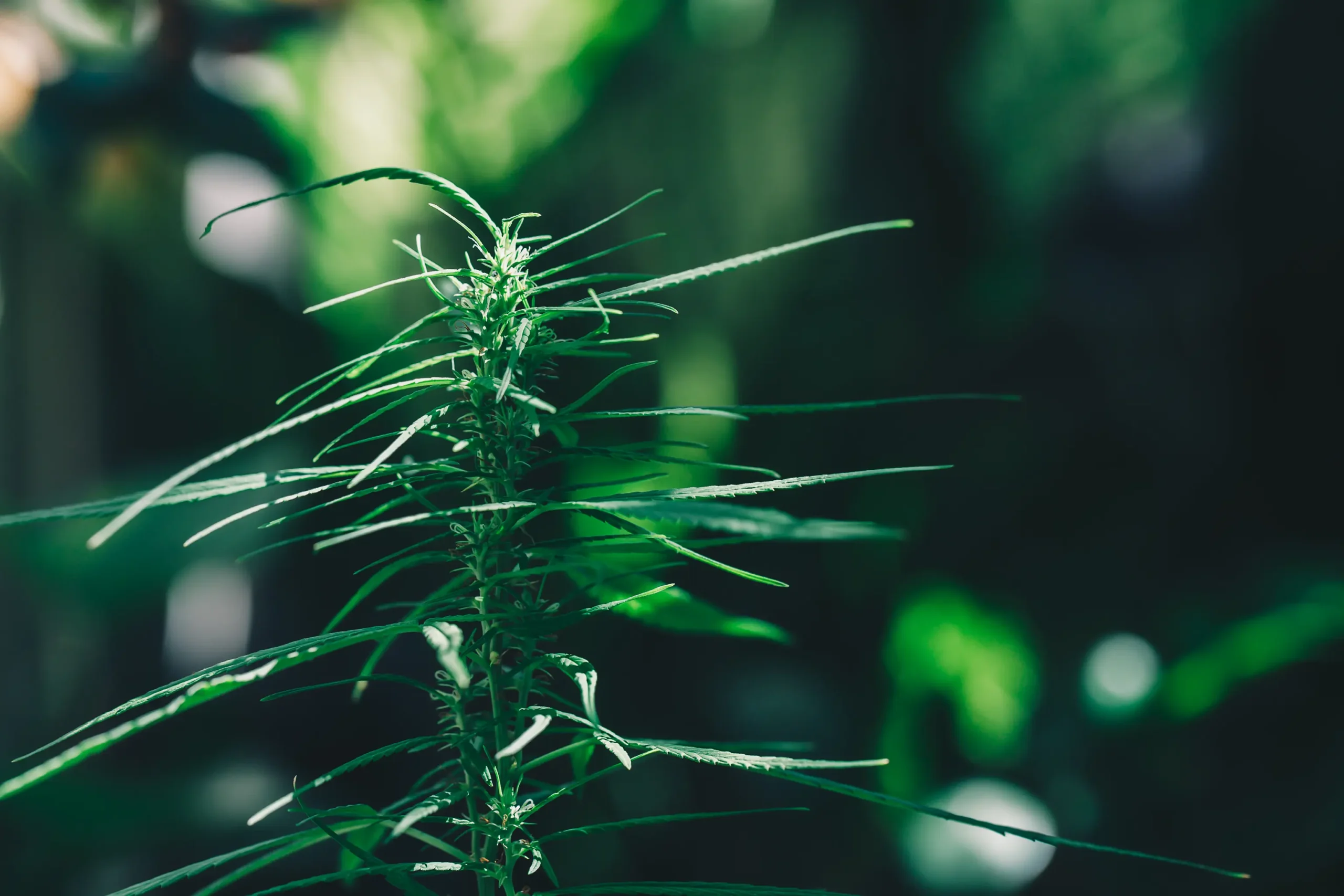
China Yunnan
Weedth Strain Library | Cultivation behavior, bud quality, flavor and harvest depth
China Yunnan is the kind of cultivar that becomes much easier to understand once its growth habit is treated as the starting point instead of an afterthought. It is 80% indica / 20% sativa landrace population, built around third-generation indica-dominant line from Yunnan in southeastern China near Myanmar, Laos and Vietnam. The plant behaves as robust and compact with short internodes; short veg produces columnar plants with a large center, while longer outdoor growth creates a round, heavily branched plant, and its most important cultivation challenge is feeding a naturally hungry, compact Asian landrace strongly enough for yield while preventing chronically wet roots, late overfeeding and stress-related instability.
The goal of a high-quality run is not simply to finish the plant. It is to produce dense but clean resinous flowers with high flower-to-leaf ratio, distinct sweet-sour or incense identity and a mature warm effect rather than leafy, delayed bloom. That changes how the grower thinks about veg duration, root volume, training, late-flower environment and harvest timing. A generic schedule can keep the plant alive, but the cultivar-specific decisions determine whether the final jar still carries three recurring directions: creamy sweet-sour restaurant-spice notes, darker incense and hash, or a more woody-floral organic profile.
Reference data places indoor flowering at 8-9 weeks indoors and outdoor maturity around end of September to early October. Cannabinoid figures are best treated as ranges rather than promises: THC is about 8.5-17.2%, CBD is 0-8%, including occasional balanced THC:CBD chemotypes, and CBG is up to about 0.35%. Seed-grown populations can vary, especially in landrace and preservation lines.
Strain Fingerprint: Feeding a naturally hungry, compact asian landrace strongly enough for yield while preventing chronically wet roots, late overfeeding and stress-related instability.
Strain Features
| Feature | Details |
|---|---|
| Type | 80% indica / 20% sativa landrace population |
| Genetic background | third-generation indica-dominant line from Yunnan in southeastern China near Myanmar, Laos and Vietnam |
| THC | about 8.5-17.2% |
| CBD | 0-8%, including occasional balanced THC:CBD chemotypes |
| CBG | up to about 0.35% |
| Indoor flowering | 8-9 weeks indoors |
| Outdoor harvest | end of September to early October |
| Yield | average-high |
| Plant structure | robust and compact with short internodes; short veg produces columnar plants with a large center, while longer outdoor growth creates a round, heavily branched plant |
| Flowering stretch | low to moderate in indica-leaning plants, with taller and more branched sativa-leaning individuals |
| Feeding | moderate-high nutrient demand across the cycle |
| Watering tendency | requires real dry-back; the more indica-leaning specimens dislike long periods of wet substrate |
| Climate fit | warm and dry is ideal; warm early bloom followed by a cooler and drier final month improves resin quality |
| Aroma | three recurring directions: creamy sweet-sour restaurant-spice notes, darker incense and hash, or a more woody-floral organic profile |
| Flavor | sweet-sour cream, woody incense, hash, resin and floral-organic spice depending on phenotype |
| Effect | cheerful, expansive and visual at first, then warm, pleasant and physically relaxing |
The numbers are useful for planning, but China Yunnan should not be reduced to the table. Two plants can share the same flowering range and still require different canopy strategies if phenotype expression changes stem flexibility, branching or flower density. The feature that deserves the most attention is the relationship between low to moderate in indica-leaning plants, with taller and more branched sativa-leaning individuals and robust and compact with short internodes; short veg produces columnar plants with a large center, while longer outdoor growth creates a round, heavily branched plant.
For growers, the practical priority is dense but clean resinous flowers with high flower-to-leaf ratio, distinct sweet-sour or incense identity and a mature warm effect rather than leafy, delayed bloom. That target gives meaning to every later section. It is the reason to restrain unnecessary stress, to separate phenotypes during harvest and cure, and to judge yield as usable high-grade flower rather than total wet plant mass.
Genetic Lineage
China Yunnan comes from third-generation indica-dominant line from Yunnan in southeastern China near Myanmar, Laos and Vietnam. The lineage matters because it explains both its horticultural behavior and the kind of sensory character that survives in the best examples. Rather than a modern hybrid assembled primarily around commercial density, this cultivar retains traits that reflect older regional or preservation-oriented selection.
The population is not necessarily uniform in the way a single clone is uniform. The most useful phenotype summary is: most plants are indica-leaning, but taller narrow-leaf expressions occur; chemotypes can also vary from high-THC/low-CBD to balanced THC:CBD. This means selection should be documented plant by plant. Height, branch angle, flowering initiation, aroma and finish date are all more informative when labels remain attached through the cure.
Genetic history also changes how growers interpret deviations. A very narrow leaf or unusually long internode may not be a deficiency. A darker purple plant may not be stressed. A low-THC but high-CBD seedling may not be a failure in a chemically diverse landrace population. The first job is to decide whether a difference is genetic expression or environmental damage before attempting to correct it.
For breeding or keeper selection, the complete plant matters more than one spectacular trait. A strong keeper should carry the defining aroma, a useful architecture, healthy reproductive behavior, stable maturity and an effect consistent with cheerful, expansive and visual at first, then warm, pleasant and physically relaxing.
Effect Breakdown
Initial rise
The first phase is clear and pleasant, often with mood lift before the heavier physical side develops. With China Yunnan, the overall reference effect is cheerful, expansive and visual at first, then warm, pleasant and physically relaxing.
Middle phase
Mental effects and body comfort become more balanced. The strain's characteristic warmth becomes clearer than the first rush. With China Yunnan, the overall reference effect is cheerful, expansive and visual at first, then warm, pleasant and physically relaxing.
Later phase
The experience tapers into a calmer state, with less mental urgency and a more settled physical finish. With China Yunnan, the overall reference effect is cheerful, expansive and visual at first, then warm, pleasant and physically relaxing.
Dose, tolerance, setting and individual physiology can change this progression substantially. A strain page can describe a recurring pattern, but it cannot guarantee the same experience for every consumer.
The costly mistake to avoid with China Yunnan
High-THC or strongly psychedelic sativas can be uncomfortable for people prone to panic, racing thoughts or THC-related anxiety. Start conservatively and allow the full onset before increasing dose.
Flavor & Aroma Profile
Late in bloom, the living plant should move toward three recurring directions: creamy sweet-sour restaurant-spice notes, darker incense and hash, or a more woody-floral organic profile. Fresh flowers still contain large amounts of water and green plant volatiles, so the final cured profile is not identical to the smell at harvest. After a controlled dry and cure, the clearer flavor target becomes sweet-sour cream, woody incense, hash, resin and floral-organic spice depending on phenotype.
The most fragile part of the profile is usually the brightest layer. Citrus, fruit, floral and unusual savory top notes disappear faster under heat and direct airflow than deep wood, earth or hash. This is why poor drying can make a complex cultivar taste generic even when the room smelled excellent before harvest.
For China Yunnan, flavor quality should be judged by separation. Can you distinguish the first aromatic note from the middle and the finish, or has everything collapsed into one green, woody smell? Better flower shows identifiable transitions rather than simple loudness.
Average flower often smells strongest immediately after opening the container and then fades quickly. Well-finished flower tends to show a more stable aroma that returns after the bud is broken apart. That persistence is one of the practical signs that drying and cure preserved the internal resin rather than only the surface smell.
Weedth Flavor Target: dense but clean resinous flowers with high flower-to-leaf ratio, distinct sweet-sour or incense identity and a mature warm effect rather than leafy, delayed bloom
Dominant Terpenes
| Terpene / Evidence | Relative Role | Flavor / Interpretation |
|---|---|---|
| Alpha-pinene | high | pine, resin and sharp green definition |
| Beta-myrcene | high | earthy-herbal body and warmth |
| Limonene | high | sweet-sour citrus lift |
| Beta-pinene | high to moderate | woody-pine freshness |
| Beta-caryophyllene / guaiol / humulene | main sesquiterpene group | spice, dry wood, incense and hash depth |
The published terpene pattern fits the sensory identity of China Yunnan, but exact ratios can still shift by phenotype, environment and harvest maturity. Terpenes are volatile, so the grower can lose part of this profile without visibly damaging the flower.
The practical cultivation lesson is to minimize avoidable late-flower heat, chronic root stress and rough post-harvest handling. The plant creates the aromatic chemistry. The grower's role is to preserve it long enough to reach the consumer.
Indoor vs. Outdoor Growing
| Aspect | Indoor | Outdoor |
|---|---|---|
| Structure | robust and compact with short internodes; short veg produces columnar plants with a large center, while longer outdoor growth creates a round, heavily branched plant | robust and compact with short internodes; short veg produces columnar plants with a large center, while longer outdoor growth creates a round, heavily branched plant with greater root volume and natural branching |
| Timing | 8-9 weeks indoors | end of September to early October |
| Main limitation | feeding a naturally hungry, compact Asian landrace strongly enough for yield while preventing chronically wet roots, late overfeeding and stress-related instability | season length, weather exposure and support requirements |
| Nutrition | moderate-high nutrient demand across the cycle | moderate-high nutrient demand across the cycle adjusted for native soil fertility and rainfall |
| Climate advantage | precise temperature, humidity and light control | warm and dry is ideal; warm early bloom followed by a cooler and drier final month improves resin quality |
| Best quality opportunity | controlled maturity and post-harvest timing | sunlight, root volume and expression of regional adaptation |
Indoor growing is mainly a geometry problem with China Yunnan. The grower can control climate, but must fit robust and compact with short internodes; short veg produces columnar plants with a large center, while longer outdoor growth creates a round, heavily branched plant into a finite room while allowing low to moderate in indica-leaning plants, with taller and more branched sativa-leaning individuals. The earlier the plant's final footprint is planned, the less emergency training will be required after flowers have formed.
Outdoors, the biggest advantage is the cultivar's ability to use root space and sunlight. The climate reference is warm and dry is ideal; warm early bloom followed by a cooler and drier final month improves resin quality. A good site still needs morning sun, drainage and enough seasonal length to reach end of September to early October.
Indoor and outdoor quality can both be excellent, but they fail differently. Indoors, heat concentration, canopy crowding and wet root zones are common. Outdoors, storms, dew, premature cold and a season that ends before phenotype maturity are the larger risks.
Strain-Specific Grow Guidance
The entire grow can be organized around one sentence: feeding a naturally hungry, compact Asian landrace strongly enough for yield while preventing chronically wet roots, late overfeeding and stress-related instability. This is the cultivar-specific bottleneck. Solve it early and most later decisions become simpler.
Build size before flower
Because stretch is limited in the compact phenotypes, do not flip a plant that is too small and expect transition to create the missing canopy. Establish branch count first.
The quality test is whether this decision helps produce dense but clean resinous flowers with high flower-to-leaf ratio, distinct sweet-sour or incense identity and a mature warm effect rather than leafy, delayed bloom. If the intervention adds complexity without improving flower maturity, resin preservation, canopy access or aroma, it is probably unnecessary.
Feed more than a delicate landrace
This is not a weak-feeding tropical sativa. Healthy plants can use moderate-high nutrition, especially while warm and actively growing.
The quality test is whether this decision helps produce dense but clean resinous flowers with high flower-to-leaf ratio, distinct sweet-sour or incense identity and a mature warm effect rather than leafy, delayed bloom. If the intervention adds complexity without improving flower maturity, resin preservation, canopy access or aroma, it is probably unnecessary.
Dry-back is non-negotiable
The same broad, compact plants that can eat strongly can react poorly to prolonged root-zone saturation. Let the substrate regain air between irrigations.
The quality test is whether this decision helps produce dense but clean resinous flowers with high flower-to-leaf ratio, distinct sweet-sour or incense identity and a mature warm effect rather than leafy, delayed bloom. If the intervention adds complexity without improving flower maturity, resin preservation, canopy access or aroma, it is probably unnecessary.
Warm first half, cooler second half
Warm conditions around 25 C through growth and the first four flowering weeks support biomass. A cooler, drier final month favors resin quality and a cleaner finish.
The quality test is whether this decision helps produce dense but clean resinous flowers with high flower-to-leaf ratio, distinct sweet-sour or incense identity and a mature warm effect rather than leafy, delayed bloom. If the intervention adds complexity without improving flower maturity, resin preservation, canopy access or aroma, it is probably unnecessary.
Avoid unnecessary flower stimulators
Reference cultivation notes specifically caution against aggressive flowering stimulators because late stress may increase hermaphroditic risk. Balanced nutrition is safer than a chemical push.
The quality test is whether this decision helps produce dense but clean resinous flowers with high flower-to-leaf ratio, distinct sweet-sour or incense identity and a mature warm effect rather than leafy, delayed bloom. If the intervention adds complexity without improving flower maturity, resin preservation, canopy access or aroma, it is probably unnecessary.
Open the central column
Short internodes and broad leaves can seal the middle of the plant. Selective leaf removal and branch positioning are more useful than heavy full-canopy stripping.
The quality test is whether this decision helps produce dense but clean resinous flowers with high flower-to-leaf ratio, distinct sweet-sour or incense identity and a mature warm effect rather than leafy, delayed bloom. If the intervention adds complexity without improving flower maturity, resin preservation, canopy access or aroma, it is probably unnecessary.
Separate chemotypes when possible
A visually excellent plant may not have the same cannabinoid profile as its neighbor. Keep samples and labels separate if chemotype selection matters.
The quality test is whether this decision helps produce dense but clean resinous flowers with high flower-to-leaf ratio, distinct sweet-sour or incense identity and a mature warm effect rather than leafy, delayed bloom. If the intervention adds complexity without improving flower maturity, resin preservation, canopy access or aroma, it is probably unnecessary.
Do not force cold for color
Cooler finishing conditions improve resin quality, but sudden cold stress can slow swelling. Gradual environmental change is more useful than chasing appearance.
The quality test is whether this decision helps produce dense but clean resinous flowers with high flower-to-leaf ratio, distinct sweet-sour or incense identity and a mature warm effect rather than leafy, delayed bloom. If the intervention adds complexity without improving flower maturity, resin preservation, canopy access or aroma, it is probably unnecessary.
Watch late nitrogen
High nutrient capacity does not mean unlimited nitrogen. Dark clawed leaves late in flower usually mean quality is moving in the wrong direction.
The quality test is whether this decision helps produce dense but clean resinous flowers with high flower-to-leaf ratio, distinct sweet-sour or incense identity and a mature warm effect rather than leafy, delayed bloom. If the intervention adds complexity without improving flower maturity, resin preservation, canopy access or aroma, it is probably unnecessary.
Cure the savory-sweet layers
The creamy and incense groups can taste muddled immediately after drying. A patient cure allows sweet-sour, hash and woody layers to separate.
The quality test is whether this decision helps produce dense but clean resinous flowers with high flower-to-leaf ratio, distinct sweet-sour or incense identity and a mature warm effect rather than leafy, delayed bloom. If the intervention adds complexity without improving flower maturity, resin preservation, canopy access or aroma, it is probably unnecessary.
Canopy depth
Keep only flower sites that can receive meaningful light and moving air. A long or dense cultivar wastes energy when every shaded lower shoot is allowed to survive.
For China Yunnan, the grower should favor repeatability over dramatic one-time tricks. A stable root zone and predictable canopy usually do more for premium-bud percentage than a late attempt to force extra mass.
Irrigation timing
requires real dry-back; the more indica-leaning specimens dislike long periods of wet substrate. Water by root-zone demand rather than the clock. A large pot can remain wet below even when the surface looks dry.
For China Yunnan, the grower should favor repeatability over dramatic one-time tricks. A stable root zone and predictable canopy usually do more for premium-bud percentage than a late attempt to force extra mass.
Feeding calibration
moderate-high nutrient demand across the cycle. Use plant color, tip condition, growth speed and runoff behavior together. One indicator alone can mislead.
For China Yunnan, the grower should favor repeatability over dramatic one-time tricks. A stable root zone and predictable canopy usually do more for premium-bud percentage than a late attempt to force extra mass.
Late-flower environment
Reduce unnecessary humidity and heat as flowers gain mass. Mature flowers have less tolerance for stagnant microclimates than vegetative leaves.
For China Yunnan, the grower should favor repeatability over dramatic one-time tricks. A stable root zone and predictable canopy usually do more for premium-bud percentage than a late attempt to force extra mass.
Harvest sampling
begin close observation during week eight, but harvest by bract and trichome maturity; the cooler final month can increase resin quality without meaning the plant should be held indefinitely. Examine more than one top because the brightest flower can mature differently from inner and lower sites.
For China Yunnan, the grower should favor repeatability over dramatic one-time tricks. A stable root zone and predictable canopy usually do more for premium-bud percentage than a late attempt to force extra mass.
Second-run learning
Keep notes on stretch ratio, first visible flower date, strongest aroma week, support needs and actual harvest date. Those records turn a difficult first run into a repeatable second run.
For China Yunnan, the grower should favor repeatability over dramatic one-time tricks. A stable root zone and predictable canopy usually do more for premium-bud percentage than a late attempt to force extra mass.
Master Advice: Change one major variable at a time on the next run. Landrace and preservation populations already contain enough genetic variation that changing feed, irrigation, training and temperature simultaneously makes useful learning difficult.
Warm early flower and cool late flower serve different jobs
China Yunnan is unusual because the reference cultivation guidance is quite specific about temperature staging. Warm conditions around 25 C during vegetative growth and the first four weeks of bloom support its compact biomass production and strong nutrient use. The final month can then be cooler, around 20 C, with lower humidity. That later shift is not simply cosmetic. Cooler, drier finishing conditions are associated with better resin quality even though cold conditions can reduce production.
I would make the change gradually rather than using a dramatic overnight drop. The plant should continue drinking and finishing normally while the environment becomes less favorable to soft leaf growth and stagnant moisture. A controlled finish gives the dense indica-leaning expressions time to harden without asking the root system to adapt suddenly to a very different climate.
High feed demand and wet roots are two separate variables
China Yunnan can use moderate-high fertilizer levels, which makes it tempting to irrigate more often simply to deliver more nutrients. That is exactly where the more indica-leaning plants can get into trouble. The published guidance specifically emphasizes respecting substrate dry cycles and avoiding long periods of wetness. A hungry plant is not the same thing as a plant that wants a permanently wet medium.
The better strategy is to separate nutrient concentration from irrigation frequency. Feed at a level the healthy root zone can use, then allow the medium to regain oxygen. If leaves become dark, clawed and soft while the pot remains heavy for too long, adding another nutrient-rich irrigation is unlikely to solve the real problem. Root-zone air may be the limiting factor.
Three aroma families deserve separate labels
The population contains at least three recurring aromatic directions. One is creamy, sweet-sour and reminiscent of a complex restaurant-spice mixture. A second is darker, organic, incense-heavy and hash-like. A third leans more woody and floral and is more often associated with the sativa-leaning expressions. These are not trivial differences in loudness. They can change which plant deserves to be kept.
I would smell plants at several stages: mid flower, final week, after drying and after four weeks of cure. A plant that seems loud in the room can become flat in the jar, while a quieter incense phenotype may gain remarkable depth after chlorophyll and fresh moisture recede. Keeping the phenotypes separated is the only way to learn which aromatic family actually survives processing best in the grower's environment.
Chemotype diversity cannot be seen from leaf shape
Most plants are described as high-THC and low-CBD, but occasional balanced THC:CBD plants occur. The visual phenotype does not provide a reliable cannabinoid assay. A broader leaf, sweeter aroma or shorter plant cannot be assumed to be the CBD-rich individual. Anyone selecting specifically for cannabinoid ratio needs laboratory testing rather than garden folklore.
This matters in a strain library because two consumers can have very different experiences from two plants carrying the same name. A balanced chemotype may feel less intoxicating and more buffered than a THC-dominant sister. The correct editorial approach is to describe the population's chemical range rather than pretending China Yunnan has one fixed potency profile.
Late hermaphroditic risk argues for a quiet finish
The reference grow notes caution against flowering stimulators because of possible late hermaphroditic tendencies. That does not mean the line is inherently unstable. It means a landrace-derived population that is already finishing under changing temperature and moisture does not benefit from unnecessary hormonal or nutrient stress in the final weeks.
I would keep the last month boring in the best possible way: stable photoperiod, balanced nutrition, reliable irrigation and no experimental booster. The plant already has the genetics for rapid, resinous flowering. The grower gains more by preserving normal reproductive development than by trying to squeeze another dramatic response out of a nearly mature plant.
Columnar indoor plants and round outdoor plants need different pruning
A short indoor veg can produce a columnar plant with a large central flower, while longer outdoor growth develops a rounder, heavily branched shape. Indoor pruning should therefore focus on opening the center and deciding how many secondary branches can actually reach the light. Outdoor pruning is more about spacing major arms and preventing a dense spherical center from becoming a humid pocket.
The same genotype can look like two different garden plants depending on veg time and root space. That is why copying a single topping prescription makes little sense. The structure should be read after the chosen environment has shaped it, then pruning should remove only the growth that interferes with light, air or support.
Weedth Bud Flavor Tips
Harvest maturity
begin close observation during week eight, but harvest by bract and trichome maturity; the cooler final month can increase resin quality without meaning the plant should be held indefinitely. Aroma can mature before the plant looks visually finished, but premature harvest leaves the flavor green and thin.
Late heat
Keep the final weeks cooler than peak vegetative conditions when possible. Heat does not need to visibly burn leaves to reduce volatile aroma.
Handling
Move branches by stems and avoid compressing flower piles. Resin left on gloves is quality removed from the bud.
Drying speed
Use darkness, gentle exchange and no direct fan blast. Adjust branch size to room humidity instead of forcing every strain through the same dry.
The cultivar-specific reason is that three recurring directions: creamy sweet-sour restaurant-spice notes, darker incense and hash, or a more woody-floral organic profile contains both durable base notes and more volatile details. The cure should reveal layers, not merely reduce harshness.
Dense-flower safety
If a cola remains wet in the center, divide it. Preserving one giant shape is not worth internal spoilage.
Cure development
The target flavor is sweet-sour cream, woody incense, hash, resin and floral-organic spice depending on phenotype. Give moisture time to equalize and the fresh-green layer time to disappear before final judgment.
The cultivar-specific reason is that three recurring directions: creamy sweet-sour restaurant-spice notes, darker incense and hash, or a more woody-floral organic profile contains both durable base notes and more volatile details. The cure should reveal layers, not merely reduce harshness.
Storage
Cool, dark, stable storage preserves the top notes better than repeated warm-cool cycles or frequent long openings.
Pro Tip: Keep a small reference jar from the best phenotype and open it rarely. Compare it after one month with the jar used every day. The difference teaches more about oxygen exposure than a generic storage rule.
Weedth Bud Boost Tips
Bud boosting should mean more usable high-grade flower, not simply more biomass. A technique that increases wet weight while reducing airflow, trim quality or aroma is not automatically an improvement.
Plant count
Match plant count to final footprint, not seedling size. With China Yunnan, keep the main constraint in mind: feeding a naturally hungry, compact Asian landrace strongly enough for yield while preventing chronically wet roots, late overfeeding and stress-related instability.
Evaluate the result by premium dry flower, not by how impressive the plant looks in week four. A productive method should improve both quantity and the percentage of buds worth keeping as top-grade material.
Root volume
A larger intended canopy needs enough root volume to maintain water and mineral delivery late in bloom. With China Yunnan, keep the main constraint in mind: feeding a naturally hungry, compact Asian landrace strongly enough for yield while preventing chronically wet roots, late overfeeding and stress-related instability.
Evaluate the result by premium dry flower, not by how impressive the plant looks in week four. A productive method should improve both quantity and the percentage of buds worth keeping as top-grade material.
Training
Use the method that solves the actual structural issue. Do not top repeatedly simply because topping is popular. With China Yunnan, keep the main constraint in mind: feeding a naturally hungry, compact Asian landrace strongly enough for yield while preventing chronically wet roots, late overfeeding and stress-related instability.
Evaluate the result by premium dry flower, not by how impressive the plant looks in week four. A productive method should improve both quantity and the percentage of buds worth keeping as top-grade material.
Light distribution
An even canopy under adequate light produces more premium sites than a few overlit tops above a dark interior. With China Yunnan, keep the main constraint in mind: feeding a naturally hungry, compact Asian landrace strongly enough for yield while preventing chronically wet roots, late overfeeding and stress-related instability.
Evaluate the result by premium dry flower, not by how impressive the plant looks in week four. A productive method should improve both quantity and the percentage of buds worth keeping as top-grade material.
Lower cleanup
Remove permanently weak flower sites after stretch so the plant finishes a smaller number of useful positions. With China Yunnan, keep the main constraint in mind: feeding a naturally hungry, compact Asian landrace strongly enough for yield while preventing chronically wet roots, late overfeeding and stress-related instability.
Evaluate the result by premium dry flower, not by how impressive the plant looks in week four. A productive method should improve both quantity and the percentage of buds worth keeping as top-grade material.
Branch support
Install support before weight arrives. Late tying damages resin and changes branch angles after flowers have hardened. With China Yunnan, keep the main constraint in mind: feeding a naturally hungry, compact Asian landrace strongly enough for yield while preventing chronically wet roots, late overfeeding and stress-related instability.
Evaluate the result by premium dry flower, not by how impressive the plant looks in week four. A productive method should improve both quantity and the percentage of buds worth keeping as top-grade material.
Feeding
More fertilizer only helps when the plant can convert it under sufficient light and root oxygen. With China Yunnan, keep the main constraint in mind: feeding a naturally hungry, compact Asian landrace strongly enough for yield while preventing chronically wet roots, late overfeeding and stress-related instability.
Evaluate the result by premium dry flower, not by how impressive the plant looks in week four. A productive method should improve both quantity and the percentage of buds worth keeping as top-grade material.
Environment
Stable temperature and humidity let the plant spend energy on flower production instead of stress recovery. With China Yunnan, keep the main constraint in mind: feeding a naturally hungry, compact Asian landrace strongly enough for yield while preventing chronically wet roots, late overfeeding and stress-related instability.
Evaluate the result by premium dry flower, not by how impressive the plant looks in week four. A productive method should improve both quantity and the percentage of buds worth keeping as top-grade material.
Medical Uses & Benefits
This section is educational, not a treatment claim. Whole-flower cannabis has variable chemistry, and evidence for a named strain is usually much weaker than evidence for cannabinoids in controlled research. Reported consumer effects should therefore be separated from clinical evidence.
The reference effect is cheerful, expansive and visual at first, then warm, pleasant and physically relaxing. Consumers commonly choose effects in this direction for mood, fatigue, daytime engagement, decompression or distraction from mild discomfort. That does not mean the cultivar has been proven to treat those conditions.
People using prescription medication, managing psychiatric conditions, pregnant or breastfeeding, or dealing with cardiovascular concerns should discuss cannabis use with a qualified medical professional. Strong sativas can aggravate anxiety or racing thoughts in some users, and high-CBD material can also interact with medications.
Dose remains one of the most important variables. A small amount can produce a qualitatively different experience from a large amount, especially in long-lasting or psychedelic cultivars.
Ideal User Profile
The best-fit consumer is someone who actually wants cheerful, expansive and visual at first, then warm, pleasant and physically relaxing. This strain is less about chasing the highest THC number and more about matching the direction, duration and sensory character of the experience.
Users who value a smoother, more moderate or balanced experience may appreciate the cultivar more than consumers who equate quality with maximum intoxication.
Flavor-focused consumers should look for sweet-sour cream, woody incense, hash, resin and floral-organic spice depending on phenotype. A sample that has lost those defining notes may still be potent, but it is not showing the full cultivar identity.
The ideal grower is equally specific: someone willing to label phenotypes, make structural decisions early and protect drying quality. These are not strains that reward a purely calendar-driven approach.
Grower Notes and Feedback
The recurring grower lesson is that China Yunnan becomes predictable when its main limitation is acknowledged: feeding a naturally hungry, compact Asian landrace strongly enough for yield while preventing chronically wet roots, late overfeeding and stress-related instability. Most disappointing runs are not caused by a mysterious deficiency. They are caused by treating the plant like a different cultivar.
Field note: Build size before flower
Because stretch is limited in the compact phenotypes, do not flip a plant that is too small and expect transition to create the missing canopy. Establish branch count first.
Field note: Feed more than a delicate landrace
This is not a weak-feeding tropical sativa. Healthy plants can use moderate-high nutrition, especially while warm and actively growing.
Field note: Dry-back is non-negotiable
The same broad, compact plants that can eat strongly can react poorly to prolonged root-zone saturation. Let the substrate regain air between irrigations.
Field note: Warm first half, cooler second half
Warm conditions around 25 C through growth and the first four flowering weeks support biomass. A cooler, drier final month favors resin quality and a cleaner finish.
Field note: Avoid unnecessary flower stimulators
Reference cultivation notes specifically caution against aggressive flowering stimulators because late stress may increase hermaphroditic risk. Balanced nutrition is safer than a chemical push.
Field note: Open the central column
Short internodes and broad leaves can seal the middle of the plant. Selective leaf removal and branch positioning are more useful than heavy full-canopy stripping.
Field note: Separate chemotypes when possible
A visually excellent plant may not have the same cannabinoid profile as its neighbor. Keep samples and labels separate if chemotype selection matters.
Phenotype tracking is essential because most plants are indica-leaning, but taller narrow-leaf expressions occur; chemotypes can also vary from high-THC/low-CBD to balanced THC:CBD. A keeper decision should be delayed until after cure. The plant with the most dramatic appearance at harvest is not always the plant with the best aroma persistence or effect.
A useful grow diary records final stretch ratio, flowering duration, support requirement, feed tolerance, late-humidity response, dry time and cured aroma. Those six details are enough to make the next cycle far more accurate.
Weedth Editor's Note
What this cultivar asks from the room
I treat the Editor's Note as an editorial grower perspective based on the research and recurring cultivation behavior described above, not as a claim that one person personally produced every observation in this guide.
If I were running China Yunnan for the first time, I would design the room around feeding a naturally hungry, compact Asian landrace strongly enough for yield while preventing chronically wet roots, late overfeeding and stress-related instability. I would rather solve that structural issue before flowering than spend the next two months reacting to it.
I would keep feeding aligned with the plant: moderate-high nutrient demand across the cycle. The temptation to push a rare or long-flowering cultivar is understandable, but I care more about what the last three weeks smell like than how dark the leaves looked in week three.
My keeper criteria would be strict. I would want dense but clean resinous flowers with high flower-to-leaf ratio, distinct sweet-sour or incense identity and a mature warm effect rather than leafy, delayed bloom. I would also keep every phenotype separate after harvest, because most plants are indica-leaning, but taller narrow-leaf expressions occur; chemotypes can also vary from high-THC/low-CBD to balanced THC:CBD. Mixing them before cure throws away the chance to learn which expression is actually worth repeating.
At harvest I would follow this rule: begin close observation during week eight, but harvest by bract and trichome maturity; the cooler final month can increase resin quality without meaning the plant should be held indefinitely. Calendar dates are useful reminders, not final authority. The flower has to show maturity across resin, bracts, pistils and aroma.
I would be especially patient with drying because the profile of three recurring directions: creamy sweet-sour restaurant-spice notes, darker incense and hash, or a more woody-floral organic profile is exactly what can be lost in a rushed room. I would rather dry a little longer and open a layered jar than finish quickly and discover that the rare aroma has collapsed into wood, earth or hay.
My final view is that China Yunnan deserves to be grown as itself. The best run will not be the one that makes it resemble a modern commercial hybrid. It will be the one that keeps its genetic identity intact while improving canopy efficiency, flower health and post-harvest quality.
Weedth Score
Growing Experience 9.0/10 cultivation reward relative to the strain-specific difficulty
Bud Structure & Visual Appeal 8.9/10 how well mature flowers express the intended architecture and resin
Aroma Complexity 9.4/10 depth, separation and uniqueness of the aromatic profile
Flavor & Smoothness 9.1/10 clarity and smoothness after a controlled cure
Effects & High Experience 8.8/10 how completely the effect delivers the cultivar's identity
Overall Satisfaction & Recommendation 9.1/10 overall value for growers and consumers who understand its niche
Overall average: 9.0/10. This score is not a universal ranking. It measures how well China Yunnan fulfills its own purpose when grown and finished correctly.
Personal Closer: China Yunnan is worth the effort when the grower protects the traits that make it different instead of forcing it toward a generic modern target.
FAQ
Is China Yunnan easy to grow?
The difficulty is mostly about feeding a naturally hungry, compact Asian landrace strongly enough for yield while preventing chronically wet roots, late overfeeding and stress-related instability. Once that is planned for, the plant becomes much more manageable.
How long does it flower?
Indoor flowering is 8-9 weeks indoors. Outdoor maturity is generally end of September to early October, but phenotype and latitude matter.
How much does it stretch?
The reference pattern is low to moderate in indica-leaning plants, with taller and more branched sativa-leaning individuals. Use that information when choosing flip height and plant count.
How should it be fed?
The best reference is moderate-high nutrient demand across the cycle. Increase only when the plant, root zone and light clearly justify it.
What climate suits it?
warm and dry is ideal; warm early bloom followed by a cooler and drier final month improves resin quality.
What is the main grow risk?
Feeding a naturally hungry, compact asian landrace strongly enough for yield while preventing chronically wet roots, late overfeeding and stress-related instability.
When should it be harvested?
begin close observation during week eight, but harvest by bract and trichome maturity; the cooler final month can increase resin quality without meaning the plant should be held indefinitely.
What should good flower smell like?
Expect three recurring directions: creamy sweet-sour restaurant-spice notes, darker incense and hash, or a more woody-floral organic profile. After cure, the target flavor is sweet-sour cream, woody incense, hash, resin and floral-organic spice depending on phenotype.
Does phenotype selection matter?
most plants are indica-leaning, but taller narrow-leaf expressions occur; chemotypes can also vary from high-THC/low-CBD to balanced THC:CBD.
Who is it best for?
Consumers seeking cheerful, expansive and visual at first, then warm, pleasant and physically relaxing and growers willing to manage the cultivar on its own terms.
Similar Strains
Kali China
directly connected to the same Chinese genetic family with a more refined hybrid expression
Orient Express
a direct descendant-style hybrid that compresses Vietnam Black into a smaller indoor frame
Nepal Kush
shares Asian mountain character but with a different resin and structure balance
Black Domina
another compact resin-rich broadleaf plant, though much more modern and sedating
Hash Plant
a useful comparison for resin-focused compact structure
Biscotti
a modern sweet-savory comparison for layered cured flavor
Similar strains are most useful when the reader knows which trait they want to preserve. Genetics, effect, flowering time, climate tolerance and flavor are different comparison dimensions; no single alternative duplicates all of them.
Share this article
A quick overview of the topics covered in this article.
Follow us
Latest articles
September 9, 2026
September 9, 2026
September 9, 2026