
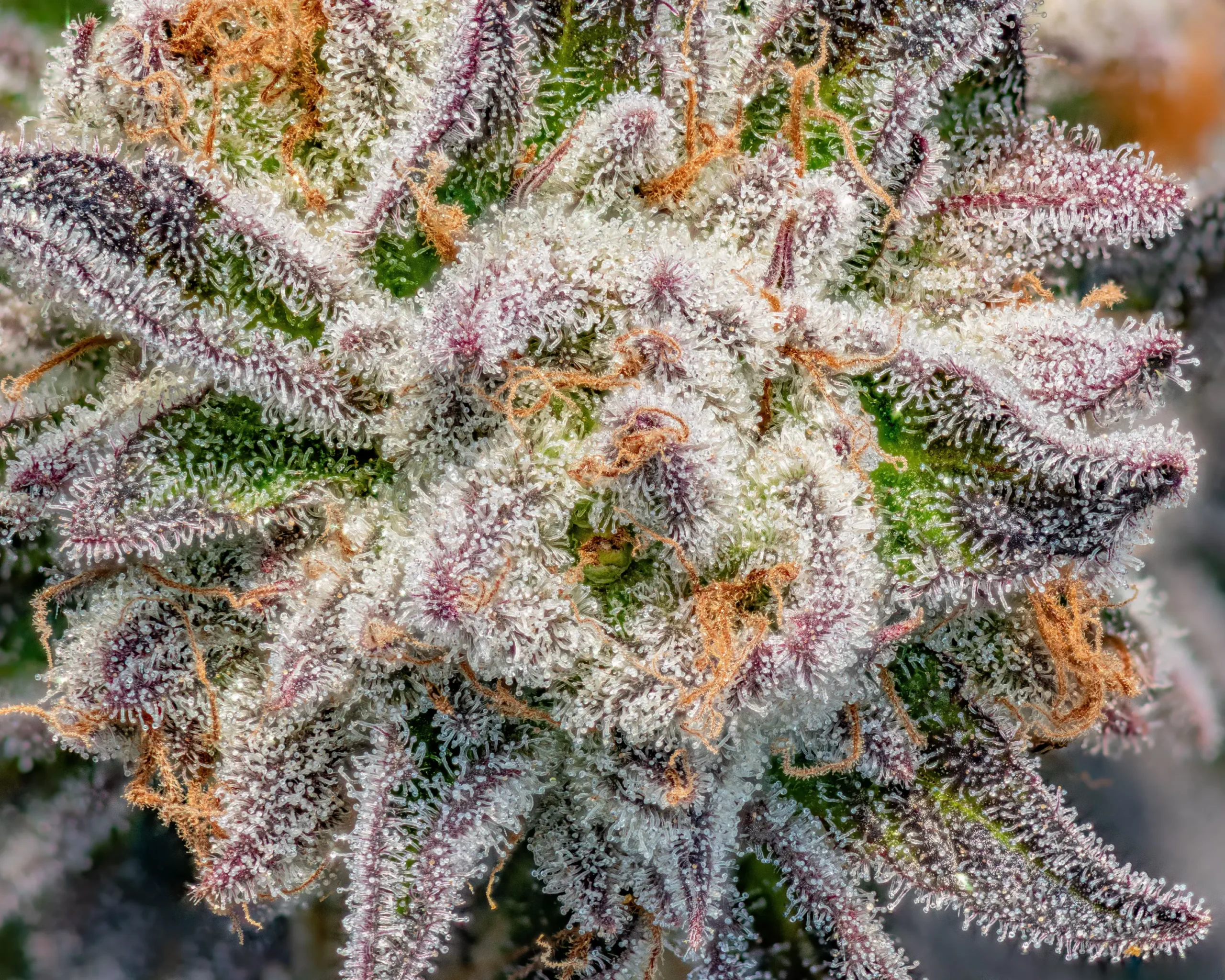
Blueberry Cupcake
Blueberry Cupcake – Strain Profile & Grow Guide
Cultivation, bud quality, flavor preservation, effects, and practical grow strategy
Blueberry Cupcake is a fast and highly vigorous berry-dessert hybrid combining blueberry jam, cake batter, vanilla cream, mint, cheese-like funk, and rocket fuel with an energetic euphoric start and a smooth relaxing finish. It belongs to the modern group of cultivars in which flavor and visual quality are inseparable from cultivation discipline. The plant can produce impressive flower without an exotic feeding program, but the best version depends on canopy balance, stable root-zone conditions, controlled late-flower humidity, and a careful dry. A high THC number alone does not explain why the strain is memorable. Its value is in the way aroma, texture, resin, and effect develop together.
The documented lineage is Blueberry Muffin x Wedding Cake. That background gives the plant a recognizable direction, yet phenotype variation still matters. One plant may lean toward the brighter, faster, or more aromatic parent, while another may stay shorter, denser, darker, or more physically calming. For that reason, every figure in this guide should be treated as a working range rather than a promise. Observe the individual plant first and use the cultivar description as a map, not a rigid recipe.
For growers, the central task is to understand the strain's architecture before the flowering stretch ends. Explosive tall hybrid growth with long internodes, vigorous side branches, broad leaves, and large dense flowers that can stack into heavy spears. The main risks are vertical overgrowth, uneven canopy height, shaded lower branches, branch collapse, high late-flower humidity, nutrient accumulation, and loss of blueberry aroma during a warm dry. These are manageable problems, but they become expensive when noticed late. The following profile focuses on how to prevent those losses while preserving the cultivar's defining aroma of blueberry jam, blue raspberry, cake batter, vanilla cream, mint, cheese-like funk, floral sweetness, and sharp fuel.
Blueberry Cupcake can feel buoyant and usable at first, yet high-testing batches accumulate quickly. Begin below the expected dose and wait through the energetic opening; the later cake-heavy body phase may be stronger than the blueberry aroma suggests.
Weedth Grower Note: The defining challenge is not simply growing the plant to harvest. It is preserving blueberry jam, blue raspberry, cake batter, vanilla cream, mint, cheese-like funk, floral sweetness, and sharp fuel while preventing vertical overgrowth, uneven canopy height, shaded lower branches, branch collapse, high late-flower humidity, nutrient accumulation, and loss of blueberry aroma during a warm dry.
Strain Features
| Feature | Details |
|---|---|
| Type | Balanced hybrid with energetic early effects |
| Genetic profile | commonly described as close to balanced, although some plants lean taller and more energizing |
| Lineage | Blueberry Muffin x Wedding Cake |
| THC | often reported from the low 20s into the high 20s, with selected laboratory results reaching approximately 28-34% |
| CBD | usually below 1% |
| Indoor flowering time | approximately 56-63 days indoors, with many selected plants finishing near 60 days |
| Outdoor harvest | approximately October 10-20 in the Northern Hemisphere in suitable dry climates |
| Yield potential | high when vertical growth is controlled and the broad canopy receives even light |
| Height | tall and fast-growing indoors, with very large outdoor potential |
| Grow difficulty | Moderate because explosive stretch, rapid branch production, large flowers, and strong aroma require early planning despite the relatively short flowering time |
| Plant structure | explosive tall hybrid growth with long internodes, vigorous side branches, broad leaves, and large dense flowers that can stack into heavy spears |
| Stretch | usually about 1.8-2.6x, with some highly vigorous expressions capable of more |
| Aroma | blueberry jam, blue raspberry, cake batter, vanilla cream, mint, cheese-like funk, floral sweetness, and sharp fuel |
| Flavor | ripe blueberry and sweet batter on the inhale with vanilla, mint, soft cheese funk, pepper, and clean fuel on the exhale |
| Primary cultivation concern | vertical overgrowth, uneven canopy height, shaded lower branches, branch collapse, high late-flower humidity, nutrient accumulation, and loss of blueberry aroma during a warm dry |
| Best training direction | top early, spread the plant under a wide screen, flip before the space appears full, continue tucking through early stretch, remove shaded lowers, and support the large late flowers |
Genetic Lineage
Blueberry Cupcake crosses Blueberry Muffin with Wedding Cake. The pairing sounds dessert-focused, but its most important cultivation inheritance is the contrast between early blueberry aroma and an unusually vigorous frame capable of 1.8-2.6x stretch.
Blueberry Muffin provides jammy berry, blue raspberry, early-flower fragrance, color potential, and a softer fruit-centered beginning. Its aroma can appear reassuringly early, which tempts growers to believe it will survive a hot canopy or rapid dry without protection.
Wedding Cake adds cake batter, vanilla cream, mint, pepper, cheese-like funk, sharp fuel, resin, and heavy flower mass. It also supplies much of the vertical speed and the need to support large spears before their weight shifts outward.
Fruit-leaning phenotypes may color early and keep a clearer effect, while Cake-heavy plants can stretch harder, feed more strongly during active growth, and finish denser or more fuel-forward. Both should retain recognizable blueberry after storage to justify keeper status.
The best selection is not simply the loudest berry plant in week four. It is the clone that fills a planned screen without escaping it, holds its branches, finishes the lower spear sections, and returns blueberry jam over vanilla batter after four to eight weeks of cure.
Effect Breakdown
Initial onset
Blueberry Cupcake often opens with a quick happy lift and an increase in interest rather than sedation. Music, conversation, food, and familiar creative tasks can feel more rewarding during this first phase.
Berry-forward flower usually feels clearer and more buoyant at the front. Very potent Cake-leaning batches can add pressure behind the eyes and make the early energy less organized than users expect from the sweet aroma.
Peak effects
The peak combines mental engagement with a warm body buzz. At a measured dose, this is the cultivar’s most functional window: attention remains available while physical tension loses urgency.
Appetite commonly grows as vanilla, batter, and soft cheese-funk become more noticeable on the palate. Larger servings make the experience more inward and can turn creative interest into passive absorption.
The tall plant does not imply a purely sativa effect. Wedding Cake weight builds underneath the blueberry opening, and high-THC examples can become substantially heavier than their first fifteen minutes suggest.
Late phase
The finish is generally smooth, slower, and physically comfortable. A moderate session may end without sleep, while a late harvest or high dose can produce heavy eyelids and a pronounced preference for staying put.
Because the transition is gradual, users may underestimate duration. Planning the session for a period without demanding obligations lets the fruit-bright beginning and relaxing conclusion both make sense.
Best use and caution
Afternoon can suit experienced users, but early evening is more dependable. It works especially well when a lively first hour followed by food and a quieter night is desirable.
New users should treat laboratory claims in the high-20s and above seriously. Start small, wait through the energetic onset, and expect dry mouth, appetite, dizziness, or anxiety if the dose outruns tolerance.
Flavor & Aroma Profile
Live plant and jar aroma
The live plant usually develops a layered aroma built around blueberry jam, blue raspberry, cake batter, vanilla cream, mint, cheese-like funk, floral sweetness, and sharp fuel. Early flower may reveal only the brightest or most generic part of the profile. The defining secondary notes often emerge after the middle of bloom, when resin heads become abundant and the calyxes begin to swell.
A Blueberry Cupcake stem rub can separate jammy, minty and funk-forward seedlings, but it cannot predict the final batter balance. Keep early aroma notes, then compare them with week-eight flowers and the one-month cure before selecting.
A Blueberry Cupcake jar should open with blueberry jam and blue raspberry, then reveal cake batter, vanilla, mint, soft cheese funk and fuel. If only sweetness and gas remain, warm drying or repeated oxygen likely removed the cultivar's defining fruit.
Inhale, exhale, and aftertaste
The expected flavor is ripe blueberry and sweet batter on the inhale with vanilla, mint, soft cheese funk, pepper, and clean fuel on the exhale. On the inhale, the most volatile notes arrive first. On the exhale, heavier sesquiterpenes and roasted, earthy, woody, or peppery elements become more noticeable. A clean vaporizer at moderate temperature often separates these layers better than combustion.
Blueberry Cupcake becomes creamy only when strong feeding is tapered after stretch and its large flowers dry evenly. Excess salts sharpen mint and fuel, while a hot surface dry turns ripe blueberry into flat sweetness.
The Blueberry Cupcake aftertaste should carry blueberry skin and vanilla batter beyond the exhale, with mint and fuel cleaning the finish. Bitter mineral residue or empty sweetness points toward cultivation or post-harvest error.
Why the profile can disappear
Blueberry Cupcake's berry and mint top notes disappear before its cake, cheese and fuel base. Cool darkness and indirect air are essential because a heavy spear can remain wet inside after the exposed blueberry-rich surface is already crisp.
For Blueberry Cupcake, the most important flavor risk is linked to vertical overgrowth, uneven canopy height, shaded lower branches, branch collapse, high late-flower humidity, nutrient accumulation, and loss of blueberry aroma during a warm dry. Preventing that problem during bloom is easier than trying to repair flavor after harvest. Mold, heat stress, and root-zone imbalance can change aroma before the plant is cut.
Keep Blueberry Cupcake in small cool sealed containers and open only a working jar. This protects blueberry and vanilla from repeated air exchange while the more durable cheese-fuel fraction remains stable.
Dominant Terpenes
Blueberry Cupcake chemistry varies between jam-forward, vanilla-cake and mint-funk expressions. Laboratory data should guide precise claims; sensory selection should record which aromatic direction survives clone runs and storage.
Beta-caryophyllene
Beta-caryophyllene is relevant to Blueberry Cupcake because it contributes pepper, dough, fuel, and the warmer physical phase. Terpene dominance can change among phenotypes and laboratories, so the profile should be treated as a common direction rather than a fixed chemical fingerprint.
The sensory role is easier to verify than a precise effect claim. Aroma can be smelled and compared directly, while human effects are shaped by dose, THC, minor cannabinoids, tolerance, and expectation. Terpenes may influence the experience, but they should not be treated as a guaranteed medical mechanism in a single flower sample.
Ocimene
Ocimene is relevant to Blueberry Cupcake because it contributes sweet tropical-blue fruit and lifted floral brightness. Terpene dominance can change among phenotypes and laboratories, so the profile should be treated as a common direction rather than a fixed chemical fingerprint.
The sensory role is easier to verify than a precise effect claim. Aroma can be smelled and compared directly, while human effects are shaped by dose, THC, minor cannabinoids, tolerance, and expectation. Terpenes may influence the experience, but they should not be treated as a guaranteed medical mechanism in a single flower sample.
Limonene
Limonene is relevant to Blueberry Cupcake because it contributes citrus-candy lift and the energetic mood shift. Terpene dominance can change among phenotypes and laboratories, so the profile should be treated as a common direction rather than a fixed chemical fingerprint.
The sensory role is easier to verify than a precise effect claim. Aroma can be smelled and compared directly, while human effects are shaped by dose, THC, minor cannabinoids, tolerance, and expectation. Terpenes may influence the experience, but they should not be treated as a guaranteed medical mechanism in a single flower sample.
Myrcene and linalool
Myrcene and linalool is relevant to Blueberry Cupcake because it contributes blueberry depth, cream, floral softness, and progressive relaxation. Terpene dominance can change among phenotypes and laboratories, so the profile should be treated as a common direction rather than a fixed chemical fingerprint.
The sensory role is easier to verify than a precise effect claim. Aroma can be smelled and compared directly, while human effects are shaped by dose, THC, minor cannabinoids, tolerance, and expectation. Terpenes may influence the experience, but they should not be treated as a guaranteed medical mechanism in a single flower sample.
Indoor vs. Outdoor Growing
| Factor | Indoor | Outdoor |
|---|---|---|
| Size | tall and fast-growing indoors, with very large outdoor potential | Larger root volume can create a wide multi-branch plant |
| Finish | approximately 56-63 days indoors, with many selected plants finishing near 60 days | approximately October 10-20 in the Northern Hemisphere in suitable dry climates |
| Main advantage | Environmental control and repeatable quality | Root volume, sunlight, and higher per-plant yield |
| Main risk | vertical overgrowth, uneven canopy height, shaded lower branches, branch collapse, high late-flower humidity, nutrient accumulation, and loss of blueberry aroma during a warm dry | Weather, insects, branch damage, and late moisture |
| Best strategy | top early, spread the plant under a wide screen, flip before the space appears full, continue tucking through early stretch, remove shaded lowers, and support the large late flowers | Open structure, early support, and weather planning |
Indoor structure
Indoors, Blueberry Cupcake usually finishes as a tall and fast-growing indoors, with very large outdoor potential plant. Its stretch is usually about 1.8-2.6x, with some highly vigorous expressions capable of more. The main objective is to create an even canopy before vertical growth stops. A net is useful, but branches should not be woven so tightly that removal at harvest becomes destructive.
Indoor climate
Indoor success depends on reduce humidity before the large flowers close and keep air moving through the lower canopy because fast bulking can hide internal moisture. Air should move above, below, and through the canopy without blasting one flower continuously. Strong extraction is more valuable than a fan pointed directly at the buds.
Indoor nutrition
The cultivar's feeding direction is moderate-to-strong feeding during active growth with reliable calcium and magnesium, followed by lower nitrogen and controlled EC after stretch. Irrigation runoff, leaf color, and tip condition should guide adjustment. A predetermined high-strength recipe is less reliable than observing how quickly the plant uses water and how the new growth develops.
Outdoor structure
Outdoors, the plant benefits from unrestricted root volume and direct sun. Expected timing is approximately October 10-20 in the Northern Hemisphere in suitable dry climates. Give branches enough space to move in wind and enough support to prevent the final flowers from folding them downward.
Outdoor climate
Outdoor Blueberry Cupcake needs morning sun, strong airflow, deep root space and a dry October. Its enormous potential becomes a liability when heavy spears are shaded by their own explosive branch system.
Outdoor pest pressure
Outdoor aroma and dense flowers attract attention from insects as well as people. Inspect the interior of flowers and branch junctions. Caterpillar damage can open a path for rot, while mites and aphids reduce vigor long before yield visibly collapses.
Greenhouse use
A greenhouse can protect Blueberry Cupcake from rain, but its vigorous broad canopy can saturate a closed structure at night. Use roof and side exchange, wide spacing and permanent support rather than relying on rain cover alone.
Which environment fits best
Choose indoors when flavor consistency, security, and climate control are the priorities. Choose outdoors when root volume, plant size, and lower energy use matter more. Blueberry Cupcake can perform in both, but the grower must solve different problems: canopy density indoors and weather uncertainty outdoors.
Strain-Specific Grow Guidance
Vegetative structure and plant selection
Blueberry Cupcake begins with explosive tall hybrid growth with long internodes, vigorous side branches, broad leaves, and large dense flowers that can stack into heavy spears. Select plants for vigor, symmetrical branching, clean leaf development, and a root system that fills the container without circling excessively. Do not choose only by early aroma. Weak structure becomes expensive once flowers gain weight.
The natural branching pattern is secondary branches grow rapidly and respond strongly to topping and screen training, but weak interior shoots multiply if not removed early. If growing from seed, expect some variation. Label every plant and preserve clones before flowering when possible. A keeper should be judged after cure, not only by photographs at harvest.
Let Blueberry Cupcake establish vigorous roots before the first topping. Once active, spread the main arms quickly; topping a stalled plant wastes the narrow planning window before its 1.8-2.6x stretch.
Training and canopy design
The preferred training direction is: top early, spread the plant under a wide screen, flip before the space appears full, continue tucking through early stretch, remove shaded lowers, and support the large late flowers. The purpose is not to create the flattest possible plant. The purpose is to distribute strong flower sites across the available light while preserving airflow and branch strength.
Begin Blueberry Cupcake LST while its fast laterals are flexible and guide them across a wide screen. Late hard bends create weak joints exactly where the cultivar later hangs its largest cake-scented spears.
Finish Blueberry Cupcake topping and decisive branch placement before flower stacking. After the transition, use tucking, support and selective cleanup rather than repeated supercropping of resin-bound stems.
Transition and stretch management
Plan for a stretch of usually about 1.8-2.6x, with some highly vigorous expressions capable of more. The flip height should reflect the available vertical space, container size, light distance, and phenotype. A plant with healthy roots and high light can stretch more strongly than a stressed plant described in an online grow report.
Build support before the flowers demand it
Blueberry Cupcake's first two flowering weeks determine whether the room remains usable. Keep tucking vigorous leaders into open squares, remove only shoots that cannot reach the plane and leave visible gaps at flip instead of filling the screen in veg.
By week three, stop expanding the Blueberry Cupcake footprint. Assign supports, clear shaded lowers and shift attention to leaf temperature, irrigation and the increasing mass of its short-cycle flowers.
Root zone, watering, and nutrition
The cultivar's watering preference is that it uses water aggressively under strong light but still needs oxygen around the roots; match irrigation frequency to plant demand rather than keeping the medium constantly wet. Choose a medium with enough air capacity to recover after full irrigation. Container size should match the intended vegetative period; a long veg in a small pot creates root restriction before the plant reaches its productive phase.
Feeding should follow this direction: moderate-to-strong feeding during active growth with reliable calcium and magnesium, followed by lower nitrogen and controlled EC after stretch. Watch the newest leaves, not only the oldest fans. Dark glossy foliage, clawing, burnt tips, or slowed water use indicate that more fertilizer is unlikely to improve yield.
Evaluate calcium and magnesium for Blueberry Cupcake from water, medium and new growth. Rapid extension under strong light can reveal real demand, but high root-zone EC can produce the same symptoms and will not improve with automatic supplementation.
When Blueberry Cupcake changes color or drinking rate, measure pH, EC and dryback before feeding harder. Its broad leaves can stay visually impressive while the root zone quietly accumulates salts.
Light, temperature, and humidity
The lighting strategy is to benefits from strong broad light distribution, but the rapidly rising tops must be leveled to prevent bleaching, foxtailing, and blueberry terpene loss. Increase intensity in steps and watch leaf angle, edge curl, bleaching, and water demand. More light only improves production when roots, carbon dioxide, temperature, and nutrition can support the extra photosynthesis.
Humidity management should follow this rule: reduce humidity before the large flowers close and keep air moving through the lower canopy because fast bulking can hide internal moisture. Dense cannabis flowers can maintain much higher humidity internally than the room reading suggests. That is why a safe ambient number does not guarantee a safe flower interior.
Prevent Blueberry Cupcake nights from producing hours of high RH around the heavy spears. Dehumidification should be sized for the plant's vigorous transpiration and continue after lights-out.
Flower development and support
The finished flowers are expected to be large dense green and purple flowers with orange pistils, swollen bracts, and heavy sticky resin. Support should be installed before the branches lean. Adding stakes or a second net late can damage trichomes and compress flowers against each other.
At mid flower, inspect Blueberry Cupcake where broad leaves and adjacent spears close around the stem. A musty sweetness that differs from jam, batter or cheese funk is an airflow warning, not a new terpene.
Blueberry Cupcake may stack naturally, but pale towers closest to the fixture with flattened berry aroma indicate heat or light stress. Compare upper and middle flowers before accepting foxtails as phenotype.
Pest and disease prevention
The main strain-specific risks are vertical overgrowth, uneven canopy height, shaded lower branches, branch collapse, high late-flower humidity, nutrient accumulation, and loss of blueberry aroma during a warm dry. Prevention begins before flowering. Clean the space, inspect incoming plants, remove dead material, and avoid carrying outdoor tools directly into an indoor room.
Keep sprays off Blueberry Cupcake after its large flowers become resinous and compact. Prevention, sanitation and early localized removal are safer than trapping liquid inside a short-cycle spear.
Stress inspection should include the lower nodes and interior branches. Sensitive modern hybrids can express isolated reproductive structures after light leaks, severe drought, root damage, or repeated high-stress training. Remove affected tissue, correct the stress, and evaluate whether the plant remains suitable to finish.
Harvest timing
The expected flowering window is approximately 56-63 days indoors, with many selected plants finishing near 60 days. Calendar age is only a checkpoint. The actual harvest decision is: harvest after the large bracts have fully swollen and trichomes are mostly cloudy; a small amber fraction preserves berry euphoria while completing the body effect.
Read Blueberry Cupcake maturity on swollen bracts from several canopy levels. Sugar leaves amber early, and a top may look ready while lower jam-rich flowers are still gaining density.
A staged Blueberry Cupcake harvest makes sense when upper spears finish ahead of productive middle branches. Remove only mature tops and continue briefly if roots remain healthy and the room can support the extra humid load.
Master Advice: Build the grow around explosive tall hybrid growth with long internodes, vigorous side branches, broad leaves, and large dense flowers that can stack into heavy spears and a stretch of usually about 1.8-2.6x, with some highly vigorous expressions capable of more. Do not wait until late flower to solve spacing and support.
Weedth Bud Flavor Tips
Indoor flavor priorities
Indoors, the key is to prevent heat and excessive nitrogen from flattening Blueberry Cupcake's profile. Benefits from strong broad light distribution, but the rapidly rising tops must be leveled to prevent bleaching, foxtailing, and blueberry terpene loss. Keep the canopy uniform so top flowers do not experience a different temperature and stress level from the middle.
Reduce Blueberry Cupcake nitrogen after stretch without forcing an early fade. Dark broad leaves near harvest delay clean berry expression, but premature starvation limits the heavy final swell.
Avoid foliar products once flowers are established. Even products considered natural can leave aroma, residue, or microbial risk on resinous surfaces.
Outdoor flavor priorities
Cut outdoor Blueberry Cupcake after dew clears and before midday heat warms the volatile berry surface. When October rain approaches, a clean slightly early harvest is safer than wet oversized flowers.
If rain is expected near maturity, compare the risk of early harvest with the risk of rot. A slightly early but clean crop may retain more usable flavor than a fully mature crop damaged by moisture. Use covers only when they do not trap humidity around the plant.
Move Blueberry Cupcake branches directly into cool darkness and keep large spears separated. Sun and warm piling erase blueberry quickly while trapping moisture in their dense centers.
Drying strategy
The cultivar-specific drying direction is: dry cool and gradually with enough exchange to protect the dense interior while preventing blueberry, vanilla, and floral compounds from escaping. Use darkness, cool temperature, gentle air exchange, and enough spacing that branches do not touch. Direct fan air should move around the crop, not at it.
Assess Blueberry Cupcake tops and lowers separately. Small buds can feel ready days before the center of a heavy spear; jar each size class only after its own moisture rebound is controlled.
A snapping Blueberry Cupcake twig is only one clue. Condition representative spear centers with hygrometers before sealing the batch, because broad outer surfaces can dry while the core remains soft.
Curing and storage
The recommended cure is: four to eight weeks develops blueberry jam, cake batter, vanilla cream, mint, soft funk, and a cleaner fuel finish. Early in cure, open containers as needed to release excess moisture and refresh the headspace. As moisture stabilizes, reduce the frequency of opening.
Do not add berries or peel to a weak Blueberry Cupcake cure. Added moisture masks whether the cultivar's own jam and vanilla survived and creates unnecessary microbial risk.
Divide Blueberry Cupcake into small airtight reserves kept cool and dark. Handle by the stem; repeated opening and squeezing removes the jam-mint detail faster than the heavier fuel base.
Weedth Bud Boost Tips
Yield starts with architecture
The most reliable yield method is the cultivar's preferred training approach: top early, spread the plant under a wide screen, flip before the space appears full, continue tucking through early stretch, remove shaded lowers, and support the large late flowers. Yield comes from productive surface area, not from the number of techniques used. A well-spaced canopy with ten strong tops can outperform a stressed plant with twenty weak tops.
Retain Blueberry Cupcake branches that can reach the screen without crowding a stronger leader. Its explosive branching creates more sites than the light can finish, so early subtraction improves premium yield.
Install a second net before Blueberry Cupcake spears gain weight. Support keeps them upright, evenly lit and separated, preventing one collapsed branch from forming a humid wall.
Light and canopy efficiency
Use strong, uniform light according to this cultivar direction: benefits from strong broad light distribution, but the rapidly rising tops must be leveled to prevent bleaching, foxtailing, and blueberry terpene loss. Measure intensity at multiple points rather than trusting the fixture setting. Edge plants and center plants should not live in completely different environments.
Lower-canopy lighting can improve middle flower when used carefully, but it does not replace pruning and spacing. Additional light also adds heat and energy cost. The first priority is an efficient top canopy.
Clean reflective surfaces and maintain fixture distance. A small loss of usable light across an entire cycle can reduce flower density without creating an obvious visual problem.
Root volume and irrigation
Root health should follow the cultivar's water preference: uses water aggressively under strong light but still needs oxygen around the roots; match irrigation frequency to plant demand rather than keeping the medium constantly wet. Choose a container that supports the intended plant size. An oversized wet container can be as damaging as a rootbound small one.
Wet the full Blueberry Cupcake root ball, then allow an oxygen-returning dryback suited to the medium. Surface splashes cannot support its fast canopy and encourage salt bands near the top.
Verify every Blueberry Cupcake emitter because its rapid growth magnifies small irrigation differences. A restricted line can look like a weak phenotype before obvious wilt appears.
Nutrition without excess
Follow the strain's feeding direction: moderate-to-strong feeding during active growth with reliable calcium and magnesium, followed by lower nitrogen and controlled EC after stretch. The plant needs complete nutrition, not constant escalation. Increased fertilizer does not automatically increase cannabinoid or terpene production.
During Blueberry Cupcake bulk, follow water use and runoff rather than its reputation as a heavy feeder. Rising demand can justify a measured increase; a heavy pot and dark leaves call for less pressure.
Taper Blueberry Cupcake according to slowed drinking, bract maturity and root-zone EC. The short flowering window does not justify starving the plant on a preset date.
Outdoor yield strategy
Outdoor Blueberry Cupcake yield comes from early root volume, a wide frame and support installed before summer extension. Late additives cannot rescue branches already shading and folding into one another.
Open the outdoor Blueberry Cupcake center to sun and wind while retaining functional leaves on exposed arms. Severe stripping increases heat stress and can flatten jam into generic sweetness.
Inspect after storms. Re-tie branches, remove damaged tissue with clean tools, and dry trapped water from dense flower zones using natural airflow or gentle fans where legal and practical.
Remember: The cleanest yield increase comes from better light distribution, root health, and climate consistency. More additives cannot repair poor architecture.
Medical Uses & Benefits
Users most often consider Blueberry Cupcake for reported use for low mood, stress, appetite changes, mild pain, and afternoon fatigue, while potent batches may feel too stimulating or disorienting for sensitive users. These are reported uses, not guaranteed treatments. Cannabis can reduce symptoms for one person and worsen them for another, especially when THC dose is high.
The onset of a quick happy lift, energetic attention, stronger interest in music or conversation, and a clear euphoric head change may be helpful when stress or low mood is the main problem. The later development into smooth physical relaxation, slowed mental pace, and a comfortable calm that may become sleepy after larger sessions may suit evening discomfort and physical tension. The same progression can be inconvenient for anyone who needs sustained alertness.
Pain relief is usually described as partial rather than anesthetic. The strain may change attention, muscle tone, and emotional response to discomfort. Severe, new, or unexplained pain requires medical evaluation rather than self-treatment.
For sleep, timing matters. Taking a potent strain immediately before bed can feel mentally active for some users, even when the late phase is sedating. An earlier evening dose may allow the initial mental effects to settle before bedtime.
Anxiety response is dose-dependent. A small dose may feel calming, while a large dose can increase heart awareness, dizziness, or repetitive thought. Users with panic history should be especially conservative and consider lower-THC options.
Dry mouth, dry eyes, appetite changes, slowed reaction time, and short-term memory impairment are common cannabis effects. Combining cannabis with alcohol or other sedatives can increase impairment.
Medical patients should consider medication interactions, cardiovascular conditions, pregnancy, age, and mental-health history. Professional guidance is appropriate when cannabis is used alongside prescription treatment.
The safest therapeutic approach is repeatable dosing. Use the same preparation, measure the amount, keep notes, and avoid judging benefit from one unusually strong or weak batch.
Ideal User Profile
The ideal user is intermediate and experienced consumers who enjoy berry-dessert potency and growers able to control aggressive stretch, irrigation demand, heavy flowers, and post-harvest humidity. The strain suits someone who values a changing experience rather than a single flat effect. The early phase and late phase may feel different enough that timing matters.
For low-tolerance users, one inhalation may be sufficient. Wait at least several minutes before adding more. Edible forms require much longer onset time and should be dosed even more conservatively.
Time of day should match the finish. A cultivar that begins cheerful can still become physically heavy. Users should plan the full two-to-three-hour window rather than judging only the first fifteen minutes.
The best activities are low-risk and sensory: music, conversation, film, a meal, light stretching, or a familiar creative hobby. Driving, machinery, important financial decisions, and unfamiliar physical environments are poor matches.
Flavor-focused users should compare flower through a clean vaporizer at moderate temperature. Combustion can emphasize pepper and char while hiding delicate fruit, cream, or floral notes.
Growers considering this strain should be comfortable with its main cultivation issue: vertical overgrowth, uneven canopy height, shaded lower branches, branch collapse, high late-flower humidity, nutrient accumulation, and loss of blueberry aroma during a warm dry. A grower who can manage that issue will usually find the rest of the cycle straightforward.
Grower Notes and Feedback
Blueberry Cupcake growers repeatedly describe a plant that looks reasonable at flip and becomes a geometry problem soon afterward. Measuring height at day 0, 7, and 14 is more informative than relying on the advertised 1.8-2.6x range.
The most productive reports share one feature: the screen was not full before flowering. Empty transition space lets long internodes become evenly lit spear sections instead of forcing the grower to stack branches at the room edge.
Blueberry aroma can appear early, but its presence in week four does not guarantee it in the jar. High upper-canopy temperature, excess nitrogen after stretch, and a fast dry selectively erase fruit while cake, cheese funk, and fuel remain.
Branch collapse is a genuine late risk. Large flowers form along vigorous laterals, so a tie beneath only the terminal cola may not protect the loaded middle. A second net that carries the entire spear is more reliable.
Feeding observations make the most sense in phases. The cultivar can use stronger nutrition while building its frame, yet declining water demand after bulk is a reason to reduce concentration rather than keep feeding the earlier appetite.
Growers choosing mothers should compare internode length, response to topping, lower-flower finish, and cured berry retention. The shortest plant is not automatically best if its center becomes too dense, and the loudest early plant is not best if blueberry disappears in storage.
Outdoor feedback emphasizes timing and support. Large plants can yield heavily, but an October finish exposes dense flowers to dew and rain; wide spacing and preinstalled stakes are more effective than trying to rescue leaning wet branches.
Weedth Experience
Blueberry Cupcake is one of those plants that can make a room feel smaller every time I visit it. The long internodes and fast side branches are not difficult because they are weak; they are difficult because they are productive faster than the grower expects. Its relatively short flower time makes early indecision expensive.
I would flip with obvious empty screen space, continue tucking only through the first part of stretch and then stop asking resin-bound stems to change direction. The branches that cannot reach the plane would leave before they become shaded lowers. A second net would go in before the spears look heavy, because support is part of canopy design here, not a rescue.
Nutrition would follow expansion rather than reputation. The plant can use a firm program while it is genuinely drinking, but dark broad leaves and rising runoff EC would tell me when enough is enough. I want blueberry and vanilla to remain clear; I do not want excessive late nitrogen turning the jar into minty fuel with a vague sweet background.
The finished flower should feel almost edible without becoming simple. Blueberry jam and blue raspberry ought to lead, cake batter and vanilla should soften the middle, and mint, cheese-like funk and fuel should keep the exhale from becoming sugary. When that sequence survives a slow dry, the plant's unruly early growth feels justified.
Weedth Score
Growing Experience 9.0/10 Rewarding when vertical overgrowth, uneven canopy height, shaded lower branches, branch collapse, high late-flower humidity, nutrient accumulation, and loss of blueberry aroma during a warm dry are managed early.
Bud Structure & Visual Appeal 9.5/10 Large dense green and purple flowers with orange pistils, swollen bracts, and heavy sticky resin.
Aroma Complexity 9.7/10 Layered profile of blueberry jam, blue raspberry, cake batter, vanilla cream, mint, cheese-like funk, floral sweetness, and sharp fuel.
Flavor & Smoothness 9.6/10 Best after four to eight weeks develops blueberry jam, cake batter, vanilla cream, mint, soft funk, and a cleaner fuel finish and a slow dry.
Effects & High Experience 9.2/10 Moves from a quick happy lift, energetic attention, stronger interest in music or conversation, and a clear euphoric head change toward smooth physical relaxation, slowed mental pace, and a comfortable calm that may become sleepy after larger sessions.
Overall Satisfaction & Recommendation 9.5/10 A strong choice for intermediate and experienced consumers who enjoy berry-dessert potency and growers able to control aggressive stretch, irrigation demand, heavy flowers, and post-harvest humidity.
Personal Closer: Blueberry Cupcake earns its place through character rather than one exaggerated number. The best flowers are structured, expressive, and worth the patience required to cure them properly.
FAQ
What is Blueberry Cupcake’s lineage?
Blueberry Muffin x Wedding Cake, combining jammy berry and early fragrance with batter, vanilla, resin, fuel, and explosive growth.
How long does it flower?
Usually 56-63 days indoors, with many selections near 60 days; maturity must still be confirmed across upper and lower spear sections.
How much does it stretch?
About 1.8-2.6x is a practical range, and especially vigorous plants may exceed it when roots, heat, and nitrogen encourage extension.
When should it be flipped?
Before a wide screen looks full. Deliberate empty squares allow transition growth without forcing late folds or shaded branch piles.
What support does it require?
A second net or ties supporting the full loaded lateral are more useful than a single stake placed only beneath the terminal cola.
Can Blueberry Cupcake feed heavily?
It can use stronger nutrition during active frame building, but nitrogen and EC should fall after stretch as water demand declines.
Why did the blueberry aroma disappear?
Upper-canopy heat, accumulated salts, an early cut, rough handling, and a rapid warm dry preserve cake-fuel while stripping fragile berry notes.
What is the main mold risk?
Large dense spear centers can stay wet after their surfaces feel dry, particularly where a collapsed branch touches another flower.
When is the best harvest window?
When large bracts are fully swollen and blueberry has returned above vanilla batter, mint, soft funk, and fuel with mostly cloudy resin.
How should it be dried?
Space substantial branches in cool darkness with gentle air exchange so dense interiors lose moisture without sacrificing berry and floral volatiles.
How long should it cure?
Four to eight weeks can deepen jam, soften batter and cheese funk, and make the mint-fuel finish cleaner and easier to separate.
What makes a keeper?
A keeper fills a planned screen predictably, holds supported spears, finishes lower flowers, and retains blueberry rather than only sweetness after storage.
Similar Strains
Blueberry Muffin
Blueberry Muffin is relevant because of blueberry pastry aroma, color, and a softer fruit-centered effect. It is not an exact substitute. Compare the effect progression, flowering behavior, and cured aroma rather than choosing only from the family name.
Growers moving from Blueberry Cupcake to Blueberry Muffin should keep the same disciplined approach to canopy airflow, root-zone stability, harvest maturity, and slow drying, then adjust stretch and feeding after observing the individual plant.
Wedding Cake
Wedding Cake is relevant because of dense flower, dough, vanilla, potency, and vigorous growth. It is not an exact substitute. Compare the effect progression, flowering behavior, and cured aroma rather than choosing only from the family name.
Growers moving from Blueberry Cupcake to Wedding Cake should keep the same disciplined approach to canopy airflow, root-zone stability, harvest maturity, and slow drying, then adjust stretch and feeding after observing the individual plant.
Blueberry Pancakes
Blueberry Pancakes is relevant because of berry dessert flavor, cream, resin, and relaxed potency. It is not an exact substitute. Compare the effect progression, flowering behavior, and cured aroma rather than choosing only from the family name.
Growers moving from Blueberry Cupcake to Blueberry Pancakes should keep the same disciplined approach to canopy airflow, root-zone stability, harvest maturity, and slow drying, then adjust stretch and feeding after observing the individual plant.
Cereal Milk
Cereal Milk is relevant because of sweet cream, fruit, dense resin, and balanced effects. It is not an exact substitute. Compare the effect progression, flowering behavior, and cured aroma rather than choosing only from the family name.
Growers moving from Blueberry Cupcake to Cereal Milk should keep the same disciplined approach to canopy airflow, root-zone stability, harvest maturity, and slow drying, then adjust stretch and feeding after observing the individual plant.
Blue Dream
Blue Dream is relevant because of blueberry aroma with a brighter and more daytime-oriented effect. It is not an exact substitute. Compare the effect progression, flowering behavior, and cured aroma rather than choosing only from the family name.
Growers moving from Blueberry Cupcake to Blue Dream should keep the same disciplined approach to canopy airflow, root-zone stability, harvest maturity, and slow drying, then adjust stretch and feeding after observing the individual plant.
Blueberry
Blueberry is relevant because of classic berry depth, color, and a calmer physical direction. It is not an exact substitute. Compare the effect progression, flowering behavior, and cured aroma rather than choosing only from the family name.
Growers moving from Blueberry Cupcake to Blueberry should keep the same disciplined approach to canopy airflow, root-zone stability, harvest maturity, and slow drying, then adjust stretch and feeding after observing the individual plant.
Share this article
A quick overview of the topics covered in this article.
Follow us
Latest articles
October 27, 2026
October 27, 2026
October 27, 2026
October 27, 2026
