
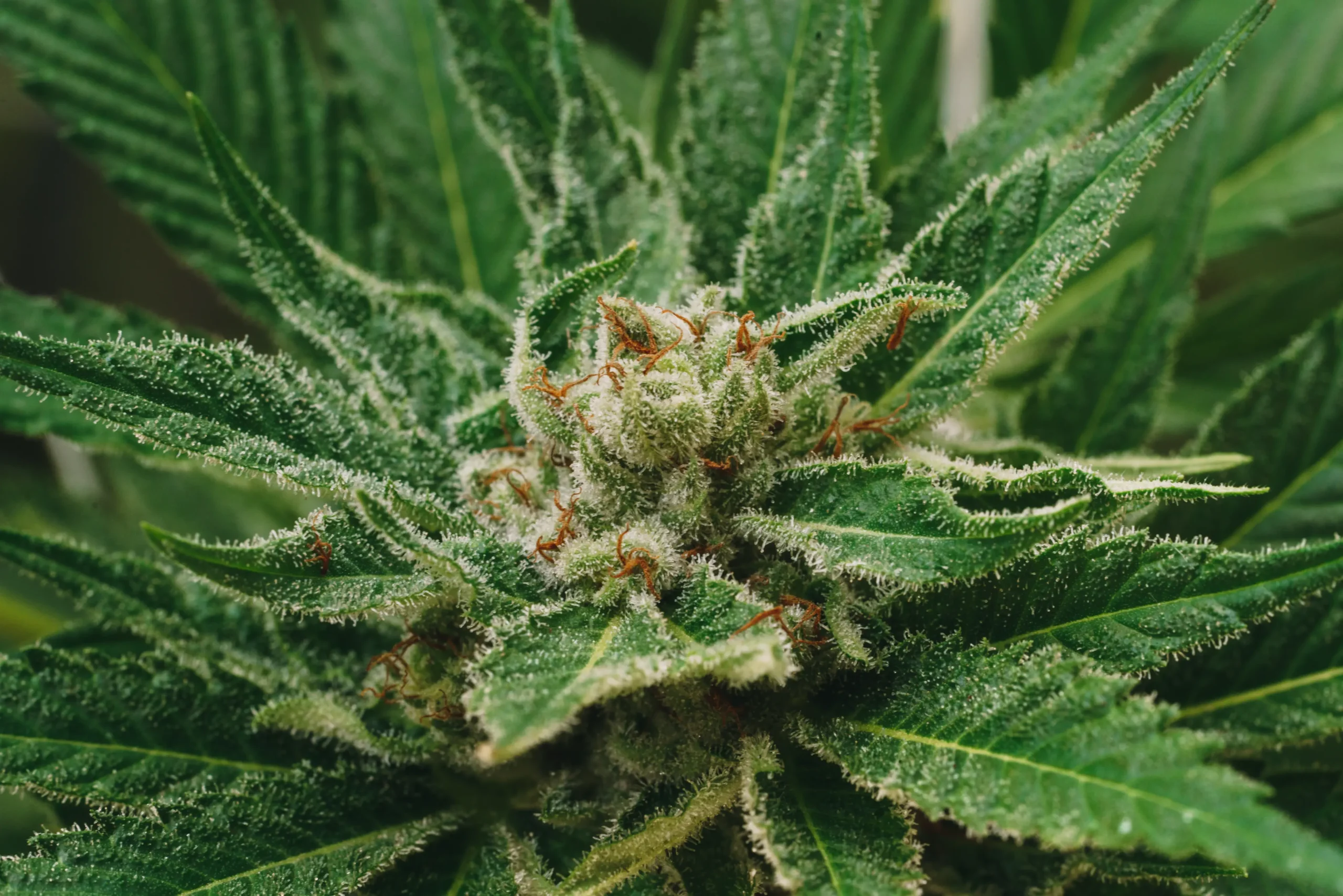
Peanut Butter Cup
Peanut Butter Cup – Strain Profile & Grow Guide
Cultivation, bud quality, flavor preservation, effects, and practical grow strategy
Peanut Butter Cup is an indica-dominant hybrid known for roasted nut, coffee, butter, earthy spice, pine, and a high-potency effect that begins pleasantly before becoming deeply physical. It belongs to the modern group of cultivars in which flavor and visual quality are inseparable from cultivation discipline. The plant can produce impressive flower without an exotic feeding program, but the best version depends on canopy balance, stable root-zone conditions, controlled late-flower humidity, and a careful dry. A high THC number alone does not explain why the strain is memorable. Its value is in the way aroma, texture, resin, and effect develop together.
The documented lineage is Do-Si-Dos x Mendo Breath. That background gives the plant a recognizable direction, yet phenotype variation still matters. One plant may lean toward the brighter, faster, or more aromatic parent, while another may stay shorter, denser, darker, or more physically calming. For that reason, every figure in this guide should be treated as a working range rather than a promise. Observe the individual plant first and use the cultivar description as a map, not a rigid recipe.
For growers, the central task is to understand the strain's architecture before the flowering stretch ends. Medium-tall structure, broad fan leaves, thick stems, medium internodes, vigorous side branching, and dense resinous flowers that can close tightly around the stem. The main risks are overgrown broad-leaf canopy, hidden bud moisture, salt buildup, branch sag, excessive stretch, and a harsh fast dry that exaggerates pepper and coffee bitterness. These are manageable problems, but they become expensive when noticed late. The following profile focuses on how to prevent those losses while preserving the cultivar's defining aroma of roasted peanut, butter, coffee grounds, cocoa-like earth, pine, black pepper, sweet dough, and light sour gas.
For consumers, potency should be approached with the same care. Effects can change with dose, tolerance, harvest maturity, and terpene expression. A small amount may feel bright and balanced, while a larger amount from the same flower can become physically heavy or mentally hazy. Start low, especially with a fresh batch, and allow the onset to develop before increasing the dose.
Weedth Grower Note: The defining challenge is not simply growing the plant to harvest. It is preserving roasted peanut, butter, coffee grounds, cocoa-like earth, pine, black pepper, sweet dough, and light sour gas while preventing overgrown broad-leaf canopy, hidden bud moisture, salt buildup, branch sag, excessive stretch, and a harsh fast dry that exaggerates pepper and coffee bitterness.
Strain Features
| Feature | Details |
|---|---|
| Type | Indica-dominant hybrid |
| Genetic profile | approximately 70% indica expression in many selections |
| Lineage | Do-Si-Dos x Mendo Breath |
| THC | commonly 22-27% THC, with stronger batches possible |
| CBD | usually below 1% |
| Indoor flowering time | approximately 56-70 days indoors; around 60-63 days is common for balanced maturity |
| Outdoor harvest | early to mid-October in the Northern Hemisphere in a dry finish |
| Yield potential | medium to high with an even canopy and sufficient support |
| Height | medium to tall with moderate stretch |
| Grow difficulty | Moderate because broad foliage, dense flowers, stretch, and late humidity need management |
| Plant structure | medium-tall structure, broad fan leaves, thick stems, medium internodes, vigorous side branching, and dense resinous flowers that can close tightly around the stem |
| Stretch | usually 1.5-2x, with taller Mendo-leaning plants extending more |
| Aroma | roasted peanut, butter, coffee grounds, cocoa-like earth, pine, black pepper, sweet dough, and light sour gas |
| Flavor | nutty coffee and butter first, followed by pine, pepper, earthy dough, and a dry sour finish |
| Primary cultivation concern | overgrown broad-leaf canopy, hidden bud moisture, salt buildup, branch sag, excessive stretch, and a harsh fast dry that exaggerates pepper and coffee bitterness |
| Best training direction | top early, use low-stress direction to widen the plant, remove weak lowers after stretch, and support the heavy main arms |
Genetic Lineage
Peanut Butter Cup is built from Do-Si-Dos and Mendo Breath, a pairing that explains why its identity sits closer to roasted pastry, soil, and body weight than to simple candy sweetness. The cross brings together two resin-minded families, but the practical value of the lineage is found in how the plant branches, stretches, ripens, and carries its aroma.
The Do-Si-Dos side is the likely source of much of the dough, pepper, pine, and dense resin. It can also show in the broad fans and the way flowers tighten close to the supporting stem. That inheritance gives Peanut Butter Cup strong bag appeal, yet it also creates the interior moisture risk that makes selective leaf removal more useful than indiscriminate stripping.
Mendo Breath helps explain the nutty cream, cocoa earth, coffee warmth, and heavier late phase. Structurally, its influence may appear as thicker stems, vigorous lateral growth, and a taller expression that uses more of the 1.5-2x flowering stretch. Those plants should not be mistaken for off-types simply because they are less compact.
Phenotype selection therefore matters. A Do-Si-Dos-leaning plant may be tighter, pepperier, and more dough-forward, while a Mendo-leaning plant can be looser in veg, creamier after cure, and slower to settle into its full body effect. The most convincing balanced phenotype carries roasted peanut over buttered dough without losing the sour-gas edge that keeps the profile from becoming flat.
Lineage names do not guarantee a literal peanut-butter aroma. Keeper selection should be based on repeatable stretch, an interior that can be ventilated, branch strength under late weight, clean resin maturity, and a cured jar in which roast reads as rich rather than scorched or mineral-bitter.
Effect Breakdown
Initial onset
Peanut Butter Cup usually introduces itself with a contained mental lift rather than a sudden rush. The first minutes can feel warmer and more conversational than its indica-leaning reputation suggests, with sensory detail becoming more noticeable while pressure begins to leave the face and shoulders.
The onset is dose-sensitive. A small serving may leave enough clarity for music, a film, food, or an unhurried conversation. Taking more before the first layer has settled can turn that pleasant opening into mental fog, because the heavier Mendo Breath side tends to arrive after the brighter moment rather than alongside it.
Peak effects
At the peak, the center of gravity moves downward. Arms and legs feel heavier, posture softens, and physical tension becomes less insistent. The mind is not necessarily blank, but it becomes less interested in changing tasks or maintaining a fast social rhythm.
The roasted, peppery aroma suits the sensation: this is a warm, substantial high rather than a sparkling one. Appetite often becomes more obvious here, especially when the creamy dough and cocoa notes are pronounced in the flower. For many users, a comfortable seat and something to eat become more appealing than activity.
Balanced phenotypes preserve a calm thread of attention through the body relaxation. More sedating plants shorten that useful middle phase and may create couch-lock quickly. This variability is why the name alone cannot predict whether a particular jar works for an early evening or belongs strictly near bedtime.
Late phase and comedown
The late phase is typically slow, quiet, and body-led. Muscle heaviness lingers after the initial mood lift has faded, and the remaining mental tone feels insulated rather than stimulated. The transition is usually gradual enough that users may not notice how inactive they have become until they try to stand or resume a task.
Higher doses can make sleep the natural endpoint. Lower doses may finish as a comfortable afterglow with appetite and physical calm still present. Because the effects can accumulate, waiting before redosing is more reliable than judging strength from the first ten minutes.
Best time to use
Late afternoon can work for tolerant users with no demanding plans, but evening is the most dependable window. The strain fits slow meals, familiar entertainment, recovery after physical effort, and bedtime preparation better than driving, detailed work, or situations that require rapid decisions.
Who should be cautious
New users and anyone sensitive to high THC should begin conservatively. The friendly onset can conceal the eventual weight, and excessive intake may produce dizziness, dry mouth, anxious self-awareness, or an unexpectedly early night even though the cultivar is generally described as calming.
Users seeking alert daytime relief may prefer a brighter cultivar. Peanut Butter Cup is most convincing when its layered mental opening is allowed to become a deliberate physical landing rather than when the user fights that direction.
Individual response still depends on chemotype, tolerance, setting, and dose. Recording the amount and timing from a new batch is especially useful because the difference between a balanced and Mendo-heavy phenotype can be larger than the shared name implies.
Flavor & Aroma Profile
Live plant and jar aroma
The live plant usually develops a layered aroma built around roasted peanut, butter, coffee grounds, cocoa-like earth, pine, black pepper, sweet dough, and light sour gas. Early flower may reveal only the brightest or most generic part of the profile. The defining secondary notes often emerge after the middle of bloom, when resin heads become abundant and the calyxes begin to swell.
A stem rub can help identify phenotype direction, but it is not a perfect predictor of cured flower. Some plants smell intensely sweet in veg and finish earthy. Others seem quiet until late bloom and become loud during drying. Keep notes at several stages rather than selecting from one early impression.
A mature Peanut Butter Cup jar should move from roasted peanut and butter into coffee, cocoa earth, pine and a clean sour finish. If it opens only with pepper or mineral sharpness, revisit late feed, drying speed and internal moisture before blaming the phenotype.
Inhale, exhale, and aftertaste
The expected flavor is nutty coffee and butter first, followed by pine, pepper, earthy dough, and a dry sour finish. On the inhale, the most volatile notes arrive first. On the exhale, heavier sesquiterpenes and roasted, earthy, woody, or peppery elements become more noticeable. A clean vaporizer at moderate temperature often separates these layers better than combustion.
Peanut Butter Cup becomes creamy only when root-zone salts, maturity and the dry are handled together. A fast hot dry leaves roasted notes brittle and pepper dominant, while wet-centered storage turns the buttery promise heavy and indistinct.
The aftertaste is a useful quality test. Premium flower leaves a recognizable trace that matches the jar aroma. Poorly finished flower may smell impressive but finish bitter, grassy, mineral, or empty. The most accurate evaluation should happen after at least three to four weeks of cure, not immediately after drying.
Why the profile can disappear
Peanut Butter Cup's pine and light sour lift disappear faster than its coffee-earth base. A cool gradual dry lets moisture leave the dense cores without baking the exterior, preserving the contrast that keeps the final profile creamy rather than dusty.
For Peanut Butter Cup, the most important flavor risk is linked to overgrown broad-leaf canopy, hidden bud moisture, salt buildup, branch sag, excessive stretch, and a harsh fast dry that exaggerates pepper and coffee bitterness. Preventing that problem during bloom is easier than trying to repair flavor after harvest. Mold, heat stress, and root-zone imbalance can change aroma before the plant is cut.
After Peanut Butter Cup cures, store it cool, dark and with minimal headspace. The robust earthy base will outlast its butter and roasted-peanut detail, so limit fresh-air exchange if those softer layers matter.
Dominant Terpenes
Terpene results are phenotype- and batch-dependent. The compounds below describe the most common aromatic direction reported for this cultivar or its documented family. They should be confirmed with laboratory data when chemical precision is required.
Pinene
Pinene is relevant to Peanut Butter Cup because it contributes pine and herbal clarity that brightens the dense nut-and-coffee base. Terpene dominance can change among phenotypes and laboratories, so the profile should be treated as a common direction rather than a fixed chemical fingerprint.
The sensory role is easier to verify than a precise effect claim. Aroma can be smelled and compared directly, while human effects are shaped by dose, THC, minor cannabinoids, tolerance, and expectation. Terpenes may influence the experience, but they should not be treated as a guaranteed medical mechanism in a single flower sample.
Beta-caryophyllene
Beta-caryophyllene is relevant to Peanut Butter Cup because it contributes pepper, dry spice, and physical calm. Terpene dominance can change among phenotypes and laboratories, so the profile should be treated as a common direction rather than a fixed chemical fingerprint.
The sensory role is easier to verify than a precise effect claim. Aroma can be smelled and compared directly, while human effects are shaped by dose, THC, minor cannabinoids, tolerance, and expectation. Terpenes may influence the experience, but they should not be treated as a guaranteed medical mechanism in a single flower sample.
Humulene
Humulene is relevant to Peanut Butter Cup because it contributes woody hops and roasted bitterness that reinforce the savory profile. Terpene dominance can change among phenotypes and laboratories, so the profile should be treated as a common direction rather than a fixed chemical fingerprint.
The sensory role is easier to verify than a precise effect claim. Aroma can be smelled and compared directly, while human effects are shaped by dose, THC, minor cannabinoids, tolerance, and expectation. Terpenes may influence the experience, but they should not be treated as a guaranteed medical mechanism in a single flower sample.
Myrcene and limonene
Myrcene and limonene is relevant to Peanut Butter Cup because it contributes supporting earth, sweetness, and occasional citrus lift. Terpene dominance can change among phenotypes and laboratories, so the profile should be treated as a common direction rather than a fixed chemical fingerprint.
The sensory role is easier to verify than a precise effect claim. Aroma can be smelled and compared directly, while human effects are shaped by dose, THC, minor cannabinoids, tolerance, and expectation. Terpenes may influence the experience, but they should not be treated as a guaranteed medical mechanism in a single flower sample.
Indoor vs. Outdoor Growing
| Factor | Indoor | Outdoor |
|---|---|---|
| Size | medium to tall with moderate stretch | Larger root volume can create a wide multi-branch plant |
| Finish | approximately 56-70 days indoors; around 60-63 days is common for balanced maturity | early to mid-October in the Northern Hemisphere in a dry finish |
| Main advantage | Environmental control and repeatable quality | Root volume, sunlight, and higher per-plant yield |
| Main risk | overgrown broad-leaf canopy, hidden bud moisture, salt buildup, branch sag, excessive stretch, and a harsh fast dry that exaggerates pepper and coffee bitterness | Weather, insects, branch damage, and late moisture |
| Best strategy | top early, use low-stress direction to widen the plant, remove weak lowers after stretch, and support the heavy main arms | Open structure, early support, and weather planning |
Indoor structure
Indoors, Peanut Butter Cup usually finishes as a medium to tall with moderate stretch plant. Its stretch is usually 1.5-2x, with taller Mendo-leaning plants extending more. The main objective is to create an even canopy before vertical growth stops. A net is useful, but branches should not be woven so tightly that removal at harvest becomes destructive.
Indoor climate
Indoor success depends on keep late humidity low and maintain movement around the stem because the dense flowers can trap moisture where it is difficult to see. Air should move above, below, and through the canopy without blasting one flower continuously. Strong extraction is more valuable than a fan pointed directly at the buds.
Indoor nutrition
The cultivar's feeding direction is moderate feeding with careful nitrogen control; heavy salts can darken leaves, delay fade, and make the savory smoke harsher. Irrigation runoff, leaf color, and tip condition should guide adjustment. A predetermined high-strength recipe is less reliable than observing how quickly the plant uses water and how the new growth develops.
Outdoor structure
Outdoors, the plant benefits from unrestricted root volume and direct sun. Expected timing is early to mid-October in the Northern Hemisphere in a dry finish. Give branches enough space to move in wind and enough support to prevent the final flowers from folding them downward.
Outdoor climate
The best outdoor site provides morning sun, steady airflow, and protection from prolonged late-season rain. The cultivar's dense flower structure makes dry autumn weather more valuable than extreme summer heat.
Outdoor pest pressure
Outdoor aroma and dense flowers attract attention from insects as well as people. Inspect the interior of flowers and branch junctions. Caterpillar damage can open a path for rot, while mites and aphids reduce vigor long before yield visibly collapses.
Greenhouse use
A greenhouse suits Peanut Butter Cup only when its broad-leaf canopy is thinned into lanes and the roof space exchanges humid air. Rain protection is useful, but a closed house can hold moisture inside nut-scented dense flowers long after the outer leaf surface has dried.
Which environment fits best
Choose indoors when flavor consistency, security, and climate control are the priorities. Choose outdoors when root volume, plant size, and lower energy use matter more. Peanut Butter Cup can perform in both, but the grower must solve different problems: canopy density indoors and weather uncertainty outdoors.
Strain-Specific Grow Guidance
Vegetative structure and plant selection
Peanut Butter Cup begins with medium-tall structure, broad fan leaves, thick stems, medium internodes, vigorous side branching, and dense resinous flowers that can close tightly around the stem. Select plants for vigor, symmetrical branching, clean leaf development, and a root system that fills the container without circling excessively. Do not choose only by early aroma. Weak structure becomes expensive once flowers gain weight.
The natural branching pattern is strong but leafy; side branches benefit from early direction and the center needs selective removal after stretch. If growing from seed, expect some variation. Label every plant and preserve clones before flowering when possible. A keeper should be judged after cure, not only by photographs at harvest.
Wait for Peanut Butter Cup to resume vigorous broad-leaf growth after transplant before topping. Strong roots let the plant divide energy into four to eight durable arms; topping a stalled container encourages uneven shoots and worsens the later canopy congestion.
Training and canopy design
The preferred training direction is: top early, use low-stress direction to widen the plant, remove weak lowers after stretch, and support the heavy main arms. The purpose is not to create the flattest possible plant. The purpose is to distribute strong flower sites across the available light while preserving airflow and branch strength.
Start Peanut Butter Cup LST while the thick stems still bend in gradual arcs. Moving them a little over several sessions builds a broad stable frame; one late forced angle can split the exact joint that will later carry the heaviest nut-scented cola.
Complete Peanut Butter Cup topping and decisive branch spreading before full flower. Once the broad arms are carrying dense bud, use ties, selective leaf removal and support rather than late supercropping that redirects energy into healing loaded joints.
Transition and stretch management
Plan for a stretch of usually 1.5-2x, with taller Mendo-leaning plants extending more. The flip height should reflect the available vertical space, container size, light distance, and phenotype. A plant with healthy roots and high light can stretch more strongly than a stressed plant described in an online grow report.
Build support before the flowers demand it
In the first two Peanut Butter Cup flowering weeks, spread the strongest arms and keep broad leaves from sealing the center. Remove clearly doomed lowers in stages, then stop major structural work as the dense flowers begin enclosing the stem.
By Peanut Butter Cup's third flowering week, broad leaves should no longer hide weak interior shoots and every main arm should have a support destination. After that point, preserve leaf function and concentrate on airflow, pot dryback and the increasing mechanical load.
Root zone, watering, and nutrition
The cultivar's watering preference is that it prefers a well-aerated medium and consistent irrigation; overwatering reduces vigor while severe drought can trigger stress and weak lower growth. Choose a medium with enough air capacity to recover after full irrigation. Container size should match the intended vegetative period; a long veg in a small pot creates root restriction before the plant reaches its productive phase.
Feeding should follow this direction: moderate feeding with careful nitrogen control; heavy salts can darken leaves, delay fade, and make the savory smoke harsher. Watch the newest leaves, not only the oldest fans. Dark glossy foliage, clawing, burnt tips, or slowed water use indicate that more fertilizer is unlikely to improve yield.
Evaluate calcium and magnesium for Peanut Butter Cup against the actual water and base feed. A strong-light leaf edge or salt-stressed root can resemble deficiency; confirm pH, EC and the pattern on new fans before adding more ions to an already rich program.
If Peanut Butter Cup shows unexpected deficiency colors, measure pH and EC before feeding harder. Salt accumulation is one of its practical risks, and adding more to a locked or slow root zone converts a correctable problem into harsh finished flower.
Light, temperature, and humidity
The lighting strategy is to responds to strong uniform light, but broad leaves and tall tops require canopy leveling to prevent shaded interiors and hot crowns. Increase intensity in steps and watch leaf angle, edge curl, bleaching, and water demand. More light only improves production when roots, carbon dioxide, temperature, and nutrition can support the extra photosynthesis.
Humidity management should follow this rule: keep late humidity low and maintain movement around the stem because the dense flowers can trap moisture where it is difficult to see. Dense cannabis flowers can maintain much higher humidity internally than the room reading suggests. That is why a safe ambient number does not guarantee a safe flower interior.
Prevent Peanut Butter Cup nights from creating a prolonged RH surge around the broad canopy and tight flower cores. Air exchange and dehumidification must continue after lights-out, when branch surfaces cool faster than the moisture inside them can escape.
Flower development and support
The finished flowers are expected to be dense rounded to spear-shaped flowers with thick resin, green-purple shading, orange pistils, and a greasy surface. Support should be installed before the branches lean. Adding stakes or a second net late can damage trichomes and compress flowers against each other.
In mid flower, part Peanut Butter Cup's broad foliage and inspect where buds wrap the stem. A sour musty pocket that does not match coffee, pine or gas demands immediate climate correction before the outer frost makes the problem invisible.
Peanut Butter Cup may show limited genetic stacking, but pale new towers directly beneath the fixture indicate heat or intensity stress. The warning is stronger when the top loses butter and coffee aroma while lower flowers remain dense and resinous.
Pest and disease prevention
The main strain-specific risks are overgrown broad-leaf canopy, hidden bud moisture, salt buildup, branch sag, excessive stretch, and a harsh fast dry that exaggerates pepper and coffee bitterness. Prevention begins before flowering. Clean the space, inspect incoming plants, remove dead material, and avoid carrying outdoor tools directly into an indoor room.
Once Peanut Butter Cup flowers become compact, keep sprays and strong scented products away. Use airflow, sanitation and early removal of localized damage; liquid inside a resinous stem-hugging flower is difficult to remove safely.
Stress inspection should include the lower nodes and interior branches. Sensitive modern hybrids can express isolated reproductive structures after light leaks, severe drought, root damage, or repeated high-stress training. Remove affected tissue, correct the stress, and evaluate whether the plant remains suitable to finish.
Harvest timing
The expected flowering window is approximately 56-70 days indoors; around 60-63 days is common for balanced maturity. Calendar age is only a checkpoint. The actual harvest decision is: mostly cloudy trichomes with a small amber fraction give the best balance of happy calm and body weight; later harvest strongly increases sedation.
Check Peanut Butter Cup trichomes on swollen bracts from both the top and sheltered interior. Sugar leaves amber early, and coffee-heavy phenotypes can smell finished before the dense central bracts have completed their resin window.
A staged Peanut Butter Cup harvest is useful only when the upper roasted-nut flowers are clearly mature and the lowers remain actively swelling. Remove finished arms cleanly, leave the root system and remaining canopy stable, and avoid extending a stressed plant merely to chase a few shaded grams.
Master Advice: Build the grow around medium-tall structure, broad fan leaves, thick stems, medium internodes, vigorous side branching, and dense resinous flowers that can close tightly around the stem and a stretch of usually 1.5-2x, with taller Mendo-leaning plants extending more. Do not wait until late flower to solve spacing and support.
Weedth Bud Flavor Tips
Indoor flavor priorities
Indoors, the key is to prevent heat and excessive nitrogen from flattening Peanut Butter Cup's profile. Responds to strong uniform light, but broad leaves and tall tops require canopy leveling to prevent shaded interiors and hot crowns. Keep the canopy uniform so top flowers do not experience a different temperature and stress level from the middle.
Ease Peanut Butter Cup nitrogen down as stretch ends and mature fans begin a natural fade. Do not force starvation; enough healthy leaf must remain to finish heavy arms, but dark clawed foliage near harvest is a warning for harsh nut-and-coffee smoke.
End foliar work before Peanut Butter Cup flowers close tightly around their stems. The dense resinous surface holds residues and moisture, while its roasted coffee and butter profile is particularly easy to muddy with foreign odors.
Outdoor flavor priorities
Cut outdoor Peanut Butter Cup after dew has cleared and before the day warms the resin. If rain threatens a dense late crop, prioritize clean roasted aroma and intact centers over a few theoretical days of extra amber.
If rain is expected near maturity, compare the risk of early harvest with the risk of rot. A slightly early but clean crop may retain more usable flavor than a fully mature crop damaged by moisture. Use covers only when they do not trap humidity around the plant.
Move harvested Peanut Butter Cup arms into cool darkness without stacking their dense flowers. Warm handling exaggerates dry coffee and pepper while compressing the very centers that need the most even moisture release.
Drying strategy
The cultivar-specific drying direction is: dry cool and steadily so the dense center releases moisture without turning the nutty profile into dry hay or sharp pepper. Use darkness, cool temperature, gentle air exchange, and enough spacing that branches do not touch. Direct fan air should move around the crop, not at it.
Assess Peanut Butter Cup tops and lowers as separate drying classes. Small buds may be crisp while the center of a heavy arm still rebounds wet; smaller hanging groups make it easier to preserve cream without sealing hidden moisture.
Do not use one snapping Peanut Butter Cup twig to decide an entire dense harvest. Condition a representative main-arm flower and a lower separately; storage begins only when both show controlled moisture rebound without soft centers.
Curing and storage
The recommended cure is: five to eight weeks develops roasted nut, butter, coffee, pine, and smoother earthy dough. Early in cure, open containers as needed to release excess moisture and refresh the headspace. As moisture stabilizes, reduce the frequency of opening.
Do not place peel, bread or any other aromatic material in a Peanut Butter Cup jar to imitate dessert. Added moisture creates microbial risk and prevents an honest diagnosis of why roasted peanut, butter or cocoa failed to survive the dry.
Divide cured Peanut Butter Cup into small airtight units kept cool and dark. Open a working jar for daily use and leave the reserve alone; repeated warmth and handling strip the creamy butter edge and leave a drier pepper-coffee profile.
Weedth Bud Boost Tips
Yield starts with architecture
The most reliable yield method is the cultivar's preferred training approach: top early, use low-stress direction to widen the plant, remove weak lowers after stretch, and support the heavy main arms. Yield comes from productive surface area, not from the number of techniques used. A well-spaced canopy with ten strong tops can outperform a stressed plant with twenty weak tops.
Count Peanut Butter Cup arms that can reach strong light without sitting beneath a broad fan canopy. Remove thin inner shoots after stretch; they contribute peppery larf and humidity rather than the creamy roasted flowers that justify keeping the cultivar.
Give Peanut Butter Cup a second support plane before the heavy main arms begin folding outward. Thick stems can create false confidence; the failure often occurs at a loaded side junction, and a fallen branch receives less light while pressing dense flowers into humid contact.
Light and canopy efficiency
Use strong, uniform light according to this cultivar direction: responds to strong uniform light, but broad leaves and tall tops require canopy leveling to prevent shaded interiors and hot crowns. Measure intensity at multiple points rather than trusting the fixture setting. Edge plants and center plants should not live in completely different environments.
Lower-canopy lighting can improve middle flower when used carefully, but it does not replace pruning and spacing. Additional light also adds heat and energy cost. The first priority is an efficient top canopy.
Clean reflective surfaces and maintain fixture distance. A small loss of usable light across an entire cycle can reduce flower density without creating an obvious visual problem.
Root volume and irrigation
Root health should follow the cultivar's water preference: prefers a well-aerated medium and consistent irrigation; overwatering reduces vigor while severe drought can trigger stress and weak lower growth. Choose a container that supports the intended plant size. An oversized wet container can be as damaging as a rootbound small one.
Water Peanut Butter Cup through the active root ball, then let its aerated medium return enough oxygen to support the next demand cycle. Frequent surface splashes leave the lower container stagnant while salts concentrate under the wide feeding canopy.
Automated irrigation should be verified by measuring each Peanut Butter Cup emitter, because one restricted line can create salt buildup that looks like a sensitive phenotype. The cultivar's broad leaves hide early root stress until branch growth and aroma have already slowed.
Nutrition without excess
Follow the strain's feeding direction: moderate feeding with careful nitrogen control; heavy salts can darken leaves, delay fade, and make the savory smoke harsher. The plant needs complete nutrition, not constant escalation. Increased fertilizer does not automatically increase cannabinoid or terpene production.
During Peanut Butter Cup bulk, follow pot weight and runoff before raising feed. Healthy plants can eat firmly, but a drop in drinking with dark broad leaves means the root zone needs relief, not another increase that will sharpen pepper and coffee bitterness after cure.
Taper Peanut Butter Cup when drinking rate and bract expansion slow, not on a fixed calendar. A compact Do-Si-Dos expression may finish before a taller Mendo Breath phenotype, and feeding both identically can leave the early plant harsh while the late one fades too soon.
Outdoor yield strategy
Outdoor Peanut Butter Cup benefits most from deep drainage, a wide early frame and support installed before flowering. Its heavy arms are easier to guide in July than to rescue in October after they have sagged into one another.
Outdoors, open Peanut Butter Cup's broad center to morning sun while retaining shade leaves on productive arms. Excess stripping exposes dark resinous flowers to heat and reduces the plant's buffer against dry wind, often flattening butter into dusty earth.
Inspect after storms. Re-tie branches, remove damaged tissue with clean tools, and dry trapped water from dense flower zones using natural airflow or gentle fans where legal and practical.
Remember: The cleanest yield increase comes from better light distribution, root health, and climate consistency. More additives cannot repair poor architecture.
Medical Uses & Benefits
Users most often consider Peanut Butter Cup for reported use for anxiety, stress, low mood, mild pain, appetite changes, and sleep, while high potency can be uncomfortable for sensitive users. These are reported uses, not guaranteed treatments. Cannabis can reduce symptoms for one person and worsen them for another, especially when THC dose is high.
The onset of a strong but pleasant head change, improved mood, creative curiosity, and warm pressure behind the eyes may be helpful when stress or low mood is the main problem. The later development into deep physical relaxation, reduced motivation, and possible couch-lock or sleepiness at larger doses may suit evening discomfort and physical tension. The same progression can be inconvenient for anyone who needs sustained alertness.
Pain relief is usually described as partial rather than anesthetic. The strain may change attention, muscle tone, and emotional response to discomfort. Severe, new, or unexplained pain requires medical evaluation rather than self-treatment.
For sleep, timing matters. Taking a potent strain immediately before bed can feel mentally active for some users, even when the late phase is sedating. An earlier evening dose may allow the initial mental effects to settle before bedtime.
Anxiety response is dose-dependent. A small dose may feel calming, while a large dose can increase heart awareness, dizziness, or repetitive thought. Users with panic history should be especially conservative and consider lower-THC options.
Dry mouth, dry eyes, appetite changes, slowed reaction time, and short-term memory impairment are common cannabis effects. Combining cannabis with alcohol or other sedatives can increase impairment.
Medical patients should consider medication interactions, cardiovascular conditions, pregnancy, age, and mental-health history. Professional guidance is appropriate when cannabis is used alongside prescription treatment.
The safest therapeutic approach is repeatable dosing. Use the same preparation, measure the amount, keep notes, and avoid judging benefit from one unusually strong or weak batch.
Ideal User Profile
The ideal user is experienced evening consumers and growers who appreciate savory terpene profiles, strong body effects, and structured canopy work. The strain suits someone who values a changing experience rather than a single flat effect. The early phase and late phase may feel different enough that timing matters.
For low-tolerance users, one inhalation may be sufficient. Wait at least several minutes before adding more. Edible forms require much longer onset time and should be dosed even more conservatively.
Time of day should match the finish. A cultivar that begins cheerful can still become physically heavy. Users should plan the full two-to-three-hour window rather than judging only the first fifteen minutes.
The best activities are low-risk and sensory: music, conversation, film, a meal, light stretching, or a familiar creative hobby. Driving, machinery, important financial decisions, and unfamiliar physical environments are poor matches.
Flavor-focused users should compare flower through a clean vaporizer at moderate temperature. Combustion can emphasize pepper and char while hiding delicate fruit, cream, or floral notes.
Growers considering this strain should be comfortable with its main cultivation issue: overgrown broad-leaf canopy, hidden bud moisture, salt buildup, branch sag, excessive stretch, and a harsh fast dry that exaggerates pepper and coffee bitterness. A grower who can manage that issue will usually find the rest of the cycle straightforward.
Grower Notes and Feedback
Grower reports on Peanut Butter Cup tend to agree on its central identity: an indica-dominant hybrid known for roasted nut, coffee, butter, earthy spice, pine, and a high-potency effect that begins pleasantly before becoming deeply physical. The most consistent praise concerns resin, aroma, and the finished effect. The most consistent problems are linked to overgrown broad-leaf canopy, hidden bud moisture, salt buildup, branch sag, excessive stretch, and a harsh fast dry that exaggerates pepper and coffee bitterness.
Plant-to-plant variation should be expected. Stretch may range around usually 1.5-2x, with taller Mendo-leaning plants extending more, and flowering may fall within approximately 56-70 days indoors; around 60-63 days is common for balanced maturity. Keep records rather than forcing every phenotype onto one schedule.
Peanut Butter Cup can show large, expressive leaves after a dry root event or transplant check. Do not answer one hooked or mottled fan leaf with three supplements. Compare the next expanding leaves, root-zone EC and pot weight, especially on the taller Mendo-leaning plants.
The feeding consensus is best summarized as: moderate feeding with careful nitrogen control; heavy salts can darken leaves, delay fade, and make the savory smoke harsher. Growers who maintain stable root conditions usually report better flavor than growers who chase maximum electrical conductivity.
The expected bud structure is dense rounded to spear-shaped flowers with thick resin, green-purple shading, orange pistils, and a greasy surface. That density is attractive but changes airflow and drying behavior. The plant should be supported and inspected before the flowers become difficult to move.
Harvest timing should follow this direction: mostly cloudy trichomes with a small amber fraction give the best balance of happy calm and body weight; later harvest strongly increases sedation. Growers who cut only by calendar often miss either the late flavor development or the preferred effect balance.
Post-harvest quality depends on this rule: dry cool and steadily so the dense center releases moisture without turning the nutty profile into dry hay or sharp pepper. A fast dry can make a visually excellent crop taste ordinary. A slow but stagnant dry can create microbial risk. Air exchange and temperature should work together.
Keep the Peanut Butter Cup phenotype that repeats manageable stretch, strong loaded joints and a true roasted-peanut-to-butter cure. Extreme potency or frost is secondary if the clone repeatedly salts up, closes its flower centers or loses cream in storage.
Weedth Experience
Peanut Butter Cup appeals to me precisely because its dessert name leads in the wrong direction. I am not looking for candy. I am looking for the smell of roasted nuts, butter warming in a pan, coffee grounds, cocoa-colored earth and a dry sour edge. The best expression is savory and comforting, but it becomes clumsy when the grow is too rich or the dry is too fast.
In the room, I would read it through its leaves and joints. Broad fans make a healthy plant look powerful while hiding small interior shoots, and thick stems can make branch support seem unnecessary until the main arms begin leaning. I would top only after the roots are active, widen four to eight arms gradually and install support before their weight is visible. That sequence keeps the center open without stripping away the leaf area needed to finish dense flower.
I would also keep the root zone honest. Peanut Butter Cup can tolerate a firm feed, but its roasted profile becomes peppery and bitter when salts accumulate late. Pot weight, runoff and new-leaf color would decide the next irrigation or feed change. I would not let a dark glossy canopy talk me into pushing harder simply because the cultivar has a high-potency reputation.
The cured jar is where I would make the keeper decision. I want roasted peanut to become creamy rather than dusty, coffee to sit behind butter instead of dominating it, and pine or sour gas to clean the finish. When those layers survive several weeks of storage, the plant has more than an amusing name; it has a coherent identity worth repeating.
Weedth Score
Growing Experience 8.5/10 Rewarding when overgrown broad-leaf canopy, hidden bud moisture, salt buildup, branch sag, excessive stretch, and a harsh fast dry that exaggerates pepper and coffee bitterness are managed early.
Bud Structure & Visual Appeal 9.2/10 Dense rounded to spear-shaped flowers with thick resin, green-purple shading, orange pistils, and a greasy surface.
Aroma Complexity 9.3/10 Layered profile of roasted peanut, butter, coffee grounds, cocoa-like earth, pine, black pepper, sweet dough, and light sour gas.
Flavor & Smoothness 9.0/10 Best after five to eight weeks develops roasted nut, butter, coffee, pine, and smoother earthy dough and a slow dry.
Effects & High Experience 9.2/10 Moves from a strong but pleasant head change, improved mood, creative curiosity, and warm pressure behind the eyes toward deep physical relaxation, reduced motivation, and possible couch-lock or sleepiness at larger doses.
Overall Satisfaction & Recommendation 9.2/10 A strong choice for experienced evening consumers and growers who appreciate savory terpene profiles, strong body effects, and structured canopy work.
Personal Closer: Peanut Butter Cup earns its place through character rather than one exaggerated number. The best flowers are structured, expressive, and worth the patience required to cure them properly.
FAQ
Is Peanut Butter Cup beginner-friendly?
It is moderate. The plant is vigorous, but broad foliage, 1.5-2x stretch, dense flowers, salt accumulation, and late branch weight require active management.
What is its lineage?
Do-Si-Dos x Mendo Breath, combining doughy resin, earthy spice, nutty cream, strong branching, and a body-heavy finish.
How long does it flower?
The working range is about 56-70 days, with many balanced plants near 60-63 days. Use aroma, bract swelling, water use, and calyx trichomes.
Why does it not smell exactly like peanut butter?
The impression is built from roasted nut, butter, coffee, cocoa earth, dough, pine, pepper, and sour gas rather than one literal flavor molecule.
How much does it stretch?
Usually 1.5-2x. Taller Mendo-leaning phenotypes may exceed the common range under vigorous roots.
What training suits it?
Top early, widen the main arms with LST, leave open transition space, clean weak lowers after stretch, and support the heavy branches.
Should it be fed heavily?
No fixed heavy-feed rule is appropriate. Moderate complete nutrition with stable irrigation and controlled root-zone EC protects the roasted flavor.
What is the main mold risk?
Broad leaves and flowers that close tightly around the stem can hide moisture in the center even when the room sensor looks acceptable.
When is the best harvest window?
When butter and dough have rounded the coffee-pepper edge, bracts are swollen, and calyx trichomes are mostly cloudy with the desired amber level.
How should it be dried?
On large branches in cool darkness with gentle exchange. Avoid direct fans, which exaggerate bitter coffee and pepper while the center remains wet.
How long should it cure?
Four to six weeks usually turns raw spice and chlorophyll into roasted nut, butter, coffee, cocoa, dough, pine, and clean sour gas.
What defines a keeper?
Predictable stretch, an openable broad-leaf canopy, strong supported arms, clean flower centers, and genuine roasted-nut aroma after storage.
Similar Strains
Do-Si-Dos
The direct parent reference supplies earthy dough, resin, broad-leaf structure, and a strong physical finish.
Mendo Breath
Mendo Breath explains nutty cream, coffee-like earth, thick branches, and the increasingly heavy late effect.
Peanut Butter Breath
Peanut Butter Breath offers the closest roasted nut, dough, earth, and gas comparison, often with a drier exhale.
Bubba Kush
Bubba Kush connects through coffee, cocoa earth, compact density, and slow evening sedation.
Biscotti
Biscotti shares nutty pastry, pepper, earth, and gas while adding sweeter cookie spice.
Platinum Kush Breath
Platinum Kush Breath provides hard resinous flower, nutty dough, citrus-pepper Kush, and similarly important cure development.
Share this article
A quick overview of the topics covered in this article.
Follow us
Latest articles
October 27, 2026
October 27, 2026
October 27, 2026
October 27, 2026
