

Build a Pest Threshold Instead of Spraying on Sight
Seeing a pest on cannabis should trigger attention, not an automatic spray. Before acting, ask: Is the confirmed pest population, crop injury, or rate of increase high enough that action is justified now?
That is the purpose of an action threshold. A threshold turns pest management from a reaction into a repeatable decision. It tells you what you will measure, how often you will measure it, what evidence moves the crop from observation to intervention, and how you will confirm that the response actually worked.
For cannabis, this usually requires more judgment than copying a number from another crop. Research on hemp and cannabis has identified important pests, but validated crop-specific economic thresholds remain limited for many of them. Indoor and outdoor production can also change the same pest’s importance. A threshold for a fruit, vegetable, or ornamental crop may be useful as a concept, but it is not automatically a cannabis treatment rule.
Presence Is Not the Threshold
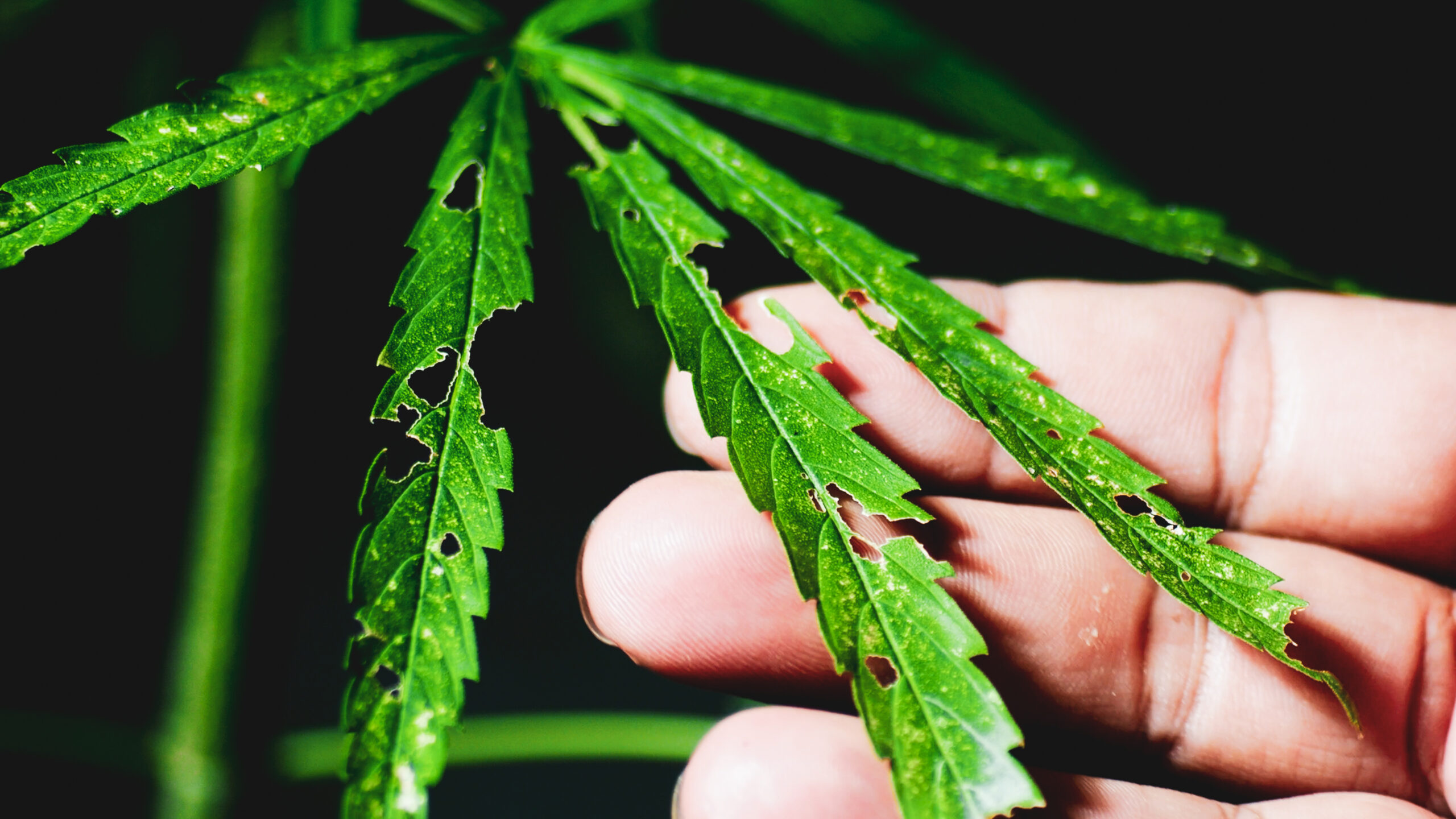
Integrated pest management separates detection from treatment. An aphid, thrips adult, spider mite, fungus gnat, or caterpillar may be important, but a single observation does not tell you the population size, distribution, damage rate, reproductive stage, or whether predators are already suppressing it.
EPA IPM guidance defines an action threshold as the point at which pest populations or conditions indicate that control action should be taken. Agricultural IPM uses the same logic: monitor first, identify the pest correctly, then intervene before unacceptable damage is reached. The key word is before. A threshold is not a permission slip to wait until the crop is badly damaged.
Action threshold
A pre-defined point at which monitoring data justify a management action. It may be based on pest density, percentage of sampling units infested, crop injury, rate of increase, crop stage, or a combination of these. It is not simply the first time a pest is seen.
Action threshold is not the same as economic injury level
Classic agricultural IPM distinguishes the economic injury level from the action threshold. The economic injury level is the pest density at which the value of crop loss equals the cost of control. The action threshold is normally reached earlier, allowing time to prevent the population from reaching that injury level.
Home cannabis growers rarely have enough research data to calculate a true economic injury level. They may not know the exact yield loss per mite, the value of each gram of flower, or the full cost of an intervention. That does not make thresholds useless. It means the practical goal is usually a provisional action threshold: a documented decision rule that is conservative, measurable, and improved with each crop cycle.
Important: A provisional threshold is not a scientific cannabis standard. It is your operating rule while better crop-specific evidence is unavailable. Record how the crop responds so the rule can be tightened or relaxed later.
Why immediate spraying can create a second problem
Spraying on sight can suppress a target pest, but it can also create unnecessary exposure, damage leaves or flowers, disrupt beneficial insects, accelerate resistance selection, or make the original diagnosis harder to interpret. A broad treatment may remove predators that were keeping aphids or mites below damaging levels. It may also leave the grower with no useful baseline for deciding whether the population was actually increasing.
The alternative is not inaction. Low-level findings can justify immediate non-spray actions such as isolation, physical removal, sanitation, environmental correction, exclusion, intensified scouting, or release of a compatible biological control. A threshold should tell you which level of response is justified, not reduce the decision to spray versus do nothing.
Treat a detection as new information
Confirm the pest, map where it is, measure its abundance or injury, and increase monitoring when the finding could develop quickly.
Turn every sighting into a blanket spray
One adult on a trap or one damaged leaf may not represent the whole crop. Spraying before you know the pattern can destroy useful evidence and beneficial organisms.
How a Pest Threshold Actually Works
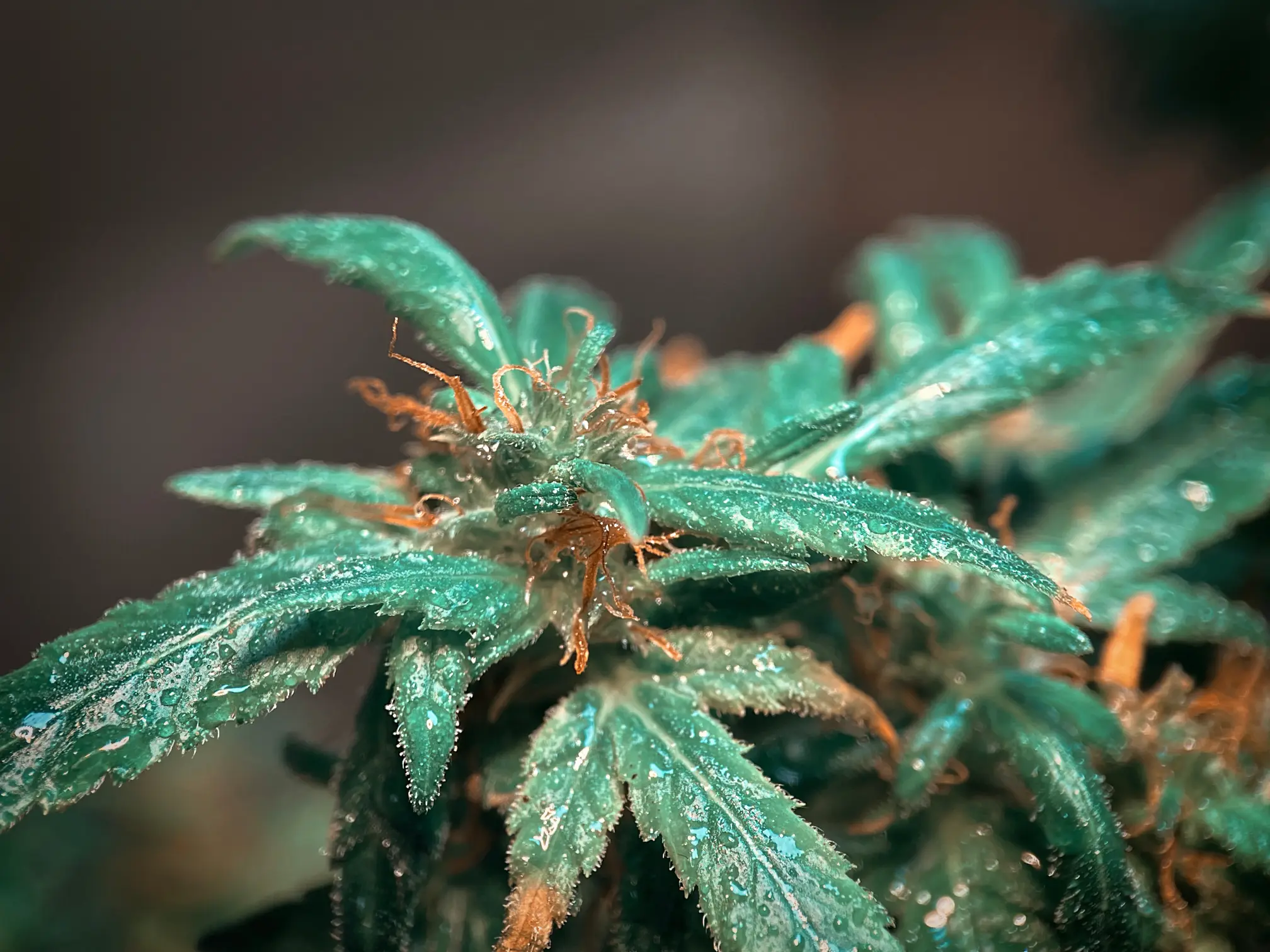
A useful threshold links four things: what you sample, what you count, what crop consequence you are trying to prevent, and what action follows when the threshold is crossed. If any one of those is vague, the number is difficult to repeat and almost impossible to compare from week to week.
Start with a stable sampling unit
Do not count pests one week per plant, the next week per sticky card, and the week after that per room. Choose a unit that matches the pest. Examples include leaves, growing tips, flowers, branches, root balls, sticky cards, or plants. Keep the unit and inspection method consistent enough that changes over time mean something.
For leaf-dwelling mites, a direct leaf inspection may be far more informative than a sticky card. For winged fungus gnats, adult cards can show trend and location while root-zone inspection answers a different question about larvae and moisture. The monitoring method must match the life stage that matters.
Separate pest abundance from crop injury
Pest count and plant damage are related, but they are not interchangeable. Ten insects on rapidly expanding vegetative foliage may produce a different consequence than the same count inside a dense late-flower canopy. Likewise, an old scarred leaf may remain damaged even after the population has been controlled.
Track at least two layers where practical: a pest metric and an injury metric. A simple system might record pests per inspected leaf plus percentage of leaves showing fresh feeding injury. Another might record positive plants plus number of new damaged flower sites. Together, the two measurements keep a single ambiguous count from driving the entire decision.
| Threshold component | What to define before you start |
|---|---|
| Pest identity | Species or useful pest group, life stage, and how confident you are in the identification. |
| Sampling unit | Leaf, tip, flower, plant, root sample, trap, or another unit that can be repeated consistently. |
| Pest metric | Count per unit, percentage of units positive, or another repeatable abundance measure. |
| Injury metric | Fresh stippling, distorted tips, chewed tissue, honeydew, webbing, frass, flower injury, or another crop consequence. |
| Trend | Increasing, stable, or declining across the same sampling method and comparable locations. |
| Beneficial activity | Predators, parasitoids, mummies, predatory mites, or other evidence that natural enemies are affecting the pest population. |
| Crop context | Growth stage, location, flower development, plant value, prior pest history, environment, and available control options. |
| Action rule | The specific monitoring result that changes your response from watch to intervene. |
Rate of change can matter more than the first count
A population that remains low across repeated checks is different from a population that doubles across comparable samples. This is why a threshold system needs trend data. The first observation gives you a baseline. The second and third comparable observations show whether the pest is being suppressed, holding steady, or moving toward unacceptable damage.
University Extension threshold systems often change with crop stage and natural enemy activity. In Maryland vegetable scouting guidance, for example, growers are sometimes told to wait and re-scout when a population approaches but has not reached a crop-specific threshold because natural enemies or unfavorable weather may reduce the population. Those crop-specific numbers should not be copied to cannabis, but the decision logic is highly transferable.
“If I find two spider mites, am I really supposed to wait?”
Question sent by: Ethan Brooks, via email.
No. You should respond immediately, but response does not automatically mean spraying. Confirm the mites, mark the plant, inspect neighboring plants, check for eggs and predators, improve any environmental condition favoring rapid increase, and shorten the scouting interval. If repeated samples show expansion, fresh injury, or spread into new plants, escalate according to your written action rule.
Sticky-card counts are a monitoring index, not a universal crop threshold
Flying-pest traps can be excellent for detecting change, but card catches depend on color, height, position, airflow, pest behavior, crop architecture, and card age. A trap count can become a useful internal threshold only when the trap method is standardized and correlated with direct plant findings. A card number copied from another greenhouse is not automatically meaningful in your room.
This distinction is especially important in cannabis because some key pests, including mites, are better measured directly on plant tissue. A threshold should be built around the biology of the target, not around whichever monitoring tool is easiest to count.
Variables That Change the Threshold
Thresholds are not permanent constants. Even well-established crop thresholds can change with crop stage, plant size, weather, beneficial populations, market use, and management goals. Cannabis adds further variation because production can range from a few outdoor plants to high-density indoor mother rooms and controlled flowering facilities.
Pest identity changes the urgency
A chewing caterpillar inside a flower, a few adult fungus gnats above damp media, and several predatory mites on a leaf should never trigger the same response. Before assigning a threshold, confirm whether the organism is damaging, neutral, beneficial, or still uncertain.
Some pests have life stages that hide from the monitoring method. Adult fungus gnats on cards indicate flight activity, but larval pressure is in the media. Thrips adults may appear on traps while larvae remain on plant tissue. Spider mite eggs can be abundant even when motile mites are still easy to miss. The threshold metric should target the stage that predicts future damage, not just the easiest stage to see.
Crop stage can move the acceptable threshold
Extension threshold examples from other crops often become lower or higher as plants move from seedlings to vegetative growth, flowering, fruiting, or harvest. The reason is biological: the same injury has different consequences at different stages, and the crop’s ability to compensate changes over time.
For cannabis, do not invent a stage-specific insect number without evidence. Instead, explicitly lower your tolerance when the consequence of delayed control becomes harder to reverse. A mother plant that could distribute a pest through clones, a small propagation area where spread would multiply rapidly, or dense flowering tissue where intervention options are limited can justify a more conservative action rule than a vigorous outdoor vegetative plant.
Do not copy a vegetable threshold into cannabis
A threshold such as mites per leaflet, insects per sweep, or percentage of plants infested is validated for a particular crop, pest, stage, sampling method, and economic context. Use those examples to understand threshold design, not as cannabis treatment numbers.
Indoor and outdoor cannabis may tolerate the same pest differently
The hemp IPM literature shows this clearly. Onion thrips can cause serious foliage injury during indoor production yet may fail to reach damaging populations outdoors where plants grow rapidly and environmental forces and natural enemies differ. Two-spotted spider mite is also emphasized as a major problem in indoor or greenhouse phases. This is exactly why a threshold cannot be divorced from the grow system.
Indoor crops remove rainfall and many outdoor natural controls, while warm stable environments can accelerate reproduction. Outdoor crops may gain predators and weather suppression but face influx from surrounding vegetation. A useful threshold records the production system as part of the decision, not as background trivia.
Beneficial insects can change the action point
Natural enemies are part of the pest population equation. If predators or parasitoids are increasing while the target pest is stable or declining, immediate broad-spectrum treatment may destroy the very control keeping the population below damaging levels. Extension programs sometimes explicitly use different treatment thresholds depending on whether predators are present.
Do not reduce this to a rigid predator-to-pest ratio unless that ratio has been validated for your crop and beneficial species. Instead, record beneficial presence, evidence of predation or parasitism, and whether pest trend changes after beneficials appear or are released.
Threshold modifier
A factor that changes how much pest pressure you are willing to tolerate before escalating. Crop stage, rate of increase, beneficial activity, propagation risk, treatment limitations, and flower contamination risk are all possible modifiers.
Environment changes population growth
Heat, humidity, rainfall, drought, canopy density, irrigation, weeds, and airflow can change how quickly a pest population grows or how much injury the plant can tolerate. A count that was stable last week may become less reassuring when the environment shifts into conditions that favor rapid reproduction.
Do not respond by creating a universal temperature trigger. Instead, use environment as a reason to change scouting frequency and confidence. When conditions favor the confirmed pest, shorten the time before the next comparable check. When unfavorable weather or strong natural enemy activity suppresses it, document the decline rather than assuming the original count still represents current pressure.
Available controls matter before the threshold is crossed
A threshold must leave enough time for the chosen response to work. Physical removal can be immediate. A beneficial release may need time to establish. A crop-legal pesticide may have restrictions related to plant stage, pollinators, re-entry, residues, or jurisdiction. Waiting until damage is severe can leave only aggressive options.
Master Advice: The action threshold should be early enough for your slowest acceptable control method to work before the crop reaches unacceptable injury.
Build Your Threshold: A Repeatable Workflow
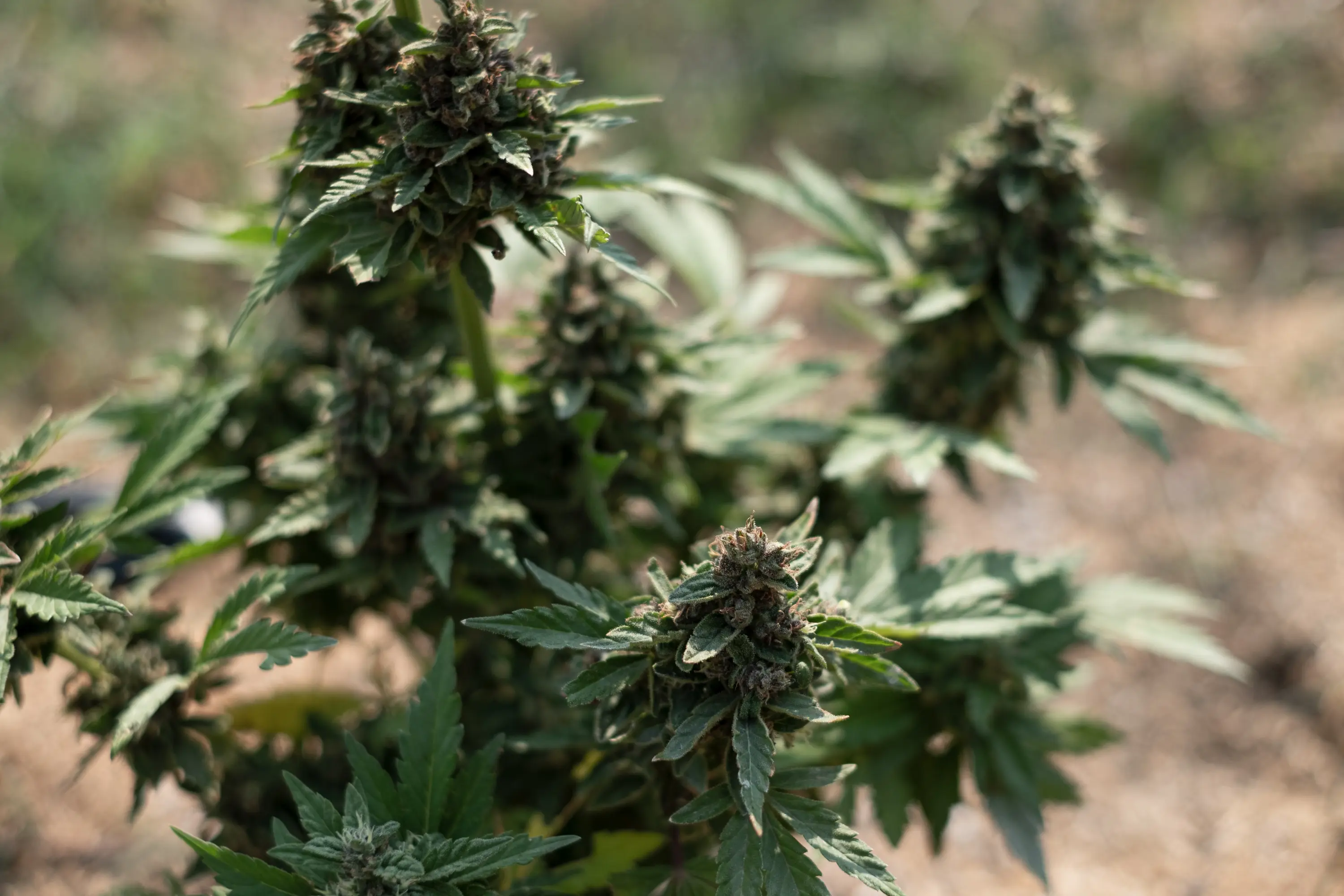
The strongest home-grow threshold is not a single number invented on day one. It is a small monitoring system that produces comparable data. The procedure below lets you begin conservatively and then improve the threshold with your own crop history.
Step 1: Define the pest question before you count
Write the exact question. “Do I have bugs?” is too broad. Better questions include: Are spider mites expanding beyond one hotspot? Are aphid colonies establishing on new growth? Are thrips larvae increasing on young leaves? Are fungus gnat adults increasing while the root zone remains wet?
If identity is uncertain, threshold building pauses at diagnosis. Photograph the organism or injury, use magnification, compare plant parts, and escalate to qualified identification when needed. Do not build a numeric threshold around an unidentified “tiny bug.”
Step 2: Choose one repeatable sampling unit
Pick a unit that can be examined the same way each time. For a small garden, that may be a defined number of leaves from each plant zone. For a larger room, it may be sentinel plants plus representative plants across benches or irrigation zones. The exact sample count depends on garden size and acceptable uncertainty, so there is no universal cannabis sample number.
The rule is consistency. If you inspect upper leaves on one visit and lower leaves on the next, a change in count may reflect sampling location rather than pest population.
Step 3: Map the crop instead of averaging away hotspots
Record where each positive sample occurs. Divide the grow into meaningful zones such as room, bench, row, cultivar block, irrigation zone, or outdoor section. A crop-wide average can hide a rapidly expanding hotspot.
Spatial pattern also changes the response. A localized colony may justify physical removal, spot treatment, beneficial release, or quarantine while the rest of the crop remains below threshold. A scattered population on many plants may require a system-level response even if the average pest count per leaf is not dramatic.
Step 4: Record at least three measurements
A practical threshold sheet should record:
- Pest pressure: count per sampling unit or percentage of units positive.
- Fresh injury: new feeding marks, distortion, webbing, honeydew, frass, chewing, or other current damage.
- Distribution: one hotspot, several zones, or crop-wide presence.
Add beneficial activity and crop stage whenever they can change the decision. For percentage positive, use the same simple calculation every visit: positive sampling units divided by total sampling units, multiplied by 100. The percentage is not automatically the threshold. It is a repeatable metric from which your threshold can be built.
“Should I use pest count or percentage of plants affected?”
Question sent by: Julia Schneider, via contact form.
Use the metric that best predicts the problem, and often record both. Count per leaf can show local density while percentage of plants positive shows spread. If five heavily infested leaves all come from one plant, that is a different management problem from five lightly infested leaves on five plants.
Step 5: Create response bands before the next inspection
Do not wait until the next scouting visit to decide what the numbers mean. Write three operational bands now:
- Watch: confirmed pest is present, but distribution and fresh injury remain within the level you can tolerate. Increase observation and use preventive or non-disruptive controls where appropriate.
- Act: pest abundance, spread, injury, or trend crosses the point where waiting risks unacceptable crop damage or leaves too little time for the preferred control to work.
- Escalate: rapid spread, severe flower contamination, propagation risk, failed prior control, or another consequence means the existing response is no longer adequate.
These bands can initially be qualitative. Over several crop cycles, convert them into more precise internal numbers only when your records show a relationship between the monitored metric and actual crop outcome.
Build numbers from repeated crop history
Use the same sampling method and record what happened after each count. Your threshold becomes stronger when it predicts damage and response consistently.
Choose a number because it sounds precise
“Three mites per leaf” is not better than a qualitative threshold if the number has no cannabis-specific evidence and the sampling method is inconsistent.
Step 6: Add trend to the threshold
The same count can produce two different decisions depending on direction. A pest population that falls after predators appear may remain in the watch band. The same count after two consecutive increases may justify action because the control window is closing.
Record the previous comparable result beside the current result. Use simple labels such as rising, stable, or falling when exact growth-rate calculations are not useful. The important part is to compare like with like.
Step 7: Match the response to the threshold that was crossed
Crossing an action threshold means take management action, not automatically apply pesticide. The response can include removing a localized source, correcting irrigation that supports fungus gnats, excluding incoming insects, pruning a heavily colonized tip, releasing biological control, increasing sanitation, spot treating where legal and appropriate, or using a crop-legal chemical control when the evidence and plant stage justify it.
For broader background on identification, prevention, and pest management choices, use Weedth’s Outdoor Growing Basics rather than expanding this resource into a complete outdoor IPM guide. Indoor growers can apply the same threshold framework alongside the quarantine and sanitation system in Indoor Growing Basics.
Step 8: Decide the recheck before you intervene
Write down when and where you will inspect again before you act. The recheck should be soon enough to detect failure before damage becomes unacceptable. Faster pest development, warm conditions, a high-value propagation area, or a rapidly expanding hotspot usually justify a shorter interval. Slower problems may allow a longer interval.
Do not use a universal “recheck in three days” rule. The correct timing depends on pest biology, crop stage, treatment mode of action, label directions, and how quickly damage can become irreversible.
| Monitoring result | Possible interpretation | How to confirm | Corrective action | Verification |
|---|---|---|---|---|
| One localized positive plant | Early hotspot or isolated introduction | Inspect neighboring plants and repeat the same plant-level sample | Contain, remove local source, improve sanitation, use targeted control if justified | No expansion beyond the marked zone and no increase in fresh injury |
| Low counts, increasing each check | Population growth before obvious crop-wide damage | Repeat the same unit and confirm pest life stages | Move from watch to action before preferred controls become too slow | Counts stabilize or decline after intervention |
| Pest count stable, injury increasing | Sampling may miss damaging stages or existing density is still injurious | Inspect different relevant plant parts and verify new versus old injury | Reassess sampling method and escalate if fresh injury is unacceptable | New injury stops expanding even if old scars remain |
| Pest present with strong beneficial activity | Natural enemies may be suppressing growth | Record predators, parasitoids, mummies, or predation signs and re-scout | Protect compatible beneficials; avoid unnecessary broad-spectrum treatment | Pest trend holds or falls while beneficial activity persists |
| Trap catch rises but plant checks remain negative | Immigration, trap-position effect, or early signal | Check card placement and intensify direct crop inspection | Do not spray from trap count alone; find the crop source or confirm absence | Direct plant evidence either appears and is managed or trap trend resolves |
Field Advice: If your action rule cannot be written in one or two sentences, it is probably too vague to reproduce. A threshold should let another careful grower inspect the same crop and understand why you acted.
Common Threshold Mistakes and Misleading Shortcuts
Mistake 1: Treating detection as proof of damaging pressure
The first sighting is evidence that monitoring should intensify. It is not automatically evidence that crop-wide treatment is justified. Confirm the pest, distribution, and injury first unless the organism or pathway represents an unusually high-risk situation that your legal or biosecurity program requires you to act on immediately.
Mistake 2: Copying a threshold from another crop
Extension guides can provide excellent examples of how thresholds work. They also show why copying numbers is dangerous. Spider mite thresholds can change dramatically between crops and even between growth stages of the same crop. Some programs also modify the action point when predators are present.
The transferable lesson is the structure: consistent sampling, crop-stage adjustment, natural-enemy observation, and re-scouting. The transferable lesson is not the number itself.
Mistake 3: Using one threshold for every cultivar and room
Genetics, architecture, vigor, leaf density, flower structure, and growth rate can change how much injury is visible and how easy the crop is to inspect or treat. Room architecture and microclimate can create recurring hotspots. Start with one facility-wide framework, but record cultivar and zone so repeated differences become visible.
Mistake 4: Ignoring the beneficial population
A broad spray can make a low pest count look like a success today while removing predators that were suppressing the next generation. Biological control works best when introduced before a pest population is overwhelming. New York hemp IPM guidance, for example, notes predatory mites can suppress two-spotted spider mite but need to be deployed before pest numbers become too high. That does not provide a universal cannabis release threshold, but it reinforces the need for early monitoring.
“If I already released predators, should I raise my pest threshold?”
Question sent by: MapleGrower, via Facebook page.
Not automatically. Beneficial activity is a modifier, not permission to ignore rising damage. Keep the same sampling method and watch whether pest counts and fresh injury stabilize or decline. If the pest keeps expanding, the release may be too late, too small, poorly matched, or limited by environmental conditions.
Mistake 5: Using sticky cards as the only threshold
Cards are strongest when they show spatial and temporal trends in flying adults. They are weaker when used as proof of plant infestation or as a universal pesticide trigger. Pair trap data with direct crop inspection, especially when larvae, mites, eggs, or root-zone stages cause the actual injury.
Mistake 6: Changing the sampling method after treatment
If you inspect twice as many leaves after treatment, change card positions, or move from hotspot plants to random plants, you can create a false appearance of success or failure. Post-treatment verification should reuse the same core sampling units and marked zones whenever practical.
Mistake 7: Letting zero tolerance become calendar spraying
Some crop situations legitimately demand very low tolerance, especially propagation stock or pests that are difficult to remove once established. But “low tolerance” still needs a decision system. Preventive exclusion, quarantine, sanitation, clean stock, and biological control can be part of that system. Repeated pesticide applications without monitoring are not a threshold program.
Thresholds do not override pesticide law or flower-stage safety
Crossing your internal action threshold does not make an otherwise illegal or unsuitable pesticide use acceptable. Product legality, label directions, crop stage, worker safety, pollinator risk, residues, and local rules still govern the available response.
Mistake 8: Treating old injury as treatment failure
Old stippling, distorted leaves, chewed tissue, and scars usually do not disappear after a successful intervention. Verification should focus on new growth, fresh feeding, live pest stages, spread to new sampling units, and the trajectory of the population.
Verify the Decision After You Act

A threshold system is incomplete until you test whether crossing it and acting actually improved the crop. The reinspection closes the loop. Without it, you cannot tell whether the threshold was too late, too early, or correctly placed.
Return to the same marked locations
Reinspect the same sentinel plants, hotspot plants, and representative zones. Keep the same sampling unit. If the original decision used pests per leaf plus percentage of plants positive, repeat those metrics rather than switching to a casual visual scan.
Measure population direction, not just presence
After intervention, the pest may still be present. The key question is whether live damaging stages, fresh injury, and spatial spread are decreasing. A biological treatment may work more slowly than a contact pesticide. A physical removal may eliminate one hotspot but reveal another. Interpret the result according to the method used.
Check beneficial survival
If natural enemies are part of the system, include them in the reinspection. A treatment that suppresses the target but destroys the beneficial population can create rebound risk. Record whether predators, parasitoids, or predatory mites remain active and whether their presence corresponds with a falling pest trend.
Look for new injury, not cosmetic recovery
Old damage is history. Mark its edge or photograph it with date and location. Success is shown when new leaves, tips, or flowers remain cleaner and existing injury stops advancing. If fresh injury continues despite falling counts, reconsider whether you are sampling the correct life stage or whether another cause is involved.
Decide whether the threshold itself needs revision
At the end of the episode, ask what happened at the threshold you chose. If you repeatedly act at a certain level and damage is already unacceptable, the threshold is too high or the response is too slow. If you repeatedly act and later records show the population would have declined without crop consequence, the threshold may be too low or the monitoring rule may need a beneficial-insect modifier.
Do not revise the threshold from one unusual event. Build a season-to-season record. Your goal is a decision rule that reliably protects crop quality while avoiding interventions that add no measurable benefit.
Remember: A good threshold predicts when action is useful. It is not judged by how often it tells you to spray.
Use a failed threshold as diagnostic information
If a population crosses the threshold repeatedly despite intervention, the problem may not be the number. Investigate pest identity, hidden life stages, pesticide resistance, incomplete coverage, reintroduction from clones or weeds, environmental conditions, tool and worker movement, and incompatible biological controls.
If the identity itself remains uncertain, escalation to a qualified diagnostic service may be more useful than increasing treatment intensity. The broader principle throughout Weedth’s diagnostic system is the same: measurement should narrow the next decision, not merely justify another input.
Final Pest Threshold Checklist
Use this checklist before turning a pest observation into a pesticide decision. The sequence matters because each step reduces uncertainty in the next.
Before you spray because you saw a pest
- Confirm the pest or useful pest group instead of treating from damage alone.
- Define one repeatable sampling unit that matches the pest’s damaging life stage.
- Record pest abundance or percentage of sampling units positive.
- Record fresh crop injury separately from pest count.
- Map hotspots so a crop-wide average does not hide local expansion.
- Record beneficial insects, predatory mites, parasitoids, or other natural enemy activity.
- Note crop stage, grow system, cultivar or zone, and environmental conditions that may change risk.
- Compare the current result with the previous comparable sample.
- Use written Watch, Act, and Escalate bands rather than deciding emotionally at each inspection.
- Choose the least disruptive effective response that is legal and suitable for the crop stage.
- Set the reinspection date and locations before applying the intervention.
- Verify success with the same core measurements and fresh-injury check.
- Revise the threshold only when repeated crop records show it consistently acts too early or too late.
The most useful pest threshold is not necessarily the most complicated one. It is the one you can repeat accurately enough to detect change, act before unacceptable damage, and learn from the result. Cannabis growers currently have fewer validated pest thresholds than many established agricultural crops, so transparent uncertainty is better than false precision.
Build the record first. When the same pest returns, you will no longer be deciding from a single sighting. You will know where it appeared, how fast it increased, how much injury followed, which beneficials were present, what response worked, and whether the previous action point was early enough. That is the difference between spraying on sight and managing a pest population.
Share this article
A quick overview of the topics covered in this article.
Follow us
Latest articles
September 24, 2026
September 24, 2026
September 24, 2026
September 24, 2026