FIMing Explained Without Yield Promises
FIMing changes the growing tip of a vegetative cannabis plant without making the same complete apex-removal cut used in conventional topping. The intention is to disturb the leading shoot and give nearby growing points an opportunity to develop. What follows is less predictable than the familiar diagrams suggest: one tip may continue, several shoots may compete, nearby axillary branches may accelerate, or the apex may be damaged without producing a useful new structure.
The reason to consider FIMing is a specific canopy problem, not a promise of four colas or more harvest weight. If a healthy outdoor plant is becoming too dominated by one leader and you have time to evaluate a changed branching pattern, a small, deliberate tip intervention may be worth considering. If the plant already fits its space, is stressed, or is approaching flower formation, leaving the growing tip alone may be the more defensible decision.
This resource explains what the technique is thought to do, how to assess the plant before a cut, how to observe the response, and when to stop. The scientific boundary matters: cannabis studies establish several effects of complete apical pruning, but they do not establish a universal FIMing method, shoot count, recovery period, or yield advantage. For the broader training context, see the outdoor cannabis growing guide.
What FIMing Changes and What Remains Uncertain
A cannabis stem extends from a small growing region at its tip. That region produces new leaves and nodes while interacting with the axillary buds situated where leaves meet the stem. A vigorous leading shoot often dominates the plant’s architecture, even when the lower branches are healthy. FIMing aims to disturb that leader while retaining more of the tip region than a conventional topping cut.
FIMing
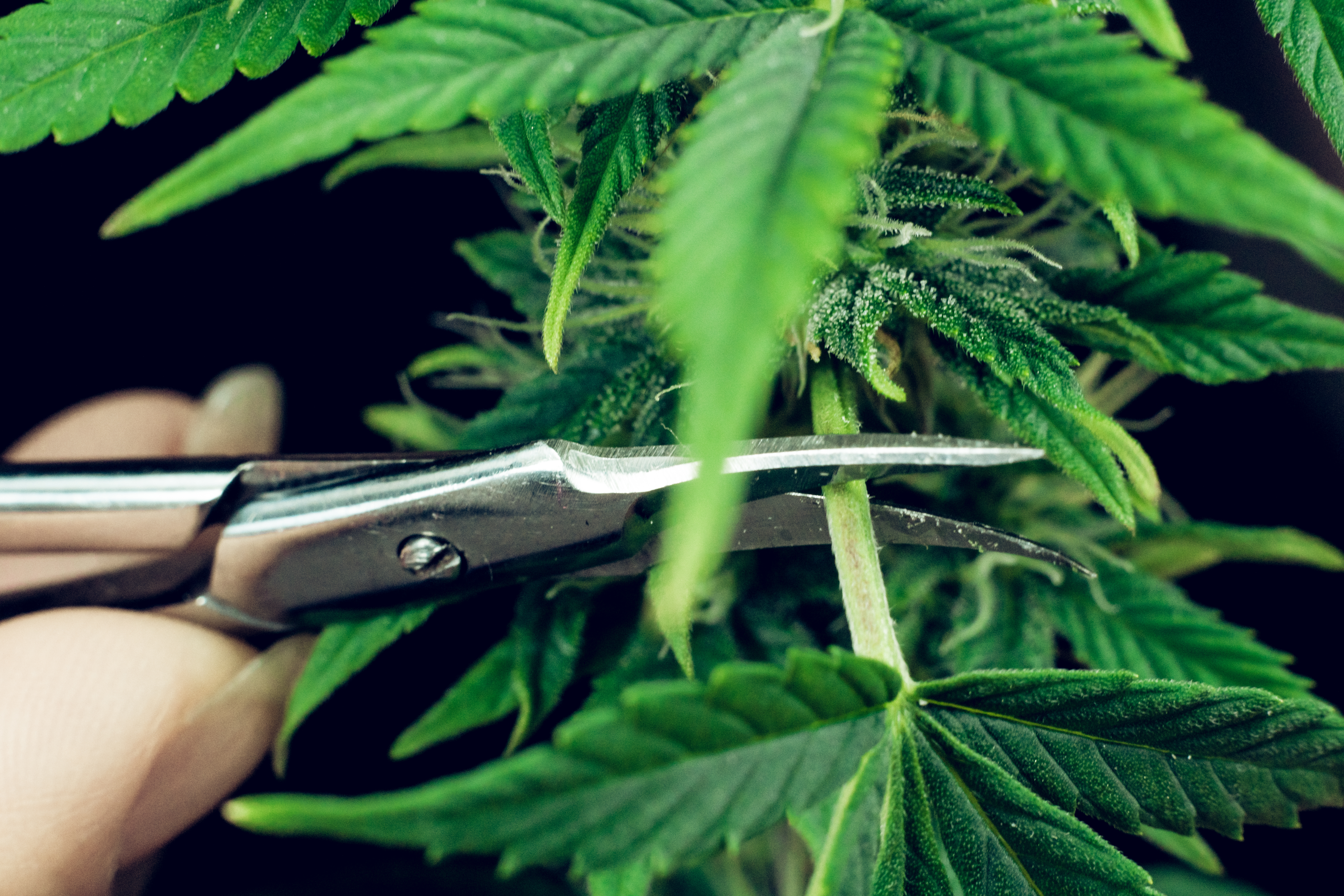
A grower term for a partial cut into very young terminal growth rather than removal of the entire shoot tip above a developed node. The resulting damage can alter the leading shoot and neighboring bud development. The exact outcome is not defined by a fixed number of new branches.
FIMing is not the same cut as topping
In topping, a grower removes the terminal apex and leaves established axillary buds below the cut to compete for leadership. In FIMing, the intended cut passes through young growth at or near the terminal tip. Some developing tissue is left behind. The cut may damage the original meristem, remove part of the emerging leaves, or affect a combination of nearby growing structures. Without detailed inspection, you cannot assume which small structures were affected.
This distinction explains both the attraction and the weakness of FIMing. The intervention may interrupt the original leader without removing as much stem tissue. Yet it is less anatomically clear than a complete tip removal. A clean-looking cut can leave the old apex functional, while a rougher one may injure it completely. The outcome must be read from later growth, not inferred from the appearance of the wound alone.
Apical dominance involves more than an energy switch
Growth of side buds is controlled by interacting signals involving auxin, cytokinin, strigolactones, sugar availability, light, and competition among growing points. Complete apical removal is well known to change this balance. Partial tip damage may alter it too, but the magnitude of the effect depends on exactly which tissue remains functional.
Do not describe the plant as dividing a fixed amount of energy into four equal shares. A stronger branch may capture more light and extend faster than its neighbors. A lower lateral that was already expanding before FIMing may become prominent for reasons unrelated to the wound. The practical question is which shoots are growing after the cut compared with the plant’s own baseline.
Important: More visible tips do not prove that the cut created those tips. Distinguish newly activated growth from axillary branches that were already present before FIMing.
Four new colas is a story, not a guaranteed response
Grower descriptions frequently present FIMing as a way to create four or more main shoots from one cut. That is not a reproducible number established by controlled cannabis FIM trials. Some plants may display several vigorous shoots around the upper crown, but the number and quality of those shoots depend on the original tip, nearby nodes, cultivar, and conditions after the intervention.
A cola is also a later flowering structure, not simply a small vegetative bud counted immediately after pruning. Four tiny growth points can become four uneven branches, two dominant branches with weak companions, or a congested knot. Count developing leaders, then evaluate their actual position, vigor, and accessibility as the plant grows.
Define a canopy goal
Use the technique only when redistributing one strong leader could improve the plant’s height, branch layout, or inspection access.
Count imaginary future colas
Do not assume a certain number of cut leaves becomes the same number of productive flowering branches.
Outdoors, greater width has a cost
Outdoor sunlight moves across the garden. A naturally upright plant can receive useful light from different directions through the day. A flatter, broader structure is not automatically superior. If FIMing activates several upper shoots, the new crown can become wide, crowded, or top-heavy. Neighboring plants, fences, paths, prevailing wind, and available support determine whether that shape is helpful.
Compare the expected canopy footprint with the garden before making the cut. A plant that can widen safely, keep airflow between branches, and remain accessible may be a reasonable candidate. If the plant already fills its allotted space, additional competing tops could make pest inspection and late-flower management harder rather than easier.
FIMing is a technique, not a necessary phase
An untouched apical shoot is not a defect. Some genetics naturally make a balanced set of laterals, especially with strong outdoor light and generous root volume. If the plant has good access and a stable structure, there may be no compelling reason to interrupt a healthy apex. Observe the plant’s existing branch map first, then choose whether an intervention solves a visible problem.
“If I FIM the top, will I definitely get four main branches?”
Question sent by: Ethan Brooks, via email.
No. Partial damage to the tip does not specify an exact number of functional meristems or ensure equal growth. Photograph the original apex and nearby nodes, then identify which shoots actually extend. Judge the result by usable branch structure rather than a four-shoot promise.
Timing and Plant Condition Before the Cut
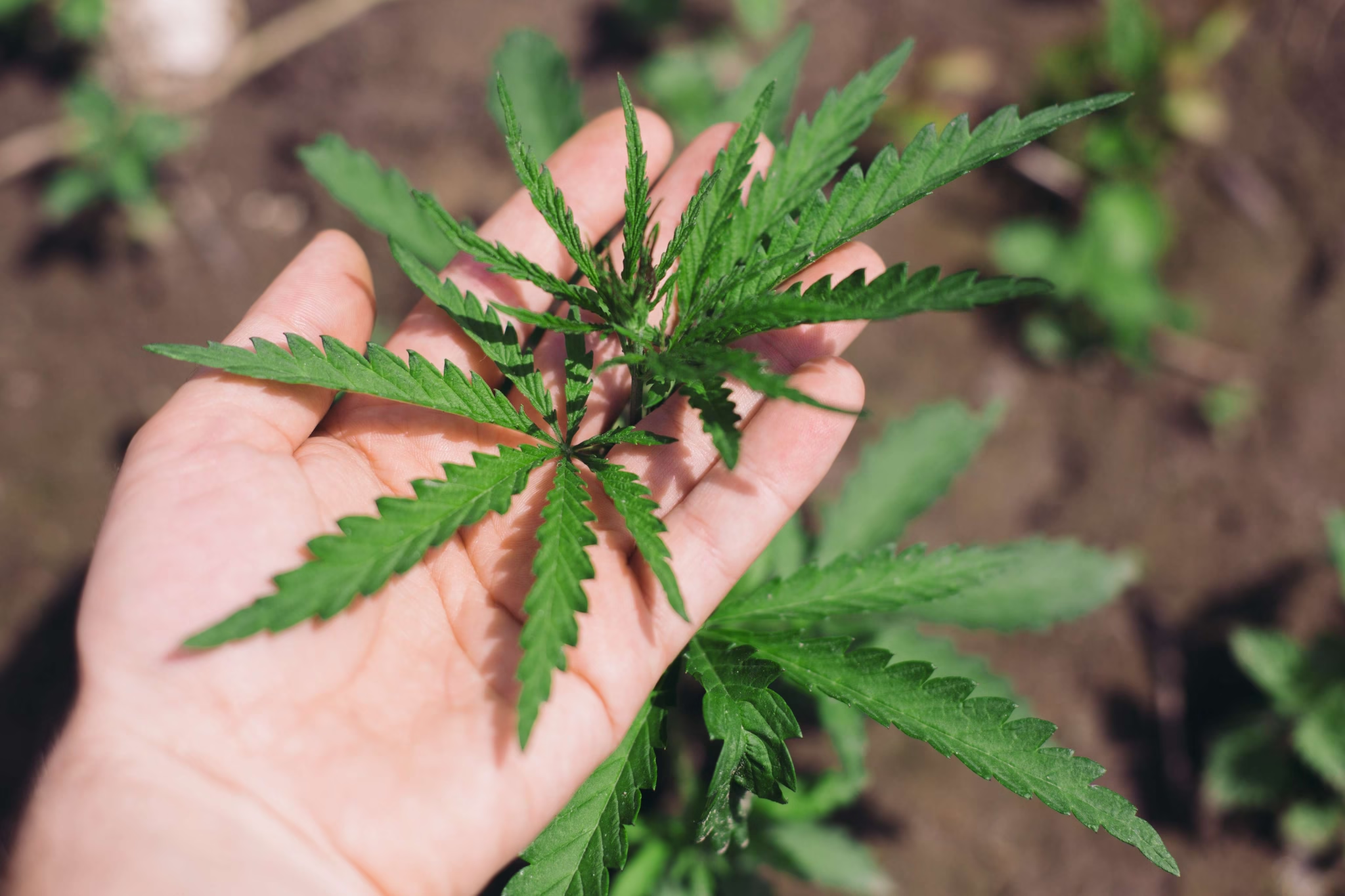
FIMing is easiest to evaluate when the plant is actively vegetating, its terminal growth is still soft, and there is enough time for the new structure to become clear before flower development takes priority. This is not a universal calendar date or a magic node count. The right decision depends on the actual plant and its remaining season.
Choose active, established growth rather than a fixed age
Look for a plant that has resumed growth after establishment or transplanting, produces new leaves at a consistent pace, and holds normal turgor through its usual weather cycle. Its branches should be extending rather than sitting motionless after a correction. A root zone that alternates between drought and saturation is a reason to stabilize irrigation first, not a reason to impose another stress.
Many grower instructions use a fixed age or an early-node recipe. Those values may describe a familiar home method, but no controlled FIMing evidence establishes one universal cannabis node or plant age. A young plant with few developed laterals has little structural reserve. A very mature plant may have an inaccessible or rigid upper tip and limited time left to benefit. Assess growth state and future structure instead of counting toward a ritual number.
Check root-zone behavior before blaming the tip
Slow apical extension can reflect root restriction, poor drainage, drought, nutrient imbalance, cold conditions, or disease rather than excessive apical dominance. If the plant has unhealthy new growth, drooping foliage, an unusual watering pattern, or patchy decline, investigate that problem first. Cutting an already stalled apex will not make the underlying root or environmental cause disappear.
The useful baseline is simple: record the latest healthy shoot extension, note plant condition and recent weather, and inspect the root-zone behavior you already monitor. If those observations are abnormal, postpone high-stress training. A consistent plant response is necessary if you want to attribute later changes to FIMing.
Read flowering transition instead of relying on a date
Outdoor photoperiod plants do not all move toward flowering on one date. Genetics, latitude, daylight pattern, and local conditions affect the visible transition. Once floral development is underway, removing or damaging future flower-bearing tips costs tissue and may create an awkward cluster precisely when the plant should be stabilizing its structure.
Look for changes in the terminal and lateral growth pattern, developing reproductive sites, and the broader seasonal trend. The absence of large flowers does not prove that a plant has a long vegetative runway left. If the transition is approaching and the goal is only to manage height, it is usually more sensible to protect and support existing growth than to create a new apical wound.
Do not treat early flower formation as spare training time
FIMing has no validated universal pre-flower cutoff or recovery duration. A plant already committing to flowers may not convert the cut into a useful, mature branch arrangement. Stop when there is insufficient vegetative time to inspect and support the response.
Weather changes the cost of a fresh wound
Do not create a tip wound as a severe storm approaches or while the plant is already recovering from wind damage, heat, frost, or persistent wet conditions. A wet canopy is also a poor setting for unnecessary tool movement between plants. The question is not whether a dry sunny hour guarantees disease freedom. It is whether you can make a controlled cut on an otherwise stable plant and keep the site accessible for follow-up.
Review the forecast, recent water availability, and your ability to revisit the plant. If access will be difficult for several days or support is not ready for the widened canopy, postpone the experiment. Outdoor training should fit the season and the gardener’s ability to verify the result.
Photoperiod and autoflowering plants have different recovery windows
Photoperiod plants that remain vegetative can often offer a longer observation window than automatic-flowering plants whose development proceeds on a shorter genetic schedule. This is a timing distinction, not evidence that all autoflowers fail after FIMing or that all photoperiod plants tolerate it. There is no reliable universal FIM protocol that eliminates the risk of losing valuable developmental time in an autoflower.
When the growth window is short, the more defensible default is to avoid optional apex damage unless there is a specific structural need and the grower accepts an uncertain outcome. Non-cutting support or gentle repositioning may address access or leaning without making the same wound, but those methods have their own limits and are not promised yield alternatives.
Field Advice: If you cannot describe what a successful FIM response would look like on this plant, do not cut yet. Photograph the natural crown, note the existing laterals, and decide what structural change would justify the risk.
The FIM Method and a Repeatable Observation Record
A useful procedure starts by reducing uncertainty before the blade reaches the plant. Identify the exact terminal growing tip, map the two or more developed nodes below it, and inspect the health of the tissue. The operation concerns the small, actively growing crown. It is not a cut through the mature main stem, a mass removal of fan leaves, or a reason to strip nearby branches.
Step 1: Map the top before you touch it
Take one photograph of the whole plant and one clear photograph of the upper crown. From the side, identify the main leader and the existing axillary shoots. From above, locate the tightly emerging terminal leaves and determine whether the growing tip can be reached without pulling or twisting a mature branch. Note any lateral already competing for dominance.
Write down the goal in practical terms: reduce the lead of one upright shoot, create a more accessible upper canopy, or encourage nearby side shoots to share the plant’s upper structure. If the problem is instead a leaning pot, unsupported long branch, or blocked access caused by another plant, fix that problem directly. An apical cut will not repair an unstable support system.
Step 2: Confirm clean tools and a controllable cut
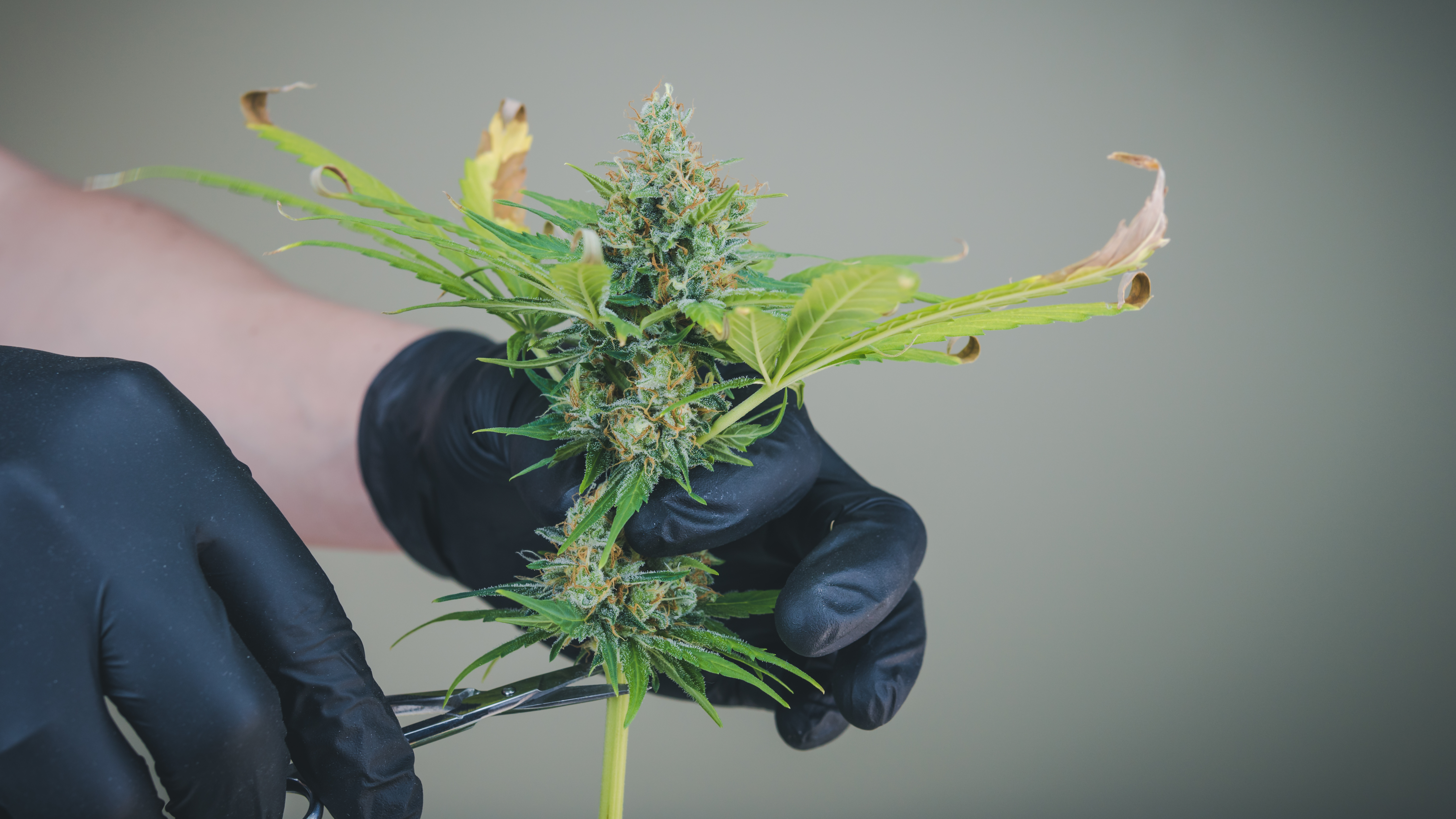
Use a sharp, clean, controllable cutting tool appropriate to the tiny amount of tissue involved. Blunt scissors may crush the apex while oversized pruners obscure the exact cut location. Support the shoot lightly without squeezing or rolling the developing leaves. Arrange enough light to see the growing region without exposing the plant to unsafe equipment or working through wet, dirty foliage.
Remove visible sap and debris from reusable tools before applying a disinfectant according to a validated protocol appropriate to the suspected pathogen and tool material. A momentary wipe is not proof that every plant pathogen or viroid has been inactivated. If a plant is suspected of carrying a transmissible problem, stop elective pruning and follow a separate containment and diagnostic workflow. Do not move straight from a suspect plant to healthy ones with the same untreated blade.
Tip: A sharp pair of small scissors lets you see the cut, but visibility matters more than the tool’s appearance. If you cannot distinguish the tiny terminal leaves from the developed node below, postpone the cut.
Step 3: Make a partial terminal-growth cut, not a node cut
FIMing is conventionally described as trimming through part of the cluster of very young emerging growth while leaving some of the tip region behind. Bring the tender terminal cluster into view and remove a portion of that emerging tissue with one deliberate motion. Avoid cutting through the established node, splitting the main stem, or taking several extra bites to chase a particular silhouette.
You may encounter an instruction to remove precisely 75 percent of the tip. That number is a grower convention, not a cannabis-validated biological dose. Folded leaves, tip orientation, leaf emergence, and cultivar morphology make a universal percentage impossible to verify by eye. What matters for documentation is that this was a partial terminal intervention and that you record what was actually removed and what remained.
Do not push a blade deeper after the first cut merely because the wound does not resemble a photograph online. You cannot know the eventual branching pattern immediately. Further cuts add damage without improving diagnostic certainty. If you accidentally remove the entire apex, record it honestly as a complete or near-complete apical cut rather than labeling the plant a successful FIM.
Do not keep trimming until the top resembles a target shape
FIMing has no scientifically established visual endpoint that guarantees four productive shoots. Repeated corrective snips can turn an uncertain partial cut into uncontrolled apex removal and damaged developing leaves. Stop after the planned intervention and observe growth.
Step 4: Leave nearby leaves and branches alone
Do not combine the tip cut with broad defoliation, aggressive tie-downs, branch removal, root disturbance, or a new nutrient experiment on the same visit. The plant needs functioning leaves and a stable root zone while its shoot architecture adjusts. Stacking interventions also makes the result impossible to interpret. If the crown becomes wider later, deal with the actual spacing problem then.
Collect the trimmed tip, keep it off flower sites and potting media, and clean the work area. There is no need for improvised wound paint, honey, oils, powders, or sealing products on a small clean tip injury. Such additions are not validated universal healing treatments and introduce avoidable material onto the plant.
Step 5: Record what happened before judging success
Photograph the cut crown from the same angle used for the baseline. Include a second view showing the surrounding upper nodes and label the plant and date. Note whether the original terminal point appears intact, partly damaged, or completely removed. Record plant condition and the weather shortly after the procedure, especially if a heatwave or storm interrupts the observation period.
On later visits, return to those same viewpoints and identify the strongest extending leaders. Measure change with consistent observations such as branch extension, the number of functional upper shoots, canopy height, and the extent to which new branches obstruct or improve access. Counting every tiny green point at the wound will exaggerate the result.
| Record | What to capture and why it matters |
|---|---|
| Before-cut crown | Mark the old leader, nearby developed nodes, and pre-existing side shoots so later growth is not incorrectly credited to the cut. |
| Exact intervention | Photograph the wound and describe a partial cut, complete apex loss, or uncertain damage without assuming its anatomical effect. |
| Plant condition | Record turgor, active shoot growth, root-zone behavior, and recent stressors that could affect recovery independently of FIMing. |
| Growth response | Track which shoots extend, whether the original leader continues, and whether new competition creates a useful or congested crown. |
| Outdoor fit | Check branch clearance, access, widening, tie needs, and exposure to wind or neighboring plants. |
| End-of-season result | Compare harvestable flower quality, structural problems, and management time only against reasonably comparable plants or prior records. |
What a truly repeatable comparison would require
If you want to learn rather than simply try a cut, compare plants with similar genetics, propagation history, initial size, root volume, soil, light, watering, and exposure. Record the assignment before cutting. A few unrelated plants growing in different corners of a garden cannot isolate the effect of FIMing because soil moisture, wind, shade, and natural variation are already different.
Ideally compare untreated, conventionally topped, and FIM-treated plants only if the trial can be managed consistently without sacrificing plant welfare or violating local cultivation rules. Replication matters. One dramatic plant is an observation, not proof that the treatment wins. Record both total usable flower and the management costs of extra branches, support, and removal of unproductive growth.
“I took too much off the center. Should I cut again to make it a proper FIM?”
Question sent by: Julia Schneider, via contact form.
No. Record the cut you made and allow the plant’s surviving upper buds to reveal their response. Another blind cut cannot restore the original meristem, and making the wound larger removes more tissue. Only address a separate, clearly identified disease or structural problem if one develops.
Read Recovery, Uneven Growth, and Failure
Recovery is not a countdown that ends on the third or seventh day. It is evidence that the plant is producing healthy tissue and a workable branch arrangement under stable conditions. Use comparable photographs and direct observations rather than assuming that an arbitrary elapsed period means the plant is ready for another intervention.
Identify actual new extension, not just surviving green tissue
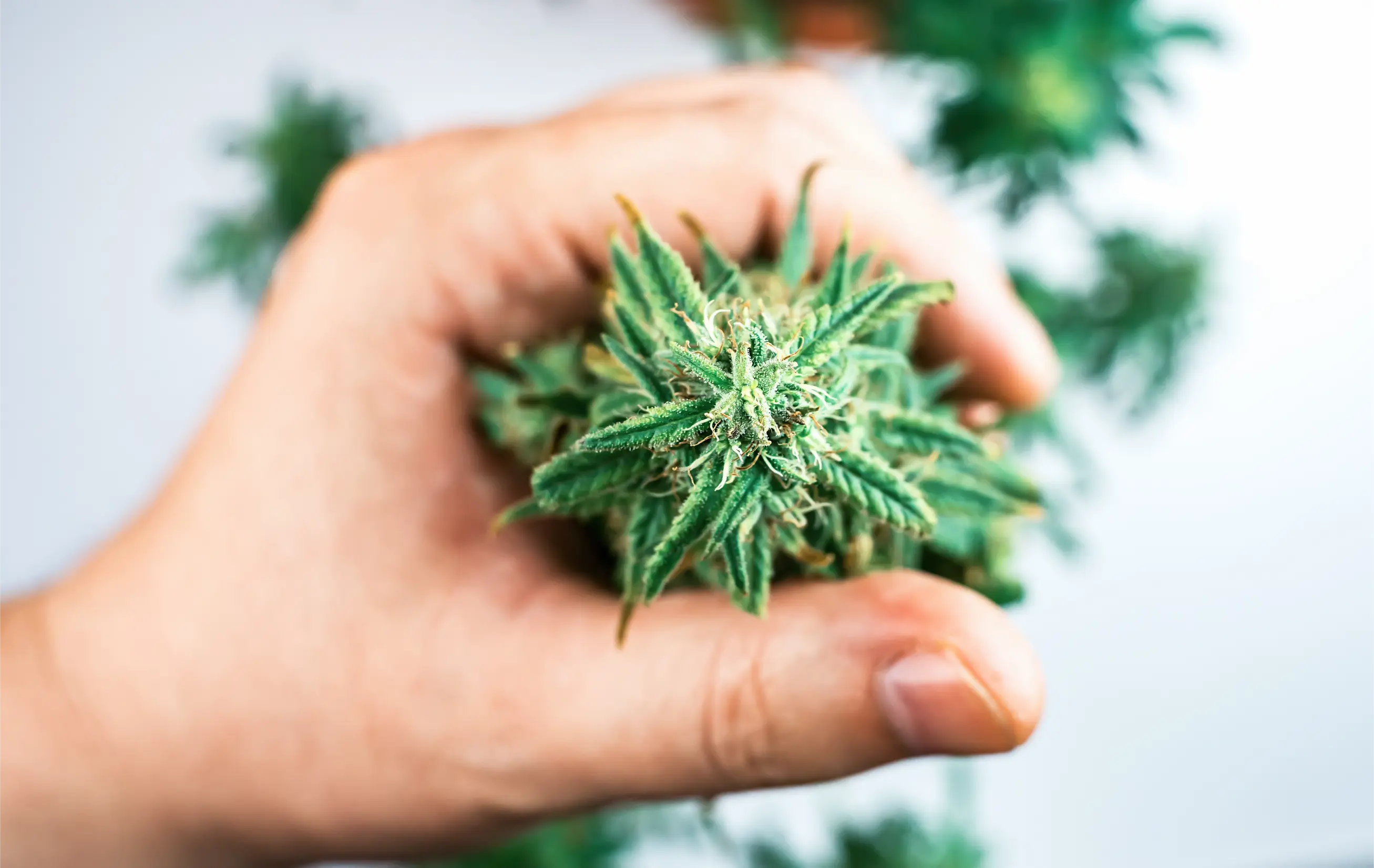
Immediately after a partial cut, leaves may remain green around the wound. That is not proof of success. Look for shoots extending from identifiable positions and producing fresh, normally developing leaves. Compare their positions with the pre-cut image. If the original terminal axis keeps growing, the cut may have left that axis largely functional; if side shoots take over, the dominance pattern has changed. Both outcomes are observations worth recording.
Distorted edges on the smallest leaves can simply reflect that those leaves were cut while folded. Do not equate every ragged emerging leaf with pests or a nutrient deficiency. Check whether newer leaves beyond the damaged cohort emerge normally. Persistent discoloration, spreading necrosis, abnormal collapse, or signs elsewhere on the plant call for diagnosis rather than reflexive re-pruning.
Uneven leader growth may be normal competition
Even when several tips extend, they rarely grow at identical rates. One may have better light exposure, a more favorable position, or a stronger connection to the rest of the plant. Uneven extension does not automatically mean FIMing failed. Evaluate whether the emerging structure fits your target canopy. Two accessible, well-separated leaders can be more useful than a crowded cluster of five short shoots.
If one top quickly dominates again, consider whether the original goal still matters. A small difference in shoot height may be harmless outdoors. Do not repeat cuts solely to make the upper branches appear symmetrical. Repeated pruning creates new wounds and may postpone the period when flowering branches should be building strength.
Differentiate cut-leaf damage from progressive decline
Mechanical injury is ordinarily concentrated at the tissue directly contacted by the tool. Disease, root-zone stress, nutrient imbalance, or pest injury may follow different patterns, but symptoms can overlap. Watch whether the area of necrosis expands beyond the original cut, whether other shoot tips become affected, and whether the plant’s overall water relations and new growth remain normal.
A brown edge confined to a leaf that was cut when folded may remain visible for the life of that leaf. Waiting for the brown section to turn green is not a useful verification target. Instead, look for new healthy growth and no additional spread. If multiple plants begin showing similar symptoms after shared tool use, consider mechanical transmission and seek appropriate diagnosis rather than attributing every change to pruning stress.
Recognize the outcomes that do not justify another cut
There are several ways a FIM attempt can fail to deliver its intended architecture. The old leader may continue with little change. The entire apex may have been removed, producing a response closer to topping. Multiple shoots may form but remain weak or crowded. Or the whole plant may stall because of an unrelated problem that began around the same time.
These are reasons to reassess the plant and your goal, not automatic instructions to repeat FIMing. If the result is structurally acceptable, let the plant grow. If the root zone or environment is unhealthy, correct that cause first. If the crown is genuinely malformed, decide whether simple support or carefully selected removal of a clearly damaged piece is needed. Do not convert one uncertain experiment into a succession of wounds.
Verify with emerging growth
Compare marked positions and look for healthy extension, stable turgor, workable spacing, and no expanding tissue damage.
Use a fixed recovery timer
Do not declare success or schedule a second cut merely because a chart says recovery always takes a certain number of days.
Reinspection should answer two different questions
The first is biological: is the plant continuing healthy growth, and has the wound stopped deteriorating? The second is practical: did the resulting branch distribution improve the original problem? A plant can recover perfectly yet develop a structure that is harder to inspect or support. Likewise, a short period of reduced height may be useful even if the number of new upper leaders is unremarkable.
Maintain the same photo angle and a short record through the remainder of vegetative growth, then reassess once the first meaningful flower weight develops. These two checkpoints tell you more about success than one picture taken immediately after the cut. A favorable early silhouette may become an overcrowded late-season crown.
When to Stop Cutting or Correcting the Top
Stop when the plant has no clear reason to be cut again, no useful time to rebuild, or signs that another intervention would compound existing problems. This stopping decision matters more than maximizing the number of cuts in a training schedule.
Stop as the plant moves from architecture to flowering
Once flower sites are forming and the vegetative response is slowing, the expected benefit of creating more upper leaders becomes less certain. FIMing is not a universal flower-stage intervention. Damaging terminal tissue can remove developing flowers, create a cluster of uneven sites, or spend time that cannot be recovered before seasonal harvest.
Check the plant’s actual development rather than using one flowering date from another climate. A long-season plant still expanding vigorously may present a different situation from a compact plant already setting flowers, but neither receives a scientifically validated FIM cutoff. When the question is uncertain, leave the productive shoots intact and focus on supporting the structure already present.
Stop when tips are rigid, inaccessible, or likely to tear
The technique targets small, tender terminal growth. If reaching the target requires twisting mature stems, moving heavy branches, or pulling the apex through an established support grid, the handling damage may exceed any architectural benefit. Do not force rigid branches into position just to reach a tip that is no longer easy to work on.
A broad plant may also become inaccessible after repeated cuts. If several leaders overlap or make it difficult to see the interior, further apex damage may increase congestion. Preserve inspection corridors and address actual branch placement with suitable support rather than chasing a target count of tops.
Stop for root stress, disease suspicion, or repeated stalled growth
Elective pruning should not continue while the plant is showing unexplained decline. Check the root zone, water delivery, drainage, pest evidence, and the pattern of affected plants. If symptoms suggest a transmissible disease, stop shared-tool operations and follow a diagnostic and sanitation plan. The presence of several unhealthy tips after FIMing is not proof that the technique alone caused the decline.
Do not attempt to correct persistent stress by adding strong nutrient feeds, spraying unverified products on wounds, or cutting the apex again. Each added variable makes the cause harder to identify. Stabilize the environment and confirm normal new growth before reconsidering any optional architecture work.
Stop before hazardous weather and late support work
Wind, saturated soil, hail, and heavy rain create immediate structural risks. Do not begin fresh high-stress training as a storm approaches. Existing branch support, anchors, and access take priority. If late-season flowers are already heavy, a cut near the crown may not improve the load path and could disturb the very branches that now need careful handling.
Remember: Training changes the architecture; support helps existing architecture carry its load. A forecast that requires stronger support is not a reason to create new growth tips.
Know when leaving the plant alone is the completed decision
Doing nothing can be a deliberate, evidence-based choice. If the natural or already trained plant has acceptable height, useful branch exposure, reachable flower sites, and no structural concern, the intervention offers uncertain additional value. Avoid changing a satisfactory plant simply because a growing guide displays a more elaborate training diagram.
“The cut made three uneven tops. Should I FIM them all again to even things out?”
Question sent by: MapleGrower, via Facebook page.
Not automatically. Assess the plant’s stage, spacing, and available season. Three productive, accessible leaders may already meet your goal. Repeated cutting removes more tissue and adds uncertainty, especially near flowering. Prioritize branch clearance and support if the canopy is becoming uneven under load.
Yield Claims, Research, and Honest Comparisons
A pruning method can change branch number without increasing harvestable flower. The plant still has a finite season, a particular root system, access to sunlight, and a limited ability to support and mature the flowers it produces. A new shoot is an opportunity for growth, not an added unit of yield guaranteed at harvest.
Separate direct FIM evidence from broader pruning evidence
The research base for cannabis apical pruning is expanding, but most controlled experiments have evaluated complete topping, removal of branches, or combinations of pruning methods. They have not isolated the partial terminal cut commonly called FIMing and established a repeatable effect across cultivars and outdoor systems. Some published papers mention FIMing in the introduction or describe it as a commercial practice, then test topping rather than FIMing. A mention is not an experimental treatment.
A 2020 cannabis propagation study, for example, discusses both techniques but actually compares standard topping of rooted cuttings with an early-topping procedure performed on mother plants before cuttings were taken. It cannot tell us whether a FIM cut beats a top, produces four leaders, or recovers faster outdoors. The distinction is easy to miss when a paper’s introduction names several familiar cultivation practices.
What the topping experiments genuinely show
A 2026 greenhouse study used two monoecious industrial hemp cultivars grown in 10 L pots and compared no topping with complete apical removal above different nodes. Topping shortened the plants and encouraged secondary shoots; some treatments increased biomass under that particular design. Neither the cut nor the crop system was equivalent to an outdoor FIM intervention.
A separate medicinal-cannabis experiment compared an apical cut, side-shoot removal, and unpruned plants in a specific CBD-rich genotype. The apical-cut plants produced more inflorescence dry weight than the side-shoot-removal treatment, but total CBD yield did not differ significantly from the control. Larger medical-cannabis architecture studies have also found treatment-specific gains and losses, with some forms of heavy branch removal reducing flower productivity. Another glasshouse study reported no biomass or cannabinoid gain from its pruning treatment. These results show why the phrase pruning increases yield needs a genotype, method, and production-system qualifier.
The evidence supports a cautious mechanism: manipulating the apex can redistribute growth and change light interception, canopy microclimate, branch competition, and production. It does not allow the published yield effects of full topping to be assigned to FIMing by analogy.
| Evidence or claim | What the reader can reasonably conclude |
|---|---|
| “FIM always makes four colas” | A common grower claim, not a validated shoot-count outcome. Assess the number and strength of the actual growing leaders. |
| 2020 early-topping study | Evidence about propagation workflow and complete apex removal, not a controlled comparison of FIM cuts. |
| 2022 medicinal-cannabis pruning study | Evidence that the studied apical-cut treatment changed morphology and inflorescence dry matter; it does not establish FIM yield gains. |
| 2026 industrial-hemp topping study | Evidence for genotype- and node-dependent responses to complete topping in its greenhouse conditions, not a universal FIM recipe. |
| Large-plant architecture trials | Some pruning designs changed yield and cannabinoid uniformity. Results depend on treatment, cultivar, and growing system. |
| Your own FIM-treated plant | A useful observation if documented. It is not proof of a treatment effect without suitable untreated or alternative-treatment comparisons. |
Do not borrow a topping yield percentage for FIMing
Research treatments that remove the entire shoot apex are anatomically different from a partial cut through the terminal growth. Their yield, node-position, and recovery findings cannot be relabeled as FIM results. No universal FIM yield multiplier is established.
Judge the harvest rather than the count of vegetative tips
If you want to evaluate a FIM attempt, examine mature structure and final harvest metrics that match your goal. For flower production, this may mean the amount of usable, properly matured flower alongside disease losses, broken branches, time spent supporting the plant, and uneven or shaded sites. A plant with many small tops can require more work while producing no additional usable output.
Record what the plant could have done without the intervention. A controlled comparison is strongest, but a detailed history of similarly managed plants can at least help you notice patterns. Separate the result of FIMing from other actions such as repeated ties, topping other branches, heavy defoliation, or a different irrigation regime. If several treatments change simultaneously, a single cause cannot be isolated.
Plant yield and garden yield are different measurements
A wider individual plant may occupy space that would otherwise support neighboring plants or inspection access. Larger per-plant biomass does not automatically improve yield per area. A training choice that fills a sparse garden efficiently may crowd a densely planted one. Outdoor light, row spacing, support geometry, and airflow change the relationship between one plant’s architecture and the whole garden.
For a home garden, usable quality and low loss can also matter more than a narrow comparison of gross biomass. Do not interpret a heavier wet flower pile as proof of more dry, usable flower, and do not infer terpene or cannabinoid advantages from visual branch count. Those outcomes require appropriately controlled measurements.
Outdoor Structure and the Final FIMing Decision
The most useful FIM outcome is a plant whose altered structure you can maintain. The work does not finish when a few green shoots appear around the tip. Outdoor wind, rain, increasing flower mass, and access for inspection decide whether that upper crown remains an advantage.
Map new leaders before they become heavy
As the upper shoots extend, watch where they originate and how far they travel from the central stem. Several shoots arising close together can compete for space and create a crowded junction. The concern is not that every branching cluster will split. It is that flower weight and wind will eventually load branches that may extend at different angles from the same small region.
Photograph the upper crown from above and from the side. Mark any branch that begins rubbing another, crosses the central canopy, or develops a long unsupported lever. Adjust support before flower mass makes the branch difficult to reposition. If the crown remains open and naturally well supported, unnecessary ties can create new rubbing points and reduce access.
Support the changed architecture without redesigning it late
Use broad, adjustable ties where support is actually needed. Leave room for stem expansion, protect the branch collar, and direct weight into stable supports rather than into another weak branch. A cage or trellis that holds several laterals can be more practical than pulling every leader inward with tight string, but the correct system depends on the plant’s real geometry.
For detailed load paths, anchor choices, wet-flower weight, and storm procedures, use the dedicated outdoor branch-support and storm-preparation resource. FIMing changes which branches may need attention; it is not itself a complete storm-support method.
Preserve access to the crown and future flowers
A successful training intervention should not make later scouting impossible. Check whether you can see the undersides of nearby leaves, reach important branch unions, and inspect flowers after wet weather without compressing them through the support. A tight cluster of new leaders can hold overlapping leaves and restrict the space available for normal drying, even when it initially looks like a productive canopy.
Do not respond to crowding with uncontrolled late defoliation. First identify where the obstruction comes from and whether moving a support or gently positioning a still-flexible branch is sufficient. If flowering has begun, be especially conservative about disturbing new flower sites. Keep the work focused on preserving healthy growth rather than enforcing a symmetrical design.
Check the outcome at three meaningful stages
The first checkpoint is before cutting: is there a real height or branch-distribution problem? The second is after new shoot extension has become clear: did the partial cut change the crown and did healthy growth continue? The third is when flower weight and weather begin testing the structure: are the leaders accessible, supported, and free from repeated contact or splitting?
These stages are more useful than a universal number of hours or days. Use dated photographs and repeat observations so that you can separate a temporary change in tip shape from a lasting improvement in the plant’s architecture. Stop optional cutting whenever the next step would create more uncertainty or damage than the original problem warrants.
Decide, document, and verify a FIM attempt
- Define the actual height, access, or branching problem before planning any cut.
- Compare the expected wider crown with available outdoor space, light, wind exposure, and support.
- Confirm active vegetative growth, normal turgor, stable root-zone behavior, and an adequate recovery window.
- Inspect the terminal growth and existing axillary shoots; photograph them before touching the plant.
- Use a clean, sharp tool and make one deliberate partial tip cut without cutting through a mature node.
- Record the cut honestly and do not make a second blind correction to chase a four-shoot picture.
- Compare new growth with the baseline and distinguish surviving tips from pre-existing laterals.
- Check healthy extension, non-progressive wound damage, branch spacing, and continued whole-plant vigor.
- Stop optional cutting as flowering approaches, stress persists, weather worsens, or the desired structure is already achieved.
- Support the actual leaders before flower weight and storms increase their leverage.
- Evaluate usable flower, quality, labor, support needs, and losses rather than claiming yield from shoot count alone.
The decision that matters at the end
FIMing is worth considering when a healthy plant has a clear architectural problem, the tender tip is accessible, and enough vegetative time remains to observe the outcome. It is not needed when natural branching already works, and it should not be used to compensate for poor roots, disease, structural instability, or approaching flowering. An unexpected branch count does not automatically make the attempt a failure; a plant that becomes harder to support or inspect may be a poor result despite producing more tips.
The strongest decision is therefore measured rather than promised: identify the problem, make a limited intervention only when justified, document the response, and keep the architecture only if it improves the plant you actually have. No FIM cut guarantees four colas, a shorter recovery period, stronger terpene expression, or a fixed harvest gain.
Share this article
A quick overview of the topics covered in this article.
- What FIMing Changes and What Remains Uncertain
- Timing and Plant Condition Before the Cut
- The FIM Method and a Repeatable Observation Record
- Read Recovery, Uneven Growth, and Failure
- When to Stop Cutting or Correcting the Top
- Yield Claims, Research, and Honest Comparisons
- Outdoor Structure and the Final FIMing Decision
Follow us
Latest articles
September 26, 2026
September 26, 2026

September 26, 2026
September 26, 2026