Blue Lobster
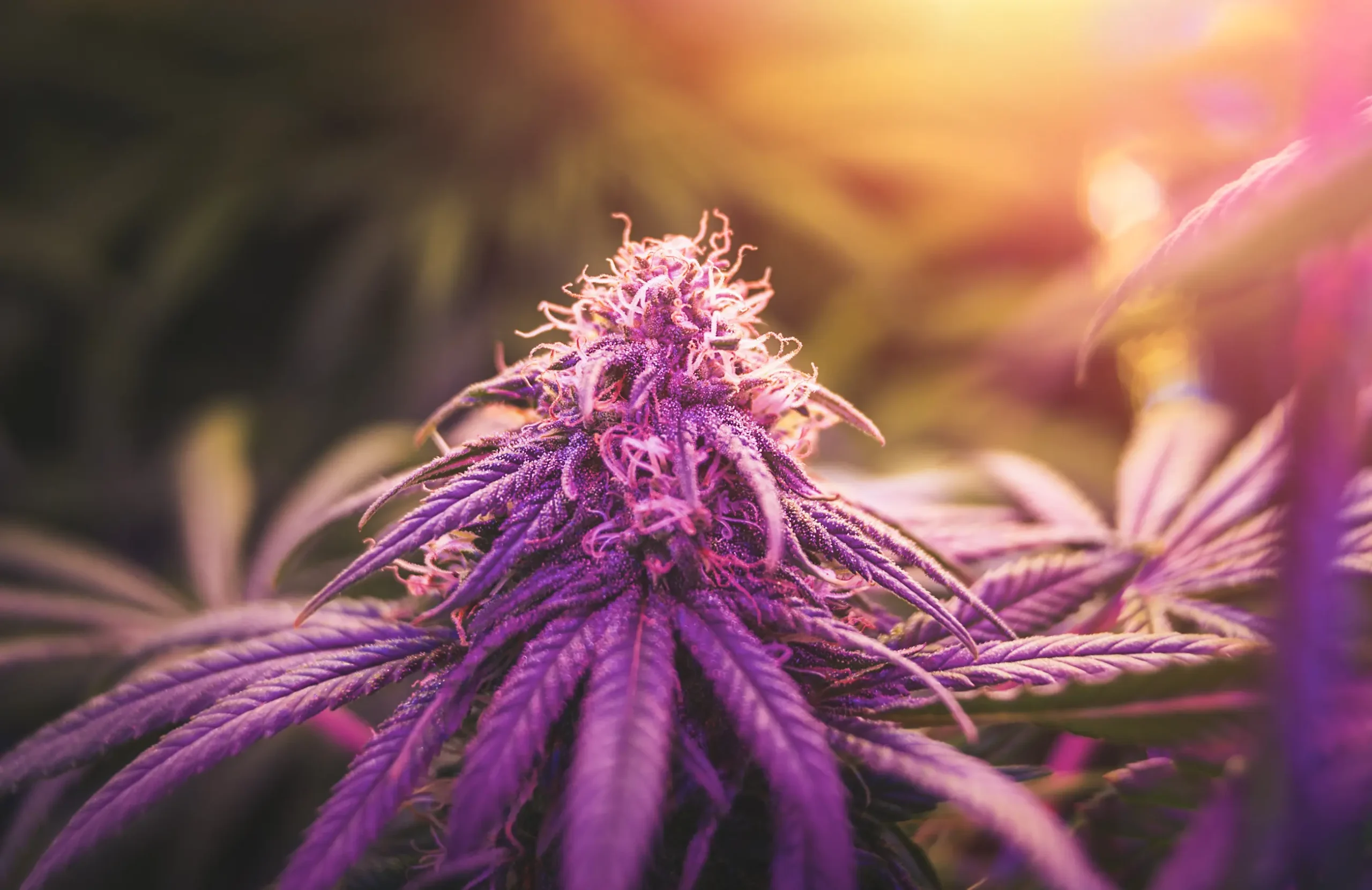
Blue Lobster is a selected hybrid expression known for dark blue-violet color, dense resin, blueberry candy and a surprising combination of fruit, gas, rubber and light herbal coolness. Its documented lineage combines Apples and Bananas with Eye Candy. That background explains why the flower can smell sweet at first yet become sharply gaseous when broken apart.
The plant is less thoroughly documented than long-established cultivars, so honest guidance must separate recurring observations from inference. Available grow records suggest a medium-to-tall hybrid with useful branching, tight stacking and a flowering window near nine weeks, although selected cuts may finish later depending on the environment.
The central cultivation question is how to preserve the blue-fruit and apple-plum layer while finishing compact, high-resin flowers. Crowding, late heat and direct drying airflow can leave a simpler rubber-gas result. The best runs use early canopy control and a careful post-harvest process.
Why does my Blue Lobster smell more like rubber and gas than blueberry?
Phenotype and batch chemistry matter, but the lighter fruit can also disappear before the flower is visibly damaged. High late-flower heat, a fast dry and repeated exposure to warm oxygen remove blueberry, apple and plum sooner than the heavier gas and rubber base. Compare the live plant, the finished dry and the four-week cure before blaming genetics; the point at which the fruit vanished usually identifies the weak stage.
Sent by: Marcus via e-mail
Strain Features
| Feature | Details |
|---|---|
| Strain Type | Balanced to indica-leaning hybrid |
| Genetic Profile | Apples and Bananas x Eye Candy |
| THC | Commonly reported in the mid-to-upper 20% range; batch dependent |
| CBD | Usually very low |
| Dominant Terpenes | Limonene, myrcene and beta-caryophyllene are common; linalool or nerolidol may lead in some batches |
| Flavor / Aroma | Blueberry candy, plum, apple, banana, grape, gas, rubber and light mint |
| Effect Character | Fast mood lift and sociability followed by a relaxed body glow |
| Flowering Time | About 9 weeks is commonly reported; some cuts may need longer |
| Stretch | Moderate, with cut-dependent variation |
| Plant Architecture | Medium frame with strong lateral growth and tight flower stacking |
| Bud Structure | Dense, dark and heavily resinous |
| Grow Difficulty | Intermediate |
| Primary Quality Risk | Dense late flowers and loss of fruit during hot or rapid drying |
Genetic Lineage
Blue Lobster is documented as Apples and Bananas crossed with Eye Candy. Apples and Bananas contributes sweet fruit, banana, apple skin, gas and vigorous hybrid behavior. Eye Candy contributes menthol, earth, cookie gas, dark color and heavy trichome production.
The final named cultivar is a selected phenotype rather than a guarantee that every seed from the same cross will look identical. That matters because the sought-after expression depends on both structure and aroma. A plant may carry the correct lineage yet lean toward sweet fruit, rubber gas, menthol or earth in different proportions.
The strongest Blue Lobster identity appears when blueberry and plum remain clear above the gas. Dark color and frost support the visual profile, but they should not replace post-harvest flavor as the main keeper criterion.
The cross also explains why cultivation reports can look contradictory without necessarily being wrong. A fruit-forward selection may branch freely, carry brighter top notes and stay more socially stimulating. A darker Eye Candy-leaning selection may stack sooner, feel more compact through the middle of the canopy and finish with menthol, rubber and a heavier body effect. The name should therefore be treated as a selected expression with a recognizable target, not as permission to force every plant into one behavioral description.
| Expression | Clues during growth | Likely finished character | Keeper question |
|---|---|---|---|
| Fruit-forward | More lateral reach, clearer apple or banana stem rub, slightly more open spacing | Blueberry candy, apple skin and plum above a lighter gas base | Does the fruit survive four weeks of cure? |
| Dark resin-forward | Earlier pigment, tighter stacking and heavier visible gland coverage | Grape, menthol, earth, rubber and creamy gas | Is the flower clean inside, not merely dark and frosty outside? |
| Balanced target | Controlled stretch, strong laterals, dense but separable tops | Blue fruit and apple-plum opening with a structured gas finish | Does it combine jar identity, clean density and repeatable room behavior? |
Keeper selection should happen after the full process, not at week seven. A plant can win the room on color and lose the jar after an impatient dry. Conversely, a greener or less dramatic plant may preserve the clearest blueberry-plum signal and offer more useful spacing. For Blue Lobster, the finished flower is the final phenotype test.
Effect Breakdown
The first minutes
Blue Lobster often produces an immediate mood change. Euphoria, talkativeness and a light tingling body sensation can appear quickly. Some users describe focus or creative energy despite the strain’s calming reputation.
The social calm
As the effect develops, physical relaxation becomes more obvious without necessarily causing immediate couch-lock. The user may remain engaged and conversational while tension drops.
The heavy threshold
Higher doses can become sleepy and unfocused. The rapid onset may also create anxiety in sensitive users. Dry mouth and dry eyes are common. The strain is potent enough that new users should not assume the fruity flavor means a gentle experience.
How dose changes the experience
At a low inhaled dose, Blue Lobster is often described as bright enough for conversation, music or a relaxed creative session. The body softens without immediately becoming the center of attention. Add more, however, and the same profile can turn inward: the tingling becomes heavier, short-term focus becomes less dependable and the relaxed phase arrives sooner. That steep transition is more useful to understand than a simple daytime-or-nighttime label.
The chemistry is not uniform from batch to batch, which means the effect is not uniform either. A myrcene-led sample may feel fuller and more physically settled, while a caryophyllene-limonene-led sample can open more sharply and keep a livelier mental edge. Users should read the specific product label when available and adjust dose for the actual batch rather than relying only on the cultivar name.
Flavor & Aroma Profile
The jar often opens with blueberry candy, plum and apple, sometimes with banana or grape underneath. Breaking the flower releases gas, rubber, earth and a cool herbal edge. Some batches add honey or floral sweetness.
On inhalation, the flavor can feel smooth and sweet, with blue fruit and apple skin. The exhale turns more gaseous and peppery. A rubber-like or menthol note may remain after the fruit fades.
Blue Lobster’s flavor balance is especially sensitive to drying. The fruit is more volatile than the gas. A warm room or direct fan can produce loud but incomplete flower that smells mostly rubbery. A controlled cure allows plum, apple and blueberry to reappear around the heavier base.
Live plant, broken flower and smoke are not the same test
On the living plant, a stem rub may read greener and sharper than the finished jar, sometimes suggesting lime peel, apple skin or a cool herbal note before the berry appears. The intact cured flower usually presents the sweetest impression because the more volatile fruit is held inside unbroken gland heads. Once the flower is ground, gas, pepper and rubber rise quickly and can make the first jar impression seem misleading.
The inhale should retain a rounded fruit sweetness rather than tasting merely perfumed. Apple skin and blueberry candy tend to occupy the front of the palate; plum, grape or banana can sit beneath them. The exhale is drier, with pepper, creamy gas and a faint tire-shop edge. A carefully finished batch leaves alternating sweet and gaseous impressions instead of collapsing into one generic fuel note.
That sequence makes Blue Lobster a useful diagnostic cultivar. If the live flower smelled layered but the dry flower is only rubber, the post-harvest environment deserves scrutiny. If the live plant was already mostly earth and gas, phenotype is the more likely explanation. Keeping separate notes for late flower, day seven of drying and week four of cure prevents the grower from treating every aroma loss as a genetic failure.
Dominant Terpenes
Terpene rankings vary across phenotypes, environments and laboratory batches. The table below summarizes recurring patterns rather than a fixed chemical formula.
| Terpene / Volatile Group | Likely Role in Blue Lobster |
|---|---|
| Limonene | Frequently supports fruit brightness, citrus lift and the upbeat opening. It is commonly among the leading terpenes. |
| Myrcene | Adds ripe fruit, earth and a softer physical finish. Some tested batches place it above limonene. |
| Beta-Caryophyllene | Provides pepper, dry spice and part of the gaseous structure. |
| Linalool or Nerolidol | Some laboratory batches show meaningful floral or woody secondary terpenes. This helps explain why Blue Lobster can vary from candy-bright to deeper and more sedating. |
Two publicly available laboratory examples illustrate why a single “dominant terpene†claim is too rigid. One tested lot placed beta-myrcene far ahead of ocimene, alpha-pinene and beta-caryophyllene. Another lot placed beta-caryophyllene and limonene ahead of myrcene, with linalool and humulene providing more of the background. Both can still fit the recognizable Blue Lobster family, but they will not smell or feel identical.
| Observed batch direction | Leading compounds | Likely sensory emphasis | Practical reading |
|---|---|---|---|
| Myrcene-forward lot | Beta-myrcene with ocimene, alpha-pinene and beta-caryophyllene support | Riper fruit, herbal depth, pine freshness and a softer body finish | Expect the fruit to feel rounder and the late effect to carry more physical weight |
| Caryophyllene-limonene lot | Beta-caryophyllene and limonene with myrcene, linalool and humulene | Peppery gas, brighter peel, floral softness and woody depth | Expect a sharper opening and a more structured spice-gas finish |
| What remains consistent | No fixed universal order | Fruit above gas, rubber, herb or cooling notes | Use batch data to explain variation, not to erase the cultivar’s recurring identity |
Terpenes alone may not explain every “rubber†or candy impression; minor volatiles and sulfur-containing compounds can have a large sensory effect at very low concentration. The honest interpretation is therefore chemical direction rather than a promise that one named terpene creates one named flavor. For cultivation, this matters because the fragile high notes disappear fastest while heavier sesquiterpene and gas impressions remain more obvious.
Indoor vs. Outdoor Growing
| Decision Point | Indoor Growing | Outdoor Growing |
|---|---|---|
| Canopy management | A net helps keep the selected cut even and prevents tight stacking from crowding | Early topping and wide branch spacing are important as the plant expands |
| Flower density | Indoor humidity control protects dark compact flowers | Outdoor flowers require a dry autumn and careful inspection |
| Color | Stable late temperatures can reveal blue-violet tones | Natural night cooling may deepen color without guaranteeing flavor |
| Flavor preservation | Temperature control protects blueberry, apple and plum | Hot finishes may leave mostly gas and rubber |
| Support | A second net helps as resinous flowers gain weight | Cages or soft ties should be installed early |
| Best fit | Growers focused on premium flower, color and post-harvest quality | Dry climates with dependable finishing weather |
For Blue Lobster, the indoor advantage is not simply environmental control. It is the ability to manage the cultivar’s defining weakness before it damages premium flower. Outdoor cultivation can produce more size and seasonal complexity, but the finishing climate must match the flower density, stretch and aroma sensitivity described above.
Indoor: design for access, not maximum plant count
A Blue Lobster room can look underfilled at the flip and still close quickly once the selected cut begins to extend. The safer strategy is to reserve aisle access and finish the screen during transition. Growers who fill every square in veg often discover that the problem is not height but lateral congestion: branches cross, dark leaves overlap and several attractive tops harden against one another. Those contact points are exactly where inspection becomes difficult.
One or two early toppings suit a vigorous cut, followed by outward ties or a screen that distributes the laterals without repeatedly crushing the soft tips. Stop major bending as the stretch resolves. A second support layer can be added before flower weight changes branch angles. The goal is a shallow, inspectable field of separated tops, not the largest possible number of tops.
Outdoor: choose the finish before choosing the planting site
Outdoor Blue Lobster makes the most sense where early autumn remains dry enough for dense flowers and where strong sun is not paired with relentless late heat. The plant can use generous root volume and may become broad after early topping, but that extra size multiplies support and inspection work. A protected, airy site is more valuable than a hidden pocket that traps morning dew.
Install cages or stakes while branches are still easy to position. Train the plant into several separated arms rather than one enormous center. If wet weather is common near the expected finish, a roof that excludes rain while leaving the sides open is more useful than enclosing the plant in stagnant plastic. Outdoor fruit can be complex, but only if the flowers finish cleanly and are moved out of sun immediately after harvest.
| Stage | Day target | Night target | Relative humidity | Blue Lobster priority |
|---|---|---|---|---|
| Established veg | 24-28°C | 20-23°C | 58-68% | Build roots and laterals without forcing soft, oversized leaves |
| Transition / stretch | 24-27°C | 19-22°C | 52-58% | Finish canopy spacing while humidity load begins to rise |
| Early flower set | 23-26°C | 18-21°C | 48-54% | Keep horizontal air moving through the darkening flower zone |
| Bulk | 22-25°C | 18-20°C | 44-50% | Inspect stem sides and prevent tops from touching |
| Finish | 20-24°C | 17-20°C | 40-46% | Protect fruit without using cold or drought as a cosmetic color trick |
These are operational ranges, not a published Blue Lobster trial. Leaf temperature, vapor pressure deficit, airflow, irrigation and the exact cut change what the plant experiences. Use them as a starting framework and adjust from plant response rather than treating a number on the controller as proof of safety.
Strain-Specific Grow Guidance
Treat the first run as a cut-specific study
Blue Lobster has less standardized public grow data than older cultivars. Record stretch, node spacing, branch response and finish time. Do not assume every version behaves exactly like the famous selected cut.
For the first cycle, measure the height at flip and again when vertical extension stops. Photograph the same branches weekly, note irrigation demand and keep harvest groups separate. That record turns the second run from guesswork into cultivar-specific management. It also prevents an unusually compact or unusually vigorous individual from becoming the universal rule for the name.
Build an even frame early
One topping or early low-stress training can create several strong branches. The plant’s fruit-candy lineage may produce active lateral growth, while the Eye Candy side can tighten the flower zone. Create space before both traits combine.
| Growth point | Action | Reason | Stop condition |
|---|---|---|---|
| Four to six established nodes | Top once or begin outward LST | Convert early apical energy into several comparable arms | Do not top a slow plant before roots and recovery speed are convincing |
| Mid veg | Spread laterals and remove only weak interior shoots | Create light lanes before leaf mass and tight stacking combine | Preserve the strongest fans and avoid repeated stripping |
| Pre-flip | Fill roughly 65-75% of the intended screen | Leave the remaining area for moderate, cut-dependent stretch | Flip earlier if branches are already crossing or the center is difficult to reach |
| Weeks 1-2 of flower | Tuck gently and direct each main into open space | Use transition growth to complete geometry without crushing tips | Stop hard bends as stems stiffen and pistil clusters establish |
| End of stretch | Clean the lower third and add final support | Remove sites with no realistic path to the canopy and protect future weight | No routine heavy defoliation after architecture is set |
Leave room for transition stretch
Flip before the canopy is completely filled. Moderate stretch can close the remaining gaps. A packed screen becomes difficult to thin when the colas begin to stack closely.
Remove lower growth with no realistic path to the light
Blue Lobster can produce attractive resin on shaded sites, but small frosty flowers still reduce premium percentage. Keep the productive zone shallow and direct resources toward the main branches.
Prune by future light access rather than by resin already visible on a small site. The cultivar can make weak lowers look valuable because even shaded tissue may sparkle. If a branch cannot reach the productive layer by the end of stretch, remove it before it becomes a humid interior ornament. Late removal after substantial flower formation costs more stored energy and creates larger wounds when the room is already carrying higher microbial pressure.
Control humidity inside the dark flower zone
Blue and purple tissue can make early discoloration harder to notice. Inspect the stem side of the largest flowers and the points where colas touch. Air must move through the plant, not only over it.
Dark frost can hide moisture and a flattened cure
Blue-violet tissue and heavy resin can make a top look healthy from the aisle while the stem side remains wet. Open the largest flowers gently, inspect contact points and investigate any dull grey-brown tissue or stale odor immediately. Avoid giving a colorful plant extra humid days simply because the surface still looks exceptional.
Avoid prolonged nitrogen into bulking
A dark canopy can look visually impressive while holding excess leaf mass and moisture. Transition to bloom nutrition on time and read plant demand rather than maintaining maximum green color.
Feeding behavior: build capacity before asking for density
No peer-reviewed publication provides a Blue Lobster-specific EC curve. The useful approach is moderate feeding after a healthy root system is established, with increases tied to drinking speed, leaf posture and the absence of salt stress. Do not raise concentration merely because the plant begins to stretch; early flower can increase water demand faster than mineral demand.
Excess nitrogen is especially unhelpful here. It can hold the canopy dark, increase leaf overlap inside the flower zone and delay the clean transition into bulking. Calcium and magnesium support should be based on source water, medium and lighting intensity rather than added automatically. In coco or inert media, consistent root-zone readings are more informative than chasing a brand schedule. In amended soil, plan top-dress timing early enough that nutrition is available before bulk rather than arriving late during ripening.
| Stage | Feeding direction | Plant signal to watch | Common mistake |
|---|---|---|---|
| Rooted clone / seedling | Light, balanced nutrition with strong oxygenation | New growth accelerates without dark clawed leaves | Putting a small root system into a constantly wet oversized container |
| Early to mid veg | Moderate increase as laterals and irrigation demand expand | Even green color, firm petioles and predictable dryback | Using high nitrogen to manufacture visual darkness |
| Late veg / pre-flip | Stable nutrition, no last-minute loading | Branches recover quickly from training and roots consume on schedule | Entering stretch with salt accumulation or soft overfed tissue |
| Transition | Reduce nitrogen emphasis gradually while maintaining complete nutrition | Stretch remains controlled and new leaves stay proportional | Cutting nitrogen instantly or continuing vegetative ratios too long |
| Bulk | Moderate-to-firm only if drinking and environment support it | Calyxes swell without burnt tips, stalled uptake or excessive leaf curl | Chasing density with boosters after the canopy has already become crowded |
| Finish | Taper according to medium and plant demand | Natural fade without premature collapse | Forcing drought or starvation to create purple color |
Root zone and irrigation rhythm
Blue Lobster benefits from a root zone that can support rapid transition growth without remaining saturated between events. In containers, match pot size to actual vegetative time. A small plant in a large wet volume can look calm above the medium while oxygen disappears below it; later, the same compromised root system struggles to steer dense flower under strong light.
Use container weight, runoff trends and the time between irrigations to establish a repeatable dryback. Avoid large swings that alternate waterlogging with severe drought. Under multiple daily irrigations, later events should reflect canopy demand and lights-on timing, not a fixed timer copied from another cultivar. Stable water availability supports calcium movement, leaf function and aroma retention more reliably than dramatic late-flower stress.
Light response: increase photons after geometry is under control
A practical discovery run can begin around 300-500 PPFD for rooted clones or young plants, move toward 500-700 PPFD in established veg, use roughly 650-850 PPFD through early flower and reach about 800-1050 PPFD after stretch if temperature, irrigation, nutrition and ambient carbon dioxide support it. These are Weedth operational ranges, not published Blue Lobster trial results. In a basic room with ambient COâ‚‚, stay in the lower half and judge the leaves rather than treating the upper number as a target.
The order matters. Set branch spacing and airflow first, then add intensity. Blasting a crowded transition canopy can increase water demand and leaf temperature without improving useful flower distribution. Near finish, preserve the top notes by controlling canopy heat and avoiding bleaching. More photons are only productive while the room can remove the added heat and supply water without saturating the root zone.
Support before late weight changes the canopy
Strong branches may begin upright and then lean as dense flowers harden. Install a net or soft ties early enough that resinous tops are not repeatedly handled.
Harvest for full fruit-gas integration
Wait for calyx swelling, reduced fresh pistils and mostly cloudy trichomes on calyx tissue. An early cut may emphasize bright euphoria and sharp fruit. Greater maturity deepens the body effect and rubber-gas finish.
| Flower period | Visible development | Grower priority | Decision risk |
|---|---|---|---|
| Weeks 1-2 | Stretch, branch repositioning and first pistil clusters | Finish the screen and maintain open lanes | Letting moderate stretch close an already full canopy |
| Weeks 3-4 | Flower sites stack and pigment may begin to show | Complete lower cleanup, confirm support and stabilize nutrition | Mistaking early color or frost for advanced maturity |
| Weeks 5-6 | Dense resinous flowers gain mass | Step humidity down and inspect stem sides | Using extra nitrogen or boosters to chase visual size |
| Weeks 7-8 | Calyx swelling and fruit-gas integration become clearer | Protect temperature, monitor new pistil rate and avoid handling | Allowing tops to touch as branches lean |
| Week 9 center point | Many cuts approach harvest readiness | Read calyx trichomes, swelling and pistil slowdown together | Harvesting by calendar, color or surface frost alone |
| Later cut window | Some selections continue ripening beyond nine weeks | Extend only while flower health and aroma remain clean | Trading fruit and cleanliness for a few unnecessary extra days |
Grower Note: Use strain reports as a decision framework, not a fixed recipe. Container size, medium, climate, plant maturity and the exact phenotype can change stretch, feeding and finish time.
Weedth Bud Flavor Tips
Protect blueberry, plum and apple by reducing heat during the final weeks. Outdoor flowers should be harvested after dew dries and moved immediately away from direct sun.
Treat Blue Lobster as a volatile-fruit cultivar carried by a heavier gas frame. The fruit is the fragile part. A room can preserve potency and still lose the exact aromatic lift that distinguishes this cultivar from a generic purple gas hybrid. Late-flower heat, repeated touching, bright drying spaces and direct airflow all remove the most interesting layer before the grower sees an obvious quality failure.
My preferred harvest handling is large-branch or whole-plant hanging where the canopy was clean enough to permit it. Keep the drying space near 16-19°C and 55-60% relative humidity, with gentle circulation around the hanging material rather than a fan aimed at flowers. A roughly 10-14 day dry is a useful operational target, but the correct end point depends on branch size, room load and internal moisture. The objective is an even loss of moisture, not a calendar achievement.
Dry medium branches with indirect circulation. Dense dark tops should not touch one another. If the colas are exceptionally large, divide them so the outside and core lose moisture at a similar rate.
Favor minimal wet trimming. Removing only damaged or obvious non-resinous leaves reduces handling while preserving a slower moisture gradient around the flower. Complete the detailed trim after the outside has stabilized. Blue Lobster’s heavy gland coverage makes rough processing especially wasteful: every scrape removes aroma-bearing resin and exposes more surface to oxygen.
The cure often begins with gas and rubber. Over several weeks, the fruit can become clearer. Divide the stored flower into small containers because repeated opening removes the sweetest notes first.
| Post-harvest step | Recommended direction | Blue Lobster reason | Failure signal |
|---|---|---|---|
| Harvest handling | Cut cleanly and move material into shade immediately | Light and warm air flatten the blue-fruit top notes quickly | The live blueberry aroma becomes hot grass and rubber within hours |
| Hanging | Use whole plants or large branches when flower health allows | A slower moisture gradient protects volatile fruit and prevents a crisp shell | Small outer leaves become brittle while flower cores remain wet |
| Environment | About 16-19°C and 55-60% RH with indirect circulation | Cool, controlled drying favors aroma retention and even moisture movement | Direct fan lanes, hot spots or an ammonia-like pocket smell |
| Trim | Minimal wet trim, careful dry trim | Less abrasion protects heavy gland coverage and reduces oxygen exposure | Noticeable resin dust, smeared gloves and rapidly fading jar aroma |
| Cure | Stabilize around 58-62% RH and allow several weeks | Fruit may re-emerge after the initial rubber-gas phase settles | Persistent wet center, sour odor or no improvement after moisture is stable |
| Storage | Cool, dark, airtight, with small working containers | Less headspace exchange preserves the sweetest fraction | One frequently opened jar becomes noticeably flatter than sealed portions |
Do not add fruit peels or external flavoring material to the cure. It raises microbial risk and hides the information the cure is supposed to reveal. If blueberry and plum do not return after moisture is stable and the flower has rested, record that honestly as phenotype or process performance. A keeper should not need scented assistance.
Weedth Bud Boost Tips
Indoors, use the moderate stretch to complete a partially open canopy. Keep a limited number of strong tops and remove lower sites before they harden. This improves both airflow and finished flower uniformity.
Outdoors, root volume can produce a broad plant, but every major branch needs support and separation. A single oversized central cola is difficult to inspect and dry.
Do not use color or frost as a substitute for maturity. Premium yield means dense, clean flowers that retain fruit after cure, not simply the highest wet weight or darkest canopy.
The boost comes from geometry, not bottle chasing
The most important yield sentence for Blue Lobster is simple: build fewer branches that can all reach light, air and support. An overcrowded room full of small frosty tops may look productive in week six but creates inconsistent ripening and a lower percentage of premium flower. A controlled screen, clean lower third and timely second support layer protect more final weight than a late bloom additive can create.
Keep top height uniform enough that light can be increased without bleaching the leaders. Correct a fast branch during transition rather than dimming an entire room later. Once flowers harden, avoid repositioning resinous tops except for genuine safety. The cultivar’s visual appeal depends on intact glands, and unnecessary handling turns a support problem into a quality problem.
Outdoors, divide vigor across separated arms and leave working space between them. Remove dead interior material promptly, check ties as stems expand and reinforce the plant before weather arrives. A large Blue Lobster can deliver high total weight, but the meaningful metric is clean, evenly dried flower that still smells like blue fruit after cure.
Medical Uses & Benefits
Reported use includes stress, low mood, mild physical tension and social relaxation. The first phase may feel energizing or focused, while the later body glow becomes calmer.
The appeal is often the transition rather than a single dominant effect. Some consumers use a small amount when they want emotional brightness without the sharp restlessness of a very stimulating cultivar. Others value the later physical ease. These are reported experiences, not proof of treatment, and the same rapid onset that feels useful to one person may feel excessive to another.
High THC and very low CBD can be uncomfortable for sensitive users. Anxiety, dizziness and sedation remain possible. The strain should not be presented as treating a disease.
Fruity flavor does not mean a gentle dose
Cannabis responses vary by dose, tolerance, product chemistry and individual physiology. Reported experiences do not replace medical advice and do not prove that a cultivar treats disease.
Ideal User Profile
Blue Lobster suits experienced consumers who enjoy blue-fruit candy with gas and want relaxation without immediate shutdown. It fits social evenings and low-pressure creative activities.
It is less suitable for users seeking a gentle daytime profile or growers unable to control late humidity and drying speed. Cultivators should value phenotype verification and record keeping.
For growers, the best match is someone who enjoys observation more than recipe following. The cultivar rewards a room that can leave open canopy space, reduce humidity through bulk and dry slowly enough to judge the selected cut fairly. A cultivator chasing maximum plant count, maximum greenness or the fastest possible turnaround is likely to preserve the gas while losing the reason Blue Lobster was chosen.
For consumers, batch selection matters. Look for a jar that still offers identifiable berry, apple or plum after it has been open for a moment, not only a generic sweet description on the label. Users sensitive to high THC should start low and wait for the first rapid lift to settle before adding more.
Grower Notes and Feedback
Available reports repeatedly emphasize dark color, heavy frost and tight stacking. They also show that finish time can vary and that the canopy may become uneven late even after a flat transition.
Aroma descriptions range from blueberry and plum to apple, banana, rubber and gas. This variation should be expected. The best keeper is the plant that keeps recognizable fruit after drying.
A recurring lesson is that visually finished does not always mean physiologically finished. Dark color can arrive early, and heavy trichome coverage can make small flowers look more mature than they are. Growers who waited for full calyx expansion and used calyx trichomes rather than sugar-leaf color generally describe a more integrated fruit-gas profile.
Another useful observation is that an even canopy may become uneven during bulk. Dense tops change branch angles as weight accumulates, particularly when an early screen guides branches but no later support is added. Inspect the whole canopy from the side, not only from above. A top that leans into its neighbor creates shade, a humidity pocket and a difficult drying mass at the same time.
Public grow information remains limited compared with classic cultivars, so the most credible feedback is conditional. Expect moderate stretch, active lateral growth and dense flowers, but verify all three with the cut in front of you. Record the room’s actual outcome and avoid turning one successful phenotype into universal advice.
Weedth Editor’s Note
The plant that can make a grower stop looking too soon
What interests me about Blue Lobster is also what makes it dangerous to evaluate quickly. It gives the eye almost everything it wants: dark color, bright gland coverage and the suggestion of premium density. A plant that photogenic can persuade the grower that the important decisions have already been made. They have not. The hidden work is still happening inside the canopy and, later, inside the drying flower.
If I were running it for the first time, I would deliberately leave more room than the plant appears to need. I would want to see how each main branch behaves through stretch instead of forcing every lateral into a crowded photograph. I would install support before the flowers ask for it and inspect the dark tops from behind. Blue Lobster does not need punishment or constant intervention; it needs enough space that its beauty never becomes a blind spot.
The moment I would care about most comes after harvest. The first jar opening may be dominated by rubber, cream and gas, and that can be impressive in its own right. But I would wait. If the blueberry, plum and apple begin to reappear as the cure settles, the flower suddenly feels three-dimensional. That return of fruit is the part that tells me the room and the dry respected the cultivar rather than merely producing dark, strong cannabis.
I also like that Blue Lobster resists a lazy terpene story. Different tested lots do not agree on one fixed leading compound, yet the recurring sensory idea remains recognizable. That makes it a better lesson in batch chemistry than in marketing labels. The name points toward a target, but the plant, the environment and the post-harvest process decide how clearly the target survives.
My keeper decision would therefore happen late. I would not choose the darkest plant in week seven, the loudest branch at harvest or the highest number on one laboratory panel. I would choose the cut whose structure I could repeat, whose dense flowers stayed clean and whose cured jar still moved from blue fruit into gas without losing either side. That is the version with a real reason to occupy the room again.
Weedth Score
Growing Experience 8.0/10 Promising structure, but cut-specific behavior and limited public grow data require observation.
Bud Structure & Visual Appeal 9.4/10 Dark, dense and highly resinous with exceptional bag appeal.
Aroma Complexity 9.1/10 Blue fruit, apple, plum, gas, rubber and herbal coolness create real depth.
Flavor & Smoothness 8.7/10 Potentially excellent, though fruit is vulnerable during drying.
Effects & High Experience 8.6/10 Euphoric and social at first, then relaxed without immediate couch-lock.
Overall Satisfaction & Recommendation 8.8/10 A premium modern cultivar for growers willing to protect fruit and verify the cut.
I would grow Blue Lobster again for the blueberry-plum gas profile, but I would judge the plant after cure rather than letting color and frost make the decision for me.
FAQ
What is Blue Lobster’s lineage?
Blue Lobster is documented as Apples and Bananas crossed with Eye Candy.
How long does Blue Lobster flower?
About nine weeks is commonly reported, but some selected cuts may need longer depending on environment.
Does Blue Lobster stretch heavily?
Most available descriptions suggest moderate stretch, though cut-specific variation should be expected.
Why does my Blue Lobster smell mostly like rubber?
Phenotype, heat and rapid drying can suppress blueberry, plum and apple while leaving gas and rubber.
Is Blue Lobster prone to mold?
Its dense dark flowers can trap moisture. Late humidity, cola contact and interior inspection are important.
When should Blue Lobster be harvested?
Wait for full calyx swelling, reduced fresh pistils and mostly cloudy calyx trichomes rather than harvesting by color alone.
Similar Strains
Apples and Bananas – Shares layered fruit and gas, but usually presents more banana and apple with a more open plant.
Eye Candy – Provides dark color, menthol, earth and resin, with less blue-fruit sweetness.
Blue Zushi – Matches blue-fruit color and dense flower, but adds stronger mint and a heavier finish.
Gastro Pop – Offers purple fruit candy and gas with a similarly modern, resin-heavy flower style.
Blueberry – Provides a clearer classic berry identity, but usually less gas and lower modern potency.
Educational content. Always follow local laws and regulations.
Share this article
A quick overview of the topics covered in this article.
Follow us
Latest articles
October 29, 2026
October 29, 2026
October 29, 2026