Calcium, Magnesium, and Cal-Mag for Cannabis: Uptake, Deficiency, and Antagonism
Calcium (Ca) and Magnesium (Mg) represent the two most misunderstood secondary macronutrients in controlled environment cannabis cultivation, frequently treated as a magical cure-all additive marketed under the moniker “Cal-Mag.” In plant physiology, calcium and magnesium perform radically divergent structural and metabolic functions: calcium is an immobile structural element forming calcium pectate in cell walls and moving strictly through transpirational mass flow in xylem vessels, while magnesium is a mobile metallic cofactor occupying the central coordination site of the chlorophyll porphyrin ring. Furthermore, calcium and magnesium exist in a fierce competitive electrochemical relationship with potassium (K) at root membrane transport channels according to the Mulder Antagonism Matrix. Blindly dumping Cal-Mag supplements into high-salinity root zones frequently intensifies nutrient lockouts rather than resolving them. This comprehensive engineering guide examines the biophysics of divalent cation uptake, evaluates LED transpiration dynamics, details tissue deficiency symptoms, provides clinical Epsom salt foliar protocols, and establishes definitive elemental stoichiometry to prevent cation competition.
Plant Physiology and Biophysics: Structural Calcium vs Enzymatic Magnesium
To cultivate cannabis with lab-grade precision, growers must dismantle the marketing myth that calcium and magnesium are inseparable twin nutrients. In plant biophysics, calcium and magnesium perform completely distinct anatomical, biochemical, and vascular functions:
1. The Structural Physics of Calcium (Ca2+)
Calcium is a divalent alkaline earth metal that functions as the structural mortar of plant tissue. Over 60% of total plant calcium is localized within the middle lamella of plant cell walls, cross-linking galacturonic acid residues into insoluble calcium pectate. This biochemical bond gives stems structural rigidity, strengthens cell wall membranes against fungal penetration (such as Botrytis cinerea), and regulates cell division in apical shoot and root meristems.
Beyond passive structural support, calcium functions as an essential second messenger in plant cellular signaling. Under steady-state conditions, cytosolic resting calcium concentration is kept extraordinarily low (approximately 100 to 200 nanomolar) by active ATP-driven calcium pumps sequestering calcium into vacuolar stores and the endoplasmic reticulum. When cannabis experiences environmental stress, such as sudden thermal elevation, osmotic shock, or fungal pathogen contact, voltage-gated calcium channels open in the plasma membrane, releasing a rapid influx of calcium into the cytosol. This transient calcium spike binds to calmodulin, an ubiquitous eukaryotic regulatory protein. The resulting calcium-calmodulin complex activates critical calcium-dependent protein kinases (CDPKs), triggering immediate cellular defense mechanisms, stomatal regulation, and antioxidant enzyme transcription to mitigate cellular damage.
Crucially, calcium is completely phloem-immobile. Once calcium is deposited into older fan leaf tissue, the plant cannot remobilize or transport it to new growth. Calcium moves through the plant exclusively via xylem mass flow driven by transpirational pull. If transpiration slows (due to high humidity, low air movement, or lights-off darkness), calcium delivery immediately halts, causing localized calcium deficiency in emerging shoot tips even if the root zone is swimming in calcium.
2. The Enzymatic Biophysics of Magnesium (Mg2+)
In stark contrast to calcium, magnesium is an enzymatically active, highly mobile divalent cation. Magnesium is the central coordinating metallic atom of the chlorophyll porphyrin ring (occupying the exact central coordinate position that iron occupies in human hemoglobin). Between 15% and 20% of total plant magnesium is bound directly inside chlorophyll molecules to capture photons for photosynthesis.
The remaining 80% to 85% of magnesium acts as an indispensable enzymatic activator and cellular bridge, stabilizing ribosome subunits during protein synthesis, driving Ribulose-1,5-bisphosphate carboxylase-oxygenase (Rubisco) carbon fixation, and activating ATPase enzymes during cellular energy transfer. Unlike calcium, magnesium is highly phloem-mobile. When root-zone magnesium is restricted, the plant mobilizes magnesium from older lower fan leaves, breaking down chlorophyll molecules and shuttling the ions upward to preserve young apical growth.
| Nutrient Characteristic | Calcium (Ca2+) | Magnesium (Mg2+) |
|---|---|---|
| Primary Biological Function | Structural cell wall synthesis (calcium pectate); apical meristem cell division | Central coordinating atom of chlorophyll; Rubisco and ATP enzyme activator |
| Vascular Mobility in Plant | 100% Immobile: Moves strictly through xylem transpiration stream | Highly Mobile: Freely translocated via phloem from old to new leaves |
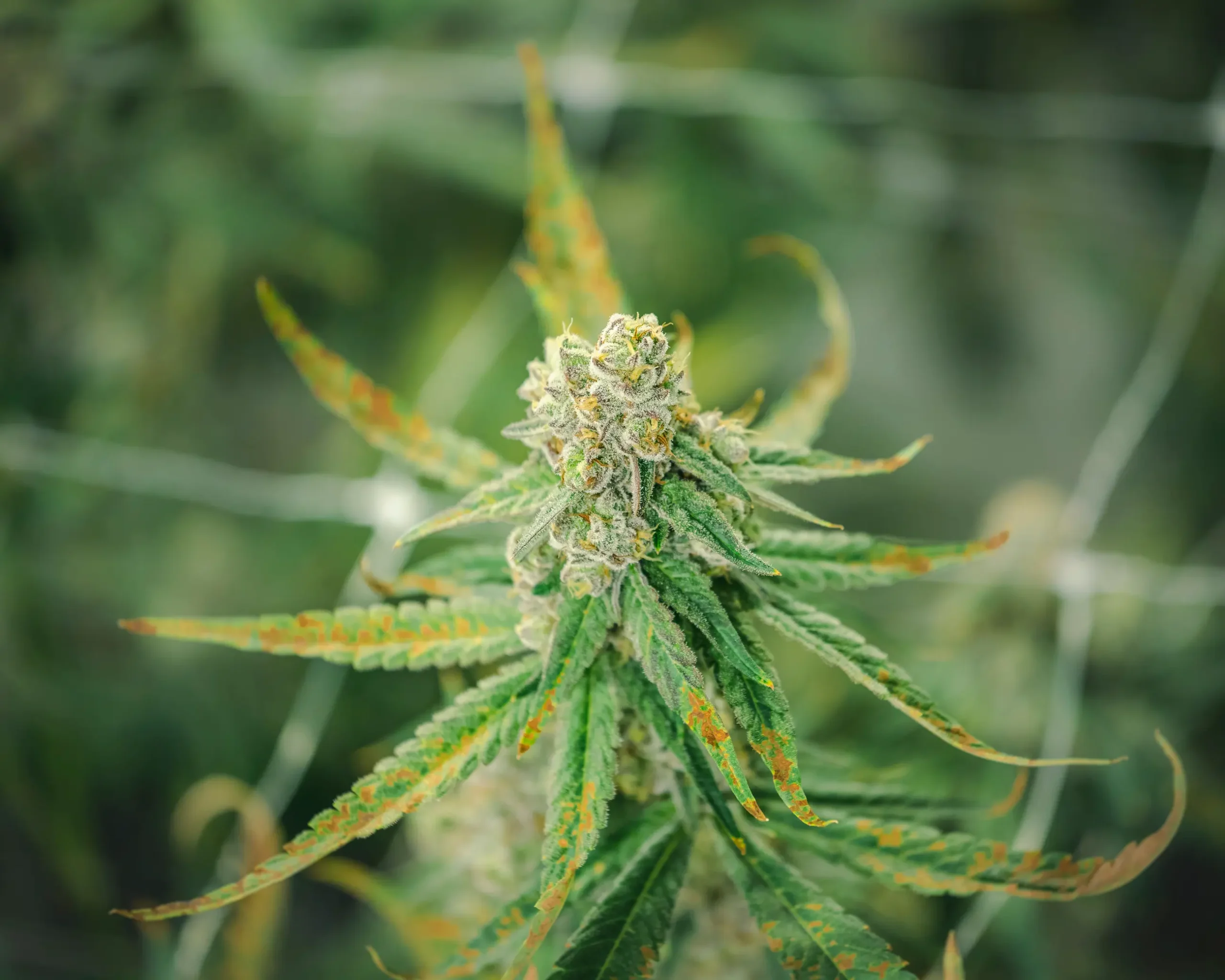
| Deficiency Onset Location | New Apical Growth & Upper Foliage: Terminal tips hook and show brown spotting | Oldest Lower Leaves: Classic interveinal chlorosis with dark veins |
| Optimal Target Concentration (PPM) | 80 – 140 mg/L (PPM) | 40 – 65 mg/L (PPM) |
| Common Chemical Sources | Calcium Nitrate, Calcium Chloride, Gypsum, Chelated Calcium | Magnesium Sulfate (Epsom salt), Magnesium Nitrate, Dolomite |
Diagnosing whether a foliar issue is calcium or magnesium takes five seconds using the vascular mobility rule: if foliar damage appears as brown necrotic spots on the newest apical growth or upper fan leaves under the light, suspect immobile calcium. If the damage appears as yellowing between the green veins on the oldest lower fan leaves at the bottom of the plant, diagnose mobile magnesium.

The Cation Antagonism Triad: Potassium, Calcium, and Magnesium Competition
In plant root physiology, mineral absorption is governed by ion competition at root cell membrane transport proteins. Positively charged mineral cations (specifically Potassium K+, Calcium Ca2+, and Magnesium Mg2+) share non-specific cation channels and transport carriers in the plasma membrane of root epidermal cells.
According to Mulder’s Chart of Nutrient Antagonisms, an over-abundance of any single cation in the root-zone moisture film competitively inhibits the absorption of the other two:
- Excess Potassium (K+) Antagonism: Highly mobile monovalent potassium ions possess high uptake kinetics. When a cultivator dumps heavy “bloom boosters” (monopotassium phosphate) into the reservoir during flowering, elevating potassium past 280 PPM, the massive flux of potassium ions physically blocks calcium and magnesium uptake sites. Even if the reservoir contains ample Cal-Mag, the plants manifest acute magnesium interveinal chlorosis and calcium spotting.
- Excess Calcium (Ca2+) Antagonism: Conversely, when an anxious grower misdiagnoses potassium deficiency and dumps excessive Cal-Mag into the tank, elevating calcium past 180 PPM, the divalent calcium ions outcompete magnesium and potassium, triggering magnesium deficiency on lower leaves and upward leaf curling.
- The Golden Cation Ratio: High-performance agricultural formulations maintain strict molar and elemental ratios between these three competing cations:
Target Ratio: K (4 parts) : Ca (2 parts) : Mg (1 part)
Maintaining approximately 200 PPM K : 100 PPM Ca : 50 PPM Mg establishes an electrochemical equilibrium where all three cations are absorbed at maximum velocity without triggering competitive antagonism.
Milliequivalent (meq/L) Stoichiometry of Cation Competition
In advanced agronomic formulation, managing cation ratios by raw parts per million (PPM) creates dangerous nutritional blind spots due to wide differences in atomic weights between elemental ions (Potassium = 39.10 g/mol, Calcium = 40.08 g/mol, Magnesium = 24.31 g/mol). To calculate the true electrical competitive pressure exerted by each ion at the root surface, commercial nutrient engineers convert PPM concentrations into milliequivalents per liter (meq/L):
meq/L = (Concentration (mg/L or PPM) / Equivalent Weight) = (Concentration (mg/L) × Valence / Atomic Weight)
For example, a nutrient solution delivering 200 PPM Potassium (valence 1), 120 PPM Calcium (valence 2), and 50 PPM Magnesium (valence 2) translates into the following equivalent concentrations:
- Potassium (K+): 200 / 39.10 = 5.12 meq/L
- Calcium (Ca2+): (120 × 2) / 40.08 = 5.99 meq/L
- Magnesium (Mg2+): (50 × 2) / 24.31 = 4.11 meq/L
Total active cation charge equals 15.22 meq/L. Under this commercial formulation, Potassium represents 33.6% of cation charge, Calcium represents 39.4%, and Magnesium represents 27.0%. If an uninformed grower dumps excessive bloom boosters into the reservoir to elevate Potassium to 350 PPM, Potassium concentration climbs to 8.95 meq/L, consuming over 47% of total cation binding capacity. This massive unilateral charge shift overwhelms root transport proteins, causing severe secondary calcium and magnesium deficiencies despite adequate elemental concentrations in solution.
Environmental Drivers: How High-PPFD LED Fixtures Alter Calcium Flux
The widespread commercial transition from High-Pressure Sodium (HPS) to high-efficiency LED grow lights has created an epidemic of perceived “calcium and magnesium deficiencies.” Cultivators frequently blame their nutrient lines, unaware that the problem is rooted in radiation physics and boundary layer transpiration:
- The Absence of Infrared Radiation: HPS lamps emit massive quantities of invisible infrared (IR) thermal radiation, directly heating plant leaves to 2 °C to 3 °C above ambient room air temperature. This thermal radiation drives intense foliar transpiration, maintaining high xylem sap flow that effortlessly carries immobile calcium to leaf tips.
- LED Convective Cooling: High-efficiency LEDs emit near-zero infrared heat; light is delivered almost entirely as Photosynthetically Active Radiation (PAR, 400 to 700 nm). Under LEDs, leaf temperatures run 1 °C to 2 °C cooler than ambient air temperature. Lower leaf temperatures collapse the Vapor Pressure Deficit (VPD) at the leaf boundary layer, drastically slowing transpirational sap flow.
- The Localized Calcium Drought: Because calcium moves exclusively with transpired water, the reduction in transpiration starves emerging shoot tips of calcium, even while the root zone contains abundant calcium. Adding more Cal-Mag to the reservoir cannot fix this physical bottleneck; cultivators must raise room air temperatures to 27 °C – 29 °C (80 °F – 84 °F) and optimize dehumidification to restore healthy canopy transpiration.
If you switch from HPS to high-intensity LED lighting and suddenly observe rust-colored necrotic spotting on your upper fan leaves, do not double your Cal-Mag dosage. Check your grow room air temperature. If your room is running at 23 °C (74 °F), your leaves are running at 21 °C, collapsing transpiration and halting xylem calcium transport. Elevate ambient room temperature to 28 °C (82 °F); within 48 hours, transpirational pull will restore calcium delivery to terminal leaves.
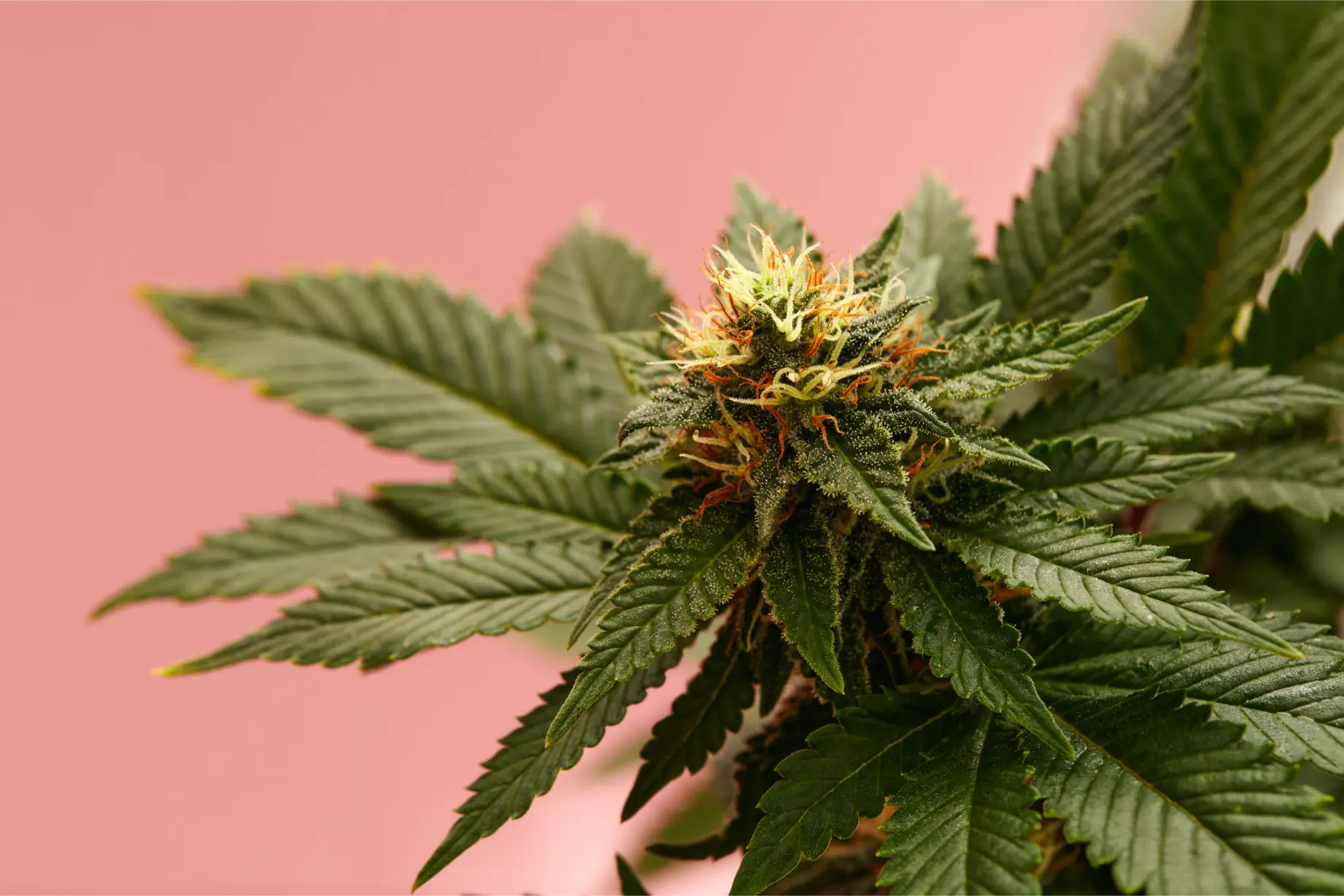
Question: My plants are in week 4 of flower under 650W LEDs in coco coir. I noticed brown spots on the top leaves, so I increased my Cal-Mag from 3 mL to 8 mL per gallon. Now the lower leaves are turning bright yellow between the veins and curling up. Did I cause this?
You have triggered an acute case of cation antagonism and osmotic salinity overload. Your original brown spots were likely caused by low room temperature under LEDs slowing xylem calcium transpiration, not an absence of calcium in your reservoir. By jacking your Cal-Mag dosage up to 8 mL per gallon, you flooded the root zone with massive excess calcium nitrate.
The overwhelming concentration of calcium ions competitively blocked magnesium uptake channels at the root membrane, inducing the sudden interveinal chlorosis (yellowing) on your lower leaves. Furthermore, the massive dose drove your total electrical conductivity past 2.8 mS/cm, causing the leaf curling (osmotic stress).
To rescue the crop: flush immediately with a mild 1.0 mS/cm leaching solution (pH 5.9) to strip excess salts. Reset your nutrient reservoir: drop Cal-Mag back to a normal 3 to 4 mL per gallon, add 0.5 grams per gallon of pure Epsom salts to restore magnesium balance, and elevate your grow room temperature to 28 °C (82 °F). Your lower leaf yellowing will halt, and new growth will emerge pristine within 4 days.
Substrate CEC and Water Chemistry: Coco Coir vs RO Water vs Hard Tap
Calcium and magnesium demands vary dramatically across growing media and water sources:
- Coconut Coir: Coco coir possesses a substantial Cation Exchange Capacity (CEC: 60 to 130 meq/100g of dry medium) dominated by naturally occurring monovalent potassium (ext{K}+) and sodium (ext{Na}+) ions adsorbed to lignocellulose matrices. Because divalent cations possess higher charge density and affinity for negative exchange sites than monovalent cations, unbuffered coco fibers aggressively strip divalent calcium and magnesium ions out of the passing nutrient film, adsorbing them onto the media while releasing displaced potassium and sodium into root zone solution. Cultivating in coco coir requires mandatory pre-buffering with concentrated calcium nitrate (EC 1.8 to 2.2 mS/cm) and an ongoing supplemental baseline of 30 to 50 PPM of elemental calcium throughout vegetative and early flowering phases to satisfy this exchange dynamic without starving the plant canopy.
- Pure Reverse Osmosis (RO) Water: TFC membranes strip 99% of dissolved minerals, leaving water with 0.0 EC and zero calcium or magnesium. When formulating nutrients with pure RO water, cultivators must reconstruct baseline mineral hardness by adding 0.3 to 0.4 mS/cm of Cal-Mag (approx. 150 to 200 PPM 500) before adding base fertilizers.
- Hard Municipal Tap Water: Tap water with an EC of 0.4 to 0.6 mS/cm already contains 60 to 100 PPM of dissolved calcium carbonate (CaCO3) and magnesium bicarbonate. Adding standalone Cal-Mag supplements on top of hard tap water creates severe mineral overload (EC > 2.6 mS/cm), inducing osmotic salt burn and locking out micronutrients.
Diagnosing Deficiencies: Foliar Symptoms, Necrotic Spotting, and Chlorosis
Accurately identifying calcium and magnesium deficiencies requires close inspection of foliar symptom progression:
| Deficiency Progression Stage | Calcium (Ca2+) Symptom Manifestation | Magnesium (Mg2+) Symptom Manifestation |
|---|---|---|
| Early Stage (Initial Symptoms) | Tiny pinhead-sized, golden-brown or rust-colored necrotic spots appear on upper fan leaves directly exposed to light; tips of emerging shoot leaves curl or “hook” downward | Pale green to yellow chlorosis begins between the main veins of oldest lower fan leaves; leaf veins and serrated margins remain distinctly dark green |
| Moderate Stage (Active Progression) | Brown necrotic spots coalesce into irregular dead patches; leaf margins crinkle, curl upward, and become brittle; young bud petioles become weak and snap easily | Interveinal chlorosis intensifies to brilliant golden-yellow banding; edges of lower leaves develop reddish-purple or brown necrotic scorch marks; curling upward like canoes |
| Severe Stage (Terminal Damage) | Apical shoot growth stalls completely; new floral bracts die off (bud rot look-alike); root tips turn dark brown, swell, and experience cellular lysis | Lower fan leaves turn completely white or tan, dry to a crisp, and drop off; chlorosis spreads rapidly upward into mid-canopy and sugar leaves surrounding buds |
Laboratory Tissue Analysis and Petiole Sap Testing Benchmarks
While visual inspection of foliar chlorosis and necrotic margins provides immediate diagnostic indicators, visual symptoms only manifest after significant physiological disruption has already occurred. Commercial cultivators utilize two laboratory methods to verify calcium and magnesium status before crop loss occurs: dry-weight leaf tissue analysis and real-time petiole sap extraction.
| Diagnostic Parameter | Deficient Threshold | Commercial Optimal Range | Toxicity / Antagonism Danger |
|---|---|---|---|
| Leaf Tissue Calcium (% Dry Weight) | < 1.20% | 1.80% to 2.40% (Vegetative & Early Bloom) | > 3.20% (Antagonizes Mg and K uptake) |
| Leaf Tissue Magnesium (% Dry Weight) | < 0.30% | 0.45% to 0.70% (Mid Bloom Peak) | > 0.95% (Induces Potassium lockout) |
| Petiole Fresh Sap Calcium (PPM) | < 600 PPM | 900 to 1,400 PPM | > 2,000 PPM |
| Petiole Fresh Sap Magnesium (PPM) | < 250 PPM | 400 to 700 PPM | > 1,100 PPM |
| Tissue Ca : Mg Ratio (Dry Basis) | < 1.8 : 1 | 2.5 : 1 to 3.5 : 1 | > 5.0 : 1 |
Dry-weight tissue sampling requires harvesting mature, fully expanded fan leaves from the upper third of the vegetative canopy, drying them at 60 °C for 48 hours, and submitting samples for inductively coupled plasma optical emission spectrometry (ICP-OES). Real-time petiole sap meters (using ion-selective electrodes) allow immediate on-site extraction from crushed petioles, giving growers same-day verification of xylem transport efficiency under fluctuating LED light intensities.
Elemental PPM Targets and the Golden 2:1 to 3:1 Ca:Mg Ratio
In professional commercial agronomy, nutrient recipes are engineered around pure elemental targets rather than milliliters-per-gallon ratios. Cannabis requires a steady Calcium-to-Magnesium elemental ratio of 2:1 to 3:1:
- Seedlings and Clones: 50 – 60 PPM Ca / 20 – 25 PPM Mg (Ratio: 2.5:1). Gentle conductivity to foster root elongation.
- Vegetative Expansion: 90 – 110 PPM Ca / 35 – 45 PPM Mg (Ratio: 2.5:1). High calcium support for rapid stem elongation and cell division.
- Transition and Floral Stretch (Weeks 1 – 3): 110 – 140 PPM Ca / 45 – 55 PPM Mg (Ratio: 2.5:1). Peak calcium demand to build sturdy flower stems capable of holding heavy colas.
- Peak Bulking (Weeks 4 – 7): 90 – 110 PPM Ca / 55 – 65 PPM Mg (Ratio: 1.8:1 to 2:1). Magnesium is slightly elevated via Epsom salts to maximize chlorophyll efficiency and ATP energy transfer during peak carbohydrate synthesis.
- Late Ripening (Final 10 Days): 40 – 50 PPM Ca / 20 – 25 PPM Mg (Ratio: 2:1). Reduced concentration during nutritional taper.

Question: Can I spray calcium nitrate as a foliar spray to fix calcium deficiency spots, or will it burn the buds?
You can spray calcium as a foliar drench during vegetative growth only, but you must never spray calcium nitrate onto developing floral clusters. Calcium nitrate leaves white salt residues on floral bracts and delivers unwanted nitrogen directly to buds. Worse, spraying liquid moisture onto dense developing colas invites Botrytis gray mold infections.
If you experience calcium deficiency during flowering, the problem is almost universally environmental (low transpiration) or root-zone antagonism (excess potassium or high EC). Optimize your room temperature to 28 °C, verify root-zone runoff EC is under 2.4 mS/cm, and deliver bioavailable calcium through the root zone via chelated calcium (Ca-EDTA or amino-chelated calcium). Foliar sprays should be restricted to vegetative canopies.
Fertilizer Chemistry: Calcium Nitrate, Chelates, and Magnesium Sulfate (Epsom Salt)
Cultivators must understand the chemical compounds that deliver calcium and magnesium:
- Calcium Nitrate (Ca(NO3)2): The primary industrial source of agricultural calcium (typically 19% Ca and 15.5% N). Highly soluble and economical. However, because it carries high nitrate nitrogen, adding heavy calcium nitrate during late flowering supplies unwanted nitrogen that delays ripening.
- Magnesium Sulfate (Epsom Salts, MgSO4· 7H2O): The pristine, gold-standard magnesium source (approx. 9.8% Mg and 12.9% S). Epsom salts supply pure magnesium alongside essential sulfate sulfur with zero nitrogen, making it the ideal supplement for late-stage flowering bulking.
- Chelated Calcium (Ca-EDTA / Ca-Amino): Calcium bound to organic chelating molecules. Fully bioavailable across wide pH ranges (pH 5.0 to 8.0) and resistant to precipitation with phosphates and sulfates. Superb for late-stage calcium supplementation without nitrogen.
- Emergency Foliar Epsom Salt Drench: When a canopy exhibits acute magnesium chlorosis during early flower, root uptake can take 5 to 7 days to deliver visible greening. Apply a rapid foliar spray of pure pharmaceutical-grade Epsom salts (15 grams / 1 tablespoon per gallon of warm RO water) with a drop of yucca wetting agent. Spray the undersides of leaves 30 minutes before lights-on. Leaf stomata absorb dissolved magnesium directly into spongy mesophyll cells within 6 hours, restoring dark green color within 48 hours.
Never mix concentrated calcium nitrate and concentrated magnesium sulfate together in the same small container or beaker of water. High concentrations of calcium and sulfate ions collide and undergo an instantaneous precipitation reaction, forming insoluble calcium sulfate (gypsum, CaSO4). Gypsum permanently falls out of solution as a milky white sludge that clogs drippers and deprives plants of both nutrients. Always dissolve calcium first in the full reservoir volume before adding Epsom salts.
Precipitation Chemistry: Tank A vs Tank B and Insoluble Salt Kinetics
The primary reason commercial cannabis liquid fertilizers are divided into two distinct concentrated parts (Part A and Part B) centers directly on the solubility thermodynamics of calcium. Calcium ions have an exceptionally high thermodynamic affinity for sulfate (SO42-) and phosphate (PO43-, HPO42-, and H2PO4–) polyatomic anions. In concentrated stock solutions exceeding 100 times working strength:
Ca2+ + SO42- + 2H2O ↔ CaSO4 · 2H2O ↓ (Ksp = 3.14 × 10⁻⁵)
3Ca2+ + 2PO43- ↔ Ca3(PO4)2 ↓ (Ksp = 2.07 × 10⁻³³)
When calcium nitrate and magnesium sulfate are blended directly in the same concentrated container without sufficient dilution, gypsum (calcium sulfate dihydrate) precipitates immediately out of aqueous solution as a gritty, insoluble white sediment. Once precipitated, this crystalline mineral solid cannot be redissolved by routine water stirring, permanently stripping both calcium and sulfur out of the feed solution and clogging automated drip emitters. Part A concentrates must strictly isolate calcium nitrate, iron chelates, and ammonium nitrate, while Part B contains magnesium sulfate, monopotassium phosphate, potassium nitrate, and micronutrient salts. Only after both parts are individually diluted into thousands of liters of reservoir water do free ion activities remain well below their critical solubility product constants (Ksp).
Practical Decision Matrix and Cultivator Decision Flowchart
Foliar application of calcium and magnesium serves strictly as a temporary emergency rescue vector rather than a primary nutrition program. When foliar sprays are applied, cuticular penetration occurs primarily through hydrophilic polar pores and open stomata. Chelated calcium (such as calcium amino acid complexes or calcium acetate) exhibits significantly higher cuticular transmission rates than inorganic calcium chloride or calcium nitrate, which can cause leaf burn if applied under intense direct lighting. Foliar sprays must always be formulated with a non-ionic organosilicone surfactant at 0.025% concentration to lower surface tension and ensure complete, uniform droplet spreading across the hydrophobic waxy cuticle of the leaf.
Follow this standardized engineering checklist to manage calcium and magnesium nutrition with commercial precision:
To master the complete scientific calculations behind reverse osmosis filtration and learn how membrane rejection rates dictate remineralization requirements, read our companion engineering guide: Reverse Osmosis Water for Cannabis: When It Helps and What Must Be Replaced.
Scientific References
- Marschner, H. (2012). Marschner’s Mineral Nutrition of Higher Plants (3rd ed.). Academic Press.
- Epstein, E., & Bloom, A. J. (2005). Mineral Nutrition of Plants: Principles and Perspectives (2nd ed.). Sinauer Associates.
- Bugbee, B. (2004). Nutrient management in recirculating hydroponic culture. Acta Horticulturae, 648, 99-112.
- Zheng, Y. (2021). Handbook of Cannabis Production in Controlled Environments. CRC Press.
- Sonneveld, C., & Voogt, W. (2009). Plant Nutrition of Greenhouse Crops. Springer Science & Business Media.
- White, P. J., & Broadley, M. R. (2003). Calcium in plants. Annals of Botany, 92(4), 487-511.
- Taiz, L., Zeiger, E., Møller, I. M., & Murphy, A. (2015). Plant Physiology and Development (6th ed.). Sinauer Associates.
- van Delden, S. H., et al. (2020). Current and future perspectives on hydroponic cannabis cultivation. Industrial Crops and Products, 158, 113048.
Share this article
A quick overview of the topics covered in this article.