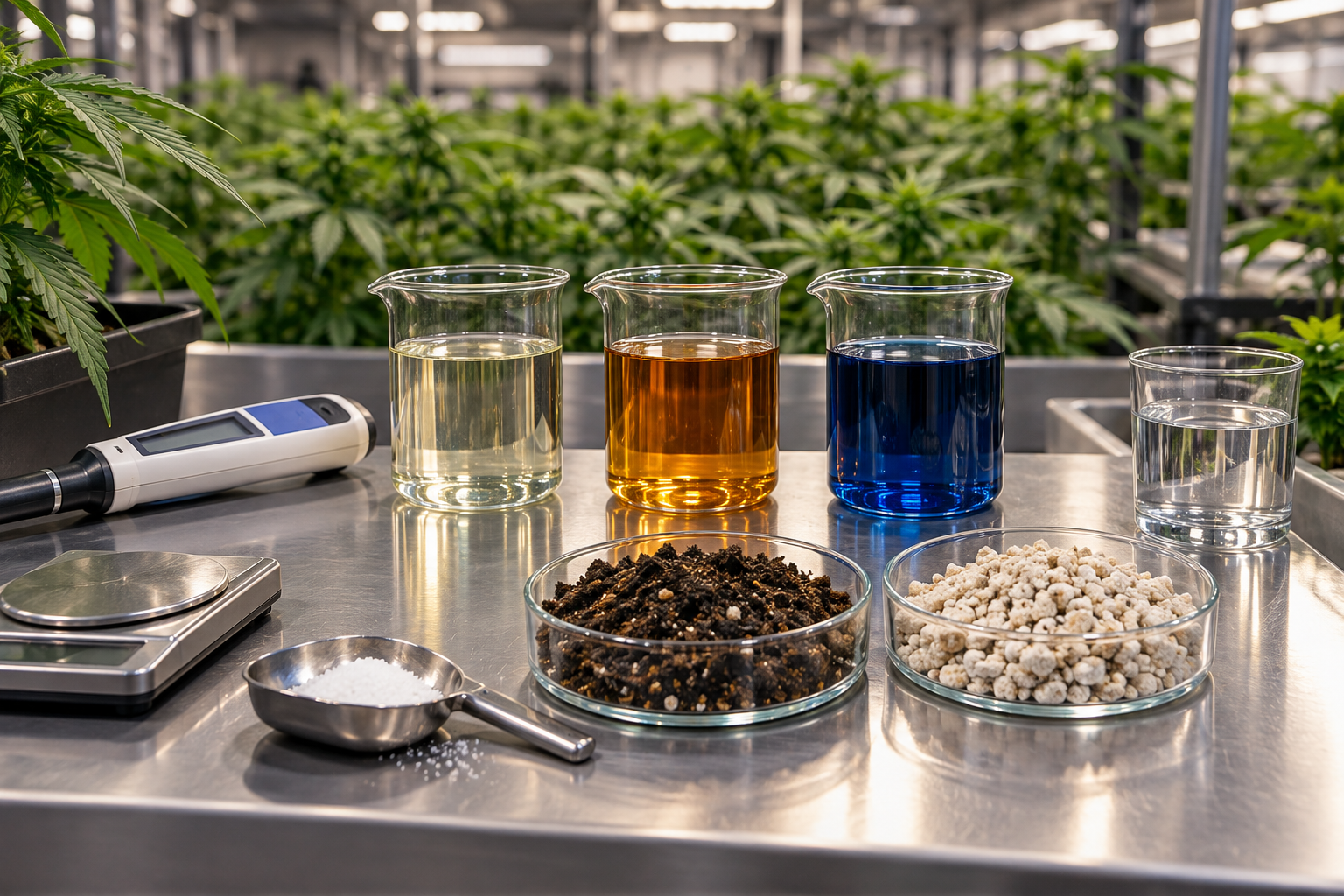
Organic vs Synthetic Cannabis Nutrients: Chemistry, Uptake, and Decision Guide
The debate between organic and synthetic nutrients is one of the most persistent and polarized arguments in cannabis cultivation. Synthetic fertilizer proponents argue that purified mineral salts offer unrivaled elemental precision, immediate bioavailability, automated fertigation reliability, and maximized flower biomass yields. In contrast, organic advocates champion soil ecological biodiversity, sustainable living root zones, complex enzymatic nutrient cycling, and superior terpene and cannabinoid profiles. Yet, from the strict physiological perspective of the cannabis plant root, this ideological dichotomy dissolves into cellular chemistry. Plant roots do not read fertilizer labels; they absorb essential macro- and micronutrients almost entirely as simple, dissolved inorganic ions. Deciding between organic and synthetic programs is not a matter of biological superiority, but a strategic evaluation of operational scale, cultivation medium, automation infrastructure, labor allocation, and final product objectives. Understanding the fundamental chemistry of ion absorption, mineralization kinetics, and root-zone dynamics allows cultivators to select the optimal fertility architecture for their specific production facility.
Plant Physiology and Root-Zone Chemistry: The Cellular Reality of Ion Absorption
To understand the difference between organic and synthetic fertilizers, one must examine the molecular boundary where root epidermal cells interface with the substrate solution. Regardless of whether an element originates from an industrially refined synthetic salt or a decomposing organic meal, cannabis root cells absorb elements almost exclusively as inorganic ions dissolved in water:
- Nitrogen: Absorbed primarily as nitrate anions (NO3–) and ammonium cations (NH4+).
- Phosphorus: Absorbed as monobasic orthophosphate (H2PO4–) and dibasic orthophosphate (HPO42-).
- Potassium, Calcium, and Magnesium: Absorbed as hydrated cations (K+, Ca2+, Mg2+).
- Sulfur: Absorbed as sulfate anions (SO42-).
- Micronutrients: Absorbed as divalent or trivalent metal cations (Fe2+, Zn2+, Mn2+, Cu2+) or neutral boric acid [B(OH)3].
To the plasma membrane transporter proteins embedded in root hair epidermal cells (such as high-affinity nitrate transporters [NRT1/NRT2] or potassium inward-rectifying channels [AKT1]), an orthophosphate ion derived from synthetic monopotassium phosphate (MKP) is chemically and functionally indistinguishable from an orthophosphate ion freed from bone meal by microbial phosphatase enzymes. The plant absorbs both identical chemical entities through identical thermodynamic and electrochemical proton-coupling mechanisms.
The Fundamental Divide: The Microbial Mineralization Bottleneck
The true physiological and operational difference between organic and synthetic nutrients lies not in the final absorbed ion, but in the delivery pathway and conversion kinetics. Synthetic mineral fertilizers consist of pre-dissociated, refined salts that provide instant ionic availability without requiring biological mediation. Organic fertilizers consist of complex organic macromolecules (proteins, polypeptides, lipids, phytates) that cannot be directly absorbed in significant quantities. They depend on an active soil food web of bacteria, actinomycetes, and saprophytic fungi to enzymatically break covalent organic bonds and mineralize them into simple inorganic ions. In organic systems, the microbial population controls the nutrient delivery valve; in synthetic systems, the cultivator controls the valve directly via the injection pump.
Enzymatic Cleavage and Microbial Conversion Pathways
When a cultivator applies an organic input such as feather meal, fish hydrolysate, or alfalfa meal, the nitrogen is bound within complex polypeptide chains. Soil heterotrophic bacteria must first secrete extracellular protease and peptidase enzymes to hydrolyze proteins into short peptides and free amino acids. Next, ammonifying bacteria execute deamination, converting amino acids into inorganic ammonium (NH4+). Finally, chemolithoautotrophic nitrifying bacteria (specifically Nitrosomonas and Nitrobacter) oxidize ammonium into nitrite (NO2–) and then into plant-preferential nitrate (NO3–).
This multi-step biological cascade requires specific environmental conditions: substrate temperatures between 20 °C and 25 °C, abundant dissolved oxygen, balanced substrate moisture, and an established microbial biomass. If substrate temperatures drop below 16 °C, or if soil becomes waterlogged and hypoxic, microbial enzymatic activity ceases immediately. Under these conditions, organic nitrogen remains locked within organic molecules, causing plants to starve even when pots are saturated with organic fertilizer. Synthetic mineral fertilizers, by contrast, dissolve instantly in cold or warm water, ensuring uninterrupted ionic uptake regardless of biological substrate activity.

Vibrant organic cannabis foliage exhibiting natural terpene profiles and balanced secondary metabolite synthesis.
Nutrient Demand Dynamics Across Stages, Media, and Environments
The decision to deploy organic or synthetic fertility must account for the physical cultivation substrate, environmental transpiration drivers, and stage-specific plant metabolic velocity:
1. Substrate Suitability and Cation Exchange Capacity (CEC)
The growing medium dictates whether organic mineralization can function effectively. Living organic soil beds and compost-amended peat mixtures possess high Cation Exchange Capacity (100 to 150 cmol/kg) and diverse indigenous organic matter, providing the physical architecture, moisture buffers, and carbon food webs required to sustain microbial communities across multi-month cycles. In these living soils, organic top-dressings and biological drenches thrive.
Conversely, inert soilless substrates such as rockwool, perlite, and aqueous hydroponics (Deep Water Culture, Nutrient Film Technique) possess near-zero CEC and zero indigenous carbon. Injecting thick, unrefined organic meals or unfiltered compost extracts into inert rockwool or automated recirculating systems is an agronomic disaster: suspended solids clog irrigation drip emitters, while un-aerated organic residues rot, depleting dissolved oxygen and creating virulent outbreaks of Pythium root rot. Inert hydroponic architectures require 100% water-soluble, highly refined mineral salts. Coco coir represents an intermediate medium: while naturally suited to synthetic fertigation due to high drainage rates, pre-buffered coco can support hybrid or refined organic programs when biological inoculants are supplemented regularly.
2. Environmental Transpiration and Metabolic Velocity
In modern commercial indoor cultivation utilizing high-efficiency LED fixtures delivering photosynthetic photon flux densities (PPFD) between 1,000 and 1,500 μmol/m2/s, accompanied by elevated ambient temperatures (26 °C to 29 °C) and supplemental carbon dioxide (CO2 enrichment at 1,000 to 1,400 ppm), the daily metabolic photosynthetic rate of cannabis is maximized. Under these hyper-driven environmental conditions, the plant vascular xylem pulls water and dissolved nutrients at extreme velocity.
Under high PPFD and CO2, plant demand for nitrogen during the vegetative stretch (Weeks 1 to 3 of flower) frequently reaches 180 to 220 ppm N daily, while potassium demand peaks at 240 to 280 ppm K during floral bulking (Weeks 4 to 6). In organic living soil systems, the biological mineralization rate of solid top-dressings is often too slow to keep pace with this artificial metabolic velocity, leading to mid-flower canopy chlorosis and depressed final bud density. Synthetic fertigation allows operators to dial in exact elemental PPM concentrations on a minute-by-minute basis, satisfying high photosynthetic demand without biological lag.
Can I use an EC meter to measure organic liquid fertilizers like fish hydrolysate and kelp?
Question sent by: Liam O’Connor, via email.
“I am switching from synthetic salts to a 100% organic liquid bottled line. I mixed the recommended dose of organic fish hydrolysate and molasses into 5 gallons of water, but when I dropped my digital EC probe in, it only read 0.4 dS/m. In synthetic, that dose would read 2.0 dS/m. Did I under-dose, and how do I measure organic fertilizer strength accurately?”
You did not necessarily under-dose; you are encountering the fundamental physics of electrical conductivity. A digital electrical conductivity (EC) meter operates by passing an electrical current between two electrodes and measuring the resistance of the solution. Electrical current can only be conducted by free, charged inorganic ions (such as K+, Ca2+, Mg2+, NO3–, and SO42-).
In organic liquid fertilizers, the vast majority of nutrients are locked within uncharged, non-dissociated organic molecules: proteins, amino acid polymers, carbohydrates, and complex lipids. Because these uncharged molecules carry no electrical charge in solution, they are completely invisible to an EC probe. An organic fish hydrolysate might read only 0.4 dS/m in your mixing bucket (measuring only the trace soluble mineral salts naturally present in fish tissues), yet once poured into warm, living soil, bacterial proteases will mineralize those proteins into hundreds of PPM of ionic ammonium and nitrate over the next 5 to 10 days.
If you add more organic fertilizer to force the mixing bucket EC up to 2.0 dS/m, you will introduce an extreme, catastrophic overdose of organic nitrogen that will severely burn root hairs and rot your substrate as it mineralizes. With organic inputs, never dose based on bucket EC; dose strictly by volumetric product measurements (milliliters per gallon or grams per pot) according to calculated elemental delivery targets, and monitor PourThru leachate and leaf tissue testing to assess real nutritional status.
Deficiencies, Antagonisms, and Salt Buildup: Identifying Look-Alikes
Diagnosing root-zone nutritional disorders requires separating the distinct failure modes inherent to synthetic salt programs from those typical of organic biological systems:
1. Synthetic Salt Accumulation and Osmotic Plasmolysis
In synthetic mineral programs, the most frequent operational failure is cumulative salt accumulation resulting from insufficient irrigation runoff. When plants absorb water faster than they absorb mineral ions (common during hot, dry lights-on periods), residual fertilizer salts precipitate in substrate pore spaces, forming encrusted crystals of calcium sulfate (gypsum) and potassium salts. Substrate electrical conductivity can spike above 4.0 to 6.0 dS/m.
This hyperosmotic condition pulls water out of root cortical cells via exosmosis, causing fine root hair tips to desiccate and die. The plant displays classic “fertilizer burn”: crispy, bleached leaf tips, necrotic margins, downward leaf clawing, and induced calcium/magnesium lockouts. Inexperienced growers frequently misdiagnose these symptoms as acute nutrient deficiencies and compound the crisis by adding even more fertilizer.
2. Organic Mineralization Stalls and Cold-Substrate Lockouts
In organic cultivation, deficiency symptoms rarely stem from a lack of nutrients in the substrate; they are driven by biological mineralization failure. If container media drops below 18 °C (64 °F), microbial enzyme kinetics stall. Nitrification rates drop by up to 70%, and phosphatase activity halts. Cannabis plants develop severe lower-canopy yellowing (nitrogen starvation) and dark purple petioles with necrotic leaf spots (phosphorus starvation), despite the substrate being packed with organic blood meal and rock phosphate.
Similarly, overwatering living soil fills macropores with stagnant water, displacing oxygen. Deprived of oxygen, beneficial obligate aerobic bacteria die, while anaerobic denitrifying bacteria reduce nitrate back into volatile nitrous oxide gas, stripping the root zone of plant-available nitrogen. Warming the media to 22 °C and restoring oxygen via proper dry-back intervals instantly resolves the “deficiency” without adding any fertilizer.
3. The Mulder Cation Antagonism Triangle: K, Ca, and Mg Interactions
Both organic and synthetic cultivators must navigate the fundamental laws of competitive cation inhibition, formalized in Mulder’s Nutrient Antagonism Chart. Positively charged cations (K+, Ca2+, Mg2+, NH4+) compete for the same non-selective cation channels and binding sites on root cortical cell membranes. In synthetic fertigation, over-applying potassium during mid-flower (exceeding 250 to 300 ppm K) creates severe competitive inhibition: high external potassium concentrations block divalent magnesium uptake at the CorA/MRS2 magnesium transporter channels, inducing acute interveinal chlorosis on lower fan leaves even if reservoir magnesium is abundant.
In organic systems, a parallel antagonism occurs when raw animal manures or un-composted blood meals undergo rapid ammonification. The surge of positively charged ammonium ions (NH4+) directly suppresses the uptake of calcium (Ca2+), causing severe apical tip burn and marginal leaf necrosis in rapidly expanding vegetative shoots. Balancing the elemental ratio of K:Ca:Mg (ideally maintained at approximately 4:2:1 in vegetative growth and shifting to 4:1:1 in mid-flower) is essential to prevent induced cation deficiencies across both fertility styles.

Potted cannabis receiving precision fertigation, balancing root-zone electrical conductivity and active ion uptake.
Analytical Auditing: What to Measure in Organic vs Synthetic Systems
Operating either fertility program with commercial repeatability requires monitoring objective agronomic metrics tailored to the chemistry of the system:
1. Electrical Conductivity (EC) and Delta EC Monitoring
In synthetic mineral systems, daily electrical conductivity monitoring is mandatory. Measure input feed EC versus composite runoff leachate EC (ΔEC = ECrunoff – ECfeed). In soilless coco or rockwool, Delta EC should remain strictly between +0.2 and +0.6 dS/m. If Delta EC exceeds +0.8 dS/m, salts are accumulating, signaling an immediate need to increase the leaching fraction. In organic soil, input EC is an unreliable metric, but 1:2 soil-to-water slurry extractions or PourThru testing provide a valuable window into total background ionic salinity, which should remain below 1.8 dS/m to protect sensitive fungal hyphae.
2. Substrate pH and Alkalinity Buffering
In synthetic hydroponics and coco coir, substrate pH must be maintained within a tight window of 5.8 to 6.2. Because synthetic salts lack significant organic buffering capacity, pH drifts quickly based on the plant’s preferential cation/anion uptake (absorbing NH4+ drops pH; absorbing NO3– raises pH). In organic living soil, the massive Cation Exchange Capacity of humus and dolomitic limestone acts as a natural biological buffer, safely stabilizing root-zone pH between 6.2 and 6.8. In organic systems, continuously chasing runoff pH with liquid phosphoric acid (“pH Down”) is counterproductive, as harsh synthetic acids strip the natural calcium carbonate buffer and harm beneficial microorganisms.
3. Handheld Petiole Sap Analysis (Brix and Nitrate)
For direct operational feedback on plant nutritional status, commercial cultivators utilize handheld ion-selective electrode (ISE) sap meters (Horiba LAQUAtwin) and optical Brix refractometers. Extracting raw sap from node 4 or 5 petioles provides real-time data within two minutes:
- Sap Nitrate (NO3–): Vegetative cannabis should read 800 to 1,200 ppm NO3–. By mid-flowering, nitrate should taper to 400 to 600 ppm, and by late-flowering fade, drop below 200 ppm.
- Sap Brix Index: Measures dissolved sucrose, amino acids, and minerals in the vascular phloem. High-performing organic canopies routinely achieve 10° to 14° Brix, whereas synthetic canopies often measure between 5° and 8° Brix due to high cellular water content. High sap Brix correlates with superior pest resistance and thicker cell wall development.

Robust vegetative canopy developing thick cell walls and high resistance under sustainable organic fertility management.
4. Laboratory Leaf Tissue Analysis: Dumas Combustion and ICP-OES
To definitively diagnose nutritional status independent of root-zone chemistry, commercial operations submit leaf tissue samples to certified agronomic laboratories bi-weekly. Technicians harvest the Most Recently Matured Leaf (MRML) at node 4 or 5 during peak photoperiod. Total nitrogen is quantified via the automated Dumas combustion method, while phosphorus, potassium, calcium, magnesium, and micronutrients are analyzed via Inductively Coupled Plasma Optical Emission Spectrometry (ICP-OES):
- Vegetative Tissue Benchmarks: Total nitrogen should register between 3.8% and 4.8% dry weight; phosphorus between 0.4% and 0.7%; and potassium between 2.5% and 3.5%.
- Mid-Flower Tissue Benchmarks: Nitrogen should gracefully decline to 2.8% to 3.4% dry weight, preventing leafiness and protecting terpene synthesis, while phosphorus remains stable at 0.4% to 0.5% and potassium climbs to 3.0% to 4.0% to support osmotic floral turgor.
- Micronutrient Thresholds: Iron should register between 80 and 140 mg/kg Fe; manganese between 50 and 100 mg/kg Mn; and zinc between 35 and 70 mg/kg Zn. Tissue values falling below these ranges confirm true systemic physiological starvation, regardless of what fertilizer is applied to the pot.
Does organic cannabis really produce better terpenes and flavor than synthetic cannabis?
Question sent by: Maya Henderson, via email.
“Dispensary consumers and craft connoisseurs insist that organic living soil flower tastes smoother and smells richer than synthetic salt-grown flower. But commercial hydroponic growers claim terpenes are purely genetic and synthetic nutrients produce identical chemical profiles. What does the scientific evidence actually show?”
The scientific reality is nuanced and supported by recent academic metabolomic studies. Genetics establishes the absolute biological ceiling and terpene potential of a cannabis cultivar; no nutrient program can force a Blue Dream cultivar to express the terpene profile of a Garlic Cookies. However, the cultivation environment and fertility regime strongly dictate what percentage of that genetic terpene potential is expressed.
Peer-reviewed research (Bernstein et al., 2019; Shiponi & Bernstein, 2021) demonstrates that secondary metabolite production (terpenes, cannabinoids, and flavonoids) is a plant defense mechanism regulated by specialized enzymatic pathways, specifically the MEP (methylerythritol phosphate) and mevalonate pathways in glandular trichome secretory cells. In pure synthetic systems, plants frequently receive excessive, continuous luxury supplies of mineral nitrogen throughout flowering. High nitrogen availability signals the plant to invest carbon heavily into primary vegetative biomass growth rather than secondary defense compounds, often resulting in lower total terpene percentages and residual chlorophyll that creates harsh smoke.
In organic living soil systems, background mineral nitrogen naturally tapers during flowering, while complex rhizosphere microflora, humic substances, and fungal hyphae trigger mild biological elicitation (Systemic Acquired Resistance). This natural metabolic shift prompts the plant to redirect photosynthetic carbon toward synthesizing aromatic terpenes and dense resin heads. For an exhaustive analysis of the physiological and chemical trade-offs between nutrition, mineral elements, and terpene synthesis, explore our comprehensive guide on whether nutrients can improve cannabis flavor and terpenes.
Comprehensive Comparative Framework: Organic vs Synthetic Programs
The following detailed decision matrix evaluates organic, synthetic, and hybrid cultivation systems across eight critical operational and commercial performance parameters:
| Performance Metric | Pure Synthetic Mineral Fertigation | Pure Living Organic Soil | Hybrid Bio-Mineral Program |
|---|---|---|---|
| Nutrient Bioavailability | Instantaneous; 100% ionic form; zero biological lag time. | Slow to moderate; requires microbial mineralization of organic bonds. | Fast base ionic delivery buffered by active amino acid chelates. |
| Yield Potential (Biomass) | Maximum (60 to 75+ g/sq ft); ideal for high-PPFD commercial scale. | Moderate to High (45 to 60 g/sq ft); limited by biological mineralization rates. | Very High (55 to 70 g/sq ft); captures synthetic speed with organic health. |
| Terpene & Flavor Expression | Good to Moderate; risk of muted terpene expression if nitrogen is over-applied. | Superior; diverse microbial elicitation optimizes terpene synthase pathways. | Excellent; organic biostimulants stimulate trichome resin accumulation. |
| Automated Drip Reliability | Flawless; 100% soluble salts pass through fine filters with zero biofilm. | Poor in low-orifice drip systems; requires manual drenches or gravity emitters. | Good; requires clean, micronized soluble organics and regular line flushes. |
| Substrate Reusability | Poor; mineral salts accumulate; coco/rockwool often discarded post-harvest. | Exceptional; soil beds improve over years of biological cycling and re-amending. | Moderate; coco coir can be reused 2 to 3 times following stepped leaches. |
| Heavy Metal Contamination Risk | Extremely Low; refined technical-grade salts contain negligible heavy metals. | Moderate to High; mined rock phosphates and un-tested guanos carry lead/arsenic. | Low; utilizes purified mineral bases and laboratory-tested biostimulants. |
| Labor & Operational Simplicity | Low manual labor once automated dosers and crop steering sensors are set. | High physical labor: bed prep, top-dressing, compost tea brewing, soil testing. | Balanced; requires dual-tank mixing protocols and weekly biological drenches. |
| Input Cost per Finished Pound | Lowest ($5 to $12 per lb using raw technical dry salts). | High initial bed setup ($30-$50/lb); drops to $15-$20/lb with re-amended beds. | Moderate ($15 to $25 per lb using mineral bases plus specialized humates). |
Systematic Troubleshooting Sequence: Single-Variable Correction
When nutritional anomalies or canopy stress emerge, cultivators must follow a disciplined scientific correction sequence, avoiding the catastrophic practice of stacking multiple additives simultaneously:
Step 1: Environmental and Moisture Verification
Before altering any fertilizer recipe, verify environmental parameters. Check canopy PPFD, room temperature (26 °C to 28 °C lights-on), and room Vapor Pressure Deficit (1.0 to 1.3 kPa). Next, audit substrate core temperature: if media is below 18 °C, roots cannot absorb phosphorus, and microbial mineralization stops. Check container moisture weight: if pots are heavy and waterlogged, root hypoxia is inducing false deficiency symptoms; enforce a 15% to 20% volumetric water content dry-back before intervening.
Step 2: Objective Chemical Runoff Audit
Perform a standardized PourThru test (Cavins et al., 2000) using 200 mL of distilled water on a representative pot. Measure the initial 50 mL of displaced leachate. If PourThru pH is outside 5.8 to 6.2 (in soilless) or 6.2 to 6.8 (in soil), adjust your input feed buffer. If Delta EC exceeds +0.8 dS/m, execute a stepped leaching reset using a balanced, reduced-strength complete nutrient solution at 1.2 to 1.4 dS/m EC. Never flush living or soilless media with pure 0.0 EC reverse osmosis water, which causes severe hypoosmotic cell lysis.
Step 3: Single-Variable Adjustment and 72-Hour Audit
Adjust strictly one variable at a time (e.g., modifying input nitrate PPM, altering irrigation dry-back frequency, or introducing an amino acid chelate). Allow a minimum 72-hour physiological response window. Evaluate emerging apical shoot tips and monitor petiole sap nitrate and Brix to confirm positive vascular recovery before making further adjustments.
Scientific Evidence Check: Separating Agronomic Facts from Folklore
Commercial cultivators should evaluate their fertilizer choices against established academic plant nutrition research rather than marketing campaigns:
1. The Heavy Metal Contamination Paradox in Raw Organics
Many growers assume that “organic” automatically equates to “pure” and “chemical-free”. In reality, mined organic rock minerals (such as raw soft rock phosphate, greensand, and bat guano) frequently carry naturally occurring heavy metals, including lead (Pb), cadmium (Cd), and arsenic (As). In states and jurisdictions with stringent parts-per-billion microbial and heavy metal compliance testing (such as California and Michigan), crops fed heavy doses of un-tested organic rock dusts frequently fail mandatory state testing. Conversely, technical-grade synthetic mineral salts (such as pharmaceutical-grade calcium nitrate and monopotassium phosphate) are industrially synthesized and purified, containing virtually undetectable heavy metal impurities.
2. Nutrient Use Efficiency and Environmental Leaching
Studies evaluating Nutrient Use Efficiency (NUE) demonstrate that over-fertilization is endemic to both cultivation styles. In high-input synthetic drain-to-waste systems, discarding 20% to 30% runoff into municipal sewer systems wastes valuable fertilizer and introduces agricultural nitrate runoff into local watersheds. In organic living soil beds, over-amending with heavy composts and un-stabilized animal manures can lead to phosphorus leaching and gaseous nitrous oxide emissions. Optimizing nutrient efficiency requires matching elemental PPM delivery precisely to the transpiration curve of the cultivar, regardless of the input source.
Cultivator Decision Checklist: Selecting Your Fertility Program
Use this standardized operational checklist to determine whether organic, synthetic, or hybrid nutrition aligns with your production facility:
- Cultivation medium is assessed: choose synthetic or hybrid for rockwool and automated coco; choose organic for living soil beds.
- Facility PPFD and CO2 targets are evaluated: hyper-driven environments (>1,200 μmol PPFD) benefit from high-precision synthetic mineral bases.
- Irrigation delivery infrastructure is verified: automated pressure-compensating drip systems require 100% water-soluble mineral or micronized inputs.
- Target market priority is established: prioritize synthetic for maximized commercial biomass; prioritize organic or hybrid for boutique craft terpene profiles.
- Heavy metal compliance certificates (COAs) are verified for all mined organic rock dusts and animal meals before bulk purchase.
- Substrate root-zone temperature is confirmed above 20 °C before relying on biological organic mineralization.
- Input EC dosing is calibrated correctly: never dose organic liquid fertilizers based on bucket EC meter readings alone.
- Source water alkalinity and mineral hardness are analyzed via laboratory testing to select appropriately buffered nutrient formulations.
- PourThru leachate testing is scheduled weekly to audit real-time root-zone Delta EC and substrate pH buffering.
- A single-variable diagnostic sequence is enforced when troubleshooting foliar symptoms, avoiding multi-additive shock.
Scientific References
- Barker, A. V., & Pilbeam, D. J. (2015). Handbook of Plant Nutrition (2nd ed.). CRC Press, Boca Raton, FL.
- Bernstein, N., Gorelick, J., Zerahia, R., & Koch, S. (2019). Impact of environmental conditions and nutrient availability on secondary metabolite production in medical cannabis. Industrial Crops and Products, 138, 111467.
- Cavins, T. J., Whipker, B. E., Fonteno, W. C., Harden, B., McCall, I., & Gibson, J. L. (2000). Monitoring and Managing pH and EC Using the PourThru Extraction Method. Horticultural Information Leaflet 590, North Carolina State University.
- Marschner, H. (2012). Marschner’s Mineral Nutrition of Higher Plants (3rd ed.). Academic Press, London.
- Shiponi, S., & Bernstein, N. (2021). The response of medical cannabis (Cannabis sativa L.) to arbuscular mycorrhizal fungal inoculation under varying phosphorus availability. Industrial Crops and Products, 169, 113645.
- Taiz, L., Zeiger, E., Møller, I. M., & Murphy, A. (2015). Plant Physiology and Development (6th ed.). Sinauer Associates, Sunderland, MA.
- Zheng, Y. (2021). Handbook of Cannabis Production in Controlled Environments. CRC Press, Boca Raton, FL.
Share this article
A quick overview of the topics covered in this article.