
Cannabis Pollination Outdoors: Pollen Drift, Seeded Flowers, and Neighboring Plants
Outdoor cannabis can be pollinated without the grower ever seeing the plant that released the pollen. Cannabis is wind-pollinated, so pollen can leave a male plant, a monoecious hemp crop, or an intersex flower and move with air currents before landing on receptive female flowers. The practical result can range from a few isolated seeds to widespread seed development across a flowering plant.
The first decision is not to guess how far the pollen came from. It is to determine whether a viable pollen source was present while receptive flowers were open, how much of the crop appears affected, and whether the event is still active. Distance matters, but it is only one part of the exposure. Source size, wind, atmospheric mixing, flowering overlap, barriers, terrain, and the timing of pollen release all change the risk.
This resource stays focused on outdoor pollination. It explains how pollen moves, when female flowers are most exposed, how fertilization changes flower development, how to distinguish a pollination event from ordinary maturation, and what to record so the result can be interpreted later. Broader outdoor site planning, nutrition, watering, pests, and seasonal cultivation belong in the Outdoor Grow Comprehensive Guide.
In This Resource
Outdoor Pollination Decisions
- What Outdoor Pollination Actually Requires
- How Cannabis Pollen Moves Outdoors
- The Receptive Window: When Flowers Are at Risk
- How Pollination Changes Flower Development
- How to Check Whether Flowers Were Pollinated
- What to Do When Pollen Is Found or Suspected
- Estimate Neighboring-Plant Risk Without Inventing a Safe Distance
- Record the Event and Verify the Outcome
What Outdoor Pollination Actually Requires
Pollination and fertilization are related but not identical events. Pollination begins when a pollen grain reaches a receptive stigma. If that pollen is viable and compatible, it can germinate, form a pollen tube, and deliver sperm cells to an ovule. Fertilization is the successful union that follows. Once an ovule is fertilized, the plant begins investing in seed development.
This distinction matters because seeing pollen nearby does not prove that every flower has been fertilized. Likewise, finding a seed later proves that at least one ovule was fertilized, but it does not identify the pollen source by itself. A reliable diagnosis combines source evidence, timing, flower development, and later seed confirmation.
Pollination, fertilization, and seed set
Pollination is the arrival of pollen on a receptive female flower. Fertilization occurs when a viable pollen grain successfully delivers male genetic material to an ovule. Seed set is the resulting development of fertilized ovules into seeds. One stage can begin without every exposed flower reaching the next stage.
The pollen source may be obvious or completely outside the garden
An outdoor pollen source can be a male cannabis plant in the same garden, a male that was removed too late, a nearby hemp or seed-production crop, a volunteer plant, or an intersex flower producing functional pollen. The previous Weedth resource on intersex flowers is a separate diagnostic problem because the first task there is identifying opposite-sex floral structures. Here, the question begins after pollen is possible or suspected.
Source strength matters. A large flowering male or a field containing many pollen-producing plants can release vastly more pollen than a single isolated anther. That difference is one reason field-scale pollen-dispersal studies cannot be converted into a guaranteed home-garden distance.
Important: Treat pollen exposure as a probability problem, not a binary circle around the garden. A source can be close and release little viable pollen, or far away and contribute pollen under favorable transport conditions.
Unpollinated and pollinated flowers can coexist on the same plant
Outdoor exposure is rarely perfectly uniform. One side of a plant may face the source or prevailing wind. A canopy edge may be more exposed than its interior. Pollen release can also occur for only part of the flowering period. For that reason, the presence of several seeds does not automatically mean every flower on the plant is equally seeded.
When you inspect, think in zones. Note which plant, branch, canopy side, and flower age show the strongest evidence. Spatial patterns often tell you more than a single seed count from the whole harvest.
“I found two seeds in one branch. Does that mean the whole outdoor plant was pollinated?”
Question sent by: Daniel Morgan, via email.
It proves that fertilization occurred somewhere on that branch, but it does not prove uniform pollination across the plant. Mark the affected branch, inspect comparable flowers on the exposed and sheltered sides, and continue checking during seed development. A localized event and a broad pollen cloud can leave very different patterns.
How Cannabis Pollen Moves Outdoors
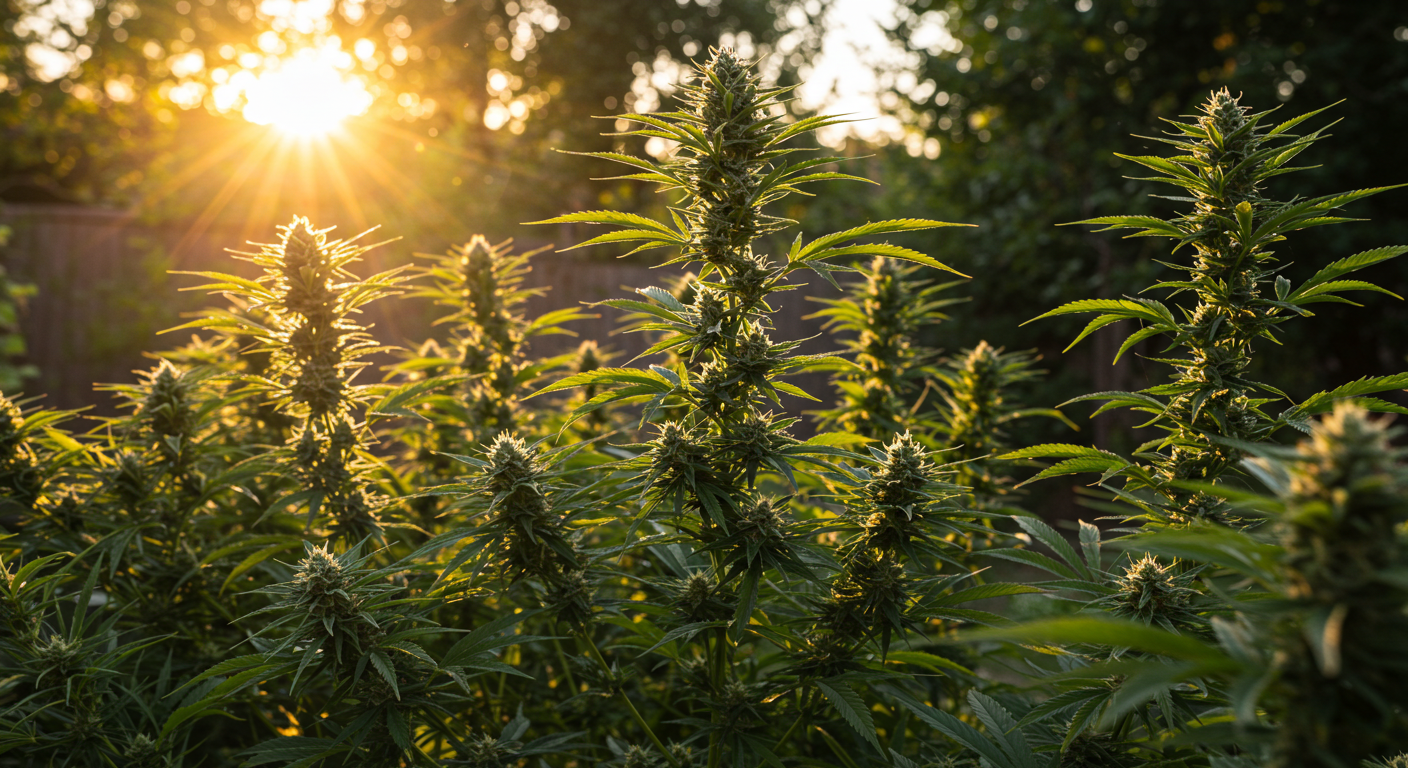
Cannabis is primarily wind-pollinated. Pollen grains are small enough to become airborne and move downwind from the source. The concentration generally falls as distance increases because grains disperse through a larger volume of air and many deposit along the way. The decline, however, is not a simple straight line and does not end at one universal boundary.
A 2024 atmospheric modeling study of hemp pollen across the continental United States found a steep reduction in modeled deposition within the first few kilometers, but also a long dispersal tail whose behavior changed with season, region, time of day, wind shear, and convective turbulence. Earlier field work cited by that study still detected substantial pollen deposition hundreds of meters from a source field. These are field-scale findings, not home-grow guarantees, but they demonstrate why “my neighbor is far enough away” is not a measurement.
Cannabis Pollen Drift and Neighboring Plants
Neighboring receptive cannabis plants are at risk when three things overlap: viable pollen is released, the atmosphere transports at least some of it to the plants, and receptive female flowers are present at that time. Remove any one of those conditions and fertilization risk falls sharply.
The amount of risk is not determined by distance alone. A small garden downwind of one male plant is different from a garden near a large pollen-producing field. A calm humid morning, a turbulent warm afternoon, a terrain channel, a windbreak, and an exposed ridge can all alter transport and deposition. No single isolation number can absorb all of those variables.
| Factor | How It Changes Outdoor Pollen Risk |
|---|---|
| Source size | More pollen-producing flowers create a larger pollen load. One isolated anther and a flowering male plant are not equivalent sources. |
| Release timing | Risk rises when pollen release overlaps with receptive pistillate flowers. A source that sheds before or after the receptive window has less opportunity to fertilize the crop. |
| Wind and turbulence | Air movement controls direction, mixing, and how quickly pollen leaves the source area. Gusts and changing wind directions can expose multiple canopy sides. |
| Distance | Deposition usually declines strongly with distance, but a low-concentration tail can continue beyond the distances that receive most pollen. |
| Terrain and structures | Buildings, hedges, fences, slopes, and vegetation can alter airflow. They may reduce some direct transport while creating eddies or channeling air elsewhere. |
| Flower receptivity | Pollen cannot create seed where no receptive ovule is available. Flower developmental stage therefore matters as much as pollen movement. |
Field Advice: If you are trying to reconstruct an exposure, record wind direction and the position of affected branches before moving plants or pruning. The original spatial pattern can disappear once the garden is rearranged.
Rain and humidity do not create a dependable protection rule
Moisture can change pollen behavior and atmospheric deposition, but “it rained, so the pollen is gone” is too simple. Some pollen may be washed out of the air or off surfaces while another source continues shedding later. Viability also changes with pollen age, developmental stage, temperature, and storage conditions. Controlled cannabis studies show that viability declines over time, yet fresh pollen can germinate readily under suitable conditions.
For the home grower, weather is evidence to record, not a reset button. Note rainfall, strong wind, dry spells, and the dates when a pollen source was observed. Then verify the crop rather than assuming the weather eliminated the exposure.
Do not shake, drag, or carry a shedding pollen source through receptive plants
If a male or pollen-producing intersex branch is already releasing pollen, rough movement can redistribute material through the garden. Plan the removal route first, minimize contact with flowering plants, and follow local rules for handling and disposal.
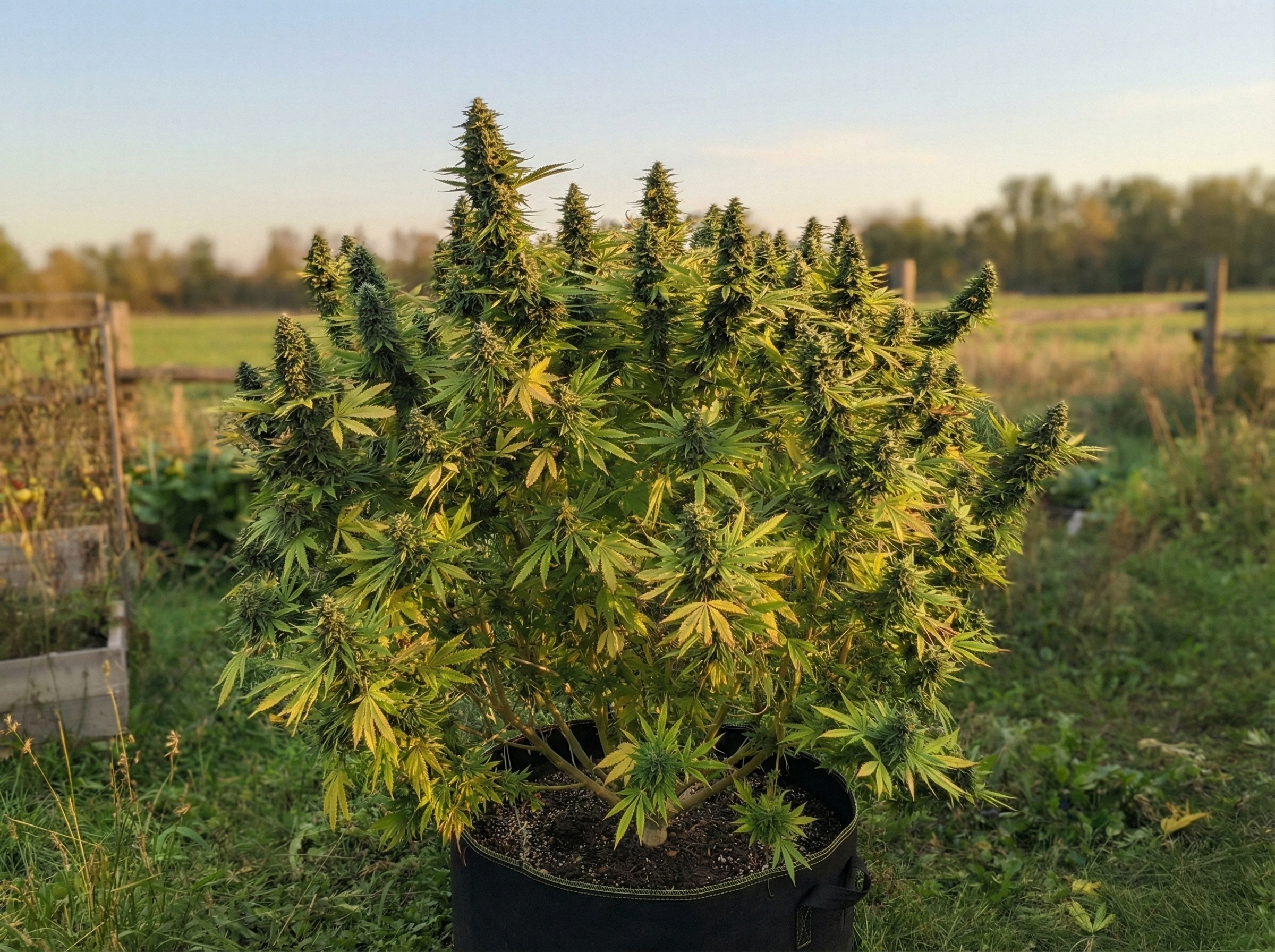
The Receptive Window: When Flowers Are at Risk
Pollen drift only matters biologically when receptive female floral tissue is present. Cannabis pistillate flowers produce stigmas that intercept airborne pollen. As flowering progresses, new flowers continue to appear, so a plant can contain floral sites of different ages at the same time.
This creates a moving target. A pollen event early in flowering can affect flowers that are receptive then, while flowers formed later may escape if the pollen source disappears. A source that continues shedding across several weeks can create a broader seed set because successive cohorts of flowers are exposed.
Use flowering overlap, not calendar date, as the first timing question
If you suspect a neighboring source, compare actual reproductive development rather than simply noting that both gardens were “in flower in August.” Ask when pollen-producing structures opened, when your female plants showed abundant fresh stigmas, and how long those periods overlapped.
Outdoor photoperiod cultivars can begin and progress through flowering at different times even at the same latitude. Autoflowering plants may also create a very different receptive window from nearby photoperiod plants. That is why planting date alone does not establish pollination risk.
Remember: A pollen source and a female plant can exist near each other for months without producing the same risk every day. The biologically useful window is the overlap between pollen release and receptive flowers.
Fresh stigmas are useful for inspection but not a precise pollen meter
White or pale stigmas are a practical sign that flowers are actively developing, but visual stigma color does not measure receptivity with laboratory precision. Stigmas also darken for reasons other than successful fertilization, including age, physical contact, heat, sprays, and weather damage.
Use them as part of a pattern. If fresh stigmas were abundant during a known pollen release and those same sites later show coordinated bract swelling and seed development, the evidence becomes stronger. Stigma color alone should not trigger a diagnosis.
Build a flowering-overlap timeline
Record when pollen-producing flowers opened, when fresh stigmas were abundant, wind direction, and when seed-like swelling first became visible.
Diagnose from brown pistils alone
Stigmas can darken from normal aging, weather, handling, or stress. Confirm pollination with later seed development and a consistent exposure history.
How Pollination Changes Flower Development
Once fertilization succeeds, the reproductive priority of the flower changes. The ovule begins developing into a seed and surrounding floral tissue matures around it. In an unpollinated flower, the plant can continue producing new pistillate flowers as it maintains opportunities for pollen capture. In a pollinated flower, seed development becomes a major sink for resources.
This does not mean the entire plant instantly stops producing cannabinoids or terpenes. The effect depends on how much of the inflorescence was fertilized, which flowers were affected, developmental timing, cultivar, and growing conditions. Controlled research does show a real biochemical consequence, but the magnitude should not be treated as a fixed percentage for every home garden.
How Pollination Changes Flower Development
In controlled cannabis experiments, fertilization substantially reduced the concentration of most measured phytocannabinoids in pollinated inflorescences. Monoterpenoids also tended to decline, while sesquiterpenoid responses were more variable. The overall chemical profile did not simply disappear, but the plant’s allocation and metabolite accumulation changed after fertilization.
Other cultivation research suggests that limited or partial pollination may have a much smaller practical effect on cannabinoid concentration than heavy pollination. That distinction fits what growers see structurally: one seeded branch is not the same biological event as a canopy where a large share of flowers formed mature seeds.
Seeded flower is a spectrum, not one category
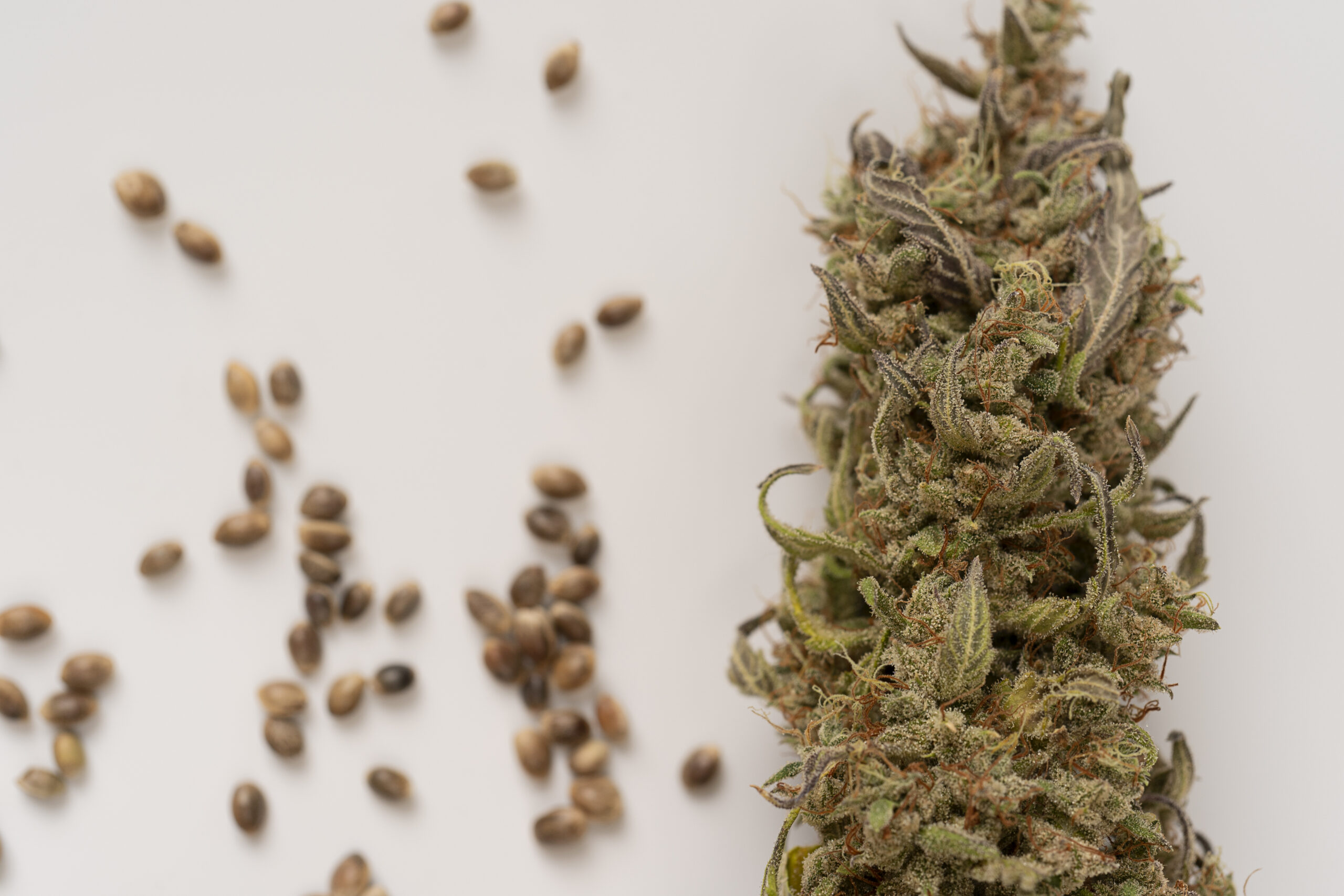
A flower can contain a single developed seed, several seeds, many fertilized ovules, or a mixture of seeded and unseeded floral tissue. The degree of pollination matters when judging biomass, flower quality, processing effort, and how strongly fertilization may have changed secondary-metabolite accumulation.
Bracts swell because seeds are developing inside them
A fertilized ovule develops within the bract. As the seed enlarges, the surrounding tissue can become noticeably fuller and firmer. Early seed development can be easy to confuse with normal flower swelling, especially if you are checking too soon after the suspected event.
Do not tear apart dozens of immature flowers every day looking for proof. Mark representative sites and follow them over time. A developing seed becomes easier to recognize as its coat forms and hardens. Destructive inspection is most useful when performed selectively on one or two representative sites rather than across the whole crop.
Pro Tip: Photograph the same marked flower site every few days from the same angle. Repeated images make progressive seed swelling easier to distinguish from ordinary late-flower expansion.
Seed development changes harvest handling even when the crop remains usable
Pollination creates a quality and processing problem, not an automatic contamination event. Mature seeds add weight and volume that do not represent seedless floral biomass. They also require removal if the intended end product is seed-free flower. Heavy seed set can make trimming and post-harvest sorting more laborious.
Do not convert that statement into a safety guarantee for damaged or moldy flower. Pollination itself is reproductive biology, but outdoor flowers can simultaneously face mold, pests, spray drift, smoke, or other contamination. Evaluate those hazards separately.
“If only a few flowers are seeded, should I harvest the whole plant early?”
Question sent by: QuietCanopy, via email.
Usually the discovery of a few seeds is not enough by itself to set an immediate whole-plant harvest date. First determine whether an active pollen source remains, how widespread the seed set appears, and whether the rest of the plant is continuing normal maturation. Early harvest has its own quality cost. Use flower maturity, weather risk, disease pressure, and the extent of pollination together.
How to Check Whether Flowers Were Pollinated
The strongest confirmation is a developing or mature seed. Before that point, the signs are probabilistic. Stigmas may darken or recede, bracts may swell, and flower development may look different from neighboring unpollinated sites. None of those signs is unique to fertilization.
A useful inspection therefore works from strongest evidence to weakest. Start with known pollen sources and timing. Then compare spatial patterns. Finally, inspect a small number of flowers for actual seed development.
| Observation | How Much It Supports Pollination |
|---|---|
| Developed seed inside a flower | Strong confirmation that fertilization occurred at that site. It does not identify the pollen source or prove the entire plant was affected. |
| Known pollen release during receptive flowering | Strong exposure evidence, especially when wind direction and affected canopy zones align. |
| Progressive bract swelling around a firm developing structure | Useful supporting evidence, but early flower swelling can resemble normal maturation. |
| Rapid stigma browning or recession | Weak by itself because aging, weather, heat, contact, and sprays can produce similar changes. |
| One isolated unusual flower | Insufficient to diagnose a broad event. Mark it and compare with other branches over time. |
Inspect a pattern across the plant, not the most dramatic flower
Choose several representative locations: the side facing the suspected source, the opposite side, an upper exposed branch, and a more sheltered interior branch. If multiple plants are present, compare the closest and farthest plants as well.
Record the number of confirmed seeds or strongly suspicious flowers within those sample sites. You do not need a statistically perfect survey. You need enough consistent observations to distinguish isolated fertilization from a garden-wide event.
Tip: Label sampled branches before opening flowers. If you later discover a clear gradient from exposed to sheltered positions, that pattern becomes valuable evidence about where the pollen likely entered the canopy.
Do not confuse swollen unfertilized bracts with seeds
Late-flower bracts naturally enlarge. A grower squeezing every swollen bract can easily convince themselves that a crop is seeded before a seed coat has formed. Compare suspected sites with normal flowers of the same age and cultivar.
If the structure inside is still ambiguous, wait and recheck unless another risk demands action. Seed development becomes easier to confirm over time, while unnecessary destructive inspection only removes flower tissue.
Do not use a seeded flower as proof of who pollinated it
Visual inspection can confirm fertilization, but it cannot establish the pollen parent. Several pollen sources may exist outdoors. Parentage requires controlled breeding records or genetic testing, not a guess based on distance or cultivar appearance.
What to Do When Pollen Is Found or Suspected
Once pollen is suspected, the first goal is to stop avoidable new exposure. The second is to preserve enough observations to learn what happened. The third is to avoid panic interventions that damage flowers more than the pollination itself.
The correct response depends on whether the source is inside your control. A male in your own garden can be addressed directly. A neighboring or distant source may not be under your control, so the emphasis shifts toward documenting exposure, protecting future seasons through planning, and deciding whether the current crop can still mature acceptably.
Step 1: Identify whether an active source remains in your garden
Inspect plants systematically for male flowers, open anthers, or intersex structures. Start at upper and inner branch nodes, then move through the whole canopy. If you are growing regular seed, do not assume a plant previously identified as female means no pollen source can exist elsewhere. If you are using feminized seed, do not treat the label as proof that intersex expression is impossible. The dedicated feminized seed resource explains why feminization changes sex probability but does not eliminate the need for flowering inspection.
If a pollen source is found, note whether the structures are closed, opening, or visibly shedding. That status helps estimate how much exposure may already have occurred.
Field Advice: Photograph the pollen-producing structure before removal if doing so does not require shaking the plant. A dated image can later explain why one branch or one week of flowering produced more seeds than another.
Step 2: Remove or isolate controllable pollen sources without spreading them through the crop
If pollination is not intentional and local rules allow removal, plan the route before touching a shedding plant. Avoid carrying it through the center of receptive females. Handle it as gently as practical. The goal is not to perform a theatrical “decontamination” procedure. It is to avoid creating a fresh cloud while solving the source problem.
After the source is removed, continue inspections because another source or additional intersex structures may remain. One removal event should not end the monitoring period.
Remember: Removing a pollen source stops future release from that source. It does not undo pollen that already reached receptive flowers, so continue the marked-branch rechecks.
Stop the source, then monitor the crop
Remove or isolate controllable pollen producers, mark the exposure date, inspect for additional sources, and follow representative flowers for seed development.
Strip or spray the whole flowering canopy in panic
Once fertilization has occurred it cannot be reversed. Aggressive washing, pruning, or spraying can injure flowers without removing developing seeds.
Step 3: Mark the exposure window and create sample branches
Choose a few branches that represent different exposure levels. Tag them and record the date. Do not base the whole decision on random flowers opened each day. The same sample locations let you observe progression and estimate the eventual degree of seed set.
For each sample branch, record fresh flower development, suspected seeded bracts, confirmed seeds, and any other event such as storm damage or mold that could confuse the interpretation.
Step 4: Recheck instead of trying to reverse fertilization
A fertilized ovule will continue developing. There is no practical garden treatment that turns it back into an unfertilized flower. The useful decision is whether the rest of the crop should continue to mature and whether new pollination is still occurring.
Wait long enough for the suspected sites to become easier to interpret, then compare them with your original photographs and notes. If new suspicious sites keep appearing after the local source was removed, reconsider whether an external source or a missed internal source remains.
Master Advice: Separate “stop future exposure” from “manage already fertilized flowers.” The first may still be possible. The second is a harvest-quality decision, not a reversal procedure.
“My neighbor has a male plant. Is there anything I can spray on my flowers to block pollen?”
Question sent by: RainyDeck, via Facebook page.
There is no reliable foliar treatment that makes receptive cannabis flowers pollen-proof without creating other risks. Do not coat flowering plants with improvised oils, detergents, or chemicals. Focus on lawful communication where appropriate, identifying your real exposure window, removing any sources you control, and monitoring representative flowers. If neighboring pollen is a recurring problem, future site and timing decisions are more useful than experimental sprays.
Estimate Neighboring-Plant Risk Without Inventing a Safe Distance
Isolation distance is useful as one variable because pollen concentration usually declines with distance. The mistake is turning that relationship into a universal safe radius. A large agricultural source can produce orders of magnitude more pollen than a home plant. Weather can also change how much of the low-concentration tail travels downwind.
The 2024 national dispersal modeling study found that most modeled pollen deposited relatively close to the source, with a steep decline during the first few kilometers. Yet low percentages of a very large pollen release still represent many grains, and the modeled tail extended far beyond the zone receiving most deposition. Cornell field work has likewise emphasized that pollen movement declines with distance while remaining an important production issue for cannabinoid hemp.
Use a risk stack instead of one distance number
A home grower can make a better estimate by scoring the exposure qualitatively. Start with source strength, then flowering overlap, prevailing wind, observed source direction, and whether actual seed set has appeared. Distance remains part of the stack, but it no longer has to pretend to answer the whole question.
| Risk Question | What to Record |
|---|---|
| How strong was the source? | One suspected anther, one mature male, several males, or a large pollen-producing planting. Do not treat these as equivalent. |
| Did flowering overlap? | Dates of visible pollen release and dates when your plants carried abundant fresh pistillate flowers. |
| Was the garden repeatedly downwind? | Prevailing and event-specific wind direction, especially during the suspected release period. |
| How far away was the likely source? | Use distance as supporting context, not as a guarantee of zero exposure. |
| What pattern appeared? | Which plants and canopy sides produced confirmed seeds, and whether the pattern follows the suspected source direction. |
| Did the event continue? | New seeded sites appearing after a local source was removed may indicate continued external exposure or another missed source. |
Important: Agricultural isolation recommendations are designed around specific production systems and source populations. They should not be presented as a cannabis home-grow guarantee that “nothing can pollinate beyond this line.”
Barriers can change airflow but do not create a sealed pollen wall
Fences, hedges, buildings, and terrain can intercept some material or alter wind paths, but airflow around obstacles is complex. Solid barriers can create turbulence and recirculation zones. A hedge that reduces direct wind may still allow pollen around or above it. Treat barriers as site features rather than absolute filters.
If repeated pollen exposure is a known local problem, the durable solution may involve a different garden position, different flowering timing, protected cultivation where lawful, or coordination with nearby growers. Those choices belong to future-season planning rather than a promise that one fence solves the current event.
Remember: A lower risk is not zero risk. The goal is to reduce exposure enough for the intended crop, then verify the result instead of relying on a distance claim.
Record the Event and Verify the Outcome
Pollination is one of the easiest outdoor problems to misremember. A grower may notice seeds at harvest and then reconstruct the entire season around the nearest visible male plant. That story may be correct, but without dates and spatial observations it remains a story.
A compact pollination record turns the event into useful evidence. Record the plant ID, suspected source, first date the source was seen shedding, flower stage, wind direction, affected canopy zone, first confirmed seed, and final seed severity. If you already use plant labels and lot records, connect the event to the existing plant ID rather than creating a separate naming system.
Use a short recheck schedule
The exact speed of visible seed development varies with flower stage and conditions, so avoid a fake universal day count. Instead, perform a baseline inspection when exposure is discovered, a second inspection after enough time for visible progression, and later checks as the flowers mature. The objective is to confirm direction of change, not to force the plant onto a calendar.
| Checkpoint | Plant Status | Main Task | Risk / Check |
|---|---|---|---|
| Exposure discovered | Pollen source present or suspected | Photograph source and canopy, record flowering stage and wind, control any source you can manage safely and lawfully | Do not assume fertilization is already garden-wide |
| Early recheck | Some flowers may begin showing changes | Inspect the same marked branches and compare exposed vs sheltered sites | Do not diagnose from stigma color alone |
| Development recheck | Developing seeds become easier to confirm | Open only a few representative bracts if needed and record confirmed seed sites | Distinguish isolated seed set from broad pollination |
| Pre-harvest assessment | Extent of seed set is clearer | Estimate seed severity, flower maturity, weather risk, and any separate disease or contamination issue | Do not harvest early solely because one seed was found |
| Post-harvest review | Seeds and affected zones can be counted more reliably | Compare plants, branches, and canopy sides; update the source hypothesis and next-season plan | Do not assign pollen parentage without controlled evidence |
Grade severity in a way you can repeat next season
There is no universal scientific threshold for “lightly seeded” versus “heavily seeded” home cannabis. You can still create a useful local scale. For example, record whether sampled flowers contain no seeds, occasional isolated seeds, repeated seeds across several flowers, or dense seed set across most sampled sites.
The value comes from consistency. If you use the same sampling method next season, you can tell whether moving the garden or changing timing reduced the problem. Do not turn your local categories into universal cannabis standards.
Pro Tip: Record seed count per sampled flower or per marked branch rather than only “plant had seeds.” A numeric or repeatable ordinal record makes future-site comparisons far more useful.
Keep source confidence separate from outcome confidence
You may be highly confident that a plant was pollinated because mature seeds are present while still being uncertain about the pollen source. Record those as two separate judgments. “Pollination confirmed, source uncertain” is scientifically cleaner than naming the nearest male without evidence.
If controlled breeding is not the goal, genetic parentage testing may be unnecessary. The practical lesson can still be strong: which side of the garden was exposed, when the event occurred, how much seed set resulted, and what future change is most likely to lower exposure.
Tip: Keep the phrase “source uncertain” available in your records. Honest uncertainty is more useful for next-season planning than a confident but unverified parentage story.
Before you close the record, confirm these points
- The affected plant and sample branches have stable labels.
- The suspected pollen source and confidence level are recorded separately.
- The pollen-release window is compared with the plant’s receptive flowering window.
- Wind direction and major weather events are recorded where known.
- At least one representative flower has confirmed or ruled out seed development before a broad diagnosis is made.
- The extent of seed set is graded with the same method across plants.
- Any internal pollen source has been rechecked after removal.
- Harvest timing is based on overall crop maturity and risk, not one isolated seed.
- The final record notes what should change next season.
Common Pollination Rules That Sound Useful but Fail Outdoors
Pollination advice often becomes absolute because absolute rules are easy to remember. Outdoor airflow and reproductive timing do not cooperate with those shortcuts. A few common claims deserve to be rejected directly.
“A certain distance guarantees no pollination”
No universal distance can guarantee zero pollen exposure. Distance reduces risk, often strongly, but source strength and atmospheric transport matter. Field-scale recommendations are planning tools, not invisible walls.
“One seed means the entire harvest is ruined”
One seed proves one successful fertilization event. It says nothing by itself about the fraction of the canopy affected. Heavy pollination can materially reduce seedless flower quality and alter metabolite accumulation, but isolated seed set should be measured before the entire crop is written off.
“Brown pistils prove pollination”
They do not. Stigmas age and can be damaged by environment or handling. A developing seed provides much stronger confirmation.
“Rain makes the garden safe again”
Rain can change deposition and remove airborne material, but it does not guarantee that all previously deposited pollen was nonviable or that the source will not shed again. Record it as part of the event rather than using it as a zero-risk reset.
“Feminized seed means there can be no pollen source”
Feminized seed greatly changes the expected sex outcome, but cannabis sex expression can still be plastic and intersex flowers can occur. Continue inspecting flowering plants when seedless flower is the goal.
Weedth Verdict: The strongest outdoor pollination decisions come from overlap and evidence: source, pollen release, receptive flowers, spatial pattern, developing seeds, and recheck. Distance belongs in that chain, but it should never replace it.
Frequently Asked Questions About Outdoor Cannabis Pollination
How far can cannabis pollen travel outdoors?
Research shows that most pollen deposition declines substantially with distance from a source, while a smaller long-distance tail can travel much farther under suitable atmospheric conditions. The practical distance depends on source size, weather, terrain, and flowering overlap. There is no universal home-grow distance that guarantees zero pollination.
Can one male cannabis plant pollinate several neighboring plants?
Yes. A mature male can release a large amount of windborne pollen, and neighboring receptive female plants can receive it. How much seed set results depends on pollen production, distance, wind, timing, and flower receptivity.
Will a pollinated cannabis flower keep producing resin?
Pollinated flowers do not instantly stop all secondary-metabolite production, but controlled research shows that fertilization can substantially reduce the accumulation of many phytocannabinoids and monoterpenoids. The practical effect depends on how much of the flower or plant was fertilized.
Can I remove seeds before harvest by cutting pollinated branches early?
Cutting a branch early stops its further maturation but does not reverse pollination. Whether removing a branch makes sense depends on how localized the event is and whether the branch has another problem. Do not sacrifice immature unpollinated flower simply because seeds were found elsewhere.
Can pollen from an intersex flower seed nearby plants?
Yes, if the anther produces viable pollen and it reaches receptive flowers. Cannabis studies have demonstrated germination and seed formation from pollen produced by intersex flowers. The pollen load may be smaller than a fully flowering male, but it should not be dismissed when seedless flower is the goal.
Do seeds found in a flower tell me which neighboring plant was the father?
No. The seed confirms fertilization, not parentage. Outdoors, several pollen sources may contribute. Controlled breeding records or genetic analysis would be needed to establish parentage confidently.
Build the Pollination Decision From Exposure, Not Distance Alone
Outdoor pollination is easiest to manage when you separate the problem into stages. First identify the possible pollen source. Then ask whether it released pollen while your plants had receptive flowers. Map wind and canopy exposure, remove controllable sources without spreading them, and follow marked flowers until seed development either confirms or weakens the diagnosis.
If seeds appear, measure the extent before deciding what the harvest means. A few fertilized flowers and a heavily seeded canopy are not equivalent outcomes. Controlled research supports a real shift in flower chemistry after fertilization, but the magnitude is shaped by how much of the reproductive tissue was actually pollinated.
Most of all, do not let a single isolation number replace observation. Distance reduces exposure, but flowering overlap, source strength, wind, and verified seed set determine what happened in your garden. That record is what allows a better site or timing decision next season.
Share this article
A quick overview of the topics covered in this article.
Follow us
Latest articles
September 4, 2026
September 4, 2026
September 4, 2026
September 4, 2026