Dry Salts vs Liquid Nutrients: Cost, Chemistry, and Commercial Formulation
In the hydroponic retail marketplace, liquid bottled fertilizers dominate store shelves. Brightly colored plastic jugs with dramatic names and elaborate multi-bottle feeding schedules promise explosive floral expansion, proprietary nutrient ratios, and effortless simplicity. Yet, if you walk into a commercial greenhouse growing culinary crops or tour a state-of-the-art commercial cannabis facility, you will rarely find retail liquid jugs. Instead, you will see 50-pound bags of pure, crystalline technical dry salts: Calcium Nitrate, Potassium Nitrate, Monopotassium Phosphate, and Magnesium Sulfate stacked neatly on pallets. This operational divergence highlights one of the most critical decisions in cultivation management: Dry salts vs liquid nutrients. From the strict perspective of plant physiology, the choice is chemically neutral: cannabis root hairs absorb identical dissolved inorganic ions regardless of whether those ions originated from a 50-pound dry bag or a 1-gallon liquid bottle. However, from the perspective of operational economics, elemental formulation control, automated fertigation scalability, and facility profitability, the difference is massive. Understanding the chemical, physical, and financial realities of both nutrient formats allows cultivators to make an informed, data-driven decision that aligns with their production scale.
The Chemical Reality: What Is Inside a Bottle of Liquid Fertilizer?
To make an objective comparison, one must strip away marketing claims and examine the physical chemistry inside fertilizer packaging. Technical-grade dry mineral salts are pure, concentrated crystalline compounds synthesized and purified for agricultural and horticultural use:
- Greenhouse-Grade Calcium Nitrate: 5[Ca(NO3)2]•NH4NO3•10H2O, delivering 15.5% nitrogen and 19.0% water-soluble calcium.
- Potassium Nitrate: KNO3, delivering 13.7% nitrogen and 38.3% elemental potassium.
- Monopotassium Phosphate (MKP): KH2PO4, delivering 22.7% elemental phosphorus and 28.7% elemental potassium.
- Magnesium Sulfate Heptahydrate (Epsom Salt): MgSO4•7H2O, delivering 9.8% elemental magnesium and 13.0% elemental sulfur.
- Potassium Sulfate (SOP): K2SO4, delivering 41.5% elemental potassium and 17.5% elemental sulfur.
Now, what is inside a standard bottle of retail liquid synthetic fertilizer? It is simply those exact same dry mineral salts pre-dissolved in water at the manufacturing plant. A typical 3-part liquid fertilizer is composed of 75% to 90% pure deionized water, with only 10% to 25% active dissolved mineral solute mass. To prevent those dissolved salts from crystallizing inside the jug during shipping, manufacturers must keep salt concentrations well below their saturation solubility limits, adding small amounts of chemical stabilizers, food-grade dyes, and preservatives.
When a cultivator buys a 5-gallon jug of liquid fertilizer for $80, they are paying primarily for the shipping freight, plastic container, retail markup, and municipal tap water used to dissolve the salts. To the plasma membrane transporters embedded in a cannabis root hair, an orthophosphate ion from dissolved technical dry MKP is chemically, physically, and functionally identical to an orthophosphate ion from a premium bottled liquid booster.
The Economic Reality: The 1,500% Liquid Freight Markup
Water weighs 8.34 pounds per gallon. In a commercial 10,000-square-foot indoor facility consuming 1,500 gallons of mixed fertigation solution daily, feeding with bottled liquid fertilizers costs between $0.08 and $0.15 per gallon of mixed feed, translating to $40,000 to $80,000 annually in fertilizer overhead. By contrast, formulating that exact same elemental PPM profile using technical dry mineral salts costs between $0.005 and $0.012 per gallon of mixed feed, dropping annual fertilizer overhead to $3,000 to $6,000. For commercial operations, buying bottled water in heavy plastic jugs represents a 1,000% to 2,000% financial penalty with zero agronomic benefit.
Agricultural vs. Technical vs. Greenhouse Grade: Purity and Heavy Metal Thresholds
When sourcing raw dry mineral salts, cultivators must recognize the distinct quality tiers established in industrial and horticultural supply chains. Raw fertilizer compounds are processed to varying degrees of chemical purity, and utilizing the wrong grade can clog precision irrigation emitters or introduce toxic heavy metal contaminants into the flower:
- Agricultural Grade (Field Broadcast): Coarse, granular prills manufactured for bulk tractor application in open-field crop farming. These prills are frequently coated with clay conditioning agents, talc, or paraffin oils to prevent moisture absorption and caking during outdoor transport. In pressurized hydroponic and fertigation lines, these insoluble coatings do not dissolve; they form an oily film that fouls pump impellers, blocks 0.5 GPH pressure-compensating drip emitters, and fosters bacterial biofilm. Furthermore, agricultural-grade rock phosphates and unrefined minerals carry higher permissible limits of heavy metal impurities, including arsenic (As), cadmium (Cd), lead (Pb), and nickel (Ni). Because Cannabis sativa is an aggressive hyperaccumulator that translocates heavy metals from the root zone directly into resin trichomes, agricultural-grade salts present severe regulatory contamination risks.
- Technical Grade (Tech Grade): Highly purified crystalline salts typically refined to 98.0% to 99.5% chemical purity for chemical processing and manufacturing. Technical-grade compounds contain minimal insoluble matter and low heavy metal profiles, dissolving cleanly in clear water without residue.
- Greenhouse / Hydroponic Grade (Fully Soluble): The certified gold standard for closed-loop, drain-to-waste, and pressurized commercial fertigation. Greenhouse-grade salts are specifically certified for 100% water solubility with insoluble matter strictly limited to less than 0.01% (less than 100 ppm insoluble residue). They undergo specialized recrystallization processes that strip away oil-based conditioning agents, replacing them with benign biodegradable anti-caking additives or supplying pure un-coated crystals that dissolve instantly in water. Greenhouse-grade salts meet rigorous AAPFCO (Association of American Plant Food Control Officials) standards and state cannabis purity guidelines.
Commercial cultivators should strictly purchase Greenhouse-Grade or Hydroponic-Grade dry salts from reputable global horticultural manufacturers (such as Yara, Haifa, SQM, or ICL). Sourcing certified greenhouse-grade salts guarantees consistent batch-to-batch stoichiometry, preserves drip emitter hydraulic uniformity, and ensures pristine flower passing all state toxicological testing panels.
Formulation Flexibility: The Rigidity of Fixed Bottled Ratios
Beyond economics, the single greatest agronomic advantage of technical dry salts is elemental formulation flexibility. Commercial bottled lines are sold in rigid, pre-blended ratios (e.g., Part A, Part B, and Bloom Booster). If a cultivator notices mild calcium deficiency during the mid-flower stretch, they cannot simply add more calcium from a liquid Part A without also adding more nitrogen, because calcium and nitrogen are chemically locked together in the bottle. Dosing extra Part A to fix calcium inevitably over-supplies nitrogen, causing leaf clawing and delaying floral maturation.
With dry salts, the cultivator controls every element independently. If a specific cannabis cultivar demands high potassium during calyx swelling without additional nitrogen, the operator simply increases Potassium Sulfate (K2SO4) or Monopotassium Phosphate (KH2PO4) on their digital scale. If another cultivar is sensitive to nitrogen toxicity, the operator scales back Potassium Nitrate and Calcium Nitrate while maintaining calcium levels via monocalcium phosphate or calcium acetate. Dry salts allow precision tailoring of elemental recipes to cultivar genetics, stage-specific transpiration curves, and source-water mineral background.
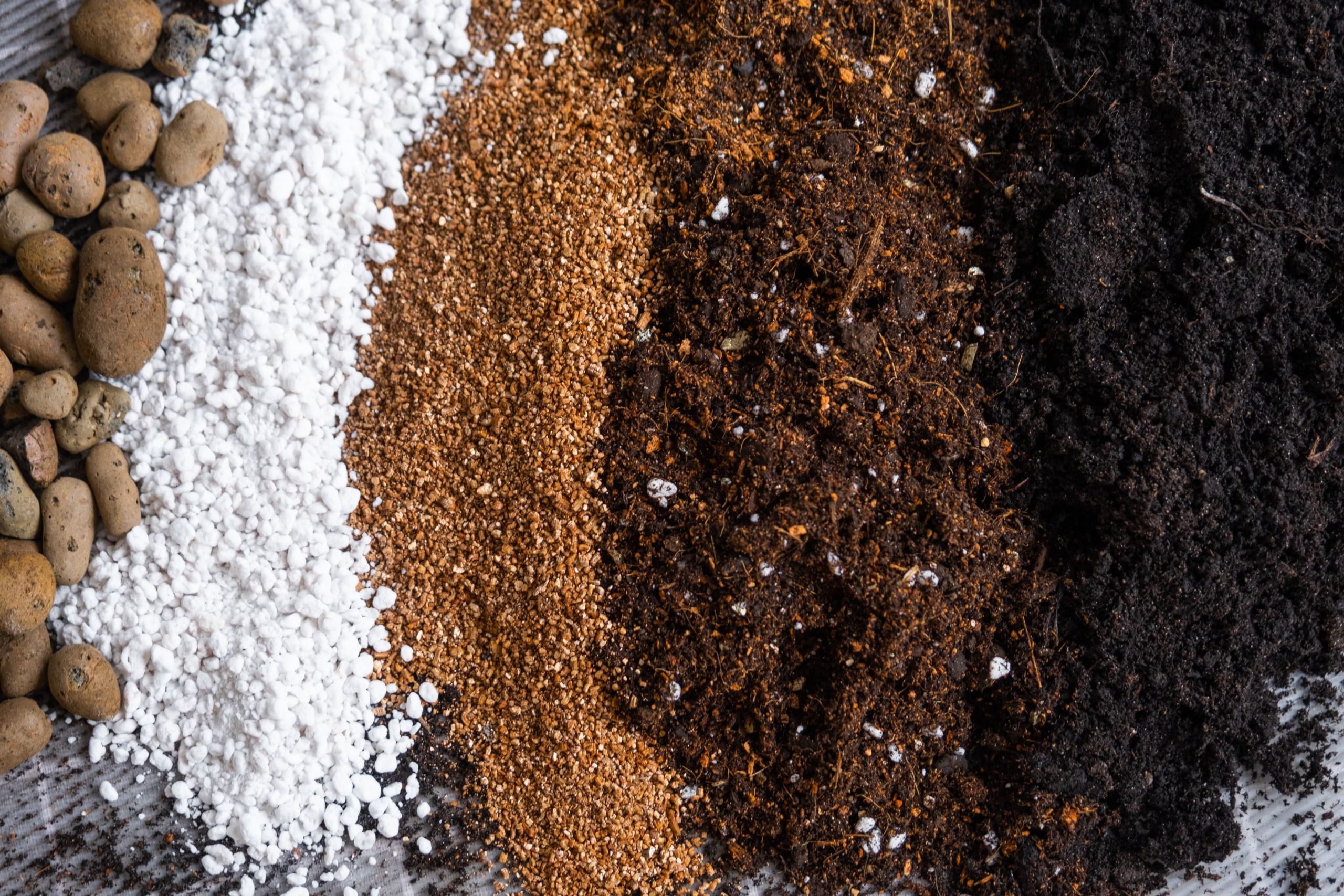
Raw technical-grade mineral dry salts providing pure crystalline elemental nutrition with zero shipped water weight.
Physical Handling: Solubility Limits, Dissolution Kinetics, and Shelf Stability
While dry salts offer overwhelming economic and formulation advantages, they introduce distinct physical handling requirements that must be understood and managed in the facility:
1. Dissolution Thermodynamics and Mixing Order
Dissolving concentrated dry mineral salts in water is an endothermic or exothermic thermodynamic process. When high masses of Calcium Nitrate or Ammonium Nitrate dissolve, the reaction absorbs heat from the water (endothermic), causing reservoir water temperature to drop by 3 °C to 5 °C within minutes. Cold water significantly decreases the solubility limits of other salts. Attempting to dissolve Potassium Sulfate in cold, freshly mixed water often results in un-dissolved crystalline grit settling on the tank bottom.
To achieve 100% dissolution, cultivators must enforce a strict dissolution sequence: use warm water (20 °C to 24 °C), dissolve salts individually in a dedicated pre-mix bucket with mechanical agitation, and never dump raw dry powders directly into a large cold reservoir. Most importantly, follow the strict Tank A / Tank B separation: never dissolve dry calcium nitrate in the same concentrated bucket as dry magnesium sulfate or dry monopotassium phosphate, as concentrated free calcium and sulfate will react instantly to precipitate insoluble gypsum (CaSO4).
2. Shelf-Life Stability and Hygroscopic Clumping
Liquid fertilizers carry an inherent expiration vulnerability. Chelate complexes (such as Iron EDTA, DTPA, and EDDHA) in aqueous solution steadily degrade over 12 to 24 months, particularly when exposed to light, temperature swings, or dissolved oxygen. Furthermore, organic-based liquid bottled additives (containing kelp, amino acids, or humates) can ferment in the bottle, expanding plastic jugs and producing foul odors.
Dry crystalline salts, by contrast, possess an indefinite shelf life. Because dry salts contain zero moisture, no chemical reactions or biological degradation can occur. A sealed 50-pound bag of technical Potassium Nitrate stored in a cool, dry room remains 100% stable for a decade. The only physical hazard is hygroscopicity: certain dry salts: particularly Calcium Nitrate and Magnesium Nitrate: are highly hygroscopic, actively absorbing moisture vapor from humid air. If bags are left unsealed in a humid grow room, the dry prills absorb ambient humidity and clump into a hard solid block. Dry salts must be stored in airtight, sealed plastic containers with resealable lids.
Is switching to dry salts too complicated for a boutique grower with only 12 lights?
Question sent by: Julian Morales, via email.
“I run a craft boutique medical grow with 12 LED fixtures in coco coir. I spend $400 a month on bottled nutrients. Everyone tells me to switch to dry salts, but I don’t have a chemistry degree and I’m terrified of making a math mistake that poisons my crop. Is dry salt formulation realistic for a 12-light grower, or should I stick to liquid bottles?”
Switching to dry salts is completely realistic for a 12-light grower and does not require a chemistry degree; it requires only a $25 digital gram scale, a calculator, and a disciplined 15-minute mixing routine.
You do not need to calculate complex molecular stoichiometry from scratch every time you mix. Established, open-source agricultural recipes (such as the standard Jack’s 3-2-1 formulation or University research recipes) provide exact, pre-calculated gram weights per gallon. For example, in a standard 50-gallon vegetative reservoir, you simply weigh: 180 grams of Part A (Calcium Nitrate), 120 grams of Part B (Epsom Salt), and 60 grams of specialized multi-nutrient base, dissolve them in warm water, and pour them into your tank.
By making this simple switch, your monthly fertilizer expenses will drop from $400 down to approximately $25. Over a single year, you will save over $4,500 in operating costs on a 12-light footprint. More importantly, your plants will receive cleaner elemental nutrition with zero filler dyes, and your root-zone salt stability will improve. If you can weigh baking ingredients on a kitchen scale, you can master dry salt fertigation.

Vigorous cannabis canopy receiving fully dissociated mineral ions with maximized cellular uptake efficiency.
Commercial Automation: Dry Salt Concentrate Formulation for Injectors
In large-scale automated commercial facilities, labor costs dictate fertigation design. Manually scooping dry powders into thousands of gallons of working reservoirs daily is an inefficient use of skilled labor. Commercial facilities bridge the gap between dry salt economics and automated liquid convenience through on-site stock tank concentrate batching:
1. The Concentrated Stock Tank Architecture
Rather than buying liquid concentrates in jugs, facility technicians formulate their own concentrated stock solutions on-site using raw dry salts and high-shear mechanical mixing inductor tanks. Stock tanks are typically batched at 1:100 (1%) or 1:200 (0.5%) concentration ratios in 100-gallon to 500-gallon poly tanks:
- Stock Tank A (Calcium & Nitrate): Technicians dissolve 50 to 100 kg of technical Calcium Nitrate and Potassium Nitrate in RO water, adding concentrated chelated iron (Fe-DTPA or Fe-EDDHA). This liquid concentrate operates at 60 to 90 dS/m EC, remaining completely stable and clear.
- Stock Tank B (Phosphorus, Potassium, Magnesium, Sulfur): Technicians dissolve Monopotassium Phosphate, Magnesium Sulfate, Potassium Sulfate, and solubilized trace elements (manganese, zinc, boron, copper, molybdenum).
- Automated Injection Skids: Proportional motorized injectors or precision venturi dosing skids (such as Argus, Priva, or Dosatron) pull micro-volumes from Tank A and Tank B into the main irrigation stream on demand, instantly creating thousands of gallons of freshly mixed, perfectly balanced working solution at the touch of a button.
By batching concentrated stocks from dry salts on-site, commercial facilities achieve 100% automated fertigation convenience at 5% of the cost of commercial retail liquid products. For a complete mathematical guide on calculating exact grams per gallon for dry salt stock concentrates, review our comprehensive resource on cannabis fertilizer math and elemental PPM.
Commercial Injector Engineering: Positive Displacement vs. Proportional Venturi Dosing
Automating dry salt concentrates requires integrating the correct injector technology into the facility fertigation skid. Commercial indoor and greenhouse operations generally choose between two primary mechanical dosing platforms:
- Water-Powered Proportional Injectors (e.g., Dosatron, MixRite): These volumetric hydraulic piston pumps operate without electricity, driven entirely by the mechanical energy and pressure of the main irrigation water flow. As water passes through the unit, an internal piston pulls a precise volumetric percentage of concentrate from Stock Tank A and Stock Tank B (adjustable from 1:500 to 1:50, or 0.2% to 2.0%), injecting it uniformly into the passing water stream. Proportional injectors automatically maintain exact dilution ratios regardless of fluctuations in mainline flow rate or water pressure. They are highly reliable, modular, and cost-effective for boutique craft rooms and zone-isolated fertigation manifolds.
- Automated Solenoid and Venturi Dosing Skids (e.g., Priva, Argus, Agrowtek, Heron): High-volume commercial facilities utilize microprocessor-controlled fertigation skids equipped with magnetic pulse solenoids or pressurized venturi injectors paired with inline toroidal EC and glass pH sensors. The master controller continuously monitors inline electrical conductivity, dynamically pulsing high-speed injection valves from Tank A, Tank B, and acid/base stock tanks hundreds of times per minute to hit exact target EC and pH setpoints within ±0.02 dS/m and ±0.05 pH units. Venturi systems eliminate moving mechanical pump seals, reducing maintenance downtime in operations delivering tens of thousands of gallons daily.
Regardless of the injector technology deployed, continuous mechanical agitation in stock tanks is vital. Concentrated salt solutions exhibit subtle density gradients over time; without periodic circulation, dense high-gravity salts settle toward the tank bottom, leading to inconsistent injection EC. Installing automated 1/4 HP submersible magnetic circulation pumps or high-efficiency venturi eductor nozzles inside Stock Tank A and Tank B on 15-minute hourly cycle timers ensures 100% homogenous mineral concentration across every fertigation event.

Potted cannabis demonstrating balanced vegetative growth formulated from precision elemental dry salt recipes.
Solubility Limits and Temperature Physics: The Dissolution Saturation Curve
When working with concentrated dry mineral salts, understanding chemical solubility limits across water temperatures is essential to prevent tank sedimentation. Solubility is defined as the maximum mass of solute that can completely dissolve in a given volume of solvent at thermodynamic equilibrium:
- Calcium Nitrate: Highly soluble; dissolves up to 1,200 grams per liter at 20 °C. Calcium nitrate dissolves readily even in cold water, though high concentrations induce endothermic chilling.
- Potassium Nitrate (KNO3): Displays an extreme temperature-dependent solubility curve. At 10 °C (cold well water), its solubility limit is only 209 g/L. At 20 °C, solubility expands to 316 g/L, and at 30 °C, it surges to 458 g/L. Formulating concentrated stock solutions in unheated winter facilities can cause potassium nitrate to precipitate out as dense needle-like crystals on tank walls.
- Monopotassium Phosphate (MKP): Dissolves up to 226 g/L at 20 °C. Dissolves smoothly in warm water with vigorous mechanical agitation.
- Magnesium Sulfate (Epsom Salt): Dissolves up to 710 g/L at 20 °C. Highly soluble heptahydrate crystal matrix dissolves rapidly.
- Potassium Sulfate (K2SO4): The most difficult agricultural salt to dissolve; carries a strict solubility ceiling of only 111 g/L at 20 °C (dropping to 88 g/L at 10 °C). Commercial stock tanks must be sized to ensure potassium sulfate concentration never exceeds 80 g/L to maintain an operational safety margin.
Chelate Chemistry and Photodegradation: Dry vs Liquid Stability
Micronutrient delivery, particularly iron, highlights another decisive advantage of dry storage. Iron in agricultural fertilizers must be chelated (clawed) by organic ligands to prevent oxidation into insoluble ferric hydroxide [Fe(OH)3]. In liquid bottled fertilizers, synthetic chelates (such as Fe-EDTA and Fe-DTPA) exist in continuous aqueous contact with water, dissolved oxygen, and ambient light. Photodegradation kinetics dictate that exposure to fluorescent grow room lighting or transparent plastic jugs cleaves the coordinate bonds of liquid EDTA and DTPA within 30 to 60 days, causing iron to precipitate as rusty red sediment that coats bottle bottoms.
In contrast, technical dry chelate powders (such as Sprint 330 Fe-DTPA or Sequestrene Fe-EDDHA) are completely dehydrated and sealed inside light-impermeable multi-layer aluminum or heavy polyethylene bags. In this dry crystalline state, zero photolysis or oxidative cleavage can occur. Dry chelates remain 100% active and chemically pristine for over five years, ensuring that every batch delivers exact active iron parts per million directly to root hair uptake channels.
Do liquid fertilizers contain “secret ingredients” that dry salts cannot provide?
Question sent by: Nathan Cross, via email.
“Retail nutrient reps claim their liquid bloom formulas contain proprietary bio-active co-factors, enzyme complexes, and specialized amino acid fractions that cannot be duplicated with raw dry salts. Is there any truth to these claims, or are we just paying for marketing?”
In the vast majority of cases, these claims are pure marketing folklore designed to justify extreme retail price markups. Agricultural chemistry and plant physiology establish that higher plants require 17 essential chemical elements to complete their lifecycle. Plant roots do not absorb complex “enzymes” or “proprietary co-factors” from solution; enzymes are large protein molecules that cannot cross intact plant cell walls in significant quantities, and any un-stabilized enzyme dissolved in water degrades within days.
Where liquid fertilizers occasionally differ from basic dry mineral salts is the inclusion of verified organic biostimulants: low concentrations of cold-water kelp extract, humic acids, fulvic acids, or hydrolyzed L-amino acids. However, commercial cultivators do not need to buy expensive bottled liquid fertilizers to access these biostimulants. Technical-grade, spray-dried soluble kelp powders (Ascophyllum nodosum), pharmaceutical-grade micronized fulvic acid powders, and 80% soluble L-amino acid powders are widely available in dry crystalline form at wholesale agricultural suppliers.
By buying your mineral base as technical dry salts and adding pure dry biostimulants (fulvic acid, kelp, amino acids) as needed, you build a cleaner, vastly more potent hybrid bio-mineral program that completely outperforms commercial bottled liquids at a fraction of the cost.
Head-to-Head Comparison: Technical Dry Salts vs Liquid Bottled Nutrients
The following detailed decision matrix compares technical dry salts against commercial liquid bottled lines across eight critical operational, financial, and agronomic parameters:
| Operational Parameter | Technical-Grade Dry Mineral Salts | Commercial Liquid Bottled Nutrients |
|---|---|---|
| Cost per Finished Pound of Flower | $3.00 to $8.00 per lb (massive commercial cost advantage). | $25.00 to $50.00+ per lb (high consumer retail freight markup). |
| Active Ingredient Concentration | 100% active mineral mass; zero shipped water. | 10% to 25% active solute; 75% to 90% water weight. |
| Formulation Flexibility | Total control; adjust N, P, K, Ca, Mg individually per cultivar. | Rigid; fixed ratios lock elements together (e.g., Ca bound to N). |
| Shelf-Life Stability | Indefinite (5 to 10+ years) when stored in sealed dry bins. | Limited (12 to 24 months); chelates degrade; risk of crystallization. |
| Storage Footprint & Freight | Compact; one pallet of dry salts feeds a commercial room for months. | Bulky; requires dozens of heavy 5-gallon jugs and high freight costs. |
| Mixing Labor & Dissolution | Requires digital scale, warm water pre-dissolution, and mixing SOP. | Instant; pour directly from bottle into reservoir with measuring shot. |
| Automated Injector Compatibility | Flawless once batched into concentrated Tank A and Tank B stocks. | High compatibility directly from jugs, but high volume replenishment. |
| Risk of Operator Error | Moderate; requires accurate scale calibration and conversion math. | Low; simple volumetric bottle caps reduce math errors for beginners. |
Standard Operating Procedure: Transitioning a Facility from Liquid to Dry Salts
To transition an operational cultivation facility from expensive bottled liquid lines to precision technical dry salts without risking crop shock, follow this disciplined four-step protocol:
Step 1: Laboratory Elemental Mapping of Current Liquid Feed
Before altering any fertilizer in your grow rooms, determine exactly what your current bottled feeding schedule is delivering. Mix your standard liquid recipe at full strength in a 5-gallon bucket of RO water. Send a 500 mL sample to a certified agricultural testing laboratory for complete ICP-OES elemental analysis. The lab report will provide exact baseline numbers: elemental PPM of NO3-N, NH4-N, P, K, Ca, Mg, S, Fe, and micronutrients.
Flow injection analysis and optical emission spectrometry separate total nitrogen into nitrate and ammonium fractions. This separation is vital: most retail liquid lines contain 90% to 95% nitrate-nitrogen and 5% to 10% ammonium-nitrogen. Replicating this exact cationic/anionic balance ensures that the root zone maintains identical rhizosphere pH stabilization when you transition to dry salts.
Step 2: Dry Salt Recipe Formulation and Solubility Verification
Using the elemental PPM targets from your laboratory analysis, use stoichiometric mass balance calculations to calculate the exact grams of dry Calcium Nitrate, Potassium Nitrate, Monopotassium Phosphate, Magnesium Sulfate, Potassium Sulfate, and Fe-DTPA chelate needed to match that profile. The following reference table outlines a universal, highly successful commercial flowering recipe delivering balanced nutrition for high-transpiration cannabis canopies:
| Dry Fertilizer Compound | Chemical Formula | Grade | Grams per 100 Gallons | Primary Elemental PPM Contribution |
|---|---|---|---|---|
| Greenhouse Calcium Nitrate | 5[Ca(NO3)2]•NH4NO3•10H2O | Greenhouse (15.5-0-0-19Ca) | 265 g | 108 ppm NO3-N, 8 ppm NH4-N, 133 ppm Ca |
| Potassium Nitrate | KNO3 | Technical (13.7-0-38.3K) | 150 g | 54 ppm NO3-N, 152 ppm K |
| Monopotassium Phosphate (MKP) | KH2PO4 | Technical (0-22.7P-28.7K) | 80 g | 48 ppm P, 61 ppm K |
| Magnesium Sulfate Heptahydrate | MgSO4•7H2O | Technical (9.8Mg-13S) | 230 g | 59 ppm Mg, 79 ppm S |
| Potassium Sulfate (SOP) | K2SO4 | Soluble Hydro (0-0-41.5K-17.5S) | 50 g | 55 ppm K, 23 ppm S |
| Iron DTPA (11% Fe) | Fe-DTPA | Horticultural Powder | 8.5 g | 2.5 ppm Fe |
| Soluble Micronutrient Combo | B, Mn, Zn, Cu, Mo Mix | Chelated Hydro Mix | 3.5 g | 0.4 Mn, 0.25 Zn, 0.35 B, 0.05 Cu, 0.03 Mo |
When dissolved in 100 gallons of reverse osmosis water, this balanced recipe yields approximately 162 ppm Total Nitrogen, 48 ppm Phosphorus, 268 ppm Potassium, 133 ppm Calcium, 59 ppm Magnesium, and 102 ppm Sulfur, with a theoretical electrical conductivity of 1.95 dS/m (±0.05 dS/m) at 25 °C. Dissolve your dry recipe in a test bucket of RO water; test the resulting electrical conductivity and pH. The physical EC should match your liquid feed within ±0.05 dS/m, confirming mathematical accuracy.
Step 3: Side-by-Side Canopy Bench Testing
Never switch an entire commercial facility to a new fertilizer line simultaneously. Select two identical grow tables or benches in the same flowering room with identical genetics, lighting, and environmental VPD. Feed Bench 1 with your legacy liquid bottled nutrients; feed Bench 2 with your new dry salt recipe. Monitor daily runoff EC, substrate dry-back, canopy leaf angles, and weekly leaf tissue testing. At harvest, compare dry flower biomass yield, cannabinoid potency, and total terpene concentration. In virtually every trial, the dry salt bench produces equal or superior yield and terpene quality at 10% of the fertilizer expense.
Step 4: Facility Economics and Cost-Per-Pound Verification
Once canopy parity is confirmed over a full flowering cycle, calculate the true operational cost savings. Document the total fertilizer expenditure for Bench 1 (bottled nutrients) and Bench 2 (dry salts), dividing each total by the net dry trimmed flower weight harvested from that bench. Commercial operators typically find that fertilizer input costs plunge from $35.00 to $48.00 per finished pound on bottled liquids down to $4.20 to $6.50 per pound on dry salts. In a facility harvesting 2,000 pounds annually, this single procedural transition recovers $60,000 to $85,000 in direct net cash flow every fiscal year.
Dry Salt Formulation and Storage Standard Operating Checklist
Verify these critical agronomic checkpoints when handling, batching, and storing technical dry mineral fertilizers:
- Technical greenhouse-grade mineral salts (minimum 99% purity) are selected; industrial crude salts are avoided.
- Dry salts are stored in heavy-duty, airtight polyethylene bins with rubber-gasket lids to prevent hygroscopic moisture clumping.
- Digital analytical scales are calibrated with certified calibration weights before batching fertilizer recipes.
- Dissolution water temperature is maintained at 20 °C to 24 °C; endothermic cooling during dissolution is monitored.
- Stock tank separation is strictly enforced: Calcium and Iron in Tank A; Phosphorus, Potassium, and Sulfates in Tank B.
- Stock tank concentrations are verified below maximum chemical solubility limits at minimum facility room temperature.
- Pre-dissolution buckets are utilized to verify 100% crystalline dissolution before adding salts to main holding tanks.
- Elemental PPM delivery is audited via periodic ICP-OES laboratory testing of working reservoir solutions.
- Certified dry biostimulants (soluble fulvic acid, spray-dried kelp extract) are integrated to support rhizosphere biology.
- Facility fertilizer cost per pound of dried flower is benchmarked and tracked across every production cycle.
Scientific References
- Barker, A. V., & Pilbeam, D. J. (2015). Handbook of Plant Nutrition (2nd ed.). CRC Press, Boca Raton, FL.
- Bugbee, B. (2004). Nutrient management in recirculating hydroponic culture. Acta Horticulturae, 648, 99-112.
- Marschner, H. (2012). Marschner’s Mineral Nutrition of Higher Plants (3rd ed.). Academic Press, London.
- Sonneveld, C., & Voogt, W. (2009). Plant Nutrition of Greenhouse Crops. Springer, Dordrecht, Netherlands.
- Taiz, L., Zeiger, E., Møller, I. M., & Murphy, A. (2015). Plant Physiology and Development (6th ed.). Sinauer Associates, Sunderland, MA.
- Zheng, Y. (2021). Handbook of Cannabis Production in Controlled Environments. CRC Press, Boca Raton, FL.
Share this article
A quick overview of the topics covered in this article.