

How Often Should You Feed Cannabis During Flowering?
How often should you feed cannabis during flowering? Feed often enough to keep the root zone supplied without letting dissolved salts accumulate faster than the plant can use them. That can mean nutrients with most irrigations in coco, periodic liquid feeding in a lightly fertilized potting mix, mainly water plus planned top-dressing in living soil, or continuous nutrient management in a hydroponic reservoir.
There is no responsible universal answer such as once a week or every other watering. Flowering plants do not read calendars, and two plants on the same day of bloom can have different root volumes, light levels, water use, media, and nutrient reserves. The useful question is not only how often you pour fertilizer. It is whether the complete root zone is becoming depleted, remaining stable, or concentrating between irrigations.
Let us make that decision practical. We will separate irrigation frequency from nutrient strength, build a system-specific starting schedule, read the plant and root zone together, and adjust through transition, flower building, ripening, and the final days. You will finish with a repeatable method rather than another chart that becomes wrong as soon as the room changes.
Master Advice: During flowering, manage nutrient delivery as a moving balance. The best schedule is the one that supports steady flower development while root-zone concentration, water use, and canopy health remain predictable.
Use this guide only for lawful cultivation. Follow fertilizer labels and local rules. Wear suitable protection when handling concentrates, acids, or bases, and keep every product away from children, pets, food, and harvested flowers.
Feeding frequency is how often fertilizer reaches the roots. Irrigation frequency is how often water reaches them.
The two events may be separate in amended soil, combined as fertigation in coco or rockwool, or effectively continuous in recirculating hydroponics. Confusing them is the main reason flowering schedules become contradictory.
The Best Starting Frequency for Each Root-Zone System
Start with the medium because it determines where nutrition is stored and how quickly it can be replenished. These are starting approaches, not fixed prescriptions. Product formulation, source water, container size, drainage, climate, plant size, and cultivar still decide the final program.
| System | Practical starting approach | What “feeding” means | Main evidence | Common mistake |
|---|---|---|---|---|
| Pre-amended potting soil | Water by root-zone need; add liquid feed only as the charge declines | Supplementing nutrients already stored in the mix | Amendment history, plant trend, water use, and root-zone condition | Starting a full bloom program on top of fresh fertilizer |
| Light soil or peat mix | Periodic feed or a mild complete solution used consistently | Replacing nutrients with limited reserve in the medium | Input strength, plant response, dry-down, and consistent EC trend | Treating “every other watering” as a permanent law |
| Coco, rockwool, or perlite | Complete nutrient solution with most or every irrigation | Fertigation supplies both water and mineral nutrition | Input and root-zone EC trends, coverage, drainage, and water use | Alternating strong feed with repeated plain water |
| Living soil | Irrigate to maintain a healthy moisture cycle; amend in advance when needed | Maintaining a biologically active nutrient reserve | Soil volume, amendment history, moisture, plant vigor, and time | Waiting for a severe shortage before top-dressing |
| DWC or recirculating hydroponics | Keep a complete solution available continuously | Monitoring and correcting the reservoir | EC, pH, water level, temperature, oxygen, and root health | Adding nutrients whenever the water level falls |
If you want the shortest usable answer, it is this: soil usually needs a decision before each feed; coco usually needs a decision about concentration and irrigation frequency; hydroponics needs a decision about solution maintenance. Living soil needs enough lead time for biology and amendments to work.

Why “Times per Week” Is Usually the Wrong Unit
A plant can be fed once this week and receive too much fertilizer. Another can receive nutrients several times each day and remain correctly supplied. The number of events does not describe the total delivery unless we also know the solution concentration, volume per event, and how much leaves the root zone.
Think of four controls:
- Solution strength: the dissolved ionic concentration of the finished feed, commonly tracked with EC.
- Volume per event: how much solution reaches the active root zone each time.
- Event frequency: how many irrigations or reservoir contacts occur over a day or week.
- Retention, uptake, and drainage: what stays in the medium, what the plant removes, and what exits as drainage.
A lower-strength solution used frequently can deliver more total fertilizer over a day than a stronger solution used occasionally. Faster dry-down can also concentrate salts in the remaining water even if the input recipe never changes. This is why raising the dose because a flowering plant is “drinking more” can produce the opposite of the intended result.
Remember: Faster water use does not automatically prove greater fertilizer need. Plants can lose more water because light, temperature, humidity, airflow, or leaf area changed while their mineral demand changed by a different amount.
A simple way to compare two schedules
Do not try to convert an EC reading directly into grams of every nutrient. EC describes total ionic conductivity, not the identity or ratio of those ions. Instead, compare schedules using the same complete product, source water, and measurement method. Record final EC, total daily solution volume, drainage, and the plant’s response. That gives you a useful local comparison without pretending the meter can identify individual elements.
For example, moving an established coco plant from one large irrigation to several smaller events changes water distribution and root-zone concentration even if the daily volume and input EC remain similar. In soil, splitting one needed irrigation into small daily sips can leave the center wet while the outer root ball develops dry pockets. Frequency is a structural decision, not merely arithmetic.
Flowering Demand Changes Gradually
The switch to a flowering light schedule does not instantly replace the plant’s nutrient needs. During transition and stretch, cannabis is still building stems, leaves, roots, and flower sites. Nitrogen remains essential. Phosphorus and potassium are also essential, but a sudden extreme increase is not required simply because pistils appear.
Controlled cannabis research supports balanced rather than unlimited feeding. A University of Guelph study found that flower yield responded to nitrogen and phosphorus within tested ranges, but more was not always better, and potassium did not increase yield across the tested range. Other research has found that excessive root-zone phosphorus can increase nutrient waste without improving flower yield or cannabinoid concentration. Those findings do not create one recipe for every grow. They do show why a flowering label should not be treated as permission to stack concentrated bloom products.
| Period | Plant activity | Feeding priority | What to watch |
|---|---|---|---|
| Transition and stretch | Rapid structural growth and expanding flower sites | Keep a complete program; change formulas gradually when required | Rising water use, healthy stretch, new growth, and root-zone stability |
| Early flower | Flower clusters form while canopy demand remains high | Establish a repeatable concentration and irrigation pattern | Coverage, drainage, tip condition, leaf color, and EC trend |
| Mid flower | Substantial flower and dry-matter accumulation | Protect functional leaves and roots; avoid booster stacking | Steady drinking, flower expansion, salt accumulation, and canopy climate |
| Late flower | Cultivar-dependent ripening and slower structural growth | Follow real demand rather than forcing peak strength | Water-use changes, leaf aging pattern, root health, and remaining time |
| Final days | Maturation with limited time for corrective growth | Avoid unnecessary stress and unproven last-minute interventions | Flower health, harvest readiness, root-zone moisture, and disease risk |
Important: Week numbers are labels, not measurements. A nine-week cultivar, a twelve-week cultivar, and a delayed plant can all be in different physiological stages on “week six.”
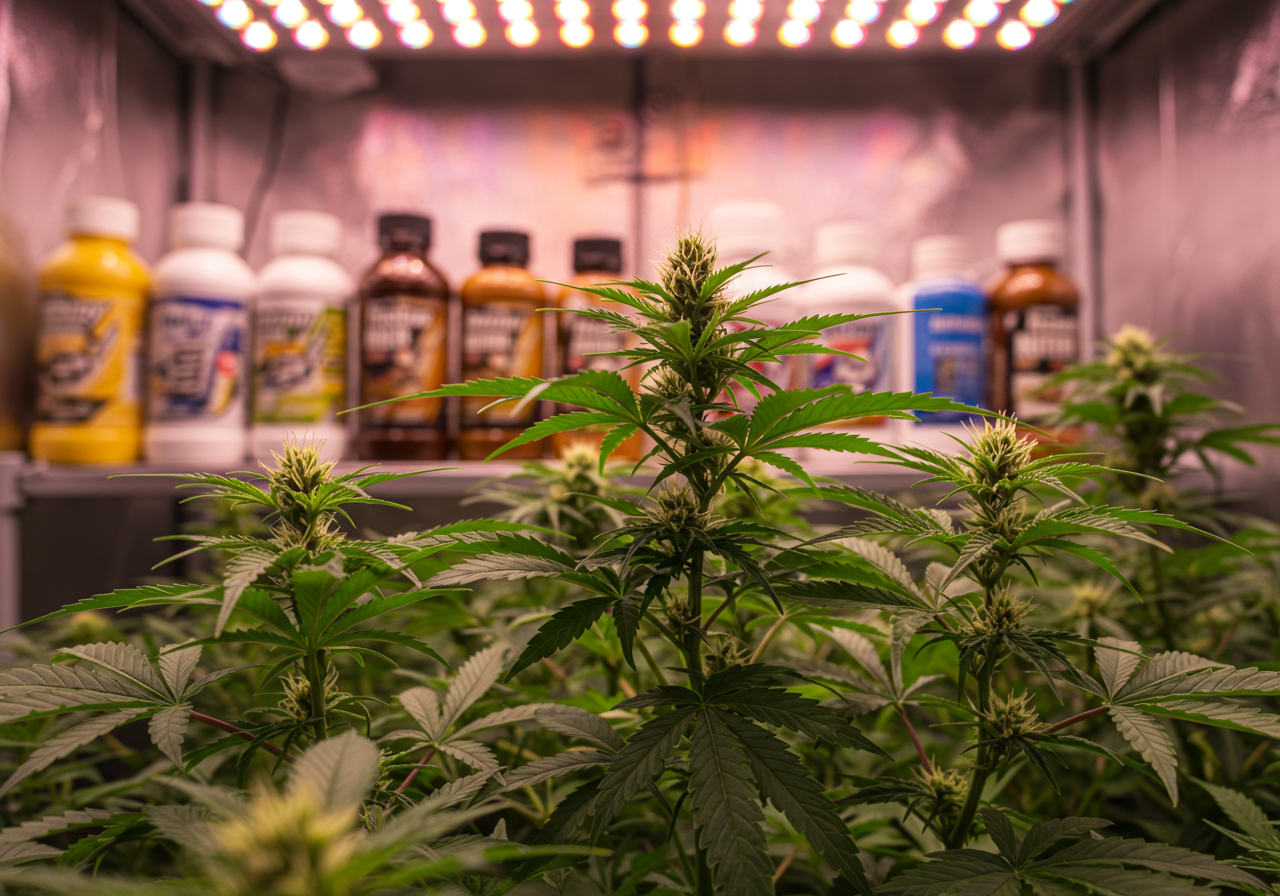
How Often to Feed Flowering Cannabis in Soil
Soil stores nutrients and changes their availability through chemical exchange, moisture, biology, and decomposition. That storage gives the grower a buffer, but it also makes simple feeding arithmetic less reliable. A container may hold enough nitrogen while phosphorus is already excessive, or it may contain plenty of total nutrition that stressed roots cannot access.
Fresh, pre-amended potting soil
If a plant entered flowering soon after transplanting into a charged mix, begin by learning what the mix is already supplying. Water correctly and monitor active growth before adding a complete liquid bloom program. The printed duration on a bag is only guidance because release changes with temperature, moisture, plant size, container volume, and irrigation.
As the charge declines, introduce a complete feed based on the product’s instructions and the plant’s trajectory. A small container with a large flowering canopy may exhaust its reserve sooner than a large container holding the same cultivar. Record the transplant date, product, amendments, and first feed so the next cycle starts with evidence.
Lightly fertilized soil or peat-based mix
A light mix may need supplemental nutrition throughout flowering. Some programs work as a moderate feed followed by one or more water-only irrigations. Others are designed for a lower concentration at each irrigation. Either can work when it matches the fertilizer, water, medium, drainage, and plant.
Do not force the ratio to remain fixed. If the plant begins using water every two days instead of every four, an every-other-watering program now delivers fertilizer twice as often over a week. Recheck concentration and plant response rather than celebrating that the calendar stayed unchanged.
Pro Tip: Track feed dates and irrigation dates separately. That one distinction reveals whether a change in dry-down quietly doubled the weekly fertilizer delivery.
How to decide on the next soil watering
First confirm that the pot is ready for water. Then review what the last feed contained, whether the medium has a known reserve, how the plant responded, and whether any symptom is progressing. If the root zone remains wet and the plant has slowed drinking, adding fertilizer is rarely the first correction.
Do not diagnose by lower-leaf color alone. Some gradual late-flower aging can be normal, while rapid yellowing can involve insufficient nitrogen, saturated roots, high salinity, unsuitable pH, cold conditions, disease, or a plant that is simply much further from harvest than expected.
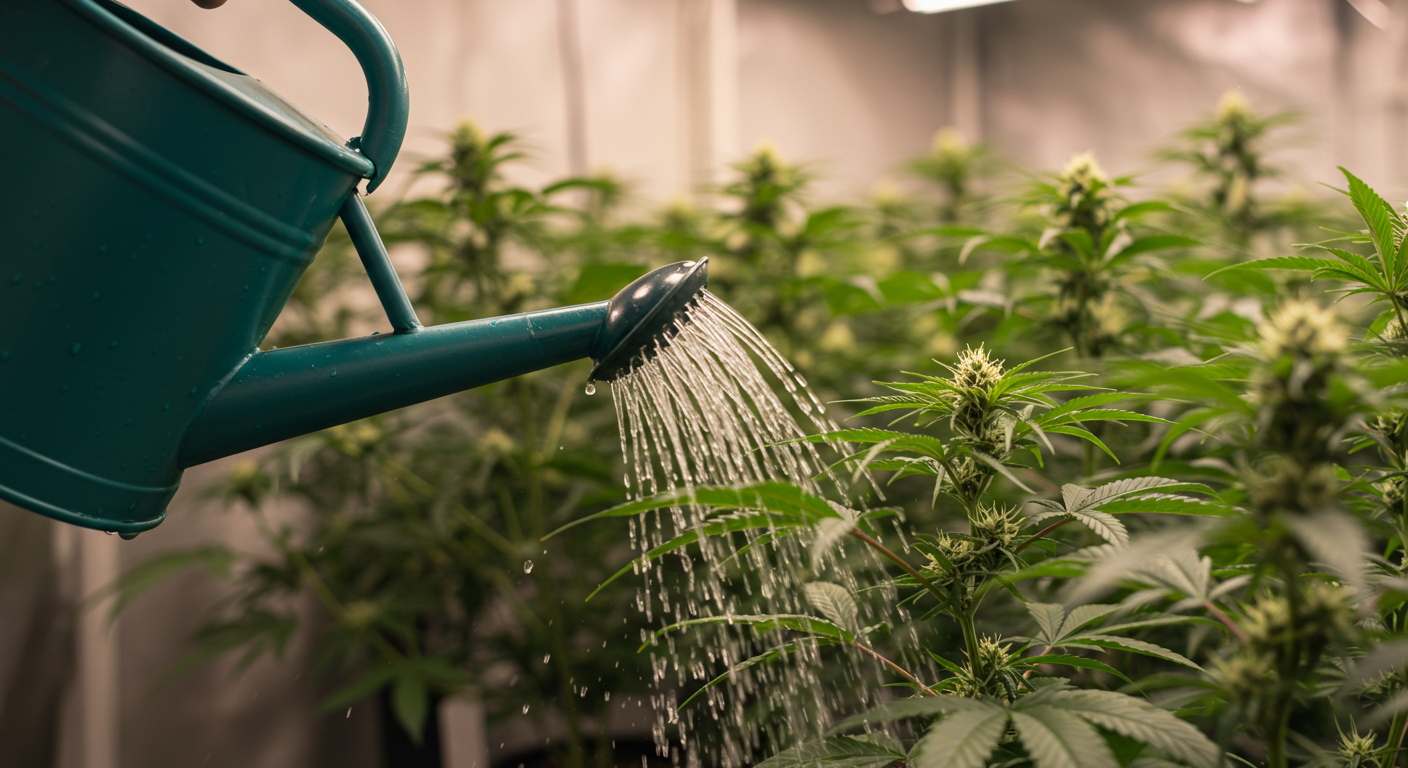
How Often to Feed Flowering Cannabis in Coco
Established coco is commonly managed as a fertigation system. A complete nutrient solution is normally supplied with most or every irrigation because the medium does not provide a complete long-term nutrient reserve. The better adjustment is often a change in concentration, event size, coverage, or frequency rather than inserting routine plain-water days.
Coco also has meaningful cation exchange behavior. Calcium, magnesium, potassium, and sodium can interact with exchange sites in the medium, especially when preparation or buffering was poor. Large swings between strong nutrient solution and plain water can make the root-zone solution less predictable.
One irrigation or several?
A young plant in a large coco container may not need several events per day. An established root-filled container under strong light may benefit from more frequent, smaller applications that keep moisture and EC more stable. Increase frequency only after roots occupy the medium and the system can distribute solution evenly. Frequent fertigation into a poorly rooted, cold, or saturated container is not precision; it is repeated overwatering.
Use the plant’s daily water use, container size, dry-back, input EC, drainage timing, and root-zone trend. If concentration rises sharply between events, a more even irrigation pattern or lower input strength may be more useful than a stronger flush followed by another dry period.
Use a stable, complete coco program.
Measure the finished solution, confirm even distribution, and adjust concentration or frequency from repeated root-zone trends.
Alternate extremes by habit.
Repeated strong feeds followed by plain water can create larger chemical and moisture swings than a moderate, consistent fertigation plan.
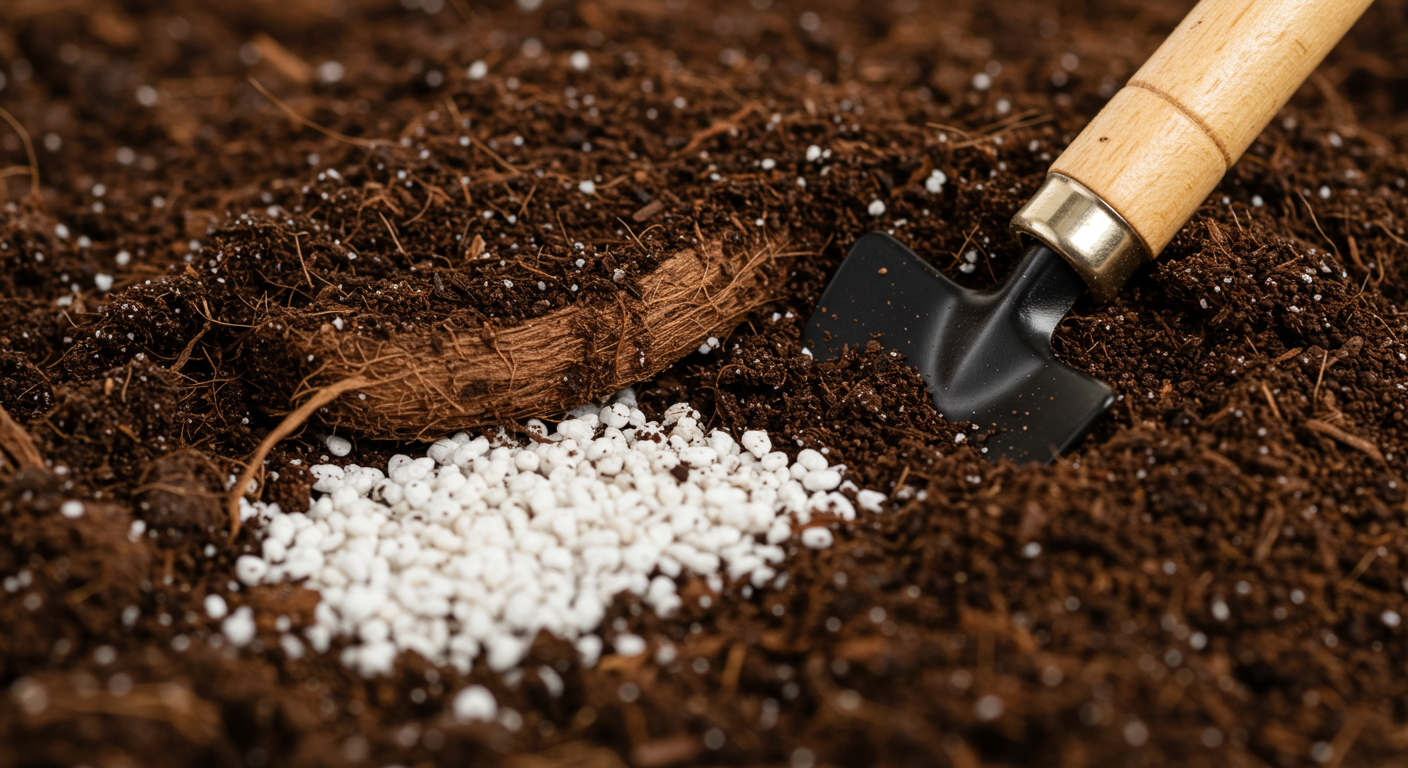
How Often to Feed in Living Soil
A healthy living-soil plant can receive water without being unfed. Nutrients are stored in organic matter, mineral amendments, compost, and microbial biomass, then released on different timelines. Irrigation maintains the moisture conditions that allow that system to work.
Liquid fertilizer frequency is therefore the wrong primary metric. The important schedule includes soil preparation, container or bed volume, top-dressing, mulch, moisture stability, and the time required for mineralization. A late top-dress cannot instantly correct a severe shortage because roots need the released mineral forms, not simply material sitting on the surface.
Plan before peak demand
If the soil volume and amendment program require a flowering top-dress, apply it early enough for the chosen materials and conditions. Follow the amendment label and avoid combining several products that duplicate nitrogen, phosphorus, potassium, calcium, or trace minerals. More ingredients do not create a more complete soil when the same elements are repeatedly added.
Moisture consistency matters. Severe dry periods can slow biological activity and change nutrient movement, while permanent saturation reduces oxygen. Water the active root zone evenly and avoid routine heavy runoff from a system designed to retain its fertility.
What to Remember: In living soil, the crop can be watered today and fed by decisions made weeks earlier. Prevention and soil volume are often more powerful than a late rescue product.
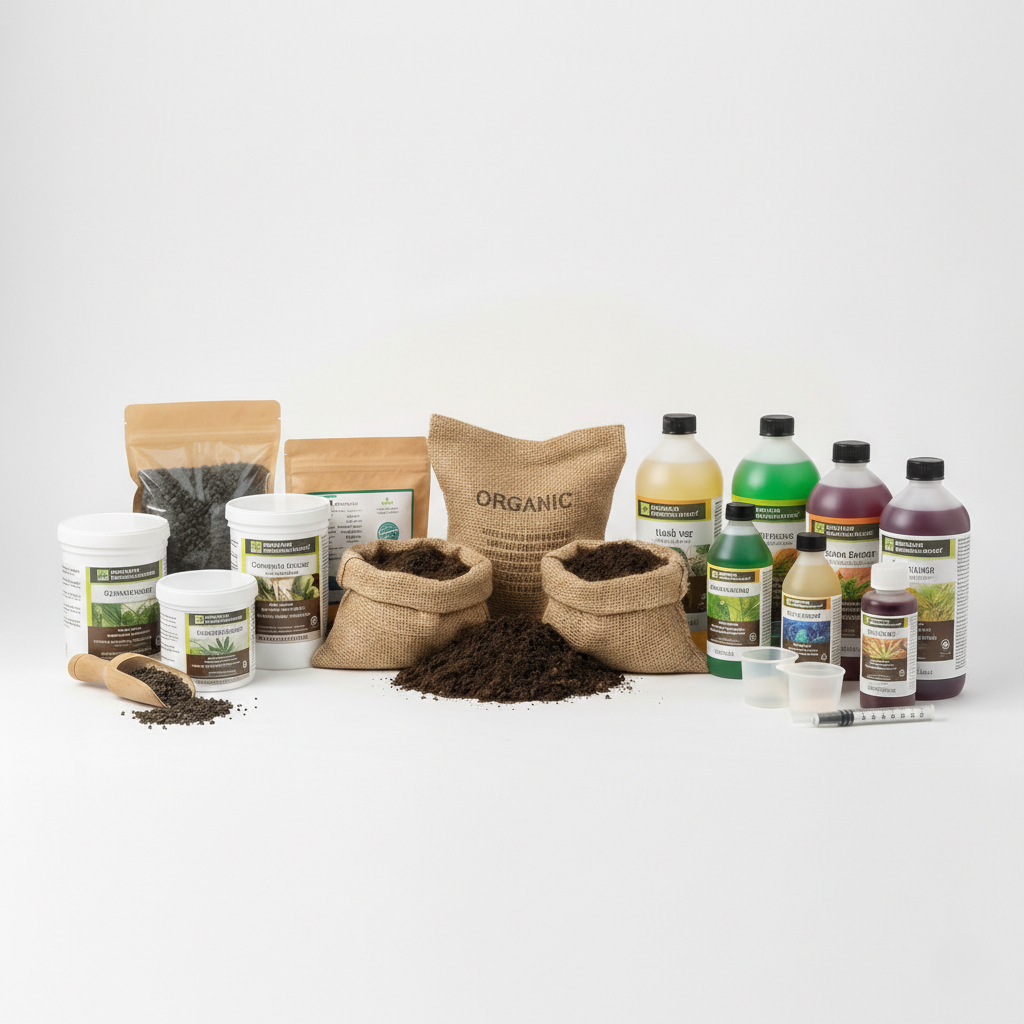
How Often to Feed Flowering Cannabis in Hydroponics
In deep-water culture, nutrient film technique, aeroponics, and recirculating systems, roots receive nutrient solution continuously or during repeated pulses. There is no meaningful feed-water alternation. “How often” becomes a question about monitoring, top-ups, sanitation, and when the reservoir needs correction or replacement.
Plants do not remove water and mineral ions at identical rates. Evaporation also lowers the water level without removing fertilizer. If the water level falls while EC rises, the reservoir may be concentrating. If both water level and EC fall, the crop may be removing ions rapidly relative to water. These are clues, not automatic commands, because temperature, pH, solution age, microbial growth, meter error, and root health also affect the result.
Do not top up by reflex
Measure before adding anything. A falling reservoir level may need mostly water, a correctly prepared top-up solution, or a full replacement if balance and hygiene have deteriorated. Adding full-strength nutrients every time the level drops can steadily increase EC and distort elemental ratios.
Keep reservoir temperature, oxygenation, circulation, volume, and light exclusion stable. A perfect nutrient number cannot compensate for warm, oxygen-poor water or diseased roots.
Never mix concentrated fertilizer parts together before dilution.
Concentrates can react and precipitate, making nutrients unavailable and creating deposits. Add each component separately to the main water volume in the manufacturer’s order, mix thoroughly, and follow the product’s handling instructions.
Use Root-Zone EC as a Trend, Not a Verdict
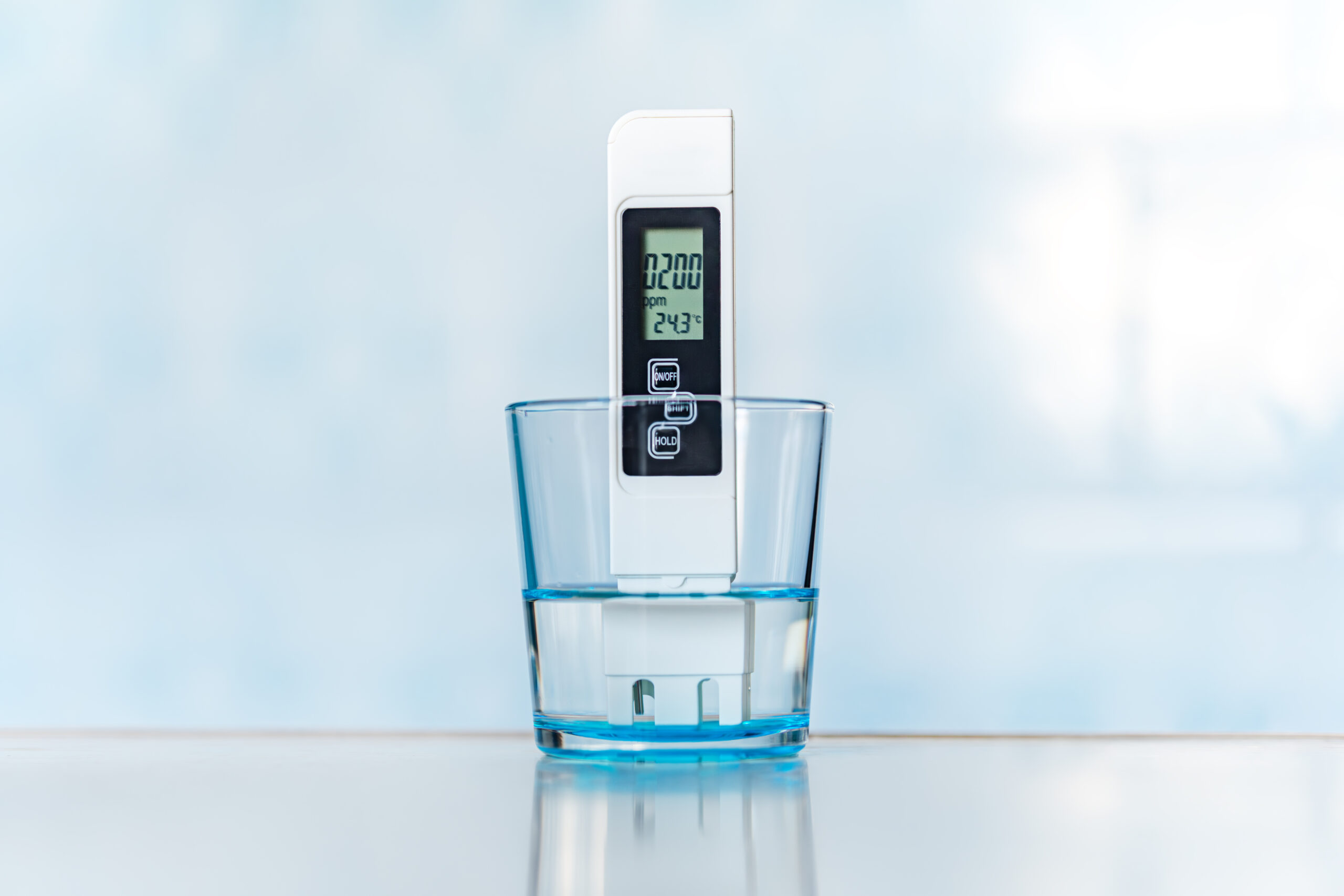
Electrical conductivity is useful because it estimates the total concentration of dissolved ions. It does not identify which ions are present, whether their ratios are balanced, or whether the roots are healthy enough to absorb them. A high reading can include fertilizer, source-water minerals, sodium, chloride, or accumulated pH products.
Runoff or root-zone EC is most useful when the sampling method remains consistent. Collecting the first few drops one day and a large mixed sample the next creates numbers that are difficult to compare. Channeling, uneven wetting, dry edges, different runoff volumes, and sampling time can all change the result.
| Observed trend | Possible meaning | Confirm first | Useful response | Avoid |
|---|---|---|---|---|
| Root-zone EC rises while water use remains strong | Delivery may exceed uptake or dry-back may be concentrating the solution | Input EC, event volume, distribution, drainage, and sampling method | Adjust one control such as input strength, frequency, or coverage | Adding another supplement |
| Root-zone EC rises while water use falls | Root stress, excess salinity, climate change, or maturation may be involved | Root health, moisture, temperature, humidity, and plant stage | Protect roots and correct the identified cause | Keeping the old schedule automatically |
| EC falls and plant remains vigorous | Demand may be increasing relative to delivery | Meter calibration, solution volume, growth, and formula completeness | Make a small controlled change if the trend repeats | A large dose jump after one sample |
| EC appears stable but symptoms progress | Balance, pH, roots, disease, or environment may be limiting uptake | Roots, pH behavior, water quality, symptom location, and recent changes | Diagnose access and balance before adding more | Treating EC as a complete nutrient analysis |
Advice: Compare direction before chasing a target. Three measurements collected the same way are usually more informative than one dramatic runoff number.
Separate Overfeeding, Underfeeding, and Root Stress
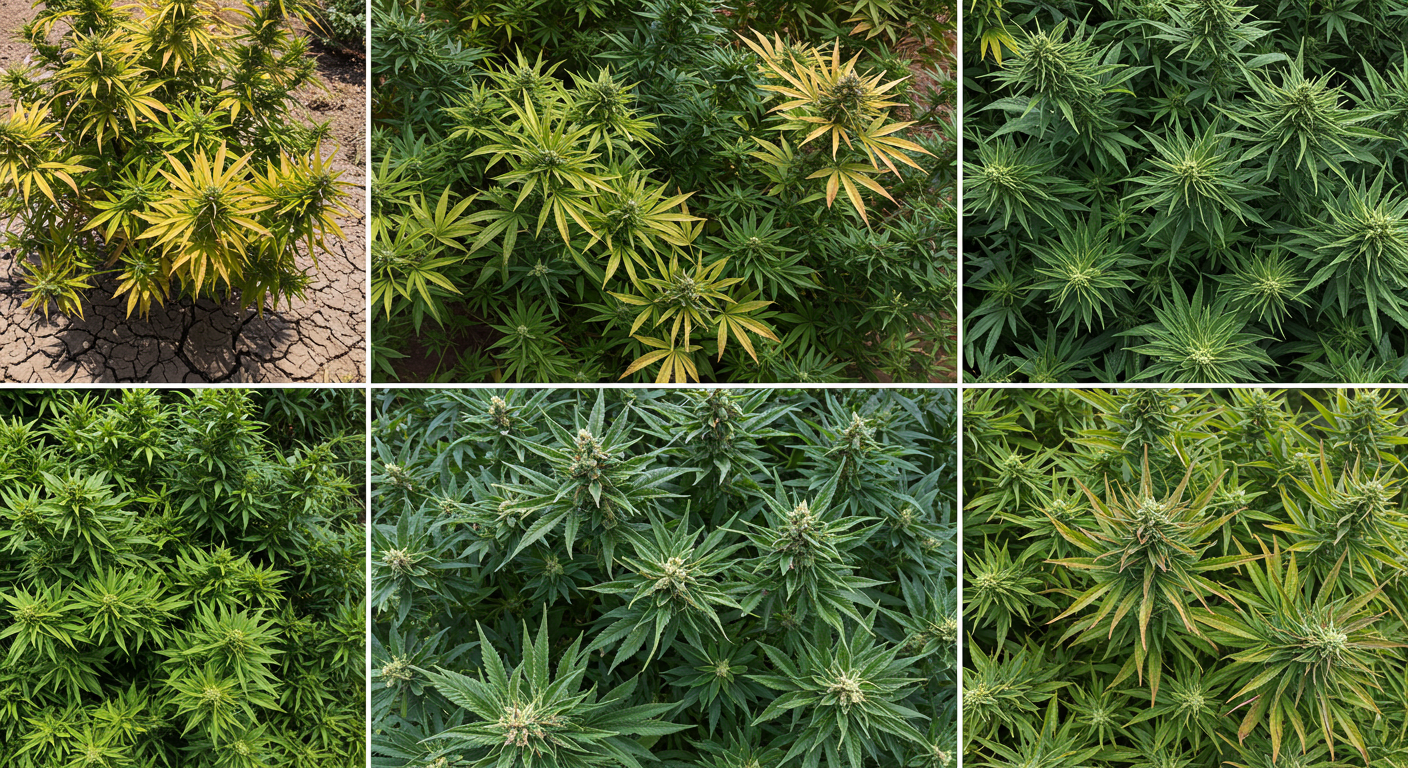
Flowering leaves can look unhealthy for many reasons. Nutrient excess, nutrient shortage, unsuitable pH, drought, saturation, cold roots, heat, low humidity, pests, disease, and natural aging can overlap. A photograph of one leaf cannot tell you how often to feed.
Start with the timeline. Ask what changed before the symptom appeared, which leaves were affected first, whether the damage is moving, and how the plant’s water use changed. Then inspect the root zone and measurements. A correct diagnosis explains both the appearance and the recent behavior.
| Pattern | Possible cause | Root-zone clue | First action | Prevention |
|---|---|---|---|---|
| Burned tips with very dark or clawed leaves | Excess delivery or imbalance | EC may rise and drinking may slow | Stop dose increases and audit every input | Use one complete program and track total delivery |
| Gradual paling from older leaves | Low nitrogen supply, normal aging, or poor uptake | Reserve may be depleted, or roots may be stressed | Check stage, roots, moisture, pH, and recent feed | Keep transition nutrition complete and record trends |
| Marginal scorch with a wet pot | High salinity, root damage, or environmental stress | Slow dry-down or poor oxygen may be present | Restore root-zone function before adding fertilizer | Match irrigation to root occupancy and climate |
| Pale or damaged new growth | Micronutrient availability, root injury, or chemical imbalance | pH or competing ions may be involved | Check the complete recipe, water, pH behavior, and roots | Avoid single-supplement diagnosis from color alone |
| Sudden whole-plant slowdown | Root disease, irrigation failure, climate shift, or severe stress | Water use changes before a clear deficiency pattern | Inspect irrigation, roots, and environment immediately | Log daily water use and verify every delivery point |
What to do when you suspect excess
Stop increasing the concentration. Recalculate every nutrient source, including source water, base feed, Cal-Mag, bloom additives, pH products, and anything already in the medium. Confirm the meter, mixing order, volume, coverage, and drainage. Then choose a correction suited to the system.
A hydroponic reservoir may need dilution or replacement. A concentrated coco root zone may need a measured lower-EC complete solution with appropriate drainage. Saturated soil may need time and oxygen rather than more liquid. Heavy leaching is not a universal response to brown tips.
What to do when you suspect shortage
Confirm that roots can access what is already present. Correct moisture, oxygen, temperature, pH, and irrigation coverage before increasing fertilizer. If the evidence still supports low supply, increase a complete formula in a controlled step and record the response. Do not add several single-element products to a diagnosis that remains uncertain.
Tip: Photograph the same upper, middle, and lower leaves under neutral light every few days. Progression across the plant is more diagnostic than the color of one damaged leaf.
How Light and Climate Change the Schedule
A nutrient schedule cannot be separated from the room. More usable light can increase photosynthesis and water demand when temperature, humidity, carbon dioxide, roots, and nutrition support that increase. Higher temperature, lower humidity, and stronger airflow can also increase water loss without creating an equal increase in mineral demand.
This distinction matters during flowering because growers often raise light intensity, add circulation, or lower humidity while leaving the feed recipe unchanged. If the plant begins irrigating more often, the total weekly fertilizer delivery rises. If a late-flower room becomes cooler or more humid, water use may fall and the old schedule can concentrate the root zone.
Use the canopy and root zone as one system. Track light setting, room temperature, humidity, irrigation volume, time to the next irrigation, and input EC. When one of those variables changes, watch the following days before changing something else.
Do Autoflowers Need a Different Flowering Frequency?
Autoflowering plants do not require a completely different set of mineral elements, but their compressed life cycle leaves less recovery time after overfeeding, root damage, or repeated irrigation mistakes. Size and root occupancy can also vary widely among autos, so the word autoflower is not a dose.
Use the same system-specific logic. A small auto in rich soil may need little supplemental feeding, while a vigorous auto in coco still depends on regular fertigation. Start cautiously when the plant is small, preserve a complete program through active growth, and adjust from water use, root-zone trend, and visible response rather than applying a fixed percentage to every cultivar.
Can Two Flowering Cultivars Share One Feed Schedule?
They can share a reservoir or batch when their tolerances and developmental stages overlap. They do not need identical drinking rates. Label every plant or irrigation zone and record differences in dry-down, drainage, and tip response. The most sensitive plant often sets the safe concentration, while event volume or frequency can be adjusted separately for a larger or faster-drinking root zone.
A shared screen makes this harder because containers become difficult to move or inspect. Build access before flowering, use catch trays that can be emptied, and verify every emitter. One partially clogged line can look like a nutrient deficiency while the rest of the garden remains healthy.
Bloom Boosters Do Not Decide Frequency
A bloom booster is an ingredient or product, not a feeding strategy. The complete elemental total matters. Base fertilizer may already supply enough phosphorus and potassium, and source water or other supplements may contribute additional minerals. Cannabis research has repeatedly shown that excessive nutrient supply can increase root-zone accumulation and waste without a matching improvement in flower yield or cannabinoids.
Before adding a booster, answer four questions:
- What does the complete base formula already provide?
- Which element or function is the booster meant to add?
- What evidence shows that the current program is limiting the crop?
- How will the addition change final EC and the balance of the full recipe?
If those answers are unclear, keep the stable base program. Healthy roots, functional leaves, even light, suitable climate, harvest timing, and careful drying do more for usable flower quality than a dramatic label used without a diagnosis.
Quality Note: Stronger feed does not manufacture aroma. Protect the leaves and roots that support flower growth, then protect the harvested trichomes with correct drying and curing.
Should You Use Plain Water Between Flowering Feeds?
Sometimes, but only when it fits the system. A periodic water-only irrigation can be part of a soil program when the medium stores nutrients and the fertilizer is designed for intermittent use. It is not a universal protection against nutrient burn, and it does not cancel an excessive dose already stored in the root zone.
In coco, rockwool, perlite, and many drain-to-waste programs, a balanced nutrient solution usually belongs in most or every irrigation. Repeated plain water can create larger EC and nutrient-ratio swings. When the root zone is concentrating, a lower-strength complete solution, better distribution, more appropriate frequency, or controlled corrective leaching may be more suitable.
In living soil, plain water may be the normal irrigation because nutrients are supplied by the soil system. In hydroponics, plain water is commonly used for calculated reservoir top-ups, but the roots still remain in a nutrient solution. The same words describe different operations.
Corrective leaching and preharvest nutrient deprivation are not the same practice.
Corrective leaching addresses excessive soluble salts in a suitable medium. Preharvest deprivation reduces or removes fertilizer near harvest. Each needs its own reason, method, and evidence.
When Should You Reduce or Stop Feeding?
Do not stop because a generic chart reached its final colored box. Consider the cultivar’s maturity, remaining flower development, water use, root health, medium reserve, and the purpose of the change. A plant with several weeks of active flowering left needs a different decision from a nearly mature plant whose water use is naturally declining.
Recent cannabis research does not support the claim that a fixed water-only period reliably washes nutrients out of flowers or universally improves their chemical quality. Studies have reported limited, cultivar-dependent, or no meaningful improvements from preharvest nutrient deprivation. One Utah State University thesis found that deprivation reduced nitrogen in leaves while flower nitrogen remained unchanged, and it did not increase total cannabinoid yield or flower quality.
This does not mean that every crop must receive full-strength fertilizer until harvest. Reducing unnecessary inputs near the end can save fertilizer and limit waste when demand has declined. It means the decision should be framed honestly: conserve inputs and maintain a stable finish, rather than promising that plain water will rinse fertilizer from formed flowers.
Remember: A finishing plant needs less opportunity for recovery, not less attention. Avoid last-minute overfeeding, drought stress, prolonged saturation, or large chemistry swings.
Build a Flowering Feed Schedule That Learns
A good schedule is a starting hypothesis. It organizes consistent actions, measurements, and observations so you can improve the next decision. Let us build one in a few minutes.
1. Identify the nutrient reserve
Write down the medium, age since transplant, pre-charge, dry amendments, source-water EC, base fertilizer, supplements, and previous feed. If you cannot list the nutrient sources, you cannot accurately decide whether the next irrigation should add more.
2. Establish a stable baseline
Use one complete base program intended for the water, medium, and stage. Measure the finished solution after mixing. Avoid introducing a bloom booster, Cal-Mag, carbohydrate product, enzyme, and microbial additive in the same week unless the complete program specifically calls for them and compatibility is known.
3. Record delivery, not only concentration
Log solution volume per plant or zone, input EC and pH, drainage when relevant, and time to the next irrigation. A concentration number without volume and frequency cannot describe total delivery.
4. Track demand
Use container weight, reservoir use, or measured irrigation totals. Note flower stage, light setting, temperature, humidity, and any sudden change in water use. A slowing plant may need a different irrigation interval before it needs a different formula.
5. Use consistent root-zone evidence
When the system supports runoff or substrate testing, use the same collection method and timing. Compare trends with input, drainage, dry-back, and plant response. Do not build a correction around one inconsistent sample.
6. Change one major variable
Choose concentration, event volume, frequency, formula, or a specific environmental cause. Hold the other major controls steady long enough to observe the response unless plant safety requires immediate action.
7. Carry the lesson forward
At harvest, record the cultivar, flowering length, peak water use, useful feed range, late-flower decline, root condition, and any period of excess or shortage. That local history is more valuable than copying another garden’s calendar.
Before the Next Feed
- Confirm the plant needs irrigation: check weight, moisture, reservoir, or the system’s normal trigger.
- Name the system: charged soil, light mix, coco, living soil, or hydroponics.
- Review every nutrient source: water, medium, base feed, amendments, and supplements.
- Check the flowering stage: transition, early flower, mid flower, late flower, or final days.
- Read water use: rising, stable, or falling compared with recent days.
- Measure consistently: use a calibrated meter and the same sampling method.
- Inspect the whole plant: new growth, older leaves, tips, posture, roots, and flower health.
- Choose one adjustment: concentration, volume, frequency, coverage, or formula.
- Record the result: date, recipe, volume, drainage, climate, and response.
Common Flowering Feed Questions
Is feeding once a week enough during flowering?
It can be enough in a fertile or moderately charged soil, and it can be too much in an already rich mix. It is usually not the right way to describe coco or hydroponics. Decide from the root-zone system, total delivery, and plant response rather than the weekday.
Should I feed every watering in flower?
Established coco, rockwool, perlite, and similar systems commonly receive a complete nutrient solution with most or every irrigation. Pre-amended soil may need no added liquid feed at first. Light soil mixes may use periodic feed or a lower concentration more consistently. Read the full system.
Should I increase nutrients when buds appear?
Do not increase concentration only because flowers became visible. Transition demand changes gradually, and nitrogen remains necessary. Follow a complete stage-appropriate program, then adjust from growth, water use, and root-zone trends.
Can feeding too often make buds smaller?
Yes, when total delivery creates excessive salinity, nutrient imbalance, root damage, or loss of functional leaf area. Frequent fertigation itself is not harmful when concentration, volume, oxygen, and drainage are managed correctly.
Are yellow leaves in flower always a sign to feed?
No. Gradual aging, nitrogen shortage, root stress, pH, salinity, irrigation problems, disease, temperature, and harvest proximity can produce yellowing. Map where it began, how quickly it spreads, and what changed before adding fertilizer.
Why does runoff EC keep rising?
The root zone may be receiving more ions than the plant removes, or dry-back may be concentrating the remaining solution. Uneven irrigation, low drainage, high source-water EC, channeling, and inconsistent sampling can also contribute. Repeat the measurement and inspect coverage before changing the recipe.
Do flowering plants always need Cal-Mag?
No. Need depends on source water, base fertilizer, medium, amendments, cultivar, and total calcium and magnesium already supplied. Adding it automatically can raise EC and alter cation balance. Calculate the complete program first.
Should I feed a plant that suddenly stopped drinking?
Investigate first. Check root-zone moisture, temperature, humidity, light, irrigation delivery, roots, pests, disease, and maturity. Continuing the old feed schedule into a wet, inactive root zone can worsen the problem.
Do long-flowering cultivars need the same week-by-week chart?
No. They may spend longer in active flower building and may not be ready for the late-stage reduction shown on a shorter chart. Use physiological stage, water use, flower development, and cultivar history rather than week number alone.
Should I flush for two weeks before harvest?
Not as a universal requirement. Current research does not show that a fixed water-only period consistently removes nutrients from flowers or improves quality. Reduce inputs when the system and remaining demand justify it, and avoid creating late root stress.
Let the Root Zone Set the Rhythm
The most reliable flowering feed schedule is not the busiest one. It is the one that keeps nutrition available while the plant’s water use, root-zone concentration, and canopy health remain stable enough to interpret.
Start with the correct rule for your system. In soil, decide whether the medium already supplies the plant. In coco, coordinate concentration with irrigation frequency and drainage. In living soil, plan fertility before demand peaks. In hydroponics, maintain the reservoir instead of counting feed days.
Then keep the process simple: measure the finished solution, record volume and frequency, watch the root-zone trend, and change one major variable at a time. Flowering plants still need judgment, but a good record turns that judgment into something you can repeat.
Selected Research Behind This Guide
Cannabis nutrition is still an active research field, and results can change with cultivar and system. These primary and university sources support the central evidence used here:
- Optimization of nitrogen, phosphorus, and potassium for soilless flowering cannabis
- Nutrient stress, fertilizer level, biomass, and nutrient-use efficiency during flowering
- Elevated root-zone phosphorus, nutrient waste, yield, and quality
- Cannabis nutrient-deficiency symptoms, yield, and integrated diagnosis
- Utah State University research on nutrient concentration and preharvest deprivation
- Preharvest flushing across five medical cannabis cultivars
Share this article
A quick overview of the topics covered in this article.
Follow us
Latest articles
September 24, 2026

September 24, 2026
September 24, 2026
September 24, 2026