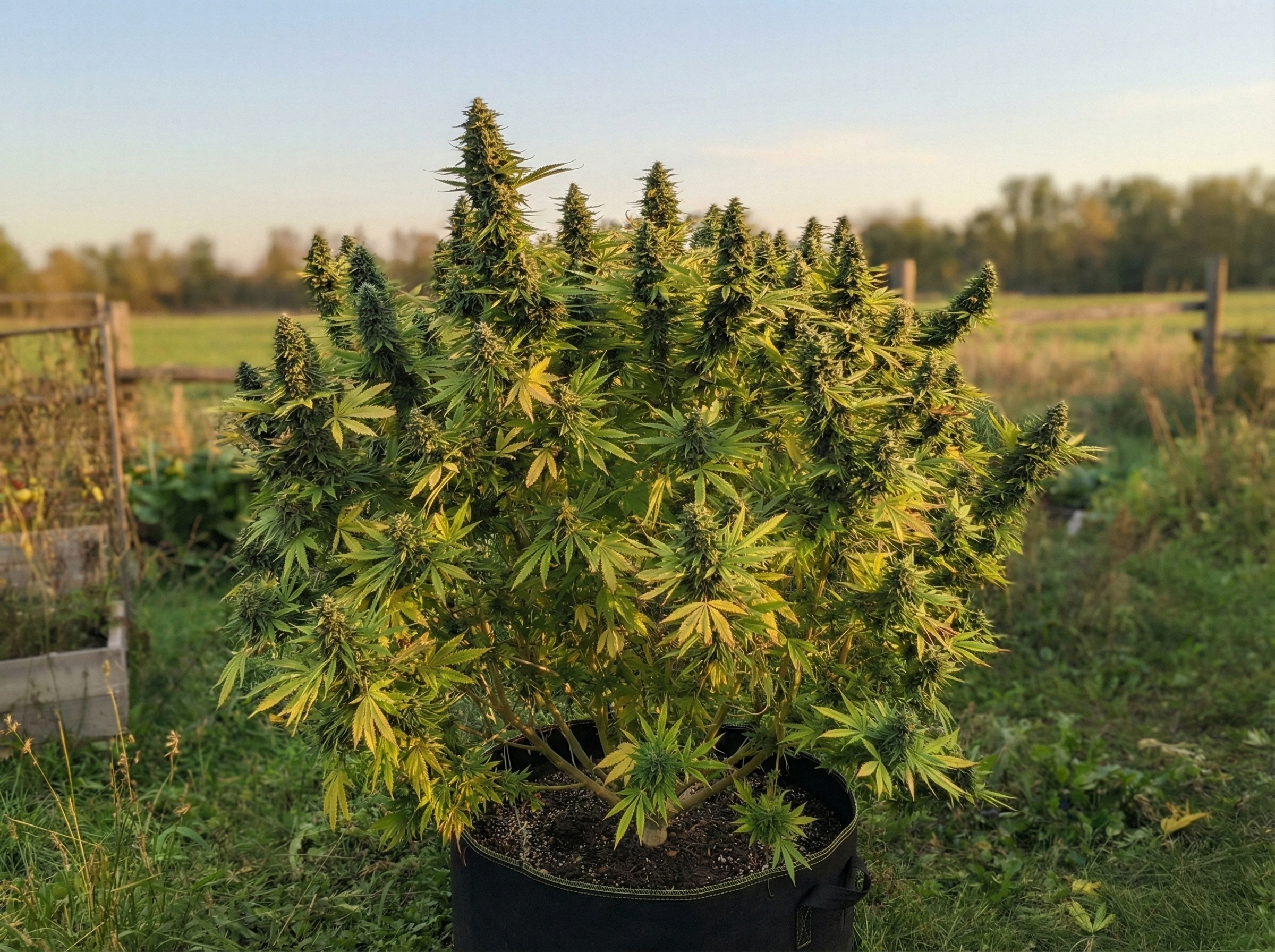

Should I Put Nutrients in Every Time I Water My Cannabis Plant?
Should you put nutrients in every time you water a cannabis plant? Sometimes yes, sometimes no, and the difference is not a matter of grower preference. It depends on what is already feeding the roots.
In coco, rockwool, perlite, and many other inert systems, irrigation is also fertigation, so a mild, complete nutrient solution may belong in most or every watering. In a charged potting mix, amended soil, or living soil, the root zone may already contain the crop’s nutrition, so adding bottled fertilizer every time can create unnecessary salt accumulation. In recirculating hydroponics, nutrients are present continuously in the reservoir, and the real job is maintaining the solution rather than deciding whether today’s irrigation is a “feed” or “water.”
That gives us the short answer. Now let’s make it useful. By the end of this guide, you will be able to decide what belongs in the next irrigation by reading the medium, source water, growth stage, root-zone trend, and plant response instead of following a rigid feed-water-feed calendar.
Master Advice: Do not ask only, “Did I feed last time?” Ask, “What is supplying nutrients in this root zone, and what changed since the last irrigation?”
Use this guide only for lawful cultivation. Fertilizer concentrates, acids, bases, electrical equipment, and runoff require responsible handling. Follow product labels, local regulations, and appropriate protective guidance.
The Direct Answer by Growing System
The phrase feed every watering hides four very different systems. Use this table as a starting point, then adjust from measurements and plant response.
| Root-zone system | Usual starting approach | Why | What decides the adjustment | Common mistake |
|---|---|---|---|---|
| Pre-amended potting soil | Plain water at first; add fertilizer only as the charge declines | The medium already contains available and slow-release nutrition | Mix strength, container size, plant growth, water quality, and time since transplant | Adding a full liquid program immediately |
| Lightly fertilized soil or peat mix | Feed periodically or at a low concentration when the plant and medium justify it | The medium offers some reserve but may not carry the whole cycle | Label directions, plant stage, EC trend, and visible vigor | Using a fixed calendar after conditions change |
| Coco, rockwool, or perlite | A complete nutrient solution with most or every irrigation | The medium contributes little complete nutrition and frequent irrigation moves ions to roots | Input and root-zone EC, runoff trend, frequency, drainage, water use, and cultivar | Alternating strong feed with repeated plain water and creating large swings |
| Living soil or dry-amended soil | Water mainly supports moisture and biology; amendments supply the nutrients | Mineralization and the soil reserve feed the plant over time | Soil volume, amendment history, moisture consistency, biology, and crop demand | Treating every pale leaf as a request for soluble fertilizer |
| DWC or recirculating hydroponics | Maintain a balanced reservoir continuously | Roots live in or repeatedly contact the nutrient solution | Reservoir EC, pH, water level, temperature, dissolved oxygen, and plant uptake | Topping up nutrients without accounting for water loss and reservoir trend |
Fertigation means supplying water and dissolved nutrients in the same irrigation.
In an inert medium, “watering” and “feeding” are often the same event. In fertile soil, watering can activate nutrients that are already present without adding more fertilizer to the water.
Feeding Frequency Is Not the Same as Feeding Strength
This is the distinction that solves most confusion. A grower can fertigate every day with a mild, stable solution, while another uses a stronger solution only once every few irrigations. Both may deliver a similar total amount of nutrients over a week. Conversely, two growers can use the same bottle dose but deliver very different totals because one waters twice as often.
Think in four connected variables:
- Concentration: how much dissolved fertilizer is in each liter or gallon.
- Volume: how much solution reaches the container at each event.
- Frequency: how often that solution is applied.
- Root-zone retention and drainage: how much remains available, how much the plant removes, and how much leaves as drainage.
The bottle dose describes only one part of the system. If light intensity rises, the plant grows larger, irrigation frequency doubles, or the root zone dries more between events, the same recipe can behave differently.
Remember: “Every watering” must never be interpreted as “full label strength every watering.” Frequency and concentration are separate controls.
“If I use half strength every watering, is that the same as full strength every other watering?”
Question sent by: Daniel Cooper, via e-mail.
Not necessarily. The weekly fertilizer amount may look similar on paper, but nutrient ratios, root-zone moisture, drainage, salt movement, and plant uptake change between irrigations. A steady lower concentration often creates less oscillation in inert media. Soil may respond better to periodic feeding because it stores and releases nutrients differently. Compare the complete root-zone trend, not only the arithmetic on the bottle.
Start by Identifying What Feeds the Plant
Before making a schedule, list every nutrient source that reaches the roots. Include the source water, base fertilizer, supplements, pre-charge in the medium, compost, worm castings, lime, dry amendments, reservoir residues, and any previous feed still held in the container.
A bag labeled “soil” can mean a heavily charged mix, a mild peat-based substrate, or a nearly inert blend. Coco can arrive buffered or poorly prepared. Tap water can contribute useful calcium and magnesium, or it can bring high alkalinity, sodium, chloride, and background EC. The front label does not tell the whole root-zone story.
Build one complete nutrient inventory.
Write down what comes from the water, medium, base formula, amendments, and supplements before deciding what the next irrigation needs.
Count only the bottle called “base nutrients.”
Cal-Mag, bloom additives, hard water, charged media, and pH products can all change the final EC and elemental balance.
Should You Feed Every Watering in Soil?
Usually, do not assume that soil needs nutrients at every watering. Soil and soil-like potting mixes can hold nutrients, exchange ions, support microbial mineralization, and buffer changes more than inert media. A fresh, nutrient-rich mix may support young plants for days or weeks without liquid fertilizer. Adding a complete feed immediately can stack soluble fertilizer on top of the existing charge.
But “never feed every watering in soil” is also too broad. A mature plant in a small container, under strong light, in a lightly charged peat mix may use nutrients quickly. Some liquid programs are designed for a low concentration at frequent irrigations. The label, medium analysis, container volume, water quality, drainage, and observed trend decide whether that approach is appropriate.
Use the transplant as your starting line
When a rooted plant enters fresh charged soil, note the date, container volume, product name, and amendment history. Watch new growth, leaf color, water use, and the time required for the container to become ready for irrigation. Do not wait for severe deficiency, but do not feed by habit while the medium is still doing the job.
Light mixes need a different plan
A seed-starting mix or lightly fertilized peat blend may contain little long-term nutrition. Once roots establish and active growth begins, a cautious complete feed may be needed earlier. The safest starting concentration is the one intended for the crop stage and medium, not an arbitrary fraction repeated across every brand.
Pro Tip: Lift or weigh the same container before and after irrigation. Pair that moisture information with a feed log. A schedule becomes useful only when it explains both water use and nutrient delivery.
“My potting soil says it feeds for six months. Should I avoid nutrients for the whole grow?”
Question sent by: Emily Carter, via Facebook page.
No fixed promise can describe every crop. Release depends on moisture, temperature, container size, root density, irrigation, and the fertilizer technology in the mix. Treat the claim as product guidance, then monitor the plant and medium. Do not add a second full program automatically, but do not assume the printed duration guarantees balanced nutrition under every growing condition.
Should You Feed Every Watering in Coco, Rockwool, or Perlite?
In established coco and other inert or low-reserve substrates, a complete nutrient solution is commonly supplied with most or every irrigation. Research cannabis crops in soilless production frequently use nutrients in each irrigation under controlled pH, EC, frequency, and drainage. That does not prove one universal recipe. It shows that continuous fertigation is a valid system when concentration and root-zone conditions are managed.
Coco is not chemically empty. Its cation exchange behavior can hold and exchange potassium, calcium, magnesium, and sodium. Preparation and buffering matter. Repeated plain water can change the solution surrounding the roots and contribute to unstable nutrient ratios, especially when the base program assumes regular fertigation.
Perlite retains little water or nutrition, so it normally relies on frequent delivery. Rockwool also depends on the supplied solution, but water distribution, slab or block volume, irrigation timing, and drainage control the root-zone EC. In these systems, the better question is often: What concentration and irrigation pattern keep the root zone stable?
Do not correct high root-zone EC by repeatedly guessing between strong feed and plain water.
Confirm the sampling method, input EC, irrigation coverage, drainage, dry-back, and plant response. Large swings can create a new imbalance even when the original problem was real.
“Do I need a plain-water day every week in coco?”
Question sent by: Marcus Reed, via e-mail.
Not as a universal ritual. A properly managed coco program can use a balanced nutrient solution at every irrigation. A planned lower-EC correction may be appropriate when measurements show concentration, but repeated water-only events can disturb nutrient availability and cation balance. Let the input and root-zone trends, drainage, and crop response decide.
Hydroponics Changes the Question
In deep-water culture, nutrient film technique, aeroponics, and recirculating systems, roots contact the nutrient solution continuously or many times per day. There is no meaningful alternation between a feed day and a water day. Instead, we manage the reservoir as a changing environment.
Plants remove water and mineral ions at different rates. Evaporation also removes water without removing fertilizer. If the water level falls while EC rises, water may be disappearing faster than nutrients. If EC falls while the level drops, the crop may be taking up nutrients faster relative to water. These trends need context, but they are more informative than topping up from a calendar.
| Water level | EC trend | Possible meaning | What to check next |
|---|---|---|---|
| Falling | Rising | Water is being removed faster than dissolved ions, or the reservoir is concentrating | Temperature, humidity, top-up method, reservoir volume, root health, and starting EC |
| Falling | Falling | The crop may be removing nutrients strongly relative to water | Growth rate, pH movement, solution age, and whether the formula remains complete |
| Falling | Stable | Water and nutrient removal may be relatively balanced | Continue logging; confirm pH, temperature, oxygenation, and plant appearance |
| Stable | Rising | Measurement error, top-up additions, evaporation, or reduced plant water use may be involved | Calibrate the meter, inspect roots, and confirm the reservoir is mixed and measured consistently |
“Should I add nutrients every time I top up my DWC bucket?”
Question sent by: Tyler Morgan, via e-mail.
Not automatically. Measure the reservoir before the top-up and decide whether the crop mainly removed water, nutrients, or both. Adding full-strength concentrate whenever the level drops can cause EC to climb. Use a planned top-up solution, maintain a practical reservoir volume, and periodically replace the solution according to system needs rather than endlessly stacking products.
Living Soil and Organic Programs Are Fed Differently
A living-soil grow can receive plain water while still being continuously supplied with nutrients. Compost, mineral amendments, organic matter, microbes, moisture, and root activity create a nutrient cycle inside the container. Water keeps that system active and moves dissolved compounds toward roots.
This is why a water-only irrigation is not the same as an unfed plant. The nutrients were added earlier as soil ingredients, top dresses, compost, or biological inputs. The timing challenge is anticipatory: slow-release amendments need time to mineralize, so a deficiency cannot always be corrected instantly by adding more dry material.
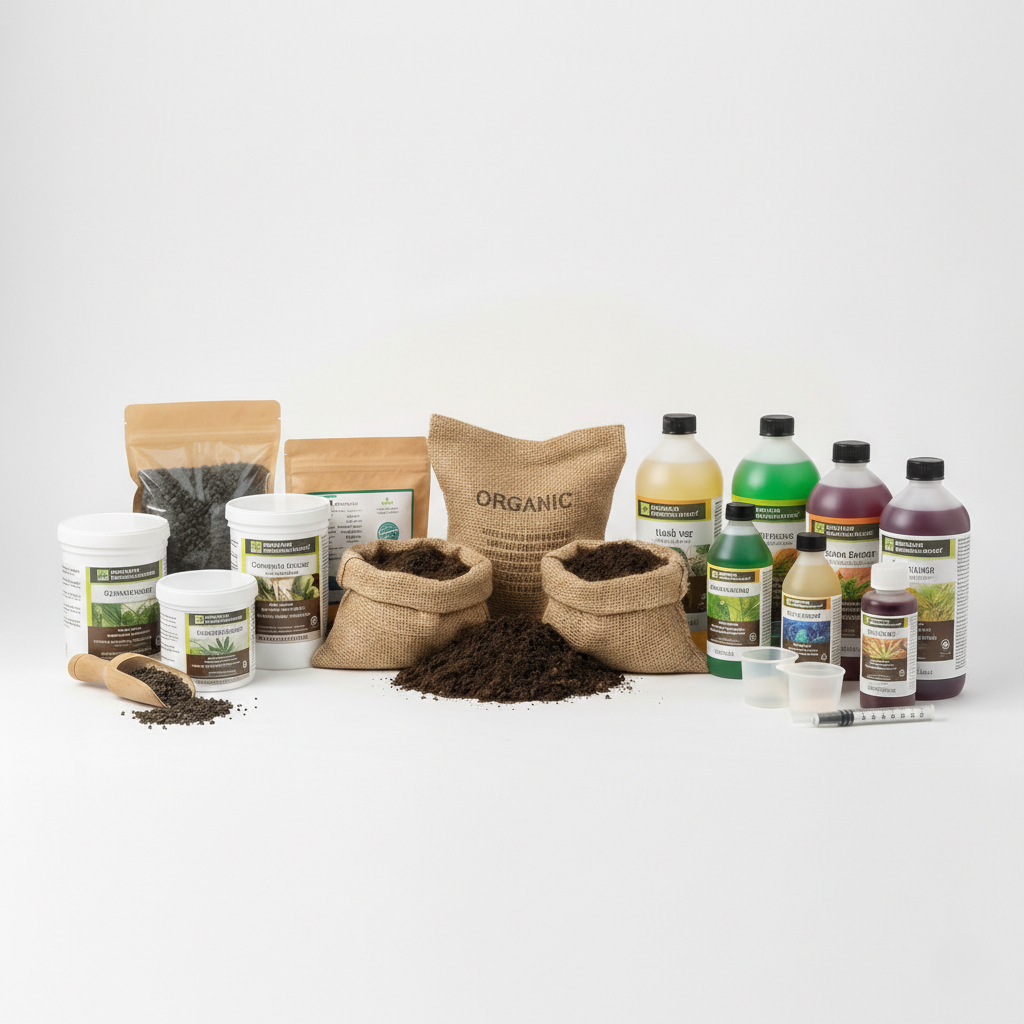
Can organic and mineral nutrients be used together?
They can, but the combination must have a clear purpose. Plants ultimately absorb mineral ions whether those ions came directly from a soluble fertilizer or were released from organic matter. The management difference is speed, predictability, microbial involvement, salt load, compatibility, and what the medium already contains.
A small mineral correction can be useful in an organic system, but piling a full mineral program on top of rich amended soil defeats the reason for calculating the soil reserve. Likewise, adding thick organic products to a hydroponic reservoir without considering oxygen demand, biofilm, emitter blockage, and sanitation can create serious system problems.
Important: “Organic” does not mean impossible to overfeed. Excess mineralization, concentrated liquid organics, and repeated top dressing can still create imbalance or high soluble salts.
“If I top-dressed my soil, should I also put liquid nutrients in the next watering?”
Question sent by: Madison Lee, via Facebook page.
Only if the liquid input has a defined role that the top dress does not already cover. Consider the amendment analysis, application rate, expected release time, current symptoms, soil moisture, and the original mix. Watering a top dress can begin nutrient release, but adding a complete liquid formula at the same time may duplicate the load.
Your Source Water Is Part of Every Feed
Two growers can mix the same fertilizer dose and produce different final solutions. One may start with low-EC reverse-osmosis water; the other may start with hard tap water containing calcium, magnesium, bicarbonate, sodium, chloride, and other dissolved material. Background EC consumes part of the total concentration but does not reveal which ions are present.
Obtain a water report when possible. Record pH, EC, alkalinity, calcium, magnesium, sodium, and chloride. Hardness describes calcium and magnesium mainly, while alkalinity describes the water’s acid-neutralizing capacity. They are related in some water supplies but not interchangeable.

“Does hard water mean I should use fewer nutrients?”
Question sent by: Owen Tremblay, via e-mail.
It means you should account for what the water already supplies. High background EC does not automatically provide a complete or balanced plant diet. Useful calcium and magnesium may reduce the need for supplementation, while high alkalinity, sodium, or chloride can create different problems. Use the water analysis and a formula designed for that water rather than subtracting an arbitrary percentage from every bottle.
Growth Stage Changes Demand, but the Medium Still Leads
Seedlings, rooted clones, rapidly expanding vegetative plants, flowering plants, and late-flower plants do not have identical nutrient demand. Yet stage never overrides the root-zone system. A seedling in charged soil and a seedling in an inert plug need different starting plans even on the same day of life.
| Stage | Main priority | Feeding decision | Signal to watch |
|---|---|---|---|
| Seedling or fresh clone | Root establishment without excess salinity | Identify whether the plug or mix is charged; use a mild complete solution only when the system requires it | Root emergence, active new growth, leaf color, and moisture use |
| Early vegetative growth | Balanced leaf, stem, and root expansion | Increase delivery only as roots, light, water use, and growth justify it | Steady new growth without very dark, clawed, or weak foliage |
| Late vegetative growth | Prepare a healthy canopy for transition | Maintain balance; do not chase size with unnecessary concentration | Uniform canopy, stable EC trend, and increasing water use |
| Flower transition | Support stretch, root function, and developing flowers | Shift formulas gradually when required; nitrogen is still needed | Healthy stretch without premature paling or excessive softness |
| Mid to late flower | Maintain functional foliage and flower quality | Match the cultivar’s real demand; avoid automatic booster stacking | Stable water use, controlled tip condition, aroma, and healthy flower development |
“Should seedlings get nutrients every watering?”
Question sent by: Natalie Brooks, via e-mail.
Only when the seedling is established in a system that depends on fertigation, and even then the concentration should suit young roots. A charged seedling mix may require only correctly managed water at first. An inert plug may need a mild complete solution earlier. Cotyledons, root development, active new growth, and the medium tell you more than the seedling’s age alone.
Light, Climate, Plant Size, and Cultivar Change the Total Load
A feeding chart cannot see your room. Stronger light, a larger canopy, warmer leaves, lower humidity, active airflow, and a larger root system can increase water and nutrient movement. Cool, humid, poorly aerated, or root-stressed conditions can reduce uptake. If irrigation frequency changes, total fertilizer delivery changes even when the tank recipe does not.
Cultivars also differ. Cannabis nutrient research repeatedly finds concentration and cultivar effects, which is why a single universal EC or bottle dose cannot be treated as a biological law. One cultivar may show tip stress while another remains vigorous under the same feed. Keep the base system stable, then record cultivar-specific responses across cycles.
Quality Note: More fertilizer does not create more flavor. Aroma and flower quality depend on genetics, healthy roots, balanced nutrition, light, climate, harvest timing, drying, and curing. Excess salinity can reduce water uptake and damage the canopy that builds the crop.
Use Measurements as Trends, Not Isolated Verdicts
EC measures the solution’s ability to conduct electricity. It is a useful estimate of total dissolved ionic concentration, but it does not identify which nutrients are present or whether the ratios are balanced. PPM displays on many meters are converted from EC using different scales, so two meters can show different ppm values for the same solution.
pH affects nutrient chemistry and root-zone behavior, but a perfect pH reading does not prove the feed is complete or the roots are healthy. Runoff can help in drain-to-waste systems, but one sample may be distorted by channeling, uneven irrigation, dry pockets, old salts near container edges, or inconsistent collection.
| Measurement | Useful information | What it cannot prove | Better way to use it | Common error |
|---|---|---|---|---|
| Input EC | Total ionic concentration entering the root zone | Exact nutrient balance or plant availability | Record source water and final solution with the same calibrated meter | Comparing ppm values from different scales |
| Root-zone or runoff EC | A concentration trend in a consistently sampled drain-to-waste system | A specific toxicity or uniform conditions through the pot | Repeat the same sampling method and compare with input, drainage, dry-back, and symptoms | Flushing after one high, inconsistent sample |
| pH | Acidity or alkalinity at the measured point | Complete nutrition, healthy roots, or correct EC | Track input and relevant root-zone trends for the system | Correcting the meter number while ignoring alkalinity and roots |
| Water use | A functional response to plant size, climate, roots, and moisture | The cause of a slowdown by itself | Compare container mass or reservoir use with climate and growth | Feeding a plant that slowed because roots are saturated or damaged |
| Leaf appearance | Where damage began and whether it progresses | A unique nutrient diagnosis from color alone | Photograph the same plant and combine the pattern with root-zone evidence | Matching one leaf to a chart and adding a supplement |
“My runoff EC is higher than my input. Does that mean I feed too often?”
Question sent by: PrairieRoot, via X.
It may indicate root-zone concentration, but frequency is only one possible cause. Strong dry-back, insufficient irrigation volume, uneven distribution, high input EC, low drainage, sampling technique, and reduced plant water use can all contribute. Repeat a consistent measurement and compare the trend with tip condition, water use, irrigation coverage, and drainage before changing the program.
How to Build a Feeding Schedule That Learns
A good schedule is a controlled starting hypothesis. It should tell you what was applied, why it was applied, and what evidence will justify the next change. Let’s build one without turning the grow into a chemistry lab.
Before the Next Irrigation
- Identify the medium: charged soil, light mix, coco, rockwool, perlite, living soil, or hydroponics.
- List all nutrient sources: water, medium, base feed, supplements, amendments, and previous solution.
- Check readiness for water: container mass, moisture at depth, reservoir status, and root-zone oxygen.
- Read the plant: new growth, older leaves, tip condition, posture, water use, and rate of change.
- Measure consistently: source-water EC, final EC and pH, plus a relevant root-zone trend when the system supports it.
- Choose one change: concentration, frequency, volume, irrigation timing, or a specific ingredient.
- Record the response: date, recipe, volume, drainage, environment, and photographs under neutral light.
A simple first-cycle approach
Begin with one complete base program intended for your water and medium. Use the manufacturer’s crop-stage guidance as a ceiling or reference, not a command to ignore plant response. Start cautiously when the medium is charged, the plant is young, the roots are stressed, or the water already has substantial EC.
Hold major variables steady long enough to observe a trend. If the crop is healthy, root-zone concentration is stable, water use is increasing, and new growth looks balanced, avoid changing the recipe simply because another week began. If symptoms progress, check roots, moisture, pH, EC, and recent changes before adding a new bottle.
Change one major variable at a time.
A controlled adjustment preserves the evidence that tells you whether concentration, frequency, irrigation, or root health was responsible.
Stack several corrections in one watering.
A flush, new base feed, Cal-Mag, bloom booster, and pH swing on the same day can erase the diagnosis and create a second problem.
How to Tell Whether You Are Feeding Too Much
Early overfeeding often appears as small burned leaf tips, unusually dark foliage, downward clawing, marginal damage, slowed water use, or a rising root-zone EC trend. Severe salt stress can make a plant wilt even when the medium is wet because the concentrated root-zone solution makes water uptake more difficult.
None of these signs belongs exclusively to excess fertilizer. Heat, low humidity, root disease, poor aeration, pH problems, sodium, chloride, or a concentrated dry pocket can produce overlapping symptoms. Check the roots and irrigation pattern before declaring nutrient burn.
What to do first
Stop increasing the dose. Verify the recipe, meter calibration, source water, and whether any supplement duplicates the base formula. Choose a medium-specific correction. Hydroponic systems may need a reservoir adjustment or replacement. A concentrated inert substrate may need controlled irrigation with a balanced lower-EC solution and appropriate drainage. Saturated soil may need oxygen and time, not a blind flood.
“Can feeding every watering reduce yield?”
Question sent by: Jessica Moore, via e-mail.
Yes, when the concentration and total delivery exceed what the system can use. Excess salinity can restrict water uptake, damage roots and leaves, disturb nutrient balance, and reduce productive canopy function. But every-watering fertigation itself is not automatically harmful; it is normal in many well-managed inert systems. The outcome depends on concentration, frequency, drainage, water, medium, environment, and cultivar.
How to Tell Whether You Are Feeding Too Little
Underfeeding may appear as a gradual loss of vigor, pale older leaves, weak new growth, reduced branching, or a root-zone EC that remains below the intended range in a measured soilless system. The location and pattern of symptoms matter because mobile nutrients often show first on older leaves, while several less-mobile nutrient problems appear nearer new growth.
Again, low supply is not the only explanation. Unsuitable pH, cold or damaged roots, waterlogging, drought, excessive competing ions, and disease can prevent uptake even when fertilizer is present. Adding more nutrients to roots that cannot function can increase the stress.
Advice: Diagnose access before supply. A nutrient can be present in the container and still fail to reach the plant because the root zone is too wet, too dry, too concentrated, chemically imbalanced, or biologically damaged.
“The lower leaves are yellow. Should the next watering contain nutrients?”
Question sent by: Liam Foster, via e-mail.
Maybe, but first map the pattern and check the system. Lower-leaf yellowing can involve nitrogen shortage, natural aging, root stress, poor moisture management, pH, or other limits. Review the medium’s remaining charge, root condition, recent feed, water use, and measured trends. If evidence supports low supply, make a controlled increase with a complete formula rather than treating one yellow leaf with several supplements.
Plain Water, Corrective Leaching, and Preharvest Flushing Are Different
These practices are often grouped under the word flush, but they solve different problems.
- Ordinary plain-water irrigation: part of some soil or amendment-based schedules.
- Corrective leaching: applying an appropriate solution and drainage strategy to reduce excessive soluble salts in a suitable drain-to-waste medium.
- Reservoir replacement: removing an imbalanced or aging hydroponic solution and preparing a fresh one.
- Preharvest nutrient deprivation: reducing or removing fertilizer before harvest as a production practice.
A fixed two-week water-only finish is not a universal requirement. Recent cannabis studies comparing continuous fertigation with preharvest nutrient restriction found limited or cultivar-dependent effects rather than a simple rule that water removes fertilizer from flowers. Nutrients incorporated into plant tissue are not washed out like residue from a container.
Do not pour several container volumes through soil only because the leaf tips are brown.
Heavy leaching can cause prolonged saturation, oxygen loss, nutrient imbalance, contaminated runoff, and further root damage. Confirm the problem and use a correction designed for the medium.
“Should I give plain water between every two feedings?”
Question sent by: Hannah Wilson, via e-mail.
Only if that pattern matches the medium and nutrient program. It can be a practical starting rhythm in some lightly fertilized soil systems. It is not automatically appropriate in coco, rockwool, perlite, hydroponics, or a fresh charged mix. Track total delivery and root-zone behavior instead of treating the ratio as a universal law.
Fast Answers to Common Feeding Questions
Should I feed cannabis every time I water during flowering?
Use the same system rule that applies in vegetative growth. Established inert media may receive a complete flowering solution at every irrigation. Fertile or amended soil may not need added liquid nutrients each time. Flowering changes nutrient demand, but it does not turn every root zone into coco.
Should I follow the nutrient chart exactly?
Use it as product-specific starting guidance. A chart cannot know your source water, medium charge, plant size, irrigation frequency, cultivar, environment, or other supplements. Record the final solution and crop response, and do not exceed the label.
Can I alternate organic and synthetic nutrients?
Only with a reasoned complete program. Alternating labels does not guarantee balance. Compare elemental contributions, release speed, compatibility, EC, microbial effects, and what the medium already supplies.
Do I need Cal-Mag in every watering?
Not automatically. The requirement depends on the source water, base fertilizer, medium, cultivar, and total calcium and magnesium supply. Coco preparation and reverse-osmosis water can change the need. Hard water or a complete base may already contribute enough. Read what happens when cannabis receives too much Cal-Mag before adding it by reflex.
Can nutrients build up in soil?
Yes. Repeated soluble inputs, poor drainage, high-EC water, strong dry-back, and duplicated supplements can increase soluble salts. Soil buffering can delay visible trouble, but it does not make the container unlimited.
Can I feed a wilted plant?
First identify why it wilted. A dry, healthy root ball and a saturated, oxygen-starved root ball can produce similar posture but require opposite irrigation responses. Fertilizer is not a treatment for every wilt.
How soon should I change the schedule after seeing a symptom?
Act immediately on severe safety or root-zone problems, but avoid rewriting the entire program from one leaf. Verify the recent timeline, roots, moisture, water, pH, EC, environment, and whether the damage is still progressing. Then change one major variable.
“Is it safer to underfeed than overfeed?”
Question sent by: MapleCanopy, via X.
A cautious start is easier to correct than severe salt stress, but chronic underfeeding also limits canopy function, roots, and flower development. The goal is not to choose one mistake. Begin with a complete, moderate program suited to the system, observe trends, and adjust before either shortage or excess becomes severe.
A Practical Decision for the Next Watering
When the container is ready, walk through this sequence:
- What is the medium? If it is fertile or amended, estimate what remains. If it is inert, plan fertigation. If it is hydroponic, read the reservoir.
- What did the last irrigation deliver? Include every product and the source water.
- How did the root zone respond? Check moisture, drainage, EC trend, pH trend, roots, and water use.
- How did the plant respond? Compare new growth and progression, not only old damaged leaves.
- What single adjustment is justified? Keep the recipe stable when the system is stable. Change only what the evidence supports.
For many soil growers, the next event may be correctly managed plain water. For many coco growers, it may be a complete lower-strength feed. For a DWC grower, it may be a water-only top-up, a balanced top-up, or a fresh reservoir depending on the trend. The right answer is specific, but the reasoning is repeatable.
What to Remember: Feed the system, measure the root zone, and read the plant. The calendar helps you remember what happened; it should not overrule what is happening.
Selected Research Behind This Guide
Cannabis feeding research does not support one bottle dose or one feed-water ratio for every cultivar and medium. It does support controlled fertigation, measured concentration, system-specific management, and the importance of nutrient interactions.
- Nitrogen supply in medical cannabis under long photoperiod: controlled soilless cannabis production with fertilizer in every irrigation demonstrated strong concentration-dependent responses.
- Fertigation rates in essential oil hemp: plant response differed across nitrogen concentrations and cultivars.
- Soilless growing media for cannabis cultivation: reviews how coco, perlite, rockwool, irrigation frequency, retention, and substrate chemistry change root-zone management.
- Cannabis nutrient response and nutrient interactions: shows why individual nutrients and concentration cannot be managed as independent volume controls.
- Visual and growth responses to individual nutrient deficiencies: supports pattern-based diagnosis while showing why symptoms require context.
- University of Minnesota container fertilizing and watering guidance: explains how frequent watering, soluble fertilizer, medium, and container conditions interact.
- University of New Hampshire nutrient-problem scouting: emphasizes checking roots, water management, pH, and EC before diagnosing fertilizer problems.
- Phosphorus supply in cannabis: elevated phosphorus increased losses without providing a simple yield or quality advantage.
Share this article
A quick overview of the topics covered in this article.
Follow us
Latest articles
October 25, 2026
October 25, 2026
October 25, 2026