
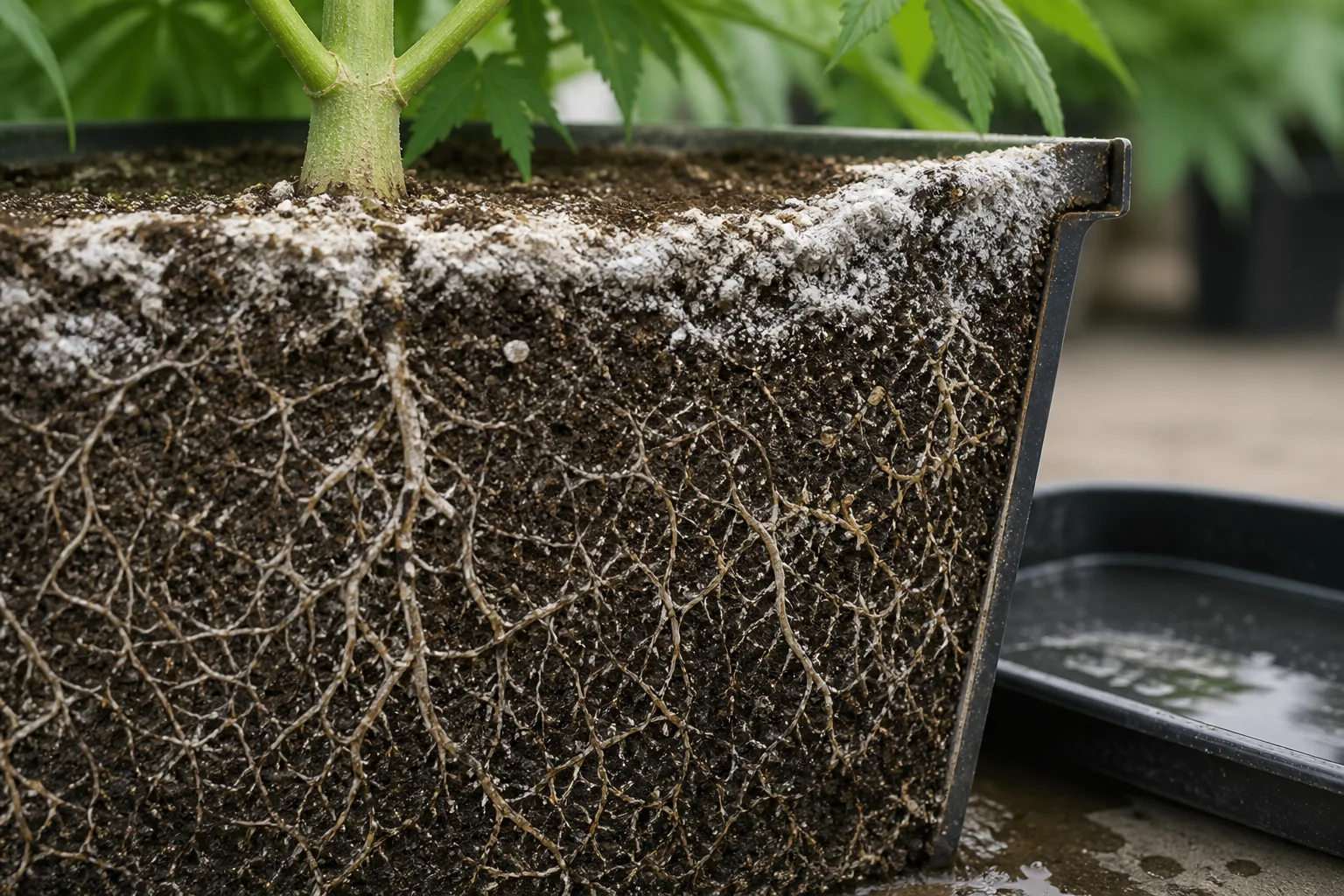
Irrigation, Nutrient Uptake, and Root-Zone EC: Osmotic Pressure, Mass Flow, and Ion Accumulation Dynamics
In the agronomy of high-value medicinal cannabis, crop nutrition cannot be understood merely as a static recipe of elemental parts per million (PPM) mixed into a reservoir. The concentration of dissolved mineral ions in the root zone: measured as electrical conductivity (EC) in deciSiemens per meter (dS/m) or milliSiemens per centimeter (mS/cm): is an intensely dynamic biophysical state dictated by irrigation frequency, pulse volume, transpiration rate, and substrate dry-back velocity. Every time an irrigation pulse delivers nutrient solution to a container, it alters the osmotic potential (Ψs) of the rhizosphere, redefining the mechanical effort required for root hairs to absorb water. Furthermore, mineral nutrients do not travel to root surfaces via a single uniform pathway; they move through three distinct physical mechanisms: mass flow, diffusion, and root interception. When irrigation delivery is misaligned with atmospheric transpiration, the root zone undergoes rapid chemical divergence: unabsorbed mineral ions precipitate as insoluble salts, ionic antagonisms lock out vital secondary macronutrients, and pore-water EC spikes to levels that induce toxic leaf necrosis and vascular collapse.
Commercial cultivators who monitor only the electrical conductivity of their input fertilizer tank are operating with incomplete information. A grower may inject a moderate feed solution of 2.0 dS/m, yet because of insufficient leaching fractions or aggressive vapor pressure deficits, the actual interstitial pore-water EC experienced by root cell membranes can surge past 6.0 dS/m. At that extreme osmotic concentration, the plant enters physiological drought: roots become desiccated, cellular turgor collapses, and potassium ions are blocked by toxic sodium or ammonium accumulations. Conversely, excessive irrigation volume flushes the root zone bare, stripping away beneficial nutrient reserves and creating waterlogged hypoxic conditions that arrest ATP-driven active transport. Mastering the coupled physics of irrigation hydraulics, ion transport kinetics, and root-zone EC dynamics allows growers to maintain optimal nutrient availability across every developmental phase. This comprehensive scientific analysis details the thermodynamic principles, ion uptake mechanisms, leaching mathematics, and corrective sequences required to manage root-zone EC, connecting directly with our core guides on leaching fractions and runoff dynamics, cannabis dry-back and VWC targets, and temperature, humidity, and water demand.
Osmotic Potential and van ‘t Hoff’s Law: The Biophysics of Root Water Extraction
Water absorption by cannabis roots is governed by the total water potential gradient between the substrate solution and the interior of root cortical cells. Total water potential (Ψ) is the sum of matric potential (Ψm), gravitational potential (Ψg), and osmotic potential (Ψs):
- The van ‘t Hoff Osmotic Relationship: Osmotic potential (Ψs) is directly proportional to the total concentration of dissolved solute particles in the liquid phase: Ψs = -i M R T, where i is the van ‘t Hoff dissociation factor, M is molar concentration, R is the ideal gas constant, and T is absolute temperature. In practical horticultural terms, every 1.0 dS/m increase in root-zone electrical conductivity depresses substrate osmotic potential by approximately -0.036 MPa (-0.36 bar). At an input EC of 2.0 dS/m, the osmotic suction is -0.072 MPa; if dry-backs concentrate pore-water EC to 6.0 dS/m, osmotic potential plunges to -0.216 MPa.
- Physiological Drought and Plasmolysis: For root epidermal cells to extract water from the surrounding medium, root intracellular water potential must remain significantly more negative than the rhizosphere solution. Cannabis roots accumulate organic solutes (such as proline and soluble sugars) through osmotic adjustment to maintain water influx. However, when root-zone EC exceeds the plant’s osmotic adjustment capacity (typically above 4.5 dS/m in vegetative growth or 7.0 dS/m in late flower), the osmotic gradient inverts. Water is pulled physically backward out of root cells into the hypertonic soil matrix. Root hairs undergo plasmolysis: cellular membranes tear away from cell walls, causing irreversible root necrosis.
- Generative Osmotic Steering vs Osmotic Burning: Controlled elevations in root-zone EC can be utilized as an agronomic tool. Moderate osmotic stress (pore-water EC between 4.0 and 5.5 dS/m during early floral transition) stimulates the synthesis of abscisic acid (ABA), tightens internodal spacing, suppresses unwanted vegetative stretch, and accelerates the initiation of floral bud clusters. However, if this osmotic tension is not relieved by morning leaching pulses, beneficial generative steering degrades into acute salt toxicity, manifesting as scorched fan leaf margins, downward leaf curling, and delayed flowering.
The Agronomic Physics: High EC Acts as a Chemical Brake on Water Uptake
Many growers mistakenly believe that if plants show slight tip burn or salt stress, they simply need more water. What they fail to realize is that dissolved fertilizer salts exert physical suction that fights against root water extraction. In a substrate saturated with 5.0 dS/m solution, the plant must expend immense metabolic energy merely to pull pure H2O molecules across its cell membranes against the osmotic gradient. As a result, plants suffering from high root-zone EC wilt under bright lights even when the growing medium is completely soaking wet.
Nutrient Transport Mechanisms: Mass Flow, Diffusion, and Root Interception
To engineer effective fertigation regimens, cultivators must understand the three distinct physical pathways by which plant nutrients travel from the bulk medium to root cell surfaces:
- 1. Mass Flow (Convective Bulk Transport): Mass flow occurs when dissolved ions move through the substrate along with the convective bulk flow of water pulled toward the root by canopy transpiration. Highly soluble, weakly bound ions travel almost exclusively via mass flow: nitrate (NO3–), calcium (Ca2+), magnesium (Mg2+), and sulfate (SO42-). If a cannabis plant transpires 2.0 liters of water containing 150 ppm calcium in a day, the mass flow pathway delivers approximately 300 mg of calcium directly to the root surface. If transpiration stalls due to high humidity, mass flow collapses, triggering immediate calcium and magnesium deficiencies regardless of fertilizer concentration.
- 2. Diffusion (Fickian Concentration Gradients): Diffusion occurs when ions move along a concentration gradient from areas of high concentration in the bulk substrate to areas of low concentration immediately adjacent to the root hair surface, governed by Fick’s law: J = -D × (dC / dx). Nutrients that interact strongly with substrate cation exchange sites or form insoluble complexes move primarily by diffusion: phosphorus (H2PO4–) and potassium (K+). Diffusion requires continuous liquid water films coating substrate particles. As substrates dry down past 40% VWC, water films become thin and tortuous, drastically increasing diffusion resistance and halting phosphorus and potassium uptake.
- 3. Root Interception (Direct Mechanical Contact): Root interception occurs when growing root tips physically push through the medium and come into direct physical contact with ions adsorbed onto soil particles or organic matter exchange sites. Root interception accounts for less than 1% to 2% of total nitrogen, potassium, and phosphorus uptake, and approximately 5% of calcium uptake. The vast majority of cannabis nutrition depends entirely on mass flow and diffusion in the aqueous phase.
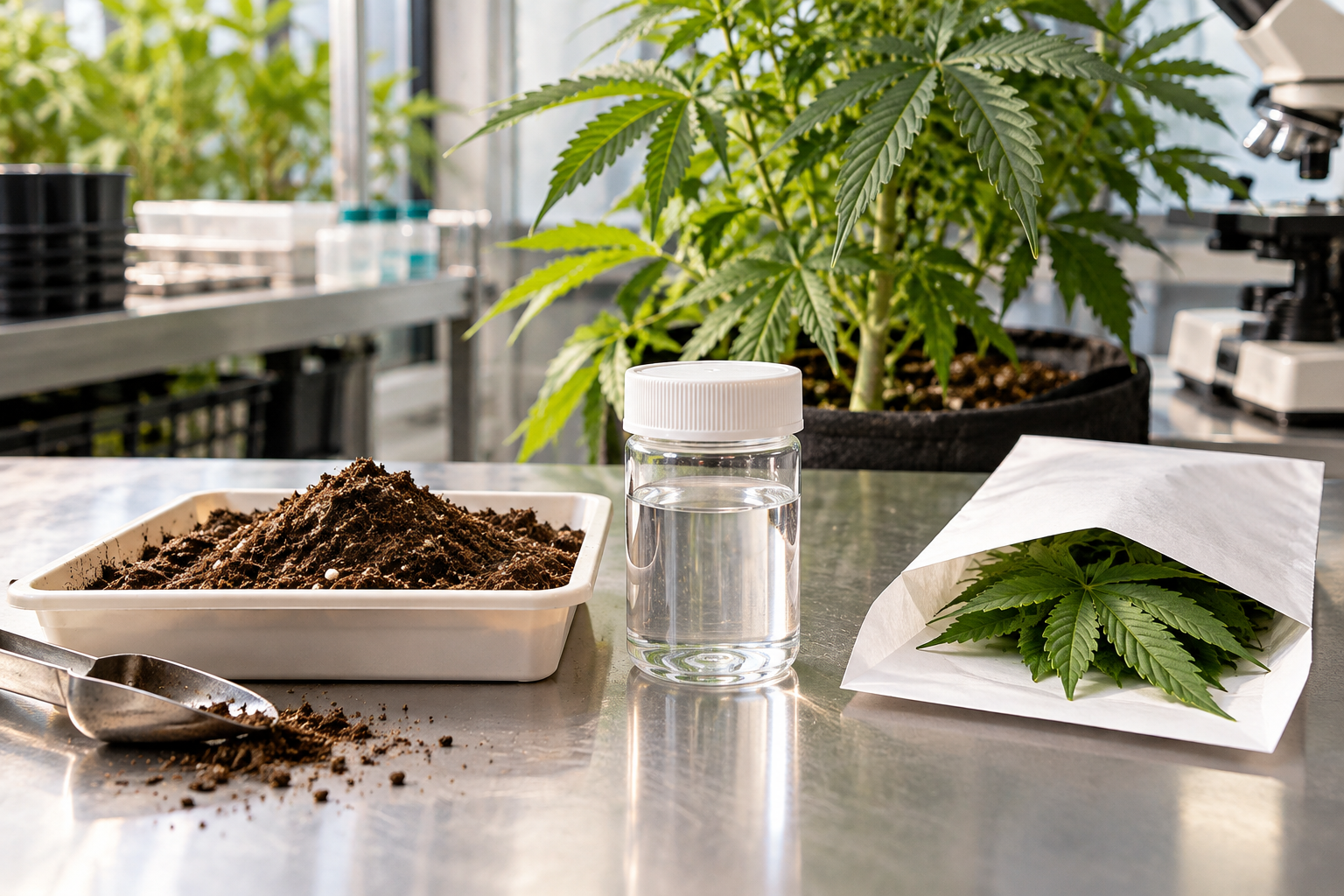
Laboratory soil, water, and leaf tissue testing protocols used to audit elemental nutrient uptake and ionic balance.
Cation Antagonisms and the Mulder Interaction Matrix
Managing root-zone EC is not simply about total salt quantity; it requires strict control over ionic ratios. When total dissolved solids climb, competitive ion antagonisms (delineated in Mulder’s chart) disrupt plant uptake:
- The Potassium-Calcium-Magnesium Triad (K:Ca:Mg): Cation uptake across root cell membranes is highly competitive. If growers dramatically elevate potassium (K+) levels during early flower to stimulate bud bulking, the overwhelming abundance of monovalent potassium ions competitively blocks the uptake of divalent calcium (Ca2+) and magnesium (Mg2+) at root transport channels. Even if the medium contains abundant magnesium, the plant develops severe interveinal chlorosis on mid-canopy leaves. An optimal elemental ratio in the root zone hovers near 4:2:1 (K:Ca:Mg) in vegetative growth and 5:2:1 in peak flower.
- Ammonium Toxicity and Rhizosphere Acidification: When nitrogen is supplied as ammonium (NH4+) rather than nitrate (NO3–), root absorption of the positive ammonium ion requires the root to excrete a hydronium ion (H+) into the rhizosphere to maintain electrical neutrality. In soilless media with low buffering capacity, high ammonium feeding causes root-zone pH to crash below 5.2 in 48 hours, inducing severe manganese and iron toxicities while locking out phosphorus. Commercial cannabis feeds should maintain at least 90% of total nitrogen in the nitrate form.
- Sodium and Chloride Accumulation: In facilities utilizing source water with elevated background sodium (Na+) or chloride (Cl–), these non-essential ballast ions are rejected by selective root membrane transporters. While the plant transpires pure water, sodium and chloride accumulate relentlessly in the substrate capillary pores. Over several weeks of fertigation, sodium displaces exchangeable calcium and potassium, while chloride induces severe leaf tip and marginal burn. Commercial cultivation requires source water containing less than 20 ppm sodium and 30 ppm chloride.
| Essential Nutrient Ion | Primary Ionic Form in Solution | Mass Flow Contribution (%) | Diffusion Contribution (%) | Root Interception (%) |
|---|---|---|---|---|
| Nitrogen (Nitrate) | NO3– | 75% – 85% | 14% – 23% | 1% – 2% |
| Phosphorus (Phosphate) | H2PO4– / HPO42- | 3% – 5% | 92% – 95% | 2% – 3% |
| Potassium | K+ | 15% – 25% | 73% – 83% | 2% |
| Calcium | Ca2+ | 65% – 80% | 15% – 30% | 5% |
| Magnesium | Mg2+ | 85% – 92% | 5% – 12% | 3% |
| Sulfur (Sulfate) | SO42- | 90% – 95% | 4% – 8% | 1% |
The physiological data compiled in Table 1 reveals why managing irrigation volume is inextricably linked to nutrient delivery. Because phosphorus and potassium rely overwhelmingly on diffusion through continuous water films, allowing containers to dry down to extreme deficits physically severs the diffusion bridges, inducing false deficiencies even in nutrient-rich media. Conversely, because calcium and magnesium rely almost entirely on transpirational mass flow, their absorption is dictated by total fluid volume moved through the xylem rather than concentration alone. When unabsorbed mineral salts accumulate over successive fertigation cycles without sufficient drainage, the electrical conductivity of the pore water diverges drastically from the input solution. Cultivators who observe extreme runoff EC readings often panic, reaching for extreme corrective measures that inflict even greater physiological damage.
My runoff EC is 4.8 dS/m while my input feed is 2.2 dS/m in week 5 of flower. Should I flush with pure RO water?
Question sent by: Carlos Mendoza, via email.
“I am growing in 70/30 coco/perlite in 3-gallon pots. I feed daily at 2.2 dS/m EC (pH 5.9). Today I tested my runoff and was shocked to see it reading 4.8 dS/m EC and pH 5.4! The tips of my fan leaves are curling downward with yellow tips. Should I flush each container with 5 gallons of pure 0.0 EC reverse-osmosis water to wash out the salt buildup?”
Flushing with pure reverse-osmosis water is the worst action you can take right now: it will trigger catastrophic osmotic shock, cellular lysis, and complete cation stripping.
When your root cells have adapted over several weeks to a root-zone environment of 4.8 dS/m, their internal cytoplasm has accumulated high concentrations of organic osmolytes to balance the external osmotic pressure. If you suddenly drench the root zone with pure 0.0 EC water, you create a violent osmotic shock wave. Water rushes into the hypertonic root cells faster than cellular membranes can expand, causing root hairs to burst (hypoosmotic lysis). Furthermore, pure RO water strips the delicate calcium-cation buffering complex off the coco coir fibers, causing the medium to rapidly re-bind calcium and precipitate an immediate, severe calcium deficiency in your developing buds.
The Correct Reset Protocol: Instead of pure RO, flush the pots with a mild, fully balanced nutrient solution at 1.2 to 1.4 dS/m with pH calibrated to 6.0. Irrigate slowly until you achieve approximately 30% to 40% runoff volume. Test the leachate: the runoff EC will steadily decline from 4.8 dS/m down to 2.4 – 2.6 dS/m in a single gentle wash. Because the wash solution contains balanced calcium, magnesium, and potassium, the substrate cation balance is preserved, root hairs remain intact, and osmotic equilibrium is restored without tissue shock. Follow up by increasing your daily drainage volume from 10% to 20% to prevent future salt accumulation.
Carlos’s dilemma underscores why emergency flushes with pure water frequently cause more destruction than the salt buildup itself. In controlled substrate cultivation, the rhizosphere behaves as an active ion-exchange system. Abrupt shifts in electrical conductivity destabilize the electrochemical boundary layer of root cell membranes, interrupting cellular respiration and causing vascular embolisms. To maintain stable nutrient availability without triggering dramatic salt accumulation or osmotic shock, commercial facility managers rely on mathematical leaching fractions. By calculating the exact ratio of drainage water required to carry away unabsorbed mineral ions, cultivators maintain a stable equilibrium where root-zone EC mirrors target input values throughout the entire crop cycle.
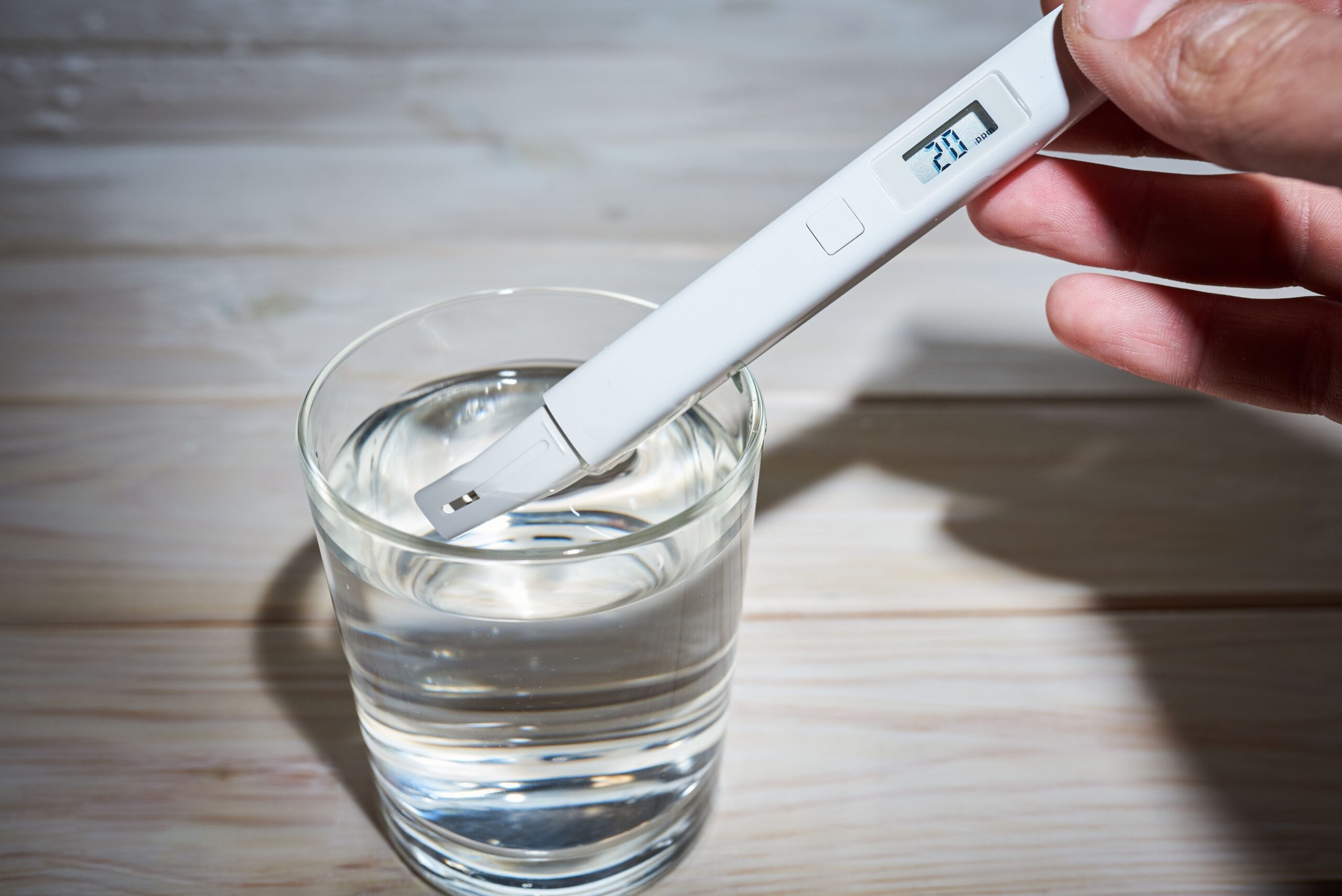
Digital electrical conductivity instrumentation verifying leachate runoff EC and pore-water salinity concentrations.
Leaching Fraction Mathematics and Root-Zone EC Equilibrium
The steady-state relationship between input fertilizer EC, plant transpiration, and root-zone salinity is governed by the Leaching Fraction (LF) equation:
- The Fundamental Leaching Equation: The leaching fraction is defined as the volume of drainage runoff water divided by the total volume of irrigation water applied: LF = Vdrain / Vapplied. In steady-state fertigation, the theoretical relationship between input electrical conductivity (ECin) and drainage leachate electrical conductivity (ECdrain) is expressed as: ECdrain = ECin / LF (assuming minimal ion extraction). For example, if a grower feeds at 2.0 dS/m and targets a 15% leaching fraction (LF = 0.15), the theoretical drainage EC without plant uptake would be 2.0 / 0.15 = 13.3 dS/m. Because cannabis plants actively consume mineral ions, actual runoff EC remains far lower, but insufficient LF inevitably leads to runaway salt accumulation.
- Calculating Required Runoff to Control Salinity: To maintain drainage EC within 15% to 20% of input feed EC, commercial growers utilize the modified USDA salinity equation: LFtarget = ECin / (5 × ECtarget – ECin). In practical soilless cultivation (coco coir and rockwool), maintaining a daily drainage volume between 15% and 25% is sufficient to prevent salt accumulation during peak flowering. If runoff volume drops below 10%, unabsorbed sulfate, sodium, and chloride ions concentrate rapidly within the container base.
- The Timing of Runoff Generation: In precision pulse fertigation, drainage should never be generated during early morning shots. The first 3 to 5 morning pulses (the P1 ramp) should simply rehydrate the medium from its overnight dry-back without generating runoff. Leachate should only begin dripping during the final morning pulse or early midday shots. Achieving early runoff wastes expensive fertilizer, over-saturates the medium, and prevents fresh oxygen from circulating through substrate pores.
The Operational Rule: Measure Runoff EC Every Single Day at the Same Hour
Testing leachate runoff once a week is an invitation to disaster. If an irrigation dripper becomes partially clogged or transpiration surges due to an unexpected heat wave, substrate EC can double in 48 hours. Commercial facilities collect drainage leachate samples from designated index benches daily, testing EC and pH within 30 minutes of the final morning leaching shot. If leachate EC climbs more than 0.8 dS/m above input feed EC, the leaching fraction must be increased immediately on the subsequent irrigation cycle.
Standardizing daily leachate testing protocols ensures that operators detect ionic imbalances before visible foliar symptoms appear. However, even when total EC and leaching fractions appear stable on paper, growers frequently encounter localized deficiency symptoms that seem contradictory. A classic diagnostic puzzle occurs when foliage displays textbook potassium or magnesium deficiency symptoms despite input feed containing luxurious levels of both elements. In many cases, cultivators assume they need to increase fertilizer dosage, when in reality the symptom is caused by competitive ion antagonism or pH-driven precipitation in the root zone. Understanding the biochemical boundaries of ionic competition prevents growers from compounding nutrient lock-out errors.
Why do my lower fan leaves show potassium deficiency even though my feed has 250 ppm potassium?
Question sent by: Rachel Stern, via email.
“I am in week 4 of flower in rockwool slabs. My reservoir delivers 250 ppm K, 120 ppm N, and 60 ppm P with an input EC of 2.1 dS/m. Despite this heavy potassium feeding, the margins of my lower fan leaves are turning bright yellow, drying up, and scorching inward like textbook potassium deficiency. If my feed has plenty of potassium, why is the plant showing a deficit?”
You are suffering from calcium-induced potassium antagonism and high root-zone osmotic blockage.
First, examine your secondary macronutrients. If you have been adding heavy doses of a calcium-magnesium (Cal-Mag) supplement alongside high base potassium, the total concentration of divalent calcium (Ca2+) and magnesium (Mg2+) ions can overwhelm potassium uptake at root membrane transport channels. When divalent cations dominate the rhizosphere in excessive concentrations, they physically compete for the same non-selective cation channels (NSCCs) and high-affinity potassium transporters (HAK/KUP/KT carriers), suppressing potassium influx.
Second, in rockwool slabs, if your daily leaching fraction is insufficient, unabsorbed calcium and sulfate concentrate in the lower third of the slab. While your input feed EC is 2.1 dS/m, the slab core EC may have climbed past 4.5 dS/m. At high osmotic pressure, root cortical cells reduce total ion intake. Because potassium is a mobile element, the plant responds to root uptake restrictions by cannibalizing potassium from older lower fan leaves to sustain rapidly expanding floral bracts at the top of the canopy. The lower leaves scorch and die as potassium is translocated upward.
Correction: Audit your slab pore-water EC. If slab EC is above 3.5 dS/m, deliver a thorough leaching pulse with feed EC reduced to 1.6 dS/m. Eliminate separate Cal-Mag boosters: ensure your elemental calcium is capped at 100-120 ppm and magnesium at 45-55 ppm. Once the competitive cation balance is restored and osmotic pressure drops, potassium uptake will immediately normalize.
Rachel’s scenario highlights how easily cation ratios can fall out of balance when supplementary products are stacked without chemical accounting. In soilless media with zero native cation exchange capacity, the relative proportions of dissolved ions dictate root absorption efficiency. When growers blindly add calcium-magnesium supplements to water that already contains sufficient minerals, they inadvertently trigger severe potassium starvation. Maintaining proper elemental balance requires continuous auditing of both input solution chemistry and drainage leachate composition. By aligning elemental ratios with the plant’s stage-specific physiological requirements, cultivators unlock explosive floral development and maximum resin synthesis.
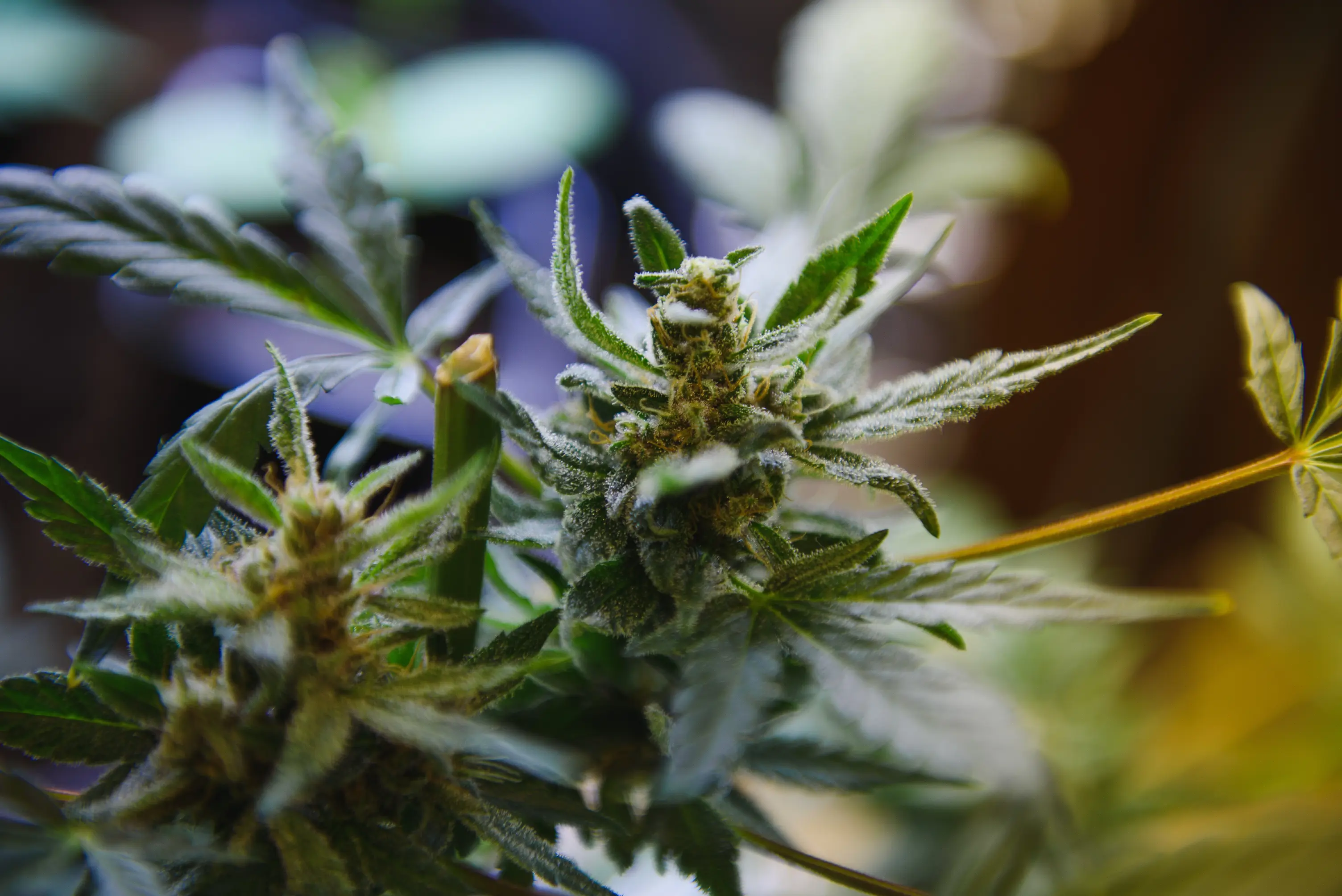
Resinous floral calyxes developing under balanced root-zone electrical conductivity and active mass-flow nutrient delivery.
Stage-Specific EC Targets and Crop Steering Strategies
Optimal electrical conductivity targets evolve dynamically across the lifecycle of the cannabis plant:
- Rooted Clones and Seedlings (1.0 – 1.4 dS/m EC): Immature root systems possess fragile epidermal cells and low osmotic tolerance. Low salinity promotes rapid root elongation and branching without osmotic resistance. Input pH should be locked between 5.8 and 6.0.
- Vegetative Canopy Expansion (1.6 – 2.2 dS/m EC): Active leaf and shoot expansion requires high nitrate and potassium delivery. Low-to-moderate EC combined with frequent irrigation pulses (vegetative steering) maintains high substrate turgor and accelerates biomass accumulation. Runoff EC should remain within 0.2 to 0.4 dS/m of input.
- Transition and Early Flower: Weeks 1 to 3 (2.2 – 2.8 dS/m EC): Elevated EC combined with larger dry-backs (generative steering) restricts excessive internodal stretch, tightens branch geometry, and signals the plant to initiate dense floral bud clusters. Pore-water EC may climb to 4.5 dS/m during overnight dry-back.
- Peak Floral Bulking: Weeks 4 to 7 (2.0 – 2.4 dS/m EC): Transpiration peaks as canopies develop maximum leaf area index. Because plants consume massive volumes of water, input EC is moderated slightly to prevent toxic salt buildup. Daily leaching fraction is increased to 20% to flush residual salts.
- Late Ripening and Senescence: Final 7 to 14 Days (1.0 – 1.4 dS/m EC): Input fertilizer strength is tapered down to allow the plant to metabolize internal nutrient reserves. The sudden drop in osmotic pressure allows roots to absorb water effortlessly, preserving terpene volatility while encouraging natural anthocyanin coloration.
| Cultivation Substrate Format | Vegetative Input EC Target | Flowering Input EC Target | Maximum Safe Runoff EC Ceiling | Target Daily Leaching Fraction |
|---|---|---|---|---|
| Horticultural Rockwool Blocks / Slabs | 1.8 – 2.2 dS/m | 2.2 – 2.8 dS/m | 3.8 dS/m (Pore-water: 6.0 dS/m) | 15% – 25% drainage |
| Coco Coir / Perlite (70/30) | 1.6 – 2.0 dS/m | 2.0 – 2.4 dS/m | 3.4 dS/m (Pore-water: 5.5 dS/m) | 15% – 20% drainage |
| Peat Moss Potting Blends (Pro-Mix) | 1.4 – 1.8 dS/m | 1.8 – 2.2 dS/m | 3.0 dS/m (Pore-water: 4.8 dS/m) | 10% – 15% drainage |
| Living Organic Soil Raised Beds | 0.8 – 1.2 dS/m (Teas) | 1.0 – 1.4 dS/m (Teas) | 2.2 dS/m (Soil paste EC) | 0% – 5% max (no heavy runoff) |
| Recirculating Deep Water Culture (DWC) | 1.2 – 1.6 dS/m | 1.6 – 2.0 dS/m | 2.2 dS/m (Reservoir solution) | Continuous recirculating top-off |
Closed-Loop EC Auditing Protocols: The 1:2 Dilution and Pour-Through Methods
To verify root-zone salinity with scientific accuracy, commercial facility managers must not rely solely on automated leachate trays. Substrate pore water can harbor localized salt gradients that skew tray runoff measurements. Two standardized agronomic testing protocols provide verified chemical insights: the Virginia Tech Pour-Through Method and the 1:2 Substrate Dilution Extract. In the pour-through method, one hour after a routine irrigation event, one hundred milliliters of distilled water is applied evenly across the container surface, displacing approximately fifty milliliters of undisturbed pore water from the bottom of the root zone directly into a collection cup. Because this displaced liquid represents un-diluted pore water, its electrical conductivity mirrors the exact osmotic tension experienced by active root hairs.
In peat and living soil substrates, the 1:2 volume dilution method is the gold standard for laboratory accuracy. One part representative substrate sample (taken from the middle root core) is mixed with two parts distilled water, agitated thoroughly for thirty minutes, and filtered through filter paper. The filtered leachate is tested with a calibrated conductivity meter. Dilution testing separates free soluble salts from exchangeable cations, providing facility managers with a true baseline of chemical fertility. Integrating weekly pour-through testing with continuous in-situ dielectric telemetry guarantees that commercial fertigation recipes deliver peak plant nutrition without crossing into hazardous osmotic stress boundaries.
Root-Zone EC and Nutrient Uptake Master Checklist
Audit these critical electrical conductivity and hydraulic parameters daily:
- Input fertilizer EC is calibrated with an automated temperature-compensated digital conductivity meter daily.
- Drainage leachate volume and EC are collected and logged from designated index benches at the same hour each day.
- Daily leaching fraction is maintained between 15% and 25% in coco and rockwool during peak flowering.
- Runoff EC is audited to confirm it does not exceed input feed EC by more than 0.8 dS/m.
- Pure reverse-osmosis flushes are strictly prohibited; salt resets use mild 1.2 dS/m balanced nutrient solution.
- Elemental cation ratios (K:Ca:Mg) are maintained near 4:2:1 in veg and 5:2:1 in flower to prevent antagonism.
- Nitrogen is supplied with at least 90% nitrate (NO3–) to prevent rhizosphere acidification from ammonium.
- Source water is filtered via reverse osmosis to ensure sodium remains below 20 ppm and chloride below 30 ppm.
- Early morning P1 irrigation pulses do not generate runoff: leaching occurs only during final morning or midday shots.
- Weekly pour-through tests are conducted on representative containers to verify automated telemetry calibration.
Scientific References
- Marschner, H. (2012). Marschner’s Mineral Nutrition of Higher Plants (3rd ed.). Academic Press, London.
- Epstein, E., & Bloom, A. J. (2005). Mineral Nutrition of Plants: Principles and Perspectives (2nd ed.). Sinauer Associates, Sunderland, MA.
- Kramer, P. J., & Boyer, J. S. (1995). Water Relations of Plants and Soils. Academic Press, San Diego, CA.
- Taiz, L., Zeiger, E., Møller, I. M., & Murphy, A. (2015). Plant Physiology and Development (6th ed.). Sinauer Associates, Sunderland, MA.
- Bugbee, B. (2004). Nutrient management in recirculating hydroponic culture. Acta Horticulturae, 648, 99-112.
- Zheng, Y. (2021). Handbook of Cannabis Production in Controlled Environments. CRC Press, Boca Raton, FL.
- Sonneveld, C., & Voogt, W. (2009). Plant Nutrition of Greenhouse Crops. Springer, Dordrecht.
- Cavins, T. J., Whipker, B. E., Fonteno, W. C., Harden, B., & McCall, I. (2000). PourThru: A guide to monitoring nutritional status in the greenhouse. North Carolina State University Horticultural Information Leaflet, 590.
Share this article
A quick overview of the topics covered in this article.